There’s no better way to raise adventurers than getting them outside when they’re little. That’s why quality kids’ snow gear and apparel matters so much. We never regret a day spent outside with our children — but we will definitely take help when we can get it.
Not only is this gear for our little ones the first line of defense from the bitter cold, but it also enables parents to get outside more. For our most recent 4-month test period, gear expert Heather Rochfort covered 200 hours on snow with her daughter. In 5 to 45 degrees Fahrenheit, they tested snow gear across 40 days in the Aspen ski mountains, Italian Dolomites, Spring Gulch Nordic ski area, and uphilling at Buttermilk.
Start with a base layer followed by a midlayer. To shield against weather, you’ll want to snag an outer layer — like the Reima Stavanger Snowsuit — or a pants and jacket set. Result: happy kids, happy parents, and more days outside.
Editor’s note: We updated our Kids’ Snow Gear guide on August 20, 2026, to include the new Flylow Youth Chemical Snow Pants, Akova Elevated Hardshell, and Woolx Kids Explorer Base Layer Top and Bottom. We added extended product ratings.
The Best Kids’ Snow Gear of 2026


Reima Stavanger Snowsuit
-

-
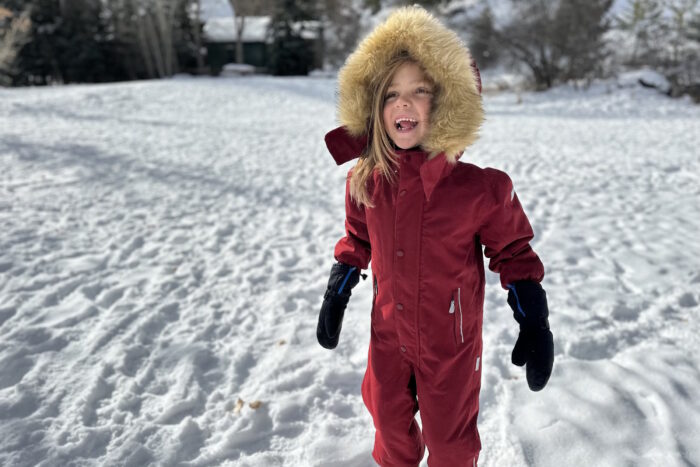
The Reima Stavanger Snowsuit is durable, warm, and well-constructed; (photo/Heather Balogh Rochfort)
-
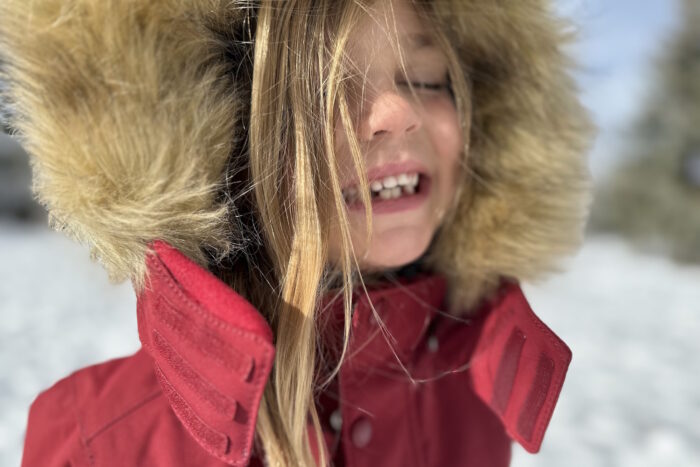
The hood is detachable via a zipper and so is the fur liner; (photo/Heather Balogh Rochfort)
Specifications
Pros & Cons
Pros
- Unparallelled warmth and waterproofing
- Unique, kid-specific features
- Plenty of fun colors for kids
Cons
- Pricey
- Kids have complained that it’s too warm
Read Review: You Won’t Find a Warmer Kids’ Snowsuit: Reima Stavanger Snowsuit Review
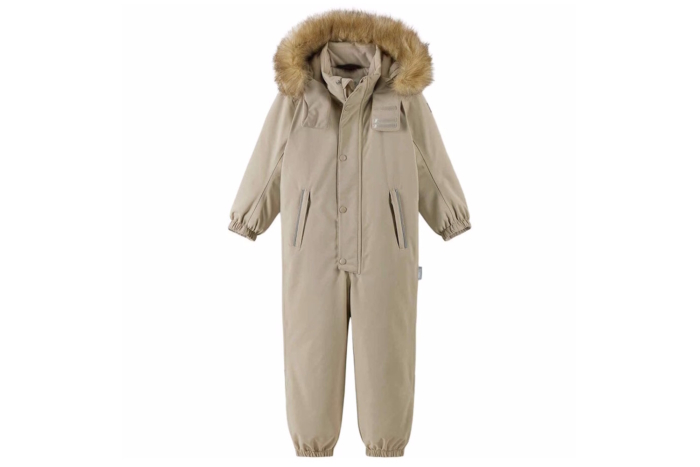
We’re convinced: There is no burlier snowsuit than the Reima Stavanger Snowsuit ($200). Our GearJunkie testers often ski tour while towing their daughter in a Thule Chariot in the mountains outside of Aspen, Colorado, and the Stavanger was always the last line of defense against extreme cold temperatures thanks to copious amounts of recycled synthetic insulation.
When combined with a sturdy synthetic outer shell and waterproof-sealed seams, it’s nearly impossible for chilly weather to find its way inside.
Reima includes plenty of kid-specific features that make the Stavanger a crowd favorite. Not only do they pack in extra insulation on the butt to offset kids sitting in the snow, but the snowsuit also includes silicone foot loops that hook around snow boots to prevent pant legs from riding up. At forest school, one tester walked through an ankle-deep river, and the Stavanger still never wet out.
The fit runs a bit large but go with the standard sizing — your kiddo will just wear it for a few years. Bonus: The Stavanger Snowsuit has a removable hood lined with faux fur that helps keep snowflakes off rosy cheeks.
L.L.Bean Kids’ Down Jacket
-
-
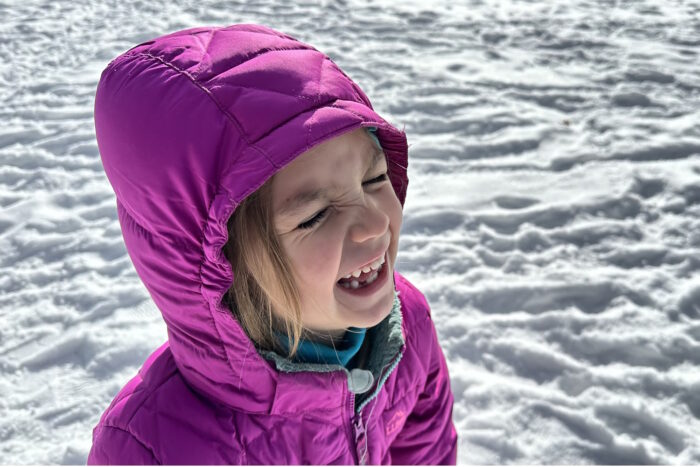
The hood is cozy and insulated on the L.L.Bean Kids’ Down Jacket; (photo/Heather Balogh Rochfort)
-
(Photo/Heather Rochfort)
Specifications
Pros & Cons
Pros
- Great mobility for kids to play and run
- Plenty of warmth for most winter adventures
- Wide range of sizes
Cons
- Not very durable
Read Review: Waterproof Down Warmth, Fleece-Lined Comfort: Kids’ L.L.Bean Down Jacket Review
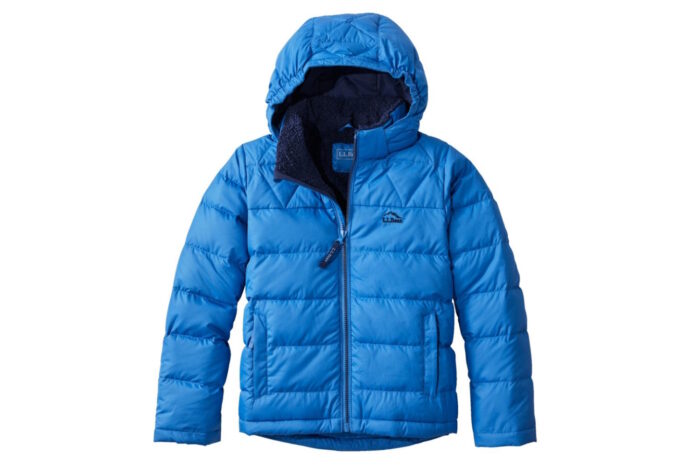
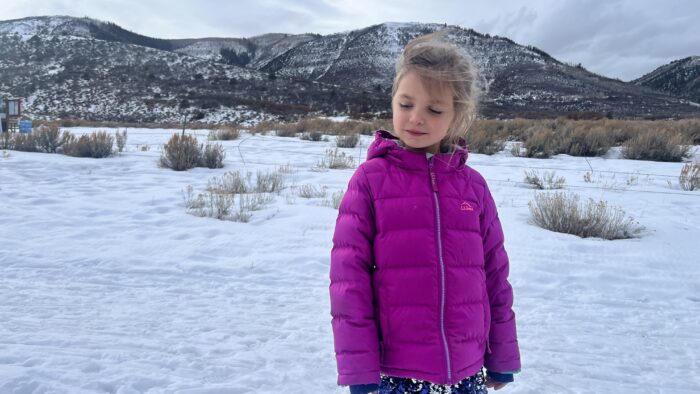
When the mercury drops, put your kiddo in the L.L.Bean Kids’ Down Jacket ($120). Reported to be one of the brand’s warmest options for littles, one lead tester wore it to forest school for a winter in Colorado, and it quickly became her favorite jacket to bring.
The secret: ultra mobility and supreme coziness. Credit the 650-fill DownTek down and an uber-soft fleece interior for making it a favorite among kids.
Two zippered hand pockets are lined with a light fleece and have plenty of room for small toys, snacks, or the occasional pinecone. The insulated hood on the Kids’ Down Jacket is a game changer on blustery days, but it’s removable for when the sun peaks out again.
Hootie Hoo Pinnakle Insulated Jacket and Insulated Bibs
Specifications
Pros & Cons
Pros
- High waterproof and breathability ratings
- Recycled materials throughout
- Growing system extends use
Cons
- Expensive for the whole kit
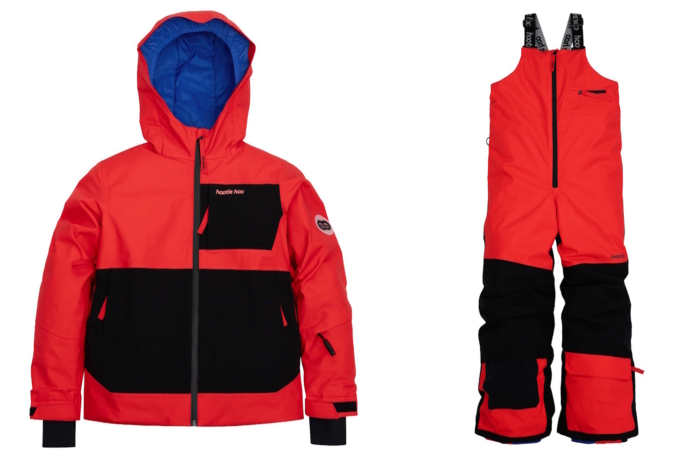
Hootie Hoo is one of the many newer outdoor brands specializing in kids-only apparel, and we are here for it. This dedication to kiddo-specific movement is evident in the Hootie Hoo Pinnakle Insulated Jacket ($185) and Insulated Bibs ($165). Not only did the high-quality materials protect our kids from nasty weather, but this ski kit enabled them to go bigger than ever.
The 100% recycled four-way stretch polyester is used in both the bibs and the jacket, allowing for a full range of movement. This became evident during one late-season ski day when our 6-year-old tester hiked Highlands Bowl at Aspen Highlands Ski Resort. The steps kicked into the snow were well over knee high on her little legs, yet she still had enough mobility to climb upwards without any complaints (well, she was tired…but that has nothing to do with the kit!)
Both items are rated with a 20K waterproofing and an 8K breathability rating. This is fairly standard in an insulated ski kit and was plenty for most ski days. While hiking the Bowl, our tester did get a little warm — but that’s to be expected while wearing an insulated kit in the sunshine and hiking 900 vertical feet in ski boots.
Added bonus: This kit just looks good. We tested the matching Lavender Breezy color combination and couldn’t go a single step without an adult commenting on our little tester’s steeze.
Town Hall Mountain Town Winter Jacket and Bib
Specifications
Pros & Cons
Pros
- Eco-friendly materials
- Legit waterproofing for active kiddos
- Incredibly warm
Cons
- Pricey
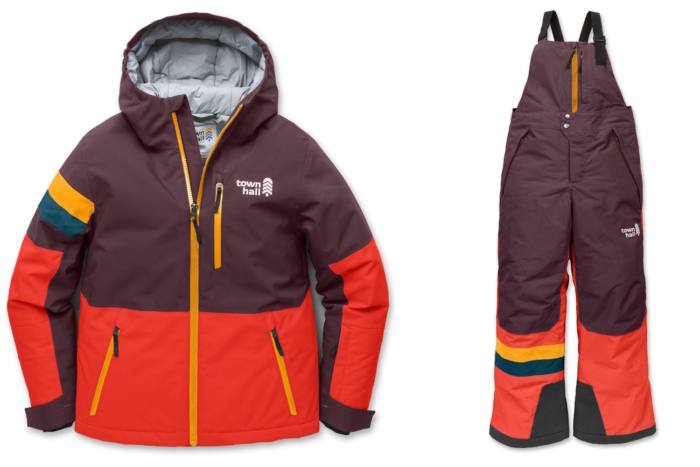
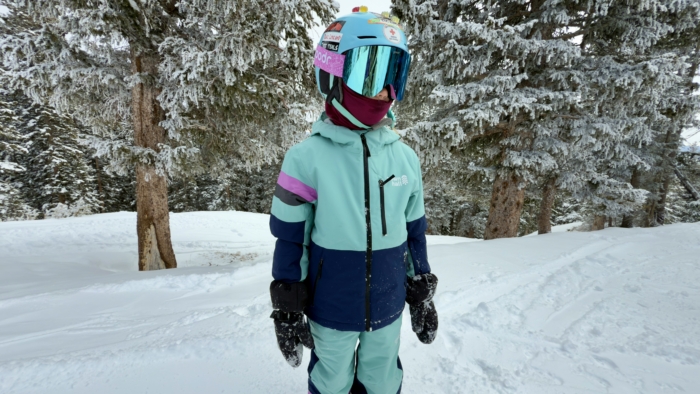
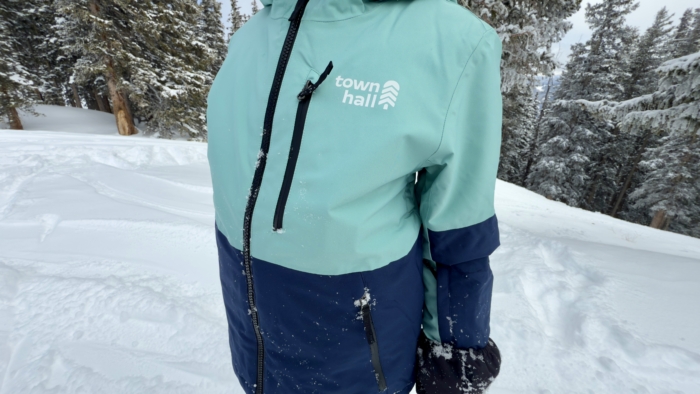
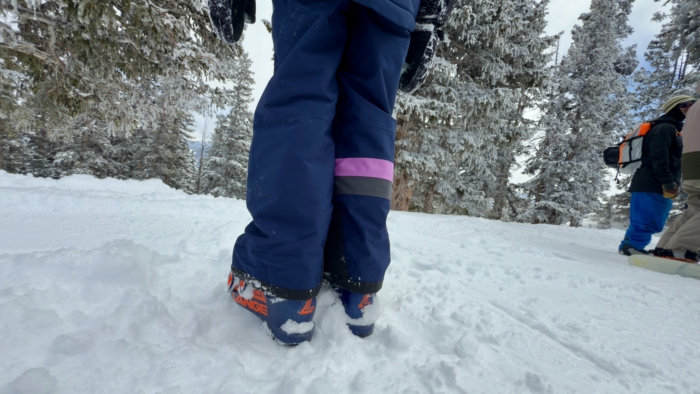
The Town Hall Mountain Town kit ($220 for the jacket, $180 for the bibs) is basically what happens when experienced outdoor industry parents decide to make kids’ gear that doesn’t cut corners (co-founder Robin Hall spent a decade at Smartwool).
The jacket and bib both boast legitimate technical specs like 10K waterproofing and recycled polyester insulation that kept one kiddo warm during a 16-degree ski day with blowing snow in Aspen, Colorado. And yes — it’s made with 100% recycled fabric and non-toxic DWR, so you can feel good about what they’re wearing.
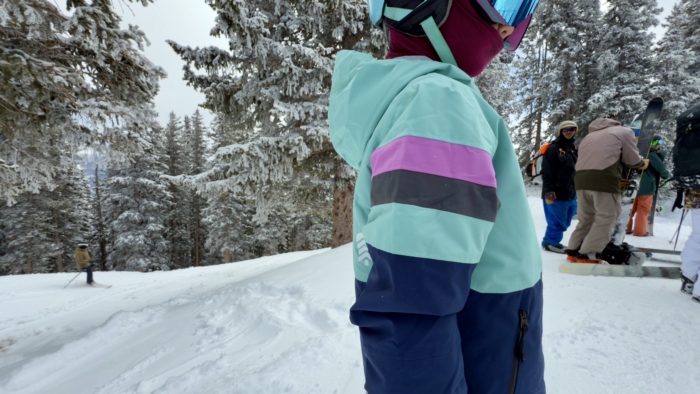
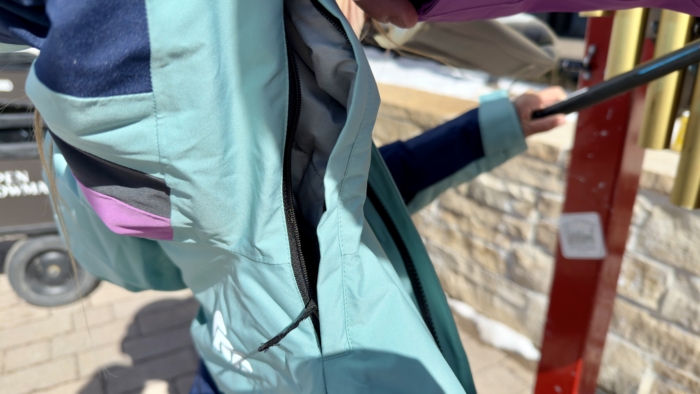
What really stands out? The smart details. The bibs have extendable cuffs to grow with your kid, vents for dumping heat during snack breaks, and reinforced knees and seat for the bonus playtime in the snow. The jacket is packed with insulation and thoughtful touches like a high collar and helmet-compatible hood. It’s designed for real mountain conditions, not just driveway snowball fights.
This kit is an investment, but it’ll last you more than one season — and probably get passed down too. For ski families, it’s a solid win.
Town Hall Down Town Puffy
Specifications
Pros & Cons
Pros
- Fully recycled materials are better for the planet
- Technical puffy for kids who need high performance
- Fun colors that will please almost any kiddo
Cons
- Expensive
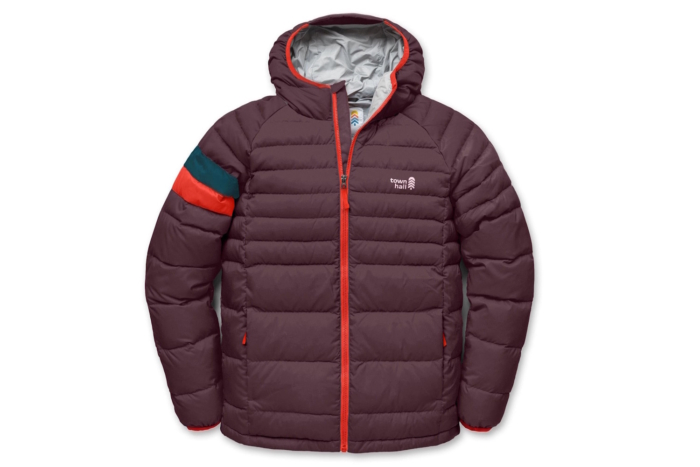
For little rippers who go hard, there is no better option than the Town Hall Down Town Puffy ($175). With a fully sustainable design and technical prowess that rivals adult jackets, the Down Town is a sure thing for kids who like to get out and stay out.
Almost all outdoor gear calls for synthetic (derived from fossil fuels) materials. But the Down Town offsets the reliance on petroleum with a slew of recycled materials, including a 100% recycled polyester exterior fabric and an interior liner that is 75% undyed recycled nylon and 25% recycled polyester.
The 650-fill power down is 100% certified recycled, and even the webbing pulls and hanger loops are made from recycled materials. And, the entire puffy uses PFC-free DWR treatment, so there are no ‘forever chemicals’ in the water-resistant coating.
The sustainability is great, but the performance is even better. The Down Town is a true puffy, and it acts like one. The elastic insulated hood and two zippered hand pockets kept our tester cozy during her weekly evening Nordic ski lessons in Colorado’s Roaring Fork Valley when temps dropped as low as the high teens. The included Grow System adds two inches of length, so the jacket will last you even longer. And when it’s time to tuck it away, the Down Town packs up decently small — almost as good as an adult jacket.
Patagonia Infant High-Loft Down Sweater Bunting
Specifications
Pros & Cons
Pros
- Made from recycled materials
- Plenty of room to grow, no matter the size
- Extreme warmth
Cons
- Not truly waterproof
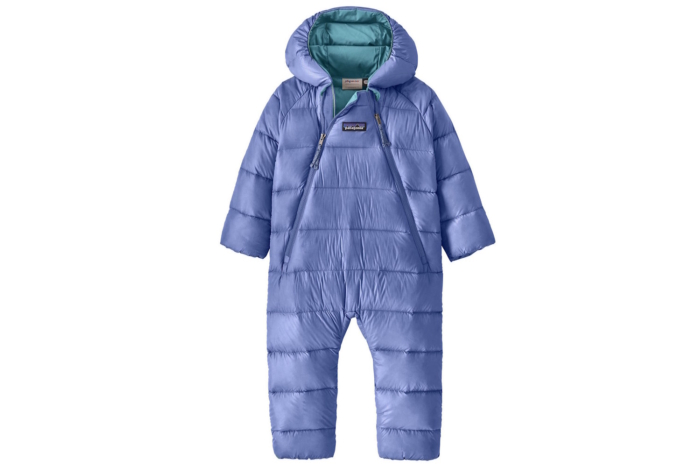
Sleep well at night, knowing your babe is wrapped in environmentally friendly warmth. The Patagonia Infant High-Loft Down Sweater Bunting ($179) is made from exclusively recycled materials: recycled nylon from fishing nets pulled out of the ocean, recycled taffeta in the shell, and 100% recycled down insulation reclaimed from other projects. Bonus: Patagonia also uses a PFC-free Durable Water Repellent (DWR) coating, so your kid isn’t wrapped in chemicals, too.
And, this piece performs well. Our testers loved the intuitive entry and exit zipper placement, which makes it easy to get onto wriggling babies.
Warmth is also top-notch, as one Colorado tester learned after taking her five-month-old on a backcountry hut trip near Crested Butte. Caveat: While water resistant, this bunting is not waterproof.
Fit note: The Infant High-Loft Down Sweater Bunting runs large. One tester’s daughter wore her six-month bunting until she was nearly 15 months old.
WeeDo Snowsuit
-
-
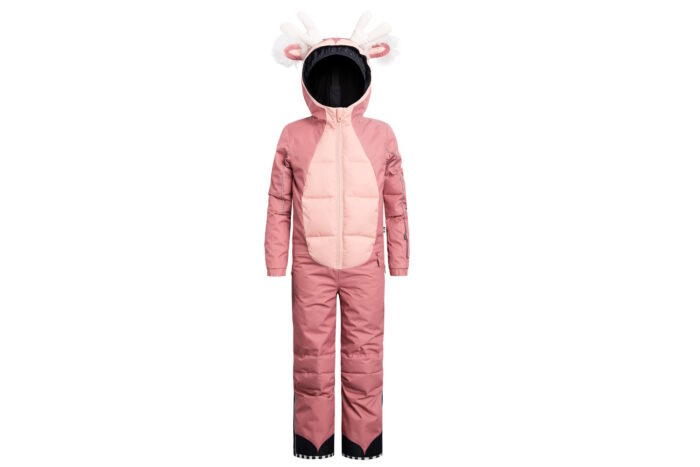
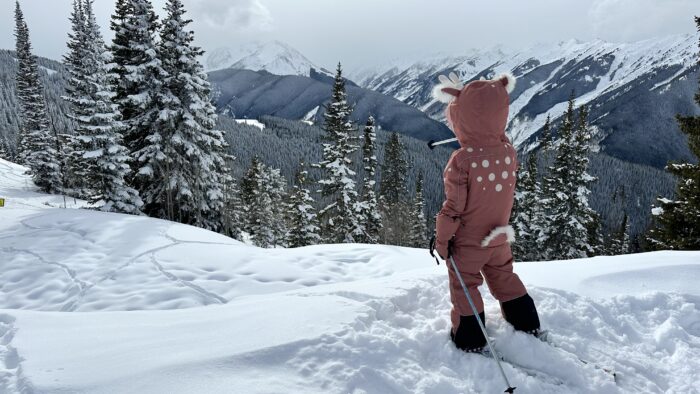
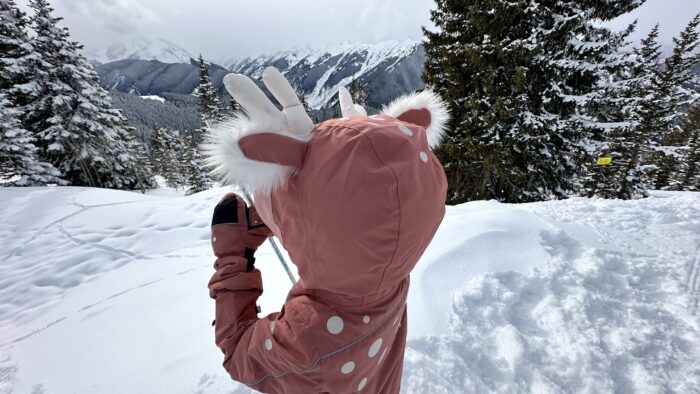
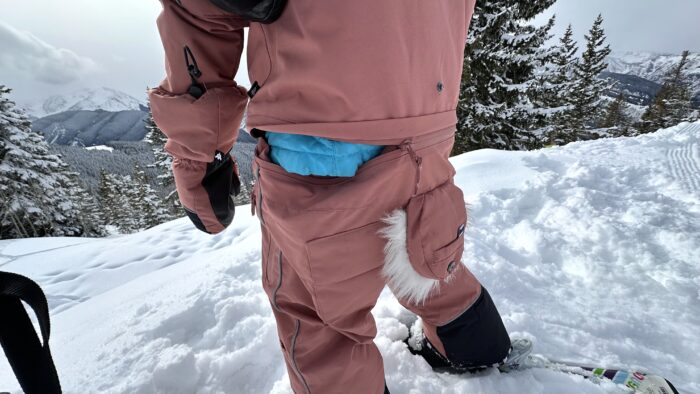
The WeeDo OhDeer Deer Snowsuit is unique and cozy; (photo/Heather Balogh Rochfort)
-
-
Specifications
Pros & Cons
Pros
- Cutest design on the ski hill
- Internal suspenders are a great feature for snowsuits
- Toilet zipper for bathroom breaks
Cons
- Very expensive
Read Review: Unique, Functional, and Downright Cozy: WeeDo OhDeer Deer Snowsuit Review
If your kid wants to make a statement on the ski hill, there is no better way to do so than the WeeDo Snowsuit ($280). WeeDo managed to create a series of fun-loving snowsuits themed after a variety of creatures such as a unicorn, dinosaur, or even a raccoon.
But, they function even better than they look thanks to unique features designed for kids. Our favorite: the full-waist zipper that splits the snowsuit in half to make bathroom breaks easier.
We also love the internal suspenders on this fun Snowsuit that allowed our 5-year-old tester to walk around the ski lodge without dragging the top of her snowsuit behind. And, did you note those cute lil’ antlers?
Other Awesome Kids’ Snow Gear
While these seven products didn’t receive accolades in our number one spots, they each reserve a hanger in our kids’ gear closet.
Specifications
Pros & Cons
Pros
- Non-insulated for warm days or high-output activities
- Pit zips to dump heat
- Adjustable sleeves that grow with your child
Cons
- Niche; not all families have the means to have insulated and non-insulated jackets
- Expensive, especially without insulation
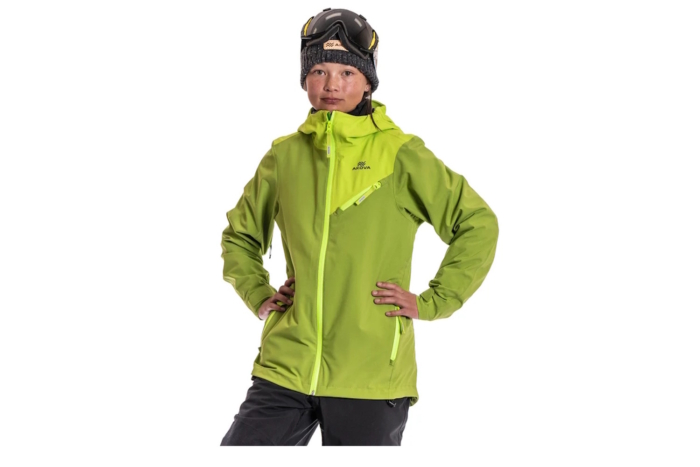
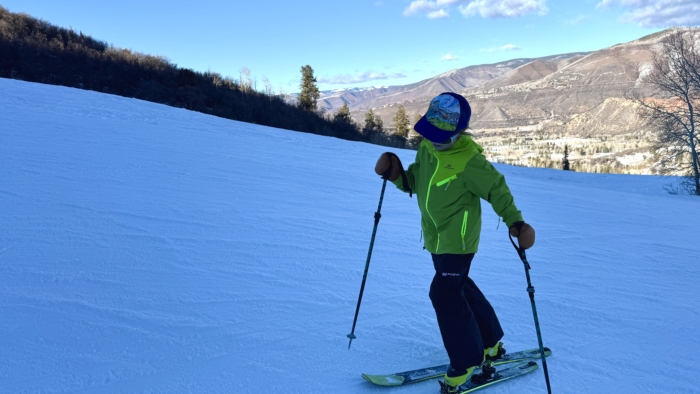
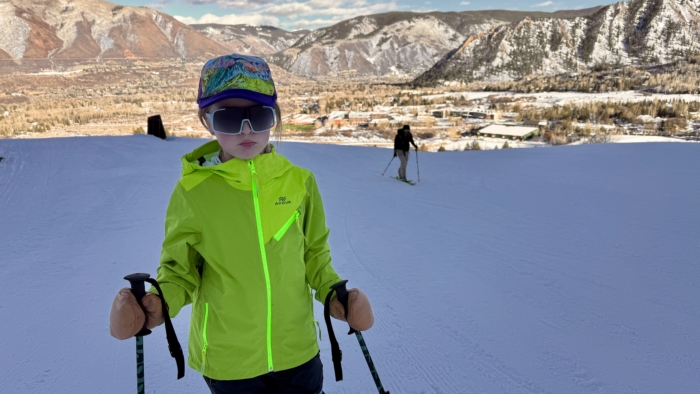
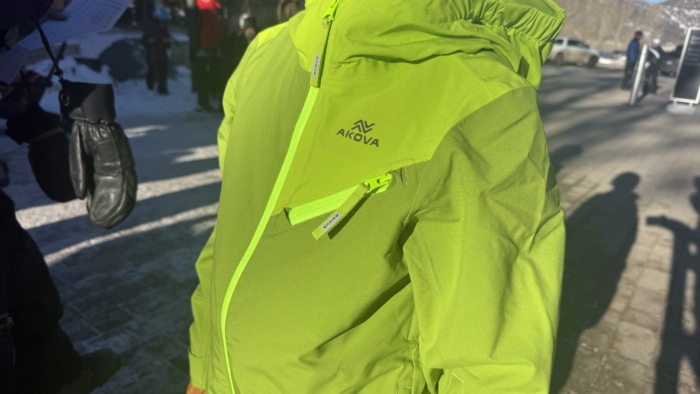
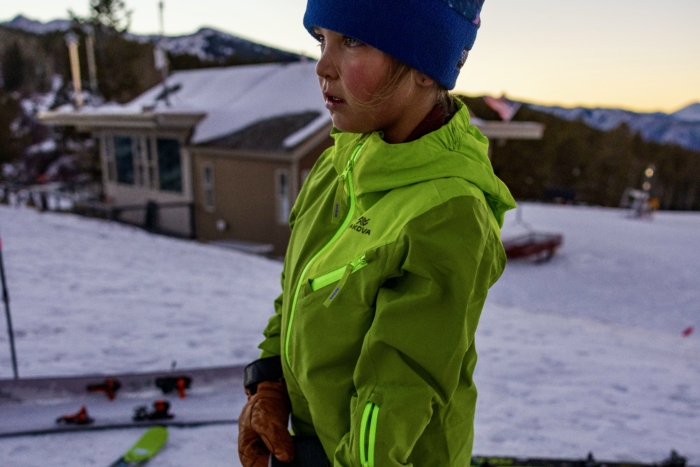
The Akova Kids’ Elevated Hardshell ($210) fills a gap that few brands address: a true technical shell for kids. While most children’s ski jackets come insulated and built for resort laps, Akova designed this one like an adult backcountry shell: lightweight, breathable, and built for movement. According to GearJunkie’s on-snow tester Heather Rochfort — the parent of our field tester — this piece is a unique high-performer.
Our Colorado 8-year-old tester wore the jacket during uphill ski sessions, including her first Tiehack climb at Buttermilk Ski Resort in Aspen. The route covers roughly 1,600 feet of gain over 1.8 miles, and she wore the jacket for the entire climb (and the moonlit descent!) The non-insulated design, combined with pit zips and a 20K/20K waterproof-breathability rating, meant she stayed comfortable during the uphill without overheating.
The jacket moves easily, sheds snow well, and includes thoughtful features like a helmet-compatible hood and sleeves that adjust to grow with your child.
The downside? It’s a niche piece. Not every family will want to spend $210 on a shell that doesn’t provide insulation. But for young skiers starting to explore uphill or high-output winter adventures, the Akova jacket is a standout option.
Specifications
Pros & Cons
Pros
- Burly durability
- Lots of waist adjustability for growing kids
- Full-length zippers run the entire length of the pants
- Recycled materials
Cons
- Hook-and-latch suspenders may lose grip over time
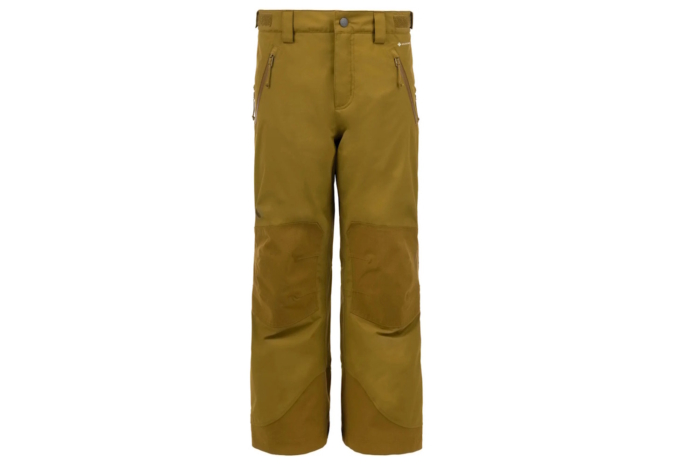
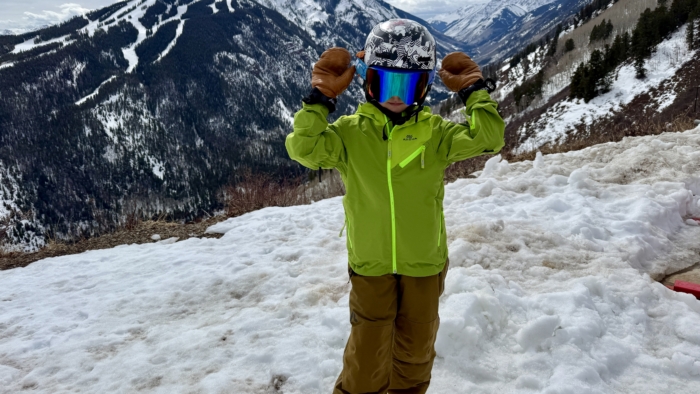
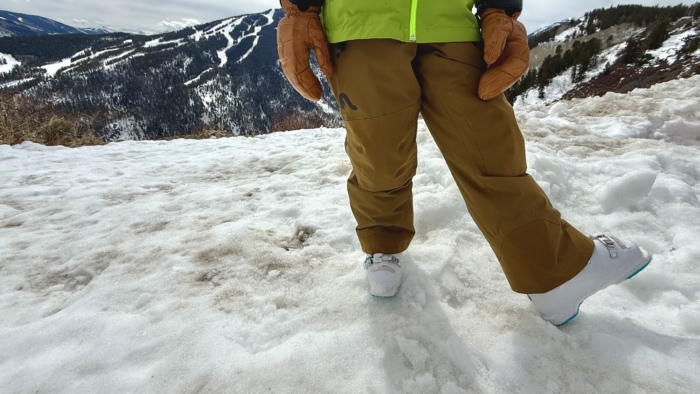
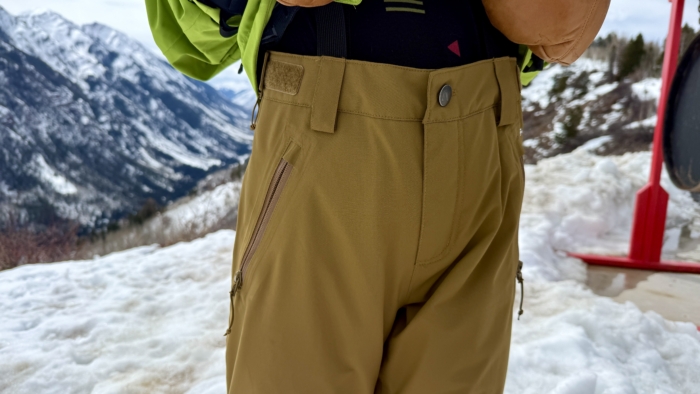
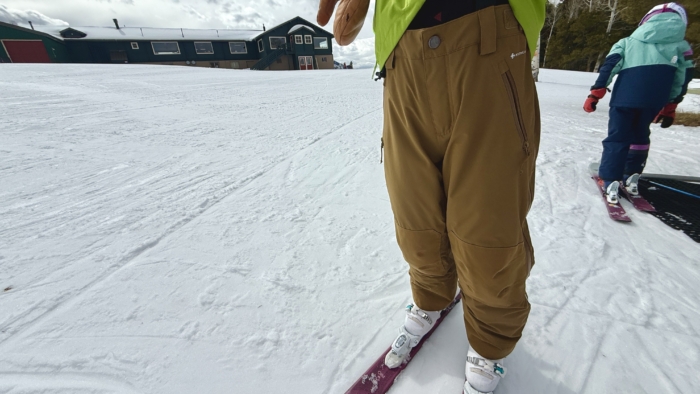
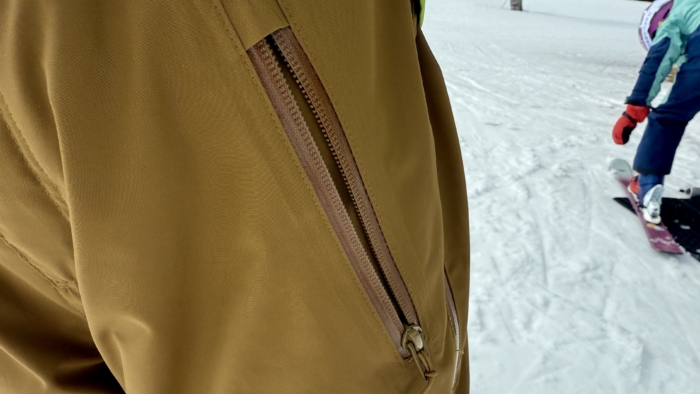
The Flylow Youth Chemical Pants ($230) bring adult-level durability and features to kids’ ski gear, which is something parents of hard-charging young skiers will appreciate. Built with a 20K/20K waterproof-breathable membrane and 80 grams of Primaloft Black ECO insulation, these pants are warm enough for cold ski days without sacrificing ventilation.
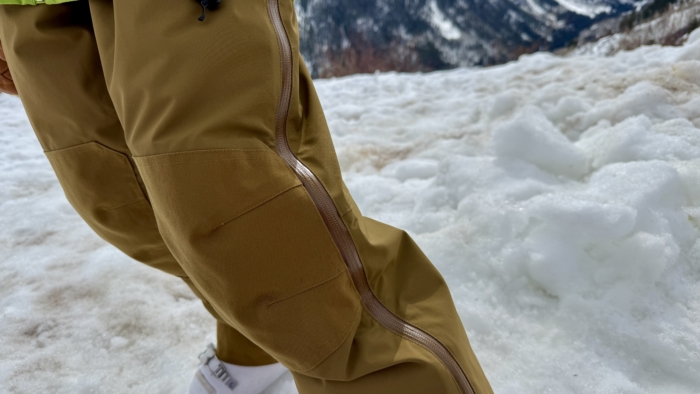
Our 8-year-old tester wore the Chemical Pants for roughly 5–10 ski days on her pre-devo ski team in Aspen, quickly putting them through the wringer. The 80-gram insulation stayed toasty even on frigid mornings when paired with thicker fleece base layers (she actually reported being too warm on occasion). Fortunately, Flylow added full-length outer-leg zippers, which made it easy to dump heat during high-output moments like booting the 800-foot hike up Highlands Bowl.
Durability is another highlight. The 500-denier cuff and knee reinforcements handled plenty of crawling, kneeling, and parking-lot chaos without showing wear.
The removable suspenders use hook-and-latch for easy adjustment, though that system may not last as long as buckle-style designs. Still, for young skiers logging serious days, these pants deliver impressive performance.
Specifications
Pros & Cons
Pros
- Don’t shrink in the dryer (tumble dry low)
- Non-mulesed wool
- Stretchy fabric moves well with kids
Cons
- Quite expensive for growing kiddos
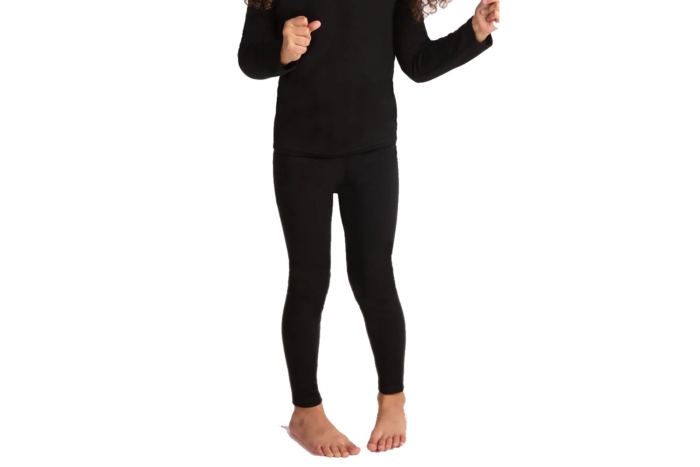
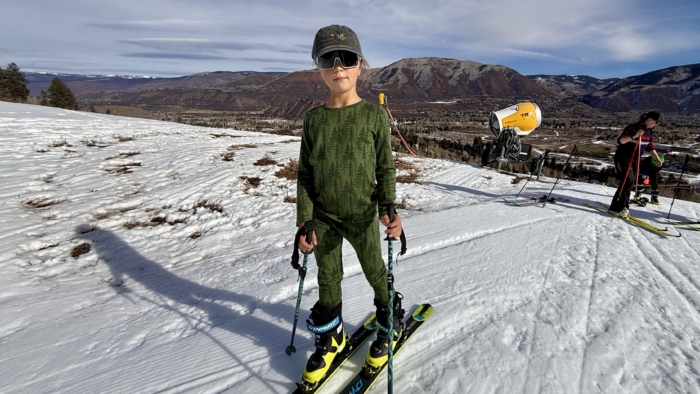
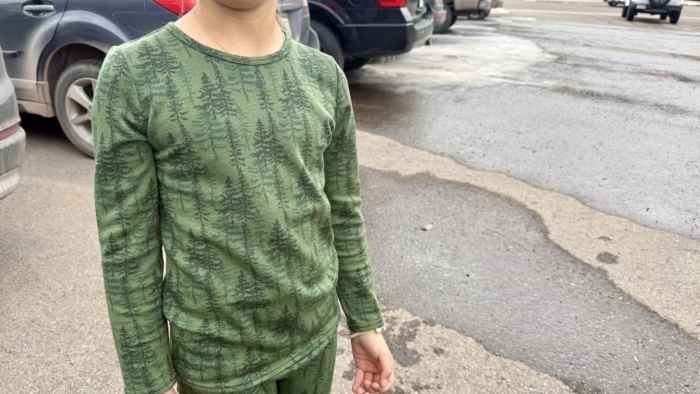
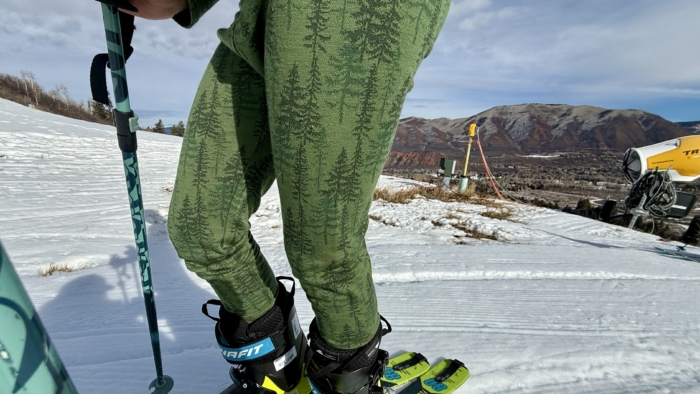
The Woolx Kids Explorer Base Layer Top and Bottom ($119 each) quickly became the go-to winter layers for one Colorado tester who practically lived in them all season. Made from 100% midweight (230 GSM) merino wool, they balance warmth, breathability, and stretch.
During testing, our Colorado-based tester wore the Woolx set for an entire pre-devo season: roughly 22 full ski team sessions, multiple family ski days, a dozen Nordic lessons, and even a few uphill ski attempts. On her first uphill outing of the season, temperatures climbed fast. Outer layers came off entirely, leaving her skinning about 1,000 vertical feet in just the base layers. The merino kept her warm while still breathing well enough that she didn’t overheat. Total win.
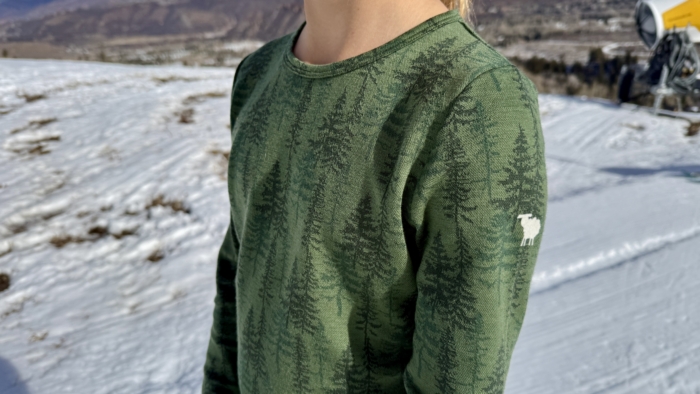
The stretchy fabric moves easily for climbing, bumps, and playground-level energy. And the playful colors and little sheep logo quickly became favorites.
And the downside? At $119 per piece, they’re pricey for fast-growing kids. But for families logging serious winter days, they perform beautifully.
Specifications
Pros & Cons
Pros
- More affordable than wool
- Recycled polyester is less reliant on fossil fuels than virgin polyester
- Smooth surface is great for layering
Cons
- Not a ton of fun colors for kids
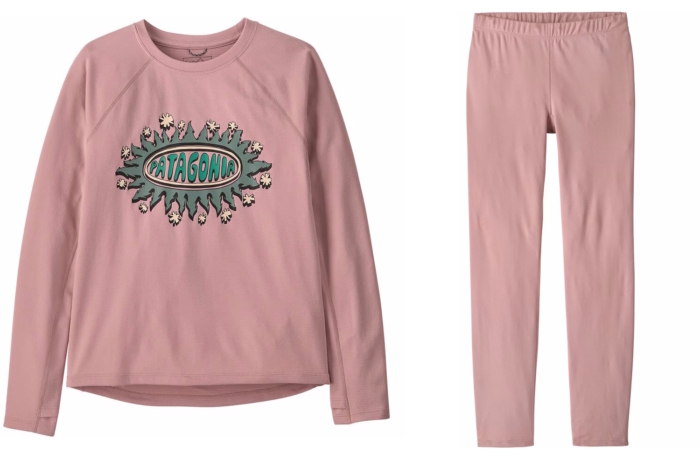
If allergies or pricing keep you away from wool, then Capilene is another great option. We love the Patagonia Midweight Kids’ Capilene Crew and Bottoms ($45 each). They’re made from 100% recycled polyester with an exceedingly soft surface that kids love.
When combined with the slim fit, we had zero complaints from one preschool tester as we layered her snowsuit over top of them.
Polyester layers typically hold onto odors more than wool, but Patagonia uses an antimicrobial coating that keeps smells at bay. One tester wore the Patagonia Midweight Kids’ Capilene Crew and Bottoms through 4 days of skiing, and her parents barely noticed a smell.
Specifications
Pros & Cons
Pros
- Easy on-off for kids
- Grippy palm that makes mittens less cumbersome
- Incredibly warm
Cons
- Some testers had a hard time keeping them on
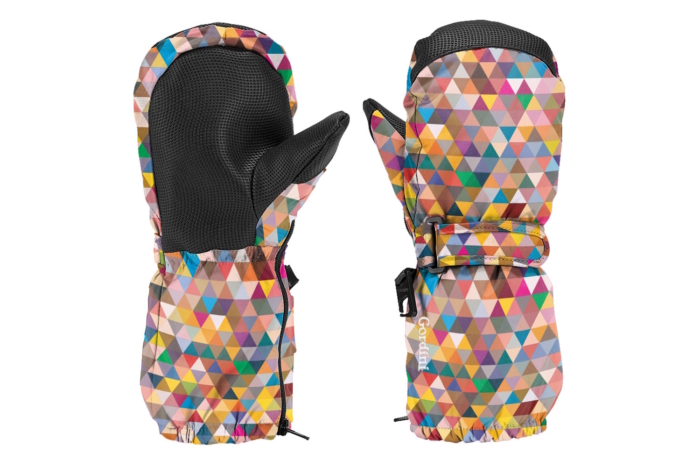
When it comes to mittens, Vermont-based Gordini knows what it’s doing. The brand makes amazing gloves and mittens for all members of the family, but we were beyond impressed with the Gordini Easy-On Mittens ($30) for toddlers.
The features are everything you want in a mitten. The outer material is grippy enough for kids to hold onto things, and the dreaded thumbhole is super easy for them to put their own thumb into, thanks to the long zipper on the side of the mitten. Our 5-year-old tester had zero issues pulling these on by herself—a modern miracle.
The side zipper serves two functions since it also makes it easy to pull the gauntlet wrist over any jacket. Both our 5-year-old and 2-year-old testers agree — the Easy-On Mittens are the warmest and most playful mittens we’ve tested.
Specifications
Pros & Cons
Pros
- Quick-release shoulder straps
- Plenty of color options for kiddos
Cons
- Younger children may struggle with the design while using the bathroom
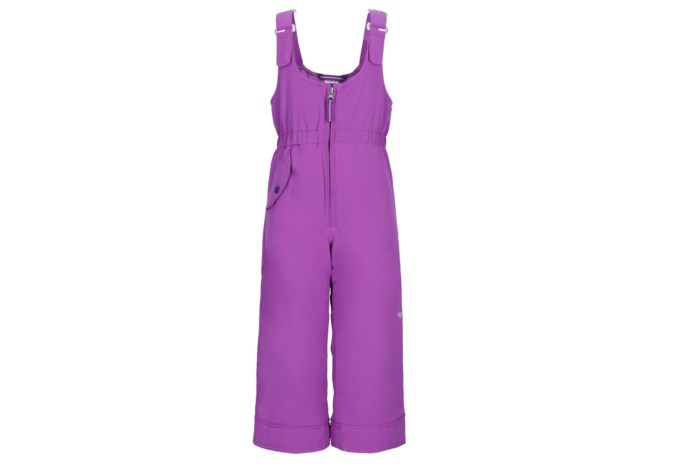
When your 2-year-old wakes up and immediately asks to put on his snow pants and go outside, you know you’re doing something right. These Obermeyer Snoverall Bibs ($110) are a true bib design with material covering the lower stomach.
The straps are adjustable and come with a quick-release feature, which makes them a lot easier to remove. But, one tester still struggled to get them off in time for the bathroom.
These Snoverall Bibs also feature an I-Grow system; snip a few threads and add up to two inches of length.
Specifications
Pros & Cons
Pros
- Reversible so you get two styles
- All recycled materials
Cons
- Some kiddos claim it’s “too warm” for moderate temperatures
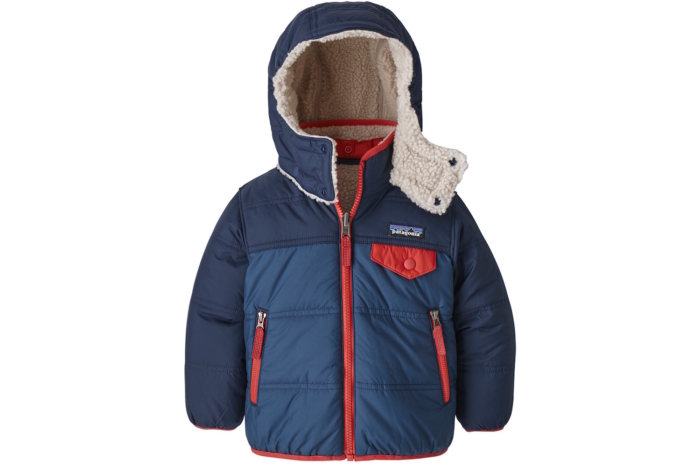
Parents always love a good deal, and this one is a twofer. The Patagonia Baby Reversible Tribbles Hoody ($115) is not only fully reversible, but it’s also made out of 100% recycled fleece on one side and 100% recycled polyester on the other.
Our testers loved this jacket for its big, cozy hood that comes with two snap buttons around the chin.
While in forest school, the Baby Reversible Tribbles Hoody kept our 4-year-old tester plenty warm and dry. That said, he did refuse to put it on indoors because it’s “Too hot!” Fortunately, that’s exactly what we’d like to hear.
Kids’ Snow Gear Comparison Chart
Scroll right to view all of the columns: Price, Sizes, Materials, Waterproof.
| Kids Gear | Price | Sizes | Materials | Waterproof |
|---|---|---|---|---|
| Reima Stavanger Snowsuit | $195 | 2T – 10 years old | Regular and recycled polyamide, regular and recycled polyester, Fellex insulation | Yes |
| L.L.Bean Kids’ Down Jacket | $120 | Little Kids 4 – Big Kids 18 | Ripstop nylon, polyester fleece, and down insulation | No |
| Hootie Hoo Pinnakle Insulated Jacket and Insulated Bibs | $185, $165 | 4-12, Small-Large | Recycled polyester, recycled nylon, Primaloft Silver recycled insulation | Yes |
| Town Hall Mountain Town Winter Jacket & Winter Bib | $220, $180 | XS-XL (for both) | 100% recycled polyester twill on the exterior, 75% undyed recycled nylon and 25% recycled polyester on the liner, and 100% recycled polyester insulation | Yes (10K waterproofing) |
| Town Hall Down Town Puffy | $175 | XS-XL | Recycled polyester, recycled nylon | No |
| Patagonia Infant High-Loft Down Sweater Bunting | $179 | Newborn – 24 months | Recycled polyester, recycled nylon, and recycled down insulation | No |
| WeeDo Ohdeer Deer Snowsuit | $280 | XS- L | Polyester and recycled polyester | Yes |
| Akova Elevated Hardshell | $210 | 4-16 | 100% polyester outer, polyester and spandex skirt and mesh | Yes |
| Flylow Youth Chemical Pants | $230 | XXS (4) – XL (14) | 100% recycled polyester; Primaloft Black Eco insulation | Yes |
| Woolx Kids Explorer Base Layer Top and Bottom | $119 each | XXS – XLG | 100% Merino wool | No |
| Patagonia Midweight Capilene Crew & Bottoms | $45 each | XS-XXL | Recycled polyester | No |
| Gordini Easy-On Mittens | $30 | XXS-XL | Ripstop nylon, Megaloft synthetic insulation, Dri-Max waterproof insert | Yes |
| Obermeyer Snoverall Bib | $110 | 1-8 | Polyester | Yes |
| Patagonia Baby Reversible Tribbles Hoody | $115 | 3 mos. – 5T | Recycled polyester and recycled polyester taffeta | Yes |

How We Tested Kids’ Snow Gear
Our Expert Testers
Our primary tester for the winter season is based in Carbondale, Colorado, Heather Balogh Rochfort is an avid outdoors person with decades of experience in mountain snowsports, like backcountry skiing, downhill skiing, uphilling, and cross-country skiing. She is also a mom to a vivacious 8-year-old who routinely logs more than 50 days at the local ski hill during the ski year — and has since she was in kindergarten.
Rochfort also tracked more than 50 days for the ski season, including boot packing Highlands Bowl. Not only does her daughter enjoy weekly full-day downhill ski lessons at Snowmass Ski Resort, but she also participated in weekly Nordic ski lessons, making her a prime tester for all kids’ gear and apparel. Her daughter also enjoys sledding after school.
Contributor and mother Chelsey Magness was a foundational tester who helped kick off the original version of this guide in 2020. She’s based in the Pacific Northwest.

Our Testing Grounds
In addition to deep category research, we put this gear directly on our own kids all winter. They tested every piece while downhill skiing, Nordic cruising, hiking trails, wading through streams, and spending full days outside at all-weather forest school.
Our Testing Process
We evaluated essential winter layers — base layers, midlayers, jackets, pants, snowsuits, and gloves — for durability, fit, affordability, sustainability, and washability. We prioritized kid-friendly functionality, like easy closures for quick dressing, alongside styles older kids actually want to wear.
While toddlers don’t really care about what they’re wearing, older kids definitely have opinions. It’s important for children to like their snow gear, so we took style and trends into consideration.

Our Kids’ Snow Gear Rating System
Beyond the overall score, we evaluate each product on a scale of 1–10 across four core performance pillars:
- Warmth & Thermal Insulation: Insulation loft/weight, microclimate regulation, thermal efficiency, and real-world cold resistance.
- Weather Protection & Waterproofing: Waterproof membranes (e.g., 10K/20K ratings), taped seams, DWR coatings, and moisture-wicking capability.
- Durability & Build Quality: High-wear area reinforcements (knees/seat), tear resistance, laundry durability, and multi-season hand-me-down longevity.
- Fit, Mobility, & Growth Adaptability: Range of motion, ease of entry for fast potty breaks, and growth features like extendable grow system cuffs.

Buyer’s Guide: How to Choose the Best Kids’ Snow Gear
Choosing kids’ ski clothing is daunting because you’re looking at a number of items and factors. However, here are the most important criteria to consider no matter what type of item you’re considering.
Waterproofness
Contrary to what you may think, not all kids’ gear and apparel is waterproof, nor does it need to be. Items like the L.L.Bean Kids’ Down Jacket or the Town Hall Down Town Puffy are only water-resistant, which means that a light rain for a short period of time won’t cause any problems.
However, a jacket like the Patagonia Everyday Ready Jacket or kits like the Hootie Hoo Pinnakle Insulated Jacket and Insulated Bibs are completely waterproof. This means that water resistance is enough to keep out driving rain or — in this case — total saturation when a child is sitting in a snowbank for 2 hours.

If you know you’re looking for waterproofing, it’s good to know that there are varying levels of water resistance. These are called waterproof ratings, and they are measured in millimeters. During this testing process, a one-inch by one-inch cylinder is placed over the tested fabric.
The cylinder is then filled with water. The height that water reaches before the fabric leaks — known as the water column — is where the waterproof rating comes from.
- 0-5,000mm: Minimal to no water resistance.
- 6,000-10,000mm: Rainproof and waterproof under light pressure.
- 11,000-15,000mm: Rainproof and waterproof unless under high pressure.
- 16,000-20,000mm: Rainproof and waterproof under high pressure.
- 20,0000mm+: Rainproof and waterproof under very high pressure.
For most external kids’ snow gear, you’ll want waterproof ratings that minimally fall between 6,000-10,000 mm.

It’s also a good idea to understand where waterproofing comes from, as most fabrics aren’t naturally waterproof. To get this waterproofing, most apparel uses either a laminate or a coating. A laminate is similar to wallpaper in that it provides full coverage with the best level of waterproofing.
It costs more and is frequently made from polyurethane (PU). Unlike wallpaper, a coating is painted on in a similar fashion to how we paint a wall. While this is more affordable, it doesn’t offer as effective waterproofing.
Most outerwear uses Durable Water Repellent or DWR. This is an added chemical finish that allows the moisture to bead up on the surface of the garment. Historically, DWR was a toxic concoction packed with “forever chemicals” called polyfluoroalkyl substances, or PFAs. These days, many brands like REI and Patagonia are taking a stand against these toxic chemicals and using PFA-free DWR that is better for the environment.
Final note: while most outdoor brands would disagree, there really isn’t such a thing as “waterproof-breathable” fabric. The more waterproof a fabric, the less breathable it will be; that’s the inherent tradeoff. Materials like rubber are 100% waterproof, but we don’t often wear them skiing because we would overheat immediately. That’s why most kids’ snow gear uses “waterproof-breathable” materials like GORE-TEX. They breathe better than impermeable materials like rubber, but still offer decent waterproofing.

Insulation
Insulation is the ingredient that keeps you warm, but it comes in a variety of forms and fibers.
Down
Down insulation comes from ducks or geese, but it’s not the feathers. Instead, it comes from the plumage, that soft and fuzzy layer that sits beneath. This plumage lofts up inside the garment and traps heat in the air space between all of the fuzzy stuff.
Found in items like the Patagonia High-Loft Down Sweater Bunting, down is often considered the gold standard since it provides the highest amount of warmth with the lowest amount of weight. But it’s not without its drawbacks. Down doesn’t dry quickly, so when it gets wet, it loses its loft and, thus, its warmth. It also costs more than synthetic insulation.

Synthetic Insulation
Synthetic insulation goes by a number of names since many brands make their own proprietary version. In general, synthetic insulation uses some type of human-made, compressible fibers to warm us up. Unlike down, these are water resistant, which makes synthetic insulation a better choice in wet environments.
Synthetic insulation is often heavier and less packable than down, but it often costs less money. It can be found in a ton of kids’ ski and snowboard clothing like the Patagonia Everyday Ready Jacket, the Patagonia Baby Reversible Tribbles Hoody, or the Reima Stavanger Snowsuit. It’s also the common choice for mittens and gloves.

Alternative Insulation
While down and synthetic insulation are the most popular forms of insulation, there are many other alternate options for fibers that keep us warm. Columbia uses the brand’s proprietary thermal reflectivity, a series of silver dots, inside the clothing that reflect your body heat back at you to maintain warmth.
Windproofness
Windproofing may not immediately be something you consider when buying kids’ snow gear, but it’s an important factor. If an item has low windproofing, wind can rip through the warmth.
In general, kids’ ski and snowboard clothing will fall into one of two categories: windproof or wind-resistant. Any item that is waterproof will also be fully windproof since the barrier blocking the rain and snow is also blocking the wind. Simultaneously, a water-resistant item will also be wind-resistant.
The tradeoff with wind-resistant items is that they are more breathable than windproof gear, making them great choices for high-output activities like cross-country skiing. That’s why some gloves are only wind-resistant; they are very breathable for Nordic skiing.

Breathability
As we mentioned before, breathability is the game changer when it comes to water or windproofing. While it’s great to be dry and safe from the snow and rain, no one wants to go skiing inside a portable sauna. That’s where breathability comes in.
In science terms, breathability is the transfer of water vapor from the inside of the fabric to the outside. This happens because opposites attract: Your warm, sweaty body heat is drawn to the cold and fresh outside air. The more efficient this process is, the better you feel without getting cold or clammy. However, breathability is much easier when there isn’t a waterproof or windproof barrier blocking the path of the vapor transfer.
Snow gear like the Obermeyer Snoverall Bibs will have less breathability but perform far better against wet and snowy weather.

Reinforcements
It’s no secret that children are tough on gear. That’s why kids’ snow gear often has reinforced sections to add durability in high-wear areas. For kiddos, these areas are often the knees, elbows, butt, and hem of snowpants or snowsuits. The fabric of the reinforcement varies but is often a high-denier polyester, Cordura, or ballistic nylon.

Adjustability & Growth System
Kids grow like weeds, and it’s the parents who have to shell out cash every year to buy the next size. That’s why adjustability and growth systems are a key element to most kids’ snow gear. Brands like Columbia Sportswear, Obermeyer, and WeeDo all have similar systems that allow parents to remove some stitching or undo a snap to release 1-2 inches of added length in the arms or legs. This allows kids to wear items longer and get more use out of them.
Other brands like Reima intentionally make a roomy product so that it lasts longer. If your child wears a size 4T in the Reima Stavanger, he will likely find it big at first. This is intentional because Reima wants the snowsuit to last for more than one season.

Hood & Collar
The vast majority of kids’ snow jackets have some type of hood. That’s because we lose the majority of our heat through our heads, and a hood is a great way to keep your kiddo warm.
However, there are various types of hoods depending on how you plan to use the jacket. A fixed hood is one that is permanently attached while a removable hood (like the L.L.Bean Kids’ Down Jacket) is one that is attached via a zipper or snaps. This means your child can take it off during a warm day or if they are wearing a beanie and don’t need it. Hoods can also be lined, unlined, or insulated.
Insulated hoods are warmer and are best for sedentary activities in cold weather. A lined hood has a second layer of fabric sewn into the interior, which adds a little more warmth but is mainly a nicer aesthetic.
Kids’ snow gear doesn’t have as many collar options as adults, but you’ll still see options varying from unlined to fleece-lined. When possible, opt for a fleece-lined collar since that warm coziness goes a long way toward keeping your child comfortable.

Pockets
Pockets are equally important for adult ski jackets and kids’ winter jackets, but zippered pockets are especially crucial for our littlest rippers. At a minimum, look for kids’ gear and apparel that has at least two zippered hand pockets for children to use for warmth or to stash away secret treasures.
Snow pants go above and beyond by adding Velcro cargo pockets on the side of the leg. Butt pockets are less essential for kids — especially toddlers — since they spend so much time sitting on their rears.

Sustainability
Gone are the days when we don’t pay attention to the fibers our children are wearing. When possible, opt for natural fibers like the Merino wool. While wool is more expensive than synthetic options, natural fibers are not derived from the fossil fuel industry and degrade at the end of their life cycle.
If you can’t swing the cost of natural fibers or it doesn’t make sense (like with waterproof outer layers), try to choose kids’ ski clothes made from recycled materials like those found in the Patagonia Kids Capilene Midweight Crew and Bottoms. While these still struggle with degradation at the end of their life cycle, they are less reliant on fossil fuels since we are only dealing with a single extraction.
For insulation, it’s also a good idea to make sure your down is Responsible Down Standard (RDS) or Global Traceable Down Standard (GTDS) certified. This means that the plumage is coming from a reputable source with high standards for animal welfare and a transparent production process.

Price & Value
Kids’ snow gear runs the spectrum when it comes to pricing; some items simply cost a lot more than others. An expensive item doesn’t necessarily mean it is better than an affordable alternative. However, sustainable fibers and eco-friendly manufacturing do come at a cost; you’ll pay more so the planet pays less.

Budget
Mittens for kids will be one of the more affordable items you buy and will typically range from $20 to $60. Base layers are a necessity for your children and you can expect to pay anywhere from $30 to $60 per item.
The Patagonia Kids Capilene Midweight Crew ($39) is priced in the middle of the spectrum. While it still uses synthetic materials, they are all recycled and that adds to the cost.

Mid-Tier
Midlayers look very different from kid to kid and brand to brand, and the cost is commensurate, ranging from $50 to $120.
The L.L.Bean Kids’ Down Jacket ($109) sits at the top of the spectrum because it offers more warmth and weather resistance than any of the other midlayers.
Premium
Outer layers like snow pants, ski jackets, and snowsuits will be the most expensive item you buy since they offer warmth and all-around weather protection. For ski jackets and snow pants, the price range is vast: $80-250.

The Obermeyer Snoverall Bibs ($100) are next on the list. The Patagonia Baby Reversible Tribbles Hoody is at a similar price point ($109). While it also has waterproofing and insulation, you’ll also get a host of recycled materials.
The Patagonia Infant High-Loft Down Sweater Bunting ($179), Hootie Hoo Pinnakle Insulated ($180), and Insulated Bibs ($165) are all near the premium end of the pack in regard to price.
While it can be used as a midlayer or exterior layer, the Town Hall Down Town Puffy ($175) is also near the top of the spectrum. While each of these products is completely waterproof and fully insulated, they’re also constructed by brands with an ethos rooted in sustainability — and the materials show that.

Finally, the Reima Stavanger Snowsuit ($195) sits on the highest end of the spectrum. This is a full snowsuit, so you’re getting both a jacket and snow pants with waterproofing and tons of insulation. Beyond that, you’re also getting a lot of attention to detail with kid-specific features that no other brand has. If you and your child spend a lot of time outside, the added cost may be worth it.

Frequently Asked Questions
There isn’t a single brand that is categorized as the “best” brands for kids’ ski clothing.
However, there are certainly brands that make high-quality products for kids. In the United States, Patagonia has long been known for exceptional kids’ apparel, with a special nod to their Infant High-Loft Down Sweater Bunting.
Columbia Sportswear is also known for decent and affordable kids’ snow gear. But in the past 5-7 years, more new or European brands have come to the American market with kids-only apparel, adding more competition and quality into the category. These brands include Iksplor, Reima, WeeDo, and Namuk, to name a few.
Additionally, the last few years have brought innovation to this category from American brands like Town Hall (started in Steamboat Springs, Colo.) and Hootie Hoo (founded in Vermont).

Winter clothing is especially pricey, so it’s tempting for parents to size everything up to get the most use out of it. While that can be a temporary solution, it may not be your best bet. Remember: large outdoor layers will fit sloppy and can cause tripping hazards for your kiddo (or even ripped layers if they step on pant legs).
Additionally, winter layers perform best if they fit properly. An oversized baselayer is going to hang on your child, which means the fabric won’t be able to properly wick sweat away from their skin. For an insulating puffy or exterior ski kit, a larger size means lots of extra space on the inside. Since both down and synthetic insulation keep us warm by warming the air around us, extra space will take much longer to warm up for your child.
On the flip side, you don’t want your child’s gear to fit too snugly. This will make it tougher for them to move around and stay warm, which could be problematic.
Ultimately, use the accompanying sizing guides for each brand and choose the size that works best for your kiddo when you need it — and then double down on those growing systems that are included in most exterior layers these days!
Neither is better and there is no overall rule on snow pants versus snowsuits. However, a general rule of thumb is that snowsuits are better for smaller kiddos (younger than kindergarten) whereas snow pants are more popular with the older crowd. Snowsuits work best for babies, toddlers, and preschoolers because there are no cracks to let cold air or snow inside.
As a result, they tend to be warmer which is especially helpful for babies who cannot communicate their needs. However, they are more cumbersome, particularly for kids who are not wearing diapers. That’s why most older children start to rebel against them and ask for snow pants.

Gauging your baby’s warmth during outdoor adventures is one of the most stressful parenting tasks. It’s so relative: Some babes run warm and others are little ice cubes.
If you’re worried about them while playing in the snow, check on their temperature by feeling their core every once in awhile. If it feels cold to the touch, put another layer on them. If it’s too hot, remove a layer.

It is often overwhelming to build out your child’s first winter kit, so start with the basics. First, prioritize high-quality baselayers. These are the items that will sit next to your child’s skin and can make or break their comfort. Second, emphasize the outer layers (which may or may not include insulation).
Children have a tendency to wallow in the snow far more than adults do, so it’s more important to guarantee waterproofness and a reliable layer against Mother Nature. Lastly, consider their appendages. Hands and toes are typically the first things to get cold, so pay extra attention to their hand coverings. For the most part, ditch the gloves; mittens are much warmer for little fingers.

If parents made all of the kids’ outdoor clothing, it would probably be more affordable. But as it is, kids’ clothes can be outrageously expensive. On the one hand, we want our babies to be comfortable on outside adventures. On the other hand, we still need a few bucks left in the bank for said winter adventure.
We’ve found a few strategies for gearing up for winter without breaking the bank. First, before you drop a ton of money on winter gear for your child, check out local thrift or used gear stores.
Ask your fellow parent friends if they have anything they don’t need anymore. Having a go-to source for secondhand gear can be a real treasure.
Next, prioritize and think about how often you’ll really use something. If it’s something you know you’ll use quite often, it’s worth the splurge. But if it’s a once-per-year kind of item, consider finding an affordable alternative.
Most of all, just get out there. Whatever gear you end up choosing, your kid, your sanity, and your family memories will thank you for making the effort to get outside — even when the temperature drops and the snow flies.