Most campers don’t need a complicated shelter. They need something comfortable, durable, reasonably light, and versatile enough to move between campground weekends and the occasional backpacking trip. That’s where the Big Agnes Blacktail 2 fits in.
The Blacktail is aimed at users who value practical function over specialization. It avoids the extremes of ultralight backpacking tents that demand compromise in durability and space, while also steering clear of bulky campground shelters that are impractical beyond short distances from the car. Instead, it lands in a middle zone: enough interior room for comfortable nights, reliable weather protection, and a setup process that doesn’t slow you down after a long day outdoors.
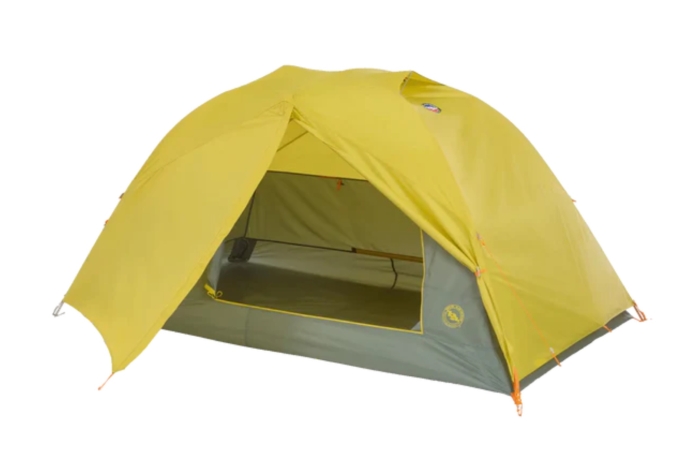
After several nights of testing at a Washington State Park, the most noticeable quality was how usable the interior felt. Dual doors and vestibules make it feel like a true two-person tent, or a comfortable solo setup with room to spread out. The vestibules add practical storage space for wet or muddy gear, keeping the sleeping area clear over multiple days.
Rather than trying to stand out through aggressive weight savings or feature overload, the Blacktail focuses on consistency. It’s a straightforward three-season shelter that prioritizes space, protection, and ease of use in equal measure.
In short: The Big Agnes Blacktail 2 is a well-rounded tent that blends comfort, durability, and versatility. It sleeps two without feeling tight, works well for established campgrounds, and remains capable enough for occasional backcountry trips — so long as weight isn’t your top priority. One shelter that can realistically handle both roles without complication.
Looking for a new backpacking shelter? Check out how the Blacktail 2 compares to the rest of our top choices in GearJunkie’s Best Backpacking Tents Buyer’s Guide.
-

-
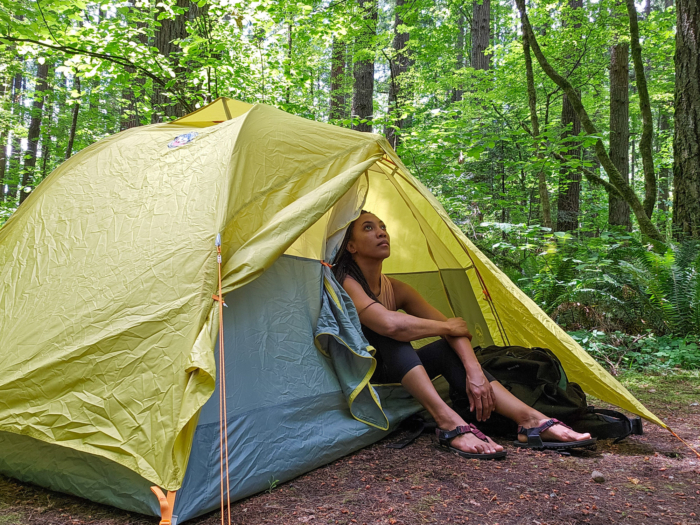
The Big Agnes Blacktail 2 Tent makes an excellent first backpacking shelter; (photo/Rebecca Ross)
-
(Photo/Rebecca Ross)
-
(Photo/Rebecca Ross)
-
(Photo/Rebecca Ross)
-
(Photo/Rebecca Ross)
Specifications
Pros & Cons
Pros
- Dual doors and vestibules
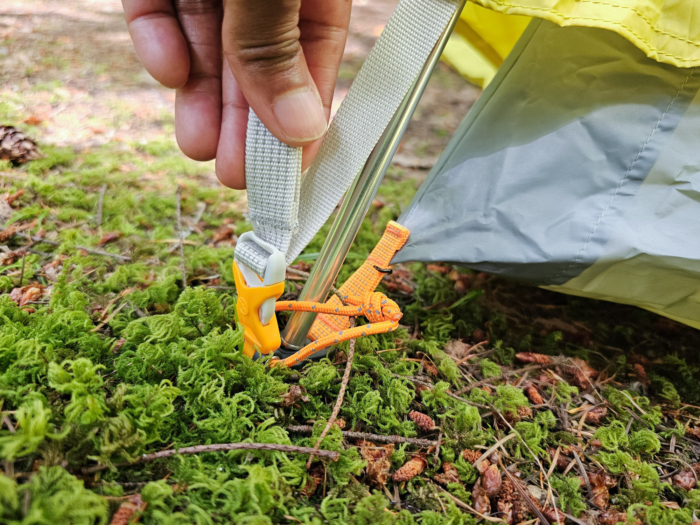
- Solid setup with sturdy stakes
- Spacious interior for two campers
- Balanced design for campground and occasional backpacking use
Cons
- Heavier than many backpacking-focused tents
- Premium price
Big Agnes Blacktail 2 Tent: Review

This tent is built for campers who want a balance of comfort and practicality without optimizing for a single performance category. It works equally well in established campgrounds and on moderate backpacking trips, offering enough space and weather protection to remain comfortable across changing conditions.
During testing at a Washington State Park, setup proved consistently straightforward, and the interior stayed comfortable across multiple nights. The dual-door layout and vestibules noticeably improve daily usability, especially when sharing space between two people and their gear.
The Blacktail stands out less for any single feature and more for how consistently it performs the fundamentals. It avoids unnecessary complexity and instead delivers a predictable, reliable shelter experience across the three-season range.
The Features You Need, With Little Excess

The Blacktail 2 doesn’t rely on an extensive feature list. Instead, each component has a clear purpose, focusing on making setup and camp organization more efficient.
A standout element is Big Agnes’ TipLok Tent Buckle system. Each corner integrates pole attachment, rainfly connection, stake point, and tensioning into a single interface. It simplifies setup and reduces the number of separate steps required to secure the tent.
In practice, this showed during setup at a Washington state park, where the system helped streamline pitching after a long day and kept the process from feeling fussy or fragmented. Once I had it dialed in, getting the tent fully tensioned was quick and repeatable, even in fading light.
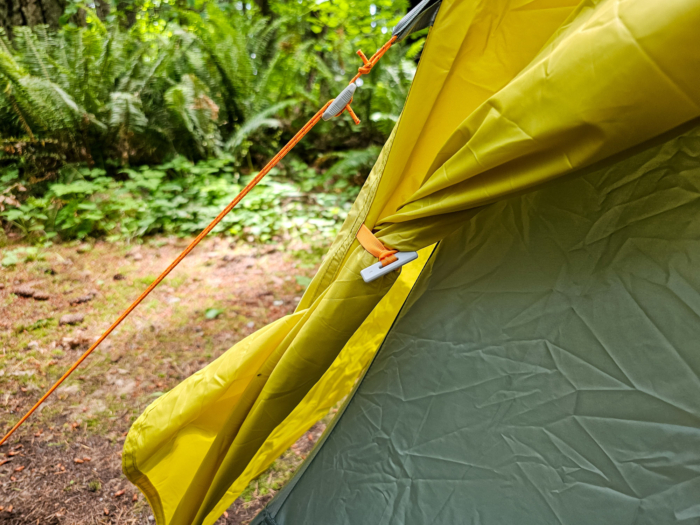
Reflective webbing improves nighttime visibility, making it easier to move around camp after dark and reducing the risk of tripping over guylines. On a couple of nights when I was moving gear in low light, it made navigation noticeably easier without needing to constantly scan the ground with a headlamp.
Beyond that, the feature set stays restrained. Nothing feels unnecessary, and nothing complicates the core function of the tent.
A Balanced Footprint With Room for Wide Pads

For a two-person tent, interior space is the Blacktail’s strongest attribute. While the square footage is modest on paper, the 42-inch peak height and arched pole structure open up the interior more than expected once you’re inside.
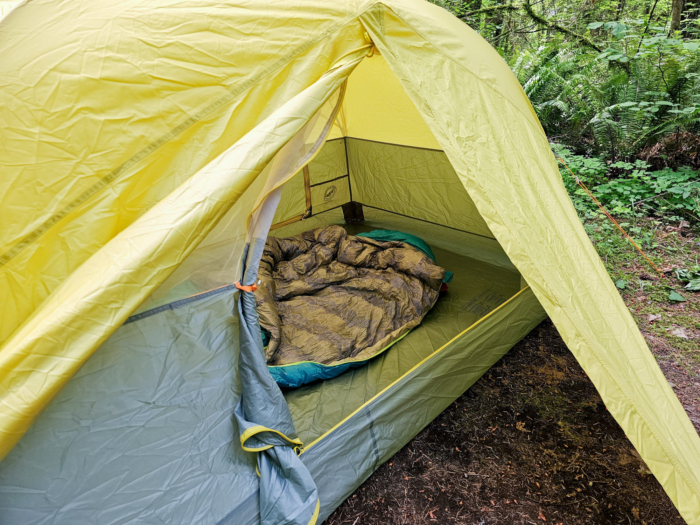
It comfortably fits two sleeping pads with enough separation to avoid constant contact, making it feel like a true shared shelter rather than a tight squeeze. There’s also sufficient room for basic gear organization without encroaching on sleeping space.
The dual vestibules add practical value over time, especially on multiday trips. During testing, they consistently kept wet shoes, packs, and other gear outside the main body of the tent, which made it easier to maintain order inside rather than constantly working around clutter.
Ventilation is solid, though not a standout. High vents, adjustable vestibules, and dual-door configurations give enough control to manage airflow as conditions shift. In warmer weather, cross-ventilation noticeably improves comfort, while the structure retains more heat when temperatures drop, consistent with its three-season intent.
The main limitation is the interior storage layout. Pocket placement is concentrated on one side rather than distributed evenly, which can feel slightly unbalanced depending on how two people set up their gear. It’s a minor drawback, but it becomes more noticeable during longer stays.
Built to Last With 75D Walls

A classic freestanding dome design gives the Blacktail a stable, straightforward structure that prioritizes ease of use over weight savings. Once pitched, it feels planted and secure, with the aluminum pole architecture distributing tension evenly. Throughout testing, I never had to retighten corners or adjust the frame, even after overnight wind shifts.
One detail that stood out in use was the awning-style vestibule extension. An additional pole pushes the rainfly outward, increasing coverage at each entry point. The first setup took a moment to figure out, but once in place, it made sense as a design choice that improves weather protection. While it didn’t rain during testing, it’s the kind of feature that adds value on longer trips and extended campouts where sustained exposure to the elements becomes more relevant.
Material choice reinforces that same functional approach, with a 75-denier tent body and rainfly. Nothing feels overly trimmed down for weight reduction. Fabrics, zippers, buckles, and pole hardware all suggest repeated seasonal use rather than occasional outings. While long-term durability can only be proven over time, early impressions point to a shelter suited for regular campground use with enough resilience for backcountry trips when needed.
Trading Durability for Ounces

At 5 pounds, 9.2 ounces, the Blacktail sits outside the ultralight category, but the weight distribution makes sense once it’s in use. The carry load translates directly into livability at camp: a roomier interior, a freestanding frame that doesn’t require perfect terrain, dual vestibules for gear storage, and durable 75D polyester construction with a 1,500mm polyurethane coating and fully taped seams.
Rather than minimizing weight at all costs, Big Agnes uses those extra ounces to reinforce structure and comfort. It’s a more forgiving shelter once you’re off the trail — less compromise in interior space and fewer tradeoffs in durability.
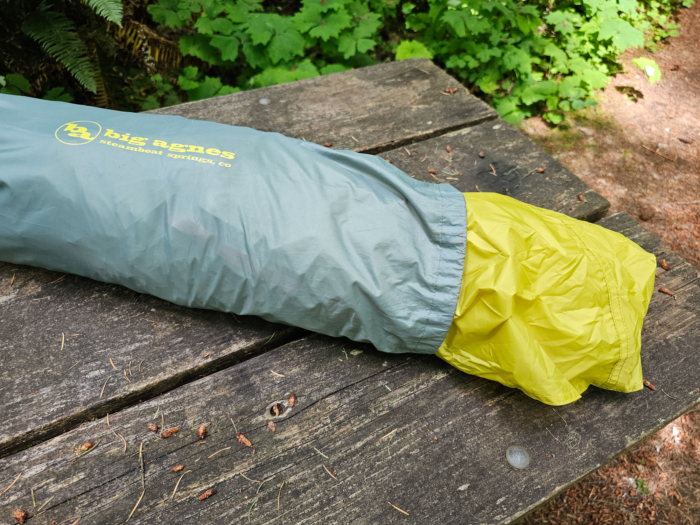
For a two-person tent, I found the packed size not as trimmed down as I would have thought compared to the Kelty Late Start four-person tent that I had reviewed earlier this summer, but still reasonable for car camping and short to moderate backpacking trips.
In testing, especially in warmer temperatures with fewer layers, it wasn’t a real issue in the pack. Lighter alternatives exist, but they typically reduce interior volume or material durability to get there. The tradeoff here is simple: more weight, but noticeably more usability at camp.
Big Agnes Blacktail 2 Tent: Conclusion

The Big Agnes Blacktail 2 doesn’t try to compete in a single category. It’s not the lightest tent, nor the most feature-heavy, nor the most technically specialized. Instead, it consistently prioritizes the fundamentals that matter most in everyday use: livable space, reliable weather protection, and a setup process that stays predictable trip after trip.
Across multiple nights of testing, the defining quality wasn’t any one feature, but how little friction the tent introduced. It went up quickly, stayed stable in changing conditions, and provided enough interior organization to avoid constant adjustment or clutter management.
For campers who want a single shelter that can transition between established campgrounds and occasional backpacking trips without forcing major compromises, the Blacktail 2 lands in a practical middle ground. The added weight is the main tradeoff, but it returns a more usable interior and a higher level of comfort once camp is set.