They may not be as flashy as the colorful topsheets on your skis, but women’s ski boots are the unsung heroes of any ski day. Not only can uncomfortable boots ruin a good powder day with cramped feet, but ill-fitting boots can lead to sloppy skiing, poor technique, or worse.
If you’re looking for an all-around option, the Tecnica Mach1 MV is a responsive-yet-accessible boot with a 99-100mm last that works for the vast majority of shredders. If you’re a skier with narrow feet, the K2 Cortex 105 W Zonal BOA with the dual BOA system may be a good fit, thanks to its low-volume 96-98mm last.
From narrow to wide lasts, plenty of flex offerings, and BOA enclosures, we have plenty of options. That’s why ski testers Heather Rochfort and Morgan Tilton spent two months testing for this season’s top choices for women’s ski boots. From the slopes of Aspen, Crested Butte, and Vail to the pistes of France, the duo logged over 60 days in ski boots.
Editor’s Note: We updated the Best Ski Boots for Women on August 17, 2026, with an enhanced review for the award-winning K2 Cortex Zonal BOA.
The Best Ski Boots for Women in 2026
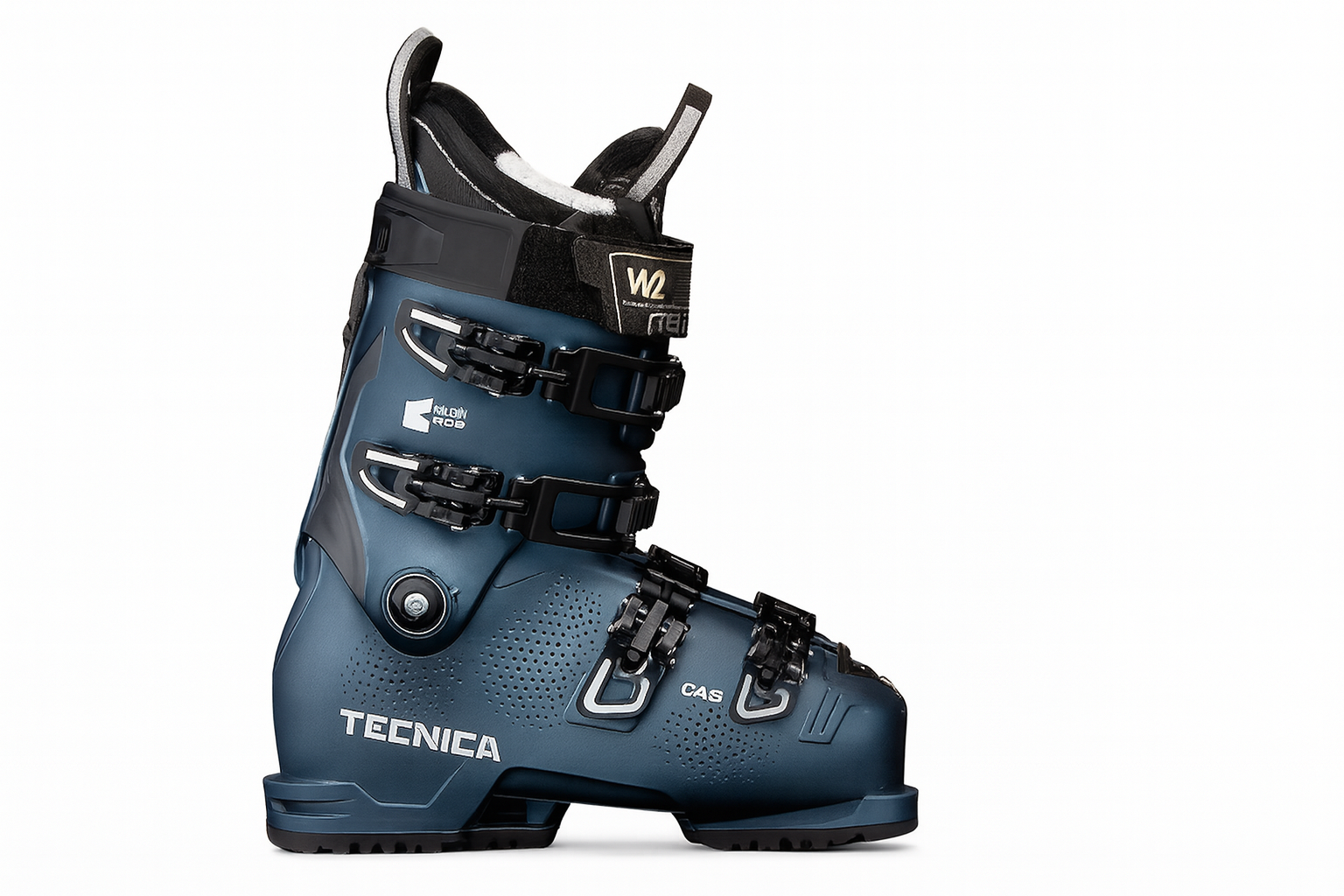




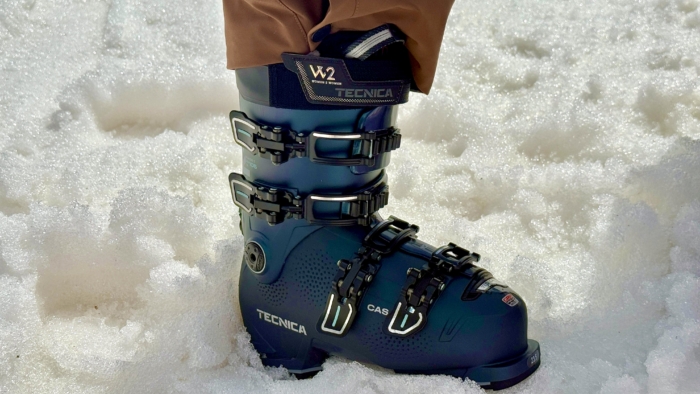
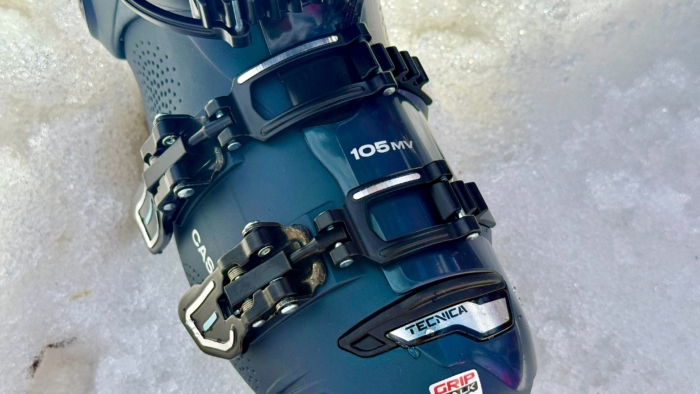
Tecnica Mach1 MV 105 W

Specifications
Pros & Cons
Pros
- Versatility in flex and volume for a variety of skiers
- Very warm
- Lower cuff that more easily fits a female foot
- Highly customizable with a bootfitter
Cons
- Too narrow for wide feet
Read Review: Upgraded Flagship for Experts: Tecnica Mach1 LV 130 Ski Boots Review
There’s a reason you’ll spot the Tecnica Mach1 MV 105 W ($750) ski boots all over the ski hill; they’re tough to beat. Powerful, precise, and surprisingly warm, these boots quickly became our go-to boot for resort days when performance mattered most. On snow, this boot delivered a lively, responsive ride. Not only can they snap edge to edge with confidence on groomers, but they also remained stable through variable, late-season conditions at Aspen Snowmass.
The 105 flex hits a sweet spot: stiff enough for hard-charging runs, yet accessible for women looking to progress. When compared to the more-forgiving and comfort-oriented Nordica Speedmachine 3 BOA 105 (another favorite this season), the Mach1 felt locked-in and better equipped to reward technical skiing.
One of the standout features of the Mach1 line is its versatility. Tecnica offers this boot in LV (low volume), MV (medium), and HV (high volume) versions, which is a good range to fit a multitude of feet. We tested the MV, and the out-of-box fit felt secure without any major pressure points. For skiers needing more customization, Tecnica’s C.A.S. (Custom Adaptive Shape) system makes it easy for bootfitters to mold the liner and punch out the shell. That does add to the overall cost if you go that route, but it’s nice to know that your boot isn’t going to fight back.
Bonus: The women’s-specific shaping isn’t just lip service. Tecnica redesigned the cuff height and stance to better match the female calf and lower leg geometry. On steeper terrain and in tighter turns, we noticed the cuff’s higher spine and forward lean gave us more power with less effort. This was something that beginner-oriented boots like the K2 Anthem 95 BOA couldn’t quite deliver.
No matter what anyone says, ski boots are never warm. After all, you’re playing in snow in a plastic boot, for pete’s sake. But, the Celliant and wool-insulated liner genuinely helped feet stay cozier on chilly days.
Nordica Speedmachine 3 105 W
Specifications
Pros & Cons
Pros
- BOA fit enclosure system allows for precise adjustments
- Comfortable and forgiving
- Skis warm in chilly weather
Cons
- Forgiving flex may not be powerful enough for very advanced skiers
Read Review: Precise, Progressive, 4-Buckle Goodness for Speedy Skiers: Nordica Promachine 3 First Look
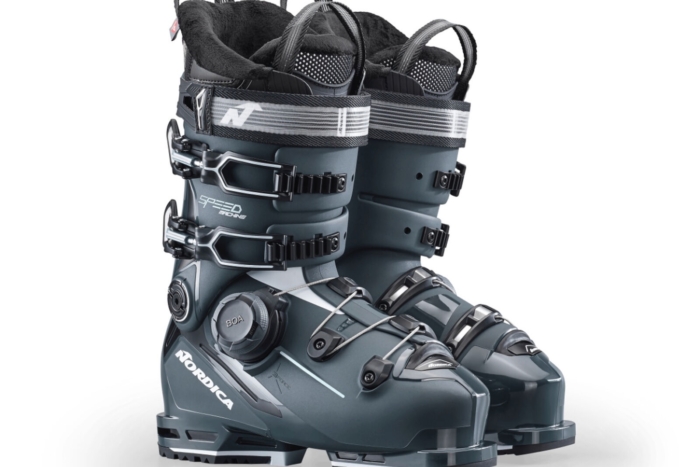
If comfort is your top priority but you still want to charge the mountain, the Nordica Speedmachine 3 BOA 105 W ($800) strikes one of the best balances in the game. This is one of the most popular boots on the market, and with good reason. The updated BOA version adds precision and ease to an already crowd-pleasing fit. GearJunkie contributor Heather Balogh Rochfort found the toe box to be slightly longer than average, which relieved pressure on long days. Still, the forefoot hugged just tight enough to offer control without pinching. The Achilles pocket is snug and secure, locking the heel down without the need for aggressive buckling or constant readjustment, making these boots an all-around win.
Balogh Rochfort spent a week skiing in Tignes, France where the Speedmachine BOA skied confidently across all terrain including bumps, groomers, and even off-piste chop. We tested the 105 flex which offers more than enough support for intermediate and advanced skiers, but the boot’s forgiving forward lean makes it a fantastic fit for true intermediates looking to improve. New for this season, the BOA version is now available in 95, 105, and 115 flex options so there is a variety to choose from. While BOA is most definitely not going away in ski boots, you can also still grab a traditional, 4-buckle Speedmachine in a 75 or 85 flex.
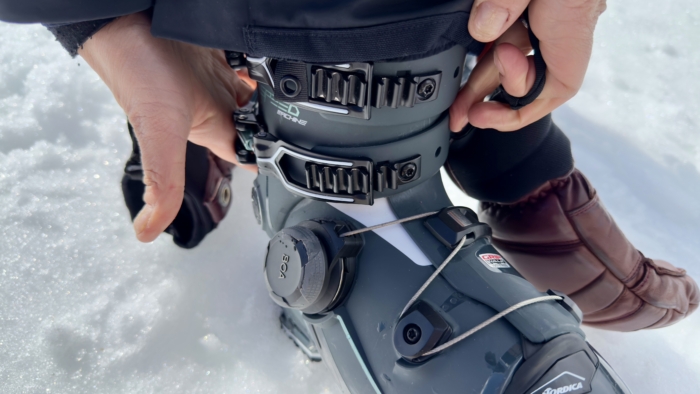
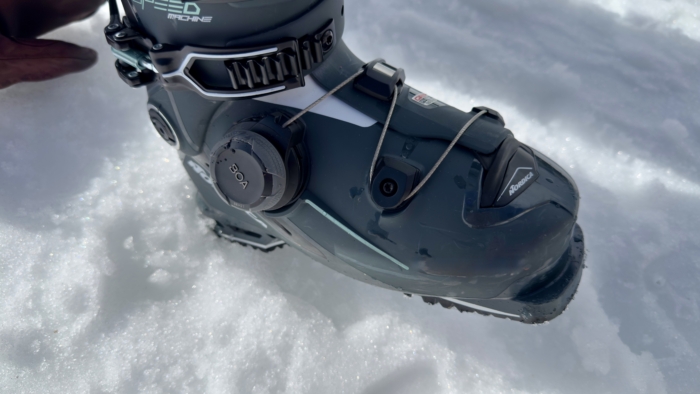
What sets the BOA model apart is the dialed fit and effortless adjustability. It wraps the lower foot evenly, reducing pressure points and preventing hot spots. Truth: this is something we’ve really grown to love in testing. Plus, fine-tuning the fit with mittens on is a small luxury that makes a big difference, especially if you’re trying to keep up with eager kiddos or hard-charging friends who don’t want to wait around. While it’s not quite as aggressive as the Dalbello Veloce and not as narrow as the K2 Cortex Zonal BOA, the Speedmachine is the most well-rounded, comfort-first boot in this group for those who want the BOA fit enclosure system.
K2 Anthem 95 BOA
Specifications
Pros & Cons
Pros
- BOA Fit Enclosure system allows for micro adjustments and plenty of comfort
- MultiFIT last allows for wiggle room in sizing for beginners trying to figure it out
- A stiff-yet-forgiving flex gives skiers room to advance their skills
Cons
- Not everyone is sold on BOA
Read Review: ‘Biggest Advancement in 60 Years’? BOA Breaks Into Alpine Ski Boots
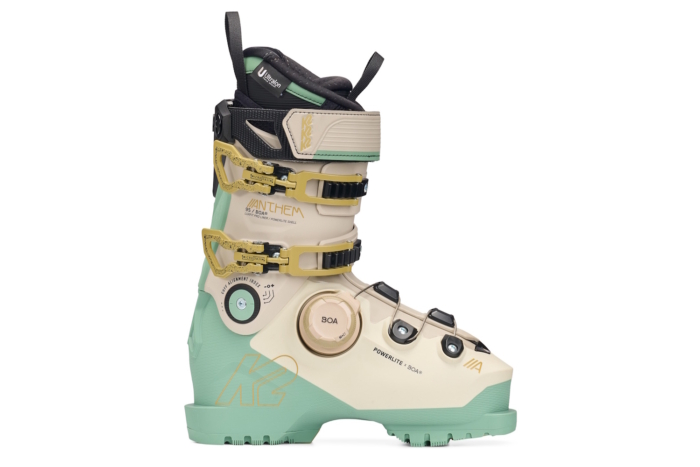
If you’re new to skiing or just starting to move beyond the bunny hill, the K2 Anthem 95 BOA ($700) might be your ideal partner on the slopes. Designed with beginner-to-intermediate skiers in mind, this boot strikes that elusive balance between comfort and performance — a combo that’s hard to find, especially for newcomers cursing plastic boots.
What makes the Anthem 95 BOA shine is its approachability. The 95 flex offers enough support to give you control and edge precision, but it won’t punish you for less-than-perfect form. Plus, the boot is forgiving where it needs to be, without feeling mushy or unresponsive. And while true beginners might not notice this on day one, intermediate skiers will appreciate that there’s room to grow before needing a stiffer boot. Our testers aren’t beginner skiers but we still found the Anthem to be plenty of fun during closing day at Buttermilk Ski Resort in Aspen.
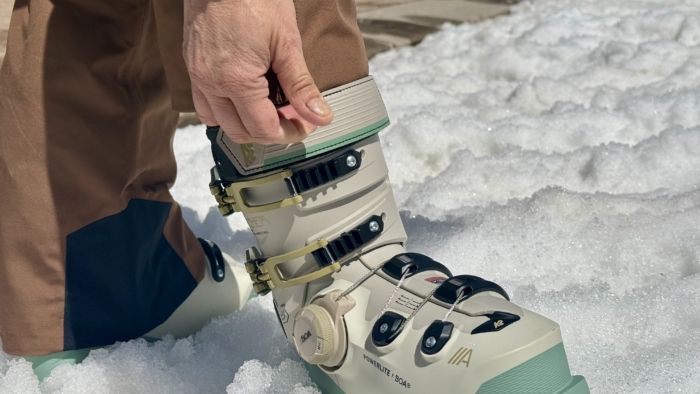
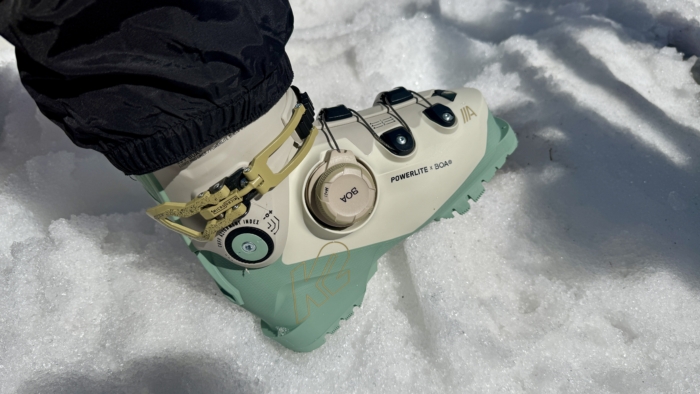
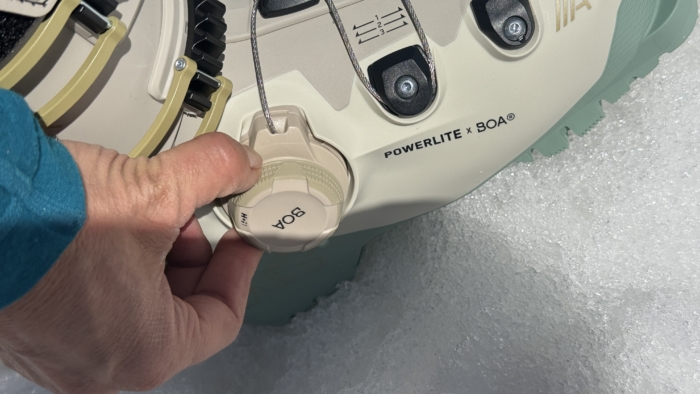
The real star feature, though, is the BOA Fit System paired with K2’s MultiFIT Last. The dial-based closure system wraps the lower shell evenly, reducing pressure points and making it easy to adjust on the fly, even with gloves on. The Anthem ski boots for women have a 100 mm shell but the BOA system allows you to crank it down and “shrink” the fit, all the way to a 97 mm last. For new skiers who don’t yet know if they need a narrow or wider boot, that bit of built-in flexibility is huge.
Compared to the K2 Cortex W BOA, which is narrower, stiffer, and built for aggressive skiers, the Anthem is far more forgiving and beginner-friendly— making it a better choice for everyday resort riders still dialing in their skills.
Oh — and the price? At around $100 less than other BOA-equipped women’s boots, the Anthem 95 BOA is a smart, less intimidating investment that won’t sacrifice quality. Bottom line: if you’re learning, progressing, or just want a boot that makes skiing feel easier, this one should be high on your list.
Dalbello Veloce 105 MV W
Specifications
Pros & Cons
Pros
- Very responsive on piste
- Snug fit in the heel for greater control
- All-mountain versatility means you can take it anywhere and ski happy
Cons
- Skis narrower and firmer than numbers indicate
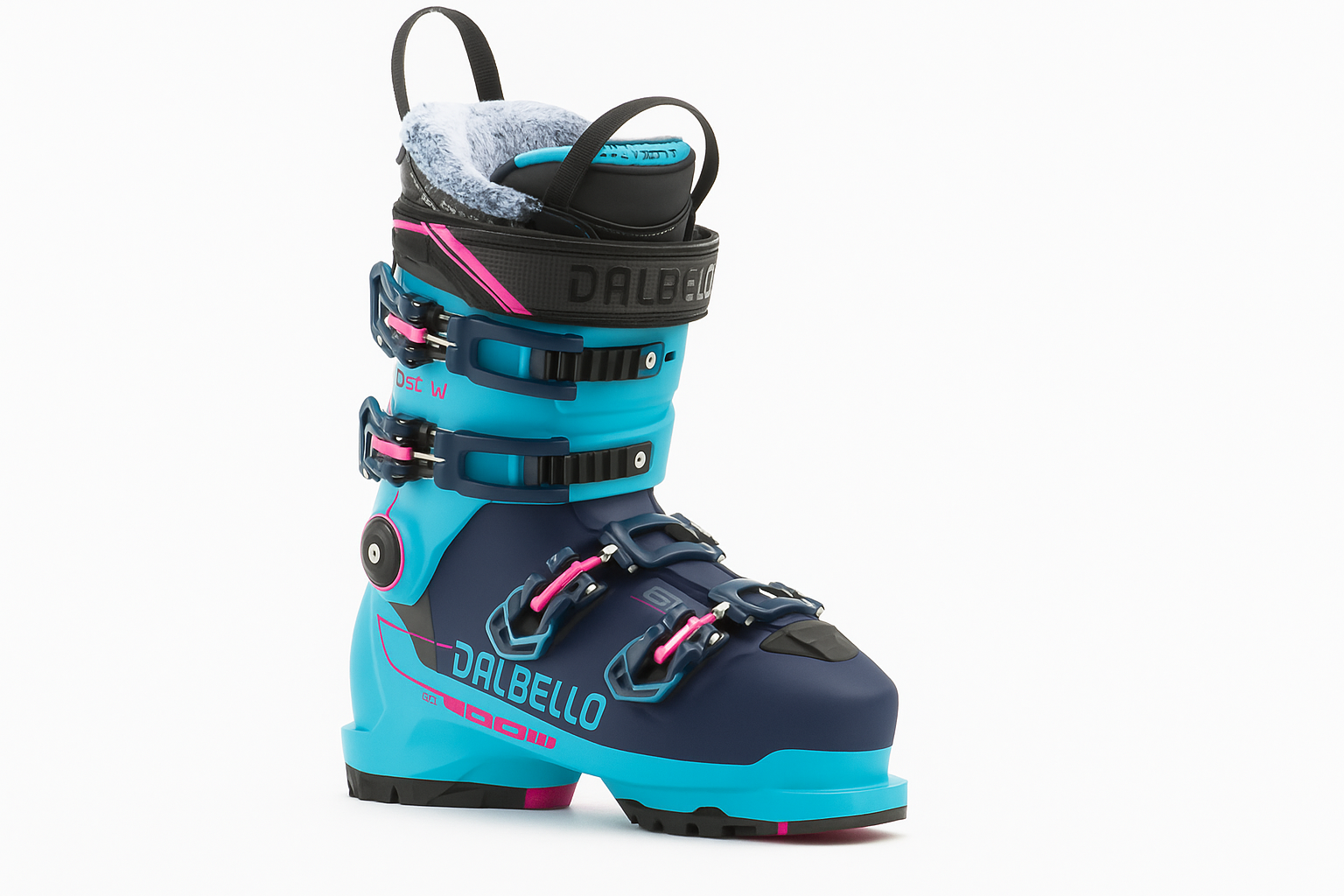
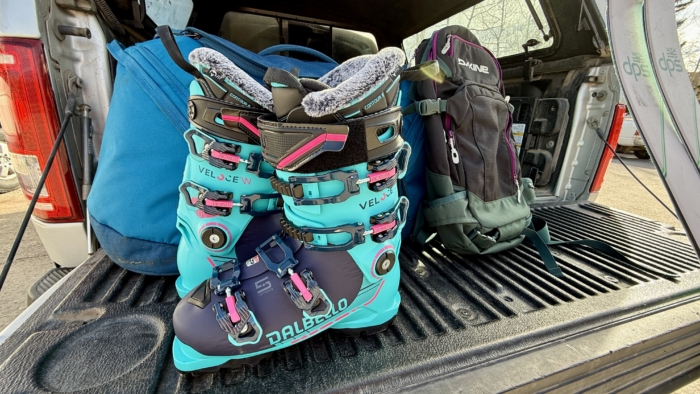
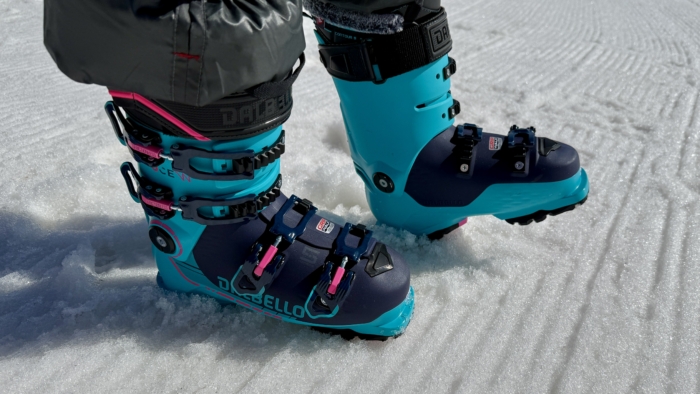
If you want a boot that responds the instant you tip your skis, the Dalbello Veloce 105 MV W ($700) delivers. On snow, it shines on groomers, steeps, and in variable late-day conditions where things turned to mush. The progressive flex and lateral stiffness made us feel confident, lap after lap.
We tested the 105 flex MV version, but be warned: this boot skis stiffer than the number implies. The women’s version is only offered in a 95 and 105 flex, but they ski more like a 105 and 115 flex, making this a boot better built for intermediate and advanced skiers. Aggressive skiers will love the added power and responsiveness, but intermediate skiers may find it less forgiving than something like the Nordica Speedmachine 3 BOA 105, which offers a cushier flex and a more comfort-focused ride.
Fit-wise, the Veloce’s 99 mm last feels snug for a medium-volume boot. The heel cup is exceptionally secure, enhancing control and minimizing slop. But, the boot sits a bit low over the top of the foot and across the toe box. Skiers with higher insteps or wider forefeet may need shell work or liner molding to get dialed.
But don’t be fooled: the Veloce is refreshingly chill when it comes to daily use. Thanks to Dalbello’s overlap shell and a softer instep zone, it’s easy to get on and off, even when cold. There’s no BOA, walk mode, or frills here; just a streamlined, no-nonsense boot that gets the job done. If you’re a strong skier looking for a traditional four-buckle alpine boot that prioritizes power and precision without overcomplicating things, the Veloce 105 MV W is a top contender.
Rossignol Vizion 4B Pro 90 GW
Specifications
Pros & Cons
Pros
- Easiest entry we've tested, even when cold
- Incredibly plush and warm liner
- Friendly mid-volume fit works for a lot of skiers
Cons
- Fixed forward lean due to the spine mechanism
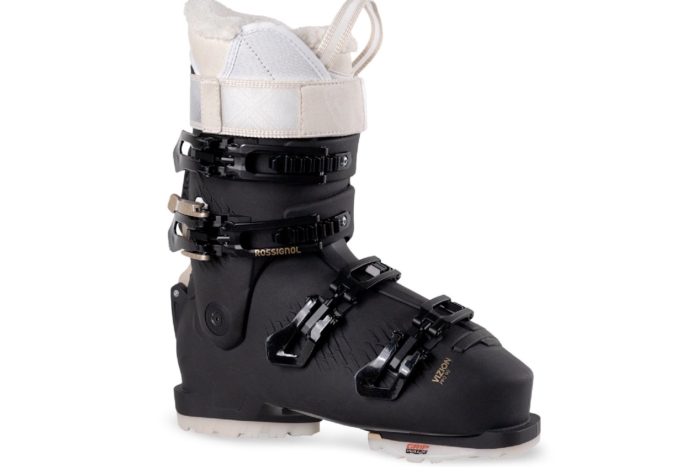
If you’ve ever cursed a cold ski boot while trying to cram your foot inside, the Rossignol Vizion 4B Pro 90 GW ($700) might just redeem the entire category.
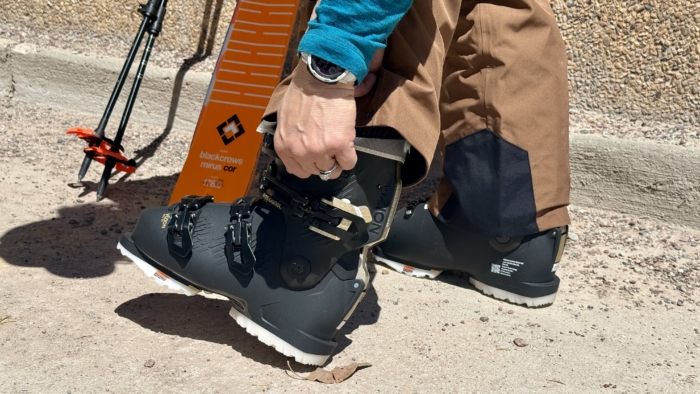
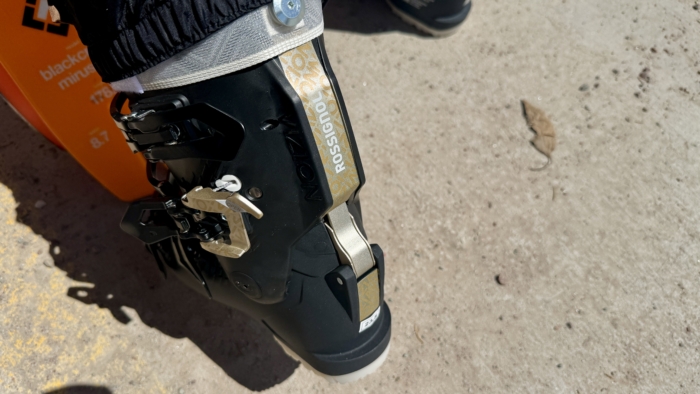
Thanks to Rossignol’s innovative Spine Heel Entry system, this boot opens up in a way that feels almost too good to be true. The rear cuff hinges backward — much like an old-school rear-entry boot — but with one major difference: performance isn’t sacrificed. Combined with a forefoot buckle that unlocks the lower shell, the entire boot opens wide enough to slide your foot in effortlessly. Balogh Rochfort was nearly able to step into the boot hands-free. Yup, you read that right: no pulling, yanking, or contorting required. This was especially nice on a sub-zero ski day in Aspen when the plastic was frozen, hard, and not willing to work with anyone.
Here’s the surprise: all that convenience doesn’t come at the expense of downhill capability. The Vizion Pro skis like a true four-buckle boot, with responsive edge hold, smooth power transfer, and enough structure to handle varied terrain confidently. It’s not quite as aggressive or dialed-in as the Dalbello Veloce, and it doesn’t offer the same precision as the Tecnica Mach1. But for everyday resort skiers (and especially those working towards advanced terrain), it delivers more than enough control while still forgiving your ski sins.
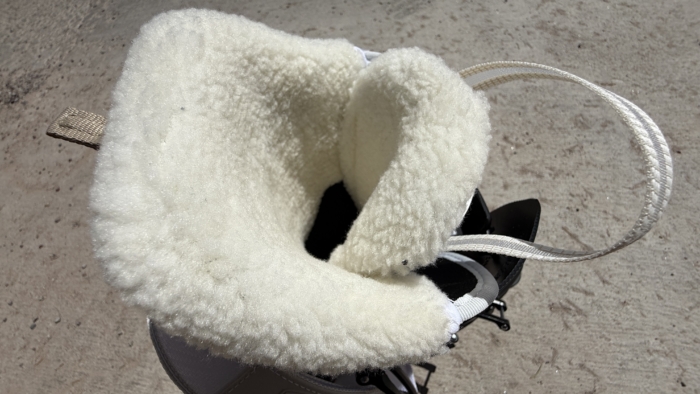
Added bonus: the plush merino wool liner is one of our favorites. It’s the warmest we’ve tested and so incredibly soft, keeping our toes happy on frigid lift rides. If you prioritize comfort or have mobility issues that make putting on ski boots your personal nightmare, the Vizion Pro 90 W is the modern easy-entry reboot you didn’t know you needed.
K2 Cortex 105 Zonal BOA
-

-
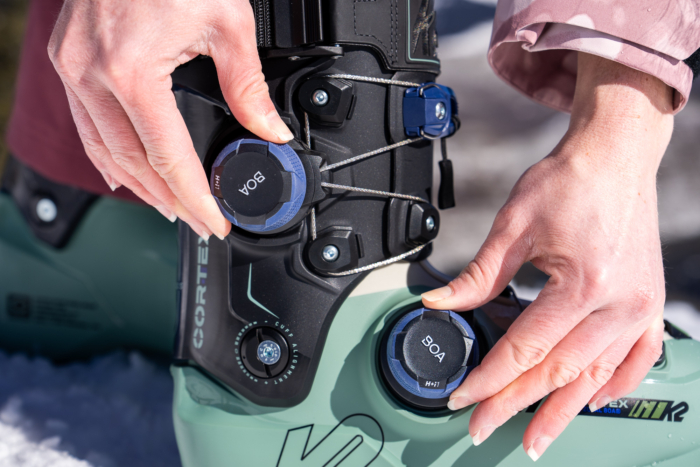
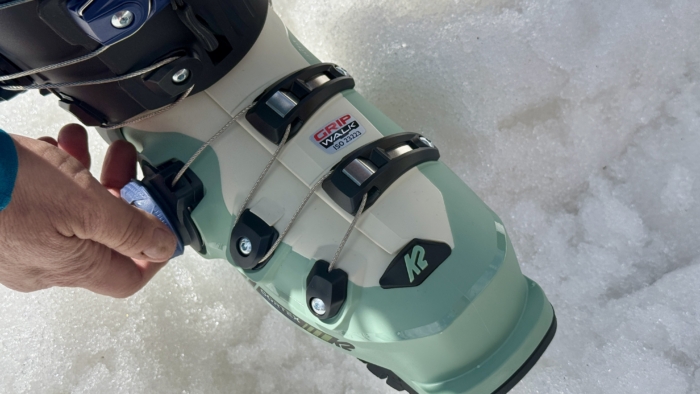
A close-up view of the BOA dials on the K2 Cortex Zonal BOA W’s 105; (photo/Jason Hummel)
-
-
-
Specifications
Pros & Cons
Pros
- Dual BOA system allows for a snug all-around fit
- Balanced flex hits that sweet spot between stiffness and forgiveness
- Low-volume fit is very responsive
Cons
- Dual BOA system has a learning curve when taking the boots on and off
- Low-volume fit won’t work for all feet
Single BOA ski boots have been all the rage. As for this winter? Double BOA systems are staking claims — no buckles. Plus, more last widths with dual-BOA are entering the scene. With a 96–98mm last, the K2 Cortex 105 W Zonal BOA ($850) leads the charge for women, especially intermediate riders and narrow-footed skiers looking for a comfortable, supportive downhill boot. While the vast majority of BOA ski boots have been mid-volume and single-BOA, only a couple (so far) have offered a more streamlined fit: The Cortex and the Atomic Hawx Ultra Dual Dial, which offers a 98mm last.
With a locked-in heel, low-volume fit throughout, and narrow last, the Cortex is built for aggressive skiers who value precision. It’s not as forgiving as something like the Tecnica Mach1 MV, which is easier to get along with out of the box. Compared to the Dalbello Veloce (another precise boot built for advanced skiers), the Cortex has a smoother feel through the forefoot, but less overall plush comfort. If your idea of fun is charging steep terrain and skiing hard all day, this boot will keep up — as long as your foot shape agrees with it.
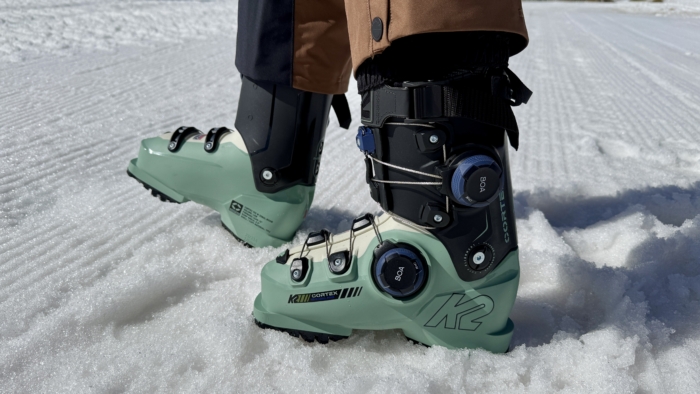
This boot features two BOA dials — one on the cuff and one on the lower shell — letting you micro-adjust the fit for both comfort and performance. It’s more than a novelty; popping the dials open for a comfier chairlift ride or a washroom break is effortless. And while dialing action is smooth, keep in mind that it does take a bit more ‘cranking’ to get your tension right compared to the instant snap of a traditional buckle. We also love the range K2 offers in this boot: the Cortex W comes in both a 105 and a 125 flex, which is rare (most women’s boots top out at 115). And, sizing starts at 22.5, making it a standout option for smaller, stronger skiers.
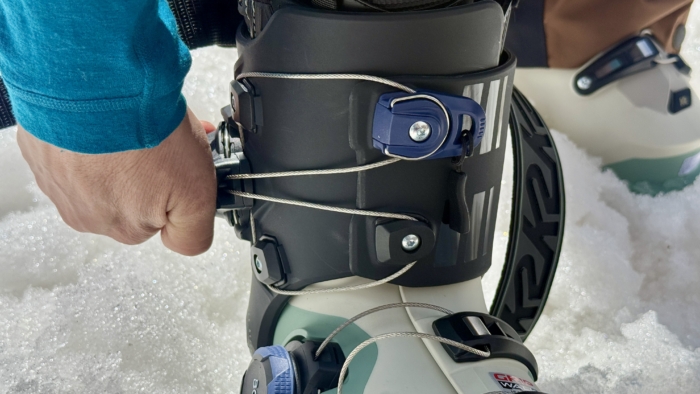
While skiing the Highland Bowl in Aspen, Colorado, GearJunkie contributor Heather Rochfort found that the cable routing added stiffness to the flex while skiing the steeps. Plus, the double cables wrap the foot evenly, eliminating hot spots and reducing the need for over-tightening buckles, which Senior Editor Morgan Tilton likewise found to be true while testing these boots on steep moguls in Vail Ski Resort’s backside bowls and carving International at Crested Butte Mountain Resort.
The EliteFit Sport liner provides a painted-on feel that retains warmth on cold days and offers supportive ankle pockets, but even for Tilton — who has a narrow foot and heel — she recommends going to a boot fitter to unlock the full potential of the Cortex. The customizable liner features an adjustable tongue (up or down to match shin length), eyelet loops in the side flaps, shims (thin inserts underfoot), liner inserts (for edge angle), plus its heat-moldable liner, shell, and cuff.
Getting the boot on and off can feel a little fussy, thanks to the overlapping tongue and cable system that doesn’t exactly swing wide open. But we got used to it in testing, and Tilton really appreciated the large pull loops on the tongue and cuff to aid entry. One final note: the cam-buckle power strap (instead of plain Velcro) offers good energy transfer, but it can creep upward during use. Be sure to tighten it down. Fit-wise, the Cortex is unapologetically narrow and powerful. And for the right skier, the Cortex W is a serious weapon.
Ski Boots for Women Comparison Chart
| Ski Boots for Women | Price | Last | Flex | Weight | Sizes |
|---|---|---|---|---|---|
| Tecnica Mach1 MV 105 BOA | $750 | 98 mm | 95, 105, 115 | 3 lb. 10.6 oz | 22.5-25.5 |
| K2 Anthem 95 BOA | $600 | 97-100 mm | 95, 105, 115, 125 | 3 lb. 7.2 oz. | 22.5-27.5 |
| Dalbello Veloce 105 MV W | $700 | 99 mm | 95, 105 | 4 lb. 1.3 oz. | 22.5-27.5 |
| Nordica Speedmachine 3 105 W | $800 | 100 mm | 95, 105 | 3 lb. 12 oz. | 22.5-27.5 |
| Rossignol Vizion 4B Pro 90 GW | $700 | 100 mm | 80, 90, 100 | 4 lb. 0.6 oz. | 22.5-27.5 |
| K2 Cortex 105 W Zonal BOA | $850 | 96-98 mm | 105, 125 | 3 lb. 13.8 oz. | 21.5-27.5 |

How We Tested the Best Ski Boots for Women
Our Expert Testers
GearJunkie contributor Heather Balogh Rochfort reviews and tests gear from her home base outside of Aspen, Colorado, where she logs 50-60 ski days each season. A former ski instructor and adaptive ski instructor through the National Sports Center for the Disabled, Balogh Rochfort has given both knees to the sport (two ACLs and counting) but still loves to slide on snow whenever possible. Her weekends are spent chasing her daughter around the four hills in Aspen. On the weekdays, you’ll find her ski touring the local backcountry or uphilling after hours.
Senior Editor Morgan Tilton contributes to ski boot testing at her home ski area, Crested Butte Mountain Resort, and beyond.

Our Testing Grounds
Our testing grounds spanned some of the most iconic terrain in the world, with the majority of days logged at Aspen Snowmass — specifically Highlands and Snowmass, two of the resort’s four mountains known for their diverse terrain and challenging conditions.
From Highlands Bowl’s steep powder lines to Snowmass’s wide-open groomers and tree runs, the variety provided an ideal environment to test performance across changing snow and weather.
Beyond Colorado, Balogh Rochfort spent a week skiing in the Italian Dolomites and another in Tignes, France, where high-alpine conditions, glacier terrain, and variable spring snow offered valuable perspective on how gear performs across continents and climates.
Tilton contributed test days at Crested Butte Mountain Resort and Vail Resorts.

Our Ski Boots for Women Rating Process
We score each pair of ski boots on a 1-10 rating scale for four categories: Comfort, Performance, Features, and Value.
Comfort
Comfort is often the deciding factor in how long you’ll stay out on the mountain, and it starts with the last shape. This is the internal width and contour of the boot that determines how it fits your foot. A boot that matches your foot shape can mean the difference between all-day warmth and constant pressure points. Warmth also plays a key role, with insulation, liner materials, and shell construction all affecting how well your feet stay cozy on cold lift rides. The closure system, whether traditional buckles or newer BOA dials, influences comfort too. It determines how evenly pressure is distributed and how easy it is to make micro-adjustments throughout the day.
Performance
Performance comes down to how effectively a boot translates your movements into control on snow. The most important element here is flex, which affects both precision and forgiveness. Stiffer boots generally cater to aggressive skiers who prioritize responsiveness and power transfer, while softer models favor comfort, playfulness, and easier turn initiation. A good-performing boot should feel like an extension of your leg: supportive yet natural, allowing you to ski confidently across a variety of terrain and snow conditions.

Features
Modern ski boots are loaded with thoughtful features that enhance both convenience and versatility. A BOA dial system offers quick, uniform tightening with a twist, while walk modes allow for a more natural range of motion when hiking or bootpacking. Other notable details might include adjustable canting, customizable liners, GripWalk soles, or micro-adjustable buckles. All of these are small touches that make a big difference in usability. The best boots blend these features seamlessly without overcomplicating the design.
Value
Value weighs the overall performance, comfort, and feature set against the boot’s price tag. A high-end model packed with premium materials and cutting-edge technology might justify its cost for advanced or frequent skiers, while a more affordable boot that performs admirably across multiple categories can be an even better deal. Ultimately, the best value boots deliver reliable performance and comfort without unnecessary extras, proving that great skiing experiences don’t always require the most expensive gear.

Buyer’s Guide: How to Choose Ski Boots for Women
Bottom line: ski boots will make or break your ski day. And, good ski boots can make you a better skier. While these clunky, plastic boots aren’t the most fun aspect of the sport, a high-quality, well-fitted, and appropriately-matched pair of boots can help you take your skills to the next level — or leave you wallowing in a pit of discomfort.
Ski Boot Flex
Ski boot flex refers to how stiff or soft a boot feels when you lean forward into it, and it plays a huge role in how your skis respond. Flex ratings aren’t standardized across brands, but they generally range from 65 to 120 for women’s boots. Lower numbers (65–90) mean a softer, more forgiving flex— ideal for beginners or lightweight skiers. Higher numbers (100–120) are stiffer and more responsive, meant for experienced or aggressive skiers who want maximum control at higher speeds.

For women especially, weight and strength matter just as much as ability when choosing a flex. A stiffer boot requires more force to engage, so if a boot is too stiff for your build, it can feel unresponsive and actually make skiing harder. On the flip side, if a boot is too soft for your skill or size, you may overpower it and lose precision—especially on steeper terrain or in variable snow.
Most beginners and lighter women will feel more confident in a soft to medium flex (65–100), like found in the K2 Anthem 95 BOA or the Rossignol Vizion 4B Pro 90 GW. Stronger skiers often do well in the 100–115 range, as found in the Tecnica Mach1 MV 105 W. Experienced, powerful skiers can top out into that rarer 115-125 flex. If you’re unsure, it’s better to go slightly softer since you can always upgrade as your skills and strength improve.

Sizing: Mondopoint & Last Width
Ski boot sizing can feel confusing at first, but it boils down to two key numbers: Mondopoint and last width.
Mondopoint
Mondopoint is the international sizing standard for ski boots, and it’s simply the length of your foot in centimeters. So if your foot measures 24.5 cm, you likely wear a 24.5 boot. Unlike street shoes, ski boots should fit snugly, especially for performance, so don’t be surprised if your usual shoe size doesn’t translate exactly.
Pro tip: Don’t follow those online sizing charts we’ve all looked at for ski boots. They go based on your street shoe size, but they’ll usually pop you into a too-big boot.

Last Width
The second measurement is last width, which refers to the width of the boot’s forefoot. Most women’s boots fall between 97mm and 100mm, with some going wider. A narrow last (97–98mm) is best for low-volume feet or skiers who want a tight, responsive fit. A medium last (99–100mm) suits average-width feet. Anything over 100mm is better for wider feet or those prioritizing all-day comfort.
If you’re a beginner, a slightly roomier fit can be more forgiving and comfortable, while allowing you time to adjust to life in plastic boots that are inherently uncomfortable. Advanced skiers often prefer a more locked-in, precise feel.
Many boots now use customizable shells and liners — or flexible systems like the K2 MultiFIT lasts — to dial in fit across a range of foot shapes. In this guide, both the K2 Anthem 95 BOA and the K2 Cortex 105 Zonal BOA have a flexible last fit.

Buckles versus BOA Closures
For decades, ski boots used traditional buckles. But then BOA changed the game.
Until recently, four-buckle designs (like in the Dalbello Veloce 105 MV W) were the norm, offering secure closure but often requiring fine-tuning at the lodge or during lift rides. That started to shift during the 2023-2024 season, when single BOA dial boots exploded onto the market, offering a fast, even wrap around the lower foot.
Dual BOA systems (with dials on both the cuff and forefoot) became the biggest boot story of the 2024-2025 season, especially in performance and freeride models. Moving forward, it’s clear that BOA is here to stay. For instance, the K2 Anthem 95 BOA, Nordica Speedmachine 3 105 W, and the K2 Cortex 105 Zonal BOA all have one or two BOA dials.

Most skiers have embraced BOA for its easy, precise fit. The dials are quick to adjust, even while wearing mittens, and help reduce pressure points by evenly tightening the shell. For those learning or still dialing in their boot fit, this adjustability is a huge perk.
That said, some skiers — particularly those with very narrow feet or aggressive skiing styles — feel BOA boots don’t quite match the “cranked-down” tension of traditional buckles. And some still have concerns about BOA dials breaking during use.
Still, for many skiers, the convenience and comfort outweigh the tradeoff. And as BOA systems continue to evolve, we’re seeing more brands fine-tune the tension and stiffness to meet a wider range of needs.

Ski Boot Liners
Ski boot liners are the soft, insulated layer inside the hard plastic shell — and they make a big difference in how a boot feels and performs. Liners provide cushioning, warmth, and ankle support, and they play a major role in preventing fatigue, especially on long ski days. For women-specific boots, many liners are shaped with lower calf profiles, narrower heels, and softer materials to better match common anatomical differences.
Most stock liners are made from injected or molded foam wrapped in a light fabric, and they gradually adapt to your foot as you ski.

Higher-end women’s boots often feature heat-moldable liners that can be customized at a shop (or sometimes at home) for a better fit right out of the box. These liners help reduce pressure points and break-in time, which is key for skiers who are new to boots or have sensitive feet.
If you struggle with fit or cold feet, a professional bootfitter can adjust or replace your liners entirely. While aftermarket options exist, most skiers — especially beginners not ready to fork over more cash for customization — will find today’s stock women’s liners warm, supportive, and comfortable enough with a good initial fit and some time on snow.

Ski Boot Warmth
Warmth might not be the first thing you think about when shopping for ski boots, but for many women, it’s a dealbreaker. Ski boots aren’t insulated like puffy jackets, but the liner material, shell design, and fit all contribute to how warm (or cold) your feet feel on the mountain.
Women-specific boots often include thicker or softer liners for added insulation, like the Rossignol Vizion 4B Pro 90 W GW. Some are designed with lower cuff heights to accommodate lower calf positioning, which can help circulation and reduce pressure that leads to cold feet. Many women’s boots also feature fleece, wool or faux-fur liners, which are cozy and add a bit of extra warmth without impacting performance.

That said, the biggest factor in staying warm is a snug, well-fitted boot. Gaps or pressure points can restrict blood flow or allow cold air in, making your toes freeze faster. Boots that are too big or too tight can make even the warmest liners feel icy by mid-morning.
If warmth is a major concern, look for heat-moldable liners, add thin wool ski socks (never thick ones), and consider models that are heater-compatible. For most women, the right fit plus modern liner materials are enough to stay cozy from first chair to last.

Price & Value
Like most gear in the ski world, women’s ski boots can be a serious investment. Expect to pay anywhere from $300 to $1,000 or more depending on your ability level, fit needs, and whether you’re going with a classic buckle design or the increasingly popular BOA system.
While sticker shock is real, the right pair of boots can make or break your ski day. It’s worth knowing what you’re paying for.

Budget
Beginner-friendly boots tend to be the most affordable, making them a great entry point for newer skiers. These boots prioritize comfort and warmth over precision and stiffness, which helps keep costs down. Take the K2 Anthem 95 BOA; a forgiving flex combined with BOA’s zonal fit system offers newer skiers an intuitive setup at a lower price point ($600).
Traditional buckle boots in this category can run even cheaper, sometimes dipping into the $300s, but may not offer the same micro-adjustability as BOA-equipped boots.

Mid-Tier
This is the sweet spot for most skiers, especially intermediates and advanced recreational skiers who are out there most weekends and need something they won’t outgrow. Expect to spend $600–$800 for this tier. Boots like the Nordica Speedmachine 3 105 W BOA, the Tecnica Mach1 MV 105 W, and the Rossignol Vizion 4B Pro 90 GW hit a sweet blend of performance, comfort, and innovation.
Worth noting: Women’s boots with BOA systems tend to cost $50–$100 more than their buckle-based counterparts, but they also offer a more even and customizable fit — especially useful for women with tricky feet or pressure points. And with newer BOA models offering zonal control (like the K2 Cortex 105 W Zonal BOA), that price bump often comes with a serious performance edge.

Premium
High-end women’s boots aimed at aggressive skiers or part-time backcountry dabblers typically land in the $850–$1,000+ range. These boots prioritize stiffness, response, and anatomical fit for a precise feel and strong downhill power. They’re built with better liners, more advanced shell materials, and in some cases, a hybrid-friendly flex pattern or walk mode. Thankfully, in many cases — like with the Dalbello Veloce 105 MV W —you can still get this level of performance without tipping into this higher price bracket.
While there are still more options in buckle-style boots at this top tier, BOA is quickly gaining traction here, like with the K2 Cotex 105 W Zonal BOA (notably the most expensive boots in this test). As more female skiers demand performance without sacrificing fit, premium BOA boots are becoming a worthwhile (and increasingly common) splurge.

Frequently Asked Questions
Women’s ski boots are designed with anatomical differences in mind. You’ll usually find a lower and more contoured cuff to accommodate shorter calves, narrower heel pockets, and softer flex ratings to match typical weight distribution and muscle structure. These tweaks help improve comfort and performance for lady shredders while reducing common pain points like calf pinch or heel lift.
It’s important to consider your foot width, not just your shoe size. If you often feel pressure along the sides of your feet or get “hot spots” when skiing, you may need a wider boot. Conversely, if your foot moves around or your heel lifts, you might benefit from a narrower fit.
Ski boot width is measured by the last, which refers to the width of the forefoot in millimeters. Narrow boots typically have a last of 97–98mm, medium boots fall in the 100–102mm range, and wide boots go up to 104mm or more.
Women with narrower feet should look for low-volume boots to avoid swimming inside their shell, while average-width feet usually fit well in a medium last. Visiting a boot fitter to get your foot measured is the best way to ensure you’re in the right volume and last since online sizing charts are notoriously inaccurate.
This is the hot debate of the past few ski seasons! Our answer: not better, just different. BOA systems offer quicker entry and exit, and they create a more uniform fit across the foot, which is especially helpful if you have pressure points or uneven foot volume.
Traditional buckles, on the other hand, allow for more manual fine-tuning at specific parts of the boot. Some women love the glove-like feel of BOA, while others prefer the old-school precision of buckles. It really comes down to personal preference and foot shape, even though the industry does seem to be moving in the direction of BOA boots.