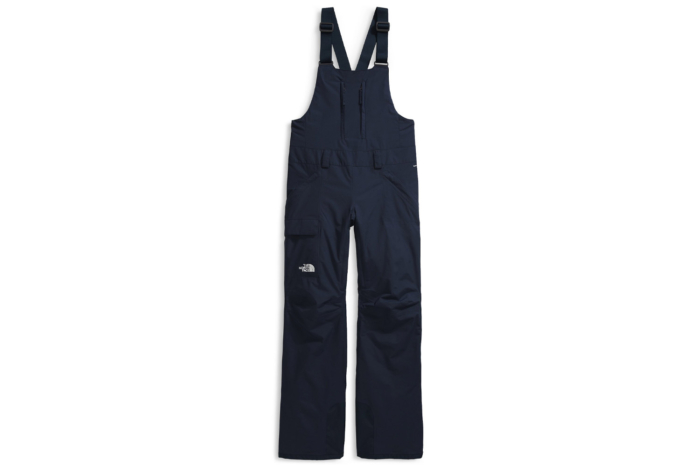
The North Face Freedom Insulated Bibs are delightfully straightforward. They don’t boast cutting-edge materials or flashy designs but instead focus on warmth, durability, and accessibility.
All that’s great, of course — who doesn’t love an affordable set of ski bibs? But here’s the good news: they work, too.
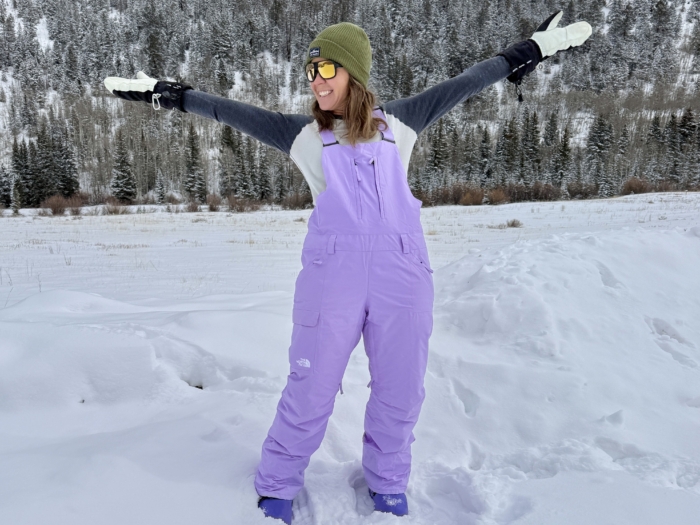
I wore the Freedom Insulated Bibs over a handful of days at the Aspen Snowmass mountains, including Buttermilk, Snowmass, and Highlands. Like much of this season, most of those days were dry and sunny, with just one genuinely cold outing mixed in. While these bibs won’t win any awards for technical innovation, they deliver dependable performance for skiers who want to stay warm without spending their entire piggy bank.
In short: The North Face Freedom Insulated Bibs ($250) are warm, comfortable, and affordable resort bibs that prioritize insulation and functionality over higher-end fanciness. They shine on cold, chairlift-heavy days, struggle on warm and sunny afternoons, and offer solid value for skiers who don’t give a hoot about the latest technology.
Check out more options in our Best Women’s Ski Bibs buyer’s guide.
Specifications
Pros & Cons
Pros
- Recycled insulation keeps you cozy on brisk resort days
- Ample pockets offer plenty of secure storage
- Affordable price when compared to most competitors
- Inclusive size range with multiple inseam lengths
Cons
- Questionable breathability on warm, sunny days
- Funky sizing
The North Face Freedom Insulated Bibs Review

My testing took place over four resort ski days in Colorado, with conditions ranging from full sun and high-30s temperatures to a bitterly cold day where mid-mountain temperatures hovered around 11–12 degrees Fahrenheit.
When I skied higher up at Highlands, the effective temperature was even colder with the exposed terrain and gusty wind. I wasn’t touring, bootpacking, or doing anything particularly aerobic; this was all lift-served skiing.
Built for Cold Chairlifts, Not Spring Slush

Warmth is the money-maker for the Freedom bibs. They’re insulated with 60 g of Heatseeker synthetic insulation, The North Face’s in-house insulation made largely from recycled polyester (90% of it is post-consumer recycled polyester).
I also tested the Freedom Insulated Snow Pants this cycle, and these bibs felt noticeably warmer — which is saying a lot because the pants were cozy. That comes down to the bib design itself.
Having insulated, waterproof fabric extending up over your torso does a better job of sealing out drafts and blocking wind than pants alone. On cold days, that extra coverage mattered more than I expected, especially when I was shivering on the chairlift.
On my coldest test day at Highlands, mid-mountain temperatures hovered around 11–12 degrees Fahrenheit, so I paired the Freedom bibs with a heavy fleece tight. Above tree line, it felt downright arctic.
It would be a lie to say I couldn’t feel the chill at all when lapping the chair, but my legs stayed pretty darn warm all day. Sure, I noticed a cold butt thanks to the compressed insulation while sitting down, but that’s going to happen with any pair of snow pants. Once I started moving, I warmed up quickly and never felt like my legs were turning into popsicle sticks.
Breathability: When Warmth Isn’t Your Friend

The tradeoff for that warmth shows up quickly on warmer days, especially the kind we’ve suffered through a lot this winter in Colorado. The Freedom Insulated Bibs use a two-layer version of The North Face’s DRYVENT waterproof and breathable fabric, made with a recycled nylon shell and a PFAS-free waterproof treatment.
In plain terms, a two-layer construction means the waterproof membrane is bonded to the outer fabric, with a loose liner on the inside. It saves a lot of money and tends to feel softer than a three-layer fabric, but it’s also less breathable. That’s just a fact.
That difference was obvious on a high-30s, full-sun day at Buttermilk. I was zipping around the mountain in an effort to catch our daughter’s ski team practicing in the terrain park (no shame in my game!), so I was hustling. With the sun reflecting off the snow and very little wind, I felt hotter than a cooked turkey.
All that cozy warmth and insulation felt like a liability as I could feel sweat literally dripping down my spine beneath the bibs. I opened the inner-thigh vents, and that helped a little bit.
Reality check: this isn’t necessarily a fatal flaw. Insulated bibs like these aren’t designed for anaerobic activity, and most people buying them aren’t planning to ski uphill or lap moguls all afternoon in 40-degree Fahrenheit temperatures. For casual resort skiing on colder or moderate days, the breathability is fine.
For me, the Freedom Insulated Bibs felt best suited to cold, resort days when you’re really focused on logging laps and not getting frozen to the chairlift.
Fit: The Tale of Goldilocks

Fit is the most challenging part of the Freedom Insulated Bibs. I’m 5’5” and around 145 pounds, and I almost always wear a size medium ski pants. Occasionally, I can size down to a small, but wider hips and quads — especially after having a child — usually put me solidly in a medium.
In this case, the medium was a no-go. I couldn’t even pull the bibs over my hips. They were so tight that I double-checked to make sure I hadn’t accidentally requested the wrong size. I swapped them for a large, which fit comfortably through the hips and quads but was noticeably too big around my stomach, leaving a moderate pouch of extra fabric at the belly.
This is a bit of a Goldilocks situation: the medium was far too small, and the large is a bit too big. In practice, it wasn’t a dealbreaker. Once I layered underneath and zipped a ski jacket over the top, the extra room didn’t bother me much. Still, I’d strongly recommend paying close attention to the sizing chart if you order these bibs online.
Fairly — But Not Fully — Featured

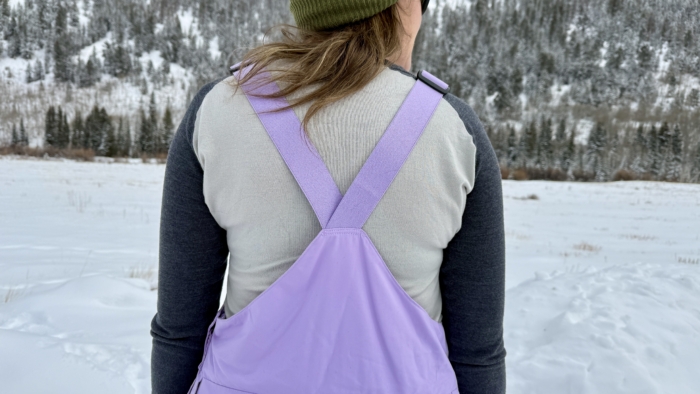
The Freedom Insulated Bibs keep things fairly simple. There’s no chest zipper, and the suspenders don’t disconnect. This means getting in and out of them requires a bit of acrobatic maneuvering as you approach from the side and pull the straps over your head. It’s not elegant, but it works.
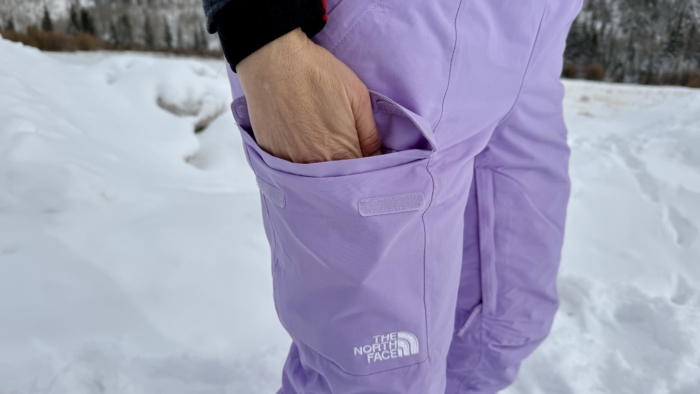
Pocket layout is a highlight. There are two zippered hand pockets, a right-thigh cargo pocket with a flap that worked well for my phone, and two smaller zippered chest pockets that I liked for keys and cash. The upper portion of the bibs is lined with a soft, fleece-like fabric that feels good against the torso and adds to the overall cozy factor.
There is also a drop seat, which is essential for bibs. But, it has a few quirks. The zipper opens on the left side, which was awkward for me as a right-handed person, but will likely be appreciated by left-handed skiers.
The zipper only drops to about the upper mid-thigh, which felt a touch short. I had to actively hold the fabric out of the way while using the bathroom to avoid any mishaps. Again, it’s functional, but not the most generous drop seat design I’ve used.
Room for Improvement

Most of the limitations here have already been called out in the review, and they’re largely the result of keeping the price in check. The two-layer DRYVENT fabric isn’t as breathable as a pricier three-layer membrane, the drop seat is on the shorter side, and the sizing can feel a bit off depending on your body type.
That said, these are the kinds of luxuries that drive ski bib prices way up. If you’re looking for a warm, insulated resort bib at a genuinely approachable price, those tradeoffs feel reasonable.
Final Thoughts

The North Face Insulated Freedom Bibs aren’t technical juggernauts, but that’s because they stay in their lane. They’re warm, comfortable, and downright affordable bibs that make sense for most resort skiers — especially beginners, occasional skiers, or anyone who simply doesn’t want to spend hundreds more on features they may not need. In an era when ski gear prices continue to climb, it’s refreshing to see an insulated bib that prioritizes warmth and practicality without blowing the budget.