Smaller cars get better gas mileage, but it can be a challenge to fit skis and snowboards inside. In the spirit of keeping things budget-friendly and not spending 25% of my vehicle’s value on a ski rack, I ended up with the most affordable rack on the market: Malone’s LiftLine Compact Ski Carrier.
The full story: I recently moved further away from my local ski area, and as much as I love my adventure truck, I’m pretty tired of the 12 mpg. So I set out to buy myself a second vehicle with two things in mind. It had to get 30+ mpg and to be as affordable as possible.
I ended up with a sporty, compact 2013 Ford Focus capable of 39 mpg for only a few thousand on the local marketplace. The problem I soon ran into with the compact car was transporting my almost 6-foot–long skis inside the small car. Hence, this economic rack from Malone — and it gets the job done.
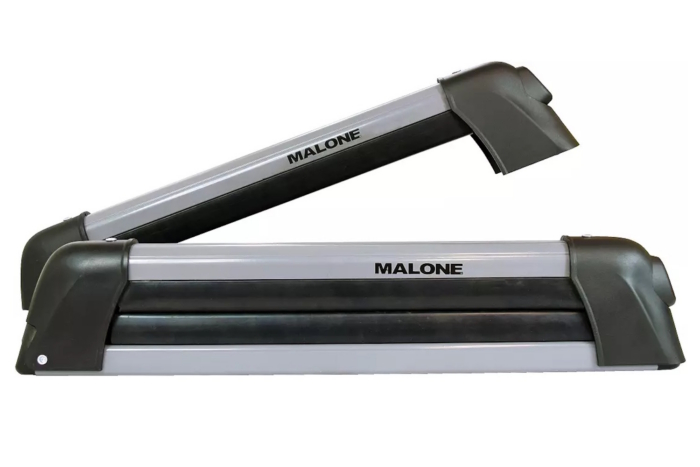
In short: The Malone LiftLine Compact Ski Carrier ($150) is a lightweight, compact, and budget-friendly rooftop ski rack. It safely holds up to three pairs of skis or two snowboards, comes with a universal mounting bracket, features an integrated ski lock, and weighs under 5 pounds. All in all, it’s nothing fancy, but I’m happy with it.
Scope out other ski and snowboard racks for your rig’s roof or hitch in the Best Ski and Snowboard Racks buyer’s guide.
Specifications
Pros & Cons
Pros
- Very affordable
- Opens fully for ease of use
- Very lightweight and compact
Cons
- No crossbar locks
- Quality of materials reflects affordable price point
- Carries only 3 sets of skis compared to industry standard 4
In the Field: Malone LiftLine Compact Ski Carrier Review

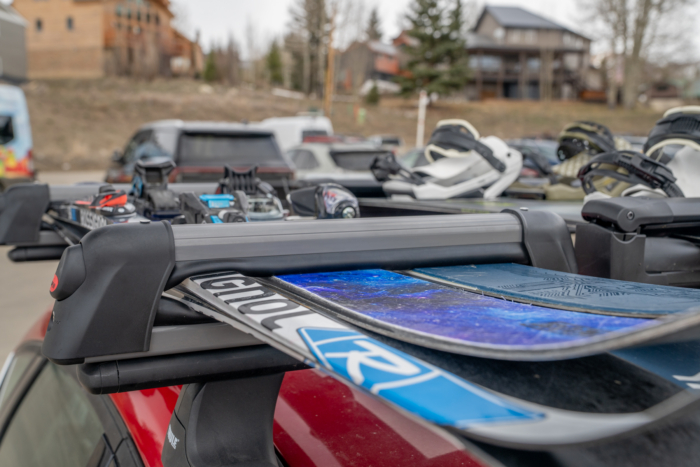
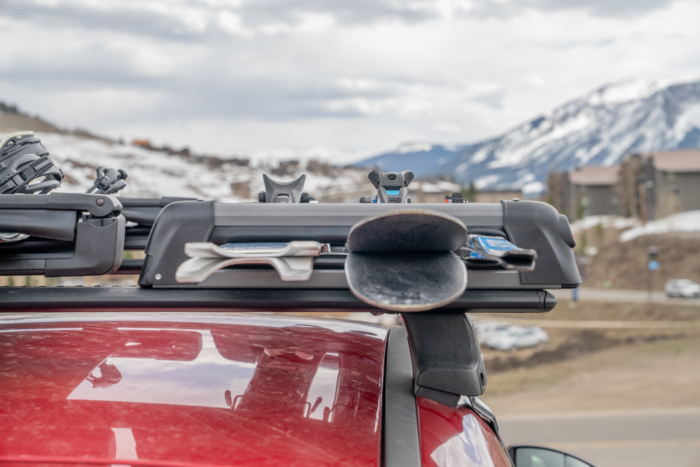
I spent 2 months with the LiftLine ski rack during the 2026 ski season. From February through to April, I logged more than 1,000 miles on my 70-mile round-trip commute to the local ski area. I ran this ski rack in conjunction with a Thule Snowpack M: Both racks together were the perfect fit for my Thule Wingbar Evo crossbars.
This rack’s compact design worked well with my compact car and perfectly utilized the extra space on my crossbars. While I used it for additional ski storage, the compact rack fits great alongside other crossbar-mounted racks like a cargo box, mountain bike carry, or kayak rack.
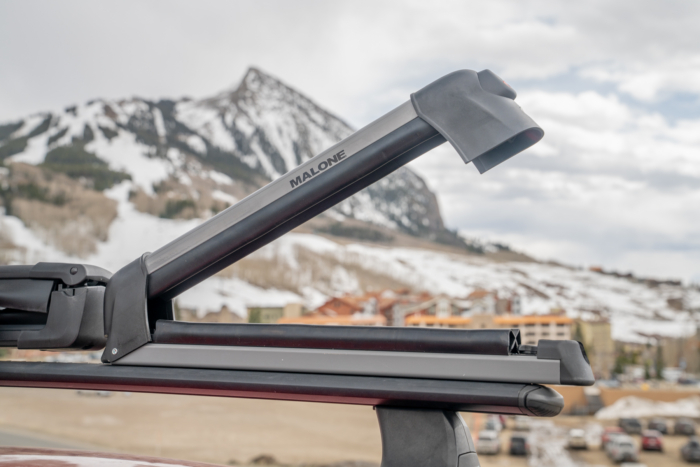
One of the features I like about the Malone is its ability to open to 90 degrees or more, meaning it’s incredibly easy to lift skis or a snowboard into or out of the rack. The spring only holds itself open at roughly 35 degrees, and you’ll need to manually lift it to more than 90 degrees before it holds itself open further.
Installation

The LiftLine rack comes fully assembled out of the box and has a tool-free installation. Everything can be installed with just your hands.
The rack can be installed in one of two ways. Either with T-slot compatible racks, like most aftermarket roof racks. Or, by using the supplied universal mount. Additionally, the rack comes with 1-inch riser blocks that can be used to lift the rack an inch higher for better clearance for bindings.
First, I tested installing the racks with the universal mounting brackets. These brackets feel pretty flimsy and tighten down to any crossbar with a simple hand knob. There are four per rack. I found it can be tough to get the hand knobs tight enough to meet my safety preference at highway speeds. Though a simple trip to the hardware store and a few dollars will get you nylon lock nuts, for tool-savvy folks who want a tighter hold.
Then it’s as simple as opening the rack, aligning the holes, and using two smaller hand knobs to tighten the rack to the crossbar. During this process, the hand-twisting knobs are smaller and in a more confined space. I found these knobs were even harder than the first sets to get comfortably tight, and they were difficult to grip, thanks to my big fingers.
These, as well, could easily be replaced with nylon lock nuts for a more secure mounting setup for DIY-savvy folks. Overall, I rated the install as medium-only (7/10) because it was hard to fully tighten the hand knobs.
Locks
The ski rack comes with an integrated ski lock, two keys, and a large push-button to unlock.

It’s important to note that there are no crossbar locks associated with the universal mounting bracket. That bracket can be undone with just your hand, since no tools are required, even if the ski rack is locked closed.
When installed with the T-slot, the rack does become fully locked, since the only way to access the hand knobs is when the rack is unlocked and open.
Though I wasn’t able to get the hand knobs tight enough inside the rack to prevent them from sliding back and forth in the T-slot when pulled. Meaning, with the rack closed, I was still able to pull it to the end of the T-slot and therefore could steal the rack in this mounting system, too.

The keys and locks worked great and were easy to use. The large, oversized button could be operated with ease while wearing gloves. Though you can notice the overall lack of quality, with both buttons on my test rack showing signs of paint overspray.
Unfortunately, it was an unusually warm season in Colorado, and I did not get to test how the rack opened below 0 degrees F, but it did function properly below freezing. Overall, the rack has enough locks to be considered a theft deterrent. Though if a thief wanted to steal it entirely and had enough time and effort, they most likely could.
Aerodynamics and MPG

The LiftLine Carrier’s compact size helps reduce its overall aerodynamic drag. But during testing, it still produced some drag and a slight mpg loss. When using just the LiftLine Carrier, I calculated a roughly 2 mpg loss in efficiency. It went from an average of 39 mpg with no rack to 37 mpg with a loaded ski rack. The mpg loss was less noticeable when driving unloaded.
But the total install and removal only takes a few minutes. So, the best way to mitigate the mpg loss is to remove the rack when not actively using it. Since it’s compact, the rack is easy to store in your vehicle’s trunk. It also requires no tools to install, making that process easier.
Minor Gripes

I spent countless days and miles using the LiftLine and have discovered a few downsides. The first downside is that there are no crossbar locks, and while the lock is a great theft deterrent, the rack in its entirety could still be stolen by a willing thief.
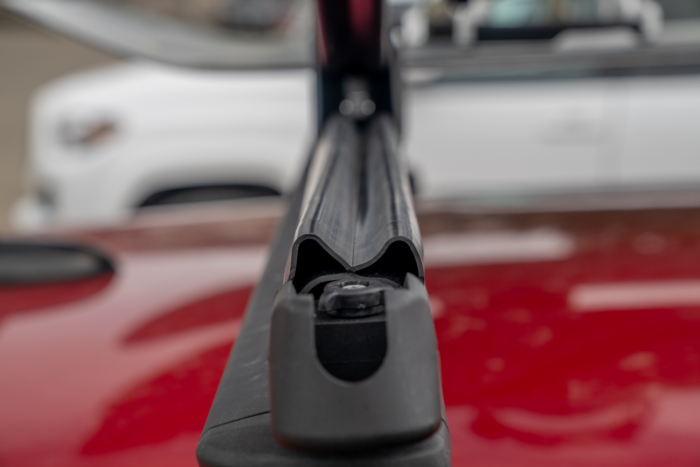
The biggest downside of the rack and the tradeoff for its affordable price tag comes with the materials used. Every piece of the rack feels flimsy and lacks long-term durability. That’s true from the lack of a pivot joint to the basic rubber that doesn’t grip skis super well. When fully tightened, you can still slide your skis back and forth along the rubber.
Additionally, I was unable to fit three pairs of powder skis without them touching. I could fit only two wide skis and one smaller ski when carrying three full sets. Furthermore, most ski racks of this size hold up to four pairs of skis. The Malone holds only three, meaning it has slightly less carrying capacity. But that can also be a positive for fitting a ski rack on your roof with another carrier taking up crossbar space.
Who Is It For?

The Malone LiftLine Compact Ski Carrier is a great option for those looking for the most affordable ski rack. It’s an ideal compact rack for an already-used roof rack, alongside a rooftop cargo box or other carrier.
There are trade-offs with the affordable price tag, like long-term durability and security.
For those looking to carry skis on their rig’s roof for under $200, it’s hard to beat. For my low-budget ski resort commuter, the affordable LiftLine was a great roof rack combo.