I walk or hike the trails behind my house with my three dogs every day that I don’t ski or bike. In the deepest snow, I usually reach for knee-high Muck boots. But plenty of shoulder season and winter days are cold and even snowy, but not knee-deep.
This winter, on those days, I was excited to have a category-defying winter boot option, one that was waterproof and insulated but didn’t look or feel different than a standard mid-height hiking boot, one that was light and fast, never clunky-feeling, and one that laced comfortably on my foot, which is on the wide side.
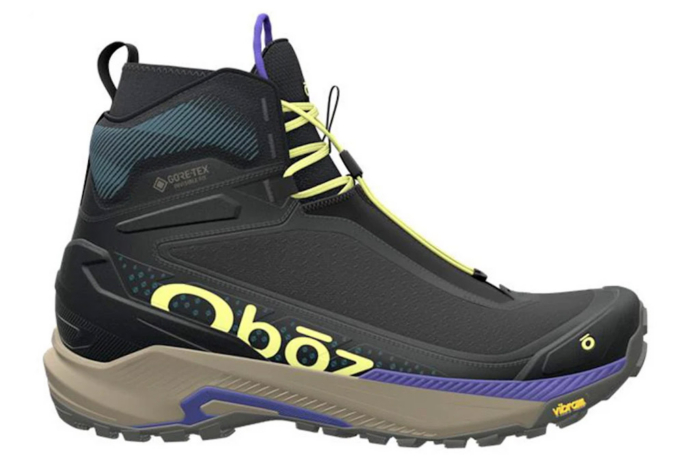
In short: Winter footwear has always been bulky. Or it hasn’t been warm. Now, whether I am exploring my home trails in the cold temps, or headed out for a weekend hike up a local peak, I have access to a warm, waterproof, agile hiking boot — Oboz Katabatic Storm — with fantastic traction, low bulk, and a sneaker-like feel with a winter traction sole.
The long, slidelock-tightening laces are covered with a zippered gaiter. This warm and agile boot won awards before it was even released. It’s warm without bulk, grippy without being heavy, and it adapts to a wide variety of foot shapes thanks to the flexible lacing system.
Compare it in GearJunkie’s guide to the best winter boots.
Specifications
Oboz Katabatic Storm Review
Warmth

The Katabatic Storm uses zonal insulation and weather protection for warmth. Oboz saves weight by not padding the entire shoe with insulation, but by adding 3mm of Solarcore insulation along the sole and in the tongue. Solarcore is breathable and stays warm even when compressed. It’s an impressive design. The warmth of the boot surprised me, especially when I first wore it in full winter weather.
Weather Protection

A GORE-TEX Invisible Fit Liner keeps the boots dry, and a gaiter over the boot’s laces further enhances weather protection. The cord-style lacing is tucked away in the lace garage and covered by a partial gaiter, keeping snow at bay. The Katabatic Storm is designed to be worn with a full gaiter. Underfoot, the boot has a channel to hold underfoot gaiter straps.
Invisible Fit laminated the waterproof breathable GORE-TEX layer right to the liner, eliminating the traditional bulky bootie. That construction is one of the keys not only to this boot’s exceptional waterproofing but also to its natural, low-bulk feel whenever I wear it. There was no bunching or bulk, which was a game-changer.
Another exceptional design win — getting this boot on and off, and tightening or loosening the laces can all be done with gloves on, thanks to oversized pull loops on the heel and tongue and the dual-zone quick-lace system.
Traction

The Katabatic Storm has traction that’s highly engineered for cold-weather adventures. The Vibram Ice Trek II and Traction Lug winter grip sole have mixed-terrain gripping, with 4–5mm variable-depth lugs and siped lugs around the edges of the sole for extra traction when it’s wet.
Vibram’s Ice Trek II sole is made for winter traction, and it delivered. While many other winter boots have blocky lugs for grip on snow, this shoe is designed for not just snow and ice but the melt-and-refreeze cycles, when you could be hiking on anything.
Comfort and Fit

Moving from rock and dirt to snow and ice and back again, especially when the trail was a wintry refrozen mix, I really felt the Katabatic Storm’s stability. Underfoot, the molded TPU chassis provided torsional stability to keep my ankles feeling stable on awkward and variable terrain, while a proprietary midsole put running-shoe-like spring in my step on long hikes.
Grooves in the forefoot made fast movement feel natural and unrestricted. And a rock plate protected my foot on bouldery ascents and descents. This boot is built for speed, with a true-to-foot fit not previously available in other winter footwear for freezing temps.
Durability

I wore this hiker for multiple months, and it looks as good as new. It’s made for rugged terrain from materials engineered to resist scrapes and scuffs. It’s a fabric, not a leather boot. I expect it to last for seasons of use, but how long will depend on where I use it and how much.
Room for Improvement

There is so much awesomeness going on in this boot. It doesn’t claim to be the winter boot for all adventures. If you’re heading out in deep snow, choose other footwear. My two questions about this boot are: Do the laces need to be quite so long?
While there is plenty of room in the lace garage to tuck them away, the length seems excessive. And, on my sample pair, which was pre-release, the gaiter zipper kept getting stuck. Luckily, I was able to slide them on and off without unzipping them. Hopefully, Oboz will fix the zipper issue before full production in fall 2026.
Who It’s For

This is the idea winter boot for fast and light hikers in the shoulder season and winter adventures. While it’s not the right boot for deep snow, it was the perfect choice for a mid-winter hike up Vermont’s Camel’s Hump on the packed and well-used Burrows trail. When the temps bottomed out at -5°F, the Katabatic Storm wasn’t warm enough. But in temps from 20°F-40°F, this was by far my favorite new boot of the season.
Conclusion

If you’ve been looking for the perfect winter boot for aerobic activities like winter hiking or snowshoeing, but everything you’ve found was too clunky, bulky, or heavy for the way you like to move, the Katabatic Storm is for you.
It can handle snow, mud, and everything in between. It’s warm, breathable, fast, and feels great to wear. It’s the boot that lives at the front of my mudroom that I slip into nearly every time I head outside in winter and the shoulder seasons.