Most winter hiking boots rely on thick insulation, stiff soles, and substantial uppers to keep cold and snow at bay. The Xero Alpine Boot ($175) takes a minimalist approach, combining 200 g of insulation with a flexible, zero-drop platform that allows a more natural stride. The result is an unusually light winter boot that feels far less cumbersome than traditional options.
I tested the Alpine for 4 months on 10 outings around Jackson and the Tetons. I wore it snowshoeing, winter hiking, and walking the dog in temperatures down to the single digits, including outings through freshly fallen snow.
In short: The Xero Alpine is exceptionally light, comfortable, and flexible for a winter hiking boot. Its zero-drop platform, roomy forefoot, and grippy outsole work well for minimalist hikers, but it doesn’t offer the warmth or protection of a heavier winter boot.
Compare the Xero Alpine to others we’ve tested in our guide to the best winter hiking boots.

Specifications
Pros & Cons
Pros
- Extremely light for a winter hiking boot
- Zero-drop platform allows natural foot movement
- Removable heat-reflective insole boosts warmth
- Vegan-friendly construction
Cons
- Requires careful lacing for best fit
- Less warmth and protection than heavier winter boots
Xero Alpine Boot Review

Exceptionally Light and Flexible
At 14.9 ounces per boot, the Alpine is one of the lightest winter hiking boots in our guide. Over longer snowshoeing and hiking outings, it felt less tiring than heavier insulated boots.
The flexible construction feels closer to a hiking shoe than a traditional winter boot. Instead of forcing my foot into a rigid stride, the Alpine moved easily over rolling, uneven terrain while still providing insulation and coverage in winter conditions.
That minimal structure won’t appeal to everyone. Hikers who rely on a stiff sole or substantial upper for support may find the Alpine too flexible. For anyone accustomed to minimalist footwear, however, that flexibility should feel familiar.
The Alpine also uses entirely vegan-friendly materials, a meaningful benefit for hikers who want to avoid leather and other animal-derived components.
Zero-Drop Comfort With Room to Splay
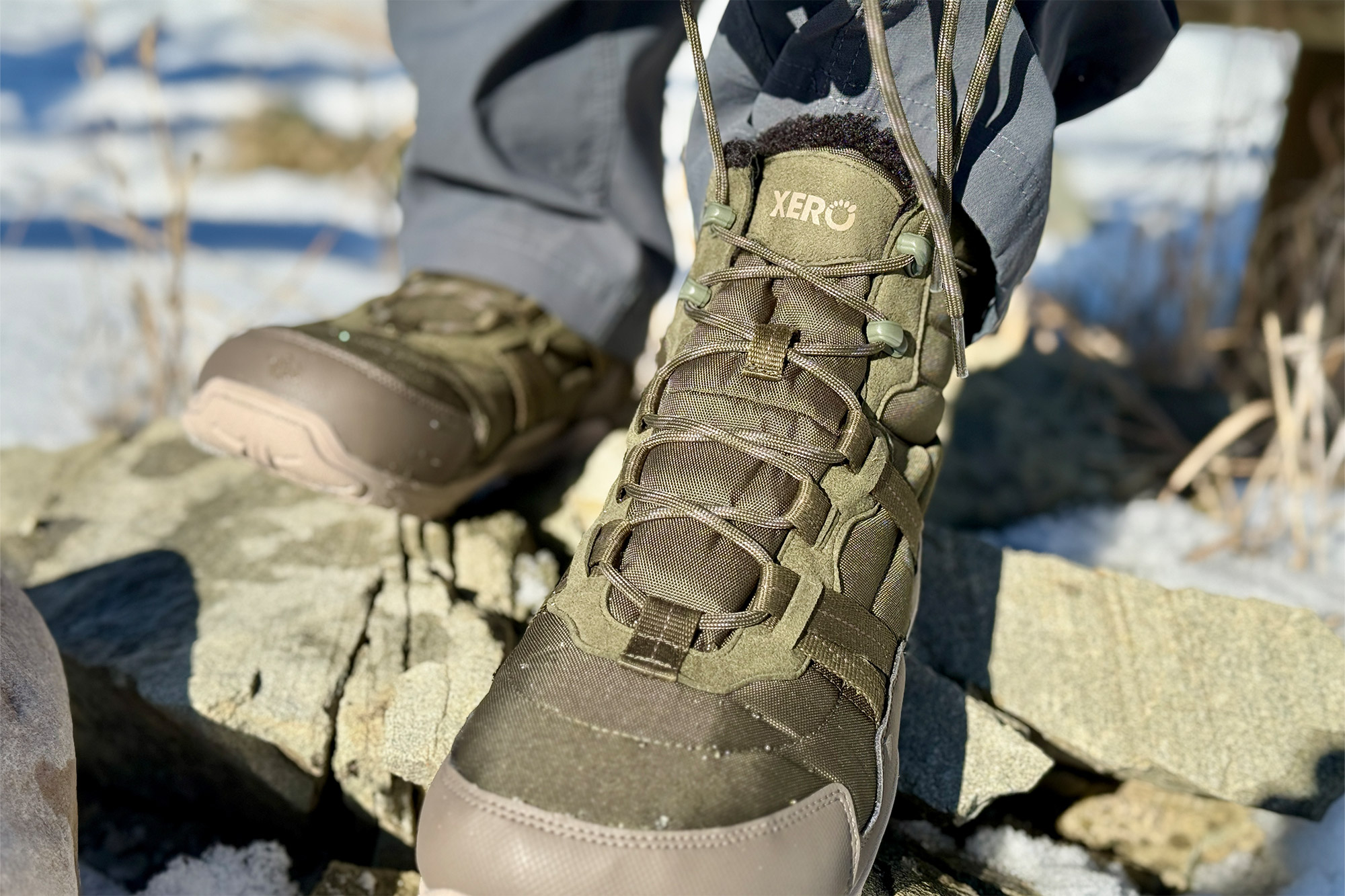
The Alpine’s zero-drop platform positions the heel and forefoot at the same height. Combined with its roomy toe box, the design gave my toes space to spread without squeezing them together inside a bulky insulated upper.
The fit required more attention around the heel. Xero calls the design a “stay-connected heel cup,” which helped secure my heel once I adjusted the laces properly. If I left them too loose, I noticed more movement than I wanted.

Once dialed in, the boot felt secure through the midfoot and heel without restricting the forefoot. Many winter boots create security by narrowing the entire fit, but the Alpine maintains space around the toes while allowing the laces to control the rest of the foot.

Warmth and Protection for Active Winter Use
The Alpine uses 200 g of insulation, and a removable heat-reflective insole adds warmth beneath the foot. I stayed comfortable while moving during single-digit hikes, snowshoe outings, and cold dog walks without feeling weighed down by excessive insulation.
The Alpine handled freshly fallen snow during testing, but its lighter construction provides less protection than a taller, more substantial winter boot in deep or wet conditions.

The North Face Chilkat V 400 feels warmer and more protective, with a waterproof shell, gusseted tongue, 400 g of insulation, and a fleece lining that better shields feet from deep snow and slushy conditions. The Alpine is considerably lighter and more flexible, so the choice comes down to natural movement and low weight versus maximum warmth and weather protection.
The removable insole provides some flexibility within that range. I kept it in place during colder outings, but it can be taken out in milder weather when the extra warmth isn’t necessary.
Reliable Traction on Mixed Winter Terrain
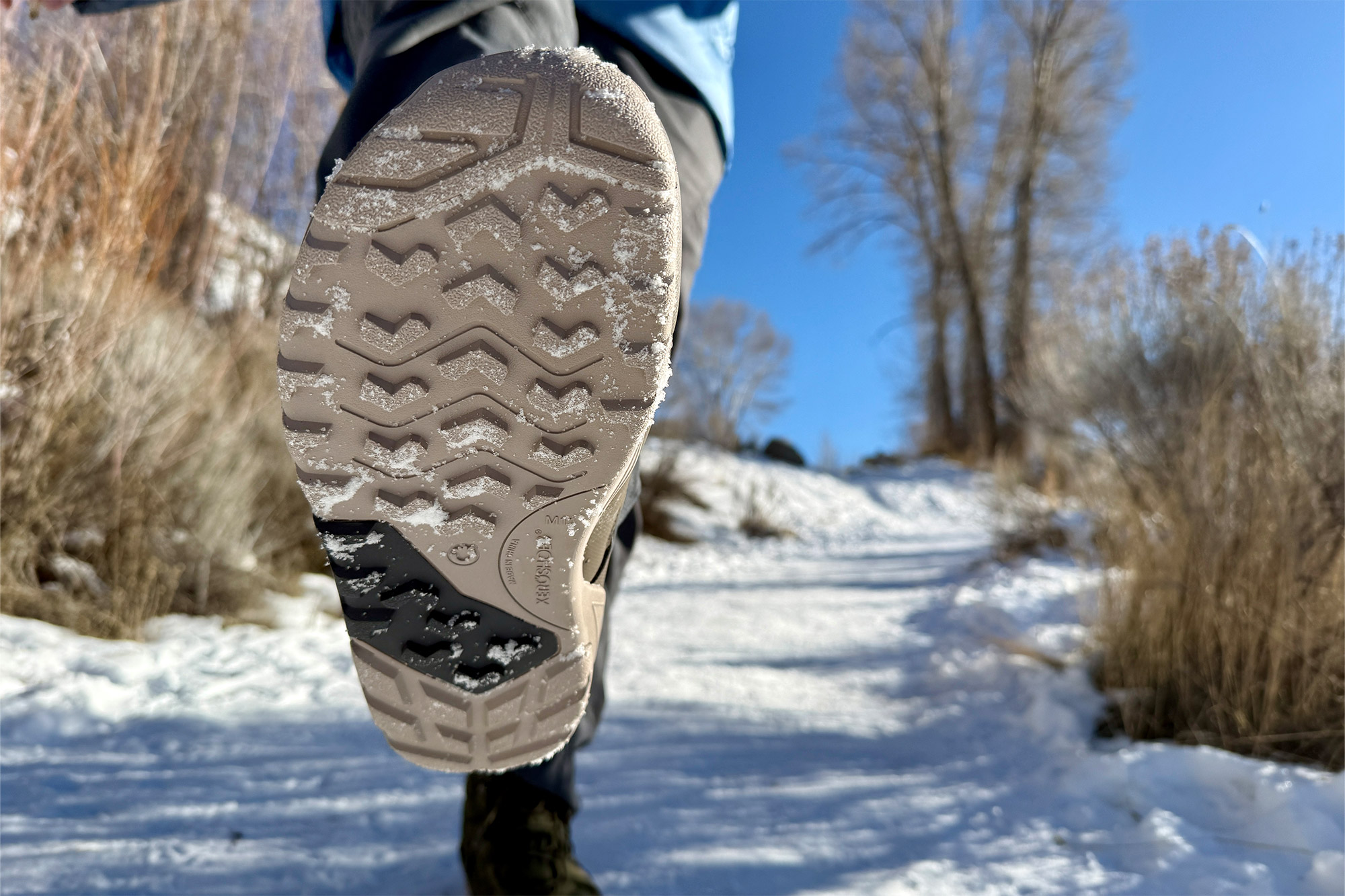
The Alpine’s medium-lug outsole gripped freshly fallen snow, mud, and slick ground better than I expected from such a light boot. It provided enough bite for rolling winter trails and mixed conditions without feeling stiff or overdone.
The flexible sole conformed well to uneven terrain and provided more ground feel than a rigid winter boot. That flexibility worked particularly well on packed trails and snowshoe approaches where I wanted my feet to move naturally.
Room for Improvement
The Alpine can’t match the warmth and protection of a heavier winter boot in deep snow, wet conditions, or prolonged cold. Its lighter construction makes walking easier, but it offers less insulation and coverage in more severe conditions.
The fit also requires deliberate lacing. Tightening the boot evenly through the midfoot and ankle gave me a secure heel hold while preserving the toe room that makes the Alpine so comfortable.
Xero Alpine Boot: Who Is It For?
The Xero Alpine is best for minimalist hikers who want a lightweight, zero-drop boot for active winter outings. It’s particularly well suited to packed-snow trails, mixed terrain, snowshoeing, and cold hikes where flexibility and toe room matter more than maximum insulation.
It makes less sense for people who want a rigid, highly supportive boot or need substantial protection for deep snow, wet weather, or extended periods in severe cold. For hikers already comfortable in barefoot-inspired footwear, the Alpine offers an uncommon combination of winter warmth, traction, and flexibility.