Backcountry trail work isn’t easy. My crew and I typically pull 10-hour days, felling and bucking downed trees, digging drainage, and moving boulders around. So the minute I get to my tent, all I’m after is the comfort of my backcountry bed, and most of all, my beloved camp pillow: the Sea to Summit Aeros Premium.
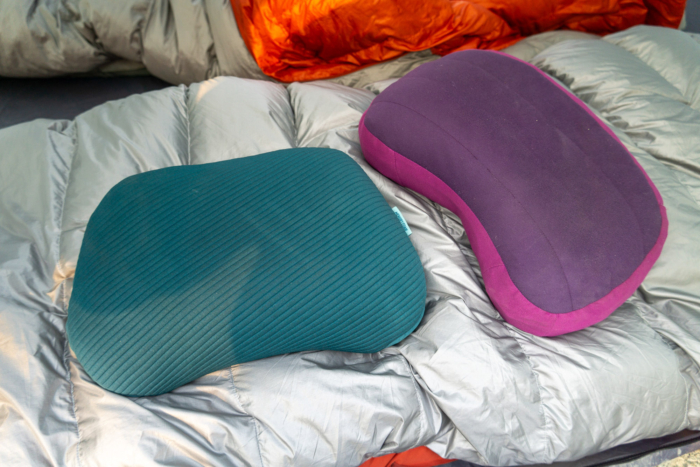
I’ve used some version of this pillow for almost a decade now, and when I was given the chance to test the updated 2026 version this summer, I jumped on it. With a new memory-foam topper (and the same scallop shape I love), it’s cozier than ever, and only slightly heavier. Even at double the weight, I still might just carry this pillow; it’s that good.
In short: The Sea to Summit Aeros Premium Pillow packs plush memory foam cushioning over an adjustable air bladder for serious backcountry rest. I compared the revised version with my trail-worn previous pillow to see what was new, and whether it’s still my go-to backpacking luxury item.
Looking to upgrade your backcountry sleep system? Check out GearJunkie’s Best Camping Pillows Buyer’s Guide for more of our favorites.
-

-
(Photo/Erika Courtney)
-
(Photo/Erika Courtney)
-
(Photo/Erika Courtney)
-
(Photo/Erika Courtney)
-
(Photo/Erika Courtney)
-
(Photo/Erika Courtney)
Specifications
Pros & Cons
Pros
- Perfect fit in many mummy sleeping bags
- Memory foam and soft stretch knit face material
- Slight scalloped edge to tuck under your neck
- Very small packed size and weight
Cons
- Pillow cover can become grungy, but can recover with some soap and water

Sea to Summit Aeros Premium Pillow: Review
Field Testing This Summer
Back when I was hiking the Pacific Crest Trail, every single ounce in my pack was accounted for. On that hike, I hauled the older version of the Aeros Premium all the way from the desert to Washington, and though it turned the wash water muddy brown a couple of times, it was never a question of whether or not to keep carrying it.
These days, my trail life looks a bit different as I lead professional trail crews through the backcountry of Washington state. On recent work hitches in the North Cascades, I put this new 2026 version to the test. The leap forward from my old PCT workhorse to this new design is night and day, proving Sea to Summit actually listened to real-world feedback from long-distance hikers.
Here’s what’s still the same: The pillow is still inflatable, and blows up/deflates through the “XPRESS” two-way valve. This flat valve is smart and uses nesting plugs to both inflate and hold air, as well as deflate completely when morning comes. It still takes about three good breaths to inflate, and it’s still offered as the “slightly more comfortable” backpacking pillow option. Now, here’s what’s new.

Memory Foam Comfort
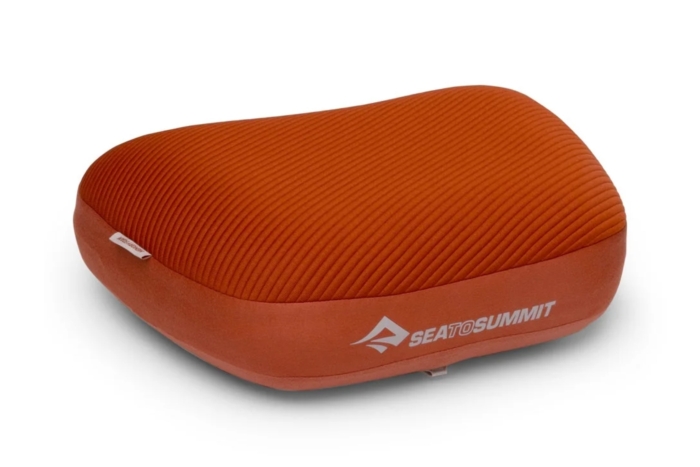
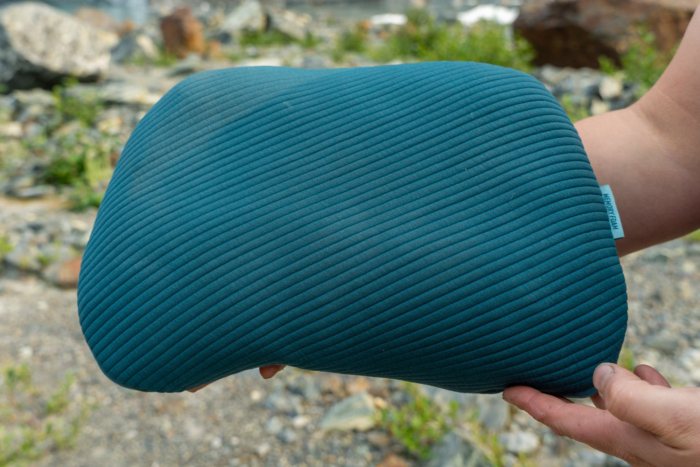
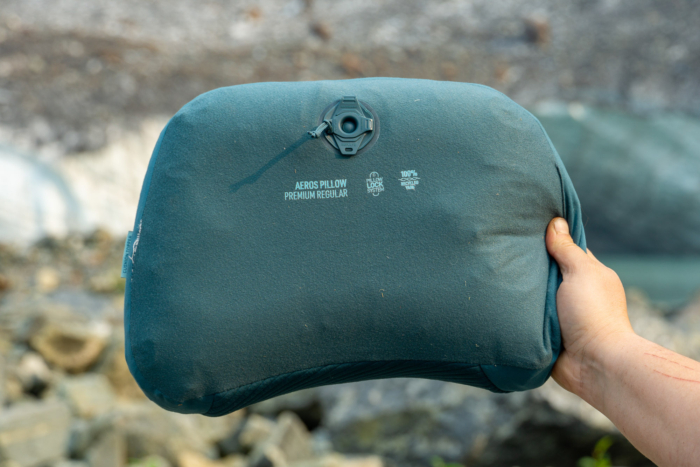
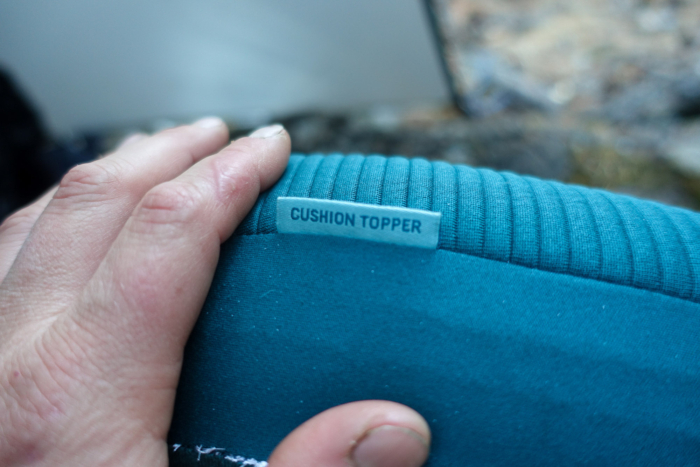
This is the biggest change with this upgraded pillow: memory foam! On the old model, a thin layer of microfleece was all that stood between your head and the inflatable bladder inside. No longer: now, a plush memory foam topper covers the entire pillow and is tucked under a stretch-mesh cover, making sure you believe the “Premium” moniker.
This new foam isn’t just about adding an additional soft layer (although it does that very well). Since the layer is thicker than the previous cover, the pillow supports the head ever so slightly more, and I noticed a distinct reduction in the annoying bounce that can happen when shifting in your sleep.
Plus, the updated shape has a sweet dip to cradle back sleepers, and some slightly elevated sides that bridge the neck gap for side sleepers like me. I can lie on my side with full support without cranking my neck into a weird angle or having to shove my hands under the pillow for extra height.
At 12cm tall (that’s slightly less than 5 inches for us Yanks), the Aeros Premium is what I would call the perfect height for a camp pillow. Just right for slipping into a sleeping bag hood, and high enough to support side sleepers like me. If you need a little lower pillow, the Aeros Premium deflates down to about 4 inches before going totally limp and difficult to keep your head on top of.

Pillowlock Functionality
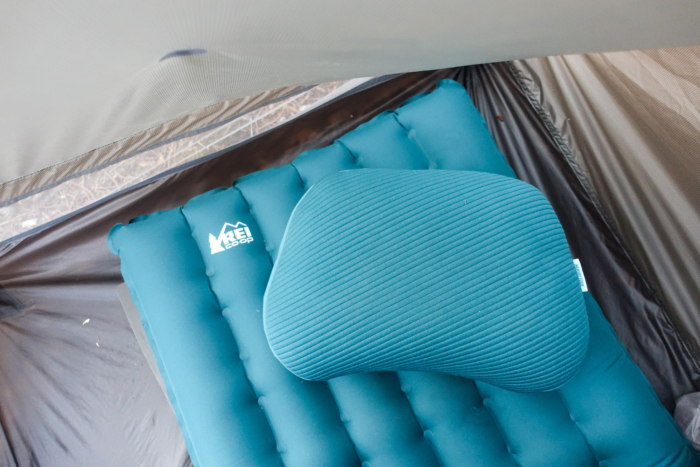
There are few things more annoying than waking up to discover your pillow has shot across the tent. Sea to Summit has been including its PillowLock system for years now, and it’s as simple as can be: four hook-and-loop patches that stick to the back of the pillow and mesh with another set of stickers for your sleeping pad.
Camping on a slanted site beside Ross Lake this summer, this setup kept my pillow totally locked down all night long. You can toss, turn, or shift inside your sleeping bag without ever losing your headrest to the pitch-black void of your tent floor.
Food for thought: the Velcro-like stickiness will diminish with time. On my older 2,000+ mile version of the pillow, the patches have pretty much lost all of their stick, making the system a bit useless. I don’t believe you can buy these separately from the pillows, so once you lose the stick, you might be out of luck!

Pillow Trade-Offs?
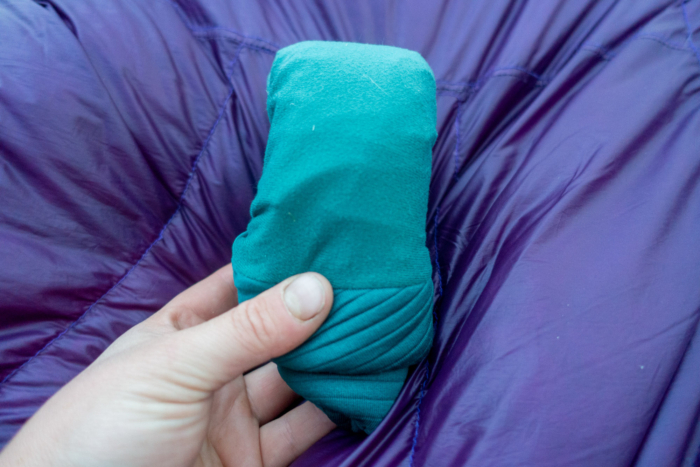
Even with all these awesome upgrades, weight weenies should keep a couple of trade-offs in mind before pulling the trigger. Adding that memory foam layer bumps up both packed size and weight compared to bare-bones air bladders, meaning it rolls down to roughly the size of a small apple instead of an egg.
Now, to be fair, we’re only talking about ~3.7 ounces here. (For fun, some references: a standard deck of playing cards, 18 U.S. quarters, or a little less than a stick of butter all weigh the same.) Compared to some camp-specific pillows, which can weigh up to 2.5 pounds, it’s a whisper in your pack. Just think about what you’re really after and how it fits into your gear loadout.
The Aeros Premium also commands a higher price tag than basic inflatable pads at $55 for the regular size, making it an investment rather than an impulse buy. But honestly, if you’re out there pulling long hitches or logging big trail miles, that tiny extra weight pays for itself 10 times over in actual restorative sleep.

Sea to Summit Aeros Premium Pillow: Conclusion
The overhauled Sea to Summit Aeros Premium proves that a dedicated trail pillow is way more than a luxury when you’re pushing your body outdoors. Sea to Summit built a pillow that delivers genuine home comfort directly to remote wilderness campsites. If you’re ready to trade stiff necks and restless nights for real-deal recovery, this upgrade deserves a permanent spot in your pack.
There are lighter (and heavier) options out there, but I think that this pillow lands at just the right spot for most backpackers. Not too much, not too little. Hopefully, I’ll have another 2,000 miles of testing on the new version to back that up here eventually.