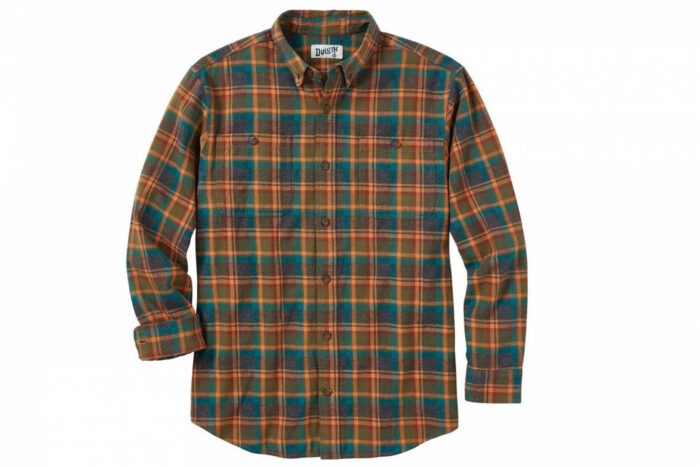
No boutique fabrics, heritage provenance, or tailored silhouette — Duluth’s Free Swingin’ Flannel doubles down on a roomy, durable work shirt built to move. Long before flannel was the fall uniform of tailgate parties and pumpkin-spice everything, flannel was workwear. Worn by Welsh shepherds and laborers, the warm, durable fabric was built to tackle outdoor tasks in dismal weather.
With centuries of proven warmth, durability, and practical comfort, the brushed twill crossed the Atlantic and found a new home on the backs of American loggers, railroad workers, and farmers. Somewhere along the way, the everyman’s shirt became the darling of the fashion strip and thrift-store gold.
Are today’s flannels better? Or have we been designing the original task out of them? Duluth didn’t get the memo.
In short: With room through the shoulders, durable low-nap fabric, and a boxy cut, Duluth’s Free Swingin’ Flannel is a throwback to what a flannel used to be: a shirt you reach for when work needs to get done.
Looking for a new flannel? Check out GearJunkie’s Best Men’s Flannels Buyer’s Guide for more of our favorites.


Specifications
Pros & Cons
Pros
- More durable than more brushed flannels
- Fantastic mobility
- Great price
Cons
- Material is rough and thin, a diversion from most flannels

Duluth Trading Co. Free Swingin’ Flannel Shirt: Review
Open shirt, overshirt, or buttoned up with a tie, flannel has reached its brushy nap into every corner of our wardrobe. But as long as there are weekends, there’s still work to be done.
The proper chore flannel needs to be warm without overheating, durable without becoming cumbersome, and roomy without getting in its own way. Above all, it needs to move.

A Fit Built for Moving
Duluth’s north star is mobility: “a work shirt DNA with flannel vibes.” To get there, Duluth pulls a few new tricks out from behind the sleeves. Literally.
A relaxed fit starts with about an extra inch of width pit-to-pit. Depending on the cut, mediums measure between 20-23″. At 23″, the Free Swingin’ sits at the far end, falling in line with most relaxed fit workwear mediums. If you want a trimmer fit, sizing down drops 1 inch off the pit-to-pit without sacrificing too much length in the arms.
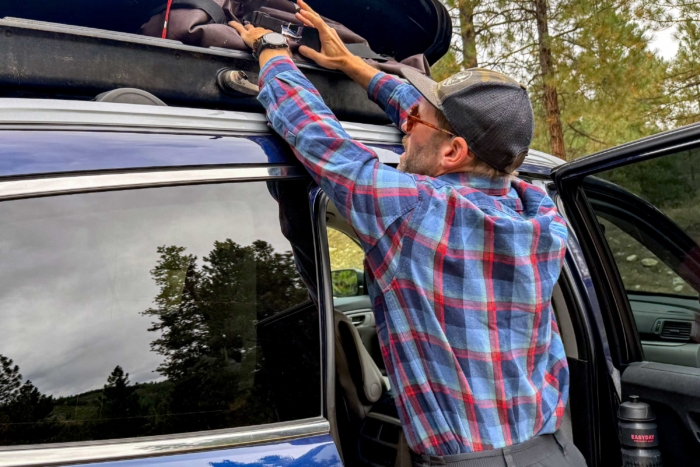
But, room alone does not make a shirt mobile. Two half-inch pleats drop off the shoulders (also standard in many work shirts). But what really unlocks the shoulders are the substantial articulating gussets under each arm. Each panel-wing spans roughly 10 inches front to back, opening a full 2 inches directly under the armpit before tapering back into the sleeve.
The combination of minor tweaks completely transforms the shirt, opening both usability and comfort.

The Importance of Seams and Stitching
When sewing a shirt together, the seams need to match the materials (and the job). A combination of seams can keep the price low without compromising value.
Duluth flat-fells the side and sleeve seams, rolling the fabric edges together and locking them down under two rows of stitching. It’s strong, tidy, and reliable.
Still durable, but less expensive to manufacture, Duluth joins the more complicated gusset and armscye (where the sleeve meets the body) with an overlocked seam. The seam allowance is folded over and stitched flat with a topstitch. It yields low bulk where you want mobility while protecting the overlocked edges from snagging or fraying.
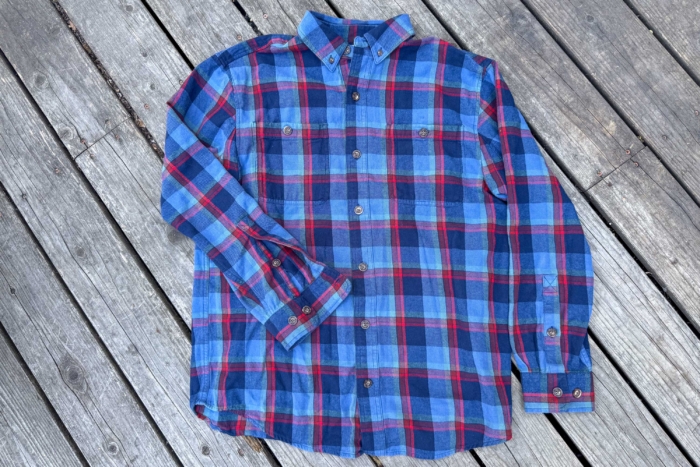
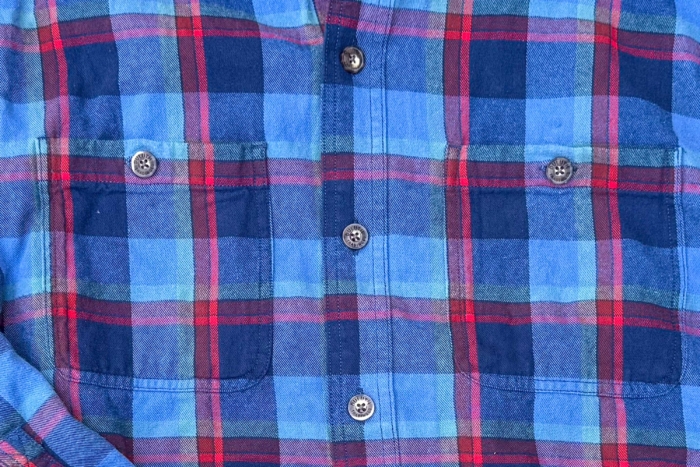
Compromises are made to keep the cost below $55, but it’s not in the pockets. Each drop-in chest pocket contains a pocket within it: a pencil slot on the left and a larger internal sleeve on the right, big enough to swallow a phone. Because I’m old school, I use it to tuck my Home Depot list.
Both pockets button shut and are cut and sewn to pattern-match the shirt. The additional fabric, pattern work, and sewing cost real money and are details I’d expect to see in a shirt twice the price.

100% Cotton Fabric
It would be easy to pair an overconstructed shirt with overbuilt materials. Here again, Duluth demonstrates appropriate restraint. The 5.6 ounce/190 gsm fabric feels more lightweight than midweight, stays cooler when working up a sweat, and adds less bulk where multiple layers are sewn together.
The 100% cotton is prewashed to reduce shrinkage and brushed twice to give it some nap.
I see a lot of flannels, and the two passes of brushing leave the Free Swingin’ Flannel with a low nap. Duluth says it brushes the shirt enough for softness, but stops short of creating quality issues like pilling. It teases enough loft to trap heat, but not so much that it collects dirt and sawdust, or snags on wood splinters. It leans more toward “durable workhorse” than “cozy campfire.”

Work Test
So, how does it perform? Does the design intent match in the real world? My chores are more pedestrian. Weekends find me raking, cleaning gutters, and moving boxes in and out of attic spaces. While I may not be swingin’ tools, I’m reaching plenty of the time.
The shirt’s mobility gets top marks. It’s remarkably more forgiving than other flannels tested. The gussets, pleats, and relaxed fit are spot on for kinetic tasks. And for those who tuck your tails, the shirt stays tucked.
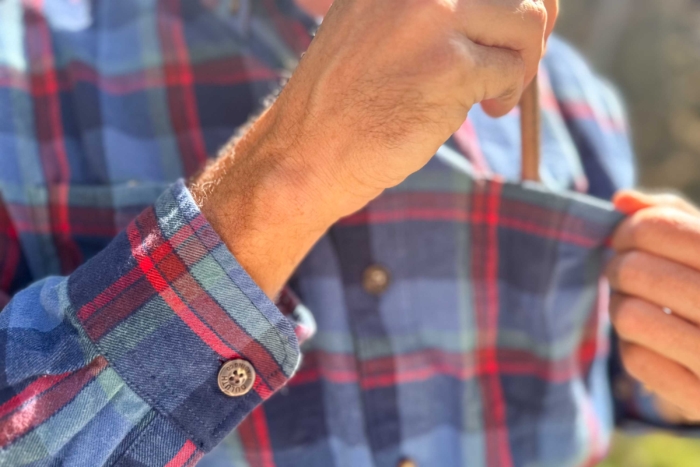
Falling in line to provide more room, a two-buttoned adjustable cuff with a gauntlet placket allows even the fattest modern fitness watch to slide under the cuff. And when it comes time to expose the Popeyes, the sleeves easily roll back over the elbows.
I really appreciate the fat, dime-sized buttons. They are overbuilt for the fabric weight, but easy to manipulate, and they appropriately lock through the placket buttonholes. Three replacements are sewn into the shirt tail. In 6 years with the shirt, I haven’t needed one of them.
While light, the 5.6-ounce cotton isn’t particularly plush; it breathes and transfers sweat better than a lofty flannel. And at the end of the day, any debris collected shakes off easily, and I appreciate that I can hang it from the fat locker loop, ready to go back to work on Sunday.

Tradeoffs
The flannel market has expanded into a much broader space than originally intended. And it’s important to understand and respect that the Free Swingin’ Flannel is a traditional work flannel.
I’m not the fashion police, and I won’t tell you where and when you can and cannot wear a shirt. But this isn’t a work-inspired shirt. It’s a straight-up work shirt. The fabric isn’t luxuriously soft, the relaxed fit is boxy, and the styling is unapologetically traditional. Frankly, it doesn’t care.
The Free Swingin’ quietly accepts the challenge of checking off your to-do list. If you are looking for a more refined shirt, we have plenty for you to look at here.

Duluth Trading Co. Free Swingin’ Flannel: Conclusion
Designed to go toe-to-toe with a Saturday’s worth of tasks, Duluth’s Free Swingin’ Flannel is minimally overbuilt. More than a decade into its run, the 5.6-ounce fabric remains unchanged. It puts material, room, and reinforcement where work demands it and shows discipline where it doesn’t.
Which brings us to maybe the most important measure of value: how often you actually wear something. The Free Swingin’ is an easy shirt to grab after work and on weekends. And after 6 years with mine, that matters. At just under $55, it doesn’t take long before the cost per wear becomes negligible.
This is ultimately what makes the Free Swingin’ the Best Bargain pick in our Buyer’s Guide. It isn’t inexpensive because Duluth gives you less shirt. It gives you the shirt you need for the job and very little you don’t. And often on sale for around $40, it becomes a screaming deal.