As someone whose closet is overbrimming with down jackets, I speak from experience when I say I’ve got beef with outdoor apparel brands. When it comes to women’s jackets, brands almost always choose a too-slim fit with narrow shoulders. Even when I size up, I often don’t have a full range of motion in my arms and shoulders.
I expected the same thing to happen a few months ago when I put on Outdoor Vitals’ (OV) Zulu Down Jacket for the first time. And yet, after I zipped it up, to my surprise, I could fully move my arms. If I wanted to do a dance routine in this jacket, I would totally have the mobility.
In the past few years, Outdoor Vitals has gained a cult following among backpackers for its ultralight pack systems, but the brand is also making a name for itself in apparel. The Zulu Down Jacket, its most recent drop, is its lightest-ever jacket, featuring a no-stitch design for improved durability.
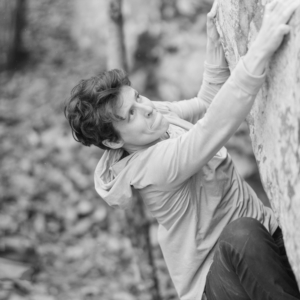
I tested this jacket several times on camping, climbing, and backpacking trips in Illinois, Kentucky, and California this spring. On numerous occasions, temperatures dipped below freezing, with nights so cold that I wore the jacket in my sleeping bag. I also wore it while belaying in thunderstorms, and on mornings when I could see my breath.
In short: The Outdoor Vitals Zulu Down Jacket ($230) is a 900-fill Muscovy down jacket that weighs just 11 ounce. A zero-stitch baffle design supposedly improved durability, and light stretch aids in freedom of movement. It’s also the most comfortably fitting puffer I’ve ever worn. For camping, hiking, climbing, or any shoulder season activity, it’s a great jacket to stuff in your pack.
Check out GearJunkie’s guides to the Best Down Jackets and the Best Down Jackets for Women.
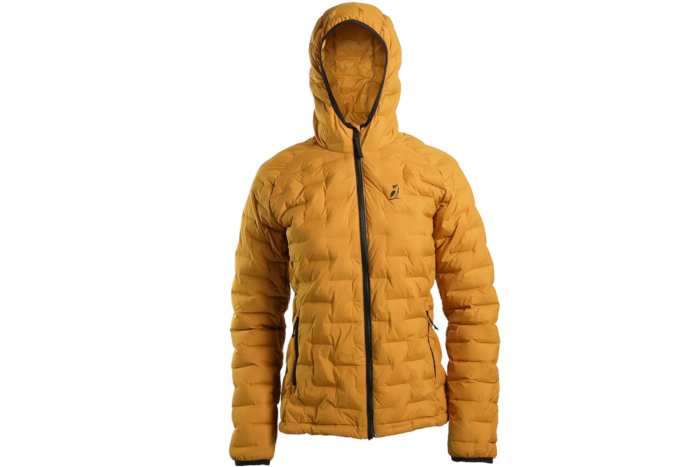
(Photo/Outdoor Vitals)
Specifications
Pros & Cons
Pros
- Leading warmth-to-weight ratio
- Strong wind resistance
- Generous, relaxed fit
Cons
- No stuff sack/ability to stuff into a pocket
Outdoor Vitals Zulu Down Jacket Review
Durability

Typically, to create baffles, the chambers of down that help trap air and keep you warm, apparel brands sew them into the jacket as squares or rows (Patagonia’s Nano Puff is a good example). Of course, that requires sewing holes into the jacket, creating weak points where down can worm its way out, and water can work its way in.
To avoid that issue, Outdoor Vitals uses a zero-stitch design on the Zulu Jacket. Rather than stitching the baffles, the design fuses the jacket’s fibers to create baffles. While OV isn’t the first brand to do this, the Zulu does show why it’s a smart design idea: Fewer stitches mean fewer vulnerabilities.
This jacket was definitely put through the wringer during my testing period. I wore it while belaying and scuffed up against rocks several times when my climber fell. I have a 16-year-old dog who always has to be comfortable, and he used it several times as a dog bed while at the crag. I’ve worn it under backpacks, with harnesses on, and even in my sleeping bag during a particularly cold night. So far, it shows no damage, other than dirt from my dog’s paws.
Warmth & Materials

The Zulu delivers a heck of a lot of warmth in a light package. A men’s medium weighs 11 ounces, but delivers 3.6 ounces of 900-fill muscovy duck down. I wouldn’t wear it by itself in the depths of winter, say, visiting my family in northern Minnesota in December. However, it excels in those shoulder season moments. On cold November days during fall, or early in March as the first signs of spring emerge, it’s great.
The brand says that the zero-stitch design makes this jacket 40% more wind-resistant than its competitors. While I can’t test that claim, I can assure you that this jacket weathered some gusty days at the crag, and I didn’t shiver once.
I brought the Zulu as my main jacket on a climbing trip to Red River Gorge in March, amid frost warnings. With a base layer and lightweight fleece underneath the jacket, I was plenty warm in the morning as I clambered out of my tent, covered in frozen dew.
Like most puffers, this jacket isn’t waterproof, but it did do a decent job withstanding some light rain. At the Red, we spent a day climbing in a consistent drizzle. The exterior of the jacket became slightly damp, but the moisture never affected the insulation.
On a climbing trip in Illinois in April, temperatures dropped into the 30s as soon as the sun set, but my friends and I still wanted to gather around the fire and hang out. I donned the Zulu and actually had to scoot back from the fire because I was getting too warm.
Other Features

The jacket’s 15D nylon exterior was quite flexible. When I went to extend slack to my climber or jump up to catch them on a fall, the jacket moved with me. On backpacking trips, I never bring a pillow and just use my puffer as one. The fabric was soft on my skin and not crinkly.
The hood and wrists have a soft elastic. The elastic on the wrists is thick enough to lie flat on the skin and actually prevents cold air from entering. The waist has an adjustable drawstring, but the hood does not. I don’t tend to use that feature on a hood (because it lowers my visibility), but it’s worth noting if that’s important to you.
The two external zippered pockets are sizable and plenty large enough to hold my iPhone, wallet, keys, and gloves. The pocket zips smoothly and never got caught during testing. I’ve had problems in the past with the pull tabs on zippers breaking off on ultralight jackets, but the Zulus are strongly secured. Even when I pulled with all my might, they didn’t detach.
There are two interior, non-zippered pockets, with one on each side. They’re large, but with no way to secure them, I found myself not using them. Also, if you’re using the external pockets, the stuff in there presses against the internal pockets, making it so you can’t really fit much. I’d get rid of the internal pockets and instead add a zippered chest pocket for more secure storage.
Sizing, Fit, and Style

I typically wear a medium in shirts, but based on past experience, I always order jackets in a women’s large. As previously mentioned, the Zulu fit was a refreshing change of pace. It wasn’t cut too close to the body or nipped in at the waist, and had enough room so I could layer underneath it.
The jacket also extended past the waist to my hip, which I appreciated. A longer jacket equals more coverage and more warmth.
The women’s sizes range from small to XXL, and the men’s from small to XXXL. The men’s large and XL sizes are available in tall versions. Both genders come in yellow, gray, and light blue.
While I don’t think any puffy is truly stylish (it’s a functional object), I would wear the Zulu around town or to the park. I appreciate that, unlike other brands, the fabric isn’t shiny, and the colors are muted. It’s not a jacket that screams, “I’m outdoorsy!”
A Note on Price
The women’s Zulu retails for $230, and the men’s costs $240. Comparing that to our Best Down Jackets, that price is definitely on the lower end. Patagonia’s Down Sweater Hoody offers 2 more ounces of insulation, but costs $345.
The Zulu has more insulation than Arc’teryx’s $400 Cerium Down Hoody and weighs nearly the same. While it is more expensive than our budget pick, REI’s 650 Down Jacket ($129), an ultralight down jacket in the $200 range is pretty unusual.
Mountain Hardwear’s Ghost Whisperer is a perennial favorite among ultralighters at GearJunkie, but it’s also $400. If you’re looking to cut ounces without paying an arm and a leg for a jacket, the Zulu is a great pick.
One Big Gripe
I would change one big thing about this jacket. I wish it were the kind you could stuff into its own pocket and zip it up for easy storage. The jacket itself is packable and smooshes down to a small size. I shoved it in the empty spaces in my pack in between gear, and that worked fine.
But for organization and packing (especially on international trips or when I’m bringing a suitcase), I would’ve loved the ability to stuff and store it inside itself. You can always roll it into its hood, but a dedicated pocket or sack would be awesome.
Outdoor Vitals Zulu Down Jacket: Who Is It For?

I appreciated how versatile the Zulu is. I’d choose it for climbing, camping, backpacking, and even everyday wear. When I go backpacking at 14,000 feet in the Sierra Nevadas this summer, it’s coming with me. The design and materials are durable, and at 11 ounces, it’s a very lightweight jacket — especially for how warm it is.
For people who want to get one jacket that can serve them through three seasons, the Zulu is the ticket. If you pair it with a shell or a fleece midlayer, it would work fine all year round.
And for ladies like me who have larger, broader shoulders, the fit is a godsend. Gone are the days when women’s jackets feel like they’re designed to cling to every curve of your body.
OV’s Zulu shaves off ounces without ratcheting up the price. In a time when ultralight has become synonymous with ultra-expensive, it’s refreshing to see a brand offer a premium product for a reasonable cost