Next-to-skin pieces are the unsung heroes of winter adventures. Staying warm and comfy is the ticket to cold-weather sports — and it starts with your foundation. Base layers for women come in different weights — light, medium, and heavy — and the more wool, the warmer it is.
Our favorite thermals include the Smartwool Classic Thermal Merino Crew and Bottoms, providing middle-of-the-road warmth for most ski resort days. Wool holds warmth even when wet and naturally beats odors. Synthetic fabrics are often more durable, elastic, and affordable than wool, like the Helly Hansen LIFA Crew Base Layer, which you can snag for $50. While you tend to give up some odor control, synthetics are the fastest-drying choice.
For our most recent four-month sessions, SnowSports Senior Editor Morgan Tilton and contributor Heather Balogh Rochfort tested eight sets of base layers for more than 324 hours. These thermals were examined in below-freezing temps, high humidity, and goggle-caking powder days from British Columbia to Colorado and the Italian Dolomites.
Editor’s Note: We updated our Base Layers for Women guide on November 16, 2026, with Bottom Line summaries, signposts, and a smooth-to-navigate comparison chart for easier, quicker research.
The Best Base Layers for Women of 2026
Best Overall Base Layers for Women

Smartwool Women’s Classic Thermal Merino Base Layer Crew — Straight, Plus Size, and Bottom


Best Plus-Size Base Layers for Women

REI Co-op Lightweight Base Layer Tights and Long-Sleeve Crew Top Women’s Plus Sizes
Best Lighter Base Layers for Women for Backcountry Skiing

Ortovox 185 Rock’N’Wool Long Sleeve & Short Pants

Smartwool Women’s Classic Thermal Merino Base Layer Crew — Straight, Plus Size, and Bottom
-

-
-
-
-
-
(Photo/Heather Balogh Rochfort)
-
(Photo/Heather Balogh Rochfort)
-
(Photo/Heather Balogh Rochfort)




Specifications
Pros & Cons
Pros
- Super soft
- Comfortable cut
- Crossover use outdoors and for professional meetings or social meetups
Cons
- Does not fare well in washing machine
Read Review: Simplicity That Delivers: Smartwool Classic Thermal Merino Women’s Base Layers Review
Bottom Line: A timeless, all-merino staple that pairs luxurious next-to-skin warmth with odor resistance. It’s an investment-worthy choice for cold-climate skiers who value a flattering cut and reliable temperature regulation.
Smartwool remains ubiquitous in the world of women’s outerwear undergarments. If you want dependable insulation and all-day comfort without flashy gimmicks, the Smartwool Classic Thermal Merino Base Layer Top and Bottom ($115 each) are tough to beat. Formerly known as the Merino 250 collection, this set relies on a soft, brushed interior that feels gentle against bare skin while maintaining a clean, classic aesthetic.
The Tech: Constructed from 100% merino wool knit at 250 g/m², this midweight kit delivers exceptional heat retention. SnowSports Senior Editor Morgan Tilton and contributor Heather Balogh Rochfort tested these layers over multiple full winter seasons — spanning brisk Aspen powder mornings to five consecutive days of ski touring in Italy’s Dolomites — logging zero seam fraying and zero odor retention despite heavy spring exertion. Compared to the airier Stio Basis PeakWool Lightweight Crew, the denser interlocking fabric provides a noticeably stronger thermal barrier against deep-winter chill. Smartwool also caters to a broader range of body types with dedicated Plus sizing from 1X to 4X at the same price point.
What We Like: The ease of layering makes this kit an everyday go-to. The crew top is trim but forgiving, cut with sufficient torso length to stay securely tucked into ski pants while making deep turns. We especially appreciated the wide, merino-covered waistband on the bottoms, which lies flat, supports comfortably, and avoids pinching into the waistline. Furthermore, the versatile styling effortlessly transitions from a technical base layer beneath a hardshell to a standalone top at the lodge.
What We Don’t: After several back-to-back days of activity without laundering, the 100% natural fibers inevitably give way to slight sagging through the seat and knees. Additionally, lighter colorways in the lineup lean somewhat sheer, which limits their appeal as standalone lounge tights.
Should You Buy It? Anyone seeking a durable, natural-fiber workhorse for stop-and-go resort days, below-freezing tours, or winter travel will find this iconic kit well worth the price.
REI Co-op Women’s Midweight Base Layer Top & Tights


Specifications
Pros & Cons
Pros
- Plenty of warmth for chilly days
- Streamlined, snug fit that easily layers beneath puffies or shells
- UPF 50+ sun protection
Cons
- Drying time lags behind competitors
- Tight fit at the ankle cuffs and beneath the armpits
Bottom Line: A durable, wallet-friendly synthetic set that delivers dependable insulation for chilly lift rides and low-output winter adventures. High-intensity skin tracks will overwhelm its slower dry time.
The REI Co-op Midweight Long Sleeve Base Layer Top and Tights ($55 each) are built for cold days when warmth matters more than finesse. They are not flashy, and they are not ultralight, but they prove exceptionally reliable across routine winter outings.
The Tech: Constructed from a midweight polyester-spandex blend clocking in at 220 g/m², this kit is engineered for direct heat retention in below-freezing weather. GearJunkie contributor Heather Balogh Rochfort tested the set across resort laps at Aspen Snowmass, uphill laps at Buttermilk, trail runs, and snowy dog walks. On overcast resort days between 20 and 25 degrees Fahrenheit, the dense weave locked in heat during long chairlift rides. But breathability has its boundaries. While it matches the pure cold-weather insulation of the Smartwool Classic Thermal Merino, the synthetic construction holds moisture significantly longer. During a sunny, 45-degree uphill skin, the fabric pulled sweat from the skin but remained noticeably damp even after a 45-minute rest break.
What We Like: Practical value and resilient stretch headline the strengths here. The fabric offers enough four-way give to preserve unrestricted range of motion when carving turns, striding on trail runs, or hiking. The streamlined cut layers smoothly under fleece midlayers or heavy outerwear without bunching up, and at an accessible price point, the pieces hold up well to frequent wear and repeated laundry cycles without delicate handling.
What We Don’t: Sizing leans notably trim through the hips and stomach — Balogh Rochfort tested a women’s medium at 5’5″ and 145 pounds and noted that anyone between sizes will want to size up. The lower hems present another hurdle for skiers: the ankle cuffs are cut so tight that pulling them up over the calves to clear ski boot liners is practically impossible.
Should You Buy It? Still, at $55 per piece, the REI Midweight base layers hold a lot of value. For the everyday enthusiast who just wants to play outside without spending a fortune, these are a pick worth considering.
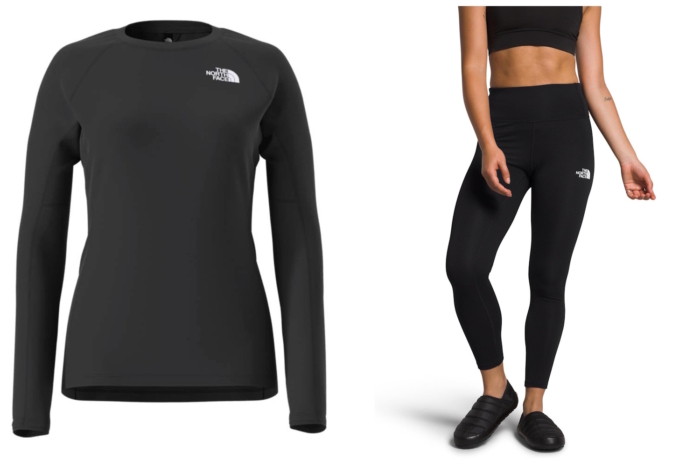
The North Face Women’s FD Pro 160 Crew and Tights


Specifications
Pros & Cons
Pros
- Lower price point
- Tight-hugging and won't budge
- Synthetic fabric is light yet durable
- Slender and fits easily beneath midlayers
Cons
- If you don't like form-fitting layers, check out looser silhouettes
- Nixes wool from the equation
- No odor resistance
Bottom Line: A skin-tight, ultra-fast-drying synthetic kit designed for high-output mountain missions in frigid environments. It serves athletes who generate massive heat on the skin track.
Skintight and lengthy with long arms, The North Face Women’s FD Pro 160 Crew and Tights ($70 each) are a solid synthetic choice if you are looking for a lightweight setup that thrives during cold-weather exertion. SnowSports Senior Editor Morgan Tilton tested this figure-hugging kit across freezing backcountry tours in British Columbia — including sub-zero winter camping — and bitter resort laps at Crested Butte Mountain Resort. The verdict: they never loosen up over long days, and they evaporate sweat remarkably fast.
The Tech: Engineered for aggressive moisture management, the fabric features 100% recycled polyester infused with FlashDry-Pro technology. By embedding water-repelling particles directly into the synthetic fibers, the 160 g/m² grid-knit construction creates dedicated micro-channels for rapid airflow and evaporation. Despite five continuous hours of hard sweating while cat skiing with Baldface Valhalla, the fabric dried quickly enough to sleep in during an expedition campout without a heated shelter to undress. While it lacks the multi-day stink resistance of the Smartwool Classic Thermal Merino, this synthetic weave recovers its shape instantly and dries in a fraction of the time.
What We Like: Smart, athlete-centric tailoring makes this system disappear under outerwear. The crew top utilizes raglan sleeves and underarm gussets to eliminate abrasive shoulder seams, while integrated thumb loops keep sleeves anchored when sliding into snug midlayers. Below the waist, a wide elastic band, crotch gusset, and smooth flat-locked stitching prevent friction spots on long strides. Little touches shine too, including clean tear-away wash tags that prevent skin irritation and low-profile locker loops that simplify drying out inside a mountaineering tent.
What We Don’t: The brand markets the 160 as midweight, but the airy, sheer-leaning grid feels squarely lightweight and provides minimal standalone insulation if you stop moving in deep cold. The form-fitting cut is also decidedly unforgiving: it hugs the torso and legs like second skin, which works wonders for wicking sweat but leaves zero room for a relaxed fit unless you intentionally step up a size.
Should You Buy It? Backcountry tourers, mountaineers, and winter runners who consistently push their physical output in the snow will find an exceptionally dry, high-value performer here.
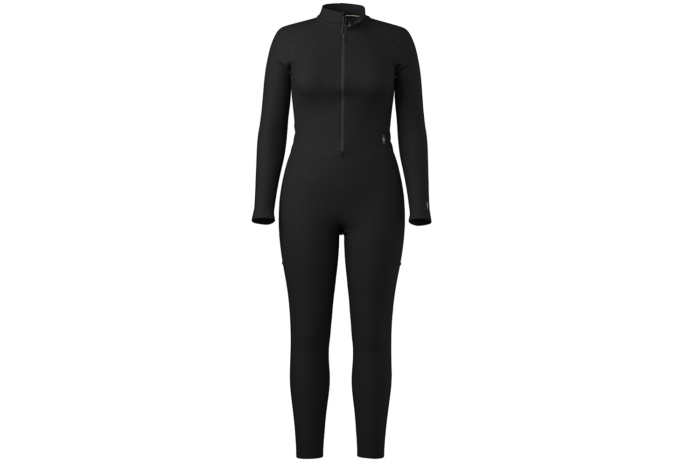
Smartwool Classic Base Layer One Piece


Specifications
Pros & Cons
Pros
- Killer drop-seat design that is easy to use
- Sleek fit is easy to move in since there isn’t tons of extra fabric
- Quite warm for a midweight
Cons
- Niche by nature; if you only need a base layer top, it won’t work for you
Bottom Line: A cozy, gap-free merino suit that eliminates cold drafts and waistband bunching on chilly ski days.
The Smartwool Women’s Classic Thermal Merino Base Layer One Piece ($250) is unapologetically an adult onesie. It’s warm, functional, and quietly funny in the way only an adult onesie can be.
The Tech: At 250 g/m², it’s technically a midweight merino layer. But, because everything is connected into one piece, it wears warmer than a comparable two-piece set like the Smartwool Classic Thermal Merino Top and Bottom. In testing, GearJunkie contributor Heather Balogh Rochfort wore the Smartwool onesie for two ski days and plenty of around-the-house time (because again, onesie). During one mild ski day at Buttermilk Ski Resort in Colorado, Balogh Rochfort found herself in the onesie and shell; nothing else. She partially credits that to the lack of cold gaps or air pockets.
What We Like: Let’s give the dropseat a moment. The dual-zip setup is shaped like an upside-down half moon — perfect for when you’re dealing with a very full moon situation. The curved zippers run from the center of the lower back down toward each leg, making bathroom breaks easy, quick, and refreshingly stress-free.
What We Don’t: The fit runs true to size but on the slimmer side. Balogh Rochfort is 5’5″, 145 pounds, and wore a medium, but definitely noticed that it runs sleek, especially through the hips and thighs. That meant it fit well beneath ski layers, but getting into the onesie required a bit of wiggling. A longer front zipper would make entry easier, but once it’s on, it’s comfortable.
Should You Buy It? If you love the idea of zero waistband bunching, complete draft protection, and all-day midweight wool warmth in one piece, this adult onesie is well worth adding to your winter lineup.
REI Co-op Lightweight Base Layer Tights and Long-Sleeve Crew Top Women’s Plus Sizes


Specifications
Pros & Cons
Pros
- Tights don’t dig into the belly or fall down, even with significant movement
- The price is right
- Lightweight and comfortable
- Easy to lounge in or wear under ski jackets and bibs
Cons
- Tapered leg cuts into juicy calves when pulled up above ski boots
- We prefer a wider waistband for better adaptability
- Top's fit isn't very flattering
- Synthetic fibers don't mask body odor
Bottom Line: A functional, wallet-friendly plus-size synthetic set that balances reliable stretch and moisture-wicking comfort.
Finding affordable, functional base layers in plus sizes can be tough, but the REI Co-op Plus Sizes Lightweight Base Layer Long-Sleeve Crew and Tights ($45 each) deliver solid performance without draining your wallet. Both pieces have a sweat-wicking, quick-drying polyester (92%) and spandex (8%) blend that offers lightweight warmth in winter and breathability for shoulder-season outings. With 4-way stretch, UPF 50+ sun protection, and a fitted, women’s-specific design, they’re surprisingly versatile for everything from ski days to lounging in the cabin.
The Tech: Plus-size apparel designer Raquel Vélez wore the top under the plus-size Outdoor Research Carbide Jacket and Bibs and felt dry and comfortable all day. The flat seams, underarm gussets, and lower-back hem helped eliminate chafing. Meanwhile, the tights performed well during the activity and while relaxing post-ski. The downside? These layers max out at size 3X, which isn’t inclusive enough for many active outdoorists, according to Vélez. And while the synthetic fabric is soft, it holds odor fast — we felt self-conscious after moderate activity, especially when heading to après. Merino alternatives like the Smartwool Classic Thermal Merino offer better odor control and extended sizing up to 4X, but at a higher cost.
What We Like: Both pieces have a sweat-wicking, quick-drying blend with 4-way stretch that keeps movement unrestricted on the mountain. The waistband didn’t dig in or slip down. Plus, they’re easy to care for, packable, and Climate Neutral Certified — great for backcountry travel or tight budgets.
What We Don’t: We wish the waistband were wider and more supportive. The full-length inseam (28″) posed some challenges with ski boots, cutting into calves when pulled up, but nothing a mid-calf snip couldn’t fix for beefier lower legs. Looks-wise, the set leans more functional than flattering. It’s comfy enough for curling up with a book, but not exactly outfit-of-the-day material.
Should You Buy It? This set isn’t perfect, but it’s a solid win for budget-conscious adventurers seeking accessible, plus-size layering options.
Ortovox 185 Rock’N’Wool Long Sleeve & Short Pants


Specifications
Pros & Cons
Pros
- Feels lightweight
- Durable
- Comfortable for layering and dynamic movement
Cons
- Pricier investment
Bottom Line: A light, breathable 100% merino wool set built for high-output mountain missions where heat dumps and zero boot-top bunching are paramount.
When winter rolls around, the Ortovox 185 Rock’N’Wool Short Pants ($100) and Long Sleeve ($110) women’s set barely has time to sit in the closet. We’re constantly reaching for this kit on high-output days — whether backcountry skiing, rippin’ on snowmobiles, digging out the truck, or chasing resort powder laps. Perfect for athletic movement in cold conditions, it’s become one of our favorite base layers for staying warm without overheating.
The Tech: While the Ortovox set uses 100% merino wool, it feels lighter and moves better than many midweight layers, thanks to fine threads with 19-micron diameter and a tight 185 g/m² density. SnowSports Senior Editor Morgan Tilton grabs this set when she knows she’ll work hard and break a sweat, especially in below-freezing temps. Ortovox’s commitment to sustainability also shines through here: this kit is climate-neutral and Fair Wear certified, and it meets the ORTOVOX Wool Promise — a standard the brand says exceeds the global Responsible Wool Standard. In contrast, the Smartwool Women’s Classic Thermal Merino Crew and Bottom feel denser, offer more insulation, and are our go-to for cruising lift laps at the resort. The Stio Women’s Basis PeakWool Lightweight Crew LS and Tight perform similarly, though they are ever-so-slightly more lightweight due to a 150 g/m² density, and the hybrid of merino, Tencel from wood pulp, and recycled nylon makes up for durability while offering less warmth.
What We Like: For starters, when we wear it, we can’t feel it. The light, airy merino wool wicks moisture quickly and dries fast, while the seams don’t restrict movement. We especially love that the pant legs end just below the knee — no awkward layering over socks required. The waistband sits comfortably above the hips, and the fabric does a surprisingly good job of neutralizing odor after a long, sweaty day outside.
What We Don’t: High-quality merino comes with a price tag on the spendy side. The tradeoff for that lower-density fabric is that it’s more prone to developing holes over time than thicker wool sets, though we wore ours through several demanding seasons before noticing small gaps or stretch loss. We also tested the ankle-length Long Pants ($129) and noticed that the elasticity around the hem seemed to rebound better than on the 3/4-length Short Pants.
Should You Buy It? Athletes who routinely sweat through steep ascents or high-exertion winter days will find that this boot-friendly, ultra-breathable wool kit is 100% worth the investment.
Le Bent Grid Fleece Top and Bottom
-
-
-
Photo/Dane Tudor
-
Photo/Dane Tudor
-
Photo/Dane Tudor
-
Photo/Dane Tudor


Specifications
Pros & Cons
Pros
- Extremely soft waffle fabric
- Very warm
- Lengthy arms cover wrists
- Comfortable waistband
Cons
- White fabric is transparent on bottoms
- Zippered pockets on top and bottom are not the easiest to open
- Pocket on bottom rides against hip crease
Seasonal joy has just found new meaning. We’re talking about the Le Bent Grid Fleece Top and Bottom ($150 per piece), which are so decadent and stretchy that we wish we could wear them all year round. C’est la vie. This super-warm waffle fabric will grace our limbs on the coldest days of winter, which we now look forward to.
The Tech: Founded in Australia and inspired by the French Alps, Le Bent’s popularity led to this season’s expansion of fabric densities. Our team has tested the brand’s collection, ranging from featherweight (125 g/m²) tops for mountaineering to lightweight (200 g/m²) backcountry-oriented pieces, and midweight (260 g/m²) options for resort laps. This heavyweight category ups the ante to 280 g/m², a thicker blend that’s made for cold and extreme conditions. Based in Colorado, SnowSports Senior Editor Morgan Tilton tested the Grid Fleece set while downhill riding at Crested Butte Mountain Resort on days ranging from 10 to 40 degrees Fahrenheit. While we find that fabric made from rayon derived from bamboo is extremely soft, it does not dry as quickly as merino wool when we’re sweaty; for uphill tours, we prefer a lighter, faster-drying option, such as the Ortovox 185 Rock’N’Wool Short Pants and Long Sleeve.
What We Like: Beyond the heat factor, Tilton was surprised at how condensed and comfortable the thickness of these layers feels — they aren’t stuffy. The hand feel is incredible, and the seams are liberating. The arms (which cover the tops of the hands) and legs are both far-reaching but easily slide up to pull on socks. An interesting garnish is the compact zippered pockets on the left upper arm and left upper quad. Although we didn’t utilize the storage, it’s a functional addition that otherwise goes unnoticed.
What We Don’t: We likely won’t ski uphill in these babies, as the bamboo rayon holds onto moisture longer than pure wool when you work up a lather. We also initially felt the leg pocket while walking up steep stairs, though it didn’t persist. Finally, please note that if you plan to walk around the lodge or hut in your thermals, the pearl-colored bottoms we tested are see-through — though otherwise, the refreshing white color really popped.
Should You Buy It? If you are thrilled to round out your thermals collection with a truly functional heavyweight choice that’s not only super warm but soft, stretchy, and durable, we wholly suggest pulling on this Grid Fleece setup for your coldest and gustiest resort sessions.
Seven More Field-Tested Beloved Base Layers for Women That Keep Us Cozy
These base layer sets might not carry a crown but they’ve established a permanent place in our gear drawer for their excellent warmth, shape, hand feel, wicking power, and style.


Specifications
Pros & Cons
Pros
- Fantastic warmth without any bulk
- Killer odor resistance for long-haul trips
- Super-soft against your skin
Cons
- Slightly low dip on the back waistband
Bottom Line: A heavyweight, all-merino setup built to conquer bitter temperatures with impressive odor resistance and zero bulk.
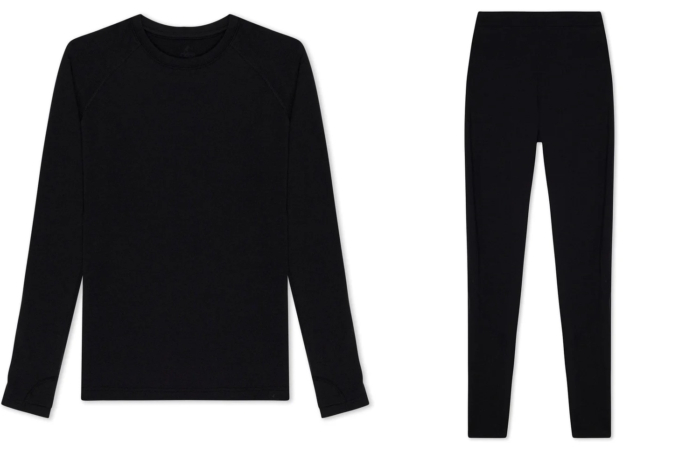
The Ridge Merino Inversion Heavyweight Shirt and Leggings ($110 each) are built to handle real winter. This is a cold-weather set made from 100% merino wool, with a fabric weight of 270 g/m². If that number means nothing to you, here’s the short version: higher density means more wool, and more wool usually translates to elevated thermal defense. The Inversion set feels thick and substantial when you pull it on, but definitely not bulky.
The Tech: Packing an interlock knit at 270 g/m² using 18.5-micron fibers, this heavy-duty kit is tailored directly for low-mercury output. GearJunkie contributor Heather Balogh Rochfort tested these layers over three weeks while downhill skiing at Aspen Highlands and Snowmass, skinning uphill, cross-country skiing, and squeezing in trail runs in Colorado’s Roaring Fork Valley. On one particularly brutal day with feels-like temperatures dipping to -6 degrees Fahrenheit, she wore them cross-country skiing along with a midweight midlayer: her face was miserable, but the rest of her body stayed right where it needed to be. In comparison to the Smartwool Classic Thermal Merino (250 g/m²), this piece supplies a noticeable touch more raw substance against biting mountain air.
What We Like: Despite the thermal heft, moisture transfer remains reliable. On a trail run in 2 degrees Fahrenheit temperatures, Balogh Rochfort overdressed and overheated, but the natural fibers still wicked moisture away from her skin quickly. And then there’s the smell factor — or lack of it. After skiing, running, and repeated wear over three weeks, Balogh Rochfort still hasn’t washed this set, and her husband confirms that she really doesn’t stink. Sizing runs true to form, pairing long sleeves with usable thumb loops and a torso hem that stays tucked during dynamic motion.
What We Don’t: The leggings’ waistband tends to dip slightly in back on certain body types during continuous movement, requiring an occasional tug. Additionally, like any pure heavyweight wool, it holds onto perspiration longer than an ultra-airy synthetic if you push high aerobic paces uphill.
Should You Buy It? Anyone braving deep sub-zero resort days, chilly cross-country loops, or bitter winter outings who wants plush natural fibers without an astronomical price tag will appreciate how thoroughly this heavy kit delivers.


Specifications
Pros & Cons
Pros
- Very breathable with the body-mapped venting
- Quite stretchy for enhanced mobility
- Odor resistant
Cons
- Snug fit may not be for everyone
Bottom Line: A remarkably breathable, body-mapped merino-synthetic hybrid built for fast-moving ski tourers and cross-country enthusiasts.
Hallelujah! The Smartwool Intraknit Base Layer Crew and Bottom ($130 each) might be the most breathable base layers we’ve ever tested. We wore the top and bottom combination for seven straight days of downhill, nordic, and backcountry skiing and found ourselves delighted with how well they moved moisture away from our skin.
The Tech: The secret sauce: body-mapped venting in key areas where we are prone to sweat. On the top, these mesh areas can be found on the backside of the shoulders, running down the spinal column, and in the bend of the elbows. On the bottoms, you can see the panels on the back of the knees, down the sides of the thighs, and in the crotch. It feels like a gimmick, but it really works. After a burly day of uphill skiing at Buttermilk in Aspen, Colo., gear tester Heather Balogh Rochfort noticed significantly less moisture sitting in her clothes — and felt a lot less chilled while transitioning at the top of the mountain. While it is technically a midweight, it feels slightly cooler than traditional 100% wool pieces in this guide, such as the Smartwool Classic Thermal Merino, because it is built specifically to dump heat during sustained exertion rather than strictly maximize loft on a chairlift.
What We Like: Smartwool designed the set to have a snug fit, almost like a pair of performance-oriented yoga pants. This means the layers trap heat really well and make it super easy to layer over top. In testing, Balogh Rochfort barely noticed the layers beneath her ski kit and loved how mobile they felt while climbing steep inclines.
What We Don’t: There is a decent amount of elastane, so some women may not love the tight aesthetic. Balogh Rochfort definitely threw a vest over the shirt for happy hour because it was more form-fitting than she usually prefers. Furthermore, if you’re more of a resort skier who sits on chairlifts a fair bit, don’t forget to layer up if you go with the Intraknit set, as those targeted ventilation zones invite in drafts when you stop moving.
Should You Buy It? Touring athletes and nordic skiers who consistently push their heart rate and want rapid evaporative cooling without sacrificing merino comfort will find this engineered kit a game-changer.
Specifications
Pros & Cons
Pros
- Fairly soft
- On the lighter side and excellent for action
- Thumbholes are a plus
Cons
- If you need a mid-to-heavyweight layer, look elsewhere
- Less merino equals less warmth overall
Bottom Line: A silky-soft, merino-tencel blend that excels during fast-paced uphill tours and brisk shoulder-season trail adventures.
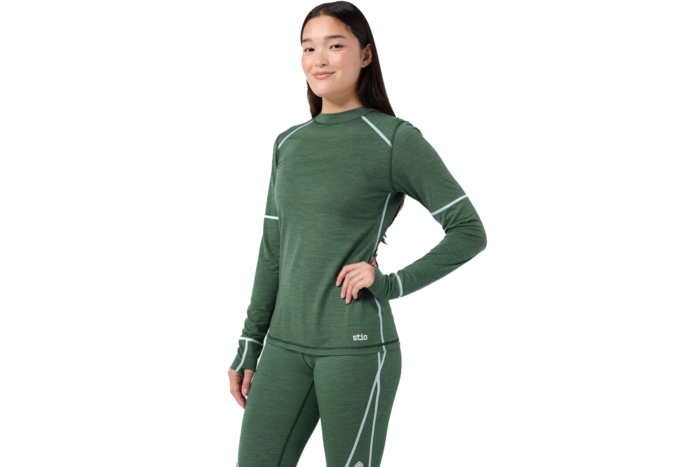
Lightweight and sporting merino wool, the Stio Basis PeakWool Lightweight Crew and matching Tight ($109 each) strike an ideal balance of softness, performance, and technical design, making them a go-to for mountain missions from sunrise ski tours to chilly trail days. The best part? Comfort isn’t an expense for the moderate price point.
The Tech: Crafted with 62% RWS-Certified merino wool, 25% tencel, and 13% recycled nylon, this combo offers the best of merino’s natural temperature regulation, odor resistance, and breathability with synthetics’ added strength and elasticity. The result is a 150 g/m² fabric that wicks and dries quickly while still feeling cozy against the skin. The weight and hand feel of the Ortovox 185 Rock’N’Wool Short Pants and Long Sleeve are highly similar, but are made entirely of fine 19-micron merino wool. The lightweight Ortovox set is slightly denser, weighs slightly more, and is somewhat warmer. For days that are 15 degrees or less on the skin track, we’d opt for the Ortovox pair.
What We Like: SnowSports Senior Editor Morgan Tilton appreciated Stio’s thoughtful details, including the flatlock seams for a chafe-free fit and streamlined thumbholes to lock sleeves in place. The low-profile waistband on the tights disappears under midlayers and outerwear, and we couldn’t feel it while bending over to transition at the top of backcountry ski lines. Both pieces are form-fitting without being skin-tight, hugging the body’s natural lines for easy layering without bulk, and the tights include an action gusset for better mobility. Plus, once we experienced the plush next-to-skin touch, we frequently hung out in this set long after coming off the mountain.
What We Don’t: At 150 g/m², it runs quite thin and lacks the standalone thermal punch needed for stop-and-go resort days or frigid chairlift rides. It relies heavily on an active heart rate to keep warmth circulating when temperatures plunge.
Should You Buy It? Backcountry skiers and mountain athletes hunting for an airy, packable underlayer that vents swiftly on steep ascents and feels exceptionally soft against bare skin will get immense mileage out of this setup.
-
-
(Photo/Mary Murphy)
-
Testing gear in the mountains of Colorado. Photo credit: Xander Bianchi
-
(Photo/Eric Phillips)
-
-


Specifications
Pros & Cons
Pros
- Extremely warm
- Quality construction
- Long arms cover wrists
Cons
- Merino wool blends wear down quicker than synthetic
Bottom Line: A beautifully patterned, 100% merino wool kit that provides heavy-duty coverage and warmth for biting resort and backcountry days.
Merino continues to dominate, and the Kari Traa Rose Half Zip Baselayer Top ($140) brings a classic ski lodge feel. Offered only in fashionable Nordic patterns, this 100% merino half-zip and the Rose High Waisted Baselayer Pants ($130) have a feminine touch with an athletic makeup. Developed by an Olympic skier, Kari Traa’s women’s base layers have amazing underarm gussets, a more athletic fit around the shoulders and hips, and a hugging four-way stretch construction. In testing, ice climber Mary Murphy and SnowSports Senior Editor Morgan Tilton both gave Traa’s sets high marks.
The Tech: The Kari Traa top uses a 240 g/m² jacquard knit with lighter 180 g/m² underarm side panels that help dump heat while working up a sweat on a powder day. Speaking of warmth, the Smartwool Classic Crew and Bottom are likewise midweight, 100% merino wool designs — so, which duo is warmer? The Smartwool setup has a fabric weight of 250 g/m² and feels denser. However, we found the extended collar, length, and arms on the Kari Traa top provide more overall coverage and warmth. We prefer to wear this Kari Traa base layer at the ski area when temperatures hover below 20 degrees Fahrenheit, plus wind chill. It also pairs well for backcountry skiing in the 0- to 10-degree Fahrenheit range and for temps in the negatives.
What We Like: With a long, slender zipper over the décolletage, the Rose Half-Zip performs well doing laps on the slopes, and the zipper never jabs or digs into the skin. During sun-baked spring skiing, you can shed your hardshell and retain warmth with this layer. The high warmth-to-weight ratio keeps you cozy in deep cold, and the aesthetic is beautiful. If you prefer a slightly lighter fabric weight, the style is also available in 210 g/m² (versus Rose’s 240 g/m²) in the Kari Traa Else Baselayer Pants ($100) and Half Zip ($110).
What We Don’t: While this pullover provides substantial warmth, the 19.5-micron wool can feel a smidge itchy for some with sensitive skin. The textile also lacks a bit of the natural give and rebound that elastane-infused blends offer. Finally, the stout fabric density quickly feels too warm for high-output activities when temperatures climb out of the single digits.
Should You Buy It? Cold-weather resort riders and winter adventurers who prioritize traditional Nordic lodge style and full-coverage insulation for chasing off chills will love pulling on this cozy kit.
Specifications
Pros & Cons
Pros
- Thumbholes
- Gusseted underarm zone to support range of motion
- Super breathable but still warm
Cons
- A little itchy
- Expensive
Bottom Line: An exceptionally breathable, feather-weight, all-merino powerhouse featuring targeted mesh zones that actively dump heat during high-octane winter ascents.
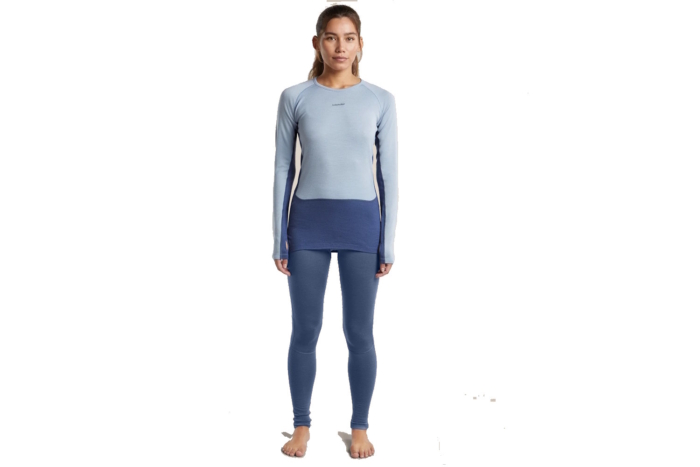
Our team balked at the bill: spending over three bills for a single base layer match is steep, and no, that shirt doesn’t include a shoulder massage. While many shredders might not feel amped to spend that much on a small but mandatory piece of apparel — and for good reason — that doesn’t trump the reality that this product sets a benchmark. The Icebreaker 260 ZoneKnit Long Sleeve Crewe Thermal Top and Leggings ($170 and $160) most stood out for its innovative body-mapped design, which supports breathability despite being a midweight weave made with 100% merino wool.
The Tech: Constructed from 100% pure merino wool with a dense 260 g/m² main body and lighter 180 g/m² eyelet mesh panels, this set targets high-perspiration zones. While testing the leggings, we immediately noticed the tiny perforations in the lean-feeling fabric below the kneecap, against the knee pit, and along the upper glute, which increased breathability. The designers incorporated the same perforated merino wool under the arms, across the entire back, and around the front of the hips on the long-sleeve shirt. While the textile zoning is similar on the 100% wool Kari Traa Rose Half Zip Baselayer Top and High Waisted Baselayer Pants, this Icebreaker kit offers larger zones of that less dense material, making it the more breathable option between the two.
What We Like: During long days outside or high-octane activity, this top significantly diminished our sweat accumulation in high-heat areas where we tended to perspire and where our ski pack rested. Sweating less ultimately helped to keep SnowSports Senior Editor Morgan Tilton and snowboarder Julia Spadaro warmer and more comfortable. The seams are truly flat and undetectable: a true treat. Made with a slim fit and extended hem on the backside for adequate coverage, the shirt was comfy, and the material helped eliminate odors that we would usually be concerned about in the armpit region, making it an easy pick for lodge time, après, or drinks after hiking on snow. While we are not usually big fans of thin elastic waistbands on pants, this one felt soft and easy to forget.
What We Don’t: Both pieces use an 18.9-micron fiber, but we noted the fabric felt slightly itchy, likely due to being 100% wool, which some folks are more sensitive to. And the price tag remains a serious hurdle — if they were $100 cheaper, we would buy them in both colors.
Should You Buy It? This thermal set is made for snow-lovers who want their base layers to feel weightless. Cold-weather riders and backcountry tourers carrying heavy packs who sweat heavily on the climb but still require midweight warmth will find this precision-vented system worth the premium investment.


Specifications
Pros & Cons
Pros
- Super stretchy
- More durable than expected
- Soft to the touch
Cons
- Longer hemline can feel too long
Bottom Line: A remarkably durable, lightweight wool-blend set that punches far above its weight class in warmth and recovery stretch.
For those seeking a lightweight yet durable base layer, the Ibex Woolies Pro Tech Crew and Bottoms ($120 each) offer a noticeable blend of performance and comfort. With a mix of 85% merino wool and 15% nylon, the brand uses a spinning technology (called Nuyarn) that theoretically adds 35% more thermal efficiency, 85% more elasticity, and 8.8-times more durable than traditional ring-spun wool.
The Tech: Built at an airy 140 g/m² weight, this fabric wraps merino wool around an ultra-fine nylon filament core to boost tensile strength and moisture transfer. While we can’t speak to those specific lab numbers, tester Heather Balogh Rochfort did notice that the Woolies Pro Tech layers were a lot warmer than she expected from such a thin garment. They kept her cozy during a few blustery ski days at Aspen Snowmass with temperatures in the mid-20s. Compared to traditional 100% merino lightweight layers in this guide like the Ortovox 185 Rock’N’Wool, the Nuyarn construction creates a much thinner knit that dries faster, resists tears better, and retains its shape without bagging out over multiple wears.
What We Like: Designed with a snug, athletic fit, these base layers have thoughtful details like flatlock seams and raglan sleeves for unrestricted movement. The crew top includes thumbholes for added coverage, and the bottoms boast a comfortable waistband that stays in place during dynamic activities. Since they are so thin, they have a clingy fit, but the striped bottoms were surprisingly flattering. The lightweight construction ensures comfort during intense activities, while the durable fabric withstands repeated use.
What We Don’t: The top boasts an extended hemline, which we usually love — easier to tuck into snow pants for optimal coverage — but this one felt a touch too long on Balogh Rochfort, our 5’5” tester. The lean fabric also has a very body-contouring, clingy drape that leaves zero room to hide if you plan to lounge in it as a standalone piece off the mountain.
Should You Buy It? Backcountry tourers and active winter athletes seeking resilient, ultra-thin wool with synthetic-like durability and fast dry times will find this tech-forward kit well worth the price.
Specifications
Pros & Cons
Pros
- Nice option for high-output activities
- No itchiness
- Great wool-free choice
Cons
- No thumbholes
- Not very insulated
Bottom Line: A classic, fast-drying synthetic top that provides featherweight breathability and incredible longevity for high-exertion winter sports.
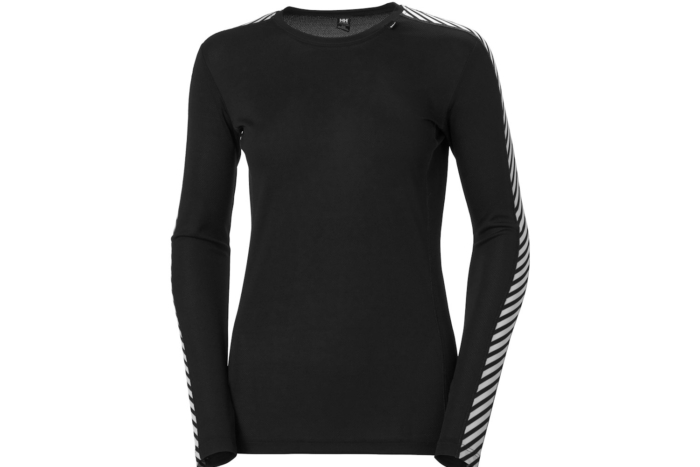
Sweaty folks, this one’s for you. One of the longest-standing base shirts we pull on for high-cardio snow sports is the Helly Hansen Women’s HH LIFA Long-sleeve Crew Base Layer ($50). At less than a lunch date, the price tag is hard to beat for the decade-reaching quality without a single unraveled seam.
The Tech: Built from 100% polypropylene using Helly Hansen’s proprietary LIFA stay-dry technology at a super-light 125 g/m² density, this knit is engineered to transport vapor away from the body without absorbing liquid into the fibers. The pull-on smoothly wicks sweat and doesn’t hold onto the moisture. You give up some insulation with this women’s base layer, but it shines for breathability. It’s also a design that dries fast. The seams never rub or annoy our skin, even on the more sensitive folks like SnowSports Senior Editor Morgan Tilton.
What We Like: This extremely lightweight and breathable design doesn’t make us feel claustrophobic on a bell-to-bell powder mission or ringing mogul after mogul. It’s also super versatile — you can pull it on for sledding, off-trail snowmobiling, cross-country or alpine skiing, and backcountry tours without turning into an oven. The fit on the LIFA Long-Sleeve Crew is not too snug, which we appreciate around the chest and midline. You can always wear a thicker midlayer if more warmth is needed on those frigid days or during sedentary activities.
What We Don’t: Of course, the caveat is a drop in thermal retention and stench control that a toasty wool shirt like the Kari Traa Rose Half Zip Baselayer Top provides. If you are moseying outside in below-freezing temps, we suggest a base layer with wool. Sizing is relaxed, but if you prefer an even looser cut, check out the men’s version instead. Alternatively, if you prefer a no-budge, skintight fit, take a look at The North Face Women’s FD Pro 160 Crew and Tights.
Should You Buy It? High-output winter athletes and heavy sweaters seeking a reliable, low-cost synthetic layer that handles decades of abuse without clinging or trapping dampness will get tremendous mileage from this classic crew.
Base Layers for Women Comparison Chart
| Compare |
|
|
|
|
|
|
|
|
|
|
|
|
|
|
|---|---|---|---|---|---|---|---|---|---|---|---|---|---|---|
| Price |
$115 Each
|
$55 Each
|
$70 Each
|
$250
|
$45 Each
|
$110 Long Sleeve, $100 Short Pants
|
$150 Each
|
$110 Each
|
$130 Each
|
$109 Each
|
$140 Top $130 Pants
|
$170 Top $160 Leggings
|
$120 Each
|
$50
|
| Weight |
218 g (top), 208 g (bottom)
|
220 g (top and bottom each)
|
219 g (top), 185 g (bottom)
|
250 g
|
183 g (top), 196 g (bottom)
|
142 g (bottom), 164 g (top)
|
235 g (top), 187 g (bottom)
|
270 g
|
230 g (top), 218 g (bottom)
|
159 g (top), 150 g (bottom)
|
213 g (top), 230 g (bottom)
|
201 g (top), 190 g (bottom)
|
125 g (top), 125 g (bottom)
|
108 g
|
| Fabric |
100% merino wool
|
Recycled polyester and spandex
|
Recycled polyester grid knit with FlashDry-Pro for moisture management
|
Merino wool
|
92% polyester, 8% spandex
|
100% merino wool
|
37% rayon from bamboo, 16% merino wool, 44% recycled polyester, 3% elastane
|
100% merino wool
|
53% merino wool, 45% polyester, and 2% elastane
|
62% RWS-certified merino wool, 25% tencel, 13% recycled nylon
|
100% merino wool
|
100% merino wool
|
85% merino wool, 15% nylon
|
100% polypropylene (Lifa)
|
| Thermal category |
Midweight
|
Midweight
|
Lightweight
|
Midweight
|
Lightweight
|
Lightweight
|
Heavyweight
|
Heavyweight
|
Midweight
|
Lightweight
|
Midweight
|
Midweight
|
Lightweight
|
Lightweight
|


How We Tested the Best Base Layers for Women
Ten on-snow experts have contributed to testing dozens of base layers for women since this guide debuted in 2019. It’s been updated fourteen times.
Our team includes avid hunters and folks who live in wintry, cold, mountainous locations from Bozeman, Montana, to Crested Butte, Colorado. We backpack, alpine climb, hunt, and track elk in the fall shoulder season. In the spring, we go ice climbing and mountaineering. The first iteration of this guide was authored by SnowSports Senior Editor Morgan Tilton, following extensive field tests.
To narrow down the top 14 base layers on the market, Tilton heavily researched, coordinated, and distributed base layers to a diverse group of outdoor professionals and athletes nationwide, who reported detailed findings in addition to Tilton’s personal field tests in Colorado.

Our Expert Testers
GearJunkie SnowSports Senior Editor Morgan Tilton specializes in snowsports and manages the majority of the publication’s winter guides, including Base Layers for Women, which has been on her edit desk since 2022. Raised in Telluride, Colo., she grew up playing at Telluride Ski Resort and now lives in Crested Butte. She’s worn a ton of base layers over the past three decades — and the ladies’ designs really do keep getting better.
As an outdoor industry journalist, Tilton has covered winter gear for more than 13 years, including reporting for the Snow Show Daily and serving as Snowboard Editor at Teton Gravity Research. She’s Wilderness First Responder certified, has completed AIARE recreational avalanche training, and finished the A3 Snowmobile Recreational Level 1 Avalanche Course with Silverton Avalanche School.
- In 2026, Tilton tested five base layer sets across 63 days with 445,000 vertical feet of descent. Those layers enjoyed 832 miles and 149 hours of snow travel via snowmobile, downhill riding, and backcountry tours. Primary test days took place at Crested Butte Mountain Resort and RED Mountain Resort, as well as Whistler Blackcomb, Vail Ski Resort, and Whitewater Mountain Resort — all of which delivered whiteout blizzards.

Writer and Editor Heather Balogh Rochfort is based outside of Aspen, Colo.
- For 2026’s test window, Balogh Rochfort tested three sets of base layers across 175 hours in temps ranging from 0 degrees with windchill to 55 degrees Fahrenheit. Her test laps included downhilling at Aspen’s four ski areas, uphilling at Buttermilk Ski Resort, and Nordic skiing at Spring Gulch.
In addition to a sugar beet harvester and ski patrol tail guide, the contributing field testers for this guide include:
- Plus-size outdoor apparel expert Raquel Vélez based in San Francisco, Calif.
- Skier and ice climber Mary Murphy
- Hunter Nicole Qualtieri
- Packrafting homesteader Mallory Paige
- Snowboarder and hiker Julia Spadaro
- Skier Kylie Mohr
- American Mountain Guides Association (AMGA) certified rock guide Karin Pocock
- Rancher and wildlife photographer Constance Mahoney

Our Testing Grounds
Tilton lives and primarily tests gear in Colorado’s Elk Mountains. She skis, snowboards, snowmobiles, and shovels unbelievable amounts. She’s also tested base layers on the blustery slopes of Eldora Mountain, foggy and icy days at Utah’s Snowbasin Resort, powder rounds at Telluride Ski Resort, and the backcountry of the San Juan Mountains. The majority of her inbounds gear testing takes place at Crested Butte Mountain Resort, a few miles away from her shoveling habitat.
In 2025, Tilton also tested base layers on backcountry lines at Baldface Valhalla in British Columbia, two days of riding at Canada’s Whitewater Ski Resort and RED Mountain Ski Resort, ski touring in Grand Teton National Park outside of Jackson, Wyo., and two very cold powder days shredding at Big Sky Resort in Montana.
Vélez tested base layers for women in the Sierra Mountains north of Lake Tahoe — at Palisades Tahoe and Heavenly Ski Resort. Rochfort tested base layers in Aspen, Colo., and on a 5-day continuous stint in Italy’s Dolomites.
While using these second skins, we adventured across North Dakota farmlands, up cracks in Utah’s Indian Creek, and throughout Colorado’s high-elevation peaks and limestone walls. Temperatures stretched from splitting cold at sunrise in the glades to scorching under the sun during fieldwork.
In spring 2022 and 2023, Crested Butte Mountain Resort was the host location for the GearJunkie Ski and Snowboard week, where our team met to test goods.

Our Testing Process
Our team field tests all of the women’s base layers that are included in this guide including input from plus-size athletes. For our reports, we also attend plus-size apparel panel presentations, interview the plus-size base layer designers, and research consumer trends.
While we team up with many gear testers, Tilton puts goods to the grindstone between keyboard blocks. To date in 2025, Tilton has packed in 44 days and 165 hours of testing women’s base layers. In 2024, she tallied 265 hours and 78 days of field tests. From January to December 2023, Tilton tested women’s base layers across 68 days and 198 hours of recreation — including blizzards, sub-zero temps, heavy and wet snow, plenty of perspiration, and sunshine. Her outings took place in the frontcountry and backcountry including via snowmobile. But that metric excludes shoveling responsibilities.
Environmental journalist Kylie Mohr runs and skis in Montana in various and blustery conditions. She wore these base layers in and out of bounds to see what most kept her warm and dry. Avid snowboarder and Utahan Julia Spadaro spends her winters at the resort and splitboarding in the backcountry, as well as hiking in the shoulder seasons. She tests women’s base layers throughout her adventures and delivers knowledgeable reports on what she does and doesn’t like.

Testing Metrics
Throughout our field tests and personal experience, we determine the most competitive women’s base layers based on a variety of metrics including quality, comfort, fit, longevity, and value. We take a close look at each product’s warmth, breathability, wicking and drying capability, material, elasticity, stretch, weight, density, seams, hems, cut, hand feel, and style.
We also consider the most innovative, sustainable, legacy, award-winning, and popular designs on the shelf today. Hands down, these women’s base layers serve a wide range of athletes, applications, and budgets.
Our Base Layers for Women Rating System
We score each set of base layers for women on a 1–10 scale for Warmth, Tightness and Elasticity, Odor Resistance, Quick-Drying.
- Warmth in a base layer hinges on the textile (wool, synthetic, hybrid). It also depends on the fabric weight (lightweight, midweight, heavyweight) and density: gsm (grams per square meter). We test every base layers set against the intended insulation value.
- Tightness and elasticity examines the snugness and rebound. Some layers are stretchier or looser than others while certain designs have more compression and zero shift. Elasticity helps layers retain their shape through use and over time, increasing durability.
- While considering odor resistance, we take into account how well the fabric masks our B.O. during workouts. Wool naturally resists odor. Synthetic materials can be treated with antimicrobial finishes to help squash odors. If a synthetic layer is not treated, it can’t block odors, and the score is zero.
- A fabric’s ability to be quick-drying is important when we’re working up a sweat on the skin track or during powder laps at the resort. We don’t want to sit in our sweat in cold temps. Synthetics generally dry faster than wool — but wool adds warmth when wet. The lighter weight a fabric is, the faster it dries. Integrated mesh panels or perforations help increase the fabric’s drying speed, too.
The Overall Rating is based on contextual, editorial judgment, and the complex user experience across various scenarios and conditions.

Buyer’s Guide: How to Choose the Best Women’s Base Layers
In our guide, we focus on the best options for cold weather and the winter season, which are often long-sleeve tops and ankle-length bottoms.
Technically, women’s base layers have a range of designs, including tank, long-sleeve, and short-sleeve tops, as well as ankle-length or capri pants. Some tops have a hood, partial zipper, or thumb holes. Others are tailored with a crew collar, mock neck, or turtleneck. While most against-skin layers lack pockets, we’ve seen leggings popping up with a spacious side pocket, which is useful to stash a phone, especially post-activity when you pull off your snow pants.
Two fundamental umbrellas will help you decide which women’s base layers to buy:
- You’ll want to consider how cold the climate is where you play outside. The colder the zone, the more you’ll want to consider a wool-based blend, higher-density fabric, and heavier fabric weight.
- The second variable is how active you’ll be while you’re wearing that apparel. During exercise, like shoveling or going on a winter run, your body is generating heat that would necessitate a more breathable, less density, low-weight top and bottom.
If you plan on being physically active in above-freezing but cool weather, we recommend a synthetic blend. If you’ll be rounding out winter days in a below-freezing climate, wool can be your greatest companion for warmth. Other factors can influence the best base layer choice, including your body’s circulation, skin sensitivity to fibers (like wool), and the layers you put on top.

Layering System
Your alarm goes off. Don’t snooze: It’s time to get up and dressed for cold weather fun. Your layers will work in a tiered system:
- Base layer: Next to skin to wick sweat
- Midlayer: Adds warmth to retain body temperature
- Outer layer: Protection from the elements, repels precipitation, blocks wind; insulated outer layers increase warmth
First, put on your underwear and socks. They better be wool or a synthetic blend — not cotton. Your warm, dry epidermis will thank you. Your base layers go on next.
Base Layer
Add your base layer top, bottom, or onesie. If your bottoms are long, make sure they go over your socks. Unless you like your socks on the outside of your bottoms — that’s personal preference. If your bottoms are mid-shin length, like some compressive performance options, adjust your socks and fabric, so there aren’t any overlapping, uneven points that could rub or chafe.

Midlayer
Now, it’s time to slip on your midlayer top and bottom, depending on the day’s activity.
Going skiing in bounds? Reach for a streamlined fleece that still allows a full range of motion. Hanging out at the campsite? Pull on a bulky deep-pile fleece.
Your activity will dictate what appropriate midlayers to add on the bottom. Maybe you’ll pull on a fleece or insulated puffy pants for extra warmth below workwear trousers or snow bibs.
Outer Layer
Headed to the backcountry? Wear a comfy insulated jacket on the way to the trailhead then strip down to your baselayer or midlayer to start, given you’ll quickly warm up from exertion in the cold temps. Running in a breeze on an otherwise warm afternoon? Go for a softshell with no insulation.
If we’re resort skiing in below-freezing temps, and we run cold, we’ll often do this trio: an uninsulated ski shell over both a fleece and puffy jacket. Insulated jacket wearers will likely find they don’t need all three.
An ideal layering system is all about learning what works for you and how many layers you need to stay warm and dry.

Fabric Blends
The fabric blends of women’s base layers include wool, synthetic, or a blend of the two. Within those fabrics, there are various densities from lightweight to midweight or heavyweight.
Wool
We love wool. It regulates temperature really well and provides warmth when it’s damp or wet. It’s evolved to be much more comfortable against the skin and resists odors like a champ. The warmth-to-weight ratio is high, packing a punch in a fairly light package. It’s an ideal choice for low-intensity outdoor activities like ice fishing or spectating a hockey game. Among our top base layer choices are the Smartwool Women’s Classic Thermal Merino Base Layer Crew and Smartwool Women’s Classic Thermal Merino Base Layer Bottom, a 100% Merino wool collection.
That said, 100% merino wool tends to be less stout than synthetics, wears holes more quickly, and can get baggy throughout use. If you have sensitive skin, even the smoothest 100% merino wool might feel a tad less than cloud-like next to the skin. Wool gets heavier when it’s wet and doesn’t dry as fast as synthetics. Depending on your preference, activity level, and the weather conditions, you might prefer a wool blend or straight synthetic materials.
Wool can cost more than its counterparts. Beyond merino-sourced wool, we have tested base layers with wool from yaks, which was a premium thread, extremely soft, and super insulating.

Synthetic
An alternative to wool is a synthetic fabric, which is typically a blend that includes polyester plus elastane or spandex for rebound, form, and long-lasting use. Some synthetic fabrics are proprietary to a brand with treatments that enhance their odor-fighting ability and moisture-wicking prowess — the qualities that occur naturally in wool.
Synthetic blends do not offer as much warmth and overall temperature regulation that wool provides. Because they don’t absorb as much moisture and they dry fast, they’re a great choice for high-intensity activities that produce a lot of perspiration without long moments of standstill, like during a hunt, when a chill could set in.
These fibers can work really well for people with sensitive skin, especially for exercise use, and the bonus of greater durability, stretch, and elasticity. Also, synthetics typically cost less than wool. One of our favorite synthetic options is the REI Co-op Lightweight Base Layer Tights Women’s Plus Sizes, at a whopping $40.
One drawback: Odor-intense days are not typically covered up well by this fiber in its naked form.
Wool-Synthetic Blend
Many folks find a fair balance of managing heat and chill, sweat absorption, and covering up odors in a design that weaves together both wool and synthetic fibers. Adding synthetics to blends can enhance the strength and overall lifespan of wool apparel.
One of our all-time favorites for wearing from the skin track to happy hour is the Le Bent Women’s Core Lightweight Crew Base Layer, which includes 5% elastane and maintains a nice shape throughout long days.

Weight Class or Thermal Category: Lightweight, Midweight, Heavyweight
When you shop for women’s base layers, the products are categorized by three weight zones, which generally refer to how heavy or light the layer is and feels. The weight class is influenced by the fabric density and thickness, which changes the activities that the layer is compatible with.
Here, we listed the weight class in each product’s specs — under Thermal Category — which is based on our test results.
Weight class isn’t directly correlated to warmth. A lightweight, pure wool top can bounce back a ton of body heat. It will be easier to move in, less dense, and more breathable than a midweight or heavyweight wool design.
While everyone’s circulation and preferences are different, here’s a general starting point for deciphering a weight class based on activity level and outdoor temperature:
Sedentary
- 25-32+ degrees: Lightweight, wool
- 15-25 degrees: Midweight, wool
- <15 degrees: Heavyweight, wool
Active
- 25-32+ degrees: Lightweight, synthetic
- 15-25 degrees: Lightweight, wool-synthetic
- <15 degrees: Midweight, wool

Lightweight
If you’re running hardpack snow trails, snowshoeing, skate skiing, or doing uphill ski workouts in 30-degree temps, a lightweight base layer top or bottom should do the trick, as long as there’s no wind chill.
Lightweight layers dump heat really well. These could be a good piece for warmer spring laps at the ski resort. But sitting idle on lift rides in cold temps typically calls for a warmer midweight base layer. One of our favorite lightweight synthetics is the Helly Hansen Women’s HH LIFA Long-Sleeve Crew Base Layer, and a lightweight wool blend that’s super soft and versatile is the Le Bent Women’s Core Lightweight Crew Base Layer.
Midweight
Not too airy and not too stuffy, the midweight base layer is optimal for wintry days skiing and riding at the resort. It’s a good choice for snowmobiling, when pulling the throttle can pack windchill at high speeds.
That said, for intense heat-building activities like huge ski or splitboard tours or snowshoeing, a midweight layer might be too much unless the temps are colder, like 15 degrees or less.
Squarely midweight, we love the Smartwool Women’s Classic Thermal Merino Base Layer Crew and Smartwool Women’s Classic Thermal Merino Base Layer Bottom as a well-rounded kit for cold or below-freezing temps and days at the ski resort.

Heavyweight
When we’re talking extreme temperatures — 15 degrees with windchill to well below freezing — then your best bet is a heavy-set base layer, especially for ski resort laps when you are sedentary on the way up.
Other more passive outdoor activities could include ice fishing, sailing, hunting, spectating events, hanging at base camp during a mountaineering expedition, or snowmobiling groomed trails, especially if sightseeing stops are frequent.
We don’t currently have any bulky heavyweight options in our guide. Many of our 100% wool midweight selects can be layered beneath a midlayer fleece and down jacket for super cold conditions, and we prefer that versatility. The Kari Traa Rose Half Zip Baselayer Top and Kari Traa Rose High Waisted Baselayer Pants feel lean but are packed with heat. These are our go-to on a 0-degree day at the ski resort. We don’t usually like wearing these while we ski tour to avoid an oven effect.

Fabric Density
A standard unit for measuring fabric density is gsm (grams per square meter). The higher the gsm, the denser and warmer that textile will be. A fluid-feeling blouse might be as low as 50-100 gsm, while denim reaches into the 340-450 gsm range.
Some women’s base layers do not weigh much but have a dense fabric or high gsm. Therefore, they swing a high warmth-to-weight ratio, such as the Kari Traa Rose High Waisted Baselayer Pants with 240 gsm. After testing, we associated that legging as midweight, thanks to the relatively low density yet high heat punch.

Rather than adding gsm labels to our product reviews here, we shared the general weight class — lightweight, midweight, and heavyweight — which is more ubiquitously used across brands. Our listed weight class is based on our test results. That said, understanding how to interpret the density of a base layer is a very useful tool.
Here’s a broad rule of thumb for gsm:
- Ultralight base layers: >150 gsm
- Lightweight base layers: 150-195 gsm
- Midweight base layers: 195-250 gsm
- Heavyweight base layers: 250-320 gsm
You’ll want to match your physical exertion or circulation to the fabric density. If you plan to do high cardio activity, choose a base layer design with a lower density.
If you plan to be more sedentary — such as waiting in long ski lift lines during a blizzard, ice fishing, watching a hockey game, or running errands — opt for a higher gsm. A higher fabric density is also a good option for folks who have poor circulation or tend to get chilled during winter activities.
Breathability
In addition to trapping heat, it’s important for your base layer to breathe well and efficiently wick moisture. Freezing sweat will make you colder faster. Generally, the lighter or less dense a design is, the more breathable it will be. Merino wool is also more breathable than synthetics. Base layers can be made with a blend of materials that place more breathable textiles in high-heat zones.
When we’re talking about engineering, we can’t forget about the Icebreaker 260 ZoneKnit Long Sleeve Crewe Thermal Top and Icebreaker 260 ZoneKnit Thermal Leggings, which have a breathable mesh-like merino wool layer in all the important places — the lower legs, behind the knees, across the back and upper glutes, under the arms — so sweat can’t ruin the day. The Kari Traa Rose Half Zip Baselayer Top uses a lighter-density merino wool under the arms and along the sides, which feels more breathable.
In general, we found that the Smartwool Women’s Classic Thermal Merino Base Layer Crew is a warm winter layer that breathes pretty well. It’s our top pick for the dead of winter but also for alpine pursuits in fall and winter.
If you know you’re going to be busting it uphill on a warm day in the springtime, look for an even lighter and more breathable layer. Something like the Helly Hansen Women’s HH LIFA Long-sleeve Crew Base Layer or REI Co-op Lightweight Base Layer Tights Women’s Plus Sizes and Top will be a key part of your layering system.

Odor Prevention
If you’re packing minimally for multiday use, like a hut-to-hut ski, merino wool does wonders with hiding odors. Generally, synthetic materials don’t resist odor as well as this natural fiber. Merino wool wicks sweat away from your body, allowing it to evaporate rather than sink into your clothes. Wool fibers absorb nearly twice as much water vapor as cotton and 30 times as much as polyester. The structure of wool binds with odors, playing keep away from bacteria.
Our Favorite Base Layers With Wool-based Construction
- Smartwool Women’s Classic Thermal Merino Base Layer Crew — Straight, Plus Size, and Bottom: 100% merino wool
- Ortovox 185 Rock’N’Wool Long Sleeve & Short Pants: 100% merino wool
- Kari Traa Rose Half Zip Baselayer Top & High Waisted Baselayer Pants: 100% merino wool
- Icebreaker Women’s 260 ZoneKnit Crew Thermal Top & Leggings: 100% merino wool
- Le Bent Women’s Core Lightweight Crew Base Layer: 28.5% merino wool
Anti-Odor Treatment
While polyester — a primary thread in synthetics — isn’t naturally odor-resistant, garments can be treated to mimic some of the same benefits as wool. Silver-based compounds and triclosan and triclocarban treatments are toxic to odor-causing bacteria, keeping the nose-pinch at bay. Keep in mind that these treatments’ effectiveness could decrease over time as a garment is washed.
Field-Tested Synthetic Base Layers With Anti-Odor Treatment
- We are searching for our next piece that fits the bill.

Sun Protection
Many base layers hidden beneath midlayers or outerwear jackets will never see the light of day. But others, especially lightweight ones geared for year-round or springtime use, will. That’s where sun protection is a nice added feature.
The REI Co-op Lightweight Base Layer Long-Sleeve Crew Top Women’s Plus Sizes boasts a UPF rating of 50+. The Le Bent Women’s Core Lightweight Crew Base Layer likewise sports a UV 50+ tag.
Durability
Thermal layers are an investment, so it makes sense that you want them to last. They’re also only one piece of a long list of gear that’s needed to venture out in the winter.
Synthetic layers are often more steadfast than wool but can cause more trouble with retaining odors. Manufacturers often add synthetic fibers to their wool apparel to help increase the overall timestamp. Wool is naturally warmer and odor-fighting but tends to be more fragile. You’ll want to take care putting them on, as well as how you wash and dry them.
Hands down, the most durable construction among base layers we’ve tested is that of Voormi. In the brand’s proprietary process, in-house seamsters create their Dual Surface material, a precision-blended wool technology with a lean interior layer of fine micron-wool plus a portion of polyester and nylon. After several years of use, we don’t see holes surfacing in these layers any time soon.

Comfort & Fit
Most base layers offer a degree of flexibility and are soft or nonabrasive, which supports overall comfort and fit. But some base layers we’ve tested in the past have had a tighter compression fit for optimal athletic performance.
When we test base layers, we’re looking for tops that provide enough range of motion across the chest and shoulders, as well as when lunging or squatting. The seams need to be smooth or flat, and the gusset needs to be well-constructed so we don’t feel any jabs or experience chafing. The construction is very smooth across the Ortovox 185 Rock’N’Wool Short Pants and Ortovox 185 Rock’N’Wool Long Sleeve.
We care about the silhouette, because we prefer arms that at least cover our wrists and torso lengths that don’t allow the lower back to be exposed to the elements.
Pant Length
Most base layer pants reach down to your ankle but some capri styles hit below the knee, near the shin bone. We like a cropped length for easy layering with our socks and ski boots. The Ortovox 185 Rock’N’Wool Short Pants reach the knee and eliminate the need to layer our pants over socks.
Bottoms that reach closer to your feet are usually tapered and snug, so they can be easily tucked in when necessary. But there’s usually enough pliability in the fabric to slide your winter socks underneath if you prefer.

Onesie & Drop Seat
Sometimes a separate top and bottom just won’t cut it. We’re thinking about those best-of-the-season powder days where a gap in base layer coverage could lead to snow where the sun doesn’t shine. Base layers with a seamless connection are a rare, but increasingly popular, option in the base layer lineup. They’re called onesies or one-pieces that include a top and a bottom sewed together. Think wet suits and footie pajamas.
Leading the charge is the retired Wild Rye Olivia Onesie base layer. Wearers are treated with head-to-toe merino wool. A hood adds coziness, and fun patterns like chunky yellow florals stand out against your friends’ all-black arsenal. A half-zip helps regulate temperature on this warm, 230 gsm style.
The best feature on a onesie is a rear zip — or drop seat — for easy release. The drop seat is a removable backside flap, usually with zippers that span hip to hip above your booty, to make using the bathroom easier. No one likes having to get totally naked to answer nature’s call. Brr! Though we haven’t tested this one yet, the Backcountry Airblaster Merino Ninja Suit is another onesie option on the market.

Hoods & Collars
Hoods are fairly rare on base layer tops. After all, how many hoods do you really want to be wearing at once? Hoods can sometimes add bulk around the neck and head area, especially if your base layer, fleece, puffy, and shell all have one.
But some of our favorite base layers rock a hood. It can be nice to have a slender hood around your neck to layer under a helmet or hat, which can further block the sun and wind.
Certain base layers have a scoop neck, while others have collars with a quarter- or half-zipper at the chest and décolletage. We like a mock turtleneck cut to fully protect our neck and chest without the restriction of a full turtleneck. The Kari Traa Rose Half Zip Baselayer Top combines a half-zip with a mock turtleneck.

Sleeve Cuffs & Thumbholes
On long-sleeve base layers, the cuff is a piece of fabric that demarcates the garment’s edge at the wrist. It’s sewn on to help prevent fraying and increase comfort. The lengths of base layer sleeves, as well as the depth and elasticity of their cuffs, can greatly vary. Longer sleeves can reach the knuckles, covering the backs of the hands and palms. Others end at the wrist before extending over the hand.
Thumb holes, also known as thumb loops, are technical slits in long cuffs in which the thumbs can sit in. It’s like a seatbelt on a cocoon that helps to keep your hands and wrists warm. Adding thumb loops helps the sleeve stay drawn across the hand. That way, the fabric won’t bunch up when you pull on your outer jacket.
The precise width and placement of the loop that goes around your thumb varies by brand and design. A handful of thumbhole designs are simple elastic bands. But many thumbhole designs are created with a wide piece of fabric and include seams.
Sometimes, thumbholes can be tedious to slide into, cumbersome under ski gloves, or incompatible with a watch. Some ski jacket designs have built-in wrist gaiters with thumbholes, which leads a traffic jam around your wrist — and at worst, poorer circulation — if your base layer top also has thumbholes.
The Wild Rye Olivia Onesie thumbholes include a beefy cuff, so they’re cozy to wear indoors, but outside, we pull them back to put on gloves. The thumbholes on the Icebreaker 260 ZoneKnit Long Sleeve Crewe Thermal Top are really easy to pull on and off.

Sustainability
When it comes to sustainability, buying new gear isn’t as environmentally friendly as having a closet swap with friends or finding scores at the thrift store. But conscious consumers can shop with Mother Nature and humanity in mind.
Finding sustainable base layers includes recycled materials, ethically sourced materials, and responsible manufacturing facilities like those that don’t dump harmful toxins into nearby waterways and pay their employees a livable wage.
Certified Materials
Some women’s base layers are certified by Bluesign, an organization that works to keep chemicals out of the supply chain for the health of humans, wildlife, natural resources, and the earth. Approved factories meet standards for pollution control and worker safety. Products reach those standards partially or as a whole. The Helly Hansen Women’s HH LIFA Long-sleeve Crew Base Layer is Bluesign-approved.
Other impressive benchmarks include: Responsible Wool Standard Certified, Bluesign-certified, Oeko-Tex Standard 100, and the Global Organic Textile Standard.
Similarly, the REI Co-op Lightweight Base Layer Tights Women’s Plus Sizes and Top is made in a Fair Trade certified factory. That certification means the factory meets safe working conditions as well as environmental protections and that the supply chain is transparent.
Ortovox gives two stamps to its Ortovox 185 Rock’N’Wool Short Pants and Ortovox 185 Rock’N’Wool Long Sleeve: validation from the Fair Wear Foundation for equitable working conditions and climate neutrality.

Responsibly Sourced or Recycled Materials
We’ve seen the brand Daehlie do well with material sourcing for products, selecting fiber from fast-growing eucalyptus trees on a farm that’s certified by the Forest Stewardship Council.
Using textiles sourced from recycled materials, such as old plastics, is one way that companies reduce waste and demand for petroleum-based products. Materials can be partially or fully recycled, like the recycled polyester in the Patagonia Capilene line.
Smartwool argues that wool is an inherently responsible choice: It’s not plastic, and it breaks down in water and soil. The brand’s wool is ZQ-certified by a New Zealand-based group that sets standards for animal welfare, social responsibility, and environmental sustainability. You’ll see this wool in the Smartwool Women’s Classic Thermal Merino Base Layer Crew and Bottom, as well as all of the brand’s base layer offerings.

Price & Value
Our favorite women’s base layers run from $40 to $229. That includes options for the budget-conscious shopper and the athlete wanting to splurge on a technical textile.
Budget Base Layers for Women
The most economic choices have a basic construction, fit, and work well. The blends are synthetic, not as complex or articulated, and typically do not include wool. You won’t find pockets in the leggings. The weight category, thermal power, and fabric density is usually lower. You probably won’t see a synthetic fabric coated to block odors.
But if you need a basic base layer for sledding and ski hill laps, these certainly get the job done. On this lower end, there’s the REI Co-op Lightweight Tights and Long-Sleeve Crew Top, each for $40, and the Helly Hansen LIFA Long-Sleeve Crew at $50.

Mid-Tier Base Layers for Women
In the “100 bucks, give or take” shelf, you’ll see a bump up in the complexity of the textiles, how they’re constructed, as well as a slightly higher quality and softer feel of materials. Merino wool enters the game.
These are among our favorite base layers out there. We’ve got the Smartwool Classic Thermal Merino Crew and Bottom for $215. The Ortovox 185 Rock’N’Wool Long Sleeve and matching Short Pants are tagged at $100-110.
Premium Base Layers for Women
But those tad higher price points include the Kari Traa Rose Half Zip Top for $120 (the Kari Traa Rose High Waisted Pants are labeled at $110), which is woven with high-quality wool from merino sheep, has an articulated cut and the patterns are stylish. They look beautiful.
The most premium option in our guide is the Icebreaker 260 ZoneKnit Long Sleeve Crewe Thermal Top ($165) and Icebreaker 260 ZoneKnit Thermal Leggings ($190), which are strategically body-mapped for highly breathable zones in an otherwise heat-loaded wool package.

Frequently Asked Questions
Base layers — as their name implies — are meant to be worn as the base of your clothing system, next to your skin. If you pile on cotton underwear and a cotton T-shirt under your base layers, you’re negating all the ways a base layer is intended to work. Most base layer bottoms are intended to be worn as long underwear. Incredibly soft base layers like the Le Bent Women’s Core Lightweight Crew Base Layer make this a breeze.
Be sure to pick out a chest layer from the Best Sports Bras that can stay put, wick sweat, and help keep you comfortable in winter’s playground.
A base layer should have a close fit to your body without sacrificing freedom of movement. Some of our favorite base layers are tight-ish, but not restrictive or circulation-ending, while others are a tad roomier but not bulky.
Also, your skin and the fabric need to be touching in order for the base layer to do its job: absorb moisture. Base layers that are too loose, or saggy under the arms or around the groin or torso, can’t efficiently wick sweat.
Unless they’re heavyweight and bulky, most base layers should fit nicely beneath a fleece midlayer, as well as a pair of Carhartt pants, overalls, or ski outerwear.
Really, it comes down to what you can afford and what activities you do. Most of the women’s base layers on this list are 100% wool, a wool-synthetic blend, or a synthetic blend. Synthetics are highly relentless, high-wicking, and can be treated with odor-beating technology. Synthetics usually have a lower price tag.
Wool is less staunch, but it has temperature-regulating properties that can work in a wide range of weather. Wool combats odors and also wicks well. Wool, often sourced from Merino sheep, typically costs more than synthetic blends. In blends, wool is woven with other fibers for longevity, elasticity, and fit.
The percentage of wool varies in each design, which is why some blends are warmer than others. Be sure to check the percentage of wool to get a better idea.
The weight category of the apparel you choose is also important. Some people will do well with a pair of lightweight base layers. If you’re perpetually cold or doing a sedentary winter activity, grab midweight or heavyweight base layers or a wool blend. If you’re buying base layers to backcountry ski, run, or another intense activity, go light.
For all-around recreation and use in average winter temperatures, midweight sets are great options.
If you’re handling extremely cold temperatures, have poor circulation, or tend to be cold-sensitive, grab a toasty midweight set like the Kari Traa Rose Half Zip Baselayer Top and Rose High Waisted Baselayer Pants.
Cardio-intense activities, like running, cross-country skiing, or backcountry tours, as well as warmer winter days, are a good time to opt for lightweight base layers like the synthetic Helly Hansen Women’s HH LIFA Long-sleeve Crew Base Layer or the 100% merino wool Ortovox 185 Rock’N’Wool Short Pants and Ortovox 185 Rock’N’Wool Long Sleeve.

For the greatest warmth and protection, you’ll want to wear full underwear and a sports bra followed by base layers, which wick sweat and help manage body heat during high output or laidback activities.
Base layers fit beneath a midlayer — like a fleece, micro-down jacket, or synthetic insulation layer — followed by an outer layer, like a shell, that protects against the elements from precipitation to wind. The shell can be insulated or non-insulated.
Depending on the day’s activity and climate, you might prefer to wear a base layer beneath an outer layer and skip that middle piece of insulation.
Of course, for us gals, bras are often a necessity, especially during activity. So don’t make the mistake of wearing a non-wicking bra beneath your base layers. Find yourself a sports bra that fits, wicks, and supports to combat sweat and chills on your upper half. Then let any of these base layers work their magic!
A women’s base layer top and bottom are essential components of your ski and snowboard gear. They build the base — literally — for a warm, dry day on the slopes.
Improper layering, or having materials like cotton next to your skin, is a recipe for a wet, cold, disaster. Getting sweaty without a good base layer to wick away moisture or one that quickly dries can lead to serious body chills, discomfort, loss of energy, and can steal away the fun. Getting goosebumps outside on a winter day is a mild inconvenience at best and potentially deadly at worst, leading to hypothermia if you’re not near a place where you can warm up, like in the backcountry.
Basically, base layers will help you stay warmer on the slopes, so you can happily ski bell to bell or midday to après.