Few feelings rival slashing fresh powder on a snowboard. But when the storm’s dumping, you’ll want a snowboard jacket that keeps you warm, dry, and ready to ride. Fortunately for us, snowboard jackets are more technical and tougher than ever.
During our four-month lab sessions, SnowSports Senior Editor Morgan Tilton, former snowboard instructor Eric Phillips, and gear journalist Nate Swanner tested 11 snowboard jackets in Colorado, British Columbia, and Oregon.
One of the top builds, the TREW Gear Cosmic, dishes out extreme waterproofing and breathability while looking sharp and being one of the most innovative, eco-friendly fabrics on the market. Other pieces, like the insulated Burton Covert 2.0, offer a concert of pockets in a 2-layer package that checks the gate for drier climates with a friendly price tag. For splitboarding tours or bootpacking in-bounds, the Patagonia PowSlayer offers up breathability.
Editor’s Note: We updated our Snowboard Jackets buyer’s guide on September 2, 2026, with the Burton Reserve 3-in-1 and ThirtyTwo TM Recycled Patch x Grenier.
The Best Snowboard Jackets of 2026


Best Sustainable Backcountry Snowboard Jacket

Jones Snowboards Shralpinist Stretch Recycled Jacket — Men’s & Women’s
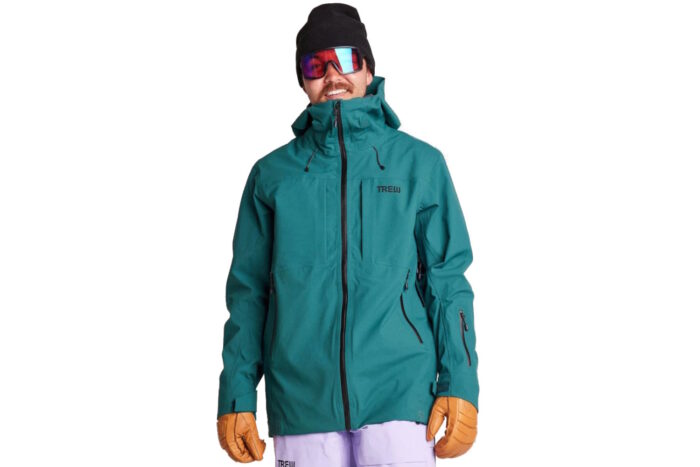
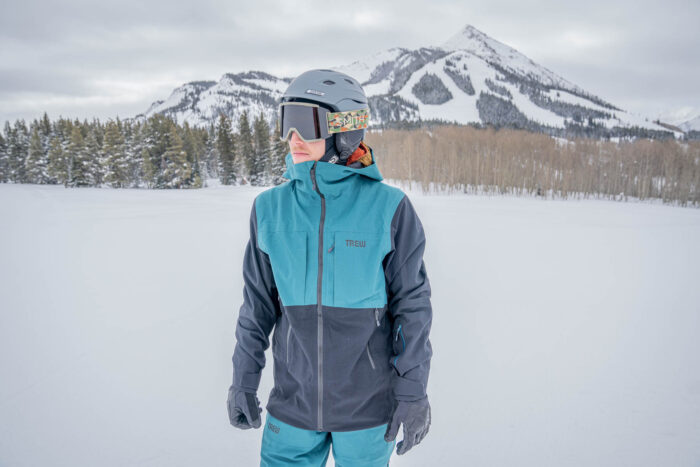
TREW Gear Men’s Cosmic Jacket
-

-
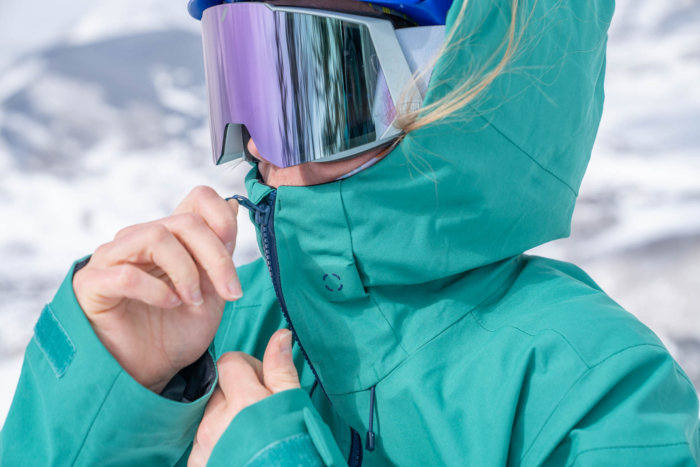
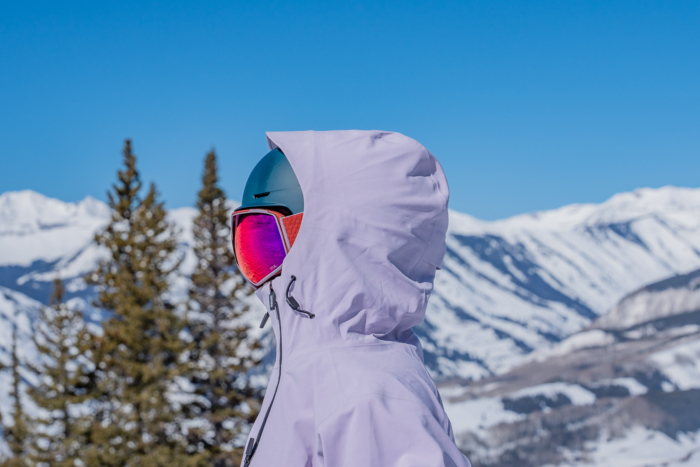
The TREW Cosmic PRIMO Jacket utilizes TREW's PRIMO fabric, a 100% recycled nylon; (photo/Morgan Tilton)
-
-
Specifications
Pros & Cons
Pros
- Colorful designs stand out
- Heavy-duty fabric kept us warm
- Super durable
Cons
- Expensive investment
- Hood does not fit flush over helmet
Read Review: Versatile Winter Jacket Takes a Beating and Keeps Performing: TREW Gear Cosmic Jacket Review
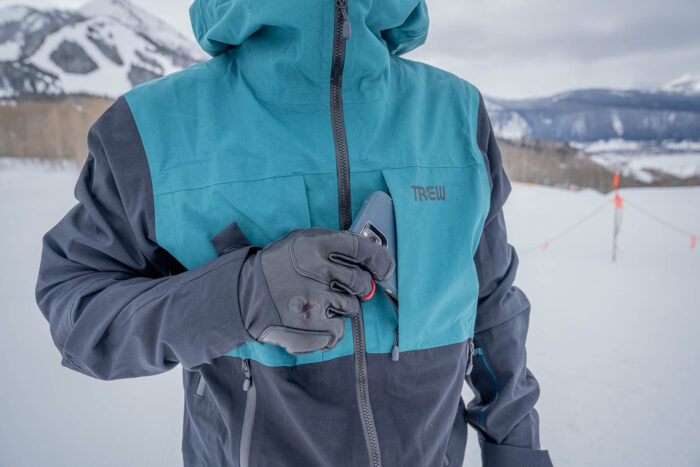
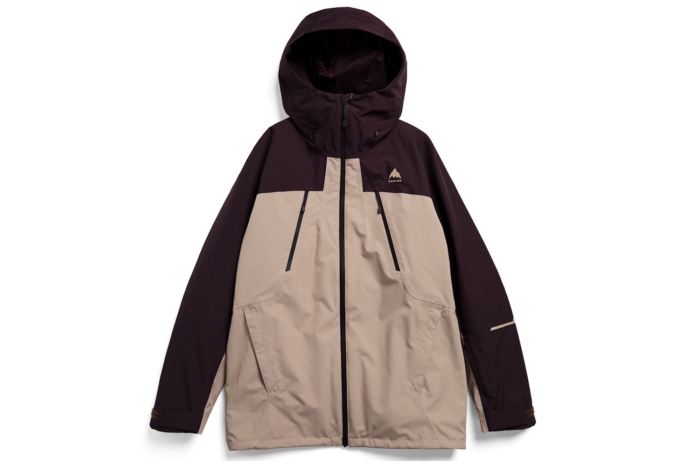
TREW Gear is back with the brand’s highest level of waterproofing and breathability — a 20,000mm-rated membrane — and this stylish jacket feels bomber from the resort or backcountry to après. It’s hard to beat the TREW Gear Men’s Cosmic ($499). Recently, the hood was updated to fit better over a helmet and there’s a laminated internal chest pocket. In addition to the standard XS through XXL size run, TREW also offers extended sizes with 3XL through 5XL. If you’re looking for broader threads in the traditional size block, another option is Burton Men’s Covert 2.0 Jacket with sizes through XXXL.
The Cosmic’s 3-layer fabric is not only delightful to wear but is Bluesign-certified and impressively waterproof and breathable. A roomy fit is perfect for adding layers beneath without restricting movement. The silhouette is long enough to cover your rump, keeping you extra warm on the chairlift. We found the latest Cosmic runs slightly larger throughout compared to the OG iteration.
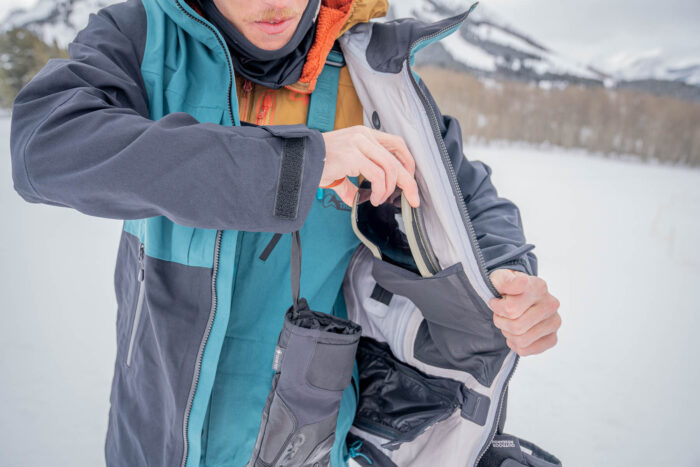
On the skin track, this jacket didn’t breathe as well as more backcountry-specific jackets, but with 16-inch pit zips, we were still able to dump heat when needed. The removable powder skirt does a great job of keeping poofs out, and a RECCO reflector is a nice touch for additional safety. Inside, two mesh dump pockets are large enough to hold splitboard skins or a beanie between laps — a big plus in our book. Outside, a pass pocket and four large external zippered pockets provide ample storage for resort days. We liked the tall collar for keeping wind and snow off our face.
While this mid-priced jacket might still be a tad pricey or overbuilt for some riders, the design balances the demands of Mother Nature with style points and a high-quality, long-lasting build. For bell-to-bell days at the resort in blizzard conditions to long days on the snowmobile or in the skin track, the TREW Gear Cosmic is our top choice for all-mountain resort riding.
TREW Gear Women’s Stella PRIMO Jacket
Specifications
Pros & Cons
Pros
- Top-tier fit and style that we love
- Sustainable inhouse fabric that’s 100% recycled and 20K waterproof
- Fully seam taped
- RECCO reflector
Cons
- We wish there was a zippered internal chest pocket but love the other pockets
- Pricier side
Read Review: Fashion Meets Function for Bigger Bodies: TREW Gear Stella PRIMO Plus-Size Women’s Ski Jacket Review
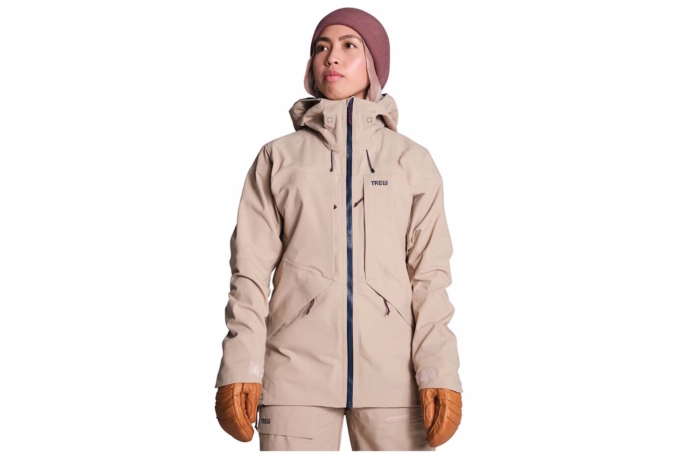
Based in the Pacific Northwest, TREW launched with drop-seat snow bibs in 2009. Fourteen years later, the brand developed a sustainable fabric after several years of production, which is strong enough to withstand even the most moisture-laden coastal storms. The Primo Collection is the brand’s 100% recycled woven nylon in a 3-layer package. The waterproof-breathable fabric is durable and offers dynamic stretch, which is the foundation of the TREW Gear Women’s Stella PRIMO Jacket ($499). With a relaxed, lengthy style, the Stella is among TREW’s cake designs for ladies to date. We absolutely love this slightly hourglass fit and found that the fabric withstood heavy, wet snowfall with no dampening and dried very fast. Recently updated, the hood was updated to fit better over a helmet and there is a laminated internal chest pocket. Beyond the XS through XXL, TREW also debuted 1X through 4X extended sizes for this snow jacket.
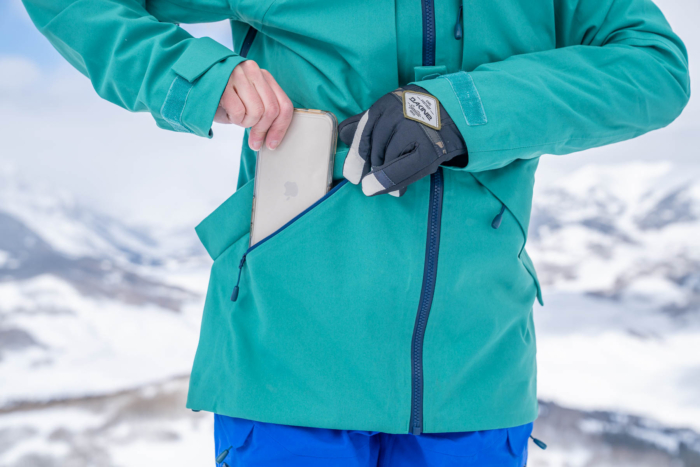
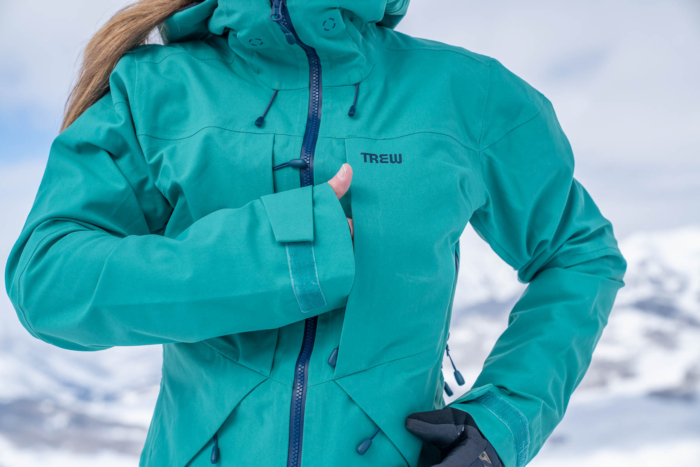
There are pockets galore in the Stella. We dig the two exterior chest pockets and two exterior hand pockets, creating a picnic of pouches across the face. With eye-friendly lines, those four zippers are covered by fabric, so it’s easier to use the opposite hand to slide items into each chest pocket. We were cautious on the lift and in line to slide items into the lower two hand pockets, because the overlapping fabric is angled down — awareness is key, especially if your hands are in gloves and you can’t feel exactly where the zipper teeth are. That said, we never dropped anything. Another two dump pockets are inside for tossing a beanie or mitts while going through the dining hall (but those pouches are not the most spacious for skins). A pass pocket sits on the lower forearm, meaning our card never got pinched in the elbow pit. Adding a zippered interior chest pocket would be a bonus for future upgrades — but we wouldn’t want that to come at the expense of the large exterior pockets.
We also wish that the interior collar had a softer fabric for comfort and warmth against the chin and lower face. The hood has a reinforced brim and fits over a helmet but is snug, and the brim doesn’t go to the very end of the helmet. There are three elastic adjustments (two in front and one in back) to hug up the hood when the wind howls. The powder skirt is removable, and all of the zipper pulls decorating the jacket are easy to grab.
Recapping, this fabric is fairly soft and quiet. The feel is thickset and strong but not insulated. Those underarm vents are 10 inches long (not the 16 inches that are advertised) and lack interior mesh fabric panels. There’s a wide, tapered shape to the wrist cuffs, which is a lovely touch that’s also functional, and the velcro tabs are easy to grab. Ultimately, the Stella PRIMO Jacket is wildly comfortable, fashion forward, and shielded very heavy, wet snowfall with no damp spots. Plus, the fabric dried quickly after full days on the slopes. This is one of our favorite all-around snowboard jackets, hands down.
Burton Women’s Reserve Insulated Stretch Slim Jacket
-
-
(Photo/Morgan Tilton)
-
(Photo/Eric Phillips)
-
(Photo/Morgan Tilton)
-
(Photo/Morgan Tilton)
-
(Photo/Morgan Tilton)
-
(Photo/Morgan Tilton)
-
(Photo/Morgan Tilton)
-
(Photo/Morgan Tilton)
-
(Photo/Morgan Tilton)
Specifications
Pros & Cons
Pros
- Insulated chest pocket for devices
- Slim fit is stylish and bulk-free
- Softly lined hand pockets
- Roomy hood fits over helmet
Cons
- Insulation might make this pick is too toasty
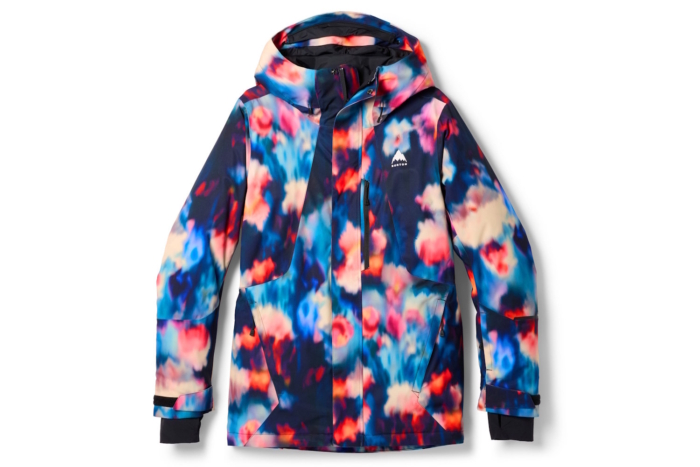
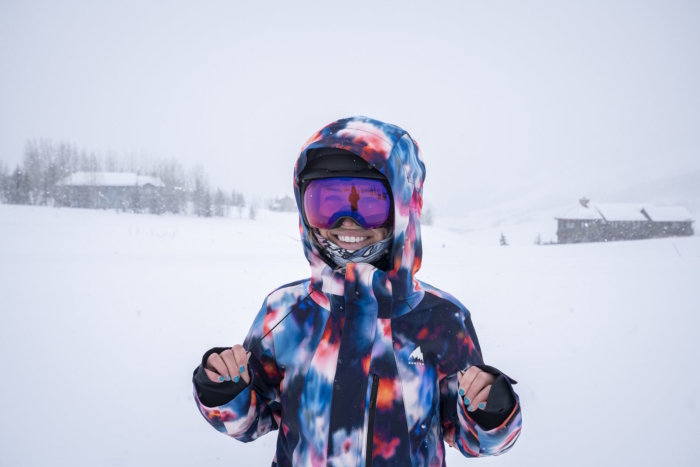
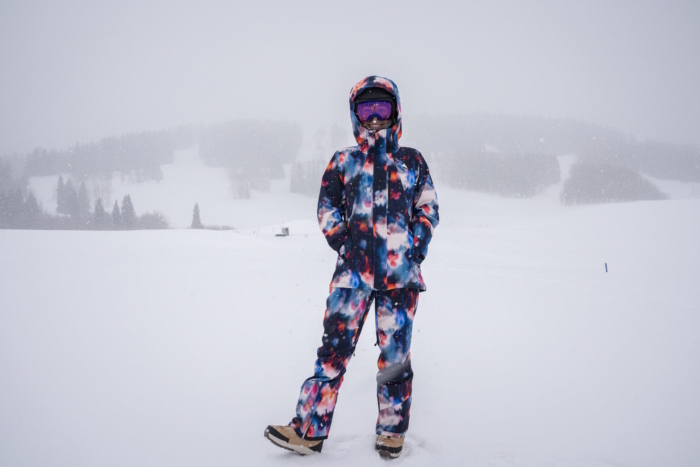
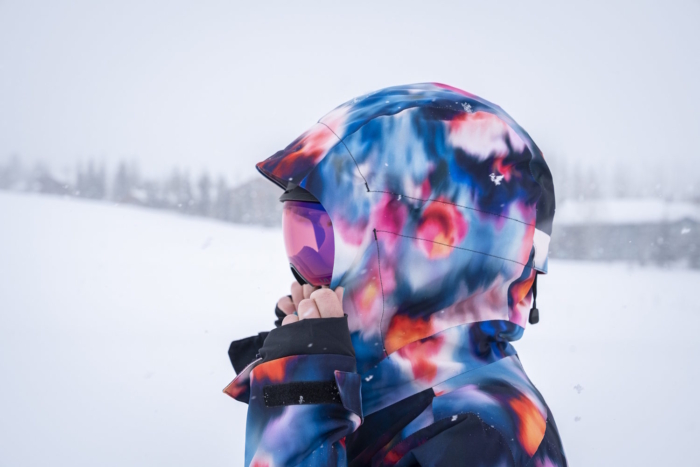
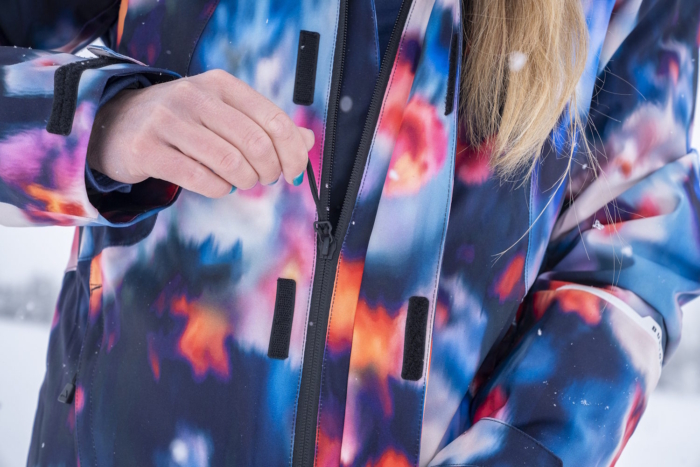
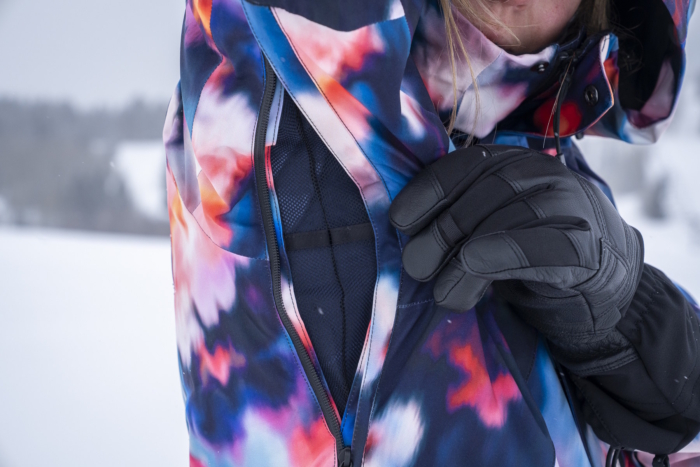
Picasso’s vibrant cubism meets cloud-like camo in this masterpiece. Fresh on the scene, the Burton Women’s Reserve 2L Insulated Stretch Slim Jacket ($260) hits a sweet spot for riders who want weatherproof warmth without the bulk. Tagged as the Floral Blur, the pattern is stunning, and the jacket’s long, lean fit is both stretchy and insulated in the torso, arms, and hood. The Reserve is extremely comfortable for shreddy resort days regardless of how wacky the weather is. This design fits squarely in the brand’s foundational apparel tier, providing solid protection with an economic tag.
With a 20K/20K waterproof-breathable rating and CO DWR finish — which is PFC-free — this textile holds up against wet storms and high-output laps, as we discovered while riding at Crested Butte Mountain Resort in stormy conditions. The slim fit doesn’t sacrifice mobility, and we noticed that bit of stretch, too. Inside, the liner is strategically body-mapped, and shaping darts are integrated into fabric sections to enhance articulation and support movement. As a tailored cut, the jacket skims the chest and hips for a flattering profile. We loved this fit: The jacket never felt like it was a cavern, far away. And no matter how hard we were bootpacking up steep slopes or weaving around moguls, the jacket never felt restrictive.
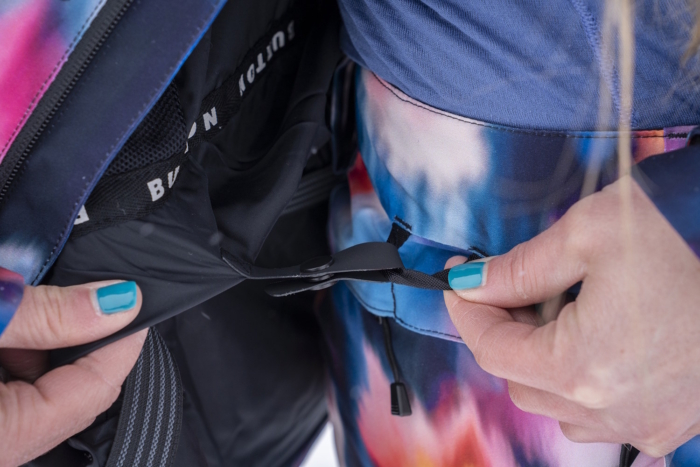
Insulation is dialed for resort riding — 80 grams in the torso and 40 in the sleeves. We found it was toasty enough to stay warm on the lift without overheating. Thoughtful features include a fixed powder skirt with silicone grip and pant attachments, underarm vents for dumping heat, and a fixed hood for quick weather coverage. The hood was an excellent shape and size for sliding over a ski helmet while bracing against gusts.
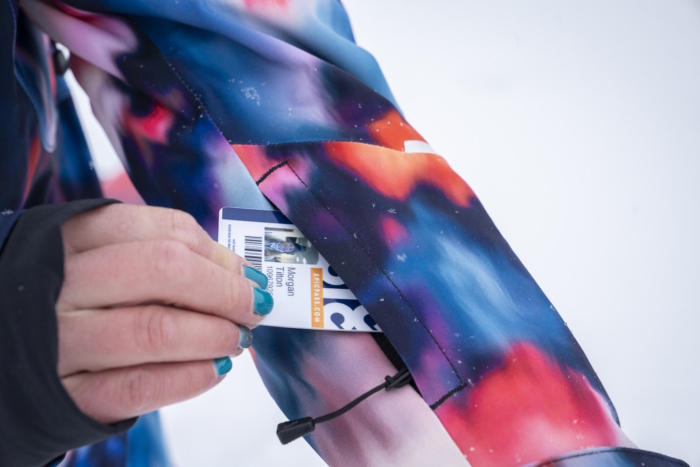
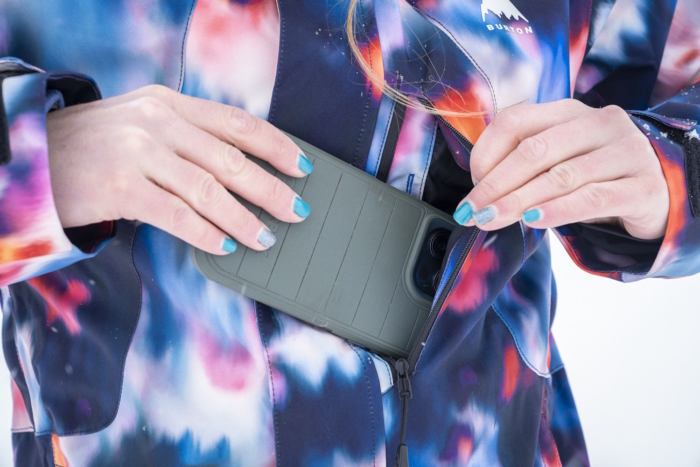
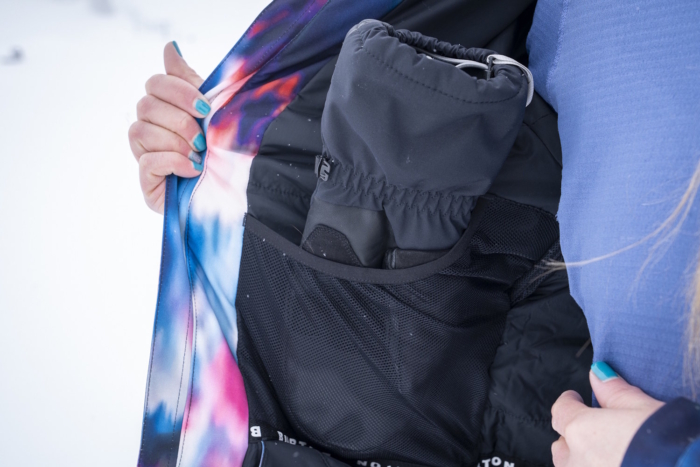
The pockets are all well-placed and practical. There’s an exterior-access insulated chest pocket, which is a warm crib for keeping devices powered. From inside, you can thread a cord through a headphone port. (But, there’s no interior zipper access, nor is there a secondary zippered chest pocket.) There’s a sleeve pass pocket on the forearm and a roomy interior dump pocket. Two softly lined hand pockets have zippers and are softly lined. Nuzzling our lower face, the collar is likewise bedazzled with buttery fleece spanning 5 inches by 5.5 inches wide.
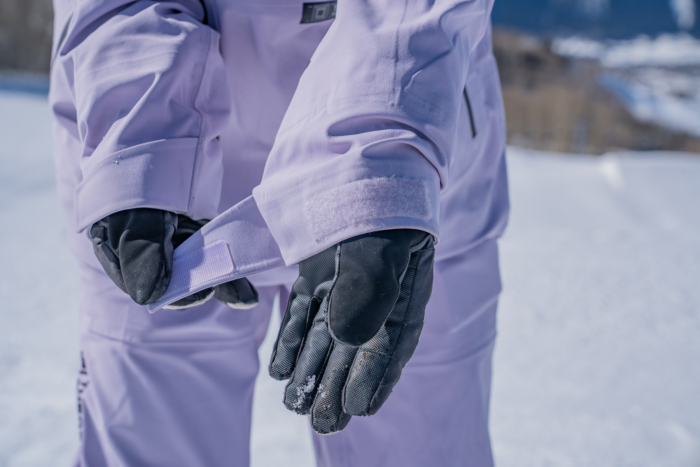
Lengthy wrist gaiters house our hands all the way to the middle knuckles including thumbholes. With a moderate thickness, they provide warmth and seal out drafts. If you don’t dig wrist gaiters, these ones are removable, a unique twist on customization. Ultimately, donning the Reserve is like strolling down a runway and preparing to battle a blizzard all at once. This insulated, stretchy and slim-fitting jacket is clean-looking, performance-driven, and inspiring to lay eyes on. It’s a choice layer for riders who need weather protection and warmth in a movement-friendly, modern design.
Burton Men’s Covert 2.0 Jacket
Specifications
Pros & Cons
Pros
- The hand pockets are lined with micro fleece — a nice touch
- 10 total pockets on the exterior and interior
- XXS to XXXL offered for plenty of size variety
Cons
- Waterproofness level might not be high enough for folks in high moisture regions
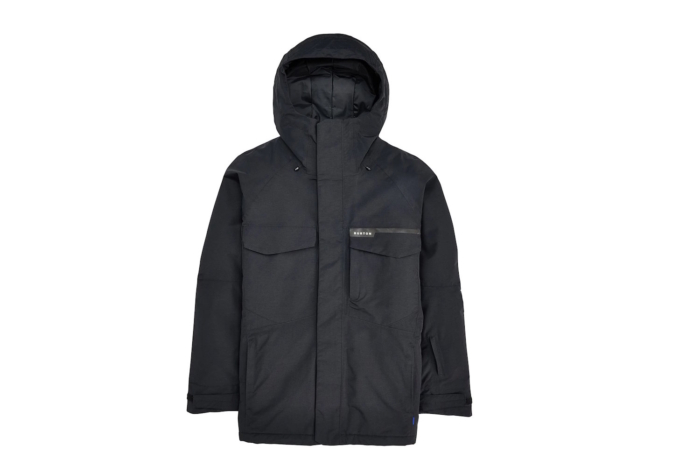
Perfectly kitted out with tons of pockets, a lower environmental impact, and overall style contribute to why the toasty Burton Men’s Covert 2.0 Jacket ($270) is a good choice for resort shred days. This insulated jacket lines up one of the widest size ranges, too, with options from XXS to XXXL. Plus, the cost is reasonable for the package. Another option on the lower end of the price spectrum is the Flylow Roswell Jacket, which is likewise insulated but has a slightly more breathable textile.
Loaded with stash zones, there are ample pockets in the Covert, including one that’s insulated for a phone, which has a streamlined entrance near the center chest next to the jacket’s main zipper. The hand pockets are lined with a cozy microfleece, which we’re stoked on while hanging on the deck for après. A ski pass pocket is on the lower left arm, which stays clear of the elbow pit. The interior mesh dump pocket is a great spot to stash a beanie. There are also two spacious chest pockets ready for snacks.
We appreciate the pit zips for venting and haven’t seen the liners snag thanks to several narrow strips of fabric reinforcement that add a hair of structure to the porous material — a unique detail. For dry and spring stints, the powder skirt is removable for a de-cluttered layer. It’s five-star that the hood is helmet-compatible and has one-hand adjustability. An effort was made towards sustainability with the Bluesign-approved insulation that’s made with 90% recycled fibers.
This 2-layer jacket offers moderate-level waterproofness and breathability — at 10,000mm of waterproofing and 5,000g/m²/24hr of breathability — which works for riders in more mild and moderate climates. The Covert 2.0 Jacket was one of the warmest we tested, and a few testers of different sizes and heights all liked the fit. Despite a low-bulk design, this piece is loaded with 80 grams of ThermacoreECO Insulation, so if you shred in a blustery, cold spot or will be waiting in the lift line for a while, snag one.
Burton Men’s Reserve 2L 3-in-1 Jacket
Specifications
Pros & Cons
Pros
- Ample pockets for all your storage needs
- A perfect fit for freestyle riding
- Full package jacket and midlayer
- Standalone built-in puffy
Cons
- Yellow color scheme shows dirt easily
- With liner installed, dump pocket and powderskirt are inaccessible
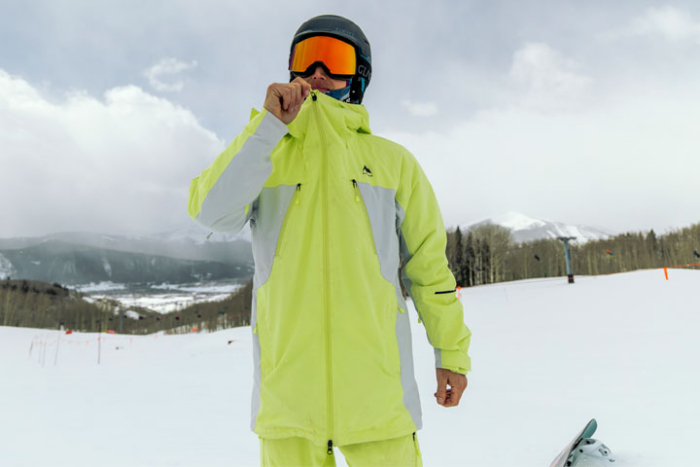
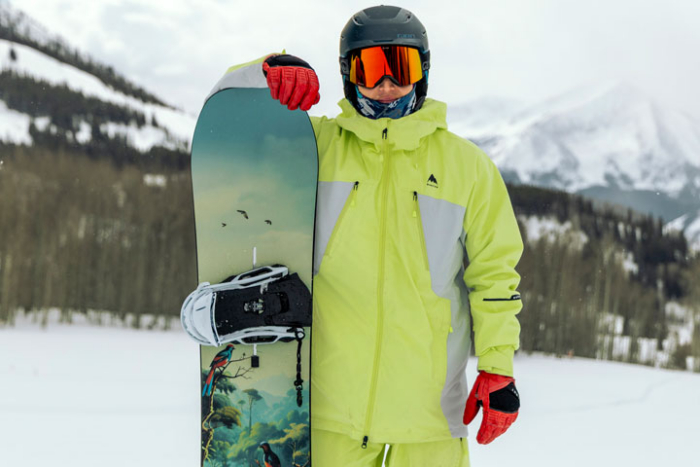
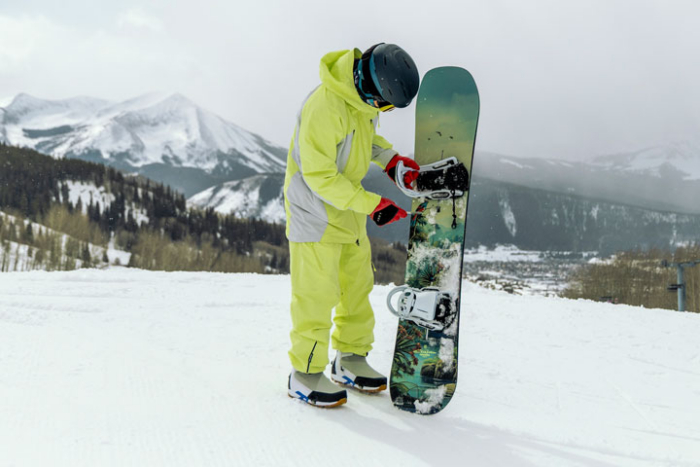
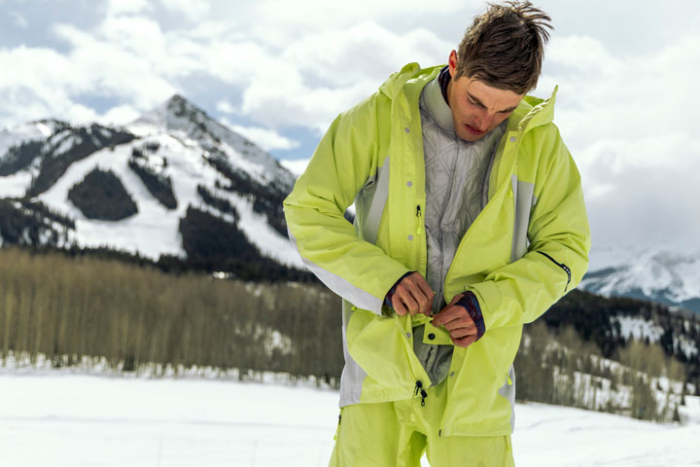
Often, 3-in-1 jackets can be gimmicky — you end up with two subpar layers that work best when paired. Not here: the Burton Men’s 2L Reserve 3-In-1 Jacket ($380) is the best 3-in-1 system we’ve tested. Each layer legitimately stands on its own. When combined, the trio creates a jacket riders can wear all season long, found rider Eric Phillips. The 100% recycled Reserve is a 2-layer design with 20K/20K waterproof-breathability. Just-enough bagginess was perfect for charging hard — even with fully loaded pockets.
Ditch your pack: When it comes to storage, the shell alone boasts seven pockets to comfortably carry snacks, sunscreen, tools, keys, a phone — plus a selfie stick and camera. Two lined hand pockets and two chest pockets are up front — each one large enough for an iPhone, camera, or collapsible selfie stick — plus a pass pocket. Inside is one large mesh dump pocket and an insulated phone pocket that preserves its battery life. Phillips noted that the internal liner makes it challenging to access the shell’s interior pockets but is possible. The liner also offers two hand pockets — though, without zippers, we wouldn’t recommend storing anything in those during sessions.
The removable liner attaches with snap buttons and has 100g of ThermacoreEco insulation. On the coldest days — with temps near or below 0 degrees — Phillips needed additional insulation. On the flip side, the layer’s insulation value worked well across moderate temps, and he wore it the majority of days (except sunny spring conditions in the 50s). This liner looks good, too — we confidently rocked it at aprés.
Underarm zip vents dump heat and have mesh liners to prevent flurries from entering. The adjustable powder skirt includes jacket-to-pant connections. Topped with fully seam-taped seams, YKK zippers, and PFAS-free DWR, the Reserve is both stylish and well-designed. Phillips tested the Glow Yellow Green, and while he got a plethora of positive remarks on the unique, stand-out color, it easily shows dirt. Be extra careful walking in parking lots and around vehicles’ road grime.
Overall, snowboarders hunting for a shell-liner combo that look good independently and together won’t be disappointed with this one. With enough pocket space to replace a pack, and one system for a full season of conditions, the Reserve 2L 3-In-1 Jacket is the best bang for your buck.
Patagonia PowSlayer Jacket — Men’s & Women’s
-
-
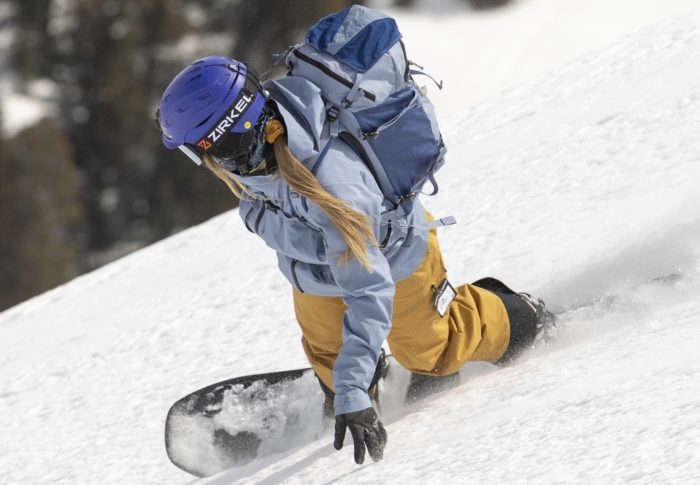
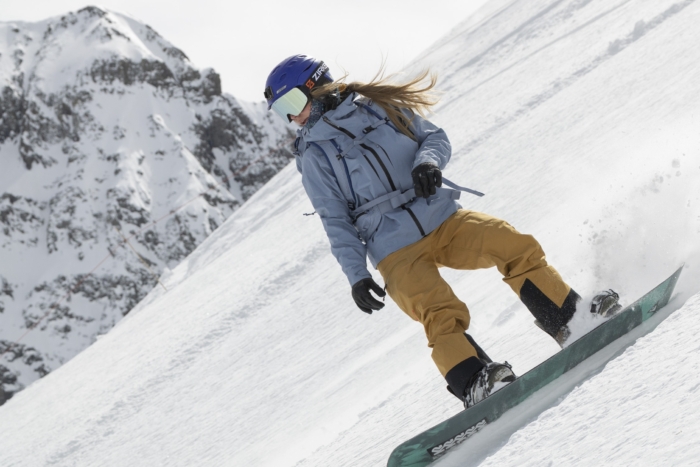
Morgan Tilton testing the Patagonia Women's PowSlayer Jacket; (photo/Jeff Cricco)
-
-
Specifications
Pros & Cons
Pros
- Lightweight
- Plenty of pockets
- Helmet-compatible hood
Cons
- Stains are hard to remove
- Light material can feel a bit lean with freezing, harsh wind
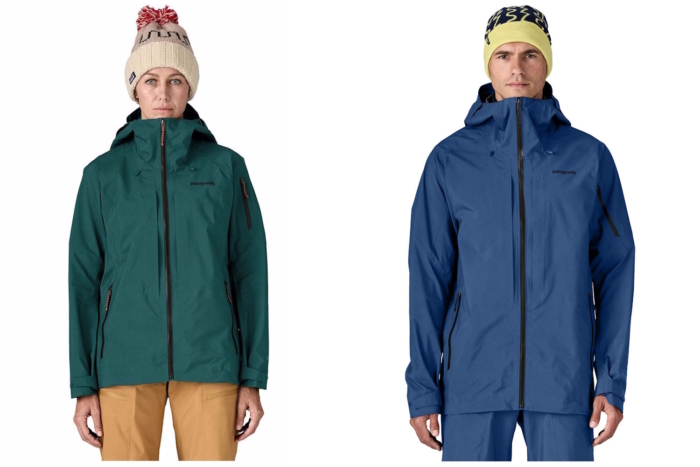
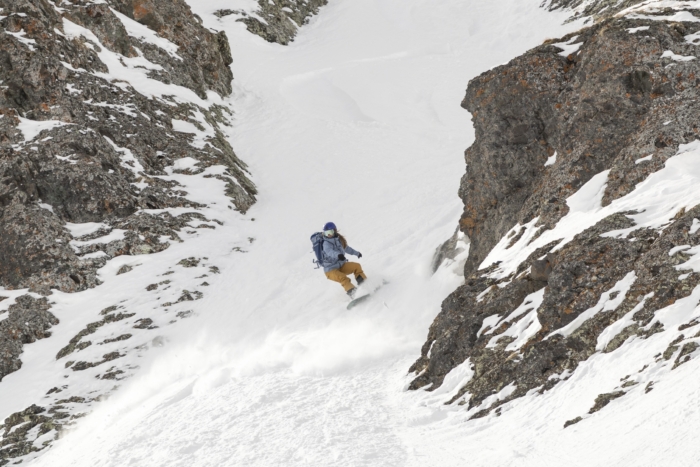
Perched atop narrow couloirs in the high alpine and skinning up steep ascents, our layers really matter. On this season’s missions, we tested the redesigned Patagonia Women’s PowSlayer Jacket ($799). From the day’s first turns to the last bootpack, this zip-up proved to be a standout. This is the fourth-gen PowSlayer, revived after an eight-year break with a completely reworked build. There’s also a Men’s PowSlayer Jacket.
Most notably, it now uses GORE-TEX Pro ePE — a PFC-free, chemical-conscious membrane — which shaves off 30% of the weight from previous versions. The shakeup adds noticeable malleability and lightness to the shell. At 510 g, this packable jacket weighs in below the Jones Shralpinist (590 g) and Outdoor Research Skytour AscentShell (576 g), two of our other favorite layers for backcountry ventures. The low-profile powder skirt and articulated cuffs are rad. The helmet-compatible hood includes stretch panels, which improved head mobility when the hood is up (it was tight to pull on and off when fully zipped — but we usually unzip our collar when we pull down our hood).
We loved the fit, which is roomy without bulk. The material moved well while tightening down a loaded pack, bending over to adjust the bindings or boots, and tight hop turns alike. The seven-pocket layout is smart and very functional, with two chest pockets that bellow outward and can stash small skins. Inside one of the chest pockets is a zipper that allows you to pass through a device to an internal pocket (but the dimensions are a bit tight for a large phone). Inside the jacket is a stretchy zippered chest pocket that’s roomy enough to drop a large phone, with a stretchy drop pocket on the other side. There are two large hand pockets, and a small pass pocket on the arm, too.
During several days of field testing around Silverton and Colorado’s Elk Mountains — in everything from warm, sunny skintracks to frigid, snowy blasts — the PowSlayer handled any precipitation and perspiration thrown at it. What it doesn’t block well? Wind. If you’re heading to a gusty zone, layer accordingly. We also struggled a bit with quickly grabbing the small zipper pulls for the underarm vents when gloved. That said, the zippers worked smoothly. With impressive waterproofness, breathability, and a low weight, Patagonia’s latest PowSlayer iteration nails versatility. If you’re looking for a stormproof shell that layers well and offers excellent storage, this jacket is a high-end, high-alpine win.
Jones Snowboards Shralpinist Stretch Recycled Jacket — Men’s & Women’s
Specifications
Pros & Cons
Pros
- Soft, stretchy fabric for unlimited movement
- Lifetime warranty
- 100% recycled material
- Lightweight
Cons
- Lightweight also means it's easy to get cold when not moving or on the chairlift
- Among the most expensive jackets tested
Read Review: First Look: Jones Snowboards Women’s Shralpinist Stretch 3L Jacket Review
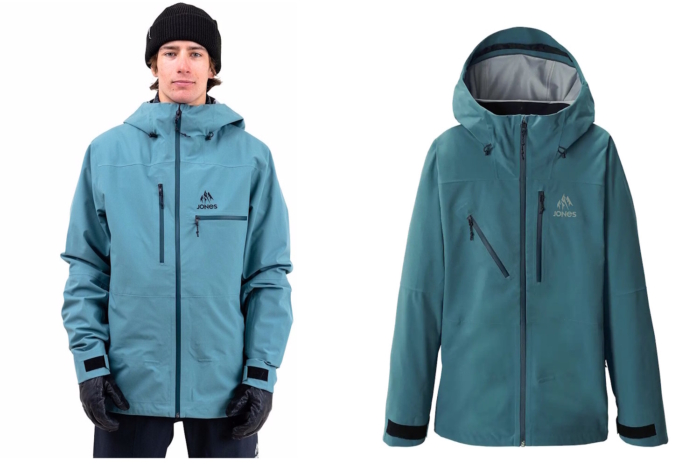
We can’t say we’re surprised that the designers at Jones Snowboards continue to push the needle with sustainability. The Jones Snowboards Men’s Shralpinist Stretch Recycled Jacket and Women’s Shralpinist Stretch Recycled Jacket ($500–$525) set a high bar for eco-friendly, high-performing snowboard jackets that are durable yet sport a malleable, soft feel. Ideal for dawn-to-dusk skin-track tours, storm-day resort laps, or spring mountaineering, this 3-layer shell balances mobility and storm protection — it doesn’t hurt that it looks good, either.
What sets this jacket apart is the fabric. This lightweight, soft, and stretchy textile is matched with incredible durability and performance, which boasts 30,000mm of waterproofness and breathability — the highest rating we’ve tested across all snowsports jackets. While we did find the fabric durable, the face of the lighter-colored option shows dirt very easily. Regardless, we appreciate the natural yet bright tone for helping us pop against a white slope.
This jacket has prolific pockets — seven. We loved the oversized outer chest pockets. Those two torso pockets were large enough for phones, cameras, snacks, and more, plus they’re accessible with a hip belt on. There are two more zippered pockets: One large interior zippered chest pocket, and a small forearm pass pocket. Inside are two large dump pockets that are good for splitboard skins, plus a minimalist phone keeper.
A sweeping hood and tall, comfortable chin guard offer protection against ripping weather. The fleece liner inside the collar is a bit lean — only 4 inches long by 6/8 inches wide. We wish it was plusher and more expansive.
Even with the performance packed in, there’s no tradeoff of sustainability. Even the polyester zip pulls, adjuster cords, andYKK Natulon zips are recycled. Meeting OEKO-TEX Standard 100 and Bluesign certification, the jacket’s fabric is 100% recycled 70-denier polyester with four-way stretch that’s unmatched on the skin track. There’s a fully recycled 20-denier polyester backer. A dot-laminated hydrophilic membrane is sandwiched inside, making a 3-layer waterproof design. The face is treated with a PFC-free DWR, keeping moisture out without toxic chemicals.
Designed to support backcountry users, the Shralpinist has RECCO detectors and an integrated infographic — “5 Red Flags” — with signs related to avalanche safety. Another laminated infographic covers the Avalanche Rescue Steps. Overall, the Shralpinist shines on the skin track with crowned breathability and stretch yet is a stout companion for blizzard-ridden resort days. Layer appropriately for cold and windy days, but if mountaineering and environmental impact is your goal, then look no further than the Shralpinist. Need a lower price tag? We also dig the OR Skytour AscentShell Jacket for tours, which is less sustainable and less waterproof than this piece from Jones.
7 More Time-Tested & Shred-Worthy Snowboard Jackets
While these seven layers didn’t receive awards, each one has remarkable points for style, durability, movement and price.
Specifications
Pros & Cons
Pros
- The 100% recycled fabric resists abrasion better than high-end shells
- Pockets can swallow an extra pair of goggles, spare beanie, and sandwich with room to spare
- Workwear cut looks great in pow and awesome everywhere else
Cons
- Feels heavier than many 3-layer backcountry shells
- Generous pockets create a lumpy silhouette when stuffed
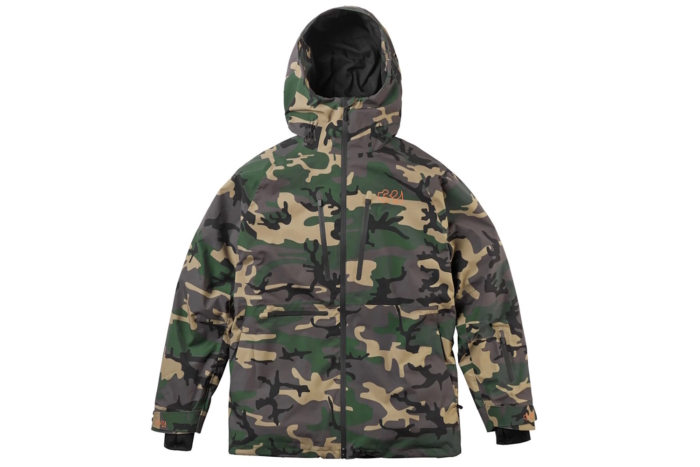
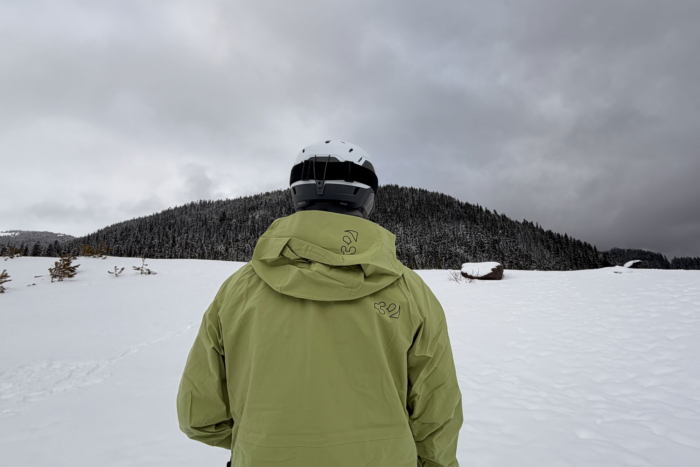
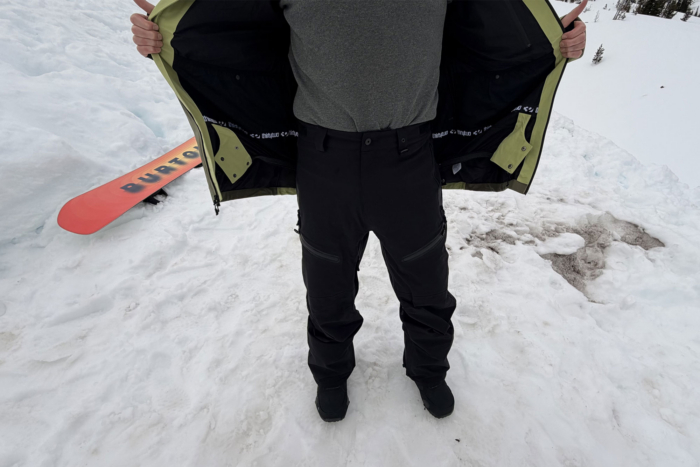
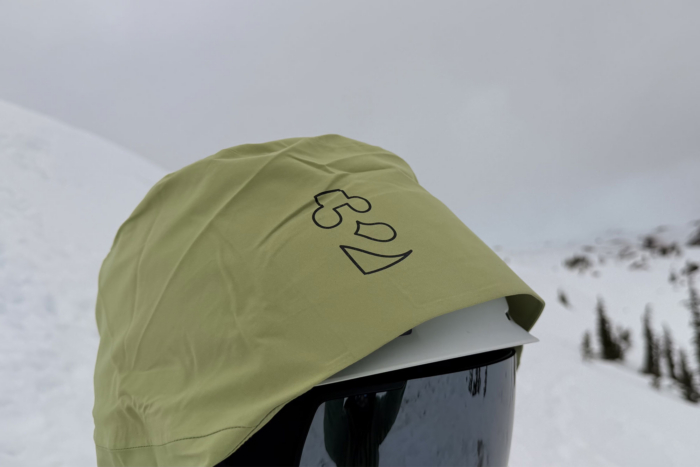
The ThirtyTwo TM Recycled Patch Jacket ($300) is a technical powerhouse that refuses to look like one. With a heavy-duty 20K/20K rating, a relaxed Chris Grenier fit, and a 100% recycled construction, it hits the sweet spot for riders who want high-end performance in a rugged, workwear-inspired shell.
The TM Jacket has been a staple in ThirtyTwo’s lineup for years. But this latest iteration — in a Moss colorway for pro rider Chris Grenier — feels like a true do-it-all snowboard jacket, as rider Nate Swanner found while testing in Oregon. While many 20K shells feel crinkly and fragile, the TM Recycled Patch uses a 2-layer fused fabric that feels surprisingly textured but soft to the touch. During Swanner’s rides in heavy, wet Pacific Northwest snow and slush, the 20,000mm waterproofing held firm, while the 20,000g breathability kept us from becoming a swampy mess.
What sets this jacket apart is the internal Reactor Mesh lining. The thermo-responsive tech, paired with 3D Fleece Zonal Warming panels and huge 2-way zippered armpit vents, provides just enough warmth in key areas like the back and core without feeling overly bulky. It’s an ideal setup for high-output riding where you need to dump heat but don’t want to freeze the moment you hit the chairlift.
The fit is classic ThirtyTwo, relaxed and long. If you’re a taller rider or simply prefer extra coverage, this jacket literally has you covered. The Moss colorway is understated and clean, something that looks just as good at the local dive bar as it does on the hill.
ThirtyTwo didn’t cut corners, either. You get a suite of YKK AquaGuard zippers that are effective against moisture. The phone leash in the media pocket is a small but legendary addition. We also appreciate the Snap-Lock system, which creates a seamless interface with ThirtyTwo pants to keep snow out of your business during a tumble.
The only real trade-offs are that the relaxed fit might feel a bit baggy for those accustomed to an athletic cut. And the lack of a 3-layer construction means it’s slightly heavier than high-end GORE-TEX alternatives. But for the price, performance, and the sustainability features, the Recycled Patch is a difficult jacket to beat.
Specifications
Pros & Cons
Pros
- Huge hand pockets (detachable goggle cloth included)
- Generously fleece-lined inner collar
- Unique neck vent and brimmed hood
- Roomy and stylish
Cons
- Fabric is a bit loud
- Not the lightest jacket but very protective
- Hood fit works over a helmet but could be better tailored
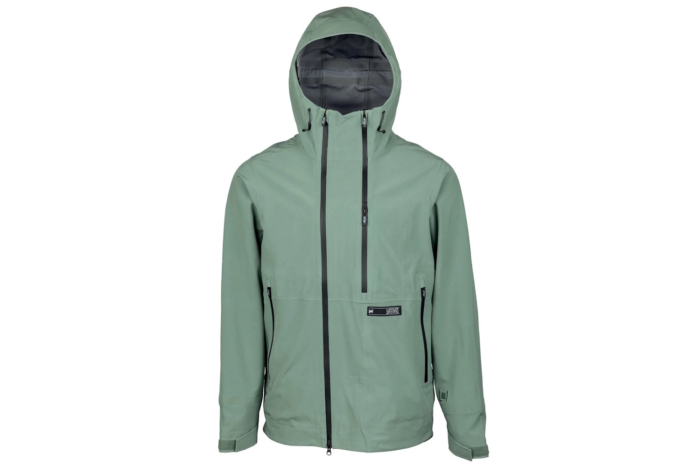
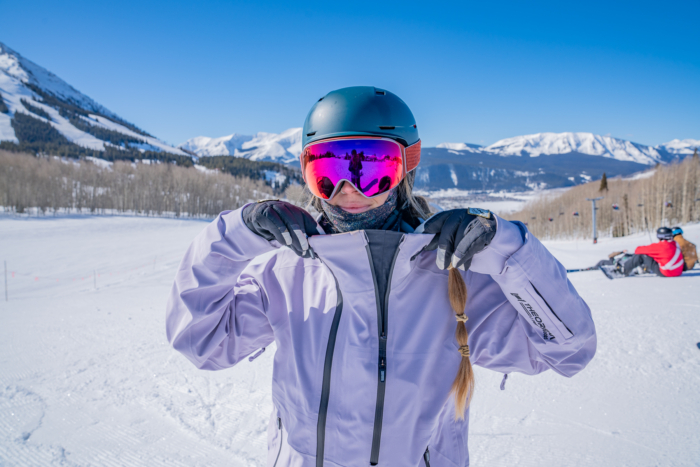
If you’re looking for a hip freeride jacket that goes from the park to the groomers and glades, and can weather a winter storm, check out the L1 Axial Jacket ($419). With a clean hanging style and unique side-by-side front zippers, it’s hard not to enjoy how this gender-neutral jacket looks let alone how it performs. Hitting a moderate price point, this jacket is built with robust 20K/20K waterproof-breathable, wind-shielding fabric and has a collection of spacious pockets to carry the goods.
Let’s talk about the collar, the crown of this design. We really like the fleece liner that wraps 9 inches around the front half of the jacket. A wide, smooth zipper cover buffs out any chance of chafe. A few inches left of the main zipper pull, a separate zipper allows the collar to widen with a mesh gusset, offering space and ventilation. Stacked directly beneath that 8-inch-long upper zip is the entrance for the exterior chest pocket. That pouch has a media port, where you can thread your headphones through an elastic stay loop higher in the neck. The zippers are all burly but easy to open and close thanks to lengthy, wide tabs. Beyond style, the smart design works. Placing the chest pocket access on the front all but eliminates a need to zip down our jacket in a snowstorm.
As for other pockets, the hand hammocks are huge — 9 in by 7 in — and there’s a seamlessly integrated pass pocket on the left forearm. Blink and you might miss it. One mesh dump pocket sits inside the right side. While the pockets are spacious and well-placed, it’d be nice to see a small interior chest pocket for safekeeping items like an ID or slender wallet. The left hand pocket includes a detachable goggle cloth, so we can deal with smudges.
The smooth inner storm cuffs have a generous hole for our thumbs and we appreciate the wide pull tabs around each wrist. Nearly three inches deep, a reinforced brim on the hood helps keep weather off our goggles. As for the hand feel, the Axial is denser, louder, and heavier than other lightweight, more buttery fabrics but given the resort application, that’s not an issue on our end. It’s super stretchy and doesn’t restrict our movement when we’re strapping in, spinning, or weaving through mogul fields. We’re also happy to see L1 incorporating 87% recycled polyester into the 3-layer textile, which is topped with PFC-free DWR to bead water. If you’re looking for a similarly loose fit that’s insulated, check out the Jones Snowboards MTN Surf Recycled Jacket.
Specifications
Pros & Cons
Pros
- Generous pockets and insulated phone pocket
- Cozy insulation
- Baggy fit for freedom of movement
- Wrist gaiters have thumbholes and transform into mittens
Cons
- Might have too much insulation for warm spring days
- Wrist gaiters might feel cumbersome to some
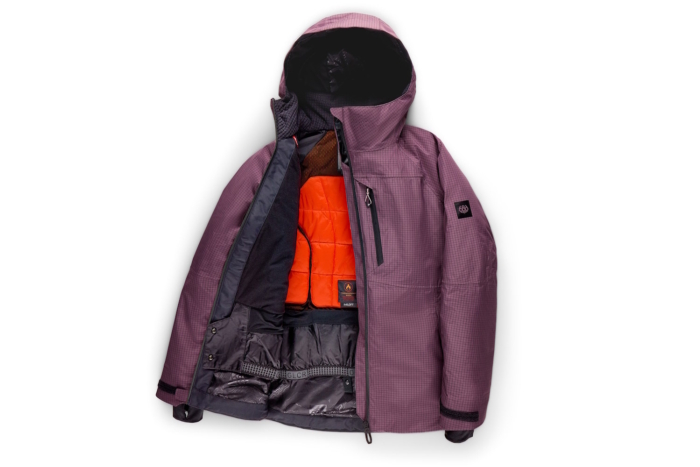
The 686 Women’s Hydra Insulated Jacket ($300) blends warmth, style, and practical storage into a resort-ready snowboard jacket. With a relaxed, baggy fit, the popular Hydra Insulated is built with infiDRY fabric, delivering top-tier waterproofing at 20K plus 15K breathability. This stellar jacket kept us dry and comfortable in everything from deep powder to cooler spring laps.
Storage is by far one of this jacket’s standout features. Eight pockets are cleverly designed to stash essentials, including two fleece-lined hand pockets. The external chest pouch is lined to preserve a phone’s battery life. A designated vertical pocket is for chapstick. A mesh tissue pocket (comes stocked with tissues) sits beside a large fleece-lined stash pocket, which is perfect for an extra goggle lens. The pass pocket (with a key clip) is on the left arm and easy to access in the lift lines. A mesh dump pocket rounds out the thoughtful collection.
We found that the helmet-compatible hood slides over our helmet. One of our favorite touches is the Vader Vent: tiny perforations in the collar that help channel breath away, reducing goggle fog and fabric moisture buildup. Helping block moisture, PFAS-free DWR is applied to the fabric’s face, and fully taped seams prevent water from leaking in. A 60g layer of infiLOFT insulation is strategically placed along the back and sides, offering extra warmth, which we appreciated in sub-freezing, gusty conditions. Sustainability is a focus, too, with 85% of the insulation sourced from recycled single-use plastics.
Beyond storage, the comfort and versatility of the Hydra take a seat at the head of the table. A honeycomb fleece-lined collar feels ultra-soft against the skin, and the fleece-lined hood adds coziness. When things heat up, underarm vents allow airflow to keep an equilibrium. Elastic thumb loops on the cuffs keep sleeves in place. And the stretchy wrist gaiters, which have thumbholes, transform into mittens — a clever, on-the-fly warmth boost for après parking lot hangs. For riders looking for a feature-packed, eco-conscious, and ultra-functional insulated snowboard jacket, the Hydra Insulated is an easy snag for resort sessions.
-
-
(Photo/Zach Zentano)
-

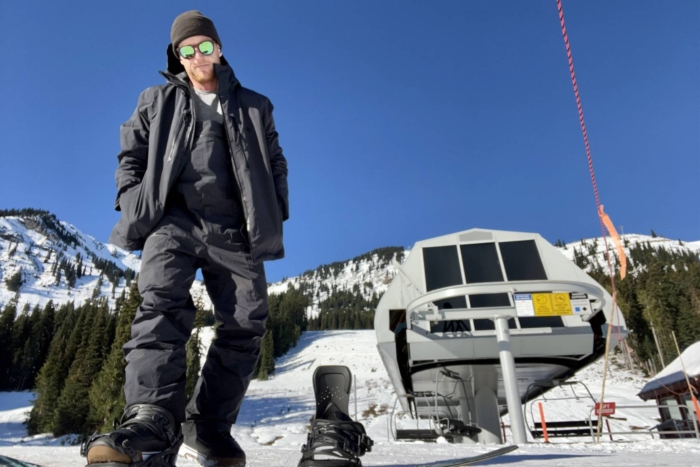
Specifications
Pros & Cons
Pros
- Powder skirt included
- Helmet-compatible hood
- 100% recycled materials from fabric to insulation and zip pulls
Cons
- No bright color options
- Insulation might not be your top pick
Read Review: Jones Mountain Surf Parka and Bib Review: An Impenetrably Cozy, Insulated Ecosystem
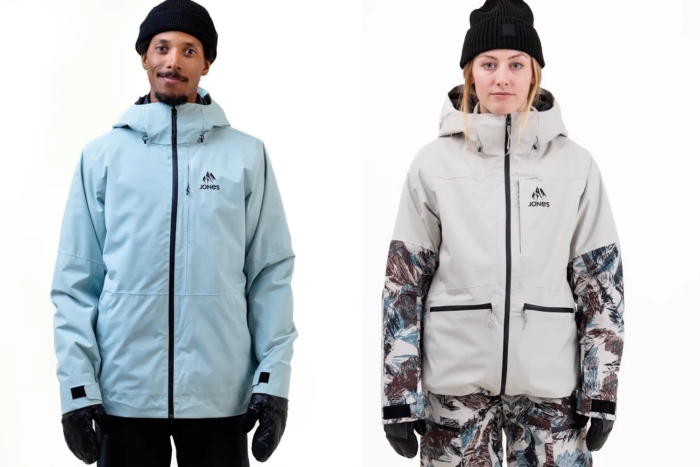
Perfect for the hill, the Jones Snowboards Women’s MTN Surf Recycled Jacket ($480) and the guys’ Jones Snowboards MTN Surf Recycled Jacket ($400) live up to the hype. This jacket is stylishly boxy, super comfy, and lightly insulated for warmth without heft or puffiness. It sports eco-cred with 100% recycled PrimaLoft insulation made using P.U.R.E. (Produced Using Reduced Emissions) technology, which replaces fossil fuels with renewable energy and electric machinery to cut carbon emissions by at least 50%.
Let’s talk pockets: they’re fantastic. Giant triangular hand pockets (seriously, you could lose a sandwich in there) — 12 inches tall and 9 inches wide. A slick pass pocket is on the forearm, zippered chest pocket with an internal phone sleeve (a little finicky, but it works for small devices), and two cavernous internal stash pockets. There’s one zippered chest pocket inside. If you’re looking for even more pockets, check out the Burton Men’s Covert 2.0 Jacket, which has ten.
SnowSports Senior Editor Morgan Tilton loved this layer’s coziness during test laps at Crested Butte Mountain Resort in windy, snow-tossed, sub-15-degree conditions. The Surf boasts 20K/20K of waterproofness and breathability. This 2-layer design nails the weather protection against precip, wind, and cold, especially while waiting in the lift line or riding to the top. We give it a rating of 7/10 for warmth, which is solid for freezing days (for context, 10/10 is a fully windproof, waterproof synthetic down jacket).
Its fixed powder skirt and helmet-compatible hood has three adjustment cords to keep the elements out. Velcro cuffs are easy to tweak mid-run. Generous pit zips offer a venting option. And the sustainability checklist is practically maxed out. Beyond recycled insulation, the Surf features a 100% recycled polyester shell and lining, bluesign-certified fabrics, plus PFC-free DWR. It even has recycled YKK Natulon zippers and pull cords. Oh, and it carries OEKO-TEX Standard 100 certification, too.
Rad bonus? Avalanche safety infographics are printed on the forearm (“5 Red Flags”) and inside the right chest (“Avalanche Rescue Tips”) — smart, low-key reminders for anyone venturing into avalanche terrain. While the MTN Surf’s baggier fit won’t appeal to all shredders, this piece is freeride-ready and super functional. Compared to the Airblaster Women’s Sassy Beast Jacket — which is more tailored but has trickier pocket access — the MTN Surf wins for roomy, easygoing comfort. This is the jacket we grab for resort laps in the stormiest center-punch.
Specifications
Pros & Cons
Pros
- Mega spacious pockets
- Tapered wrist cuffs
- Extremely waterproof to withstand a coastal snow climate
Cons
- Hand pocket entrances are angled a bit high
- Insulation and coverage is overkill for backcountry use
Read Review: Airblaster Women’s Sassy Beast Jacket Review: Plenty of Protection for the Stormiest Days
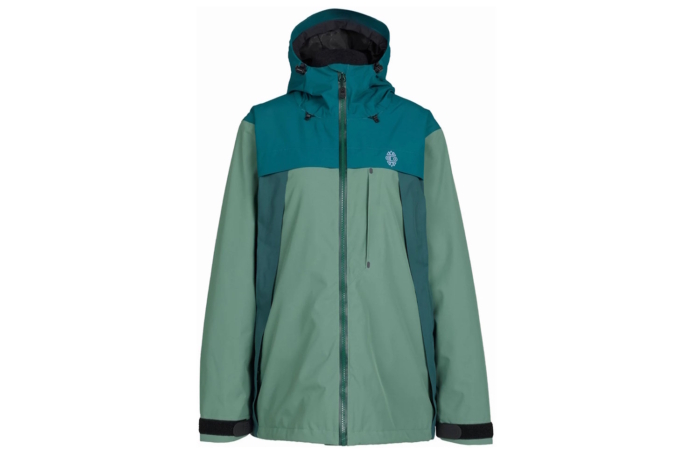
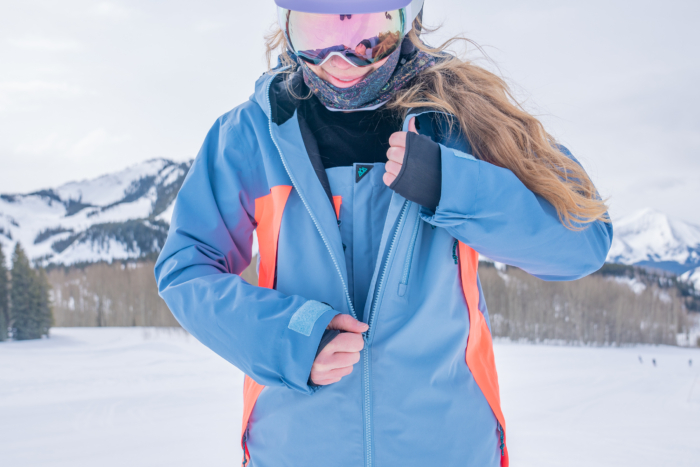
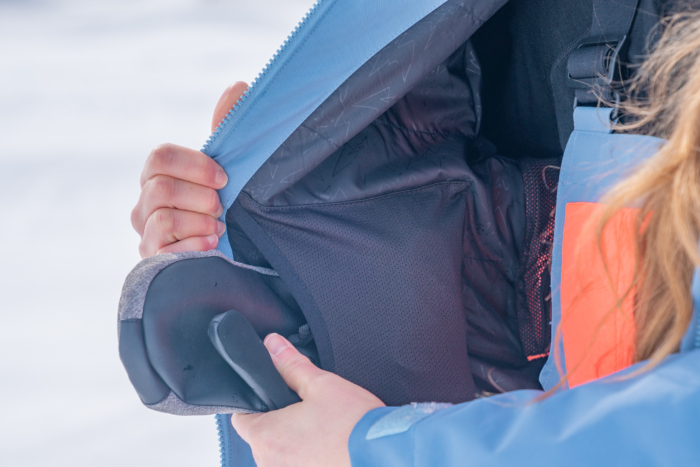
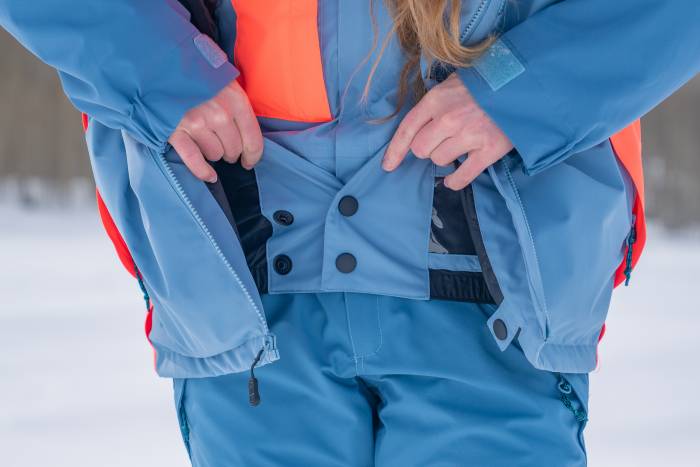
The Airblaster Women’s Sassy Beast Jacket ($320) has detail-oriented features, from the unique powder skirt to the spacious pockets and a highly waterproof, breathable fabric. With compressible 100% recycled PrimaLoft insulation integrated into the jacket, the design aims to keep riders both warm and dry without feeling bulky, which we found to be true. While the warmth was noticeable, we had a hard time believing that the jacket even had insulation with the streamlined silhouette.
On the Sassy, the 2-layer fabric is Eco-Vortex with an outer layer that’s likewise 100% recycled. A PFC-free DWR finish adds even more protection against heavy snowfall. And the waterproof YKK zippers down the center front and on the chest pocket block moisture. Overall, the smooth fabric isn’t loud or crunchy, barricades biting wind, and repels moisture super well. Those seams are fully sealed, too.
Among the most unique features of this jacket are the two huge chest pockets. The openings are a whopping 12 inches long, and the interior height is closer to 18 inches in total. The pocket is shaped like a triangle that tapers toward the top, so the width varies, but it is nearly 9 inches at its widest point. These two gargantuan pockets are a tradeoff for not having traditional hand pockets. While they offer ample space for storing a variety of stuff and have an aesthetic flair, the access is a bit less straightforward than with traditional pocket designs due to the zipper flaps facing away from our hands.
At the end of the day, the Sassy Beast is what we grab for cold, deep, and playful days at the resort for all around comfortable and style. The Airblaster Sassy Hot Bib rounds out this kit with a great look. Another one of our favorite insulated women’s jackets is the Jones Snowboards Women’s MTN Surf Recycled Jacket, which is baggier and boxier in style and the pockets are roomy. The price point is higher, in part due to the leveled-up sustainability of the MTN Surf’s materials, but the jacket also has eight pockets versus five.
Specifications
Pros & Cons
Pros
- Lighterweight shell
- Functional
- Plenty of pocket options
Cons
- Leaner, athletic fit; not as much room for midlayers for cold lift laps
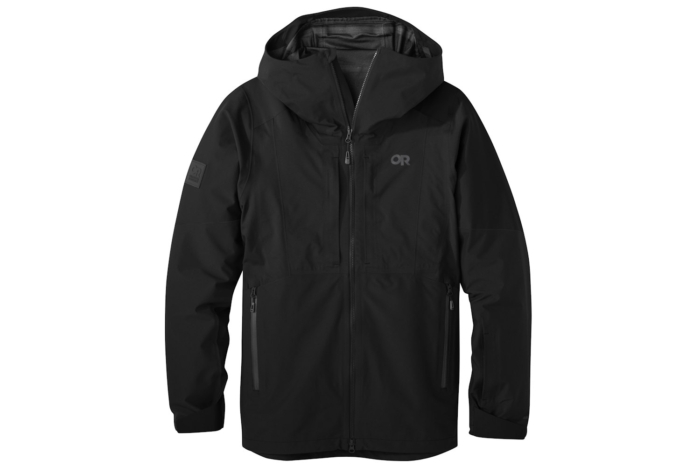
One of our favorite jackets for backcountry shredders is the Outdoor Research Skytour AscentShell Jacket ($429). The Skytour is made with the brand’s AscentShell technology and has been a servant on backcountry missions. This construction is super breathable and functional.
Of all the waterproof hardshells we tested, this one was of top-notch breathability and air permeability, so we can avoid getting clammy or too hot while ascending the route. This the only jacket we’ve found that has a higher breathability rate than waterproofness rate — an anomaly on our list. Our other favorite detail is the stretch, which is a necessity while dialing back the shoulder straps and hip belt on a heavy ski pack. Malleable material is also clutch for snowmobiling to the base of a climb, or bending over to transition our gear or adjust our bindings at the top of the drop. The hand feel is soft and pleasant, too.
All around, the design is equipped with pit zips and quality pockets both in terms of size and placement. There are both interior and dual exterior chest pockets, two hand pockets, an interior mesh stash, and a forearm pass pocket. We love the combo of comfort and durability of the shell, the adjustable hood with a wire brim, and the softly lined chin guard.
This jacket performs super well for human-powered jaunts, whether we were booting a bowl at the resort or skinning after work. Not too roomy, the fit and sizing are dialed. All in all, if you haven’t upgraded your splitboarding shell in a while, the OR Skytour AscentShell should definitely go on your list. In contrast, the Jones Snowboards Shralpinist Stretch Recycled Jacket is also an excellent non-insulated jacket that’s an adaptable hound for the backcountry or resort but at a higher waterproofness and bigger cost.
Specifications
Pros & Cons
Pros
- Freeride, baggier fit for freedom of movement
- Ample, spacious pockets
- Hood fits over helmet easily
Cons
- Pricier choice
- Not primary pick for backcountry and uphilling
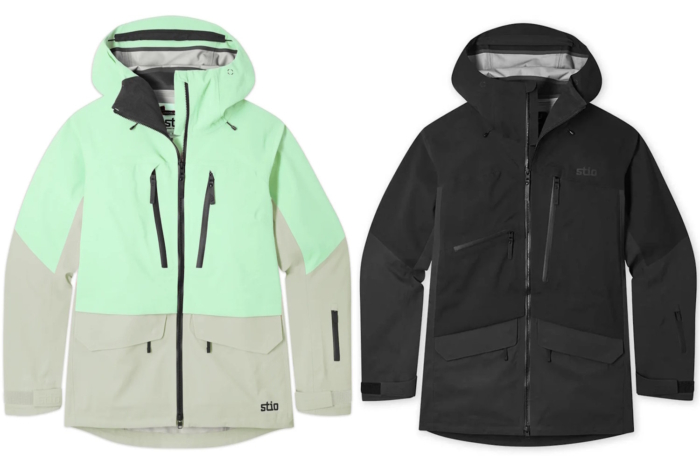
It’s hard to recall a snowboard jacket we’ve tested that’s received more compliments than the Stio Women’s Figment Jacket ($529) while shredding at the ski hill or hopping on the bus, board in hand. With a movement-focused freeride cut, plus aesthetic pockets and lines, the Stio Men’s Figment Jacket looks just as good, especially paired with the complimentary Stio Women’s Figment Bib or Stio Men’s Figment Bib. Both kits set a fresh twist on the brand’s typically athletic-paired style.
A baggier silhouette all but eliminates restriction, so we can take deep carves, stomp the bootpack, drop steeps, tuck cliffs, and whip around moguls. Even the hood is fully compatible with a helmet, allowing a noggin swivel on descents in dicey terrain. A looser fit also supports one of the premiere details of this design: Seemingly endless pockets. Comparing the number of pockets across our picks, the TREW Gear Cosmic and TREW Women’s Stella PRIMO Jacket serve up seven, while the Burton Men’s Covert 2.0 Jacket meets the highest number with ten. But these pouches on the Figment are all roomy, functional, well-positioned, and easy to use. There are two wide, tall exterior chest pockets, a perfect spot to quickly slide a phone. Inside one of those is a buttery lens wipe attached via a fixed cord, so you can’t drop it, which is perfect for a goggle, phone, or camera lens. Inside the other is a small stretchy pocket for slender cards or a key fob. Below the chest pockets are two large hand pockets with a top entrance, protected by a zipper flap. A wrist has a pass pocket. Inside the jacket are two mesh dump pockets, which are sizable for accessories like a goggle lens or extra gloves, plus a zippered, stretchy chest pocket.
With attention to the details, Stio added a soft tricot liner where the jacket’s interior rests against your face, and the chinguard’s size is generous: a 5.5 x 5.5-inch and 4.5 x 5.5-inch patch. There’s also an 8-inch by 1.5-inch strip of buttery fabric against the neck, like an integrated scarf. Bless you, Stio. We’ve also never seen this: A small loop that’s integrated into the interior hem of the jacket, where inbounds riders can attach a ski pass for scanning if they’d like. Certainly, this blend of textiles and touchpoints can withstand a beating, but the ingredients are sustainable, too. This 3-layer shell fabric, called PeakProof, is 100% recycled. For an uptick of waterproofness, the face is treated with 80/20 PFC-free DWR: that point system means the performance remains optimal for 20 washes, which is an excellent bar. As a dense shell, this jacket is super durable, comfortable, and very protective against the elements — heavy or wet snow and wind.
The fabric’s waterproof rating reaches 20,000mm, which is high performance, and the breathability is moderate, at 10,000 g/m²/24hrs, which is suitable for resort days. What’s sacrificed is breathability on the skin track. If you prefer to wear a shell while you’re traveling beneath dense, snow-covered trees, for instance, this isn’t our first choice — the exception being extremely cold days well below freezing, like in the Jackson Hole zone, where the brand is based. However, the amount of fabric is also a factor to consider for tours, and we found this to be a bit much. Nonetheless, this stylish, dependable jacket is an ideal pick for riding the resort without a second thought for comfort or carry, whether you’re packing snacks or sunnies or a GoPro. Guys and gals alike, our snowboarders raved about the Men’s Figment and Women’s Figment. Despite a full season on these kits, we’ve hardly seen any wear and tear other than a few dirt and oil smudges.

Snowboard Jacket Comparison Chart
Scroll right to view all of the columns: Price, Shell, Waterproof/Breathability, Number of Pockets, Weight.
| Snowboard Jacket | Price | Shell | Waterproof/ Breathability | Number of Pockets | Weight |
| TREW Gear M’s Cosmic & W’s Stella PRIMO Classic | $499 | PNW Classic 3L plus DWR (Cosmic); PRIMO 3L 100% recycled nylon (GRS-certified) with durable Oxford weave, PFAS-free C0 DWR (Stella) | 20K/20K | 7 | 624-723 g |
| Burton W’s Reserve Insulated Stretch Slim | $260 | 2L DRYRIDE 100% recycled polyester plain weave stretch, 100% nylon taffeta with 85% nylon, 15% spandex stretch woven upper back panel | 20K/20K | 5 | ~650 g |
| Burton M’s Covert 2.0 | $270 | 2L Burton DryRide | 10K/5K | 10 | 992 g |
| Burton Men’s Reserve 2L 3-in-1 Jacket | $380 | 2L GTX, 100% polyester face, PFC-free DWR | 20K/20K | 9 | ~700 g |
| Patagonia M’s PowSlayer & W’s | $799 | 3L GTX Pro ePE, 80-denier 100% recycled nylon plain-weave, DWR | ~20K/20K | 7 | 193 g |
| Jones Snowboards M’s & W’s Shralpinist Stretch Recycled | $500, $525 | 3L 100% recycled polyester fabric, PFC-free DWR | 30K/30K | 7 | 590 g |
| ThirtyTwo TM Recycled Patch x Grenier Jacket | $320 | 2L 100% recycled 4-way stretch fabric | 20K/20K | 8 | 760 g |
| L1 Axial | $419 | 3L 87% recycled polyester, 13% spandex, PFC-free DWR | 20K/20K | 5 | 680 g |
| 686 Hydra Insulated | $300 | 2L infiDRY, PFAS-free DWR | 20K/15K | 8 | 1,003 g |
| Jones Snowboards M’s & W’s MTN Surf Recycled | $400, $500 | 2L 100% recycled body-mapped 4-way stretch polyester | 20K/20K | 9 | 920 g |
| Airblaster W’s Sassy Beast | $320 | 2L Eco-Vortex stretch fabric, 100% recycled polyester | 30K/20K | 5 | 750 g |
| Outdoor Research Skytour AscentShell | $429 | 3L electrospun AscentShell membrane | 10K/20K | 7 | 576-627 g |
| Stio Figment M’s & W’s | $529 | 3L 100% recycled PeakProof, 150-denier face, 20-denier tricot backer, 80/20 PFC-free DWR finish | 20K/10K | 8 | 766-876 g |

How We Tested Snowboard Jackets
Five snowboard experts have contributed lab tests of riding apparel in deep snow, sub-freezing temps, and brutal windchill. This guide has been updated with dozens of snowboard jackets for men and women since it debuted in
Our Expert Testers
Leading the gear tests, GearJunkie SnowSports Senior Editor Morgan Tilton specializes in snowsports. She’s been snowboarding since 2002 when she switched from skiing on two planks to one.
- For the 2026 four-month test window, Tilton tested 12 snow jackets across 63 days, 445,000 vertical feet of descent, 832 miles, and 149 hours of snow travel via snowmobile, downhill riding, and backcountry tours. Tilton’s primary test days took place at Crested Butte Mountain Resort and RED Mountain Resort, as well as Whistler Blackcomb, Vail Ski Resort, and Whitewater Mountain Resort — all of which delivered whiteout blizzards.
- In 2025, she tested snowboard jackets for 165 hours across 44 days on snow, covering more than 700 miles and 194,500 feet of descent.
- In 2024, she tested snowboard jackets for 263 hours, in addition to working with gear testers.
- In 2023, she tested snowboard jackets a total of 95 hours — excluding the hours she spent shoveling massive amounts in a snow jacket.
Lead author, photographer, and gear tester Eric Phillips has been snowboarding since 2008. He’s a formerly certified Level II PSIA-AASI instructor and records over 100 days on snow per season at his home mountain in Crested Butte.
- In 2026, Phillips tested four snowboard pants for 120 hours across 21 days in temps ranging from 15 to 48 degrees Fahrenheit at Crested Butte Mountain Resort and in the Gunnison National Forest backcountry.
In 2026, Oregon-based snowboard gear expert Nate Swanner tested three snowboard jackets side-by-side for a cumulative of 38 hours in temperatures ranging from -5 to 35 degrees Fahrenheit at Mt. Hood, Mt. Baker, and Crystal Mountain.
Contributor Austin Beck-Doss has been snowboarding since 2005 and has also thrashed jackets around for this guide, as has Colorado-based rider Will Martinez.

Our Testing Grounds
Tilton has taken laps at ski areas since age 4 at her home mountain, Telluride Ski Resort. While she grew up competing in slopestyle competitions, today she lives in the Elk Mountains, where she snowboards in-bounds at Crested Butte Mountain Resort, splitboard tours and mountaineers in the region’s surrounding backcountry, heads out on sled-accessed adventures, enjoys hut trips and couloirs with homies, and pow surfs in between. She’s traveled to incredible places with her snowboard, including Mount Washington on Vancouver Island, British Columbia, California’s Big Bear Mountain Resort, and a solo trip along the Powder Highway to Fernie, Kicking Horse, and Revelstoke.
Phillips does a mix of resort snowboarding, backcountry splitboarding, mountaineering, snowmobiling, and pow surfing in his home range of the Elk Mountains and neighboring San Juan Mountains.
The GearJunkie team meets for an annual on-snow test week to grind out turns and swap notes, including two previous gatherings at Crested Butte Mountain Resort, which is known for its expert terrain, as well as a meetup at Vail Ski Resort.
Our Testing Process
While testing snowboard jackets, we consider a range of key attributes: fit, style, durability, functionality, ease of movement, zipper quality, pocket design and utility, waterproofness, breathability, insulation, hood, collar, wrist gaiters, cuffs, and overall value.
We consider the climate and purpose each jacket is best suited. We also consider the most innovative, sustainable, popular, acclaimed, and legacy products across a range of price points and applications.
Our Snowboard Jackets Rating System
We score each snowboard jacket on a 1–10 scale for Weather Protection, Fit and Mobility, Durability and Construction Quality, plus Breathability and Ventilation.
- Weather Protection: While considering weather-proofness, we take into account how the jacket shields moisture and wind.
- Fit and Mobility: Examines how effortlessly the jacket moves with us while going uphill, downhill, ski pole planting, wearing a ski backpack, and bending over, as well as if there are any snag points. We cover men’s and women’s specific iterations in this guide, so we also consider how the jacket is tailored to each gender. That includes articulation around the shoulders, chest, and hips.
- Durability and Construction Quality: Considers the overall material, seams, collar, hood, zippers, and pockets. We consider gender-specific pocket placement and targeted insulation zones.
- Breathability and Ventilation: Takes a look at how effectively the design releases moisture and heat during high-output activity, including the material and mechanical vents.
Rather than being an average, the Overall Rating is based on contextual, editorial judgment, and the complex user experience across various scenarios and conditions. The extended ratings are primary factors but not a comprehensive reflection of the cumulative details we examine in a jacket.

Buyer’s Guide: How to Choose a Snowboard Jacket
Solid snowboard jackets have been on the market for several decades. Back in 1991, Volcom founders Richard Woolcott and Tucker Hall launched their triple-threat apparel lineup for surf, skate, and snow.
Established in 2001, Analog outerwear has been rolling out fashion-stomping pieces ever since. They even won a nod from Time Magazine for the MD Clone Jacket — with a Sony mini-disc and digital music player sewn into the fabric — as one of coolest inventions of 2002. Analog was officially acquired by Burton in 2004.
Most recently, after pioneering Protect Our Winters and Jones Snowboards, Jeremy Jones charged ahead with a leading-edge outerwear line that debuted in 2021-2022.
With so many great options out there for snowboard jackets, one of the biggest dividers is if you’ll be using it for the resort or backcountry.
Backcountry
If you plan to splitboard tour out-of-bounds, you’ll want a premium option from the lot. A solid backcountry jacket will have spacious exterior and interior pockets that are large enough for extra gloves or even splittie skins. Alternatively, if you need to warm them up, you can quickly toss your bulky skins into your zipped-up jacket or inside your bibs because the hip belt of your ski pack will create a kangaroo pouch. Top-notch breathability and waterproofness are key for human-powered missions away from civilization. You’ll want a super durable, functional, and adaptable jacket that you can add layers under or over. One of our favorite jackets for out-of-bounds days is the Jones Snowboards Men’s Shralpinist Stretch Recycled Jacket and the Jones Snowboards Women’s Shralpinist Stretch Recycled Jacket, which are specifically designed for the job.

Resort
If your rotation is at the resort, you can often get away with a jacket at a lower price point, which often has lower waterproofness and breathability. The textile may also be less durable but totally reasonable for standard laps at the hill. If your days out are in super cold climates with windchill that sends you into the teens, zero, or negatives, consider snagging an insulated jacket to keep your energy up.
Details matter and each jacket is unique in addition to its cut and style. You’ll see a wide variety of pocket placement and sizes across kits. Some pouches are insulated for your phone. Designs could have fixed or removable powder skirts, softly lined pockets and chinguards, wrist gaiters, underarm vents, and fixed or removable hoods. Also, not all hoods are created equal. Many claim to be helmet-compatible only to lock and bind your neck like you’re strapped into an emergency sled on the hill. We aim to expose all the pros and cons of each jacket.

How to Layer
Maintaining a comfortable temperature — not cold, not sweating — can be a challenge across variable conditions. In the mountains, we’ve all seen multiple seasons in a single day or even in a few hours. The best way to manage body temperature is by properly layering.
Base Layers
Starting with the against-the-skin layer, we recommend a tight-fitting base layer made of synthetic fabric, wool, or a hybrid of the two fibers. Check out our Men’s Base Layers and Base Layers for Women buyer’s guides for more information on the right set for you. If you’re bundled up and still cold, upgrade to a midweight or heavyweight wool base layer.

Midlayers
After your base layers, you can add an optional midlayer, which provides insulation.
We recommend pulling on either a down puffy jacket, synthetic jacket, fleece, or a wool midlayer for that warmth boost. For resort snowboarding, we usually wear this layer at the start of cold mornings before ditching it later in the day as the temps rise. To be totally clear, while you only wear one base layer, you can pile on a couple of midlayers as you need to get warm, like adding a down vest over a sweater.
Outer Layers
Lastly, there is the snowboard jacket, which is either insulated or a shell. Both block wind, snow, water, and abrasion, such as rubbing against a tree branch or taking a slider on the run.
If you’re too warm, you can open your jacket’s underarm vents to cool down. Otherwise, ditch the midlayer or wear a lighter-weight base layer.
When choosing your jacket size, leave a little room so that you can easily layer beneath.

2-Layer vs. 3-Layer Jacket
A 2-layer jacket has a face fabric — such as polyester or nylon — connected to an inner liner that protects the fabric, is breathable, and adds comfort. These jackets usually feel less hefty than a 3-layer jacket. Some have insulation, and the outermost surface is usually treated for waterproofness. The price is generally more moderate compared to 3-layer jackets.
Dialing up the durability, a 3-layer jacket has a waterproof/breathable membrane — often made by GORE-TEX or a brand’s in-house tech, like The North Face’s DryVent or FUTURELIGHT — sandwiched between a tough face fabric and liner. Sometimes the outer fabric is dually treated for waterproofness. These jackets usually offer burlier protection for fierce weather conditions, can be more durable, and are pricier.
Broadly, you’ll want to scrutinize how robust you need your jacket to be for the conditions you’ll snowboard in, as well as budget needs. For instance, the TREW Gear Cosmic Jacket is a superior 3-layer jacket with powerful 20K/20K of waterproof-breathability for blizzard-ridden winters, and it’ll cost you $479. The 2-layer Burton Men’s Covert 2.0 Jacket is a perfectly suitable waterproofness level for milder weather patterns and comes in at $200 less.

Insulated vs. Non-insulated Snowboard Jackets
One bucket of snowboard jackets is non-insulated, otherwise known as a shell. These are great options for warmer, milder climates. If there is little to no windchill and the temperatures coast above 20 degrees Fahrenheit, we are generally happy with a non-insulated jacket. That way, we aren’t too toasty on sunny and spring days, but we can easily throw on a midlayer to increase the warmth if it’s below freezing. A non-insulated jacket is the most adaptable, versatile option out there. If you’re interested in sidecountry or backcountry tours, we recommend investing in non-insulated outerwear for the ultimate functionality, to keep you from sweating bullets on the skin track, and for easier packability and lighter weight.
There’s also a swarm of insulated snowboard jackets to choose from. We love a comfortable warmth-packed outer layer if we’re lapping the resort in freezing temps below 20 degrees and if there’s windchill. If the lift lines or rides are long, we cherish insulated layers to help keep our energy up on the wait. Or, if you tend to get chilled in the winter, definitely try an insulated jacket. The type, degree, and zone of insulation varies across each jacket. Different types of fill include down, synthetic, or a hybrid of the two. Jackets can also be flannel-lined.
Our favorite insulated snowboard jackets each have a tailored amount of insulation, so they each provide a different degree of warmth:
- Jones Snowboards MTN Surf Recycled Jacket: 40g synthetic insulation
- Airblaster Sassy Beast Jacket: 60g/40g 100% post-consumer recycled PrimaLoft synthetic insulation
- Men’s Flylow Roswell Insulated Jacket: 60g synthetic insulation
- Men’s Burton Covert Insulated Jacket: 80g synthetic insulation

Insulation
Snow jackets can have two primary types of insulation: down and synthetic — or a combination of both — which is typically added to targeted zones in the jacket. Insulation works by trapping air inside tiny pockets within the materials, whether that be natural down feathers or strands of polyester, which is synthetic or human-made.
Down Insulation
Down Insulation is derived from ducks, geese, or other waterfowl. Down has a superior warmth-to-weight ratio that’s three times that of synthetic insulation. Overall, down is lighter, more compressible, and longer-lasting than synthetic insulation. The organic material does have one weakness: moisture. Down doesn’t insulate very well once it’s wet and takes very long to dry. The fill is also more expensive than synthetic options.
When looking at down jackets, consider the fill power, which is an indicator of the quality of the down. To calculate fill, a one-ounce sample of down is compressed in a cylinder. The higher the fill power, the less down is needed to create the same warmth because it’s able to trap more air within the jacket. For example, an 800+ fill is considered premium and offers more warmth per weight, while the range of 500-700 fill is more average. So, generally speaking, the higher the fill number, the greater the warmth, but the fill power isn’t the only variable affecting a jacket’s warmth.

Synthetic Insulation
Synthetic insulation is made from polyester fibers, which are spun to create pockets of air between them. A higher quality of insulation translates to finer filaments with more space for air between them. Synthetic insulation can also be treated for odor and water resistance to improve performance in outdoor activities. Compared to down, synthetic insulation is generally less expensive, insulates better when it gets wet, and is fast drying. But, synthetic insulation is slightly heavier, compresses less, and doesn’t usually endure as much use as down insulation.
Looking at the specs, synthetic insulation is measured in grams per square meter, referring only to the amount of insulation and not the overall weight of the jacket. The higher the number, the more insulated and warmer the jacket will be. The majority of insulated snowboard jackets in our guide have synthetic insulation.

Waterproofness
Snowboard jackets have a range of waterproofness. The more waterproof a fabric is, the better it will protect you when there is a high water content in the snow — like in the PNW — or if you are outside in a blizzard for hours on end. Often, if a jacket is more waterproof, the breathability tends to decline. Premium jackets are able to maintain ultra-breathability with top-tier waterproofness, which is reflected in the overall cost.
The industry benchmark for waterproofness is GORE-TEX, a membrane that’s integrated into various 3-layer jacket designs or other in-house membranes made in-house. Typically, waterproofness is measured by the amount of water that can be placed on top of a fabric before it leaks, from 5,000 to 20,000mm or greater. The amount of waterproofing in a jacket can be paired with certain climates and weather patterns nationwide:
- 0-5,000mm: Resistant to light rain, dry snow
- 6,000-10,000mm: Waterproof for light rain and dry, non-heavy snow
- 11,000-15,000mm: Waterproof for moderate rain and dry, non-heavy snow
- 16,000-20,000mm: Waterproof for heavy rain and wet snow
- 20,000mm and greater: Waterproof for heavy rain and dense, wet, heavy snow
For many locations, a waterproof range of 8,000 to 10,000 mm works well for mild to moderate precipitation.
If you generally snowboard in a wetter climate with heavier snow (meaning, the snow water equivalent, or the water content in the snow, is higher) or you want to use your snowboard jacket in the backcountry, a jacket with more waterproofness is a good call.
Among the most waterproof snowboard jackets on our list is the Jones Women’s Shralpinist Stretch Recycled Jacket with 30,000mm of protection, which is a top-shelf design built sustainably and for off-piste missions.

On the scale of waterproofness, 30K is your 747 jet while the 10K is a tiny bush airplane. The upper end of protection is the most waterproof and ideal for coastal snow climates. The jackets with 10,000mm of waterproof ratings are great to pair with mild and moderate weather patterns and drier snow climates.
Here’s how our favorite jackets and their waterproofness stack up side-by-side:
- Men’s & Women’s Jones Snowboards Shralpinist Stretch Recycled Jackets: 30,000mm
- TREW Gear Cosmic & Women’s Stella PRIMO Jackets: 30,000mm
- Airblaster Women’s Sassy Beast Jacket: 30,000mm
- Jones Snowboards Men’s MTN Surf Recycled Jacket: 20,000mm
- L1 Axial Jacket: 20,000mm
- Burton Men’s Covert 2.0 Jacket: 10,000mm
- Dakine A – 1 Jacket: 10,000mm
- Flylow Men’s Roswell Jacket: 10,000mm
- Outdoor Research Men’s Skytour AscentShell Jacket: 10,000mm
Face fabric treatments can also help make a jacket more waterproof, but they wear off with time and need to be reapplied. Traditional coatings are toxic for humans and the environment, and brands have been rolling out eco-friendly formulas, which are typically labeled PFC-free: Perfluorochemicals (PFCs) are synthetic chemicals. Some snowboard jackets also have fully sealed seams and waterproof zippers for extra moisture blockage.

Durable Water Repellant (DWR) Treatment
Various chemical treatments can be applied to the exterior face of fabrics to increase water resistance. The treatment changes the surface texture of the fabric and allows water to collect in droplets or beads that roll away. Over time, the treatment can wear off with use and may need to be reapplied.
A movement of eco-friendly products is challenging the industry norm by achieving a Durable Water Repellent (DWR) without the use of toxic chemicals. Some also never need to be reproofed. For instance, some jackets use Teflon Ecoelite PFC-free DWR, while other brands still use traditional chemical-based DWR, which needs to be reapplied every season or so. Make sure you know which type of DWR your jacket has so you can be prepared to reapply the water resistance if necessary and so that you’re aware of the chemicals.
In our guide, the Flylow Roswell Jacket is treated with a traditional DWR.
Alternatively, a PFC-free DWR is used in the majority of our favorite snowboard jackets:
- Jones Snowboards Women’s MTN Surf Recycled Jacket
- Jones Snowboards Men’s Shralpinist Stretch Recycled Jacket
- Jones Snowboards Women’s Shralpinist Stretch Recycled Jacket
- Stio Women’s Figment Jacket
- Stio Men’s Figment Jacket
- Airblaster Women’s Sassy Beast Jacket
- Jones Snowboards MTN Surf Recycled Jacket
- L1 Axial

Breathability
A jacket’s breathability is the ability of the fabric to allow your body heat or perspiration to pass through from the interior to the exterior.
Generally, breathability is measured by the grams of water that can pass through one square meter of fabric over a 24-hour period (written as g/m² or an abbreviated g). However, there’s no industry standard for testing a jacket’s breathability, so the methods vary across manufacturers.
- 5,000-10,000 g/m²: Not the most breathable, suitable for inbounds alpine skiing
- 10,000-15,000 g/m²: Moderate breathability
- 15,000-20,000 g/m² and higher: Super breathable, a good range for inbounds uphill workouts and backcountry tours
For high-output resort riding or on powder days, aim for a jacket with a breathability rating of 10,000 to 15,000 g/m². Backcountry snowboarders and uphill athletes should look for even more breathability of 20,000 g/m² or more.

Here’s how the breathability of our favorite snowboard jackets lines up:
- Jones Snowboards Men’s Shralpinist Stretch Recycled Jacket: 30,000g
- Jones Snowboards Women’s Shralpinist Stretch Recycled Jacket: 30,000g
- TREW Gear Men’s Cosmic Jacket: 20,000g
- TREW Gear Women’s Stella PRIMO Jacket: 20,000g
- Jones Snowboards Women’s MTN Surf Recycled Jacket: 20,000g
- Outdoor Research Skytour AscentShell Jacket: 20,000g
- Airblaster Women’s Sassy Beast Jacket: 20,000g
- Jones Snowboards MTN Surf Recycled Jacket: 20,000g
- L1 Axial: 20,000g
- Stio Women’s Figment Jacket: 10,000g
- Stio Men’s Figment Jacket: 10,000g
- Burton Men’s Covert 2.0 Jacket: 5,000g

Air Permeability
Not to be confused with breathability, air permeability is how fast air can move moisture from the inside of the jacket to the outside of the jacket, which enables the fabric to breathe.
Air permeability is measured in cubic feet of air per minute (CFM), which is the amount of air that passes through a square foot of fabric. A material with 100 CFM is not a lick windproof while 50 CFM offers a bit of wind resistance. Meanwhile, 0 CFM is totally windproof.
Let’s think of this in terms of sweat: Traditional waterproof jackets have lower air permeability, meaning you really have to sweat a lot before the jacket starts to breathe. Jackets like the Outdoor Research Skytour AscentShell have higher air permeability, meaning the textile breathes before you reach that uncomfortable level of sweatiness.
The bottom line is that more air permeability means the jacket will be more comfortable for higher exertion levels like backcountry tours.


Ventilation & Zippers
Snowboard jackets often offer ventilation through underarm zippers, which help regulate body temperature. This feature can feel mandatory for warm-blooded folks or those who ride in warm conditions. Pit zips are great for powder days when your body works hard to make turns. On powder days, remember to close your vents before your descent!
Some underarm zippers are longer than others, and that spaciousness is especially useful for backcountry adventures when you’re consistently on the move and need to air out more body heat. Certain vent designs have a layer of mesh fabric that helps to block snow from flooding inside. Other designs open directly to the base layer. One drawback with mesh is that it could potentially get jammed in the zipper. The Burton Men’s Covert 2.0 Jacket offered an interesting solution for that issue by adding several narrow strips of fabric reinforcement, which introduces a bit of structure to the flimsy material. It seems to work.
In terms of quality, YKK zippers are the toughest and are fairly universal across brands. More so what we’ve noticed about zippers is that the leaner the pull, the harder it can be to grab, especially with mittens or ski gloves on. We like a medium or large zipper pull that we can quickly, easily grab to open or close.

Pockets
One of the most critical details that can lead to a solid snowboard jacket is the pocket design. Seemingly simple, jackets can have different pocket shapes, placements, flaps, angles, sizes, and styles that can totally change the functionality, usability, and comfort of carrying your goods on the go. One of our biggest peeves is when the only pockets that are large enough for our phone also dig into our hip crease, so we feel a pinch on the lift or when we bend over to adjust our snowboard bindings.
While our choice snowboard jackets all have a basic collection of well-designed pockets, the Burton Men’s Covert 2.0 Jacket is full of pride with a whopping 10 pockets. The Jones Snowboards Men’s Shralpinist Stretch Recycled Jacket and Jones Snowboards MTN Surf Recycled Jacket don’t trail too far behind with 9 pouches. At a minimum, these top jackets have 4-5 pockets.

Exterior Pockets
Most snowboard jackets include two exterior hand pockets with zip closures, which can be lower on the waist or placed higher for compatibility with a ski backpack hip belt or harness for mountaineering. Not all hand pockets are lined, but when they are, we appreciate the extra touch, whether it’s microfleece or brushed tricot.
Deep, wide, higher-placed exterior pockets — like a chest pocket — can be a great spot to store a smartphone or notebook in the backcountry or on the lift. Putting heavier, bulkier items in the lower-placed hand pockets can sometimes smack against the upper thigh while hiking uphill, sitting on the lift, bending over to reach your boots, or making aggressive downhill carves.
Other exterior pockets can include small pouches on the arm or chest, which are great for lip balm, an ID, a credit card, or a ski pass. The L1 Axial has a unique, stylish pocket setup with two stacked offset zippers on the front face: The upper zip opens a vent and widens the collar while the lower zip opens the chest pocket, which has a media port.

Interior Pockets
Interior pockets often have a zip closure, which is important for securing a credit card or ID. Some designs have ports for headphones.
Drop or dump pockets are deep, wide interior mesh hammocks with an elastic closure that can be useful for holding a beanie, gloves, goggles, or lens. If they’re large enough, they can hold backcountry skins, which is helpful if the temperatures are crisp and you need to prevent the glue from freezing between climbs.
Occasionally, jackets can have insulated zippered pockets that help to extend the battery life of your smartphone.

Fit & Sizing
There are a few general camps for snowboard jacket fit: athletic, regular, and baggy. The best fit comes down to your personal style, as well as the weather conditions where you ride and if you’re heading into the backcountry.
Athletic Fit
This house is trimmer with a more streamlined, athletic shape. If you’re wearing a ski backpack in the backcountry, it can be better to wear a more fitted jacket, so that the fabric doesn’t bunch up or get caught.
Baggier Fit
Baggier jackets are roomier and boxier with a more relaxed silhouette. We have found that super baggy jackets are more comfortable in a warmer climate. If the temps are below freezing, we prefer to have a jacket with more closure against the ambient air.

Longer Silhouette
Whether its fitted or baggy, a slightly longer jacket can provide extra protection on the lower back and backside from wind and snow, which is great for riding the chair lift or sitting down to adjust your snowboard bindings. Longer jackets tend to be better for in-bounds shreds versus splitboard tours, where you want a lighter, packable option.
Size Charts & Extended Sizes
Each manufacturer has its own size charts. Be sure to take your personal measurements and match them up. Consider the type of midlayer and base layer you’ll wear beneath your snowboard jacket. In some cases, it might be better to size up your outerwear so that layering underneath doesn’t feel restrictive.
A handful of brands offer a broader size range, and some offer plus sizes, also known as extended sizes. In 2024, TREW Gear launched extended sizes — 3XL through 5XL — in the TREW Gear Men’s Cosmic Jacket and TREW Gear Women’s Stella PRIMO Jacket.
Everyone’s body is unique, so check the exchange and return policy before you buy.

Collar & Hood
Jacket collars vary in height and ideally have a softly lined interior chin guard that feels gentle against the face, which will help shield your chin and cheeks when it’s windy, cold, or snowy out.
Hoods can be fixed or removable. Some hoods are adjustable via elastic pulls on the side and back. Others have an integrated visor so that they don’t collapse beneath moisture and help keep precipitation from reaching the topside of your goggles.
Many are designed to be helmet-compatible, meaning they can be pulled up over your ski helmet with the front collar zipped shut. However, not all helmet-compatible hoods are created equal. Often, they’re not the most ergonomic while in use over a helmet, resulting in a limited or restricted head swivel when you turn your head from left to right.


For instance, the TREW Gear Men’s Cosmic Jacket did not fit well over a large helmet, and the TREW Gear Women’s Stella PRIMO Jacket was also relatively tight over a medium helmet. The Jones Snowboards Women’s Shralpinist Stretch Recycled Jacket hood fits well over a helmet. The hood of the Stio Women’s Figment Jacket is on the roomier side.
Other hoods can be so cavernous that wind balloons them like a parachute. The precise fit depends on the size and shape of the helmet, which differs from model to model. Each jacket’s hood has a slightly different cut. As a whole, we think snowboard jacket brands could work to dial in helmet and hood compatibility.

Weight
A jacket’s weight and bulkiness is an important factor for backcountry snowboarders that may need to stash their jacket in a ski backpack. Similarly, uphill athletes might wear a jacket for weather protection but need a lighter layer. Occasional resort riders might stash their jacket in a pack as the conditions warm.
The lightest jackets in our picks include the Outdoor Research Skytour AscentShell Jacket at 627 grams, followed closely by the Jones Snowboards Men’s Shralpinist Stretch Recycled Jacket at 786 grams. The women’s iterations of those two models weigh slightly less than the men’s versions.
Hitting a fair middle-ground weight is the Jones Snowboards MTN Surf Parka at 920 grams, and the Flylow Roswell Jacket at 975 grams. Another slightly beefier jacket is the Burton Men’s Covert 2.0 Jacket at 992 grams.
Ultimately, you shouldn’t compromise a snowboard jacket’s protection, durability, or comfort to drop a little weight but it’s good to aim for a sweet spot, especially when you’re heading out-of-bounds.

Sleeve Cuffs & Powder Skirts
Powder skirts help to prevent fluffy flakes from flying up and soaking your base layers or lower back. A skirt can also help block cold wind. Some designs are fixed while others are removable. A handful of brands have attachment points — like snaps or zippers — that directly attached a powder skirt to their respective snow pants. Another option for greater backside protection is to wear ski bibs.
Jacket sleeve cuffs each have a Velcro strap closure, though some designs have additional snaps, and the straps vary in width and length, making some more functional than others to operate while wearing ski gloves. The cuff straps on the Flylow Roswell Jacket are on the leaner side, while the straps on the TREW Gear Men’s Cosmic Jacket are a tad shorter and angled.

The wrist straps on the Jones Snowboards Men’s Shralpinist Stretch Recycled Jacket hit a sweet spot of functionality with an ideal length and width. The V-Science two-way cuffs on Volcom jackets are some of our favorite sleeve cuff designs across all snowboard (or ski) jackets: You can wrap the Velcro strap around your thumb, creating a temporary thumb loop.
Inside, some jacket sleeves have an integrated wrist gaiter, also known as a storm cuff. The stretchy fabric provides warmth by keeping wind and moisture out of the sleeve. Some designs are lengthier and have thumbholes to help secure the fabric over the top of the hand. While wrist gaiters increase protection, some designs can feel cumbersome if you like to wear a watch or tuck the undercuff of a ski glove into the jacket sleeve.

Sustainable Designs
Some brands in the snowsports space are setting a benchmark for sustainability.
Jones Snowboards Pushes Innovation
Jones Snowboards upholds a gold standard for their outerwear line, which hit the market in 2021-2022 with the men’s apparel lineup followed by the women’s collection the next season. The brand uses materials that are mostly OEKO-TEX Standard 100 and Bluesign-certified. The majority are 100% recycled and utilize PFC-free DWR (except the GORE-TEX Pro fabric). Their products are made in WRAP and BSCI certified facilities, to guarantee sound working conditions in the supply chain. In August 2022, the brand debuted the industry’s first-ever down jacket design with 100% recycled fabric, 100% recycled down fill, and recycled polyester zip pull cords. Some of their apparel designs have recycled polyester adjuster cords or a recycled neck zipper.

Upcycled Factory Scraps
Picture Organic also sets a high bar for sustainability. Launched in the brand’s winter 2023-2024 outerwear, Picture introduced The Circular fabric: a blend of 40% post-consumer used garments and 60% pre-consumer fabric pulled from factory cutting scraps. The creation replaces the brand’s previous bio-sourced materials for an even lower impact on the environment.
Recycled Fabric & Synthetic Fill
TREW Gear also hit a home run, spending several years developing a 100% recycled nylon textile that reached the market in 2023-2024. GRS (Global Recycled Standard) certified, the innovation updated their PRIMO 3-layer fabric, which remains highly waterproof and breathable for Pacific Northwest weather. Pushing the needle with recycled synthetic insulation, the Airblaster Sassy Beast Jacket uses post-consumer recycled PrimaLoft synthetic insulation.

Price & Value
Most of our favorite snowboard jackets are moderately priced and fall in the $300 price range. The jackets that cost less are not as durable or adaptable across conditions but are well-designed, stylish, and check the box for many riders in milder climates nationwide. On the high end, other jackets pull out all the stops with design details and materials, upping the price and delivering an extremely durable, functional, well-fitting product that performs across conditions — the perfect partner for out-of-bounds missions.
Budget
On the economic side, our choice snowboard jackets range from $200 to $300. That line starts with the Men’s Burton Covert 2.0 Jacket at $270. The design of the Covert 2.0 is capped at 10K waterproofness and 5K breathability. It’s a 2-layer piece that and has no sustainability details.

Mid-Tier
The majority of our favorite snowboard jackets range closer to $300 to $400. That tier starts with the Men’s Flylow Roswell Jacket ($300) and the Women’s Airblaster Sassy Beast Jacket ($320). These jackets are typically 3-layer and feature details like hoods, fleece-lined pockets, sustainable upgrades like recycled insulation and PFC-free DWR, and higher levels of waterproofness, breathability, and air permeability.
Premium
The most robust designs are key for long days in variable conditions at the resort and especially in the backcountry, and these snowboard jackets can reach up to $700. This crowned level contains the most well-built, ergonomic, sustainable, and stout designs, which equate to expensive materials, construction, and third-party certifications. These fabrics are usually the stretchiest and have the highest levels of waterproofness and breathability. Safety can also be an additional detail with elements like RECCO reflectors or infographics like the 5 Red Flags and Avalanche Rescue Tips patches inside the Jones jackets.
On the lower end of this range is the Outdoor Research Skytour AscentShell Jacket ($429). Next, you’ll find the Men’s Jones Snowboards MTN Surf Recycled Jacket ($500), as well as the TREW Gear Men’s Cosmic Jacket & Women’s Stella PRIMO Jacket, both ($499).
Topping out our most expensive jackets is the Women’s Jones Snowboards Shralpinist Stretch Recycled Jacket ($525) and Men’s Jones Snowboards Shralpinist Stretch Recycled Jacket ($575).

Frequently Asked Questions
Technically, ski jackets and snowboard jackets are all snow jackets — snowboarders can wear ski jackets, and skiers can wear snowboard jackets, and they do. From a design end, some snowboard apparel has a baggy aesthetic. Certain cuts are longer, which provides protection when snowboarders sit down to adjust their bindings. But the biggest difference between these two categories is the branding, marketing, and style trends. Many brands target both sports like Picture and TREW Gear.
You’ll want to choose a jacket that has adequate waterproofness for the amount of snow and how wet the snow is where you ride. You’ll want the breathability to be adequate: that number can be lower if you’re riding the lift versus hiking with your board or touring, in which case you’ll need more breathability. Riding powder and carving through trees or moguls can also increase the need for more breathability. The other variables are the jackets style and fit, as well as the price tag. It helps to try on snowboard jackets in person at your local snowboard or outdoor shop to get an idea of what works best.

If you fall in between sizes, we recommend sizing up. Consider the midlayer you prefer to wear beneath your jacket, and how much space you’d like. A little wiggle room is nice — you don’t want your system to be too tight or cumbersome.
Each manufacturer will have its own size charts for the men’s and women’s products. be sure to measure yourself and check the return or exchange policy before purchasing. If possible, go to your local retailer to try on jackets in person to confirm the size.
A performance-oriented snowboard jacket should be slightly roomy in the shoulders and waist, to avoid pinch points and restriction. You want to be able to comfortably pull on the jacket, bend over to adjust your snowboard boots or bindings, and have freedom of movement as you shred. But you also don’t want a jacket to be too big. Blank space at the hem, collar, and cuffs can diminish protection from the elements like wind and moisture. Extra fabric can be cumbersome, create drag, and flap in the wind. Most of our favorite jackets are made with fabrics that provide suitable stretch, which supports mobility, so you don’t need to size up in a grand way. As far as style goes, some snowboarders intentionally prefer a super baggy look — aesthetics come down to personal preference.

Some of the snowboard jackets on our list are insulated. Each insulated design uses a unique type and amount of fill, and the insulation can also be targeted to zones in the jacket like the torso, arms, and hood. The warmest options on our list in terms of insulation are the Burton Men’s Covert 2.0 Jacket with 80 grams of synthetic insulation.
Across testing and research, we found that a really popular, tried-and-true women’s snowboard jacket is the TREW Gear Women’s Stella PRIMO Classic, which hits all the same marks as the V.CO, plus it’s made with 100% recycled fabric and is available in extended sizes of 1X through 4X, as well as XS through XXL.
For backcountry travel, one of our favorite snowboard jackets for women is the Jones Snowboards Women’s Shralpinist Stretch Recycled Jacket, which sets a benchmark for sustainable design and is equally comfortable for resort shreds if you want a shell jacket without insulation. Our favorite insulated resort jacket is the Airblaster Women’s Sassy Beast Jacket, which is loaded with tiny details including spacious pockets, a super-soft and large chin guard, eco-friendly materials, smooth fabric, wrist gaiters, and a fun bat-imprinted taffeta lining.

Snowboard jackets are a long-term investment and worth the ticket of admission for their protection, comfort, and style. The most economic options usually range from $200 to $300, and the average cost is $300 to $400. The most robust designs, which are best for long days in variable conditions or human-powered days on snow, can reach around $700. Usually, a bigger price tag denotes higher-quality materials, elements like RECCO reflectors, sustainable textiles and treatments, and a more time-intensive design and manufacturing process.
A snowboard jacket breaks down for a multitude of reasons, including exposure to sunshine, rain, and snow, in addition to wear and tear. The terrain and application play a huge role in how long your jacket will last. Things like riding a snowmobile to access your backcountry lines, operating a trailer to transport your snowmobile, carving snow through rocky and cliffy terrain or dense trees that can snag the fabric, or even wearing a backcountry pack can be tough on your outerwear. If you want to get a lot of life out of your outerwear, remember to treat it well.
Hopefully, you can avoid contact with sharp objects to prevent tears and snags and keep your jacket clean so that it remains breathable. You’ll want to hang it up to dry.
Our highest-volume testers, getting 60+ days in the field at the resort and backcountry, typically use their favorite snowboard jackets for at least a few years. If you only ride inbounds a couple of weeks each season and take good care of your jacket, its lifespan will be longer — like 5-6 years or longer. That said, after a few years of use, you may find yourself doing some extra care on the jacket’s zippers or seams. Annually, you’ll need to assess the waterproofing and if any topical treatment needs to be reapplied. Be sure to follow the care and re-waterproofing instructions, which are tailored to each jacket.