Born out of necessity and refined over the ages, the best kayaks are as much tools as they are watercraft. GearJunkie seasoned paddlers Nick Belcaster, Erika Courtney, and Morgan Nowels have tested five of 2026’s newest options across eight different waterways this summer, landing on our list of the top kayaks.
We fielded a slate of kayaks from all-around winners like the Old Town Loon 120 to more budget-friendly options like the Retrospec Coaster. We paddled whitewater rigs through the jungles of Ecuador, plied the shores of the Pacific, and explored inland lakes across the West to settle on our award-winning fleet.
Our testing isn’t casual, either. From sea kayak and whitewater guides to weekend tourers, our varied test team has put in hundreds of hours since 2023 on lakes, rivers, and oceans to suss out the details.
Editor’s Note: We updated our Kayaks guide on August 19, 2026 to add the Retrospec Coaster as our new recommendation in budget kayaks, as well as the Old Town Sportsman 120 Pro — a superb fishing platform.
The Best Kayaks of 2026


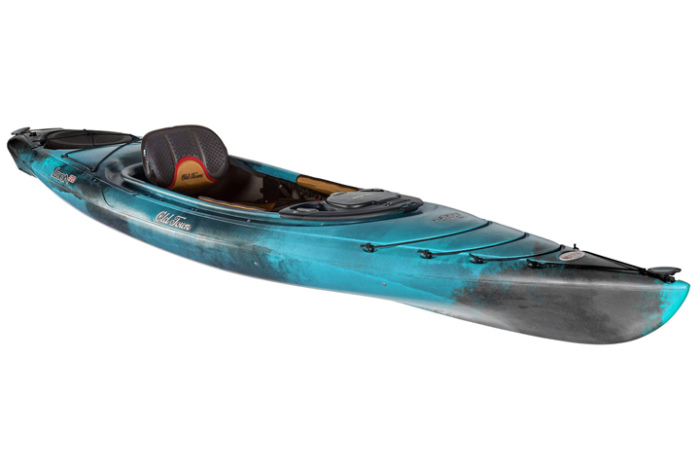
Old Town Loon 120
-

-
(Photo/Erika Courtney)
-
(Photo/Nick Belcaster)

Specifications
Pros & Cons
Pros
- Fine balance of stability and hull speed
- ACS2 seat is three-way adjustable and very comfortable
- Gel-coated interior adds impressive durability
- Deck bungee system tucks away when not in use
- Retractable carry handles
Cons
- A bit on the heavier side due to the overbuilt nature
- Storage hatch lid isn't the tightest fit
Bottom Line: A well-balanced kayak from a legacy brand with just about everything you’re looking for. It’s an investment, but one that should pay out over many years.
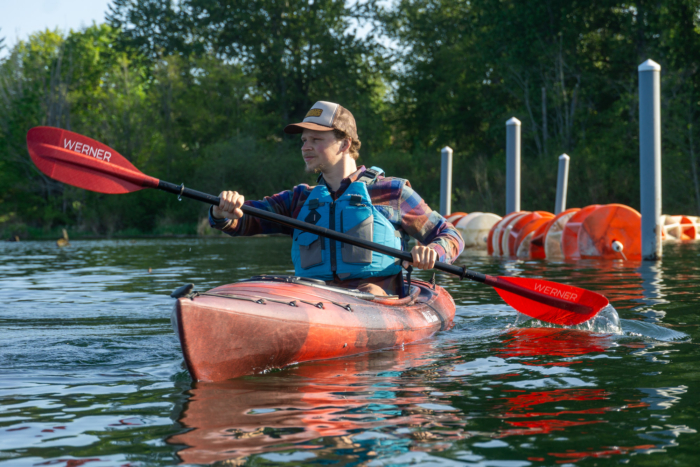
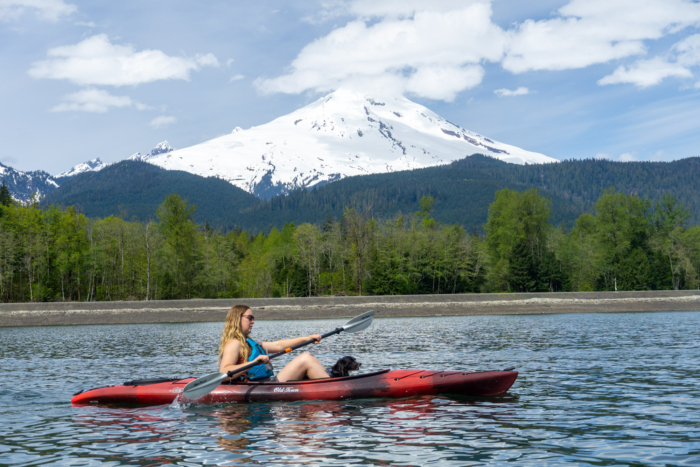
With over two decades of refinement behind it, the Old Town Loon 120 ($1,200) easily earned top honors in our testing as the premier all-around recreational kayak. To benchmark its real-world performance, gear tester Nick Belcaster put the Loon through rigorous field trials across Washington state, paddling everything from glassy inland lakes to wind-chilled coastal coves. The result is an exceptionally refined sit-inside boat that balances initial stability with a sporty, efficient glide.
At 12 feet long with a 30-inch beam, the Loon nails the ideal dimensions for everyday paddlers. Old Town integrated a sharp keel that allowed Nick to track straight on open waters without constant stroke corrections—a clear step up from wider recreational craft. Meanwhile, the broader stern concentrates volume beneath the seat, offering a reassuringly stable platform when embarking from slippery shorelines.
Outfitting is where Old Town shines, headlined by the active-comfort ACS2 seat. It emerged as our favorite in the recreational category, combining touring-grade padding with ratchet adjustments for backrest height and thigh support. Paired with padded thigh braces, it eliminated lower-back fatigue during full-day paddling sessions on Washington’s lakes.
Utility is boosted by a removable cockpit ‘work deck’ featuring a water-resistant splash hatch, molded cup holder, and an internal USB pass-through port to charge devices via a stashed power bank. Recessed bow bungees keep day gear secure, while a sealed stern hatch with a dry bulkhead holds enough equipment for overnight trips.
All these features and durable three-layer rotomolded construction carry a slight weight penalty. At 54 pounds, the Loon is heavier to haul solo than competitors like the Wilderness Systems Pungo 120 (49 pounds), and the seat ratchets can feel slightly finicky. Still, for efficiency, durability, and sheer paddling joy, Nick found the Loon 120 remains the benchmark one-and-done kayak.
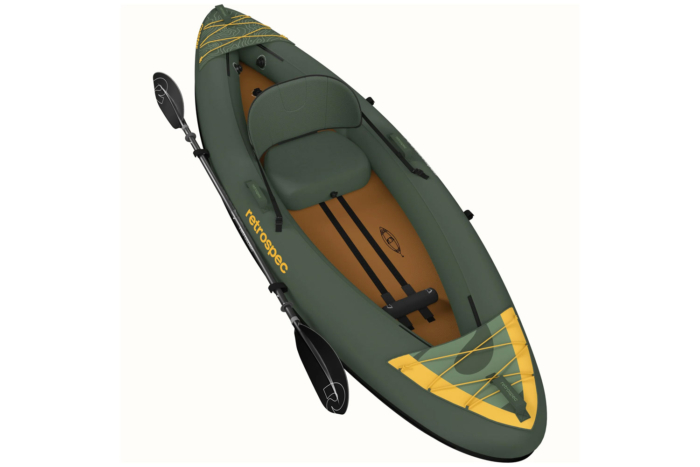
Retrospec Coaster Kayak
-
-
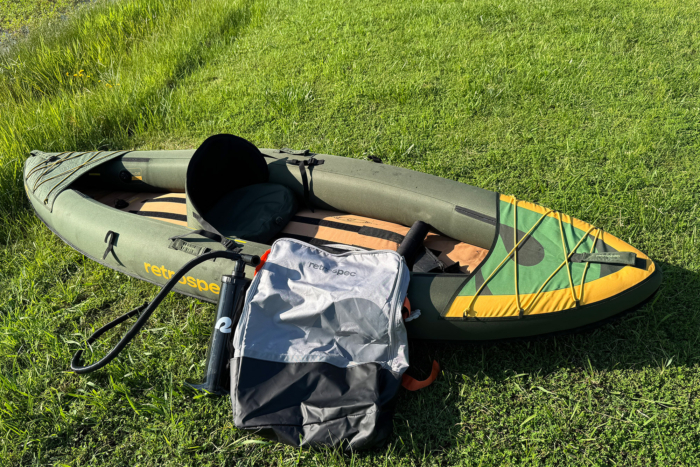
The Coaster comes with the basics needed to get on the water, including a seat, pump, paddle, fins, and backpack-style carrying case; (photo/Wesley Littlefield)
-
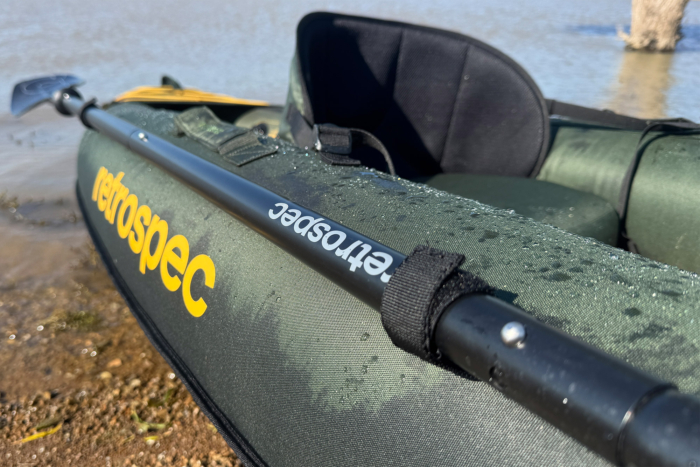
The Coaster impressed with its price, comfort, and portability, though tracking and capacity remain clear tradeoffs; (photo/Wesley Littlefield)
-
-
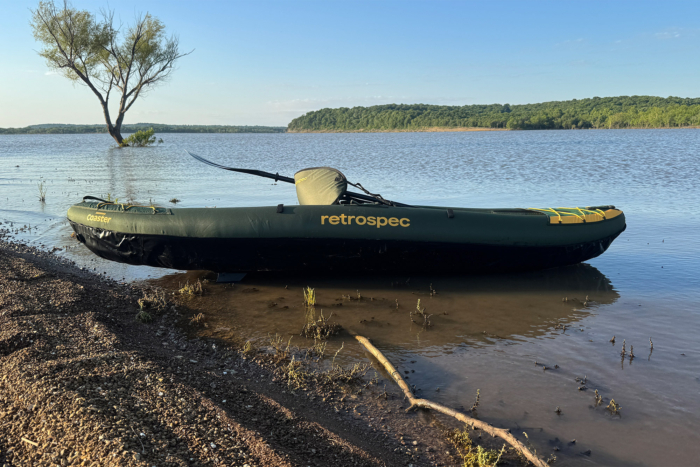
(Photo/Wesley Littlefield)
Specifications
Pros & Cons
Pros
- Reasonably priced
- Lightweight
- Easy to transport
- Durable
- Comfortable
Cons
- Doesn’t track straight
- Strange/uncommon valves
- Low weight capacity
- OK at most things, not great at anything
Bottom Line: Inflatable is the way to go for budget kayaks, and this one is easy to set up, paddle, and store. It won’t be very quick (or hold a perfect line), but it will get you on the water.
For budget-conscious paddlers, an inflatable kayak is the smartest choice because it eliminates expensive hidden costs. Traditional kayaks demand hundreds in extra gear, while inflatables bypass these expenses by packing into a trunk-friendly bundle that includes a paddle, pump, fins, and seat. The Retrospec Coaster Single Inflatable Kayak ($450) maximizes this value, earning our top award for best budget kayak.
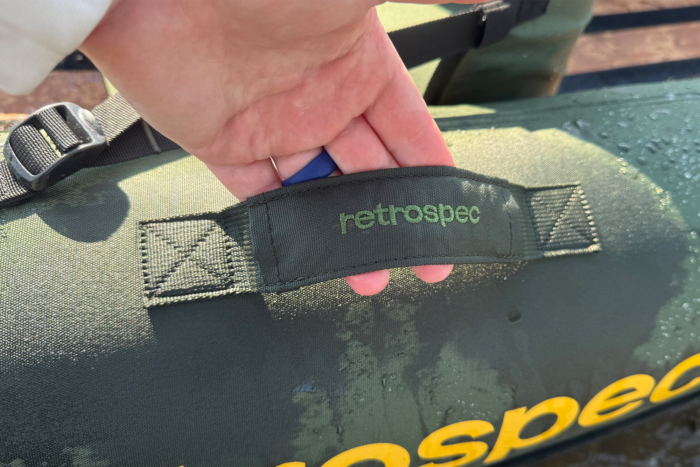
Reviewer Wesley Littlefield put the Coaster’s heavy-duty 1000D PVC floor and 600D polyester shell through aggressive real-world abuse. Watching waves crash against a rocky shoreline on his first outing, Wesley initially worried about punctures on an affordable inflatable. That fear vanished after dragging it across gravel lots, scraping over sharp submerged sticks, and leaving it inflated in a hot truck bed for weeks without popping, which proved its impressive durability.
On the water, the Coaster punches far above its price tag. Paddling a mile onto a choppy lake, Wesley found initial tippiness gave way to solid stability as the 37-inch beam absorbed passing waves. The seat and footrests kept back and leg fatigue at bay during multi-hour testing sessions, and the boat proved steady enough to cast from comfortably during a casual pond fishing outing.
The main tradeoffs include tracking efficiency and minor setup quirks. Even with all three fins installed, Wesley noted the Coaster zig-zagged across calm coves, requiring constant corrective strokes. High sidewalls caught crosswinds near whitecap conditions, and a smaller seat valve required an annoying pump adapter swap mid-inflation, though the main chambers pumped up in just minutes.
Despite tracking quirks and a modest 220-pound capacity, the Retrospec Coaster Single removes every financial barrier to getting on the water. Wesley’s testing confirms that while it won’t replace a specialized touring rig, it handles flatwater and light rivers with surprising resilience. For casual paddlers skipping roof racks and costly add-ons, it’s the best budget kayak available.
Wilderness Systems Tarpon 120
-
-
(Photo/Erika Courtney)
-
(Photo/Erika Courtney)
-
(Photo/Erika Courtney)
Specifications
Pros & Cons
Pros
- Easy to get into and stable to paddle
- 350 lbs. capacity is ample and has room to carry heavy kit such as scuba tanks
- Phase 3 Air Pro seat is highly adjustable and comfortable
- Dry hatch has locking latches
- Magnetic bottle holder and accessory rails
Cons
- 65 lbs. hull weight is on the heftier side
- Glide isn't the best
Bottom Line: A super-stable open deck design that’s tailored for fishing, but is enjoyable just about anywhere. Heavy to move around without a kayak cart, but worth it for the weight.
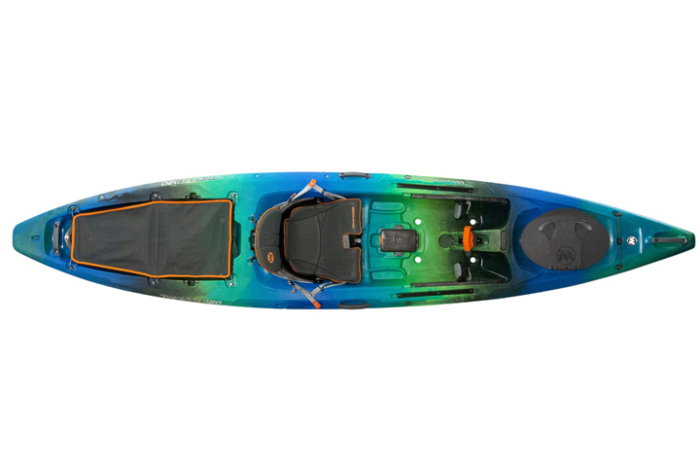
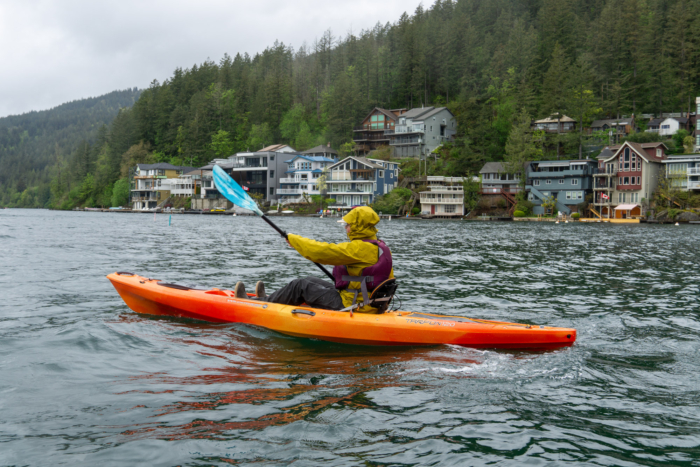
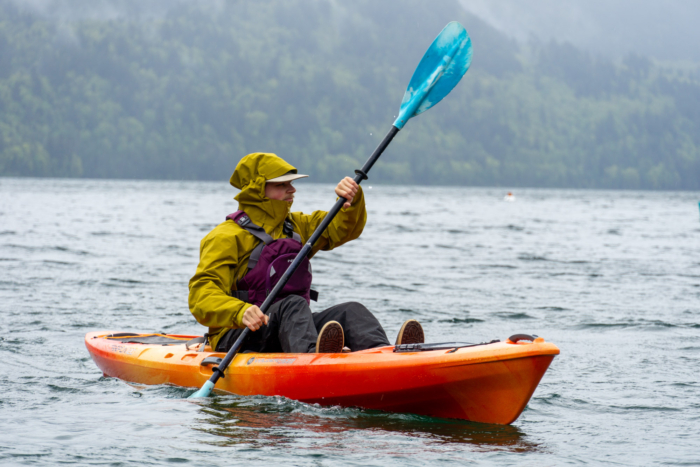
Sit-on-top kayaks like the Wilderness Systems Tarpon 120 ($999) reign over their sit-inside counterparts when it comes to three things: stability, ease of entry/exit, and righting after a spill. The Tarpon was our favorite of the bunch — offering several smart features and accessories.
Styled as primarily a fishing kayak, we found the Tarpon to be more of a jack of all trades than it lets on. At 12’ long and 31” wide, this kayak paddles predictably and balances stability with good tracking manners — we were even able to stand up in it. The 350-pound capacity also ensures that paddlers of all sizes can jump aboard.
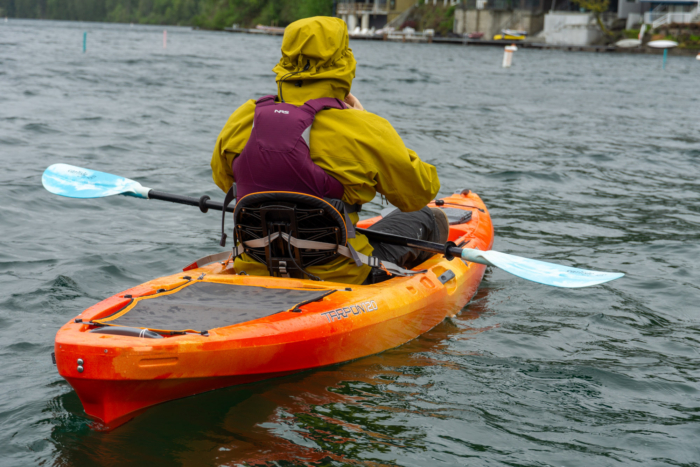
Like the Old Town Loon, the Tarpon 120 also gives the seat extra attention, and Wilderness Systems’ Phase 3 Air Pro seat is a winner. The same used in some of the brand’s touring kayaks, the honeycombed foam construction keeps moisture moving, and the seat is 3-way adjustable, including a leg lift that is a game changer when used with the integrated thigh pads.
Accessories are in no short supply on this kayak, and between the magnetic bottle holder, removable dry box, and accessory mounting rails along the side of the cockpit, there’s enough to outfit an entire day out on the water. Storage comes in the form of a locking forward hatch and a rear storage well — large enough to tote scuba tanks.
When boats get as heavy as the Tarpon is (a not-light 64.5 pounds), the addition of an extra set of handles on the sides of the kayak becomes a huge bonus. Sit-on-top kayaks will always be a bit heavier than their hollow peers, and the Tarpon is no different. In our opinion, boats this heavy truly benefit from being hauled around on a kayak cart.
While we did our fair share of fishing from it, the Tarpon 120 is amenable to much more, and adds a bevy of functional features that help pad the price tag. For anyone looking for a highly stable kayak, the Tarpon won’t disappoint.
Eddyline Sitka LT
-
-
(Photo/Erika Courtney)
Specifications
Pros & Cons
Pros
- Hard chine and light rocker in hull provides impressive paddling manners in rough seas
- ABS construction is lightweight and rigid
- Ample storage spread across three dry hatches, including a day hatch
- Retractable keel is easy to operate, and prevents weathercocking in windy conditions
- Cockpit, seat, and footrests work well together for a snug fit
Cons
- You'll pay for the performance
- ABS isn't as durable as rotomolded plastic
- Primary stability is less-so, and not as approachable to beginners
Bottom Line: An expedition-ready design that can take waves and carry it all. The composite ABS material is tougher than rotomolded boats, but it comes with a bump in price.
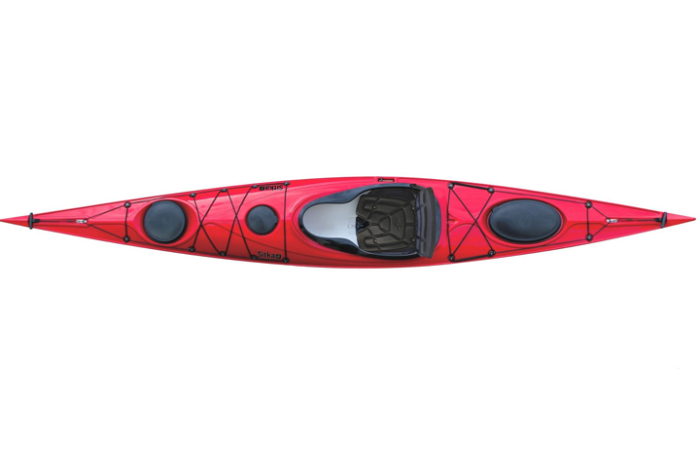
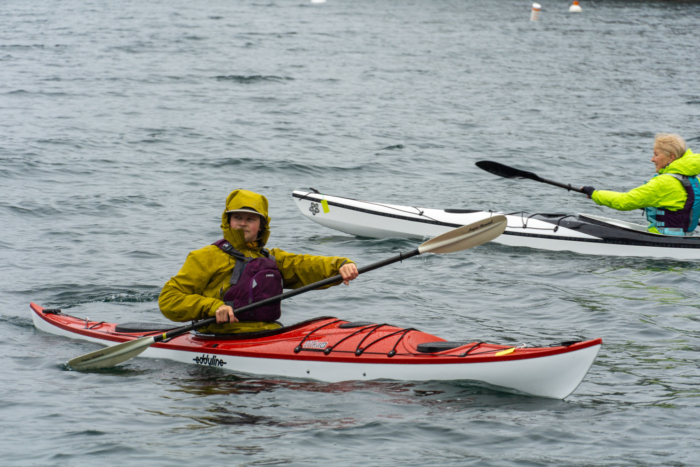
A good touring kayak emphasizes straight-ahead tracking and speed, along with tucking away ample storage for extended nights away from port. The Eddyline Sitka LT ($2,799) balances all this with ease.
As the middle child of a trio of sizes, the 14’6” LT (along with the 13’9” ST and 15’3” XT) generally fits most adults; however, being able to dial in your fit greatly improves paddling performance before you even jump in the thing. The interplay between seat, footrests, and thigh braces is much more important in a boat like this, and the fit was spot on, in the opinion of tester Nick Belcaster.
All of the Sitka series are made from composite ABS material, bridging the gap between full fiberglass and rotomolded plastic boats. These thermo-molded shells are lighter and more rigid than full plastic boats and are finished with a hard gloss to reduce drag. It’s tough to undersell just how nice this material is in a large boat like this: for example, the fully-specced Sitka weighs less than the 9.5’ Old Town Malibu.
Storage on the Sitka is plentiful as well, with a large 17” storage hatch at the stern, a 10” bow hatch, and a smaller day hatch just ahead of the cockpit. While it was easy for us to stash enough provisions into these hatches, the openings themselves were a little narrow, and some creative packing (or jamming) was required.
The choice of a skeg versus a rudder on a touring kayak comes down to how maneuverable it is, and the skeg on the Sitka leverages its high secondary stability. On one of the blustery British Columbian spring days we paddled it, the skeg system performed admirably to thwart any weathercocking we encountered.
Comparable boats include the Dagger Stratos 12.5 — a rotomolded boat with more of a playful feel for surfing — as well as the Wilderness Systems Tsunami 145, another plastic boat that slides in well below the Sitka at $1,699, but with only slightly lesser paddling chops. Paddlers looking to go farther afield ought to look at extended touring kayaks, such as Eddyline’s own Fathom — a full-tilt design with better manners in active seas.
Old Town Sportsman 120 Pro
-
-
(Photo/Old Town)
-
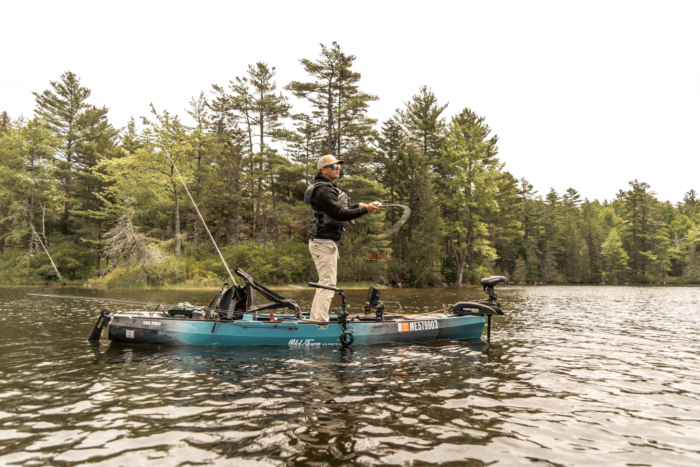
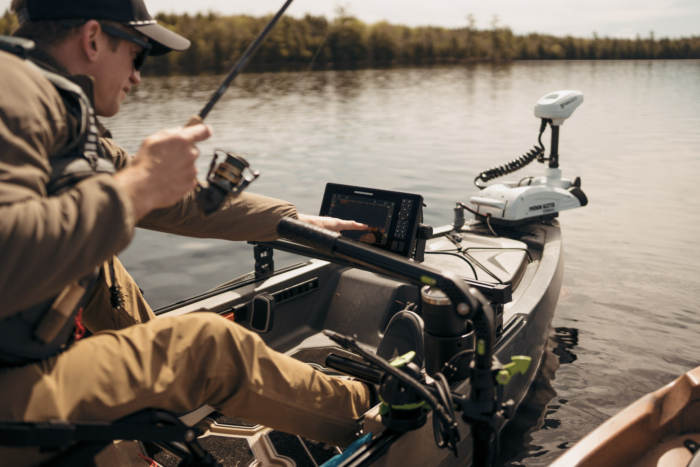
On the water I fished a 120 Pro outfitted with a bow mount Minn Kota Trolling Motor, rudder steering add-on, and a forward facing sonar Humminbird fish finder; (photo/Old Town)
-
With 140" of track, there are almost limitless accessories you can add to the kayak; (photo/Old Town)
-
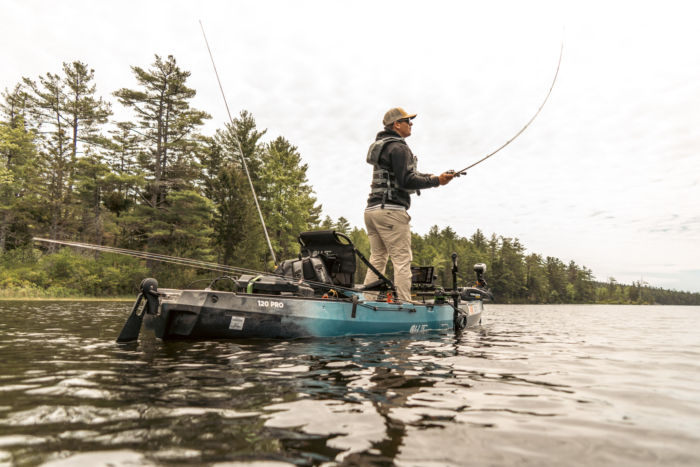
The wide, low profile of the hull makes the kayak very stable, but it does allow water to splash into the cockpit easily; (photo/Old Town)
Specifications
Pros & Cons
Pros
- Price
- Customizable to fit a wide variety of aftermarket accessories
- One of the roomiest cockpits available (great for fly fishing)
- Ample storage
- Extra stable, which allows you to stand while fishing
Cons
- Slower than other hull designs
- In rough waves, water splashes into the boat
- No ability to add a pedal drive
Bottom Line: An excellent fishing vessel with room to expand capabilities in propulsion and fishing. Heavy on the trailer, but affordable compared to the prices some fishing kayaks ask.
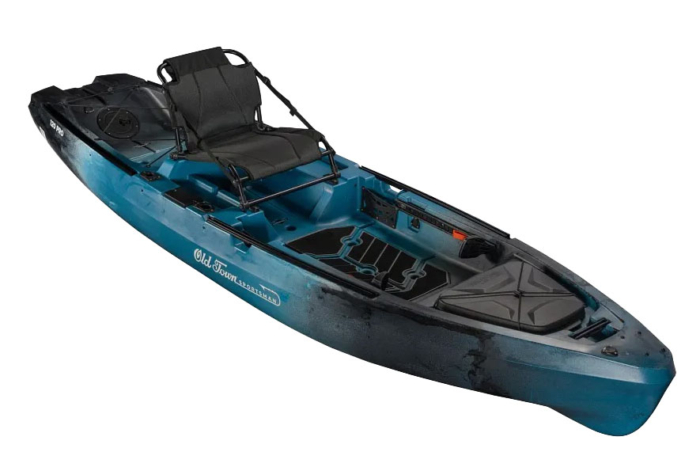
In a market where motorized fishing kayaks routinely hit $5,000, the Old Town Sportsman 120 Pro ($3,600) provides an accessible alternative. Built as a clean paddle craft, this 12-foot sit-on-top serves as a modular canvas, letting anglers start with an affordable baseline and upgrade over time. For its blend of stability and pain-free aftermarket integration, it earns our award as the most customizable fishing kayak on the water.
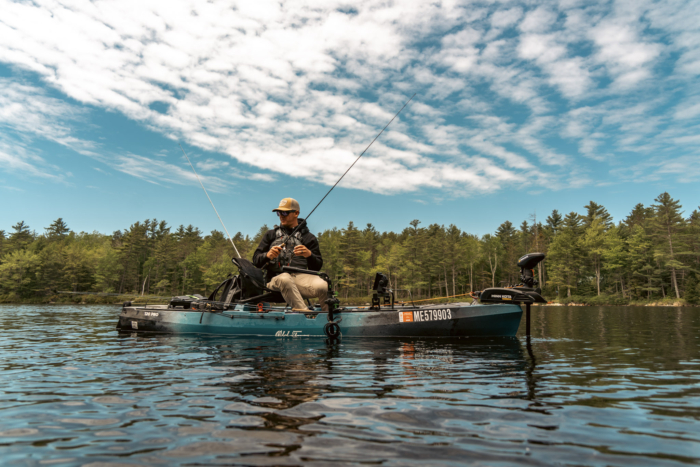
To evaluate its real-world performance, reviewer Morgan Nowels spent two days testing the 120 Pro across a remote lake in Maine, rigged with a bow-mounted Minn Kota motor, foot-steering rudder kit, and Hummingbird sonar. Morgan was impressed by how effortlessly the boat accepts electronics; factory through-hull wiring ports and pre-drilled bow and stern mounts allow clean, professional setups without drilling holes into the hull. With 140 inches of accessory track lining the deck, mounting transducers, anchors, and rod holders requires zero jerry-rigging.
Ergonomics and stability are where the 120 Pro shines. At 6 feet tall, Morgan found the open cockpit spacious enough to stretch his legs out completely. That wide geometry (paired with a 540-pound weight capacity and 36-inch beam) makes it a rare kayak that excels at fly fishing, offering a snag-free platform where lines won’t catch on console mounts. The hull is so remarkably stable that Morgan stood and cast all day comfortably, even motoring between spots on his feet.
Trade-offs for such a wide, stable platform come down to weight and speed. At a heavy 102 pounds, the 120 Pro requires more paddling effort than sleeker hulls. During testing in gusty conditions, its lower-profile gunwales allowed lake chop to splash over the bow into the paddler’s lap. Anglers should also note that the open deck layout eliminates options for a pedal-drive unit or built-in horizontal rod storage.
Despite those trade-offs, the Old Town Sportsman 120 Pro offers an unbeatable growth path. Our testing confirms that whether kept as a simple paddle craft or upgraded with bow trolling motors and live-imaging sonar, it eliminates the friction of outfitting a boat. For anglers wanting a rock-solid fishing platform that evolves alongside their budget, the 120 Pro is tough to beat.
Hobie Mirage Passport 12.0 R
-
-
(Photo/Nick Belcaster)
-
(Photo/Nick Belcaster)
Specifications
Pros & Cons
Pros
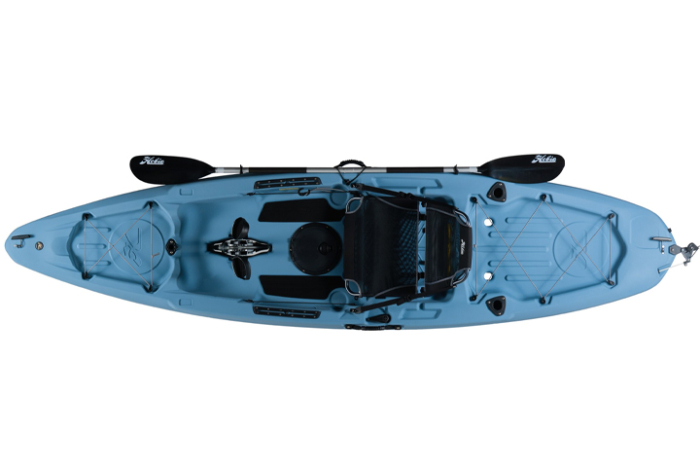
- MirageDrive GT pedal drive is one of the best we've used, and uses a flutter motion and kick-up fins
- Impressive stability across the entire hull
- Flat deck with EVA pads for standing and casting
- Aluminum frame seat to adjustable and removable
- Many fishing accessories to deck out in
Cons
- Heavy fully rigged weight makes a kayak cart a good idea
- Pedal drive and rudder systems will require maintenance, could break
- No reverse
Bottom Line: A solid sit-on-top kayak built around an excellent pedal drive system. The fluttering fins allow for shallow-water exploration, and the design isn’t as expensive as some pedal-drive kayaks.
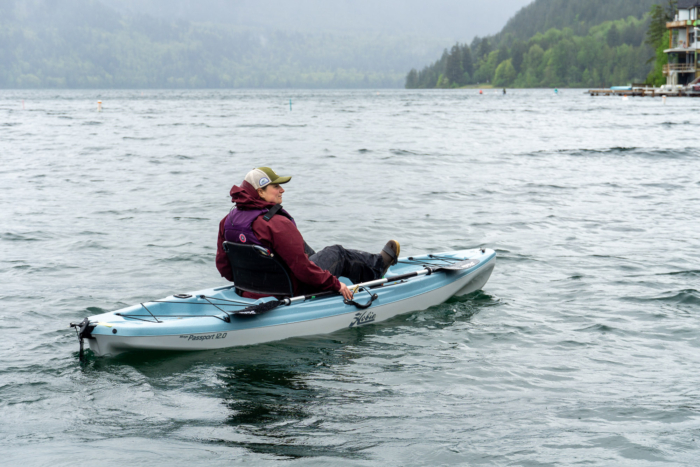
While pedal kayaks often exceed $3,000, the Hobie Mirage Passport 12.0 R ($1,999) delivers elite performance for far less. Positioned between Hobie’s reverse-capable Compass and high-end Revolution, the Passport 12.0 R earned top honors for balancing efficient propulsion, rock-solid stability, and nimble handling.
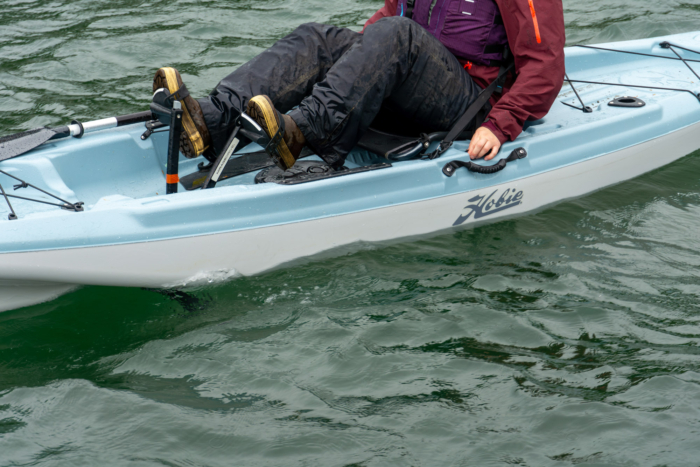
Tester Erika Courtney evaluated its performance across shallow flats, weed-choked rivers, and open reservoirs. Erika praised the smooth, low-fatigue pedaling of Hobie’s MirageDrive GT. Crucially, its Kick-Up Fin technology automatically retracts upon hitting underwater obstructions, allowing her to navigate skinny, stump-filled water where fixed prop drives stall out.
In the debate between propeller and flipper drives, Erika’s testing validated flippers for real-world angling. Unlike prop models like the Old Town Sportsman BigWater PDL—which offer mechanical reverse but collect weeds and demand deep water—the MirageDrive’s flexible fins slice through dense vegetation without clogging. When fishing structure, two quick paddle strokes provided all necessary reverse control.
Beyond propulsion, the Passport 12.0 R shines as an out-of-the-box fishing rig. Constructed from durable rotomolded polyethylene with a 34-inch beam, the hull offers excellent primary stability—Erika routinely stood to sight-cast without feeling tippy. The deck features dual rod holders, gunwale H-Tracks, a center hatch, and a recessed transducer cavity for clean fish finder mounting.
Whether maneuvering tight creeks or crossing wind-swept bays, Erika found the Mirage Passport 12.0 R punches far above its price tag. For anglers seeking hands-free pedal efficiency without sacrificing shallow-water capability, Courtney’s field testing confirms it is the smartest investment on the water.
Old Town Ocean Kayak Malibu ePDL+ 120
-
-
(Photo/Nick Belcaster)
-
(Photo/Nick Belcaster)
-
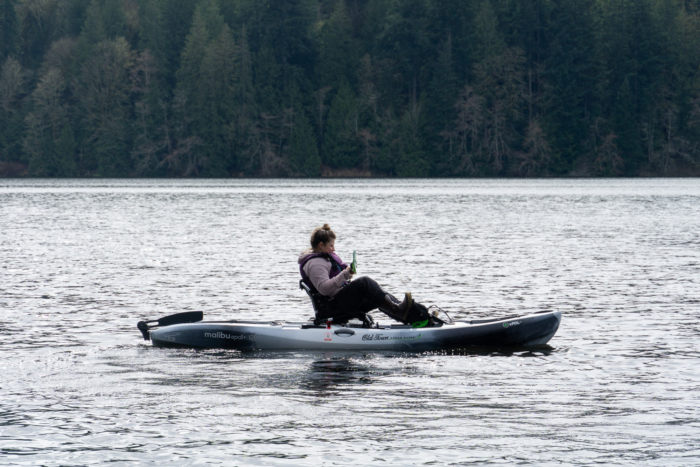
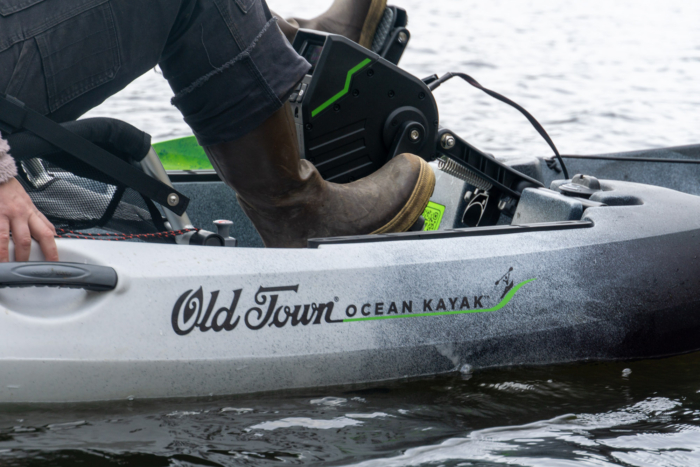
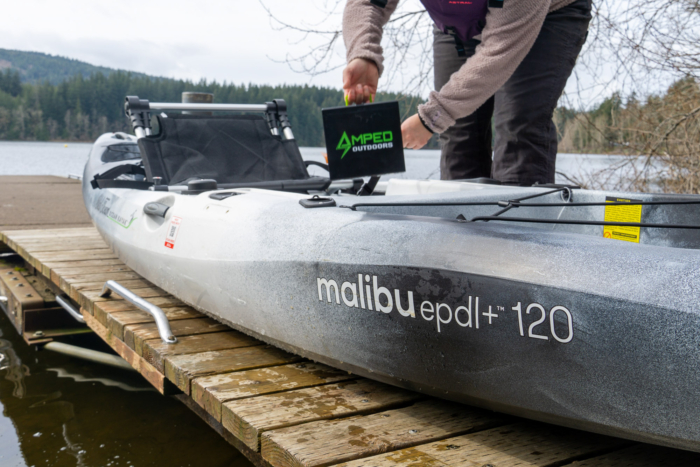
Paddle, pedal, or cruise, the Malibu ePDL gets across the water in all sorts of ways; (photo/Nick Belcaster)
Specifications
Pros & Cons
Pros
- Impressively zippy with five different power level modes
- Stable hull design is rocksteady
- Four handles around boat for transport
- Three molded-in fishing rod holders
- Adjustable rudder keeps your course well
Cons
- Can be a tough boat to move solo
- Need to monitor your depth to avoid damaging the pedal drive
- Price
Bottom Line: If you want the latest in kayak propulsion, this is it. It’s pretty pricey, but the experience is next-level.
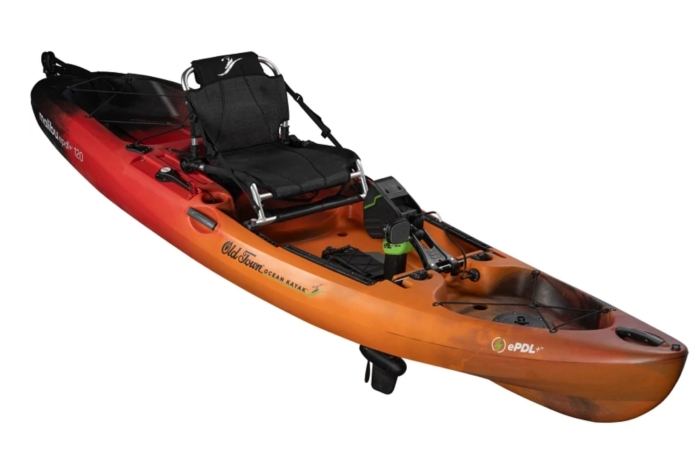
We dubbed the new Old Town Malibu 120 ePDL ($5,500) the e-bike of the seas, and this popular hull shape has been fitted with the brand’s excellent ePDL electric pedal drive to create a new breed of paddle craft. We’ve enjoyed the drive in the fishing-specific Sportsman BigWater, but in the Malibu, it’s all about recreation.
With five levels of pedal assist, the Malibu ePDL absolutely cruises at the top speed (enough that you ought to hang on when making a quick turn). It will also drop into low gear and putter around the lake for easy cruising and sightseeing. A 36V Amped Outdoors battery powers this kayak, and in practice, we could get around three days of paddling out of it at a time.
The pedal drive will also go lo-fi for those looking for a bit more of a workout (or want to extend their range), and is complemented by the drop-down rudder system that keeps you on track. Combined with the stability-forward hull shape, this system makes it almost set-and-forget when cruising along.
The Malibu ePDL is rightfully trimmed out in accessories to make that pedal power worth bringing out. It hosts three rod holders, accessory tracks for mounting things like fish finders and cupholders, and storage areas in the bow and stern. This versatility means this kayak can be different things to different people in your family: a mini mass boat one day, a morning exercise paddle the next.
That’s important, as the $5,500 price tag will require some chewing over. If the electric aspect isn’t a gotta-have-it for you, the regular PDL version of the Malibu can be had for $2,000. At 125 pounds kitted out, it’s also tough to wrangle this kayak solo, but using a kayak cart makes the job easier.
Other Kayaks We Enjoy Paddling
-
-
(Photo/Nick Belcaster)
-
(Photo/Nick Belcaster)
-
(Photo/Nick Belcaster)

Specifications
Pros & Cons
Pros
- Incredibly stable to paddle and easy to get into and out of
- Open top design and scuppers drain water quickly
- Up-turned bow breaks through small surf
- Four carry handles for easy transport
- Molded-in foot rests accommodate a large range of paddlers
Cons
- Trades stability for tracking ability, can be tough for some to paddle straight
- Seat is minimal
Bottom Line: An excellent mid-tier kayak at a great price. Fun in the ocean or lakes, but not perfect for everything, as speed is limited, and it struggles to hold a perfectly straight course.
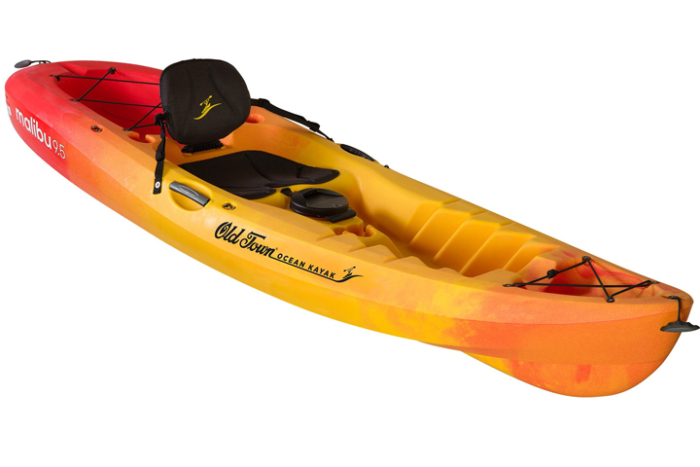
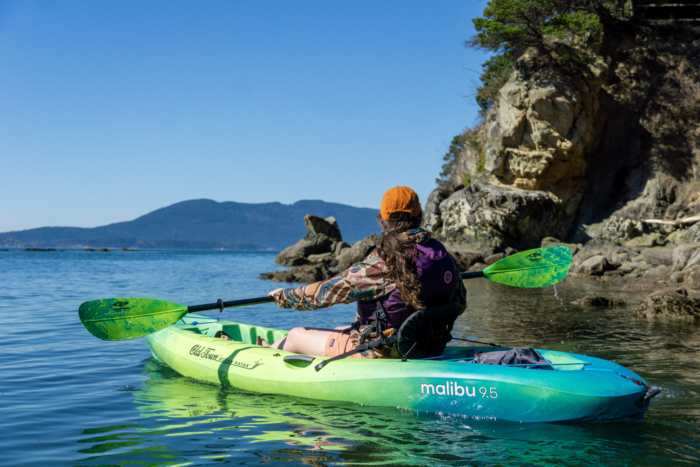
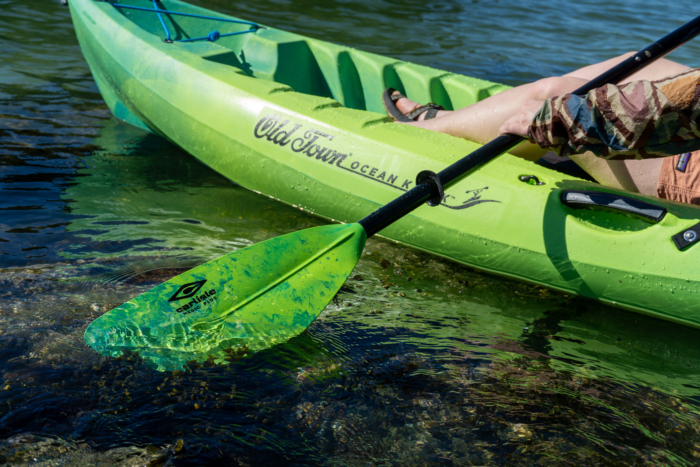
If you’re looking for a fun, hassle-free kayak that won’t break the bank or tip over the second you step in, the Old Town Malibu 9.5 ($700) is an absolute crowd-pleaser. It handles everything from salty ocean chop to quiet lakes without making a big production out of your day on the water.
Tester Nick Belcaster took the Malibu 9.5 out on choppy coastal bays and lazy freshwater rivers to see how it held up. His biggest takeaway? It is insanely stable. Old Town kept the boat nice and wide from end to end, making it feel totally rock-solid underfoot. When Nick hit some light waves, the built-in floor drains (scuppers) dumped the splash water right back into the lake, keeping the cockpit from feeling like a bathtub.
The layout is about as user-friendly as it gets. Instead of finicky adjustable foot pegs, the floor has simple molded-in footrests. That means you, your kids, or your friends can swap turns in the boat without stopping to reconfigure settings. The seat back folds totally flat, too, so if you buy a couple of these, they stack right on top of each other in the truck bed. Just make sure to stash your phone in a dry bag, because the open gear wells get wet.
As for how it paddles, there’s a small trade-off for all that stability. Because it’s under 10 feet long, it isn’t a speed demon, and we noticed the nose wiggles a bit side-to-side if you paddle too aggressively. If you want to go fast or cover long distances, you might want something longer like the Malibu 11.5 or Tarpon 120. But for just messing around, swimming off the sides, and exploring, it’s a blast.
Sure, you can find $350 kayaks at big-box stores, but our side-by-side testing proved you get what you pay for here. The Malibu’s thick plastic can take a beating on rocks and boat ramps without scraping thin. If you want a casual, worry-free kayak that will sit in your garage for a decade and still be ready to go every summer, the Malibu 9.5 is worth every penny.
Specifications
Pros & Cons
Pros
- Solid whitewater design with comfortable outfitting
- Adds storage capacity to a whitewater shell, making an ideal hybrid kayak
- Dropdown skeg improves tracking in flatwater
Cons
- Sacrifices some whitewater ability for the added storage
- Adjustable foot pegs aren't as supportive as optional bulkhead kit
Bottom Line: A whitewater kayak with built-in room for overnight gear. Certainly a specialized boat, but the perfect solution for those who do long river trips.
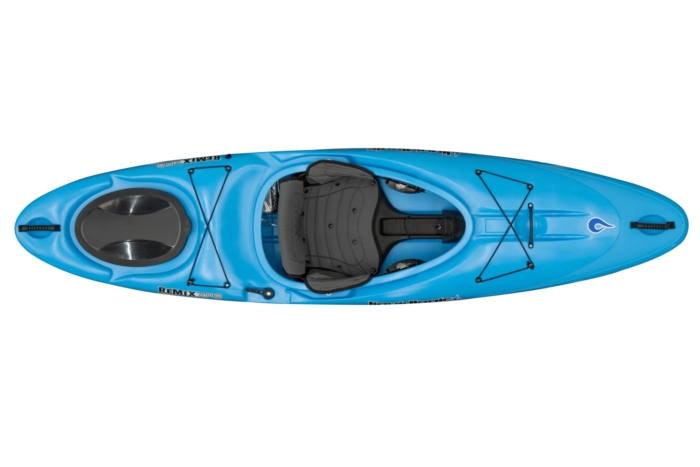
Whitewater paddling and overnight camping seem at odds with one another, and few boats on the market can claim to cover both sides of the Venn diagram. The LiquidLogic Remix XP ($1,249) breaks the convention, and if you’re after a crossover hardshell for paddling the Grand Canyon, this is your boat.
Styled as a whitewater-first shell, the Remix XP series (available in both a 9′ and 10′ version) tweaks the design in a few key ways to maintain that spirit while still carving out enough space for an overnight kit. The back hatch is a generous space where we could store a week’s worth of kit (with enough jamming), and for overflow, the area behind the seat will gather your daily-access goods.
Flat water paddling performance is also baked into the design, and LiquidLogic expanded the width and waterline slightly to increase stability and speed. Our testing showed that the Remix XP is still a whitewater boat first, and that the bow does push some water in the flats, but it’s certainly serviceable (and much nicer than trying to paddle a playboat across a lake).
The drop-down skeg isn’t for show, either, and it kept us on the straight-ish and narrow while negotiating the slack water between rapids on the Skagit River recently. We completed a multiday paddle from the mountains to the ocean in this boat, carrying all of our overnight kit in the stern hatch, and it performed well above our expectations.
Whitewater outfitting and performance aren’t lacking on the Remix XP, and it boogied through choppier stuff with ease. You aren’t getting quite the full measure of a creek boat here, and the kayak does sport adjustable foot pegs, which aren’t our favorite in a whitewater yak (though LiquidLogic does sell a $100 kit to convert to a bulkhead). Even still, our veteran whitewater testers gave the Remix XP the thumbs up.
A ‘do-both’ option will always sacrifice some performance on either side of the equation, but the Remix XP boats are pretty even-keeled when it comes to tackling multi-day whitewater trips.
-
-
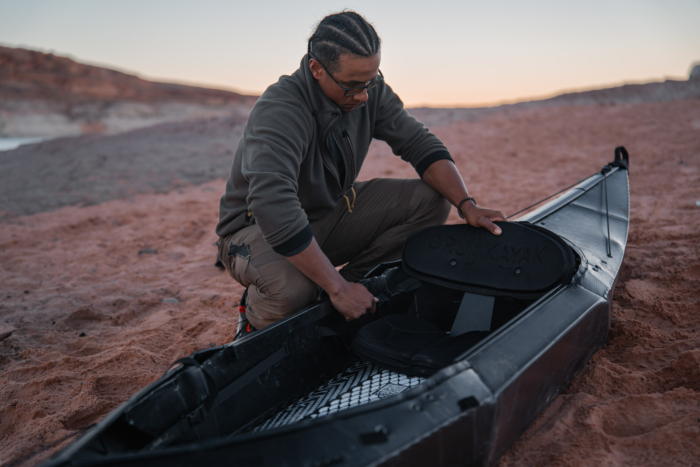
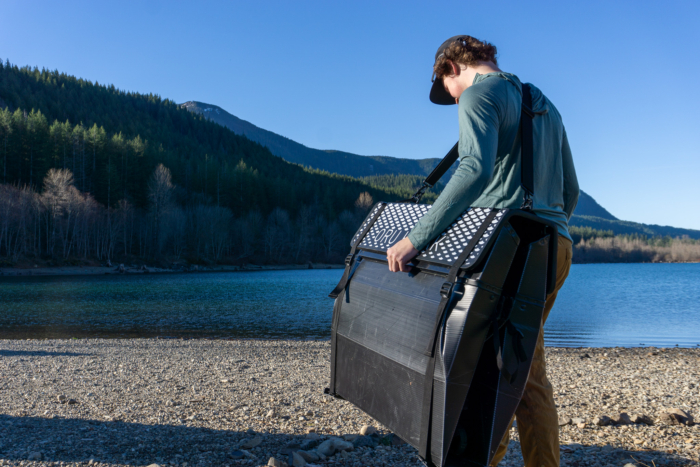
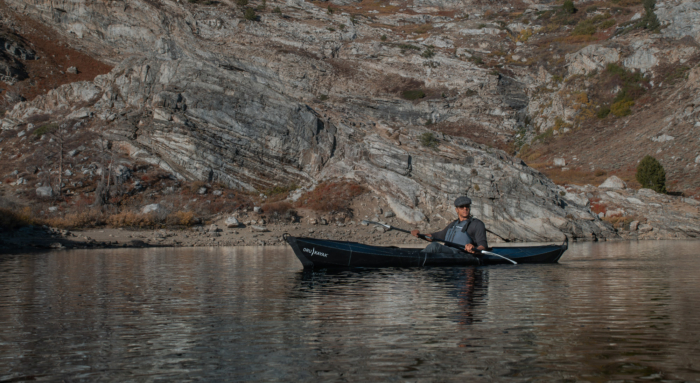
The Beach LT Sport is one of the better foldable kayaks we've paddled to date; (photo/Ian Graber-Stiehl)
-
(Photo/Ian Graber-Stiehl)
-
(Photo/Scott Wilson)
-
(Photo/Ian Graber-Stiehl)
Specifications
Pros & Cons
Pros
- Origami design unfolds and is ready to paddle in minutes, stores down compactly
- Solid tracking and glide
- 28-lb. weight is quite light compared to other like-kayaks
- Sport version gains updated seat, deck closure design, and accessory rails on deck
Cons
- No dry storage available
- Not the most comfortable seat for extended paddling
Bottom Line: Just about the perfect foldable kayak design with more features than you’d expect. Set-up can be difficult at times, but the reward is high for getting the boat in the water.
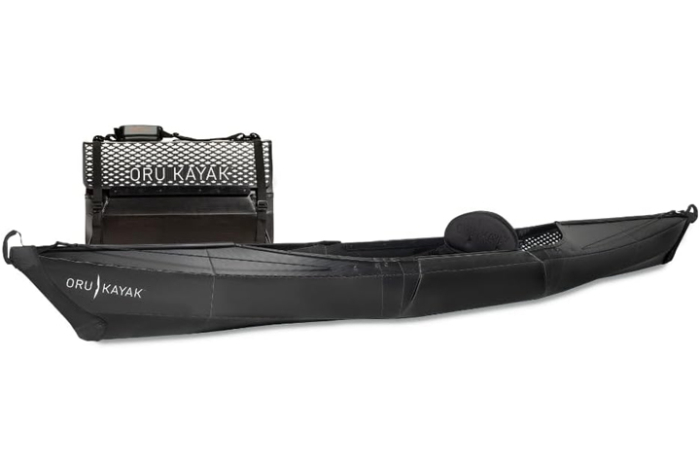
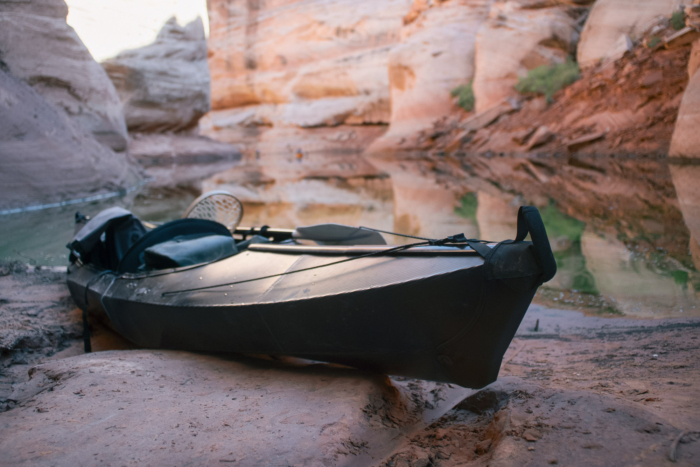
Typically, your ‘portable’ kayaks give up some large measure in trade for the ability to pack down and tuck away where other kayaks dream of. Not so with the Oru Kayak Beach LT ($1,199) — a foldable kayak design that paddles with the best of them.
Crafted from tough polypropylene sheeting, this kayak’s origami-like unfolding and assembly never gets old, springing from a compact rectangle to a full 12’ hull in less than 10 minutes (we even timed ourselves). From there, it’s only a few straps to attach, the floorboard to settle, and the seat to adjust, and the Beach is ready to paddle.
Paddling performance was impressive (even outsized, our team agreed) given the typical hobble of having to assemble the kayak. The V-bottom profile is combined with a hard chine to create a kayak with impressive secondary stability, and it was actually quite speedy. Pressed hard, the Oru gives boats like the Eddyline Sitka LT a run for its money.
Compared to pretty much any inflatable kayak, the folding Beach LT simply does it better. With no deflation possible, we beached this kayak without worry. The setup was a breeze and required no lung power. And when we gave it the beans, it far outperformed in speed and maneuverability. For those low on storage space or transportation for a full-sized kayak, this kayak is our go-to suggestion.
Kayak Comparison Chart
| Compare |
|
|
|
|
|
|
|
|---|---|---|---|---|---|---|---|
| Price |
$1,200
|
$450
|
$999
|
$2699
|
$3,600
|
$1,849
|
$5,500
|
| Style |
Sit-Inside
|
Sit-Inside
|
Sit-On-Top
|
Sit-Inside
|
Sit-On-Top
|
Sit-On-Top
|
Sit-On-Top
|
| Length |
12'
|
9’10”
|
12'
|
14.5'
|
12'
|
12'
|
12'
|
| Width |
30"
|
37”
|
31"
|
23.5"
|
36"
|
34"
|
34.5"
|
| Weight |
54 lbs.
|
23 lbs.
|
64.5 lbs.
|
47 lbs.
|
102 lbs.
|
83 lbs.
|
126 lbs.
|
| Construction |
Three layer rotomolded polyethylene
|
Polyvinyl Chloride (PVC)
|
Rotomolded polyethylene
|
Carbonlite ABS composite
|
Single layer polyethylene
|
Rotomolded ployethylene
|
Single-layer polyethylene
|
| Cockpit Size |
56" x 22"
|
~6.5 ft
|
N/A
|
33.2" x 17.5"
|
N/A
|
N/A
|
N/A
|
| Weight Capacity |
375 lbs.
|
220 lbs.
|
350 lbs.
|
350 lbs.
|
565 lbs.
|
400 lbs.
|
349 lbs.
|
| Storage |
Stern dry hatch, deck bungee storage, cockpit workdeck organizer
|
Front & rear bungee storage, some room behind the seat
|
Bow dry hatch, stern molded-in tank well, cockpit dry case
|
17" stern dry hatch, 10" bow dry hatch, 6" day hatch
|
Rear tankwell, bow & stern access hatches, underseat and rod storage
|
Molded-in bow and stern wells, 8" dry hatch in cockpit
|
QuickStash dry hatch and tacklebox in cockpit, bow and stern storage wells with bungee cordage
|
How We Tested the Best Kayaks
To build this buyer’s guide, our team of veteran paddlers, sea kayak guides, and weekend tourers spent months researching hull geometries, outfitting options, and drive systems before selecting the top contenders for a head-to-head field evaluation. We’ve logged hundreds of hours behind the paddle across the Pacific Northwest, mountain lakes in the West, and coastal ocean waters to determine which watercraft earn a spot on our shortlist.
- Secondary Stability Challenge: Initial stability keeps you upright on glassy water, but secondary stability keeps you afloat when chop rolls in. We deliberately push every hull past its comfortable flatwater balance point to evaluate where primary stability ends and secondary edging kicks in, noting how predictably the boat rights itself when leaning into turns, carving through small surf, or handling unexpected waves.
- Open-Water Tracking & Glide Test: To benchmark hull speed and tracking efficiency, we put each kayak through timed straight-line sprints across open, wind-exposed water. We count the number of corrective paddle strokes needed to hold a beam-wind course, evaluate how far the boat glides once paddling stops, and test how effectively built-in keels, skegs, or rudders maintain directional control without draining paddler energy.
- Real-World Portage & Hatch Torture: We drag rotomolded and thermoformed hulls across gravel launches, load them to maximum weight capacities with overnight camping and fishing kit, and test hatch closures against direct water spray and scupper splash. We also rate solo car-topping feasibility, handle hardware strength, and whether dry bulkheads actually keep gear dry after a full day on the water.

Our Kayak Rating System
To evaluate each watercraft objectively, we score every kayak on a 100-point scale across four weighted categories:
- Room & Storage / Build Quality (20% weighted): We assess total weight capacity, dry-hatch water resistance, accessory track integration, and the long-term durability of the hull material after repeated beach landings and sun exposure.
- Ease of Paddling & Tracking (30% weighted): We measure on-water efficiency, hull speed, glide distance per stroke, and how effortlessly the boat holds a straight line across open water without constant steering corrections.
- Stability (30% weighted): We evaluate both primary stability (the rock-solid feeling when stepping in or standing up to cast) and secondary stability (the boat’s ability to remain upright when edged on wave crests or in rough chop).
- Comfort & Outfitting (20% weighted): This covers seat ergonomics, breathability, and 3-way adjustability (backrest height, seat pitch, and leg lifts), along with thigh-pad placement and footpeg comfort over multi-hour paddling sessions.

Our Expert Testers
Our kayak testing team is led by Senior Editor Nick Belcaster, a multi-sport paddler located where the mountains meet the sea in Washington State. His paddling resume spans whitewater packrafting forays to cruising the Salish Sea on island overnights, and he’s dialed in on what exactly makes a kayak worthy.
To say tester Bryon Dorr is comfortable in the water would be an understatement — an accomplished whitewater and touring paddler and instructor, he’s circled the globe seeking out beautiful water to transit. With hands in just about every facet of the paddlesport industry at one time or another, Dorr has a firm grasp on the finer points of kayak design and paddling.
Tester Wil Henkel also helps shore up our knowledge base — and has time clocked as a sea kayak guide in Washington State as well as a whitewater guide in South America. He’s a whitewater hound at heart, and recently notched a number of first descents in Ecuador on rivers that may never be the same again.

Buyer’s Guide: How to Choose a Kayak
With enough buoyancy, just about anything will float your boat and get you down the river — it just won’t be pretty. And more than that, getting into an ill-fitting or limiting kayak means you’ll quickly outgrow its use, and have you right back looking for the perfect boat.
Familiarizing yourself with a few of the finer points of kayaking can help you not only hone in on exactly the right boat for you but also enjoy it more. Consider the following before you make your next kayak purchase.
Types of Kayaks
The first kayaks were business-only hunting vessels, but today, kayaks have evolved into a lineage of different craft for different waters. While there are boats that do most of it, there are also specialized kayaks that excel in one arena or another.
Sit-Inside and Sit-On-Top Designs


The first major split in kayak design is between those you sit inside of, and those you sit on top of. Sit-inside kayaks are your more traditional designs, and incorporate a semi-closed cockpit for the paddler to sit in. Kayaks like the Eddyline Sitka LT and Wilderness Systems Tsunami were some of our favorites, as they feature snug cockpits that feel much like you are part of the craft when paddling.
Sit-on-top designs instead place the paddler higher atop the kayak and are open to the environment along their lengths. This makes them much easier to get into and out of, but it also means that most of these kayaks are self-bailing, which means they have small holes in the bottom to drain water that finds its way in.
The Old Town Malibu ranked high on our list as a high-quality sit-on-top kayak, only bested by the Wilderness Systems Tarpon, which provided all of the benefits of easy entry but could be paddled faster and more predictably.

Recreational, Touring & Fishing Kayaks
A recreational kayak will likely best serve your interests if an after-work paddle on your local lake is most often on the menu. These boats emphasize ease of paddling and good stability for a stress-free cruise — all while having enough storage to stash a day’s worth of kit away.
In our testing, the Old Town Loon stuck out as the ideal recreational kayak: easy to manage by yourself, comfortable for all-day paddling, and with enough space to carry picnic supplies and the like. The Wilderness Systems Pungo also made high marks as a kayak for just about anything and is flush with accessories to do so with.
For longer jaunts, you’ll be looking at a touring kayak — one that prioritizes paddling speed and efficiency over stability and has enough storage to carry equipment for overnight travel. The hulls of these kayaks are more often V-shaped and feature harder chines, decreasing their resistance and adding a good amount of secondary stability.


The Eddyline Sitka is the ideal touring design in our minds, and we wouldn’t think twice about paddling it on a month-long expedition. The 23.5” width keeps the shell narrow and efficient in the water, and it was easy to bring the Sitka up to speed. A better budget option is the Wilderness Systems Tsunami, which had similar paddling manners, just decked out in a more budget-friendly rotomolded plastic design.
Fishing kayaks are made for the hunt, focusing heavily on stability to allow anglers to cast from their decks. Most also incorporate some type of alternative propulsion system like a pedal drive to free up hands while manipulating fishing rods, and some will come fully decked out with mounting options for fish finders, trolling motors, or anchors.
It’s tough to beat the Old Town Sportsman BigWater PDL when it comes to kayak angling. This fishing barge is a full 36” width and sports a multi-hull design for unprecedented stability, but can scoot pretty well with the integrated pedal system. The Hobie Mirage Passport is a bit lighter on features, but it was our shallow-water fishing winner, as it hosts a flipper-style pedal drive.

Hull Shapes
Kayaks can be bisected in multiple ways, with each shape affecting a different element of its performance. The first is the hull shape or profile, which can be imagined by drawing a line from one side of the kayak to the other across its width.
This profile affects the action of the kayak below the waterline, meaning stability and tracking are affected. There are four main hull shapes, with each providing a different paddling experience.
A V-shaped hull is one that cuts through the water like a knife and balances the kayak on a single point. This makes for a very streamlined hull, and tracking is excellent in boats that use them. The trade-off is stability, which can feel a bit tippy at slower speeds or for beginners.
Similarly designed, round hulls aim to provide similar tracking performance, but smooth out the edges a bit and build in more stability. These hulls are an excellent all-around choice and will shoulder waves well should you encounter them. Flat hulls lean even further into the stability realm and start to give up some tracking ability for it. They are often quick to turn, which can lead to a wag while paddling.
Finally, pontoon hulls sport two defined points that balance the kayak on the water, with a drawn-in center. This combines the tracking of a V-shaped hull with the stability of a flat hull and is commonly seen on fishing kayaks.

Chine Shapes and Rocker
The chine is the interface between the sides of the kayak and the bottom, which impacts both stability and maneuverability. A hard chine is one that is obvious where the two surfaces meet, forming an edge. This edge is one that can be pressed against the water and used to lean over the boat in rough water.
A soft chine has no obvious edge, which makes it rock from side to side without much resistance. This is a more stable boat for beginners, or for flatwater where waves aren’t common.
Finally, a kayak’s rocker is its profile when viewed from the side and concerns the upturn from bow to stern. Kayaks with less rocker have longer water lines, which makes them quicker and improves tracking. A more aggressive rocker allows a boat to crest and punch through waves and pivot around more easily with less resistance.

Length and Width
The size of your kayak makes an incredible difference in its performance, with length being related to speed and tracking, and width commanding stability. Both of these measurements also relate to the volume of your kayak, which will be important for ensuring it floats on its lines with a paddler inside.
Length
Kayaks can range from diminutive 5.5-foot whitewater playboats to 20-foot racing shells, and there are many different kayaks between those two points. Longer boats will track more efficiently, while shorter ones will turn quicker.
Recreational kayaks are mostly 10-12 feet long, while touring boats are more often 12-17 feet. When deciding between sizes, consider the amount of gear you’ll be taking, as well as your weight, as oftentimes kayaks are available in different lengths to accommodate different people. Cockpit sizing will also play an important role here.
Width
The width, or beam, of your kayak has a good bit to do with the overall stability, with wider kayaks obviously being more stable, and more narrow kayaks lesser. The trade-off in a more narrow kayak, however, is in speed and tracking, and with a smaller footprint to push through the water, touring-style kayaks can move much quicker than wider recreational boats, and use shorter paddles that are easier to move through the water.
Most kayaks are around 20-30” wide, with more recreational boats like the Old Town Loon (30”) and Wilderness Systems Pungo (29”) being closer to the wider end of the spectrum, and touring craft like the Eddyline Sitka (23.5”) being narrower. Some more specialty kayaks made for fishing can be quite wide, such as the Old Town Sportsman at 36”.

Tracking and Glide
No one wants to paddle an unruly raft, and proper tracking and glide ensure your kayak is efficient in getting where you’re going. To best gauge the straight-ahead speed and handling of these kayaks, we tested them side-by-side and noted the ease or difficulty in keeping them on the line.
Kayaks with pronounced side-to-bottom transitions (known as chines) and V-shapes won out in these tests, with the Dagger Stratos reigning — due in large part to its surf-inspired hull and skeg. Followed closely by the Eddyline Sitka, Wilderness Systems Tsunami, and (surprisingly as a packable boat), the Oru Kayak Beach LT Sport, these efficient kayaks stuck tight to their line and continued the furthest off paddle power.
Filing in behind the more touring-oriented boats are the longer recreational boats, including the Old Town Loon, Wilderness Systems Pungo, and Tarpon. These kayaks are a bit wider and have soft chines that increase stability, but that can also make them a bit less precise when it comes to tracking. Often a good J-stroke was needed to keep these kayaks on a rail.
Angling barges like the Old Town Sportsman BigWater generally track quite well due to their unique tri-hull shape, but are tough to get up to speed and subsequently lack in the glide department. The same can be said of the Hobie Mirage Passport, which generally holds a good line due to its rudder, but has a lot of width to contend with moving far.

Stability
The stability of a kayak is a combination of several factors, but most importantly, it breaks down into two types. Primary stability is the even-keeled feeling you have when sitting in a kayak floating on the water, and it’s for this reason that beginners are better served by boats with more of it.
Recreational kayaks most often lean on primary stability, and boats like the Old Town Loon, Malibu, and Wilderness Systems Pungo are all easy to feel settled into — often needing little body position adjustment at all to stay that way. Sit-on-top kayaks like the Wilderness Systems Tarpon were close to this performance, but a higher center of gravity meant a little more motion.
Fishing kayaks like the Hobie Mirage Passport and Old Town Sportsman both rely heavily on primary stability to stay even-keeled as you faff about with tackle or cast. It’s this stability that allows paddlers to even stand on the decks of these kayaks like standup paddleboards.
When balanced further on its edge, a kayak exhibits its secondary stability, which can be important for navigating choppy off-shore waters. This may initially feel like a ‘tippy’ sensation, but advanced paddlers leverage this stability to crest awkward waves and paddle otherwise uncalmed passages.
Kayaks like the Eddyline Sitka both sport hard chines, which are the pronounced edges between the sides and bottom, and allow them to be edged more effectively in rough water. The Oru Kayak Beach LT Sport also has defined chines, but is relatively flat beneath the paddler, making it harder to get on edge effectively.

Maneuverability
Straight-line paddling won’t be all you do in a kayak, and to test these kayaks on their maneuverability we paddled them in our local lake — making use of a slalom course of buoys and testing their ability to spin a full 360.
Longer touring kayaks like the Eddyline Sitka are tougher to get to come around, and while you can lean them over a good bit more than flat-bottomed hulls, the full 14.5” length and V-shaped hulls are harder to get to move around quickly. The Wilderness Systems Tsunami struggles in the same way but benefits from slightly less aggressive chines, which don’t edge as hard during slow-speed turns.
Flat-bottomed kayaks like the Old Town Malibu enjoy a great amount of turning ability, sometimes even to the deficit of being able to track straight. A shorter length also greatly improves the turning radius, and being 9.5’ long undoubtedly helps the Malibu spin circles.
The hybrid V-shaped hulls of the Old Town Loon and Wilderness Systems Pungo tend to balance between glide and maneuverability well, and while not the quickest to turn a 180, they are faster than the longer touring kayaks to get flipped around.
Fishing kayaks like the Hobie Mirage Passport favor stand-up stability over maneuverability, but with one crucial caveat: Pedal-drive kayaks with rudders can often turn on a dime, allowing them to tuck into reed beds or around structures for fishing.

Seating and Comfort
While more recreational-minded craft won’t need a plush seat for long days in the saddle, it’s nice to avoid the dreaded dead butt syndrome, and not only that, a comfortable and supportive seat is important to support your paddling position and make the most of your strokes.
The Old Town Malibu, Pelican Argo 100X, and Oru Kayak Beach LT Sport all incorporate fairly minimal seats, with only the backrest being adjustable forward and aft on the Malibu and Argo 100X, and the Oru gaining the ability to adjust it up and down. These basic seats are quick to get in and go, but weren’t the most comfortable for all-day paddling, in our experience.
The seats on recreational boats like the Wilderness Systems Pungo or Old Town Loon are more comfortable for all-day paddling, and incorporate additional foam padding and three-way adjustability to dial in the fit. The ability to raise your legs in both allows for bracing on the thigh pads, which is a very secure way to paddle.


The adjustable foot braces on the Eddyline Sitka were easy to manipulate and low profile, keeping clutter down in the cockpit while still providing the support needed. These, in addition to thigh braces, allow you to fully brace your lower body — an important ability for leaning a boat over or getting the most out of your stroke.
The thigh braces on the Dagger Stratos are adjustable, and when coupled with the ‘leg lift’ adjustability of the seat, create a locked-in feeling that borrows heavily from the world of whitewater paddling. This makes the Stratos ideal for rock garden paddling, and it can even be paddled in Class II and III rivers.

Storage
From a safe spot to stash your phone to cargo holds for an entire expedition, storage on kayaks ranges widely, and we tested each on their capacity and waterproofing. Cargo hatches were hosed down, checked for moisture, and jammed full to see how much we could feasibly get into them.
Storage on the Oru Kayak Beach LT Sport is limited to a compact area behind the seat where we could toss a drybag or two, as well as the areas in the bow and stern behind the bulkheads. It’s important to note that these are only accessible while constructing the kayak, and that the bulkheads are only set in place and not waterproof.
The Old Town Malibu is similar in that it only hosts a few storage wells in the bow and stern, but does add a small hatch in front of the paddler to toss a phone or wallet into. These wells will get wet in rougher water, so it’s a good idea to keep your kit tucked away in waterproof dry bags.

Recreational kayaks like the Old Town Loon start to pile on the storage, and while some smaller kayaks won’t host a storage hatch, both the Loon and the Pungo tuck one into the stern. These waterproof cargo hatches are closed with exterior lids, and are sealed from the rest of the kayak with a bulkhead. In practice, we could stash enough equipment for a light summer overnight in these areas.
The sit-on-top design of the Wilderness Systems Tarpon frees up some extra space for the addition of a rear tank well, which can accommodate even scuba tanks and is covered by a stretch-mesh deck to keep things secure. The sit-on-top nature of this kayak also makes retrieving kit while underway possible.
Touring designs like that on the Eddyline Sitka, Dagger Stratos, and Wilderness Systems Tsunami all host waterproof hatches in the bow and stern, which are blocked off from the rest of the hull with glued-in bulkheads. Access to these hatches is through waterproof lids on the deck, and across the board, we were able to fit enough equipment for overnight camping in these kayaks. Even some whitewater kayaks like the LiquidLogic Remix XP are hybrid designs that add on hatches to store kit in.

Construction
Modern kayaks are most often made from either rotomolded polyethylene plastic, layered ABS plastic, or composite materials such as fiberglass or Kevlar. Because of its cost, we opted to avoid spendy composite craft in our testing, and instead focus on more approachable plastic boats.
Rotomolded polyethylene boats are cheaper to produce and are generally regarded as being the most durable option of the bunch. We dragged the Wilderness Systems Tsunami across some gnarly barnacled shorelines, and besides some scratches, no harm was done.
The thickness of that plastic does play a role in overall durability, however, and thinner boats are liable to do something called oil canning, where the normal shape of the hull is pushed out of place, like denting a can. This can occur on particularly warm days when loading a kayak onto a vehicle, and while it most often resolves, some dents stick around.

Kayaks like the Old Town Loon are built robustly, with thicker hulls and even a gel coat on the interior to increase durability. Some manufacturers will even go a step further, adding foam bolsters like in the Dagger Stratos that aid in making it a more rigid craft for heavy swells.
ABS plastic boats are constructed in a different manner and are thermoformed — meaning the sheets of material are heated until they are pliable, then vacuum-formed into the shapes of the hull. This process allows for multiple layers to be added together, greatly increasing the rigidity of these kayaks. ABS is also a good bit lighter than polyethylene constructions, which can be important for long touring kayaks.
The Eddyline Sitka surprised us the first time we picked it up, and that’s all due to the ABS design. This also gives it a great deal of rigidity across its length, which is important in a rockered boat that will be nosing through waves in rough seas.

Price & Value
There’s no denying that kayaks aren’t a cheap piece of kit to put your hands on, but that also doesn’t mean that you need to empty your pockets to be able to get into one. In our experience, there are specific tiers of kayaks that can be broken down by what you get for your money.
Budget
Budget kayaks are most often made from rotomolded plastic, which is an easy-to-replicate and cheaper production method for turning out mass quantities. This is also a very durable material, but the price for that durability is weight. Features may be more limited, with less organization, simpler seats, and less built-in adjustability.
Ranging from around $400-700, kayaks like the Retrospec Coaster Kayak ($450) are typical of this price range, and you’ll find that most are around the 10’ length.

Mid-Tier
Between $1,000 and $1,500 are the bulk of the longer, more well-outfitted recreational kayaks. These are often around 12’, and will host more adjustable seating and comfort options, and more storage, including bow and stern hatches.
The Old Town Loon 120 ($1,200) has a supremely comfortable seat that rivals some touring boats, and goes heavy on the storage, with a stern hatch, deck bungee lines, and a cockpit organizer for stashing essentials. The Wilderness Systems Pungo 120 ($1,219) and Tarpon 120 ($1,299) are similarly outfitted, and the packable aspect of the Oru Kayak Beach LT Sport ($1,500) makes up for its lack of storage.
Premium
Adding complicated pedal-drive systems ratchets the price up to north of $2,000 on most kayaks, and the Hobie Mirage Passport 12.0 R ($1,999) hosts one of the better systems we’ve enjoyed so far. ABS construction, too, requires a bit more of your pocketbook, but the Eddyline Sitka LT ($2,699) is well worth it, with one of the highest paddling performances in our testing.
Finally, fully-specced fishing kayaks can certainly command the big bucks, but the Old Town Sportsman 120 Pro ($3,600) is just about the best we’ve used, and from the pedal drive to its ample storage, this is the craft we want for reeling in the big one. Want even more pedal power? The electric prop-drive Old Town Malibu 120 ePDL ($5,500) is wildly pricey, but the performance (and experience) is undeniable.

Frequently Asked Questions
As with everything, it depends: mostly on where you want to paddle, but also the stability you’re looking for out of a kayak. Sit-on-top kayaks have more inherent stability than sit-in kayaks, and are much easier to get in and out of, making shore launches a breeze. They are going to be a more exposed paddle, however, with splashes coming into the boat and draining through the scupper holes.
Sit-in kayaks are a more traditional design, and feature a cockpit for the paddler to sit down inside of. This means you can use your body a good bit more for control, but it can be a bit more confined for some paddlers. Their narrower designs also make them faster kayaks, meaning more intermediate paddlers with touring aspirations may appreciate them more.

While there are many kayak brands out there, we’ve greatly enjoyed the boats we’ve paddled from core players like Old Town, Wilderness Systems, and Eddyline. Dagger as a brand is more focused on whitewater, while Hobie offers up a number of unique pedal designs. Oru is relatively new on the scene, but is making a splash with its fold-up designs.
First, consider the type of kayaking that you’re looking to do. A recreational kayak primed for a day out on the lake isn’t going to be a comfortable craft for taking on breakers in the ocean with, and trying to fish from a narrow sea kayak will undoubtedly see a dunk or two.
Once you’ve keyed in on the type of kayak you’re after, begin considering options such as length, which will affect how quick or nimble your kayak will be, as well as how much kit it can carry. A 10-12’ kayak is ideal for most recreational use, while 14-18’ kayaks are primed for touring.
Finally, consider the outfitting you’ll want to use. Some kayaks offer highly adjustable seats and thigh padding to dial in your fit, while others will add on storage in the form of hatches or deck compartments. Consider what your day-to-day use will look like, and buy based on what features you’ll get the most use out of.

The vast majority of kayaks will fit most people, though there will be some variables to consider. A longer kayak will be a faster and better tracking vessel, which makes them ideal for touring, while a shorter kayak will be more maneuverable and easier to handle.
The size of the paddler should also be considered, and often kayaks will be offered in different lengths to accommodate this. For example, the Wilderness Systems Pungo is available in a 10.5’, 12’, and 12.5’ length. These correspond to smaller, average, and larger paddlers.
The size of the cockpit should also be considered, as features like seats and footrests can be adjusted, but only up to a certain point. Sit-inside kayaks can be a bit more snug, while sit-on-top kayaks offer up a good bit more room for paddlers.
While it’s always possible, and you should plan accordingly (wear your PFD!), kayaks don’t flip out of nowhere, and capsizing isn’t common with proper use. Boats with more primary stability and flatter bottoms will resist flipping, making them more popular for beginner paddlers.
As you gain more paddling skills, you’ll benefit more from a kayak with added secondary stability, which is the stability felt when leaning the kayak over on its side. Being comfortable in this position takes some skill, but will also aid in keeping your kayak from flipping in rougher waters.
And, if your kayak does flip, don’t panic! Kayaks are plenty buoyant, and most rec boats will right themselves. For more advanced craft, consider learning how to roll the boat while you are still inside — a skill that will pay dividends in the long run.