
Winter runs deliver plenty of mood swings — from crisp mornings to arctic blasts and blizzards. And the right pair of women’s winter running tights can help you power through the miles rather than bailing early.
You might need wind protection from the Craft ADV Essence Wind Tights or water-resistance with The North Face Women’s Winter Warm Pro. Other designs are built with more insulation for the coldest conditions like the Rabbit Defroster Speed, which have a brushed fleece liner.
Ultrarunner Constance Mahoney trained for an early season 50K throughout our four-month winter test. She examined five pairs with more than 12 hours of running logged per design. From trail to road, her routes took her throughout southwest Colorado including Crested Butte, Fruita, and Buena Vista in temps ranging from -12 to 53 degrees Fahrenheit.
Editor’s Note: We updated our Women’s Winter Running Tights buyer’s guide on August 17, 2026, with the freshly field-tested Smartwool Active Fleece, Arc’teryx Norvan, Stio Glide Tech, the overhauled Brooks Momentum Thermal Jogger 2.0, and the award-winning thermal powerhouse: Janji Aurora Fleece.
The Best Women’s Winter Running Tights of 2026


Best Shoulder-Season & Mild Cold Women's Winter Running Tight

REI Co-op Swiftland Thermal Running Tights – Women’s
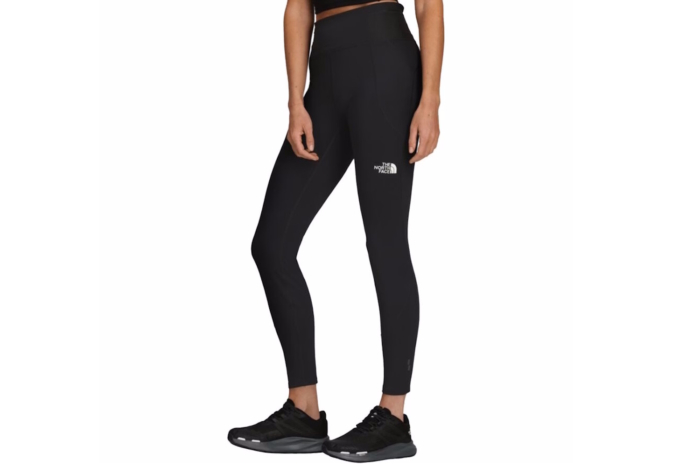
The North Face Women’s Winter Warm Pro Tights
-

-
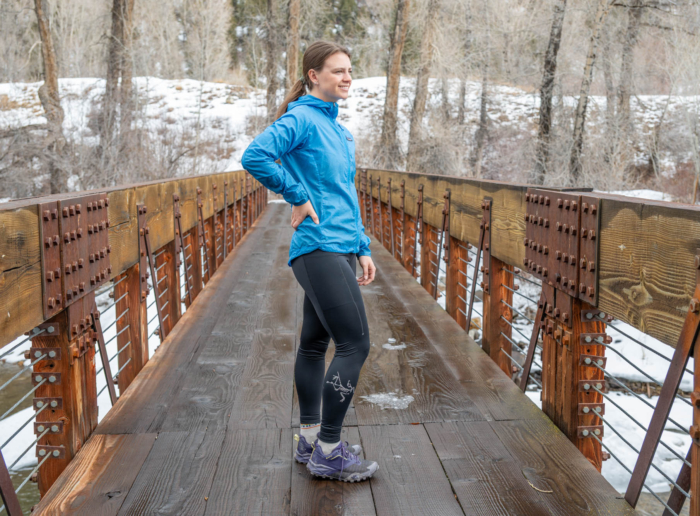
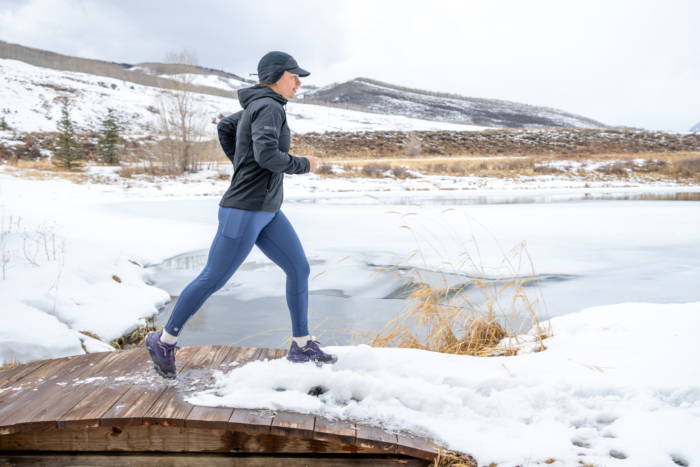
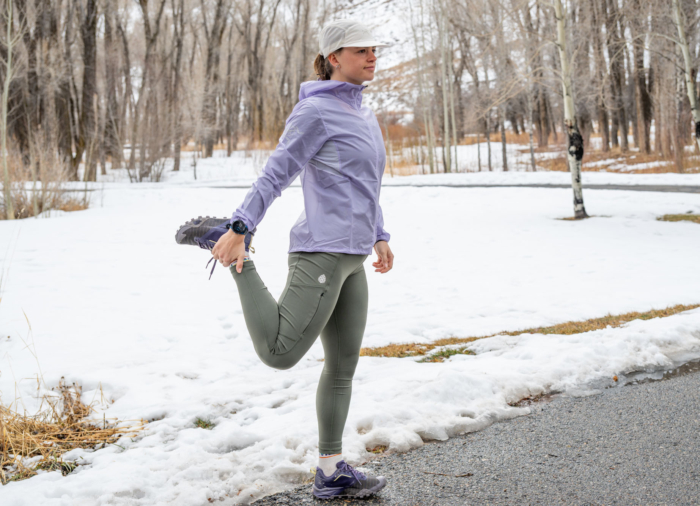
We tested Winter Warm Pro Tights from The North Face during a cold winter run; (photo/Conni Mahoney)
-
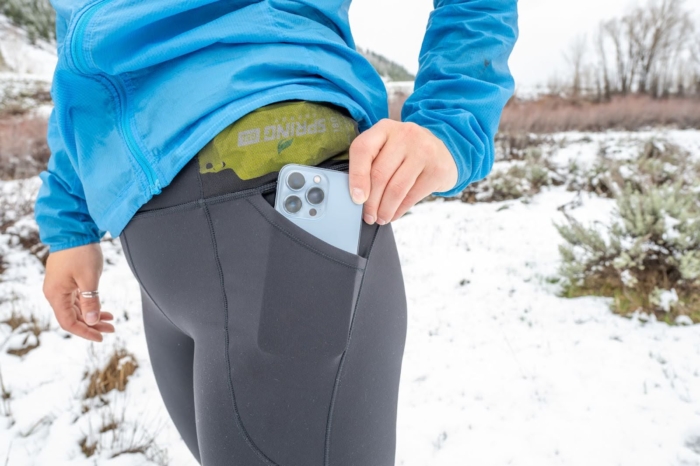
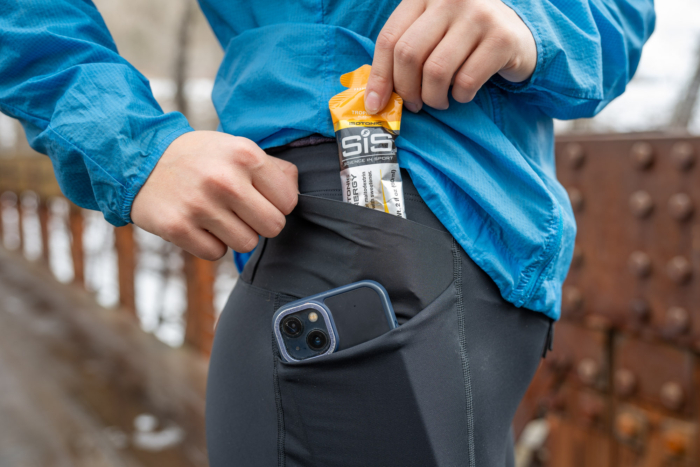
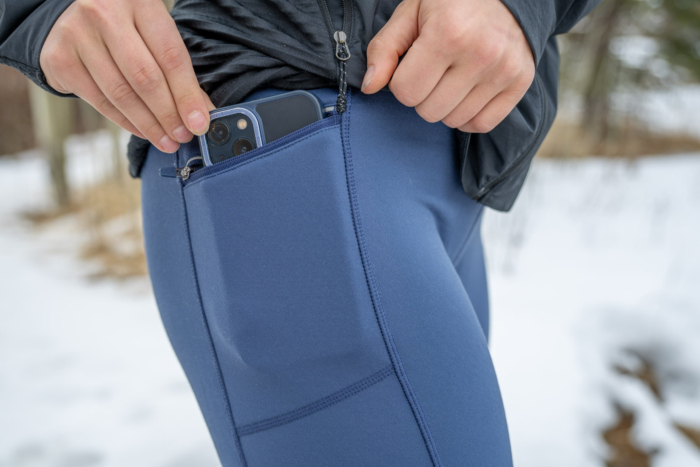
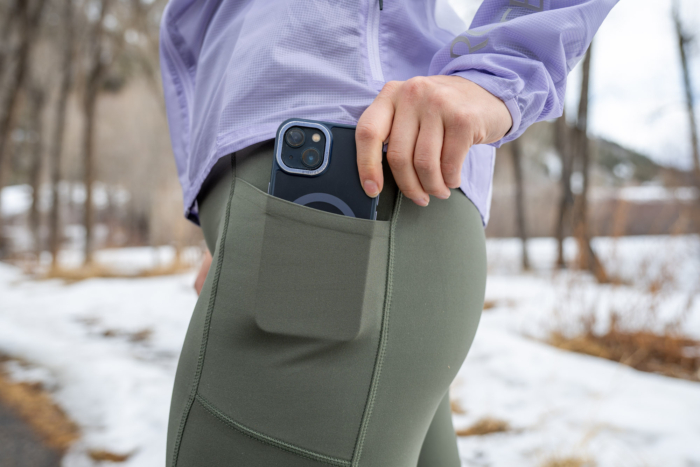
Handwarmer pockets on Winter Warm Pro Tights are spacious enough to hold your phone; (photo/Conni Mahoney)
-
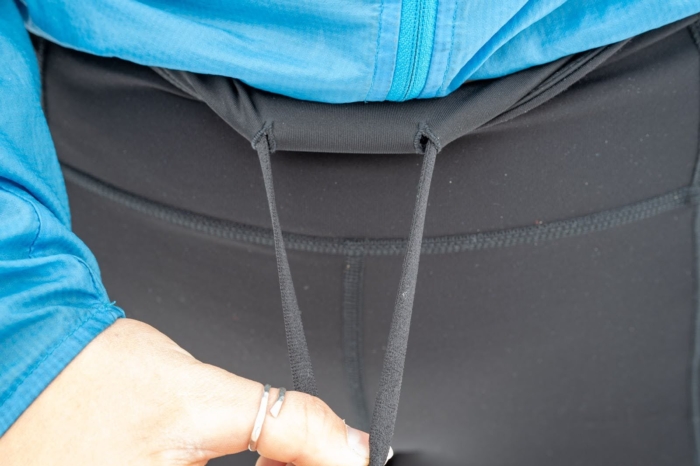
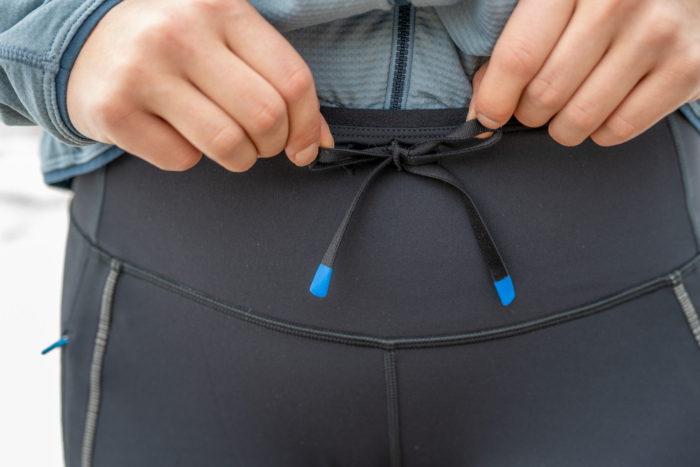
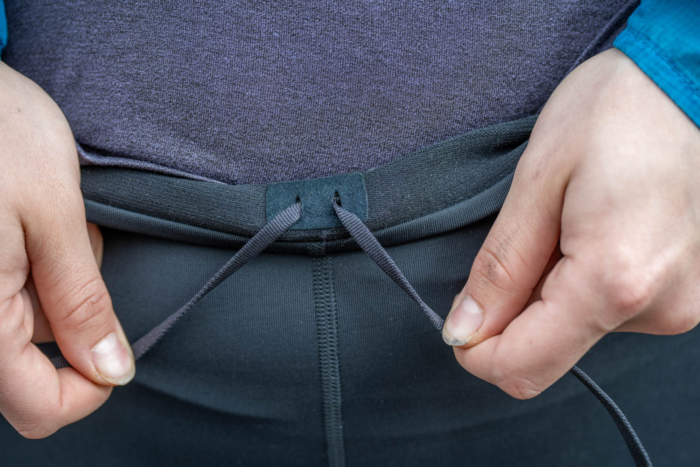
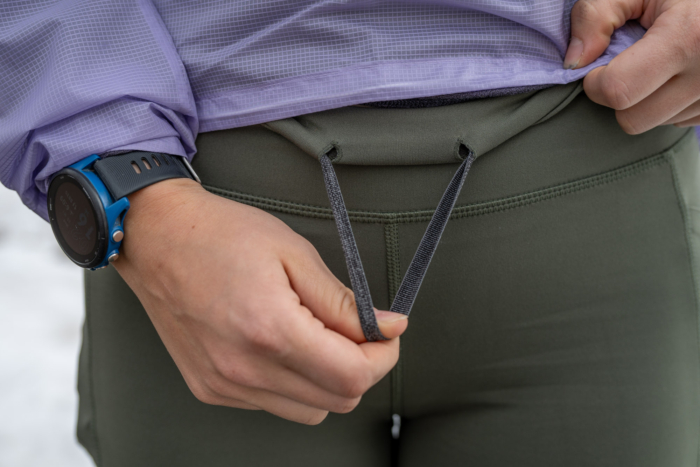
The mid-rise Winter Warm Pro Tights from The North Face feature an internal drawstring for a secure, personalized fit; (photo/Conni Mahoney)


Specifications
Pros & Cons
Pros
- Ready for an array of weather
- Super comfortable
- Waistband doesn’t slide down
Cons
- Shorter inseam (ends above ankle)
- We’d like to see more reflective material
Read Review: My Winter Running Staple: The North Face Winter Warm Pro Tights Review
Our winning pick again solidifies its position at the top. The North Face Women’s Winter Warm Pro Tights ($110) stood out thanks to its exceptional breathable construction, malleable material, and moisture-wicking ability. The Warm Pro Tights are also wind-resistant and moisture-repellent — making them ready for erratic weather. They’re darn comfortable, too.
The mid-rise waistband sits just below the belly button with an internal drawcord for adjustability. Updated with a full-knit construction, there’s more give — especially when you’re sliding them on and off — and ease of motion. The brushed material is soft, fleece-like, and integrated into the new thigh pockets, on the knuckle side, as well as throughout the entire interior.
Previous iterations of this tight only had two pockets — this one has five. On the right and left leg, a roomy thigh pocket (6” x 3.75”) is spacious enough to hold a large phone, which we found to be secure despite no zipper, with zero bounce.
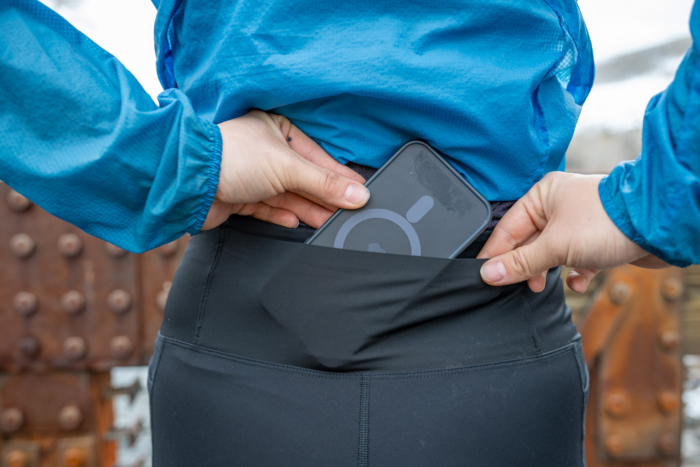
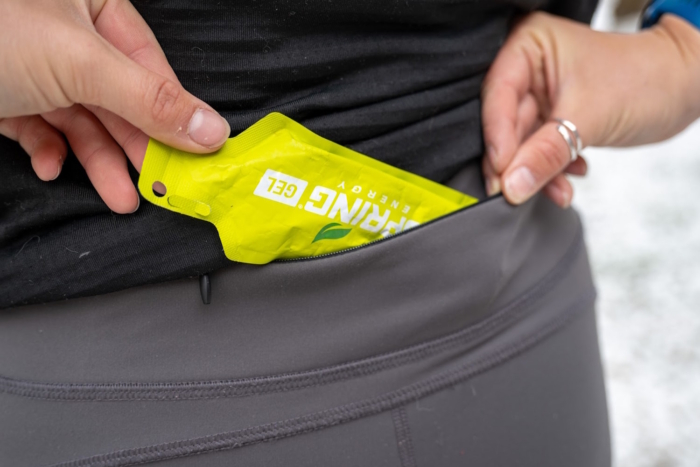
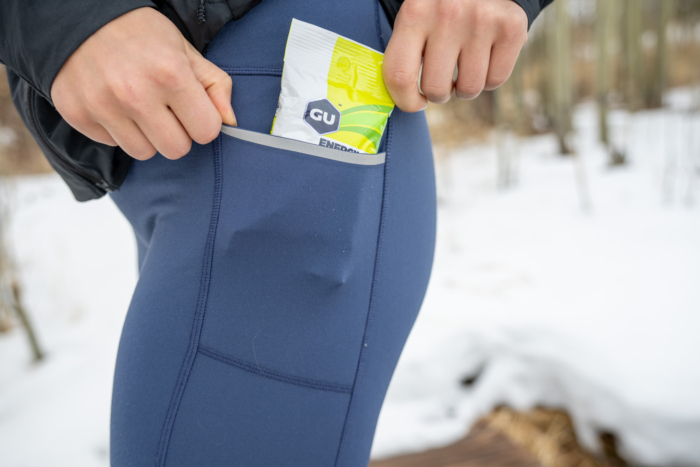
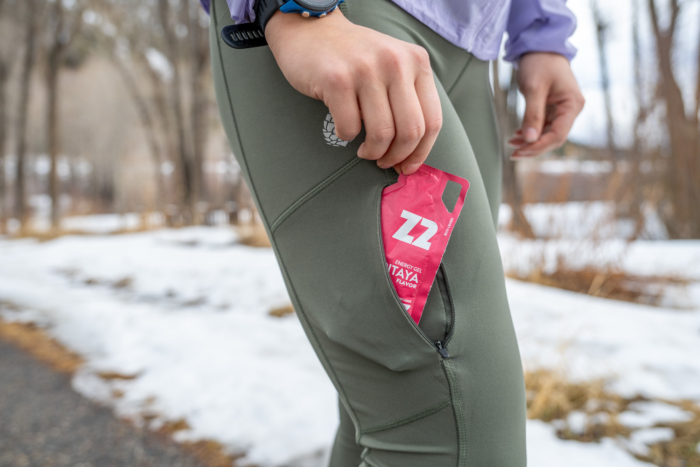
Bonus: we noticed that sweat didn’t permeate the fabric to reach the screen or camera lens. Another back pocket (6.5” x 2.5”) with a zip closure is integrated into the waistband for smaller items such as keys, cards, an energy gel, or a bar but is spacious enough to fit a phone. There are also two mesh drop-in pockets near the waistband.
The newest version no longer has the WindWall front thigh panel to protect from wind. Instead, the brand focused on making the material thicker and warmer. It still blocks all but the harshest of winds. Nixing the WindWall panel allowed the legging to become all-around much more comfortable and soft. These feel downright luxurious.
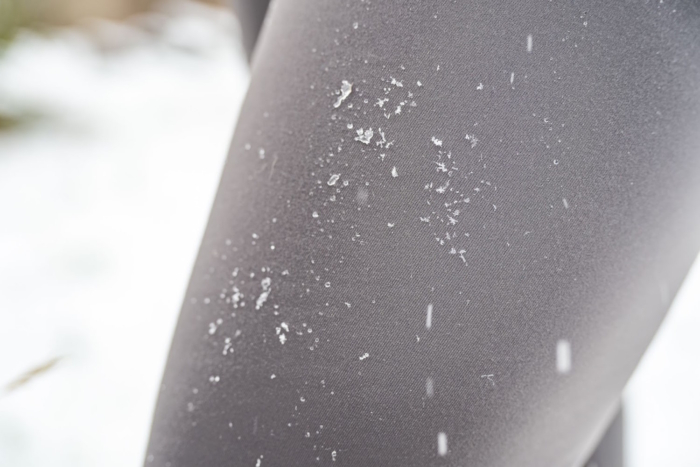
The fabric meets the brand’s FlashDry standards, meaning it’s engineered to spread moisture vertically and horizontally across the fabric, speeding up dry time. It is no longer coated with DWR (durable water repellent), but we tested them head to head with other DWR-coated leggings, and we noticed snow still beaded off just as well as the leggings with DWR. Technology is changing, and we are excited to see more environmentally friendly solutions.
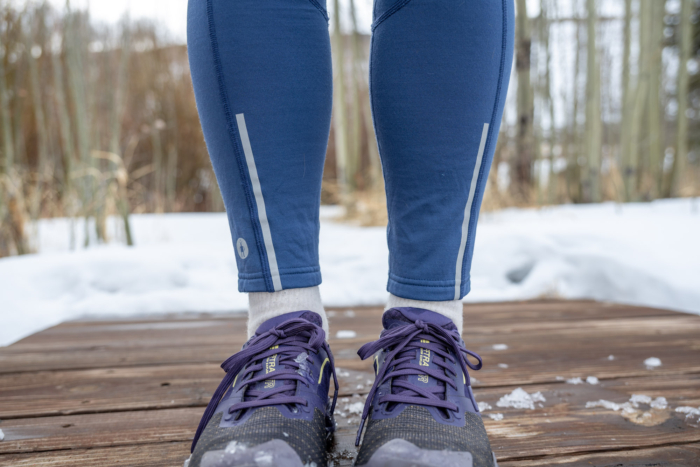
A disappointing update was the decision to include less reflective markings than before. Winter running often means more time in the dark. For visibility and safety, we like to see more reflective details, not less. They still have the reflective logo on the left thigh and now only include two small blocks on the outside of the lower ankle and another larger logo on the center back pocket. Unfortunately, the reflective logo on the back is useless as it is usually covered by a shirt or jacket when running during the winter.
These running tights are really designed with the winter elements in mind, so if you are running in mild winter temps, this tight might be more than you need. If you want a durable, ready-for-any-weather winter running tight, Women’s Winter Warm Pro Tights is a top candidate.
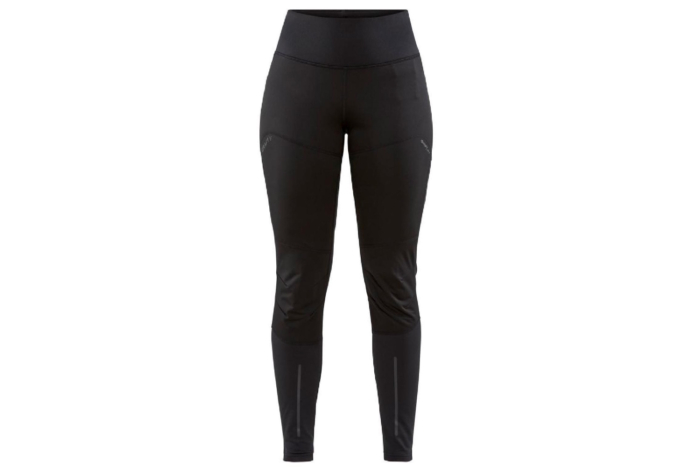
Craft Women’s ADV Essence Wind Tights
-
-
(Photo/Conni Mahoney)
-
(Photo/Conni Mahoney)
-
(Photo/Conni Mahoney)
Specifications
Pros & Cons
Pros
- Windproof
- Comfortable waist
- Reflective details
Cons
- Run small
- Weird pocket placement
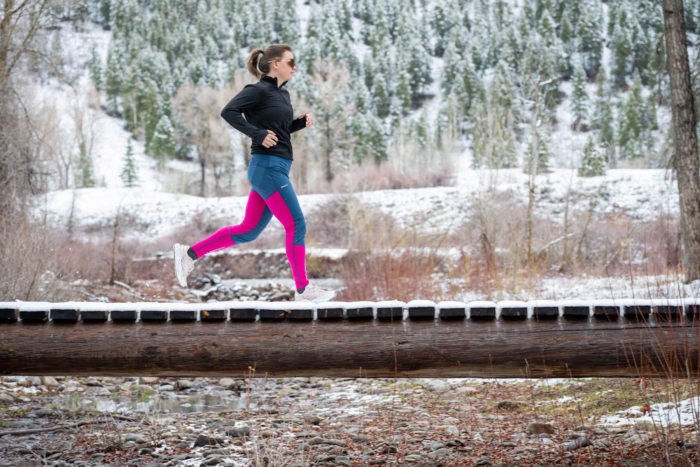
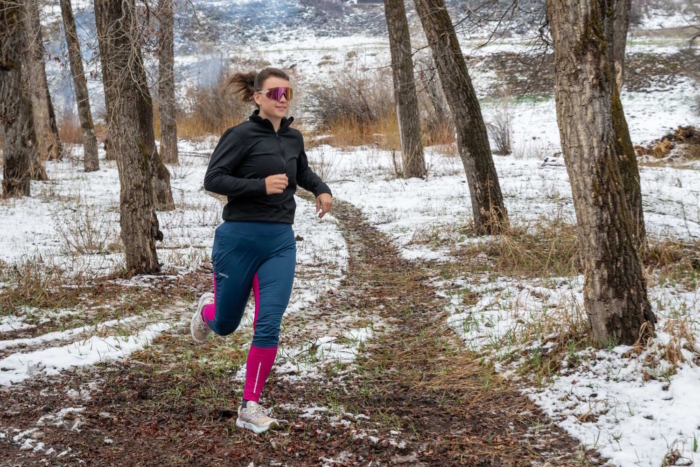
Winter winds are brutal. The Craft ADV Essence Wind Tights ($95) make running in them doable. These fleece-lined tights have windproof panels that go below the front of the knees and drop down on the backside to the top of the thigh. The wind panels also have knee pleats for maximum mobility. These heavy-duty tights are made for winter running.
The waistband is mid-rise, comfortable, and has a looped drawstring for a customized fit. Craft is a Swedish brand that makes its clothing long and lean. But that doesn’t mean they won’t fit; you may need to size up if you find yourself between sizes like our 5’4″ tester. We opted for a size medium; while they fit a little loose, they were not baggy.
Having tested this pair in the third-coldest county in the lower 48 states, Gunnison Valley, we credit these tights with making our winter runs much more enjoyable on cold and windy days. Unquestionably, these are our go-to leggings when the wind is zipping and snow is flying. They are thick, warm, and comfortable and block the wind.
Much to our safety-loving hearts, they did not skimp on reflective details. They have four 6″ vertical stripes; one on the back of each calf and one on the shin of each leg. Also included is a small triangle logo detail on the outside of the left upper calf and a reflective logo on the front right thigh. Winter running is often dark and these safety details matter.
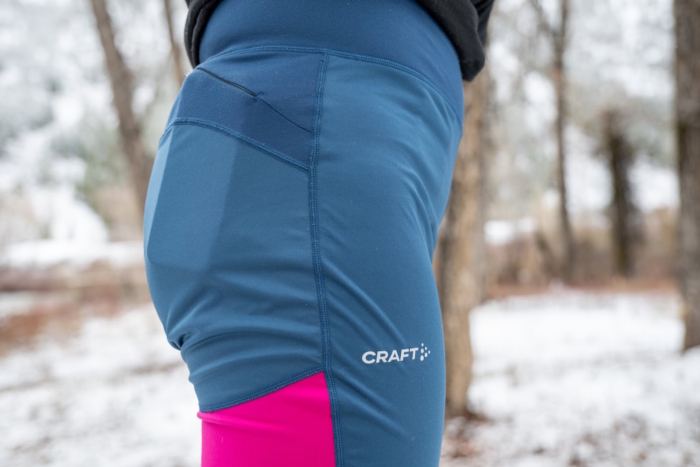
The single pocket placement is the only thing that we’d change. The 6″ x 7″ pocket with a 4″ zippered opening fits an iPhone 13 in its case, which is nice, but the angle of how it sits on the side hip feels wonky on runs and sags down the right side a little. Because of the cozy fleece-lined interior and the outstanding wind-blocking capabilities, the ADV Essence Wind Tights is our top pick for running in the wind.
Janji Aurora Fleece Tight
Specifications
Pros & Cons
Pros
- XXS-XXXL sizing
- Lots of reflective details
- Large pockets
- So soft and comfortable
Cons
- Drawstring can get sucked into the waistband
- Men’s version has additional pocket and wind panels
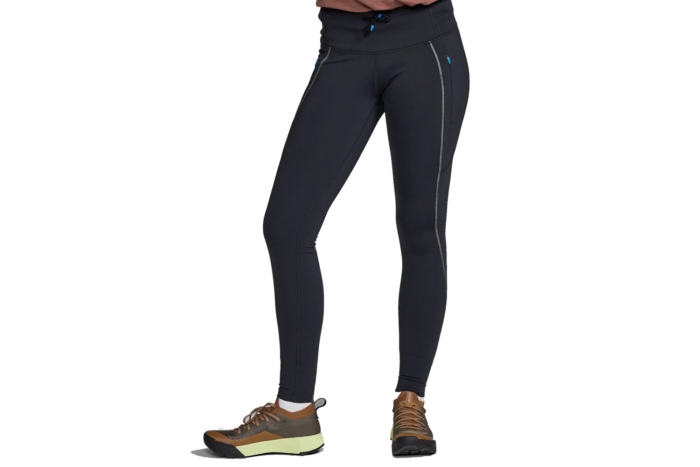
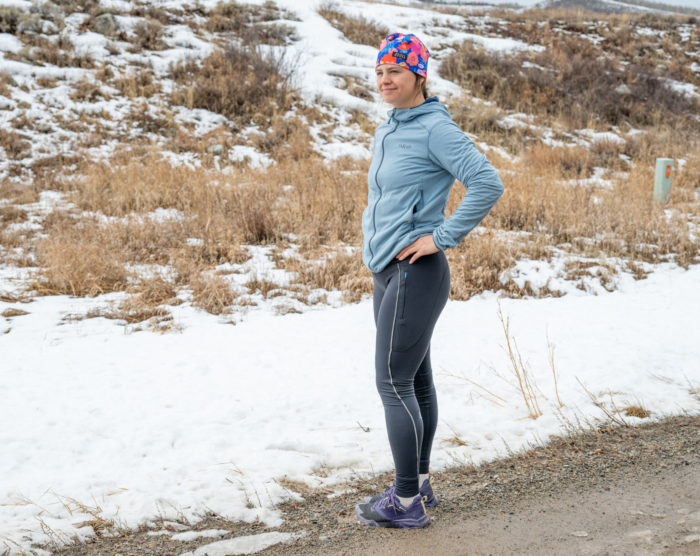
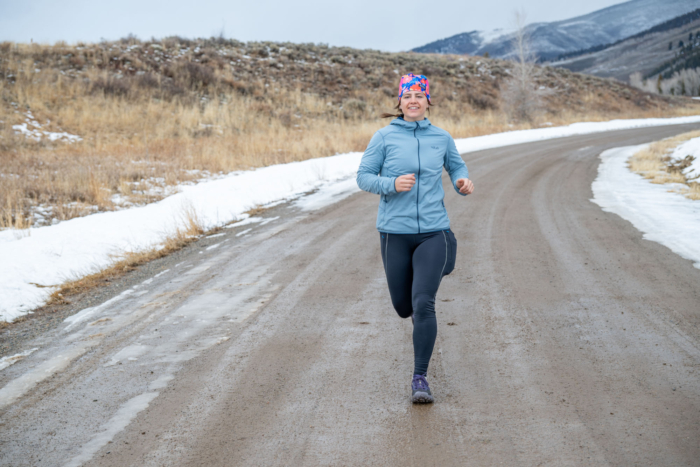
The Janji Women’s Aurora Fleece Tight ($124) is built for the kind of cold that makes you question heading out the door in the first place. Thick, soft, and seriously warm, these tights are designed for teens and single-digit temps.
Giving the tights a luxuriously cozy feel without sacrificing performance, the interior fleece is plush and oh so soft against the skin. Even with the heavier build, the fabric wicks moisture well and dumps heat when your effort ramps up, preventing that swampy feeling that can sometimes happen with highly insulated tights. That warmth puts them firmly in the true winter category — we found them noticeably more insulated than the Rabbit Defroster Women’s Speed Tights, ultimately bumping those from our top spot and earning the Aurora Fleece Tight our Best Insulated Women’s Winter Running Tights award.
A wide 4-inch waistband adds to the comfort factor and sits securely without digging in. It rose just above our ultra-runner tester’s belly button. The external drawstrings help fine-tune the fit, though we had one instance where a cord slipped inside and required a bit of fishing to pull it back out. Once tied, the waistband stays put, though the thicker construction does make it feel a bit more substantial around the waist than some lighter tights.
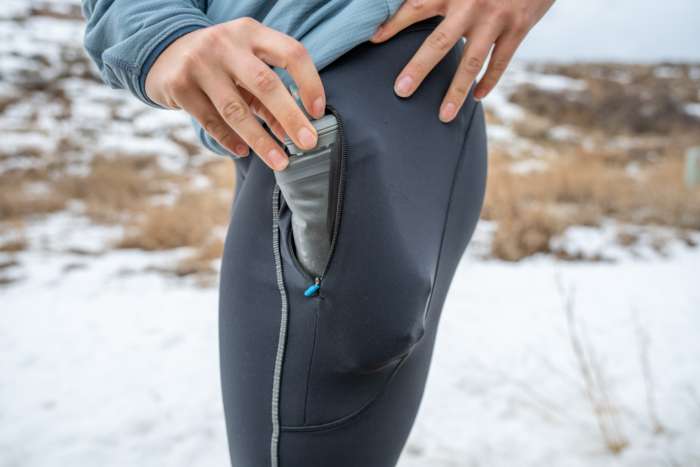
Besides the thick fleece, the second best thing is the pockets. The tapered thigh pockets measure about 11” long, gradually narrowing from roughly 6” at the top to about 2” at the base. The zippered opening is on the front of the thigh, and the pocket extends back towards the side of the leg. Tester and ultrarunner Constance Mahoney noted it felt a little backwards at first, but the placement works well once you get used to it. The pockets easily swallowed a 500ml flask with room to spare for gels, keys, and other small items — and everything stayed bounce-free.
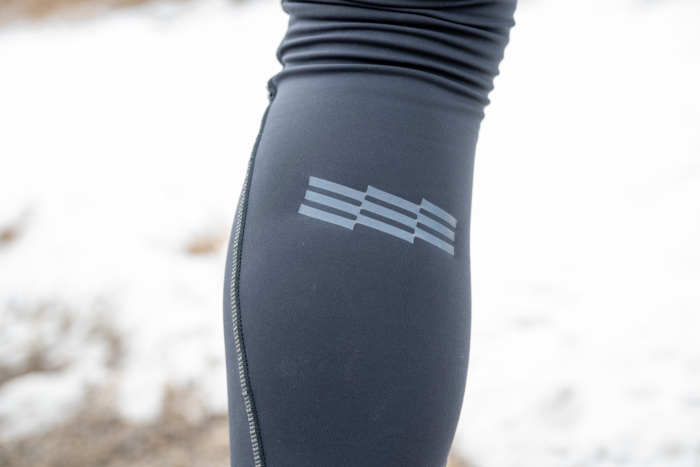
The small zipper pull features a textured tab that’s easy enough to grab (even with fingered gloves), and the laser-cut hem slides smoothly under socks without bunching. While the tights have quite a few seams, none were felt while running. Woven into the long outer seams is a reflective material, making these a great option for those low-light runs.
Mahoney’s husband has the men’s version, the Boreal Fleece Tight. She noticed her husband’s iteration has an additional stash pocket and wind panels on the thighs. She was disappointed to see the Aurora Fleece did not include a drop pocket or wind panels for extra protection. They could add a lot of value.
Overall, the Aurora Fleece Tight is built for cold-weather miles and comes with a 5-year guarantee. They’re thick, well constructed, and extremely warm—great for frigid mornings but likely too hot for sunny 20°F Colorado days. If you regularly run when temperatures dip into the single digits, though, these tights deliver the kind of insulation and storage that make winter miles far more comfortable.
Norrøna Femund Warmwool1 Flex2 Tights
Specifications
Pros & Cons
Pros
- Luxurious-feeling wool
- Multiple pockets
- Comfortable waistband
Cons
- Expensive
- Ankle zippers do not have a gusset
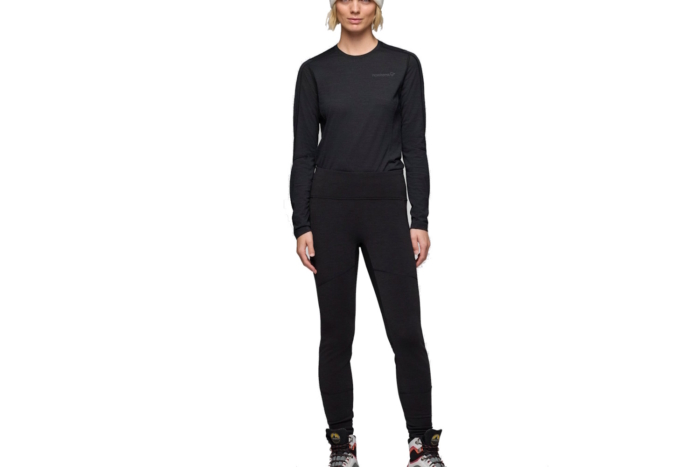
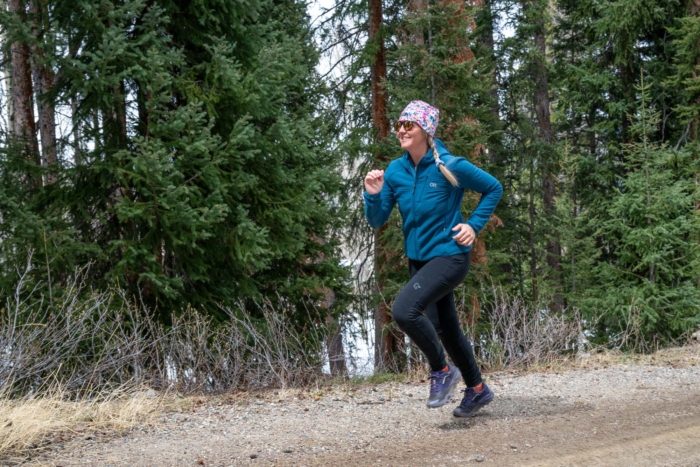
We loved the Norrøna Femund Warmwool1 Flex2 Tights ($249) for its cozy, luxurious feel and thoughtful design, especially the soft brushed fleece interior and subtle stretch that made us comfortable on our cold, winter runs.
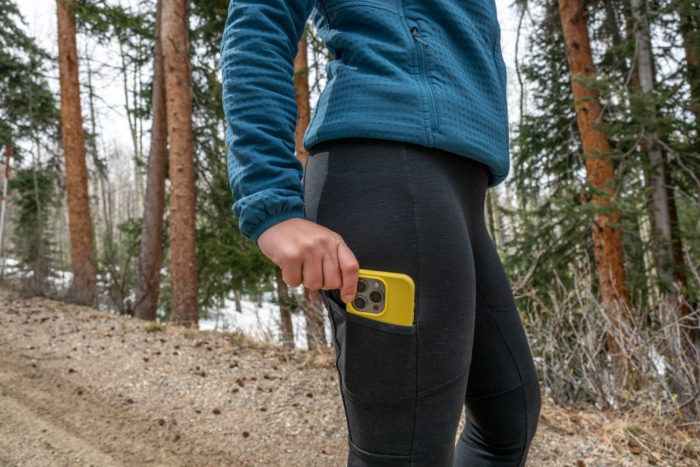
The articulated knees and high waistband gave us a full range of motion without feeling restricted, and the two side fleece-lined pockets (7″ x 4″) were large enough to store accessories such as gloves, snacks, or even a phone. They were placed a little low on the outer thighs for tester Conni Mahoney’s 5’4″ frame, but these run tall, so if you are taller, its placement may be perfect.
Speaking of pockets, they also include a zippered back waist pocket (6.5″ x 4″) that fits a phone and is sweatproof. An additional key or gel pocket (5″ x 3″) is inside the left waistband seam. It has a smaller opening but expands into a larger pocket that comfortably fits a couple of gels.
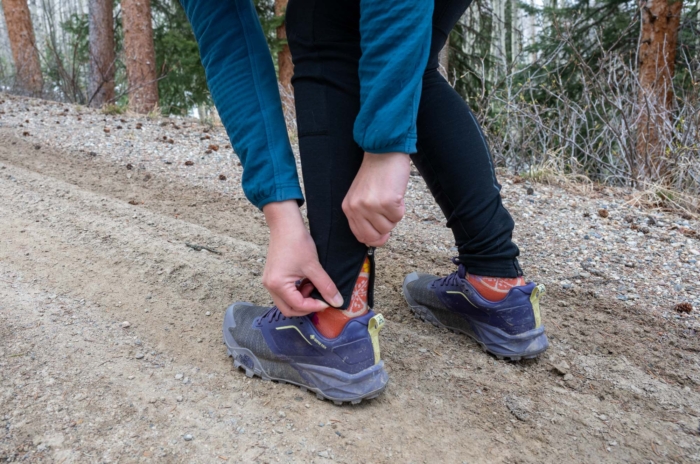
The 6″ zippered ankles made putting the leggings on and off easy — something we appreciated post-run with tired legs. We wish they included a gusset or inner flap to help block out the elements, especially if we wanted to unzip them slightly for ventilation during a run. Above the ankle zippers, they included a 5.5″ reflective stripe.
The wide waistband, featuring an internal drawstring, is noticeably stretchier than the rest of the tights, and in the best way. Waistbands can be tricky, but Norrøna got it right with this one. It was easily one of the most comfortable we tested, staying secure without feeling restrictive.
The wool and polyester blend regulated our temperature well and kept us dry and warm through spring snowstorms. The wool’s natural odor resistance was a bonus, keeping things fresh between washings. They are also noticeably thicker than the other wool leggings — like the Icebreaker Women’s Merino 260 Fastray High Rise Tights — which made them feel ready to handle whatever winter throws our way. And in our experience, they absolutely can.
But at $199, the price is a hurdle. These are some of the most expensive tights on this list, and while the performance and materials are top-tier, they may be overkill if you’re just looking for a casual cold-weather legging. Overall, the Femund Warmwool1 Flex2 Tights feel like genuine luxury wool running tights — and that’s precisely what they are. They combine premium comfort with sustainable materials and durable construction, making them stand out for cold-weather running adventures. While the price is steep, they are a worthwhile investment for some.
Icebreaker Merino 260 Fastray High Rise Tights
Specifications
Pros & Cons
Pros
- Excellent moisture management
- Comfortable, mobile fit
- Practical design details
Cons
- Short inseam
- Limited weather protection
- Slightly higher price point
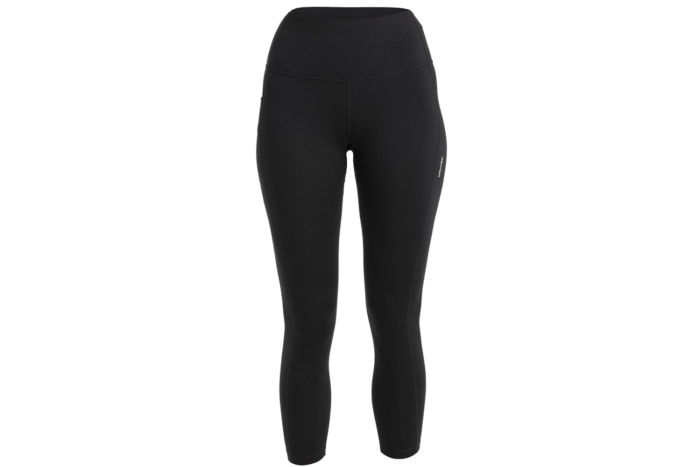
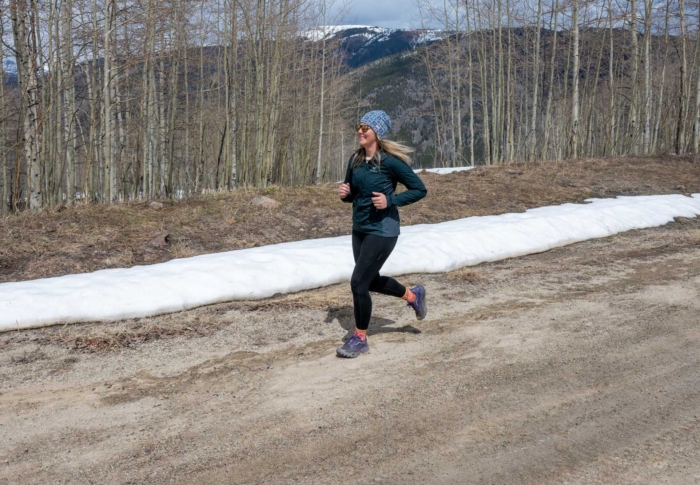
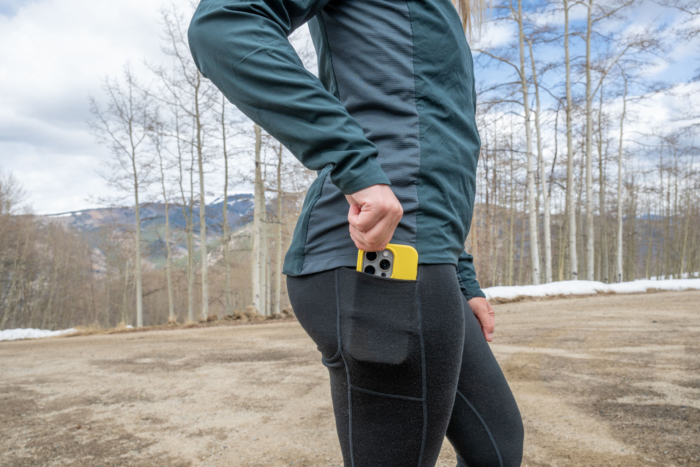
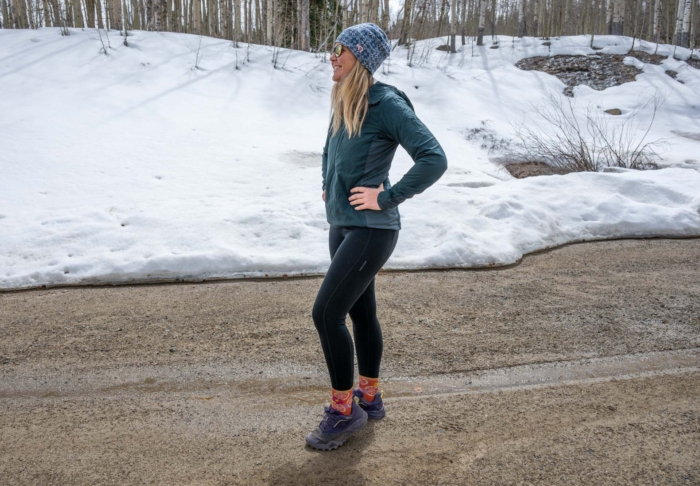
Just enough of everything you need and nothing that you don’t: The Icebreaker Women’s Merino 260 Fastray High Rise Tight ($120) offers plenty of stretch and never feels restrictive, even during the longest of strides. The tight is made with a moisture-wicking merino blend that feels soft and technical.
Designed for cold-weather running, these tights feature flatlock seams to prevent chafing and body-contouring panels for mobility. They efficiently regulated temperature for our long runs, tempo runs, and every pace in between. Merino’s natural breathability and moisture control stood out: Even during snowstorms, they absorbed moisture from our skin. They also moved well; we didn’t feel any restriction, even crouching to tie a shoe.
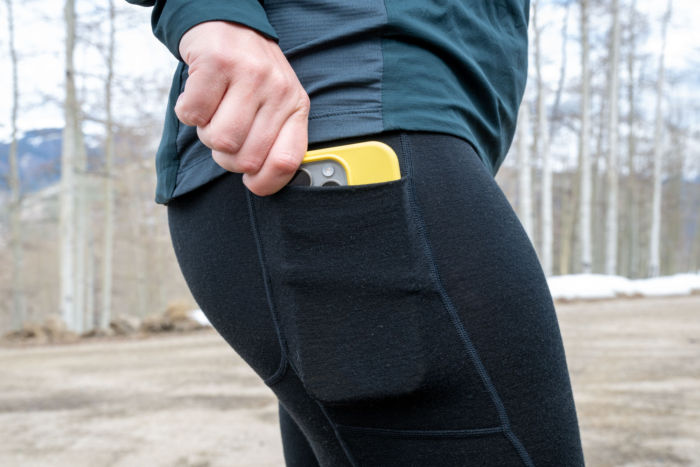
Tester Conni Mahoney particularly liked the convenient side pocket (6.5″ x 3.5″ with an envelope lid) that fits a phone without major bouncing. The waistband received an update with thinner elastic and a shorter rise than previous versions, and felt comfortable with no pinching or binding.
The 25″ inseam hit above the ankle bone on Mahoney, a 5’4″ tester, which felt a bit short for our ideal winter running tight. We usually prefer a little extra length to help seal out the elements. And with no wind-blocking panels or reinforced sections, these wouldn’t be our go-to on gusty days. That said, we really appreciated the extra layer of fabric that covers our backside. It kept things truly squat-proof — something more gym leggings could definitely learn from.
If you’re looking for winter running tights that excel in moisture control and comfort, the Merino 260 Fastray High Rise Tights are a solid pick. But if you need something longer than a 25″ inseam, you may be interested in the Norrona Femund WarmWool1 Flex2 Tights.
2XU Ignition Shield Compression Tights
Specifications
Pros & Cons
Pros
- Tall sizes
- Oversized reflective logos
- Waterproof thigh panels
Cons
- Runs slightly small
- Snug waistband
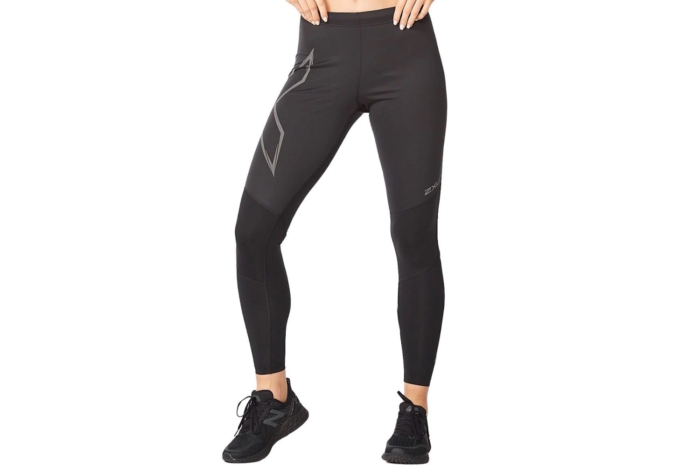
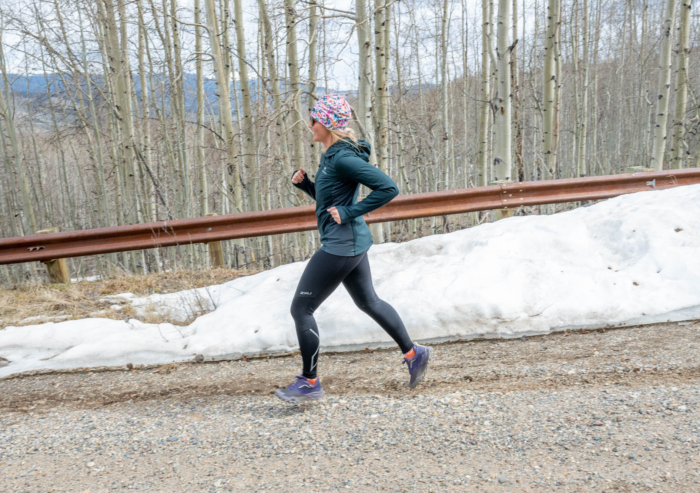
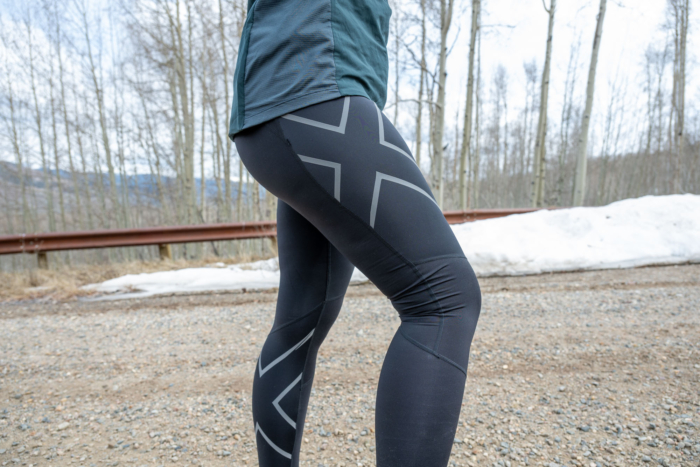
Compression and coziness? The cold-weather combo is music to our ears. The 2XU Ignition Shield Compression Tights ($110) combine waterproof panels on the thighs with soft, brushed thermal fabric through the lower legs, offering both protection and comfort. We liked the moderate compression throughout — they offered solid support without feeling restrictive, even on longer runs.
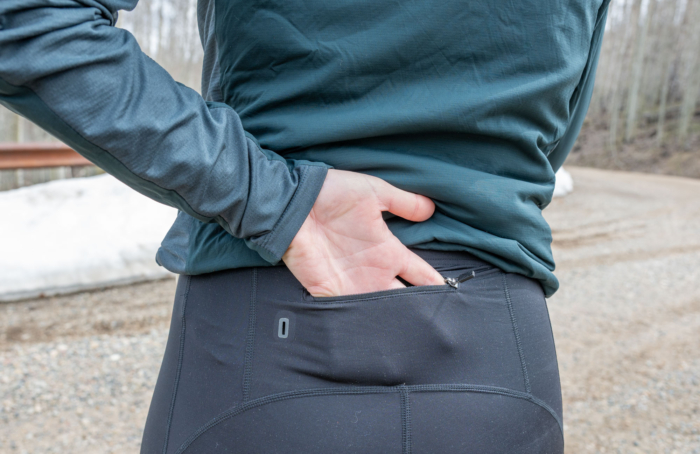
The rear zip pocket (7″ x 4.5″) easily held our keys and ID with minimal bounce. Fitting an iPhone 13 was a bit of a squeeze, especially with a case, but once we removed the slim cover, it slid in more easily. A small slit in the pocket also allows you to thread a headphone cord through. Tester Conni Mahoney used the pocket to stash a charging brick and ran her headlamp cord through the built-in slit, allowing her to keep her headlamp powered during a nighttime adventure run.
With its extra-long 14″ drawstrings, the waistband kept things secure during runs, though we found the fit a bit snug around our tester’s boxy waist shape. We especially appreciated the oversized reflective logos on the thighs and calves — perfect for early morning or evening miles when visibility matters. Built-in safety details like these always stand out to us; in this case, they really delivered.
The fit and feel is slim-fitting and sleek. But the 2XU are compression tights, so the fit runs tighter than any other pair we’ve tested. Be sure to use its size chart to help pick the correct pair. Speaking of its sizing, they offer tall sizes, too.
The waterproof thigh panels handled Colorado snow without a hitch and did a solid job blocking the wind. We were genuinely impressed with how well they performed during our spring runs, especially in those classic mountain west conditions that shift from sunshine to sudden snow squalls. The Ignition Shield Compression Tight is a strong contender for a sleek pair of compression tights that can handle winter and shoulder-season runs.
REI Co-op Swiftland Thermal Running Tights – Women’s
Specifications
Pros & Cons
Pros
- Gusset and triangle-shaped interior leg seams prevent chafing
- Contains Bluesign-approved materials
- Flat seam construction helps prevent friction
Cons
- Waistband pockets have no closure
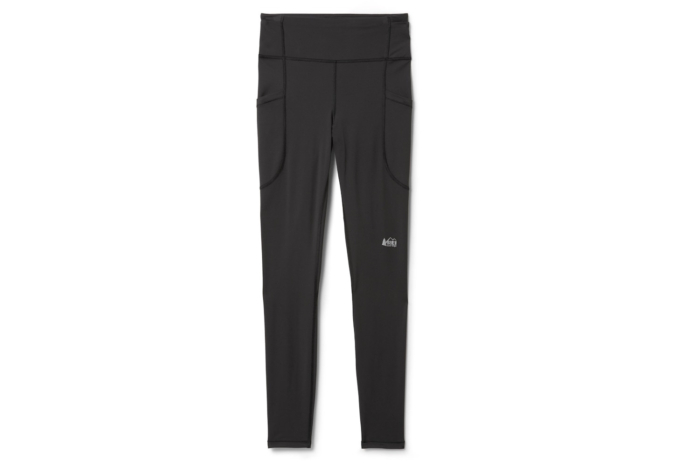
Without surprise, our reigning best-budget winner is the REI Co-op Swiftland Thermal Running Tights ($85), which are warmer, softer, and perform even better than its predecessors.
REI opted to go full length on this design, adding 2” to the inseam for a total of 28”, landing at the ankle. They shifted their reflective detail from the hemline to a 1” horizontal reflective stripe on each calf. Additionally, they placed a small reflective logo on the front left quad.
These tights offer light compression and a super wide, comfortable, high-reaching waistband (they’re labeled as mid-rise but rose over our belly button). The flat seam construction, generous gusset, and dual interior leg seams — which create a triangle-shaped patch on the inner thighs — help eliminate chafing and increase the range of motion.
The pockets we loved are back for the thermal version. The tapered compression thigh pockets (8” to 6” x 4.25”) are just tall enough for a large phone. The two 5”x 3” exterior waistband pockets could store snacks, but without a closure, we don’t recommend using the pouches for valuables. They ditched the interior key pocket and added a waist pocket on the back. Again, there is no closure, so keep valuables elsewhere.
Made with a Bluesign-approved nylon-spandex blend, we high-five the sustainability. The fabric stays flexible, wicks away moisture, and sheds precipitation well. The lining is cozy, soft, and feels like a warm hug next to the skin.
Unlike the previous iteration, which worked well for warmer winter days or transition days when you need something a bit more than shorts, these Swiftland Thermal Running Tights are aptly made for winter. For under $100, they remain our top pick for the Best Budget Winter Running Tight.
Field-Tested & Approved: Other Women’s Winter Running Tights for Turbulent Weather
Specifications
Pros & Cons
Pros
- 00-16 size options
- Reflective details
- DWR finish
Cons
- 1” waistband may be uncomfortable for some
- Light compression makes it run small
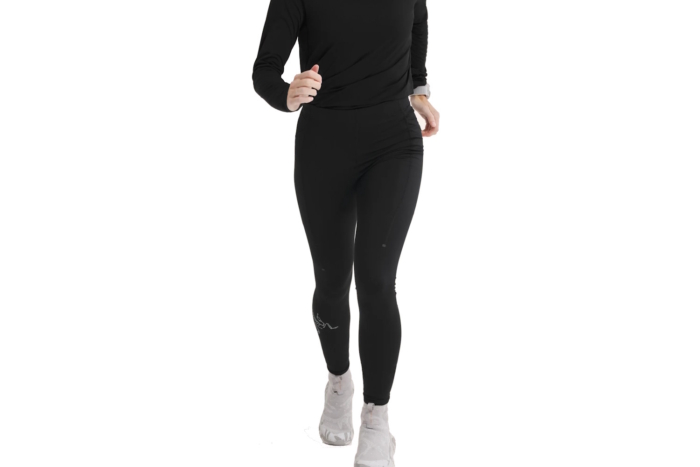
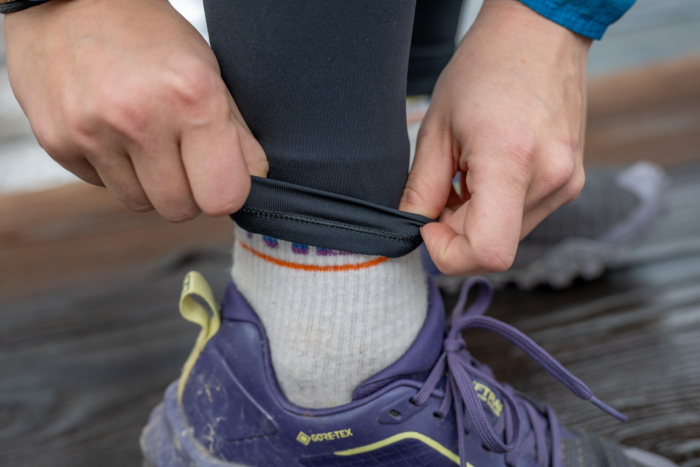
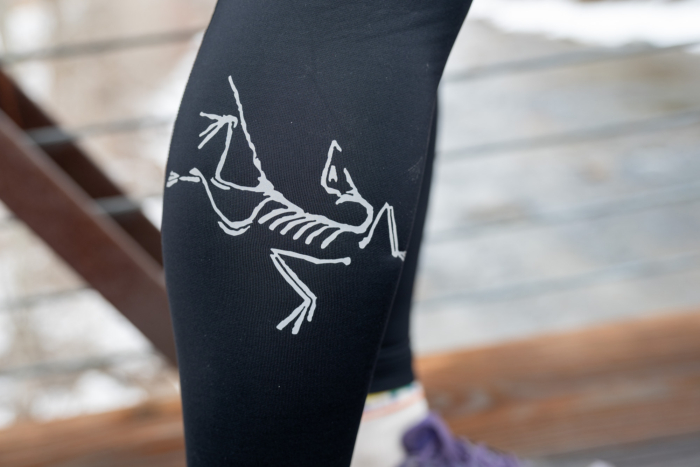
The Arc’teryx Norvan Legging ($140) balances compression, durability, and comfort, making it an easy pick for daily training runs. With light compression and a soft, brushed interior, these leggings feel comfortable next to the skin. The outer fabric is slick-feeling and leans more technical and durable, well-suited for runners who split their time between roads and trails.
The inside fabric is lightly brushed and soft, providing a touch of warmth. On the outside, the material has a more technical, snag-resistant feel compared to softer leggings like the Stio Women’s Glide Tech Legging. That tougher exterior proved useful on our trail runs and off-path adventures — ultrarunner and gear tester Constance Mahoney ran through winter sage and even brushed up against rose bushes without seeing pilling or damage to the fabric. The fabric also features a DWR (Durable Water Repellent) finish that helps moisture bead up and roll off, and it’s made without intentionally added PFAS.
Storage is generous, though mostly open-style pockets. Around the waist, there’s an 8” by 3.5” rear envelope pocket, plus left and right tapered waistband pockets measuring roughly 6” long and narrowing from about 3.5” to 2”. Two additional side leg pockets measure about 5” by 10”, providing plenty of room for a phone or other essentials. We generally prefer pockets with zippers or covers, but the deeper 10” design helps keep items secure and bounce-free.
The waistband is slim at just 1” wide but sits comfortably right at the belly button without digging in. An internal drawstring allows you to fine-tune the fit. A 5” by 4” reflective logo on the front right leg adds a solid hit of visibility for early morning or evening miles.
Fit-wise, these leggings offer light compression, making them feel supportive, not restrictive. That said, during longer runs and faster workouts, Mahoney did occasionally pull the legs up, something to keep in mind if you’re between sizes.
They’re also Fair Trade Certified, which is a nice bonus for runners who care about how their gear is made.
Overall, the Norvan Leggings work well as a daily driver for a wide range of runs — not too warm, not too minimal. With its soft interior, durable exterior, and trail-ready build, it’s a strong option for runners who want a versatile tight that can handle both pavement miles and brushy singletrack.
-
-
(Photo/Conni Mahoney)
-
(Photo/Conni Mahoney)
-
(Photo/Conni Mahoney)
Specifications
Pros & Cons
Pros
- Grippy drawstring that stays tied
- Eco-friendly PFC-free water-resistant finish on face fabric
- Reflective seams
- Very soft
Cons
- Shorter inseam
- Fabric does lightly pill
- Comes only in one gray color
Read Review: Frost Fighter: Rabbit Defroster Speed Tights Review
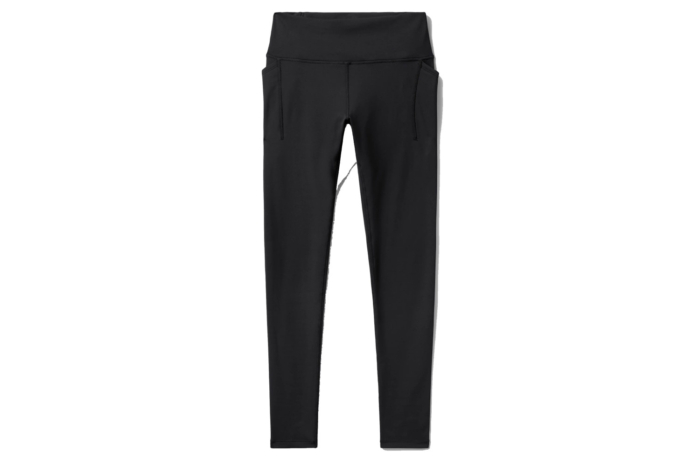
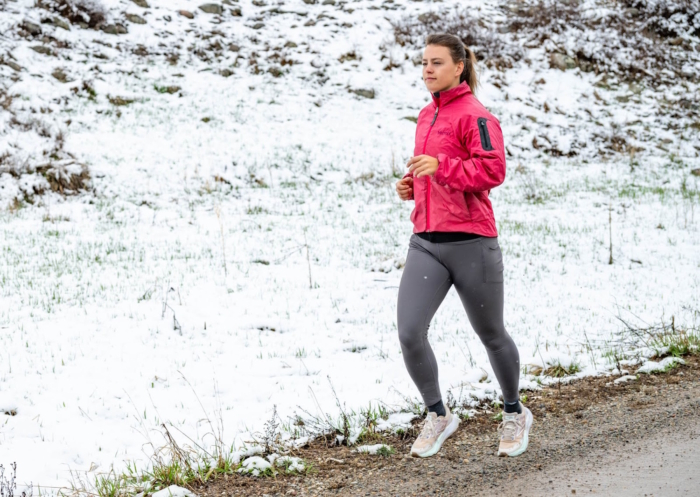
Frosty and frozen out? The Rabbit Defroster Speed Tights ($135) are a semi-compression legging with a soft fleece lining and warmth, warmth, warmth. These tights aren’t made to make you sweat while you run but are certainly a thermal queen compared to many of our other top choices.
To point, the Defroster Speed has a relatively high Thermal Insulation of Clothes (CLO) rating of 0.23. CLO is used to measure warmth levels across different materials. For example, boxer briefs have a CLO of 0.04, and sweatpants have a CLO of 0.28. Zero CLO is your birthday suit.
This winter-centric tight also boasts five pockets: a left and right hip pocket (6” x 4.25”), a back zippered pocket (7” x 3”), and two on the left and right front waistline seam (a 3” opening goes to each 3” x 6” pocket). You will have plenty of options to stash snacks, a phone, and keys, all with minimal bounce. Unfortunately, the side pockets are not sweatproof, and your phone screen will collect condensation.
The Defroster Speed Tights are also water-resistant for those snowy days, making this second-skin layer a great all-around option to have on hand when winter comes around.
Specifications
Pros & Cons
Pros
- Water- and wind-resistant front panels
- Sustainably sourced merino wool
- Flatlock seam construction helps prevent chafing
- Exterior ankle zippers for ease of pulling tapered, fitted tights on and off
Cons
- Pocket is not big enough for a large phone
- Had to retie drawstring mid-activities to keep the tights from sliding down
- Textile on the backside is thin if stretched, like when bending over to tie a shoe
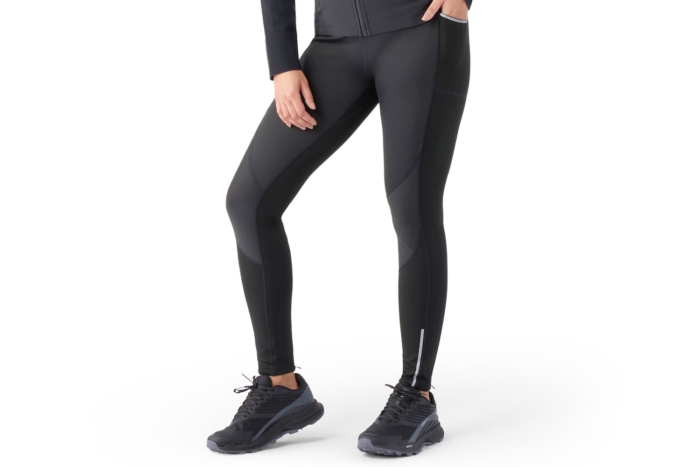
The Smartwool Women’s Active Fleece Wind Tight ($160) is one of the most technical winter tights we’ve pulled on. Lined with a cozy next-to-skin layer woven with merino wool yet reinforced with a totally windproof, generous front panel — from mid-shin to the waistband — this design is money. The face fabric is also topped with DWR (durable water repellent). Not much more could be added to help protect against winter’s dance.
While the interior merino-polyester blend is less soft than brushed fleece, that doesn’t mean it is uncomfortable. Though not buttery smooth, it’s still pleasant. Natural crimps and bends in wool fibers trap air against your body, which provides insulation while also wicking away moisture vapor.
The fibers help you stay dry and regulate the body’s temperature. Otherwise, the primary fabric on the exterior is merino reinforced with elastane and polyester, which keeps the pants durable.
Two pockets sit on the side of each thigh: one slide-in pocket on the left and a zippered pocket on the right. Keep in mind, the left pocket is not deep enough to fully cover a large phone (ours stuck up ½”). On the exterior, the lower seam of each pocket is lined with a horizontal strip of reflective material. Reflective strips are also on the vertical ankle zipper, which is 6.5” long and lined with an underlay of merino wool, so you don’t feel the teeth on your skin.
The inseam is relatively lengthy compared to sizes from other brands. For instance, the medium is 29.25”. If your legs are shorter than the inseam, you may need to scrunch the fabric up near the hem to fully close the ankle zipper. Ultimately, if you need long seams, the Active Fleece Wind Tight is a friendly option with the added benefits of being wind, water, and odor resistant while keeping you warm.
Specifications
Pros & Cons
Pros
- Excellent wicking
- Lots of reflective details
- Ankle zippers
- Natural odor resistance
Cons
- Doesn’t do great in wind
- No drawstring
- Expensive
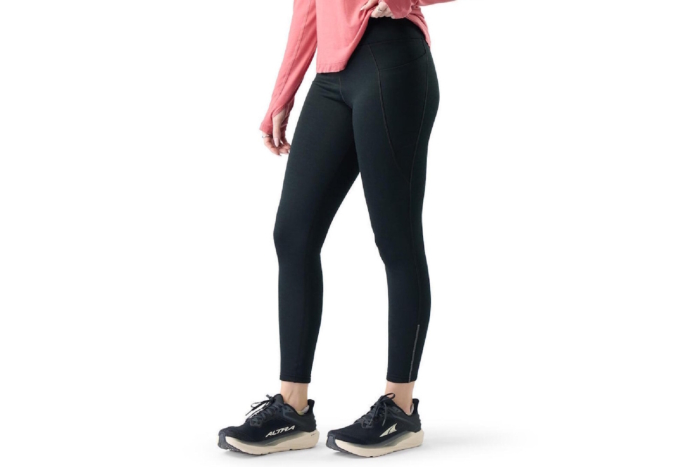
After a winter tight that doesn’t feel overbuilt but still handles chilly miles with ease? The Smartwool Active Fleece Tight ($160) offers enough warmth for cold-weather runs in the dead of Colorado winters, and for those tricky shoulder seasons.
This tight uses a merino-blend fleece interior. It feels soft next to the skin, isn’t itchy, and moves with you. On our runs around the Gunnison Valley in Colorado, it provided a comfortable layer of warmth for cool to cold days. It also breathes well during higher-intensity efforts. It doesn’t have that fully insulated, locked-in feel. Instead, we found it works well for interval training, shoulder-season miles, or sunny winter days when you don’t need full protection from the elements or on extra windy days.
The pocket storage is practical but minimal. A 7″ x 4″ zippered pocket on the right thigh securely holds essentials. The 5.5″ x 4.5″ open pocket on the left thigh is quick-access but better suited for smaller, less valuable items. Smartwool put reflective details on the top of both pockets, the 6″ ankle zippers, and a strip along the front lower seam. We appreciate all the reflective details they put into it.
Compared to the more protective Smartwool Women’s Active Fleece Wind Tight, this version feels noticeably lighter and more flexible. The Wind Tight features a windproof front panel and enhanced weather resistance, making it better suited for harsher, windier conditions. The standard Active Fleece Tight skips that extra layer, which results in better breathability and a more natural feel while running—but less protection when conditions turn more severe.
In short, the Active Fleece Tight is the one we kept reaching for on moderate winter days or when we wanted something that could handle both running and everyday wear. If you need maximum protection, the Wind Tight still has the edge. But for versatility and comfort across a wider range of conditions, this one fits the bill.
Specifications
Pros & Cons
Pros
- Durable, premium material
- Fun color-blocking and aesthetic
- Comfortable waistband
- Ankle zippers for smoother process pulling on and off
Cons
- Legs tend to slip down
- Short internal drawstring
- Small envelope flap leaves pockets unsecure
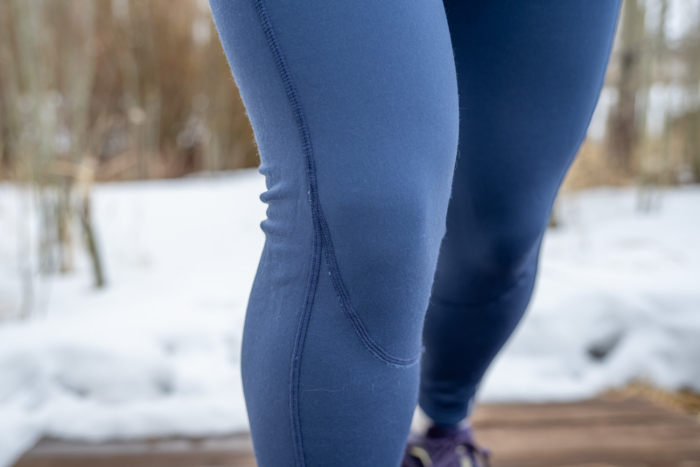
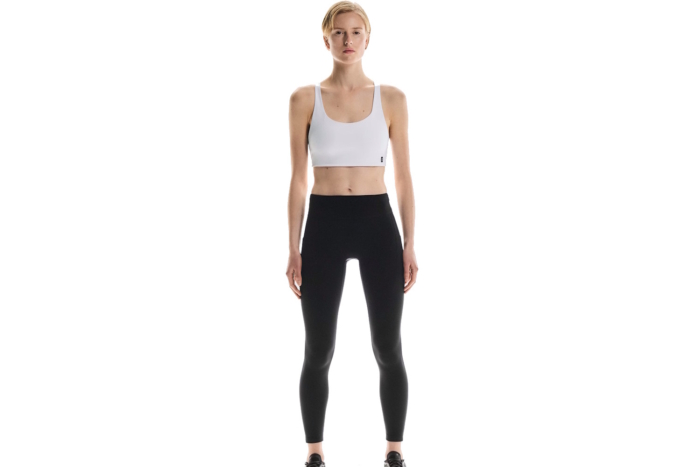
If you’re searching for a technical tight with a unique pattern, the On Running Performance Tights ($130) might be your next stylish running pal. These performance leggings have a 4”x9” horizontal insulated fabric panel above the knee to help warm sensitive tendons.
Above the panel sits an 8.5-inch-long strip of horizontal reflective tape. The remaining fabric is made of recycled polyamide, plus elastane, which gives a slight compression feel without lacking flexibility.
Though the above-knee panel adds protection against brisk conditions, the lower seam that sits directly above the knee proved to be less ideal. We found that the repeated motion of bending the knee caused that seam to creep down, which in turn tugs on the tights. We needed to consistently adjust and pull the fabric up to keep the panels in the correct place.
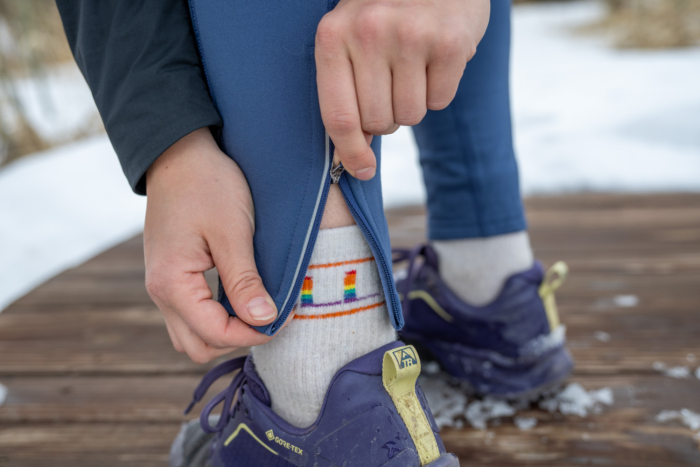
Despite the critique, the material has been high-performing and durable. The ankle zipper has a fabric underlay, so you can open the zipper to slightly increase ventilation on a run without moisture — like dew from the grass along the trail — flying against your lowermost leg.
Another note: While the ankle zippers are helpful when pulling on or off the tights, the retainer box at the bottom does rub on your ankle if the underlay is not correctly positioned.
Two 4.75” x 3” envelope pockets are integrated into the waist seam, on the back left and right side. A larger 6.5” x 3” pocket for storage sits between them. We were disappointed (and hangry) to find that our gels bounced out of the central back pocket during a run. The foldover fabric needs to be more secure, because the opening is currently covered by less than one inch, which is not ideal for toting anything valuable or fuel necessities.
The Performance Tights are another winter-oriented option to use across multiple seasons. Just be sure to have other pockets available to store valuables, like in a jacket or running belt.
Specifications
Pros & Cons
Pros
- Buttery soft
- Reflective details
- Odor resistant finish
Cons
- Waistband stitching coming apart quickly
- 26” inseam may be too short for some
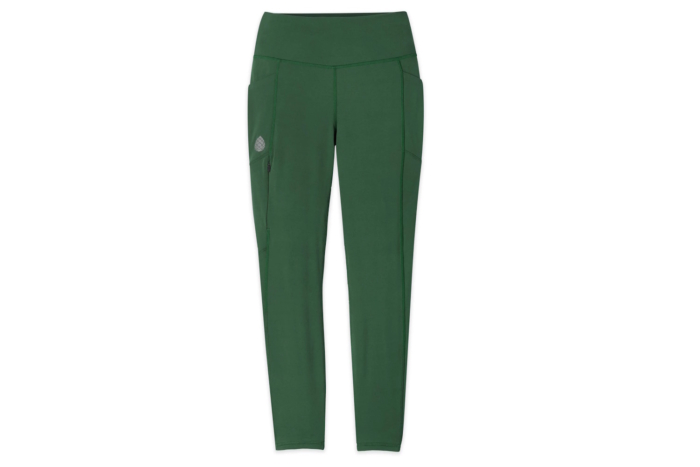
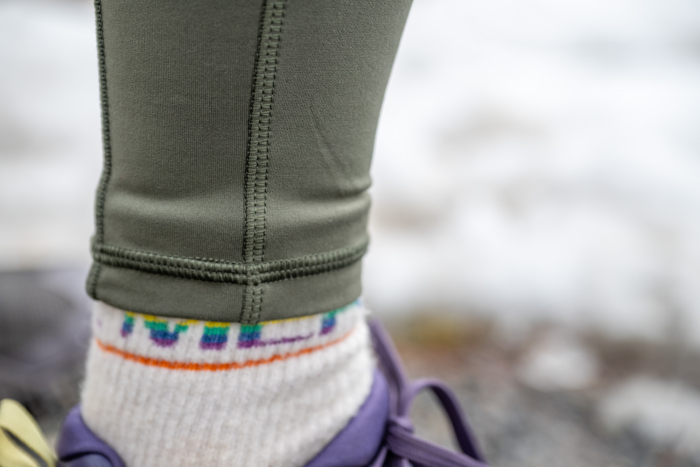
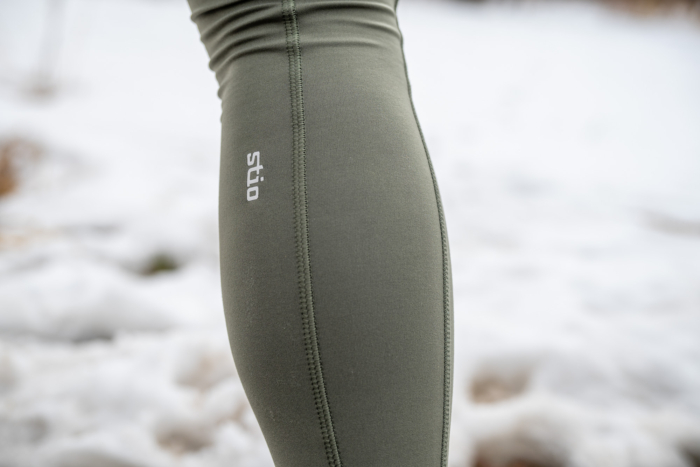
The Stio Women’s Glide Tech Legging ($129) lands in that spot for winter running when it’s cold—but not brutally cold. Think sunny 20-degree days or temps creeping into the 30s. These leggings offer lightweight warmth without the bulk of heavily insulated tights, making them a great option for runners who run warm or want something more versatile for shoulder-season conditions.
It’s buttery soft, similar in feel to the Janji Women’s Aurora Fleece Tight but without the fleece lining or heavy insulation. The result is one of the most comfortable, flexible leggings that tester Conni Mahoney has tested. It still provides a bit of warmth while remaining breathable enough for higher-effort runs or milder winter days. A 4” waistband sits comfortably at the waist, just above the belly button, and is supported by a thicker internal drawstring that helps customize the fit. Mahoney found the waistband comfortable without digging in or shifting mid-run. Mahoney did have to pull it up a few times during longer runs, but not enough to be overly annoying.
Storage is practical and well laid out. Two open slide-in pockets sit on the sides of the thighs, each measuring roughly 7” by 5” — large enough for a phone or gloves. On the right side, there’s also a zippered pocket (about 7” by 4”) that’s ideal for keys or other valuables you don’t want bouncing out.
For low-light visibility, Stio added a few reflective notes, including a 1” reflective logo on the upper right thigh and another on the back of the right calf. They’re subtle but helpful for early morning or evening runs.
That said, durability raised a couple of concerns after a season of use. Mahoney noticed some pilling where her waist pack regularly sits, and a few seams had already started to come loose, which makes her question their long-term longevity if used frequently.
Still, if you’re looking for a soft comfortable winter legging that performs best in the 20-degree-and-up range, or on those bright Colorado winter days when heavier tights feel like overkill, the Glide Tech Legging delivers lightweight warmth with a very comfortable feel.
Specifications
Pros & Cons
Pros
- Super soft and comfortable
- Can be used as a layering system over other tights
- Long-lasting fabric sans signs of pilling
Cons
- Minimal reflective details
- Lacks tall sizing option
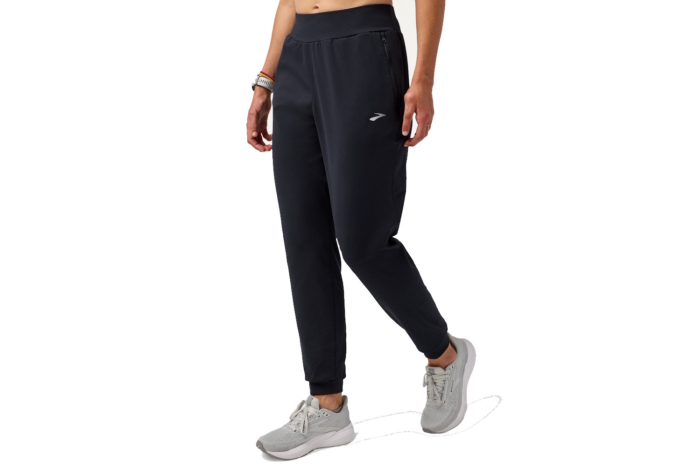
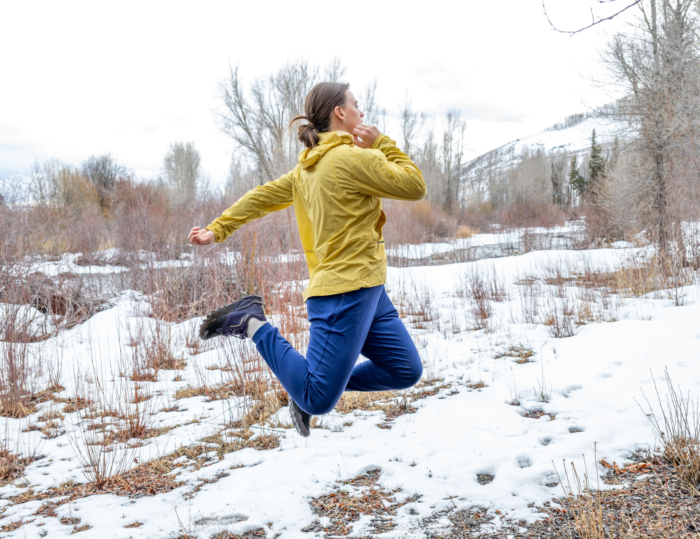
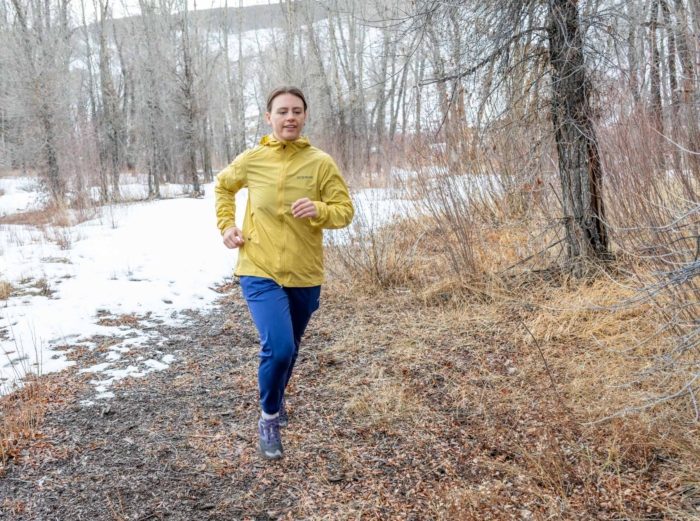
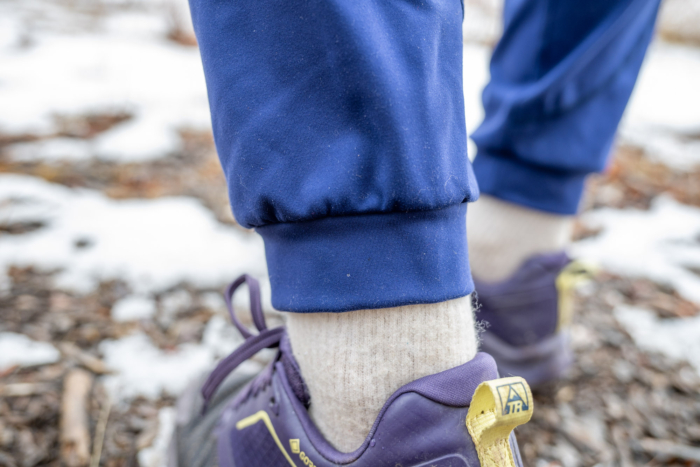
The overhauled Brooks Momentum Thermal Jogger 2.0 ($120) brings a few tweaks to a winter running staple. Already a favorite for runners looking for a jogger that can handle both cold-weather miles and everyday wear, this latest version keeps the multi-use spirit while refining a few details that make it even more comfortable and functional.
The pants still rely on Brooks’ DriLayer Threshold fabric, which strikes a nice balance between warmth and breathability. The material feels slightly substantial without being bulky, wicking sweat quickly while shielding you from biting wind and light snow. The brushed fleece traps warmth while still breathing well enough for tempo efforts or steady winter long runs.
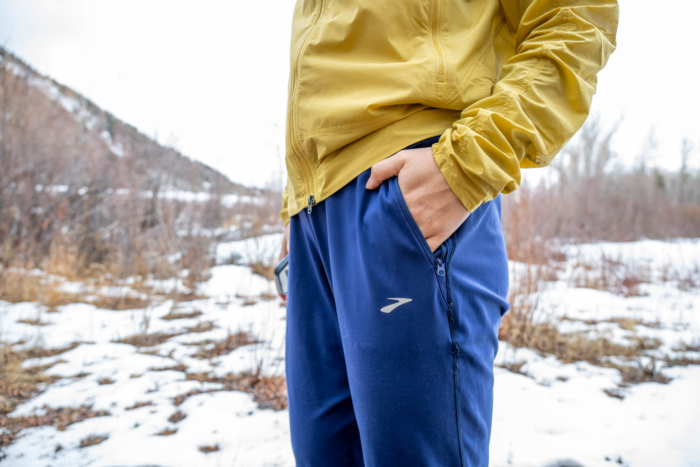
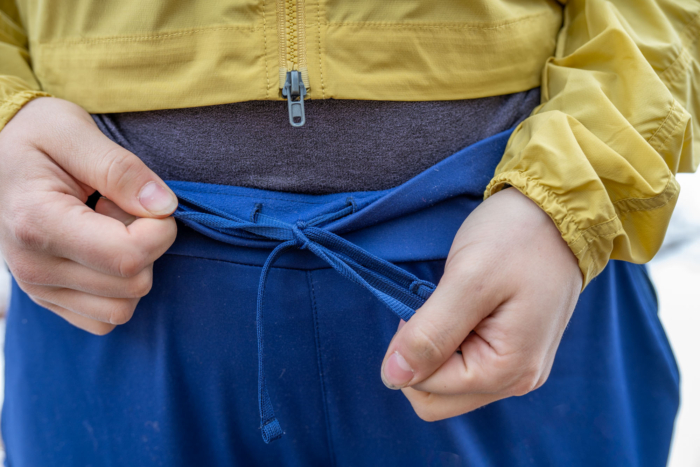
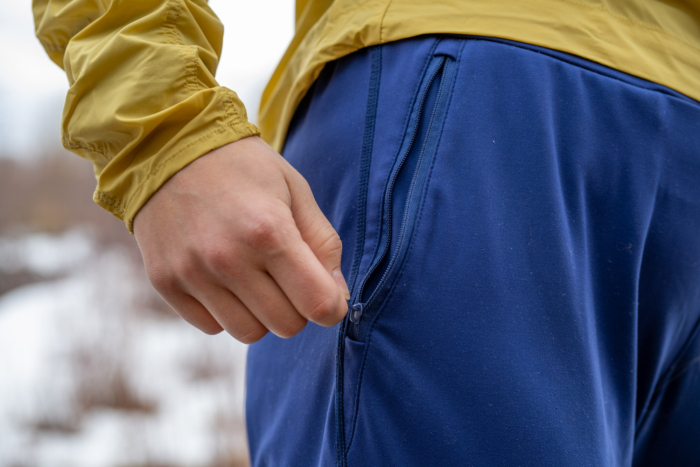
A couple of small updates stand out right away. Brooks swapped the previous loop-style internal drawcord for a traditional tie cord, which trail runner and tester Constance Mahoney actually preferred — it’s easier to dial in the fit. They also added nearly a half-inch to the width of the waistband, making it almost 2.5” wide. The zipper pulls on the pockets also got an upgrade, now featuring a larger pull tab than the previous thin tab version. It’s noticeably easier to grab with bare fingers, though still a little tricky with gloves.
Another subtle improvement is in the fit and overall feel. The latest Momentum Thermal Pant feels a touch more refined through the leg, still relaxed enough to move freely, but with a slightly cleaner taper. The ankle cuffs are a half-inch shorter than the previous iteration, but still stay secure and help seal out cold air. We didn’t notice any air or snow coming in on our snowy winter runs in the Colorado Rockies.
One thing we wish Brooks would add in future versions is more reflective detailing for low-light miles. They did add a 1.5” reflective logo on the front left thigh, but we would like to see more, similar to what you’ll find on tights like the 2XU Ignition Shield Compression Tights. It can seem like a small detail, but one that can make a big difference for winter running.
Beyond running, Mahoney still found the Momentum Thermal Pant to be a solid option for winter hiking, warming up at the Nordic trailhead, or simply staying comfortable on chilly days around town. On especially frigid mornings, think single digits and below, it also layers well over a lightweight tight for extra insulation.
If you’re looking for a winter running pant that blends warmth, versatility, and everyday comfort, the updated Momentum Thermal Jogger remains a reliable cold-weather staple.
Women’s Winter Running Tights Comparison Chart
| Women’s Winter Running Tights | Price | Pockets | Fleece Lining | Windproof Fabric | Water Resistance |
|---|---|---|---|---|---|
| The North Face Winter Warm Pro | $110 | 5 | Yes | No | No |
| Craft ADV Essence Wind | $95 | 1 | Yes | Yes | No |
| Janji Aurora Fleece | $124 | 2 | Yes | No | No |
| Norrøna Femund Warmwool1 Flex2 | $249 | 4 | Yes | No | Yes |
| Icebreaker Merino 260 Fastray High Rise | $120 | 1 | No | No | No |
| 2XU Ignition Shield Compression | $110 | 1 | Yes | No | Yes |
| REI Co-op Swiftland Thermal Running | $85 | 5 | Yes | No | No |
| Arc’teryx Norvan | $140 | 5 | No | No | Yes |
| Rabbit Defroster Speed | $135 | 5 | Yes | No | Yes |
| Smartwool Active Fleece Wind | $160 | 2 | Yes | Yes | Yes |
| Smartwool Active Fleece | $160 | 2 | Yes | Yes | Yes |
| On Running Performance | $130 | 3 | No | No | No |
| Stio Glide Tech | $129 | 3 | No | No | Yes |
| Brooks Momentum Thermal Jogger 2.0 | $120 | 2 | Yes | No | No |

How We Tested Women’s Winter Running Tights
Known as one of the coldest places in the lower 48, Colorado’s Gunnison Valley is an ideal testing ground for winter apparel. Harsh storms coupled with below-freezing temps provide our two primary testers with extreme elements for evaluating dozens of women’s winter running tights since this guide was published in 2023.
Situated in high-altitude peaks between 9,000 and 11,000 feet, there’s ample precipitation — but rarely humidity.
Our Expert Testers & Testing Grounds
Leading our women’s winter running tights test, Constance Mahoney is an experienced runner competing in a range of distances from local 5Ks to trail ultramarathons with a preference for vertical. She founded the Trail Sisters Crested Butte, Colo., chapter in 2021. Mahoney has been a GearJunkie contributor since 2019, after she reviewed outdoor gear for FitnessTravelGear.com for two years. Her specialties range from running and camping to hiking, angling, hunting, and photography — her landscape and wildlife images are viewable in RedLine Gallery in Crested Butte.
At the helm of the snowsports buyer’s guides, GearJunkie Senior Editor Morgan Tilton has more than three decades of experience wearing down snow apparel in mountainous winter climates and more than a decade of outdoor industry and product reporting under her belt.

Our Extended Ratings for Women’s Winter Running Leggings
We evaluate four key performance categories for every pair of winter running leggings based on real-world miles in cold, shifting conditions. These ratings range from average to exceptional — true standouts are rare. The overall score is separate, offering a broader, top-down take on the leggings we trust most when temperatures drop.
1. Durability & Long-Term Wear
Winter leggings see plenty of friction, from repeated washes to layered use and miles in rough conditions. This rating focuses on how well a pair holds up over time, including seam strength, fabric integrity, and overall structure. A score in the high 7s reflects leggings that can handle a full season of consistent use without obvious breakdown. Pairs scoring 8 or higher maintain their shape, compression, and performance even after heavy rotation, often backed by reinforced stitching and more robust fabric blends.
2. Warmth & Thermal Regulation
Not all winter leggings are created equal when it comes to insulation. This category measures how well a pair retains heat while still allowing excess warmth to escape during higher-effort efforts. A mid-7 score reflects leggings that perform well in cool conditions but may fall short in true cold or feel overly warm when you pick up the pace. Scores above 8 indicate a more dialed system — fabrics that trap warmth where you need it while preventing overheating, often through brushed interiors, wind-blocking panels, or strategically mapped construction.
3. Waistband Comfort & Stability
A good waistband disappears on the run — in the best way. Here, we’re looking at fit, hold, and long-haul comfort. A 7.5 suggests a waistband that stays mostly in place but may require occasional adjustment or lacks softness. Higher-scoring options (8+) deliver a secure, stay-put fit without digging or rolling, better stretch recovery, and more refined construction.
4. Storage & Run Utility
Winter running often means carrying more — phones, gloves, fuel, or small essentials. This category evaluates how well leggings handle storage without compromising performance. A score around 7 reflects basic functionality, like a single pocket that works but may bounce or feel limited. Leggings scoring 8 or higher feature multiple, well-placed pockets that hold items securely with minimal movement, making them more versatile for longer runs or variable conditions.

Our Testing Process
To put these women’s winter tights to the test, we ran in a range of conditions from absolutely freezing (-10 below) to cold (5 to 30 degrees) and mild temperatures (30 to 40 degrees). We ran for short and long distances while the snow was lightly or fiercely falling, under sunshine, and while being blasted by wind.
Miles included uphill sprints, workouts, and slow slogs. We jaunted with a variety of supplies in the pockets, including fuel, gloves, key, IDs and credit cards, and large devices. We washed, dried, and put each pair through the rounds, including a deep inspection about how and why each pair was made.
Over the last two winters of testing, Mahoney has paced, crewed, and coached her husband as he prepares for his annual 100-mile race. This means putting in the outdoor miles no matter the conditions. She has postholed her way to the main roads before the plows reached her area, ran during complete whiteouts, and endured below-zero temps, all in the name of being a “training partner.”
To help narrow down the best choices for testing, we also researched the most acclaimed, award-winning, popular, innovative, legacy, and new offerings out there today in addition to our team’s insight as runners.

Buyers Guide: How to Choose Women’s Winter Running Tights
In our perspective, the best women’s winter running tights can be used for a variety of activities — not just running. When looking at what to purchase, keep that in mind: For what other activities might you want to use this cold-weather pant?
Alternatively, the tights can be solely dedicated to runs. If you spend the majority of your time shuffling your feet mile over mile, you might be excited to treat yourself to a pair of cold-season leggings for the sport.
Most importantly, you’ll need to consider what kind of winter weather you will be running in. From there, you’ll be able to determine what design elements are key to help you stay warm, dry, and happy.
The biggest differentiators of women’s winter tights include how much insulation, water resistance, and windproofness you need in addition to overall fit, pocket design, and price.
Our crowned choice, The North Face Women’s Winter Warm Pro Tights has major reinforcements to help keep you warm and dry on your winter adventures: a quick-wicking fabric, called FlashDry, plus two lined hand warmer pockets.

Fabric: Women’s Winter Running Tights
Many different types of textiles and fabric blends are used to make the best women’s winter running tights.
The most popular mixes are polyester or nylon paired with a synthetic elastic fiber — like elastane, Lycra, or spandex — to hold the cloth together and help maintain tightness, rebound, and shape.
Some tights incorporate natural wool, which is typically combined with human-made fibers for performance-oriented apparel, and merino wool is the most popular variety.
One major consideration when examining fabric is the environmental footprint: Are there any recycled or renewable materials in the design? We are starting to see more brands offer earth-friendlier fabrics and manufacturing practices, though we would like to see more. Consumers can be involved with that trend through what they buy and the direct feedback that they provide brands.

Recycled Synthetic Materials
Polyester and nylon (a type of artificial polyamide) are popular synthetic fabrics for activewear but shed microfibers: very small pieces of petroleum-based plastic, less than 100 mm in length, that take decades to decompose. Both materials feel silky, almost slippery. They are very elastic, strong enough to retain their shape after multiple uses, wrinkle resistant, and quickly dry.
These days, polyester, nylon, and other polyamide fabrics are available in a recycled form, and many brands are shifting to that route to alleviate their carbon footprint.
Among our buyer’s guide picks, these products feature recycled polyester:
These tights use recycled polyamide:
Patagonia leads the charge with recycled nylon while it aims to transition completely away from virgin material: 89% of the nylon used in the company’s apparel is recycled, as of spring 2023. To achieve that goal, the brand uses ECONYL fiber, which is a nylon yarn that combines 50% postconsumer nylon — like thoroughly cleaned then melted fishing nets and discarded carpet — with 50% pre-consumer nylon waste, i.e., industrial plastic that would’ve otherwise been downcycled or thrown out.
With the inclusion and increase of recycled materials, we have not noticed a drop in quality or performance in the products we’ve tested and will note if we do.

Synthetics vs. Wool
Wool is a natural, renewable fiber grown from sheep that’s known for providing excellent warmth, thanks to the crimpy fibers that trap air, insulating the skin, yet the fibers are breathable.
Wool has a protein structure that allows the fiber to absorb moisture, holding up to 30% of its weight before feeling damp, according to the University of Waikato and CSIRO, an Australian Government science organization.
Additionally, the sebaceous glands of sheepskin secrete a grease, aka wax, which can be refined into lanolin, that protects the raw fibers and makes them water repellent. Though the wax coating is removed in the manufacturing process, the wool fibers remain stubbornly resistant to water.
The natural material is also antimicrobial with an ability to absorb excessive odor-causing bacteria, thus preventing smelly apparel, according to a 2022 study published in the peer-reviewed Molecules Journal of Chemistry.

With so many great qualities, typically wool has a higher price tag. The SmartwoolActive Fleece Wind Tight is one option that utilizes merino wool, and the cost for quality is premium at $150.
Drawbacks? While wool does retain warmth, it doesn’t dry as fast as synthetic materials. Without special reinforcement, wool blends are not much of a wind-blocker. Compared to synthetics, wool tends to be less durable and get saggy throughout use, which is why wool is often woven with other human-made threads, especially for high-cardio activity like running.
Synthetic materials are an excellent tool for elasticity, form-fitting structure, long-term durability, wicking moisture, and drying fast. For warmth, these factory-made materials are often lined with fleece or wool. Overall, synthetics aren’t necessarily soft, they tend to retain B.O., and not all are very breathable — it depends on how tight the weave is and the yarn circumference.

Sustainability: Women’s Winter Running Tights
You can’t see the bits of waste flying off your running tights, but microplastics and microfibers shed from synthetic fabrics — which are woven into all of the winter tights on our list — and contaminate waterways and oceans, according to a study published in the Environmental Science and Pollution Research.
Researchers found that polyester fleece sheds the most, exceeding polyester, as do loose constructions, so high-twist yarn can help reduce fabric shed.
Some brands also work with Bluesign Technologies, based in Switzerland, for third-party verification regarding the sustainability of their manufacturing process. The criteria examine chemical use, water and energy consumption, carbon emissions, and worker health and safety.
If a product carries a Bluesign label, that means the sourced materials or overall product meet the outdoor industry’s global benchmark of environmental standards. In this guide, Bluesign-certified products include the following winter running tights:

Other brands create an in-house label to help consumers recognize their environmentally conscious manufacturing efforts like New Balance’s Green Leaf Standard. A product meets the guideline if 50% or more materials are sourced as “environmentally preferred,” meaning the fabric could contain recycled fibers or the sourcing is sustainable.
For some apparel, the face fabric is coated with a water-resistant treatment to repel precipitation called DWR (durable water repellent). Traditionally, the chemicals in DWR have been full of toxins that are unhealthy for humans and the planet and that don’t biodegrade.
Called fluorocarbons (aka perfluorocarbons or PFCs), those chemicals are extremely resilient and extend a product’s durability and life. When a product includes a PFC-free DWR, like the Rabbit Defroster Speed Tights, that’s a worthwhile note, and we haven’t noticed a price hike or a drop in performance due to the eco-upgrade.

Insulation & Warmth: Women’s Winter Running Tights
Picking out the ideal level of insulation in your women’s winter running tights will depend on what conditions you are climatized to, your personal health and needs, and the typical winter environment where you will run.
Are you traveling to a colder climate than you are used to? You might want to pack a fleece or wool-lined tight. If the temps are rarely below 30 degrees Fahrenheit and there’s no biting wind chill, you’ll most likely be fine with a tight that has no brushed fleece or wool. However, if there’s humidity or a breeze or gust that brings the temperature down, that extra layer of protection will be beneficial.
If you live in a place that consistently receives teeth-chattering wind, look for a tight that’s specifically reinforced to block chilly gales, like the Smartwool Women’s Active Fleece Wind Tight, which has windproof front panels. Also, find a pair with a length that reaches all the way down to cover the ankle.
Types of Insulation
The primary types of insulation in winter running tights include:
- Brushed fleece like the liner in the Rabbit Defroster Speed Tights
- Merino wool, which is both the interior and main body of the Smartwool Women’s Active Fleece Wind Tight
A brushed fleece or merino wool lining feels super cozy next to skin while the fabric blends are smoother.
A thicker knit or density can help buffer against the cold like the polyamide/elastane blend in the above-knee inserts that are integrated into the On Running Performance Tights.

Thermal Insulation of Clothes (CLO) Rating
One label that helps runners identify warm apparel is a Thermal Insulation of Clothes (CLO) rating. CLO is used to measure warmth levels across different materials. For example, boxer briefs have a CLO of 0.04, sweatpants have a CLO of 0.28, and a winter coat would reach around 0.70 CLO. Nakedness is zero.
CLO has the potential to be a helpful marker for buyers but not every brand shares a CLO rating or per product, making it difficult to compare values.
Furthermore, some variables can’t be accounted for within the unit of measure: Beyond fabric, sustaining adequate body warmth also depends on the user, their specific biometrics, workout intensity, and the weather.

Breathability
The importance of breathable fabric in winter running tights cannot be overstated. It plays a crucial role in managing moisture and keeping the skin dry and comfortable. Breathable fabrics also help regulate body temperature, preventing overheating during runs. Summer is not the only time when you can overheat.
Overheating during a winter run may seem counterintuitive, but it poses significant dangers. Overdressing for winter runs can cause your body to overheat and sweat more. Just like summer, it can cause dehydration, electrolyte imbalances, increased heart rate, and unnecessary stress on your body. Having breathable fabric is fundamental.
The best winter running tights will be made with breathable fabrics, such as merino wool or a synthetic blend. The materials used directly correlate with their moisture-wicking and drying capabilities, which are crucial steps for breathability.
Moisture-Wicking & Quick-Drying
In addition to adequate insulation, you’ll need a fabric that wicks sweat and quickly dries, to help prevent you from getting clammy, cold, or experiencing a drop in body temperature, potentially leading to hypothermia. The other factor to manage is layering appropriately so that you don’t get chilled but don’t oversweat, either.
One benefit of wool, which is in the SmartwoolWomen’s Active Fleece Wind Tight, is that the natural fiber has a large capacity to wick perspiration away from your body so you are left less moist after a workout.
Other brands have their own proprietary synthetic fabrics that are designed to quickly wick moisture and dry fast like the FlashDry in The North Face Women’s Winter Warm Pro Tights.
We’ve found that both wool or synthetic blends work well to absorb moisture on a run. However, synthetic materials tend to dry a bit faster than wool. Though, wool retains warmth better when damp.
You’ll ultimately want to stay away from any fabrics with cotton, which absorbs sweat but stays wet.

Windproofness
Again, depending on your climate, windproofness might not be necessary. Or, for light wind, a fleece-lined or thicker tight might be enough of a shield. But for those who live in climates where winter also brings a much colder wind, windproof panels make a big difference.
Wind is an element that will let you know how fast (or not) your layers are wicking sweat, drying, and can quickly create a potentially dangerous situation. The more active you are, the more sweat you create. Windproof panels help cut the cold, ultimately keeping you warmer, while your tights are wicking away moisture.

SmartwoolWomen’s Active Fleece Wind Tight is not far behind with a DWR finish and windproof front panels that are rated super strongly at 0 CFM (cubic feet per minute), a metric for windproofness based on the ability of 30-mph wind to pass through 1-square-foot of material. A lower digit means that the fabric more effectively blocks wind:
- 1 CFM or less is considered windproof
- 10 CFM signifies extreme wind-resistance
- 20 CFM is baseline wind resistance like a windbreaker jacket
- 60 CFM means the wind moves through like a woven shirt or fleece jacket
The potential tradeoff? Windproof panels are not as breathable. If you invest in a pair of winter tights with protective panels and it’s not windy, the tights will be overbuilt and might not be as breathable, and comfortable, as you’d like, especially if you’re running fast or uphill and need to dump heat.

Waterproofness & Water Resistance
For the days when you won’t be running in a storm, waterproofness or water resistance is a second thought. However, depending on your climate, the dependability of the weather forecast, and your running goals, you might find yourself pacing through a wet winter storm — planned or not. That’s when the urgency of blocking precipitation becomes apparent.
Water-resistant and windproof tights differ but are similar in the fact that they both can help protect you from getting too cold, a dangerous aspect of winter running.
Waterproof means water cannot penetrate the fabric. Think fishing waders: No water is getting in unless you fall into the river — allowing water to enter through the top — or poke a hole in the material. Waterproofness is achieved through the material and how the piece of apparel is constructed such as taped seams.
Generally, waterproof material is not very breathable and a completely waterproof tight would not be comfortable to run in. However, perhaps a pair of winter running tights with strategically placed waterproof panels could be a happy medium.
Water-resistant fabric has a water-protective treatment applied to the garment, so that water beads up on the face of the material. Called DWR (durable water repellent), the coating is traditionally toxic so look for PFC-free DWR, which is void of perfluorocarbons or PFCs, also known as fluorocarbons.
Having a water-resistant tight will make your runs far more comfortable while zipping beneath snowflakes, sleet, or drizzling rain. When an untreated or non-enforced tight gets wet, the material won’t wick as well, which can leave sweat on your skin and cool you off.

Durable Water Repellent (DWR)
As stated above, Durable Water Repellent (DWR) is a chemical made with perfluorocarbons (PFCs- learn more here) that is applied to a garment to make them water-resistant. The effect of the DWR on a fabric degrades over time, and depending on use, needs to be reapplied through an at-home wash like Grangers.
For decades, companies used long-chain (C8) fluorocarbon-based treatment as it performed the best. However, the PFCs were found to have harmful effects on human health and the environment. Once its negative long-term environmental impact and toxic by-products were discovered, it was rendered unsuitable despite its outstanding performance. Some environmentally conscious brands swapped to a C6 treatment which is based on a shorter-chain of fluorocarbons that breaks down faster in the environment.
Many brands are trying new and innovative techniques to move away from the traditional PFCs used including PFC-free DWR. Brands like Helly Hansen have come up with proprietary blends of Lifa fiber paired with polypropylene membrane, which prevents water from getting in yet still allows the vapor to release. They’ve been using this technology for over 50 years.
The best women’s winter running tights that have water-resistant capabilities include the Rabbit Defroster Speed Tights, which has a PFC-free DWR, as does the Smartwool Active Fleece Wind Tight.

Seams
Seam placement and construction can make a run go smooth or terribly wrong.
Chafing is the main concern when it comes to seams. When you try on a tight, make sure to move in various positions (stretch a bit and walk around) noting how the seams feel.
If you notice a seam rubbing the wrong way, double-check and make sure the tag, fabric, and any underlayers are not twisted or wonky. If a cause isn’t determined, know that the discomfort will only get worse. Chafing is not to be messed with.
Basically, chafing can occur anywhere a seam is located including along the side of the leg, groin, or around the ankles.
Well-made athletic apparel often use a flatlock seam: Two pieces of fabric are placed side-by-side and then stitched together rather than having the two pieces of fabric overlap, which leads to a bulge.
Typically, you’ll notice two seams on athletic tights, on the exterior and interior. But some tights avoid an interior seam altogether, which helps negate chafing along the inner thigh.
Some designs have laser-cut hems, which minimize chafing with overlapped socks or on super-long runs.

Ankle Zippers
When you consider chafing, take a close look at tights with zippered ankles. The benefit of zippered ankles is that you can more easily pull on and off a well-fitted tight, and you can more easily layer the tight with long socks.
When you pull ‘er up, you can secure the ankle zip to help keep the winter elements off your skin. Below the zipper, you’ll often see an underlay, a soft piece of fabric that lines the inside, preventing the metal teeth from touching skin.
An underlay discourages chafing and blocks the wind from getting through the zipper choppers. Be sure to try on the tights, fully test out the ankle zips, and make sure there are no odd friction points in that zone. Our favorite zippered winter running tights are the Craft Subz Warm Running Tights 3 and the Smartwool Women’s Active Fleece Wind Tight.

(Groin) Gusset
A gusset is a triangle- or diamond-shaped piece of material sewn into high-friction areas, in order to redistribute the stress placed on the seams. Here, gusset refers to the fabric patch in the groin area of winter running tights. We call out whether or not a pair of tights has a gusset in the bulleted specs of each product in the guide.
Durability goes up with a gusset, which replaces what would otherwise be a meeting point for all four seams, creating a potential weak spot. A single seam can also lead to a friction point and cause chafing in your netherlands, especially on long-distance runs. Ouch!
Whether you are team undies or not, a gusset is usually more comfortable, prevents chafing, and can help eliminate any potential visible display of the pubis bone.
If you want to make a quick comparison of which of these tights have gussets or not, scroll back up to the comparison chart.
To test the gusset (or non-gusset) in a pair of tights, do some high knees, leg swings, and squats to see if you feel restricted in any of those motions. Look in the mirror to make sure you are happy with how the seam placement appears.
Friendly reminder: Always use proper testing etiquette by wearing undergarments when trying on clothing until they are yours to keep.

Waistband
Waistbands are another component that can easily make or break a run. Is the high waist too high and suffocating you? Did the drawstring come untied … again?
When trying on tights, move around to check the feel and fit of the waistband. Bend down and tie your shoe: Does the band tighten, pinch, flip or roll down, or is there a gap in the back? Does the waistband have an internal drawstring that pulls out easily and enough to tie? When you tighten down the drawstring, does the waistband feel secure enough?
Some runners with shorter torsos may struggle with a high-rise pant. For others, a mid-rise or low-rise might fit just right. Our bodies are wonderfully different, making it impossible for brands to get the fit perfect for everyone. The likeability of a waistband will ultimately be a personal preference.
Check each company’s return policy as you hunt for the right fit.

Reflectivity
Reflective details on winter running tights enhance visibility and safety during low-light conditions. In winter’s shorter, darker days, visibility is often compromised, especially during early morning or evening runs. Strategically placed reflective elements on running tights significantly increase the wearer’s visibility to passersby. These reflective details bounce back light from sources such as headlights or street lamps, making the runner more noticeable from a distance.
However, we advise against relying solely on your leggings for reflective safety when running in the dark. There are many other tools available, such as light-up vests, reflective jackets, and headlamps, that can further enhance your visibility.
If you’re interested in more tips on running in the dark, check out this article by the GearJunkie team. They’ve compiled their top tips for running in the dark, which could be beneficial for your safety and running experience.

Pockets
Determining if pockets are needed on your runs will help you find the best women’s winter running tight for the colder season.
The pocket designs on women’s winter running tights come in a variety of sizes, shapes, and placements.
Usable pockets are an asset. But poorly designed pockets can be a recipe for frustration with lost items such as fuel, keys, and cards.
To that end, we go into thorough detail for each product review about how the pockets performed on our selected winter running tights.

Types of Pockets
Winter running tights usually have a combination of these types of pockets and rarely have no pockets at all:
- Side compression pockets on thigh or hip
- Zippered pockets on thigh or lower back
- Internal waistband pockets
- External waistband pockets

Pocket Closures
Zippered pockets are often smaller and located on the thigh or waistband. They keep your items safe without the fear of things bouncing out.
Pay close attention to non-enclosed, slip-in pockets or envelope pockets, which have a flap of fabric that fold over the top seam. You don’t want your things to pop out when they jostle around.

Pocket Materials
Pockets can be crafted from the same material as the tight, a mesh, or a different fabric altogether.
We’ve found that thicker fabric can also help prevent condensation build-up on a device during physical activity. For instance, The North Face Women’s Winter Warm Pro Tights has two large lined thigh pockets that can secure a large phone, and we never saw a sweaty phone screen or camera lens.
Mesh pockets are not ideal for winter tights as they offer no warmth for your devices or snacks and will not protect items from the elements.

Pocket Sizes
Hip or thigh pockets are usually large enough for phones and purposely don’t have a zipper for easy slide-in access. Larger pockets are also a nice place for glove liners.
Smaller pockets located around the hips, lower abs, or lower back are typically a good spot for small- or medium-sized snacks, credit cards, IDs, keys, a headband, SPF 15 chapstick, or travel-size sunscreen.

Number of Pockets
The number of pockets varies across designs. Our top choices for women’s winter running tights range anywhere from one to five pockets, though the majority offer five pouches.
- 5 pockets: The North Face Winter Warm Pro, REI Co-op Swiftland Thermal Running, Rabbit Defroster Speed
- 3 pockets: On Running Performance
- 2 pockets: Smartwool Active Fleece Wind
- 1 pocket: Craft ADV Essence Wind
How many pockets you need will depend on what you want to bring and if you are wearing other apparel or accessories that offer storage like a jacket, handheld bottle with a stash pocket, or a running pack, vest, or belt.

How to Choose the Best Pockets
Think about what items you want to stash in your pockets. Then make sure the pockets are correctly sized and secure enough to keep those articles from flying out. Do you prefer a zippered pocket for security? Does your phone fit into the drop-in pocket on the thigh or hip?
If you usually run with additional storage, the Craft ADV Essence Wind Tights offer only one pocket and the design might be a good fit: a zippered pouch on the back of the waistband. Comparatively, the Rabbit Defroster Speed Tights has ample capacity with five pockets including a zippered waistband chamber.
Additionally, consider the pocket placement. Are the receptacles placed in comfortable spots for your body? Are the pockets accessible while wearing a running jacket, vest, or hip pack?
Check out the comparison chart above to learn which tights have pockets and how many. Refer to each product review to see if those specific pocket designs suit your needs.

Sizing: Women’s Winter Running Tights
Getting the right size of winter running tights is crucial to having the best experience. It’s a bit like Goldilocks — you want them to be snug but not too tight, just right.
Each brand will have its own size chart. It will include measuring your hips, waist, and inseam. To measure around your waist, loop the measuring tape around the smallest part of your waist. For your hips make sure your feet are together and loop the tape around the fullest part of your hips.
Lastly, for the inseam, measure from the top of your inner thigh down to your ankle. Take your measurements and look at the sizing chart, whichever you are closest to is the size you want to purchase. If you are in between sizes or have questions, customer service is usually there to help.
Be sure to note the rise of the rise of the waist. Winter running tights come in mid-rise, high-rise, and super high-rise. Finding the right rise of a tight is usually based on a personal preference and how the rise fits on you will depend on your torso length. Make sure to read the legging’s description on the rise and see what feels more comfortable on you.

How to Layer
Layering, a crucial aspect of winter running, is the key to ensuring you stay warm, dry, and comfortable throughout your workout. It’s a strategy that involves dressing like the temperature is 20º warmer than the thermometer says. This may seem counterintuitive, but as your run progresses, your body temperature will rise, keeping you warm.
However, there are exceptions to the 20º rule. For instance, dressing 20º warmer for a 10º run is still below freezing. Moreover, factors like humidity and wind chills can make the temperature outside colder than the thermometer says. In such conditions, you may need to dress warmer. The key is to adapt your layers to keep your core temperature comfortable.
- Start with a moisture-wicking base layer for your top to keep sweat away from your skin. Look for materials like merino wool or synthetic fabrics such as polyester or nylon. Avoid cotton, as it retains moisture and can make you feel colder.
- Add an insulating midlayer for warmth over your base layer. A technical fleece jacket can work well for this purpose. This layer should provide insulation while still allowing moisture to escape.
- Choose a windproof and/or waterproof jacket as your outer layer to protect against the elements. Look for one with breathable fabric to prevent overheating and allow moisture to escape. If it is downright cold, consider adding an insulated jacket to your layers. An outer layer with reflective elements can also help increase visibility during darker winter days.
- Don’t forget to protect your extremities. This includes wearing a hat to prevent heat from escaping through your head, gloves to keep your hands warm, and a neck gaiter or scarf to shield your neck and face from cold winds. Opt for moisture-wicking socks to keep your feet dry and warm. Consider wearing thicker socks or layering thin ones for added insulation.
- For shoes, opt for winter-specific shoes or trail running shoes with good traction to prevent slipping on icy or snowy surfaces. You can also choose waterproof shoes to keep snow and moisture from seeping into them.
Pay attention to the weather forecast and adjust your layers accordingly. If it’s freezing, windy, or wet, you may need to add an extra layer. Conversely, if it’s milder, you can remove layers to prevent overheating.
By layering appropriately, you can stay comfortable and safe while running in winter. Listen to your body and adjust as needed during your run.
One last layering tip: when you finish your run, get out of your sweaty clothes as soon as possible. We like to have a fresh shirt and even a down jacket waiting in our car for a quick change. Getting too chilled after a run can be dangerous and adds unneeded stress to your body.

Eye & Skin Protection
In winter, sunscreen and sunglasses remain essential for safeguarding your skin and eyes despite the cooler temperatures.
Even though the sun is lower on the horizon during winter, the sun’s UV rays can still reach your skin, posing serious health risks such as sunburn, premature aging, and an increased risk of skin cancer. Snow can amplify this exposure by reflecting up to 80% of the sun’s UV rays. By applying sunscreen, you create a protective shield that significantly reduces these risks.
The snow glare can be particularly harsh on your eyes. Sunglasses with UV protection and polarized lenses are crucial for shielding your eyes from this glare and reducing the risk of conditions such as snow blindness: a temporary loss of vision due to intense light reflection off snow.
Winter winds can carry dust, debris, and snowflakes, potentially irritating your eyes during your run. Sunglasses not only shield your eyes from these elements but also act as a wind barrier, preventing dryness.
By incorporating sunscreen and sunglasses into your winter routine, you’re not protecting your skin and eyes from UV radiation, glare, and environmental irritants. You’re also ensuring your overall health and well-being during your year-round outdoor adventures or daily pursuits.

Return Policies & Warranties
The best winter running tights will have a solid return policy. All of the tights we tested have at least a 30-day return window for unused, tags-still-on tights.
REI Co-op Swiftland Thermal Running Tights has the best return policy of all the tights we tested. The bonus here is that it’s not just for the brand of REI; it’s any product purchased from REI (with a few exceptions). For members, you have an entire year to return the tights, even when they are used! For non-members, you have 90 days.
The only running tights brand that offers a warranty is Patagonia. Patagonia set the bar high for warranties and repair. Instead of having multiple hoops to jump through, they invite it, making it as easy as possible for repairs to happen.
You can go to one of its stores, where they will see if they can fix it in-house, teach you how, or send it in for repairs. If you opt to mail it in, you cover the shipping costs, but the repairs are usually free unless it’s a majorly complicated repair (usually wetsuits or waders).

Price & Value
Budget Women’s Winter Running Tights
The lowest prices for women’s winter running tights include the REI Co-op Swiftland Thermal Running Tights Women’s ($85) for cooler year-round conditions.
We haven’t found quality products that drop below those price tags with the exception of seasonal sales. To protect your limbs from the cold, you’ll need at least as much protection as these two pairs, even in mild to moderate climates.
Mid-Tier Women’s Winter Running Tights
Stepping toward the midprice rung, you’ll find The North Face Women’s Winter Warm Pro Tights ($110). As the dollars go up, you’ll find greater durability and construction. In these running pants, there are usually additional features like wind-protective panels and unique pockets.
Premium Women’s Winter Running Tights
Reaching above $100, you’ll often find designs with brushed fleece. You’re paying more for a bump up in insulation.
Premium choices include the On Running Performance Tights ($130), Rabbit Defroster Speed Tights ($135), and Smartwool Women’s Active Fleece Wind Tight ($160). Overall, these top-tier designs are more complicated from a technical standpoint and aesthetically — hello, insulation panels on the On Running Performance Tights, which is also made with recycled fabric.
For instance, the Rabbit Defroster Speed Tights are fleece-lined, PFC-free water-resistant, reflective, super warm, and boast five pockets. Wool typically costs more, which you’ll find in Smartwool’s tights.

Frequently Asked Questions
The type of winter tight you need is based on the location and weather conditions of where you will be running. Defining your running climate will help you determine which tight is best. You’ll want to consider if the conditions are windy, wet, or cold and to what degree.
If you’re running where it is often windy, check out tights with wind-specific panels.
Tights with waterproofness or water resistance such as a DWR-treated textile are helpful in zones with high precipitation, be it snow or rain.
For running in temps that dip below what your standard tight can keep you warm at, consider designs that are full length with thicker material like a denser knit nylon/polyester or fibers that insulate such as fleece or merino wool.

Yes, though some thermal winter running tights focus more on warmth retention than others.
Examine the makeup of the material. Any pant that is fully or partially lined with fleece will be warmer. Wool also increases coziness.
Though, a tight’s ability to wick and release sweat — typically a synthetic blend or wool blend — or block wind can also help you maintain your body warmth, especially after you break a sweat.
Water-resistance and windproofness does not always mean there will be insulation. And just because something is labeled “winter” does not mean it is insulated!

A gusset is a fabric panel that’s sewn into a garment where seams would typically meet at high-friction areas such as the armpits or groin. The panel is often in the shape of a triangle or diamond.
Adding a patch, versus a straight seam, reduces bulk while adding greater breadth and thus range. The wide fabric also enhances breathability in that zone.
The aim? Hopefully an avoidance of chafing, uncomfortable rubbing, or rawness around the upper thighs (a better overall fit can help prevent sag) and between the legs.

After considering the climate where you run, double-check and make sure the tight covers the checklist of what else you need, including storage, if pockets are essential to you.
Reflect on what you plan on taking with you. Make sure there are enough pockets of the style you prefer, i.e., zipped, enveloped, or compression style.
The placement of pockets is just as important. Ensure you can easily access pockets under your jacket or running pack and that you can store heavier items where they are not weighing down the tights, creating sag.
If you plan on running at night, consider prioritizing tights with integrated reflectors, which supplement other brighter running lights that can be worn on your shoes, hip belt, pack, or hat.
You purchased your leggings: Now, it’s time to learn how to best care for them. If you don’t wash them right away after a run, be sure to hang dry them. If you squash them in a ball or leave them in a pile on the floor, sweat and bacteria will grow, breaking down the fibers faster.
When it is time to wash them, make sure you follow the tag’s instructions. Often, it will say to wash in cold water, use mild detergent, and wash with like materials. Never wash leggings with other abrasive materials, like a terry towel. That will cause the fibers to break down faster and pill.
Also, air dry your leggings to help them last longer and avoid any unnecessary shrinkage. Once they are fully dry, you can hang, fold, or roll them to store.

When it comes to leggings, finding the perfect fit is crucial. It’s a bit like Goldilocks — you want them to be snug but not too tight, just right. Pay special attention to the waist area. If it feels constricting and you can’t take deep breaths, it’s a sign they’re too tight. Conversely, if they’re slightly loose, does the drawstring help to cinch them up comfortably?
Another key factor to consider is your range of motion. Do a few leg swings and see how they feel. If you feel significant pulling or restriction, they’re too tight. On the other hand, if they’re saggy and not providing a slight compression, they’re too big.
Remember, every winter running tight comes with a sizing chart. Take the time to measure yourself correctly and find the size that best matches your measurements. And if you’re still unsure, don’t hesitate to reach out to customer service.


