Trail running shoes should offer grip, cushion, and protection. The priority? To stay comfortable on our feet while we explore everything from mellow dirt paths to rocky, technical terrain.
For this update, lead testers Conni Mahoney and Chris Kassar tested seven pairs of trail running shoes for women over four months in Colorado, the Tetons, the San Juans, and southern Utah. We compared options for daily training, race day, technical mountain terrain, road-to-trail miles, and wide-foot comfort.
The Hoka Speedgoat 7 stands out as our top overall pick for its versatile mix of cushion, traction, and trail confidence. The Salomon Pulsar is our favorite budget-friendly option for runners looking for a reliable, lower-cost entry into the sport.
Since 2021, our team of five experts has tested more than 50 pairs of women’s trail running shoes.
Editor’s Note: We updated this guide on May 14, 2026, with four new additions: the quick, grippy Saucony Peregrine 16; mountain-ready Merrell Agility Peak 6; race-focused HOKA Tecton X 3; and cushioned The North Face Altamesa 500 V2. We also refreshed all other reviews, ratings, and comparisons.
The Best Women’s Trail Running Shoes of 2026


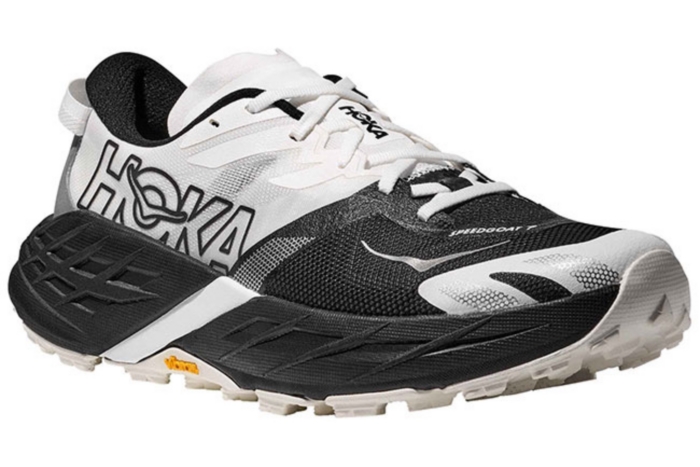
HOKA Speedgoat 7
Specifications
Pros & Cons
Pros
- Secure fit on technical terrain
- Livelier, more responsive ride thanks to new supercritical foam
- Strong traction on mixed surfaces
- Well-cushioned for long miles
Cons
- Fits a bit smaller than past versions
- Upper feels less breathable
The Quick & Dirty: Max cushion meets real mountain control with a locked-in fit and dependable grip, though you should know the upper runs a touch snug and isn’t especially airy.
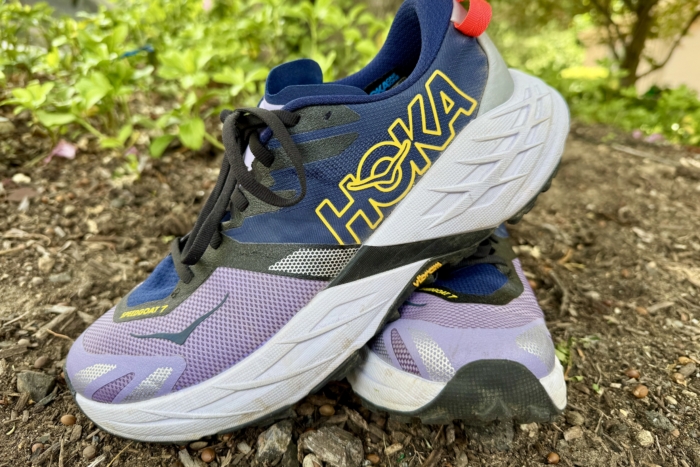
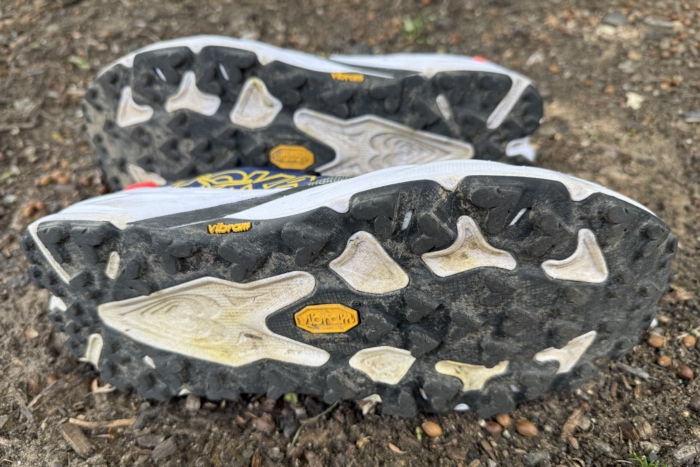
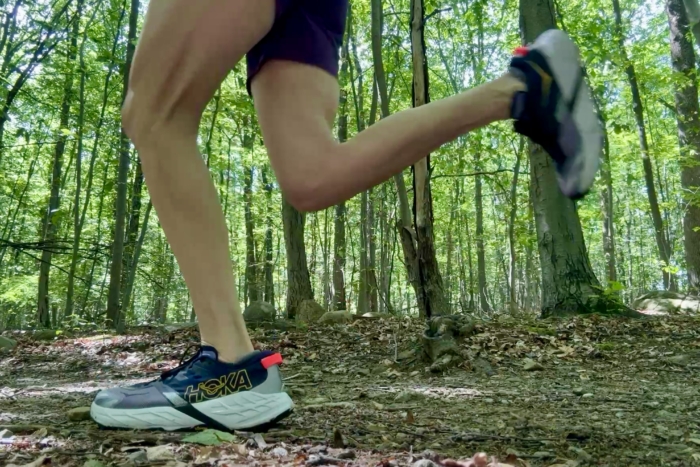
The Hoka Speedgoat 7 ($165) marks a strong return to what made this shoe such a favorite in the first place. It combines the deep cushioning and trail protection the line is known for with a more secure upper and a ride that feels more energetic than the last version. On long runs, we appreciate that balance. The shoe stays protective and comfortable for hours on trail, but it also feels more responsive and more capable when the terrain turns rocky, loose, steep, or awkward.
The Vibram Megagrip outsole remains a major strength, delivering dependable traction across wet ground, loose dirt, and rocky sections, while the updated upper does a much better job of locking the foot in place on technical terrain. That added foothold is a real improvement, though it also seems to come with a slightly less airy feel through the upper. Hoka also added gaiter integration, which is a nice bonus for runners who deal with dust, grit, or small trail debris on dry or loose terrain. While it maintains its legendary status, runners who prioritize raw energy return might find themselves cross-shopping this with the carbon-plated HOKA Tecton X 3.
We also found the fit a little snugger than previous versions, and some runners may want to consider going up a half size, especially if they were already between sizes in earlier Speedgoats. Ultimately, this shoe is an ideal match for trail runners seeking a cushioned, do-it-all option for daily mountain miles, ultra training, and long race days. It is the definitive pick for those who prioritize secure footing and all-around versatility over an ultra-plush, roomy fit.
Salomon Pulsar
Specifications
Pros & Cons
Pros
- Secure, responsive fit
- Reasonable price
- Versatile use for a variety of runners
- Decent ground feel
Cons
- Contragrip rubber isn't as grippy as Vibram
- Quicklace storage pocket is hard to use
The Quick & Dirty: If your runs regularly mix pavement, gravel, and smooth singletrack, the fast and light Pulsar is ready to move. Just don’t expect the heavy-duty protection needed for rough backcountry terrain.
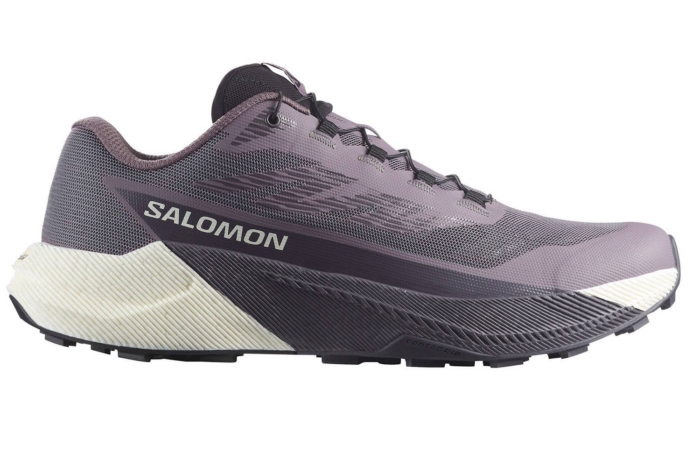
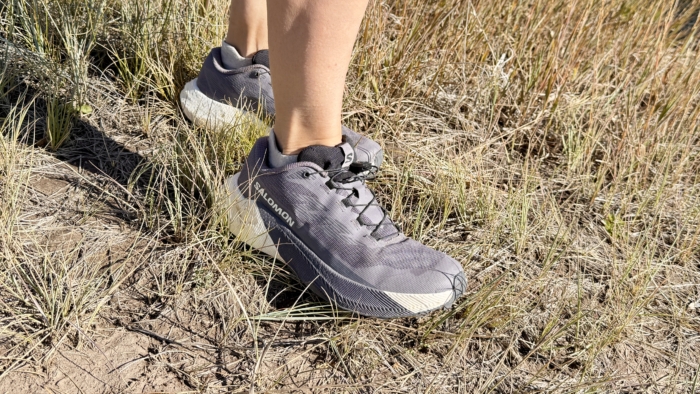
The latest iteration of the Salomon Pulsar ($140) launched on September 1, 2025, and it feels like the right shoe at the right time. With so many max-cushioned trail behemoths dominating this year, the Pulsar takes a different approach. Its 29 mm heel stack and 6 mm drop help the ride feel noticeably more connected.
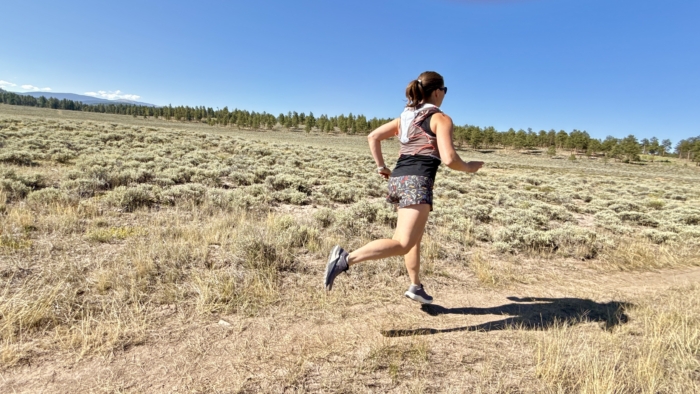
Translation: You’ll get more ground feel here than with most other max-cushioned trail runners from this season. That makes it a great choice for runners who don’t want to be completely insulated from the trail. It’s also a versatile road-to-trail pick. We used these kicks to cruise pavement to the trailhead and on mellow dirt, gravel, or packed singletrack.
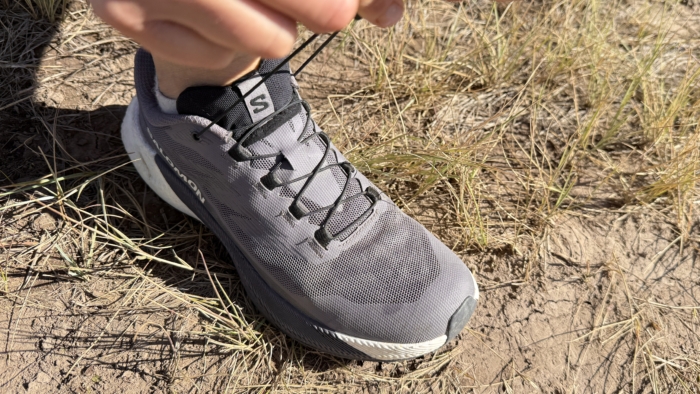
The upper and fit are dialed: an internal sock sleeve with Salomon’s Quicklace system creates a snug, locked-in ride without pressure points. The shoe runs true to size, and its lighter build keeps strides feeling relatively snappy. Underfoot, 4 mm lugs on the Contagrip hit the sweet spot: grippy enough for mixed terrain, but shallow enough to stay smooth on asphalt. Compared to the Brooks Cascadia 19, which acts as a protective, stable workhorse for the mountains, the Pulsar is significantly more streamlined and agile for faster-paced efforts on groomed paths. Tradeoff: You don’t get the bombproof tackiness of Vibram Megagrip. But then again, you aren’t paying for it, either.
Neutral in feel and priced at just $140, the Pulsar Trail nails the road-to-trail category; a lightweight, affordable option for runners who want one shoe to take them (almost) anywhere for fast and relatively short workouts.
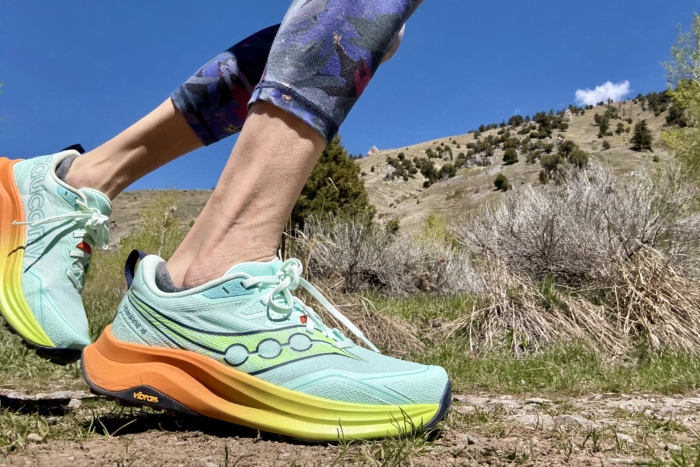
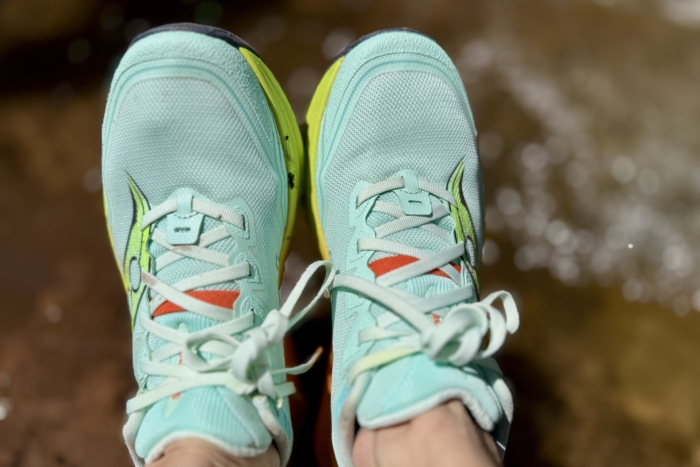
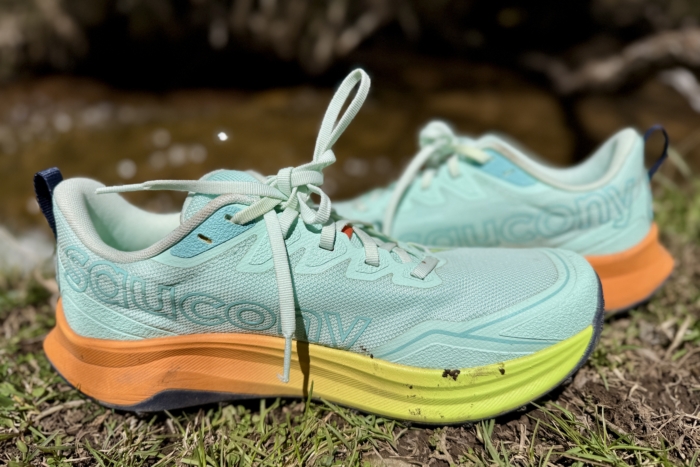
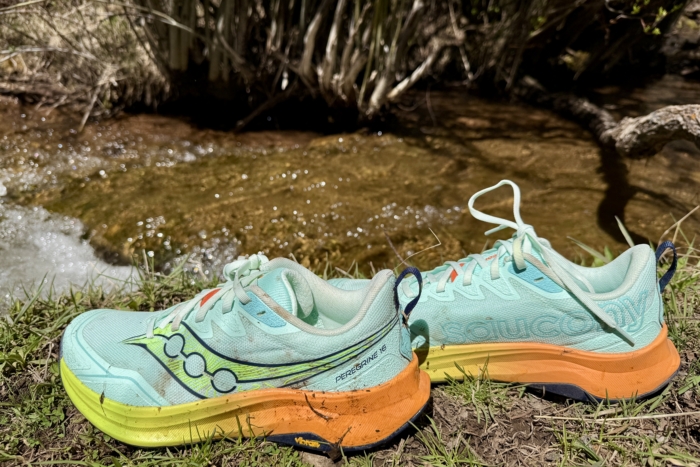
Saucony Peregrine 16
Specifications
Pros & Cons
Pros
- Exceptional versatility across all terrain types
- Stable, connected ride for daily training
- Improved cushion for higher mileage
- Incredible value-to-performance ratio
Cons
- Not soft enough for those who prefer max foam
- Upper prioritizes durability over premium plushness
The Quick & Dirty: The Peregrine 16 is the definitive one-shoe quiver. It offers a stable ride, moderate cushion, and elite Vibram grip that feels just as at home on a lunch-break dirt path as it does on a rugged weekend peak-bagging mission.
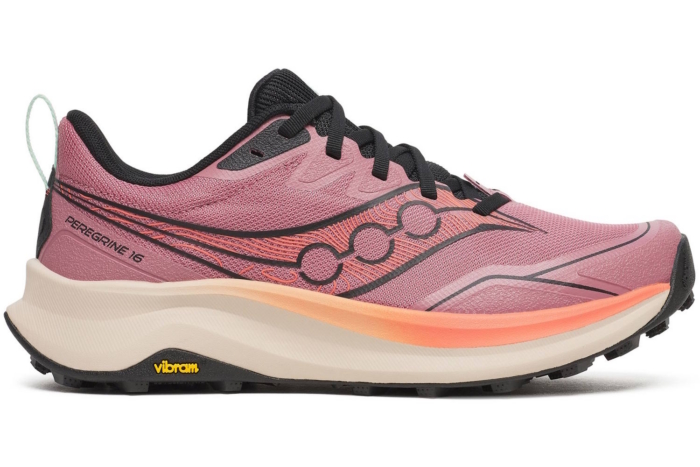
The Saucony Peregrine 16 ($150) is the shoe we reach for when the route includes a little bit of everything: packed dirt, loose gravel, rocky singletrack, and road connectors. It isn’t flashy, but that’s the appeal — it is a straightforward, versatile trail runner built for the grind of daily miles across varied terrain.
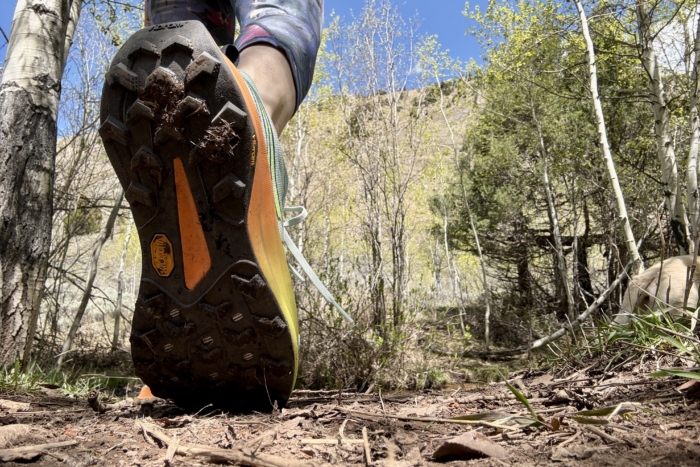
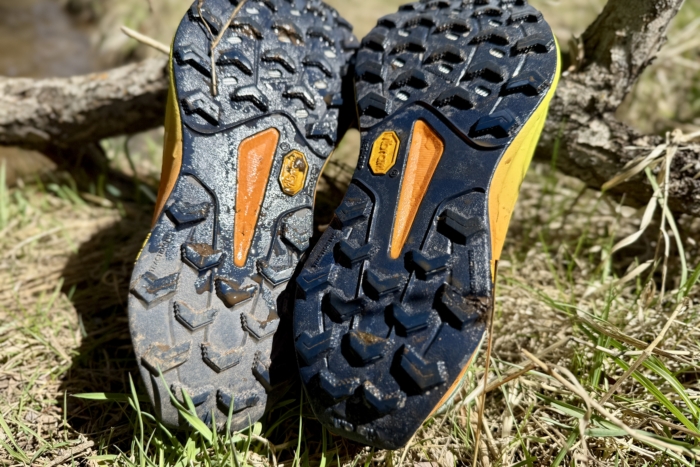
The biggest update is underfoot, where Saucony finally added a full Vibram Megagrip outsole. While the 4mm lugs are slightly shorter than previous iterations, the stickier rubber compound gives the shoe a far more confident feel. On Teton trails outside Jackson, the outsole felt secure on loose rock and damp forest tread without making the shoe feel clunky on smoother, hard-packed sections.
Saucony also increased the stack height by 4mm, bringing the PWRRUN foam to 32/28mm. This “Goldilocks” update is enough to take the edge off rocky trails and save your legs during high-mileage weeks, yet it avoids the “tippy” feel of max-cushion models like the Hoka Speedgoat 7. It maintains a stable, connected ride that allows you to react quickly to the trail beneath you.
The fit is predictably excellent and slightly more forgiving in the toebox. The simple mesh upper wraps the foot securely for sidehilling and quick turns without adding unnecessary bulk. Compared to specialized racers, the Saucony Peregrine 16 is the most balanced option in this guide. It’s a reliable shoe that bridges the gap between neighborhood paths and high-mountain adventures.
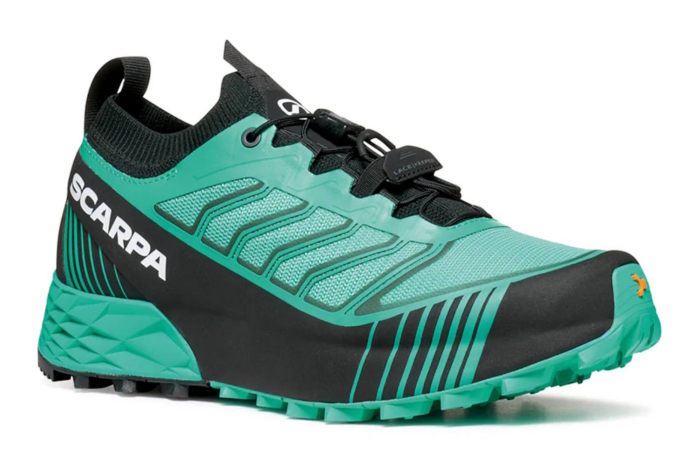
Scarpa Ribelle Run 2
-

-
photo/Conni Mahoney
-
photo/Conni Mahoney
-
photo/Conni Mahoney
-
photo/Conni Mahoney
-
(Photo/Conni Mahoney)
Specifications
Pros & Cons
Pros
- Reliable traction
- Stable feel
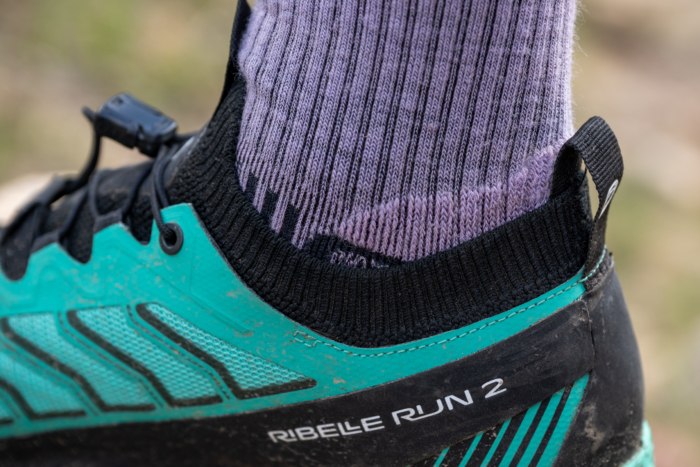
- Integrated sock-like collar
- Durable, alpine-inspired rand construction
Cons
- Firm midsole may feel stiff and lack flexibility
- Rigid arch structure might not suit all foot shapes
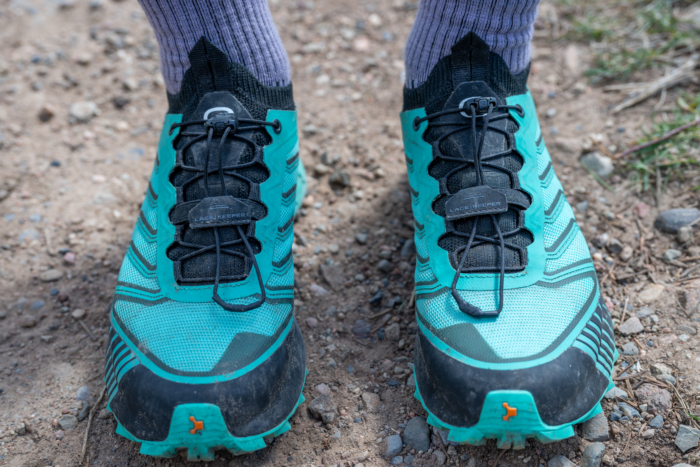
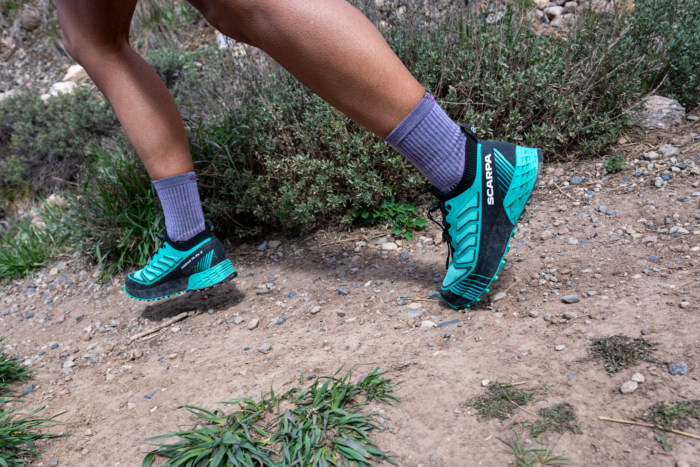
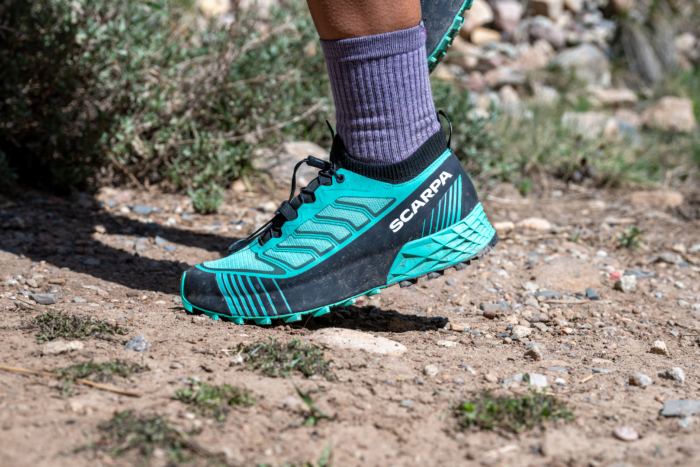
The Quick & Dirty: The Scarpa Women’s Ribelle Run 2 is a precise, protective trail shoe built for steep, technical terrain, snowy ridgelines, and rocky alpine missions, though its narrow fit and rigid arch won’t suit every runner over long distances.
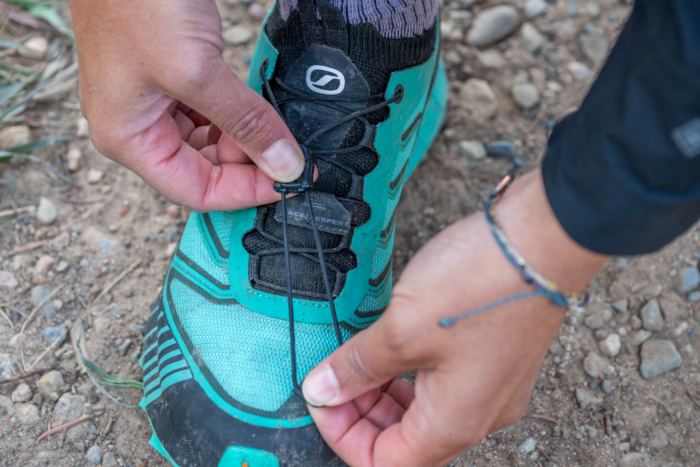
Scarpa brings its deep mountaineering heritage to the trail with the Women’s Ribelle Run 2 ($199), a shoe that performs more like a nimble approach shoe than a standard runner in our experience. Rather than the high-stack, pillowy midsoles currently trending, Scarpa uses Super Critical Bounce Foam, which falls in the middle-cushion range. We took these on a demanding 20-mile ridgeline traverse in Montana, where we covered steep, snowy pitches and slick, technical uphills. In those moments, the aggressive lugs and climbing-inspired rand offered a high level of protection and traction, helping us stay grounded.
We found the fit to be quite technical and leaning toward the narrower side, especially through the midfoot. The quick-lace system is highly efficient, providing a secure-feeling fit that didn’t budge during aggressive movements. However, we noticed that the arch area feels somewhat high and rigid. During our testing, this led to arch discomfort early in a long effort, suggesting that while the security is a plus for technical climbs, the internal geometry might not suit every runner over high mileage.
Compared to the Merrell Agility Peak 6, the Run 2 feels more in tune with the ground. It sits lower and rides a bit stiffer, which we found gives it a distinct advantage when things get steep or rocky. While the Merrell is a bit more forgiving for everyday miles, we kept reaching for the Scarpa when we knew we’d be scrambling or dealing with messy alpine conditions. If you have a medium-to-narrow foot and prefer mountain-ready confidence over a pillowy feel, this is a solid addition to the gear closet.
The North Face Altamesa 500 V2
-
-
(photo/Conni Mahoney)
-
(photo/Conni Mahoney)
-
(photo/Conni Mahoney)
-
(photo/Conni Mahoney)
-
(photo/Conni Mahoney)
Specifications
Pros & Cons
Pros
- Plush, high-rebound DREAM foam cushioning
- Roomy toe box
- Tongue stays put
Cons
- Upper can feel tight across the instep
- Higher volume can make it feel bulky
The Quick & Dirty: High-mileage recovery meets race-day performance in a stable, max-cushion package, though the substantial underfoot bulk might feel excessive for some runners.
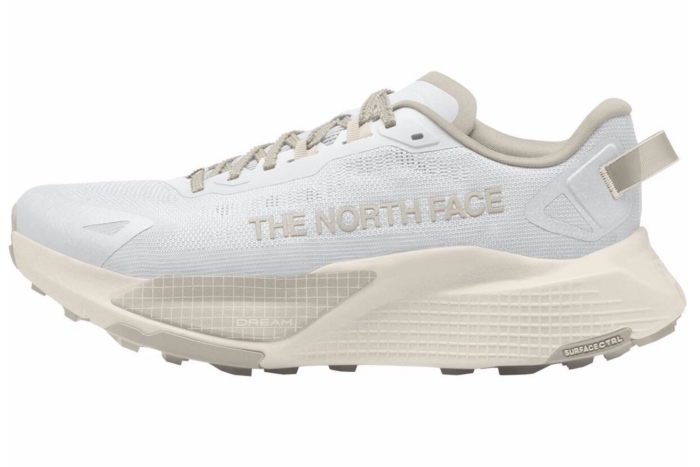
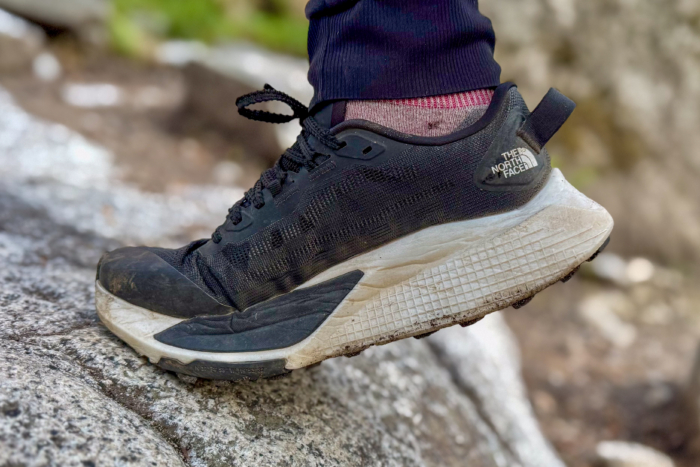
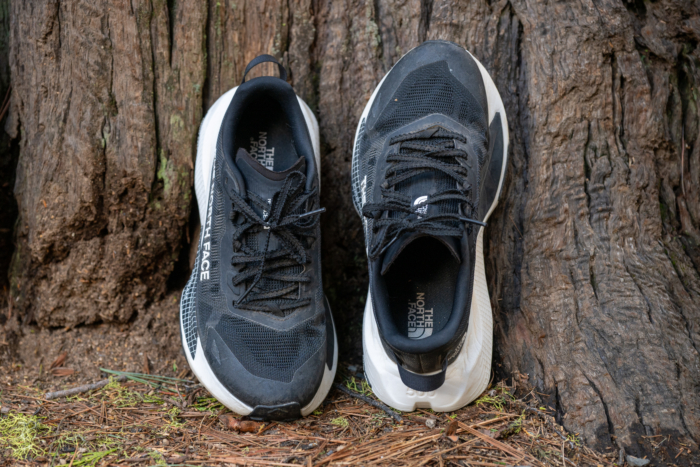
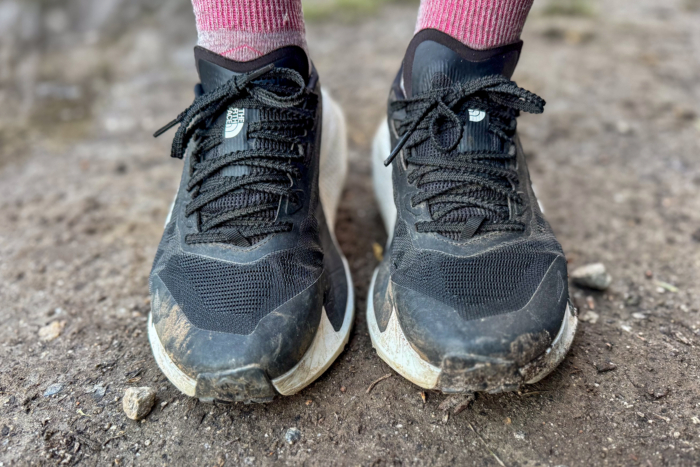
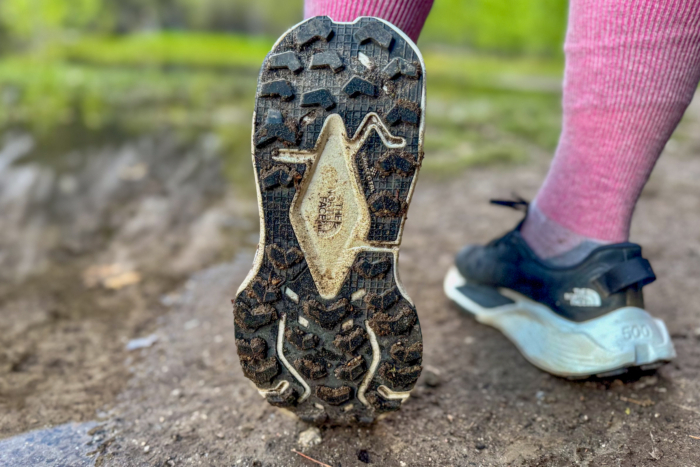
The North Face created a successful sequel with the Women’s Altamesa 500 V2 ($170), a shoe that shows max cushioning doesn’t have to feel like running on marshmallows. We found the full-length DREAM nitrogen-infused TPU foam midsole remarkably plush, yet it retained enough energy return to keep us moving efficiently when the miles got long. We tested these on a variety of terrain, ranging from recovery miles in Yosemite National Park after a 50k to a 13k race in Colorado on technical trails. In both scenarios, the impact protection felt top-tier.
The fit is generous where it counts. While it isn’t quite as wide as a Topo Athletic Ultraventure 4, the toe box was still notably spacious. However, we noticed the upper was a little tight across the instep. Loosening the laces helped, but there was still slight pressure on longer runs.
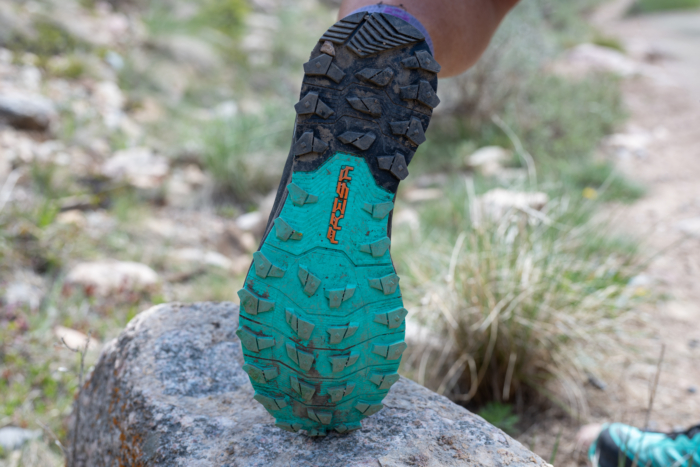
The V2 feels more stable thanks to its broader underfoot platform, though we found it lacks a bit of that nimble flickability on downhill switchbacks and technical trails. While the SURFACE CTRL SC2 rubber and 4mm lugs provided enough grip for loose rocks during our technical 13k test, we noticed the traction wasn’t quite as bitey as we wanted on longer, technical descents. Ultimately, this strikes us as an all-purpose daily trainer or a long-distance option for runners who prioritize underfoot protection and a consistently stable ride on less-technical trails.
HOKA Tecton X3
-
(Photo/HOKA)
-
-
-
-
-
Specifications
Pros & Cons
Pros
- Fast and nimble on technical terrain
- Cushioned without feeling disconnected
- Winged carbon plates add stability
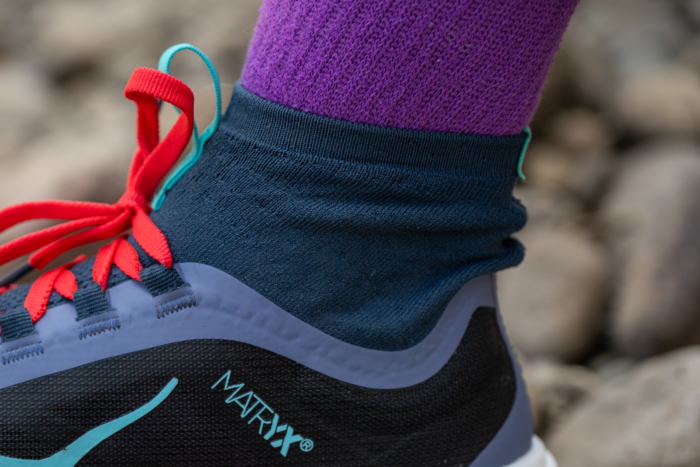
- Secure, durable Matryx upper
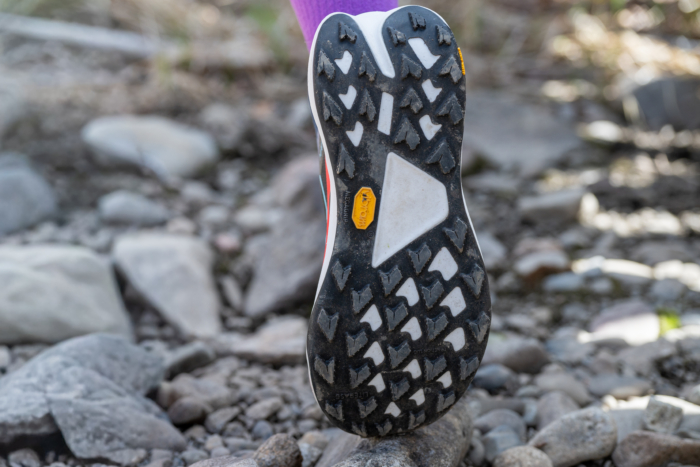
- Tacky, long-wearing outsole
Cons
- Narrow through the midfoot
- Knit collar may rub some ankles
- Expensive
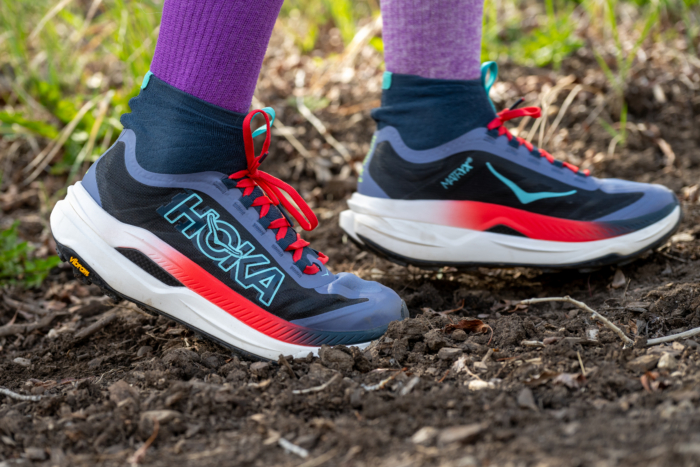
The Quick & Dirty: A high-performance super shoe for the trail that combines propulsive carbon plates with plush cushioning, but those with wide feet may not love the updated X 3.
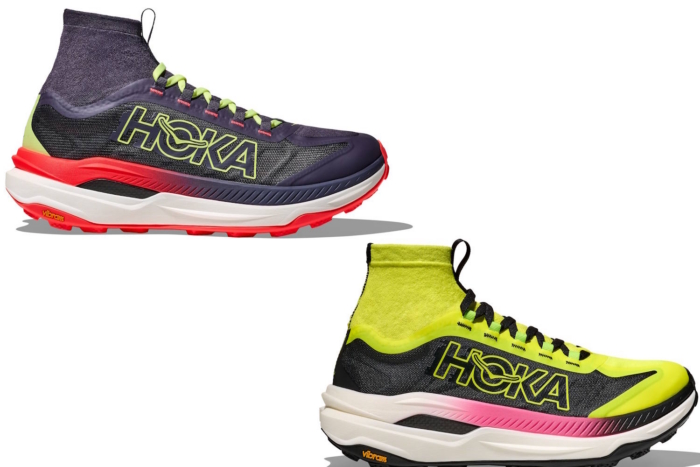
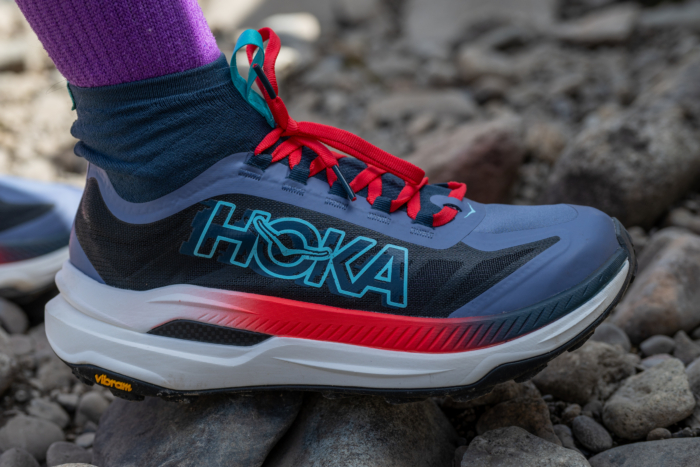
HOKA has redefined what a trail “super shoe” can be with the Women’s Tecton X 3 ($275), blending propulsive carbon plates with a dual-layer foam that saves your legs during the longest efforts. This version introduces a dual-layer PEBA midsole, the same high-rebound material used by road racing elites. We felt this provided a level of snap and leg-saving protection that’s rare in the woods.
Our tester selected these as their top pick for high-consequence efforts, including several 100-mile races. From the soggy, rain-slicked roots of North Carolina trails to the rugged, high-altitude terrain of the Crazy Mountain 100, the shoe felt fast and surprisingly stable for such a high stack height. That stability likely comes from the new carbon fiber plate winglets that wrap up the sides to help center the foot.
The X 3 features an updated knit collar that acts as a built-in gaiter, which we noticed was particularly effective at keeping debris out during mountain adventures. But not everyone loves the feel of a full-sock gaiter, and yes, you still need to wear socks. The Matryx textile upper felt secure and durable, though the race-oriented fit strikes us as decidedly more locked-in and narrow than we are used to in a HOKA shoe.
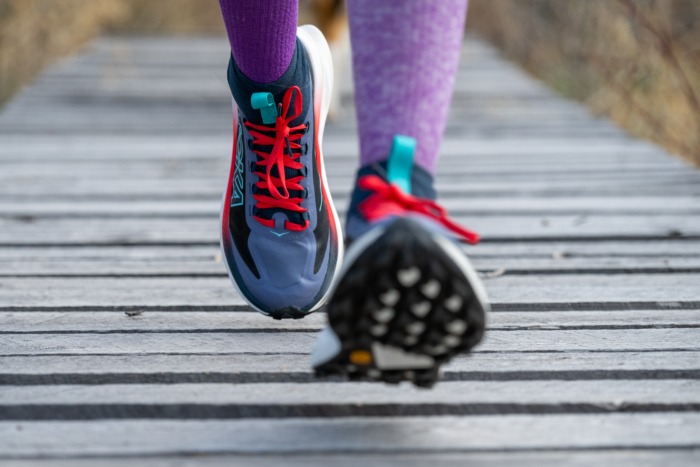
The Vibram Megagrip offered what we considered top-of-class bite on loose climbs and muddy descents alike. Unlike the Nnormal Kjerag 2.0, which relies on a minimalist feel for speed, the Tecton X 3 uses technology to propel the runner forward while absorbing massive amounts of impact. While the $275 price point is hard to ignore, the performance gains justify the cost for runners looking to shave time off an ultra or preserve their quads during long efforts.
Nnormal Kjerag 2.0
-
-
(Photo/Heather Balogh Rochfort)
-
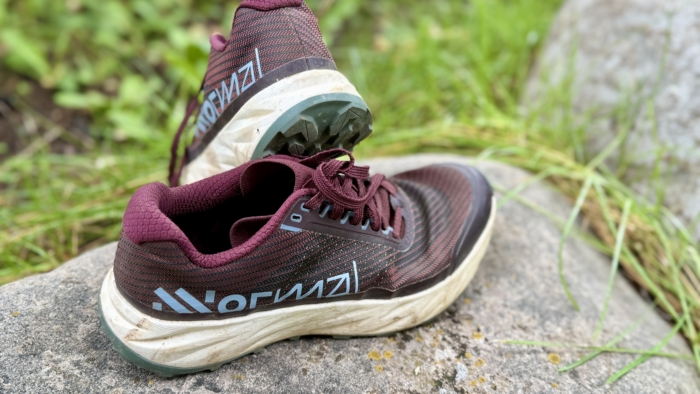
Nnormal doesn't believe in excess, so they aim for unisex shoes whenever possible to cut out extra product lines. (photo/Heather Balogh Rochfort)
-
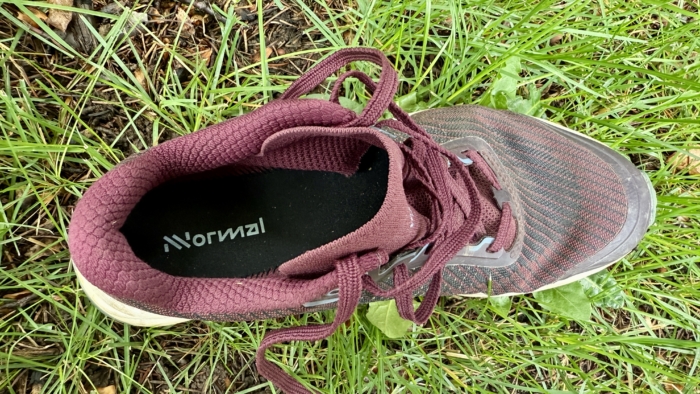
There is no insole in the Nnormal Kjerag 2.0 shoes; your foot sits right on top of the midsole. (photo/Heather Balogh Rochfort)
-
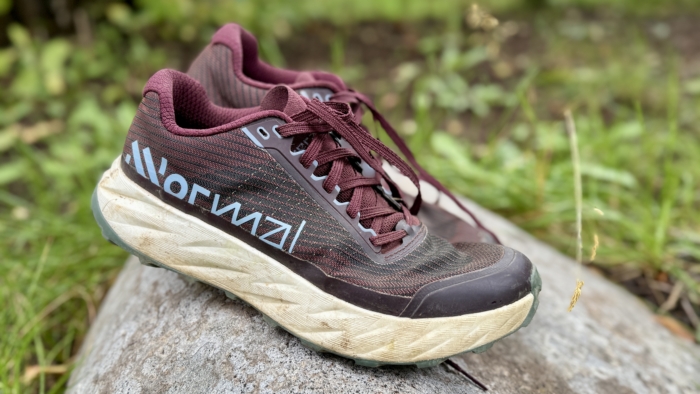
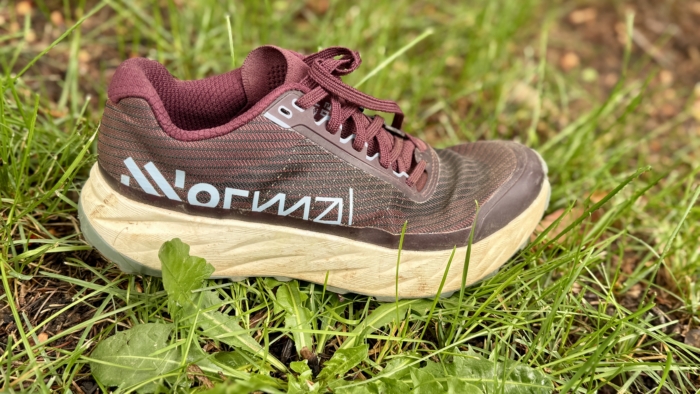
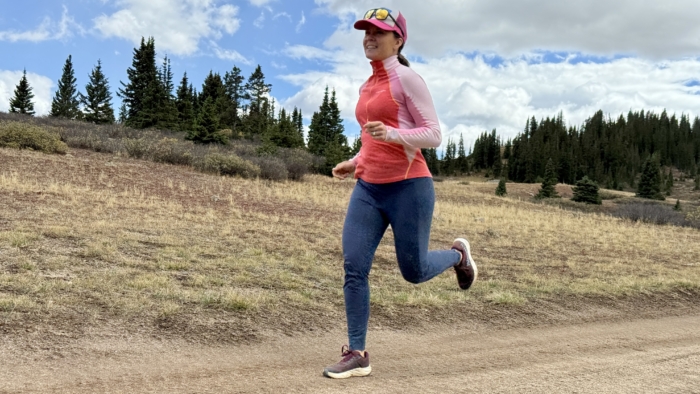
The Nnormal Kjerag 2.0 are snappy, fast, and agile for experienced runners who want to scamper in the mountains.
-
Running above Aspen, Colorado (photo/Heather Balogh Rochfort)
Specifications
Pros & Cons
Pros
- Lightweight yet durable
- Grippy and durable traction
- Quite agile with plenty of ground feel
Cons
- Minimal cushioning
- No insole
The Quick & Dirty: Built for runners who like to move quickly and precisely, the Kjerag 2.0 keeps weight impressively low without feeling flimsy, but its stripped-down vibe will appeal more to efficient racers than those chasing max comfort.
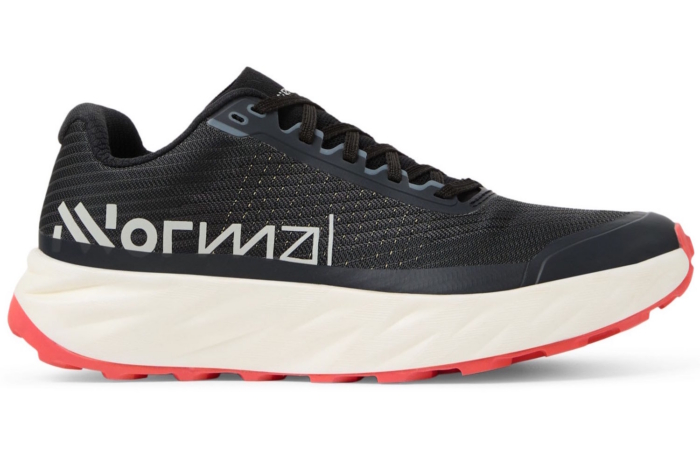
The Nnormal Kjerag 2.0 ($195) is built for speed. Lightweight and precise, this shoe feels like it was designed for runners who want to move quickly over technical ground without any wasted effort. You don’t get a rock plate; instead, you get direct terrain feedback as you cruise on by.
What really sets the Kjerag 2.0 apart, however, is durability. We tested these on a burly, off-trail mission in Colorado’s Holy Cross Wilderness that climbed 3,000 vertical feet and included bushwhacking through a downed forest, talus hopping, and scree scrambling in the high alpine (and absolutely freaking out when we ran into a bear!) Despite that day of pure abuse, the Kjerags escaped unscathed, with nary a loose thread to show for it. We credit the bombproof upper, woven from individually coated synthetic and Kevlar fibers. For a shoe this light and fast, it’s rare to be so indestructible.
There are some tradeoffs, though. The unisex sizing means women should size down 1.5 from their usual (give or take). Also, the long, narrow feet combined with no padding or insole mean beginner runners likely want to look elsewhere because these are certainly not a plush shoe. If you find the Kjerag too punishing, the Salomon Genesis offers a similarly durable upper with a much more forgiving midsole. But for experienced runners who want a fast, durable shoe to run over and through mountains, the Kjerag 2.0 is a great choice.
More Kicks That Crush
-
-
-
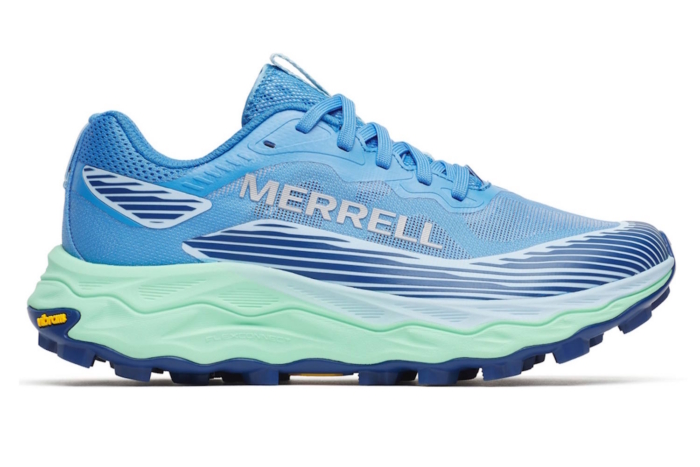
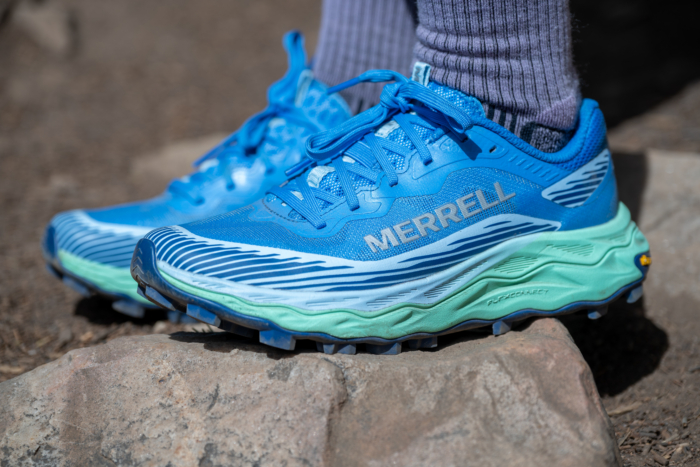
The Merrell Agility Peak 6 has an underfoot rock plate shield that defends against sharp, uneven terrain; (photo/Conni Mahoney)
-
-
-
-
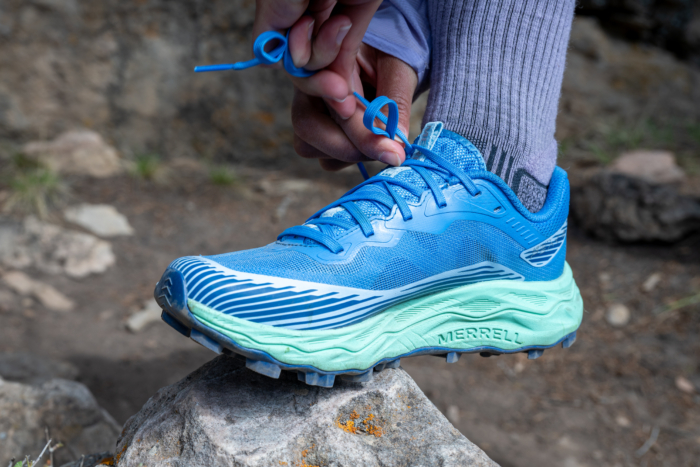
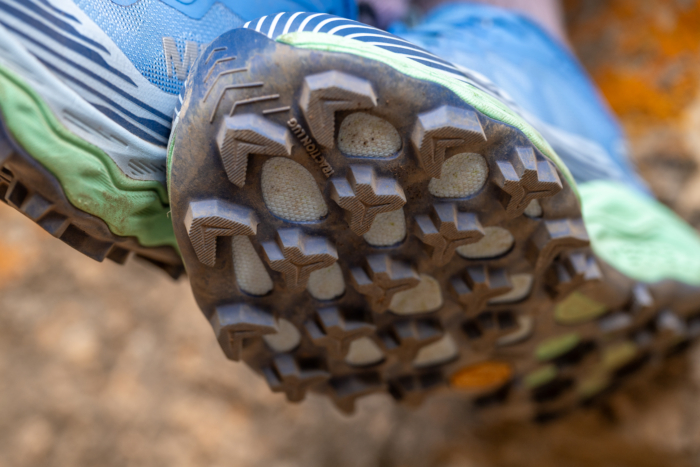
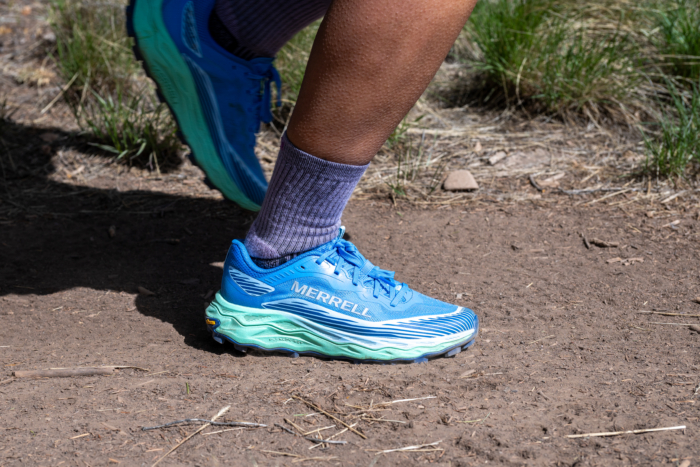
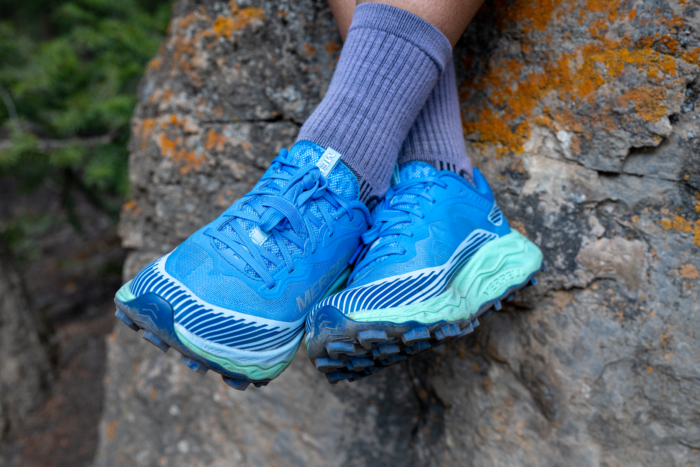
Specifications
Pros & Cons
Pros
- Reliable traction
- Rock plate
- Secure heel lockdown
- Relatively lightweight for the level of protection
Cons
- FloatPro foam may feel a bit firm for some
- Performance fit can feel restrictive for wider feet
The Quick & Dirty: This rugged, mountain-focused shoe prioritizes grip and rock protection rather than cushioning. It’s a solid pick for technical scrambles or alpine trails, though some may find it too firm for long days.
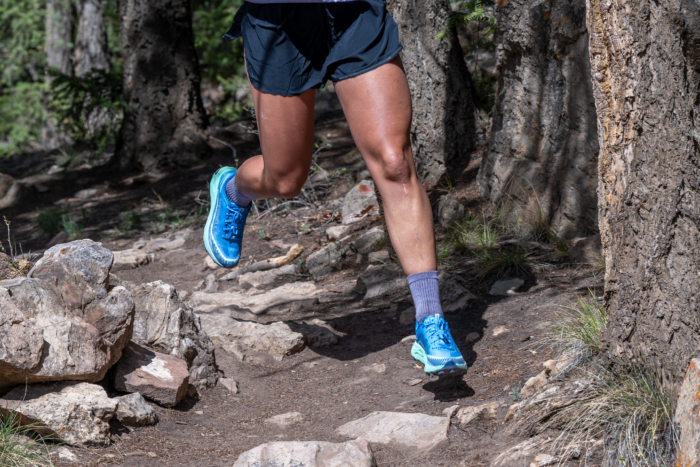
Merrell targets technical terrain with the Women’s Agility Peak 6 ($160), designed for tough trails where standard runners might struggle. This version has a refined lug geometry that creates an aggressive shoe. We took these into the heart of the Colorado Rockies for spring scouting missions, running through slushy creek crossings to muddy trails typical of the high-alpine thaw. In our experience, the Vibram MegaGrip outsole inspired confidence on wet rock and mud, allowing us to maintain a steady pace even as the terrain steepened.
We found the fit to be a narrower performance feel. The heel sling provided a secure anchor, which we welcomed during steep descents where heel slippage can be a major distraction. However, the midfoot and toe box felt fairly snug to us. That snugness provided a controlled feel on off-camber sections. Tip: Consider sizing up if it’s too narrow.
Compared to the plusher, roomier toe box of the ,Women’s Altamesa 500 V2, the Peak 6 is firmer and has a more traditional fit. The integrated rock plate protects against sharp debris, while FloatPro foam feels resilient rather than pillowy, maintaining a stable base on uneven ground. For rugged adventures where a trim fit and underfoot protection matter, this is a reliable choice
Specifications
Pros & Cons
Pros
- Do-it-all workhorse; tons of versatility
- Bomber traction with the Vibram Megagrip outsole
- Ample cushioning but still responsive
Cons
- Heavy
- Less breathable in warmer weather
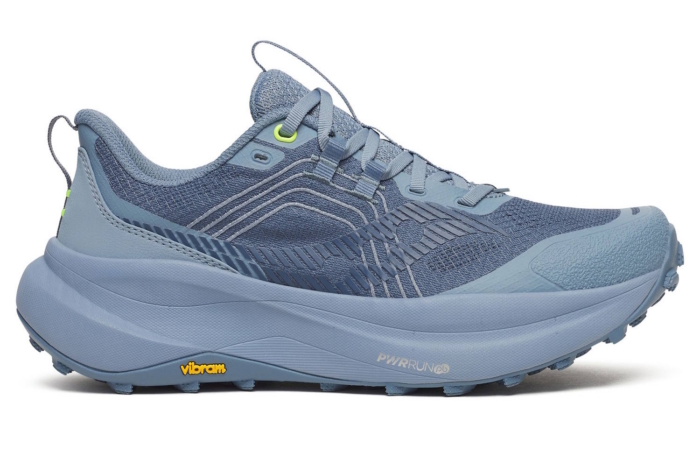
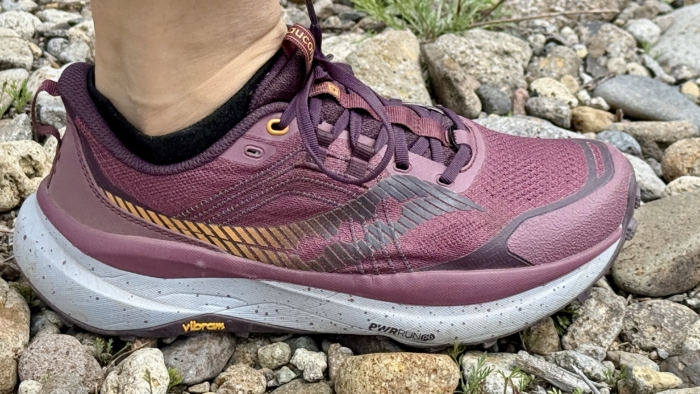
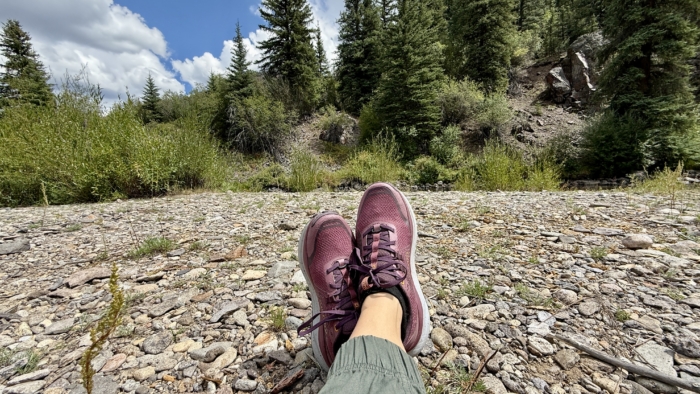
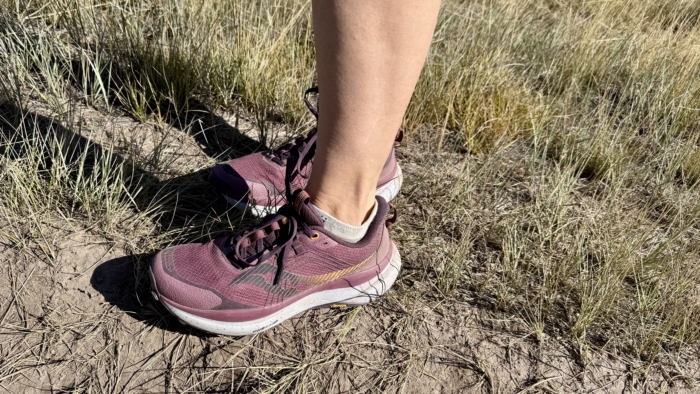
The Quick & Dirty: Plush, smooth, and surprisingly capable for such a highly cushioned shoe, the Xodus Ultra 4 shines on all-day outings where comfort matters most, though it can feel like a bit much for quick, nimble efforts.
The women’s Saucony Xodus Ultra 4 ($170) is one of the most confidence-inspiring trail shoes we’ve worn. Compared to the Ultra 3, it carries a bit more weight, but that’s because Saucony added even more of its plush PWRRUN PB foam underfoot. The result is a shoe that feels noticeably softer and bouncier while still wrapped in a firmer chassis for durability and protection.
On long runs, our feet felt fresh and supported, and despite the extra cushion, the shoe never felt slow or heavy underfoot. The dual-density midsole kept our stride reasonably lively, while the “bathtub” construction (the midsole gently cradles the foot and wraps around it) added stability on uneven terrain, even as we trotted down a rock-covered slope outside Aspen.
The Vibram Megagrip outsole is a huge upgrade for us, as it is arguably the gold standard for traction. Whether we were hiking up slick, gritty sandstone in Western Colorado or navigating muddy steeps in the San Juan Range, the traction was incredibly reliable. It easily out-grips the Salomon Genesis on wet, slick surfaces. Bonus: You get a dash of versatility. Sure, the Xodus Ultra 4 is built for long hauls, but we’ve also been using it as a daily driver and a hiker without hesitation. For most trail runners, the Xodus Ultra 4 is a safe and dependable workhorse of a pick.
-
-
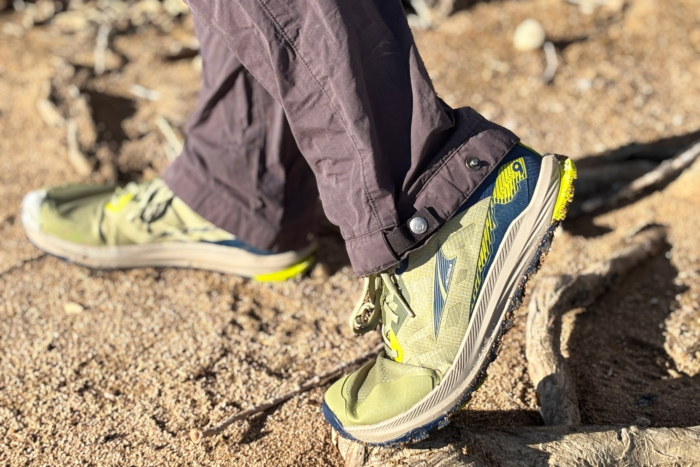
The Lone Peak 9 grips well on dry trails but struggles on wet snow and ice—best paired with crampons for winter conditions; (photo/David Young)
-
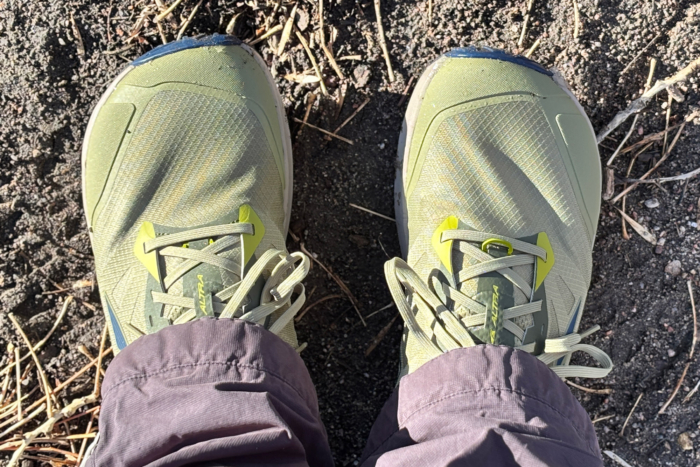
The Altra Lone Peak 9 feels ultralight out of the box, with a sleek design and a roomy toe box built for comfort on long trails; (photo/David Young)
-
(Photo/David Young)
-
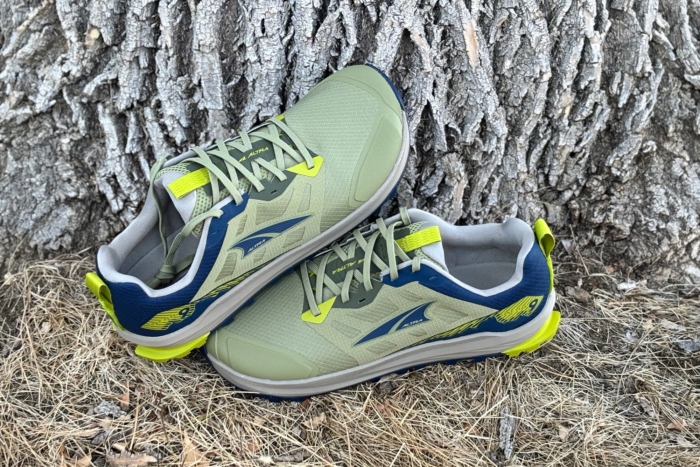
(Built for long miles, the Lone Peak 9’s updated outsole improves durability while maintaining the flexible, trail-ready feel Altra is known for; photo/David Young)
Specifications
Pros & Cons
Pros
- Altra continues their trademark roomy toe box
- Improved traction with Vibram Megagrip rubber
- Durable workhorse that can withstand high mileage
Cons
- Noticeably heavier than the Lone Peak 8
- Much pricier than the Lone Peak 9
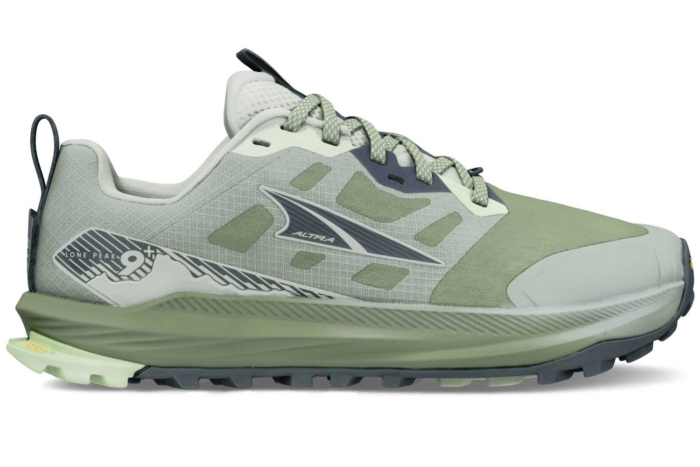
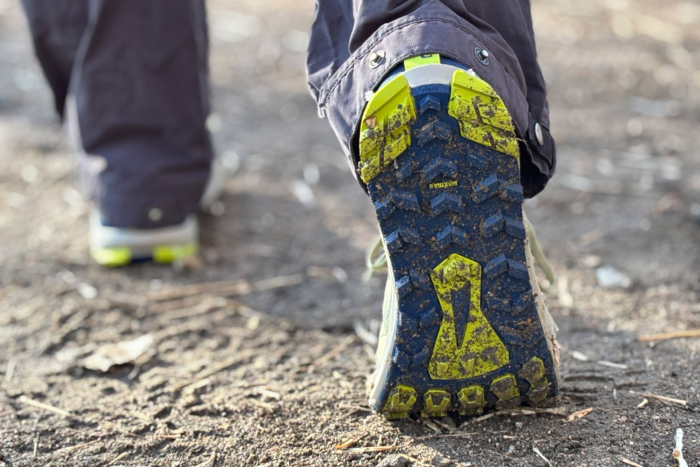
The Quick & Dirty: Keeping the roomy toe box and zero-drop feel fans love, the 9+ adds a vastly better outsole, making it a much more confident pick for loose and steep terrain, even if it still leans more steady than speedy.
The Altra Lone Peak 9+ ($160) takes everything fans love about the iconic Lone Peak and gives it a traction upgrade. Compared to the standard Lone Peak 9 ($140) that uses Altra’s proprietary MaxTrac rubber, the 9+ has a Vibram Megagrip outsole that provides far more confidence on steep or loose terrain (And yes, that’s because Megagrip is my favorite). On a two-day backpacking trip in Colorado’s Hunter-Fryingpan Wilderness, the roomy toebox kept my feet comfortable even after long miles, and the Vibram outsole crushed it while descending a thousand-foot, scree-covered pass. While the Topo Athletic Ultraventure 4 also caters to the wide-foot crowd, the Lone Peak offers a more “natural” zero-drop experience that diehard Altra fans crave.
Altra also slightly tweaked the EGO midsole, aiming for more responsiveness and durability while keeping the time-honored zero-drop feel. Personally, we liked them better for hiking than running since they’re stable and protective, but not exceedingly peppy. But, if you’re a diehard Lone Peak fan, the 9+ feels like the natural evolution.
Specifications
Pros & Cons
Pros
- Lighter than its predecessors
- Proprietary TrailTack Green rubber rivals Vibram
- Arguably the most comfortable upper we tested
Cons
- Tongue is too padded
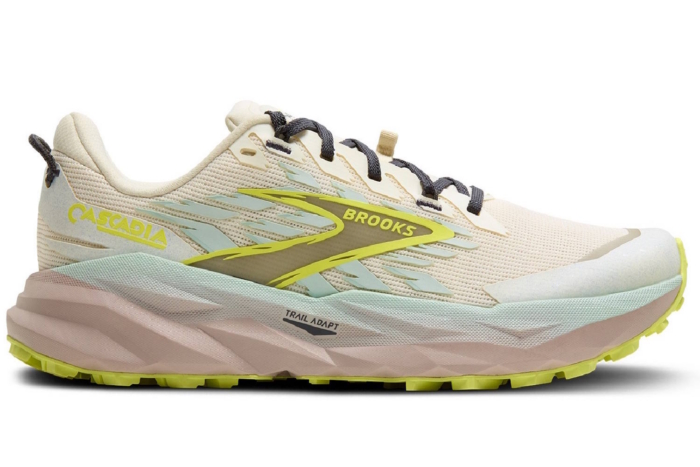
The Quick & Dirty: When you want one shoe to handle changing terrain and steady training without much fuss, the Cascadia 19 is an easy pick thanks to its balanced ride, reliable stability, and no-drama feel.
The Brooks Cascadia 19 ($150) is one of the most comfortable trail shoes we’ve tested this year, and a major step forward from the clunkier Cascadias of old. With a 6 mm drop (down from 8 mm) and a leaner weight, the ride feels nimble and responsive without sacrificing the protection that made this line a favorite among mountain runners. Bottom line: These now feel more like running shoes than hiking shoes.
The traction is standout. The TrailTack Green outsole delivers a grip so tacky it could rival Vibram Megagrip (Yes, those are fighting words, but we stand by them!), biting into loose dirt, rock, and steep grades with ease. A flexible rock plate keeps sharp, jagged terrain from poking through, and the midsole cushioning hits a sweet spot of comfort without feeling overbuilt.They lack the extreme stiffness of the Scarpa Ribelle Run 2, making them a much more approachable choice for a wide variety of trail runners.
We took the Cascadia trail runners on an 11-mile, 4,500-foot climb up the tallest 14er in Colorado, and they were so comfortable we never took them off during the long car ride home. The new laces are a little thin, but paired with the plush padded tongue, they’re never a bother (although we think the tongue borders on too padded). Still, the tradeoff is worth it. The Cascadia 19 may not be the “tank” the 18 was, but they’re lighter, nimbler, and a walk-off home run for us.
Specifications
Pros & Cons
Pros
- Wide platform is very stable
- Rocker profile helps you move efficiently
- Improved traction from previous iterations
Cons
- A touch narrow in the midfoot
- Helion HF midsole requires a break-in period
The Quick & Dirty: With a wider platform, softer ride, and much-improved traction, the Cloudultra 3 finally feels like a complete trail shoe for those wanting max cushion. Just keep in mind the fit still favors narrower feet.
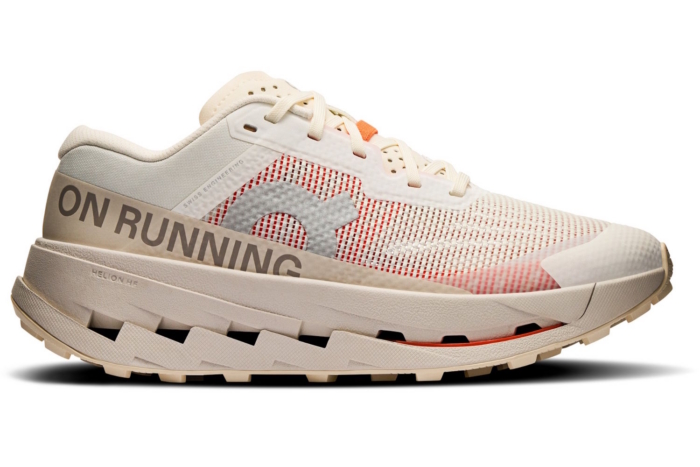
The On Cloudultra 3 ($190) is one of the brand’s strongest trail offerings to date, with legitimate updates that make this latest version more versatile and enjoyable. The first thing we noticed was the wider platform. When combined with the rocker profile, we felt like we could efficiently cruise through bumpy terrain without any lateral stability concerns.
On also swapped in a new dual-density Helion HF Hyperfoam midsole, which runs noticeably softer than the last iteration. It feels forgiving, but not mushy; you don’t sink through and crunch the ground beneath your feet, which makes it a nice balance for daily trail miles.
Traction is another upgrade. The overhauled outsole has a new lug pattern and is grippier than past Cloudultras, largely rectifying a big gripe about these shoes. It’s still not on the same level as Vibram Megagrip or even Brooks TrailTack Green rubber, but it was reliable on downhills with only the occasional slide out. And, good news: These outsoles definitely don’t gather rocks like early On shoes.
Fit remains the lone caveat. The midfoot is still on the narrow side, although it is much improved (read: widened) from V2. Runners with narrow or regular-narrow feet will feel right at home with the Cloudultras, which are an excellent option for a stable, max-cushioned running shoe.
Specifications
Pros & Cons
Pros
- Killer durability with the Kevlar in the upper
- Truly comfortable on most feet, no matter the distance
- Plenty of protection on burly terrain
Cons
- Limited ground feel with the higher stack height
The Quick & Dirty: Tough enough for rough miles but agile enough to keep things fun, the Genesis blends durability and dependable traction in a package that works just as well for long runs as it does for big hiking days.
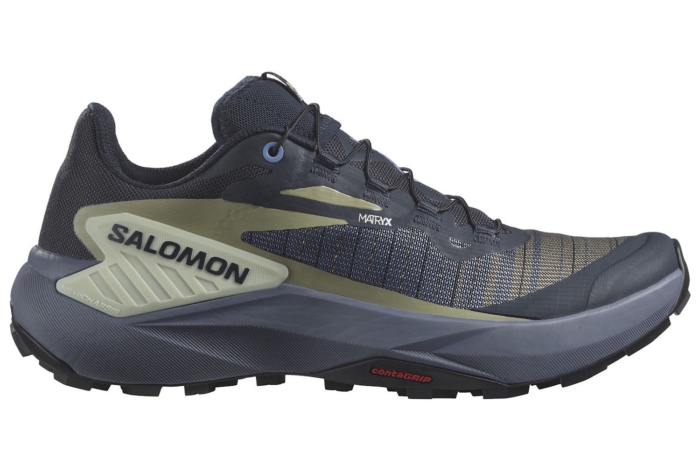
The Salomon Genesis ($170) has quickly earned a reputation as one of the toughest trail shoes out there — and it’s no coincidence that ultra legend Courtney Dauwalter trusts them for big miles. Built with a Kevlar-reinforced synthetic upper, the Genesis brushes off abrasion, roots, and rocks without showing wear. They’re burly and protective, but not clunky. There’s still a surprising amount of agility and responsiveness, especially for a shoe this durable.
Underfoot, Energy Foam (a blend of EVA and olefin) cushioning strikes a nice balance between comfort and responsiveness, while the Contagrip outsole bites reliably on everything from gravel to rocky scrambles. They offer a level of durability that rivals the Nnormal Kjerag 2.0 but with a significantly more cushioned and comfortable midsole. We’ve loved them not just for long trail runs, but also for big days of hiking, where the stability and protection shine. Tradeoff: There isn’t a ton of ground feel thanks to the 33 mm of cushion beneath the heel, but we can live with that.
-
-
(Photo/Conni Mahoney)
-
(Photo/Conni Mahoney)
Specifications
Pros & Cons
Pros
- Great for those who prefer wide toebox
- Maximum cushioning
Cons
- Lightweight
- Gaiter compatible
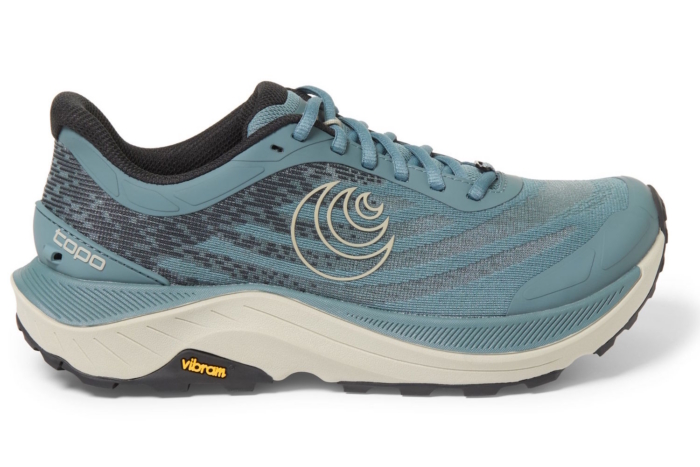
The Quick & Dirty: Serving up generous forefoot room without sacrificing cushion, the Ultraventure 4 is a reliable long-distance companion that excels on moderate, dry trails rather than truly technical or muddy ones.
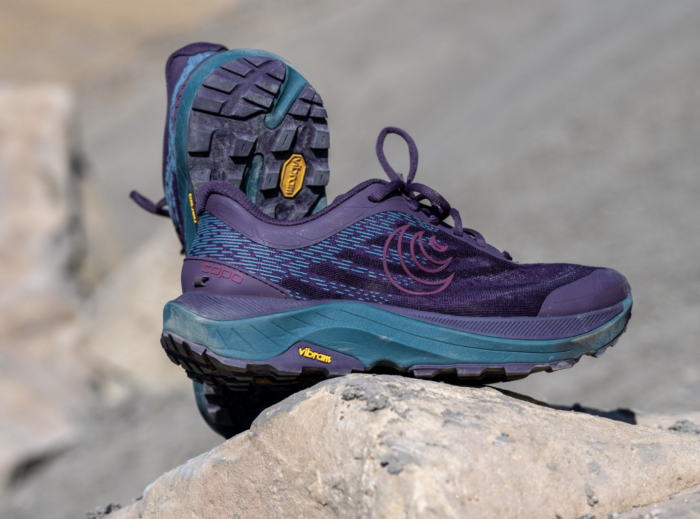
The Topo Athletic Ultraventure 4 ($155) keeps the wide toebox, low heel drop, and cushioned midsole that made the series so popular, making it our top pick for runners who need extra forefoot space. The updated recycled mesh upper and overlays improve security and debris protection without feeling sloppy, while the redesigned heel cup locks the foot in place.
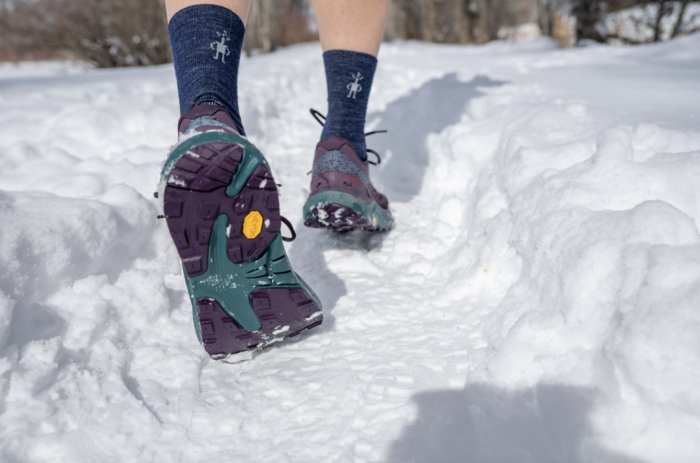
Underfoot, the ZipFoam midsole has been tweaked for a slightly bouncier ride that shines on long runs, helping reduce foot fatigue. The Vibram XS Trek EVO outsole remains unchanged, offering reliable traction on most terrain, though it lacks the bite for truly technical or muddy conditions. It offers a very similar “foot-shaped” experience to the Altra Lone Peak 9+, but with a 5 mm drop that many runners find easier on their Achilles.
Without a rock plate, the Ultraventure 4 still feels protective and comfortable, excelling as a versatile, long-distance shoe for runners with medium to wide feet.
Specifications
Pros & Cons
Pros
- Affordable price
- Incredibly lightweight
- Keeps feet in a natural gait
- Barely-there feel
Cons
- Not ideal for rugged terrain
- Fits narrow
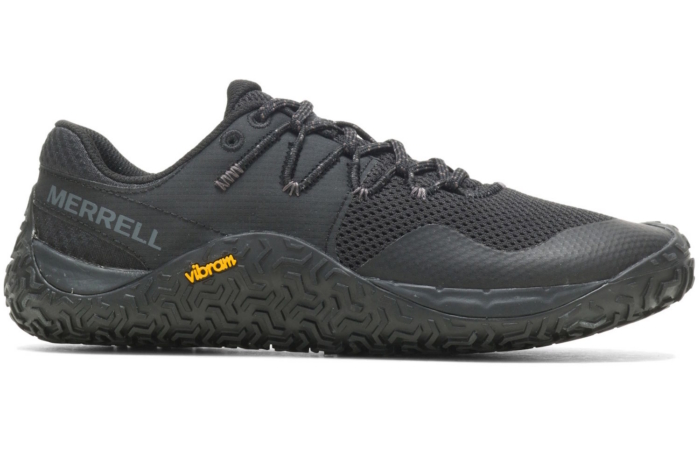
The Quick & Dirty: Minimalist runners seeking a close-to-the-ground feel at a reasonable price will find a lot to like here, but the narrow fit and barefoot-style ride require strong feet and a careful transition.
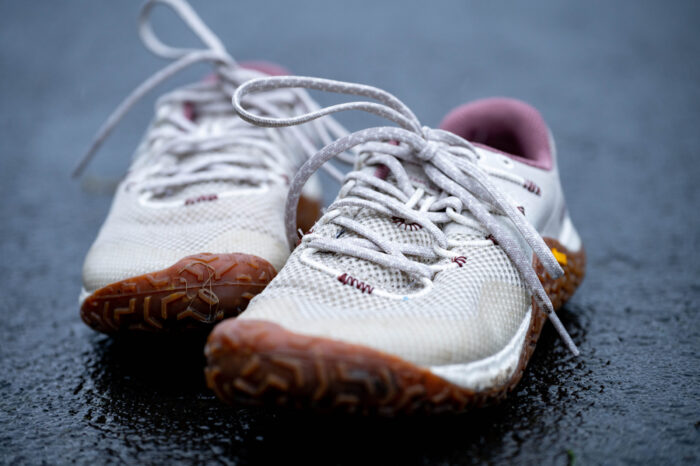
Runners who love the bare minimum at an approachable price point will rejoice at the Merrell Trail Glove 7 ($120). The lightest shoe on our list, weighing in at 14.4 ounces, gives you only what you need to run far and fast on flat surfaces with no unnecessary bells and whistles to weigh you down.
And, similarly to running barefoot, its zero drop, coupled with Merrell’s Barefoot 2 construction, keeps your foot in a natural position. These shoes are made to hug the shape of your foot and imitate running barefoot, so those with wide feet or who prefer a wide toebox should look elsewhere, like the Topo Athletic Ultraventure 4 or Altra Lone Peak 9+. The Trail Glove is certainly made for narrow feet. If you’re newer to trail running or even if you’re new to a zero-drop shoe, be sure to warm up and adjust to these with some shorter runs.
Even though these shoes have a minimal design, we appreciate the 2.5 mm lugs and their durability, particularly considering that they are the least expensive option on our list at a mere $120.
Women’s Trail Running Shoes Comparison Chart
| Shoe | Price | Best For | Cushion Level | Fit Profile | Rock Plate |
|---|---|---|---|---|---|
| Hoka Speedgoat 7 | $165 | All-around mountain running & technical trails | Max / Plush | Standard / Snug | No |
| Salomon Pulsar | $140 | Fast road-to-trail transitions | Moderate / Responsive | Narrow / Snug | Yes |
| Saucony Peregrine 16 | $150 | Everyday trail running & mixed terrain | Moderate / Balanced | Standard / Secure | No |
| Scarpa Ribelle Run 2 | $199 | Technical trails, scrambling & alpine terrain | Moderate / Firm | Narrow / Technical | No |
| The North Face Altamesa 500 V2 | $170 | High-mileage training & recovery runs | Max / Stable | Roomy Toe Box / Tight Instep | No |
| HOKA Tecton X 3 | $275 | Race day & high-speed mountain efforts | Max / Propulsive | Narrow / Race-Oriented | No |
| Nnormal Kjerag 2.0 | $195 | Fast racing & technical agility | Minimal / Ground Feel | Standard / Precise | No |
| Merrell Agility Peak 6 | $160 | Rugged mountain running & technical scrambles | Moderate / Firm | Narrow / Performance Fit | Yes |
| Saucony Xodus Ultra 4 | $170 | Ultra-distances & all-day comfort | Max / Plush | Roomy Toe Box | Yes |
| Altra Lone Peak 9+ | $160 | Zero-drop hiking & mid-distance trails | Moderate / Balanced | Ultra-Wide Toe Box | Yes |
| Brooks Cascadia 19 | $150 | Rugged terrain & daily workhorse miles | Moderate / Balanced | Standard | Yes |
| On Cloudultra 3 | $190 | Firm hardpack & high-mileage cruising | Max / Responsive | Standard | Yes |
| Salomon Genesis | $170 | Rocky scrambles & rugged durability | Max / Protective | Standard | Yes |
| Topo Athletic Ultraventure 4 | $155 | Mellow trails & runners with wide feet | Max / Plush | Wide Toe Box | No |
| Merrell Trail Glove 7 | $120 | Barefoot running & foot strengthening | Minimal / Barefoot | Snug / Anatomical | No |

How We Tested Women’s Trail Running Shoes
Our Expert Testers
Our women’s trail running shoe testing is led by GearJunkie contributor Constance Mahoney and Editor Chris Kassar.
Mahoney has been a GearJunkie contributor since 2019 and is an experienced runner who has completed distances from local 5Ks to trail ultramarathons. In 2021, she founded and continues to lead the Trail Sisters Crested Butte, Colorado, chapter.
Kassar tested and evaluated shoes across the Tetons, Colorado Rockies, and desert Southwest, bringing years of experience testing footwear for hiking, running, backpacking, and mountain travel. Contributor Heather Balogh Rochfort, a former ultrarunner based outside Aspen, Colorado, also adds long-term experience on high-country singletrack, rugged ridgelines, and sandstone trails.
Since 2021, our team of five experts has tested more than 50 pairs of women’s trail running shoes.

Our Testing Process & Grounds
For this update, Mahoney and Kassar tested seven new and updated trail running shoes over four months, logging a minimum of 30 miles per shoe across long runs, faster efforts, and technical trails. Several returning models have also been in our testing rotation for multiple seasons, giving us a clearer sense of long-term fit, durability, and how each update compares to past versions.
Testing spanned the Redwoods, Yosemite, Montana’s Bridger Ridge, Crested Butte, Gunnison, the Tetons, and southern Utah, with additional long-distance race feedback from the Hellbender 100, Crazy Mountain 100, and a race in Oregon. We tested each shoe for its intended use, from daily dirt and gravel miles to rocky climbs, uneven mountain terrain, and long race efforts.
During and after each run, we assessed fit, heel hold, toe box shape, cushioning, traction, protection, stability, durability, and visible wear. Shoes remain in ongoing testing after inclusion, and this guide is updated seasonally..

How We Rate Trail Running Shoes
To help you compare these shoes objectively, we score each model on a 10-point scale across four key performance metrics.
Comfort & Fit: We evaluate how well the upper secures the foot, the shape and roominess of the toe box, and whether the midsole foam feels harsh or plush over long miles.
Traction: We look at the grip of the outsole rubber and the lug design, noting how confidently the shoe handles wet rock, loose dirt, and deep mud.
Protection: We assess how well the shoe shields your feet from sharp rocks, roots, and trail debris, whether that is achieved through a dedicated rock plate or a high stack of dense foam.
Stability: We test the shoe’s ability to keep your foot locked in and prevent rolled ankles on off-camber, uneven, or highly technical terrain.
A Note on the Overall Score: You will notice that a shoe’s Overall Score is not a strict mathematical average of its four category scores. Instead, the Overall Score is our holistic assessment of a shoe’s versatility, value, and general performance on the trail. Highly specialized shoes (like stripped-down racers or zero-drop minimalist shoes) may excel in one specific area but score lower overall because they are built for a niche use rather than everyday, do-it-all utility.
Buyer’s Guide: How to Choose a Trail Running Shoe
Knowing which shoe is the right one for you can be daunting. That is why we are demystifying the shoe selection process by providing you with useful tips to find the shoe that best meets your running needs.
This article focuses on the best women’s trail running shoes. In separate articles, we have also outlined the best women’s road running shoes and the best winter running shoes.

Where You Run Matters
There’s a lot to consider with running shoes, and where you plan on running matters. Do you plan on running on pavement? Or do you anticipate hitting the trails? Will the trails be all dirt or have a mixture of gravel? Your options will often consist of either a road or trail running shoe.
Road running shoes are designed for compact, smooth, and even surfaces. These shoes will have minimal features that make them lightweight and flexible with smooth soles. Keep in mind that these shoes may not be great for rocky, gravel, or uneven terrain.
Trail running shoes are for runners who want to deviate from the well-groomed paths and venture off-road. In order to do this, trail running shoes are made with deep lugs and traction patterns that can manage anything the environment may have in its way, including roots, boulders, stumps, and more. Trail running shoes may, though not always, have plates and stiffer midsoles in addition to offering support and protecting your feet from jagged rocks and sharp objects.
Identify Your Running Gait

The term “pronation” refers to the way your foot rolls, which has an effect on your joints. Do you have an inward or outward foot roll? Knowing this will be helpful for you to decide what kind of assistance your running requires.
An easy way to identify your running gait is to examine the soles of your existing shoes and determine where they typically wear out. Or visit a foot expert to determine your type of pronation.
- Basic, or neutral, pronation is different for everyone, but ultimately, neutral pronation occurs when your foot naturally rolls slightly inward to distribute the body’s impact upon landing.
- Overpronation occurs when your foot rolls too far inward, which means your shoes will show signs of wear on the inside of them.
- Supination, or underpronation, occurs when your feet roll outward, resulting in the outer part of the heel striking the ground first, which will show signs of wear on the outermost edges.

Stack & Heel-to-Toe Drop
Unless you’re running barefoot, every shoe has a stack. Measured in millimeters, the stack refers to how high the insole sits off the ground. Shoes with more cushion inherently have a higher stack. Furthermore, most shoes have a drop in stack height from the heel to the toe.
If you’re new to running, experts recommend a lower heel stack because it builds a wider range of motion and strength, which makes you a healthier runner.
Another factor to consider is the heel-to-toe drop, also known as the “drop,” measured in millimeters. A shoe’s drop is the difference in cushion height between the heel and the toe. If a shoe has a drop of 10 mm, it means the heel will be 10 mm higher than the toe.
Those who run on the balls of their feet should consider a zero-drop shoe like the Altra Lone Peak 9+ or the Merrell Trail Glove 7. Additionally, those who run heel-to-toe (heel strikers) should aim for a shoe with a larger drop, such as the Salomon Genesis, which has an 8 mm drop for optimal joint support.

Cushion
A shoe’s cushion is often made from EVA or polyurethane to help absorb the repetitive impact against hard surfaces. With increased cushioning, it becomes more impact-absorbing, which is advantageous for extended runs. However, the weight of the shoe will increase with the amount of cushioning.
How much cushion you need for running depends on what feels right for you and whether you require something lightweight with minimal cushioning for a natural feel, like the Merrell Trail Glove 7. Alternatively, you can choose from the On Cloudultra 3, Saucony Xodus Ultra 4, The North Face Women’s Altamesa 500 V2, or the Hoka Speedgoat 7 if you want lots of cushioning for extra comfort.

Stability
For runners, particularly those with flat feet or overpronation, shoe stability is intended to offer additional support in the midsole or arch to limit the foot from rolling inward too far. Ideal shoe support is designed to stabilize your foot and keep it in a more neutral position.
When considering the right stability for your needs, evaluate whether you require additional structure to compensate for excessive inward rolling. Also, keep in mind that many runners feel a decrease in stability when running in shoes with a greater stack height. The more material between your feet and the trail, the harder it is to feel and react to uneven surfaces, loose rocks, and slippery gravel.
Rock Plate
Some running shoes are equipped with rock plates or a built-in nylon shank. When tackling mountain slopes, these built-in structures are intended to shield the bottom of your feet from soreness and bruising. While many of the shoes on our list have rock guards, two to consider are the Brooks Cascadia 19 and the Merrell Agility Peak 6.
Rock plates, however, are unnecessary when running on flat surfaces because they contribute extra weight. Additionally, some shoes, like the Topo Athletic Ultraventure 4, have sufficient cushioning and do not require the addition of rock plates. Women’s trail running shoes like the Nnormal Kjerag 2.0 don’t have any rock plate at all.

Flexibility
For trail running specifically, shoe flexibility is important. It helps you adjust to the terrain of the trails without injuring yourself. Ideally, the shoe will flex (or crease) near the same spot your foot flexes while pushing off. To test the flexibility of your shoe, hold the shoe with one hand on the heel and the other on the toebox.
Compress the shoe together and see where the crease happens. It should bend where the balls of your feet are. If it is hard to crease, then you have a stiffer shoe. However, the shoe should not wholly collapse on itself. You still want support and structure.
A shoe should not only flex with your natural forward gait, but it should also twist a little side to side. Again, hold your shoe from heel to toe, but twist the shoe in opposite directions this time. You should get a twist, but not so much as if you are ringing out a rag.
How much flexibility is needed is a personal preference, and a lot of it depends on your biomechanics and running style. Typically, if you are running fast, a stiffer shoe will help provide a more responsive and efficient turnover, hence why many race shoes are now carbon-plated. But a more flexible shoe will be more optimal if you are going the distance and looking for a cushion to help with muscle fatigue.
Keep notes when testing a shoe; if the flex point or the amount of flex makes you change your gait (assuming you don’t need it to change), try a different shoe. Also, something to remember when running in colder temps, the weather changes the stiffness of a shoe! So, what feels good in the summer may change when winter hits.

Breathability
One of the features we look for in running shoes is breathability. Nothing is worse than going for a run on a hot day and having your feet overheat, causing them to sweat, leading to blisters or, worse — some type of fungal/bacterial infection.
We look for shoes with uppers made from mesh or some other material that allows air and water vapor to wick out of the shoe. The porous upper material also lets cool air in. However, the trade-off is it doesn’t stop dirt and grime from entering the shoe. To get the most out of your shoes, be sure to wear appropriate socks that also wick moisture from your feet.
Waterproofing
Waterproof membranes are best when running in cold, wet, or snowy conditions. Do keep in mind that they work just as well to keep moisture out as they do to keep moisture in.
Oftentimes, we tend to avoid waterproof membranes unless running in the aforementioned circumstances for extended periods of time, because they tend to trap heat, leaving feet feeling damp, clammy, or wet, which can lead to friction blisters.Our pick for such conditions, when we know terrain or weather necessitates water resistance, are the Scarpa Ribelle Run 2 which is rated highly in our opinion for muddy trails.

Materials
Running shoe materials can impact the shoe’s performance — including weight, breathability, water resistance, and durability. Many brands have signature styles and blends, but the base materials are similar.
Most uppers on shoes are made with synthetic mesh. Depending on how intricately constructed they are, they can offer unique features such as gaiter attachments or knit collars. The fabric blends can also create better breathability and more durability in areas that need them the most. Some shoes are vegan-friendly. Others, like the Nnormal Kjerag 2.0 or Salomon Genesis, use Kevlar interwoven in the upper for added durability.
Below the upper is the midsole. This is where the cushion sits between the upper and the outsole. The cushion is generally made of a technical foam product. EVA foam is the most popular as it is lightweight for the amount of cushion it gives. Brands like Brooks and Salomon have their own proprietary foam blends.
If your shoe has a rock plate, it sits between the midsole and the outsole. They can be made from hard plastic or carbon fiber material.
Next is the outsole. The outsole is the bottom of the shoe that comes in contact with the trail or road. Because of its durability and traction capabilities, the outsole is almost always made from rubber. Again, each brand has its own blend and lug pattern, while many opt to use Vibram, Megagrip, a third-party rubber arguably known as the gold standard. Although lightweight running shoes are made of fewer materials and weigh less, they use more expensive materials, such as carbon, rubber, or rock plates, which are more likely to raise the price of the shoes.

Lugs & Traction
When it comes to how much grip you want, you’ll need to consider where you’ll be running and in what conditions. Outsoles with a lot of grip are great for varying terrain or deep mud, and will have aggressive-looking deep lugs that allow for more purchase on the ground without slipping.
On the other hand, if you are sticking to the pavement or compact dirt, lugs that are 5mm-7mm in height can be uncomfortable and unnecessary. Additionally, pebbles will frequently get stuck in the lugs if you run on gravel roads. As a result, shallower lugs are what you need, such as the 4 mm lugs found on the Saucony Peregrine trail running shoes.
Lug patterns also make a difference. Many shoes make it a point to have lugs that are multi-directionally patterned from heel to toe so that you can stop quicker and on a dime.

Weight
Running shoes should be lightweight while still providing adequate protection for the running style you prefer. Those looking for a pair of ultradistance running shoes shouldn’t choose anything that will make them feel weighed down.
In the running world, any shoe that weighs more than 12 ounces is generally regarded as heavy. If you want to be considered “lightweight,” you should strive for between 6.5 and 12 ounces.
At the heavier end of the spectrum sits the Saucony Xodus Ultra 4, weighing 19.8 ounces and our top pick for this guide. These beefy shoes are meant to handle rugged terrain with ease, but you shouldn’t feel too much of a weight penalty.

Price & Value
The right trail running shoe depends on where you run most, how much protection you need, and whether you want a cushioned daily trainer, a nimble technical shoe, or a race-day tool.
Budget
At the lower end of this guide, the Salomon Pulsar ($140) stands out as our favorite budget-friendly option. It’s light, quick, and smooth enough for pavement, gravel, and mellow singletrack, making it a strong pick for runners who want one versatile shoe without jumping into the highest price tier. The Merrell Trail Glove 7 ($120) is another lower-cost option, though its minimalist feel and narrow fit make it more specialized.
Mid-Tier
The $145-$170 range is where most runners will find the best mix of performance and value. The Hoka Speedgoat 7 ($165) delivers the all-around cushion, grip, and mountain-ready protection that make it our top overall pick. The Brooks Cascadia 19 ($150) offers a stable, protective ride for rugged daily miles, while the Saucony Peregrine 16 ($150) brings reliable Vibram traction and a nimble feel for everyday trail runs.
Premium
Spending $170 or more usually gets you more specialized performance, whether that means max cushion, carbon plates, premium materials, or race-day efficiency. The Saucony Xodus Ultra 4 ($170) and The North Face Altamesa 500 V2 ($170) both lean into high-mileage comfort, while the Nnormal Kjerag 2.0 ($195) uses a stripped-down, highly durable build for fast mountain efforts. At the top end, the HOKA Tecton X 3 ($275) is a true race-day tool, with propulsive carbon plates and plush cushioning built for long-distance speed.
Frequently Asked Questions
Women’s trail running shoes are built for off-road terrain, with deeper lugs for traction, more durable uppers to resist rocks and debris, and stability features to handle uneven ground.
By contrast, road running shoes focus on lightweight cushioning and smooth outsoles designed for pavement. Women’s-specific trail shoes also typically have a narrower heel and wider forefoot fit to match female foot shapes. If you plan to run mostly on dirt, gravel, or rocky paths, trail shoes will give you better grip, protection, and confidence than road models.
With so many options to choose from, it can be challenging to choose the right trail shoes. Here are three things to consider as you shop:
- Set realistic running goals. If you dream of running a 100-miler one day but realistically will use the shoes for 5-mile training loops around your local park, buy shoes for the latter use first.
- Consider shoe width. For folks with wide feet, or those running very long distances, a wide forefoot can be a bonus that lets toes splay. The downside is that wider shoes are less precise, can be a little more clumsy, and won’t fit well on people with narrow feet.
- Test out the tongue. Does it fit comfortably? Will it keep rocks out of your shoe?
For more help choosing, check out our complete buyer’s guide to choosing a trail running shoe.
Stack and Drop
Unless you’re running barefoot, every shoe has a stack. Measured in millimeters, the stack refers to how high the insole sits off the ground. Shoes with more cushion inherently have a higher stack. Furthermore, most shoes have a “drop” in stack height from the heel to the toe.
If you’re new to running, experts recommend a lower heel drop; it builds a wider range of motion and strength, which makes you a healthier runner.
Cushion
Stepping into a high-cushion shoe can feel like walking on a cloud. Those running longer distances (or who supinate) will prefer more cushion to damp the repetitive pounding and provide support. But it can become a penalty. Extra foam adds extra weight.
So, is more cushion better? Not always. It’s about finding the right balance between speed and comfort. If you’re aiming for a new PR, look for a light, stiffer shoe with a harder cushion and minimal lug friction.
Flexibility
Flexibility is your friend on the trails. You need variability to match the variable terrain. Trail runners will prefer a shoe with a firm outsole and less cushion but a firm toebox to push off of. Flexibility and torsion can help the foot adapt to the trail and prevent injuries.
The life of a shoe depends on a variety of factors, including running style, weight, and how often they’re used. But in general, 300 to 500 miles is a good rule of thumb.
So, if you run 10 miles per week, your shoes could last 8 months to a year. If you’re logging 20 miles per week, plan on replacing your running shoes every 4 to 6 months.
And if you see excessive wear patterns, holes, or tears — or if you notice a decrease in footbed comfort — it’s probably time to grab a new pair of sneakers.

Yes, many women’s trail running shoes work well for hiking and even lightweight backpacking. They’re lighter and more breathable than boots, with good traction and cushioning for long days on the trail. A wide toe box and flexible midsole can also help reduce foot fatigue.
However, trail running shoes offer less ankle support and durability under very heavy loads. For day hikes, fastpacking, and backpacking with a lighter pack, trail running shoes are a great choice. For rugged terrain or carrying 40+ pounds, traditional hiking boots may still provide more stability and protection.