The best hunting pants are not just about the camo. A great pair of hunting pants matches the environment in which you choose to pursue wild game. Every hunt has different demands. Terrain, weather, activity level, and the game itself all come into play when selecting your next pair.
During the last hunting season, GearJunkie contributors Morgan Nowels and Sean McCoy worked to expand this guide by testing six sets of hunting pants to see how they stacked up against time-tested favorites. After chasing whitetail deer in Tennessee and Oklahoma, elk in Colorado, coyotes in Wyoming, and upland birds in three different states, some made the cut for this guide. Others fell short.
Combined with experience from past seasons, the result is a list of hunting pants perfect for anyone, no matter the season, the species, or the budget. The KUIU Attack pants stand out as the best do-it-all hunting pants, and this year, the Kings Camo Hunter 2.0 pants stole the best budget award. But if you’re looking for something more specific, we’ve got you covered with other award winners.
Editor’s Note: Updated on August 11, 2026, this guide now includes the Kifaru Torlander Pants, Kings Camo Hunter 2.0 Pant, and the Kings Camo XKG Field Pant.
The Best Hunting Pants for Men in 2026


KUIU Attack Pants

Specifications
Pros & Cons
Pros
- Versatile
- Durable enough to resist brush
- Just enough stretch
- Zipper pockets add security
Cons
- Hip pockets are a little small for a cellphone
- Hip pocket mesh can grab keychains
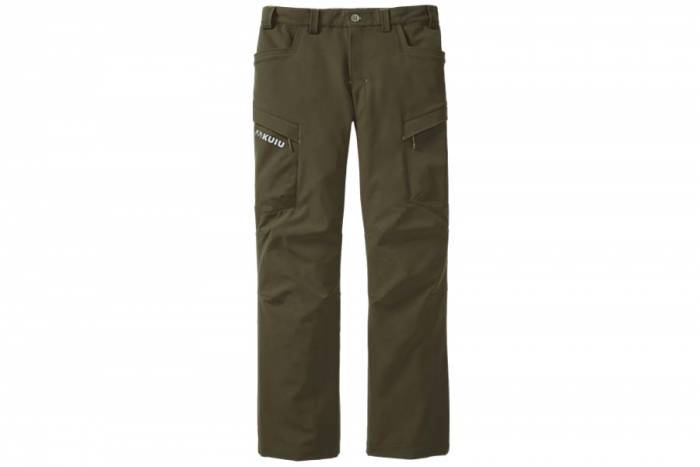
KUIU’s Attack Pants ($149) are relatively affordable and a favorite of many hunters. At $149, they offer 11 variations of solids and camo. And Primeflex Toray fabric is notoriously tough and comfortable. KUIU treats these with its K-DWR for water resistance, and the design is simple, athletic, and streamlined.
Multiple Gear Junkie testers have worn the KUIU Attack pants for multiple hunting seasons and love the athletic fit coupled with flexible fabric. They really give great freedom of motion. Most recently, Editorial Director Sean McCoy wore them spring turkey hunting in Colorado, with temperatures in the 50s and no precipitation. To close the deal on his hunt, he had to crawl on his hands and knees through oak brush for about 75 yards while a gobbler hollered through the morning mist.
He rose up on the articulated knees to take a shot and drop the bird when it poked its head above a log. The pants are relatively quiet, and hold up well to the brush. McCoy loves the thigh vents — clutch when carrying a heavy bird 2 miles back to camp as the day warms up. And the zippered pockets are excellent.
We do wish the hip pockets were a touch larger. The quick access to a phone is great, but it’s a little snug for our team’s liking. Otherwise, these pants are darned near perfect and super versatile, ready to tackle pretty much any conditions with proper layering.
One note on fit: These tend to run on the small side. McCoy sized up one size, going with a 32-inch waist. He generally wears a 30 or 31, but the 32 fits well. Plan to size up a bit.
If your budget is stretched, a pair of Attacks can fit into most workplaces (in non-camo) as well as doing double duty in the mountains. These aren’t necessarily your inclement cold-weather pants, but for the average hunter, they’ll serve a ton of purposes in the field while maintaining decorum in public.
Kings Camo Hunter 2.0 Pant
Specifications
Pros & Cons
Pros
- Price
- Articulated knees and stretch fabric
- Very breathable
- Dries quickly
Cons
- Runs a touch small
- Could use better pockets
- Not as warm for late-season hunts
- Slightly noisy
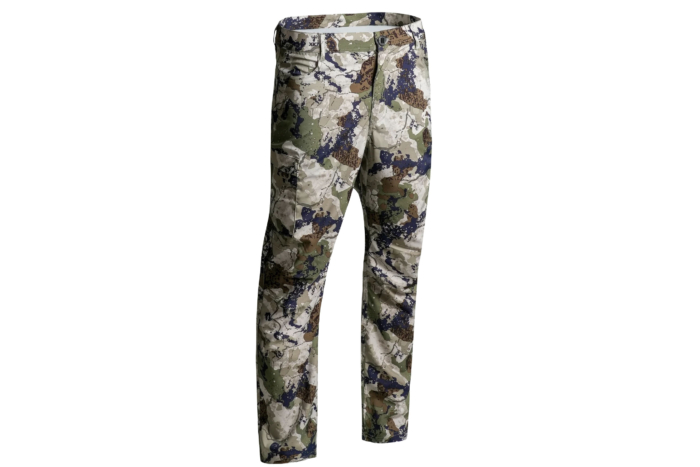
Across the board, Kings Camo makes some of the best bang-for-the-buck hunting gear on the market. The brand has pants at varying price points, but the Hunter 2.0 pants ($80) easily take the cake as the best budget hunting pants GearJunkie Contributor Morgan Nowels has ever worn.
Out of the package, these pants don’t seem like budget gear. They feel just like the most high-tech apparel from other brands that sport double the price tag.
A big part of that feel comes from the DWR-treated polyester/spandex blend material. While deploying trail cameras and moving tree stands around in the woods of Tennessee this summer, Nowels found the fabric breathed exceptionally well and could only be bested by the thinnest of hunting pants, like the First Lite Trace. They’re a great early-season pant and, unlike the Trace, can function as a late-season pant with proper base layers.
The legs are articulated, which, in conjunction with the little bit of spandex stretch, makes them extremely comfortable. They never felt restrictive while hiking up steep terrain or climbing up trees. They’re quick-drying to boot, and were dry within an hour after bushwacking through dew-covered brush. They really are the antithesis to most budget pants that feel hot, heavy, and stay wet for an eternity.
So, what gives? Why are they cheaper? Well, first off, the pockets aren’t nearly as functional as on other hunting pants. The cargo pockets aren’t zippered, and they’re not all that big. Storage is pretty darn limited.
On top of that, the material, while stretchy, breathable, and quick-drying, is a bit loud. It’s not so loud that it’s a deal breaker for hunters, but it is noticeable.
They also run small when compared to the rest of the pants Nowels tested for this guide. He usually wears a 32 and has spare room in the waistband. These pants in a 32 were snug. Doable, but snug. You definitely want to size up, especially if you plan on wearing a base under them.
Still, despite those drawbacks, these pants are lightyears ahead of other budget options. They’re a great deal at 80 bucks and are an absolute steal when you can find them on sale, which is often.
Kifaru Torlander Pants
-

-
-
By adding a baselayer, you can use certain hunting pants well below their temperature recommendation; (photo/ Ethan Burns)
-
(Photo/Colten Hosey)
Specifications
Pros & Cons
Pros
- Thin grid fleece interior provides insulation
- Massive thigh vents extend to calf for excellent breathability
- Almost completely waterproof (material is, seams are not taped)
- Excellent fit
- Include removable suspenders and knee pads
- Great pocket layout
Cons
- Silk-like patch above knees
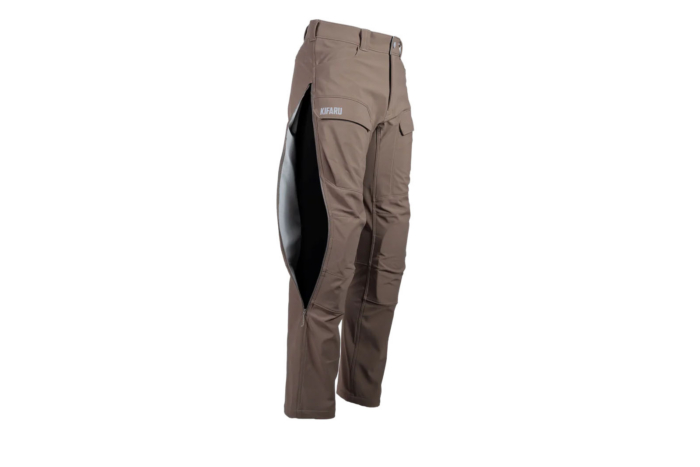
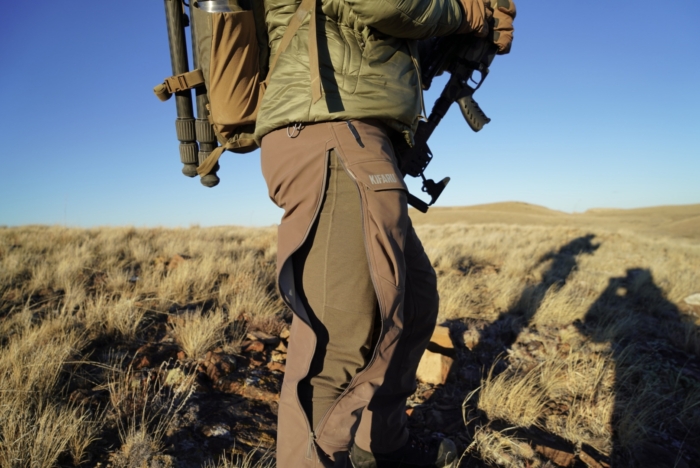
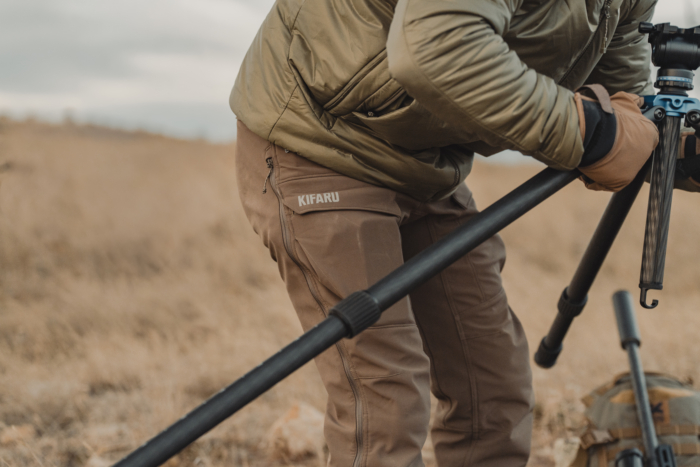
While pricey, the Kifaru Torlander pants ($300) have easily earned the title of the best late-season hunting pants. When the weather turns cold, wet, and nasty, you won’t regret the purchase one bit.
GearJunkie contributor Morgan Nowels put them through the paces on a January coyote hunt in Wyoming and through a brutal winter storm in Tennessee. Within a few days, they became one of his most used pairs of pants, whether he was in the field or around town.
The unique build is what sets them apart. Kifaru took the concept of a soft-shell jacket and turned it into hunting pants. The Torlander is lined with a thick grid fleece backer for warmth and a monolithic laminate membrane for waterproofness. The exterior is a slick, DWR-treated hydrophobic shell.
In temps as low as 13 degrees, these pants, paired with a thin baselayer, were all Nowels needed to stay comfortable. While post-holing through deep snow, the interior stayed bone dry.
From a functionality standpoint, these pants are waterproof like the KUIU Chugach TR. Unfortunately, they can’t make that claim because the materials themselves are waterproof, but the seams aren’t taped. In the field, it’s a mere technicality. They keep you dry.
While highly insulated, the Torlander’s breathability is what really sets it apart. Each leg has two massive hip vents that run from the hip to the ankle. As midday temperatures rose in Wyoming and Nowels hiked from spot to spot, he unzipped the hip vents, which completely kept sweat at bay. Thanks to the vents, he was able to put on a baselayer and keep it on — even during high output.
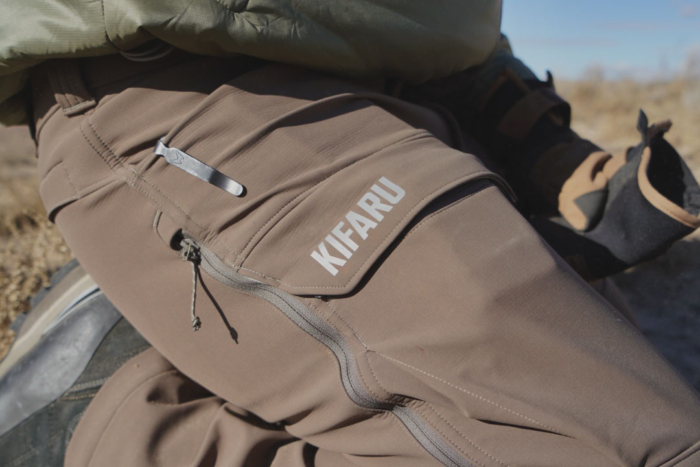
Toss in a fantastic pocket layout, removable suspenders, and knee pads, and you have a sweet set of hunting pants for late October through January. The only real knock against them is that they aren’t available in camo.
First Lite Trace Pants
Specifications
Pros & Cons
Pros
- Super-breathable for hot climates
- Fast-drying
- Excellent, ample pockets
- Knife pocket
Cons
- Built-in belt's buckle prone to damage
- Not intended for cold weather
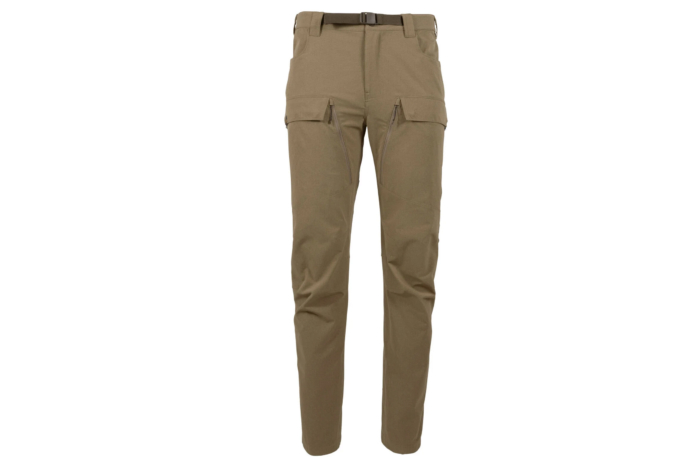
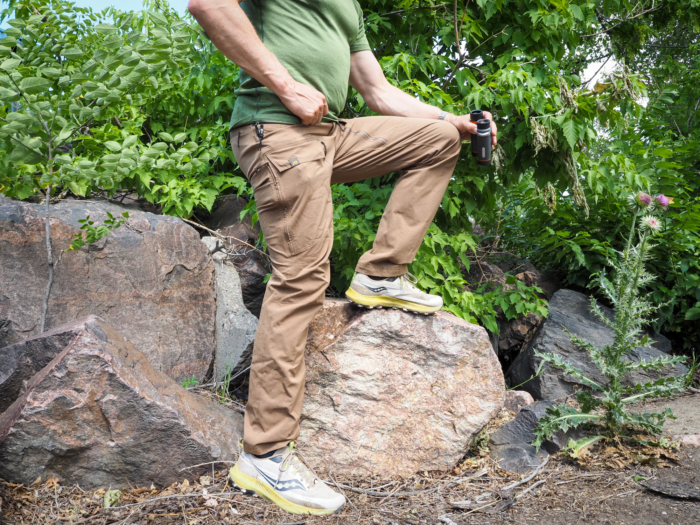
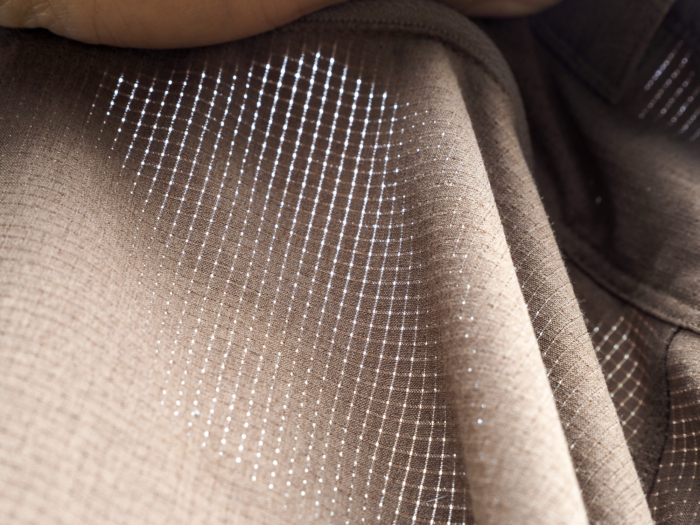
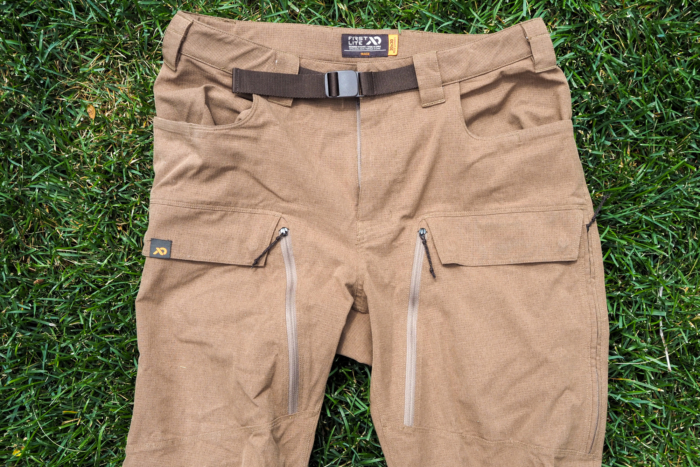
Early-season hunts call for lightweight, breathable pants, and the First Lite Trace Pants ($160) are among the best on the market. They have a unique fabric that’s cool, breathable, and durable. It’s called KinneticGrid, which essentially allows air to flow through the pants while maintaining rugged construction.
After wearing these on a turkey hunt, a camping trip in the Great Sand Dunes National Park, and a boar hunt in Texas, Editorial Director Sean McCoy attests that the breathability works. From 95- to 100–degree weather, these pants felt similar to wearing shorts. And if they get a little wet, the synthetic material dries wildly fast.
To further improve on breathability, First Lite built zippered vents on each leg, perfect for grueling hikes in the archery elk woods. You can open them up and get maximum breathability when temperatures soar. The zippered vents also serve as excellent pockets for items you need to keep secure. Those, in conjunction with deep hip pockets and button-down thigh pockets on each leg, ensure you can store anything you need for a day in the field.
McCoy tested the solid-colored version, and they look good enough to wear to the office and around town throughout the summer. They’ve proven to be durable even with consistent use. The only thing that’s given him a problem is the included belt buckle. It lost a tiny piece of plastic, so it doesn’t lock as well as it did when the pants were brand new. It’s still functional, but may end up failing over time.
If you plan on hunting in August or September, grab yourself a set of the Trace Pants. They’ll keep you cool in midday heat, and may end up being some of your favorite everyday pants.
SITKA Stratus Bib 2.0
-
-
(Photo/Morgan Nowels)
-
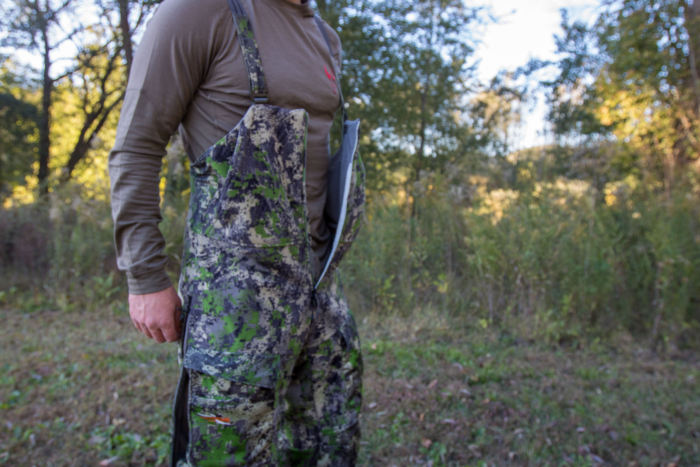
The Stratus 2.0 system allows hunters to dump heat easily;(photo/Morgan Nowels)
-
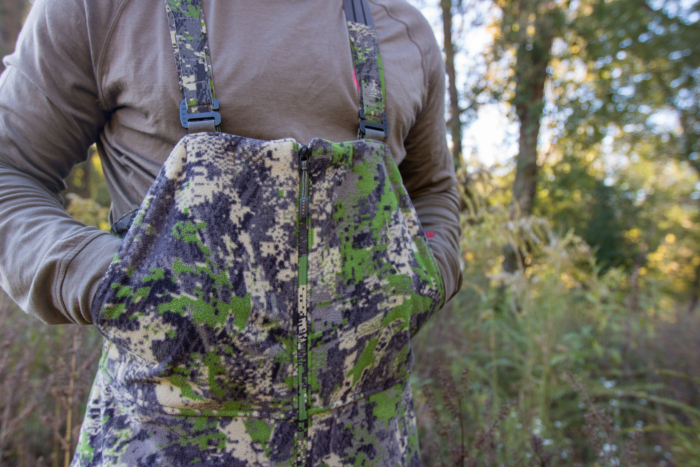
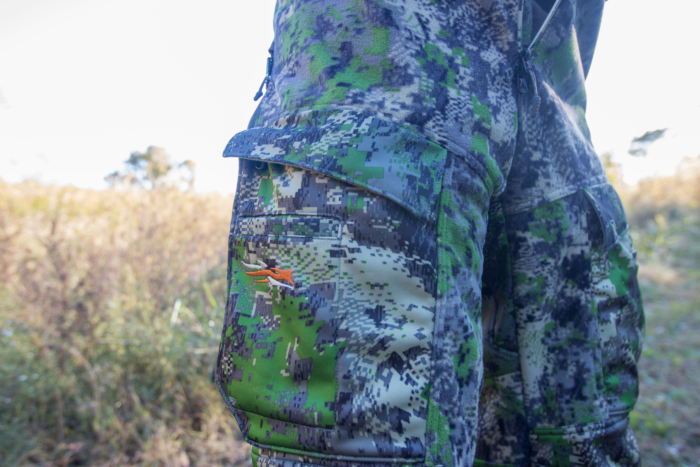
The pockets of the bobs provide all the storage you could need;(Photo/Morgan Nowels)
Specifications
Pros & Cons
Pros
- Easy to adjust strap system
- Windproof
- Chest zipper and 7/8th length leg zippers
- Very breathable for a warm bib
- Excellent pockets
Cons
- Price
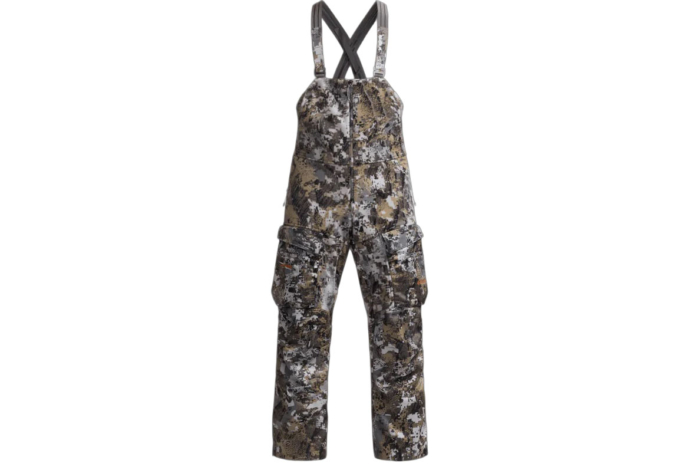
There are more whitetail bibs available to hunters than ever, but the SITKA Stratus Bib 2.0 ($400) stands above the rest. In a crowded market, these bibs stand out because of several small details that add up to a big difference.
Many of those details center around breathability, which is really tough to execute with an insulated bib. If you want to walk to the stand while wearing them, you can unzip the 7/8th leg zips to keep things breezy. That isn’t unique, but the zip front on the chest is, which unzips down to your waistline for those times you really want to dump heat.
The breathability doesn’t stop there either. The panel on the lower back features zero insulation, and is constructed with a breathable synthetic material. That keeps your lower back from getting sweaty while carrying a backpack and eliminates chill from a sweaty back in the stand. A similar material is found in the crotch, although there is still a single layer of insulating grid fleece there. These bibs add breathability to areas of high heat, keeping you dry, and warmer.
Tester Morgan Nowels found himself needing them for cold, humid 48-degree mornings in the mid-fall but would have a mile walk back to the truck with temps approaching the 70s. It would have been more comfortable to take the bibs off, but by unzipping them completely, it wasn’t an uncomfortable walk, which was really impressive.
The strap system is buckle-less, and adjust easily with an ingenious hook and loop system. Rubber inlays on the straps ensure they stay on your shoulders no matter what. The internal belt is highly adjustable, and keeps things on the exterior of the pant streamlined.
While these aren’t as warm as the Fanatic bibs, they can definitely handle cold weather. Both the brushed polyester fleece outer and the LMC grid fleece interior combine to keep you warm. If the wind kicks up, the WINDSTOPPER GORE-TEX liner keeps the chill from penetrating. Nowels has had the opportunity to use these in the extreme cold as well, and with a solid mid-layer and a thick baselayer, says you could hunt in these in temps in the teens or colder.
Honestly, there are too many awesome things to go over here, and there isn’t anything not to like about these bibs, aside from the price. But with how well they do their job, it’s worth the blow to your bank account.
KUIU Chugach TR Rain Pants
Specifications
Pros & Cons
Pros
- Soft, quiet fabric that doesn't feel like plastic wrap
- Surprisingly durable for such a lightweight design
- Available in men's and women's sizing
- Less clammy than most raingear
Cons
- Pricey compared to bargain-bin options
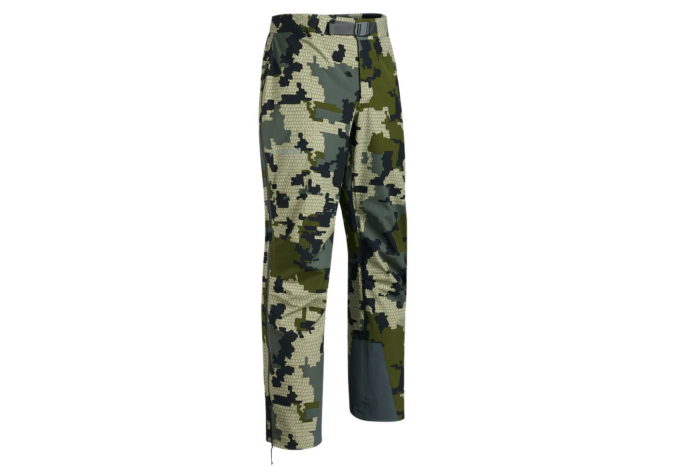
Rain gear has a bad habit of feeling like you’ve wrapped yourself in a sweaty, crinkly garbage bag. Most of the time, that’s exactly what you’re doing, just with a bigger price tag. But KUIU’s Chugach Rain Pants ($269) are a rare exception to that sad reality.
These pants manage to feel soft against your skin instead of stiff and plasticky. Slide them over your baselayers, and you’ll notice the difference right away. The fabric doesn’t scream every time you take a step.
And while we’re not going to pretend any rain shell is truly breathable (let’s be honest, that’s marketing wizardry at its finest), these somehow feel less suffocating when you’re slogging uphill in a downpour.
Durability is also worth calling out. Contributor Morgan Nowels has tried his best to beat the Chugach TR to pieces, taking them through some of the thorniest briar patches you can imagine while whitetail hunting. While they certainly don’t look like they did straight out of the package, they’ve stayed watertight.
The real magic with these pants is the perfect balance they play. They’re stormproof, but not heavy, and they don’t take up much room in a pack. They stow easily and take up hardly any room in a pack, yet are always ready to keep you protected from the worst weather. Overall, it’s just hard to find rain gear that beats these for comfort, durability, and packability.
Filson Oil Finish Single Tin Upland Pants
Specifications
Pros & Cons
Pros
- The toughest pants one can buy
- Never wash
Cons
- Stiff
- Hard on the skin after long miles
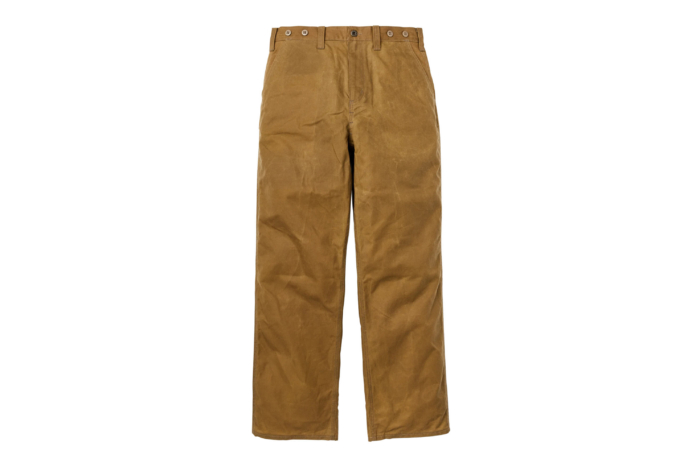
Colorado upland bird hunting means big miles on the plains and a lot of bushwhacking. After five years of wearing the Filson Oil Finish Single Tin upland pants ($199), Editorial Director Sean McCoy is absolutely amazed at their durability. Through briars and brush and all manner of nasty thickets, these pants have protected his legs over a lot of 15-mile days.
While tough as nails, these are specialized hunting pants. For one thing, they’re pretty heavy and bulky. You wouldn’t want to pack them in a backpack for a high-altitude hunt.
They are also so burly that they’ll beat up your skin if you don’t wear long underwear. And given that you should not wash these (or risk removing the oil finish that keeps them water-resistant), they will be forever dirty. So, plan to wear long underwear! Put two and two together, and you’ll surmise that they’re not great in hot conditions. No, they are not. These are cool-to-cold weather pants, so plan accordingly.
But if you can get past those cons, these are some spectacularly tough pants that will serve the average hunter for a decade or more. For huge days of stomping through upland brush and scrub in cool to cold weather, they’re hard to beat.
Other Notable Hunting Pants
-
-
The hip vents make these comfortable in hot conditions;(Photo/Alexis Totin)
-
(Photo/Alexis Totin)
-
The waterproof panels on the seat of the Kutana Hybrid pants;(Photo/Morgan Nowels)
Specifications
Pros & Cons
Pros
- Waterproof panels hold up to severe moisture
- Stretchy, mobile fit
- Hip vents
- Highly durable
- Breathable pockets
- Boot hooks
Cons
- Very noisy
- Not as breathable as other lightweight pants
- Not as warm as other midweight pants
- Price
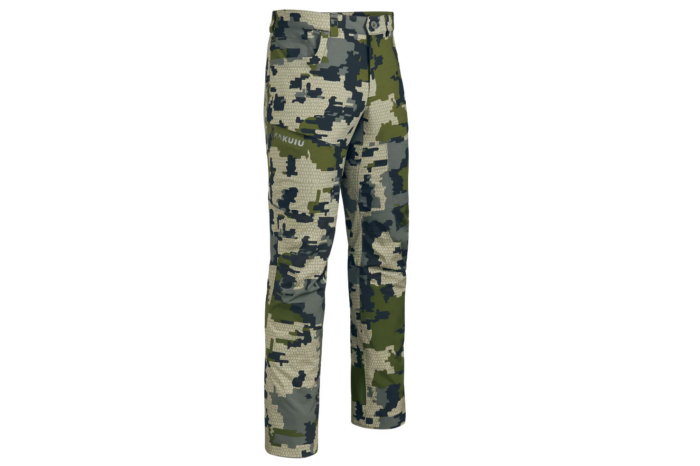
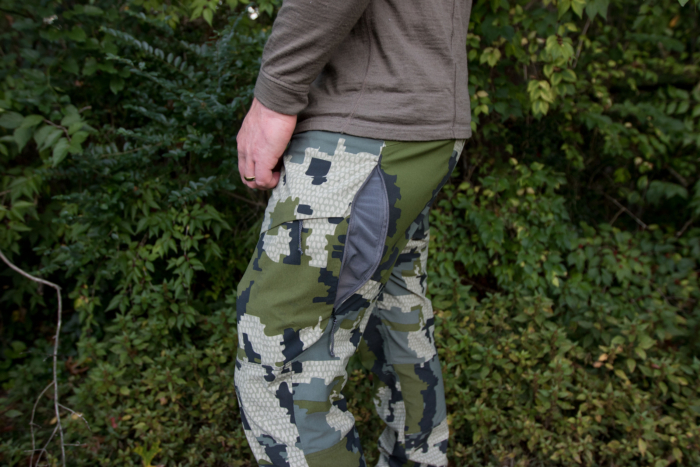
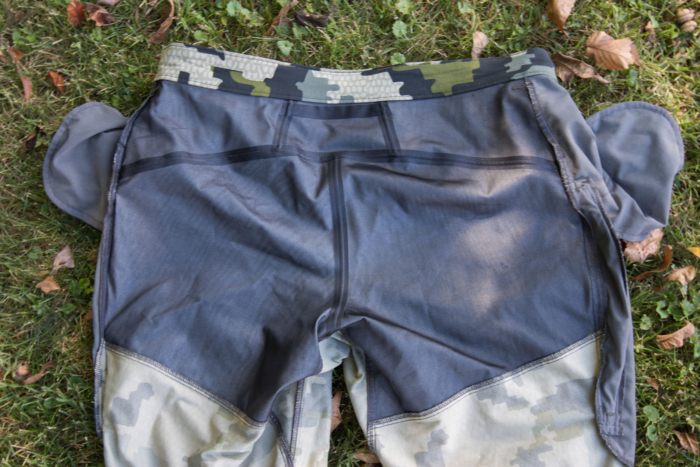
Of all the pants on this list, the KUIU Kutana Hybrid Pants ($199) are the most capable of handling a variety of conditions. The entire pant has a highly water-resistant DWR finish, and there are 11,000mm waterproof panels on the lower legs as well as the seat. That provides waterproofness in the areas you need it most, while mitigating the negatives of waterproof pants, namely, lack of breathability.
There is no insulation in these pants, and there is a large hip vent on each side. When hunting in temperatures in the 80s, tester Morgan Nowels found them to be plenty comfortable, although not quite as breathable as options like the First Lite Trace. While they aren’t as breathable as those options, the Kutana Hybrid, with a solid baselayer, pulls double duty as an excellent mid-to-late-season pant.
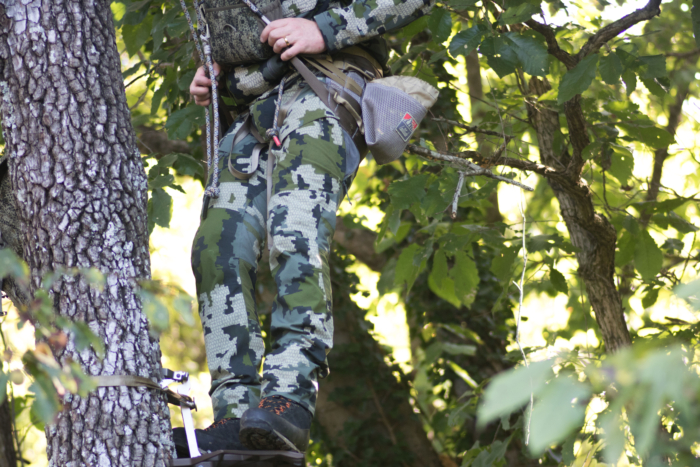
These are some of the most durable pants in the KUIU lineup, built with a Toray Primeflex 100% Stretch Nylon. Burrs and thorns brush right off the slick fabric. They’re nearly indestructible. The flex of the material, as well as the articulated knees, allow these pants to move with you, and you’ll be hard-pressed to find something with a better fit.
Now, as with all things in life, those benefits do require a tradeoff. These pants are fairly loud, thanks to the waterproof panels and the slick-feeling fabric. But if you’re looking for a pant that will perform year-round and keep you comfortable in a bunch of conditions, these pants are the answer.
-
-
(Photo/Morgan Nowels)
-
The chap panels offer great protection, despite the breathable build; (photo/Morgan Nowels)
-
Having hip vents on an upland pant just makes sense; (photo/Morgan Nowels)
Specifications
Pros & Cons
Pros
- Chap panels that actually breathe
- Hip vents
- Superior fit for field pants
- Water resistance
- Solid protection, despite breathable build
Cons
- Things will stick to them
- Can still get stabbed
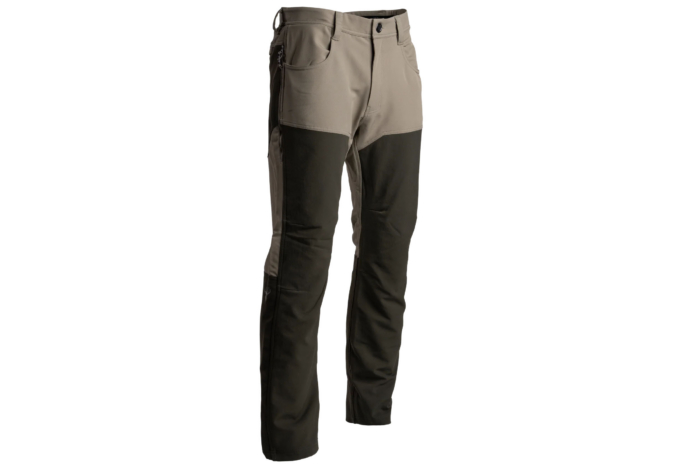
After hunts in Nebraska and South Dakota, contributor Morgan Nowels says the Kings Camo XKG Field Pant ($149) is the true Swiss Army Knife of upland hunting pants. Whether you’re chasing mountain blue grouse in September or busting through cattails for late-season roosters in South Dakota, these pants deserve a spot in your kit.
Where the Filson Oil Finish Single Tin upland pants give up breathability entirely in pursuit of unmatched durability, the Field Pant sacrifices a touch of durability for a major increase in breathability. That’s what makes them so versatile.
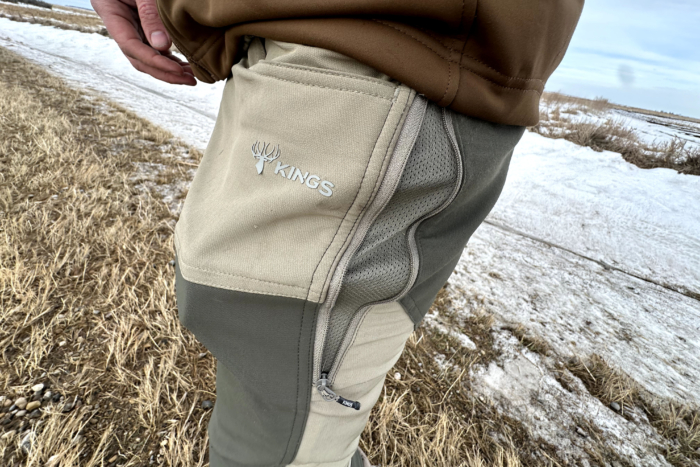
They weren’t too hot during an unseasonably warm October hunt in the Sandhill region of Nebraska. With temps heating up into the low seventies and covering miles of hilly terrain, Nowels unzipped the hip vents (something you never see on upland pants) to keep himself cool. Aside from the hip vents, the polyester, spandex, and nylon construction also breathes, a huge benefit compared to the sweat-inducing build of most chap pants made from waxed canvas.
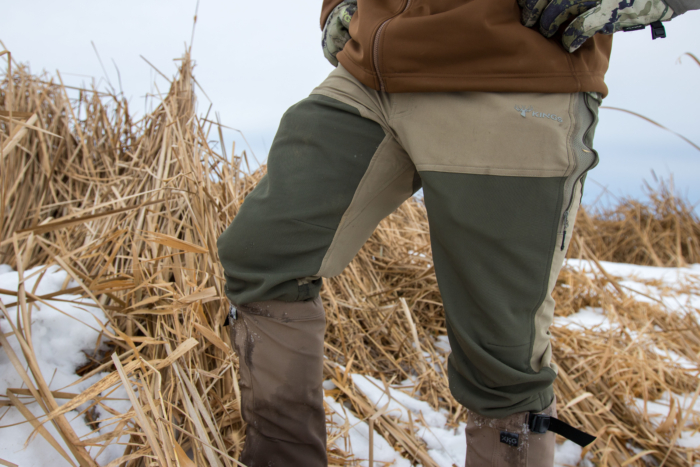
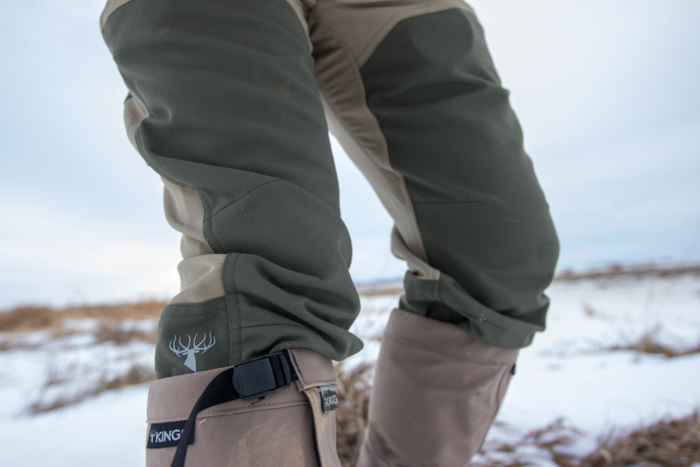
But when it comes time to hit the thick cover, the Field Pant protects your legs from almost any thorny plant. Through a week of busting brush in South Dakota, only one giant thorn penetrated. So, they won’t be as durable or stand up to as much thorny cover as the Filson pants, but they come dang close.
The only other downside to these pants is their tendency to pick up small burrs. The chap panels surrounding the legs and seat are made of a micro weave, which turns the pants into velcro in certain types of cover. You won’t get stabbed by the burrs, but you will have to constantly pick them off.
However, that doesn’t happen in most upland cover, so it’s a non-issue most of the time. For those looking for pants that will get them through the entire upland season, the Field Pants are a great choice.
Specifications
Pros & Cons
Pros
- Wonderful for carrying a backpack
- Durable
- Nice pockets, venting
Cons
- Fabric is a little loud
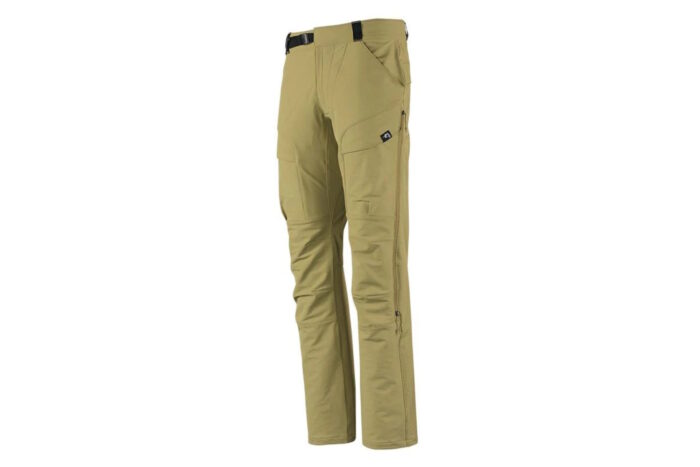
Stone Glacier is one clever company. With the De Havilland pants ($220), it solved one of the more annoying gear issues faced by both hunters and hikers, and that is the interface between your pants and your backpack’s hipbelt.
The De Havilland pants, like many other outdoor pants, have an adjustable waist that allows you to move it up to three inches to allow for layering. But the clever design — essentially a built-in belt and no front button — results in no bunching and very easy adjustment, no velcro needed.
Beyond that clever point, these pants are overall very good. They begin with water-resistant polyester/nylon/spandex blend fabric cut to athletic but mobile proportions with a gusseted crotch and articulated knees. Full zip side vents let you air it out when the going gets warm. And deep cargo pockets give you plenty of storage beyond the normal hip pocket.
On the negative side, they tend to be a little loud and swish while walking. Thus, these are not our top choice for close-quarters stalking, such as archery still-hunting.
But beyond that one downside, these are darned good pants and even look good enough for civilization (so long as they are not stained with blood and dirt).
Best Hunting Pants Comparison Chart
| Hunting Pants | Price | Material | DWR | Scent Control |
|---|---|---|---|---|
| KUIU Attack Pants | $149 | Primeflex Polyester | Yes | Yes (Makspec) |
| Kings Camo Hunter 2.0 Pants | $80 | 97% Polyester, 3% Spandex | Yes | No |
| Kifaru Torlander Pants | $300 | 100% Recycled Polyester, Monolithic laminate membrane | Yes | No |
| First Lite Trace Pants | $160 | KineticGrid | No | Yes (HeiQ Pure Odor Control Technology) |
| SITKA Stratus 2.0 Bib | $400 | Recylced Polyester, GORE WINDSTOPPER | Yes | No |
| KUIU Chugach TR Pants | $269 | Dermizax HDM Membrane, Primeflex Nylon | Yes | No |
| Filson Oil Finish Single Tin Upland Pants | $199 | 100% Cotton Canvas | Wax Coated | No |
| KUIU Kutana Hybrid | $199 | Primeflex Nylon, Hydroweb Electrospun Nylon | Yes | No |
| Kings Camo XKG Field Pant | $149 | 95% Polyester, 5% Spandex, Nylon weave chap panels | Yes | Polygiene Odor Control |
| Stone Glacier De Havilland Pants | $220 | 50% Polyester, 43% Nylon, 7% Spandex | Yes | No |

How We Tested the Best Hunting Pants
Our Expert Testers
The primary author of this article, Editorial Director Sean McCoy, hunts from early September through February each year. He pursues elk, mule and whitetail deer, pheasants, grouse, ducks, and geese. He also hunts spring turkeys each year.
He’s been hunting since the mid-1980s and values high-quality gear that will last through many seasons of use. He still has and occasionally uses a pair of wool hunting pants made in the 1930s and passed down to him by his great-grandfather.
Co-author and GearJunkie contributor Morgan Nowels has spent time hunting in a variety of conditions all over the country. Nowels currently lives in Tennessee, where his passion is chasing whitetail with his bow from September through January.
Before moving to Tennessee, he spent his entire life in the west and has mountains of experience chasing mule deer and elk with archery equipment, muzzleloaders, and rifles. If he isn’t big game hunting in the fall, he’s chasing his bird dogs for any upland game he can find in North America.

Our Testing Grounds
This guide has been in existence for a number of years, and it would be nearly impossible to go over all of the locations the team has hunted while testing hunting pants. This past year alone, the team covered quite a spread.
McCoy hunted the high-elevation country of Colorado during archery elk season. Brutal heat, heavy pack outs, and plenty of elevation.
Nowels pursued deer through sweltering early-season heat and humidity in the big woods of Tennessee. In October, he sat in blinds in the Osage country of Oklahoma, and capped the year off by hanging from his saddle on frigid, wintery mornings. He also pursued coyotes in the vast Wyoming sagebrush country in January.
Additionally, we pursued upland birds in three states, which included chasing South Dakota roosters in howling wind and three-foot snow drifts. And of course, we capped it off with turkey hunting this spring.
Couple this last season with decades of experience, and we can confidently say that no matter where or when you plan to hunt, we have tested hunting pants in those exact conditions.

Our Scoring System, Explained
The overall scores for each set of hunting pants are not averages of the feature sub-scores. It’s a score based on performance for the intended use and season, while also taking into account price and value, and extra features not encompassed in the sub-scores. Anything scoring in the seven to eight range is a very strong product that we highly recommend, with minor flaws. Anything scoring 9 and above is a near-perfect product.
Our sub-scores aren’t meant to rank the products, but rather give you a better idea of the best-case use. Here are the explanations of the sub-scores:
Warmth: Pants scoring 1-4 are best for early-season hunts. If a product scores in the 5-7 range, they’re best for mid-season and a good all-around option. Pants scoring 8 and above are for hunting in frigid conditions.
Breathability: Hunting pants scoring 1-4 don’t breathe well and are great for stationary hunting. Anything in the 4-7 range offers decent breathability and often has hip vents. Pants that score higher are highly breathable and best for hunting in extremely high temperatures.
Waterproofness: If pants lack a DWR finish or insulating properties when wet, they score 1-3. Pants in the 4-7 range have either a DWR finish, insulating properties, or both. Pants that score higher are functionally waterproof.
Durability: Durability isn’t as easy to nail down, but it comes down to how well pants hold up over a season of abuse. Do tufts of fabric pull out? Do seams tear?

Buyer’s Guide: How to Choose Hunting Pants
The best hunting pants will last years, so you should view them as a long-term investment. Apparel in the hunting world has advanced drastically in the last decade, and most hunters can find the perfect pants for whatever game they pursue in any environment.
Below are some of the top considerations the GearJunkie team considers when selecting a pair of hunting pants.

Warmth & Weight
Some states allow you to get out to the woods as early as mid-August to chase velvet deer and elk. Hunters in those places need a different level of warmth than someone restricted to a rifle season in November. The first thing you should consider when purchasing hunting pants is the temperatures you typically hunt in.
Don’t forget, you can extend the temperature range of any pants by pairing them with a base layer.

Lightweight, Early Season (80-plus degrees)
For those who primarily hunt in August and September, opt for something lightweight, such as the First Lite Trace Pants. If you’re hunting in weather hotter than 80 degrees, you’ll enjoy a specialized early-season pant. In those situations, you’re trying to shed heat, not retain it.
Mid-Weight, All-Season Pants (30-70 degrees)
If you hunt multiple seasons and plan on owning one set of pants, a midweight pant like the KUIU Attack is the way to go. With proper layering, a lightly insulated set of hunting pants can keep you warm down to about 35 degrees, depending on activity level. Your lower half will be happiest from 45-60 degrees in midweight pants.
When temps are over 75 degrees, midweight pants can get miserably hot. But if your tolerance for discomfort is high, they can provide passable service. Pants like the Attack feature zippered vents you can open up when you find yourself in an Indian summer. On the flip side, with a thick base layer, they can get you by on winter hunts.

Heavy, Late-Season Pants
Hunting in frigid conditions, or stationary hunting in cold conditions, will require a bit more warmth than a baselayer and midweight pants. For those freezing December hunts, plan on purchasing pants with one sole purpose: to keep you warm.
Heavy pants are not ideal for hiking because they tend to overheat easily. However, they can be a real lifesaver when you’re posted up on a ridge glassing on a barren winter day. If you plan to do that, or sit in a blind or treestand for late-season whitetail, pick up a set of heavily insulated pants.
However, that’s why the Kifaru Torlander is our recommendation for late-season pants. They’re very warm, but have massive zip-open ports for the times you need to dump heat.

Water Resistance
Next, consider how much water resistance you need. Most hunting pants come with a DWR coating, which makes water bead up and roll off. That’s usually enough for light rain or pushing through wet brush.
But, if you’re planning to hunt in heavy rain or soaked terrain, you’ll want fully waterproof pants. Waterproof pants tend to be warmer and noisier than regular DWR-treated pants. These work best as an outer layer that’s used only when needed.
If you’re shopping for waterproof pants, pay attention to the waterproof ratings. Waterproof ratings use millimeters to gauge the waterproof level. The measurement refers to the amount of water pressure the fabric can withstand before it leaks.
For example, pants with a 5,000mm rating can handle 5 m of water pressing down on them before water seeps through. A 20,000mm rating means they can take 20 m. Sounds fancy, but here’s the gist: 5,000–10,000mm works for light rain. Over 20,000mm? That’s built for serious weather.
But waterproof pants have downsides. Namely, they’re very loud when stalking animals, and tend not to breathe well at all. If that sounds like something you don’t want to deal with, check out the KUIU Kutana Hybrids, which have an excellent DWR treatment, and waterproof panels only in the spots it’s needed the most.

Camo Pattern
Camouflage is designed to break up your silhouette. It does a great job of allowing you to be in front of cover with shooting lanes rather than tucked behind it.
The situations where camo matters the most are archery hunting and turkey hunting. With archery, you’ll be in very close proximity to animals. Wearing good camo often results in an animal looking at you, trying to figure out exactly what you are, rather than outright bolting. And turkeys? Those things see everything. If you have multiple options, pick the pattern that best matches the environment you hunt.
Many hunting pants are also offered in solid colors, which are becoming more popular. Remember, for generations, hunters were successful wearing nothing but flannel. As an added benefit, getting your pants in a drab brown or green color means they can also pull double duty around town without screaming “hunter” everywhere you go.
The point is to match your environment as best you can, but don’t stress camo too much. Performance of the pants and comfort are much more important than having a perfect camouflage.

Material
Some hunting pants are made of wool, and others are made of synthetics. Different fabrics have different pros and cons.
Wool is warm, quiet, and does a great job of masking the odor of sweaty hunters. However, wool may not hold up as well to serious bushwacking as synthetic pants.
Synthetic pants can also be warm, depending on the level of insulation used. Some have no insulation, and are the best early-season pants you can find. Others have synthetic fleece, which are more akin to wool pants. With synthetic pants, you’ve got range.
They also tend to be more durable and will withstand thick briar patches, which is why the Kings Camo XKG Field pants are so great for upland bird hunting. However, synthetic pants retain more scent than wool pants. After a few days, you’ll notice a lingering smell. Additionally, when wet, they may not insulate quite as well as wool.
There are great hunting pants made of both, and the team of hunters at GearJunkie uses both. Consider the pros and cons of each option before making your final purchase.

Price & Value
Despite what you see on social media, you don’t have to spend an arm and a leg to get out in the field. However, there are some benefits to spending more on hunting pants. Below are different price points and what to expect in each one.
Budget Hunting Pants
You can find hunting pants for $30-100. In that price range, you’ll find a wide variety of quality. Many will fit poorly, not be warm, and fail miserably in wet environments.
Some of the best budget hunting pants, like the Kings Camo Hunter 2.0, are breathable, comfortable, and provide multi-season functionality. They also come in great camo patterns.
However, budget pants may not have the best pockets, extra features like hip vents, or be the most durable and long-lived equipment.

Mid-Tier Hunting Pants
Many of the best pants the GearJunkie crew tested cost between $100 and $200. While that may seem steep, remember, you’re purchasing technical outdoor wear. A pair of blue jeans is easily 80 bucks nowadays, so spending $200 isn’t outrageous for specialized pants.
In this price category, you’ll find some of the best hunting pants on the market, like the KUIU Attack Pants. These pants will be water-resistant, warm, and durable. Ill fit won’t be a problem, and mid-tier pants will allow a wide range of motion. Often, they feature zippered, breathable vents that allow hunters to stay cool when hiking and carrying heavy loads.
You can also find fully waterproof pants in this category. However, you should do some digging into them before making a purchase. A set of rain pants under $200 probably doesn’t have a high waterproof rating. There’s nothing worse than spending your money on “waterproof” pants that can’t hack it in the harsh environments hunters find themselves in.

Premium Hunting Pants
Hunting pants over $200 are priced that way for a reason: they’re made with more material or require more technical construction. That means fully waterproof pants or pants with the maximum amount of the best insulation on the market.
Many hunters can get by without spending this much coin on a set of pants. One way around it is by utilizing effective layering systems.
But, if you plan on being out in late November-January, or sitting out a torrential downpour, you may find yourself sitting on a ridge, wishing you had spent the money on better pants. Premium pants will keep you warm and bone dry no matter how wet it is. For the most serious hunters who refuse to let the weather stop a hunt, paying more for the best gear is a non-negotiable expense.
Frequently Asked Questions
Frankly, no. Muted greens, grays, and browns are great. But a camo pattern does come in handy in a few situations.
The most camo-necessary situation might be turkey hunting. These birds have literal eagle eyesight. It’s wise to cover everything from your hands to your face in a landscape-appropriate camouflage.
Archery season is the other hunting opportunity where good camo can play a strong hand. I personally feel the more blended, the better when at close range. But neutral solids can also work just fine.
The other great side to camo for hunting clothes is that it really does hide stains. If you plan on being successful, you can also plan on staining every piece of clothing you’re wearing. If you don’t want to stain your favorite pair of hiking pants, get a pair of camo pants to get you through the hunting season.
The answer is yes. Editorial Director Sean McCoy has been hunting in his grandpa’s 80-year-old Woolrich pants for a lifetime. They’re low on scent, high on warmth, easy to fix, and durable. He was stoked to see First Lite come out with the Obsidian pants, as wool just has a special place in his heart, and it’s worth the money to pay a bit more to outfit yourself in the stuff.
However, if you’re pressed for cash, go to your local Goodwill, thrift store, or pawn shop. Sift through clothes until you find a heavy pair of wool pants. Get them. Wear them. Love them.
If you’re spending any amount of money on hunting gear, it pays to take good care of it. Wool certainly needs a gentler hand. And you’d be surprised how much body scent synthetics can retain even after going through your normal laundry routine.
Thankfully, there are simple options that can easily fold into your laundry routine. One option GearJunkie likes is Active Wear Detergent, and you can read founder Stephen Regenold’s review on it here.
Two other options come from Nikwax. Nikwax Wool Wash is a machine-friendly option for your merino and other wools. And Nikwax Tech Wash does the same for your synthetics.
Remember to use scentless products to knock out any chance that big ol’ whitetail deer catches a Cotton Fresh breeze and decides to book it from your deliciously scented location.