It’s been a tough year for Colorado’s black bears. Extreme drought conditions have led to record numbers of human-bear conflicts as the animals venture into neighborhoods in search of food.
That has led to many bear deaths through roadway collisions, landowner conflicts, and euthanasia by Colorado wildlife officers. Now the state is facing yet another tragic situation: a record number of orphaned bear cubs.
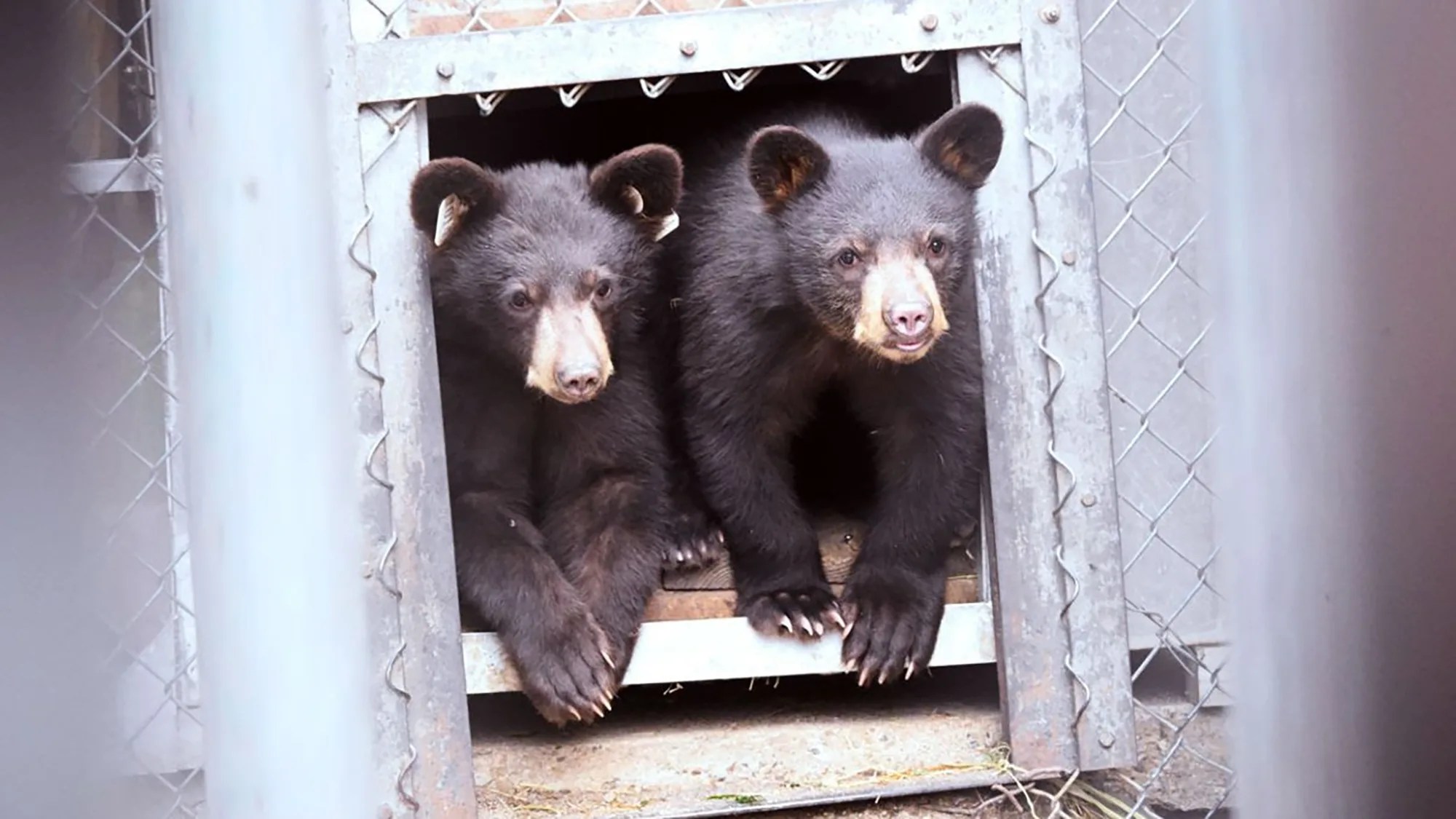
Since April, Frisco Creek Wildlife Rehabilitation Center, located near Del Norte, Colorado, has taken in 46 bears, setting a new record with two months still to go this year. Another 34 bear cubs have been taken in by a private rehab center in Northwest Colorado. That’s a total of 80 black bears this year. Most of those were orphaned after their mothers died. Colorado Parks & Wildlife (CPW) sends them to rehab centers in hopes they can heal from injuries and gain “a chance at survival,” CPW said in a news release Thursday.
“For the last 15 years, we’ve averaged about 20 orphaned black bear cubs a year here at Frisco Creek,” said Michael Sirochman, facility manager at the rehab center. “Fortunately, this year we did not have any bobcats, mountain lions, or red foxes, so all mammal pen space has been available and dedicated to housing cubs. We were also able to finish modifications to several pens that were set up for other species in the past and were not very useful for bear cubs. This has allowed us to take in a record number of cubs this year.”
Orphaned, Burned, and Broken

After taking in 29 cubs in 2025 and now 47 in 2026, Sirochman hopes to see a return to more average totals — around 20 cubs or less. He certainly doesn’t want this year’s spike to become the new normal.
The 47 bears at Frisco Creek this year arrived from all over the state. Of those, 21 came from CPW’s Southeast Region, 18 from the Northeast, seven from the Southwest, and one from the Northwest. Another 34 cubs were taken to the Pauline S. Schneegas Wildlife Foundation, a private rehab facility near Silt, Colorado.
Some of the rescued bear cubs were abandoned by their mothers. That’s usually a rare circumstance, but it was common in 2026, as Colorado has seen the worst year on record for natural food production for the state’s bear population. It’s the result of “historic drought, late spring freezes, and multiple large wildfires across the state,” CPW said.
CPW has released several specific examples of the bears treated this year. One was a yearling male on July 20 with all four paws burned by the Aspen Acres Fire. (One of the largest wildfires in Colorado history, it scorched more than 100,000 acres and destroyed 850 structures.) The bear arrived at the facility weighing just 30 pounds, but has now reached 120. Wound dressings and light therapy were able to heal the bear’s paws in just a few weeks.
Another 2026 cub arrived at Frisco Creek with a broken femur in its right hind leg. He was picked up by a Custer County Sheriff’s deputy along a highway. The cub was malnourished, dehydrated, and limping on a broken leg. After prolonged care and a successful surgery, the cub is now on the path to recovery.
CPW plans to release both bears back into the wild after winter.
Caring For Bears
The caretakers at Frisco Creek work hard to ensure that bears have as little contact with humans as possible during their stay. Visual barriers allow caretakers to conduct daily feeding and cleaning without the bears seeing them.
According to CPW, the goal is to keep the bears wild, and leave the facility without getting comfortable with humans or their voices, CPW said: “This gives them the best chance to succeed and avoid human-bear conflict when released.”

But there’s no denying that 2026 is not a year that Colorado wildlife officers want to repeat. The agency collects survey data on natural food conditions for bears across the state, and this year was the worst they’ve seen since 2008.
“While a final data summary is not available yet, many parts of the state reported complete food failures in most common bear food sources like acorns, serviceberries, chokecherries and plums,” said Mark Vieira, CPW’s Carnivore and Furbearer Program Manager.
As for Sirochman, Frisco Creek’s manager, he underscored that euthanizing bears is a duty CPW officers take reluctantly. Often, it’s those same officers who are bringing orphaned cubs to the rehab center.
“Most wildlife officers will tell you that killing a bear is one of the worst things they ever have to do, and we constantly hear how grateful they are to have a place to send the orphan cubs,” Sirochman said. “We will continue doing everything we can at Frisco Creek to meet that need and provide that second chance.”