It’s a debate as old as time: Are expensive sunglasses really worth it? In one camp, there are those who believe sunglasses are bound to break or get lost, so why spend more than $20-30 on them? The counter to that reasoning posits that not only are expensive sunglasses a better product, but the very fact that they cost so much means you will take care not to break or lose them.
To be sure, there are klutzes out there (no shame), and if misplacing or mishandling things is in your nature, then cheap is the way to go. But what about the rest of us? Do more expensive shades fit better? Do they look better? Or do pairs under $60 do everything a $200 pair can?
I’ve been testing three very similar styles of sunglasses that advertise everyday style and running performance. On the budget side is the $35 goodr Grand G; on the opposite end of the spectrum is the $205 Roka Barton 2.0. And smack in the middle is the $60 Tifosi Sylo. I took them on runs and wore them for full days outside to assess their comfort, clarity, style, and more.
In short: Great news if you’re on a budget — $35 gets you a very respectable, comfortable pair of sunnies. As you go up in price, however, you do start to feel and see differences — albeit some much more subtle than others. Higher prices also tend to come with more options. Most importantly, the placebo effect is real; spending good money on sunglasses can change how you feel when you’re wearing them, and how you care for them when you’re not.
Shopping around? Check out our review of the best sunglasses.
Specifications
Pros & Cons
Pros
- Great value
- No Slip coating keeps frames in place
- 1-year warranty includes accidental breaks
Cons
- Some back-glare inside lenses
- One size only
- Hinge screw will need to be tightened with time
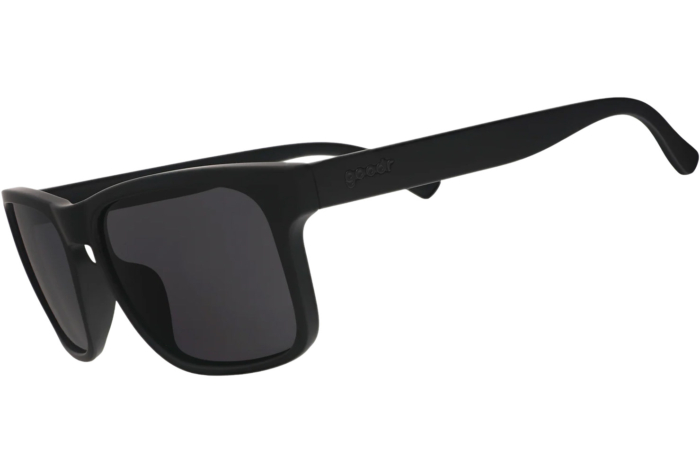
goodr Grand G: Amazing Value (While They Last)
If you haven’t tried goodr, think of the brand as a mashup between Pit Viper’s vibe and Ray-Ban’s styles. And then slash the price to ribbons. Nothing costs more than $50 — goodr even has $45 snow goggles.
I tested the $35 Grand G, which, despite the price, carries a lot of the same key features as sunglasses more than double the price: scratch-resistant laminate, polarized lenses, anti-reflective tint, and a grippy frame to prevent bouncing during activity.

Trying them on, you probably wouldn’t guess that these are a true budget option. They fit great, look sharp, and don’t show off any glaring shortcuts. But there’s only so much quality you can build into a $35 pair of sunglasses.
The lens clarity, though good, is a step below high-end options. The tint is great, but you won’t get the same contrast you can see in higher-priced options (including the Tifosi and ROKA alternatives in this review).
The frames are plastic, but carry a rubberized coating, so they’re plenty grippy if you’re running and sweating. This coating could peel or flake over time, but I haven’t seen this in the 8+ months I’ve had them. Though they’ve held up well so far, the hinge screw will eventually work itself out and need to be re-tightened. So far, the lenses show no signs of scratching, though I do my best to prevent damage by consistent cleaning and storage in the microfiber bag.
As for warranty, goodr provides a 1-year guarantee against manufacturer defects, but does not cover damage from misuse or accidents. This makes it the most restrictive warranty of the three brands tested.
Specifications
Pros & Cons
Pros
- Sport-specific design
- Tough scratch-resistant lenses
- Very comfortable fit
- Lifetime warranty
Cons
- Only one size
- Hinge screw will need to be tightened with time
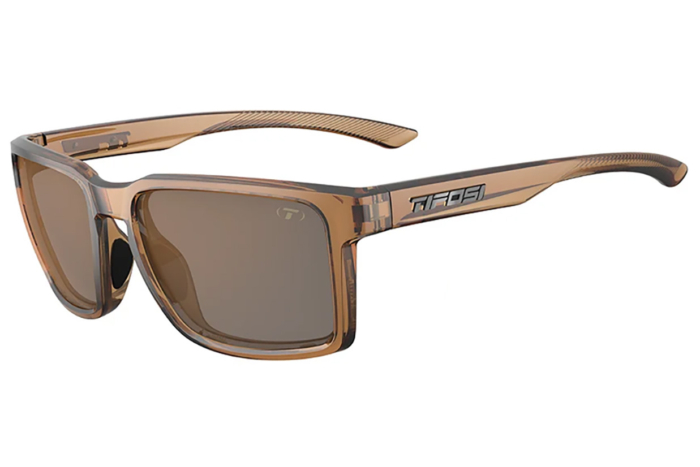
Tifosi Sylo: Style and Support
Though the Tifosi Sylo ($60) is about twice the price of a pair of goodr glasses, the overall lifespan and quality far outweigh that extra $30. Tifosi is probably better known for its sporty wraparound frames. But the brand has steadily broadened its frame options, and the Sylo marks a more everyday style with running-friendly features.

Notably, the frames are a bio-based Thrive plastic alternative, derived from castor beans. The Thrive frames look sharp and incorporate flexibility into the arms to help prevent breakage. Rubber nose pads and textured grips on the arms help hold the frames in place during activity. The clarity is very good, as is the contrast.
Overall, the construction feels a bit better than the goodr’s, but it’s still comparable. Tifosi also connects the arms with a hinge screw, so expect to tighten this down at some point (mine are holding fast so far).
However, Tifosi offers a lifetime warranty against any manufacturer’s defects. While this does not include normal wear and tear, the brand does sell replacement lenses, so if you should accidentally break one, you don’t have to buy a whole new pair.
Specifications
Pros & Cons
Pros
- Superior clarity
- Spring hinges last >25,000 cycles
- Adaptable fit
Cons
- 1,000-day warranty only covers defects
- Expensive
- No glass lens option
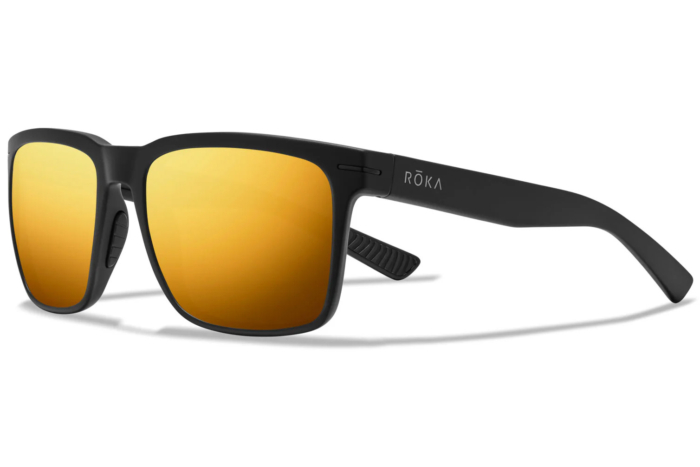
ROKA Barton 2.0: Top Shelf for a Reason
Lastly, not leastly, the ROKA Barton 2.0. To be honest, I carried more skepticism into testing this pair than the others. That might seem counterintuitive; I would have more faith in testing a $500 tent than an $80 box-store option. But people buy sunglasses for the style at least as much as the performance.

Though the Barton 2.0 received high marks for its style, it genuinely delivers on performance. The frames have a similar texture to the rubberized goodr pair, but are made of more pliable, lightweight TR 90 injected-molded nylon. It shaves a few grams off the overall weight (not enough to really feel) and makes the frames a bit more forgiving and pliable. Rubberized nose pads and arm grips kept these sunglasses firmly in place during light trail and road runs.
Perhaps most notably, ROKA does not employ the same hinge design that is so often the fail point on lower-priced sunglasses. Where the arms on goodr or Tifosi frames will be rigid when open, ROKAs have spring hinges with some torsional flex built in — this helps ensure the tiny screw stays put as you open and close the frames over time.
And the quality continues into the lenses. I prefer glass lenses, so I was bummed that’s not an option for ROKA; however, it makes sense for sunglasses designed for high activity. As polycarbonate lenses go, the ROKA Barton 2.0 is crisp and high-contrast. Plus, they clean well, without leaving any haze behind.
ROKA’s 1,000-day warranty falls between goodr and Tifosi. It’s not the most robust, but it gives you nearly 3 years to uncover any defects.
Conclusion: Who Are They For?
Ultimately, none of the sunglasses is a bad buy. They all work for daily fitness runs and look good for the post-workout beer meetup. That said, there are some clear markets for each.
If you are clumsy, forgetful, or are buying for kids, a $35 pair of goodr Grand G sunglasses is the way to go. The warranty isn’t much, but these shades cost less than a bar tab. They won’t last forever, but most folks would never guess how little they cost, and you don’t have to be too mindful of the upkeep.
If you prefer not to keep buying new sunglasses, but don’t have tons of money to shell out, Tifosi provides the most peace of mind. While the Sylo is a solid all-around option, the brand has a host of sub-$100, sport-specific frames to choose from. And they all come with a lifetime warranty. They look and feel great — GearJunkie followers voted them the best-looking in an Instagram poll — though they’re not immune to the normal wear and tear that comes with daily use.
But, if you’re the buy-once-cry-once type — and you know how to take care of nice things — ROKA offers the best experience overall. The Barton 2.0 frame’s durability alone is a major selling point, but the style points and nicer lenses certainly don’t hurt either.