Smartwatch technology has evolved by leaps and bounds over the last 20 years — but there’s still plenty of room to improve.
That’s according to a new study of several of the most popular smartwatches, which concluded that these wearable devices are not nearly as accurate as many users might think. After studying four fitness watches in a controlled setting, researchers at Florida International University (FIU) found that all of them overestimated the number of calories burned by 15-25%.
The calorie inflation was even higher for those with a larger body fat percentage, according to the study published in scientific journal PLOS One.
“You can’t treat the calories burned number it gives you as an accurate number, because it’s not,” said Jason Kostrna, the study’s lead author and an FIU associate professor of kinesiology and exercise science. “You could be off hundreds of calories each week and easily end up in a calorie surplus when you think you’re in a calorie deficit.”
Four Major Brands Tested
Most modern fitness watches use heart rate monitors and other information to tell users how many calories they burned during a specific activity. The watches also provide constantly updated estimates of how many calories were burned throughout the day.
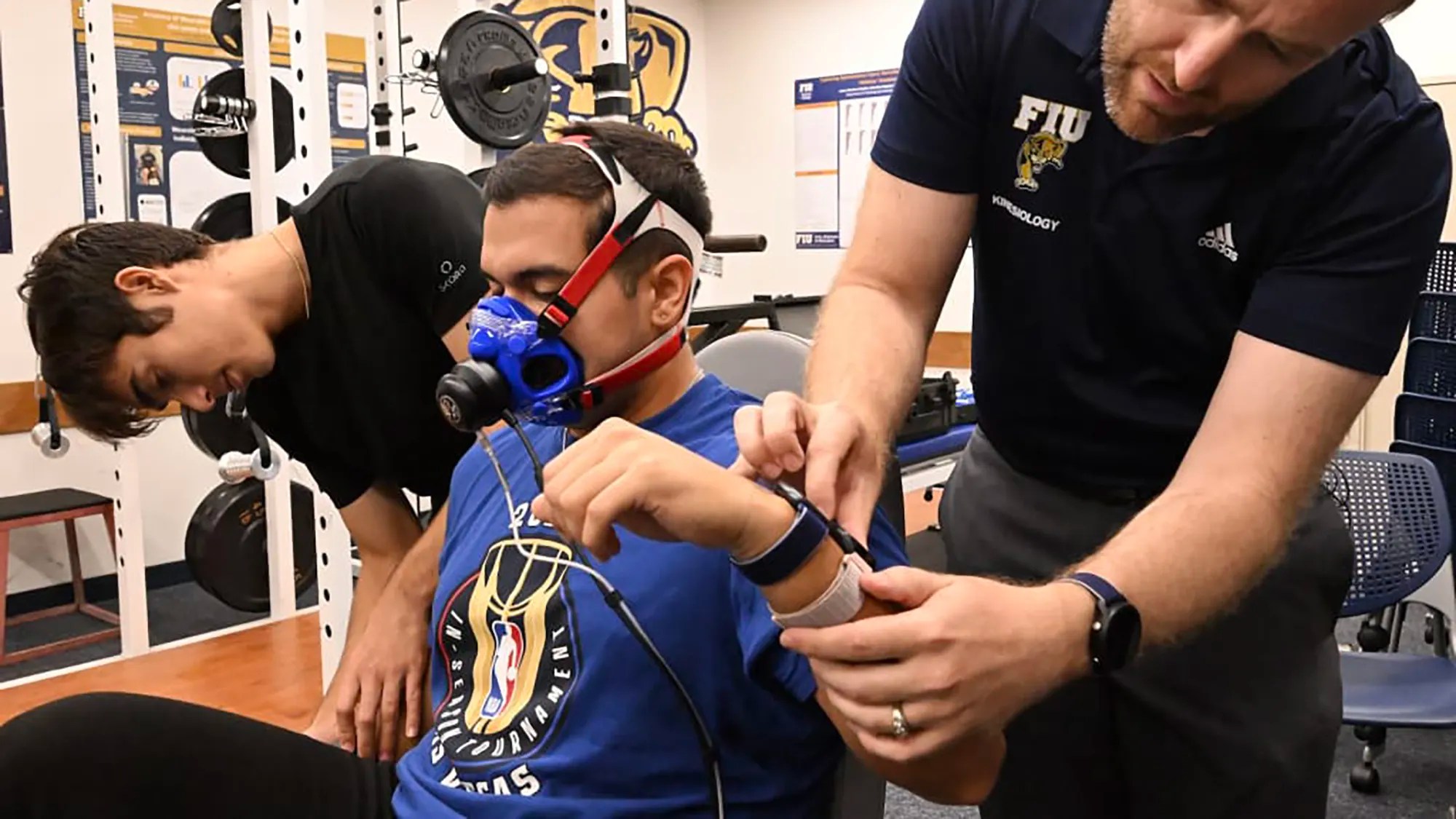
But how accurate are those estimates, exactly? To find out, university researchers asked 58 adults to ride a recumbent bike through a “controlled workout that alternated between moderate and vigorous intensity,” FIU said in a news release.
The participants wore four of the most popular smartwatches: the Apple Watch Series 8, Fitbit Sense 2, Samsung Galaxy Watch 5, and Garmin Forerunner 955. These were compared to the estimates from a COSMED K5 metabolic analyzer, a “gold standard” device that laboratories use to measure energy expenditure.
The results? An error range that inflated calories burned, on average, by 15-25%. In some cases, the watches inflated the workouts by even higher percentages. Overall, Apple was the most accurate, while Garmin and Samsung overestimated the most. The Fitbit arguably performed the worst, as it sometimes “reported implausibly low calorie counts, including just one calorie for an entire workout, and sometimes failed to generate a reading at all,” FIU said in a summary of the study.
“When the companies are developing those algorithms, we don’t know where the test data is coming from,” Kostrna said. “That’s why I think it’s beneficial for the companies to see this type of data, so they can refine their products over time.”
What’s the Takeaway?
While it’s surprising that even industry standards like Garmin are overestimating workout intensity — there’s no need to throw out your watch.
FIU’s researchers still think smartwatches can be helpful. But it’s important to understand the devices’ limitations. Instead, it’s a good idea to view calorie-burn estimates as “rough guides” rather than precise measurements, and rounding down the overall estimates of calories burned.
In the YouTube video above, which includes footage of the actual lab testing, Kostrna concludes that it’s just as important to listen to your own body. If you feel like you need to eat more, then eat more.
“How did this feel as you were working out? Did this feel like a really challenging workout? Or was this relatively easy? If at the end of the day, you feel like you need more a little bit more nutrition… those are the types of other information you need to take in,” he said.