Whether you’re chasing a tough workout, gliding through a quiet forest with your dog, or meeting friends for a sunny lap, cross-country skiing offers something for everyone. To make the most of it, you need the best cross-country skis for your ability, terrain, and goals.
Lead tester Kylie Collins brings over 15 years of Nordic experience and now works year-round at Crested Butte Nordic. She teamed up with longtime skiers Chris Kassar and Ryan Kempfer to review dozens of skis across multiple seasons in Crested Butte, CO, and Jackson, WY. We skied in everything from early-season crust to midwinter powder and icy spring melt-freeze cycles.
After logging long miles on groomed trails, rolling terrain, and backcountry connectors, we narrowed down the top skis for every skill level and snow condition. Whether you want the smooth glide of our top classic ski, the Rossignol Delta Comp R Skin Medium or the free flying feeling of our top skate ski, the Fischer Aeroguide 85 Skate Skis, this guide will help you find the right match.
Editor’s Note: On February 2, 2026, we updated this guide with the addition of the Fischer Aeroguide 85, our top pick for skate skiing, and the Rossignol XP 105 Positrack Skis, our top choice for off-trail exploration. We also updated our award winners and refined the comparison chart to better guide skiers toward the right ski for specific terrain and goals.
The Best Cross-Country Skis of 2026
Best Budget Cross-Country Skis
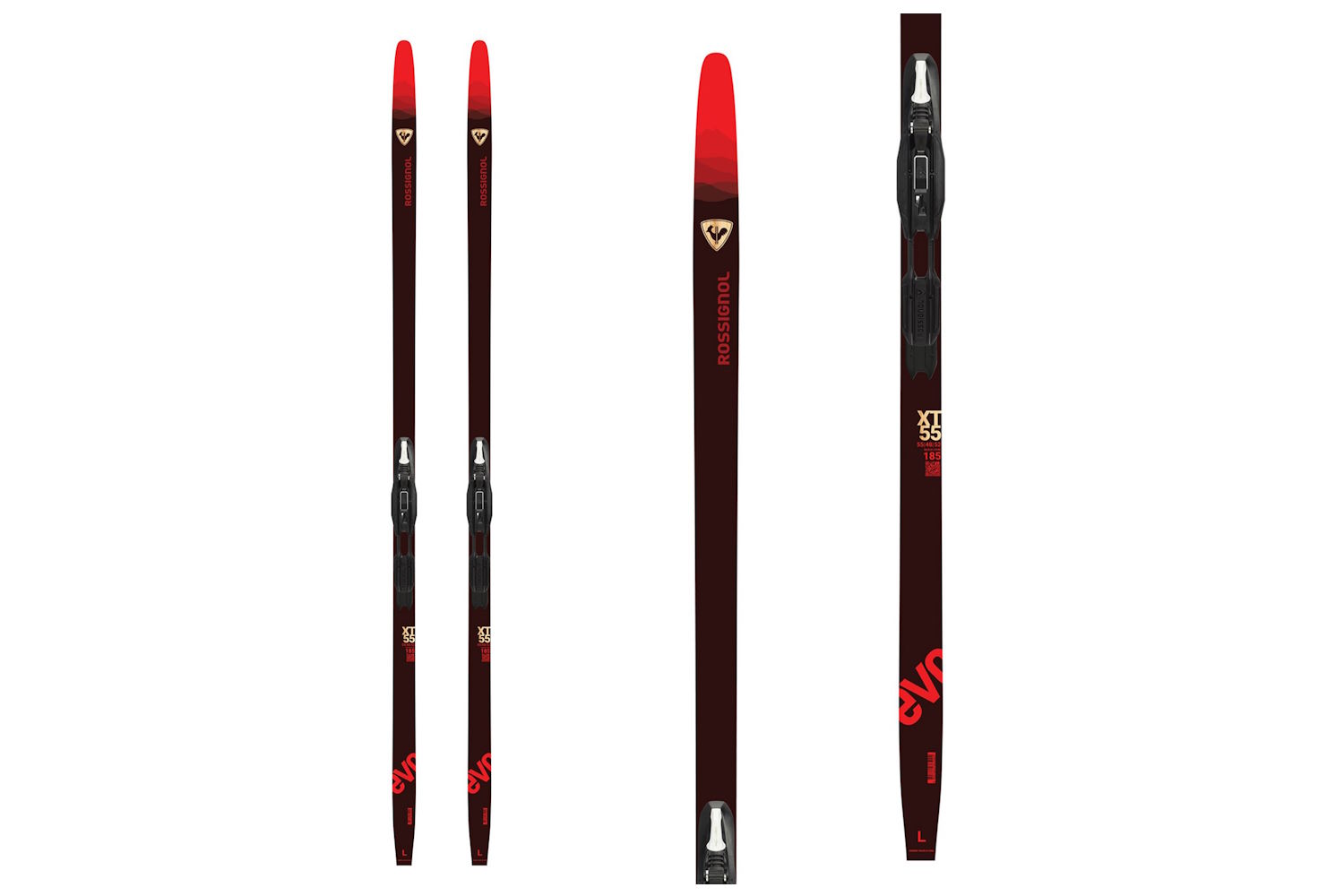
Rossignol Evo XT 55 Positrack Cross-Country Skis With TURNAMIC Bindings
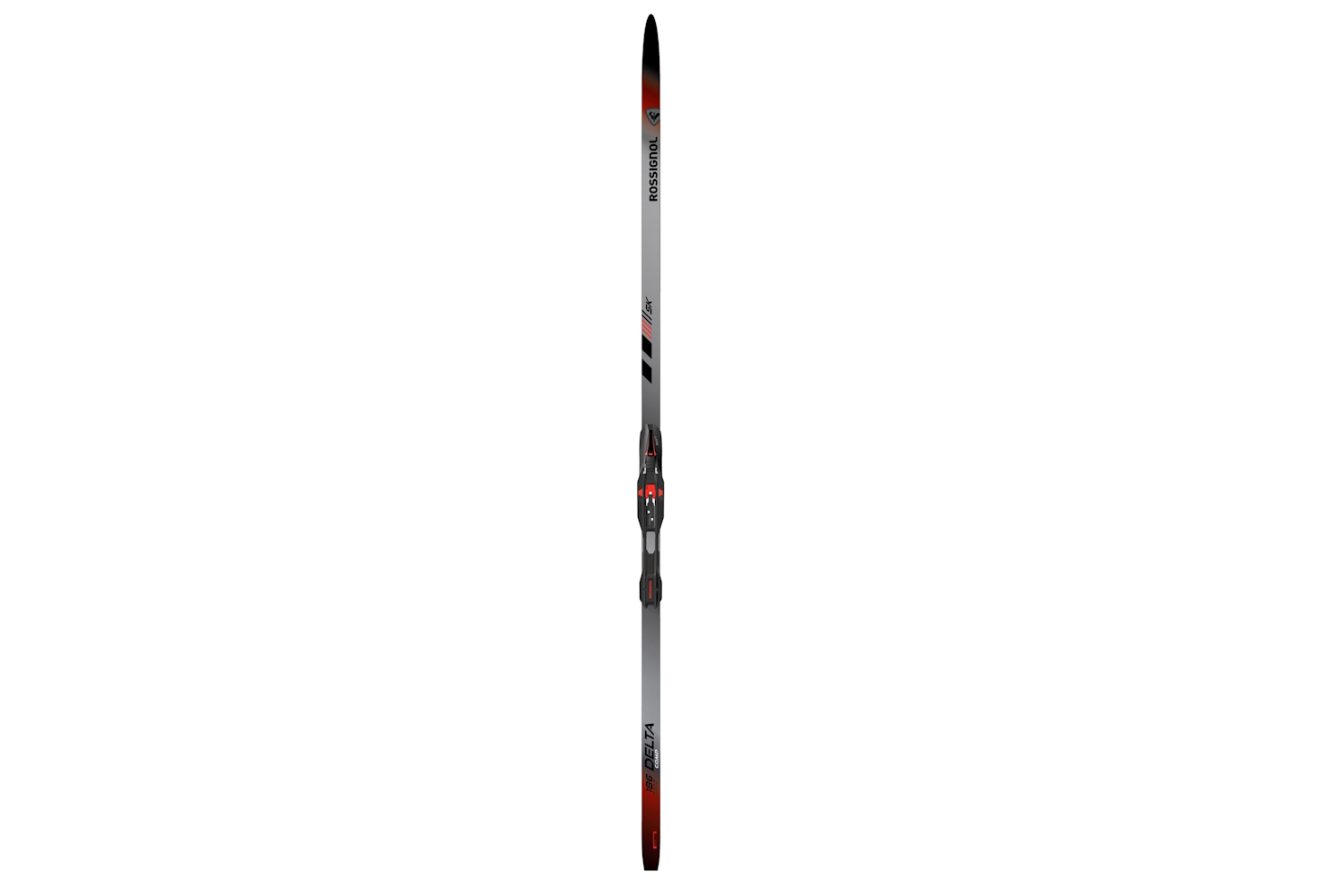
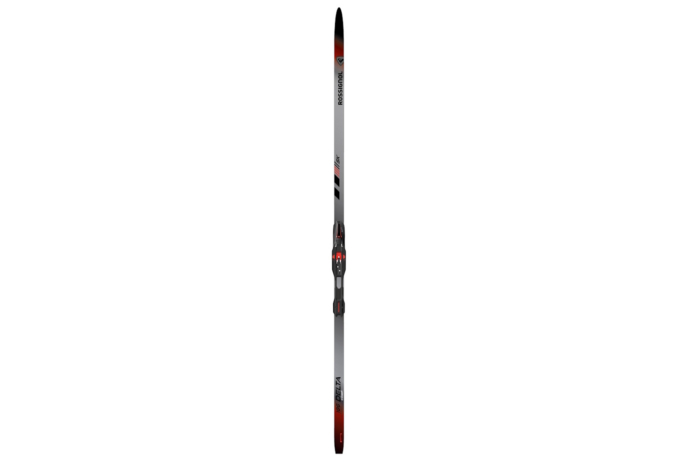
Rossignol Delta Comp R Skin Medium
Specifications
Pros & Cons
Pros
- Supportive kick and glide for skiers of all levels
- High-performance mohair grip
- Ski designed to grow with you
Cons
- Bindings not included
The Rossignol Delta Comp R Skin Medium ($480) is an excellent choice for skiers of all levels. This ski takes home the Best Cross-Country Classic Ski because, similar to the Atomic Pro C3, it’s a versatile ski that will grow with you as your technique improves.
Like the Atomic Pro C3 and the Fischer Twin Skin, the Delta Comp R uses a built-in mohair skin to grab the snow during the kick phase of your stride. It requires very little maintenance and works well in many snow conditions. However, unlike more race-specific models, these skis have a large sweet spot that will forgive some errors in technique. We jumped into some local races with these skis, and they performed beautifully, even next to more expensive models.
They have a super-light Nomex Honeycomb core, which translates to just over 2 pounds, 8 ounces, making these some of the lightest skis we tested.
The Rossignol Delta Comp R Skin ski is a solid choice for snowsports aficionados bridging into cross-country skiing or intermediate to advanced recreational skiers who want to leave hours at the wax bench in the past. Unfortunately, they do not come with bindings, but they are compatible with any NNN, Turnamic, or Prolink compatible binding.
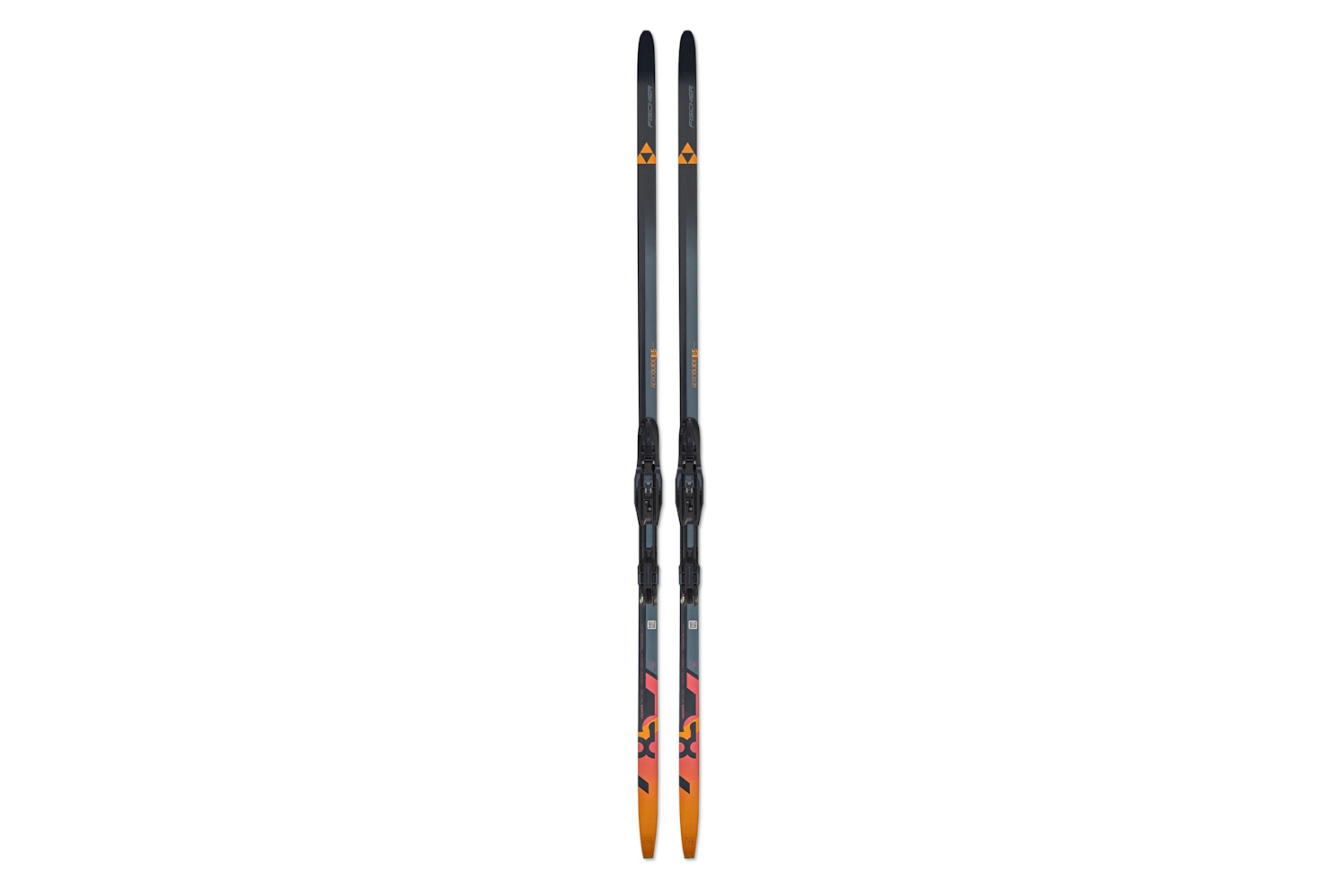
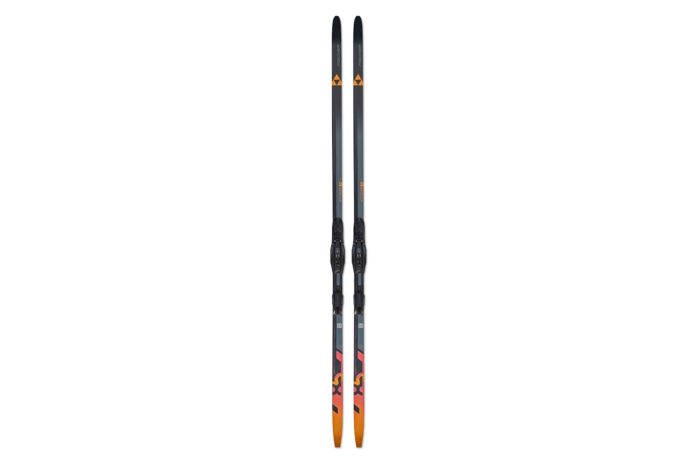
Fischer Aeroguide Skate 85
-


-
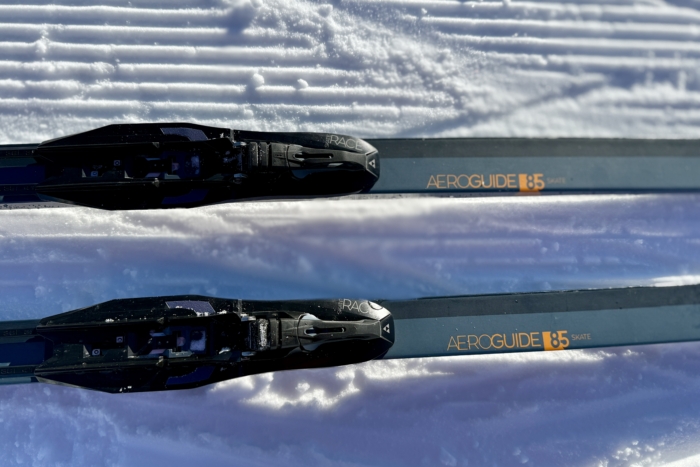
Fischer Aeroguide 85 Skate skis; (photo/Elk Raven Photography)
-
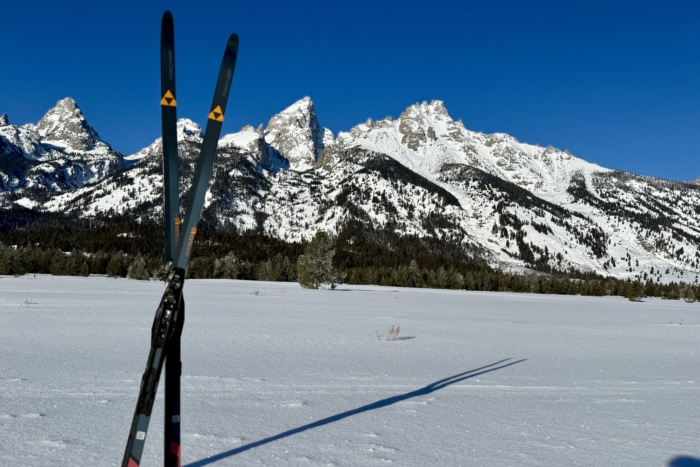
We tested many of these, including the Fischer Aeroguide 85 Skate skis in the Tetons; (photo/Elk Raven Photography)
-
Fischer Aeroguide 85 Skate skis; (photo/Elk Raven Photography)
Specifications
Pros & Cons
Pros
- Stable, forgiving platform that supports progression
- Predictable edge grip for confident push-offs
- Dual grooves eliminate "twitchy" tracking
- Includes user-friendly, pre-mounted step-in bindings
Cons
- Lacks the dynamic snap of high-end race skis
- Slightly heavier than performance models, lowering top-end speed
The Fischer Aeroguide 85 Skate Skis ($470) are designed for active, recreational skate skiers who want a stable, confidence-building option for groomed trails. Their lightweight construction and camber deliver smooth glide and efficient energy transfer, while the refined sidecut makes edge engagement feel natural and controlled during push-offs. Two continuous grooves add stability, reducing the twitchy feel that can hold skiers back.
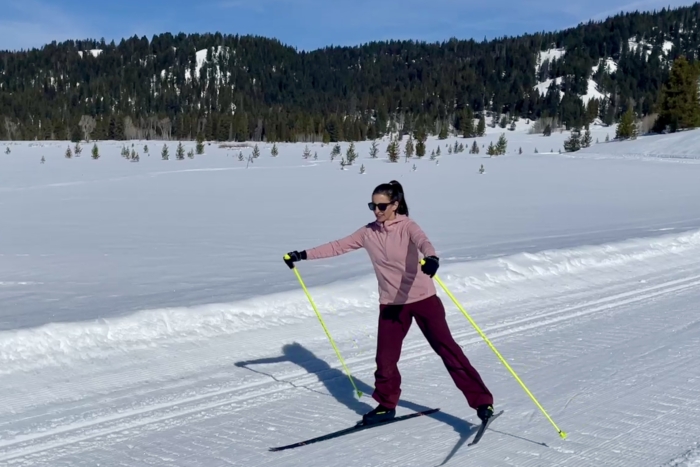
On our first outing, we tested them at Turpin Meadows, then continued to put them through their paces on groomed trails throughout the Tetons over multiple sessions. Even though we’re not the strongest skaters, the skis felt stable, predictable, and genuinely fun once we found our rhythm. Compared to a more performance-focused option like the Salomon RS 8 Skate, the Aeroguide 85 skis feel more forgiving and approachable, making it easier to maintain good technique over longer sessions. The trade-off is top-end speed. But for fitness skiing, skill progression, and all-day comfort on groomed trails, they deliver a balanced ride that helps skiers enjoy and improve their skating with less effort.
Rossignol Evo XT 55 Positrack Cross-Country Skis With TURNAMIC Bindings
Specifications
Pros & Cons
Pros
- Great grip through variable conditions
- Balanced and stable feel
- Intuitive kick and glide
Cons
- Geared toward beginners
- Heavier
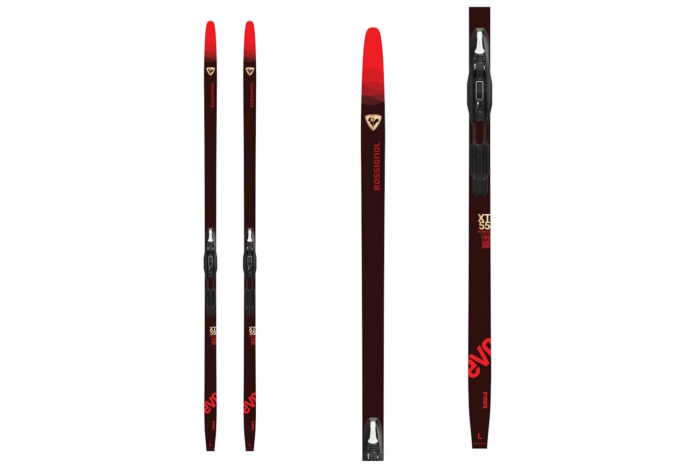
The Rossignol Evo XT 55 Positrack Cross-Country Skis with TURNAMIC Bindings ($270) are an excellent choice for beginners looking to jump into cross-country skiing or intermediate skiers looking for an easy and agile ski. These skis won the Best Budget Award since they’re a great entry-level ski for all seasons and conditions that won’t break the bank.
The Rossignol Evo XTs are intentionally designed to be shorter and wider than traditional classic skis. The increased width provides stability on the trails while fitting comfortably in a classic track. The decreased length improves agility and lends confidence on steep downhills and turns.
The design decreases chatter and feels like a downhill ski when you jump out of the tracks. The lightweight wood core with air chambers keeps the ski among the lightest we tested, giving you a lively kick and glide for an otherwise wide ski.
The Rossignol Evo XT employs the POSITRACK base finish, a textured fish scale pattern underfoot to provide grip, unlike the mohair skin on the Atomic Pro C3. The fish scale pattern provides excellent grip and will be more forgiving for beginners while enhancing grip across varied terrain and conditions. When we tested these skis in sticky spring conditions, they were less likely to collect snow than any other fish scales we tested.
If you’re looking for a more traditional classic ski, a ski for fast workouts, or the ability to customize wax conditions, these skis won’t appeal to you. For a more versatile ski, you might try the Rossignol Delta Comp R Skin Medium. For only $100, this skin ski bridges the gap between beginner and intermediate equipment.
The Evo XTs come with bindings compatible with most boots on the market and are ideal as a stable, intuitive ski for beginners or a fun, lively ski for the intermediate athlete. The Rossignol Evo XT 55 Positrack Skis are a great choice for skiers looking for a social ski option or a ski that can do anything.
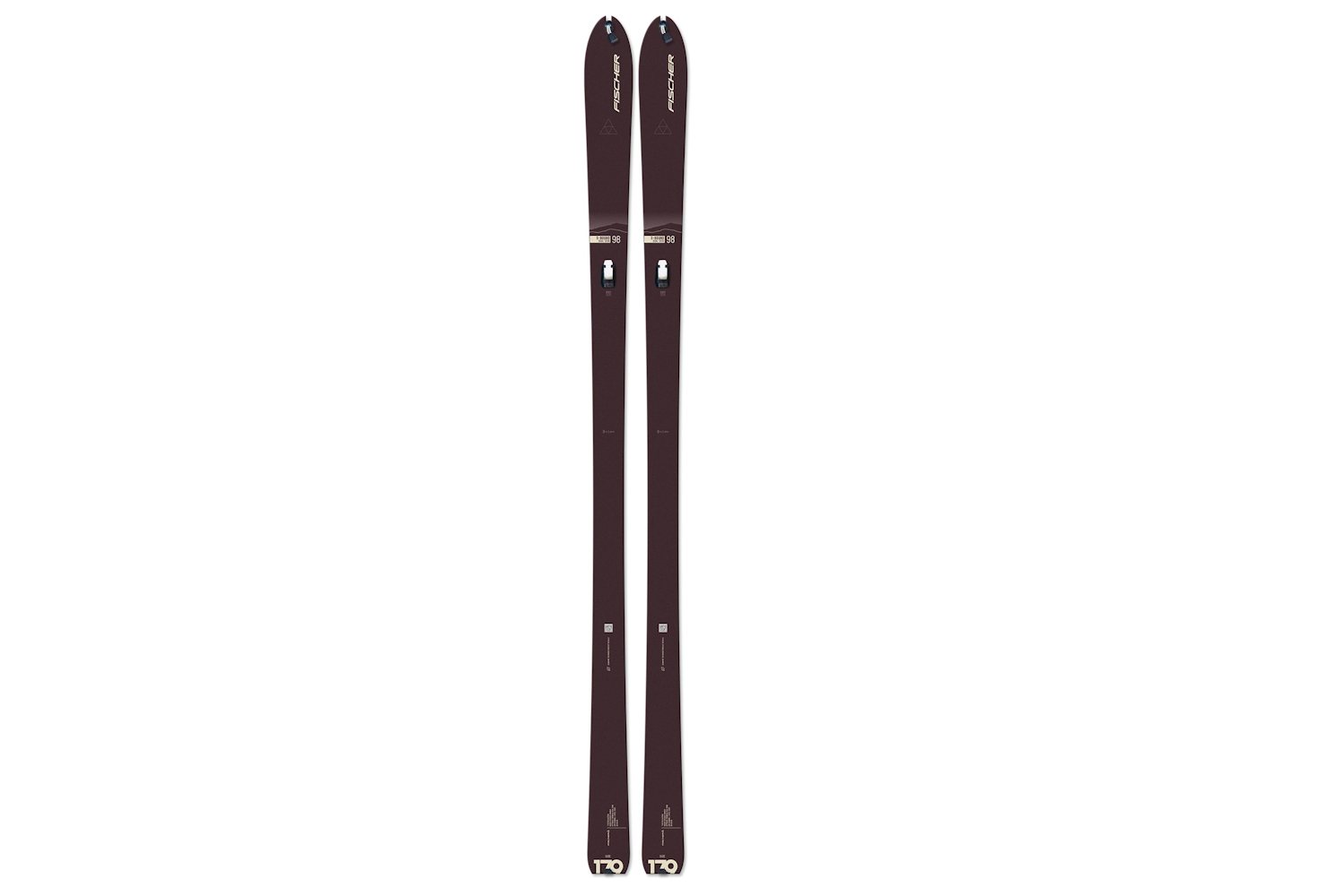
Fischer S-Bound 98 Crown/Dual Skin Xtralite
-
-
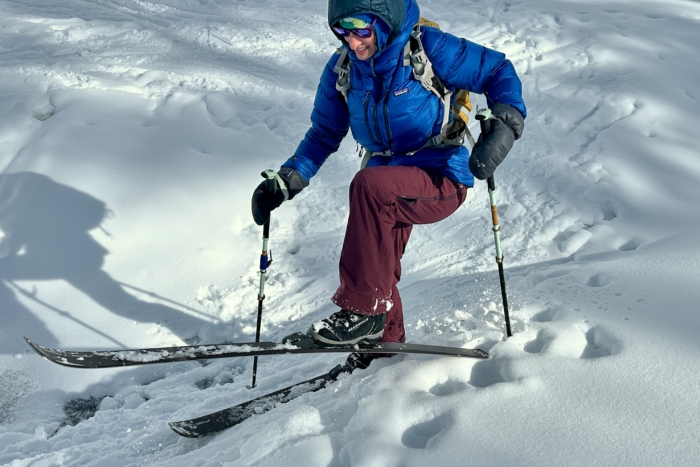
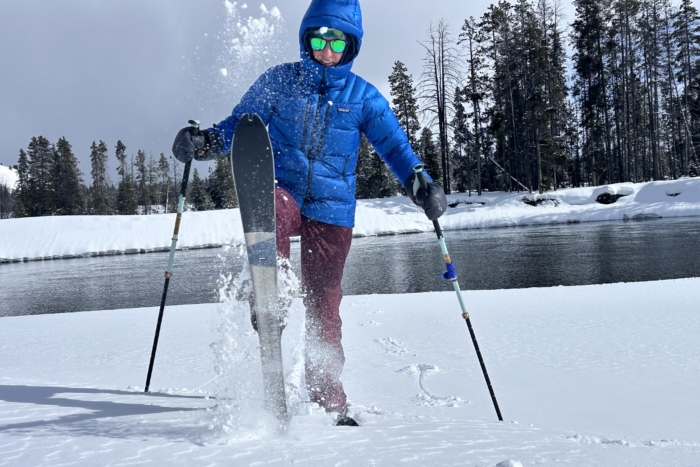
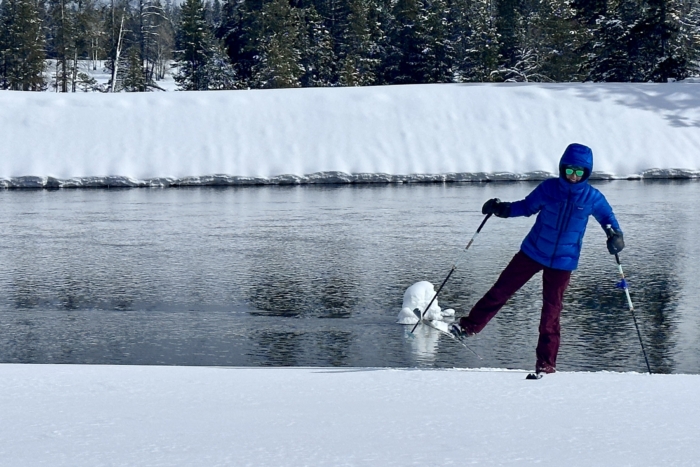
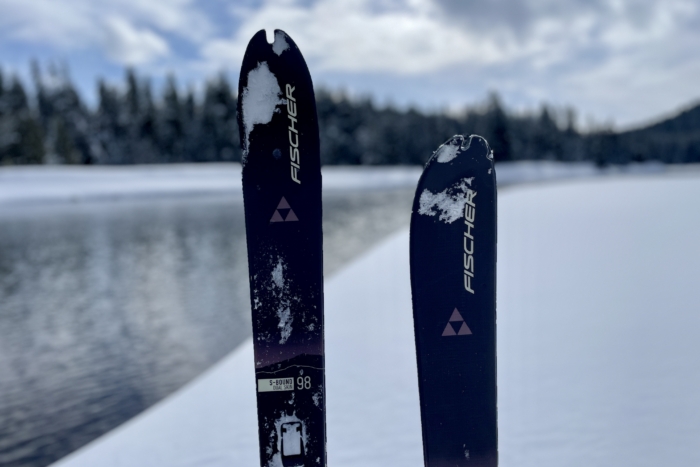
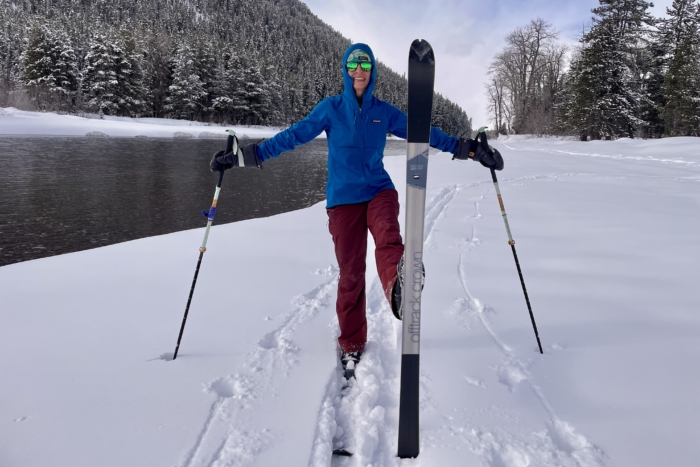
The fish scales on our top pick for off-piste touring, the Fischer S-Bounds, helps us tackle uphills: (photo/Elk Raven Photography)
-
The Fischer S-Bounds crush it off-trail in fresh snow; (photo/Elk Raven Photography)
-
-
-
Specifications
Pros & Cons
Pros
- Floats well in soft snow
- Skins boost uphill grip
- Stable with metal edges
- Handles varied terrain
Cons
- Heavy for groomed trails
- Slower on firm snow
- Less agile in tight trees
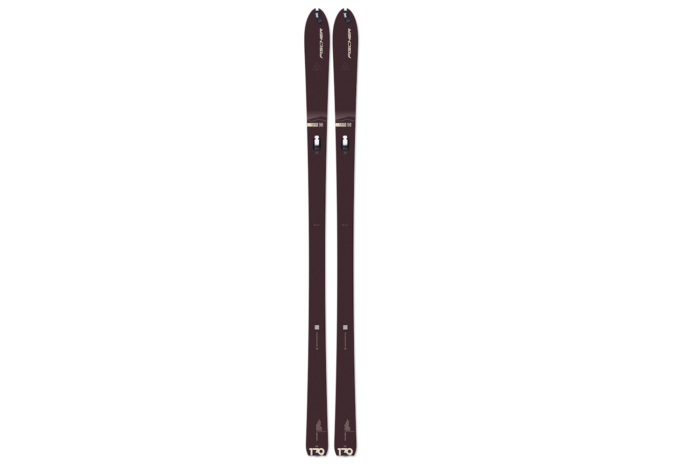
The Fischer S-Bound 98 Crown/Dual Skin Xtralite skis ($449) strike a versatile balance between backcountry control and efficient glide. We took them into rolling terrain in the Tetons and low-angle forest routes near Cameron Pass in Colorado, where they proved capable on both crusty tracks and fresh powder. With a metal edge and a moderately wide platform, these skis handle uneven snow and off-track exploration with style and grace.
The Crown pattern underfoot offers enough grip on gentler climbs, but what really stands out is the optional Dual Skin insert. When we tackled steeper ascents in firm spring snow, the skins (available separately) provided noticeably better traction and let us climb without resorting to awkward herringbone steps. On long, undulating tours through wooded terrain, the glide felt efficient without feeling squirrely, which made for smooth transitions from climb to descent.
In deeper snow, the 98mm shovel offers solid float without feeling sluggish. Compared to the Madshus Panorama 78, the S-Bound 98 feels more stable in powder and provides better downhill control in rolling or variable terrain. The Panorama 78 moves faster on firm snow and fits narrower tracks, but it feels less confidence-inspiring when the trail disappears or conditions get deep. The tradeoff with the S-Bound 98 is its added width and weight, which make it slower and less agile on groomed trails, long flats, or tight turns. For fast-paced touring or mellow terrain, it can feel like more ski than you need.
For skiers that want one ski to handle groomed connectors, rolling meadows, and the occasional off-track adventure, the S-Bound 98 offers a well-rounded solution. It rewards a classic skier’s stride but opens the door to more rugged terrain when conditions or curiosity call for it.
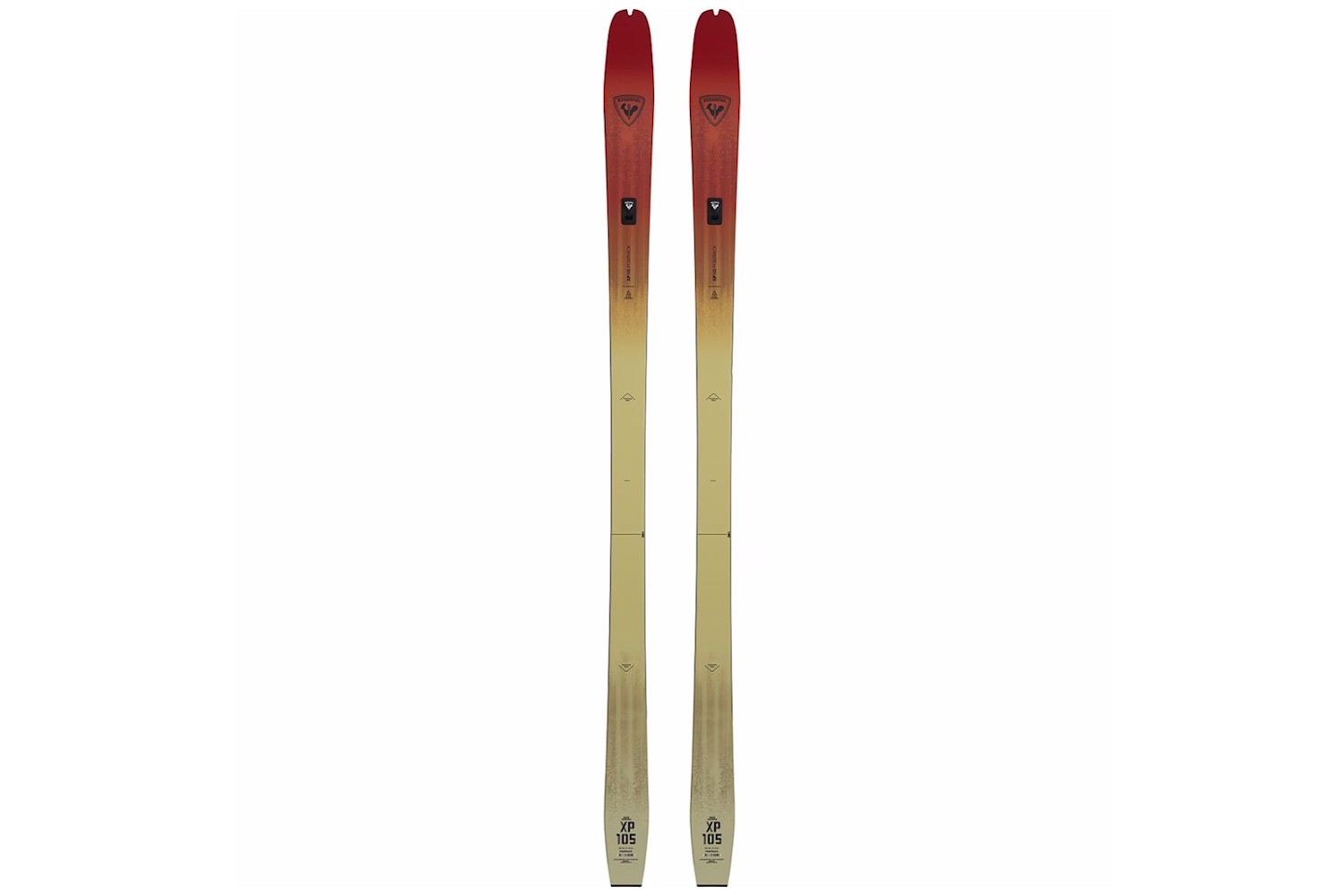
Rossignol XP 105 Positrack Skis
-
-
Rossignol XP 105 Positrack ; (photo/Elk Raven Photography)
-
Rossignol XP Positrack 105 Cross-Country Skis; (photo/Elk Raven Photography)
-
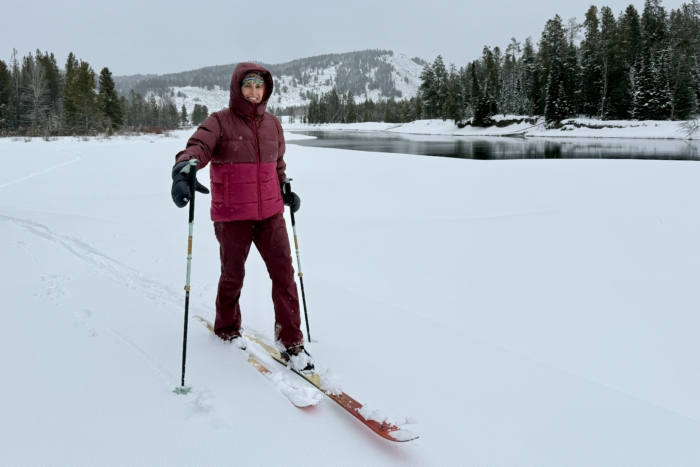
Meant for exploring off-trail in deep snow, the Rossignol XP 105 Positrack; (photo/Elk Raven Photography)
-
The Rossignol XP Positrack 105 Skis are meant for exploring off-trail in deep snow; (photo/Elk Raven Photography)
Specifications
Pros & Cons
Pros
- Excellent float in deep, soft snow
- Reliable waxless grip with strong kick and glide
- Stable, confidence-inspiring feel underfoot
- Full metal edges improve control in variable conditions
Cons
- Wider platform feels like overkill on packed or groomed trails
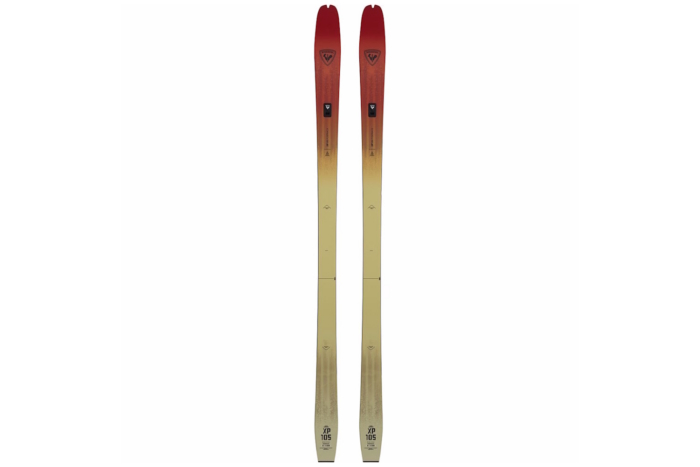
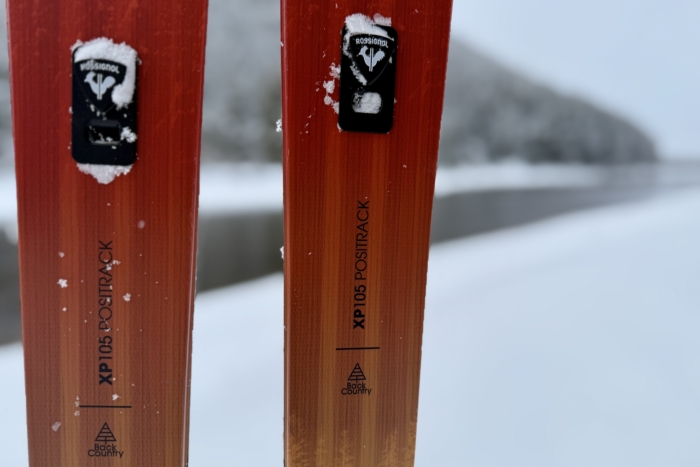
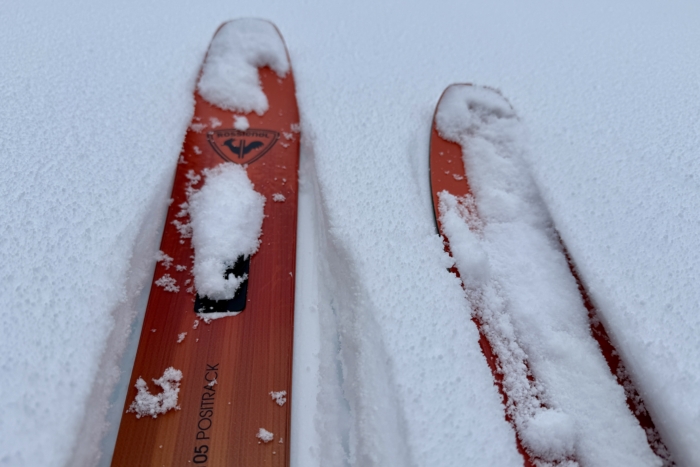
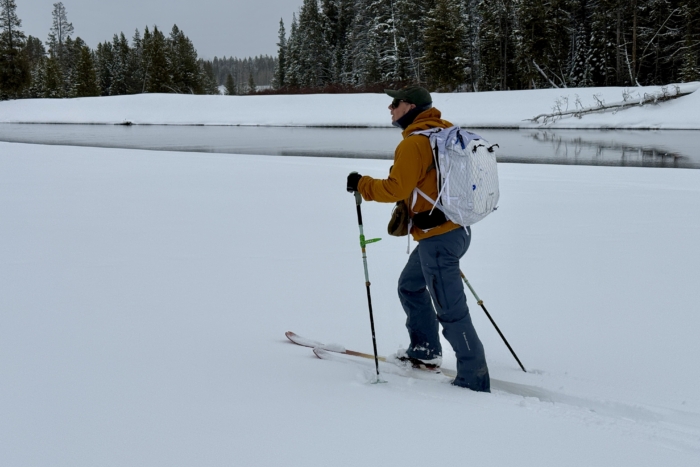
The Rossignol XP 105 Positrack Skis ($430) are built for skiers who want to leave groomed trails behind and explore deep, ungroomed terrain. With the widest platform in the XP series, they deliver excellent float in soft snow and feel confidence-inspiring when breaking trail through fresh powder. We tested them on a long tour near Togwotee Pass outside the Tetons, where the wide tips stayed on top of fresh snow and the Positrack waxless bases provided reliable grip without the need for kick wax.
Uphill performance was impressive, with better kick and glide than expected for skis this wide and a noticeably less tippy feel underfoot on rough, uneven trails. The trade-off is that the wider platform can feel like overkill on packed or groomed trails, where narrower skis would be more efficient, but that isn’t what these skis are made for. Instead, they’ve become our do-everything, go-anywhere setup, opening up a level of off-trail exploration that simply isn’t possible on narrow skis designed for set tracks.
Full-length metal edges add security when conditions turn firm or variable, providing a rare level of downhill confidence. Combined with the lightweight LDC core and Air Tip construction, the XP 105 skis remain surprisingly agile for their size. Overall, they’re best suited for intermediate to advanced adventure seekers who prioritize float, stability, and dependable traction in deep, off-trail conditions.
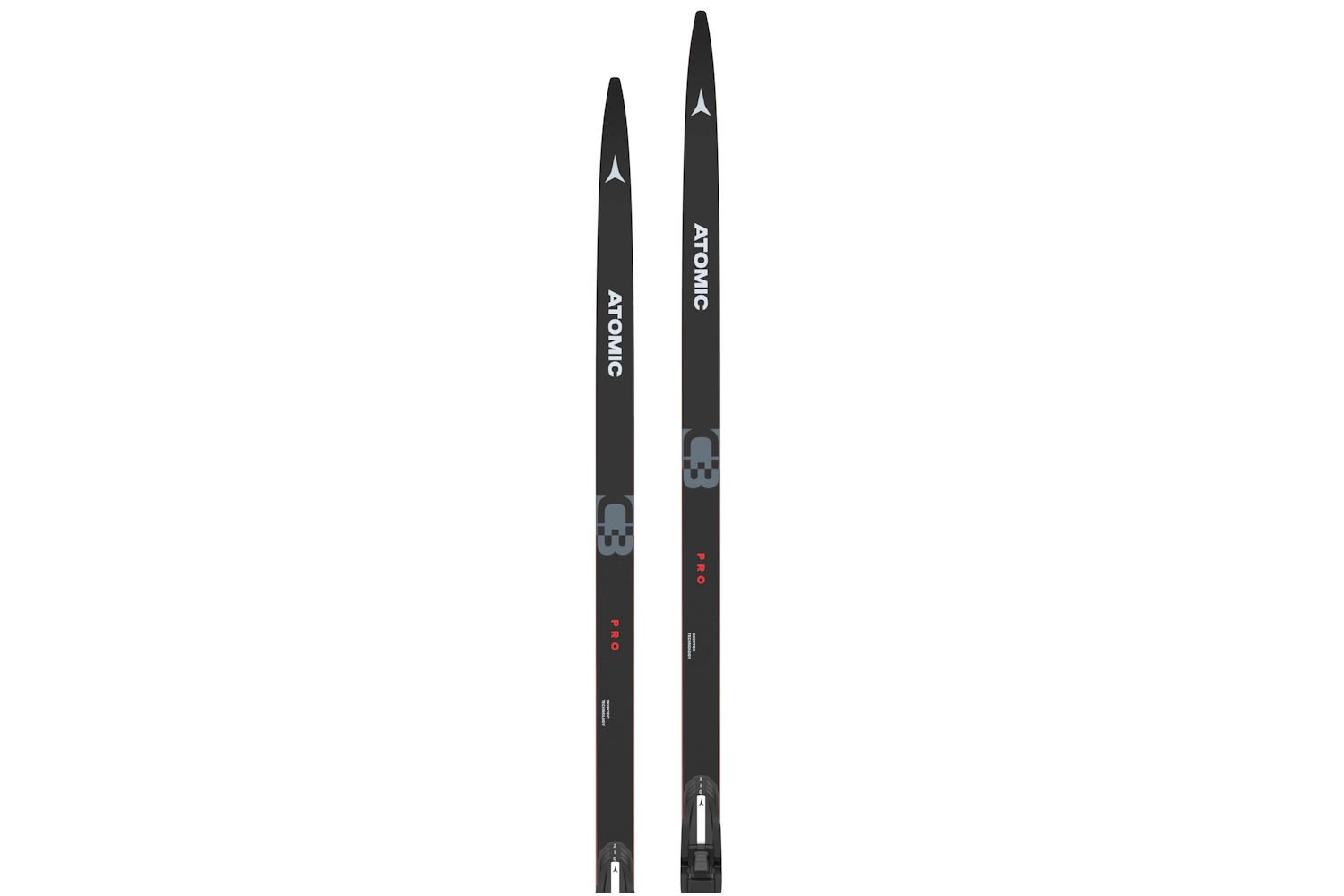
Atomic Pro C3 Skintec + Shift CL
-
-
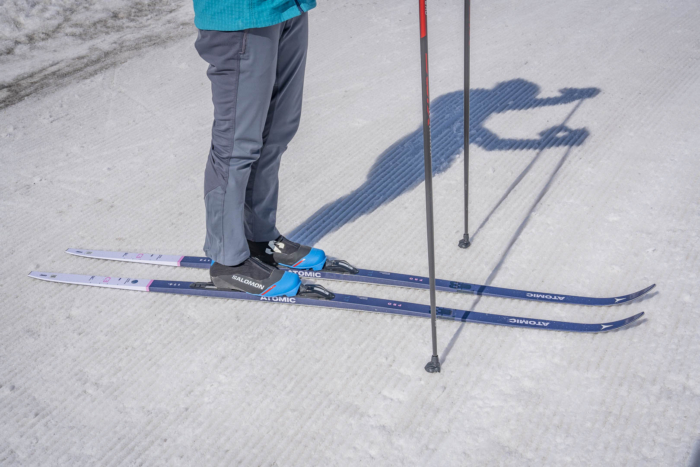
Testing out the Atomic Pro C3 Skintec in groomed classic tracks at Crested Butte Nordic; (photo/Eric Phillips Photography)
-
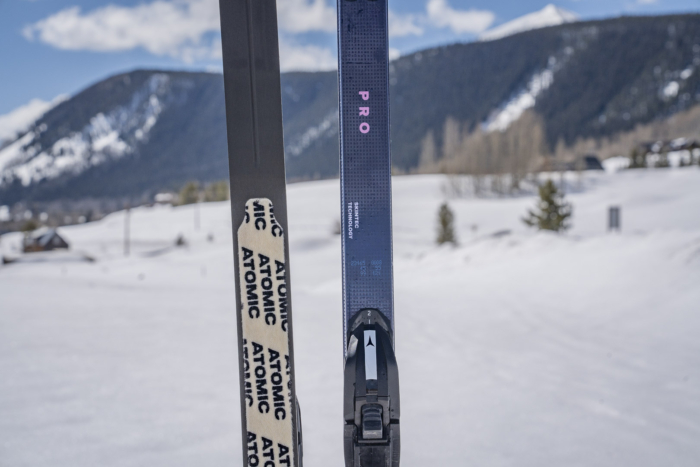
The Atomic universal skin that comes standard with the Atomic Pro C3 Skintec; (photo/Kylie Collins)
-
The Atomic Pro C3 Skintec Ski with Shift CL Bindings; (photo/Kylie Collins)
Specifications
Pros & Cons
Pros
- Great glide
- Easily interchangeable skins
- Women’s specific model available
- Suitable for skiers of all skill levels
Cons
- Steeper learning curve than fish scale grip
- Expensive
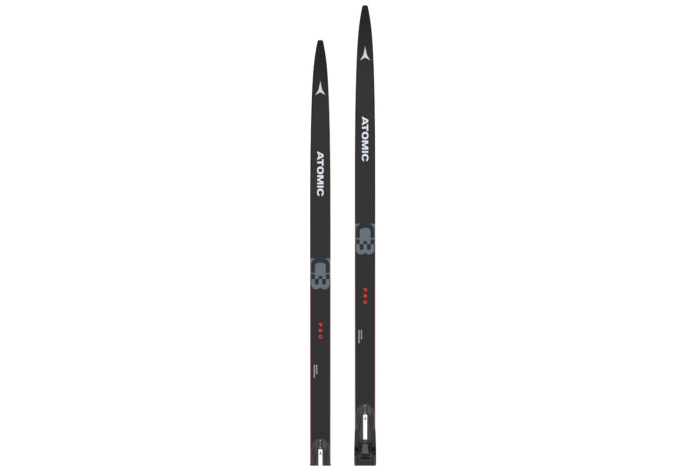
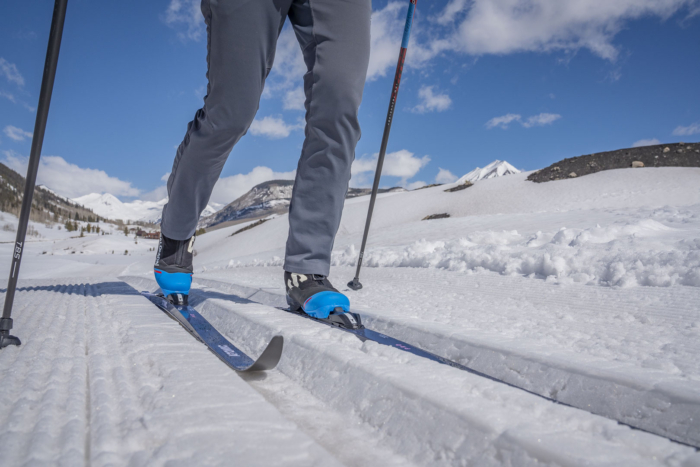
The Atomic Pro C3 Skintec + Shift CL ($430) is a great choice for intermediate skiers looking to maximize their glide and make the most of a day on the Nordic trails. We love these for their versatility, efficiency, and fun on the trails,Whether we were headed out the door for a workout, a social ski, or a solo journey, this was our go-to ski. When we tested these skins on early morning spring ice, they felt stable and controlled. They were responsive, nimble, and fun when we skied through pristine winter conditions.
The easily exchangeable mohair skin underfoot provides adequate kick without compromising glide. We tested the stock universal skins and found them to be incredibly versatile across a range of conditions. When snow turned icy in the spring, moving the binding a notch forward improved grip dramatically on steeper inclines. Atomic offers a speed skin for more advanced skiers that will undoubtedly increase glide and reward great technique.
This year, the Atomic Pro C3 Skintec moved toward gender-specific sizing. The men’s and women’s skis are identical in sidecut and construction, but the women’s specific fit offers shorter lengths and increased flex options for lighter skiers. The Atomic Pro C3 is dynamic and light. It makes climbing easy but is also responsive and controlled on the downhill. We felt comfortable staying in the tracks even on steep downhill corners.
These skis are more expensive than other classic options on this list. If you’re a beginner, the Rossignol Evo XT 55 Positrack classic skis are more affordable and beginner-friendly. The fish scale base on the Rossignol skis is gripper and more forgiving in icy conditions. However, if you’re looking for a ski to grow with you as your technique improves without sacrificing fun, we highly recommend going for the Atomic Pro C3 Skintec.
The Atomic Pro C3 Skintec delivers a range of sizes and flex for skiers of all sizes, as well as great kick and glide. Its unmatched versatility and exchangeable skins make for a great ski that can tackle most conditions for the beginner and intermediate skier.
Note: The Pro C3 was originally our best overall ski, but they’re out of stock in early 2026, and historically have been tough to find so they lost our top spot.
More Cross-Country Skis to Glide On
-
-
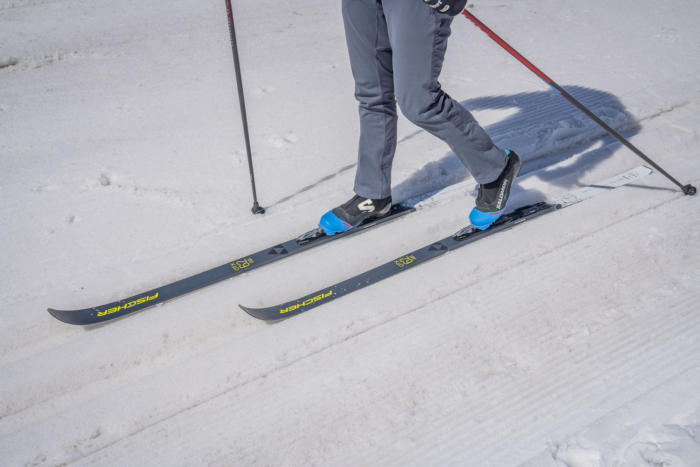
The Fischer 62 Crown Xtralites are touring skis that also fit in regular groomed classic tracks; (photo/Eric Phillips Photography)
-
The Fischer 62 Crown Xtralites are touring skis that inspire confidence on all types of terrain; (photo/Eric Phillips Photography)
-
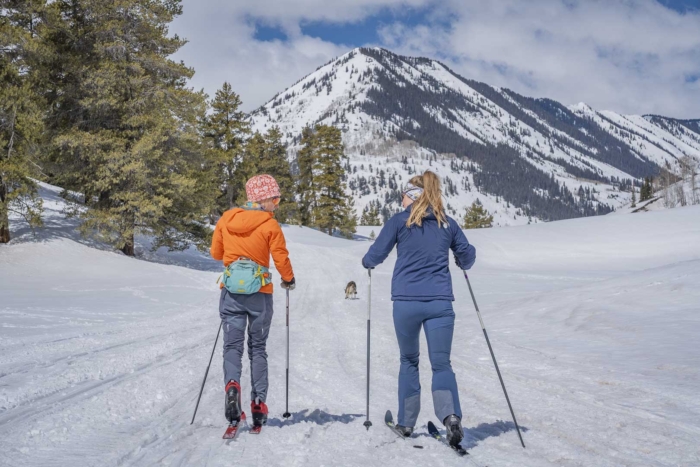
Two skiers head out for a tour outside Crested Butte, Colorado; (photo/Eric Phillips Photography)
Specifications
Pros & Cons
Pros
- Great grip
- Fit in most classic tracks
- Metal edges for ungroomed surfaces
- Compatible with most boots
Cons
- On the heavier side
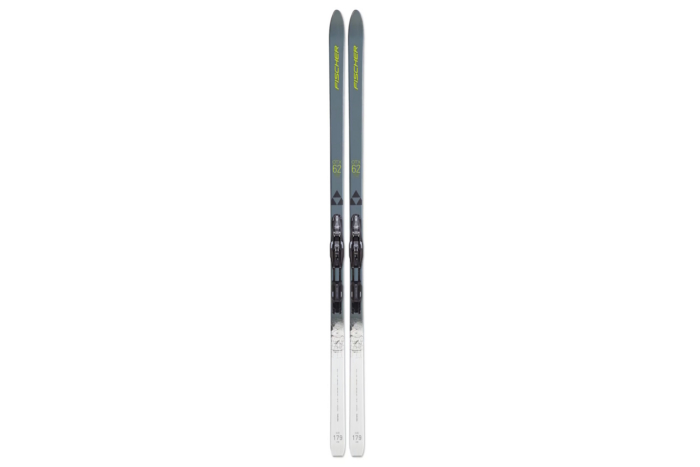
The Fischer Spider 62 Crown Xtralite Cross-Country Skis with TURNAMIC Bindings ($369) are a joy for cross-country ski adventure and exploration off the groomed trail.
These skis bridge the gap between a classic ski and a touring ski. The tips are 62 cm, which is still narrow enough to fit in most classic tracks for easy use at groomed destinations and versatile when maneuvering through tight forests. The metal edges provide bite, stability, and confidence when venturing off the trail. Be warned, the metal edges are sharp! Similar to backcountry skiing, be careful when skiing with dogs.
The generous sidecut dimensions mimic the shape of a downhill ski. We found this incredibly beneficial when carving turns in deep powder through the ungroomed terrain. We absolutely loved these skis for beautiful backcountry tours through tight aspen trees and thick pine forests. If you want to go a little further, these are the skis for you!
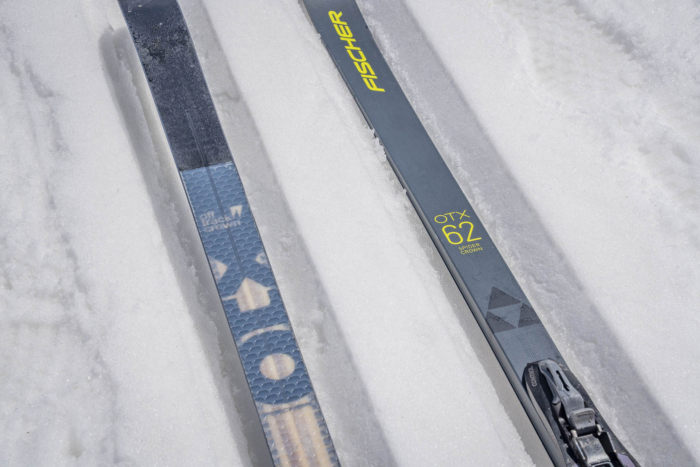
Fischer’s patented Offtrack Crown fish scale bases give adequate grip across various conditions. They ski similarly to the Rossignol Evo XTs, but the metal edges and extra weight pack more punch for deeper snow and choppy spring conditions. We did find the fish scales prone to clumping underfoot through sunny snow patches when the temperature reached above 40°F, but with a few strides, the clumps always dissipated.
The Fischer Spider 62 Crown is for anyone looking for a well-rounded ski that performs on and off the groomed track. If you needed one ski to do it a lot, this would be it. The included bindings are also compatible with NNN ski boots.
-
-
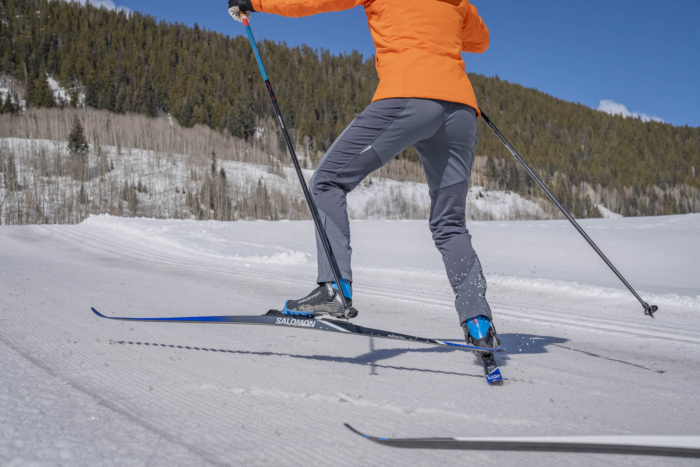
Mid-skate stride up a hill; (photo/Kylie Collins)
-
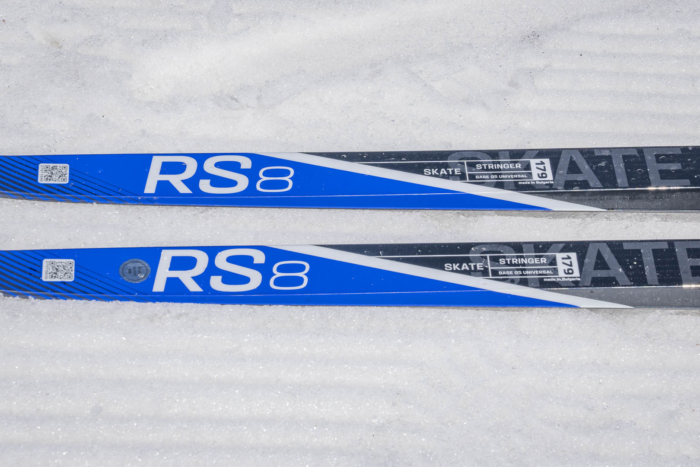
The tail section of the Salomon RS8 Skate Ski; (photo/Kylie Collins)
Specifications
Pros & Cons
Pros
- Stable and balanced ski
- Extended glide
- Good price for an intermediate ski
Cons
- Can feel long
- On the heavier side of skate skis tested
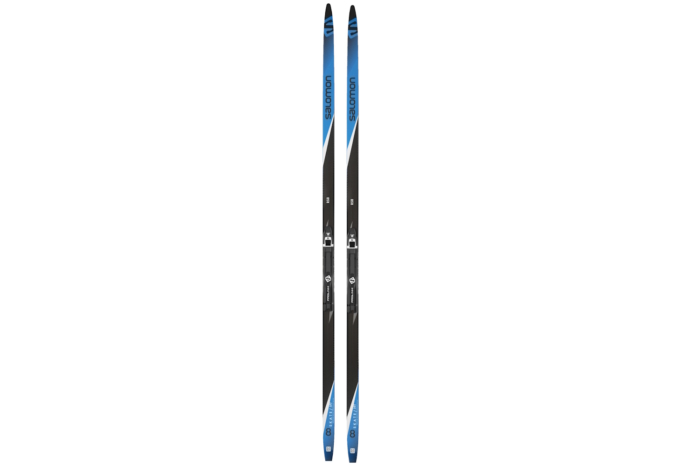
The Salomon RS 8 Skate Skis with Prolink Pro Skate Bindings ($370) are fun, fast, and efficient skate skis. This ski won the Best Cross-Country Skate Ski award because they are intuitive and a blast to ski. The ski is stable across various conditions, feels balanced during both the weight transfer and glide phase, and always feels fast.
Salomon markets this ski as “easy to ski on,” and we found that statement true. Even for a beginner skater, this ski seemed to elongate the glide phase and allow us to focus on technique without much effort. This ski’s thin but prominent edge differs greatly from the gliding sidewall found on Fischer Carbonlite skis and the more rounded edge found on the Madshus Active Pro versions we tested.
The Madshus Active Pro’s aggressive sidecut may feel natural to a seasoned skate skier, but beginner and intermediate skiers found this ski profile frustrating. The presence of the edge on the Salomon RS8 provides a great bite into the snow when rolling from a flat ski to an edged ski in the weight transfer process. This increased stability provided confidence for skiers of all levels.
These skis have a good deal of camber and tip rocker. For this reason, the skis can feel long and unwieldy at first if you’re used to shorter skis. However, after just a few times out, the length becomes natural, and the improvement in glide is noticeable and welcome. We especially loved these skis for springtime crust morning skis. The length provided stability over uneven terrain, while the camber and edge provided maneuverability for quick and unpredictable turns.
This ski is a great choice if you’re just getting into skate skiing and want to work on technique. A more expensive race-oriented ski might provide a competitive edge. However, this ski is forgiving to any budding skier, fun for the intermediate and advanced skier, and won’t break the bank. It’s also a great ski to grow with. The Salomon RS8 is our go-to skate ski for everything from soft winter snow to spring crust cruising.
Specifications
Pros & Cons
Pros
- Great balance of uphill and downhill performance
- Stable but nimble
- Exceptional flotation
- Stellar climbing ability
Cons
- Heavy
- Won’t fit in a standard cross-country track
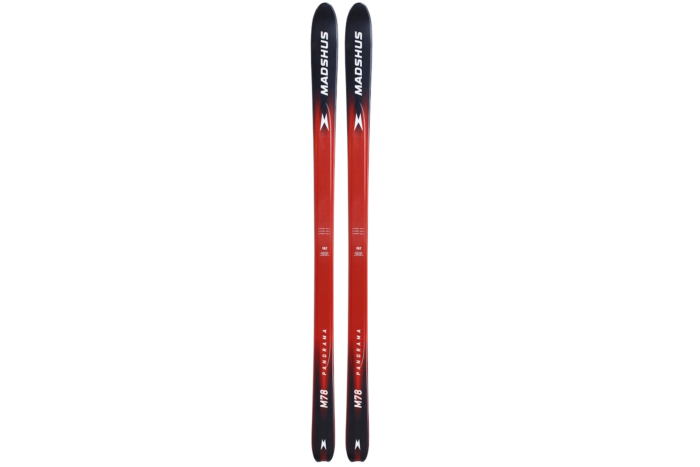
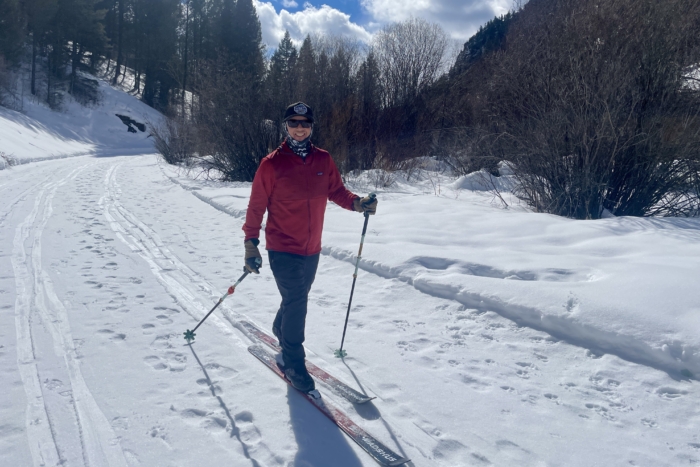
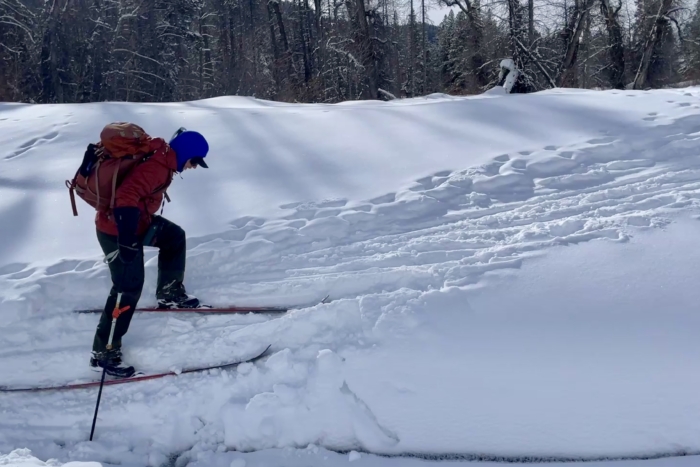
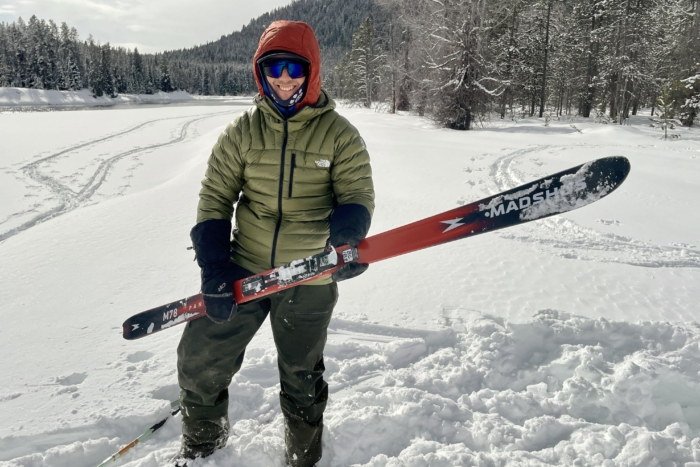
Looking to get off the beaten path and explore the wintery wild on your own? Then grab the Madshus Panorama M78 Skis ($388) and get out there, no track required. These rugged, all-terrain skis, which Madshus says “blend traditional Nordic and backcountry performance,” are ideal for deep snow, varied terrain, and multi-day adventures.
Many Nordic skis get you where you want to go, but because they’re so skinny, they require survival skiing to get you back home, especially if you’ve climbed a bit or tackled a steep slope. The Panorama M78 Skis change all that. In fact, due to their width, grip, full metal edges, and light, robust construction, they excel at getting you up and down rolling or steep terrain in style.
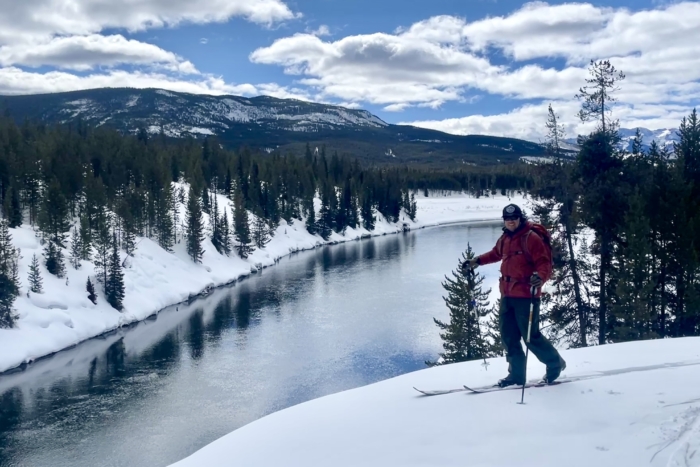
We tested these skis on countless tours through Grand Teton National Park and neighboring public lands, where we encountered varying terrain and changing snow depths and conditions. Since these are made for ungroomed terrain, we often set off into the mountains, breaking our own trail and exploring untouched slopes.
As the widest underfoot on our list (by 16 mm), it’s no surprise the Panorama M78 skis float through deep snow better than any others we tested. In a side-by-side comparison with our next widest ski, the Fischer 62, the Madshus skis stayed afloat while the others plunged deep into the snow, causing our tester on the Fischer 62s to fall. We prefer the wider skis for off-trail, backcountry touring since they spread out our weight more evenly, allowing for more fun and float. In addition to a noticeable increase in floatation, these skis offer more control on the way down. We enjoy being able to make quicker, sharper turns due to their tight side cut and short turning radius. We also appreciate the added stability of a wider ski so we can handle steeper grades at higher speeds without the wobbly, knock-kneed sensation we get when picking up speed downhill on narrower options.
Madshus’s Omnitrack waxless base has a long fish-scale grip zone that delivers exceptional traction on the uphill, with no skins required. This grip, coupled with a greater width, gives added security while climbing moderately steep slopes, which means more options for where you can explore. We were skeptical about how such grippy skis would kick and glide on the flats or rolling stretches, but they perform well in these scenarios.
One downside to these skis is their weight. They’re significantly heavier than most traditional cross-country skis. This heft adds stability, however, a tradeoff we’re willing to make for a ski meant for off-trail exploration. The other thing to consider is that at this width, the M78s won’t fit into most classic Nordic tracks. If you’re planning to spend a lot of time on a groomed track, you’ll want to look at the Madshus Panorama M62 (you’ll sacrifice a little bit of stability and control) or our top pick, the Atomic Pro C3 Skintec + Shift CL.
However, if you seek to leave the crowds behind and explore untouched powder stashes on nimble, maneuverable Nordic skis that inspire confidence on both the ascent and descent, the Madshus Panorama M78 skis are your ideal pick.
Specifications
Pros & Cons
Pros
- Easy anti-ice skin HF liquid wax included
- Four-year manufacturer warranty
Cons
- Design is not as advanced as other classic skis
- Bindings not included
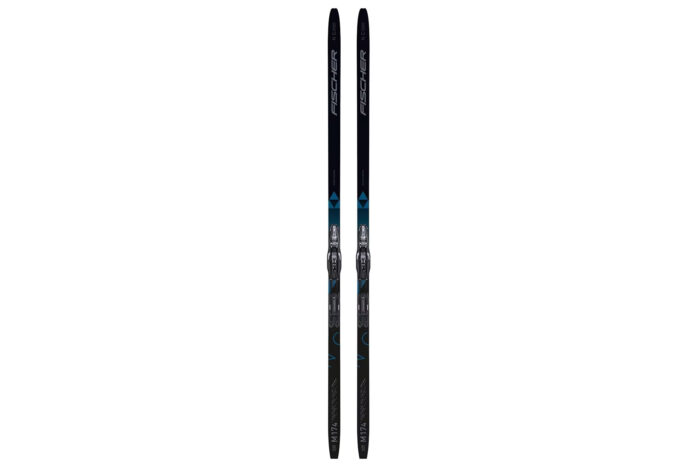
The Fischer Twin Skin Cruiser EF ($339) is designed for the masses. If you’re new to cross-country skiing and want to hit the groomed classic trails for a reasonable price without the complexities of thinking about wax, this ski is a great place to start. We really enjoyed taking these skis out in moderate temperatures in mid-winter conditions, for social skis, and on dog walks.
Finding a good kick in cold or icy conditions became challenging. More than other skis we tested, fine-tuning the fit for the Fischer Twin Skin Cruiser was really important; we found that sizing up created a better fit in cold conditions.
The Twin Skin Cruiser EF has two strips of mohair skins underfoot. This is a similar grip system to the Atomic Pro C3 and Delta Comp R reviewed above. However, the two strips allow the center groove to continue down the ski without interruption. In theory, the continuation of the groove helps the skin track straight, especially when skiing outside of a set classic track. We found the benefits of the single-skin skis to outweigh this feature. The single-skin skis were more forgiving in sizing, offered better kick, and were easier to ski across a range of snow conditions.
Unfortunately, they do not come with bindings, but they are compatible with any NNN, Turnamic, or Prolink compatible binding. New this year, Fischer is offering a Move binding that offers tool-free adjustment on the go. Upgrading to these bindings allowed us to fine-tune binding placement for the conditions and find a better kick even in colder conditions.
The Fischer Twin Skin Cruiser trends softer in flex, making it easy to control even for a beginner skier. For $260, they are a great entry-level ski for groomed classic skiing or light touring off trail. If you’re looking to grow out of the recreational or hobby stage, we recommend looking at a ski whose capabilities will grow with you, like the Atomic Pro C3 or the Rossignol Delta Comp R Skin Medium.
-
-
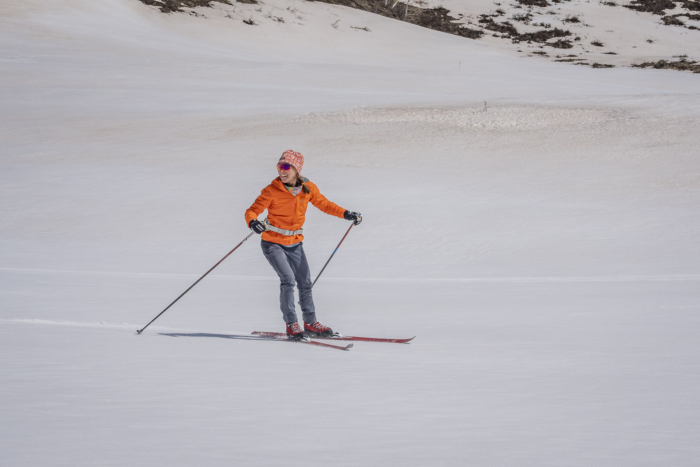
Skiers enjoy a rare spring crust on a spring day in the backcountry; (photo/Eric Phillips Photography)
Specifications
Pros & Cons
Pros
- Durable and capable in ungroomed conditions
- Metal edges for touring capabilities
- Notched tip for backcountry skins
Cons
- Heavy
- Requires specific boots
- Less agile and versatile than other touring skis
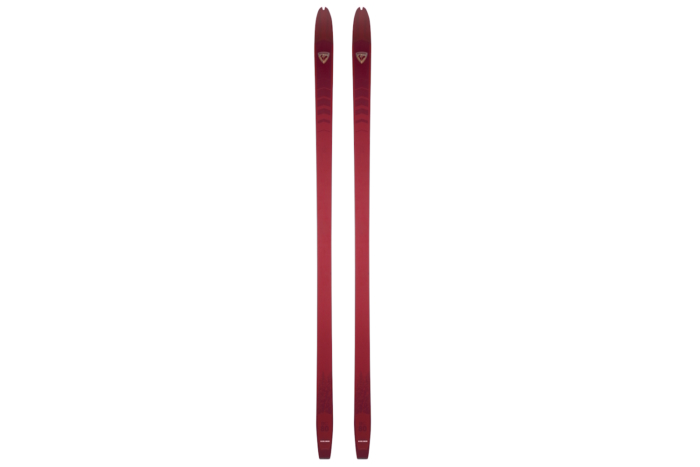
The Rossignol BC 80 Positrack Skis with NNN BC Bindings ($400) are true touring skis. They are wide and will not fit in a groomed classic track. They are designed exclusively for off-trail or backcountry use.
These skis are heavy, but this aids in their ability to cut through variable conditions. The tips are notched for backcountry skins, increasing versatility on steeper and more challenging terrain.
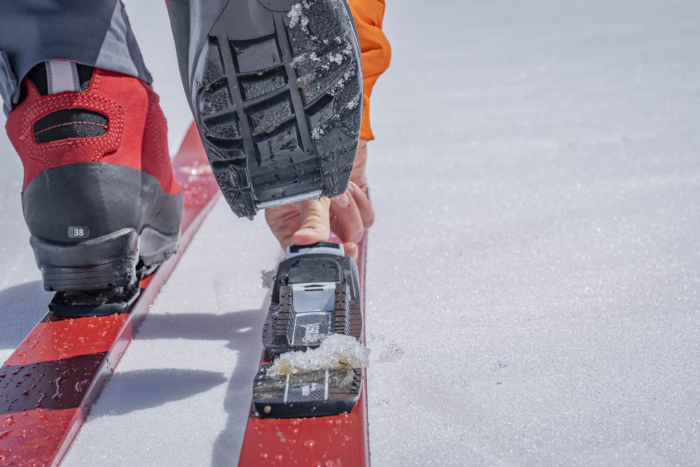
The bindings come premounted, and unlike NNN plate-mounted bindings, they are pre-drilled and not adjustable forwards or backward. The fish scale pattern is longer on this touring ski, so we did not find a need to increase grip with binding movement.
The specialized binding also requires a specialized boot. The bar underneath the toe is thicker and wider than NNN boots. Most NNN BC boots look like hiking boots. They are insulated and comfortable for long days in the mountains. However, we found the decreased articulation offered by the boots and the binding sometimes a hindrance.
Like the Fischer Spider 62 Crown, the fish scales clumped in sunny patches of snow above 40°F. However, this ski’s textured base is longer and requires more effort to clean. We found these skis excelled in deep winter conditions but were not our first choice in spring snow.
The shaped design also aids in downhill maneuverability and turning power. However, since these skis are much wider, they felt less agile but no more stable than the Fischer Spider 62 Crown.
This ski can go anywhere. If you spend all your time in the backcountry and don’t mind the hefty boots or want an insulated boot, the Rossignol BC 80 Positrack Skis would be a solid choice. However, many backcountry skis would rival this ski’s capabilities. That is an entirely different ski category, but it would be worth it to research all the options for the price tag and limited capabilities.
-
-
The NNN BC system uses a thicker and wider toe bar and a pre-drilled fix mounted plate.;(photo/Eric Phillips Photography)
Specifications
Pros & Cons
Pros
- Lightweight
- Stable at high speeds
Cons
- Edge felt unstable when gliding
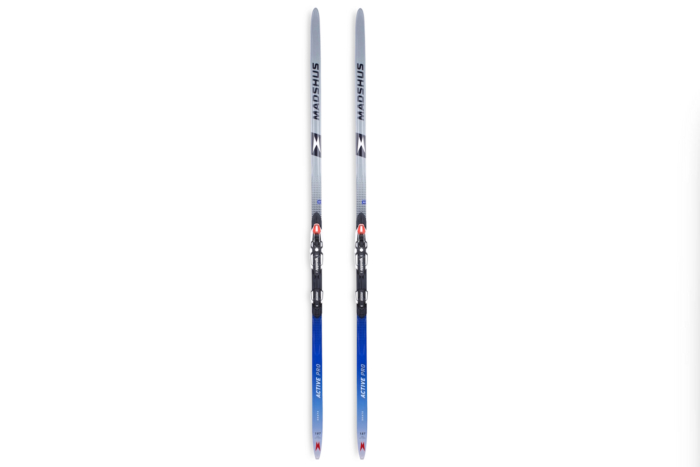
The Madshus Active Pro Skate Skis with Rottefella Performance Skate Bindings ($395) are interesting skis. The skis reward good technique, feel fast, and are stable at high speeds and sharp turns.
The stiffer and more durable construction feels solid in hand but does not provide versatility underfoot. We found the rounded edge to require a good bit of pressure to hold a bite when transferring weight. This made the ski feel heavier and less agile than other skate skis we tested.
These skis shine on hard-packed snow where you can V2 on flat or rolling terrain for miles. We struggled in softer conditions and on tighter, more technical trails. If you’re a beginner or intermediate skier looking for a more agile and fun ski at the same price, we recommend trying the Salomon RS8.
The Madshus sizing system indicates skier height over the traditional skier weight. This made it challenging to find the correct size ski. According to this sizing system, this ski lacks lengths for shorter skiers.
The Madshus Active Pro is a one-flex-fits-all ski. We found these skis to feel heavy and stiff on the feet. A stiffer flex might benefit advanced skiers, but beginner skate skiers may want a more forgiving ski to get started. This would be a good choice if you’re looking for a reasonably priced stiffer ski for all conditions.
Specifications
Pros & Cons
Pros
- High-performance ski
- Excels across variable conditions
- Lightweight
Cons
- Challenging for beginners
- Expensive
- Bindings not included
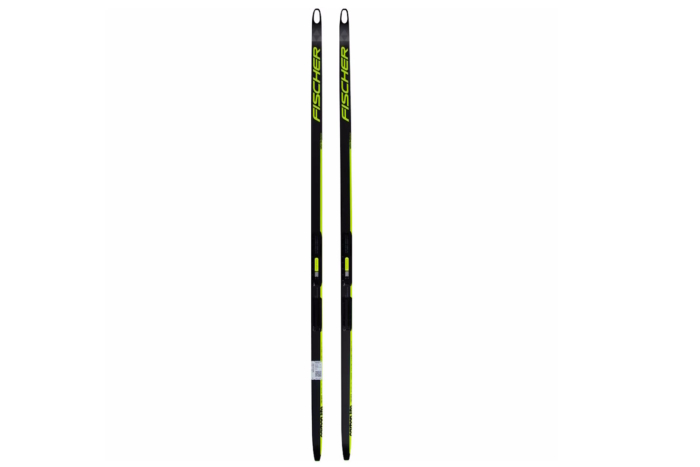
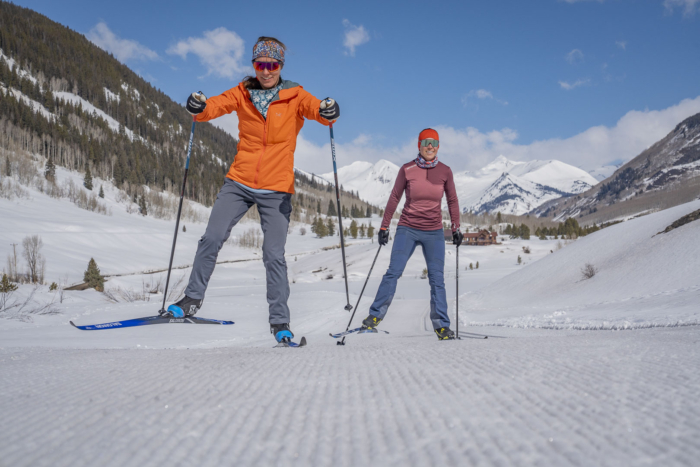
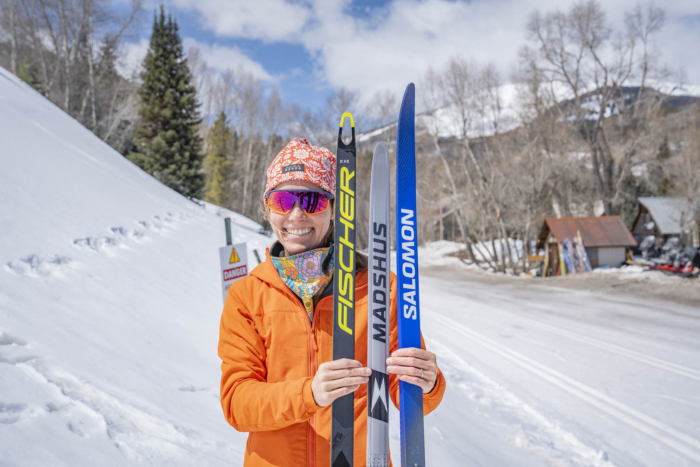
The Fischer Carbonlite Skate Plus Medium ($675) is the most advanced ski we tested. This ski bridges the gap between intermediate and race gear. If you’ve spent some time on skate skis and you’re looking to expand into the race market or up your game, these are a great choice without paying a premium price for a true race ski.
Fischer extends its patented cold base bonding introduced on its high end Speed Max race lineup to the Carbonlite series. This technology improves wax absorption, which keeps your wax choice working longer throughout the day. We tested these skis on a 42k race. The lightweight race-ready design rewarded good technique and limited fatigue over long distances. We found an efficient glide with pre-race wax even at the end of a long day.
The carbon fiber top coat finish keeps these skis super light while providing enhanced durability. The gliding sidewall construction allows a professional waxer to get wax on the gliding edge of the ski (we found this challenging to do on our own). An intermediate skier might not notice a performance difference, but we did like the slanted shape of the edge. With some practice, we found benefits in extended glide.
Unfortunately, they do not come with bindings, but they are compatible with any NNN, Turnamic, or Prolink compatible binding. For beginner skiers, we found the camber and balance of the Salomon RS8 to provide an easier introduction to skate skiing. With some technique basics under your belt, the Fischer Carbonlite Skate is a great choice or upgrade for someone looking for new gear.
Best Cross-Country Skis Comparison Chart
| Model | Price | Best For | Track Compatibility | Grip Type | Metal Edges | Bindings |
| Rossi Delta Comp R Skin | $480 | Fitness / Training | In-Track | Skin | No | No (Plate) |
| Fischer Aeroguide 85 | $470 | Skate Skiing | Skate Lane | Smooth | No | Yes |
| Rossignol Evo XT 55 | $270 | Budget / Beginner | In-Track & Light Off-Trail | Fishscale | No | Yes |
| Fischer S-Bound 98 | $449 | Backcountry Tour | Off-Trail | Fishscale | Yes | No (Flat) |
| Rossignol XP 105 | $430 | Deep Powder | Off-Trail | Fishscale | Yes | No (Flat) |
| Atomic Pro C3 Skintec | $430 | Everyday Cruising/Groomed | In-Track | Skin | No | Yes |
| Fischer Spider 62 | $369 | Light Touring | In-Track & Light Off-Trail | Fishscale | Yes | Yes |
| Salomon RS 8 | $370 | Intermediate Skate | Skate Lane | Smooth | No | Yes |
| Madshus Panorama M78 | $388 | Off-Track Tour | Off-Trail | Fishscale | Yes | No (Flat) |
| Fischer Twin Skin Cruiser | $339 | Recreational Classic | In-Track | Skin | No | Yes |
| Rossignol BC 80 | $400 | Versatile Touring | Off-Trail | Fishscale | Yes | No (Flat) |
| Madshus Active Pro Skate | $395 | Intermediate Skate | Skate Lane | Smooth | No | No (Plate) |
| Fischer Carbonlite Skate | $675 | Race Skate | Skate Lane | Smooth | No | No (Plate) |
How To Read This Chart
Best For
Matches the ski to your goal. “Groomed Classic” means sliding in cut tracks at a Nordic center. “Backcountry Tour” means exploring unplowed roads or woods. The rest of the categories are fairly self-explanatory.
Track Compatibility
In-Track: Narrow enough (<65mm) to fit in groomed slots.
Off-Trail: Too wide for tracks; designed for fresh snow.
Skate Lane: For the wide, flat groomed zone (not the tracks).
Grip Type
Skin: Silent, fast gliding, better for hard-packed snow.
Fishscale: Noisy but reliable; zero maintenance and grips well in soft snow.
Smooth: Found on skate skis only; requires glide wax and technique to move.
Metal Edges
A “Yes” means the ski has steel edges like a downhill ski, providing essential braking power on icy backcountry descents.
Bindings
Some skis come as a package (Yes), while others are sold “flat” (No), meaning you must buy bindings separately — a hidden cost to watch for. No (plate) means they come with a mounting track, but no binding.
How We Tested Cross-Country Skis
Our Expert Testers
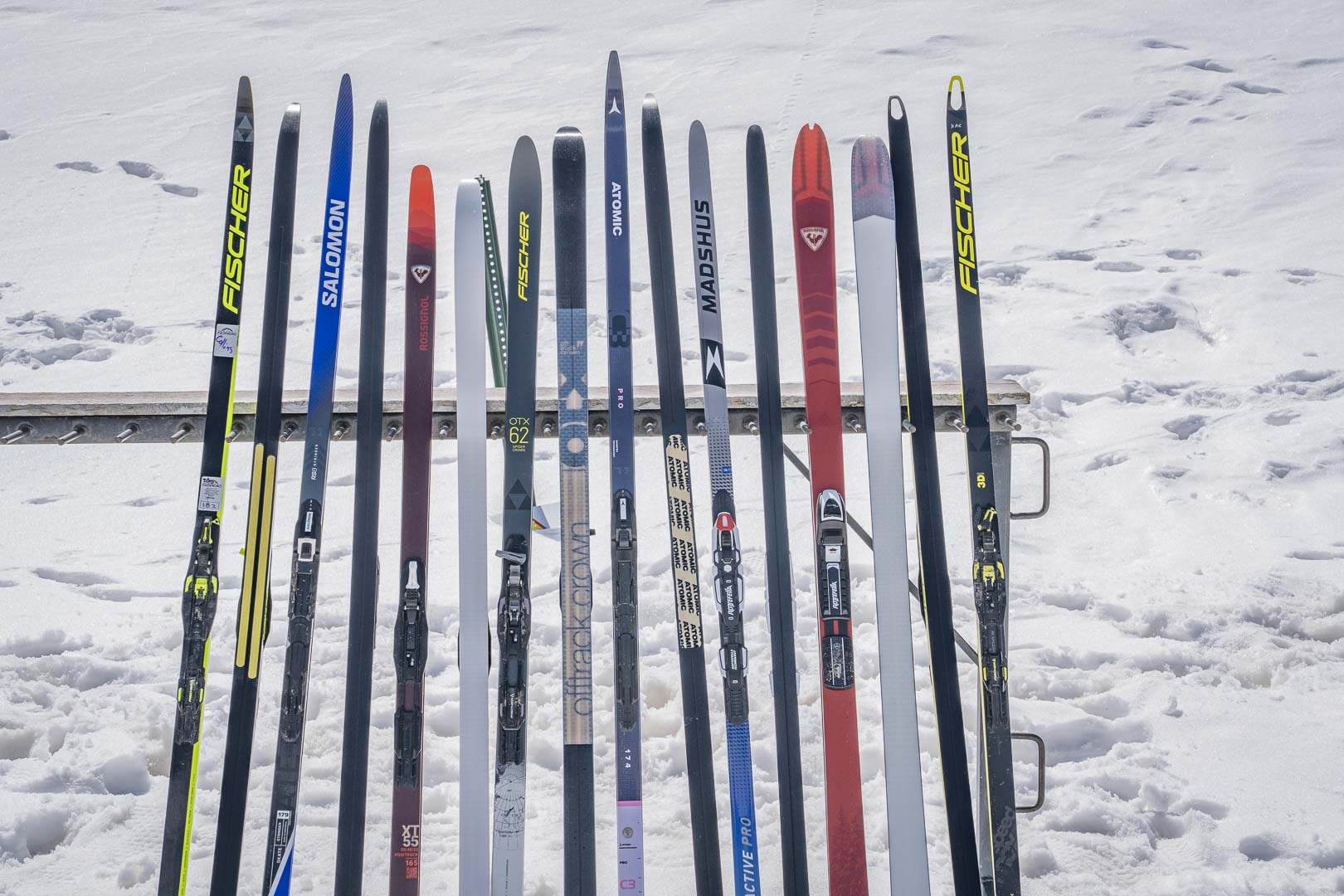
Our expert group of testers all work in the cross-country ski industry year-round. They are passionate winter people who love to geek out about ski stats, conditions, terrain, and the nuances of good wax. They have been skiing for a combined total of 57 years, with experience ranging from former college racers to PSIA-certified classic and skate instructors to endurance athletes who got started on cross-country skis later in life.
Our lead tester, Kylie Collins, has been cross-country skiing for over 15 years. She began in New England in college and has continued through the mountains of Colorado. She’s tested over 20 pairs of skis, including the nine best picked for this guide, in all kinds of conditions for pleasure, training, and racing. She now works year-round in the cross-country ski profession for Crested Butte Nordic and skis almost every day in the winter. Editor Chris Kassar and gear tester and Nordic ski guide Ryan Kempfer also added their expertise and passion for Nordic skiing to this guide by testing many of these skis in and around their home of Jackson, Wyoming.
Our Testing Grounds & Process
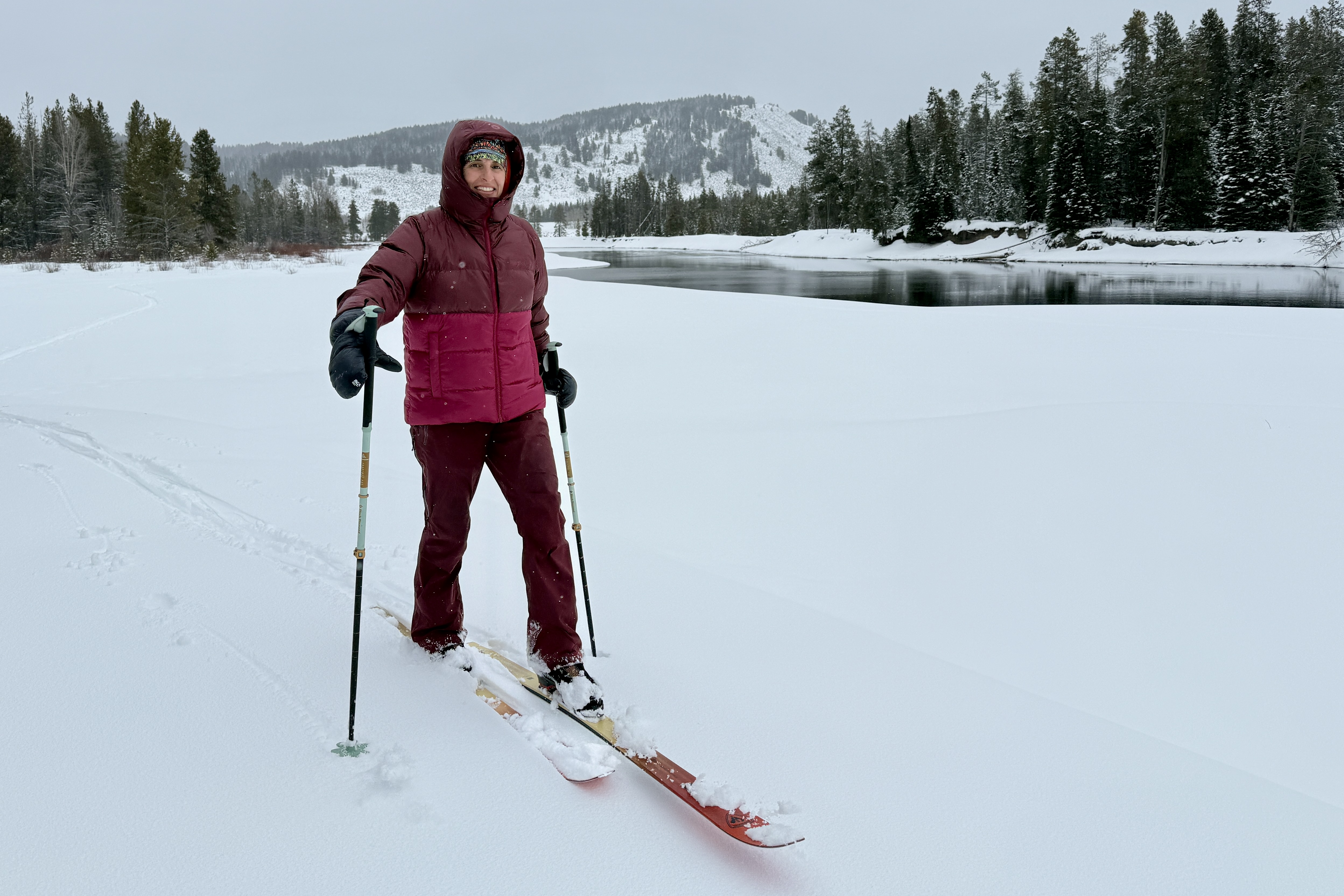
We put these skis through the ringer in Wyoming’s Teton Range, in Colorado’s Elk and Sawatch Mountains, and all over Grand Mesa. First, we tackled early-season groomed trails and continued testing through a full season of backcountry exploration in all the challenging terrain that Crested Butte and the Tetons offer. We also tested in variable spring conditions both on and off the trail. Each ski was tested at temperatures ranging from well below zero to 45°F.
We paid close attention to performance across this range of conditions, including glide, weight, stability, agility, and, of course, fun factors. This gave us confidence in each ski’s ability to tackle flats, uphills, and downhills across various conditions and temperatures, as is only natural through a full season of cross-country skiing. We tested these skis at all hours of the day, on full moon skis with friends, and even jumped into a few local races.
Together, we’ve skied nearly every brand of ski on the market, and these are our favorites for beginner and intermediate skiers. If you’re looking to go further into the mountains, check out our guide to the best backcountry skis and best backcountry bindings. If you’re looking for accessories to complement your Nordic adventures, check out our guides to the best face coverings for skiing & snowboarding, the best gloves for skiing, and the best base layers for women and men.
Our Cross-Country Ski Rating System
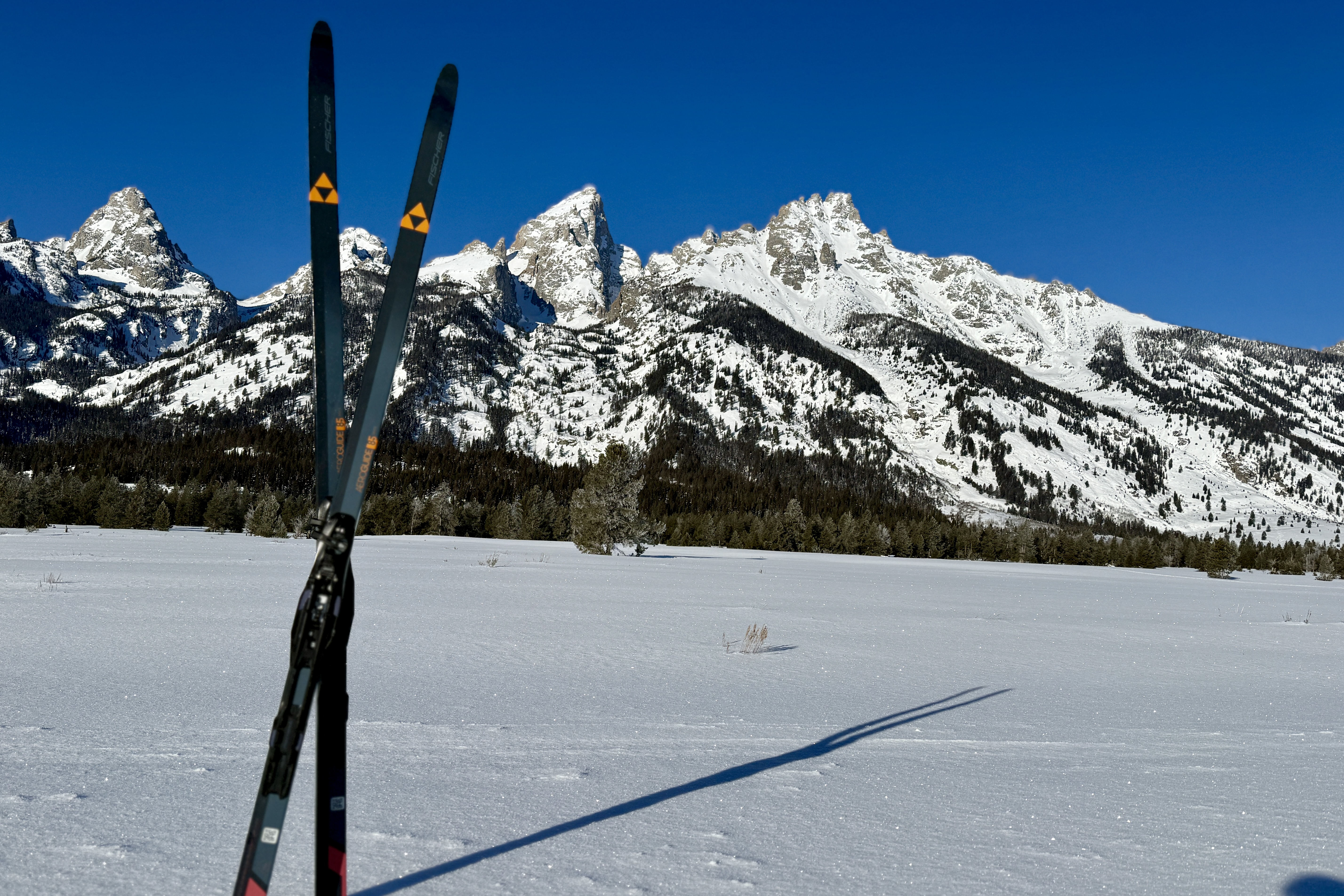
We scored each ski in five independent categories based on design, construction, and how it performs in real-world conditions. Value considers performance relative to price, factoring in durability and versatility. Traction rates the ski’s grip on climbs and in varied snow, whether from a waxless pattern, skin inserts, or edge hold. Weight evaluates how light and efficient the ski feels underfoot for its category, especially on long tours. Performance measures glide, stability, responsiveness, and handling in the conditions it’s designed for.
Note: Overall reflects how well the ski meets its intended purpose for its target skier. This number is not an average — a ski can score high overall even if one category is lower, depending on its strengths and intended use.
Buyer’s Guide: How to Choose the Best Cross-Country Skis
Getting into cross-country skiing can feel daunting. There are wildly different disciplines, all kinds of gear, and many different styles of trails. The following tips will help you pick the right gear for your goals and experience.
Choosing Cross-Country Skis: Which Style Is Right for Me?
Nordic skiing breaks down into classic, skate, and touring styles.
Classic and touring skis are similar in that they require a forward-and-back striding motion to move the skier forward. The skis are kept parallel and use traction on the bottom (wax, fish scales, or mohair skins) to grab the snow and reduce backward motion.
Classic skis are meant to fit in parallel tracks on a groomed trail. Touring skis are wider and meant for use off groomed trails. Many classic skis can be used off-trail. Some touring skis have metal edges for better grip and stability off-trail and in variable conditions.
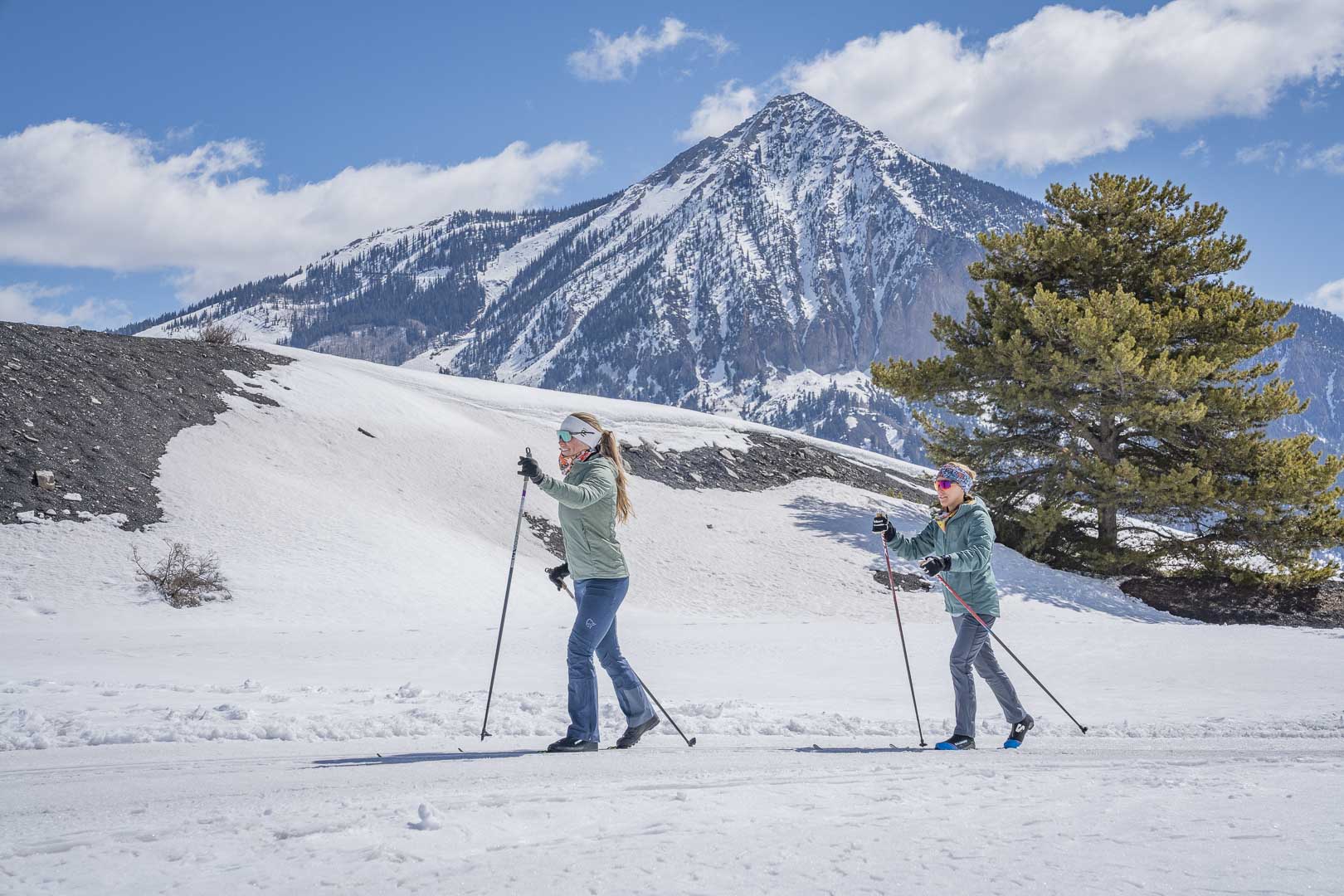
Skate skis work with a sideways push-off motion, similar to the look of a speed skater. The skis move outward in a V or skating motion. Skate skis are meant for groomed trails on the flat corduroy section next to, and wider than, the classic tracks. If you’ve downhill skied before, you’ve probably skated up a slight uphill. The motion is similar.
Classic skiing can feel more approachable for someone new to cross-country skiing or someone who has never been on skis before. The motion is more like walking. True classic technique is a lifelong sport and truly beautiful to watch.
If you want to get into classic skiing for more than just a social ski, we recommend taking a lesson or jumping into a clinic to learn some of the basics and avoid bad habits. We recommend the Atomic Pro C3 Skintec or Rossignol Delta Comp R Skin for classic skis that will work for beginners and grow with you as your technique improves. If you want to venture off the groomed trail, we recommend the Fischer Spider 62 Crown for its versatile touring capabilities. However, if you’ll spend most of your time off-piste, check out our top pick for off-trail exploration, the Fischer S-Bound 98 Crown/Dual Skin Xtralite.
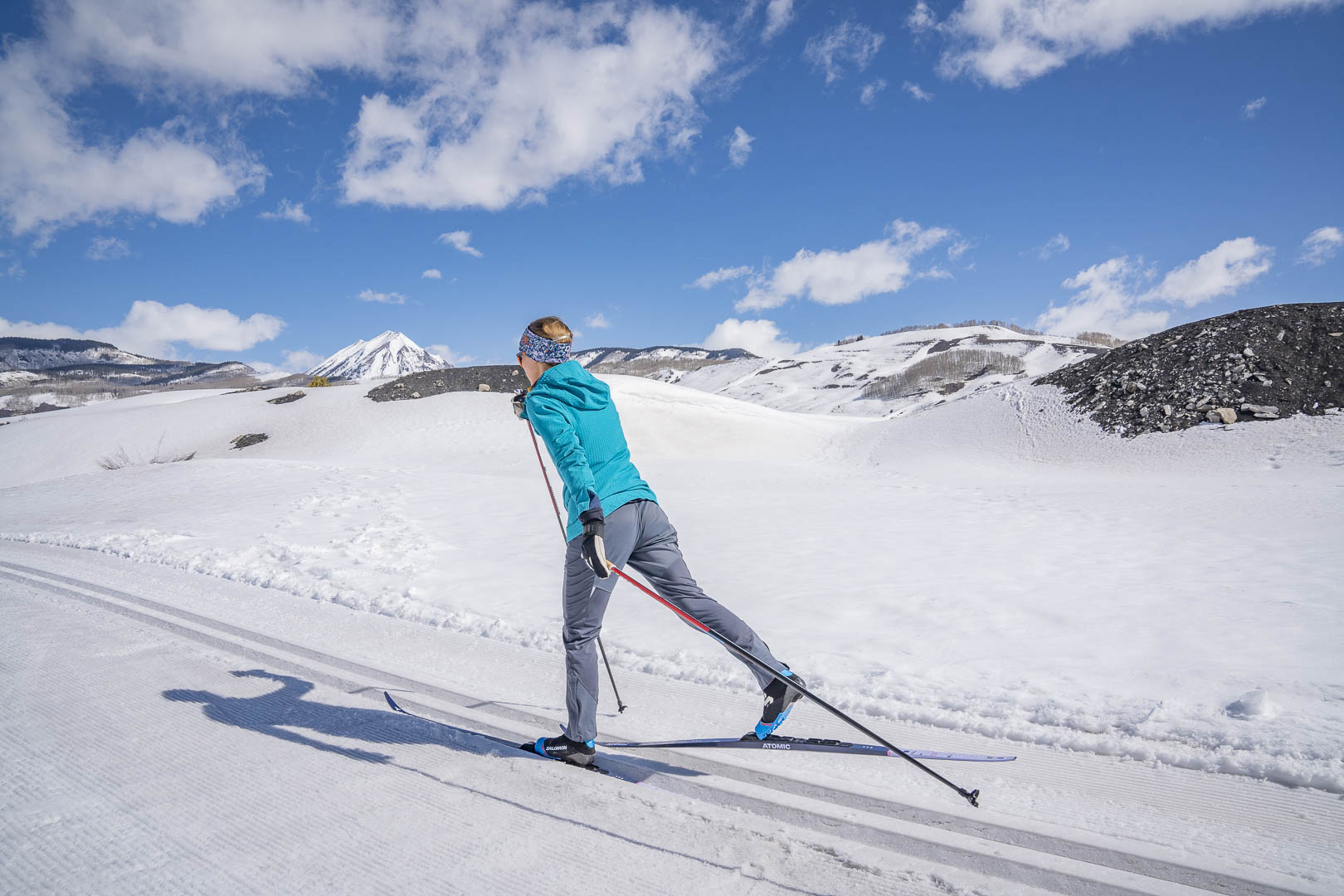
Skate skiing is aerobically challenging, especially in the beginning. It requires more fitness and balance than classic skiing but is still very approachable for a moderately athletic beginning and will feel more natural if you’ve been on downhill skis before. We recommend the Salomon RS8 Skate for beginners or the Fischer Carbonlite Skate Plus if you want to upgrade your gear.
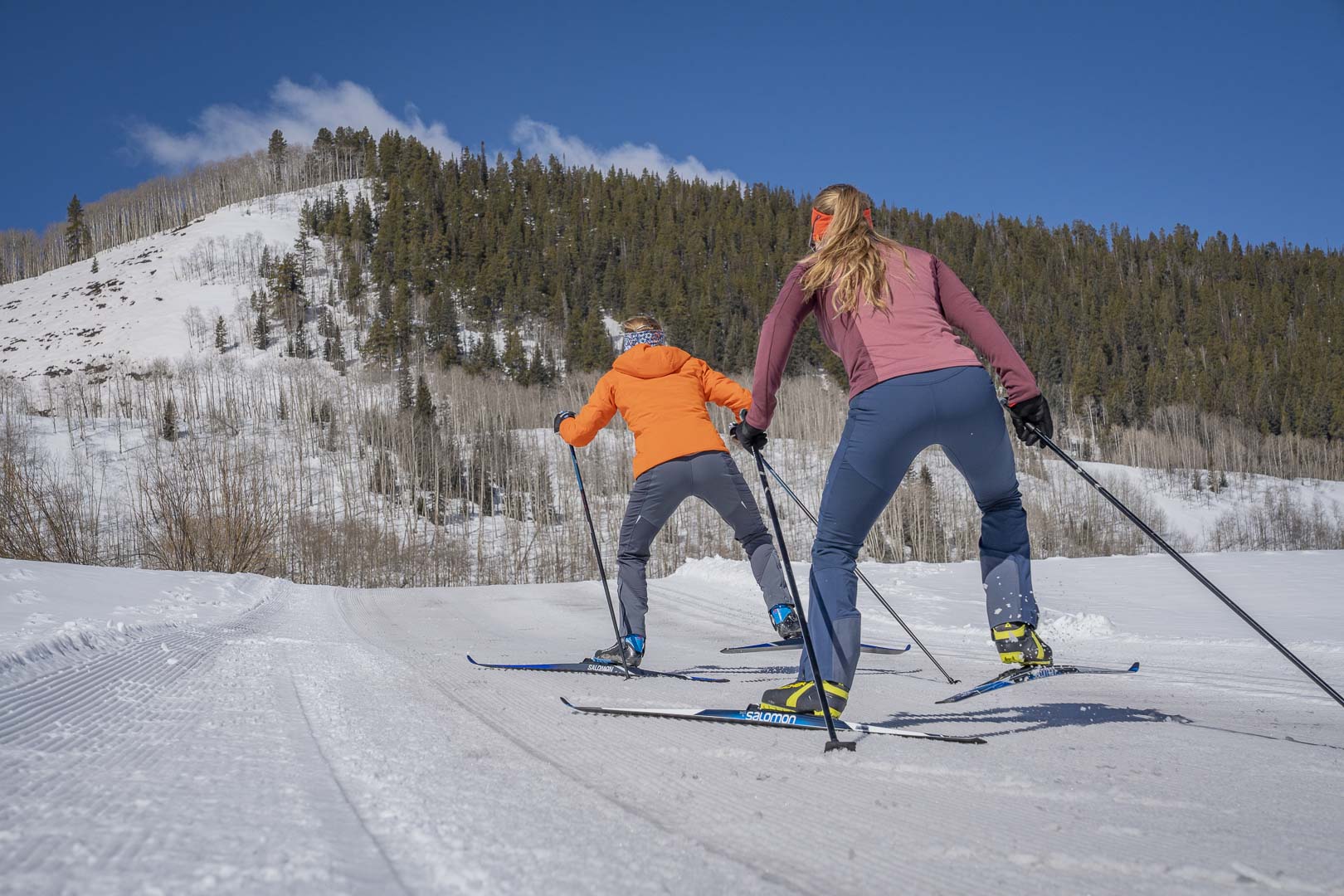
Many websites lump backcountry skis and cross-country skis together, but they have very little in common. So, we’re not including any backcountry skis (which use different boots and bindings and focus on downhill performance) in this article. However, if you prefer this discipline, check out our guide to the best backcountry skis.
Location
Where you expect to use the skis is very important. If you plan to ski on groomed trails at a Nordic center you will probably need to purchase a pass. Classic skiing in groomed tracks generally requires skis that are 65mm wide or less. The Atomic Pro C3 Skintec and Rossignol Delta Comp R Skin are all great skis for groomed trails.
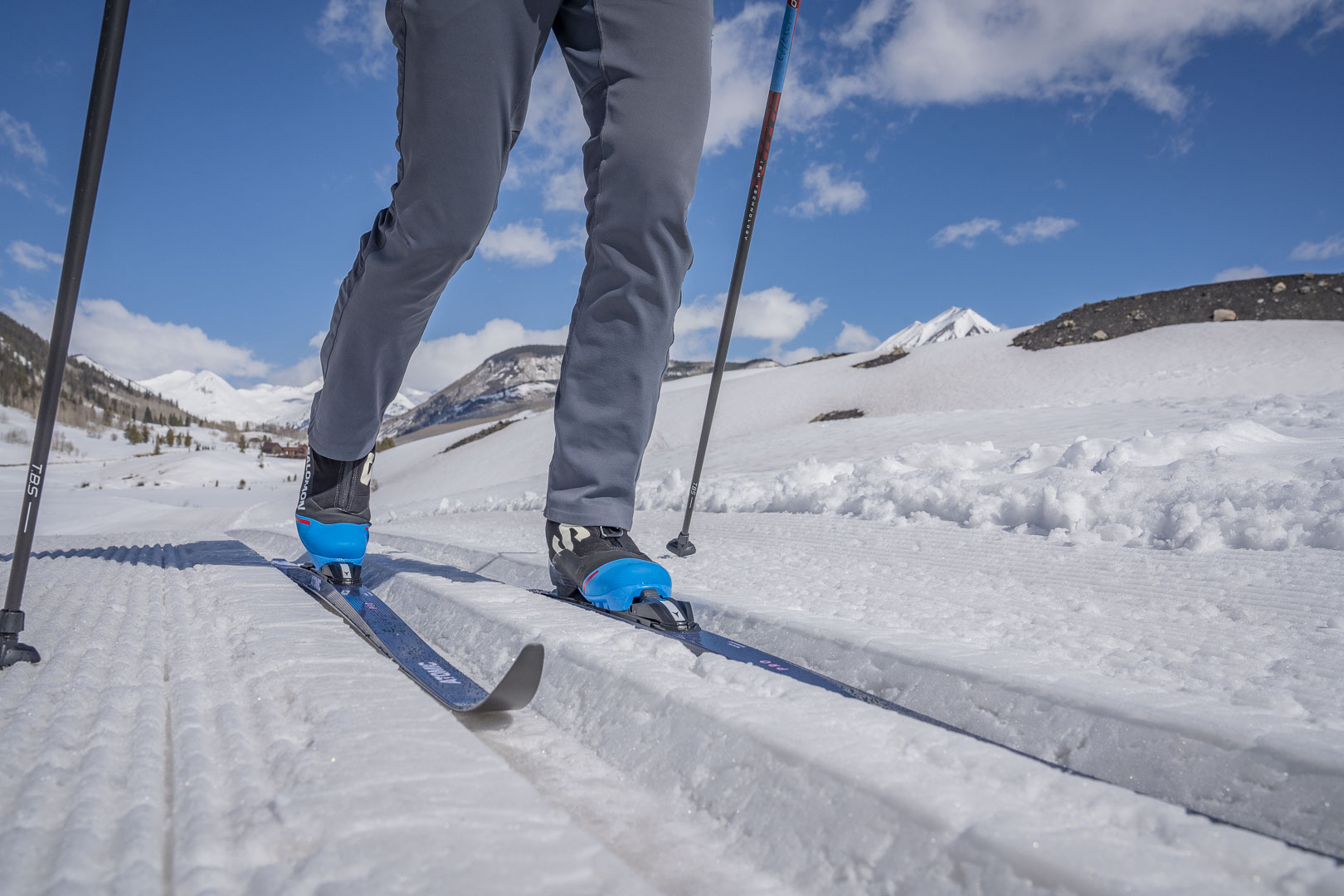
Groomed Nordic trails are also the place for skate skis. If you’re lucky, crust skiing in the spring will expand the locations where skate skis are capable. The Salomon RS8 or the Fischer Carbonlite Skate Plus are both great choices to hit the trails.
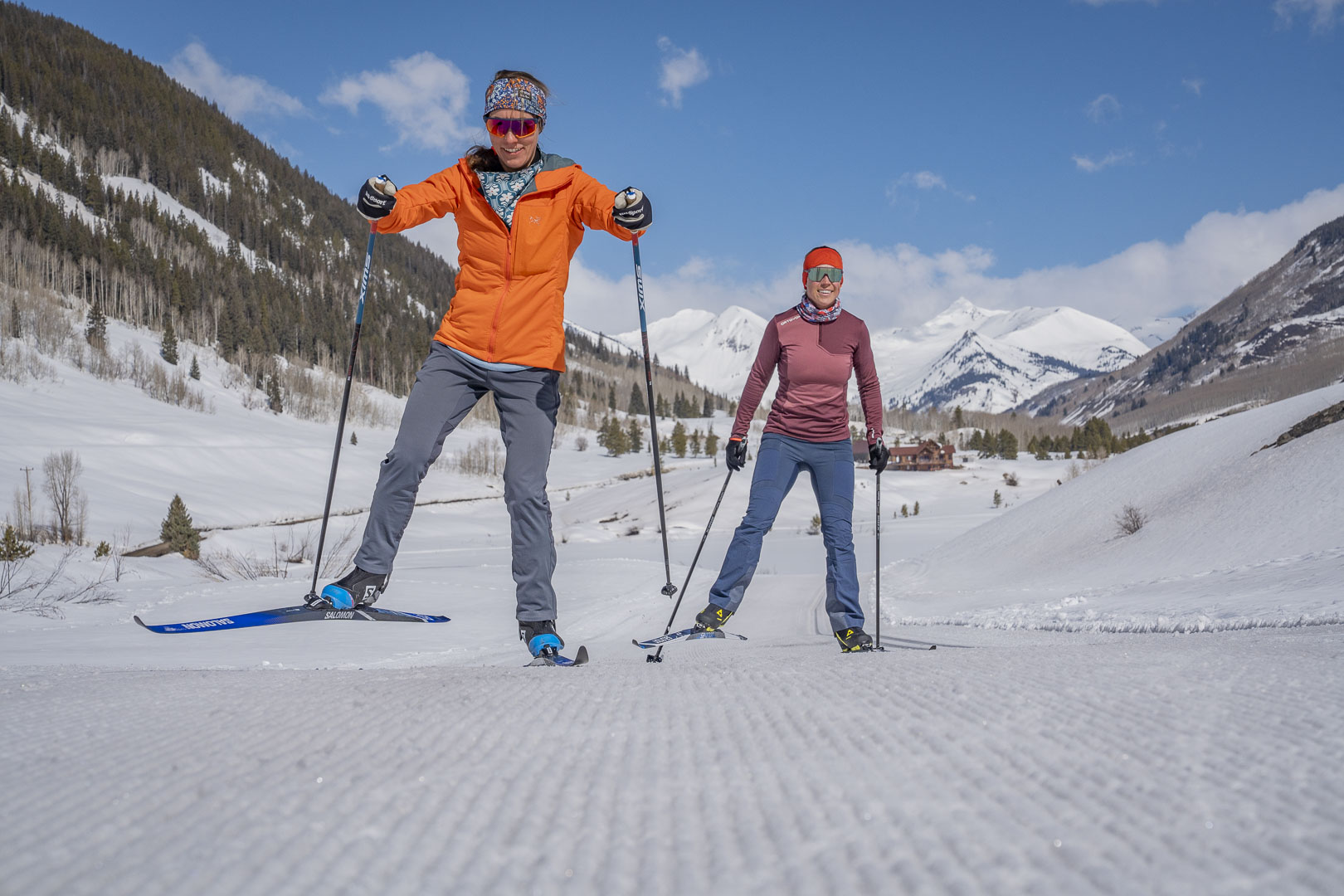
If you plan to ski more socially on dog or walking trails, you can consider wider classic skis or touring skis (though any classic skis will also work). We highly recommend the Rossignol Evo XT Positrack 55 or Fischer Spider 62 Crown for their versatility. Though the Rossignols don’t have metal edges, both skis are shorter and wider and excel on and off the trail.
If you plan to explore off-trail and untracked locations, you might consider a shorter, wider ski with metal edges to aid in mobility, flotation, and confidence in powder and on downhills. We suggest the Madshus Panorama M78 Skis for its excellent performance off-trail. The Rossignol BC 80 Positrack is also a heavy-duty option that requires specialized boots.
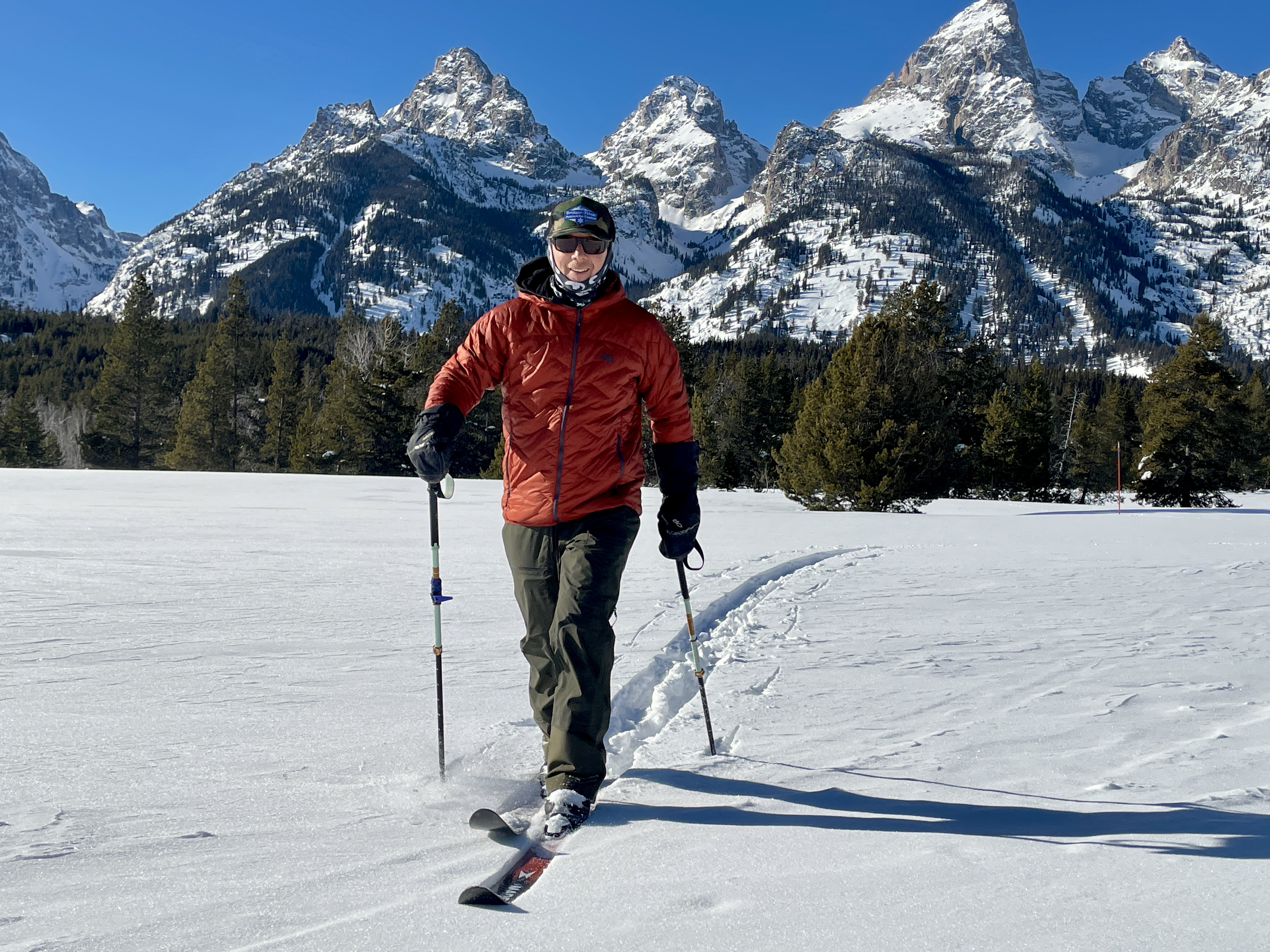
Besides ski choice, location is extremely important for safety. Nordic Centers generally groom in avalanche-safe terrain. However, be sure to check a center’s daily trail report and adhere to any warnings and trail closures.
If you choose to adventure in a backcountry environment, consider an avalanche awareness class, check the avalanche report before you head out, know your terrain, carry a beacon and ski with friends, and always tell someone where you’re going.
Traction
Since cross-country skiing includes traveling across uphill, downhill, and flat terrain, the bases employ different forms of traction to keep the skier moving forward.
Skate skis have a smooth base that helps skiers keep momentum going forward with a skating motion. Wax application on skate skis increases glide and can be tailored to specific temperatures and conditions. A recreational skier might not need to apply wax for every outing; however, temperature-specific wax will always improve performance. In the skate division, we tested the Salomon RS8 Skate, Fischer Carbonlite Skate Plus, and the Madshus Active Pro.
Classic skis have three methods of traction to decrease backward glide. Since skiers use a kick motion to push off, they need some resistance to keep forward momentum.
Wax skis are still the gold standard for experts. Wax can be tailored to every temperature and condition, but kick wax needs to be applied every time you head out the door. We did not test any waxable skis in this guide as it is tailored for the beginning and intermediate skier.
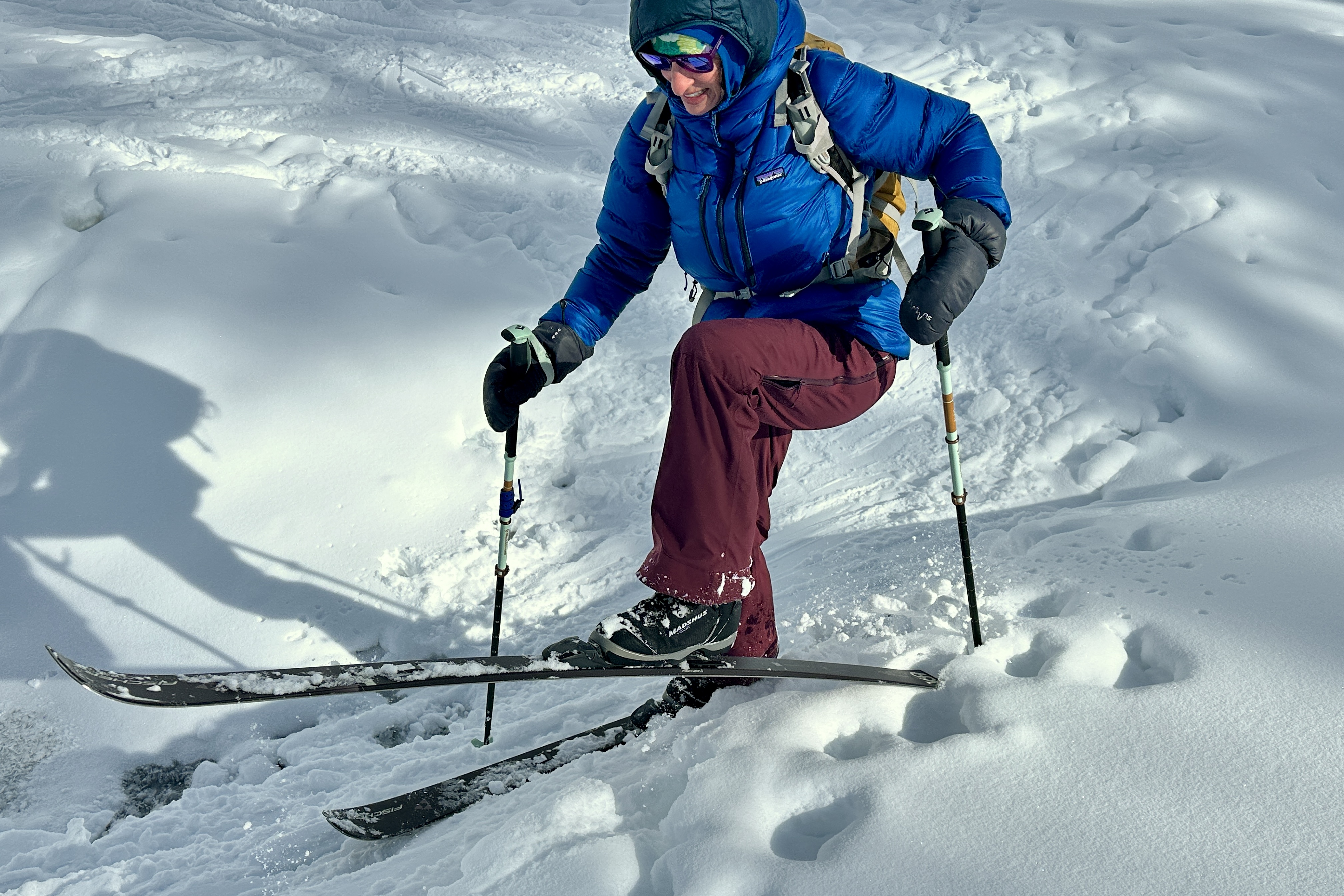
Waxless skis are now popular for skiers who want to spend less time at the wax bench or are just getting into the sport. Some classic skis use fischales for traction, like the Fischer S-Bound 98 Crown/Dual Skin Xtralite, Madshus Panorama M78 Skis, Rossignol Evo XT 55 Positrack, Fischer Spider 62 Crown, and Rossignol BC 80 Positrack. The fish scale pattern is effective, grippy, and popular.
Other classic skis use mohair skin inserts like the Atomic Pro C3 Skintec, Rossignol Delta Comp R Skin, and Fischer Twin Skin Cruiser EF. Skins are a soft fabric that grabs the snow for traction. Skins are faster than fish scale pattern bases. They are great for intermediate skiers or a patient beginner. They also require minimal maintenance and versatility with easy replacements.
The Rossignol BC 80 Positrack also has tip notches for backcountry skins for increased grip on steep and challenging terrain.
We use the word waxless to describe the fish scale and skin classic skis. This means that the kick zone (the grip zone underneath the boot) does not need condition-specific wax to provide traction. The tip and the tail should still be given a good dose of glide wax to maintain speed and provide hydration to the base of the ski.
Additionally, if the fish scale skis start to dry out (take on a white color), they will need the occasional base wax. We recommend an easy liquid wax like Toko Express or Swix F-4. These are very easy to apply with a shoe polish foam applicator. Then, just buff them with a towel.
Find the Right Fit
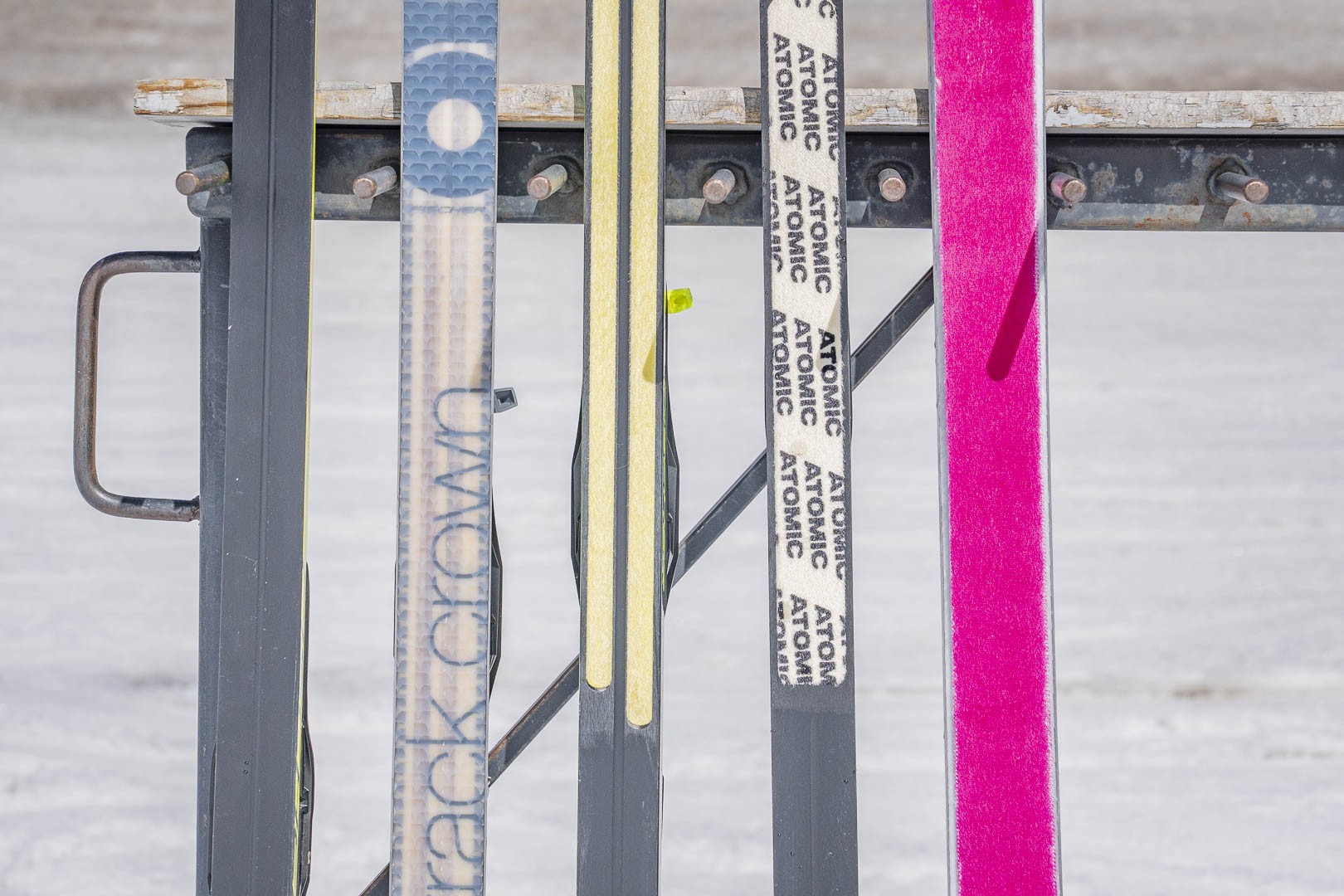
Fit is critical. Unlike downhill skis, cross-country ski length is based on the skier’s weight instead of height. The ski doesn’t know how tall you are but knows exactly what you weigh. As you step on the ski, the camber or bend of the ski depresses and makes contact with the snow. The correct amount of depression will ensure you have grip and glide for both classic and skate techniques.
Cross-country skis also come in a range of flexes. Skis that are too soft will feel unstable, especially on downhills. Skis that are too stiff will not make contact with the snow and feel slippery. A more advanced skier may look for a stiffer ski for efficiency, while a beginner skier may look for a softer ski for increased grip and forgiveness. A more advanced skier may use snow conditions to choose ski flex.
Fortunately, it’s easy to know which skis to buy. Each ski brand publishes a size chart specific to its quiver of skis, which advises on ski length and flex based on the rider’s weight and ability.
Boots
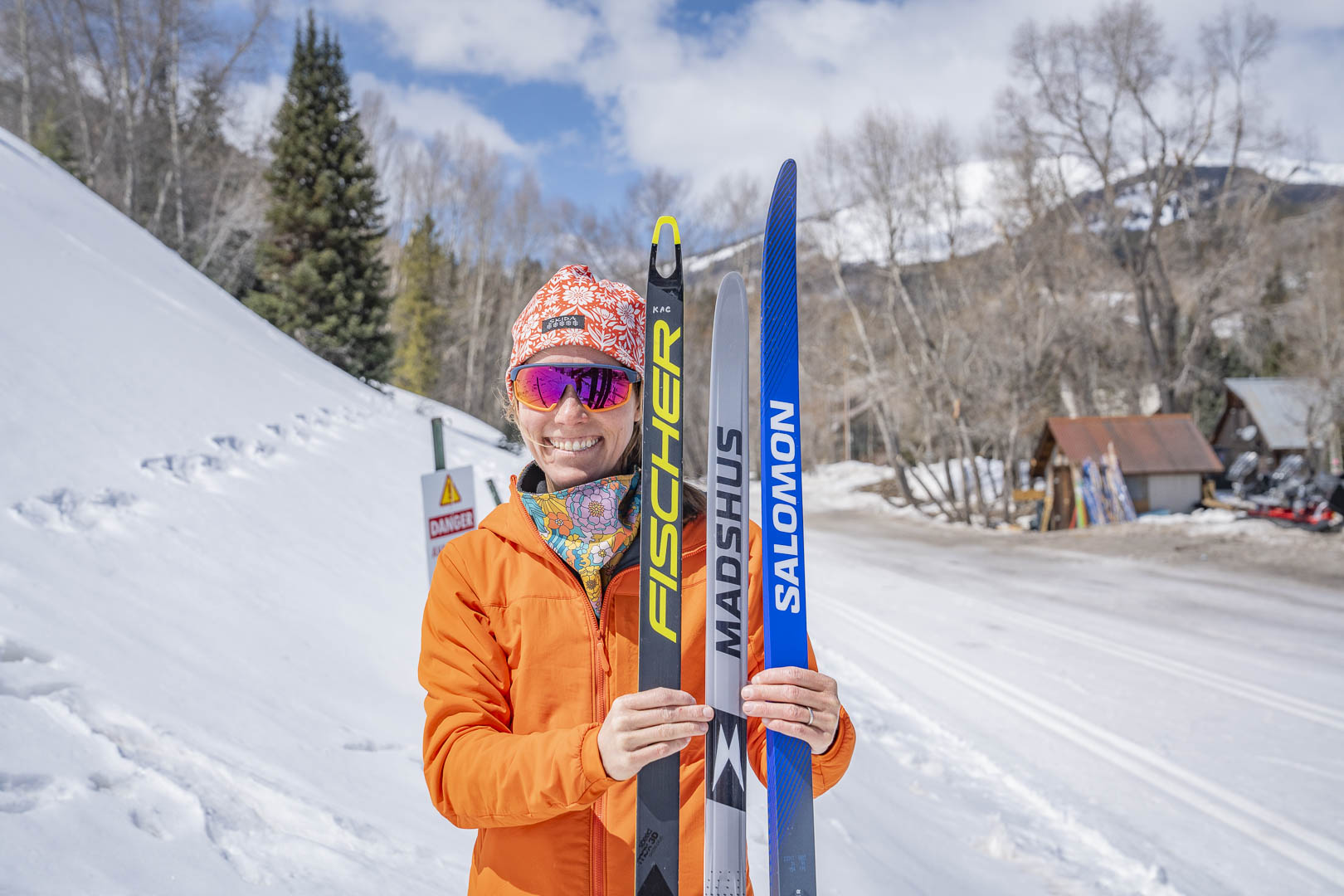
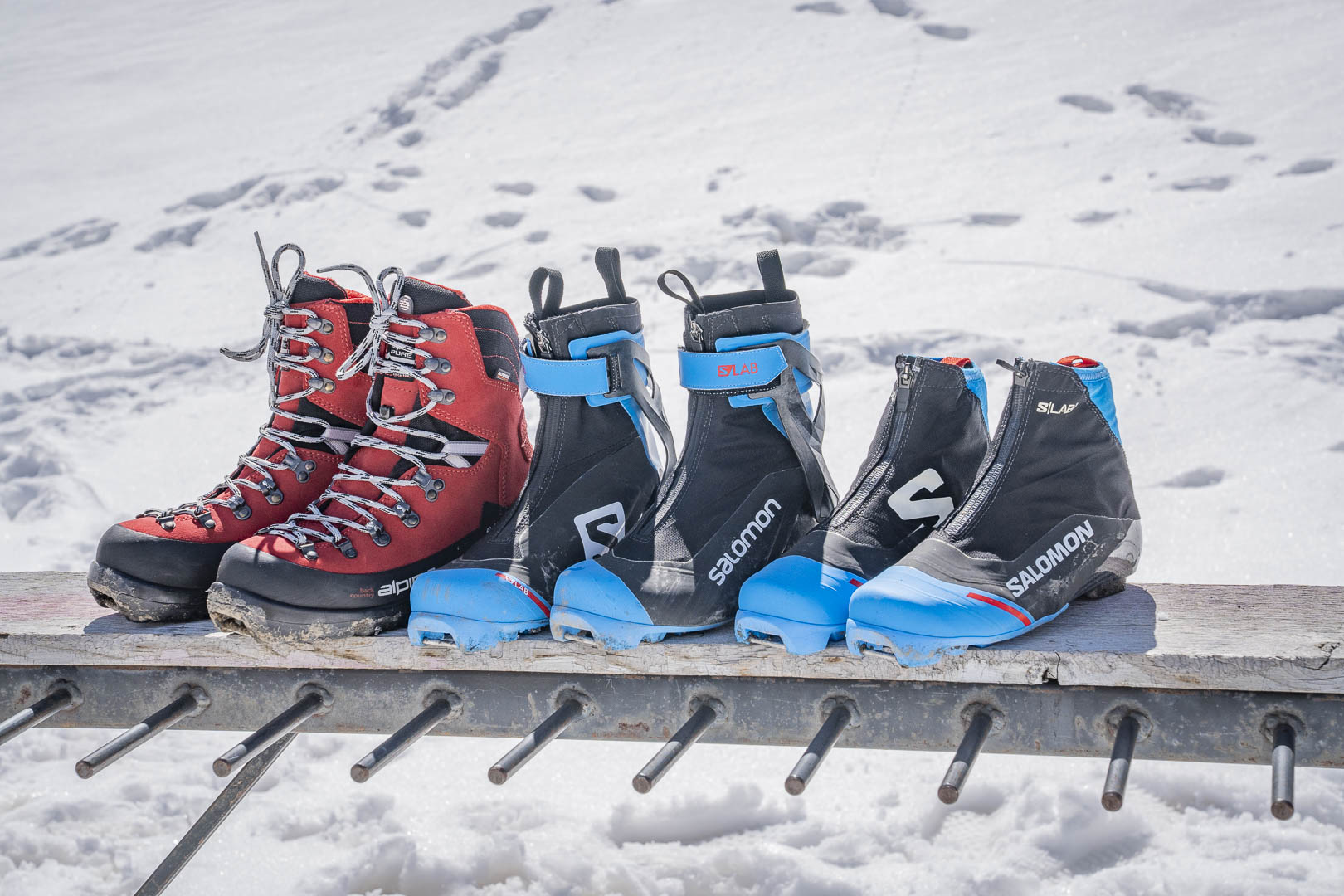
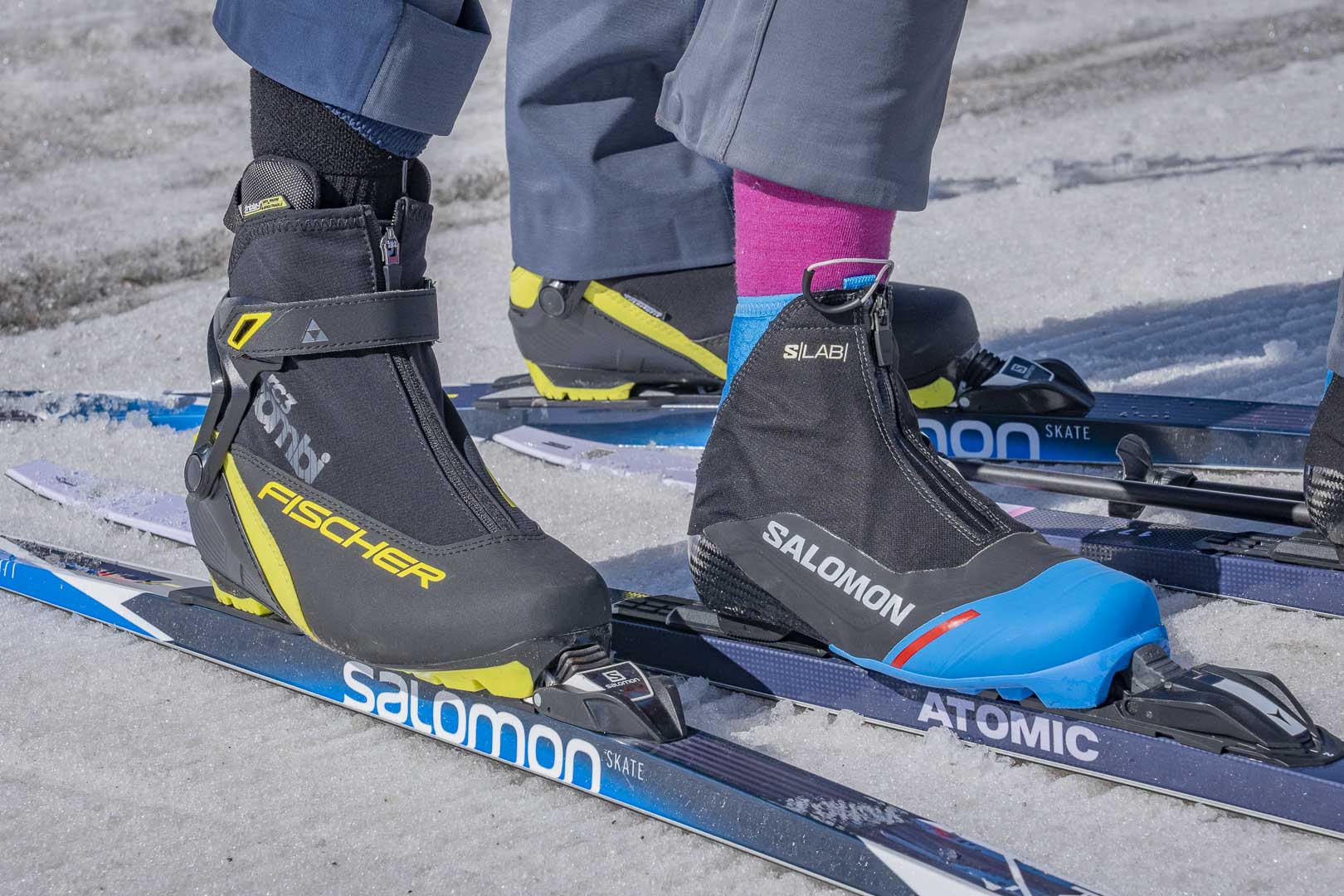
There are classic, skate, and combi boots on the market. A classic boot has minimal ankle support because skiers move forward and backward. A skate boot has increased ankle support to help the skier with the sideways skating motion.
A combi boot is a mix of the two and will work well for skiers who enjoy both disciplines but only want to own one pair of boots. Most classic skate and combi boots on the market are NNN compatible and will work with all NNN bindings — Turnamic, NIS, NNN, and Prolink.
If you are skiing a touring ski with an NNN BC binding, you will need an NNN BC-specific boot. These boots are often more like hiking boots, with a wider and thicker toe bar. They are meant for long days out instead of performance. There are also three-pin backcountry boots on the market that use a telemark binding.
Salomon used to manufacture two models of SNS boots and bindings. This system was different from the current NNN (New Nordic Norm) system. The SNS system is no longer sold, however you may find SNS equipment if you buy used equipment or visit a ski swap.
If you can spend a few extra dollars, midrange boots are a great choice. Their increased features will offer dividends in performance without sacrificing comfort.
Bindings
Many skis come with bindings. Check the manufacturer’s recommendation if a ski does not come with a binding. Most bindings and boots follow the NNN system (New Nordic Norm), but be sure to check for compatibility when purchasing. The Turnamic, Prolink, NNN, and NIS systems are all NNN compatible.
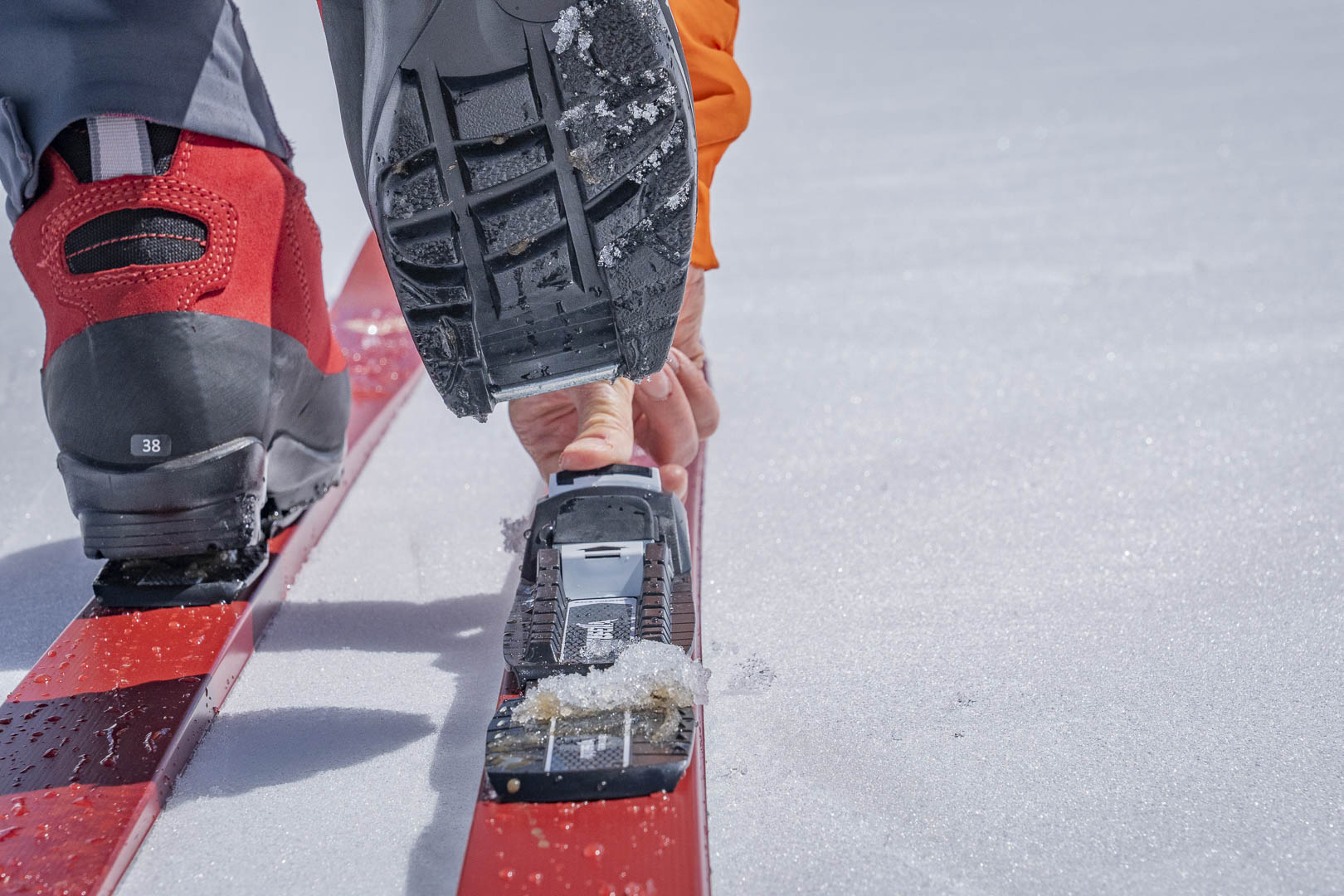
NNN bindings attach to the ski on a pre-mounted plate. The bindings are adjustable for the skier’s ability, preference, and conditions. For a classic ski, moving the binding forward will increase grip, while moving the binding backward will increase glide. For a skate ski, moving the binding forward will increase control and stability, while moving the binding backward will increase speed and float on soft snow.
NNN BC bindings accept a single toe pin, similar to the NNN system, but the bar is wider and thicker. The increased stability allows skiers to ski with confidence off-trail and in challenging terrain. However, these bindings require a different boot.
Salomon used to make an SNS binding that required different boots, but they have phased out that model. You may still find the SNS system if you buy used equipment or visit a ski swap.
Poles
When purchasing poles, height is important. For skate skiing, a longer pole is required. The general formula is to choose a pole that is 90% of your height. This is usually just below your lower lip. For classic skiing, the general formula is to choose a pole that is 83% of your height. This is usually about shoulder height.
Shop Your Level
Don’t buy racing or expert-level equipment and hope to grow into it. High-end equipment requires high-end skiing skills. Intermediate gear is often a better choice if you want to grow into the sport. This is good news for the bank account!
Price & Value
The cross-country skis we tested range in price from $250 to $450, though higher-end skis may cost closer to $1,000. Many budget-friendly skis will serve beginners well and for many years. Price is not directly related to quality or durability, but rather advancements in ski technology more related to skill level.
For this reason, we don’t always recommend purchasing the most expensive ski your budget allows. Instead, think honestly about your skiing abilities and goals to pick the right ski.
Budget
Budget-friendly skis fall in the $250-300 price range. These skis typically include bindings, are forgiving in nature, and will suit beginner skiers well. There’s a steep learning curve to break into cross-country skiing for both skate and classic techniques.
Beginner-friendly skis will make the learning process more fun, whereas skis geared towards advanced skiers will often cause frustration. Though you might sacrifice a few ounces in weight, the benefits in ski stability and therefore confidence are well worth it.
Our budget pick for this guide was the Rossignol Evo XT 55 Positrack Cross-Country Skis with TURNAMIC Bindings. At just $270, these classic skis are fun, forgiving, and easy to learn on. The intentionally wider ski fits in standard classic tracks but provides increased confidence in both kicks and stability on the downhill. These skis are surprisingly light for the price and extremely durable. This is a great budget-friendly pick.
Mid-Tier
Spending a bit more on cross-country skis brings advances in technology, increased versatility, and often savings in weight. Mid-tier skis fall in the $300-400 range. Skis in this range are great for skiers of all abilities. Slight advances in technology over budget skis increases versatility to match a wider range of skier types. Mid-tier skis are a great choice if you’re looking for equipment to grow with you as your skills improve.
We love the Rossignol Delta Comp R Skin Medium for a great all-around classic ski in the mid-tier range. Priced at $350, these skis are still very affordable for a high-quality ski. The skin base offers more versatility than other fish scale bases if you’re looking for speed or a great workout. We recommend the Salomon RS8 with Prolink Pro Skate Bindings for a skate ski in this range. Priced at $360, these easy-to-ski skate skis are fun, fast, and a great choice for skiers of all abilities.
We also love the Fischer Spider 62 Crown Xtralite Cross-Country Skis with TURNAMIC Bindings. These skis are unicorns. Priced at $369, these classic fish scale skis with metal edges do it all. The narrower profile fits in most classic tracks, the metal edges and shaped tips and tail provide confidence in the backcountry, and the fish scale base is beginner-friendly. For a more backcountry-oriented ski in this range, you’ll want to pick up the Madshus Panorama M78 Skis ($390), which also have metal edges and a fish scale base. They don’t come with bindings, however, so you’ll end up in the $500 range after all is said and done.
Premium
We tested top-of-the-line skis in the $400-500 range. If you’re a beginner, the advances in ski technology may not be worth the additional spend. High-end technology requires and rewards proper technique, so these skis can feel frustrating for a beginner. However, if you’re already an intermediate skier and looking to stay in the sport, the additional spend and benefit in weight savings and new technology can be a game changer.
Many brands use their World Cup and race-specific technology in these premium-tier skis without all the bells and whistles of the very top-end, meaning you reap the benefits. This means a premium-tier ski may be identical to the top-of-the-line in weight savings, premium construction, and high-end core material. The only difference is often advancements in base quality, specifically wax absorption ability and therefore better glide performance.
In this premium range, we love the Atomic Pro C3 Skintec + Shift CL. Our overall best cross-country ski of the year comes in at $430. For this price, you’re getting a very high-quality ski, gender-specific sizing, interchangeable universal or race-specific skins, and a really fun ski. This ski can do it all. It performs well on fast flat intervals, provides a great kick on steep hill climbs, and tackles any conditions, from frigid mid-winter temperatures to spring mashed potatoes. The Fischer S-Bound 98 Crown/Dual Skin Xtralite ($449) is our top pick for off-piste touring. It climbs and descends well getting where you want to go in style.
Keep in mind that the Rossignol BC 80 Positrack Skis with NNN BC Bindings, priced at $450, are also in this category. These skis are highly specific to touring and require specialty boots, so their high price tag does not translate to a versatile ski.
If you love cross-country skiing, you have a good skill base, you’re working on your technique, and you want a pair of skis to last many seasons, this premium range has great options.
Frequently Asked Questions
Most beginning cross-country skiers will find more success starting on class or touring skis. The forward stride will feel more approachable. Experienced downhill skiers who would like to transition to cross-country skiing may be able to start on skate skis if they desire. However, skate skiing requires more athletic skill and balance to learn. We highly recommend a lesson or clinic if you’re headed out on skate skis for the first time.
Cross-country skis come in various lengths, but you should choose your ski length based on weight, not height. Almost all cross-country skis have a weight rating listed on the ski or wherever they’re sold.
Cross-country skis come in three main types: classic, touring, and skate. Telemark and backcountry skis have some similarities but are much more focused on the downhill portion of skiing, such as fast descents and powder turns. Those are outside the scope of this article.