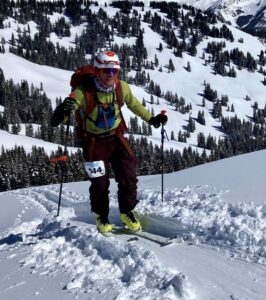
Chasing winter lines under your own power starts with the best backcountry bindings. The right backcountry ski bindings can make all the difference in how far you climb and how confidently you descend. Our testing crew — backcountry powder hounds Aaron Bible and Ryan Kemper — put bindings through the wringer on resorts, glades, steeps, and switchbacks across Colorado and Wyoming.
From the Tetons to the Rockies, we skinned up and skied down in every snow condition imaginable to pinpoint the best options for every style and budget. Whether you want the all-around versatility of the Salomon MTN Pure or the value-packed performance of the Dynafit Seven Summits, these picks will keep you climbing higher and skiing harder all season.
Editor’s Note: We updated this guide on February 5, 2026, by adding the Atomic Backland Tour, a simple, highly reliable touring binding built for consistent, predictable performance. We completely revamped our buying advice to make it simpler and refreshed the comparison chart , awards and ratings to make them more helpful.
The Best Backcountry Ski Bindings of 2026


Salomon MTN Pure/ATomic Backland Pure

Specifications
Pros & Cons
Pros
- Very light
- Durable
- Easy to click in toe
Cons
- DIN may not be high enough for aggressive riders
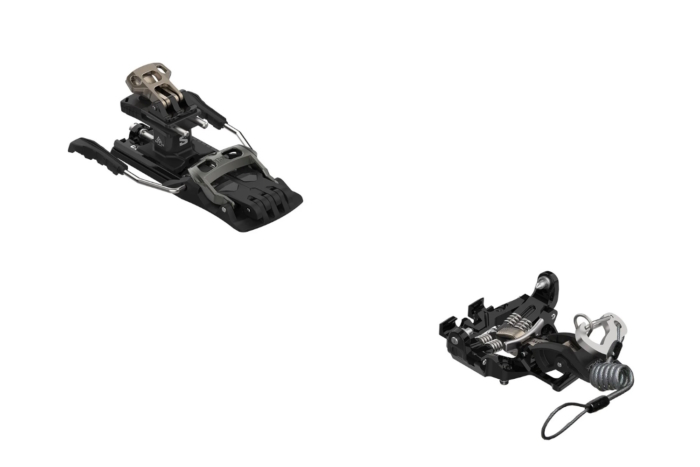
The Salomon MTN PURE ($680) isn’t just a great new option; it is hands down one of the best touring bindings we’ve ever used. (Note: It is also sold as the Atomic Backland ($630). It strikes the perfect balance, delivering lightweight uphill efficiency without sacrificing the safety and reliability that aggressive skiers often find missing in speedy tech bindings.
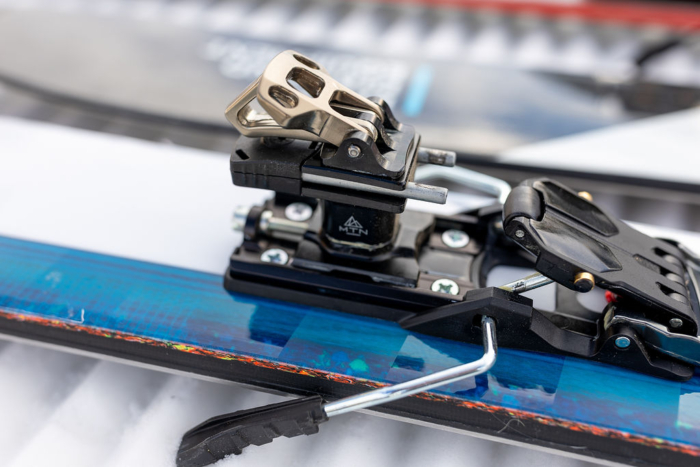
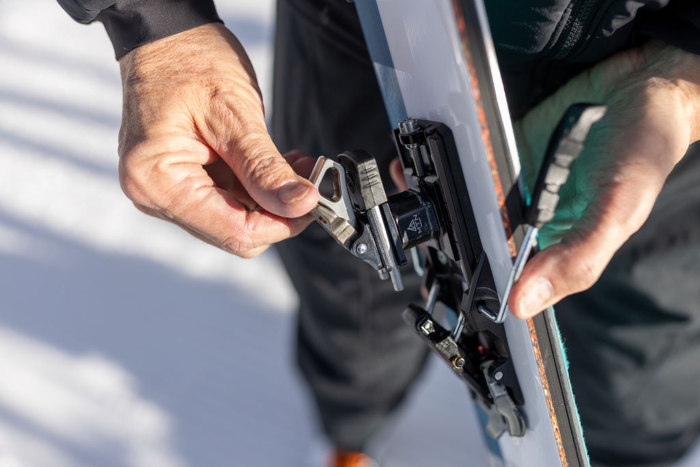
The Tech: The standout feature is the sturdy heel tower, which rotates while keeping the risers facing forward. The all-aluminum frame is bombproof yet light, and the 40mm mounting pattern adds stability on wider skis. Instead of a standard DIN screw, it uses three interchangeable “U-springs” (labeled Women, Men, and Expert) to set release values. It comes with a leash, but we personally installed the optional alpine-style brakes.
What We Like: The toe lock lever is excellent—you don’t have to be an Olympic bodybuilder to pull it up into walk mode like you do with some competitors. We also love the “Step-in Aid,” which guides your boot perfectly and rarely misses a click. On the skin track, the three climbing levels are easy to switch with a simple flick of a pole.
What We Don’t: Because the release is controlled by swapping springs rather than turning a screw, you can’t micro-adjust the retention. If you fall between the “Men” and “Expert” springs, you might struggle to find the perfect setting.
Should You Buy It? Yes. If you want a binding that crushes the uphill, delivers alpine-level power on the downhill, and won’t let you down during transitions, this is the one.
Dynafit Seven Summits
Specifications
Pros & Cons
Pros
- Great value
- Durable
- Reliable entry with improved toe piece technology
- Safe brake system
Cons
- Might be too lightweight for some resort use
- DIN only goes to 10
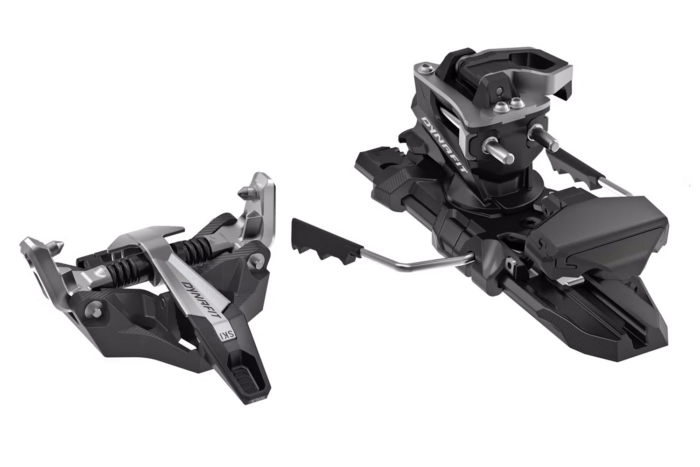
Dynafit basically invented the modern tech binding, and while other brands have caught up, the Dynafit Seven Summits binding ($450 with or without brake) proves the king still wears the crown. This binding is a return to minimalism, stripping away bells and whistles to give you exactly what you need for classic ski touring, and nothing you don’t. It feels incredibly high-quality, reliable, and simple. We found the power transfer to be second to none, never ejecting unwillingly even while shredding bumps and mixed conditions on our way back into the resort base.
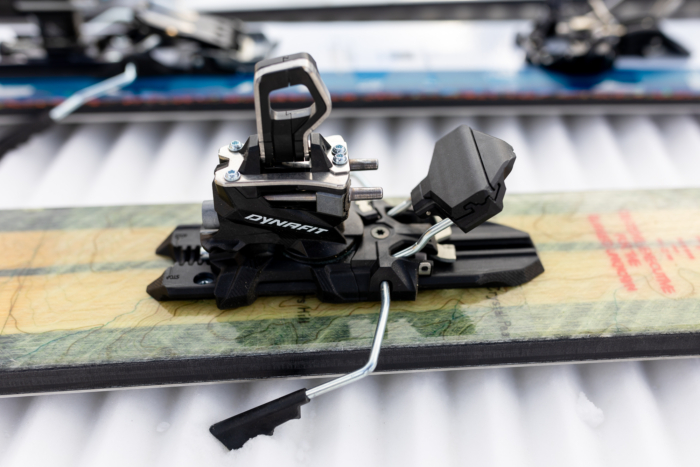
The Tech: Dynafit pares this binding back to the essentials, using improved side towers on the toe piece to make stepping in a breeze. A new extra-wide tension fork allows the toe jaws to open wider and lock in laterally, providing a stable base for downhill skiing while “Ice Breaker” pins help displace snow from your boot inserts. The tension fork also features pins underneath it that actively push packed snow out, increasing longevity. A newly designed riser offers three handy settings, the top two of which are easily adjusted with a ski pole.
What We Like: We appreciated the Seven Summits for its sheer simplicity and feeling of extreme reliability. The brakes are well-integrated, locking up automatically when you click into climb mode and deploying instantly for the descent. It is a no-frills powerhouse that feels elegant and substantial underfoot without being over-engineered.
What We Don’t: The release values only go up to 10, which might be too low for larger or very aggressive skiers. Additionally, while we loved it for touring, some riders might find it too lightweight and minimalist if they plan to spend significant time riding lifts at the resort.
Should You Buy It? If you are a moderately aggressive skier looking for a simple, elegantly designed binding that is reliable and affordable, this is your best bet. However, heavy chargers or resort-focused skiers should look for something with a higher DIN ceiling.
ATK Raider 13 Evo
Specifications
Pros & Cons
Pros
- Simple
- Light
- Versatile for all types of skiers
- Durable
- Easy to click in
Cons
- Some larger skiers may want a higher DIN rating
- Not the lightest on the market
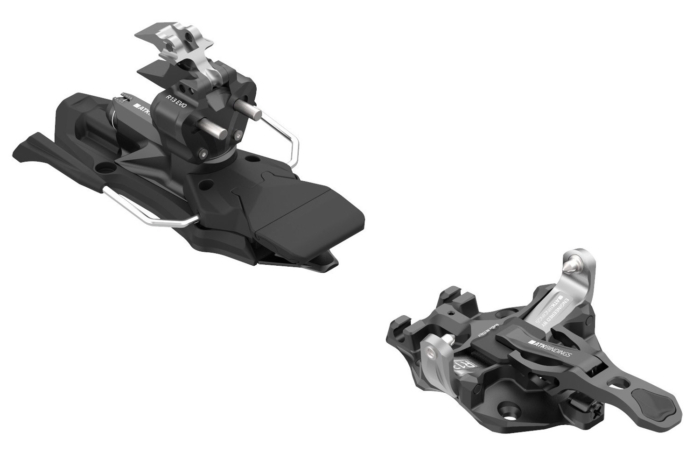
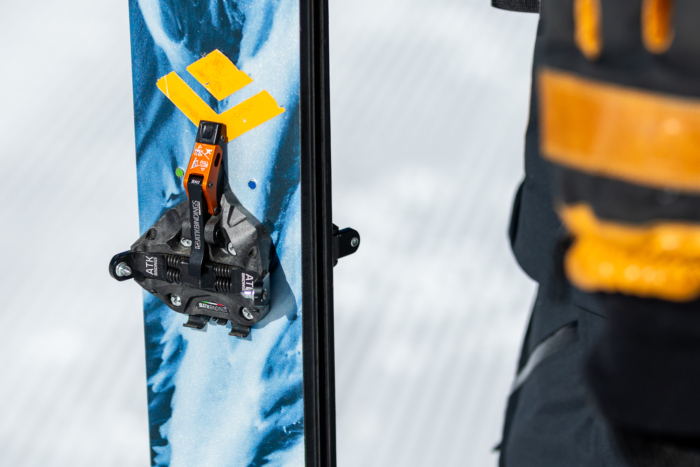
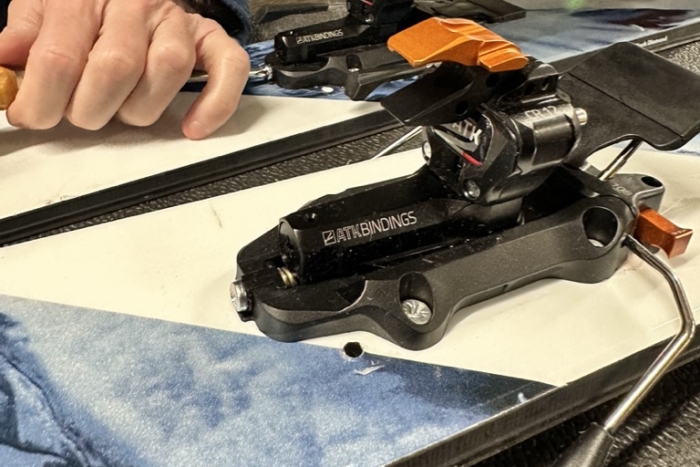
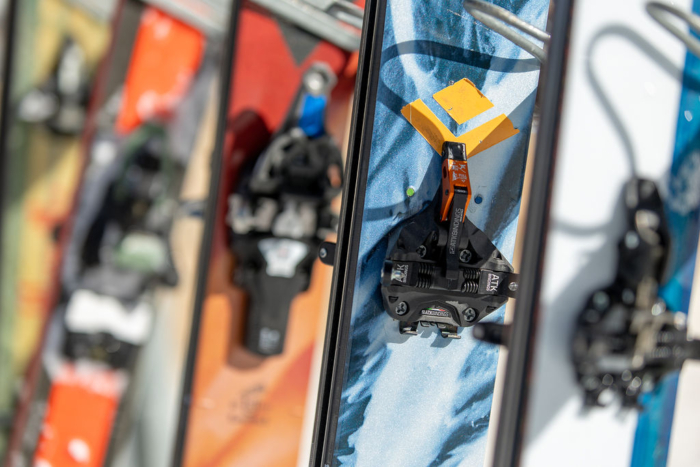
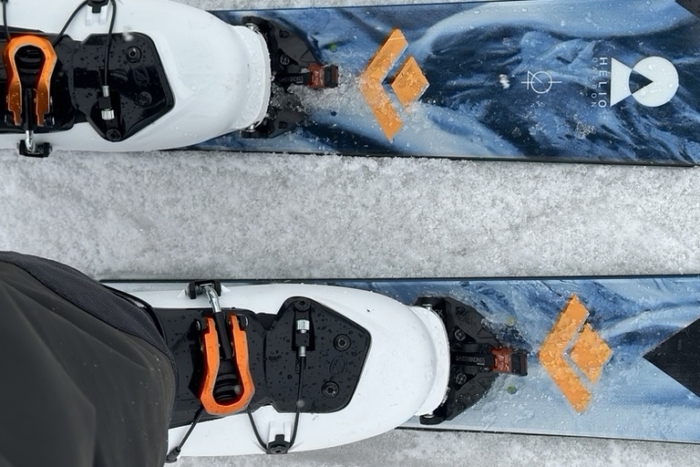
ATK might be a newer name to some Americans, but they are building the engines for many other top brands. The ATK Raider 13 Evo ($750) is a masterclass in durability. We appreciated the new “Easy Entry System,” which allows the toe pins to snap in horizontally rather than at an arc, making clicking in faster and more accurate even with worn-out boots. It’s a workhorse that spent weeks with us ripping groomers and touring without a single hiccup.
The Tech: This binding showcases ATK’s Elastic Response System in the heel, which provides 14mm of travel to compress and absorb energy as the ski flexes, preventing pre-release during big hits. Like the Freeraider, the Raider 13 allows for adjustable release values in the toe piece. The “Automatic Brake System” is ingenious—simply rotating the heel piece activates the brakes, eliminating the need to push buttons or pull levers.
What We Like: We love the enormous amount of adjustability in the toe piece, allowing us to tune the release strength to our exact weight and style. The system minimizes snow and ice buildup better than almost anything else we tested, meaning we spent less time chipping ice and more time skiing. It feels incredibly smooth and precise.
What We Don’t: The brand recognition is still growing in the US, so you might have to explain your gear to friends. It is also not the absolute lightest on the market, though it strikes a great balance.
Should You Buy It? If you want a lighter alternative to the Freeraider but still demand bomber durability and high DIN options, this is your binding. Skip it if you want the absolute lightest setup possible.
Salomon/Atomic SHIFT 2
Specifications
Pros & Cons
Pros
- Allows for more aggressive skiing
- Versatile for more skiers
- Accommodates alpine, grip walk, tech, and touring boot soles
Cons
- Though lighter than frame bindings, these are still on the heavy side for touring
- A bit more to fiddle with, and more steps to transition than traditional tech pins
Read Review: Flaws Fixed: Atomic Says Latest Shift Bindings Are Dialed
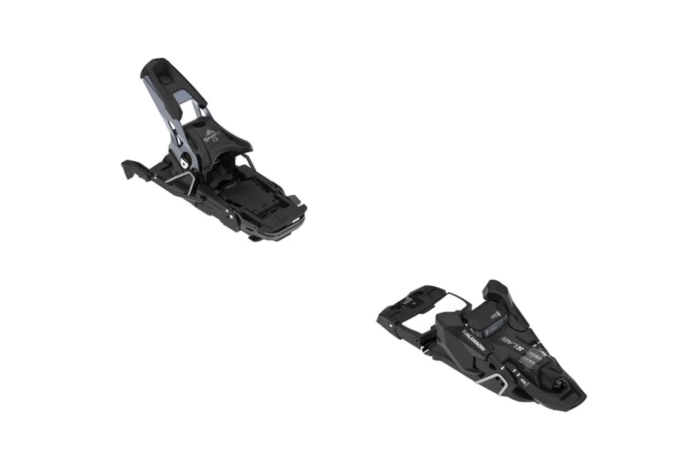
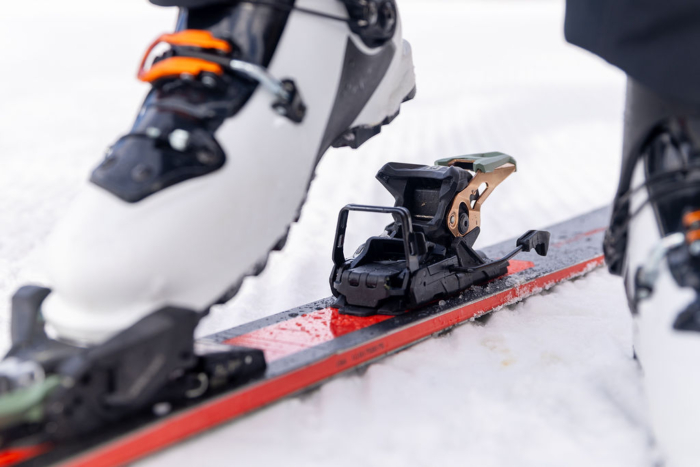
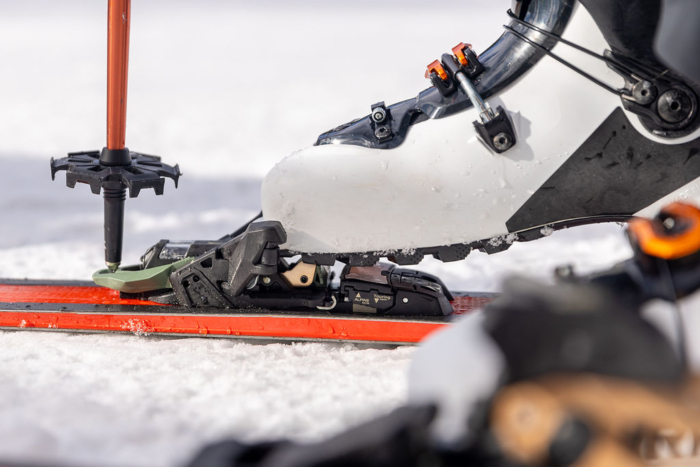
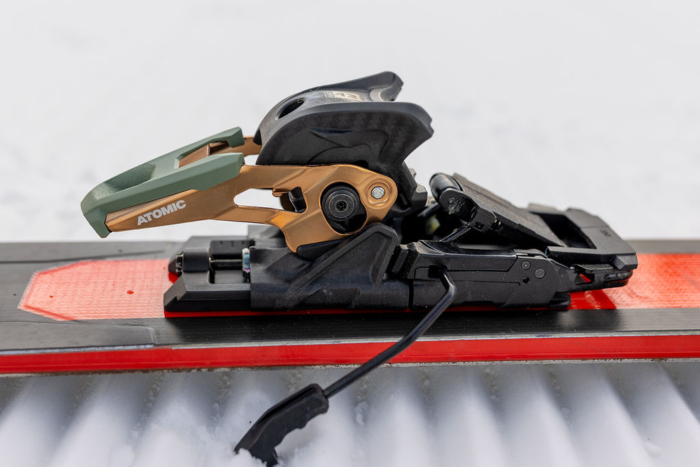
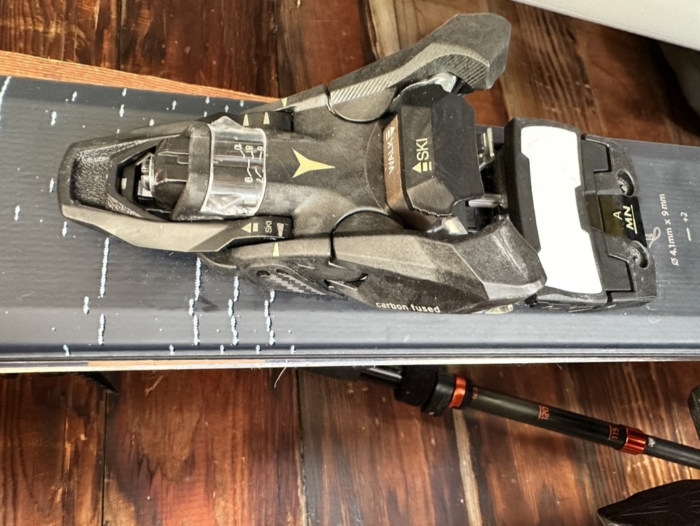
The original SHIFT changed the game, and the new Salomon Shift 2 ($680) (also the Atomic SHIFT 2 at $650) fixes the few complaints we had. This is a true “Quiver of One” binding. It allows you to tour up with tech pins but ski down with a fully Alpine-certified toe and heel. We found the upgraded SHIFT 2 to be stiffer, more durable, and less prone to the pre-release issues of the first generation. It is the closest you can get to a resort binding that can also climb.
The Tech: The SHIFT 2 transforms from a tech binding to an alpine binding. For the uphill, you deploy tech pins; for the downhill, you flip a lever to hide the pins and engage a full DIN-certified alpine toe piece. The new version features a micro-adjustable AFD (Anti-Friction Device) Power Block that provides a more solid connection to the boot, along with larger toe wings for improved shock resistance. It is Multi Norm Certified (MNC), meaning it accepts Alpine, GripWalk, and Touring boot soles.
What We Like: The downhill safety is unmatched in the touring category; it releases exactly like an alpine binding to save your knees in a twisting fall. We love that we can ski this in-bounds 80% of the time and never feel under-gunned. The new Power Block makes the ride feel noticeably more precise than the original model.
What We Don’t: The “fiddle factor” is real — transitions take longer because you have to tuck away the brakes and transform the toe piece. It is also quite heavy for long tours, and the complex mechanism can be tricky to learn at first.
Should You Buy It? If you ski mostly resort but want the freedom to tour, or if you refuse to sacrifice downhill safety, buy this. Skip it if you do long, high-vert days in the backcountry.
Dynafit Superlite 150
Specifications
Pros & Cons
Pros
- Extremely lightweight, race-ready design
- Durable all-metal construction
- Fast, no-fuss riser engagement
- Excellent crampon compatibility for icy climbs
Cons
- Heel piece requires rotation to adjust riser height
- Fixed toe release with limited safety margin
- Less elasticity on descent
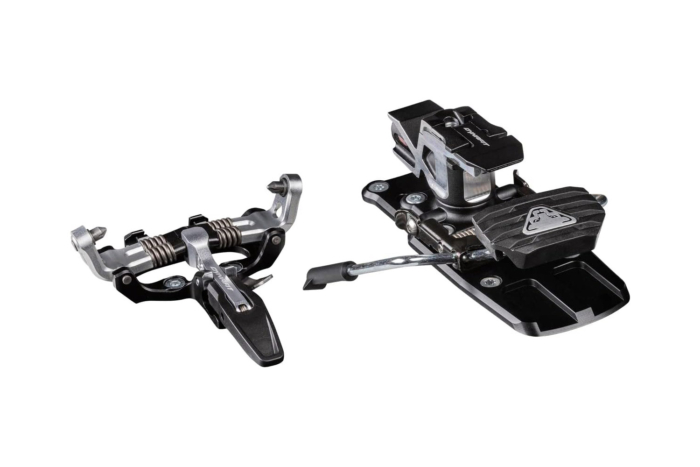
This is for the ounce-counters. The Dynafit Superlite 150 ($550) is essentially jewelry for your skis—100% aluminum and weighing next to nothing. We found it perfect for fitness laps and skimo missions. It’s surprisingly durable for its size, but it is a specialized tool. It doesn’t have the safety release of a heavy binding, but it lets you fly uphill.
The Tech: Constructed entirely from aluminum and stainless steel, this binding strips away everything non-essential. It features a fixed toe release and uses exchangeable U-springs in the heel to adjust vertical release values. The riser system uses race-style flaps that can be flipped quickly for four different walk modes. It is compatible with an optional adjustment plate and brakes, though adding them increases weight.
What We Like: You honestly forget they are on your feet. The weight savings are massive for long vertical days. The race-style flap risers are instant to engage, and we found it very easy to slide ski crampons on for icy ascents.
What We Don’t: Safety is the tradeoff here; the toe release is fixed, and adjusting the heel DIN requires swapping springs rather than turning a screw. The ride is harsh—zero elasticity means you feel every vibration of the snow.
Should You Buy It? Buy this for skimo racing, fitness skinning at the resort, or huge spring traverses. Skip it for general backcountry touring or steep, technical descents where safety release is a priority.
ATK Freeraider 15 Evo
Specifications
Pros & Cons
Pros
- Top-notch uphill and downhill performance
- Thoughtful features
- Relatively lightweight
- Easy and intuitive to use
- Super fun color options
Cons
- High-performance pricing
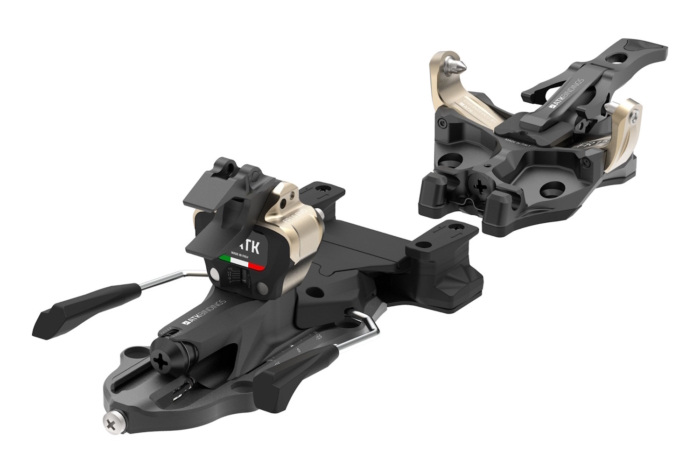
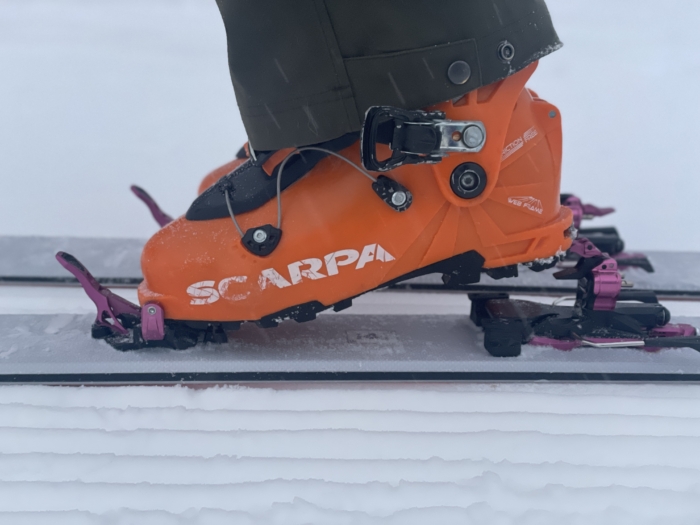
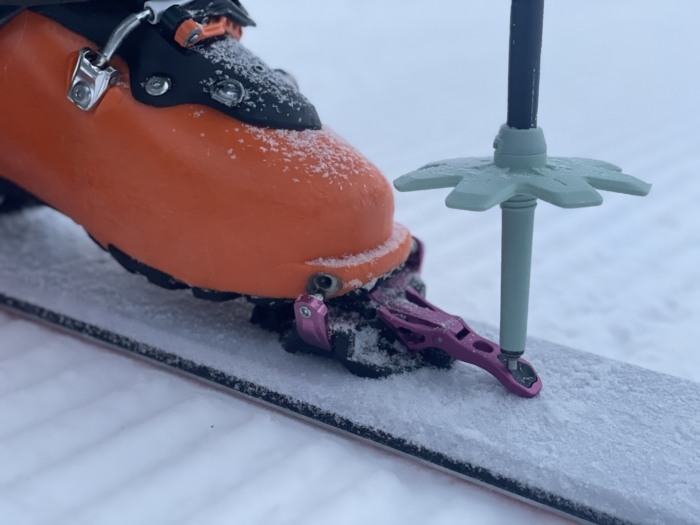
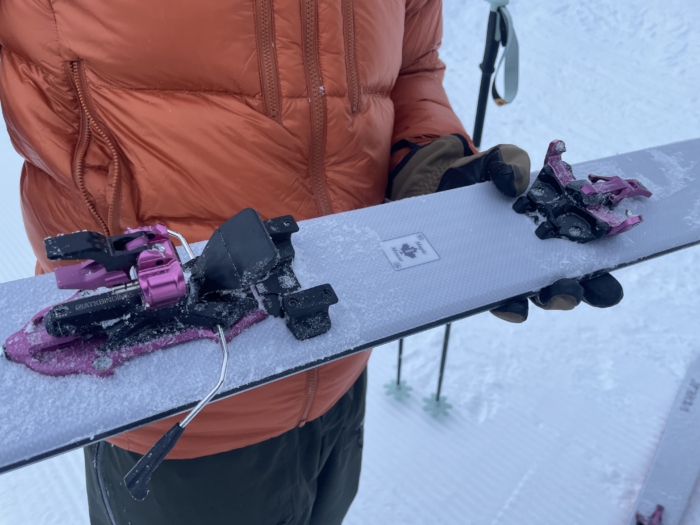
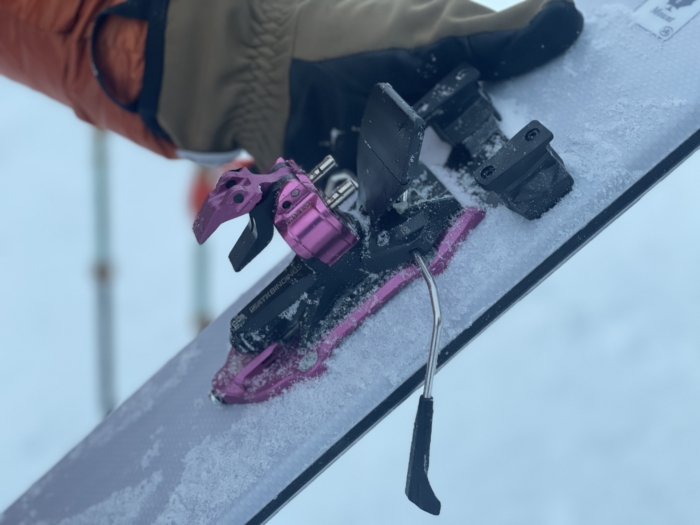
Roll out the red carpet. The ATK Freeraider 15 Evo ($800) is the binding we grab when we want zero compromise. We pushed this thing to its limits in the Tetons—from sub-zero dawn patrols to slushy spring slogs—and it outperformed everything else. It skis less like a touring binding and more like an alpine clamp, giving us incredible confidence to charge hard in variable snow.
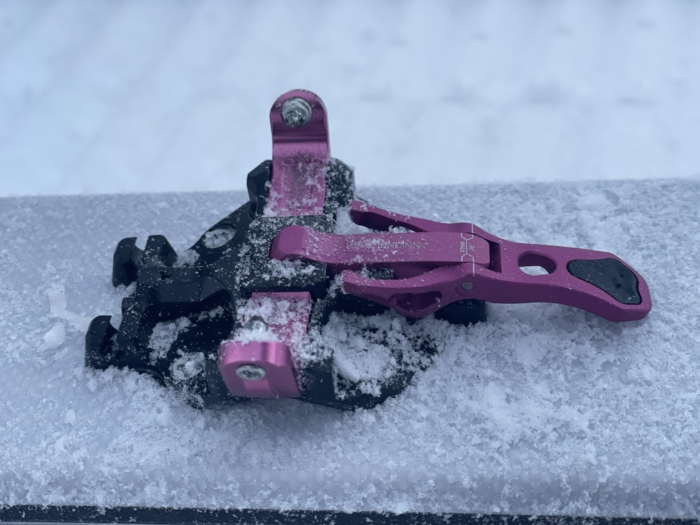
The Tech: ATK engineered this with a double-adjustable release system, allowing you to tune the release values on both the heel and the toe piece (from 7 to 15), a rarity that adds significant safety and precision. The binding includes the Freeride Spacer, a platform that fills the gap between your boot sole and the ski to maximize power transmission. It also features a magnetic heel flap system for risers and a snow-proof design that prevents ice buildup in gnarly conditions.
What We Like: We were pleasantly surprised at how well we could generate energy and momentum through every turn, even on icy resort slopes. The Freeride Spacer makes the connection feel rock-solid, eliminating the “floating” sensation of traditional tech bindings. We also love the aesthetic—it comes in a rainbow of colors, including a vibrant pink that made us smile even miles into a long slog.
What We Don’t: It is hard to find faults here other than the price tag. At $760, it is an investment that might be inaccessible to many. It also has a suite of features that casual tourers or ultralight counters simply might not need for mellow terrain.
Should You Buy It? If you are an aggressive skier who wants the absolute best performance money can buy and you drive your skis hard, buy this immediately. If you are on a budget or prefer simple, low-angle touring, you can save money elsewhere.
Other Backcountry Ski Bindings We Trust
Specifications
Pros & Cons
Pros
- Rotating toe releases reliably when needed
- Stays composed in firm and variable conditions
- Heel risers and ski-walk mode work well with gloves
- Solid construction stands up to multi-season use
Cons
- Heavier than minimalist tech bindings
- Stepping in takes practice
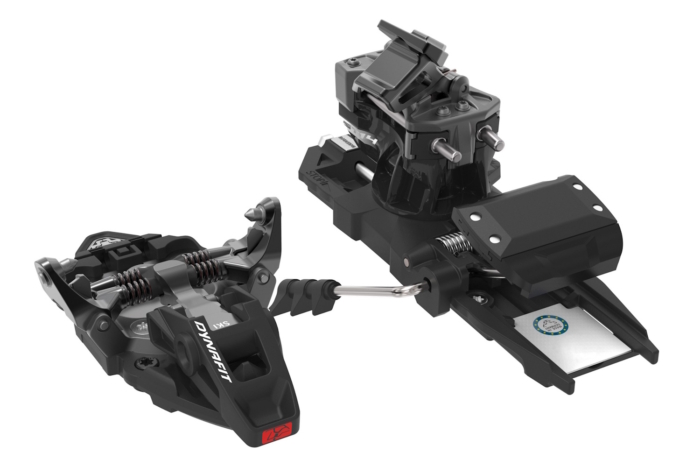
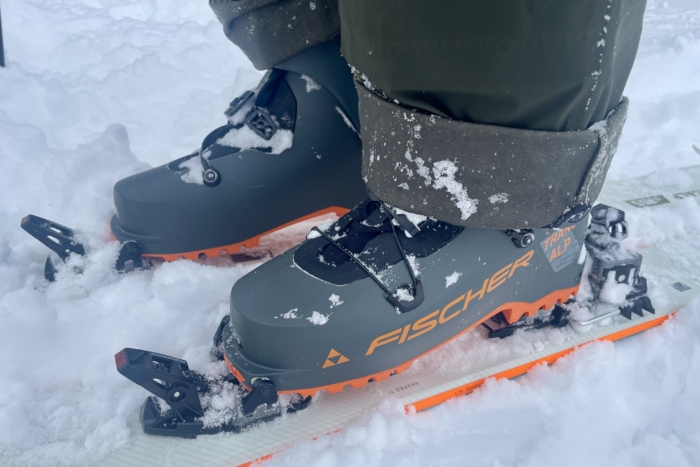
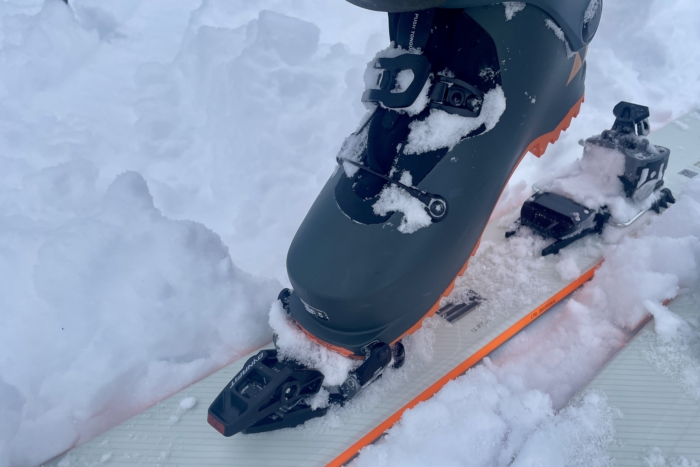
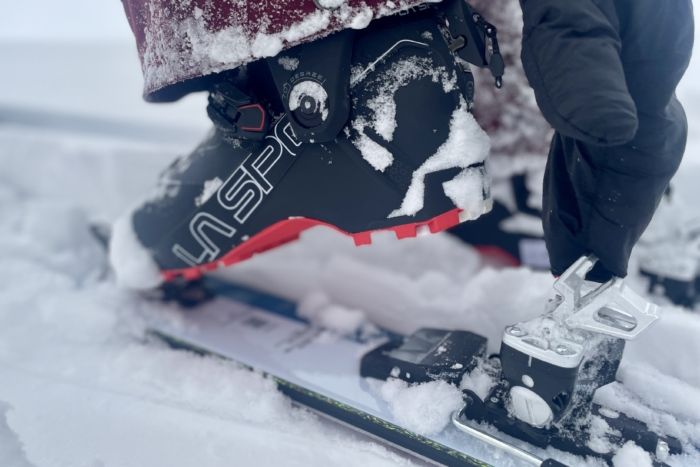
The Dynafit ST Rotation 14 ($600) balances uphill efficiency with downhill stability, making it a dependable choice for backcountry skiers who want performance without going ultralight. We tested this on Teton powder laps and firm, wind-scoured lines in the Tenmile Range, and that rotating toe piece is magic. It absorbs the shocks and vibrations that would normally pop a tech binding open, keeping us locked in when falling wasn’t an option.
The Tech: The standout feature is the rotating toe unit, which centers the boot and absorbs lateral impacts rather than immediately releasing. This dynamic elasticity mimics the safety of an alpine binding. It pairs with a heel unit that offers a robust DIN range of 7-14 and reliable brake integration. The construction is burly, designed to withstand multi-season abuse.
What We Like: We love the suspension it provides; it stays composed in “chatter” conditions where lighter bindings feel nervous. The heel risers are easy to flip with a pole basket, and the walk-lock mechanism is intuitive. The high DIN ceiling makes it a perfect choice for bigger skiers who need extra retention.
What We Don’t: The rotating toe needs to be perfectly centered to click in, which requires a bit of finesse and can be annoying in deep powder or on steep slopes. It is also significantly heavier than Dynafit’s minimalist options.
Should You Buy It? If you ski fast in variable conditions and prioritize retention and safety over saving weight, this is excellent. Skip it if you want the easiest possible step-in or a featherlight setup.
Specifications
Pros & Cons
Pros
- Simple, reliable design
- Intuitive click-in aid
- Works with standard ski crampons
Cons
- Hard to flip ski/walk switch with pole
- Brakes can drop in tour mode
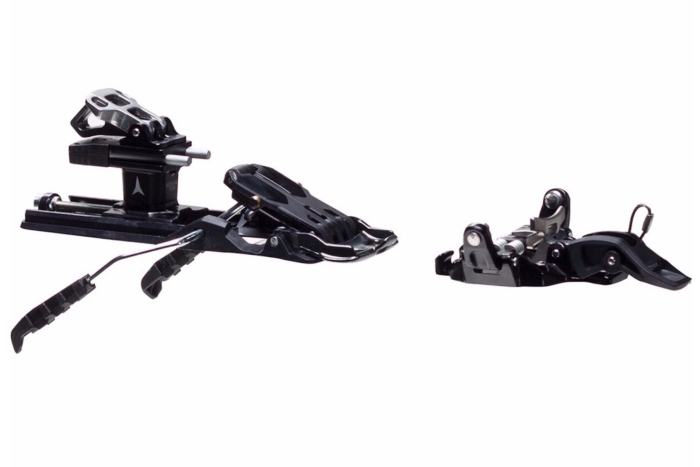
The Atomic Backland Tour ($680) is a “set it and forget it” tool for serious skiers. After three seasons and 50+ failure-free days in the field, this binding has proven that you don’t need flashy engineering to get a reliable, bombproof experience. It is a simple, mostly metal design that prioritizes long-term durability over the weight-saving plastic found in many modern competitors.
The Tech: This all-aluminum frame features a substantial mounting plate for improved power transfer on wider skis. While it skips traditional DIN certification to save weight, it uses interchangeable U-springs (Women, Men, and Expert) to manage release. Unlike the stripped-down Backland Pure, which uses a leash and a 30mm plate, the Tour includes integrated brakes and a massive 50mm of heel adjustment for maximum boot-quiver flexibility.
What We Like: The classic tech design is intuitive and has shown zero unexpected releases or mechanical failures across extensive testing. The built-in toe stop effectively guides your boot into place, while the two riser levels can be easily toggled with a pole basket without needing to rotate the heel piece. It offers more peace of mind than the Pure model for those who prefer brakes over leashes.
What We Don’t: Snow can occasionally pack under the brake lever while breaking trail, causing the brakes to pop down and drag during your ascent. Additionally, transitioning the toe lever from walk to ski mode can be a bit stiff, and you’ll carry about 90g of extra weight per binding compared to the minimalist Pure version.
Should You Buy It? If you want a proven, nearly indestructible binding and do not mind a small weight penalty for the security of metal parts and integrated brakes, this is the gold standard. It is built specifically for the skier who values a consistent, predictable connection to their skis above all else.
Specifications
Pros & Cons
Pros
- Very easy heel transition from walk to ski mode
- Lightweight, high-performance bindings
- Easy to line up boot and pins with "toe stopper"
- Automatic brake engage/disengage with heel transition
Cons
- Some small, moving parts that could be affected by severe/prolonged cold
- Require special Dynafit jig to mount that not every shop carries
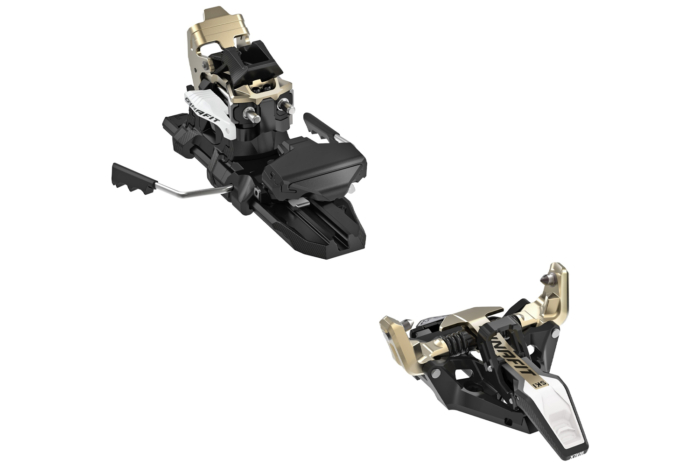
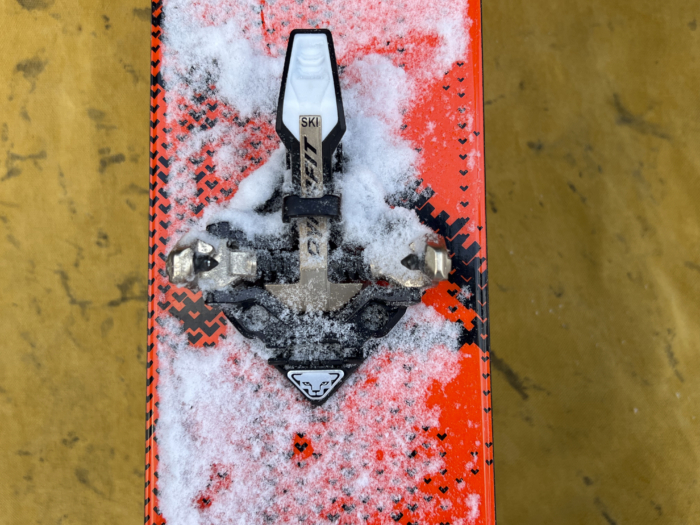
Dynafit’s Ridge binding ($600) aims to solve the “fiddle factor” of touring. We skied these in Colorado and were impressed by the “Easy-Turn-Tech” heel. You flip a lever, spin the heel, and you’re locked back in — no wrestling required. It feels techy and high-performance, efficiently transferring power to the ski edges.
The Tech: Dynafit engineered a “Toe Stopper” alignment aid that physically guides your boot into the pins, reducing those annoying misses. The heel unit features a patented lever that unlocks the tower for rotation, and the brakes engage and disengage automatically as you spin the heel. It is a streamlined design that attempts to automate as much of the transition process as possible.
What We Like: The “Toe Stopper” works brilliantly, making step-in noticeably faster. We also found the heel rotation to be genuinely smoother than older Dynafit models, and the automatic brake engagement means one less thing to forget. The downhill performance felt solid and precise, transferring power efficiently to the edges.
What We Don’t: We noticed some small moving parts that felt a bit stiff in severe cold, which gave us pause for arctic-level missions. Additionally, it requires a specialized jig to mount, so not every local shop will be ready to install them immediately.
Should You Buy It? If you are an ambitious tourer who values speed and efficiency in transitions and wants the latest ease-of-use features, the Ridge is a winner. Skip it if you prefer simple, field-repairable designs.
-

-
Photo/Chris Kassar, Elk Raven Photography
Specifications
Pros & Cons
Pros
- Easy step-in
- Extremely versatile
- Tried and true; icon in the industry
- Optimal heel lift
- Very skier-friendly and intuitive to use
Cons
- Heavy
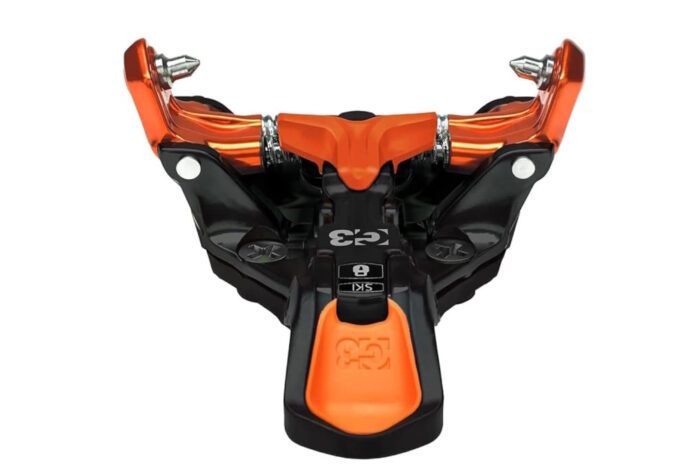
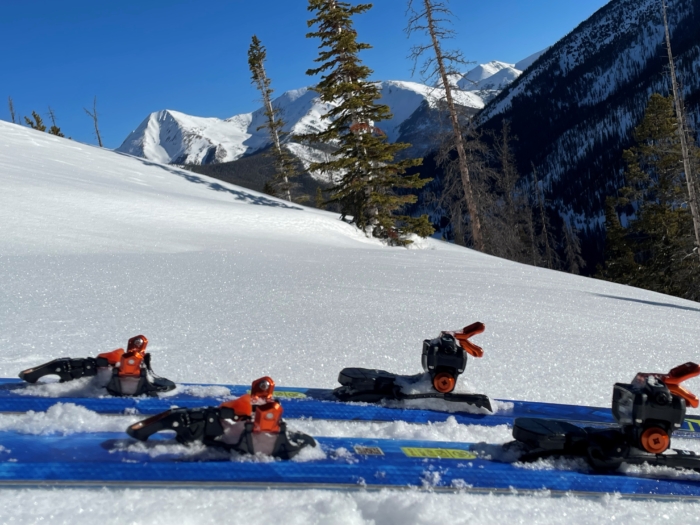
The G3 Ion 12 Binding ($730) is an icon for a reason. It has been around for years, and G3 has ironed out every kink to make it arguably the most user-friendly binding on the market. We love it because it’s “skis down” reliable. Whether we were battling wet snow in the Midwest or climbing 14ers in Colorado, the ION just worked. It is intuitive, burly, and effortless to use.
The Tech: G3 designed the ION with a wide mounting pattern and powerful toe jaws to drive modern, wide touring skis. It features a unique “Boot Stop” bumper that guides your boot perfectly into the pins every time. Under the toe springs, a snow-clearing channel prevents ice buildup, ensuring the binding fully closes. The heel turret rotates in either direction for touring, and the “QuickFlick” lifters are arguably the easiest in the industry to engage with a pole basket.
What We Like: The step-in action is foolproof thanks to the alignment bumper, and the elasticity in the toe absorbs chatter well, feeling secure on icy descents. We also appreciate the wide range of adjustment; it feels substantial and safe. The brakes are reliable, and the transitions are seamless, requiring just a quick twist of the heel.
What We Don’t: At over a pound per foot, the ION is noticeably heavier than modern competitors like ATK or Dynafit. You also stand a bit taller off the ski, which some purists dislike for snow feel.
Should You Buy It? If you want a “set-it-and-forget-it” binding that is easy to step into, tough as nails, and works for 90% of skiers, this is the one. Skip it if you are counting grams for skimo racing.
Specifications
Pros & Cons
Pros
- Exceptionally light with a stiff, responsive toe
- Active length compensation improves control on firm snow
- Strong performance-to-weight value
Cons
- Release values are not ISO certified
- Ride feels firm in rough or variable conditions
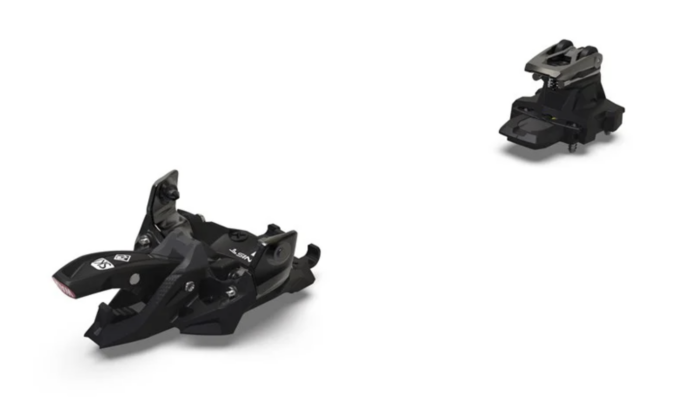
The Marker Alpinist 12 ($600) is for the fast-and-light crowd who still wants to rip. It is incredibly light but surprisingly stiff thanks to a carbon-reinforced toe. We liked the “active length compensation” in the heel, which allows the ski to flex naturally without popping the binding out—a crucial feature for skiing aggressively on firm snow.
The Tech: Marker utilizes a carbon-reinforced toe piece to keep weight down (just 245g) while maintaining high stiffness for power transfer. The heel features an “active length compensation” mechanism that allows the heel to move back up to 4mm as the ski flexes. It offers lateral release adjustment (DIN 6-12) but has a fixed vertical release, utilizing U-bow springs. Visually, gray elastomers on the toe help guide your boot pins into place.
What We Like: The stiffness of the toe is impressive; it feels very responsive on steep, icy couloirs where you need immediate edge engagement. We also appreciate the value—you get a lot of performance for the price and weight. The visual aids for step-in are a nice touch that actually helps.
What We Don’t: The release values aren’t ISO certified, which is common for this weight class but worth noting for safety-conscious buyers. The ride can feel a bit harsh on rough snow compared to dampened bindings like the ION or Rotation.
Should You Buy It? This is a top choice for ski mountaineering and long spring missions where weight is enemy number one. It is less suited for daily driving on wide powder skis or for skiers who want a plush, dampened ride.
Specifications
Pros & Cons
Pros
- Beginner-friendly design with easy step-in
- Elastic toe provides a forgiving, confidence-inspiring release feel
- Strong value for a lightweight touring binding
Cons
- Brakes are sold separately
- Feels less durable than all-metal alternatives
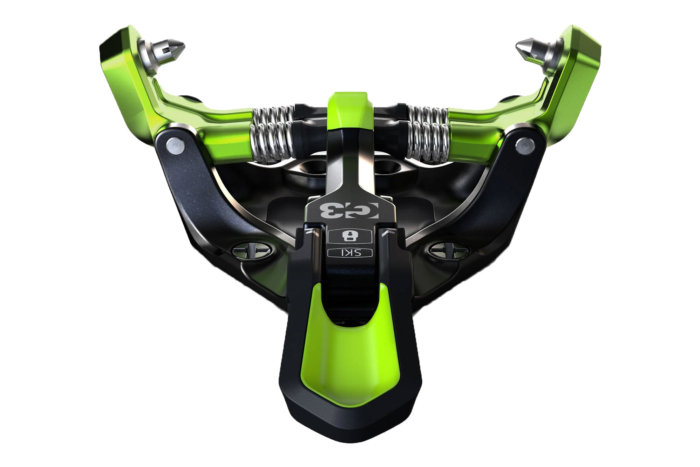
If you’re just getting into backcountry touring, the G3 ZED 12 ($660) is a fantastic starting point. It takes the user-friendly DNA of the ION but strips away weight. We’ve skied these in-bounds and out, and they just work. The toe jaws actually clamp tighter as you approach release, giving you a safety buffer that we found very reassuring in no-fall zones.
The Tech: G3 uses a single Pozidriv screw size for every adjustment on the binding, simplifying maintenance. The toe piece is engineered with elasticity to absorb energy before releasing, and the heel features “QuickFlick” risers that are easy to manipulate. It sheds weight by removing the plastic housing found on the ION but retains the same wide mounting pattern for driving big skis.
What We Like: The simplicity is key here—everything adjusts with one tool, and the “Boot Stop” makes stepping in easy for beginners. We also love the price; it often costs less than your boots. The toe elasticity provided a consistent feel that gave us confidence in variable snow.
What We Don’t: Brakes are sold separately and must be installed by the user or shop, which adds a hidden cost and hassle. The durability feels slightly more “plasticky” compared to the all-metal options from ATK or Dynafit.
Should You Buy It? If you are building your first lightweight touring setup and want something forgiving and easy to use, this is excellent. Skip it if you are hard on gear and prone to smashing your bindings on rocks.
Specifications
Pros & Cons
Pros
- Extremely burly, alpine-like downhill performance
- Convertible toe reduces swing weight on the climb
- High DIN retention inspires confidence for aggressive skiing
Cons
- Heavy compared to true touring bindings
- Slow, fiddly transitions in stormy conditions
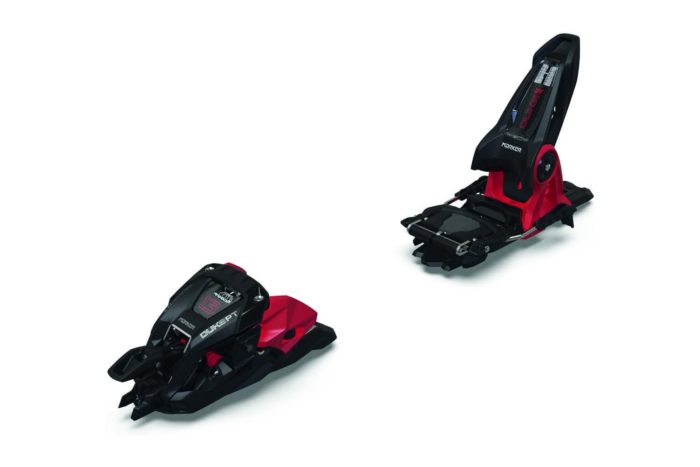
The Marker Duke PT ($700) is a tank. It’s designed for big-mountain chargers who break other bindings. The cool trick here is the “convertible toe”—you can detach the heavy alpine toe housing and put it in your backpack for the climb, saving 300g per foot. Then, snap it back on, and you have a legit 13-DIN alpine clamp for the descent.
The Tech: The Duke PT uses a unique “Ride & Hike” toe system. For the uphill, you unlock and remove the upper housing to reveal tech pins. For the downhill, you reattach the housing, which covers the pins and functions like a standard alpine binding with full elasticity. The heel is a heavy-duty magnesium unit with a DIN range of 6-13, providing maximum retention.
What We Like: It feels burly and safe. We would trust this binding dropping cliffs or charging chop more than almost anything else with a walk mode. Stashing the toe piece in a pack actually makes the swing weight on the climb surprisingly manageable. The low stand height (24mm) also makes it feel super responsive edge-to-edge.
What We Don’t: Transitions are slow — you have to physically take the toe off, stash it, and put it back on later. Snow can sometimes pack into the connection slots, making reassembly tricky in a storm. It is also heavy.
Should You Buy It? If you ski 90% resort and want a binding that can handle sidecountry abuse and big air, this is it. Skip it if you value fast transitions or lightweight efficiency.
Specifications
Pros & Cons
Pros
- Proven tech binding design with solid reliability
- Lightweight enough for full-day tours
- Predictable release
- Good value for skiers who want a no-frills binding
Cons
- Transitions feel slower due to manual heel rotation
- Feels stiffer on the descent in variable conditions
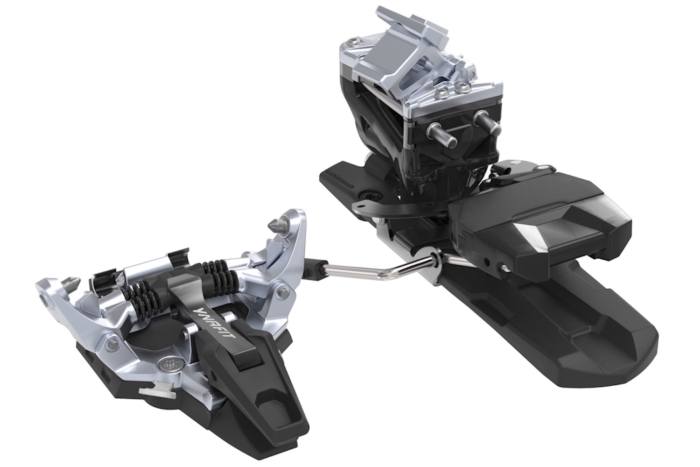
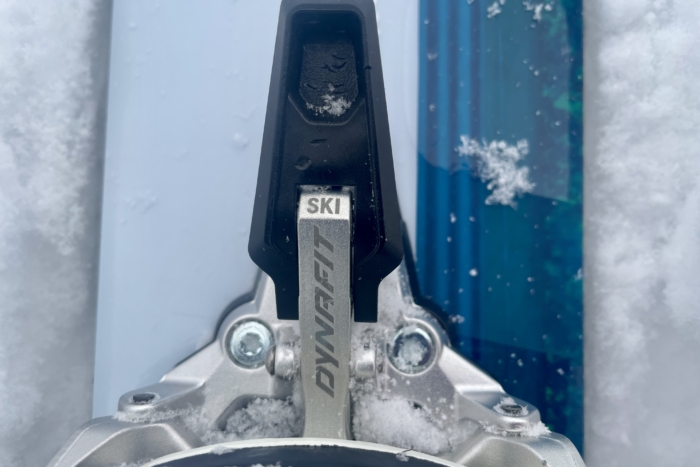
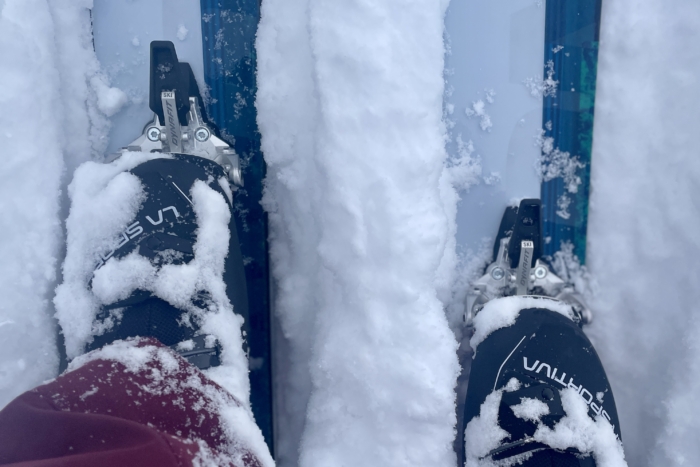
The Dynafit Radical ($400) is the Honda Civic of bindings: reliable, affordable, and it runs forever. We used these on everything from corn laps in the Tetons to mid-winter tours in Colorado. It lacks the fancy rotating toe of its big brother, but it offers a predictable release and a sturdy platform that just works.
The Tech: This binding uses the classic Dynafit speed nose and heel unit but adds side towers for easier entry. The heel features two riser levels that are easily flipped with a pole, and it offers 25mm of length adjustment to fit different boots. It is built with a mix of aluminum, stainless steel, and high-tech synthetics to balance weight and durability.
What We Like: The design is proven; it has been around for a decade because it doesn’t break. It is an excellent entry point into the Dynafit ecosystem without the high price tag. Step-in is faster than older models thanks to the improved side towers, and the brakes are reliable.
What We Don’t: You have to turn the heel piece to switch modes, which is slower than the “flick” style of G3 or ATK. It also feels rigid and harsh in variable chop compared to the more expensive ST Rotation model.
Should You Buy It? Yes, for a reliable, no-frills daily driver that won’t let you down. Skip it if you want the latest techy features or maximum suspension.
Backcountry Ski Bindings Comparison Chart
| Model | Price | Best For | DIN Range | Weight (Per Binding) | Brakes Included? |
|---|---|---|---|---|---|
| Salomon MTN Pure/Atomic Backland Pure | $680 | Versatile Touring & Mountaineering | Springs (W, M, Exp) | 295 g | Leash (Brake Opt.) |
| Dynafit Seven Summits | $450 | Classic Touring on a Budget | 4 – 10 | 320 g | Yes |
| ATK Raider 13 Evo | $750 | High-Mileage Daily Drivers | 5 – 13 | 370 g | Yes |
| Salomon / Atomic SHIFT 2 | $650-680 | Resort and Sidecountry | 6 – 13 | 920 g | Yes |
| Dynafit Superlite 150 | $550 | Skimo Racing & Fitness Laps | 4 – 13 (Springs) | 160 g | No (Sold Sep.) |
| ATK Freeraider 15 Evo | $800 | Aggressive Big Mountain Lines | 7 – 15 | 395 g | Yes |
| Dynafit ST Rotation 14 | $600 | Maximum Safety & Retention | 7 – 14 | 606 g | Yes |
| Atomic Backland Tour | $680 | All-around touring | Springs (W, M, Exp) | 398 g | Yes |
| Dynafit Ridge | $600 | Fast & Efficient Transitions | 4 – 12 | 420 g | Yes |
| G3 ION 12 | $730 | User-Friendly Reliability | 5 – 12 | 579 g | Yes |
| Marker Alpinist 12 | $600 | Fast-and-Light Alpinism | 6 – 12 | 270 g | Optional |
| G3 ZED 12 | $660 | First-Time Lightweight Touring | 5 – 12 | 358 g | No (Sold Sep.) |
| Marker Duke PT 13 | $700 | Heavy-Duty Sidecountry | 4 – 13 | 1,300 g | Yes |
| Dynafit Radical | $400 | Reliable No-Frills Touring | 4 – 10 | 520 g | Yes |

How We Tested the Best Backcountry Ski Bindings
Testing backcountry bindings involves thousands of vertical feet of climbing, scouting lines, evaluating couloirs, making smart choices on hut trips, quiet powder turns in the trees, and our fair share of unintended releases on the skin track.
For the ski-touring experts at GearJunkie, the real work also involves mounting and adjusting bindings, route finding on tours, waxing, familiarizing themselves with new technology, and stepping into unfamiliar toe pieces in deep snow.
Our Expert Testers
Writer, photographer, and lifelong ski bum Aaron Bible has been curating this guide from the beginning back in 2020. Aaron is an award-winning journalist who’s been covering the ski and outdoor industries for decades, and he brings his keen eye for detail and a knack for the written word to provide solid assessments of each binding in our list.
Calling Eldora Ski Resort home base for almost 20 years and another almost dozen years between Summit County and Steamboat Springs, Aaron has been testing touring bindings since they became readily accessible in North America, and he’s ridden the wave of technical advances in bindings, boots, skins and apparel which has led to the massive growth in the sport.
As the touring boot and binding technology kept improving, he permanently switched from telemark to alpine touring about seven years ago, and he hasn’t looked back. Typically racking up triple-digit ski days each season, he currently calls Monarch Mountain his home hill. However, when he’s not traveling around the country and the world for turns, he can also be found at Arapahoe Basin for mid-week uphill missions.
In 2024, we enlisted the help of backcountry enthusiast, ski tech, and master boot fitter Ryan Kempfer. Spending over 100 days in the backcountry each year, Ryan is the ideal person to put backcountry ski gear through the wringer. Will Brendza also contributed to this guide.

Our Testing Grounds
This year’s testing included many spring skiing, deep winter missions, and early-season excursions. We spent multiple days camped out in the trailheads of some of the best-known and lesser-known spots around the Rocky Mountains, skinning uphill at our favorite resorts around Colorado and many forays into the backcountry.
We also had to hit enough lifts to understand how these bindings and skis perform on the downhill in all types of conditions. These missions included Steamboat and Vail — including time spent in the backcountry off of Vail Pass; the Powder Highway and Red Mountain in Rossland, British Columbia; and from Monarch Pass and Monarch Ski Area to Mammoth Mountain in California; Copper Mountain and Loveland Pass, Jackson Hole, and more. All of this new tech has seen some serious wear and tear at the hands of our testers.
Our Testing Process
The best way we’ve found to evaluate backcountry ski bindings thoroughly is to simply go touring. Through miles walked, countless kick turns, and transitions, the user experience becomes clear. We pay close attention to how difficult it is to click into each binding (after a reasonable amount of practice), how it feels to adjust the risers from a standing position, and how they perform on the downhill.
Finally, we consider the weight of each product. In human-powered travel, a few grams can really add up. Like in all performance gear, it’s a game of compromises: the lightest bindings won’t have the best downhill performance, and the burliest bindings with the most features will never be a top choice for a multi-day tour. Typically, our favorite bindings fall somewhere in the middle, functional without weighing us down.
Complete your backcountry kit by consulting some of our other guides, including the best backcountry skis, the best avalanche beacons, the best backcountry ski boots, and the best climbing skins.

Our Backcountry Ski Binding Rating System
We rate backcountry ski bindings across four key categories: overall performance, ease of use, weight, and durability. Performance reflects how well the binding balances uphill efficiency with downhill power, whether that means climbing steep skintracks or driving wide skis in variable snow. Ease of use considers how intuitive the binding is to step into, switch modes, and operate in harsh winter conditions with gloves on.
Weight matters because every gram counts on long tours, so we evaluate how the binding stacks up for fast-and-light missions as well as bigger days with more gear. Finally, durability measures how well the binding holds up after repeated tours, abuse in cold conditions, and contact with rocks or ice.
Note: Each category is scored on a scale of 1 to 10, but the overall rating is not an average: it reflects our testers’ judgment of how the binding performs overall in the backcountry.

Buyer’s Guide: How to Choose the Best Backcountry Ski Bindings
The freedom of skiing without lifts has lured more people into the backcountry than ever. But buying bindings online is tricky because they fall on a massive spectrum: from ultralight racer clamps to heavy-duty freeride machines.
We tested these bindings on everything from sub-zero dawn patrols to slushy resort laps to help you decide. Here is what matters most.

Define Your Objective
How you access the snow dictates what you should buy.
- The Uphill Athlete: If you skin resort groomers for fitness or race skimo, weight is your enemy. You want minimalism. We recommend ultralight options like the Dynafit Superlite 150. You sacrifice release elasticity and brakes for raw speed.
- The All-Rounder: If you spend 90% of your time out of bounds, you want the “Goldilocks” binding—durable and safe, but light enough for long days. The Salomon MTN Pure and G3 ION 12 shine here.
- The 50/50 Skier: If you ride lifts to access backcountry gates, you need a hybrid. Bindings like the Salomon/Atomic SHIFT 2 offer the safety certification of an alpine binding but are significantly heavier on the climb.

Ease of Use & The “Fiddle Factor”
Tech bindings can look intimidating, but the best ones are intuitive.
- Stepping In: Everyone fiddles and misses the first time they try to click in. We love bindings like the G3 ZED 12 or Salomon MTN Pure that feature alignment “bumpers” to guide your boot toe into the pins.
- Transitions: You will transition thousands of times. Ease of spinning the heel tower matters. The ATK Freeraider 15 Evo is intuitive and smooth, while some Dynafit models require a bit more “elbow grease” and practice to master the rotation.

Risers: The Secret to Efficiency
Heel risers (or “climbing lifts”) are crucial for maintaining efficient posture on steep grades. Every grizzled backcountry skier has an opinion on these, but here is our take:
- Pole-Flick vs. Rotation: We prefer risers you can flip with a ski pole basket (like on the Salomon/Atomic MTN Pure). It keeps you moving. Some minimalist bindings require you to bend down and rotate the heel unit by hand, which breaks your rhythm.
- Options Matter: Some race bindings only have one height. We prefer versatile bindings like the ATK Freeraider, which offers three distinct heights for variable terrain. Being able to micro-adjust your angle makes a massive difference on a long, steep skin track.

Weight vs. Safety (Brakes vs. Leashes)
There is a direct trade-off here. Heavier bindings generally offer better elasticity and safety retention.
- Brakes: We highly recommend brakes for most skiers. They add weight (approx. 100–300g per pair), but they prevent runaway skis during a transition—a nightmare scenario on a steep, icy peak.
- Leashes: Ultralight users (using the Dynafit Seven Summits, for example) often opt for leashes to save weight. Just know that in an avalanche, a leash keeps the ski attached to you, which acts as an anchor dragging you down.

Boot Compatibility
Before you buy, check your boots. You cannot use a standard alpine boot in a tech binding.
- The Tech Insert Requirement: Look for the metal dimples (fittings) on the toe and heel of your boot. These are required for all the bindings on this list (except the Duke PT in downhill mode). If your boots don’t have them, you can’t tour.
- Crossover Boots: If you want one boot to do it all, look for “Hybrid” or “Crossover” boots (like the K2 Mindbender or Tecnica Cochise). These have tech inserts for the uphill and alpine soles for driving powerful resort skis.
- Stiffness vs. Weight: Just like bindings, boots are a trade-off. Ultralight skimo boots climb like sneakers but feel soft on the downhill. Four-buckle freeride boots ski like race boots but feel heavy on the skin track. Match your boot category to your binding category.

Price & Value
Backcountry gear is expensive, but paying more doesn’t always mean “better”—it often just means “lighter” or “more features.”
- Budget ($300 – $450):
- What you get: Minimalism and proven reliability.
- Top Pick: The Dynafit Seven Summits ($450) is the best value here. It strips away bells and whistles to give you a simple, functional tool. The trade-off is usually a harsher ride on the way down (less vibration damping).
- Mid-Tier ($500 – $600):
- What you get: A sweet spot of durability and features.
- Top Picks: Bindings like the G3 ZED 12 ($660) offer helpful features like snow-clearing channels and better elasticity than budget models. They are reliable workhorses that get the job done without the “jewelry” pricing of the top tier.
- Premium ($650+):
- What you get: Zero compromise.
- Top Picks: The ATK Freeraider 15 Evo ($800) and Salomon MTN Pure ($680) sit here. You are paying for high-tech materials (aerospace aluminum/carbon) that allow a binding to be incredibly light and incredibly strong. If you want a binding that tours like a feather and skis like a hammer, you have to pay for it.

Frequently Asked Questions
Backcountry ski bindings work differently than traditional downhill bindings and should be thought of as their own category. While their job is still to connect your boots to your skis, they’re designed to switch between two modes: free-heel touring on the way up and locked-in performance on the way down.
Most backcountry bindings hold the boot at the toe while the heel lifts for climbing, then lock both the toe and heel for skiing. Some release differently than resort bindings, and release behavior can vary by design, which is why choosing the right system matters.
Because bindings interface directly with your boots, we recommend starting with boots first. You’ll likely keep them longer than your skis, and most bindings can be remounted on future setups by a shop.
Today’s backcountry bindings fall into two main camps: traditional tech bindings that use pins at the toe and heel for lightweight efficiency, and hybrid designs that ski more like alpine bindings by locking the heel down with a traditional mechanism while still allowing uphill touring
Yes and no. As long as your ski boot has tech inserts, the boots are essentially universal, but you can’t put a traditional alpine boot in backcountry ski bindings. Nearly 50% of all ski boots sold today have tech inserts. Alpine touring bindings typically fall into two categories: tech bindings and frame bindings.
Tech bindings use pins to attach to the front of your boot at the toe, and the heel piece is separate. In contrast, frame bindings look more like a traditional downhill binding.
The name refers to the frame that runs from the toe to the heel underneath the sole of your boot. This is the part of the binding that will raise and lower with your feet while you are touring uphill.
Every binding is designed to adjust to fit the sole length of your boot. While some bindings let you make small length adjustments, say 6-10 mm, others only allow for more minor adjustments to accommodate boot fit to the original mount.
If you do alternate boot sizes, consider a binding like the Marker Alpinist that gives you 15 mm of adjustability, so you can use boots with different sole lengths. That said, this should truly be done at a shop to ensure that the bindings are adjusted exactly to your sole length and that DIN has not been compromised.
Your binding DIN settings take several factors into account, including your boot size, the terrain you ski, your height and weight, and your level of experience. While you can make small adjustments on your own, you should go to a certified ski technician to mount your bindings and make major adjustments.
Bindings have a range of about 25-30 mm of adjustability to allow you to change boot size a little bit up or down. Brands in the same shoe size can vary 3-5 mm in length difference, so your binding will accommodate that.
Some people start with a more alpine-centric binding, such as a Salomon, their first year, and then a Dynafit or a more touring-focused binding the next year because they want to go farther, longer, and stay more out of bounds.
In a perfect world, you should buy your bindings based on your objective. If you are planning for mostly uphill skinning at your local ski resort with groomers on the way down, you should consider something lighter, with a lower DIN, maybe simpler, and possibly less expensive.
The farther and more extreme your terrain, the more important other factors — including weight and features — come into play. Look for multiple levels of heel risers (simpler race-style bindings may only have one level of heel riser, while more full-featured bindings might have three levels).
Consider whether or not you really need brakes (for resort skiing, you do need brakes to legally board a lift). A multiday high alpine tour would call for a lighter, simpler binding than hike-to or short side-country runs.
Less aggressive skiers need to worry less about ejecting from their bindings in an untimely manner. Hopefully, you can extrapolate this into what you want to do, what you can afford, and what’s actually available. Then, pair that with the right skis and make sure you’ve got compatible boots — and go skiing!