By now, we all know the best running shirts should be moisture-wicking. But why is moisture-wicking so important? Sweat is the main mechanism by which your body cools itself, but did you know that not allowing sweat to wick off your skin can be a source of overheating?
If sweat isn’t removed from your skin through evaporation or wicking, it can impact your body’s ability to cool itself. The solution? You guessed it — a high-quality, moisture-wicking men’s running shirt.
Like the best running shorts or any good workout apparel, the best running shirts will feel soft and comfortable when running and will help wick sweat off your skin, drying it quickly to prevent moisture buildup. Some shirts even come with anti-odor properties and can guard against harmful UV rays.
Finding the best running shirts isn’t easy — there are loads of options out there. We took a wardrobe’s worth of running shirts out for countless miles to find the best ones for sweat-wicking, drying quickly, odor-prevention, and more. If you’re looking for a running shirt, odds are there’s one on this list that’ll work for you.
Editor’s Note: For our April 9, 2025, update, we’ve tested and reviewed the Patagonia Capilene Cool Daily, the Nike Dri Fit Rise 365, and the Soar Echo Tech Tee.
The Best Men’s Running Shirts of 2025
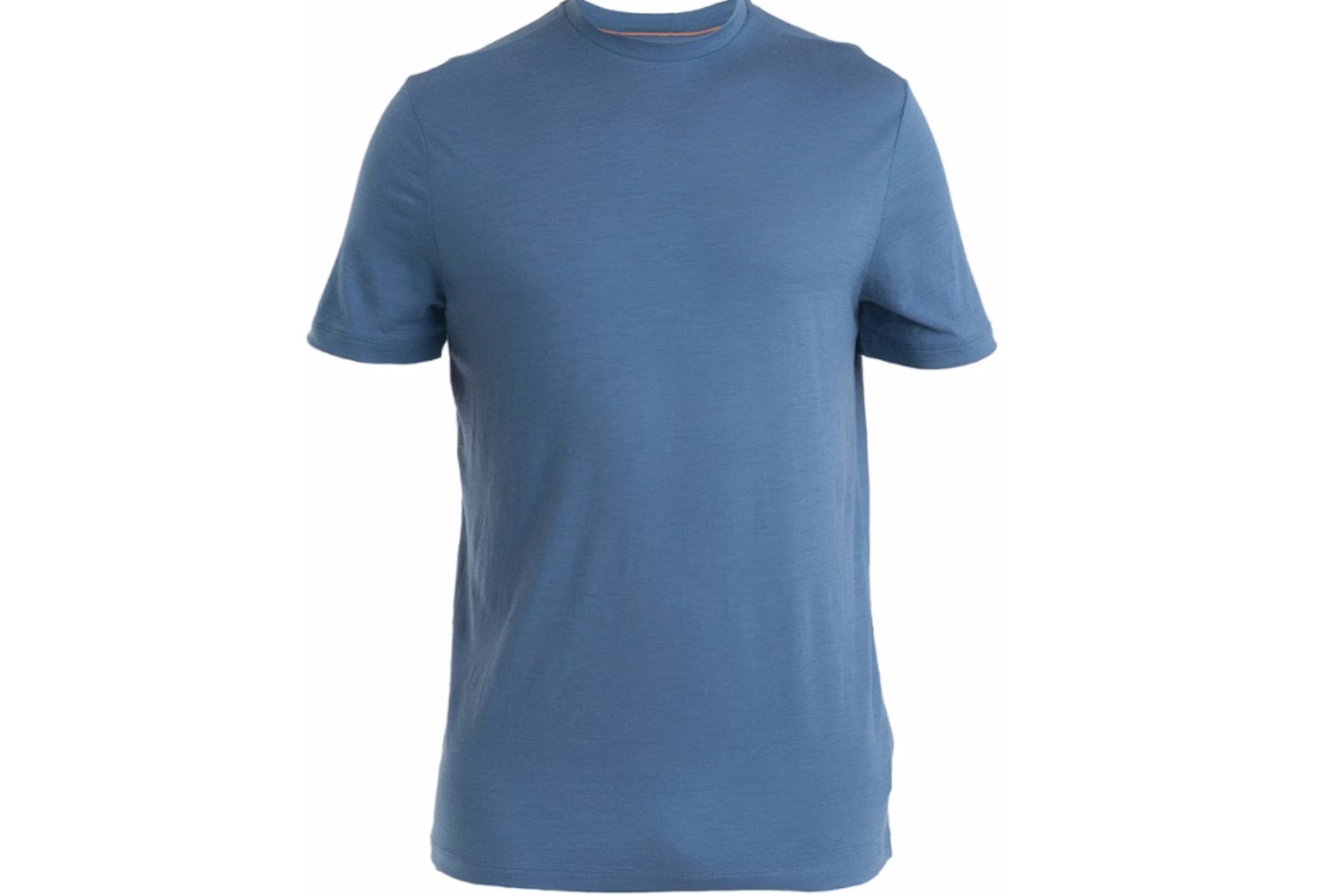
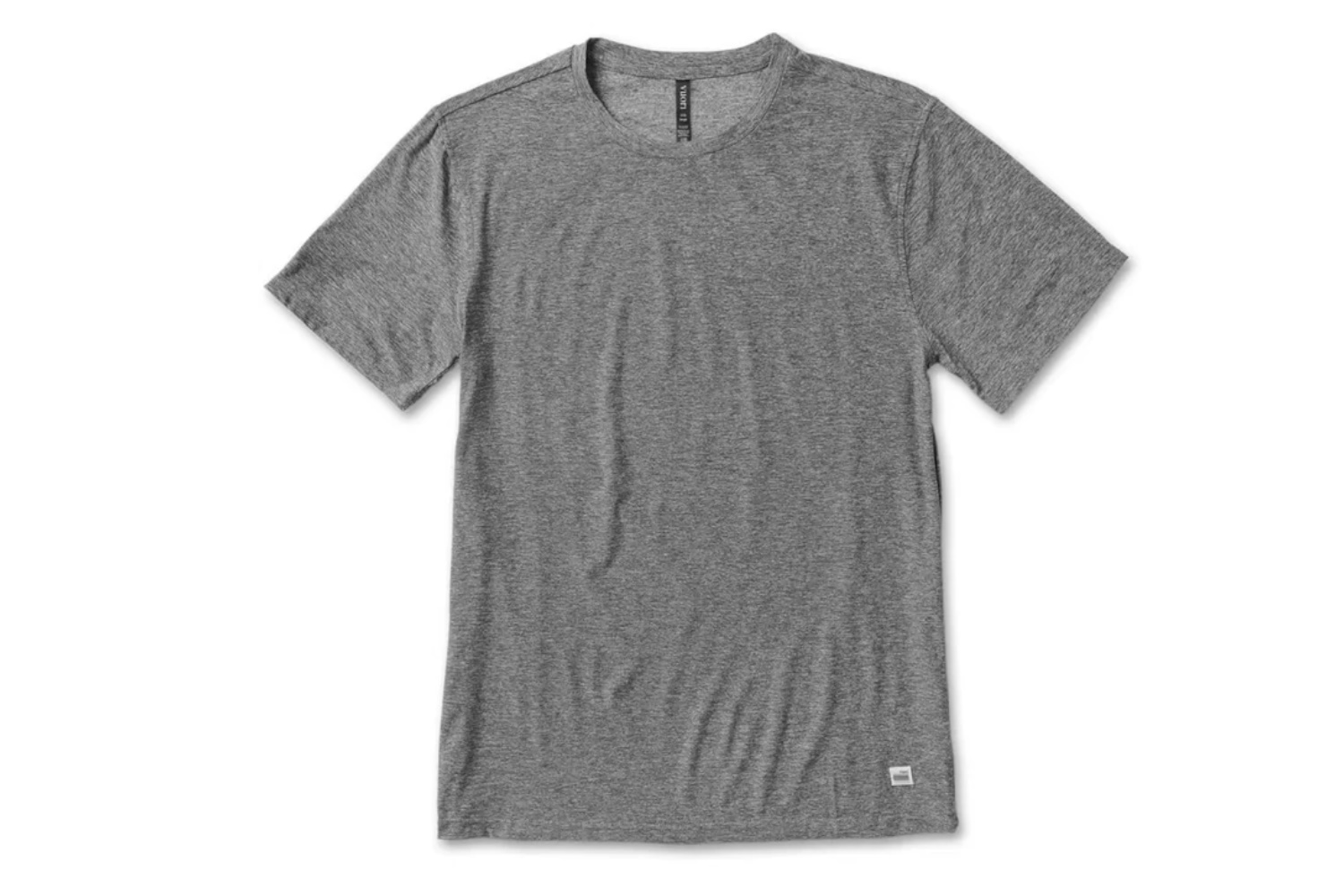
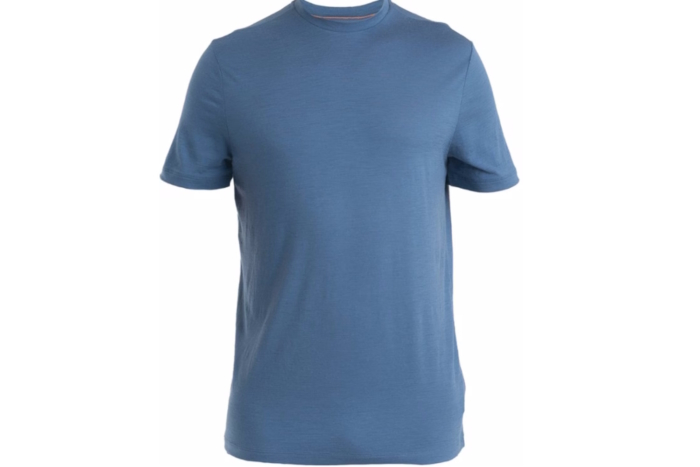
Icebreaker Merino 150 Tech Lite III

Specifications
Pros & Cons
Pros
- Lightweight
- Breathes extremely well
- Dried within minutes
- Excellent anti-odor properties
Cons
- Merino wool still gets that “wet dog” smell when it gets wet
- Wool isn’t the most durable material
Icebreaker has long been a classic, thanks to its excellent use of Merino wool, and the Icebreaker Merino 150 Tech Lite III ($85) is no exception. We’ve probably beat the properties of Merino wool into the ground by now, but let’s reiterate — this shirt wicks sweat, allows airflow to cool your body, and dries extremely quickly.
The speed with which this shirt dried on long runs is borderline silly. During testing, we soaked the shirt during sprint intervals in hot weather. Our tester hung it on a branch during a short water break, and it was just about dry by the time we were ready to go again.
The offset shoulder seams kept friction (and the resultant irritation) to a minimum, and the weave kept the air flowing through the shirt during long runs. There is no listed sun protection score, but Merino wool generally falls between UPF 30 and 50+.
But the aspect of this shirt that really stands out is its top-notch odor resistance. After a week of runs and workouts without a wash, the shirt was stiff with dried sweat but still didn’t stink. Our tester even left it in a hamper for four days under a pile of dirty workout clothes, and it came out smelling neutral.
While we haven’t found any rips or holes yet, Merino wool is generally not as durable as synthetic material, so that may be an issue over time. But if you’re looking for a shirt that hits the high notes — sweat-wicking, breathability, quick-drying — and has top-notch odor-resistance, the Icebreaker Merino 150 Tech Lite III is the one.
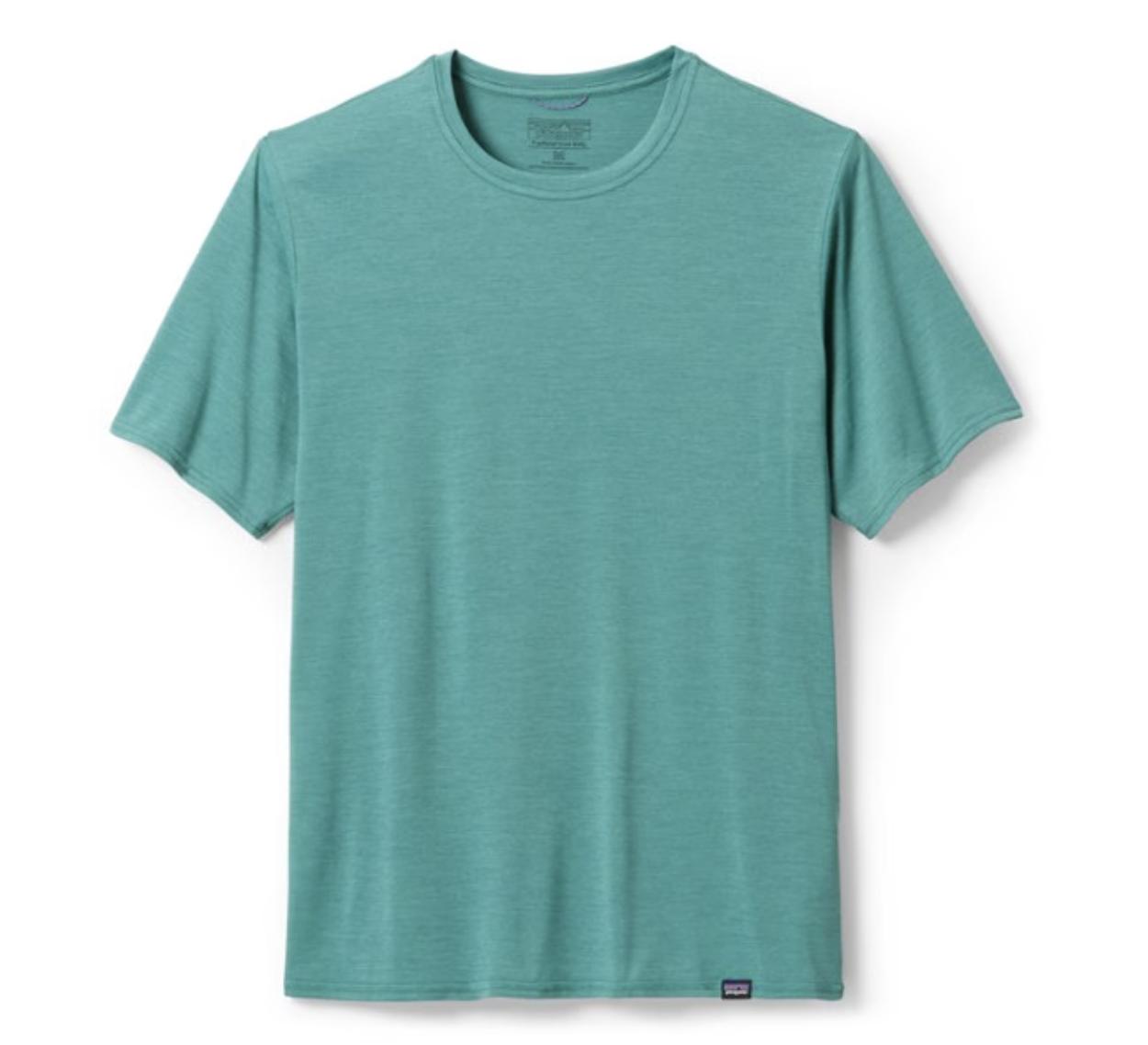
Patagonia Capilene Cool Daily
-

-

(photo/Will Porter)
Specifications
Pros & Cons
Pros
- Soft to the touch
- Great fit — relaxed but not baggy
- Dries quickly
- Can be worn while running or in casual settings
Cons
- No specified UPF rating
- Not exceptionally lightweight
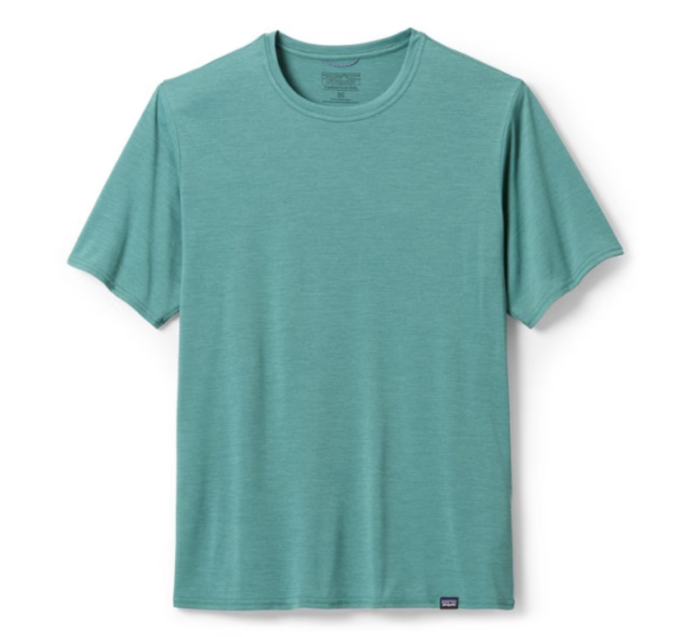
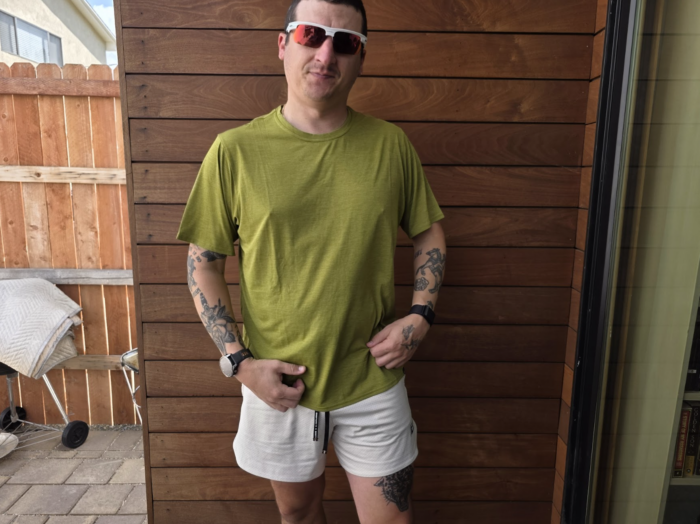
Patagonia may not be at the center of running culture or a brand that drops stylish collaborations every few months, but they sure do know how to make a good running shirt. The Capilene Cool Daily shirt ($45) is one of the best we’ve tried, thanks to its soft hand feel, excellent fit, and quality after dozens of wears.
Like most outdoor and fitness gear these days, the shirt is made with a litany of trademarked and proprietary materials that can easily confuse, but when you strip back the corporate speak, you’re left with a really good shirt that stands up to long runs, short runs, speed runs, trail runs, and everything else you could imagine.
The fit is impeccable — our tester wears a large and found it to be the exact fit he’d expect: the shirt isn’t too long, it has enough room to breathe around the torso, and the sleeves hit the right spot.
The shirt isn’t heavy — a large weighs just 4.5 ounces — but it also feels substantial enough to protect the body on (or off) the trail.
At $45, it may not jump out at you as a slammin’ deal, but compared to most of what we see these days, that’s a great price for a shirt that is made to last.
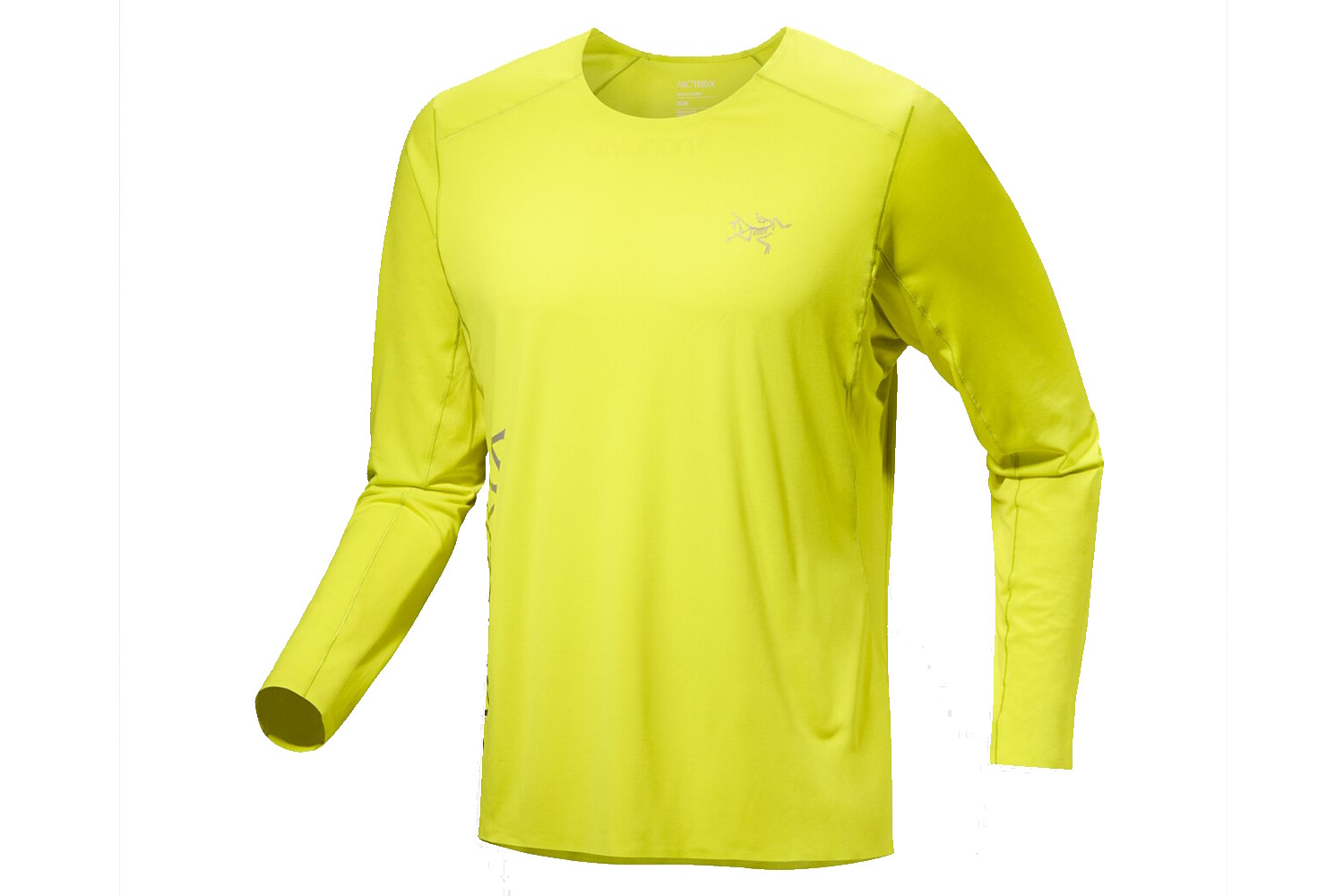
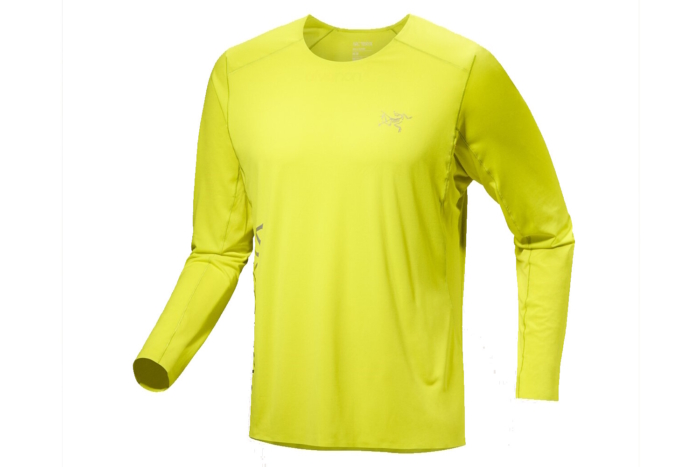
Arc’teryx Men’s Norvan Downword Logo Long Sleeve
Specifications
Pros & Cons
Pros
- Extremely lightweight and airy
- Laminated neckline reduces irritation
- Long sleeves provide plenty of sun coverage
Cons
- Expensive
- Long sleeves aren’t for everybody
Arc’teryx is no stranger to our “Best Of” lists, and the Arc’teryx Men’s Norvan Downword Logo Long Sleeve ($100) is a good example of why. The thought put into this shirt shows that it’s meant for long runs in the mountains. The shirt pairs Arc’teryx’s soft Phasic FL fabric with ultralight mesh on the back for excellent airflow.
Merrow seams and laminated finishes kept chafing at bay on long, sweaty runs, and the shirt wore well under hydration vests without any bunching or irritation.
Even though it’s a long-sleeve shirt, this is one of the lighter ones on this list, thanks to the incredibly airy open-mesh back. Plus, the long sleeves provide full sun protection. The only way to get more would be to make this a hoodie.
Thanks to the different materials throughout the shirt, the material feels light but isn’t fragile. The mesh at the back lets air flow, while the front panel and sleeves (where you’re more likely to encounter branches and whatnot) are made with a more substantial material.
Now, it is a pricey shirt, but with the Arc’teryx Men’s Norvan Downword Logo Long Sleeve, you can see where the money went. You’d be hard-pressed to find another shirt better suited for grinding out long miles in the mountains.
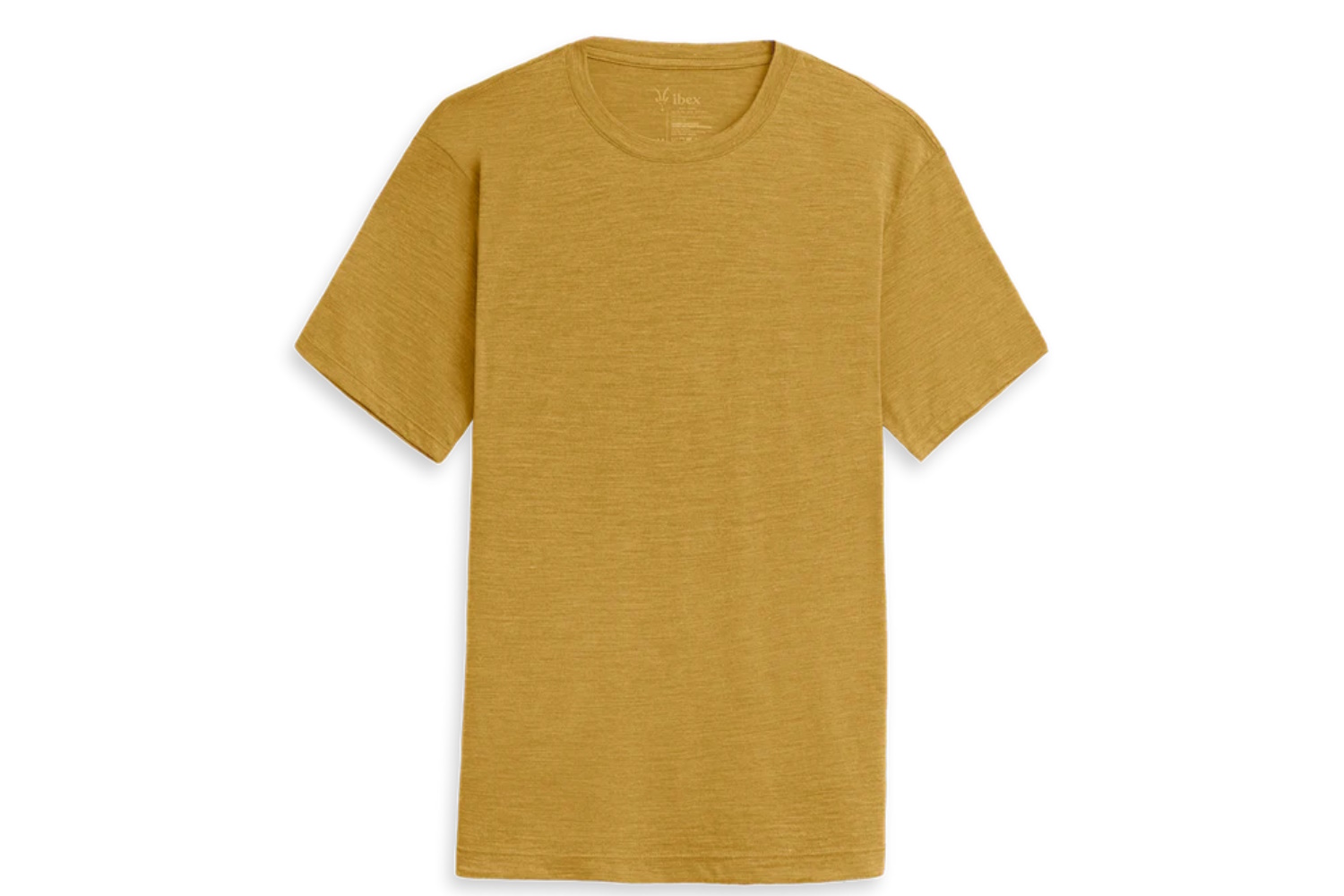
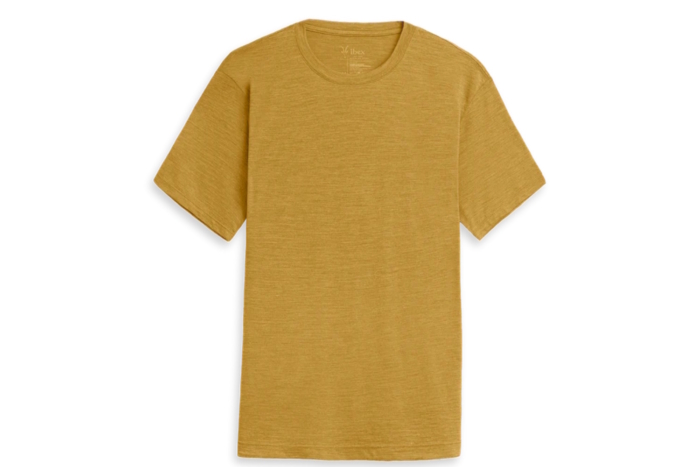
Ibex Merino Tencel
Specifications
Pros & Cons
Pros
- Outrageously soft
- Not scratchy
- Natural UPF 50 protection and anti-odor
Cons
- Heavy
- Can get warm in really hot temps
Needless to say, we’re huge fans of wool. In our experience, it has the best moisture-wicking and fastest drying time of any fabric. While we find most wool running shirts a tad scratchy, it’s not enough to prevent us from wearing them.
However, the Ibex Merino Tencel ($85) is the exception. Made with Tencel and a nylon core to increase durability (which it does), we found it to be more comfortable than other wool shirts, somehow achieving a much smoother texture. Ibex advertises it as a regular fit, but we found their typical size large to be more fitted than usual.
If you’re a fan of wool and interested in a slightly more comfortable, less itchy wool shirt, we strongly recommend checking out this well-designed running shirt.
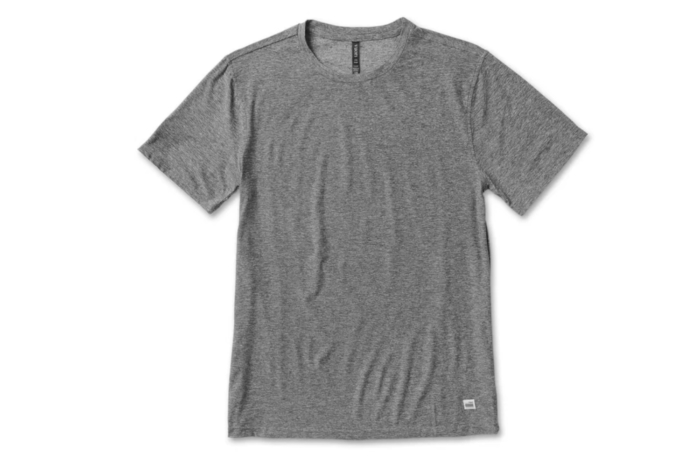
Vuori Strato Tech Tee
Specifications
Pros & Cons
Pros
- Crazy soft to the touch
- Great color options
- UPF 30 and anti-odor
Cons
- Long drying time
There’s nothing quite like a well-worn cotton tee. Unfortunately, even the best tech tees just don’t replicate cotton’s comfortable, soft-to-the-skin feeling. Meet the Vuori Strato Tech Tee ($54), a moisture-wicking running shirt with cotton’s cozy, supple feel.
In fact, it’s more comfortable than your softest cotton tee. Our tester found himself doing a double-take to ensure it wasn’t cotton. Sure enough, it’s 96% polyester and 4% Elastane. It also has anti-odor and a UPF rating of 30.
The tradeoff for all that comfort? During testing, the Strato Tech Tee took the longest time to dry. It’s certainly better than cotton, but it doesn’t compare to the other shirts tested in that category. If you drip sweat like a faucet, you may want to look elsewhere, but if you’re a mild sweater looking for a downright comfortable tee, this functions as one of the best running shirts you can buy.
And if you prefer simple, inconspicuous, but fashionable shirts, this will likely quickly become one of your favorite everyday tees.
Other Great Running Shirts We Tested
The following T-shirts didn’t make the top of our list, but that doesn’t mean you should write them off!
-

-
(photo/Will Porter)
Specifications
Pros & Cons
Pros
- Ventilation helps with breathability
- Reflective elements to help nighttime visibility
- Lightweight design is great for warm weather or layering
- Brushed fabric is soft to the touch
Cons
- Some may not like the wide fit of the neck hole
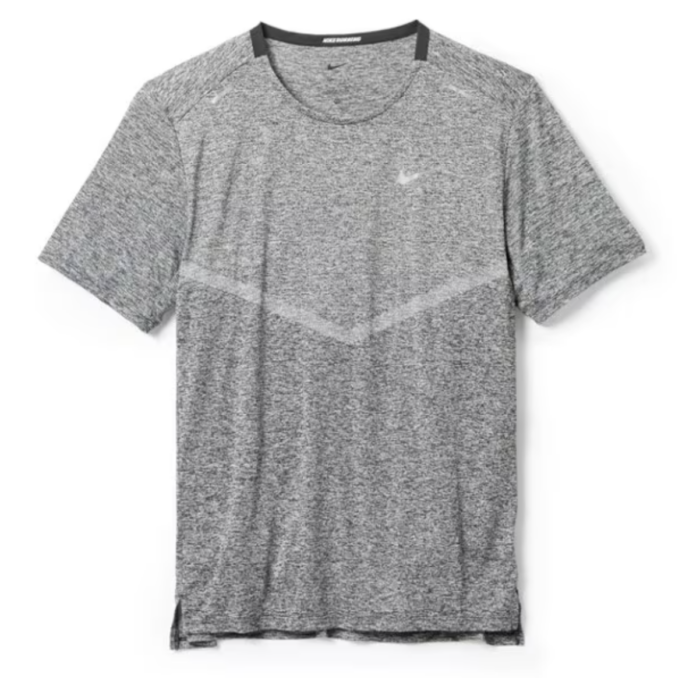
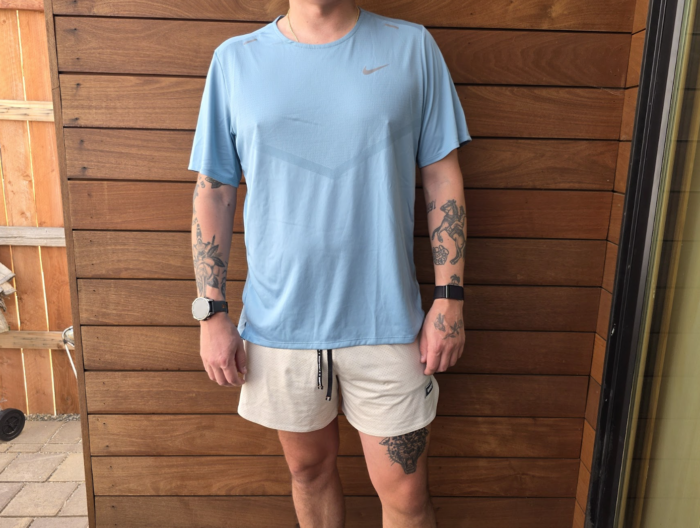
If you’re a fan of Nike, the Dri-Fit Rise 365 tee ($55) is a great pick for year-round running, though it may not be quite as light and breezy as it thinks it is. With that said, it’s still a high-quality shirt that is comfortable, soft, and thoughtfully designed.
We’ll start with the fit. The shirt we tested was a size large, and it fit like a true large. The sleeves hit a couple of inches above the elbow, the split hem allows for added coverage in the back without excess length in front, and the fit across the chest and torso is relaxed but not too baggy. The only thing worth noting is that the head hole is quite big, which may feel odd to some, but our tester grew to like it after a few runs.
The material is well-ventilated and not too heavy, but the marketing copy we saw claimed that this shirt was perfect for summer runs and high-heat situations, which we found to be a bit of an exaggeration — this shirt isn’t exceptionally light or breezy. But this isn’t a bad thing; the shirt is a great year-round choice and is relaxed-fitting enough to easily be worn over a tighter base layer when temperatures drop.
The shirt is a great pick for people who love to rock Nike, want to keep their drawer of fitness apparel full of versatile options, or want their running shirts to be packed with classy touches like ventilated materials and a split hem.
Specifications
Pros & Cons
Pros
- Material is lightweight and breezy
- High-quality construction
- The material dries in an instant
- Flat seams prevent chafing
Cons
- Lighter colors are slightly see-through
- The slim fit might not suit everyone
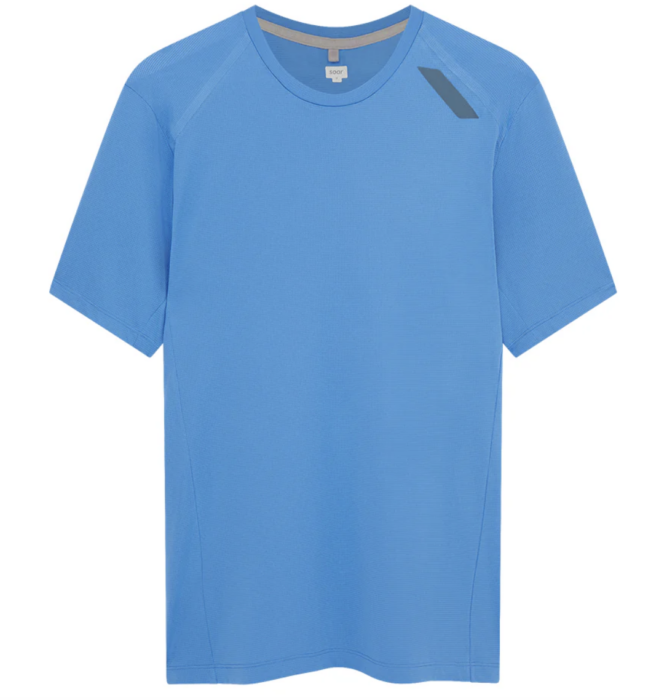
One of our favorite brands in recent times, Soar drops banger after banger, including the Eco Tech Tee ($100). The lightweight shirt is form-fitting (unless you’re an absolute twig), wicks moisture with ease, and oozes quality.
Our tester found the Eco Tech Tee to fit closer to the body than any of the other shirts he tested, though this wasn’t unexpected given Soar’s overall style, which skews more toward racers and experienced runners than it does to Turkey Trotters and weekend enthusiasts. If you like a shirt that is on the slimmer side, this is a great pick.
The material is light and airy, and the shirt’s high-quality construction definitely feels worth its steep price tag. There weren’t any loose seams or awkward stretching, even after a handful of washes. It will take a little extra care, though — we definitely would avoid putting this shirt in the dryer.
Reflective details add a bit of comfort when running in low-light situations, and the numerous color options make it easy for anyone to find a shirt that suits their style.
Overall, it may be a bit on the pricier side, but if the shirt suits your style and you don’t mind dropping a Benjamin on a running tee, we think copping one (or two) is a no-brainer.
Specifications
Pros & Cons
Pros
- Great value
- Soft against the skin
- Plenty of stretch
Cons
- Takes a while to dry
- Anti-odor treatment not the strongest
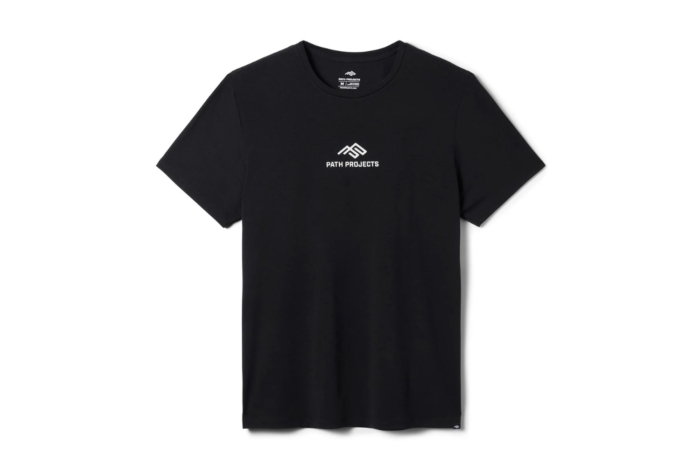
We’ve found that most low-cost moisture-wicking shirts feel a bit scratchy, but not the Path Projects Basis Logo Tee ($48). It has a soft, supple feel — almost like cotton — and the polyester/Tencel/Spandex fabric does a great job of wicking moisture away and drying it quickly. Plus, it’s extremely soft and stretchy. The Tencel material gives this shirt a cotton feel and what feels like an unlimited stretch.
Weighing in at just under 5 ounces, it’s not the lightest shirt we’ve tested, but it compares favorably to many of the higher-end shirts on this list. Still, we’ve tested a good amount of budget tech tees, and you won’t find a higher quality, more comfortable moisture-wicking running shirt at this price point.
Additionally, the cut and muted colors make it an option for running errands or going out. We’ve gotten several compliments on the shirt when going out for drinks after a long run.
If you run frequently but let your laundry pile high, you can have two Path Projects Basis Logo Tees on deck for the price of a single high-tech running shirt from one of the boutique brands on the list.
Specifications
Pros & Cons
Pros
- Extremely lightweight
- Airy
- Good value for money
Cons
- Thin
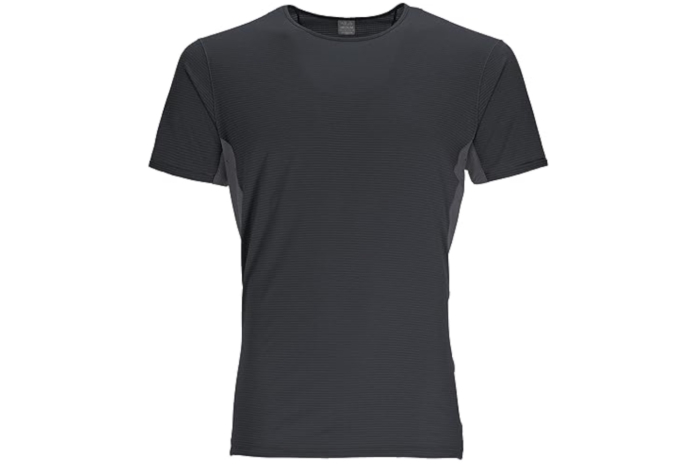
Rab makes some of the best technical mountain apparel we’ve tested, and the Sonic Tee ($40), a lightweight wicking tee designed for mountain running, is no exception.
Made with 100% polyester, it’s incredibly light and airy. The relatively thin fabric sits nicely against the skin and does a great job of venting and wicking the moisture off your skin to dry. Where it truly shines is in drying time. A soaked Sonic Tee dried up in just a few minutes of direct sunlight. It even comes with an antibacterial treatment to ward off odor between washes.
Rab advertises it as a regular fit, but we’d call it a slim-fitting shirt. If you prefer a looser-fitting lightweight shirt, you may want to size up. The bottom line is that the Sonic Tee is a well-priced, highly functional technical tee that is perfect for any warm-weather activity. It can quickly become your go-to running shirt for scorching days on the trail.
Men’s Running Shirts Comparison Chart
| Men’s Running Shirt | Price | Material | Weight | UPF Rating | Odor Control |
|---|---|---|---|---|---|
| Icebreaker Merino 150 Tech Lite III | $85 | 100% merino wool | 5.0 oz. | 30+ | Yes |
| Capilene Cool Daily shirt | $45 | Recycled polyester jersey | 4.5 oz | None | Yes |
| Path Projects Basis Logo Tee | $48 | 74% polyester, 19% Tencel, 7% Spandex | 4.8 oz. | 50+ | Yes |
| Arc’teryx Men’s Norvan Downword Logo Long Sleeve | $100 | 100% polyester | 3.9 oz. | None | Yes |
| Ibex Merino Tencel | $85 | 45% merino wool, 45% Tencel, 10% nylon | 4.3 oz. | 50+ | Yes |
| Vuori Strato Tech Tee | $54 | 96% polyester, 4% Elastane | 4.1 oz. | 30+ | Yes |
| Dri-Fit Rise 365 Tee | $55 | 100% Polyester | 4.6 | None | No |
| Soar Eco Tech Tee | $100 | 87% recycled PES, 13% EL | N/A | None | Yes |
| Path Projects Basis Logo Tee | $48 | 74% polyester, 19% Tencel, 7% Spandex | 4.8 oz. | 50+ | Yes |
| Rab Sonic Tee | $40 | 100% polyester | 3.4 oz. | No | No |
How We Tested the Best Men’s Running Shirts
Our Expert Testers
Long-time running gear reviewer and running coach, Cory Smith is our lead tester for men’s running shirts. Cory has been running for over 25 years and has been reviewing running gear since 2014.
For the 2024 update, Affiliate Managing Editor Billy Brown tested about a dozen new running shirts. Billy has spent over a decade testing running gear from Northern California’s Trinity Alps to the Wadi Rum desert wilderness in southern Jordan.
This year, runner and gear tester Will Porter adds his expertise and opinions to round out the guide. A veteran runner and cyclist, Will has run the Boston Marathon and backpacked through Northern California, carefully considering his gear selection all the while.

Our Testing Process
Cory ran road, track, and trails in Southern California and Mammoth Lakes, Calif., to vet and ultimately find the best running shirts on the market today.
Billy ran months of distance and sprint intervals in Central California, heading to the nearby Sierra Nevadas to see how the shirts performed on trails. We evaluated each shirt for comfort, wicking ability, drying times, and bonus features such as UPF and anti-odor properties.
Buyer’s Guide: What to Look For in a Men’s Running Shirt
Buying the perfect running shirt may not take as much effort as running shoes or even shorts. However, knowing a few key features can help you pick the best running shirt for your unique needs. Consider the options below before simply choosing your next running shirt based on style or color.
Fabric
As highlighted at the beginning of this article, moisture-wicking is the name of the game here. Luckily, pretty much every running shirt these days uses a moisture-wicking fabric.
There are two types of moisture-wicking fabrics: synthetic and natural. The three most popular types of synthetic moisture-wicking fabrics are polyester, polypropylene, and nylon. Wool, like the merino used in the Icebreaker Merino 150 Tech Lite III, is by far the best natural moisture-wicking fabric.
Each fabric has its strengths and weaknesses. For example, wool tends to be one of the best moisture-wicking fabrics and is capable of retaining 35% of its weight in water. It has natural anti-odor properties, but is more expensive and less durable than polyester and nylon.
On the other hand, polyester, polypropylene, and nylon are all extremely durable and more affordable but not as good at wicking and odor control as wool.
Many running shirts are made with a blend of fabrics, enabling them to get the best features of each material. The most popular blends are polyester, polypropylene, or nylon blended with a stretchy fabric like spandex or Elastane. This gives the fabric just enough stretch to increase mobility.
Fit
Fit is somewhat of a personal choice and largely depends on your body type and preference. It is expressed in two main ways: how tight around your body the fabric sits and the length of the hem and sleeves.
Manufacturers will often disclose how a shirt is intended to fit in the description. From tightest to loosest, here is a list of terms most companies will use: skin-tight, slim-fitting, athletic fit, and relaxed fit.
Those with a larger midsection may want to consider shirts with a longer hem to ensure enough length to reach below your waistline. Loose-fitting shirts can feel heavy and annoyingly floppy when wet. Because of this, many prefer a closer-fitting shirt, such as skin-tight or slim-fitting, when it’s raining.
One thing to consider if you’re interested in shirts with UPF sun protection is the more stretched out a shirt is, the less effective it is at blocking the sun’s UV rays.

Wicking
Wicking is the process that draws moisture away from the body and transfers it into the fabric. It works by using tiny capillaries (tubes) in the fabric’s weave. These capillaries work by sucking the moisture from your skin into the fabric’s inner layer and then moving it toward the outer layer to dry.
Every shirt we tested had above-average wicking ability, especially against a non-performance fabric such as cotton. However, there were varying degrees of wicking power. For example, the Icebreaker Merino 150 Tech Lite III and Ibex Merino Tencel had excellent wicking power, while the Vuori Strato Tech Tee had the worst but offered a far softer feel than the Ibex Merino Tencel.
Drying Speed
As mentioned above, most of today’s best running shirts do a great job of wicking sweat off your body. The most significant difference can be found in how quickly they dry once wet. Drying speed measures this, and if you’re pushing yourself enough to sweat, it’s perhaps the most crucial factor to consider when buying a running shirt.
When moisture is wicked away from your body and absorbed into the fabric, that moisture is then transferred from the inside layer of the shirt to the outer layer to dry with the help of wind and the sun.
Shirts with poor drying time will stay wet longer. Wool tends to have the best drying time, followed by polyester and nylon. A shirt’s thickness also affects drying time.
Anti-Odor
Let’s start with a little odor science. Believe it or not, sweat isn’t the sole source of B.O. It’s when sweat and bacteria that live on your skin react that a foul smell is created.
Because moisture-wicking fabrics pull the sweat away from your skin and move it through the inner layer to the outer layer to eventually dry, bacteria can grow in the tiny capillaries in the fabric. As bacteria gets trapped in the fabric, odors start to release.
There are two ways that shirts can help ward off odor. The first way is through the use of natural fabrics such as wool. Wool’s unique chemical makeup blocks odor by locking away the bacteria within the fibers.
The second way to ward off odor is through an antimicrobial treatment, which can be through chemicals or natural metals such as silver or gold.
Seams
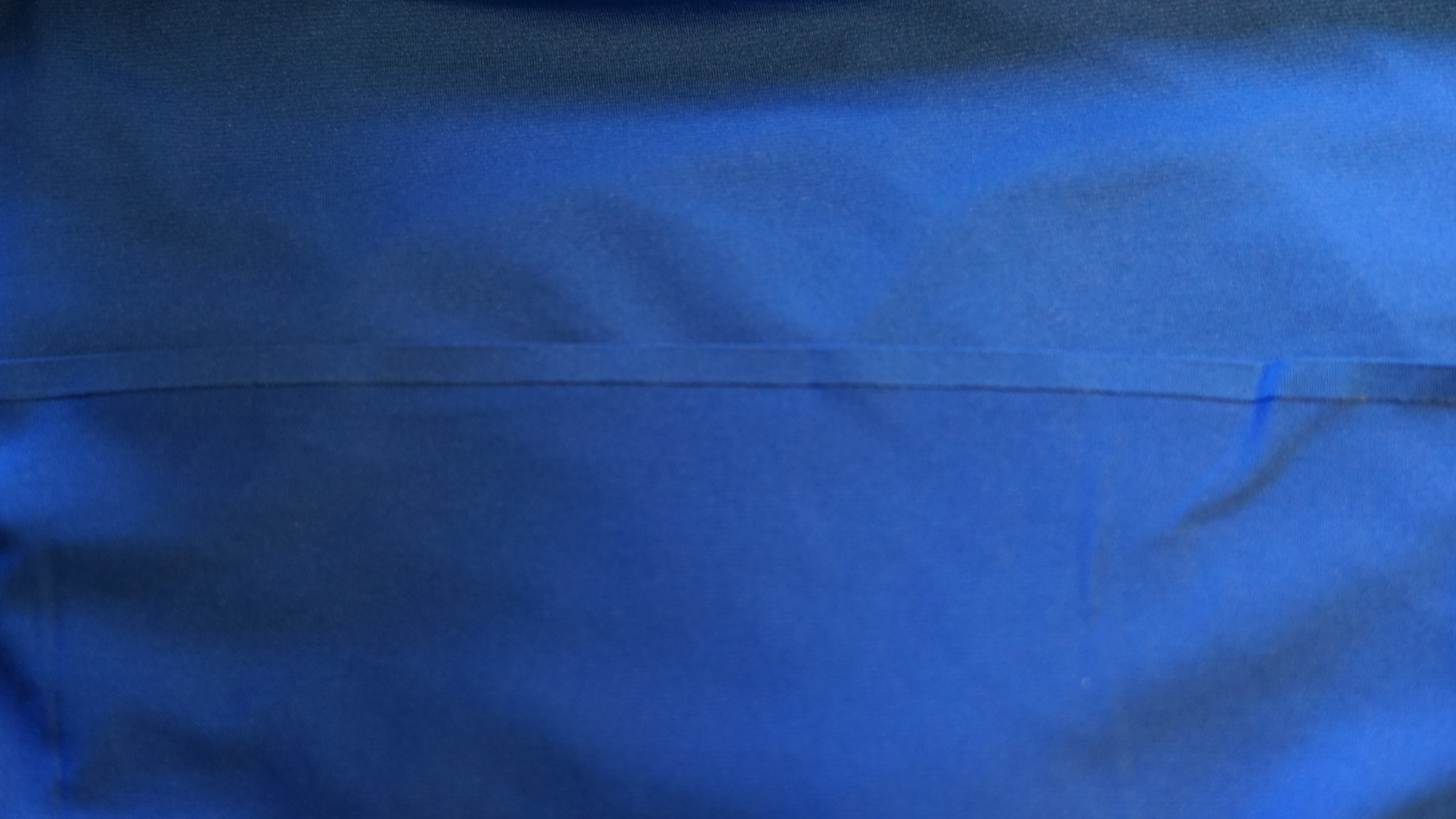
For simplicity, let’s divide seam stitching into two categories you should be aware of: flat and overlock. Flat seams are when two pieces of fabric are bonded together at their edges, creating a low-profile seam where they meet. Overlocking seams are folded over one another, producing a flap where the two meet.
Generally speaking, most running shirts use a flat seam construction because the low profile is less irritating and less likely to cause chafing. If you struggle with chafing that’s centered around the seam, we suggest looking at the type of seam.
If it’s an overlock, shop for some new shirts with flat seams. The best running shirts will avoid placing seams in high-friction areas such as under the arms and on the shoulders.
Sun Protection
Runners spend a lot of time in the sun. While many runners will think to put sunscreen on their face, arms, and legs, putting sunscreen on the skin underneath your shirt may not be as obvious. The sun’s harmful UV rays can penetrate most fabrics, leaving the skin under your shirt exposed to sunburn.
Cotton, for example, only offers a UPF of 5, whereas polyester and wool have a UPF of around 30. The American Cancer Society denotes, “A UPF of 30 to 49 as offering very good protection, while UPF 50+ is rated as excellent.”
Some shirts will offer added protection from the sun’s harmful UV rays by adding a chemical treatment that can give a shirt a UPF rating of 70+. Most running shirts that offer extra UV sun protection will list their UPF number in the description.
Price & Value
Budget
Obviously, you can run in a $10 Hanes T-shirt if you want, but cotton shirts tend to retain moisture, don’t always breathe well, and put you at risk for the dreaded nipple chafe. And while it’s entirely possible to spend $100 on a running shirt (more on that in a bit), you can find plenty of viable options for under $50.
Our budget pick, the Path Projects Basis Logo Tee ($48), for example, is made of a polyester, Tencel, and spandex blend that has the feel of cotton but dries quickly and effectively wicks away sweat.
Mid-Tier
Going up to the $50-90 range delivers more premium materials and some extra features. Our top pick, the Icebreaker Merino 150 Tech Lite III ($85), is made up of merino wool, which, in addition to the moisture-wicking, quick-drying properties that you’ll find in budget running shirts, is also so odor-resistant that we wore it for days on end without stinking.
The super comfortable Vuori Strato Tech Tee ($54) also falls into this tier. With a UPF rating of 30 and odor control, it has all the modern features and a polyester weave that feels softer than any other shirt we tested.
Premium
High-end running shirts can cost $100 or more, and the added price comes with some added features. The Arc’teryx Men’s Norvan DownWord Logo Long Sleeve ($100) is made up of quick-drying polyester and strategically placed mesh panels for exceptional ventilation.
The seams are also laminated to prevent chafing, and the polyester weave is lightweight but still surprisingly durable. There’s a higher price of entry with this level, but if you’re looking for top-tier material and design, you can expect to pay $100 or more.
Frequently Asked Questions
The best running shirts are made with a material such as polyester, nylon, polypropylene, or wool. Known as moisture-wicking, these fabrics are designed to wick (or remove) the sweat from your skin while running. The moisture is then absorbed through the fabric and moved to the outer layer to dry faster. The result — you’ll be more comfortable and feel cooler.
Cotton is considered a “non-moisture-wicking” fabric because instead of wicking moisture through the fabric to the outer layer to dry, cotton absorbs the moisture and takes an excessive amount of time to dry.
While running in a sweat-drenched shirt may seem harmless in the dead heat of the summer, it actually affects how your body cools itself, and accumulation prevents heat from escaping. Once a piece of the garment becomes soaked through, sweat starts to pool on your skin, acting as an insulator and blocking your skin’s ability to cool itself.
There is no universal rule on how your running shirts should fit, and it’s 100% a matter of personal preference. The most important thing is that the shirt feels comfortable when you’re running.
However, when it’s raining, a tighter shirt may be better than one that is loose. Loose-fitting shirts tend to get heavy and excessively flop around once soaked through, which can be annoying. A close-to-the-skin shirt will stay put.