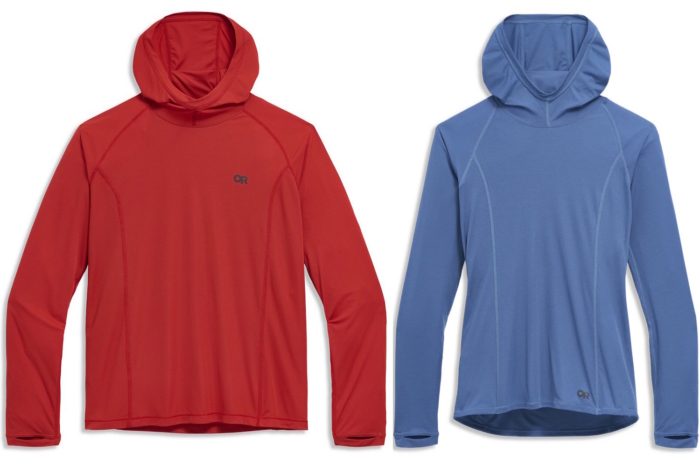
When the midday heat hits, my first instinct is to ditch my long sleeves — but my sunburn-prone skin won’t allow it. That tension is exactly what made the Outdoor Research Echo Hoodie ($79) so impressive. I tested it over a full year, from standup paddleboarding the Snake River and spring ski tours in the Tetons to bear-viewing trips in Alaska. Plenty of sun hoodies protect well. Fewer feel this light, soft, and easy to leave on all day.
The Echo isn’t the burliest or most protective shirt I’ve tested. It still became my top choice for moving hard, sweating often, and dealing with shifting mountain weather. No other layer came as close to feeling like I wasn’t wearing one at all.
In short: The Outdoor Research Echo Hoodie is the lightest, airiest, most breathable sun shirt I tested, and it shines in hot weather, high-output movement, and humid travel. A UPF 15 to 20 rating keeps it from being a top pick for maximum sun protection, but the tradeoff is exceptional comfort. For paddling, hiking, backpacking, and ski touring, it’s the layer I genuinely wanted to keep on.
Compare the Outdoor Research Echo Hoodie with the best sun protection shirts in our full buyer’s guide.
-

-
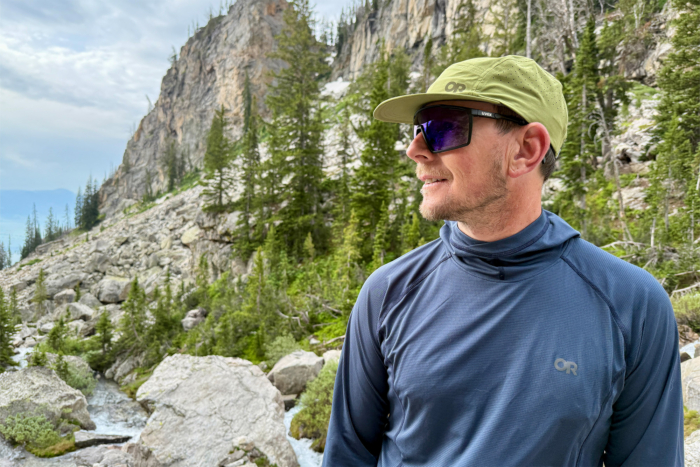
The OR Echo Hoodie proved to be the ultimate barely there layer for demanding summer days on the trail; (photo/Elk Raven Photography)
-
Setting the pace. We tested the Echo over a full year to evaluate its true breathability and moisture management; (photo/Elk Raven Photography)
-
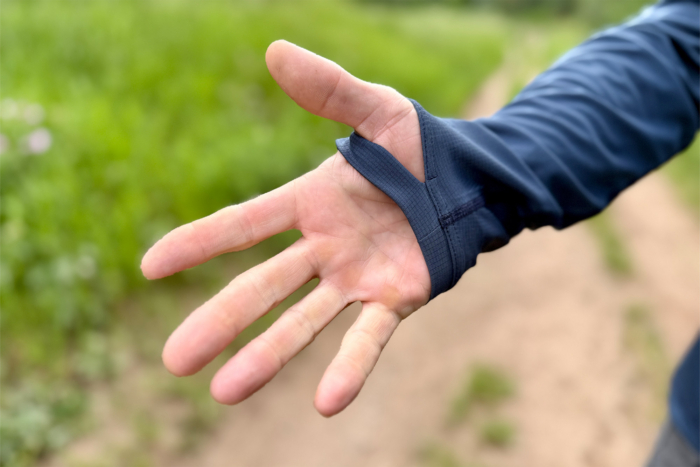
Angled thumbholes secure the sleeves, providing seamless UV protection without restricting hand movement on your gear; (photo/Elk Raven Photography)

Specifications
Pros & Cons
Pros
- Exceptionally breathable and fast-drying
- Soft, barely there feel
- True four-season versatility
- Packs down tiny
Cons
- Lower UPF rating than many competing sun shirts
Outdoor Research Echo Hoodie Review

Fit & Comfort: A Barely There Feel
Outdoor Research lists the Echo Hoodie at just over 5 ounces. I put my test sample on a scale, and it landed right about there, among the lightest hooded options I’ve used. The difference is noticeable the second you put it on.
The fabric is buttery soft, thin, and airy without feeling cheap. Some technical layers turn slick or plasticky once they get sweaty. The Echo feels comfortable from the first wear and stays that way even when damp.
That softness mattered most on longer days. I wore it under backpack straps, PFDs, and ski packs, and the seams never created rubbing or hot spots. The fabric moves easily, so I never felt restricted while paddling, skinning uphill, or reaching for gear.
The fit is another high point. It’s trim enough to avoid feeling sloppy, but not so close that it traps heat. With plenty of room for airflow through the torso and sleeves, it ran far cooler than the tighter, heavier hoodies I’ve worn in the same conditions.

Breathability: Zero Swamp Factor
The Echo’s best quality is its sheer breathability. On warm paddleboarding days, I could keep it on instead of debating whether the UV protection was worth the heat buildup. On ski tours, it gave me just enough cover from sun and light wind on the uphill — without turning into a swampy mess under my pack.
The fabric moves moisture quickly. When I sweated through it, the material didn’t stay soaked for long. It never developed the clingy, heavy feeling that makes some tops miserable once temperatures climb. That paid off most on back-to-back travel days, when changing layers wasn’t an option.
It also handled odor better than I expected from such a wisp of a shirt. I wouldn’t call it magic, but I wore it several days hiking on bear-watching trips in Alaska before it turned offensive. For remote travel and long days outside, that’s a major plus.

The Details: Simple but Dialed
The Echo is a simple shirt, but the details are dialed. The thumbholes stand out. They’re angled to keep the sleeves pulled over the backs of my hands without twisting the fabric, digging into my palms, or cutting off circulation.
That might sound minor, but thumbholes can make or break a sun shirt. Some stretch too much, some pull awkwardly across the hand, and others become a nuisance the moment you grab trekking poles. The Echo’s thumbholes were comfortable enough that I actually used them.
The hood works just as well. It adds useful coverage for the sides of the face and neck without feeling overly structured. I reached for it most on high-output days, when I wanted shade with no bulk around my head.
My wife wore the Echo as much as I did, and the ponytail slot was her favorite detail; it keeps her hair from fighting the hood the way most sun shirts do. The whole piece is built around movement, and that restraint is a big part of why it works.

Durability: Punching Above Its Weight
Going in, I had questions about durability. The Echo’s fabric is wispy, and I expected it to show wear quickly under packs, around boats, and on rough travel days.
It didn’t. After a year of hard use, my test sample showed no meaningful wear. No major pilling, no seam issues, no holes, no stretched-out spots. For normal hiking, paddling, and travel, it held up far better than its featherweight fabric suggests.
Room for Improvement
The main drawback is sun protection. The Echo Hoodie carries a UPF 15 to 20 rating, depending on color, which is well below many competitors in this category. Shirts like the Black Diamond Alpenglow Pro and Mountain Hardwear Crater Lake offer UPF 50+ protection.
That lower rating is the only reason I won’t call the Echo the best overall sun hoodie for everyone. For long desert hikes, glacier travel, fishing trips, or any outing with intense exposure and little shade, I’d rather have a higher-UPF layer.
I’d also be careful with it in abrasive terrain. My test shirt held up extremely well, but the material is thin enough that I wouldn’t drag it through dense brush or over sharp rock.

Outdoor Research Echo Hoodie: Who Is It For?
The Echo Hoodie is for hikers, paddlers, runners, and travelers who run hot and want as little shirt as possible between them and the sun. It’s especially good for high-output days when a heavier UPF 50+ shirt feels like too much, and it doubles as an excellent packable travel layer.
It’s not the right call for anyone who needs maximum UV defense above all else. If you spend long days in harsh alpine terrain or water-reflected sun, reach for a higher-UPF option instead. Those thicker shirts feel more protective, even if they can’t match the Echo’s airy comfort.
For me, the Echo fills a role that nothing else does. It’s the shirt I reach for on hot, high-effort days, when I need light coverage without feeling weighed down. It proved lighter and more durable than I had any right to expect, and for high-output comfort, it remains one of the best sun shirts I’ve worn.