I love a good campfire. I love building one, cooking over it, tending the coals, and sitting around it long after I have any real reason to. I’m not very interested in replacing that experience with a propane burner.
There are, however, times when building a wood fire is a pain in the ass. Sometimes everything is soaked, fire restrictions won’t allow one, or I simply don’t have the time to build a fire and properly extinguish it. I’ve used plenty of propane fire pits over the years, and most have left me pretty underwhelmed, particularly when it comes to actual warmth.
The HOWL R3 has changed my opinion a bit. I tested it at home, in the mountains at elk camp, along the river, and at Trail Feast in Montana. It puts out an impressive amount of heat, provides decent light, and feels more like a traditional campfire than most propane alternatives I’ve huddled around.
In Short: The HOWL R3 ($875) is an excellent propane fire pit for overlanders, car campers, and anyone who wants a fire when the weather isn’t cooperating. It puts out serious radiant heat and offers a surprisingly authentic campfire experience, though it’s heavy and burns through propane at an impressive rate.
HOWL R3 Review
Specifications
Pros & Cons
Pros
- Excellent radiant heat
- Convincing campfire atmosphere
- Decent light output
- Great for wet conditions
Cons
- Burns through propane
- She's Spendy
R3 Features

The HOWL R3 uses two burners controlled by a single knob. Its BarCoal system has a stainless steel U-shaped tube that heats to approximately 1,100 degrees Fahrenheit and produces radiant infrared heat. The A-Flame burner generates visible flames up to 24 inches high.
The fire pit has folding GullWing legs, an 8-foot propane regulator hose, and stainless steel, aluminum, and brass construction. Both burners incorporate wind protection and drainage features for wet conditions.
Testing the HOWL R3
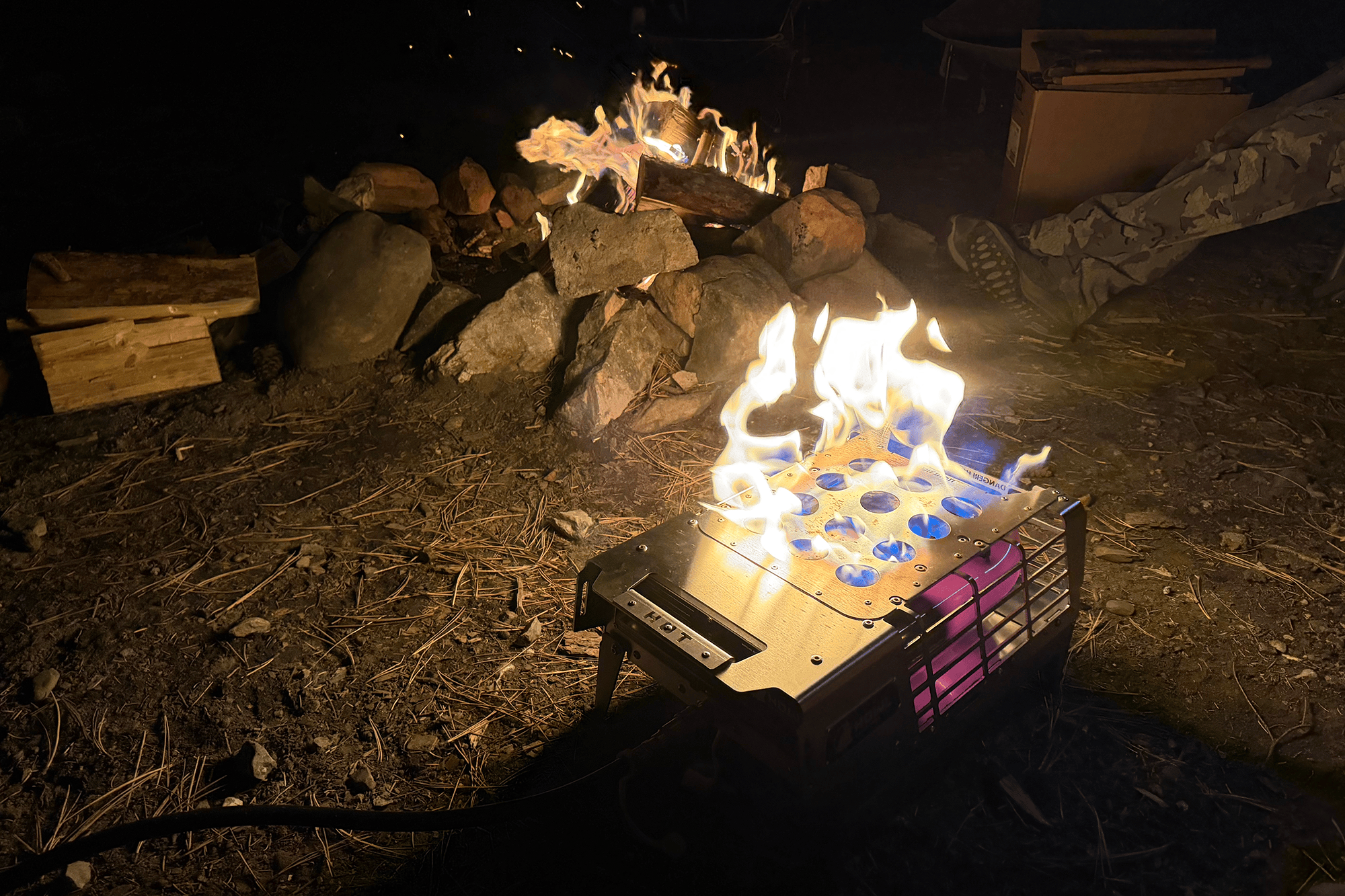
I used the R3 in several different settings, including at my place, at elk camp in the mountains, along the river for lunch, and at Trail Feast. Over that time, I used it for everything from warming up on wet mornings to short afternoon fires and longer evenings sitting around camp.
I also put a fair amount of food over the flames, despite the manufacturer’s instructions prohibiting cooking. More on that in a bit.
Heat and Campfire Feel
The R3 produces a ton of heat. The BarCoal system radiates warmth outward, and you can feel it from a reasonable distance while sitting in a camp chair. It was easily one of the warmest portable propane fire pits I’ve used, and I appreciated being able to sit around it without constantly moving closer to the burner.
It also has a decent flame, which helps considerably with the overall experience. There’s enough light to see the people you’re sitting with, and the combination of the glowing BarCoal and A-Flame gives it a more convincing campfire feel than the typical propane burner surrounded by decorative rocks.
Of course, you’re missing the smell and crackle of burning wood, but I never found myself particularly disappointed in the experience. For a propane fire pit, that’s saying something.
Elk Camp: When Everything Is Soaked

Elk camp was where I probably appreciated the R3 the most. There were mornings when I woke up to everything soaked, and getting a wood fire going in those conditions would’ve been a pain in the ass.
With the R3, I could have a fire ripping without battling wet kindling or trying to track down dry wood. It was convenient, and the heat output was more than enough to make those cold, damp mornings considerably more comfortable.
The R3 is also designed to operate in wet and windy conditions, with protected air intakes and drainage features. I didn’t have to worry about having a supply of dry firewood, which was particularly nice when the weather had other plans.
I still prefer a wood fire when I’ve got the time and conditions to enjoy one, but I was awfully happy to have the R3 along at hunt camp.
Hot Dogs, Elk Steaks, and Trail Feast

I also did some cooking over the R3 during testing. The menu ranged from cheap hot dogs to elk steaks, with the occasional marshmallow thrown in for nutritional balance.
There’s an important caveat here. HOWL specifically prohibits cooking or heating food over its fire pits. The R3 is certified as an outdoor decorative gas appliance, so my cooking experiments were outside the manufacturer’s approved use. I wouldn’t recommend treating it as a replacement for a proper camp stove or cooking fire.
I also tested the R3 at Trail Feast, an event centered around outdoor cooking and gathering around fires. It was another opportunity to appreciate the interplay of heat and visible flame, particularly in a setting where the fire itself is central to the experience.
I enjoy having a fire as the centerpiece of camp, whether we’re cooking, visiting, or simply sitting around doing absolutely nothing productive. The R3 did a nice job of providing that atmosphere without requiring anyone to keep feeding it wood.
HOWL R3 vs. R4: What’s the Difference?

We’ve previously reviewed the larger HOWL R4, and the R3 offers much of the same technology in a smaller package. The R3 has one BarCoal radiant burner and one A-Flame burner, while the R4 MKii has two BarCoal burners and one A-Flame burner. The R4 also allows you to control the radiant heat and visible flame independently, while the R3 operates both with a single knob.
At 20 pounds, the R3 weighs 7 pounds less than the R4 MKii and folds down to roughly half its volume. It’s also considerably cheaper at $875 compared to $1,474. The R4 is better suited for serious winter camping, but after testing the R3, I think it’s plenty of a fire pit for most three-season camping trips.
Portability
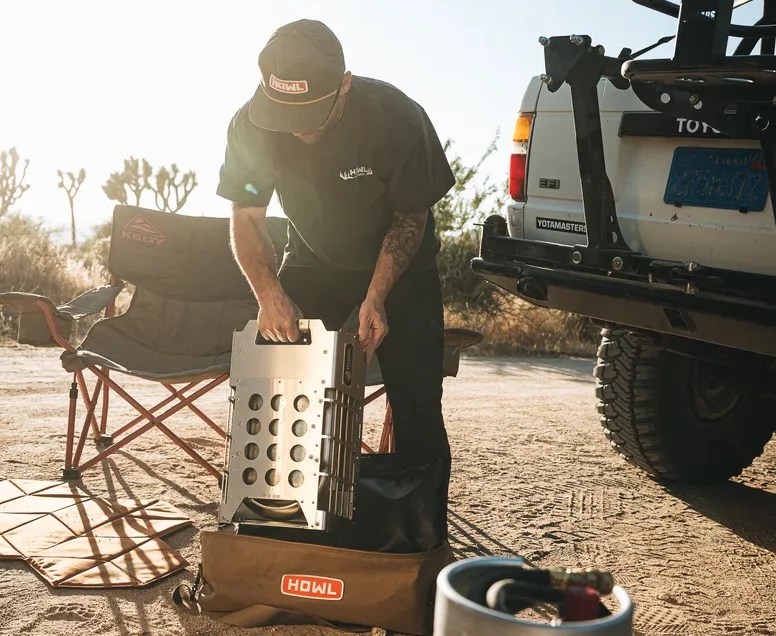
The R3 folds into a compact rectangular package, with its GullWing legs tucked into the body. I had no problem finding room for it in the truck alongside my other gear, and the shape makes it relatively easy to pack.
What surprised me was the weight. At 20 pounds, it’s substantially heavier than its size suggests, although the stainless steel, aluminum, and brass construction give it a solid feel. It isn’t something I’d want to carry particularly far, especially once you add a propane tank.
For overlanding, car camping, or an established hunting camp, the weight is manageable. I was hauling it around in a vehicle, so it wasn’t a major inconvenience, but it’s certainly worth accounting for when packing.
Who Should Buy the HOWL R3?
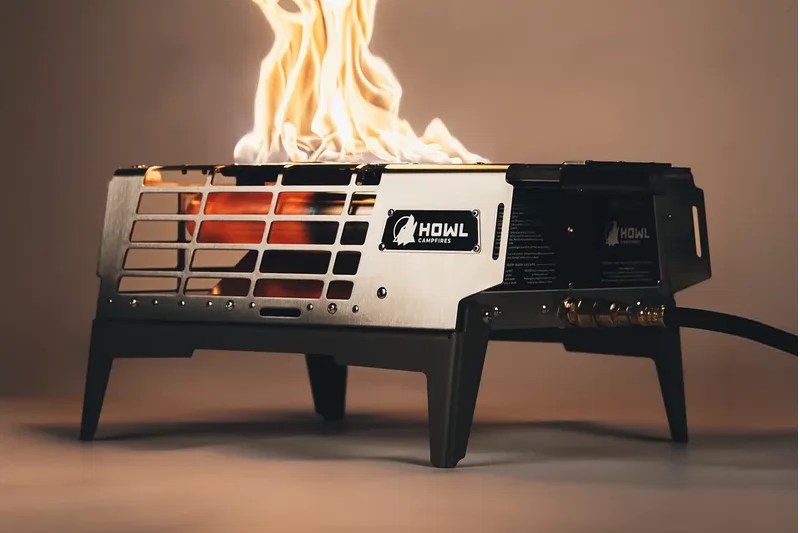
I think the R3 is a fantastic option for overlanders and car campers, particularly those who spend a lot of time outdoors in cold or wet weather. It’s also a good fit for established hunting camps where having a reliable source of heat can make a pretty miserable morning a whole lot better.
I particularly liked it for shorter fires. If you’re stopping along a river for lunch or want to sit outside for half an hour, it’s nice to have the option without building a wood fire.
It may also be useful for campers traveling through areas where traditional fires are restricted but qualifying propane appliances are allowed. You’ll still need to check the regulations wherever you’re camping, but the flexibility is appealing.
Where It Falls Short
My biggest complaints about the R3 are the weight and propane consumption. At 20 pounds, it’s a fairly hefty little fire pit, and the propane cylinder adds considerably more weight and bulk to the setup.
It also burns through fuel. At full output, the R3 will empty a 20-pound propane tank in approximately 6 hours. That’s a substantial amount of propane, particularly if you’re running it for several hours every evening. You can reduce the output to extend the runtime, but I’d plan on carrying extra fuel for longer trips.
The $875 price tag is another consideration. It’s considerably more expensive than most portable propane fire pits, but the heat output and construction are also significantly better than I’ve experienced with cheaper alternatives.
For someone who camps a handful of nights each summer, the price might be difficult to justify. If you’re spending weeks at a time on the road or in camp, I think there’s a stronger argument for the investment.
HOWL R3 Review: Final Thoughts

The HOWL R3 isn’t going to replace a traditional campfire for me. I enjoy building fires, cooking over coals, and spending hours tending them, and I’ll continue to do so whenever I have the chance.
What I liked about the R3 was that it offered a good alternative when a wood fire wasn’t practical. At elk camp, I could wake up to everything being soaked and still have a fire going with little effort. At home and along the river, I could enjoy a short fire without having to build one and then immediately extinguish it.
It puts out a ridiculous amount of heat, provides decent light, and offers a much better campfire experience than most propane pits I’ve used. It’s heavy, expensive, and burns through propane, but I enjoyed having it around.
For overlanders, car campers, and hunters who spend a lot of time outdoors in lousy weather, the HOWL R3 is a pretty damn nice piece of equipment. I’ll still take a good wood fire when the opportunity presents itself, but I’m happy to have this one in the truck.