One of the vehicles I learned to drive on wore Kumho tires for many years. Now, admittedly, that Mk4 Volkswagen Golf TDI lacked any performance panache or off-road capability. But the treadwear durability, confidence in wet and dry, and pricing all worked well for my family’s budget.
I never even realized Kumho also produced an all-terrain tire until the company offered to send me a set of the Road Venture AT52 to test. Given some elements of curiosity after those positive impressions from my teenage years, plus the wide range of sizes available, I took a leap of faith.
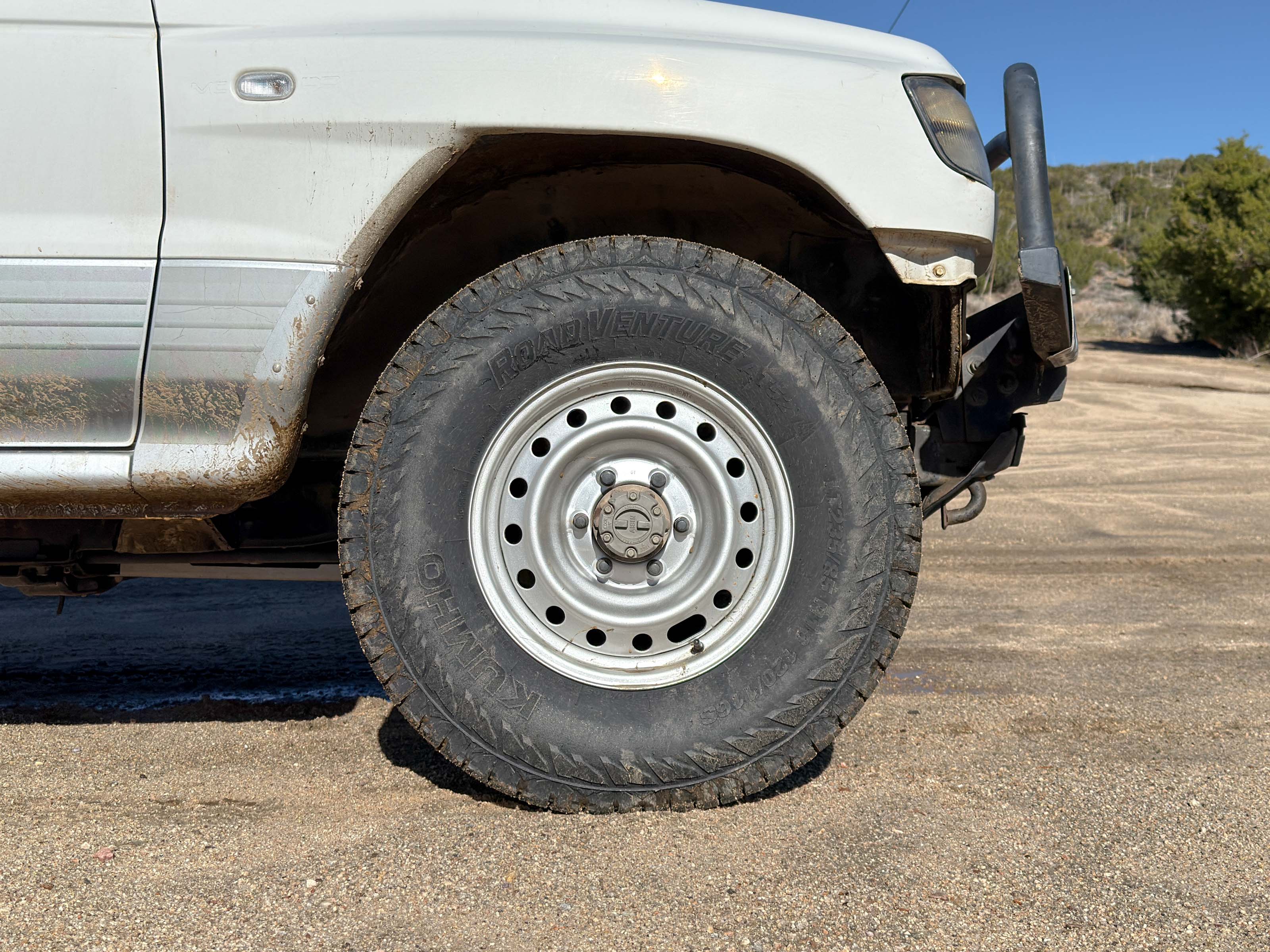
I’m all about pizza cutters for my 1990s-era Mitsubishis. And Kumho sells the Road Venture AT52 in a tall yet narrow 235/85R16 size, which fits my steelies perfectly. Critically, they measure in as a big 31-incher or a small 32. This adds capability and ground clearance without too much weight or rolling resistance.
I drove the Road Venture AT52 for over a month all over Southern California, across a mix of dry asphalt, some axle-deep mud, a torrential downpour at highway speeds, and on my favorite off-road vehicle testing trail. Sadly, I never found snow or ice to truly test the Three-Peak Mountain Snowflake (3PMSF) capability, and reporting on treadwear will require more time.
In short: For a mild all-terrain used mostly for on-road driving, with occasional ventures (pun intended) off the beaten track, the Kumho Road Venture AT52 delivers stellar value. Steering feel exceeds much more expensive competitors, though the sidewalls flex more than a typical load range E tire. I wound up wishing Kumho sold these for 14-inch wheels. Then, I could put a set on my mini truck for hauling motorcycles to the track or dirt bikes to the desert, in any and all weather conditions.
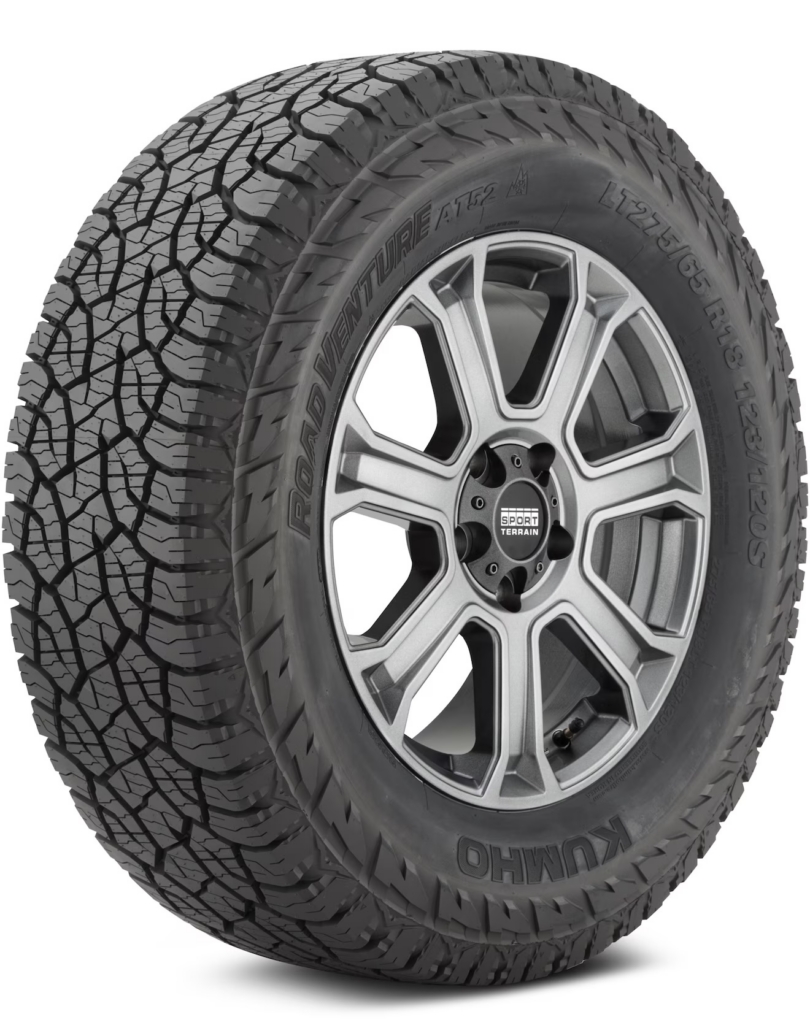
- Sizes: 15-22" (235/85R16 as tested)
- Speed ratings: R/Q/T
- Load ranges: SL, XL, LT C, D, E, and F
- Traction type: All-terrain
- Treadwear warranty: 55,000-mile (P metric), 50,000-mile (LT metric)
- MSRP: $150-400 ($210 on Tire Rack, as tested)
Pros
- Budget-friendly pricing
- Excellent steering feel on asphalt
- Low road noise
- Lots of tire size options
- Lightweight at every size
Cons
- Surprising sidewall flex for a Load Range E tire
- Doesn’t effectively fling mud off the tread blocks in seriously filthy scenarios
- LT tires get slightly lower mileage warranty
Kumho Road Venture AT52 Review
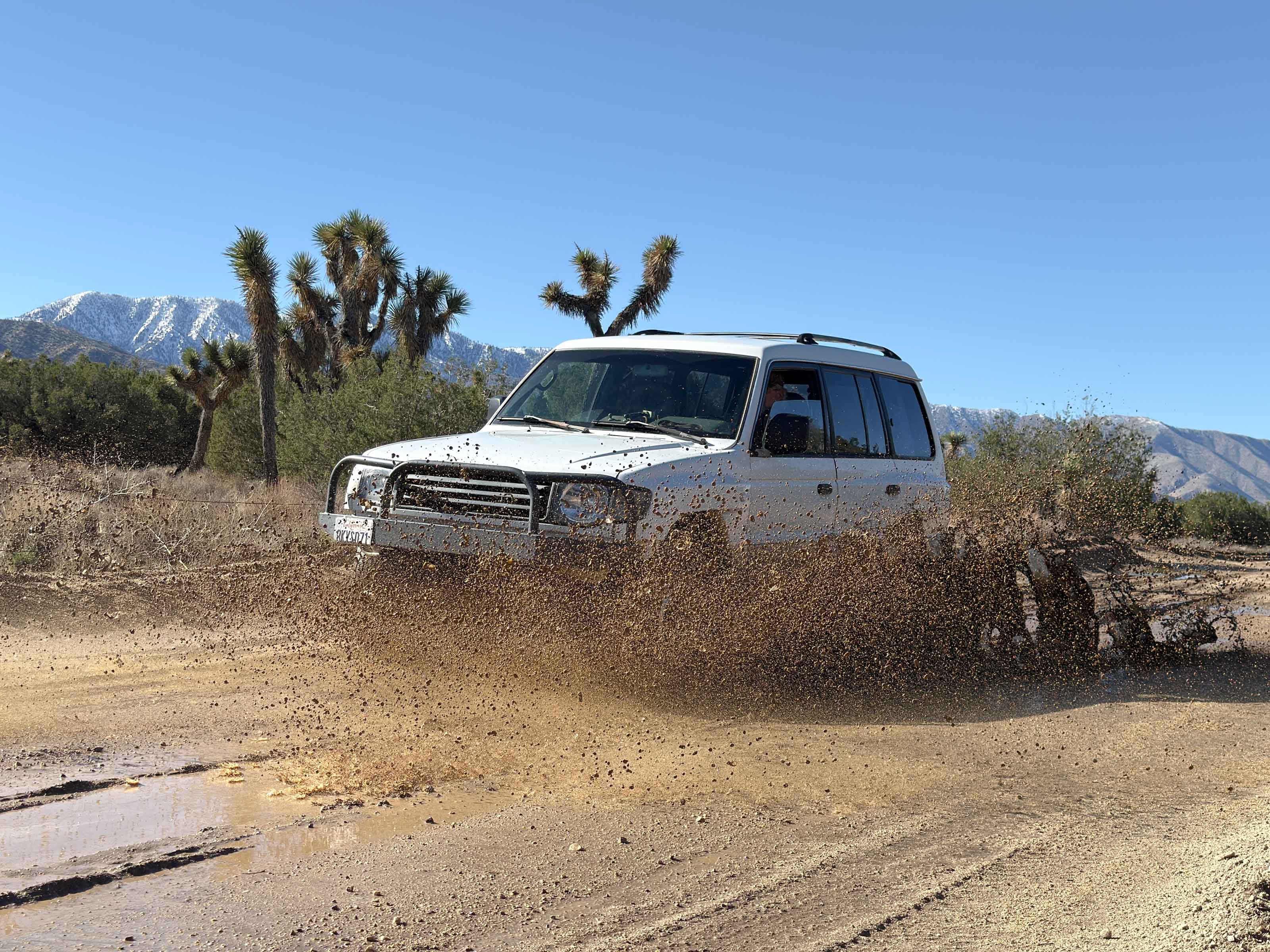
My main daily driver, when I don’t have press loaners, is a 1998 Mitsubishi Montero with the winter package. Last year, I regeared the diffs from 4.27 to 4.90 final drive ratios, which gave me the confidence to mount a beefy set of 285/75R16 BFG KO3 tires. The KO2’s replacement definitely stands apart as the best on the market. But the sizing put some strain on my vintage rig, so I wanted to go back to pizza cutter life.
The set of Road Venture AT52 tires arrived and immediately, I thought they looked better than in the pics online. The sidewall and shoulder design especially adds a sense of three-dimensionality, though the tightly spaced lugs on the center of the tread still keep things relatively restrained.
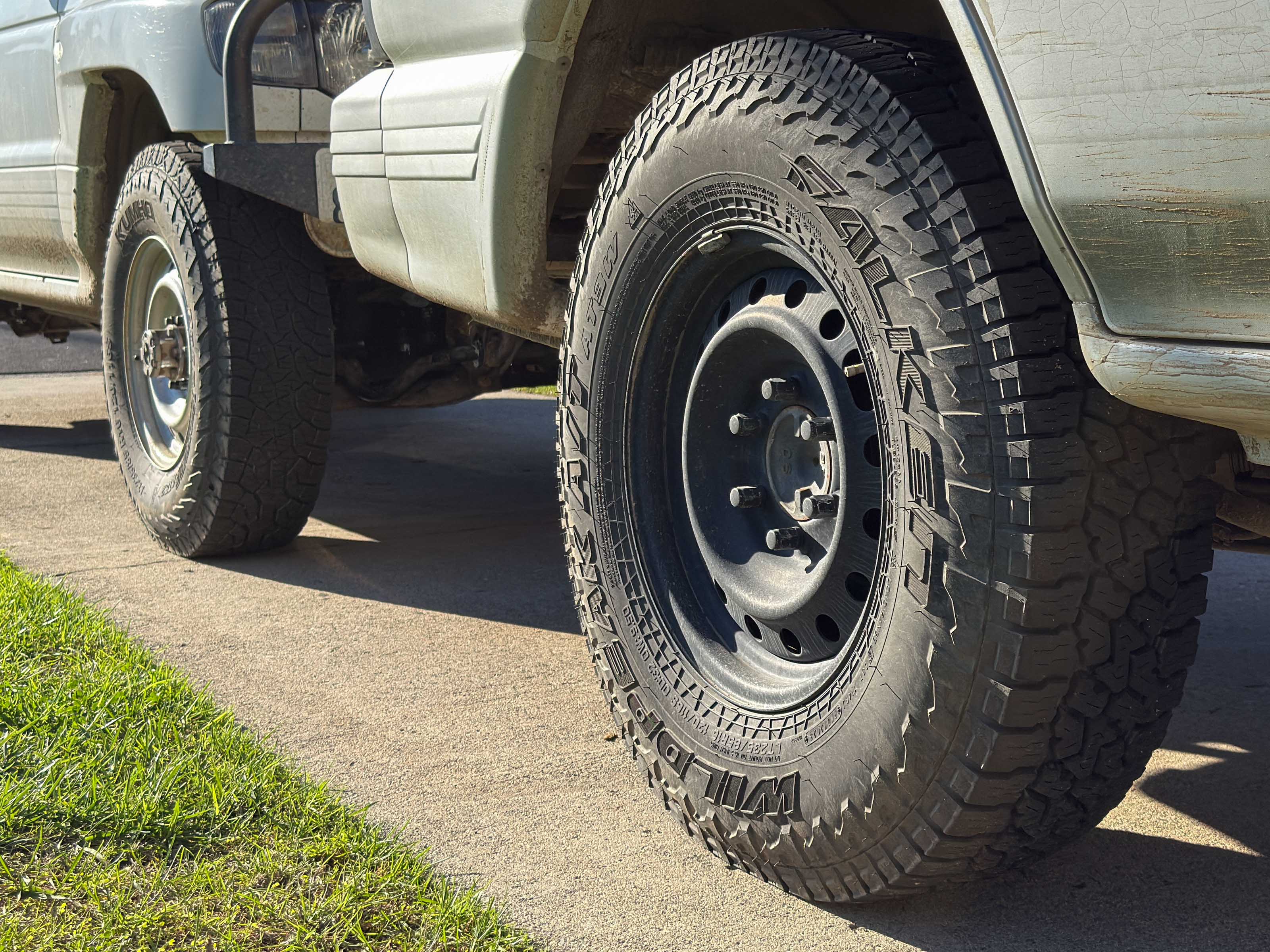
I figured the Kumhos compete more against Yokohama’s Geolandar AT4, which I have on my Pajero Evolution, and the Falken Wildpeaks. The design alone sits a rung below the Toyo Open Country A/T III — and certainly the BFG KO3s, or even the Cooper Discoverer S/T Maxx tires I had before those.
But after mounting the Kumhos, the steering and road feel immediately exceeded any of the other tires I’ve listed above. Truly, this bordered on unbelievable.
I ran the tires from the beginning at my usual 38 psi. It probably helps that they weigh a few pounds less than the same size KO3 or Falken — and fully 5 pounds less than my old Coopers. Saving that much rotational and unsprung mass helps in a nearly 30-year-old 4×4!
Rain Makes a Mess in the Desert
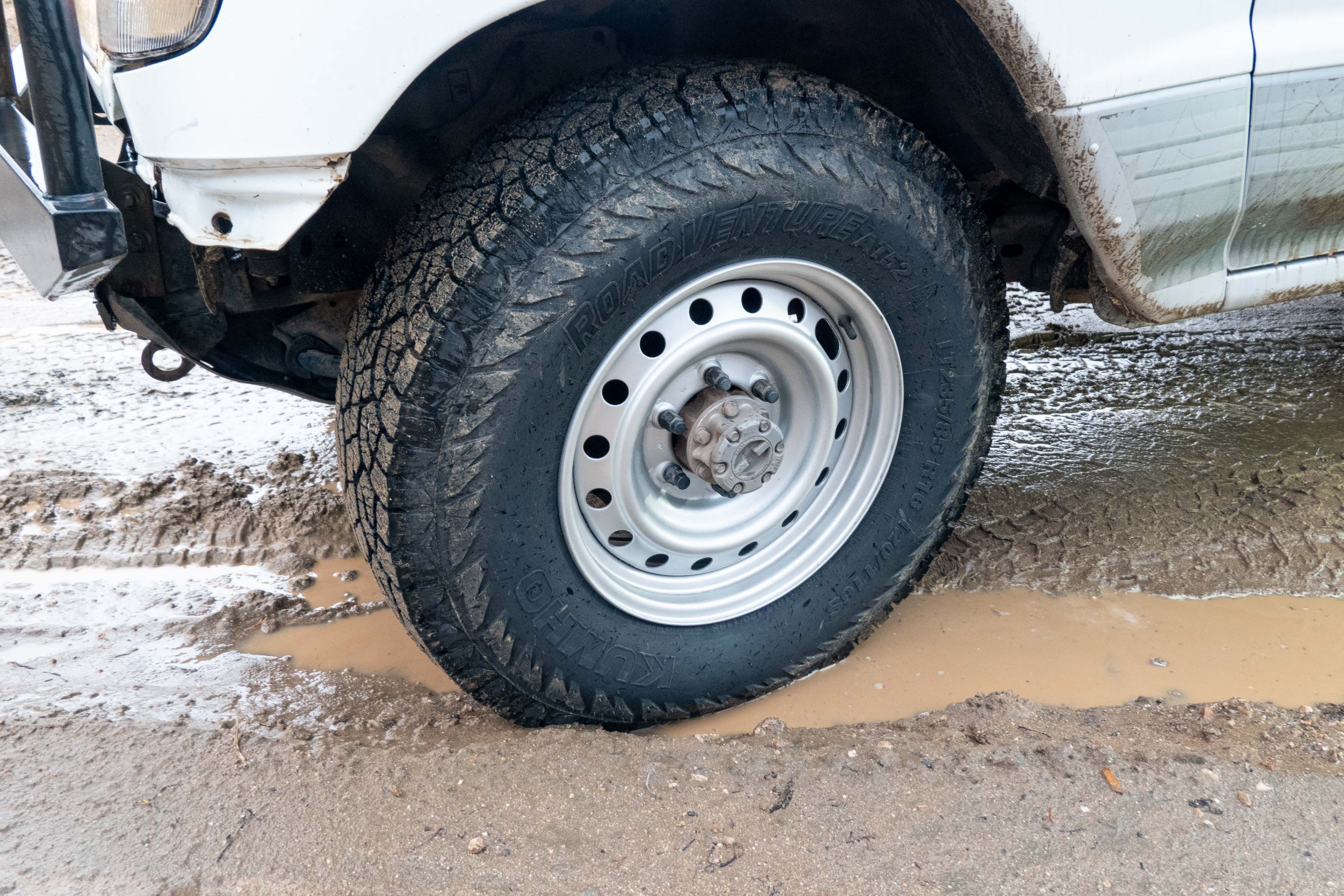
On the way out to the desert for my first off-road drive, I got hit by about 25 minutes of borderline blinding rain. Low temperatures made me a little nervous, and at first, I worried about hydroplaning. But the Road Venture AT52 tires gave me so much grip that in reality, driving 80-plus miles an hour in such sketchy conditions felt entirely reasonable.
Then I got out into the dirt, after some of the heaviest rainfall in SoCal history. My family’s rain gauge showed 7 inches of precipitation in just a single day, out of 2 weeks or so of storms.
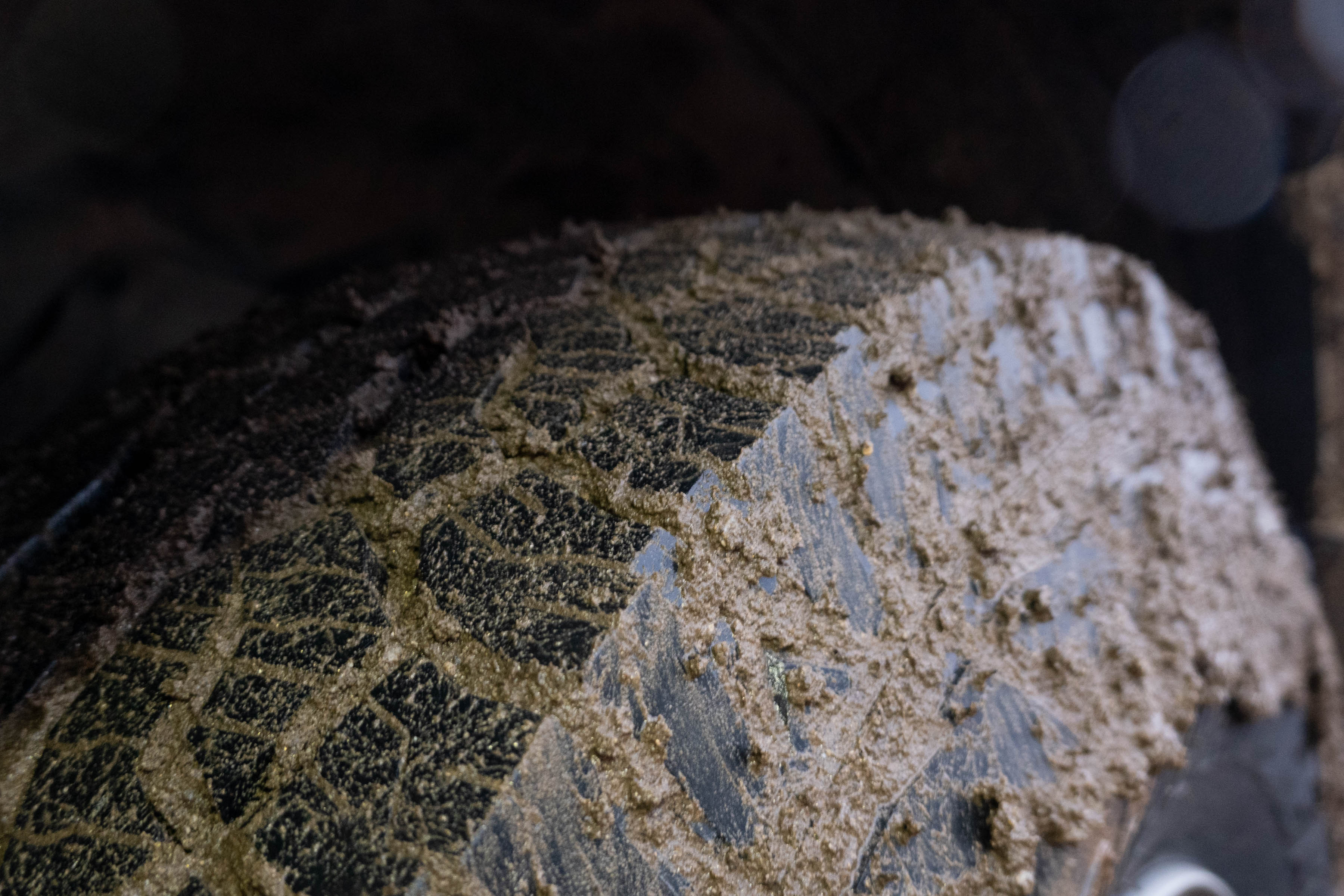
The desert surfaces afterward varied, as expected. In some areas, the silt turned to gluey mud. Plenty of puddled water hid ruts and washouts. And other sections of trail exposed more rocks than ever before.
The Kumhos managed through this day, but despite my Montero’s minimal power, the tires slipped around a lot. I needed to just gun it through the worst parts, and noticed that when driving fast after deeper portions of gunk, the tires never threw off mud particularly well.
Airing Down for a Tougher Trail
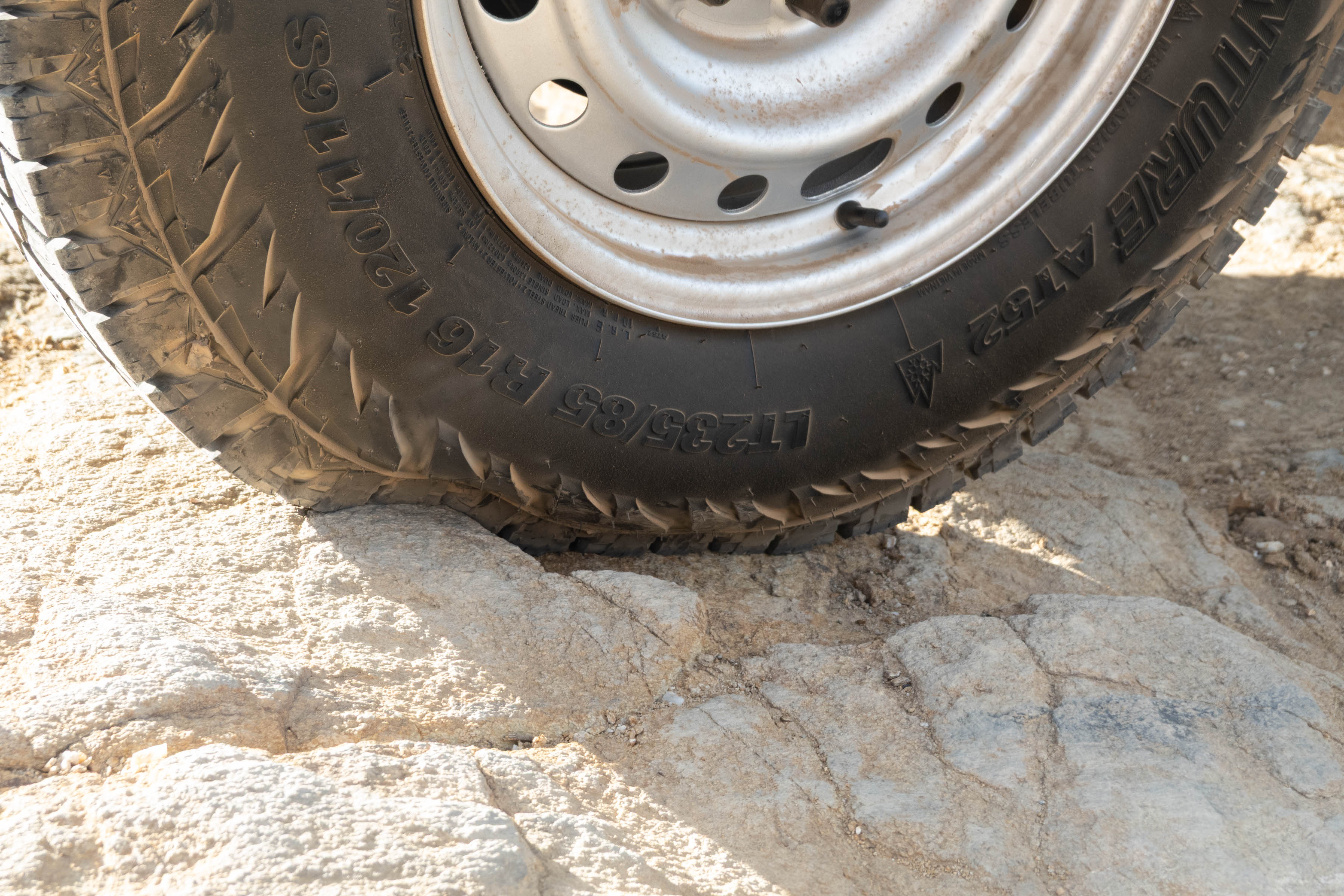
In fairness, the Road Venture AT52 lacks the hardcore design of a KO3. The more apt comparison is the Falken Wildpeaks. In the same weather, I wouldn’t worry much on the Wildpeaks, either. But they don’t feel quite as happy or communicative.
Meanwhile, the Kumhos just about match the minimal road hum, so much so that I even decided to up my pressures to 44 psi in the name of fuel economy. They still rode nicely and comfortably, but just a little stiffer.
I purposefully chose not to air down for that first trip out to the desert, to experience the tires as most drivers might. But a week or so later, I then headed to my usual climb up Rowher Flat, where I aired the Kumhos down to 24 psi. Airing down always helps with grip and comfort, while reducing the likelihood of punctures.
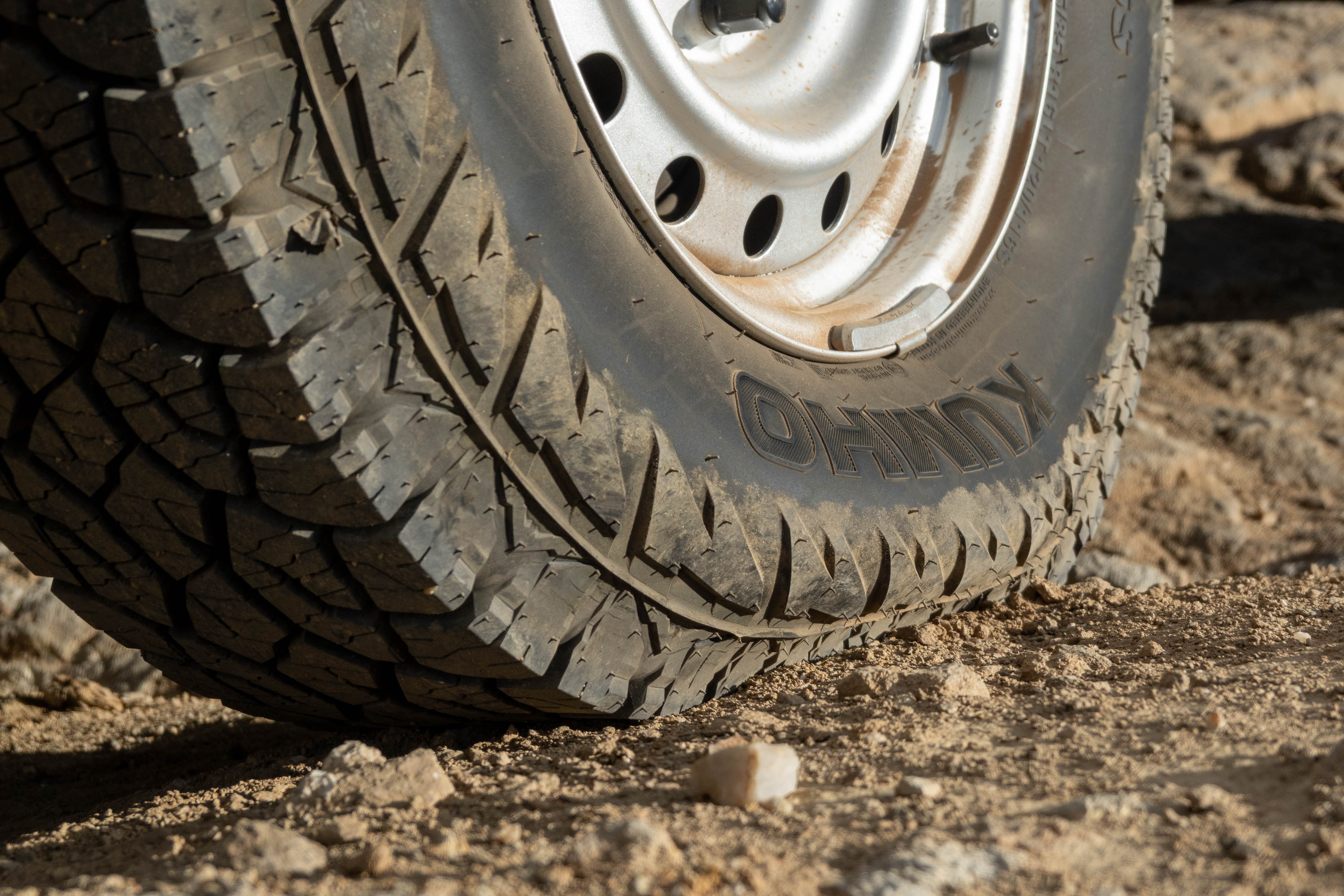
But even at such a moderate pressure, the Kumhos showed a surprising amount of sidewall flex. The fold on the shoulder just swelled out, rather than softening out nicely. Most load range E tires stay stiffer until below 20 psi or so. This led me to take a somewhat more conservative line up the hill, since I wanted to avoid pinch flats or sidewall tears.
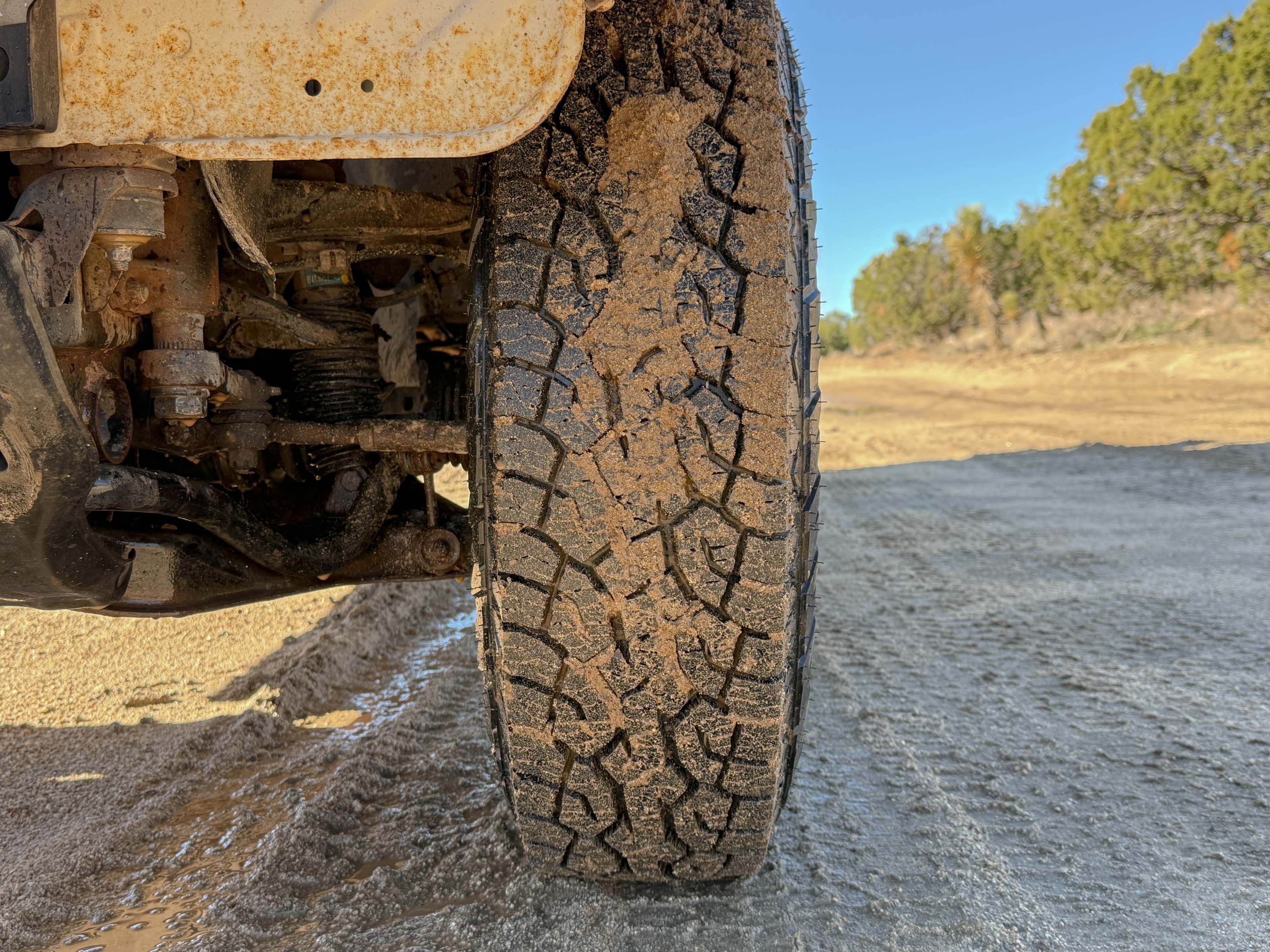
Similar to the day in the mud, on this dry morning I also needed to spin the tires up more than expected at a few harder obstacles. But with some heat in the compound, I found enough grip to climb a moderate route up the mountain.
In all, on the dry dirt, I’d say the Kumhos performed about as well as I expected after my previous experience in the mud and seeing the sidewall flex. Next time I go out for more trail running, I definitely won’t air down any lower.
An All-Terrain That’s Easy on the Budget
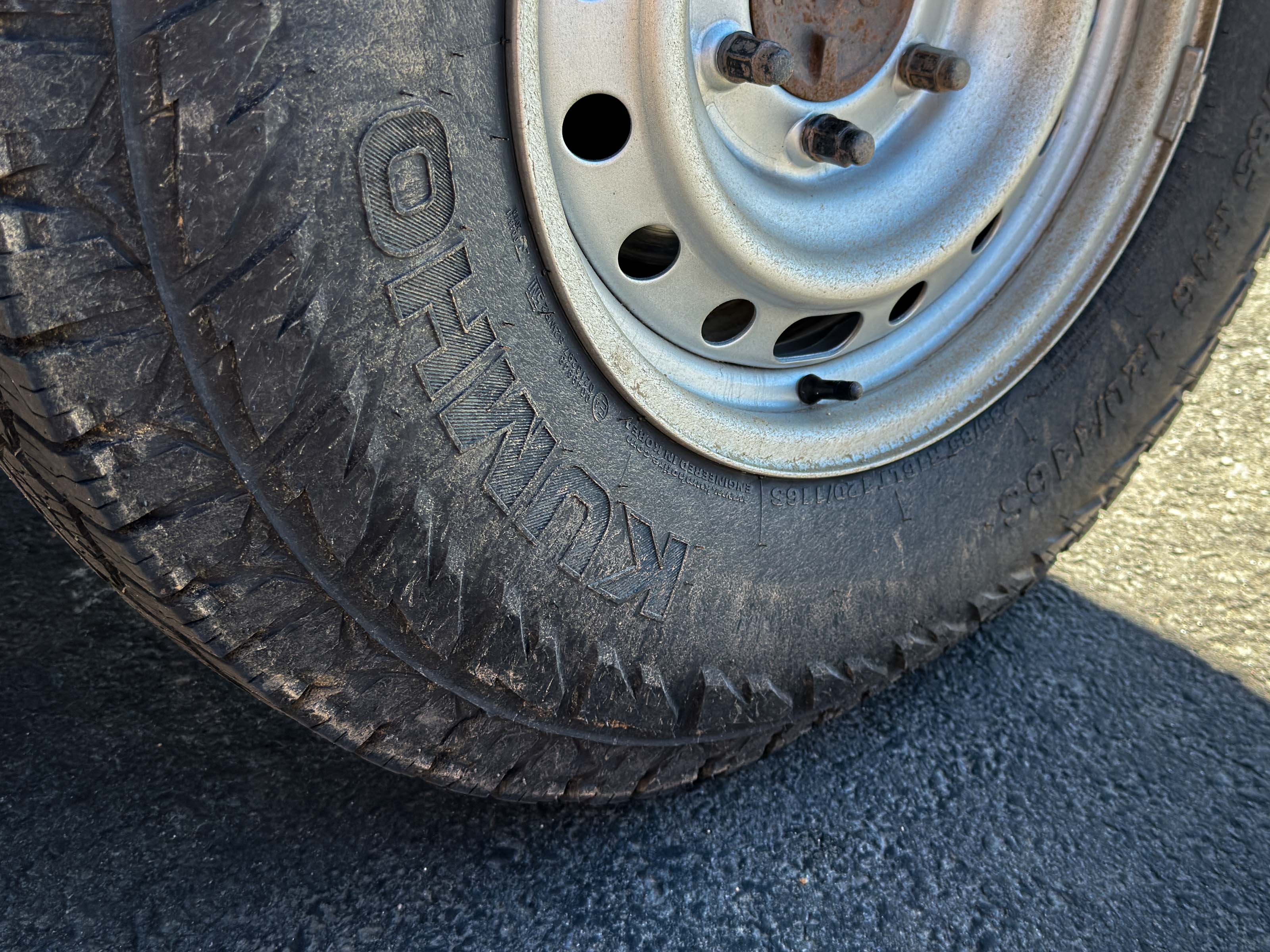
For anyone with a 4×4 looking at the wide range of all-terrain tires on sale right now, the Road Venture AT52’s pricing probably comes into play most. Right now on Tire Rack in my 235/85R16 size, they cost $210. That’s about $30-35 less per tire than the same size KO3, Wildpeak, or Open Country A/TIII. And about $70 less than my old Coopers! Kumho sells a ton of other sizes, too.
One interesting note about the sizing, though. Theoretically, all 235mm tires should be the same width. But different designs and sidewall stiffness mean that’s not always true. And parked next to each other, the Kumhos looked narrower than the Falkens. So I actually got out a tape measure and discovered the Road Venture AT52 measures a full half-inch thinner at the tire tread shoulder. Call them the sharpest of pizza cutters, then!
Kumho Road Venture AT52 Review: Conclusions
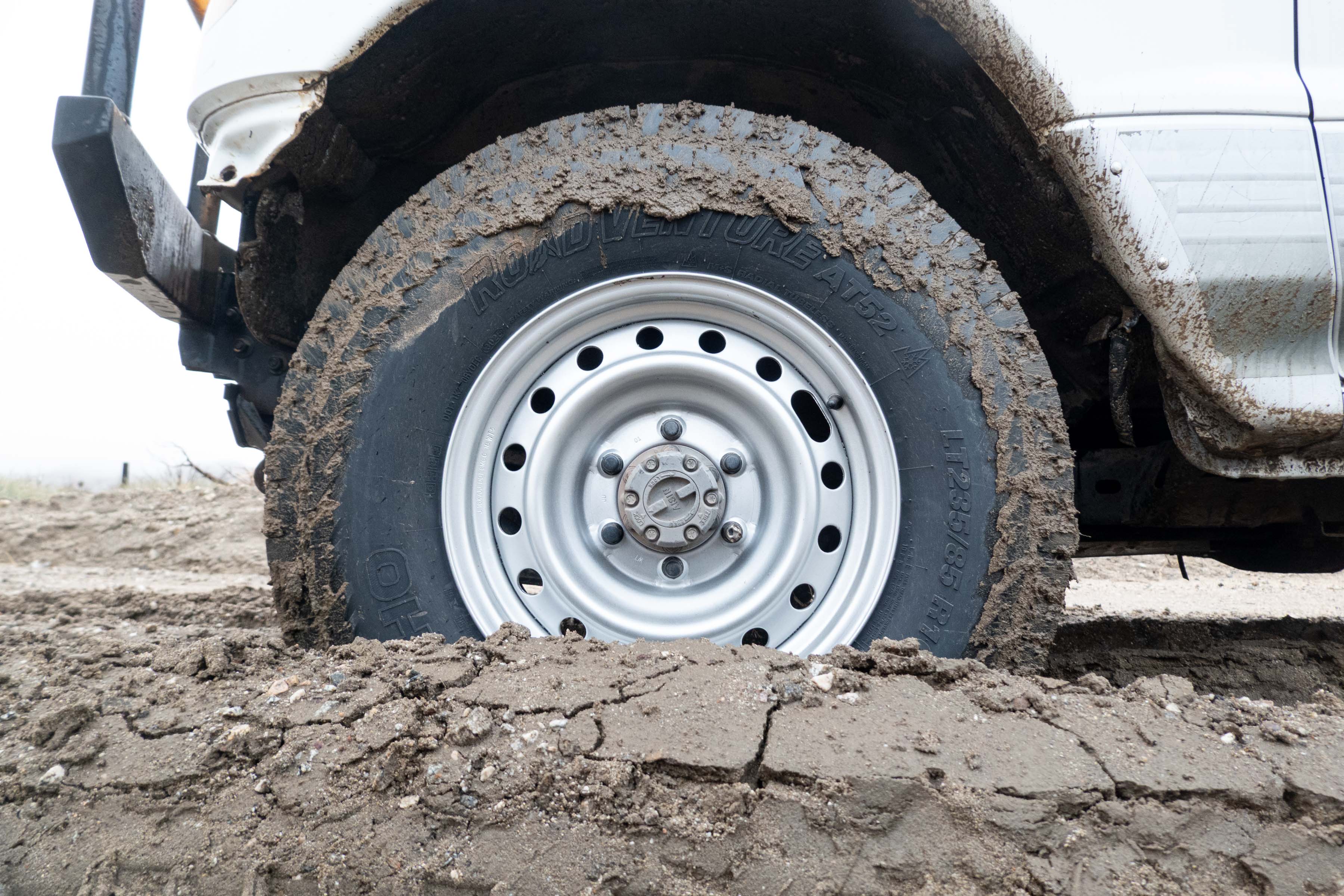
That relative narrowness might help to explain some of the on and off-road characteristics. Excellent steering feel, highly compliant for a load range E, and pretty quiet — but also lightweight compared to the competition. If given the option, I might even consider the Road Venture AT52 in a narrow 33-incher.
I’m still curious how the tires handle snow and ice. Unfortunately, the weather hasn’t cooperated yet, but we will update this review when the time comes. And so far, I can’t report on wear other than to say it hasn’t been bad enough to be noticeable after just a month of driving. These LT-metric Kumhos get a lower mileage warranty of 50,000 miles versus the P-metric at 55,000 miles. That’s surprising since they’re not as hardcore as other off-road tires.
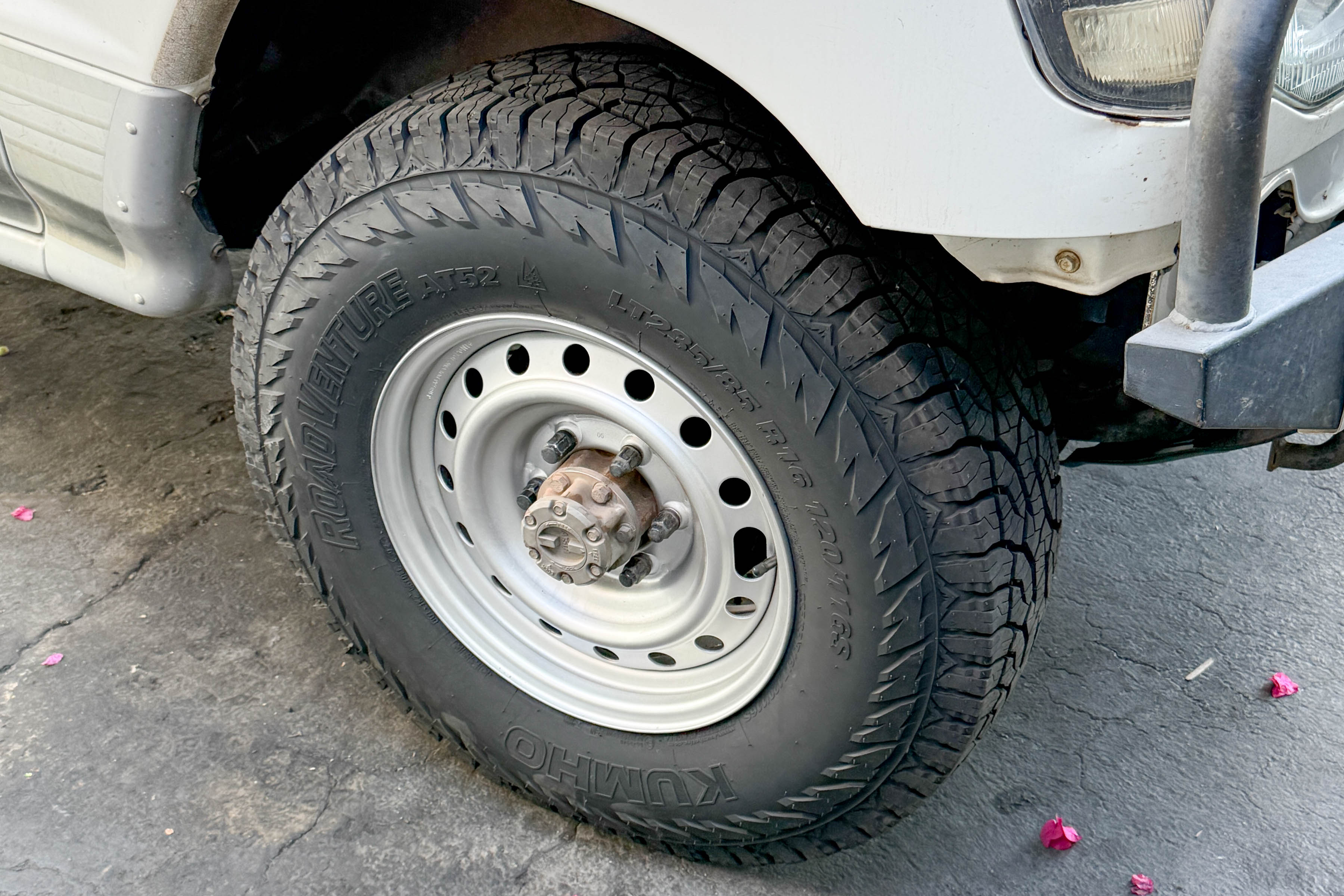
All in all, I’d describe the Kumho Road Venture AT52 so far as an excellent budgetary option for anyone doing 90-95% road driving. When that 5-10% comes, other than hardcore rock crawling or serious rally racing, this all-terrain can get the job done.
For 4×4 owners like me who don’t want to damage their own cars, any mild falloff in performance versus a more aggressive tire just provides a chance to build skill. For the money, that tradeoff definitely makes sense.