As a critical connection between you and your bike, finding the best mountain bike shoes is very important. Good shoes provide stability, control, and protection while delivering power into the pedals and hopefully remaining comfortable in the process.
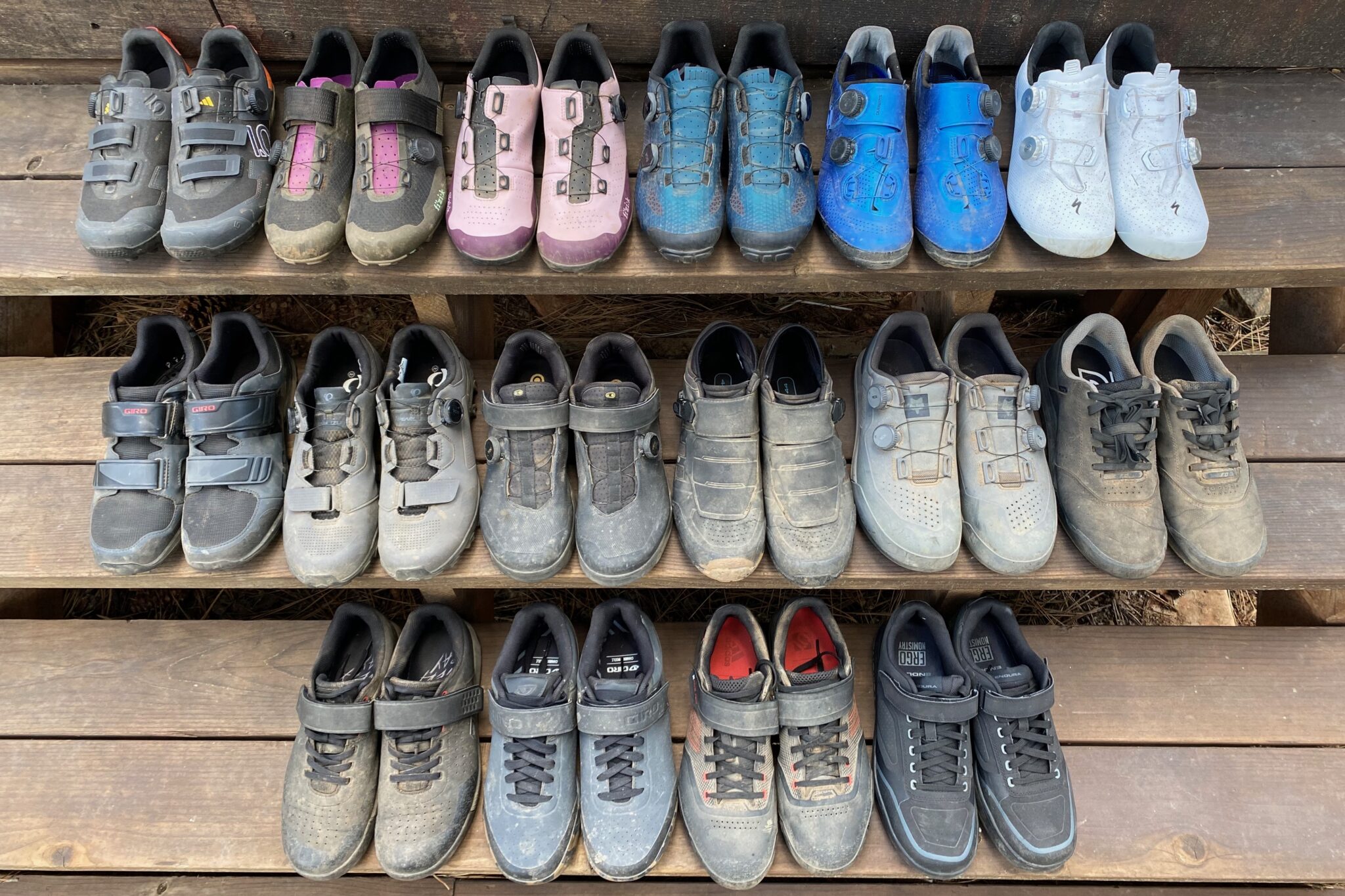
Different styles of riding have different demands with cross-country, trail, enduro, and gravity riders all seeking varying performance characteristics from their footwear. To help you sort through all the options, we gathered a diverse selection of 17 of the best clipless mountain bike shoes on the market to test and compare.
Over the course of several months, we tested each pair on trail rides, shuttle laps, cross-country loops, and even some long gravel grinds while assessing each model on important factors like comfort, pedaling efficiency, stability, walkability, and foot protection to find the best shoes for each type of rider.
From the top-rated Crankbrothers Mallet Trail BOA to the race-focused Shimano S-Phyre XC9 and the adventure-ready Pearl Izumi X-Alp Summit, you’ll find our favorite clipless mountain bike shoes for all styles of riding below.
Editor’s Note: We updated this guide for bike season on April 24, 2025, with the addition of the budget-friendly Specialized Recon 1 and the exceptionally comfortable Giro Empire SRC.
The Best Mountain Bike Shoes of 2026
Crankbrothers Mallet Trail BOA
-


-
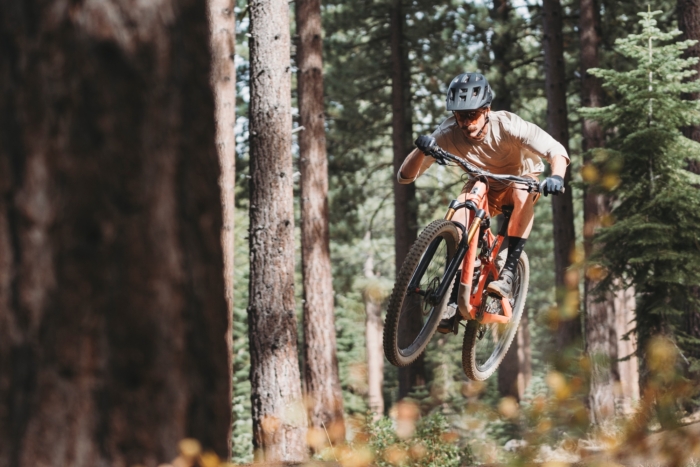
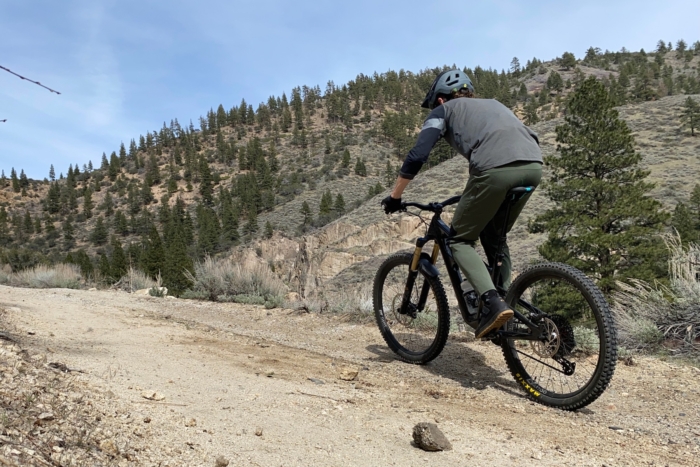
The Mallet Trail BOA shoes are a great all-arounder for any type of riding; (photo/Tucker Adams)
-
Testing the Mallet Trail BOA shoes with the new OneUp Clip pedals; (photo/Jeremy Benson)
-
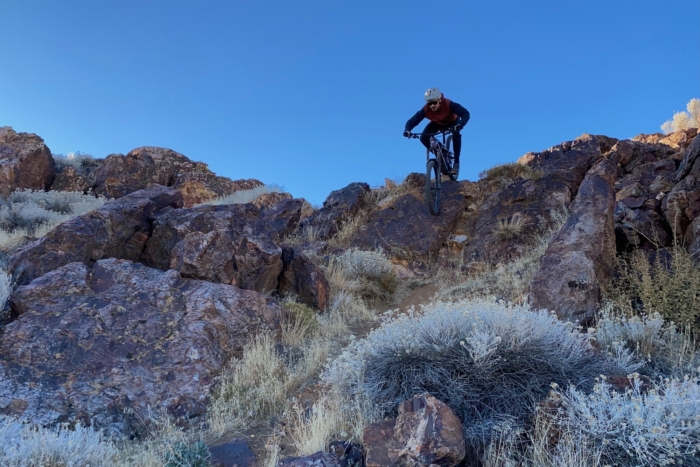
The Mallet Trail BOA shoes have become our new go-to; (photo/Heather Benson)
-
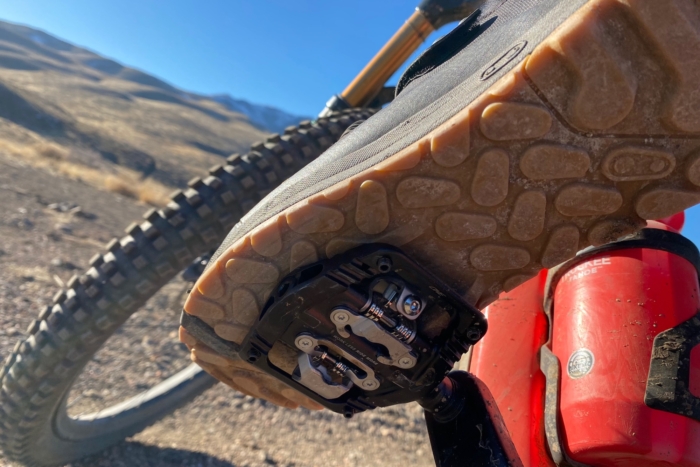
The soles provide a blanced stiffness with a good pedaling platform; (photo/Jeremy Benson)
-
The Mallet Trail BOA shoes are a treat to walk in when needed; (photo/Jeremy Benson)

Specifications
Pros & Cons
Pros
- Comfortable
- Perfect level of sole stiffness
- Grippy soles work well when hiking
- Ankle gaiter helps keep debris out of shoes
- They look awesome
Cons
- Moderately expensive
- Ripstop upper is harder to keep clean
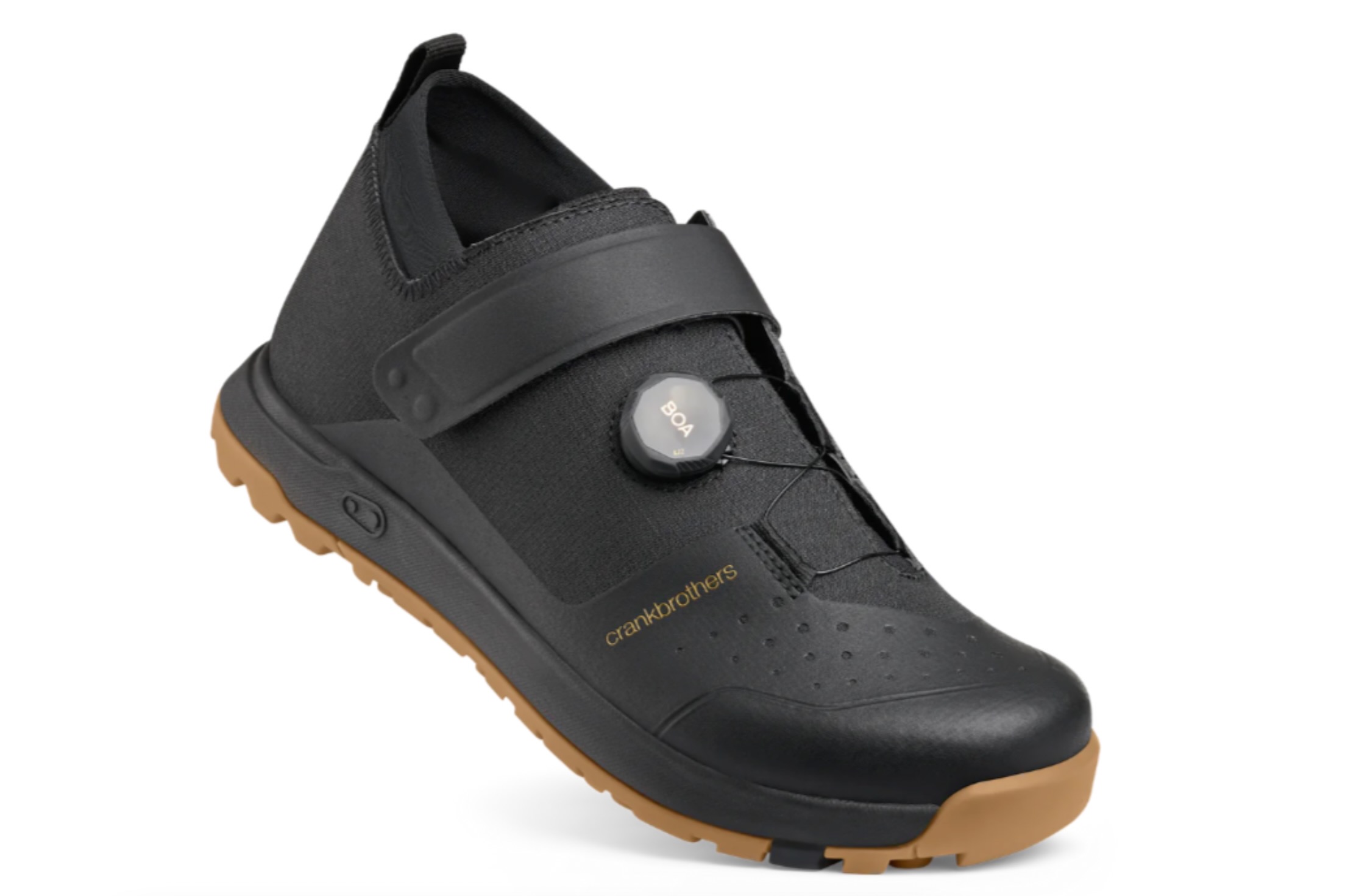
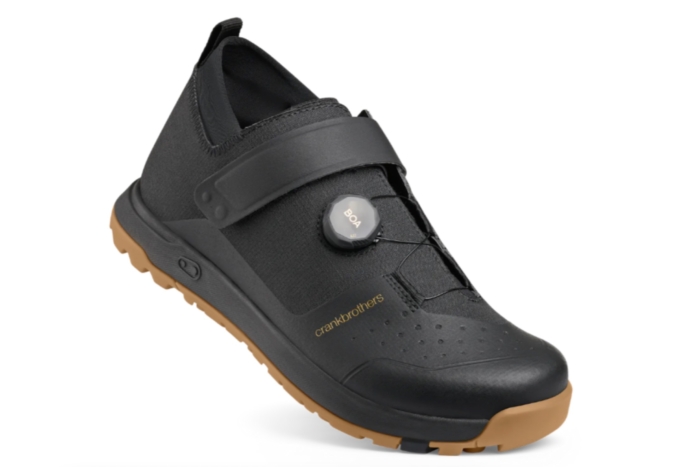
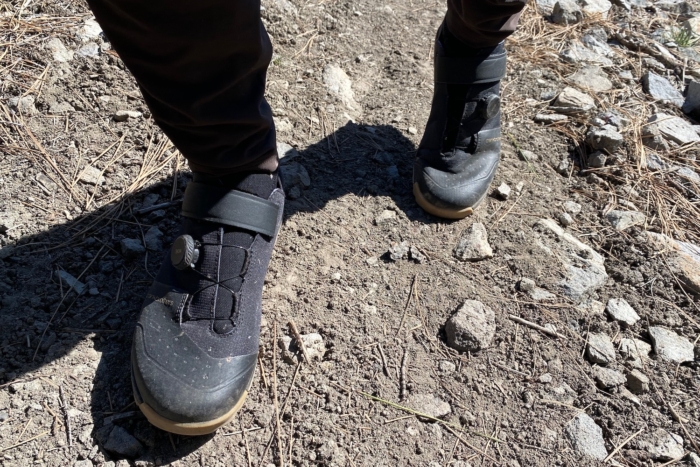
Building off the success of the original Mallet mountain bike shoes, Crankbrothers recently added a new model to its lineup, the Mallet Trail BOA. While it shares similar looks and design to its more gravity-oriented sibling, the new Trail version has some new features and an all-around performance that we feel makes it the best mountain bike shoe of its kind on the market.
We are huge fans of the Crankbrothers Mallet (non-trail version), but the Mallet Trail is the shoe we’ve been waiting for. While the silhouette, closures, and foot protection are similar, Crankbrothers stiffened up the pedaling platform, gave it a new rubber outsole, and redesigned the uppers with a completely new material. The result is one of the most well-rounded trail and enduro mountain bike shoes that we’ve ever put on.
Crankbrothers nailed the sole stiffness with the new Mallet Trail. The fiber-reinforced shank is adequately stiff, so you won’t feel like you’re wasting energy on pedal-heavy trail rides, yet it’s just forgiving enough not to beat up your feet on long, rough descents. That’s coupled with a bit of EVA foam that helps mute trail feedback to keep the feet feeling fresh on the downhills.
The entire sole is covered in Match MC1 mid-friction rubber with a new tread design. The gum-colored sole looks awesome paired with the black uppers, and the large oval-shaped lugs provide stability on the pedals and good traction off the bike. A little rocker and flex in the toes allows you to walk relatively normally, while the wider, horizontal lugs at the toe and heel provide grip when you’re inevitably forced to push your bike up the hill. The Match Box cleat mount track has a large adjustment range that should suit everyone’s preferences.
The upper is made of a tough ripstop material with an abrasion-resistant layer covering the forefoot. The uppers are fairly thin to keep the weight down, but the toe box and heel are reinforced for impact protection, and the ankle collar is nicely cushioned. A stretchy gaiter extends a bit above the cuff and helps prevent debris from getting into the shoes.
The BOA Li2 dial tightens the shoe effectively over the midfoot while a hook-and-loop strap secures it at the top. If you’re not into BOA closures, Crankbrothers also makes the Mallet Trail Speed Lace ($180). We found these shoes to have a slightly wider than average width and volume, and our size 43.5 EU (10 U.S.) test pair fit true to size for length.
Just like Goldilocks, we’ve been waiting for a mountain bike shoe that is “just right”, and the Crankbrothers Mallet Trail BOA is it.
Specialized 2FO Roost Clip
Specifications
Pros & Cons
Pros
- Reasonable price
- Lightweight compared to similar shoes
- Versatile
- Good power transfer
- Good walkability
Cons
- Roomy in the forefoot
- Difficult to tighten shoe over forefoot
- Non-reinforced eyelets are susceptible to damage
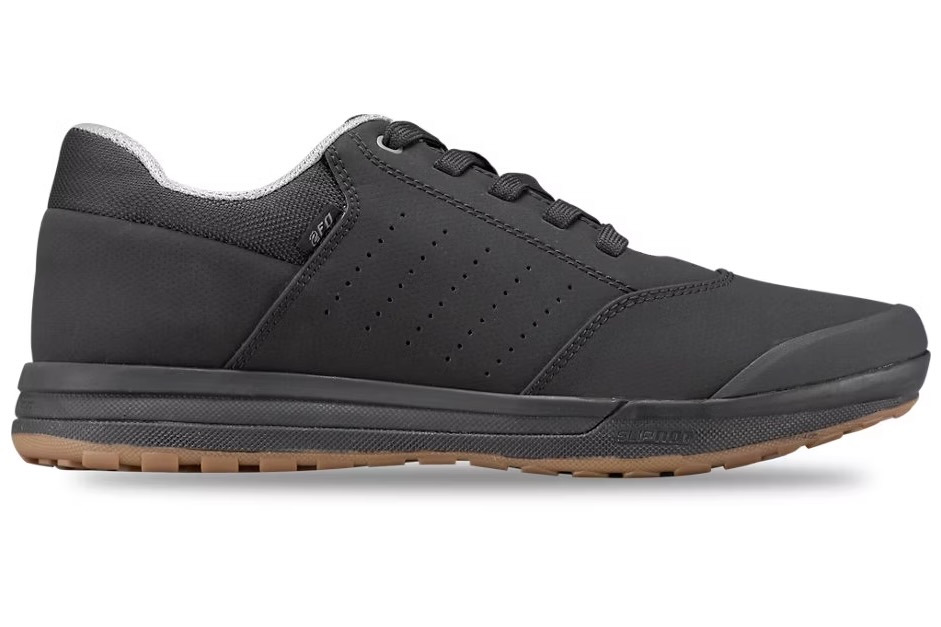
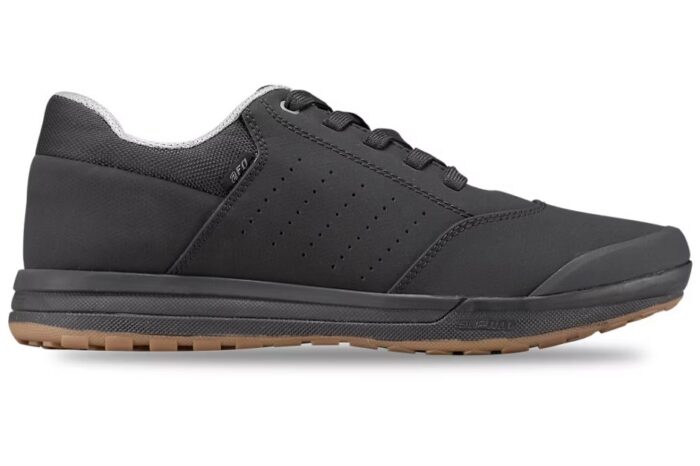
Specialized makes a full line of shoes for all types of riding, with the 2FO models covering the needs of riders ranging from trail to downhill. The budget-friendly 2FO Roost Clip ($130) and its flat-pedal twin, the 2FO Roost Flat, were greeted with much fanfare when they were launched a couple years ago. While not the least expensive shoe we tested, we feel its ratio of price to performance makes it one of the best values out there. This versatile trail riding shoe is impressively lightweight, has casual styling, and has a well-rounded performance within its intended application.
Specialized markets the 2FO Roost Clip as a shoe that can seamlessly transition from riding to post-ride activities, and they gave it an understated style. Hidden beneath that casual appearance are some great features that help it perform out on the trail. A 3/4 length Stiff Lollipop nylon composite plate runs from the cleat mount area back and provides a surprisingly solid pedaling platform. The Landing Strip cleat box offers ample adjustment that should allow most riders to position their cleats in their preferred location.
At the front of the shoe, the sole flexes quite naturally, allowing for a relatively natural gait whether you’re pushing your bike up a technical section of trail or wandering around the grocery store after your ride, and the full-coverage SlipNot FG rubber soles provide great traction on a wide range of surfaces and interface well with pedal bodies for lateral stability.
The shoes have a “relaxed fit” and incorporate Specialized’s Body Geometry construction and footbeds designed to optimize your leg alignment, and we found that they cradle and secure the midfoot and heel very nicely. Our test pair fit true to their EU size for length.
Simple laces tighten the shoes over the top of the foot. The uppers are constructed from supple synthetic leather lined with breathable AirMesh material that wicks away sweat and adds a little cushioning. The midsole features EVA foam that helps to dampen vibration, and a rubber bumper that wraps around the front of the toes provides a little added protection.
All this comes at a shockingly low weight of just 750g for our size 43.5 test pair, which is lighter than most comparable shoes on the market. Our only real gripe with the 2FO Roost Clip is the roomy fit in the forefoot and the inability to tighten that portion of the shoe for a more precise fit. That said, this will be fine for those who don’t require the tightest fit up at the front of the shoe or for those who have slightly higher volume or wider-than-average feet. If you’ve got a lower-volume foot, the Ride Concepts Accomplice BOA ($150) performs similarly but has a much snugger fit.
Still, we feel the Specialized 2FO Roost Clip is a solid option that will meet most riders’ needs without breaking the bank, and they’ll look pretty good doing it, too.
Shimano S-Phyre XC9
-
-
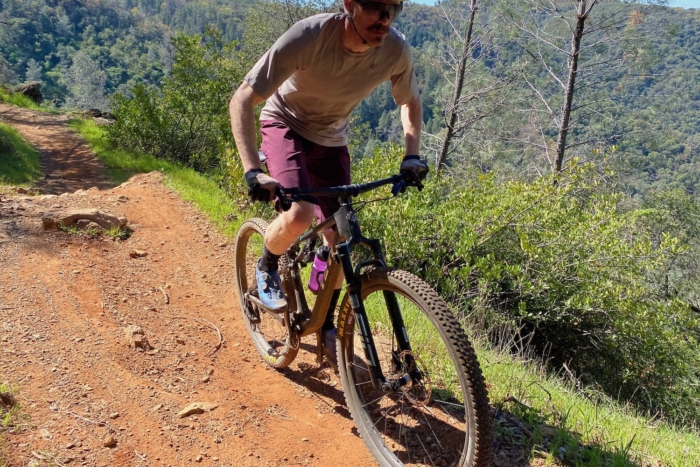
Testing the Yeti ASR race bike while wearing the XC9 shoes; (photo/Doug Thayer)
-
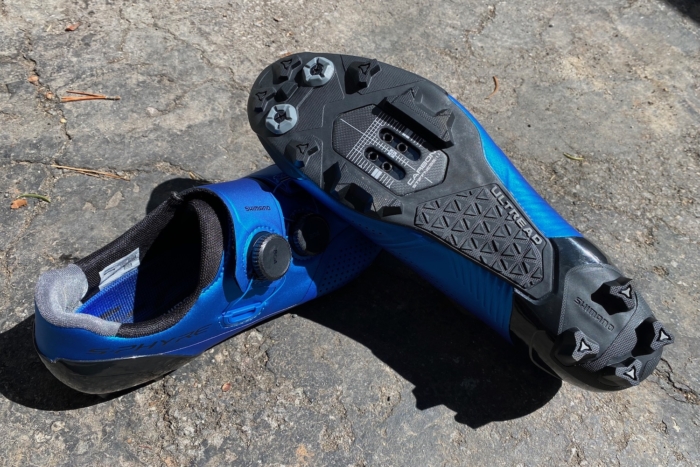
The carbon sole and Ultread rubber lugs on the XC9 shoes; (photo/Jeremy Benson)
-
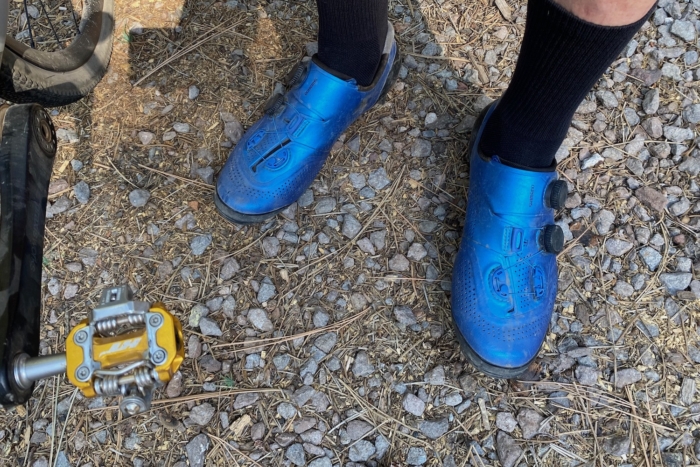
The XC9 shoes are impressively comfortable; (photo/Jeremy Benson)
-
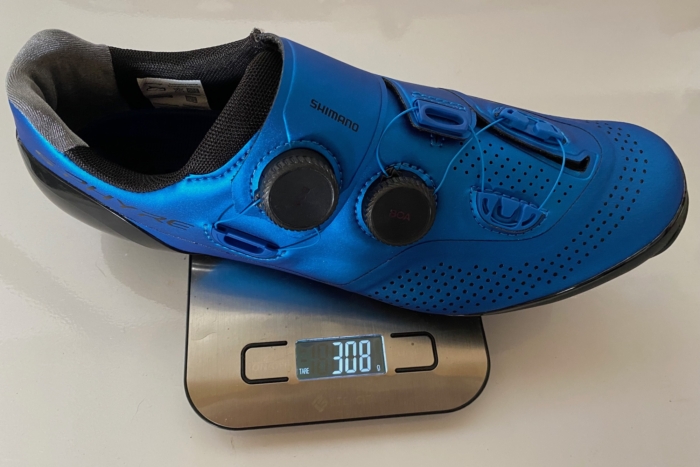
The XC9 shoes are very lightweight; (photo/Jeremy Benson)

Specifications
Pros & Cons
Pros
- Excellent pedaling efficiency
- Super lightweight
- Well-ventilated
- Comfortable
- Comes in a wide version
Cons
- Limited foot protection
- Very expensive
- Relatively narrow fit
- Limited vibration damping in sole
Learn more in our in-depth comparison of the Shimano XC9 vs. XC1 mountain bike shoes.
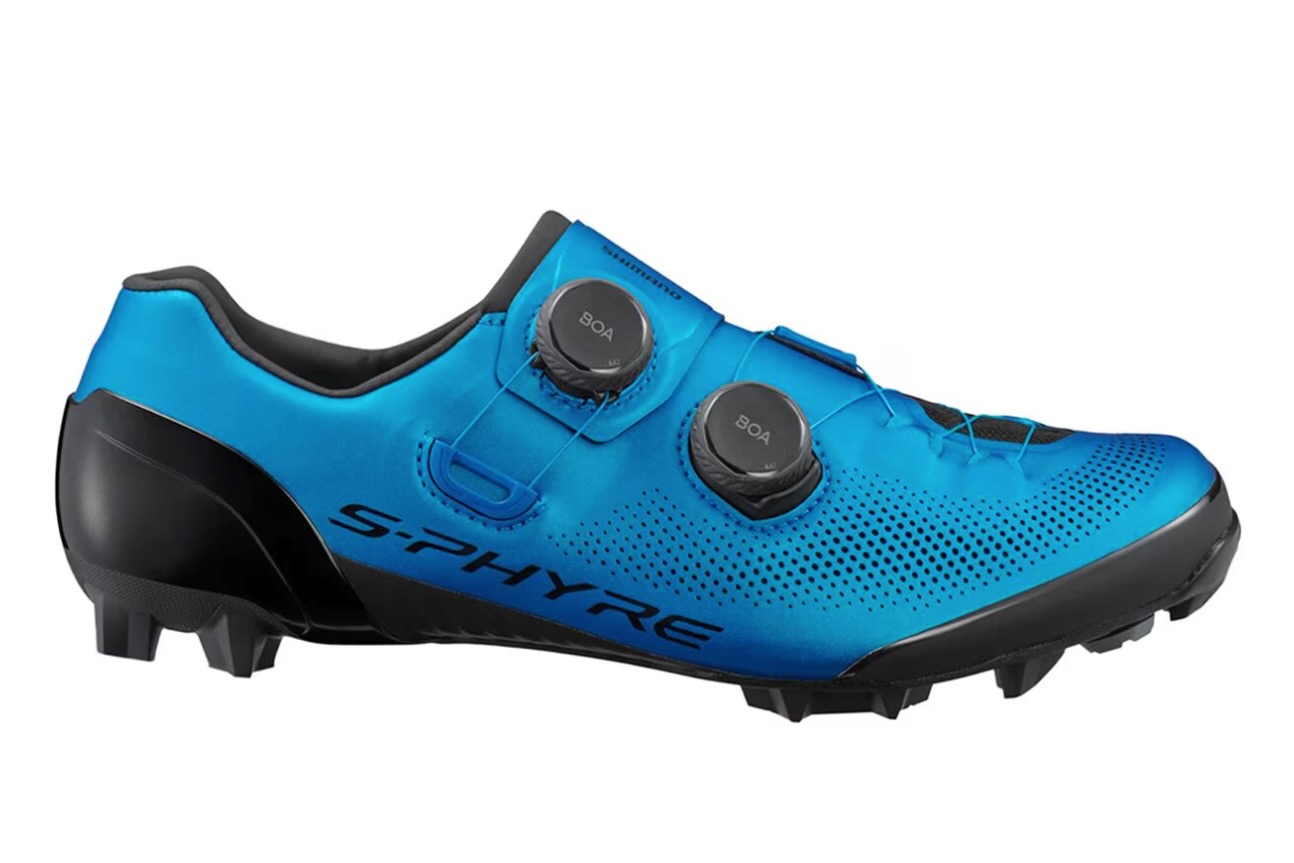
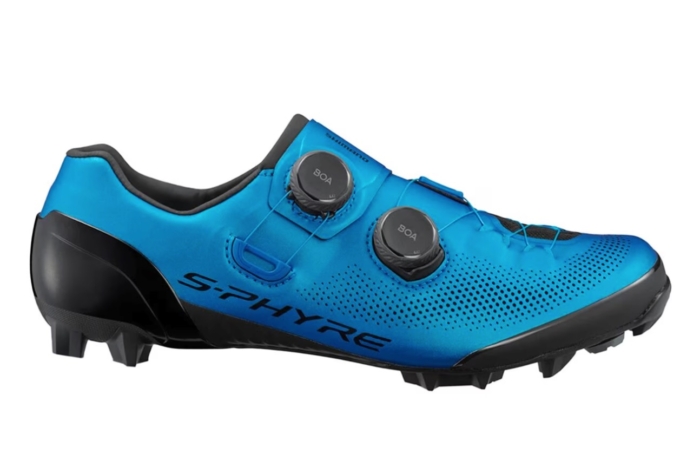
If you look around the starting line of any professional cross-country, gravel, or cyclocross race, Shimano’s flagship cross-country race shoe, the S-Phyre XC9 ($450), is one of the most common models you’ll see. This top-of-the-line shoe has been around for many years and has seen incremental updates to help improve its performance while maintaining its signature, recognizable style and top-shelf performance. It has some stiff competition from other high-end XC models, but the S-Phyre XC9 is still our favorite.
One of its standout features, of course, is its exceptional pedaling efficiency facilitated by the carbon fiber composite sole that is ultra-stiff with a stiffness index of 11 on Shimano’s scale. There is virtually zero flex in this sole, and all of your precious watts are transferred directly into the pedals.
Dual BOA Li2 dials and a well-designed upper provide a very snug and secure fit that is not only comfortable but helps to maximize your power throughout the entire pedal stroke and enhances control and stability. Weighing just 616 grams for the pair in size 43.5, the XC9’s super-lightweight enhances efficiency even further.
The S-Phyre XC9 has a very precise fit in the “regular” width, which is on the narrow side of the spectrum. Fortunately, they also make a wide version of this shoe for those whose feet are wider than average. The closure system wraps around the foot for a very snug and secure hold, and the supple synthetic leather uppers conform to the feet very nicely.
The thin, high-density footbed has adjustable arch support, and the textured material in the heel pocket locks the foot in and helps prevent any unwanted heel lift. These shoes essentially become an extension of your body. The heavily perforated uppers also do a great job of ventilating and allowing heat and moisture to escape.
Other than the immediate cleat mount zone, the carbon sole is completely covered in Shimano’s Ultread rubber. This helps to protect the carbon from damage and adds grip during those inevitable dismounts. The toe and heel feature aggressive lugs for additional traction in loose soils or mud, and the cleat mount zone is bordered by “pontoons” that interface with the pedal body and provide lateral stability.
Shimano also includes a set of metal spikes that can be installed up at the toes for extra traction in extreme conditions you might encounter in a muddy cyclocross race. A rigid plastic heel cup and some light reinforcement around the toes add a small level of foot protection.
Given their outstanding performance, our complaints about the S-Phyre XC9 are few. As mentioned above, the fit of the latest version is relatively narrow, and we recommend that people try these on before they buy to ensure they work for their feet. Like most cross-country shoes, they also offer very little in the way of foot protection, and it’s best to avoid doing much walking or hike-a-bike in them.
The price is also pretty hard to overlook, but it may be worth it for those seeking the performance this shoe provides. Like the sound of the S-Phyre XC9, but want to save $150? The Fizik Vento Ferox Carbon ($300) is worth a look.
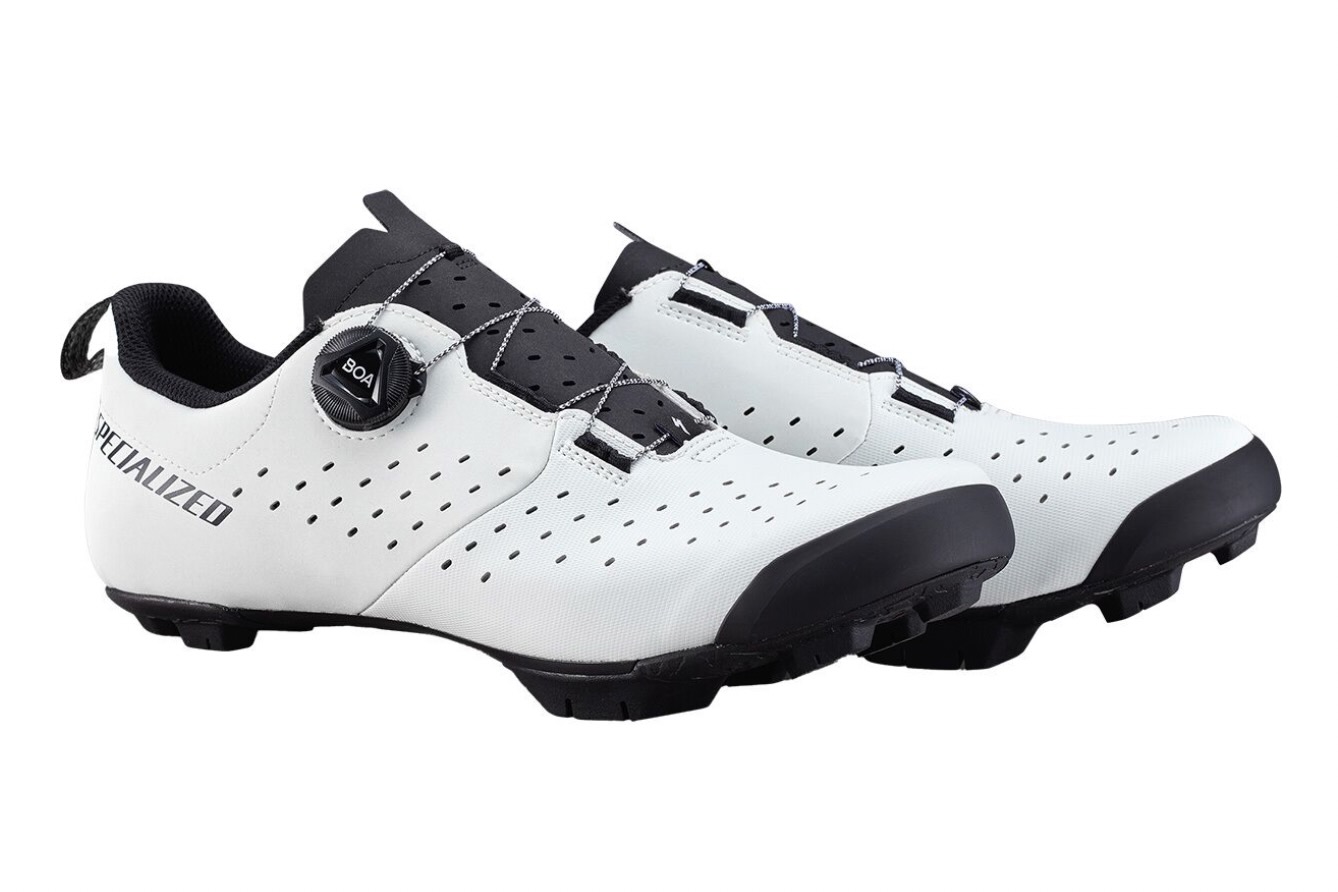
Specialized Recon 1
-
-
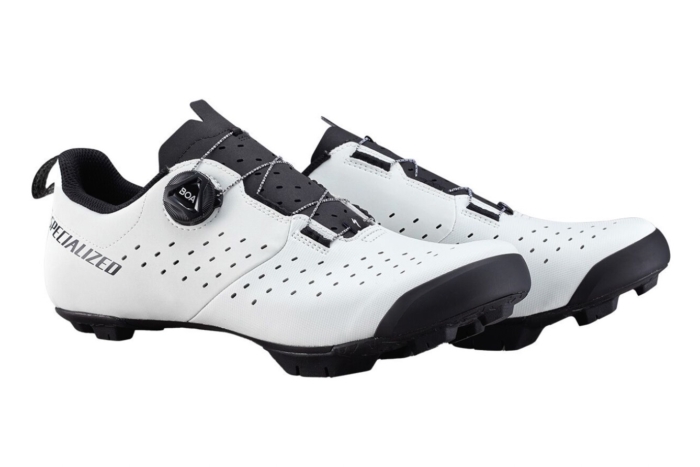
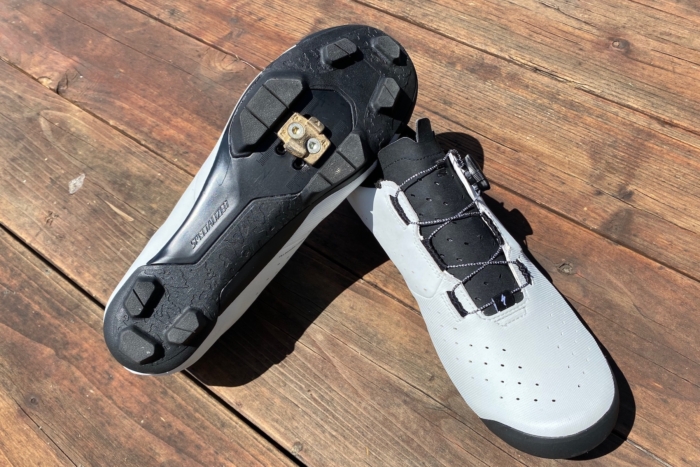
The perorated uppers, BOA lacing, and SlipNot tread of the Specialized Recon 1 shoes; (photo/Jeremy Benson)
-
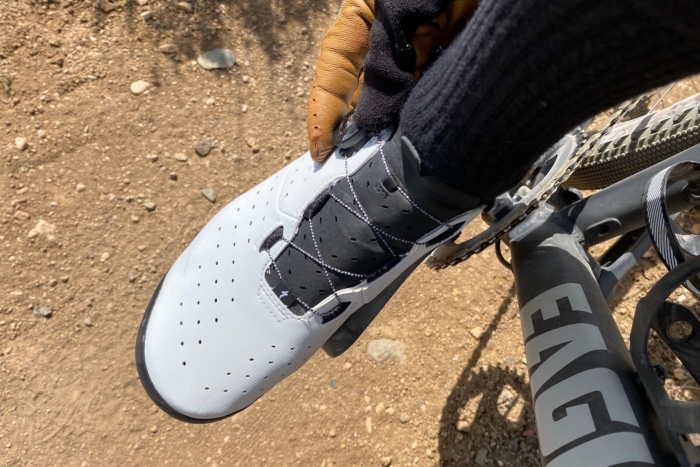
The BOA L6 dial and textile lace make the Recon 1 shoes very easy to adjust while riding; (photo/Jeremy Benson)
-
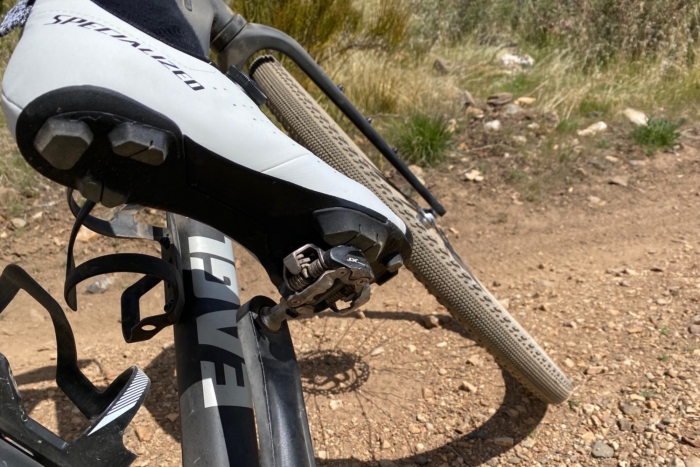
The Recon 1 is a great shoe for casual cross country and gravel riding; (photo/Jeremy Benson)
Specifications
Pros & Cons
Pros
- Affordable,
- Lightweight
- High-end looks
- Well-ventilated
- Easy on/off and adjustments with BOA
Cons
- Middle of the road stiffness
- No half sizes – they run a little large
- Very limited foot protection
Specialized makes some of the most expensive footwear in the industry, but also some of the most affordable. The brand’s Recon line of cross-country and gravel bike shoes spans the price spectrum, from the range-topping S-Works Recon ($450) to the entry-level Recon 1 ($120). With a light weight, high-end looks, and BOA lacing, the Recon 1 is one of the best values we’ve found.
If you glance at the Recon 1 shoes, it would be easy to assume they are much more expensive than they are. That’s because they don’t look that much different than the S-Works model. The streamlined shape of the shoe, along with the clean, synthetic uppers, certainly looks the part. Those uppers were very supple and easily conformed to the feet for a comfortable fit right out of the box. Numerous perforations along both sides and above the toes provided great ventilation on warmer rides.
The Recon 1 shoes come in whole EU sizes between 36 and 49. Unfortunately, there are no half sizes, so it may be harder for some riders to get a perfect fit. We found that they run a tad large as well, with our size 43 test pair fitting more like a 43.5. If you’re between sizes, we recommend sizing down. Inside, Specialized’s Body Geometry footbed and shoe design aim to align the lower leg optimally for comfort and performance.
A novelty at the budget price point, the BOA L6 dial with the Dyneema yarn lace made it very easy to get the Recon 1 on and off the feet and tighten them up on the fly. The yarn lace moved a bit more easily than the wires used on many BOA-equipped shoes, and it was no problem getting them snug around the feet. Still, the forefoot had an accommodating fit, especially compared to some of the brand’s earlier models, which leaned toward the narrow side of the fit spectrum.
Underfoot, Specialized incorporated its Stride Technology design to allow flex through the toes for easier walking. The rest of the sole is fairly rigid, with a stiffness index of 6 on Specialized’s scale. That’s notably less stiff than the race-focused S-Works shoe, but the more forgiving flex still felt plenty efficient for non-competitive riding. The SlipNot rubber tread at the toe, heel, and under the instep proved to be plenty grippy off the bike, while the flex designed into the toe allowed for a relatively natural gait.
In the bike shoe market, price and weight often have a direct correlation. Which is why we were shocked to see the Recon 1 tip the scales at just 590 grams for the pair (size 43). For context, that’s the same weight as the $450 S-Works model, meaning these are some of the lightest shoes around.
Like other cross-country mountain bike shoes, the Recon 1’s foot protection is somewhat limited, with a stiff heel cup and a slightly reinforced toe box. And while the moderately stiff sole is perfectly adequate for recreational gravel and XC-style riding, it’s far from race-ready. If you have competitive aspirations, you’ll likely want to consider stiffer shoes, most of which cost around 3 times the price.
If you’re on a budget and looking for a cross-country or gravel riding shoe with the convenience of BOA lacing, check out the Specialized Recon 1. These sleek shoes are comfortable, slick-looking, and cost a fraction of the price of high-end race shoes.
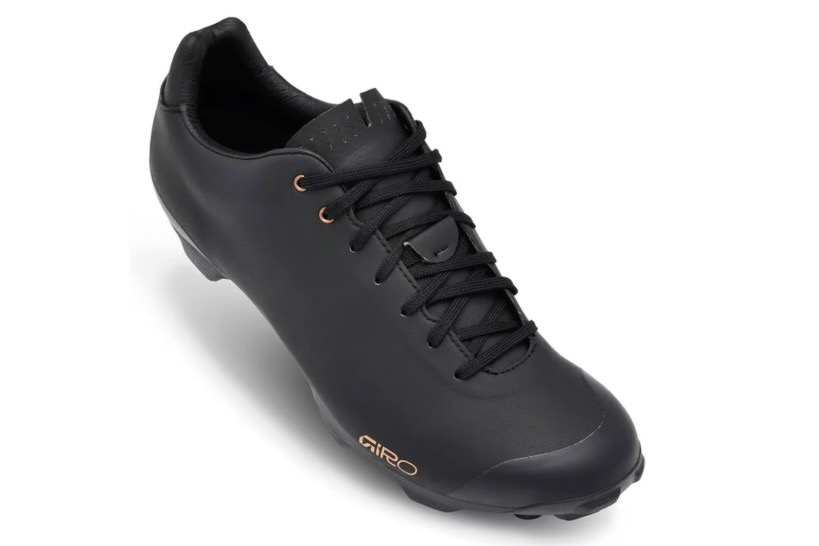
Giro Empire SRC
-
-
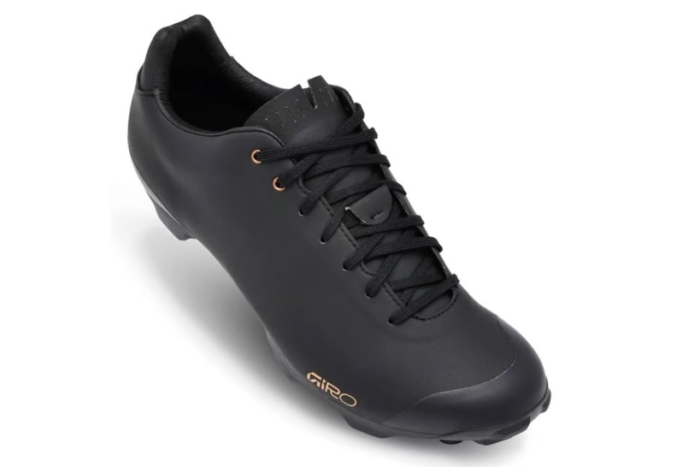
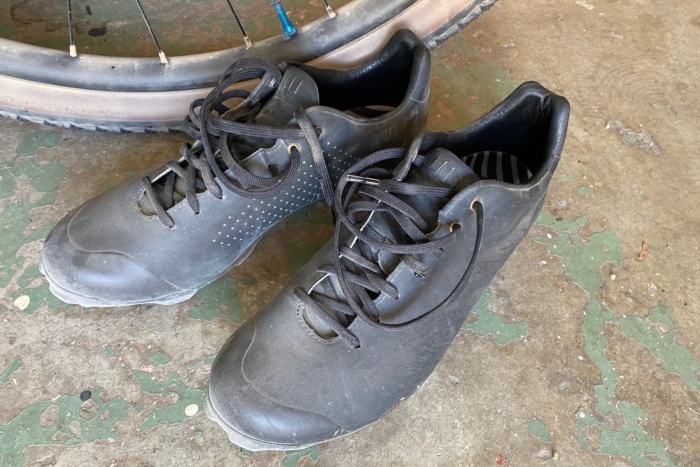
The Giro Empire SRC is a classic mountain and gravel bike shoe that will never go out of style; (photo/Jeremy Benson)
-
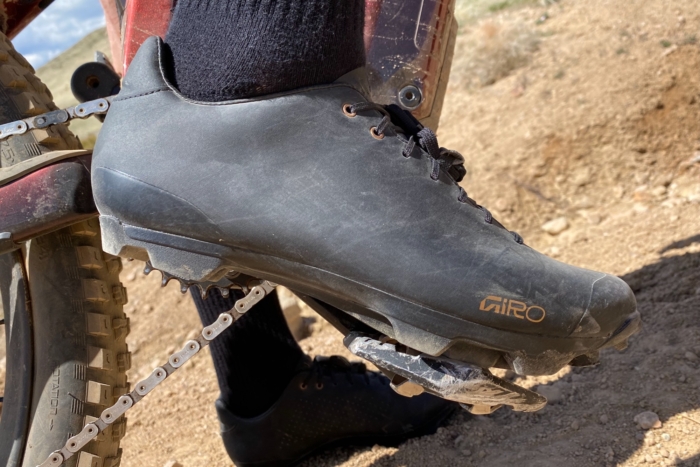
Pedaling efficiency is excellent with the carbon composite sole and stellar fit; (photo/Jeremy Benson)
-
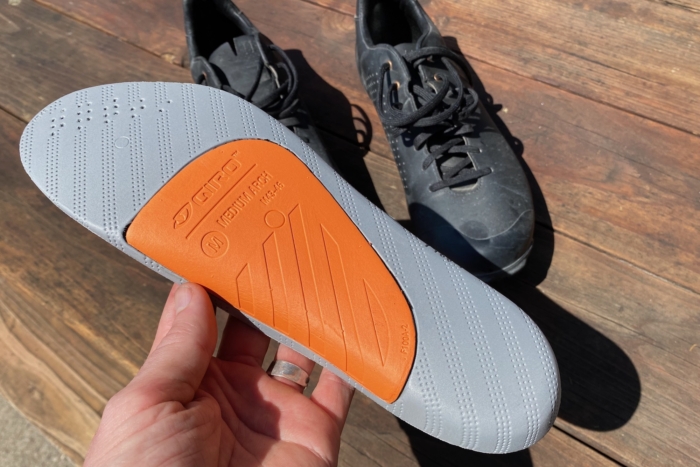
The adjustable arch support of the Supernatural footbed adds support and comfort; (photo/Jeremy Benson)
-
The soles may be stiff, but the Sensor rubber provides good traction and respectable walkability; (photo/Jeremy Benson)
Specifications
Pros & Cons
Pros
- Super comfortable
- Excellent pedaling efficiency
- Adjustable footbed
- Respectable walkability
- Classic style
Cons
- Expensive
- Minimal ventilation
- Not super light
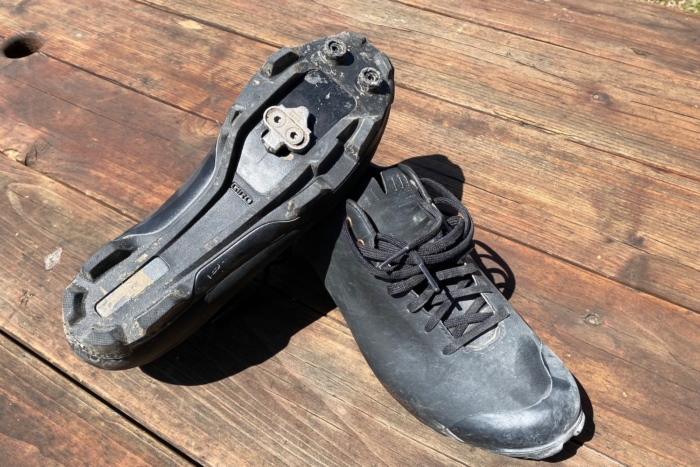
In the worlds of cross-country mountain biking and gravel riding, the Giro Empire is an icon. The much-loved Empire VR90 went unchanged for many years, and the new Giro Empire SRC ($350) builds off its legacy of comfort and performance. Fortunately, Giro didn’t change it too much, and the Empire remains one of the most comfortable, efficient, and classy-looking shoes on the market.
While BOA dials may be taking over the cycling shoe market, there’s still just something appealing about traditional laces. Visually, they just look classic, like a high-end pair of soccer cleats. But it isn’t just about aesthetics. Laces are also very comfortable. Sure, they aren’t as easy to adjust on the fly as BOA systems, but based on our experience with all versions of the Empire, that’s not an issue. Just snug these shoes up tight to start, and you’re good to go all day.
Like its predecessors, comfort is one of the Empire SRC’s strongest suits. The one-piece Teijin Evofiber masterfully blends suppleness and support, resulting in a secure yet super comfortable fit. Fit-wise, Giro’s extensive experience making cycling shoes of all kinds shines through. Our test pair fits true to size, with a fairly average volume that leans slightly to the narrow side of the spectrum. Combined with the supple uppers and lace closure, this resulted in a very secure hold of the foot.
Inside, Giro’s SuperNatural footbed is one of the best stock footbeds on the market. This footbed is customizable and comes with three levels of swappable arch inserts to match your foot’s shape for optimal support. We found this added to our overall comfort and meant we didn’t need to upgrade out of the box.
Giro’s Empire shoes have always been race-ready with stiff soles and excellent pedaling efficiency. The carbon composite plate underfoot is as stiff as they come, and that equates to impressively direct transfer of your muscle power directly into the cranks. At the same time, they managed to balance that stiffness in a way that doesn’t punish your feet — these shoes truly remain comfortable all day long.
Off the bike, Giro’s Sensor rubber tread is co-molded to the carbon sole and provides great grip on a range of surfaces. The sole doesn’t flex much, but the rocker through the toe helped make walking feel relatively normal. If you’re expecting some aggressive walking or running — looking at you cyclocross racers — the TPU toe lugs can be swapped out for the included metal toe spikes.
One area where the Empire SRC falls short is breathability. The uppers have virtually no ventilation features, and these shoes felt a bit warm on the feet when the temperatures rose. At 720 grams for the pair (size 43.5), these shoes aren’t exactly heavy, per se, but they are around 60 to 100 grams heavier than similarly priced cross-country race shoes.
Regardless, if you value comfort and performance equally, the Empire SRC should be high on your list. These shoes meet the demands of high-performance riding and racing while providing impressive comfort over the long haul. The lace-up style and classic looks give them timeless appeal and will never go out of style.
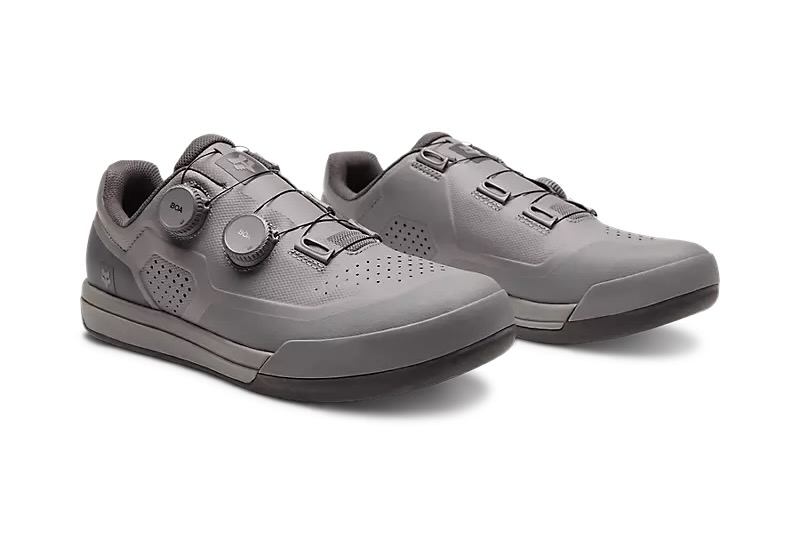
Fox Union BOA
-

-
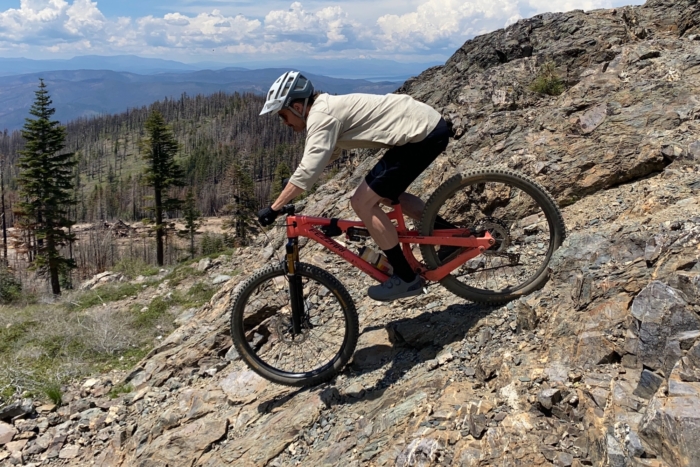
Getting to ride with the Fox Union BOA shoes; (photo/Jeremy Benson)
-
Out for a test ride in the Fox Union BOA shoes; (photo/Heather Benson)
-
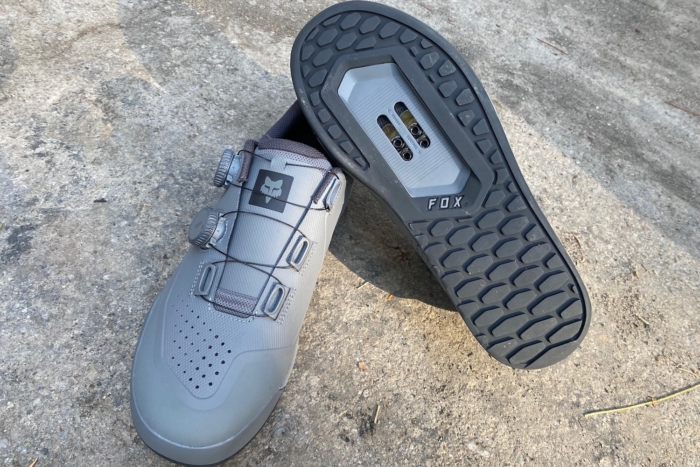
The Ultratac rubber sole of the Fox Union BOA; (photo/Jeremy Benson)
-
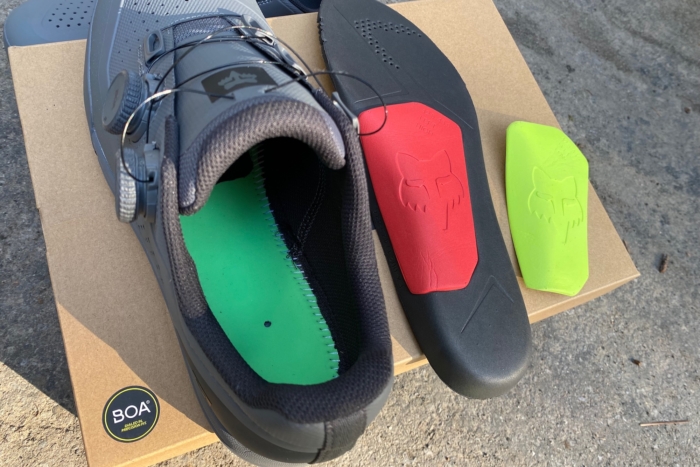
The Fox Union BOA come with an adjustable footbed to dial in the arch support; (photo/Jeremy Benson)
Specifications
Pros & Cons
Pros
- Excellent support and lateral stability
- Good level of foot protection
- Reasonable weight for style of shoe
- Weather resistant uppers
- Surprisingly good pedaling efficiency
Cons
- Stiff uppers take a few rides to break in
- Expensive
- Stiff sole doesn't flex much when walking
When Fox Racing launched its line of Union mountain bike shoes recently, it became one of the few brands that can outfit riders from head to toe with helmets, apparel, pads, and now footwear, too. The Union BOA ($250) sits at the top-of-the-line model in their modest range of three shoes, and it quickly became a tester favorite for its versatility and all-around performance.
While the Union BOA is used by downhill racers at the top end of the sport, we found it to be impressively versatile. This has to do with several factors, one of which is the reasonable weight. At just 867g for the pair in size 9.5 U.S., this is in the realm of most trail riding shoes and makes it a viable option for those pedaling to the top of their descents or heading out for long, grueling trail rides. Another factor is the sole stiffness. The reinforced nylon shank provides a solid platform that provides excellent pedaling efficiency for most styles of riding short of XC racing.
Of course, Fox didn’t stop there. The midsole is cushioned with EVA foam, which helps to mute trail feedback during descents. The molded toe cap and heel are reinforced to offer protection against rock strikes, and the shoe has a robust and tough feel. This is partially to do with the weather-resistant welded uppers that easily shrug off abrasion and water.
The cleat box is long and offers ample adjustment range for folks to mount their cleats in their preferred location, plus it is surrounded by a full-coverage Ultratac rubber outsole for lateral stability on the pedals and traction off the bike.
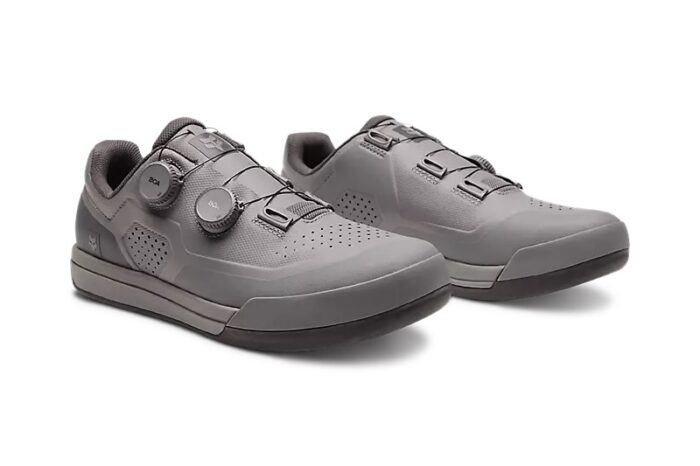
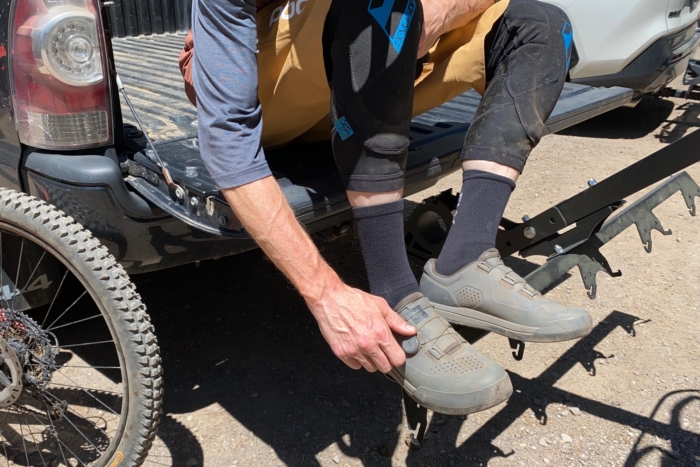
The Union BOA has a “standard fit” that feels very average in terms of width and volume, and we found them to fit true to size when going off their US sizing (the EU sizing seems to run a bit smaller than other brands). The BOA dials make it quick and easy to get the shoes on and off and allow for on-the-fly tension adjustments.
Additionally, Fox has included insoles with adjustable arch support, so you can hopefully dial it into your needs. Perforations above the toes and on the sides of the foot do a commendable job of ventilating and allowing the feet to breathe on hot days.
Out of the box, we found the uppers to feel a bit stiff, but they broke in nicely after just a few rides. The stiff soles offer excellent power transfer, but the limited flex through the toes doesn’t make them the best for extended hike-a-bikes. They’re also fairly expensive, but you can opt for the standard Union with laces and a Velcro strap and save yourself a bit of cash. Or, if you like a more pillowy feel at a slightly lower price, the Crankbrothers Mallet BOA ($200) is our other favorite gravity-oriented shoe.
Regardless, the Fox Union BOA is an excellent entry into the shoe market, and we feel it is one of the best burly mountain bike shoes we’ve tested in recent years.
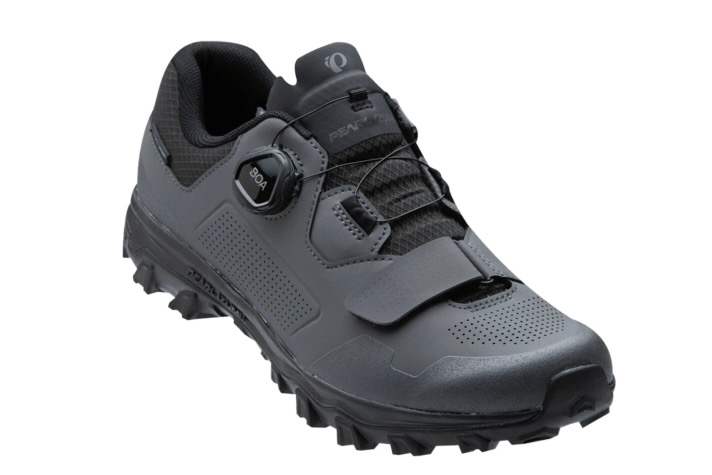
Pearl Izumi X-Alp Summit
Specifications
Pros & Cons
Pros
- Good blend of on- and off-bike performance
- Grippy Vibram soles for hike-a-bikes
- Stiff enough for most types of non-competitive riding
Cons
- Only available in full EU sizes
- Not the stiffest
- Can feel pedal slightly through sole
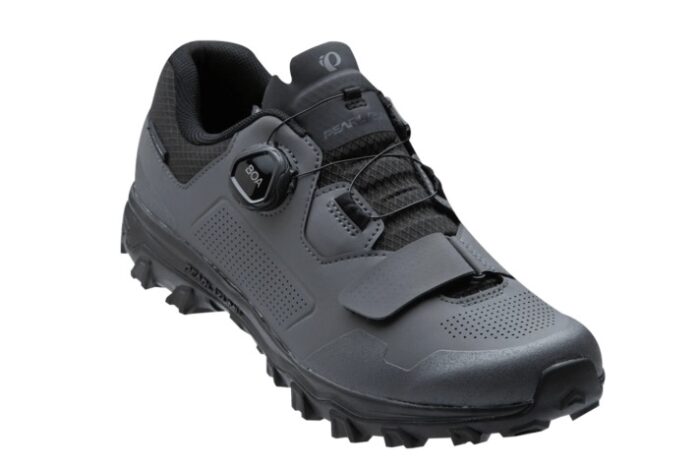
If your riding leans more toward the adventurous side of the spectrum or you regularly embark and multi-day bike-packing jaunts, then the Pearl Izumi X-Alp Summit ($150) is a shoe to consider. While they are certainly suitable for everyday trail riding, one of their greatest strengths is their performance off the bike. These shoes are comfortable, relatively lightweight, and offer a blend of on and off-the-bike performance that sets them apart from most other models on the market.
To be clear, these aren’t the highest-performance shoes around. Those seeking a super stiff sole and the utmost pedaling efficiency will be a little disappointed by the middling stiffness of the X-Alp Summit. For more casual trail riding, however, the nylon composite soles offer adequate stiffness, assuming you aren’t trying to PR every climb.
The middle-of-the-road stiffness is also why they work so well off the bike. The soles have ample flex through the toes, and when combined with the aggressively lugged Vibram ECOSTEP rubber outsoles, they make walking in loose conditions or scrambling over chunky rocks feel quite similar to wearing hiking shoes.
Overall, the fit is fairly neutral, about average from the heel through the mid-foot, and slightly roomier up in the toe box. Folks with average to slightly above average width feet will get along with them well, but those with narrow feet may find them to be a little too roomy. The synthetic uppers are quite supple and relatively thin, helping to give them a light and airy feel on the feet, with ventilation enhanced by perforations above the toes and along the sides of the feet.
A single BOA L6 dial pulls tension over the upper and mid-foot, along with a Velcro strap to snug things up down by the toes. The uppers aren’t the most supportive, but they certainly are quite comfortable.
While the X-Alp Summit shoes fit into their niche very nicely, they sacrifice a bit of performance in some areas as a result. The soles are far from the stiffest out there, and you can feel it flex a tiny bit under hard pedaling efforts and the cleat is slightly noticeable under the ball of the foot. They also offer very little in the way of foot protection, and vibration dampening isn’t on par with most of the trail or gravity shoes we tested.
They also only come in whole EU sizes, so those between sizes may have a harder time getting the perfect fit. For a slightly stiffer pedaling platform, more sizing options, and more casual style, the Specialized 2FO Roost Clip ($130) is worth a look.
Those concerns aside, the Pearl Izumi X-Ap Summit is a sensible option for the rider who prioritizes off-the-bike traction and walkability and wants a comfortable shoe that performs quite well on the bike too. If you’re the type of rider who scrambles to every vista point or likes going on far-flung adventures that involve pushing your bike for extended periods, these may be just the shoes you’re looking for. Adventurous ladies will also be happy to know they make the X-Alp Summit Women’s.
More Great Mountain Bike Shoes to Consider
Screenshot
Specifications
Pros & Cons
Pros
- Reasonable price
- Classy looks
- Good pedaling efficiency
- Comfortable
- Decent hiking traction for an XC shoe
Cons
- Not as stiff as high-end options
- Limited foot protection
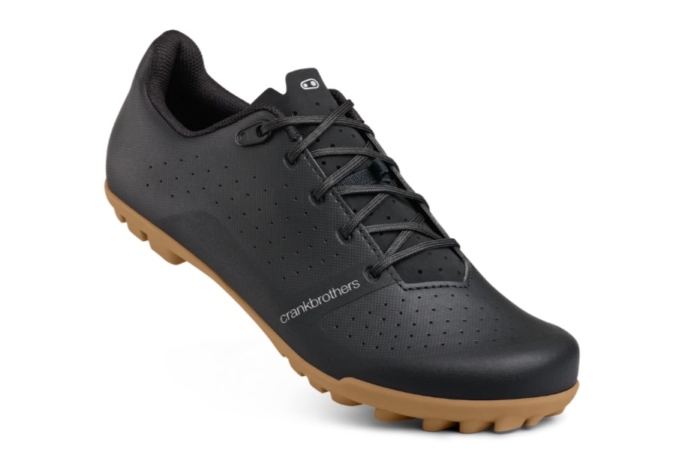
Crankbrothers recently leveraged its experience making some of the best trail and gravity mountain bike shoes on the market to create its first cross-country and gravel riding shoe, the Candy Lace. While this may be the brand’s first foray into this style of footwear, they created an undeniably great-looking, comfortable, and well-rounded cross-country mountain bike shoe at a reasonable price.
Borrowing some style cues from the new Mallet Trail BOA, the Candy Lace has a super clean and classy aesthetic. The seamless synthetic uppers, lace closures, and contrasting gum soles give them timeless appeal, and the black color we tested looks great — they also come in blue and white.
We tested a size 43.5 EU (10 U.S.) and found they fit true to size with a lower volume that worked very well for our tester. Despite an initially tight feel, the synthetic uppers broke in nicely after the first few rides. The lace closure makes it easy to get even tension over the foot, and an elastic lace retainer keeps them tidy while you ride. Laces aren’t quite as user-friendly as BOA systems, but they help to keep the price of these shoes reasonable and are inexpensive to replace if/when the time comes.
Crankbrothers gave the Candy Lace a fiber-reinforced nylon sole that provides a solid pedaling platform. They aren’t wildly stiff like some of the premium race shoes, but they don’t feel inefficient, nor do they beat your feet up over rougher terrain. The entire sole is wrapped in Match MC1 rubber with aggressive lugs on the toe and heel, and broad pontoons border the cleat box. For an XC-style shoe, the Candy Lace walks pretty well and has great traction in loose conditions.
The toebox and heel are reinforced for some foot protection, but like similar shoes, they don’t offer much. They also aren’t the stiffest, but for non-racers, that’s not necessarily a bad thing, either. Perforations above the toe and on the side of the foot help them breathe, but these aren’t the airiest shoes around. If you ride in the heat regularly, the super-airy Giro Sector ($240) will cost you a bit more but provide much more ventilation.
For cross-country or gravel enthusiasts, the Crankbrothers Candy Lace hits the sweet spot of pedaling efficiency, comfort, walkability, style, and affordability.
Specifications
Pros & Cons
Pros
- Super comfortable
- Ample foot protection
- Easy to walk in
- Good power transfer
- Comes with Crankbrothers cleats preinstalled
- Available in Speedlace and Lace versions
Cons
- Ventilation could be better
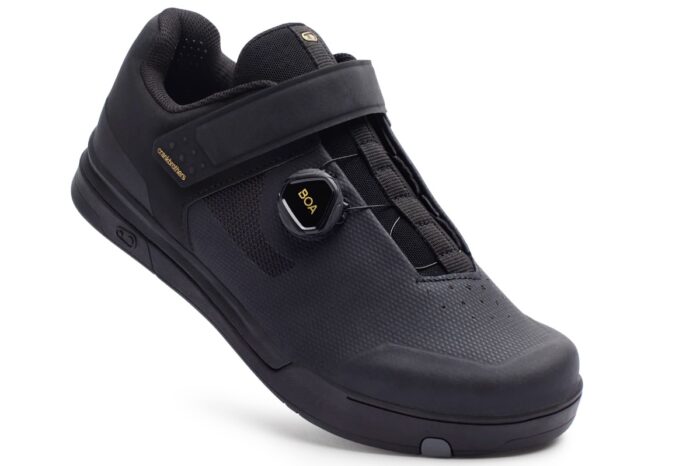
The Crankbrothers Mallet BOA ($200) is a clipless model that was designed to meet the needs of enduro and downhill racers and riders. While it may be aimed more at gravity-fueled riding disciplines, this versatile shoe is also great for trail riding with a reasonable weight, good pedaling efficiency, and supernatural comfort. The Mallet shoes also come in Speedlace and Lace versions that will save you $30 and $50, respectively.
Given its extensive line of pedals, it makes sense that Crankbrothers designed its shoes to work in combination with them, and they even include a set of Crankbrothers cleats pre-installed on all Mallet shoes. If you ride Crankbrothers’ pedals you get a fresh set of cleats, and all you need to do is position them in your preferred location to be ready to roll.
If you ride any other brand of pedals, fear not — the Mallets also work with any mountain bike pedals that use 2-bolt cleats. The Match Box cleat box is generously sized and allows for ample side-to-side and fore-aft adjustability, including the “Race Zone” for those who like to slam their cleats way back for stability on the descents.
Getting in and out of these shoes is quick and easy with a single BOA Li2 dial and a Velcro strap at the top of the tongue, both of which make it a snap to dial in the tension for a secure and stable hold of the foot. Our test pair fit true to size with an average width that should work for most people’s feet. We’ve heard others mention the EU sizing runs a tad big, however, so it might be good to try these on before you buy to ensure you get the correct size.
Despite the tough and almost rubbery feel, the synthetic uppers are quite supple and conform nicely to your foot shape, and the padded tongue keeps the BOA wires from digging into the tarsal bones. Generous padding in the heel/ankle pocket is both plush and protective, and small silicone dots at the back of the heel help hold it in place.
The sole isn’t super stiff, but it feels very well-balanced, and at no point did it feel like it was sapping power or efficiency, even on long trail rides with lots of climbing. It’s also well-damped and absorbs trail feedback and vibration to keep your feet feeling fresh.
Other than the cleat box, the sole is fully covered with Match MC1 rubber that provides great grip off the bike, and the horizontal tread at the toe and heel works to add some traction when walking in loose dirt. A generous sole rocker and a little flex through the toes make walking feel impressively natural. A sturdy rubber bumper wraps up over the toes for protection from rock strikes, and the whole package feels tough and well-made.
Though the Mallet BOA is billed as a downhill and enduro race shoe, its reasonable weight of 860g for the pair (size 43.5) makes it well suited to any type of riding you’re doing short of XC racing. They quickly became the go-to for after-work trail rides. This versatility makes them a great candidate for a one-shoe quiver if you split your riding between the bike park, enduro laps, and trail riding.
Our only real complaint is that they aren’t the most breathable, and they can get a bit sweaty in hot weather. If breathability is high on your list, the Crankbrothers Mallet Trail BOA ($220) provides a touch better ventilation along with a slightly stiffer sole.
Specifications
Pros & Cons
Pros
- Breathable upper
- Grippy sole
- Reasonable price for BOA equipped shoe
- Grippy soles
- Comfy slip-tongue design
- Good looks
Cons
- Low volume fit may not work for everyone
- No water resistance
- Uppers aren't the most supportive
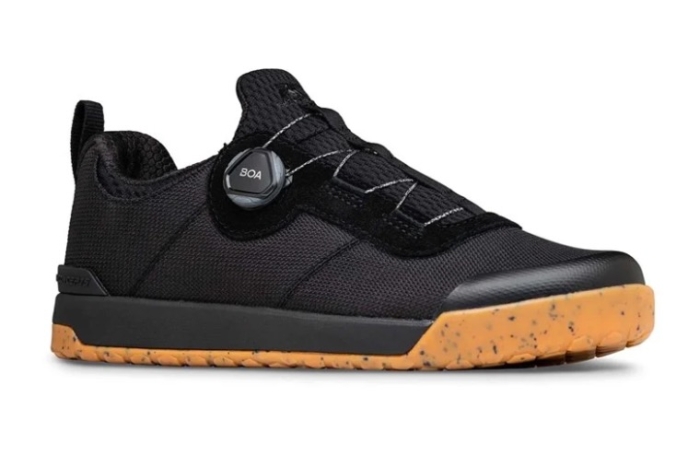
The Ride Concepts Accomplice Clip BOA ($150) is a relatively new addition to the brand’s growing lineup. This unique-looking shoe employs a highly breathable upper and comfy slip-tongue design with a BOA lacing system and textile TX4 laces. This design has some advantages and drawbacks, but overall, it’s a solid all-around trail riding option and a good value for a shoe with a BOA closure.
While they have a silhouette similar to that of many other modern trail and gravity-oriented mountain bike shoes, the Accomplice Clip BOA looks somewhat unique. This is mostly due to the “lightweight nylon tech upper” material along with the slip-tongue design. The textile upper gives the shoes a more casual look and also aids in breathability compared to shoes that use synthetic leather.
You can feel the air passing through these shoes. The slip-tongue is a stretch affair that wraps the whole foot and is immediately comfortable, although it does take a little more effort to pull on than shoes with more traditional tongues that open wider.
Ride Concepts calls the fit of the Accomplice Clip BOA low volume, and we’d agree. The mid-foot feels relatively average, but the toebox is fairly snug, even on our low-volume foot. If you have wider toes, you may get away with sizing up, but these are a good candidate for trying on before you buy to make sure they work for you.
Fortunately, they broke in a little after a few rides, and ours got a tad roomier but still low-volume. A single BOA L6 dial tightens TX4 laces over the top of the feet. The textile laces move very easily, pull even tension, and don’t dig into the tarsal bones the way other BOA laces can. The slip-tongue is moderately padded, as is the ankle cuff, and the heel stays nicely in place, even while walking.
Underfoot, an EVA midsole provides some cushioning, and a nylon shank stiffens up the sole for pedaling efficiency. Still, these aren’t the stiffest shoes around, but they are appropriate for the intended use of more casual, everyday trail riding. The entire sole is covered in Ride Concept’s CLIP GRIP rubber outsole and signature hexagonal tread pattern.
This provides relatively good traction off the bike, although the limited flex through the toes makes hiking up steep slopes feel a little clunky. A 42mm-long cleat box provides a massive range of adjustability for all riders to get their cleats positioned just how they want.
There’s little not to like about the Accomplice Clip BOA shoes, but the low-volume fit, especially in the forefoot, will be a limiting factor for many riders. The breathable upper makes them a solid choice for warm to hot weather, but it provides virtually no water resistance and is not ideal for wetter climates. The material also doesn’t support the foot laterally quite as well as materials with a bit more structure, and the texture hangs on to dust and dirt and isn’t the easiest to keep clean.
If you’re willing to spend a bit more, the Crankbrothers Mallet Trail BOA ($220) provides a more accommodating fit, a slightly stiffer sole, a bit more water resistance, and walks a little better, too.
Still, the Accomplice Clip BOA is a solid value for riders seeking a reasonably priced, casually styled shoe for general trail riding in mostly dry conditions. These shoes look good, breathe well, and are quite comfortable if they fit your foot.
Specifications
Pros & Cons
Pros
- Incredible power transfer
- Very lightweight
- Slick looks
- Tunable pontoon height/pedal interface
Cons
- Very expensive
- Limited foot protection
- Not great for walking
- Lots of exposed carbon on sole
Read review: WorldTour Winning Cycling Shoe Gets Gravel Treatment: Specialized S-Works Recon First Look
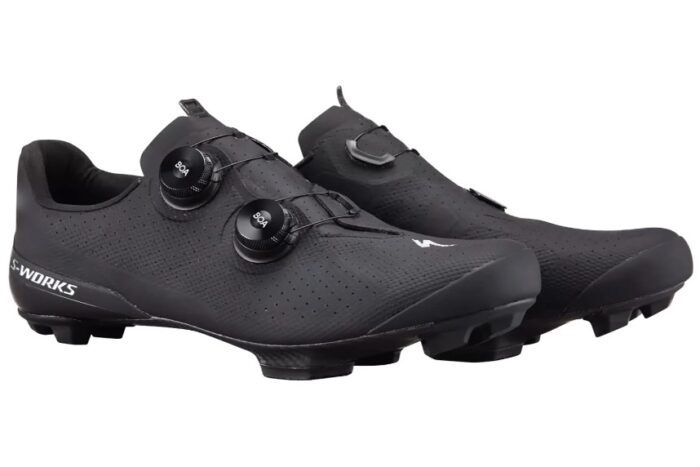
Specialized uses the S-Works moniker on its top-of-the-line, race-ready bikes and other products, including shoes. The Specialized S-Works Recon ($450) is their range-topping mountain bike shoe aimed squarely at the XC racing and gravel riding crowd. These shoes recently got a complete redesign, addressing some of the complaints about the previous version while making them lighter, sleeker, more accommodating, and better-looking than ever.
Many high-end XC racing shoes are essentially copies of road bike shoes, so it’s not too surprising that the S-Works Recon looks nearly identical to the S-Works Torch road shoe. Of course, there are some minor differences, but they are the same in many ways. One of those is the full carbon fiber sole that is incredibly stiff, thin, and lightweight with an “Internal I-Beam” for added strength.
These soles have a very low stack and don’t flex under power, no matter how hard you mash on the pedals. The uppers and closures are the same as the Torch as well, and while they are incredibly supple and comfortable, it’s easy to get a very snug, stable, and secure fit that helps further enhance both efficiency and control.
One of the big changes to the S-Works Recon is more width in the forefoot, which should be accommodating to more riders compared to the narrower fit of the previous version. While this will be less ideal for those with narrow feet, the new arrangement of the dual BOA S3 dials manages to secure the shoes for a precise fit and easy micro-adjustments.
Additionally, the ankle cuff has been lowered to prevent irritation and allow for excellent ankle mobility, while the heel pocket is snug with friction material added to keep your heel firmly in place. Specialized included its Body Geometry design into the shoe and footbed with the goal of aligning the lower leg, and the footbed provides great support despite being thin and firm.
The is a lot of visible carbon fiber on the sole of the S-Works Recon, but Specialized added beefy, but not replaceable, lugs at the toe and heel, a small patch of rubber under the instep, and large “pontoons” on either side of the cleat. The pontoons are “tuneable,” and the shoes come with shims, so you can adjust their height to dial in the shoe-pedal interface to your liking or specific pedals.
Specialized also offers additional 3mm, 6mm, and 9mm shims, and a cleat stacker should you need to account for leg length discrepancies. The aim of the tuneable pontoons is to provide a road bike-esque connection to the pedals for enhanced pedaling efficiency. In the stock configuration, our test shoes mated very well with all the different pedals we used them with.
Weight is also a concern for racers, so it’s not surprising that the S-Works Recon is absurdly lightweight at just 590g for our size 43.5 test pair. This is particularly impressive given how stiff, secure, and stable they are on the feet. Breathability is also fairly good, mostly due to the super thin and light construction of the shoes.
As with most XC racing shoes, foot protection is very minimal and is limited to a small rubber bumper in front of the toes and the asymmetrical plastic heel cup. There’s also virtually no sole damping of any kind. And, while it is definitely possible to walk in these shoes, the unflinching stiffness of the sole and all the exposed carbon make these a very poor choice for rides that involve much time off the bike, especially if there are sharp rocks involved.
Additionally, the wider fit in the forefoot may be too roomy for the narrow-footed among us. They are also very, very expensive. For similar performance with a slight weight penalty, the Fizik Vento Ferox Carbon ($300) can save you a good bit of cash.
That said, if you’re seeking the top-level performance and comfort these shoes provide for XC or gravel racing, the cost of the Specialized S-Works Recon shoes may well be justified.
Specifications
Pros & Cons
Pros
- Great power transfer
- Adequate foot protection
- Lighter than previous version
- Reasonable ventilation
Cons
- Soles don't absorb vibration as well as similar shoes
- Reports of sole durability issues
- Stiff sole is a little clunky for walking
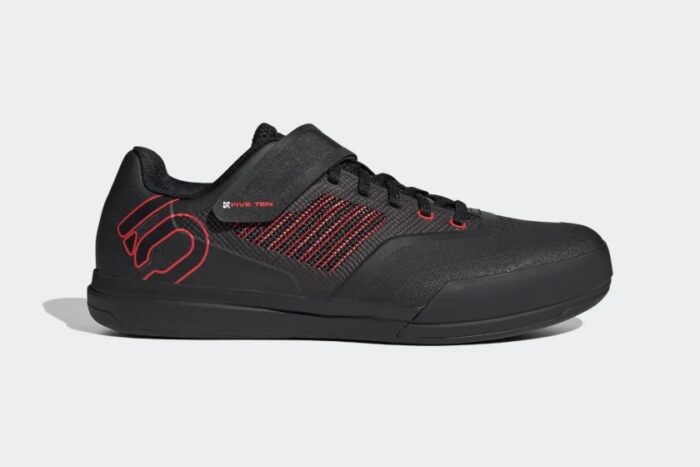
The latest iteration of the Five Ten Hellcat Pro ($180) has been around for a couple of years and has improved on the heavy and bulky predecessor in several ways. It’s still the burliest clipless model in the Five Ten lineup and is designed to meet the demands of downhill and enduro riders and racers. Given the significant reduction in weight compared to the old version, however, the Hellcat Pro’s appeal has expanded to include trail riders seeking extra foot protection on aggressive trails.
Despite the downhill focus of the Hellcat Pro, it has a surprisingly stiff sole that helps make it an efficient pedaler. Whether you’re grinding uphill for another lap or laying down the power in a sprint, there’s really no noticeable flex in the sole underfoot or torsionally. This translates to the descents as well, where the sole supports the foot and doesn’t flex around the pedal. It offers moderate vibration dampening, though not quite as much as some similar models.
Full coverage Stealth Marathon rubber soles with Five Ten’s signature raised dot tread pattern provide good traction on firm surfaces and is harder-wearing than the rubber found on the brand’s flat pedal shoes. While these shoes are okay to walk in, the minimal sole rocker and stiffness through the toes make them feel a little blocky underfoot.
We found the Hellcat Pro to fit true to size with average volume through the mid-foot and a slightly roomier forefoot. The fit of these shoes will be welcome for those with wider feet, but may prove to be a bit spacious for those on the narrower side. The laces work very well to secure the shoes snugly over the tops of the feet, and the broad Velcro strap at the top of the tongue helps keep the heel planted firmly in the heel pocket and keeps the laces tidy.
A large mesh panel on the outside of the mid-foot and some perforations above the toes do a commendable job of ventilating, though these are far from the airiest shoes around. Given the gravity-oriented focus of the Hellcat Pro, foot protection levels are high, particularly at the front of the shoe, where the toebox is heavily reinforced and coated in abrasion-resistant material.
While our test pair has held up well, we have seen a friend’s Hellcat Pros suffer from sole delamination issues. A quick search online reveals that this isn’t an isolated problem, but it doesn’t affect all of the shoes either. It’s safe to assume that Adidas/Five Ten is addressing the issue, and it is typically covered by warranty should yours suffer the same fate.
Based on our experience, however, the Five Ten Hellcat Pro is a solid option for trail, enduro, and gravity riders seeking a protective and stiff shoe for tackling aggressive terrain and riding at high speeds. If you prefer a BOA closure system, the Fox Union BOA ($220) is strikingly similar but a little quicker and easier to get on and off the feet.
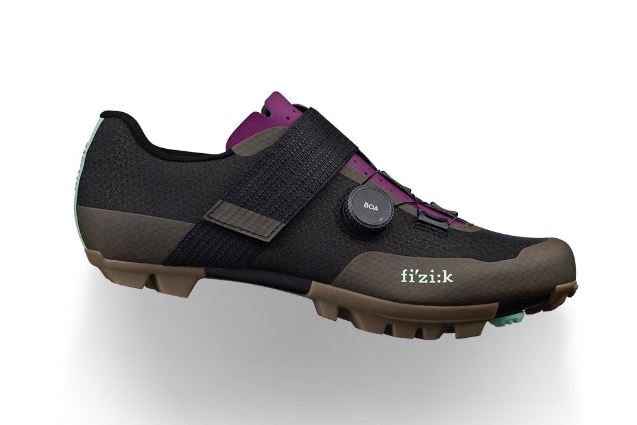
Specifications
Pros & Cons
Pros
- Lightweight
- Stiff; excellent power transfer
- Less expensive than other high-end XC shoes
- Rubber sole tread covers most of the carbon midsole
- Well-ventilated
Cons
- Still fairly expensive
- Minimal foot protection
- Limited padding in heel and on tongue could cause discomfort for those with sensitive feet
The Fizik Vento Ferox Carbon ($300) tops the brand’s range of performance off-road shoes geared toward XC and gravel racers. These shoes borrow some features from Fizik’s popular road models, and they are lightweight, super stiff, and minimalist in their design. They also cost a fair bit less than other brands’ top-of-the-line models, though, at $300, they still aren’t exactly inexpensive either.
The Vento Ferox Carbon has, not surprisingly, a full X1 carbon sole that has a 10/10 on Fizik’s sole stiffness index. This stiffness is in line with their top road cycling shoes and ensures that none of your precious watts get wasted when smashing down on the pedals. Our size 43.5 test pair fit true to size with an average width that avoids being excessively narrow or too spacious.
The uppers are made from a tough but thin and lightweight woven mesh and laminated upper secured over the foot with a BOA Li2 dial and a wide Powerstrap at the top of the tongue. We found it easy to crank these shoes down over the feet for a very snug and secure fit from the forefoot to the heel, and small grippy dots at the back of the heel pocket help to prevent any unwanted heel lift. This secure fit further enhances pedaling efficiency and power transfer throughout the entire pedal stroke.
Most of the carbon sole is covered by rubber with small lugs at the toes, larger lugs under the heel, and long pontoons bordering the cleat box. Not only does this protect the carbon from damage, but it also allows you to walk reasonably sure-footed, and the pontoons interface quite well with pedals for increased contact and stability.
The Ferox Carbon is also ready to accept toe spikes for you CX racers, although it doesn’t come with them. Ventilation is a strong suit as the thin uppers allow plenty of air to reach the feet. The reinforced toe cap and rigid molded heel provide protection on par with other cross-country shoes, though it is quite minimal.
While the Vento Ferox Carbon are undoubtedly excellent shoes for laying down the power and maximizing your efficiency, we found that the minimalist design could lead to some minor discomfort over the course of longer rides. There is very little padding in the heel pocket or the tongue, and those with sensitive tarsal bones or heels may start to develop hot spots after several hours of riding, but this may not be an issue for everyone.
Similarly, and this goes for most carbon-soled race shoes, the soles offer very little in the way of vibration dampening. If you’ve got wiggle room in the budget, we found the Shimano S-Phyre XC9 ($450) to be a bit more comfortable and slightly lighter, too.
Still, the Fizik Vento Ferox Carbon has a lot to offer those looking for a stiff, lightweight, and well-ventilated shoe for gravel or XC that costs less than the competition.
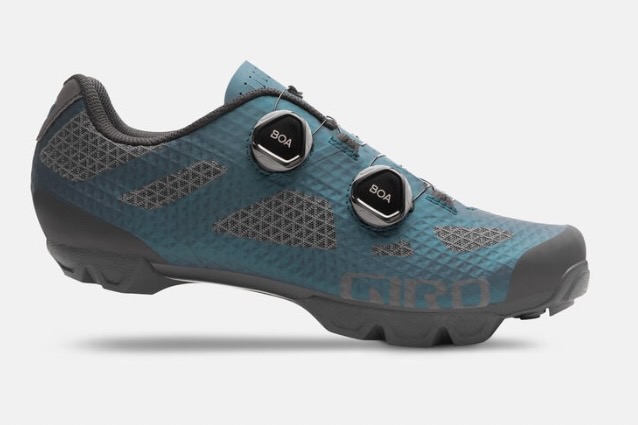
Specifications
Pros & Cons
Pros
- Breathable Synchwire upper
- Good power transfer
- Easily adjustable
- Less expensive than high-end XC shoes
Cons
- Slightly heavier than more expensive models
- Not as stiff as top-ranked XC shoes
- Limited foot protection
The Giro Sector ($240) is a lightweight shoe geared toward cross-country and gravel riders that’s made with Giro’s proprietary Synchwire upper material. Though they aren’t quite as stiff or light as the top-of-the-line racing shoes we tested, they also cost significantly less and offer a more balanced performance that most non-racers and even some racers may prefer.
One of the primary things that set the Sector apart from similarly styled shoes is the use of Giro’s Synchwire material. This mesh-like material is quite unique in that it is very flexible and incredibly air-permeable yet still quite supportive. In the case of the Sector, it also has a “thermo-bonded exo structure” that provides a little additional support and structure to the uppers while still leaving plenty of room for these to be some of the best-ventilated shoes we tested.
These shoes ventilate so well that riding in brisk conditions can be a bit chilling, so it’s definitely worth considering the climate where you ride. They also allow water to pass through freely, but they dry pretty quickly as well.
Slipping them on, the comfort is immediately apparent as the uppers conform to the feet easily, and the Giro 3D-molded medium arch support footbed cradles it nicely from below. Our size 43.5 test pair fit true to size with an average width, and the dual BOA L6 dials secure the shoes over the top of the feet and allow for micro increases to tension or full macro-release. We found it easy to get these shoes as tight as you want to really lock your feet and heels in place.
The sole is made with a carbon composite plate that is adequately stiff for most types of riding. It can’t match the unrivaled stiffness of full carbon soles, but instead, it feels solid underfoot while remaining a bit more forgiving than full-on race shoes. This is particularly noticeable over the course of a long gravel ride or chunky mountain bike descent, as they don’t punish your feet the way that some stiffer shoes can.
Pedaling efficiency isn’t top of the heap, though it isn’t far off, thanks to the relatively stiff sole and precise fit. The sole is covered in rubber from front to back to provide off-the-bike grip and a reasonable walking experience. The lack of well-defined lugs, however, doesn’t give them the best traction in loose, dry, or muddy conditions.
For those who don’t need a super airy shoe, the Crankbrothers Candy Lace ($160) is worth checking out. The soles are a touch less stiff, but they are a bit nicer to walk in and have a classic, almost retro style that we think looks great. Plus, you’ll save a bit of dough for new bike parts, too.
If you’re looking for a super comfortable and well-ventilated shoe for light trail, cross-country, or gravel riding, we feel the Giro Sector is a great option that looks good, fits great, and isn’t super expensive. Female riders will also be happy to know that Giro makes a women’s version of the Sector as well.
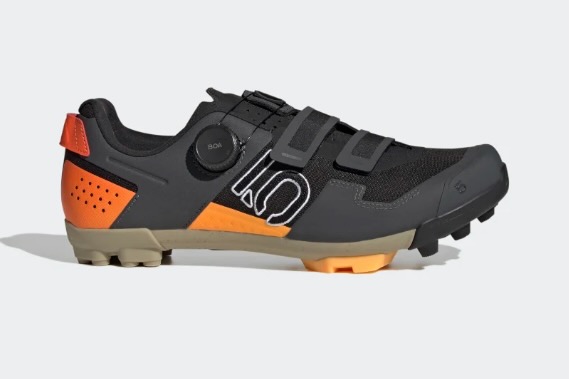
Specifications
Pros & Cons
Pros
- Great power transfer
- More protective than typical XC shoes
- Sole lugs provide good walking traction
- Less expensive than many XC shoes
Cons
- Higher volume fit in forefoot; may be roomy for narrow feet
- Slightly heavier than other XC-style shoes
The new Five Ten Kestrel BOA ($230) is a dramatic departure from its predecessor and a unique entry into the shoe market from the traditionally more gravity-oriented brand. They claim it “pairs XC performance with Five Ten’s gravity credentials and mountain bike expertise,” and it is marketed as a “down-country” shoe with some design elements that speak to the brand’s roots.
The previous Kestrel Pro BOA was a beefy shoe for aggressive trail riders and enduro racers, and the latest version resembles its predecessor in name only. This shoe is aimed squarely at the growing down-country market that has been spurred on by the evolution of more capable XC bikes. The full-length glass-fiber reinforced sole is very stiff, and power transfer felt on par with some of the more expensive competition.
This took us somewhat by surprise, actually, as we didn’t expect such good pedaling efficiency. The heel pocket is well-shaped, and the BOA closure over the upper foot does a great job of locking the heel down in place.
While some of the rigid sole is exposed, much of it is covered in Five Ten’s signature Stealth Marathon rubber. This includes a small patch under the instep, as well as aggressive lugs at the toe and heel that provide excellent traction in loose soils. While the soles are quite stiff, these shoes are a bit more friendly to walk in than some similar models.
The cleat bolt channels offer a huge range of adjustment, especially for an XC shoe, and are bordered by two large pontoons that help you stabilize on the pedals. Additionally, Five Ten added a beefy piece of rubber that wraps up and over the toes to ward off rock strikes when you’re getting aggressive on your XC rig.
Our test pair fit true to size in length. They have a nice snug fit in the heel and ankle, and are slightly higher volume in the forefoot than most other XC shoes. We’ve read complaints from others that they weren’t able to adequately tension the shoes over the forefoot, but we were able to get them snug enough with the two Velcro straps.
We got along fine with the fit with thicker socks, but it may be worth trying these on before you buy to make sure the volume jives with your feet. Those with narrower/lower-volume feet might find a more precise fit in a shoe like the Fizik Vento Ferox Carbon ($300), but with a bit less foot protection.
The ventilated mesh panel above the toes and on both sides of the feet works effectively. And, while they aren’t the lightest shoes out there, they’re still fairly lightweight at 724g for the pair. We came away pleasantly surprised by the performance of the new Kestrel BOA, which is a solid option for those who want XC performance with a bit of added foot protection. They come in two color options, and they are also offered in a women’s version with two different colorways.
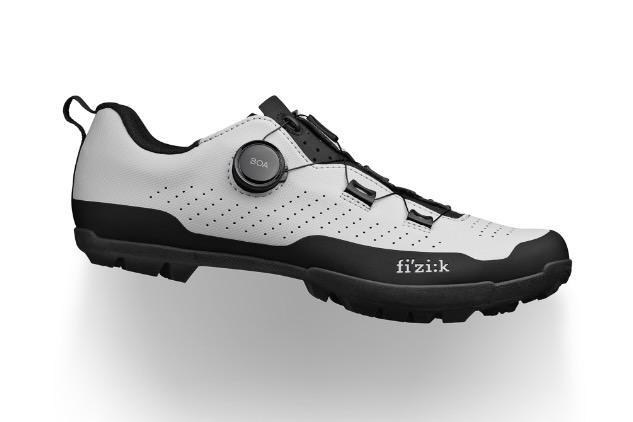
Specifications
Pros & Cons
Pros
- Comfortable
- Supple uppers conform nicely to the feet
- Good off the bike traction
- Pretty good ventilation
Cons
- Not the best power transfer
- Uppers aren't the most supportive
The Fizik Terra Atlas ($160) is a moderately priced shoe that combines a comfortable fit with an all-around performance that many riders will appreciate. While it may not be the lightest or stiffest shoe around, it offers a nice balanced ride that should work for everything from casual XC riding to gravel or bike packing for riders without competitive aspirations.
The Terra Atlas has a nylon plate to provide pedaling support, and it falls at a 5 out of 10 on Fizik’s sole stiffness scale. While it is noticeably flexy under very hard efforts compared to the 10-rated Fizik Veto Ferox Carbon, we didn’t find it to be excessively soft under power or fatiguing to the lower legs or feet.
Ample flex through the toe of the shoe allows for a natural walking motion off the bike, and the grippy rubber outsole provides good traction on most surfaces. The cleat mount area offers a generous adjustment range that should accommodate most riders’ preferences.
The supple uppers of the Terra Atlas feel great right out of the box, and we found the length to be true to size. The width feels a touch wider than other Fizik shoes we’ve tested, but not excessively voluminous. A single BOA dial pulls tension over the asymmetric opening and tongue of the shoe to tighten the entire thing from the top down to the forefoot.
While this works OK, it can be a little tricky to get even tension throughout, especially if you need to decrease volume closer to the toes. This seems partially due to the fact that the wires crisscross and tend to hang up on each other. And, while we found the supple uppers to be very comfortable, they aren’t the most supportive.
The uppers and tongue are heavily perforated and do a good job of ventilating the feet. The construction seems solid, too, with good attention to detail and quality craftsmanship. Foot protection, however, is quite limited, so that’s something to be aware of depending on the type of riding that you’re doing. The Pearl Izumi X-Alp Summit ($150) is quite similar in terms of sole stiffness, but it has a roomier fit and a more aggressive sole for hiking.
Overall, the Fizik Terra Atlas is a versatile and comfortable shoe for those who aren’t too concerned with having super stiff soles. They feel good on the feet, and we think they look pretty good too.
Specifications
Pros & Cons
Pros
- Very reasonable price
- Comfortable
- Relatively casual style
- Decent power transfer
- Easy to walk in
Cons
- Heavier weight
- Not the best power transfer
- No half sizes
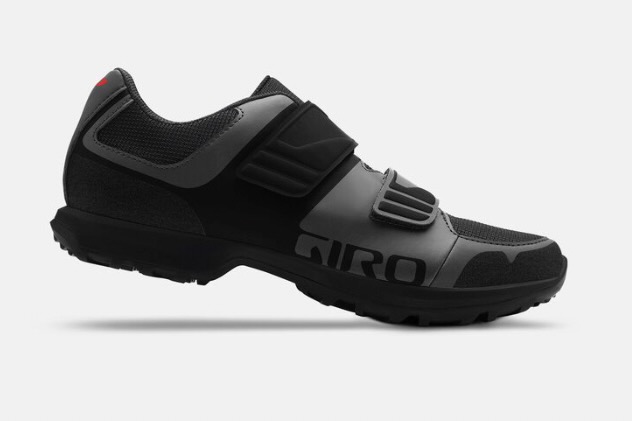
Mountain biking is an expensive sport, and it can be a challenge to find a decent entry-level clipless shoe for less than $100. The Giro Berm ($80) bucks that trend with a very wallet-friendly price, a high level of comfort, and a respectable on-trail performance. These shoes won’t blow you away with any one aspect of their performance, but they are simple and effective, leaving little to complain about, especially when you take the price into consideration.
With two broad Velcro straps as the closure, getting into, out of, and adjusting the tension over the foot is quick and easy. Our size 44 test pair fit true to size in length, and the width is fairly average. There’s nothing particularly remarkable about their fit, but we found them to be surprisingly comfortable and very easy to get along with.
There’s a decent amount of padding about the heel, some light reinforcement in front of the toes, and they offer protection similar to many trail-riding shoes. Despite their appearance, they also proved to be fairly well-ventilated, with a large mesh panel over the toes and a few smaller mesh panels by the instep, allowing for better-than-expected breathability.
The soles aren’t super stiff, but they’re not meant to be, either. Under power, you can feel the sole flex slightly, especially when compared to stiffer XC shoes, but it isn’t egregious, and we didn’t find that it caused foot or calf fatigue on the climbs or descents. That sole flex goes the other way, too, and from the cleat mount area forward, it allows for a very natural walking motion.
The outsole is fully covered in grippy rubber with a unique tread design that provides excellent traction on loose surfaces and rock. The cleats themselves sit just low enough to avoid clicking on the floor when you walk, and the tread on either side interfaces well with pedal bodies. Our test pair also came with a “cover” that bolts into the cleat holes, so you can use these shoes with flat pedals, too.
Now, no one will mistake these shoes for their high-end counterparts, but that’s also not the point. The Giro Berm is a great entry point to clipless mountain bike shoes that are sure to satisfy the needs of most new recreational riders. If you’ve got a bit of flexibility in the budget, you’ll find a step up in performance with the Specialized 2FO Roost Clip ($130) with a stiffer sole, more size options, and better style, too.
Mountain Bike Shoes Comparison Chart
| Mountain Bike Shoe | Price | Weight (pair) | Closure | Intended Use |
|---|---|---|---|---|
| Crankbrothers Mallet Trail BOA | $220 | 844 g (size 43.5) | BOA dial and Velcro strap | Trail, enduro |
| Specialized 2FO Roost Clip | $130 | 750 g (size 43.5) | Laces | Trail |
| Shimano S-Phyre XC9 | $450 | 616 g (size 43.5) | Dual BOA dials | XC, gravel |
| Specialized Recon 1 | $120 | 590 g (size 43) | BOA L6 dial with Dyneema yarn lace | XC, gravel |
| Giro Empire SRC | $350 | 720 g (size 43.5) | Laces | XC, light trail, gravel |
| Fox Union BOA | $250 | 860 g (size 9.5 U.S.) | Dual BOA dials | Trail, enduro, gravity |
| Pearl Izumi X-Alp Summit | $150 | 780 g (size 44) | BOA dial and Velcro strap | Trail, adventure, bike packing |
| Crankbrothers Candy Lace | $160 | 746 g (size 43.5) | Laces | XC, light trail, gravel |
| Crankbrothers Mallet BOA | $200 | 864 g (size 9.5 U.S.) | BOA dial and Velcro strap | Trail, enduro, gravity |
| Ride Concepts Accomplice Clip BOA | $150 | 905 g (size 10 U.S.) | BOA dial with TX4 laces | Trail |
| Specialized S-Works Recon | $450 | 590 g (size 43.5) | Dual BOA dials | XC, gravel |
| Five Ten Hellcat Pro | $180 | 724 g (size 9.5 U.S.) | Laces and Velcro strap | Trail, enduro, gravity |
| Fizik Vento Ferox Carbon | $300 | 662 g (size 43.5) | BOA dial and Velcro strap | XC, gravel |
| Giro Sector | $240 | 708 g (size 43.5) | Dual BOA dials | XC, light trail, gravel |
| Five Ten Kestrel BOA | $230 | 724 g (size 9.5 US) | BOA dial and dual Velcro straps | XC, down-country, trail |
| Fizik Terra Atlas | $160 | 758 g (size 43.5) | BOA dial | XC, light trail, gravel |
| Giro Berm | $80 | 910 g (size 44) | Dual Velcro straps | General trail riding |
How We Tested the Best Mountain Bike Shoes
Our cycling editors have been reporting on the latest news, technologies, and products across the spectrum of riding disciplines. Writing about bikes isn’t just a job. It’s our passion, and we love trying out new and interesting products of all kinds for reviews and finding the best options to enhance our experience, enjoyment, and performance out on the trails.
Our mountain bike shoe review author, Jeremy Benson, has been professionally testing and reviewing mountain bike gear for the past 8 years and has tested over 30 different pairs of clipless mountain bike shoes in that time. Having started mountain biking in the early 1990s, he’s witnessed and experienced the evolution of clipless mountain bike shoes firsthand.
From gravel and XC racing, all-day backcountry epics, and shuttle runs on steep skidders, he appreciates all types of riding and understands the needs of different riders and riding styles. His extensive testing experience has also resulted in a keen ability to discern the performance differences in the products he uses. In addition to mountain bike shoes, Jeremy has tested and reviewed the best mountain bike helmets to keep your head safe and the best hitch bike racks for transporting your precious rides.
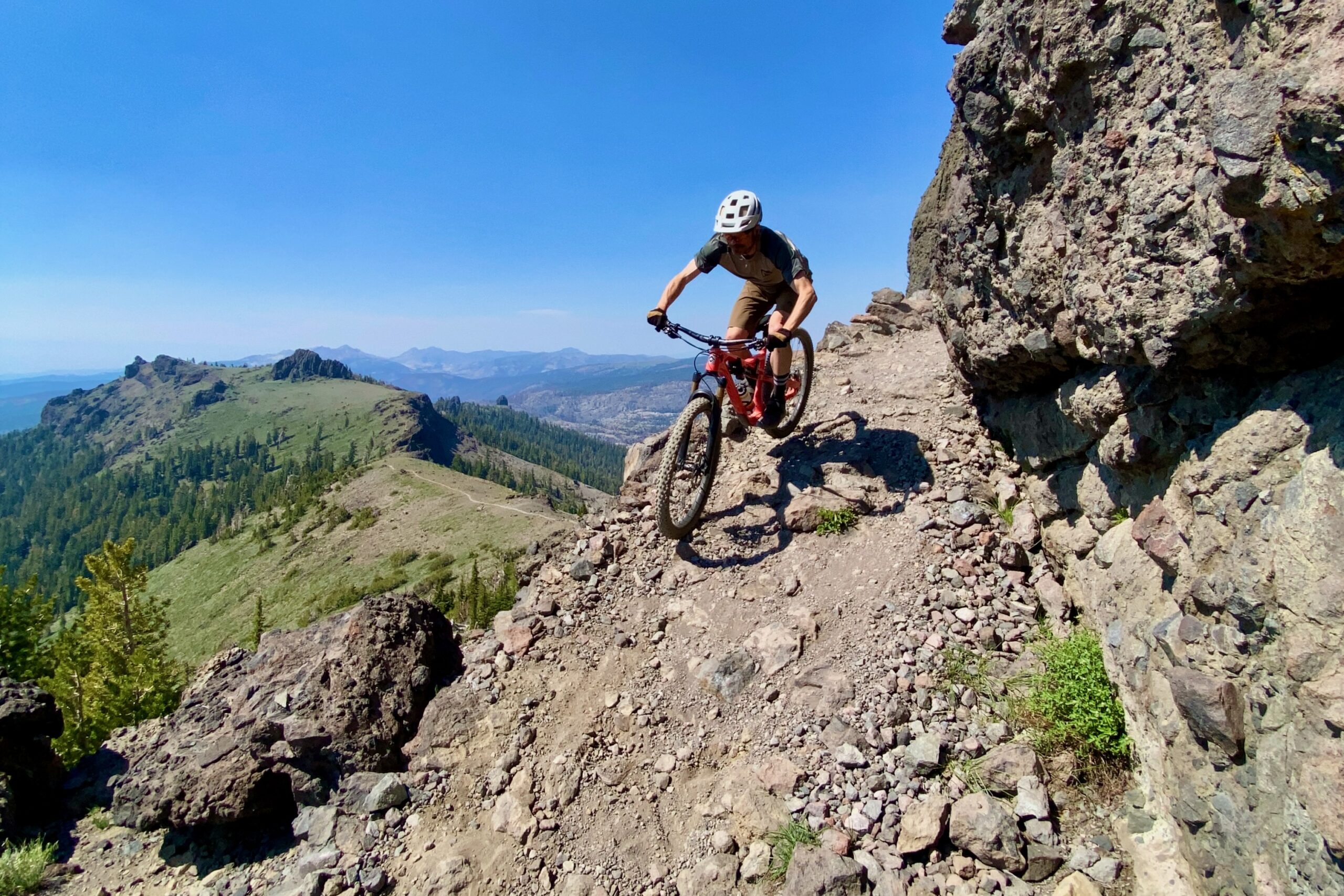
Based in Lake Tahoe, Calif., Jeremy has hundreds of miles of world-class trails right out the door or a short drive from his home. From smooth and fast cross-country loops, machine-built flow trails, grueling climbs, and steep, technical descents, there’s a little bit of everything to put these shoes to the test. In the winter months, trail systems in the California foothills or the high desert of Nevada provide a respite from the snowy mountains and the ability to test shoes year-round.
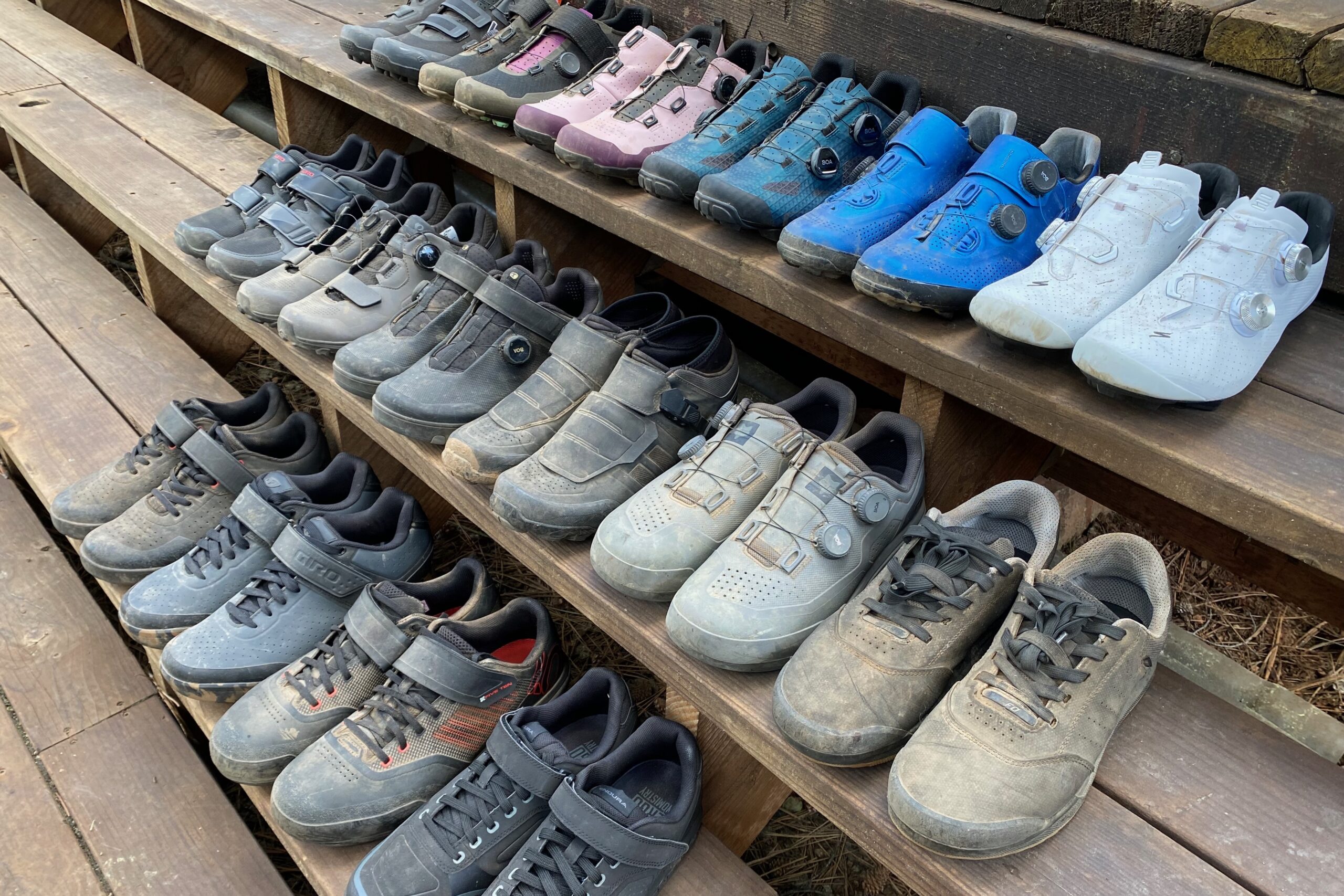
After researching the best mountain bike shoes on the market, we rounded up a diverse selection of 17 models to test and compare side by side. Each pair was thoroughly tested over the course of several months (some models for well over a year) to determine their strengths and weaknesses and how they perform in the real world.
Each pair was weighed for consistency and comparison to the manufacturer’s claims, and important performance characteristics like fit, comfort, ventilation, pedaling efficiency, foot protection, and walkability were scrutinized out on the trail.
Buyer’s Guide: How to Choose the Best Mountain Bike Shoes
With so many different models to choose from, finding the best pair of mountain bike shoes to meet your needs can be a challenge. We put together this buying advice that goes over the factors to consider when making your purchase decision. Please note that this review and the information below are specific to clipless mountain bike shoes, which are shoes that accept cleats that clip into the pedals (confusing, we know).
Flat pedal riders fear not — we have tested the best flat pedals and the best flat pedal shoes if you prefer not to clip in. For the roadies, we have a comprehensive road bike shoe review as well. For those who split the difference, we’ve tested and reviewed the best gravel bike shoes, too.
What Type of Riding Do You Do?
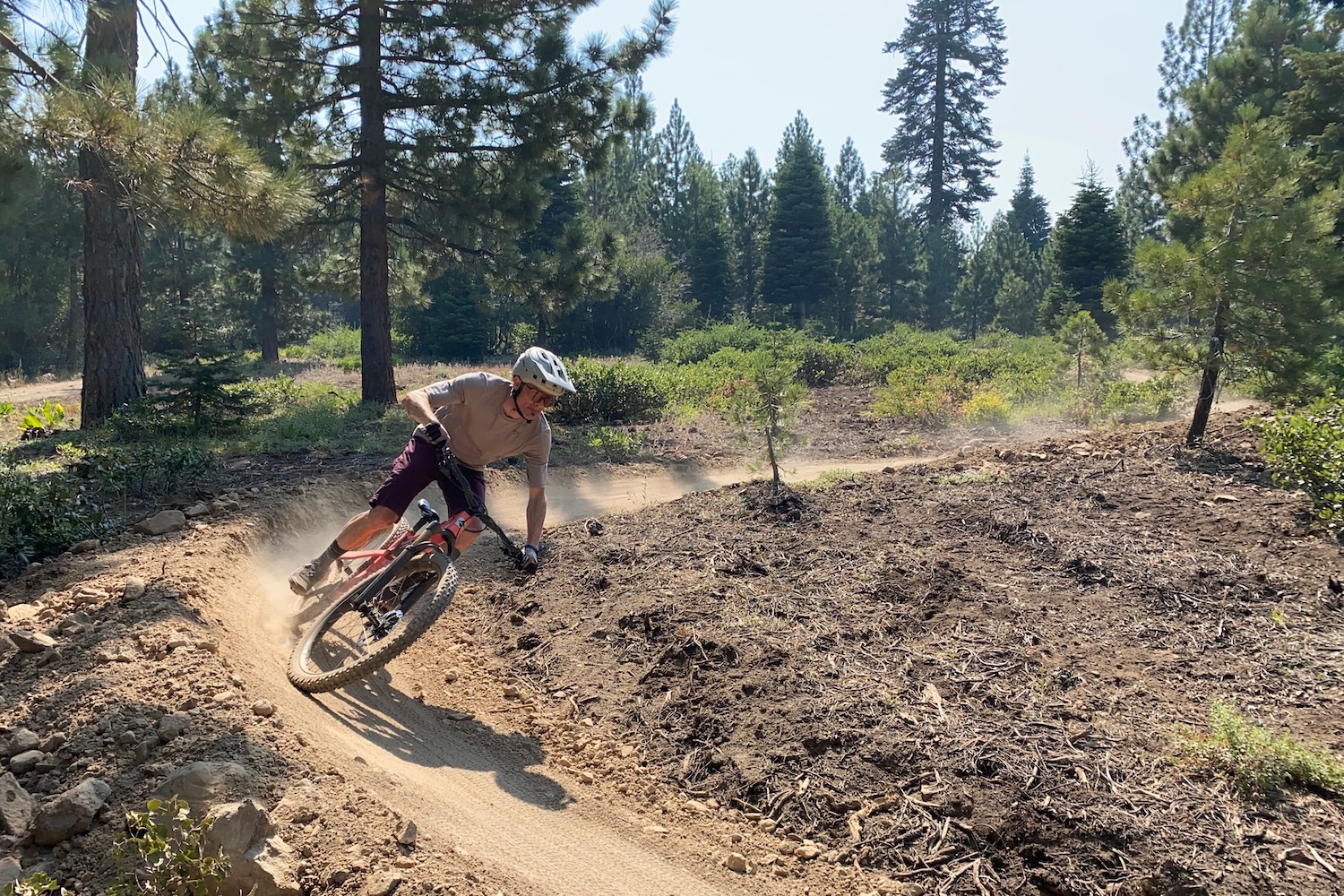
The type of riding you do will be the primary factor to consider when choosing the right pair of mountain bike shoes. If the majority of your riding falls into a specific category like cross-country or gravity, shoes designed for that specific purpose will serve you the best.
If you’re more of a generalist, then a versatile trail-riding shoe is probably the way to go. If you dabble in multiple disciplines, having multiple different pairs of shoes to match the type of riding you’re doing is not uncommon.
Types of Mountain Bike Shoes
Given the various categories that mountain biking is divided into, it comes as little surprise that we have shoes specialized to meet the varying needs of riders and riding styles. In general, mountain biking can be broken into three primary categories: cross-country, trail/all-mountain, and gravity (downhill and enduro). We explain the primary differences in design and performance between the types of shoes below.
Cross-Country Shoes
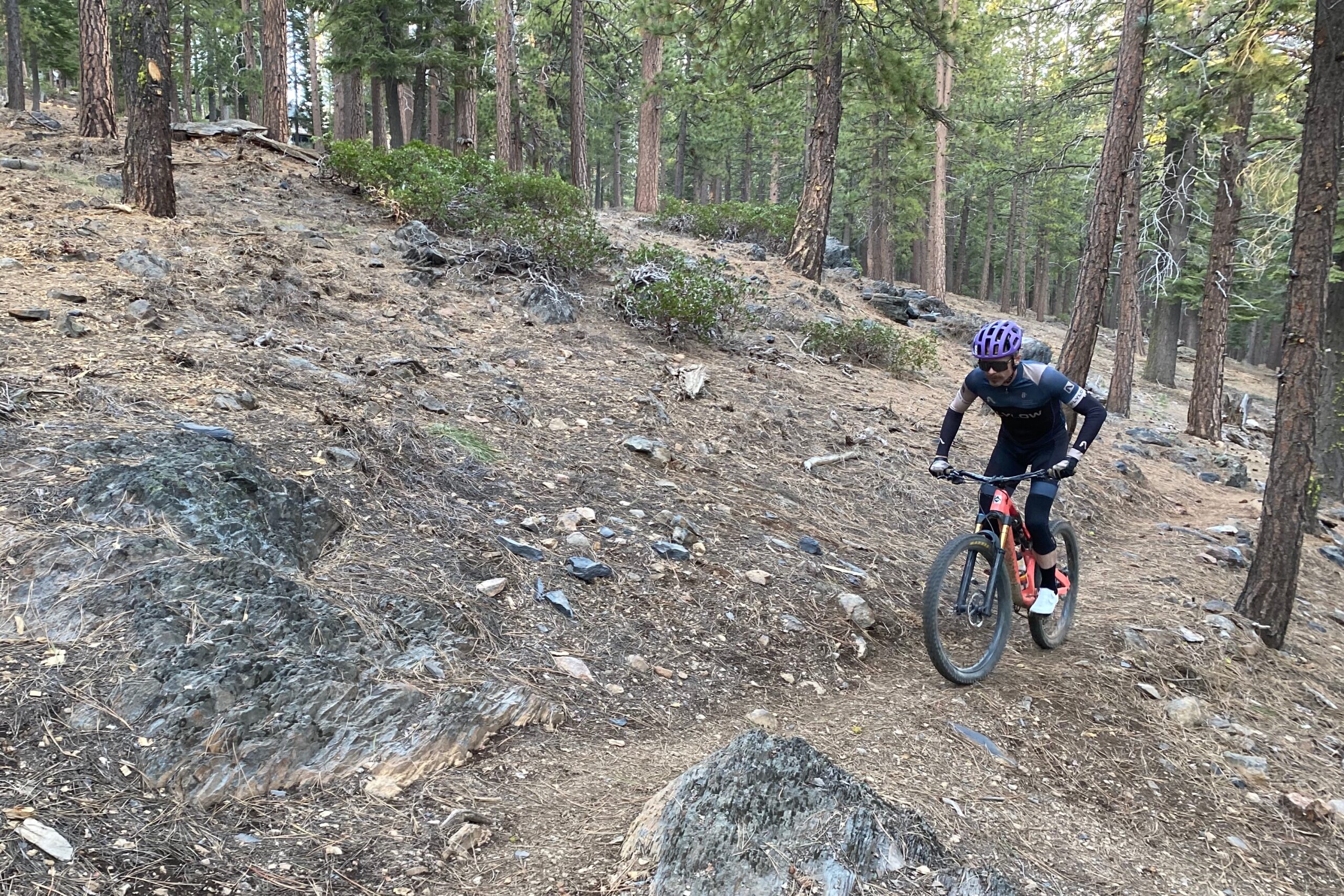
While it is possible to ride cross-country in just about any mountain bike shoe, cross-country-specific shoes are the preferred tool for the job for several reasons. XC riding is about speed and efficiency, so cross-country shoes are designed with low weight and efficient power transfer as priorities. This is particularly true in XC racing, where high-end shoes can provide marginal gains that can be the difference between a podium or a mid-pack performance.
Cross-country shoes typically have stiff soles, sometimes made from carbon fiber or rigid plastic, that provide a direct transfer of power into the pedals with little to no energy wasted through sole flex. They also typically have sleek, low-profile uppers that provide a snug and secure fit. Given the stiffness and support of the soles, this style of shoe works well with small, lightweight pedals that don’t have any platform or cage.
Given the prioritization of weight and sole stiffness in the design of cross-country shoes, they do make some compromises in other areas. They generally provide much less protection for the feet compared to trail or gravity-oriented models.
Stiff soles also don’t tend to provide much in the way of vibration damping, so they can be a little harsher on the feet over rough terrain and long descents. Walking and hiking also tend to be less natural and comfortable, given the stiffness of the soles and the outsole designs.
Regardless, if moving fast uphill and across the flats is your goal, cross-country shoes are generally the best bet. Often, this style of shoe also works great for gravel riding and/or road biking. Examples of cross-country shoes include the Shimano S-Phyre XC9, the Specialized S-Works Recon, the Fizik Vento Ferox Carbon, and the Giro Sector.
Trail and All-Mountain Shoes
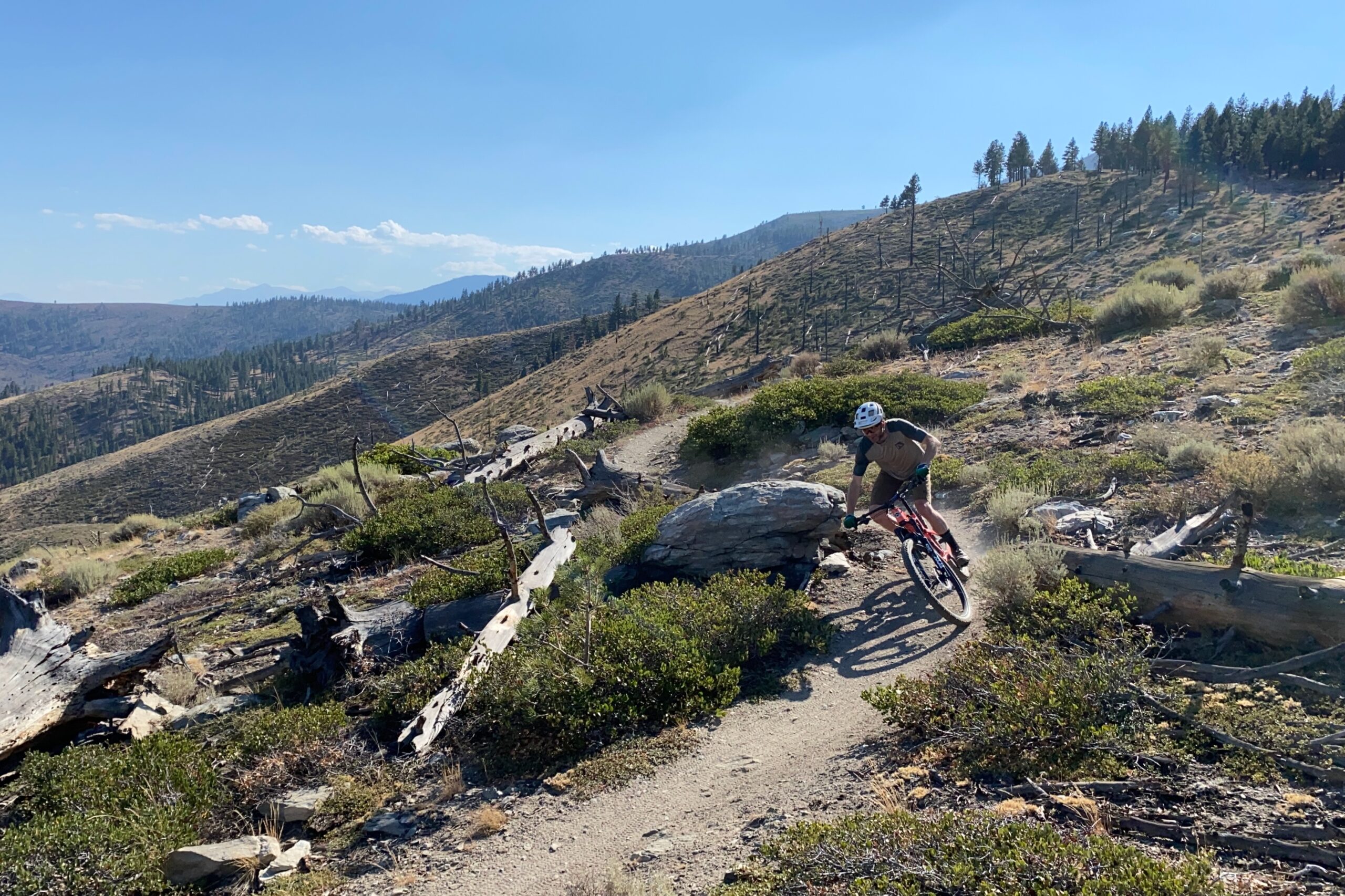
Shoes designed for trail riding are the happy medium between the stiff, efficiency-oriented cross-country models and the protective gravity-focused options. Trail shoes tend to be highly versatile and span the largest range of riding styles and uses. Most are still reasonably lightweight and provide efficient power transfer, though it is not the singular focus like with cross-country shoes.
Trail shoes also typically provide a higher level of foot protection, but not quite as much as downhill shoes. Outsole designs vary, but most now feature grippy rubber soles with flex through the toe to facilitate more natural walking and traction for those inevitable hike-a-bikes.
Shoes like these that can do it all inevitably make some minor compromises. They aren’t quite stiff or light enough to be the best option for cross-country racing. Likewise, they don’t provide the level of foot protection most riders seek for true downhill riding. Still, trail riding shoes like the Specialized 2FO Roost Clip are typically the best option for the vast majority of riders.
Other models like the Crankbrothers Mallet Trail BOA provide enough foot protection for enduro riding and even downhill, yet they are versatile enough to be great trail riding shoes as well.
Enduro Shoes
Enduro-style riding and racing is essentially a gravity-focused discipline, and the preferred shoes for this type of riding are often those designed for gravity riding. Still, with timed downhill stages and untimed uphill transfers, enduro riders do enough pedaling that efficiency is often still a consideration. For this reason, beefier and more protective trail/all-mountain shoes are often a good choice, and the new breed of moderate-weight gravity shoes are typically solid options for this type of riding.
Gravity Shoes
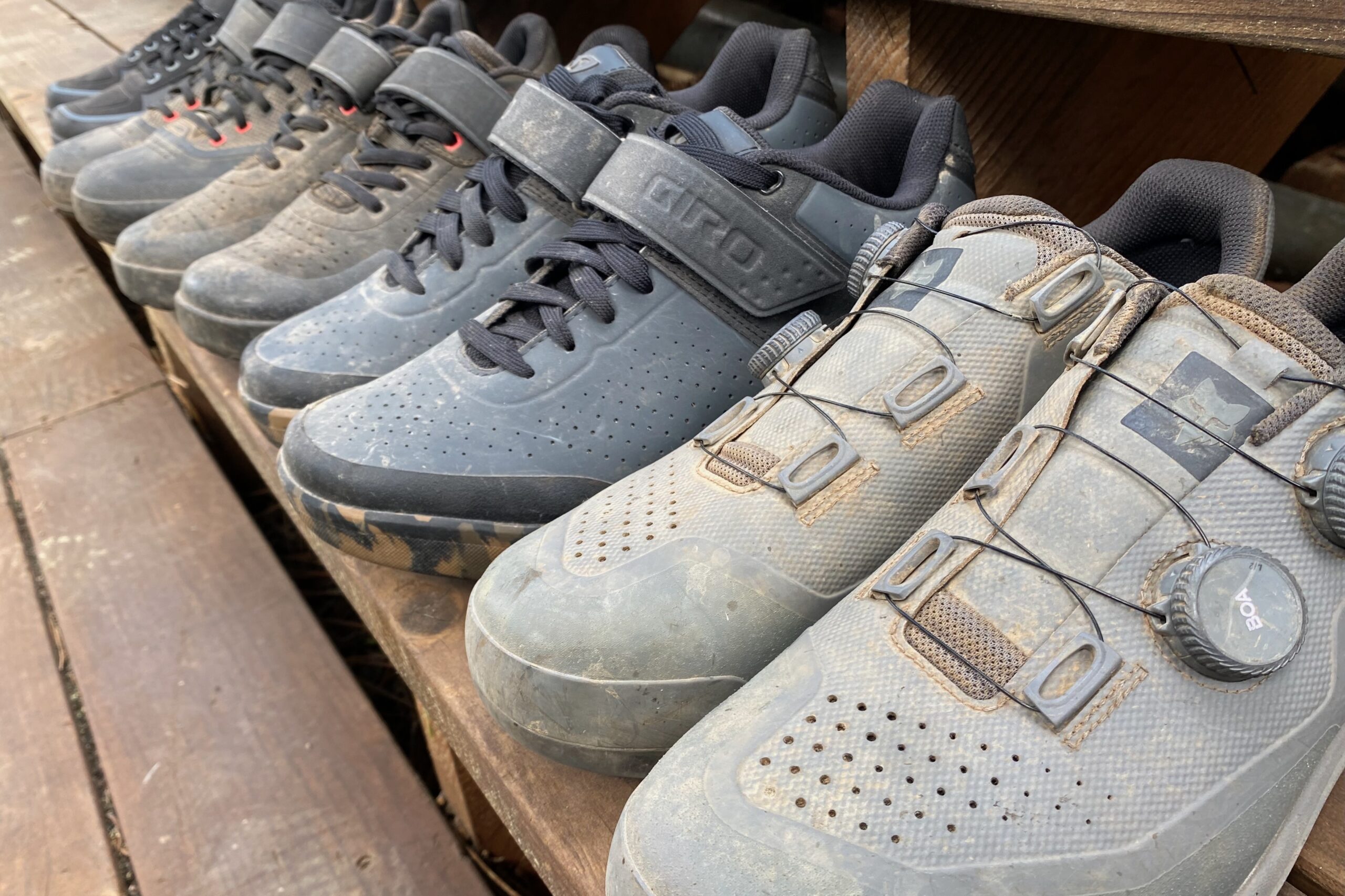
Gravity riders who spend their days riding chairlifts or shuttling the uphills to ride rough and steep trails or hit massive jumps typically seek shoes that provide more foot protection and somewhat more forgiving sole designs. Gravity shoes tend to be a bit bulkier, with more cushioning in the uppers and protective zones integrated around the toes, heels, and sometimes the ankles.
With less emphasis on efficiency, the soles are generally not as stiff, and they usually incorporate some vibration-dampening material like EVA foam into the midsole to absorb some trail feedback and impact. These features typically result in shoes that are a bit heavier, though that is a tradeoff for the protection and comfort they provide.
Of course, gravity shoes can be worn for everyday trail riding, though they may be overkill in many situations. Still, trail riders seeking added foot protection and cushioning often opt for this style of shoe, particularly if their riding leans toward the more aggressive side of the spectrum and they don’t mind a little extra weight in exchange.
Many of the latest gravity shoes, like the Fox Union BOA, Crankbrothers Mallet BOA, and Five Ten Hellcat Pro, are lighter and less bulky than older models, expanding their versatility and making them viable options for trail riding as well.
Pedals
Much like your shoes, clipless pedals come in a variety of styles that may provide distinct performance advantages for certain types of riding. The clip mechanisms themselves vary somewhat between brands, although the general idea is the same. Clipping into your pedals secures the foot to the pedal in the optimal position. The optimal position varies by personal preference, but also by use case.
Typically, XC riders have a slightly more forward cleat position to optimize pedaling efficiency, while most gravity riders have a rearward-biased cleat position to enhance stability when descending. Thankfully, most shoes have a relatively wide cleat adjustment range, so most people will be able to position their cleats in their desired location.
Among mountain bike pedals, the Shimano SPD system and cleat are generally the most common. Other brands like Crankbrothers, Time, HT, Hope, etc., use proprietary cleats for their pedals, but they all share the same two-bolt attachment. There are few actual “standards” in the bike industry, but the two-bolt cleat interface for mountain bike shoes is one that is actually a standard. Phew.
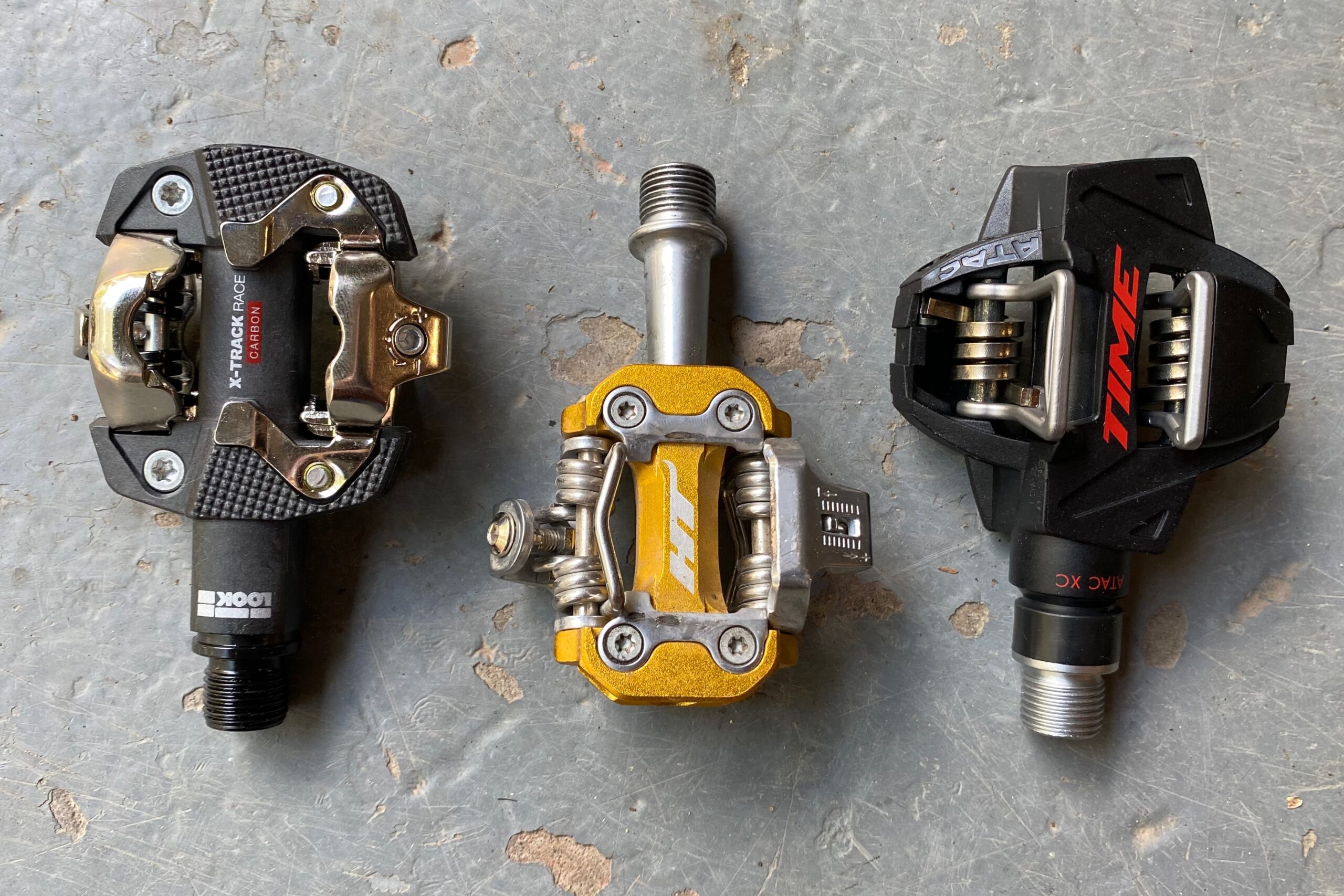
XC Pedals
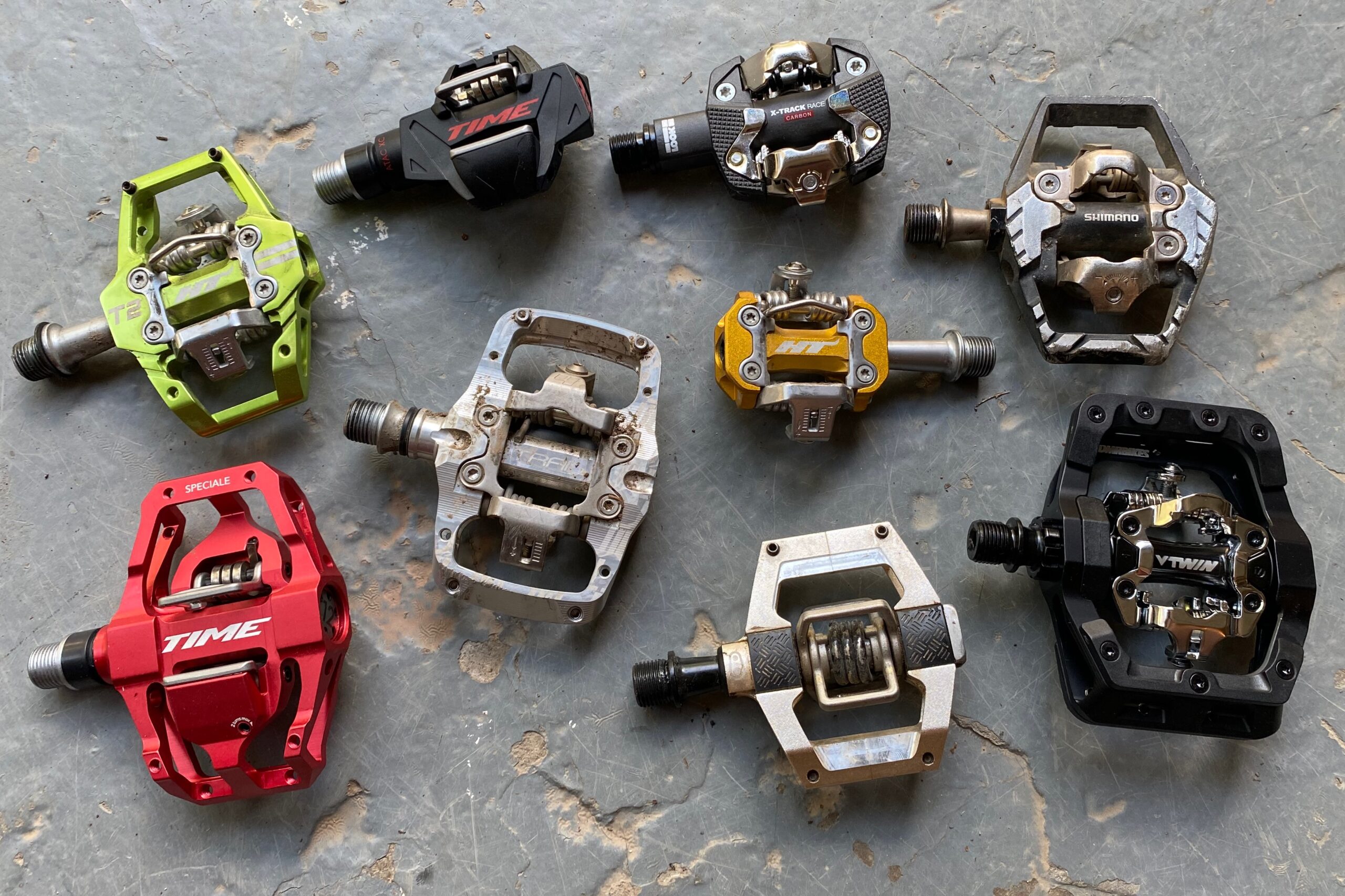
Pedals for cross-country riding are designed to be used with stiff-soled cross-country shoes. They typically consist of a spindle and a small pedal body that is essentially just the clip mechanism, often with a small platform to either side for some lateral support.
They usually prioritize light weight, and the majority of the support comes from the stiff sole of your shoes. Examples include models like Crankbrothers Eggbeaters, HT M2, Time XC 8, and Shimano XTR PD-M9100.
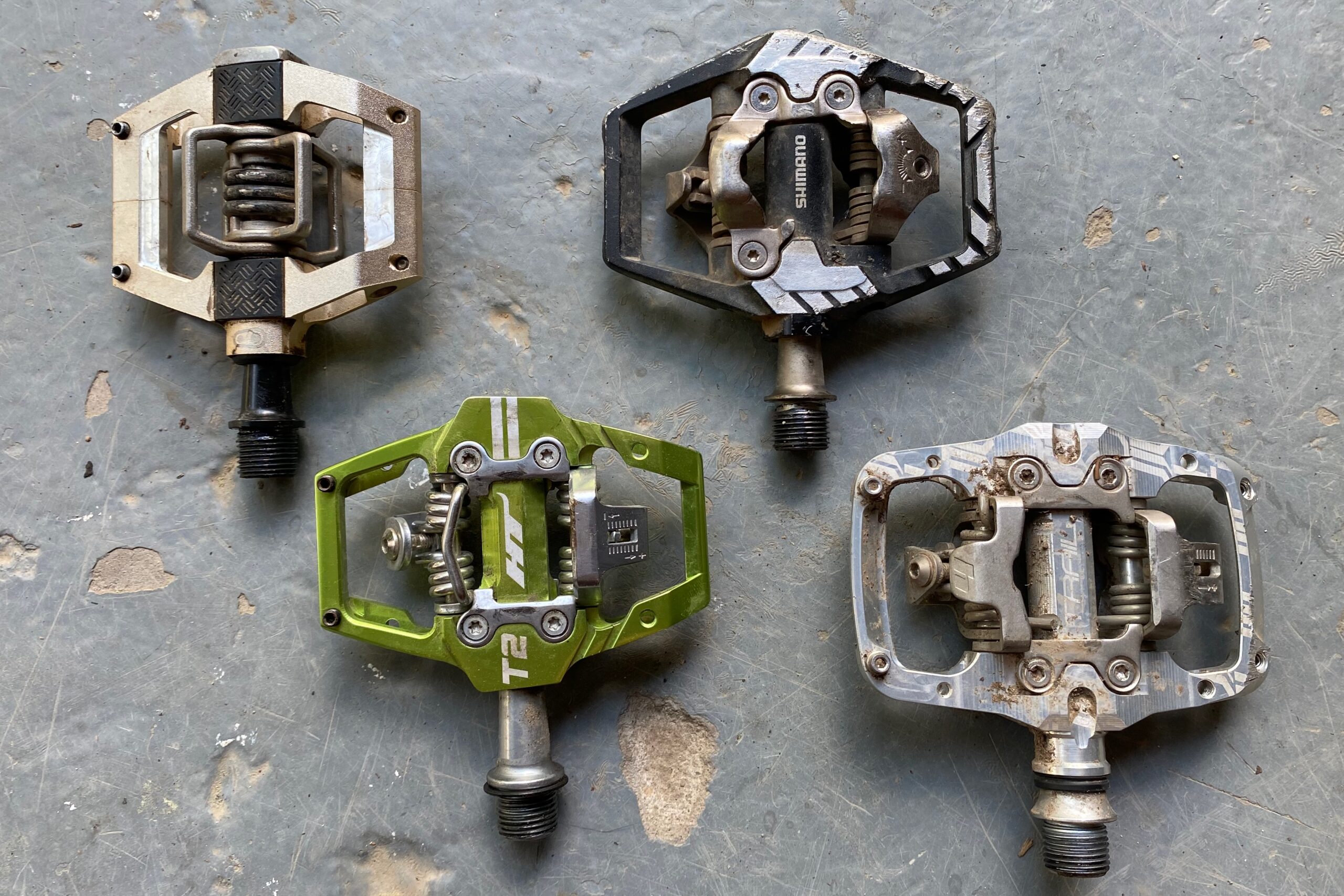
Trail Pedals
Trail pedals typically have a small to mid-size cage that surrounds the clip mechanism. Designs vary, but typically, the cage is intended to provide a little additional support when clipped in or something to stand on if you happen to clip out. The larger pedal body is also helpful for finding and orienting the pedal beneath your foot when clipping in.
Some designs feature traction pins that can add grip when used with certain shoes. Examples of trail pedals are the Shimano XT Trail, Crankbrothers Mallet Trail, HT T2, Time Speciale 8, and other similar models.
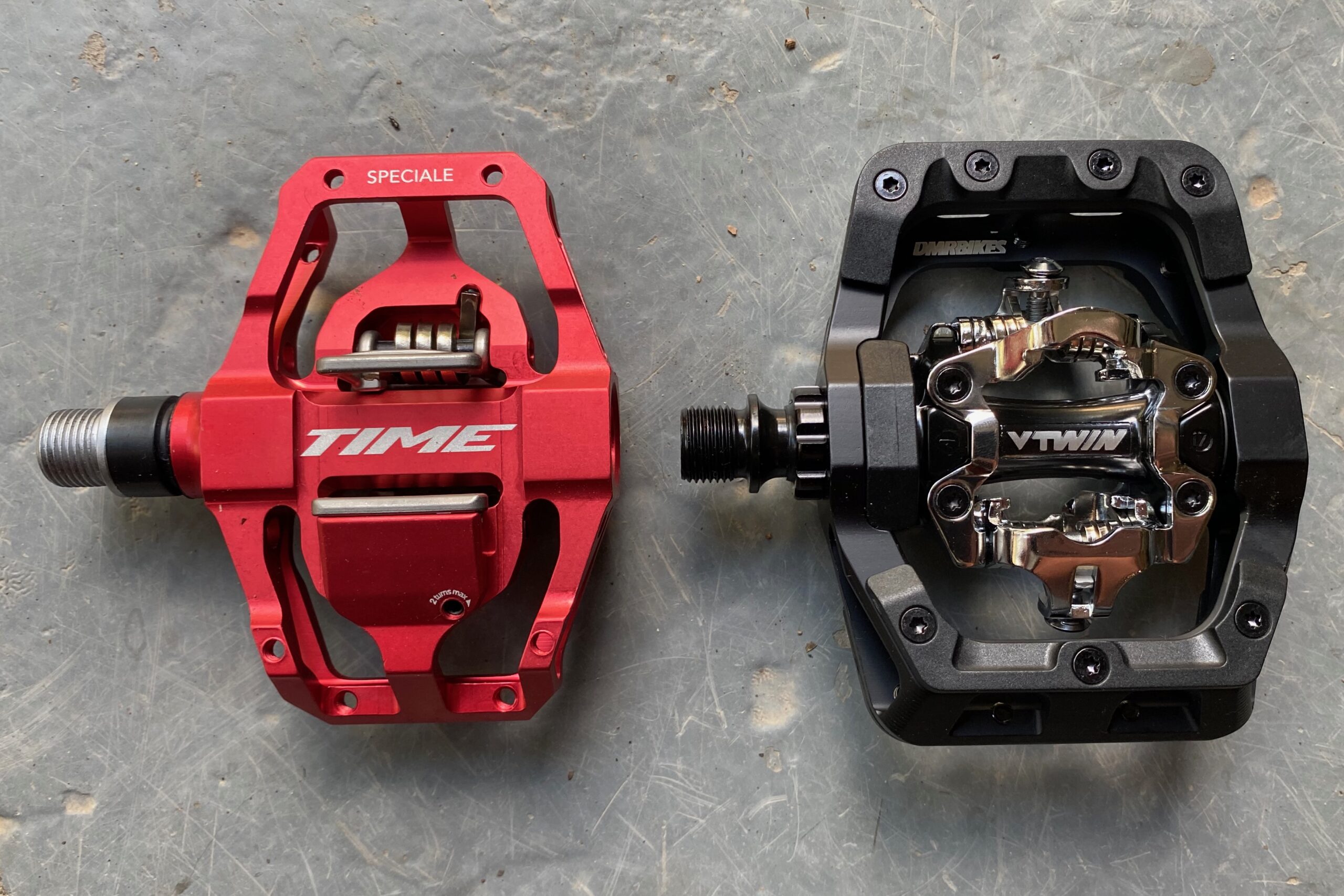
Gravity Pedals
Downhill riders typically opt for pedals that have a large platform surrounding the clip mechanism. The larger platform helps provide support for the comparatively softer-soled gravity shoes, both fore and aft, and side to side. The added support is critical and provides extra control when piloting your bike through rough terrain at high speeds.
These pedals often resemble a flat pedal with a clip mechanism in the center, and they often have traction pins for added grip. Examples of gravity pedals include the Time Speciale 12, Shimano Saint, DMR V-Twin, and Crankbrothers Mallet DH.
Getting the Right Fit
Finding the right type of shoe to suit your needs and riding style is very important, but finding the right fit will enhance your control and ensure your comfort on the bike. Too loose and your feet can move around, resulting in a reduction of control, while shoes that are too tight can cause discomfort, hot spots, and even numb feet. Properly fitting shoes should be the appropriate length, width, and volume, with closures that wrap the feet snugly and securely.
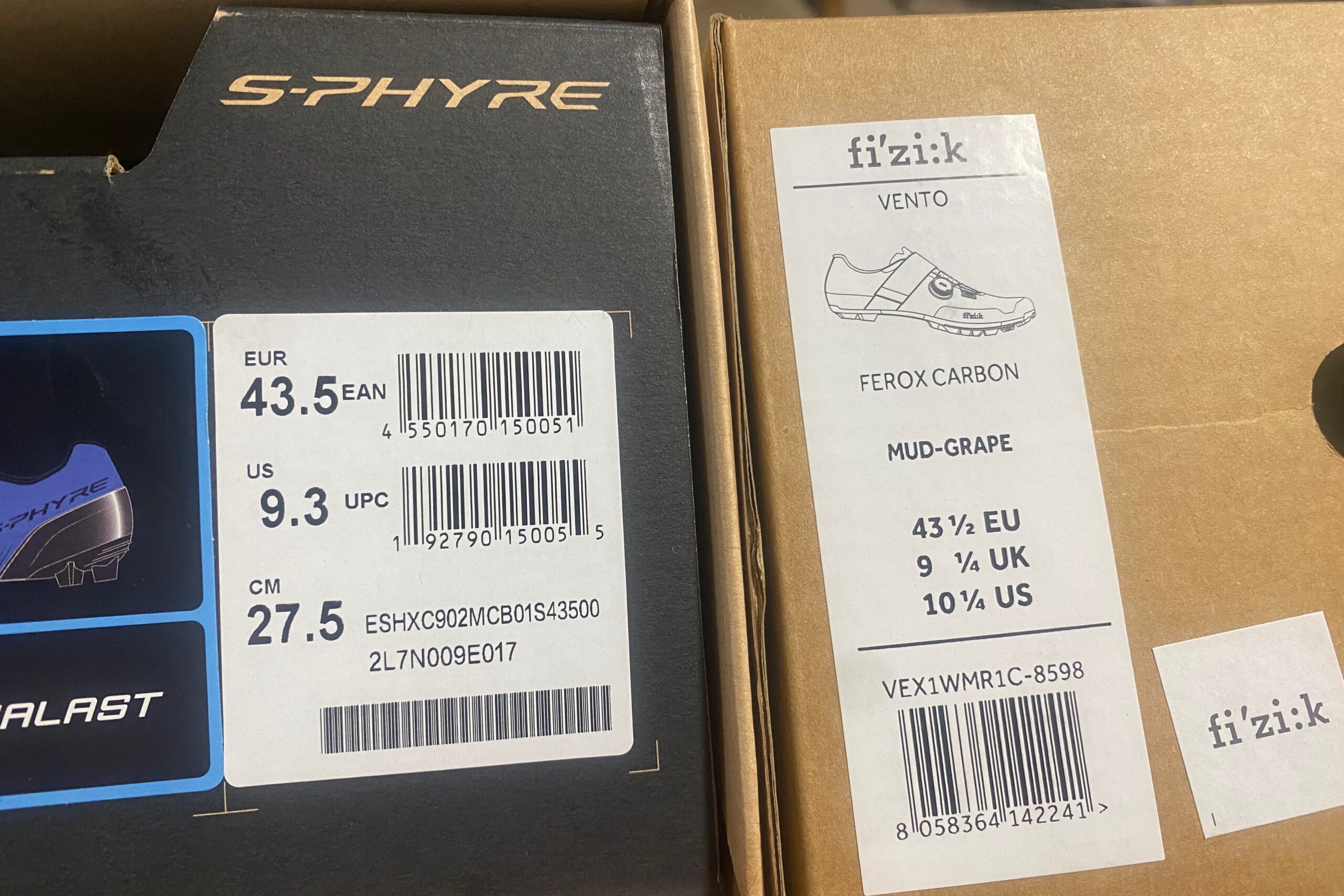
Sizing
Getting the right size is the important first step. Like any other type of shoes, mountain bike shoes come in a range of sizes that are typically listed in EU, U.S., and U.K. sizes. If you are unsure of your size, you can get your feet measured at most bike shops or you can do it at home (it’s easy to find helpful tips for measuring your feet online). If you have mountain bike shoes that fit well, it’s often as easy as checking the size and ordering the same thing, especially if it is the same brand.
This doesn’t always hold true, however, as there is some variance between brands and how their EU and US/UK sizes line up on the size chart. Whenever possible, we recommend trying shoes on before you buy to ensure they fit correctly. When trying shoes on, it’s also important to wear the socks you’ll be riding in, as sock thickness can directly impact how a shoe fits.
Width and Volume
Width and volume are also important considerations that can make or break the fit of a shoe. Most shoes come in a “regular” width that is intended to fit the majority of people whose feet are neither very wide nor very skinny. For this reason, people with average-width feet generally have the easiest time finding shoes that fit them properly in terms of width and volume. In general, cross-country shoes tend to have slightly narrower and lower-volume fits.
Thankfully, some brands offer wide or high-volume versions to accommodate those with wider feet. Trail and gravity shoes vary in terms of width, but generally speaking, they typically have a little more room in the forefoot than the snugger-fitting cross-country models. It is also worth noting that most shoes will break in slightly over time as the uppers conform to your feet. Some shoes that feel too tight out of the box may end up being the perfect fit after a few rides.
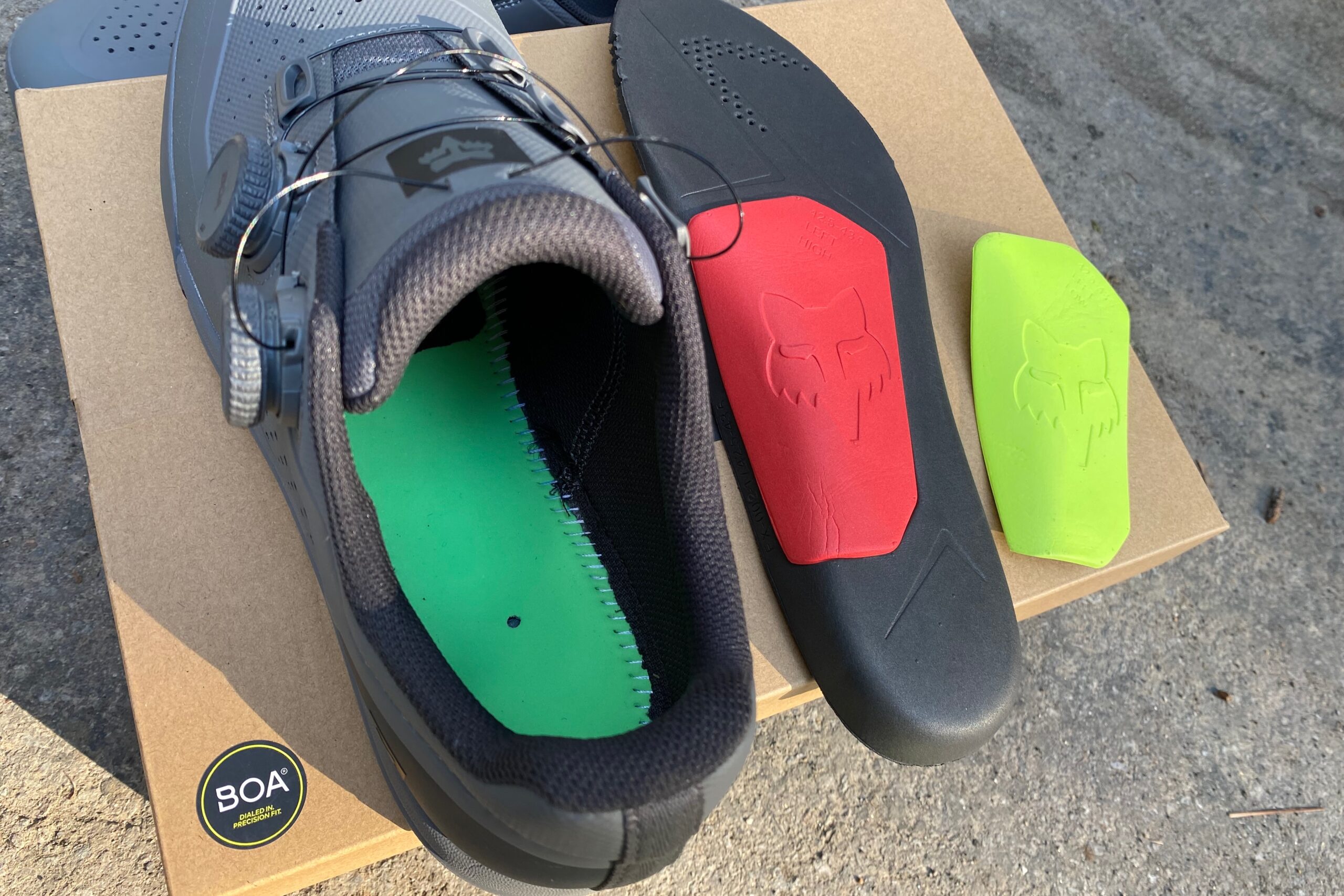
Arch Support
People’s arches are not all the same, so arch support may be an important consideration for some people. Typically, people who pedal hard and put in long miles want to ensure their feet and lower legs stay in the optimal alignment for long-term comfort and transferring power. Those with high arches also benefit from having an insole that provides adequate support.
Some shoes, typically high-end cross-country shoes, come with insoles that have adjustable arch support. The majority of mountain bike shoes, however, tend to come with relatively basic insoles. Those with specific arch support needs and wants can often benefit from the use of aftermarket or custom insoles.
Pedaling Efficiency
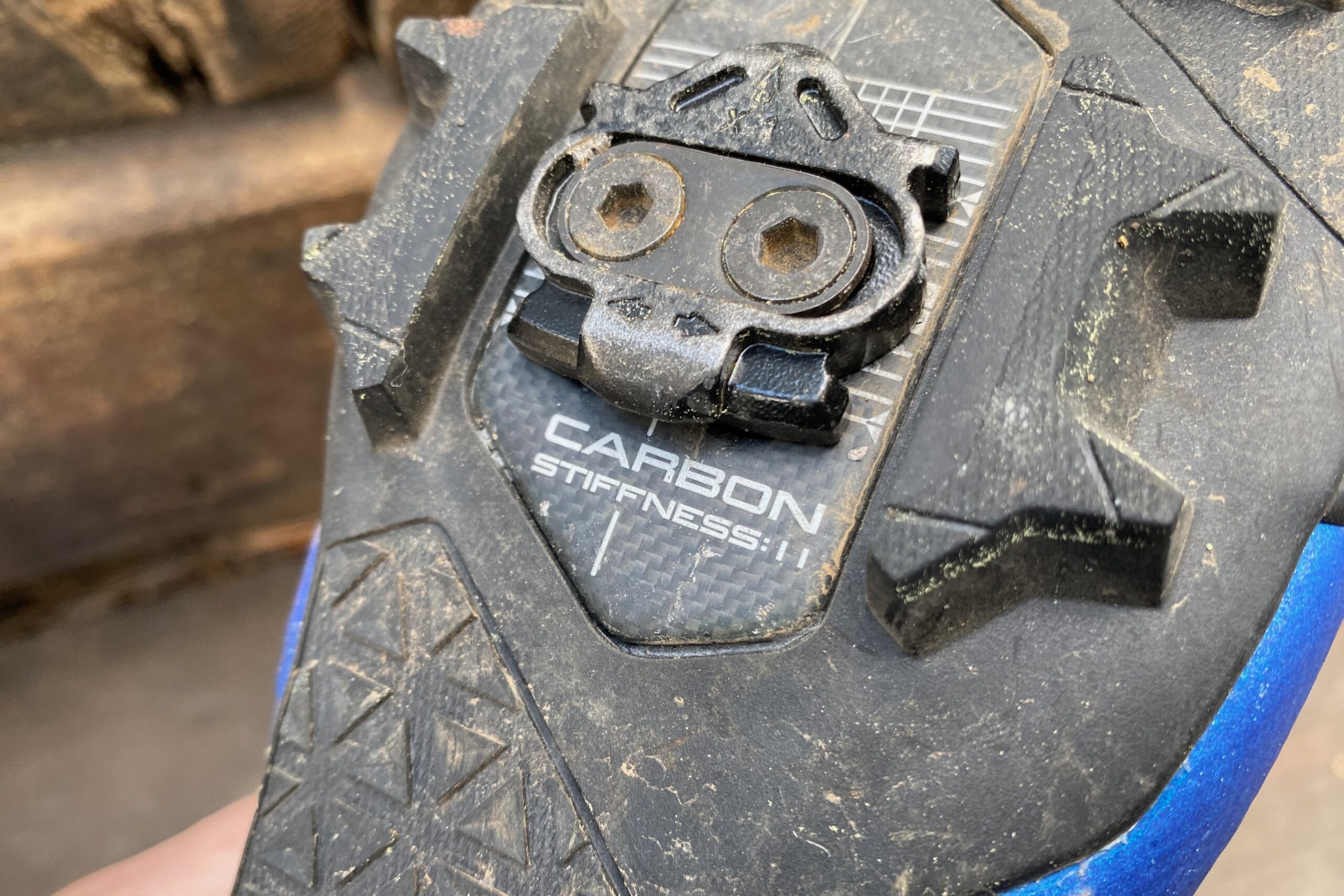
Mountain bike shoes are our connection to the pedals and how our pedaling power gets transferred into forward motion. The stiffness of a shoe’s sole is a major factor that dictates how efficiently your power is transferred, and they vary pretty significantly based on materials used and intended use.
Pedaling efficiency is prioritized most by cross-country riders, particularly racers, who aim to maximize their effort, so XC shoes typically have the stiffest soles, often constructed from carbon fiber or rigid plastic. These soles flex very little, if at all, and tend to be a little less forgiving and more difficult to walk in.
Price and sole stiffness often go hand in hand, with stiff, race-oriented models often employing carbon fiber in their soles and commanding a lofty price tag. It isn’t just the sole’s stiffness, however, as a precise fit is equally important to keep the foot from moving around to maximize efficiency throughout the whole pedal stroke.
Shoes designed for trail riding typically have a more balanced sole that is stiff enough for efficiency during long days in the saddle but have some forgiveness in the design to enhance rider comfort and walkability. Trail shoes often employ stiffening plates, or shanks, in the soles that often run about 3/4 of the length of the shoe, providing structure from about the ball of the foot back to the heel.
This provides support underfoot when descending and pushing on the pedals while leaving the sole under the toes and forefoot somewhat flexible for walking. Gravity-oriented shoes often employ similar designs, although some are intended to have a little more flex and forgiveness. They also typically have additional vibration-dampening materials built into the midsoles to absorb more trail feedback.
Closures
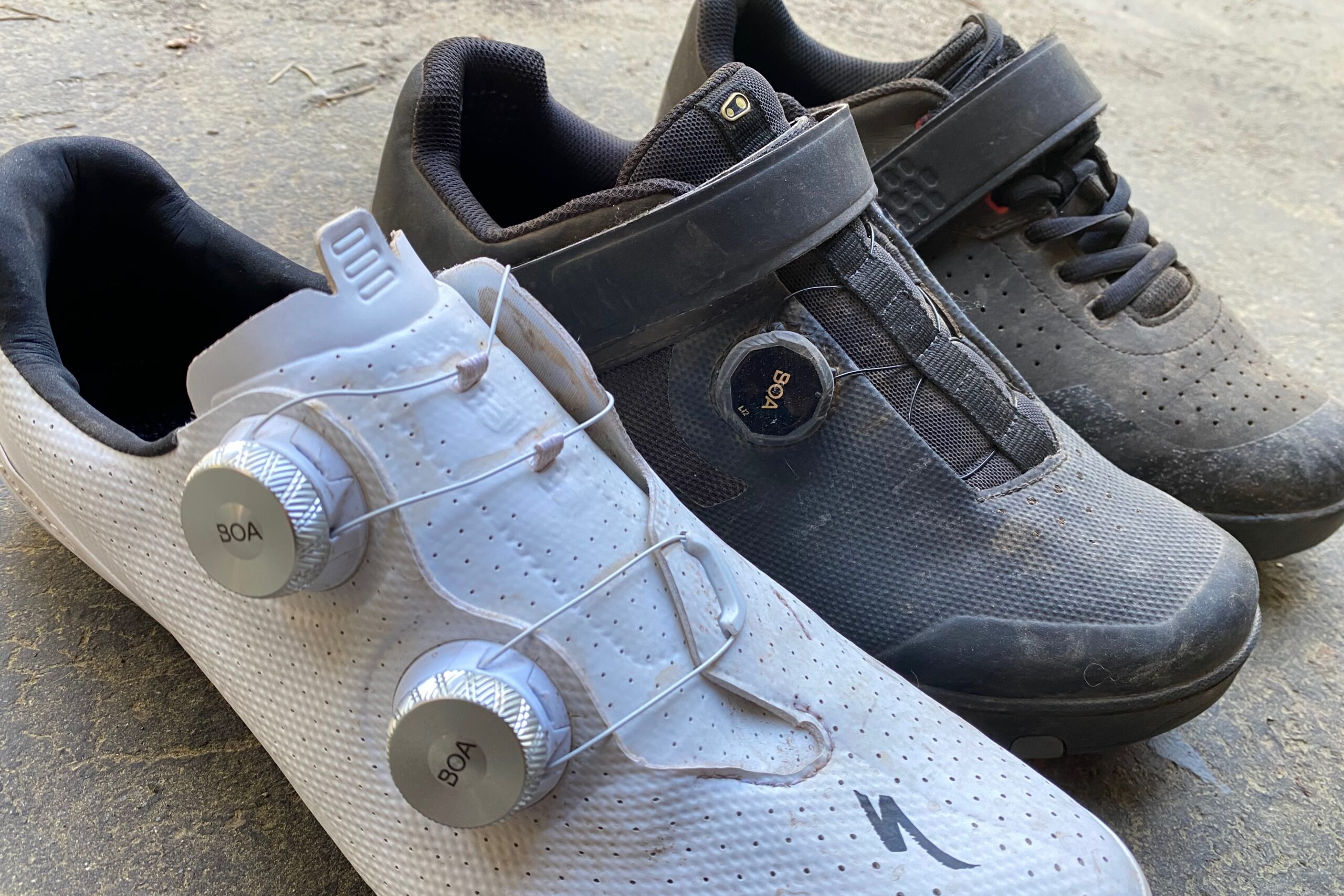
In addition to getting the right fit, having the shoe be snug and secure around your foot is important for comfort, control, and stability. Shoe manufacturers use a number of different methods for tightening the shoe around your foot, including laces, Velcro straps, ratcheting buckles, BOA dials, and sometimes a combination of two closure types.
Personal preference often dictates what someone chooses, and some shoes are even offered in multiple closure options. For example, the Crankbrothers Mallet shoes come in BOA, Speed Lace, and Lace versions, with the primary difference being price. It stands to reason that the fancier closure systems tend to add a little to the overall price of a pair of shoes.
Price isn’t the only difference, however, and each closure style has some benefits and drawbacks. Laces are the simplest option, and they are cheap and easy to replace. They pull tension evenly over the top of the foot, but they are slower to put on/take off, and they can’t be adjusted on the fly. Velcro straps are often used on their own or in combination with laces, BOAs, or ratchets, either down by the toes or up at the top of the tongue.
Velcro is quick and easy to adjust, but it does tend to wear out more quickly than other closures. BOA dials are typically found on more expensive shoes, and they tighten small wires over the top of the foot. BOA dials are lightweight and very easy to adjust, even while riding, but they can be more prone to damage from impact than other styles of closures.
Ratchet straps are less common than they used to be, but they are still used on some models of shoes. Ratchet straps use a small plastic ladder strap and a ratcheting buckle to add tension over the foot.
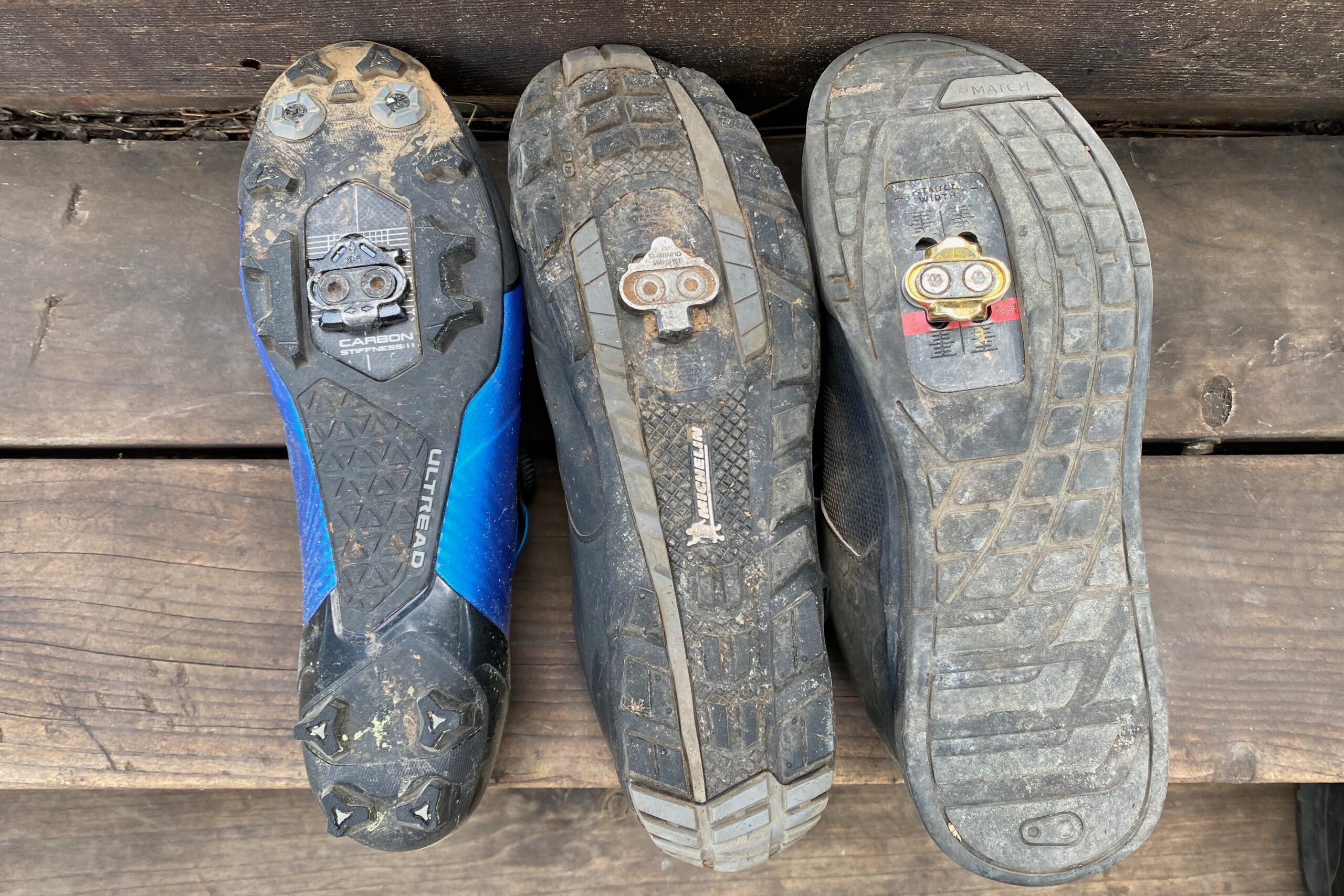
Outsole Design
Outsole designs vary wildly between different models and styles of shoes and play a direct role in how easy it is to walk in some shoes and the traction they provide. Given that we’re discussing shoes designed to clip into your pedals, sole grip isn’t nearly as important as it is for flat pedal shoes, where you rely on the sole for your connection to the pedal pins.
That said, those who ride trails that require dismounting for challenging sections or who hike a bike frequently will want to consider that when choosing a pair of mountain bike shoes.
Cross-country shoes tend to have stiff carbon or plastic soles, and they typically have some rubber tread lugs added to the toe, heel, and on both sides of the cleat mount area. These tread lugs add some lateral stability on the pedal, grip when walking, and protect the rigid soles slightly from damage. Many cross-country shoes can also have toe spikes added, which is common in cyclocross racing for added grip on muddy courses.
Modern trail and gravity shoes usually have full-coverage soles made from various rubber compounds. These tend to cover the entire sole of the shoe from toe to heel, with only the cleat mount area left exposed. The tread designs vary from brand to brand, but most intend for the sole to provide grip on varying surfaces.
The cleat sits in a recess in the sole, and good designs allow for the outsole on the sides of the cleats to interface with the pedal body for lateral stability. Some trail riding shoes are designed for adventurous riding that includes pushing your bike up steep slopes, and these often feature lugged tread designs more akin to a hiking shoe’s sole.
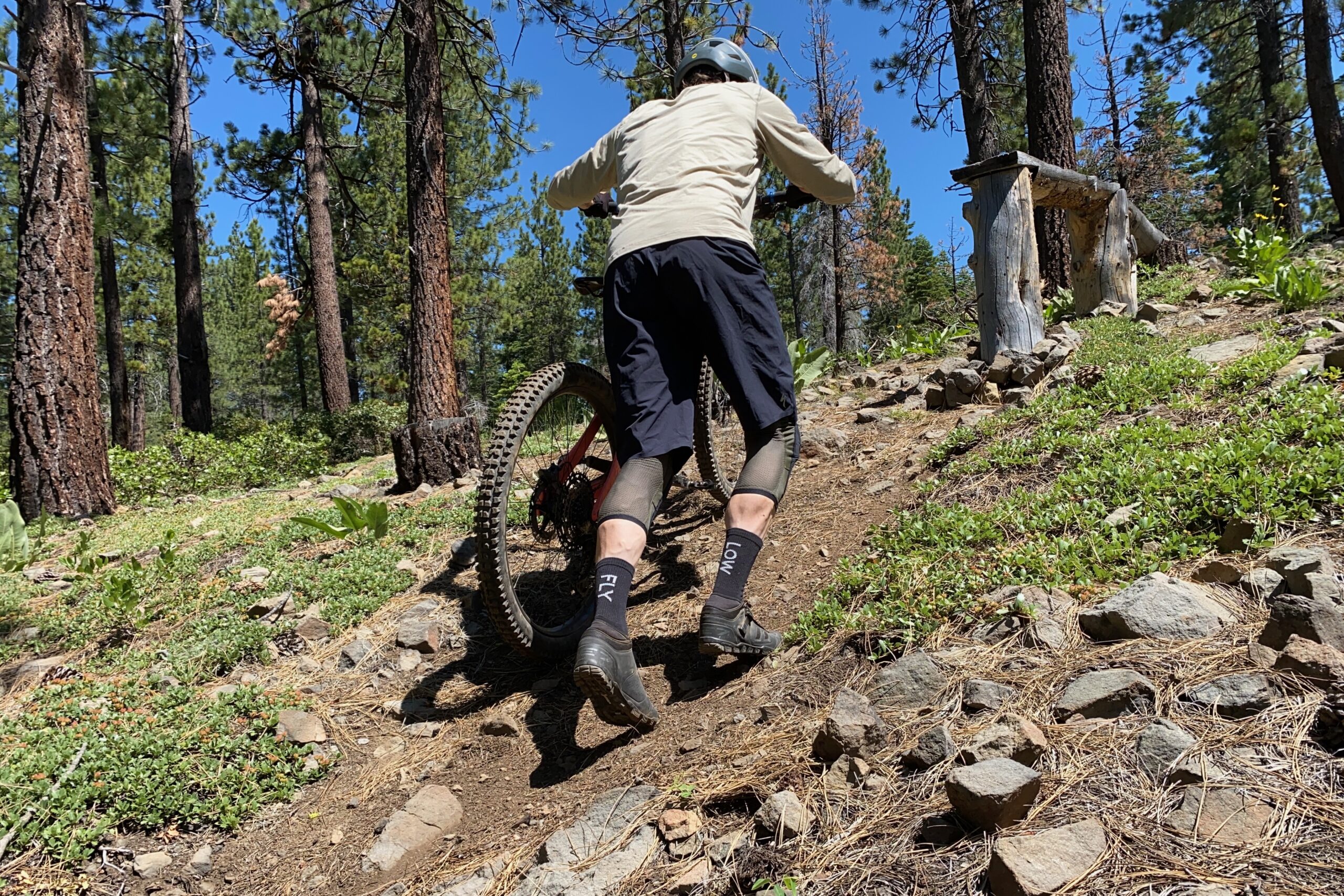
Walkability
Depending on the type of riding you do, a shoe’s walkability may or may not be a concern. If your rides tend to be on mellower terrain, where you stay on the bike the majority of the time, it likely doesn’t matter much how easy your shoes are to walk in. If you ride more adventurous terrain or like to scramble up to every viewpoint along the ride, then a shoe that performs reasonably well off the bike might be of greater importance.
It stands to reason that shoes with more flexible soles and rubber in the outsole design will be easier to walk in and provide more traction on rock and variable surfaces. Most modern trail and gravity shoes work well in this regard, with a select few having particular emphasis on off-the-bike traction in their sole’s design.
Cross-country shoes tend to be the least pleasant to walk in, given their stiff soles that inhibit a natural gait. Most have a slight bit of rocker through the toe, along with raised rubber sole lugs for some grip, but they are not usually the optimal choice for those who dismount their bikes or hike-a-bike frequently.
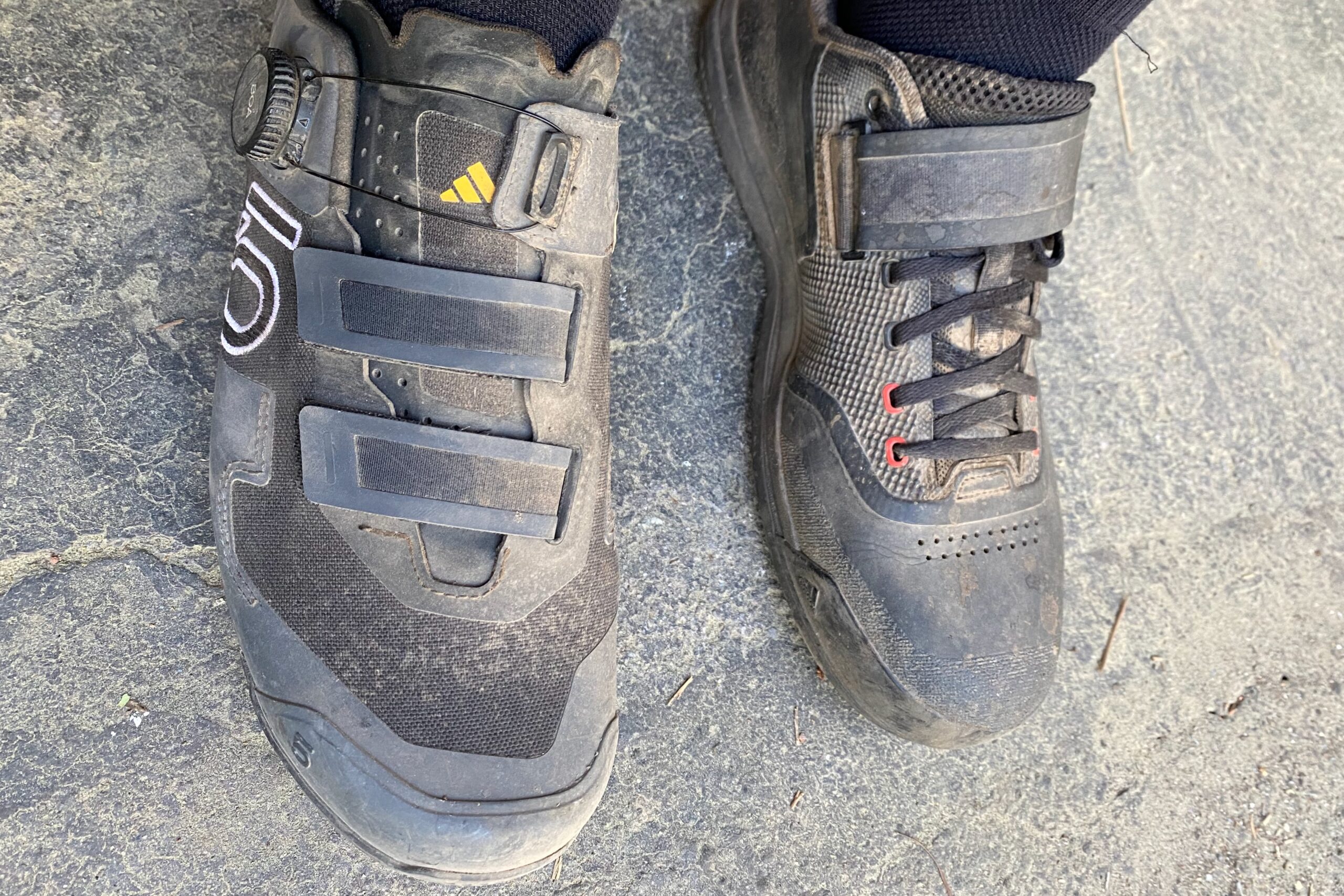
Foot Protection
The protection of one’s feet while riding varies in importance between the different riding styles, although nearly all mountain bike shoes provide some level of foot protection in their designs. Even thin, lightweight cross-country shoes have firm heel cups and small bumpers surrounding the front of the toes, but their prioritization of weight savings typically results in shoes that provide little additional foot protection. For this reason, they are best suited to less technical terrain, where the likelihood of rock strikes and other impacts to the feet is generally lower.
Trail shoes typically offer more protection than XC shoes with thicker uppers and strategically placed padding or rigid materials to protect the feet in more varied terrain. They also generally have more cushioning integrated into the midsoles for vibration absorption on rough trails.
Gravity shoes like the Giro Chamber II or the Fox Union BOA tend to offer the highest levels of foot protection with rigid toe caps, extra cushioning, and sometimes additional materials like D30 patches for added impact protection in key areas. Extra foot protection tends to add weight, and gravity shoes are generally heavier and bulkier than other styles of shoes as a result.
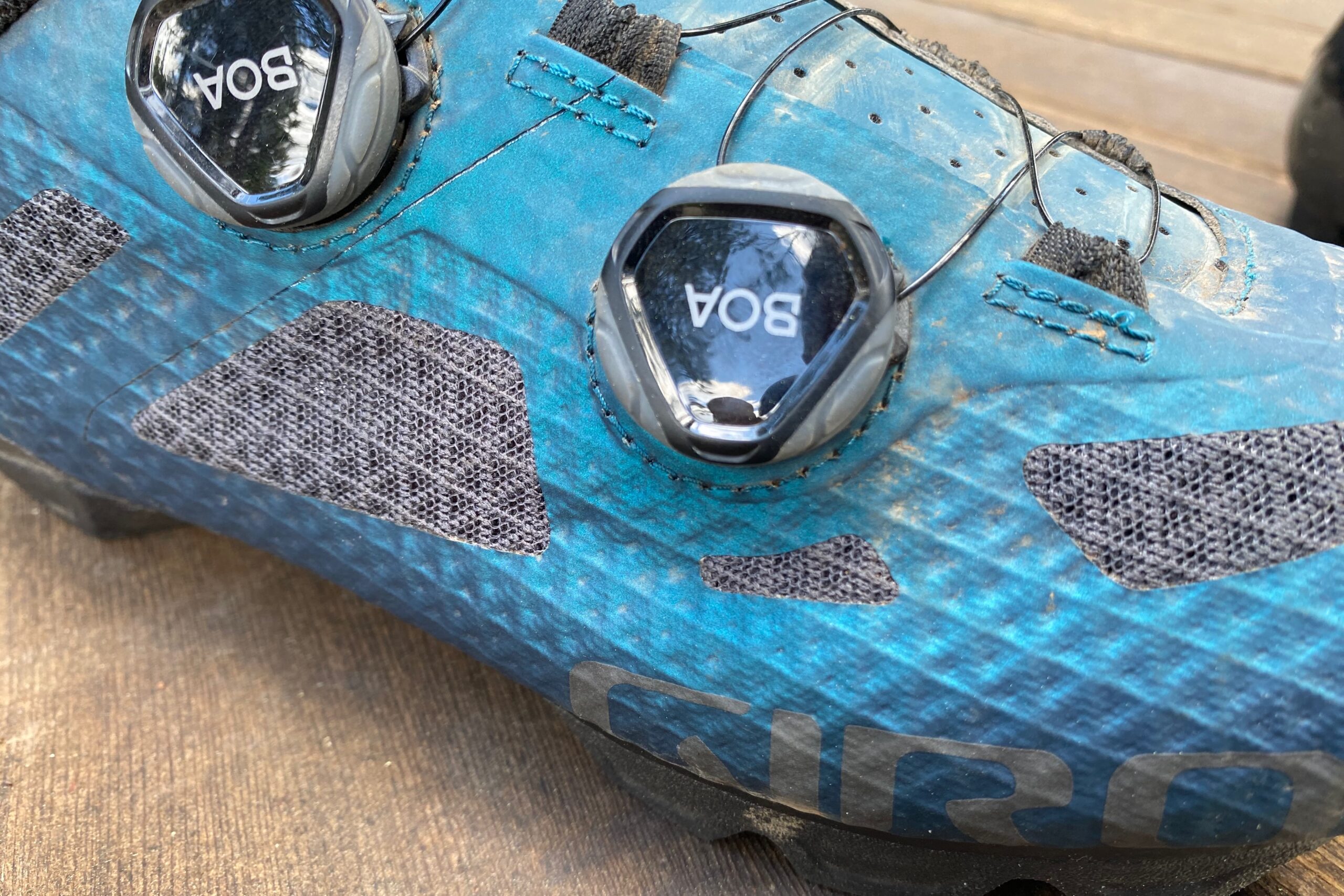
Breathability
Shoe manufacturers approach breathability and ventilation in various ways, with nearly all mountain bike shoes having some sort of way for air to enter or escape in their designs. How effectively these designs work varies significantly, and how important this is to you depends on several factors, of course, like the climate where you live and ride, what type of riding you do, and how much you sweat.
Ventilating features include mesh panels, perforations in the uppers, or uppers constructed from air-permeable materials. Not surprisingly, lightweight XC shoes designed for high-intensity riding typically do well here thanks to thinner uppers and less bulk in their designs. The Giro Sector, for example, is one of the best-ventilated shoes we tested, thanks to its airy Synchwire material.
Trail and gravity shoes, generally speaking, tend to be a little warmer on the feet due to the thicker materials and additional cushioning and protection they provide. This tends to be least important for gravity riders where the majority of your time is spent riding downhill instead of pedaling up it. Still, most models attempt to ventilate the feet, though the effectiveness of their designs varies.
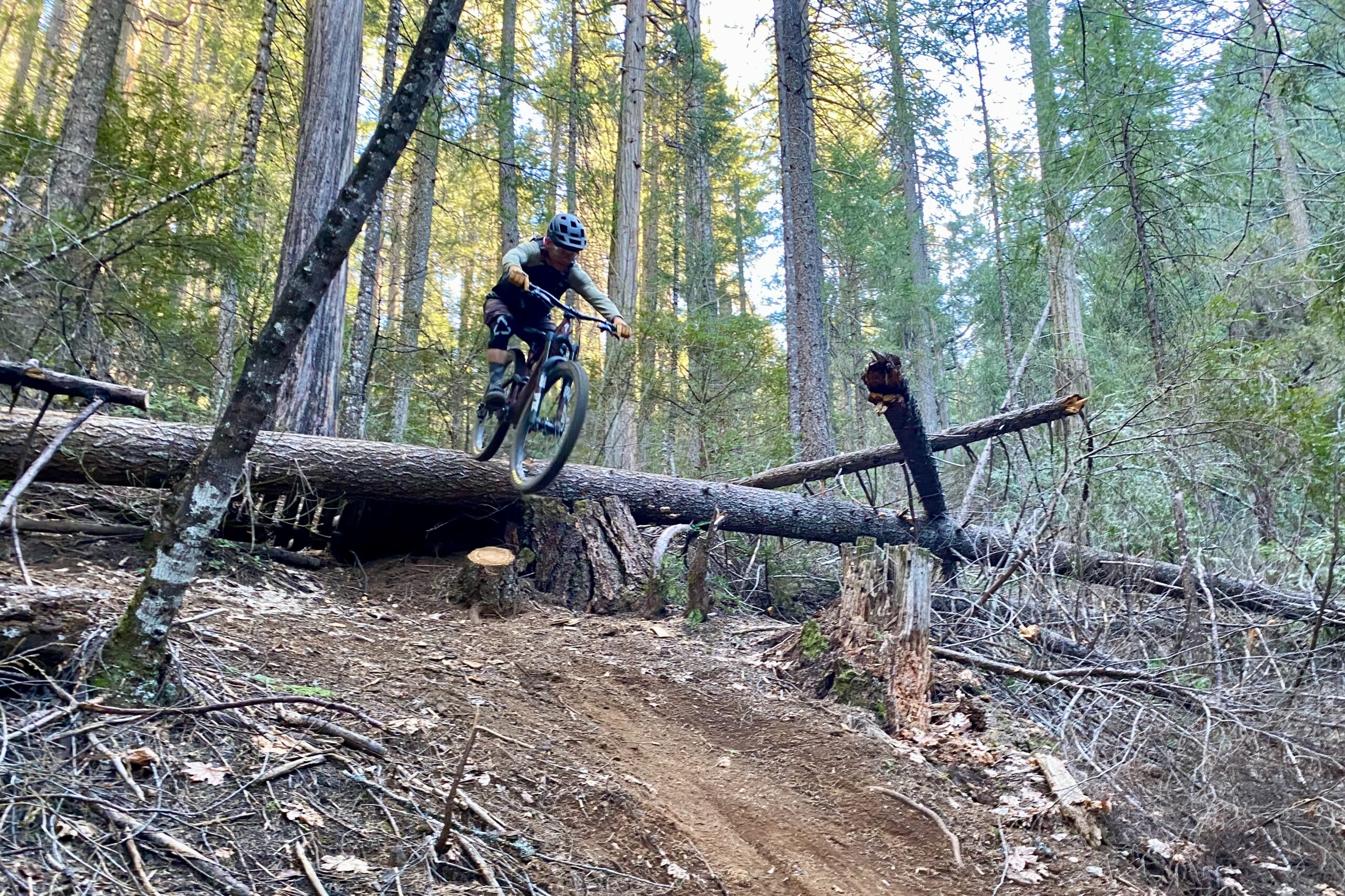
Durability
Like anything else in mountain biking, your shoes take a beating, and they wear out over time. People who ride every day or are particularly hard on gear may easily go through a pair of shoes in a season from regular use. Less frequent riders should expect to get several seasons of use from a quality pair of shoes.
Of course, there are a number of factors that will play a role in how long your bike shoes last. Terrain, weather, and even your skills make a difference and will dictate the lifespan of your footwear. Awkward dismounts, repeated scrapes against sharp rocks, or constantly being wet can result in damage to your uppers, while excessive walking on sharp rocks may result in the premature breakdown of your soles. Sometimes, manufacturing defects will result in sole delamination or other issues (most brands warranty shoes with defects).
In general, lighter, thinner shoes tend to be the most susceptible to damage and can wear out most easily if not treated with care. Beefier, burlier shoes often have extra materials in high-wear areas to protect from abrasion. Velcro tends to wear out faster than other closure types, and it can’t really be replaced. Laces can tear or break, but they are affordable and easy to replace. BOA dials have a checkered past from a durability standpoint, though they can often be replaced and are sometimes covered by warranty.
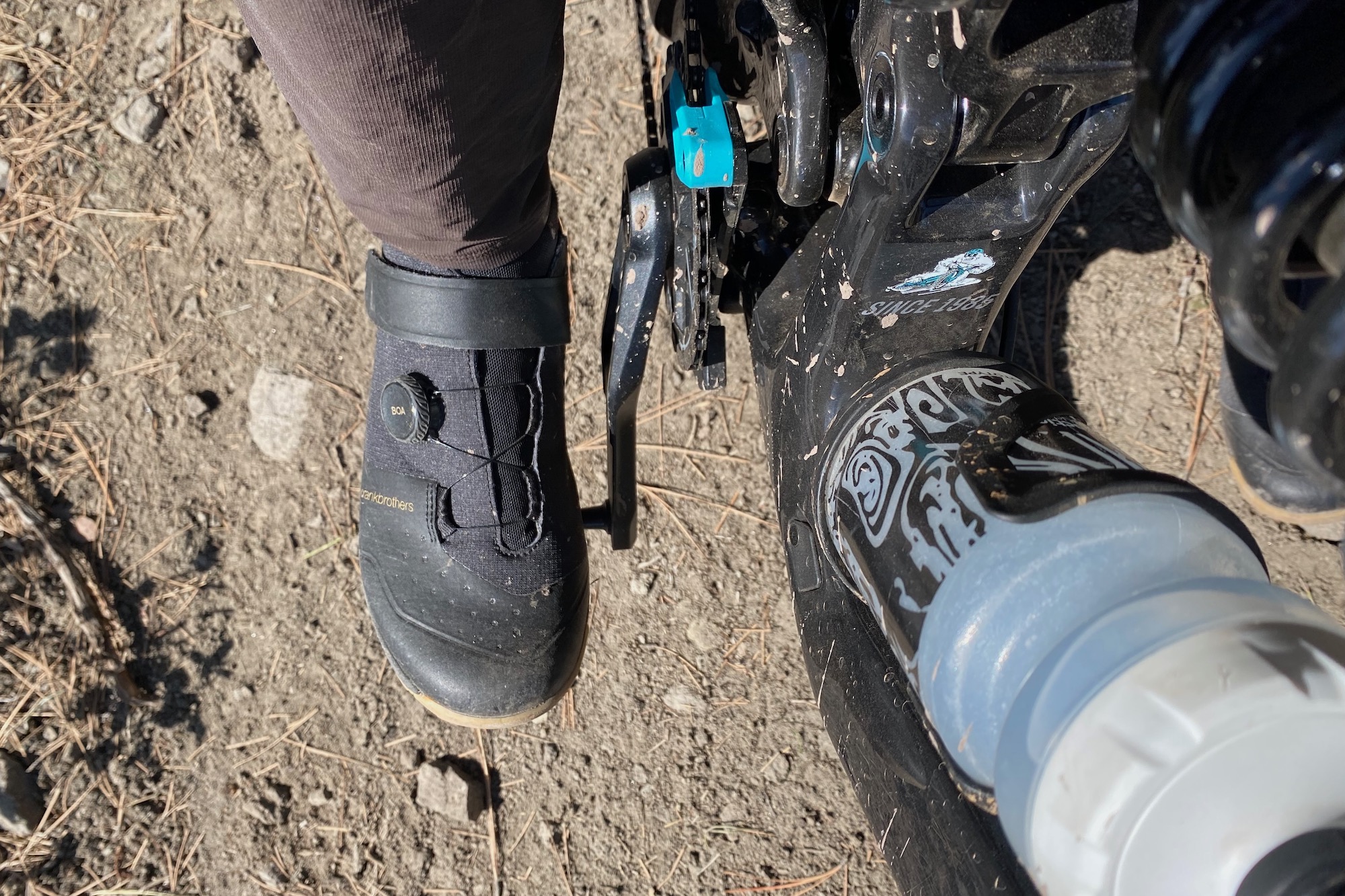
Price & Value
The price of mountain bike shoes varies pretty significantly, with the models we tested ranging from $80 up to $450. Typically, the most expensive shoes have the highest performance, although that performance will only really be appreciated by certain riders for very specific reasons.
Budget
If you don’t have a lot of money to spend, fear not, there are some solid mountain bike shoes on the market that get the job done without breaking the bank. Budget-friendly shoes, between roughly $80 and $130, are typically less specific in their intended use, making them good options for those getting into the sport, less frequent, or more casual riders who don’t demand the highest performance.
Shoes in this price range typically have simpler designs, less exotic materials (no carbon fiber here), and use less expensive laces or Velcro for closures to help keep the price down.
Our favorite budget shoe is the Specialized 2FO Roost Clip ($130). These shoes combine casual styling with a balanced sole stiffness, grippy, walkable soles, and traditional laces. They are a great all-around option for general trail riding, plus they can usually be found on sale, which makes them an even better value.
Likewise, if your riding leans more toward the cross-country side of the spectrum, the Specialized Recon 1 ($120) is one of the best deals out there. They look just like their more expensive siblings and boast the convenience of BOA lacing, comfortable uppers, and a moderate sole stiffness that’s great for non-competitive riders.
If you’re on a tighter budget, even a shoe like the Giro Berm ($80) works well enough. They may not be the most stylish, but the comfortable fit, decent pedaling efficiency, and easy walkability make them a very affordable entry point to clipless mountain bike shoes.
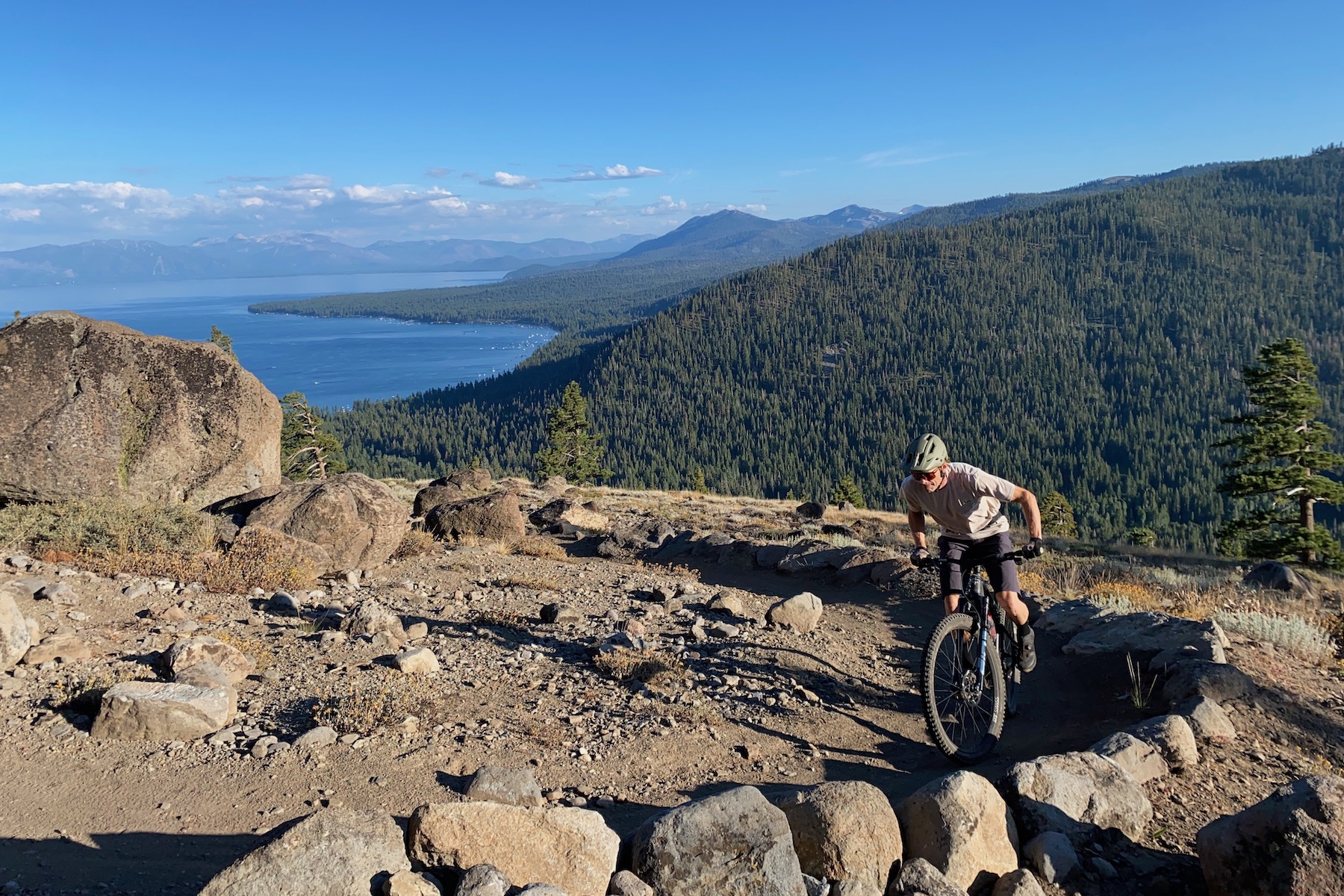
Mid-Tier
The $150-250 price range will be where most people find the best price-to-performance ratio. Here we find shoes that tend to be a little higher-performance, often with stiffer soles, BOA dials, and features that may make them better suited to more specific riding styles and the varying needs that go along with them. Still, many shoes in this price tier are generalists that can serve riders well across different disciplines, from everyday trail rides to laps at the bike park.
Our top-rated shoe for trail riding is the Crankbrothers Mallet Trail BOA ($220). This shoe provides an excellent blend of a solid pedaling platform, a comfortable fit, moderate foot protection, good off-the-bike traction, and a reasonable weight, making them well-suited for everything from backcountry epics to enduro racing.
Similarly, the Giro Sector ($240) offers a similar fit, tech, and most of the performance of high-end race shoes, but with a little more versatility and a more wallet-friendly price. The Sector’s carbon composite sole isn’t race shoe stiff but adequate to make them plenty efficient for high mileage XC, light trail, and gravel riding. Giro’s unique Synchwire uppers are super breathable, and two BOA dials make it easy to dial in the perfect fit.
Premium
Above the $300 mark, we get into the high-end of the mountain bike shoe market. The majority of shoes in this price range are highly specialized and geared toward cross-country racers seeking shoes that combine low weight and the highest level of pedaling efficiency. Fancy materials like stiff carbon fiber soles, lightweight and breathable uppers, and BOA closures are the norm here, all of which contribute to driving the price up while keeping the weight down.
The top-rated Shimano S-Phyre XC9 ($450) is a prime example. These shoes have an ultra-stiff carbon sole, supple synthetic uppers, and dual BOA dials that provide a glove-like fit. With impressive pedaling efficiency and shockingly low weight, these shoes are a top choice for everyone from amateur racers to world-cup-level pros seeking marginal gains.
Lower down in the premium price range, the Fizik Vento Ferox Carbon ($300) costs a fair amount less — even though it is still quite expensive — and performs similarly with only a small weight penalty.
While shoes at the upper end of the price spectrum may give some riders the performance advantages they need and want, they certainly aren’t the best choice for all riders. In fact, most non-competitive riders will be better served by moderately priced shoes that provide a better balance of performance attributes.
Frequently Asked Questions
Sure, you can ride a mountain bike in just about any shoes you want, but mountain bike shoes are always our recommendation because they are specifically designed for that purpose. If you mountain bike once or twice a year, it may not be worth it to you to spring for mountain bike specific shoes, but if you ride with any frequency, the performance benefits of shoes made for the purpose should not be overlooked.
Whether you’re riding cross country, trail, enduro, or downhill, there are models designed to be optimal for each type of riding. Mountain bike shoes generally have more rigid soles to promote more efficient power transfer when pedaling and prevent foot fatigue when descending. Grippy outsoles provide traction on the pedals and when off the bike walking on varied terrain.
Protective features like padding and reinforced areas are integrated into many designs to ward off rock strikes to the toes and heels. And, of course, shoes designed to be used with clipless pedals have a cleat mount area for the cleat that is necessary for clipping into the pedal.
There’s really no right answer to this question, as it typically comes down to personal preference and the type of riding you’re doing. Each pedal style has pros and cons. Most riders choose one or the other, while some will switch back and forth to enjoy the benefits of both styles.
Clipless pedals provide a mechanical connection to the pedal, keep your feet in the perfect spot, and help to maximize your pedaling effort through the full pedal stroke. For this reason, they are typically preferred by cross-country riders/racers and others who put in big miles and want to be as efficient as possible. The downsides are that they take some getting used to and awkward falls are not uncommon when learning, and you generally have less foot mobility and freedom of movement.
Flat pedals and flat pedal shoes offer greater foot mobility with varying support and grip depending on the platform size, pin style/placement, and sole rubber/tread design. Flat pedals can be very grippy and secure, however, they do not provide a mechanical connection to the pedals, which results in a slight decrease in pedaling efficiency. It is also possible to bounce off the pedals in rough terrain or slip a foot off while climbing, which can be potentially very painful if/when the pedal pins make contact with your shins.
The term “clipless” is definitely confusing due to the fact that you actually clip in to clipless pedals. The term clipless goes back decades, to a time when most pedals had toe clips, or toe cages, that wrapped up over the toe of your shoes to help prevent your feet from slipping off the front of the pedal.
When Shimano developed its original SPD pedal system, it did not have the toe clip, and thus the term clipless was born. These days, clipless pedals are often referred to as clip, clip-in, and SPD, which are less confusing.
Of course. While we generally recommend road-specific shoes for pure road cycling, there’s no reason that you can’t use mountain bike shoes for riding on the road or gravel bike. Generally speaking, cross-country style shoes will be the best fit for this as they tend to provide the best pedaling efficiency with stiffer soles and lighter weights.
In theory, a shoe like the Shimano S-Phyre XC9 or the Specialized S-Works Recon could have you covered for XC, gravel, and road riding as long as you have the same pedals across all the bikes.
This really depends on your budget, but also your needs and wants from your shoes. Prices vary quite significantly between the least and most expensive models we tested, as does performance. If you’re seeking the highest in performance, particularly for cross-country riding and racing, then you’ll need to be willing and able to spend a bit more for high-end shoes to meet your performance expectations. Top-of-the-line cross-country shoes can cost upward of $400, but often, brands have several versions that cost less and offer similar features and performance.
Shoes for trail and gravity riding tend to be less expensive than their cross-country counterparts, although the high-end models can still cost up to around $250. That said, they have a more approachable price range, with models starting around $100-125 and performance differences being less dramatic than their XC counterparts.
At the lowest end of the price spectrum, below $100, several brands make entry-level shoes that will serve more casual or infrequent riders well. These models can’t compete with more expensive shoes, but they can absolutely get the job done, and they will work much better than riding in your old jogging shoes. Trust us.