Unlike bushcraft knives and hunting knives, tactical knives occupy somewhat of a use-case gray area. Descended from blades originally designed for the military and law enforcement, there’s no firm definition of what a “tactical” knife should offer civilian users.
A good tactical knife should be utilitarian and adept at performing a wide array of tasks, from cutting to piercing to chopping. It should be burly and durable, but also usable as an everyday carry blade.
With that in mind, lead tester and knife expert Nick LeFort tested a number of tactical knives to bring you this guide to the best models on the market. The impressively ergonomic Sniper Bladeworks MAMU came away as the best overall knife, while the CIVIVI Concept 22 took home our best budget knife award for its high functionality and quality at an affordable price.
Editor’s Note: We updated this guide on November 17, 2026, with new review formats and a restructured product comparison chart, as well as current availability and pricing.
The Best Tactical Knives of 2026


Sniper Bladeworks MAMU




Specifications
Pros & Cons
Pros
- Performs a wide array of tasks with ease
- Ergonomics are top-notch
- Sheath has numerous carry options and can be adapted to carry a ferro rod or other items
Cons
- Blade steel isn't premium
Read Review: The Perfect Knife for the End of the World (or a Fun Camp Trip): Sniper Bladeworks MAMU Review
Bottom Line: This is a large, multifaceted knife that works just as well around the house as it does for bushcraft. Superb ergonomics make it easy to wield.
The Sniper Bladeworks MAMU ($195) is a reliable and adaptable full-tang behemoth that — somewhat incredibly — doesn’t cost an arm and a leg. It has an incredible feel in your hand that lets you handle demanding work without getting fatigued easily.
The Tech: The MAMU is available in a variety of handle colors and in a satin finish or a PVD-coated blade. Its blade is made of 420HC, a stainless steel that has stood the test of time. While 420HC may not hold an edge as well as some steels that were designed to replace it, it’s easy to sharpen and will go toe-to-toe with almost every other steel out there in terms of abrasion and corrosion resistance. You can take this knife anywhere, which makes it an excellent bushcraft crossover.
What We Like: Lead tester Nick LeFort used the MAMU for slicing, chopping, piercing, and splitting, and emerged from testing proclaiming that the MAMU’s ergonomics were unlike any other non-Sniper Bladeworks knife he’d ever used. He wielded it to clean up some large tree limbs, prep kindling for a fire, and then light it — the MAMU works well with a ferro rod and also has a bearing block cutout in the handle for a bow drill. Additionally, its sheath has a pronounced notch that’s designed to hold the blade in place, in any direction.
What We Don’t: As far as blade steel goes, the MAMU’s 420HC has been surpassed in quality by a number of other varieties. It works well in this knife, though.
Should You Buy It? Anyone who wants a single knife that can do it all should be satisfied with the MAMU. It’s not the most portable blade, but it makes up for that with utility in almost any situation.
CIVIVI Concept 22
-

-
(Photo/Josh Wussow)
-
(Photo/Josh Wussow)
-
(Photo/Josh Wussow)


Specifications
Pros & Cons
Pros
- Has high-quality D2 steel blade
- Innovative blade shape
- Smaller form factor
Cons
- Blade-to-handle ratio creates a learning curve for using it efficiently
Read Review: Forget Finesse — This Knife Is for Brute Force: Civivi Concept 22 Fixed-Blade Review
Bottom Line: It isn’t a quiver-of-one wilderness fixed-blade, but this knife’s ability to handle moderate backcountry tasks while not tipping the scales too much and remaining affordable is an achievement.
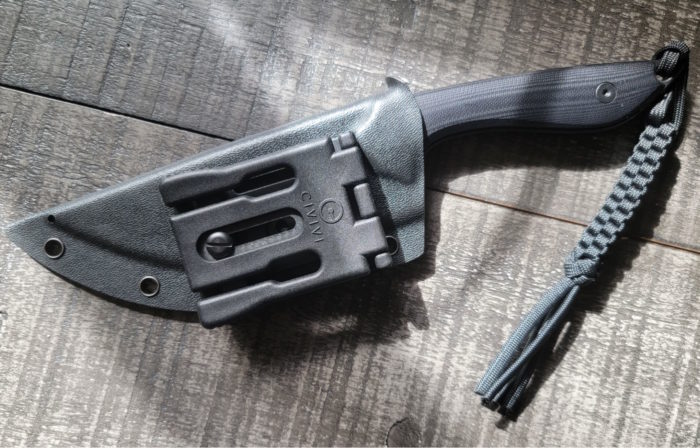
This may not fit the gritty tone usually associated with tactical gear talk, but what the heck: We had a lot of fun testing the CIVIVI Concept 22 ($109). A major reason for that is its unique modified tanto blade, which gives it a much more powerful disposition than its reasonable weight suggests.
The Tech: Tanto blades don’t often have large bellies. They’re usually thin and sleek, but not the one on the Concept 22. Juxtaposed against the less robust handle profile, the blade feels much more flowy, as if you were holding a scalpel. The knife itself is a single piece of D2 tool steel, which is incredibly tough and resistant to both abrasion and corrosion. However, that corrosion resistance only goes so far, as D2 has enough carbon in its composition to cause rust spots to develop if not properly cared for. The black stonewash finish on the Concept 22 eliminates that problem and allows the blade to move more smoothly.
What We Like: The handle, which uses good, grippy textured G10 scales, has a great flow. These ergonomic features allow you to put in a lot of work without getting worn out. Tester Josh Wussow reported that its axe-shaped head was ideal for batoning, and that the knife was also a surprisingly good chopping tool. At just under 10 inches and weighing 7 ounces, the Concept 22 is sized nicely for open or concealed carry. The latter isn’t as big of an issue with knives as it is with guns, but part of being tactical is being unassuming.
What We Don’t: Compared to the blade, the knife’s handle is undersized, which makes chopping and slicing a little more complicated. Once you realize that you need to adjust your approach and come in at a higher angle than you normally would, you should have an easier time.
Should You Buy It? With the lowest price tag of any knife in this guide, we’d recommend the Concept 22 even if it impressed us half as much as it did. For just over $100, this is a can’t-miss blade.
Hogue EX-01
-
-
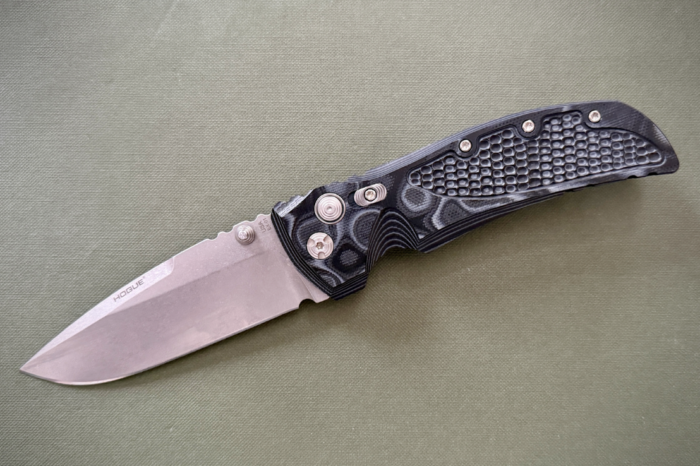
Even at $250, the Hogue EX-01 is still in the mid-tier price range; (photo/Nick LeFort)

Specifications
Pros & Cons
Pros
- Impressive build quality
- Advanced ergonomics and grip
- Great balance between size and weight
Cons
- 4" blade makes it iffy to carry in some states
Bottom Line: This is a large yet light folding knife that offers greater precision than you might expect. It also boasts exemplary construction and high durability.
Hogue Knives is known for its exceptional attention to detail and precision, which makes the high build quality of the EX-01 ($220) almost a given. The fact that it was designed by acclaimed knifemaker Allen Elishewitz means you should expect even more from the form and function of this full-sized folding knife.
The Tech: At almost 9 inches long, the EX-01 is about as big as it gets with folding knives. However, even with its 4-inch, 154CM stainless steel drop-point blade, it’s still lightweight — 5.6 ounces — and balanced. This makes the EX-01 a prime choice for an EDC knife because you’re getting a lot of knife without it being unruly.
What We Like: In terms of carry, the EX-01 fits well in a pocket and stows easily in a vest, pack, or any other place you might want to carry it, where it remains accessible. In the field, its size plays a crucial role in its performance. The EX-01 can cut through zip ties and rope with ease due to its increased leverage. It can also cut through thicker material and pierce easily because there’s more handle for you to control and push the knife with.
What We Don’t: Those folks who are used to pressing the button on their button lock to release the blade will have a bit of a learning curve to contend with, as the button on the EX-01 doesn’t do that. However, its lower profile and ability to be locked work well with gloves and ensure that the blade will not close unless you want it to.
Should You Buy It? Built with long-lasting materials, the EX-01 is a knife that will stand the test of time. Good thing, then, that it’s also a high-performance folding knife that’s easy to tote and even easier to enjoy.
Spyderco Subway Bowie
-
-
The Spyderco Subway Bowie is easy to conceal and access; (photo/Nick LeFort)


Specifications
Pros & Cons
Pros
- Designed by French knifemaker and martial artist Fred Perrin
- It’s an itty-bitty Bowie knife
- Effective lock
Cons
- May be too large for some users (there’s a mini version for those folks)
Bottom Line: This knife is designed to be worn around your neck and used as a last line of defense. It’s small and unassuming, but also sharp and resilient.
The Spyderco Subway Bowie ($165) may be small, but it also may be the epitome of tactical. It’s meant to do one thing — and that’s not opening your mail. This is a single-minded blade that’s built for self-defense, not bushcraft or hunting or meal prep. That’s not what martial artist-slash-custom knife maker Fred Perrin designed it for.
The Tech: The Subway Bowie is made from LC200N, a stainless tool steel with a high nitrogen content that gives it excellent corrosion resistance and is quite tough. Spyderco then made a great steel into an incredible one by adding a black ceramic coating to the blade, which makes it non-reflective and stealthy. The knife also comes with a breakaway ball chain that’s intended to hang the knife around your neck, under your shirt.
What We Like: The coating is not only strong and durable, but it also improves the steel itself. LC200N keeps a marvelous edge, and when it’s time to resharpen or hone it, you can bring it back to razor-like conditions. It weighs only 1.5 ounces, making it by far the lightest tactical knife in this guide and giving it the ability to disappear from your consciousness — until you need it.
What We Don’t: This knife is intended to be worn like a necklace, under your clothes. It’s going to get sweaty and grimy. But it’s nice to know that you have this incognito line of defense hanging at your disposal.
Should You Buy It? The Subway Bowie has one job, and that’s remaining instantly accessible in case of an emergency. Its focused design makes that possible, and its blade will stay razor-sharp for when you need it.
Benchmade Claymore Tanto
-
-
The Benchmade Claymore Tanto deserved our full attention; (photo/Nick LeFort)


Specifications
Pros & Cons
Pros
- Size-to-weight ratio
- Ergonomics
- Coated CPM-D2 Steel
- Red dot blade lock indicator
- Has a Morse code easter egg
Cons
- It’s a big knife
- The spring action is intense
Read Review: Honestly, This Knife May Be Too Much for You: Benchmade Claymore Tanto Review
Bottom Line: With an intense opening mechanism and a build that caters to experts, this knife may not be for everyone. It is well-made and useful for a variety of tasks, though.
Available in a handful of blade combinations, the Benchmade Claymore Tanto ($250) was originally designed for law enforcement and military personnel. Benchmade recognized the need for a lightweight, durable automatic knife for everyday carry and self-defense, and the Claymore was the result.
The Tech: Made from coated CPM D2 tool steel and Grivory handles, Benchmade hit the mark as the Claymore has a great size-to-weight ratio and is built to last, right down to the intense spring that fires the blade open with the press of a button. The knife contains a set of steel reinforcement plates that surround the pivot and extend back through the handle; this design compensates for the opening mechanism and bolsters the blade, so you can set, twist, and bend the Claymore without it failing.
What We Like: Ergonomically, the Claymore is designed to guard its user. The handle shape is designed to protect your hand and keep it in place — which you’re going to want when you press the button and the aggressive tanto blade comes flying out. The blade can also be locked with a slide lock behind the actuator button. After you’ve become accustomed to using it, you can perform a whole bunch of tasks with this robust knife. Lead tester Nick Lefort used the Claymore for everything from food prep to chopping and gathering kindling at camp.
What We Don’t: The Claymore is probably too much of a knife for many users. It’s designed for those who know what they’re doing with such a technical blade, and should be handled as such.
Should You Buy It? If you regularly use tactical knives as part of your job, the Claymore would be a familiar addition to your EDC lineup. For everyone else, though, you should consider what you’d actually be using it for before you take the plunge.
Zero Tolerance 0006
-
-
(Photo/Nick LeFort)
-
(Photo/Nick LeFort)


Specifications
Pros & Cons
Pros
- Cerakoted CPM 3V build
- Simple, burly design
- Sheath hangs low to avoid interference
Cons
- Belt loop on sheath could be more durable
Read Review: Zero Tolerance 0006 Review: The Bushcraft Blade Rambo Would Want
Bottom Line: This large knife is light for its size, and expertly blurs the line between a bushcraft tool and a tactical blade.
If you’re looking for a belt knife that you can wear for a weekend in the great outdoors as well as for protection, the Zero Tolerance 006 ($430) is the knife for you. Zero Tolerance is known for its tactical approach to knife design, as well as its models’ overbuilt execution (we mean that as a compliment), and the 0006 is no exception.
The Tech: At 10.7 inches long, and with a drawn-out drop-point CPM 3V blade, it’ll do just as well in the woods as it will in tactical scenarios. In all honesty, the 0006 is pretty much just a bushcraft knife with a handguard, which makes it look (and perform) more tactical than your average outdoor-focused blade. That look carries through the chunky G10 handle scales and the included Kydex sheath, which you can mount in a variety of configurations for easy carry.
What We Like: The 0006 fits nicely between the tactical and bushcraft worlds. It weighs only 7.4 ounces, which is surprisingly light for its performance, which is that of a larger knife. Lead tester Nick LeFort found that its Cerakoted, high-carbon blade was efficient for cutting, slicing, and being batoned for prepping kindling, but could also prove effective in self-defense situations.
What We Don’t: The 0006 lacks some of the modern ergonomics that we’ve seen in other knives, but that’s a customary trait for both tactical and bushcraft belt knives.
Should You Buy It? Campers, survivalists, and overlanders will be impressed with the backcountry utility of this knife. Those considering it for more tactical, carry-inspired reasons will also find much to like in its burly yet easy-to-wield build.
Benchmade Redoubt
-
-
(Photo/Nick LeFort)
-


Specifications
Pros & Cons
Pros
- Sports CPM-D2 blade steel
- Lightweight for its overall size
- Excellent grip and hand feel
- Designed to be abused
Cons
- Some people hate on Grivory handles
- Gunk can get encased inside the knife easily
- Maybe on the larger side for EDC fanatics
Read Review: Benchmade Nails the Hard-Use Knife With ‘Redoubt’ Tactical Blade
Bottom Line: This is a high-quality workhorse of a folding knife that won’t flex under duress. It’s likely that you’ll be able to pass it on to the next generation.
The Benchmade Redoubt ($200) has an especially robust build. It’s a folding knife that you can rely on, especially when things go sideways. That’s one of the hallmarks of a good tactical knife, and it’s the major reason we included the Redoubt in this guide.
The Tech: Designed as an EDC knife for self-defense, the Redoubt was originally available with gray Grivory handle scales with a textured green inlay for increased grip. Benchmade later released the Redoubt Blackout, which has black handle scales and textured inlay. Both knives feature a Cerakoted CPM D2 drop-point-style blade and black hardware, and are dialed for tactical applications, with the Blackout variant made to fly a little more under the radar.
What We Like: The Redoubt is thicker than most knives in its class, which makes it a durability standout. Lead tester Nick LeFort used it to do some truck work, which it handled with ease. He was impressed by how smoothly the blade slid in and out of wet, sticky, and gummy materials, then wiped clean with little effort. The chunky handle fit his hand well, and the knife includes a deep pocket clip for low-profile carry.
What We Don’t: Some EDC aficionados might argue that it’s a little large.
Should You Buy It? The Redoubt exemplifies what a tactical folder should be. This is a blue-collar knife that’s made to get down and dirty while maintaining its structural integrity.
Tactical Knives Comparison Chart
| Compare |
|
|
|
|
|
|
|
|---|---|---|---|---|---|---|---|
| Price |
$195
|
$109
|
$220
|
$165
|
$250
|
$430
|
$200
|
| Overall Length |
11.68”
|
9.88”
|
8.88”
|
5.11”
|
8.6”
|
10.7”
|
8.29”
|
| Blade Length |
5.46”
|
4.8”
|
4”
|
2.8”
|
3.6”
|
6”
|
3.55”
|
| Weight |
1 lb. 1 oz.
|
7.7 oz.
|
5.6 oz.
|
1.5 oz.
|
3.9 oz.
|
7.4 oz.
|
2.8 oz.
|
| Blade Steel |
420HC
|
Black stonewashed D2
|
154CM
|
Black ceramic-coated LC200N
|
CPM-D2
|
CPM 3V
|
CPM-D2
|
| Blade Shape |
Drop point
|
Modified tanto
|
Drop Point
|
Clip point
|
Tanto
|
Clip point
|
Drop point
|
| Sheath |
Injection-molded
|
Kydex
|
None (folding)
|
Bolatron
|
None (automatic)
|
Kydex, nylon belt loop
|
None (folding)
|

How We Tested Tactical Knives
Our Expert Testers
This guide was helmed by lead tester and knifemaker Nick LeFort. LeFort has been using and writing about knives for more than a decade, and is a fount of knowledge about all types of blades. He enjoys putting them to work in the woods, at home, or wherever else he chooses to hang his hat.
Tester Josh Wussow also made his mark by testing and reviewing the CIVIVI Concept 22.

Our Testing Process & Grounds
The elephant in the room when it comes to tactical knives is that they’re designed, in part, for self-defense. LeFort wasn’t about to get into a scrap in the name of testing, but he was still able to judge these knives by using them at his house in Middletown, Connecticut, as well as in the surrounding woods and other forests in New England.
LeFort also wore all of these knives, concealed, in public. He never called us for bail money, which we consider a win — and which also indicates these are all capably tactical blades.
When putting a tactical knife through its paces, he mainly paid attention to three things:
How well does it carry?
With tactical knives, the key is ease of access. It’s also about concealment. A neck knife excels at both, but you can also fit and access a larger model under your shirt. The opening actions and lock mechanisms of folding knives also come under scrutiny.
How easy is it to control?
You want a good tactical knife to be an extension of your hand. It needs to flow and maneuver in such a way that you know it’ll hit its mark.
How tough is it?
Tactical situations are demanding, so the knife you’re relying on needs to be tough as nails. Longevity is also key when you’re paying hundreds of dollars for a blade, and corrosion resistance and blade strength are highly sought-after. Durability is also key when you’re paying hundreds of dollars for a blade, and corrosion resistance and blade strength are highly sought-after.

Buyer’s Guide: How to Choose a Tactical Knife
With the ever-expanding lineup of tactical knives on the market, picking the right one for you could be a mission of its own. Though we think the list we’ve pulled together for you is top-notch, we also realize that everyone has their own set of wants and needs.
Our goal is to show you what we think is the best of the best so you can make an informed decision regarding which tactical knife is the best for you. That said, here are some things to consider when you head out to buy your next tactical knife.
Automatic Folding Knives
For years, one defining factor of tactical folding knives is that a majority of them were automatic. Automatic knives are button-actuated blades that have a variety of laws and regulations surrounding them that determine who can carry them. Being that tactical knives were aimed at military and law enforcement personnel, this makes perfect sense, as they aren’t beholden to the same laws and restrictions civilians are.
What I can say about automatic knives in 2026 is that most of them are still considered “tactical”. However, with brands like CRKT coming out with knives like its Michaca and Minnow that are being marketed as EDC and work knives, even that distinction is loosening up.
Furthermore, laws are changing all the time. Antiquated ideals, like the ones enacted in the Federal Switchblade Act of 1958 are starting to be overturned and updated so that more people can carry automatic knives in more places. Yes, that wasn’t a typo — 1958.
The last thing you need to happen to you is to find yourself on the other side of the law and have your knife taken away from you while you’re getting hauled off to jail. We recommend you download Knife Rights’ LegalBlade App. It’s designed to keep you informed about rules and regulations on a state-by-state basis.
That said, if you do get pinched, Knife Rights has put together a set of guidelines of what you should and should not do.

Blade Shape
Like all knives, the shape of the blade on a tactical knife plays a crucial role in how effective that knife will be. Tanto, drop point, and clip point blades are generally preferred for tactical knives because they can perform tasks like slicing and chopping, as well as piercing and stabbing.
Aside from the benefit of that ability to your success in a combat situation, a blade that can pierce and stab is also well suited for breaching. Tanto blades, in particular, are great for prying, which is the primary movement in breaching.
Knife Steel
The amount of knife blade steel and handle materials out there is pretty impressive. But, where the handle materials seem to have stabilized, there’s new steel coming out every year. As you can see from the above selection of eight knives, there are seven different knife steels.
Our recommendation is to consider each steel on a case-by-case basis. But they should still meet or exceed the following requirements:
Corrosion Resistance
The last thing you want is your knife turning orange on you out in the field. Especially if you’re planning on using it to prepare food. All of the steel mentioned in this guide either has exceptional corrosion resistance or has been coated to eliminate the occurrence of rust.
Abrasion Resistance
Some people consider this property to be more form than function. But in all reality, your blade can easily get scrapped up which can lead to chipping, which then could lead to blade failure.
Edge Retention/Ease of Resharpening
No matter what knife you carry, the worst knife you could carry is a dull one. That being said, you want to look for knife steels that either excel in edge retention or can be easily resharpened.
Handle Material
When it comes down to handle material it’s all about grip. Tactical knives don’t usually have a large variety of handle scales. For instance, you’re not likely to find a tactical knife with a wood, bone, or leather handle. They may be out there, but they’re far from common — because they don’t provide the excellent grip the common materials do.
G10 & Micarta
G10 and Micarta are both extremely strong materials. Both excel in grip whether your hands are wet or dry which is why those two materials are so popular with EDC, survival, tactical, and bushcraft-style knives.
Nylon & Plastic
Nylon and plastic are also great handle materials because they’re durable and lightweight, but they’re also generally textured. It’s this texturing and styling that increases the grip on a knife with these materials.
Note: Nylon and plastic handle scales can be called a litany of names. Some of the more popular names are: FRN/Zytel (Fiber Reinforced Nylon), GRN (Glass Reinforced Nylon), GFN (Glass Filled Nylon), and Grivory (Injection Molded).
Ease of Use
Ergonomics
A good knife will feel right in your hand. From the shape of the handle scales to the overall thickness, and even texturing, ergonomics can be the difference between you being confident with your knife or leaving it in your drawer at home. When you consider a knife, put it in your hand and give it a good squeeze. Then, push down hard on a hard surface. If everything feels right, that’s your next knife.
Sheath
For the most part, tactical knife sheaths are made from Kydex or Bolatron. Both materials will outlast every being on this planet, and both can be vacuum-formed. However, Bolatron tends to edge out in form retention and durability over Kydex. That said, they’re both great for the job.
Carry
Folding knives are easy to carry — have pocket clip; will carry. If they have a deep carry clip, then they’re easier to conceal. In regards to fixed blade knives, which are arguably the most popular of the tactical knife forms, they need to be carried in a variety of configurations.
In the military, they’re generally worn on vests. In law enforcement, they’re generally clipped to a duty belt. But that can change depending on the situation. A good tactical sheath will allow you to mount it vertically, horizontally, and even upside down.
Lock Mechanism
Without fail, you will find yourself in a position where you need to rely on the lock on your knife more than you expected. Arguing that most tactical folding knives are automatics, the locks are usually button locks. These button locks are also how you deploy the blade and can have a lock of your own. Just like you take the safety off your firearm when you’re stepping into the shit, you want to make sure the button is unlocked.
In most tactical situations, time is everything. Having to fiddle around with a button lock takes your focus off of defending yourself and is a risk you don’t want to take.

A Note on Awareness
We try to keep things light and fluffy here at GearJunkie, which is why we saved this section for last: If you treat carrying a tactical knife like carrying a firearm, you’re putting yourself in the right mindset.
Tactical knives tend to be larger and more aggressive which makes them more noticeable. In terms of automatic folding tactical knives, they are a major bone of contention in terms of who can carry them and where. It is important to know where you are when you’re carrying knives like this and where they are when you’re not carrying them.
Even if you are someone in the military or law enforcement, you need to be aware of laws and regulations unless you wear your uniform everywhere you go. Modern society is more sensitive to guns and knives than it ever has been. When you’re dressed like a civilian, act like one or be prepared to identify yourself if the going gets weird.
Another part of awareness is the condition your tactical knife is in. For fixed blades, that’s as simple as making sure the blade is sharpened and free of imperfections in the blade edge. For folding knives, you want to make sure that the blade is sharp and free from imperfections, but you also want to make sure it’s in good working order. This means making sure the lock mechanism and the actuator button work.
And if you forget all of that, just remember this simple equation: Out of Sight = Out of Mind!
Price & Value
Knife pricing isn’t as cut and dried as most of us would like it to be. Yes, just like with any other consumer good, factors like materials, design, and function all play into the final price of a knife. However, there are a lot of things going on behind the scenes that determine what we pay at the store for a knife.
How much material a knife manufacturer buys has a major impact on the price you pay for a knife. Material prices, in general, will fluctuate based on how much of each item is being bought overall. We’ve most recently seen this with MagnaCut, which became a popular steel seemingly overnight. As more brands adopted it in their knives, the overall price of the steel itself went down.
Tactical knives also start at a higher price when compared to other knife categories. Where we usually consider anything under $100 a budget knife, in the world of tactical knives, the budget starts at $100. This can put the premium category up past $500. However, when you consider what these knives are being used for and who is using them, the pricing starts to make a little more sense.
This brings up the brand name factor. Knives from brands like Benchmade generally retail for more than similar knives from other brands. It’s not outside the realm of reason that you’re paying into the brand as much as you are the product. In the case of Benchmade, you’re also buying free sharpening for life as well as a pretty significant lifetime warranty.
With that being said, we’re going to break knives down into the following three categories based on pricing in general. But, to be fair, in the production knife world, there are no clear and defining lines between Budget knives, Mid-tier knives, or Premium knives. The following is a generalization of what you can expect from each category.

Budget
Budget knives are usually made from more affordable materials. Does this make the knife any less useful? No. A budget knife should do everything you would expect it to. However, it may require more maintenance to keep it up and running.
Unlike other knife types, where budget knives usually top out at $100, budget-level tactical knives usually start at or around $100. This is due to things like build quality, blade finish, and how it carries. Believe it or not, a sheath and its hardware can have a noticeable impact on the price of a knife.
In the case of the CIVIVI Concept 22, you have a full-sized knife made from black stonewashed D2 steel that has textured G10 handles. These are common materials that are considered affordable. Albeit, you’re using a lot of here which raises the price. However, you also have a sheath with a Tek-Lok-style belt clip. Those alone can retail for $20. The point here is that carry and convenience play their role in the retail price of a tactical knife.
With tactical knives, the budget category is also the smallest and has the narrowest price range of all three tiers.
Mid-Tier
A majority of people carry mid-tier tactical knives around. They range from $150 to $350 and offer great ergonomics, materials, and carry/deployment options. We see the highest occurrence of automatic knives in the tactical category as well. Some would argue that this is the most efficient and effective way to deploy a knife, but with that comes cost.
The bits and pieces that make up an automatic mechanism add to the build complexity of the knife — so, that feature needs to be paid for. It’s also more desirable and comes with some legal hurdles, so the appeal is there as well.
Consider the Benchmade Claymore. At $250, you’re getting a fully automatic hellhound of a knife composed of durable materials. This knife was built to be used in battle. That type of exclusivity comes at a price. Benchmade is also a brand that people claim comes with a “brand tax.” In short, you’re paying for a name. That’s probably a little bit true, but you’re also getting a really well-built knife with a great warranty and a lifetime of free sharpening.
Premium
Here’s where things start to unravel in the tactical knife world, and we see it in tactical clothing and gear as well. In this arena, the tactical categorization is considered premium — across the board. Whatever it is, if it’s considered “tactical,” then it should be considered innovative, overbuilt, and made from the most reliable materials. And, honestly, that’s true. Tactical is also synonymous with combat-ready, field-tested, and a variety of other statements that allude to their level of quality.
If you take the Zero Tolerance 0006, for example, you have a tactical knife made from durable and desirable materials that is also made in the U.S. It’s based on an earlier model that was vetted in combat. I know that sounds dramatic, but when you consider those factors — $430 isn’t really a stretch for a retail price.
This being the case, think practically before you buy a premium tactical knife. After you hit $500, start to consider what you’re buying and what it will do for you in the end.