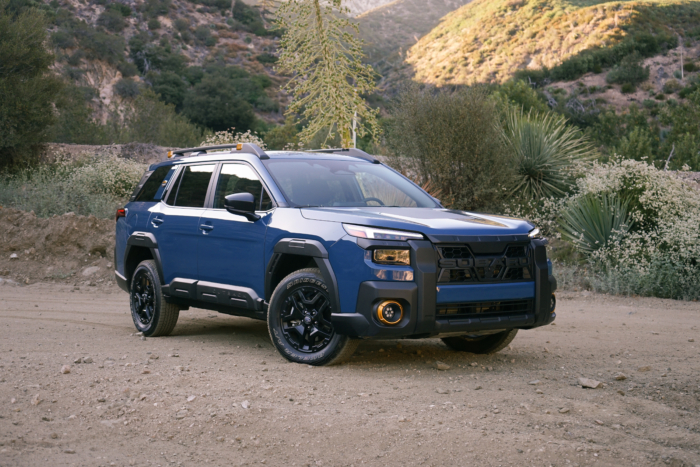
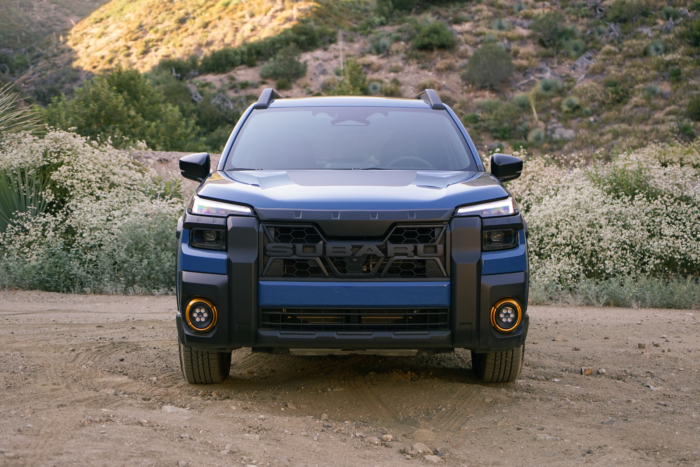
The 2026 Subaru Outback Wilderness is an ugly car. Well, mostly from the front, but you still have to wonder what the designers were thinking. The normal Outback isn’t so bad, but the Wilderness trim’s massive block-letter SUBARU grille is a real affront to the senses. I’m leading with this because, honestly, it’s the biggest criticism I have for what is otherwise a fantastic car. Seriously.
On paper, the Outback Wilderness seems perfectly fine, and like your archetypal Subaru. It’s got all-wheel drive (Subaru calls its version “Symmetrical All-Wheel Drive”) and a boxer four-cylinder engine, thankfully, this time with a turbo.
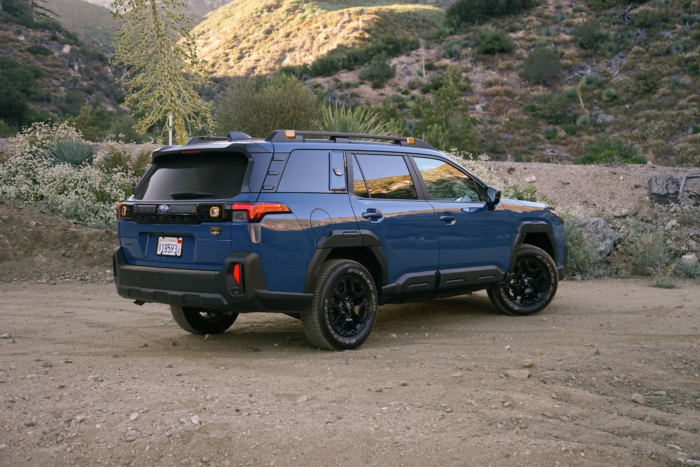
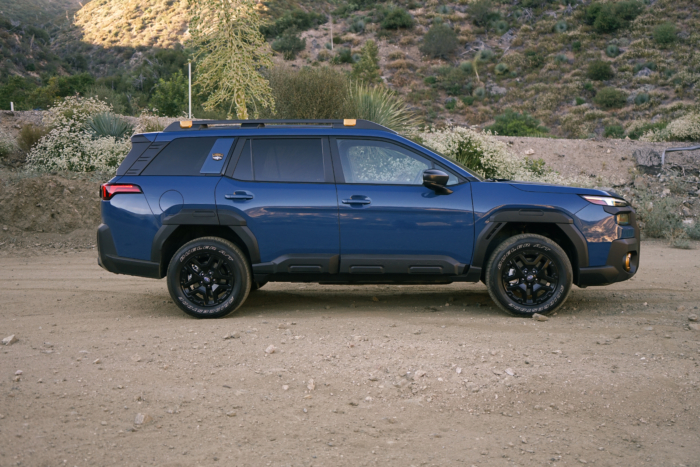
Its body is festooned with all the rugged black plastic anyone could want, and it’s pretty affordable for a new car in 2026. While that is a recipe for blandness, somehow everything comes together into a sort of Voltron of practicality and comfort, making a lot of crossover SUVs feel ill-considered by comparison.
In short: The 2026 Subaru Outback Wilderness is comfortable, competent, affordable, and will get you pretty far off the beaten path. If you can get over the Wilderness-specific grille, you should absolutely consider it over an SUV.
-

(Photo/Kyle Hyatt)
-
(Photo/Kyle Hyatt)
-
(Photo/Kyle Hyatt)
-
(Photo/Kyle Hyatt)
-
(Photo/Kyle Hyatt)
-
(Photo/Kyle Hyatt)
-
(Photo/Kyle Hyatt)
-
(Photo/Kyle Hyatt)
Specifications
Pros & Cons
Pros
- Excellent ride
- Quick steering
- Comfortable interior
- Torquey engine
Cons
- Polarizing front-end styling
- Too many materials in the interior
- CVT transmission only
The Drivetrain

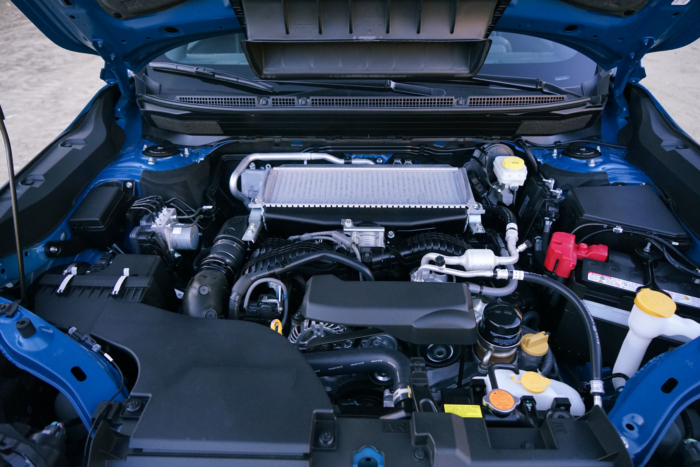
The 2026 Subaru Outback Wilderness is powered by Subaru’s 2.4L turbocharged flat-four engine, and in the Outback Wilderness, it produces 260 horsepower and 277 pound-feet of torque. It’s tied exclusively to a CVT (Continuously Variable Transmission).
Overall, I’d call this setup totally adequate to move the Wilderness’ sub–4,000-pound curb weight, with a claimed 0–60 time of around 6 seconds. Fuel economy is serviceable but not stellar, with an EPA rating of 21 mpg city, 27 mpg highway, and 23 mpg combined. This is more or less in line with the competition (Honda Passport Trailsport, Hyundai Santa Fe XRT, etc.), and I was able to match those figures pretty easily.
Subaru built its reputation on its all-wheel drive system, and while AWD is super-common nowadays, Subaru’s “Symmetrical All-Wheel Drive” system does work really well. The Outback Wilderness loves a fire road and laughs at inclement weather; as with any AWD vehicle, don’t expect to do serious off-roading in it, given its lack of a low range. The Snow/Dirt and Deep Snow/Mud modes do make a difference, though, so they’re a good reason to go Wilderness compared to the other Outback trims.
The Suspension

Arguably, the best part of the Outback Wilderness is the new-for-2026 adaptive suspension borrowed from the WRX. The ride is soft but not wallowy, which is pretty great considering it has 9.5 inches of ground clearance.
I’d say the Wilderness, with adaptive, conventionally sprung MacPherson strut front suspension and double-wishbone rear, rode better than the Land Rover Defender on the air suspension I had before it, which is seriously high praise.
Other drivetrain/chassis highlights include a 3,500-pound towing capacity (up from 2,700 in the non-turbo Outbacks) and an 800-pound static roof weight rating. That drops to 220 pounds once you get moving, but that’s still plenty respectable for the class.
Subaru offers great standard safety features across its model range, and the Outback is no exception. The EyeSight system offers adaptive cruise control, lane-keep assist, driver attention monitoring, automatic emergency braking and steering, and more.
The EyeSight system’s plastic pod (binnacle? thing?) at the top of the windshield is pretty bulky, though. It’s not overly distracting, but more windshield to look out of is a good thing, and this eats into that space.
Driving Impressions
Overall, what is the 2026 Outback Wilderness like to drive? Really pleasant, actually. It’s not the quickest or sharpest tool, nor is it the quietest inside, but it is clearly a vehicle meant for people to live with every single day, and I would happily.
I love a flat engine, but I’ve never been a massive fan of Subaru’s take on the format. It works well here, thanks to the boxer engine’s torquey nature, thankfully. The CVT transmission is ignorable, and while I get that CVTs offer fuel economy benefits, they tend to suck the fun out of driving. The paddle-actuated fake gears Subaru offers here do nothing to improve that.
Apart from that, the steering is sharp, which is impressive given the chunky tires fitted as standard to the 17-inch wheels. Braking is good, with no significant loss of stopping power after a few hard stops from high speeds.
The ride, as mentioned previously, is excellent. Body roll is well controlled, meaning this thing corners better than any Outback ever has. There is very little to criticize here.
Interior

One area in which Subaru has really stepped up its game in recent years is interior sound deadening. Old Subarus tend to be noisy, and not in a good way. They also historically felt a bit cheap when you’d close a door. That’s gone, and good riddance. It doesn’t exactly hit luxury car levels of NVH (noise, vibration, and harshness), but it’s not miles off, either.
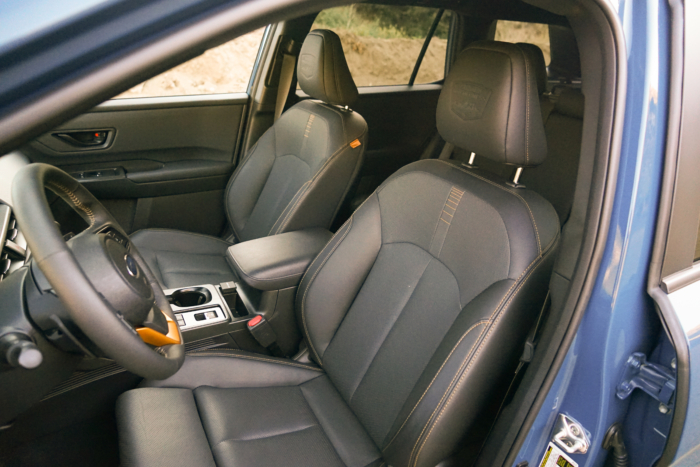
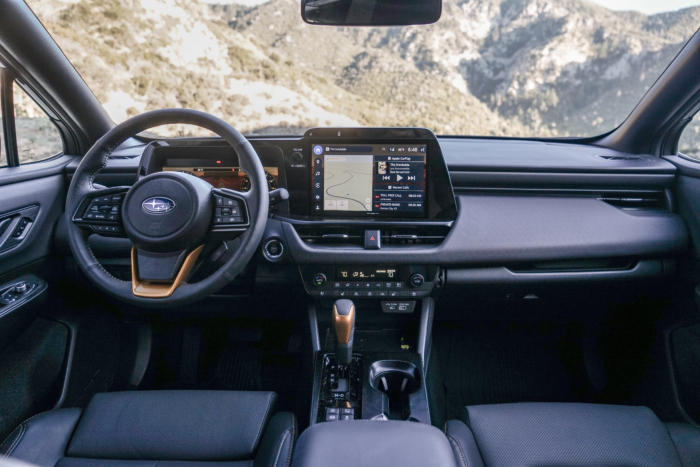
One area where the Outback Wilderness does suffer is its choice of interior materials and layout. Individually, the cabin materials are fine. The seats are comfy, and the leather-like material covering them is good. From the driver’s seat, you can see and touch approximately seven different materials, and they don’t all work together visually or texturally; and while ultimately unimportant to how a car drives, I find it incredibly annoying.
To be fair, this Homer Simpson’s Makeup Shotgun approach to materials choice isn’t only a Subaru problem. Many Japanese manufacturers do the same thing, and it always makes things feel dated.
One thing Subaru has done in the interior that I always approve of is making sure regularly accessed features have physical buttons. Buttons might look dated to some folks, but you can build muscle memory with them and not need to take your eyes off the road to press them, unlike screens.
One major positive for the Outback’s interior is that it’s pretty easy to clean. My wife managed to splash coffee everywhere approximately 10 minutes after the car showed up at my house. Everything was easy to wipe down and looked good afterward. This is good news for the perpetually messy among you.
Tech
Interior tech is pretty standard fare for 2026. This includes wireless Apple CarPlay and Android Auto, a branded Harman Kardon stereo system that’s perfectly serviceable, wireless phone charging, and USB-A and -C ports. The infotainment system is fine, but ultimately, you’ll be a lot happier using CarPlay or Android Auto. That’s not a dig at Subaru per se; it’s true of pretty much all factory infotainment systems.
Cargo Space

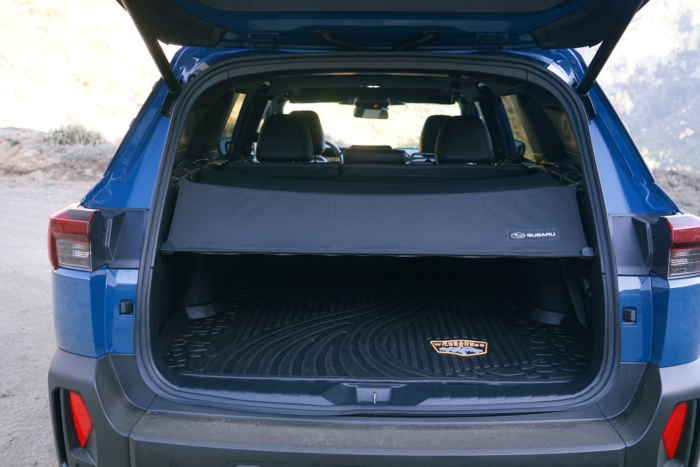
There’s plenty of cargo space, being a wagon and all — 35 cubic feet behind the second row and 81 cubic feet if you fold that row down. Again, this is meant to be an everyday car for people with families and people who love to go outdoors. I also really like this magnetic, soft, clippy cargo cover thing. It’s pretty versatile and doesn’t take up much space if you remove it to haul something big.
Competition
If you are thinking of buying a 2026 Outback Wilderness, you’re probably cross-shopping a few vehicles. These might include the Forester from Subaru’s own lineup, or vehicles like the Ford Bronco Sport, the Mazda CX-50, the RAV4 (now hybrid-only), or the Passport and Santa Fe I mentioned earlier.
Honestly, the Outback is probably a better daily driver than almost all the competition. The RAV4 blows it out of the water on fuel economy, and the Forester looks less weird while being cheaper, but the Outback is a little different and does everything well, including light off-roading.
How We’d Spec Ours
Seeing as though the Wilderness is nearly the top trim level, there aren’t many options to be had. My test vehicle came in the excellent Geyser Blue color.
It was equipped with the OP 23 option package, which includes Nappa leather seating surfaces, a 360-surround-view camera, ventilated seats, and the larger 12.1-inch infotainment screen, among other features. It’s not cheap at $4,090, but even with that added, the Outback Wilderness is $50,535, including a $1,450 destination fee. For those of you playing at home, that’s just slightly more than the $49,855 average new car sale price in 2026 (per Kelley Blue Book). It’s a lot of car for the money.
The Aftermarket

The Outback was redesigned for 2026, but it shares a lot of bones with the outgoing model, meaning parts availability is decent, if not incredible. That said, there are a few cool mods we’d get if we had a Wilderness.
At the top of the list is a 2-inch front/2.5-inch rear lift kit from RalliTek. This uses strut spacers, so you keep your factory adaptive suspension, which is good. At $699, it’s not crazy expensive, either. We’d also grab some underbody protection from RalliTek ($1,300 for a set) and an automatic rear locking diff (sold by RalliTek but made by Torq Masters) for $470.
We’d also go for a Stage 1 Power Package from Cobb Tuning. It promises a 16% power boost using the crappy 91-octane fuel we get here in California for $748. Lastly, we’d slap on a more aggressive set of tires in the form of BFGoodrich KO3s in the stock size.
Conclusion
The Subaru Outback has been a popular choice for outdoorsy folks for 3 decades, and the 2026 model is handily the best one ever. It offers a blend of enough power, competent all-wheel drive, excellent suspension, and plenty of modern safety tech. It’s a workhorse that will make the transits between adventures almost as good as the adventures themselves.