Soft coolers keep our provisions chilled without weighing us down. They’re easy to carry from the deck to the rig as a one-person job. While we’ll always have a spot in our gear closet for a hard cooler, soft coolers have proven to be just as essential.
There’s a surprising range of sizes and daresay, softness in soft coolers. Some of these portable softies are actually stout and stackable, such as the YETI Hopper Flip 12 Soft Cooler. Others are fully collapsible and pliable, like the origami-inspired REI Co-op Campwell Folding Cooler, and we celebrate its space-savings for storage.
This season, Colorado-based rancher and ultra-racer Constance Mahoney and her family tested four soft coolers for 1,152 hours across 48 days from high-altitude Gunnison Valley to Fruita and Buena Vista. She spent 10-14 days examining each icebox from soccer fields and campouts to run club, road trips, hot springs, and fly fishing.
Editor’s Note: We updated our Soft Coolers buyer’s guide on August 14, 2026, with an overhauled comparison chart.
The Best Soft Coolers of 2026


REI Co-op Trail Gate Cooler

Specifications
Pros & Cons
Pros
- Cleans easily
- Large opening
- Removable insulation
- Contains recycled material
Cons
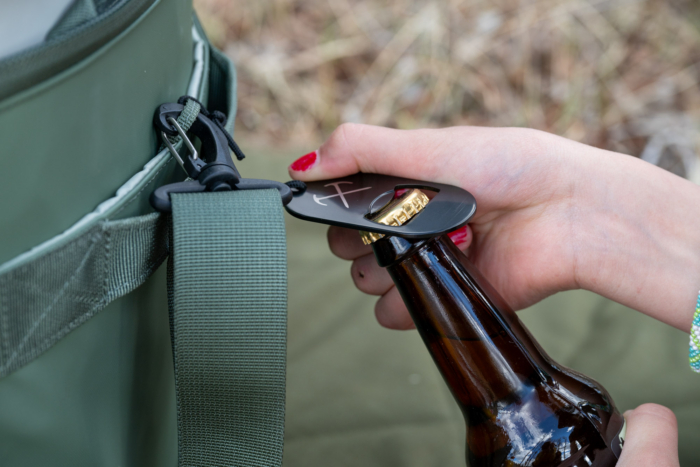
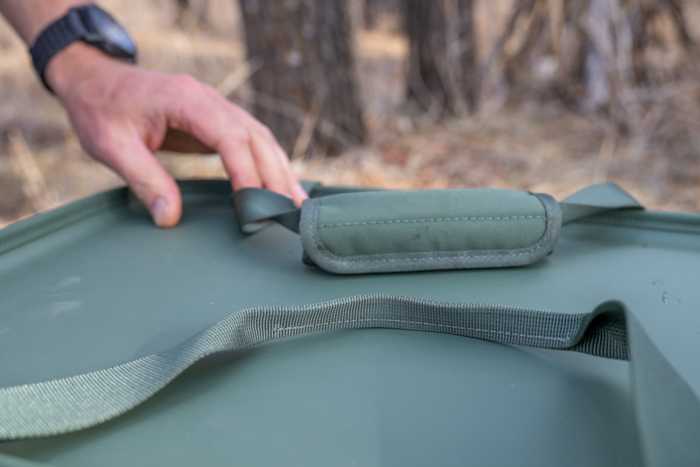
- Uncomfortable shoulder strap
- Tight side pockets
Bottom Line: A high-performance sleeper that prioritizes accessibility and hygiene for a modest price. The Trail Gate is the ideal choice for the organized traveler who wants elite-level ice retention and a removable liner that makes post-trip cleanup painless.
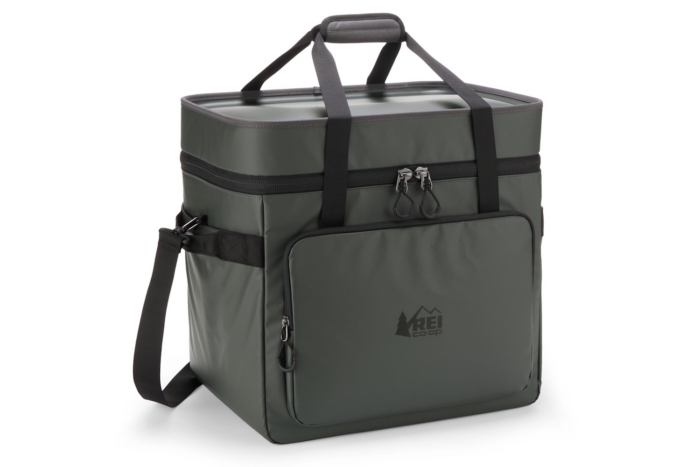
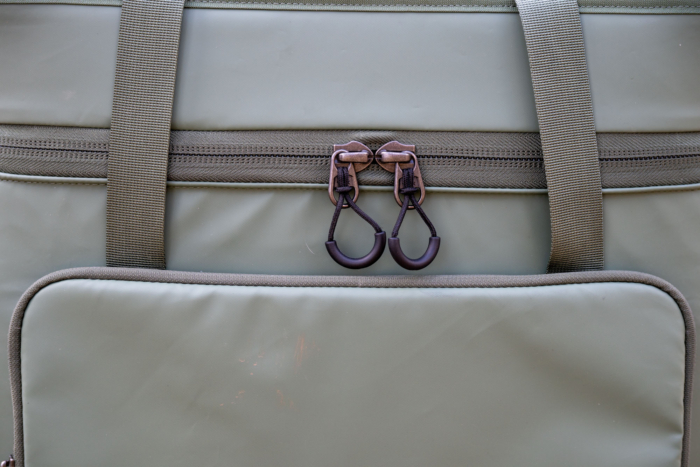
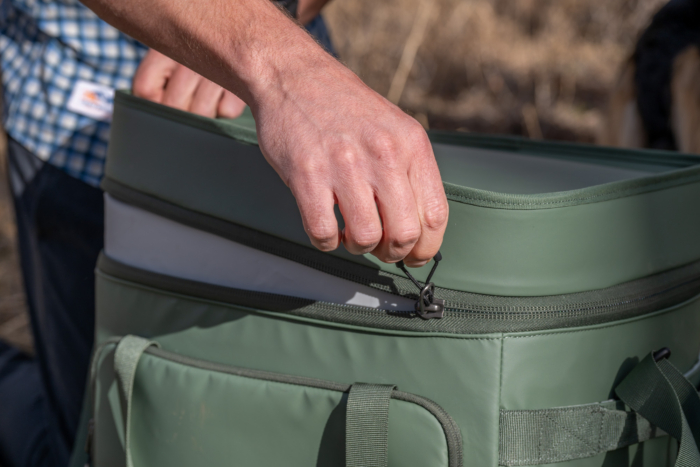
The REI Co-op Trail Gate Cooler ($160) is a sleeper hit that genuinely outperforms the big-name status symbol coolers for about half the price. It solves the two most annoying things about soft-sided insulation: those stiff, knuckle-scraping zippers and the hassle of scrubbing out the bottom of a floppy bag. If you want a rugged, dependable cooler that delivers on its promises without a $300 price tag, the Trail Gate is worth considering.
The Tech: Performance-wise, the numbers are impressive. In a standard ice-retention test, it lasted 6 full days. This beat our previous ice-retention winner, the YETI Hopper M30, by 2 days. Whether it is sitting in a hot car during a road trip or being opened constantly at a soccer tournament, the Trail Gate stays a literal icebox much longer than you would expect for the price. This secret sauce: the structured foam insert that provides a consistent barrier against exterior heat.
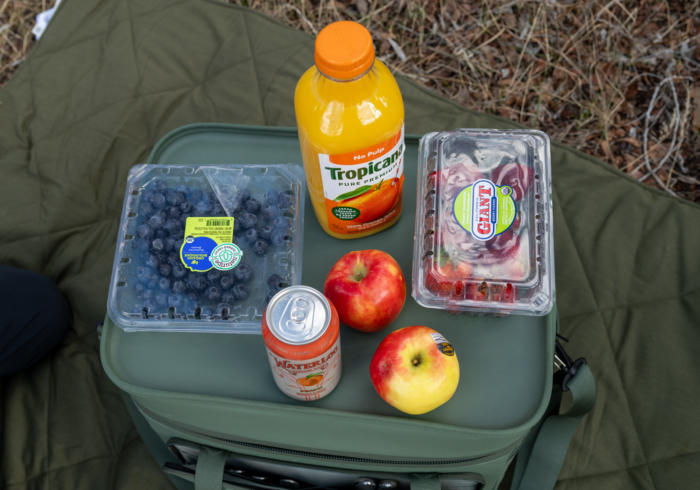
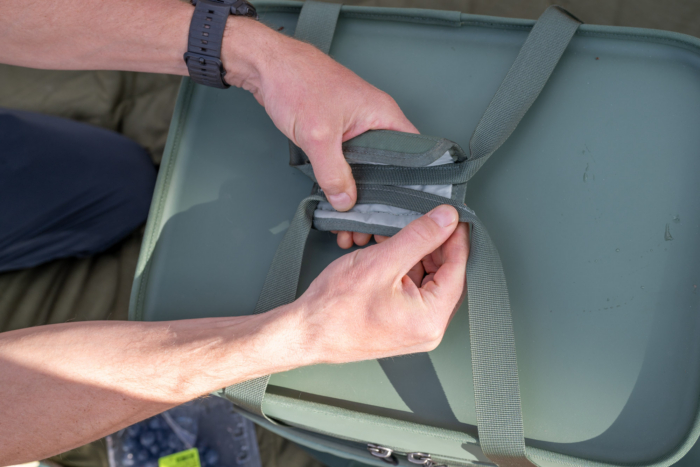
What We Like: The real winner here is the wide-open top. Instead of peeking through a narrow slit, you can access the entire interior once you unzip it. It makes packing flat items — like food containers or glass dishes — way easier, and you do not have to dig around to find a specific drink. Post-trip maintenance is also a lot simpler than usual. Just lift the entire structural foam insert out of the shell, hose it down in the driveway, and let it air-dry. This common-sense design ensures you are not stuck with lingering smells or spills trapped in the fabric corners.
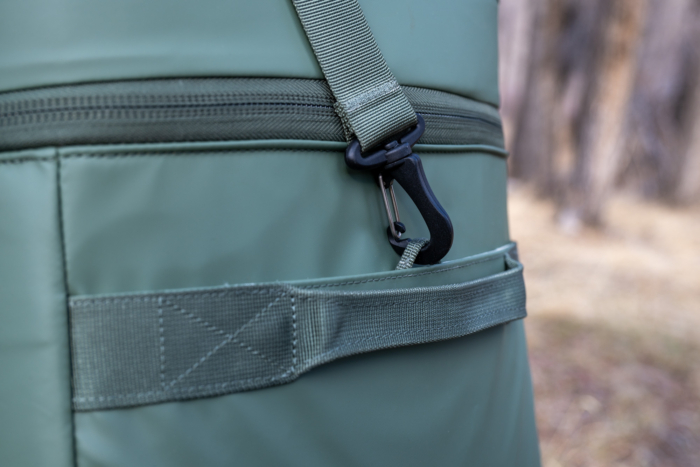
What We Don’t: It’s not perfect, as the shoulder strap could definitely use more padding for more comfortable carries over longer distances. We also found the side pockets a bit tight, meaning they’re only usable for very slim essentials. Because it is so easy to see what you are doing, you spend less time with the lid open. This keeps the cold air trapped inside, but the cooler’s physical bulk remains significant even when empty.
Should You Buy It? For those who prioritize raw performance and easy cleanup over brand prestige, this is a top-tier choice. It is a pro-grade cooling solution that offers better ice retention than many of its expensive competitors. If you need a reliable workhorse for multi-day road trips or weekend-long events, the Trail Gate provides incredible value and utility.
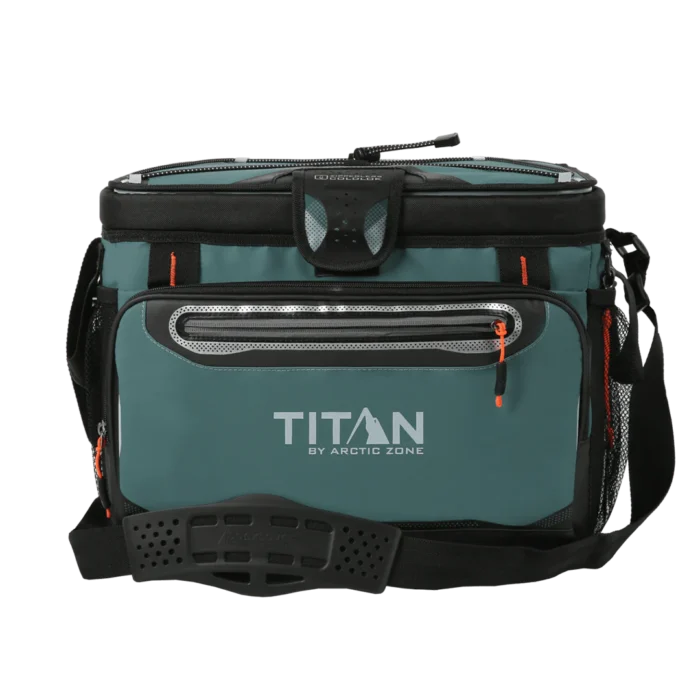
Titan by Arctic Zone 30 Can Zipperless HardBody Cooler
-

-
(Photo/Constance Mahoney)
-
(Photo/Constance Mahoney)
-
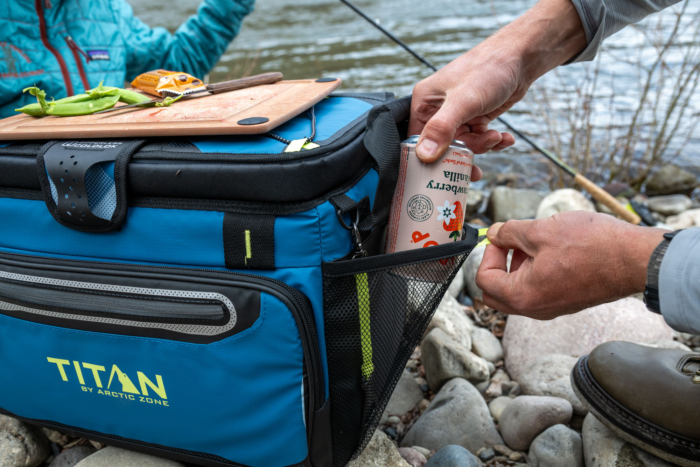
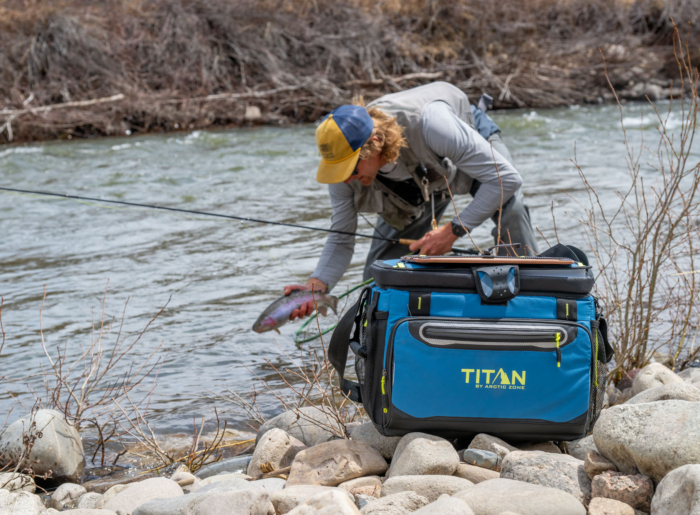
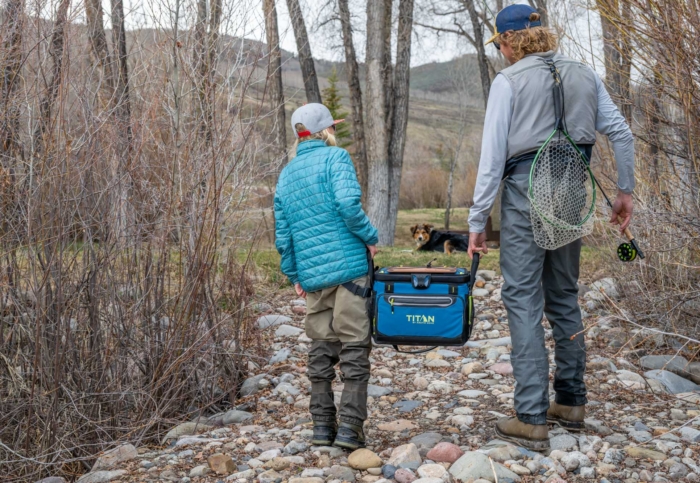
Testing the Titan by Arctic Zone 30 Can Zipperless HardBody Cooler; (photo/Constance Mahoney)
Specifications
Pros & Cons
Pros
- No zipper on the lid
- Large lid opening to primary storage
- Six optional volumes
Cons
- Water can make its way between the HardBody liner and cooler liner if tipped
Bottom Line: A practical daily driver built for folks who are tired of fighting stiff, waterproof zippers to grab a Gatorade. It trades a perfect air-tight or submersible seal for unmatched convenience and internal organization.
Looking to ditch the zipper on your soft cooler without sacrificing cooling power? The Titan by Arctic Zone 30 Can Zipperless HardBody Cooler ($70) stands out for its functional, user-friendly design. We specifically loved the zipperless flip-top lid for its easy access during road trips and soccer games. It made grabbing snacks and drinks quick and hassle-free. Impressively, the lid stayed secure even after we pushed the cooler over from every side — it never popped open.
The Tech: This cooler uses Deep Freeze high-performance insulation and an integrated radiant heat barrier to reflect rather than absorb the sun’s heat. The interior also features a removable HardBody liner made from food-grade materials. This is paired with a ColdBlock base that concentrates insulation at the bottom of the cooler where we want it most. In our controlled ice retention tests, this setup kept our items cold for up to 3 days. But that dropped to a solid 1.5 days during real-world use with regular opening and closing.
What We Like: The removable SmartShelf is a standout feature, allowing us to keep soft foods separate from heavy drinks so nothing gets soggy or crushed. The flat-top lid design with a bungee cord is a big win. Not only did it add versatility, but we even used it as a mini prep station to make sandwiches on the go. Outdoor expert Constance Mahoney also appreciated the multiple carry handles that made loading in and out of the car easy, and the stain-resistant exterior proved its worth by wiping clean after a mustard mishap.
What We Don’t: While the Backsaver shoulder strap features anti-slip padding, we’d love a bit more cushioning for longer treks. Additionally, we had to remove the HardBody liner after each use because a small amount of water seeped between the liner and the cooler’s edge. It’s a pain, but removing it is a must for the interior to properly dry.
Should You Buy It? If you are tired of wrestling with painful zippers and want a budget-friendly, high-capacity option for everyday use, this is a top contender. Much like the Hydro Flask 20L Carry Out, it prioritizes accessibility and organization. It’s an ideal choice for active families or road-trippers who want a durable, no-fuss cooler that delivers reliable cold retention without the premium YETI price tag.
YETI Daytrip Tote Bag 14L
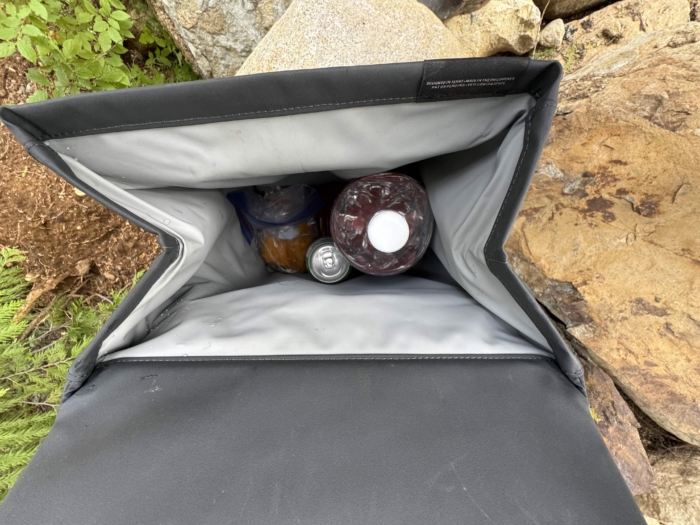
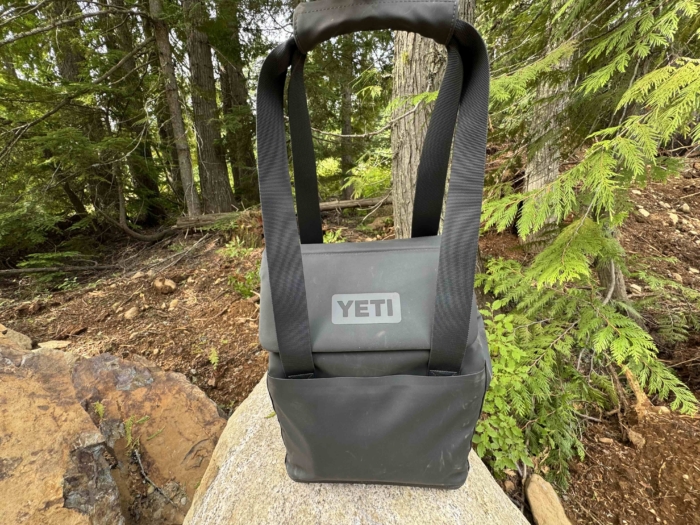
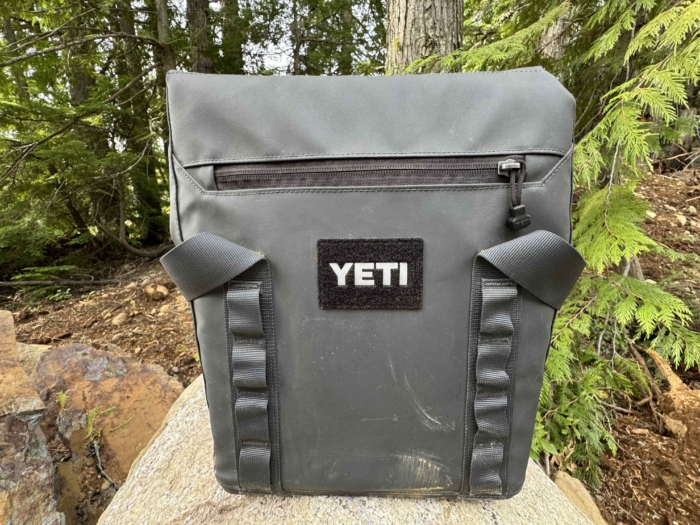
Specifications
Pros & Cons
Pros
- External stash pockets
- Easy to open with magnetic closure
- Lengthy shoulder straps for easy carry
Cons
- Magnetic closure pops open if cooler is tightly loaded
Bottom Line: Stealthy and ideal for office environments, grocery runs, or as a snack station in the passenger seat. While it sacrifices the multiday ice retention and leakproof seal of the Hopper series, it gains points for accessibility and style.
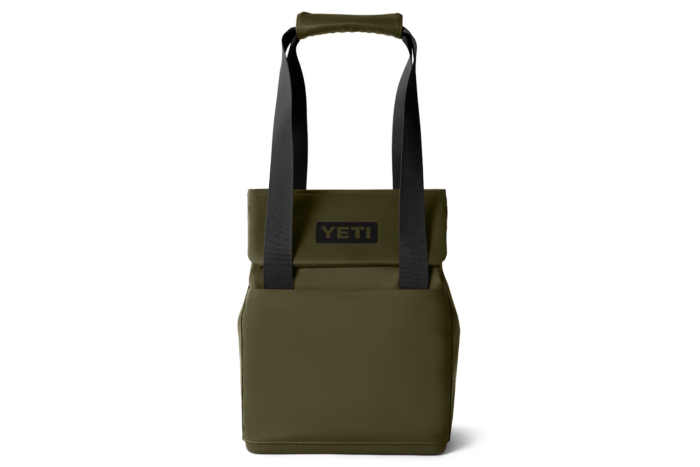
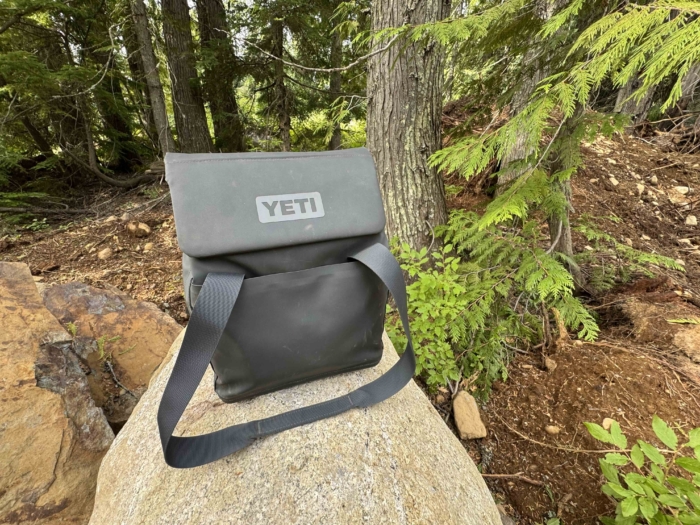
The YETI Daytrip 14L Tote Bag ($145) delivers a sophisticated solution for those seeking a lunch-and-snack hauler that balances performance with a clean aesthetic. This soft-sided tote keeps contents fresh without the traditional bulk of a hard-sided cooler. Whether you are heading to a farmers market, packing for a beach picnic, or hauling snacks to the office, the Daytrip offers a refined look that avoids the typical cooler appearance.
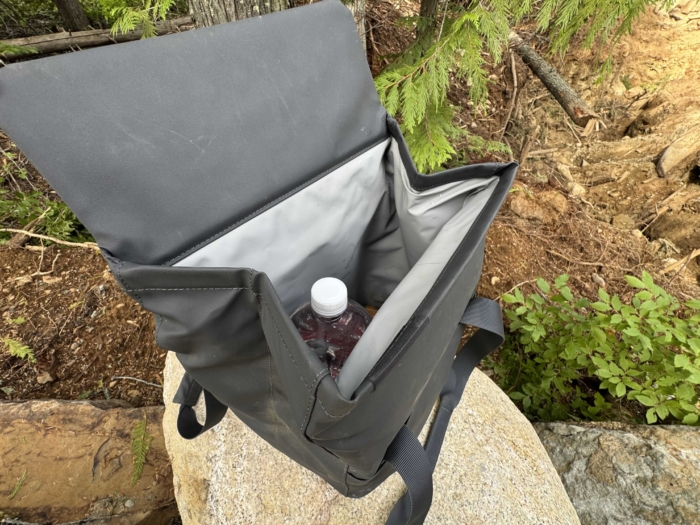
The Tech: As the largest option in the Daytrip collection, this 14L model offers significantly more capacity than the 6L Lunch Bag, fitting up to 12 cans or three upright wine bottles. It utilizes ColdCell Flex Insulation, a lightweight, closed-cell foam designed for all-day temperature control. In our controlled test, it retained cold for 60 hours. Access is managed through the MagSnap Closure, a slender magnetic strip that snaps shut instantly without the need for traditional zippers or buckles.
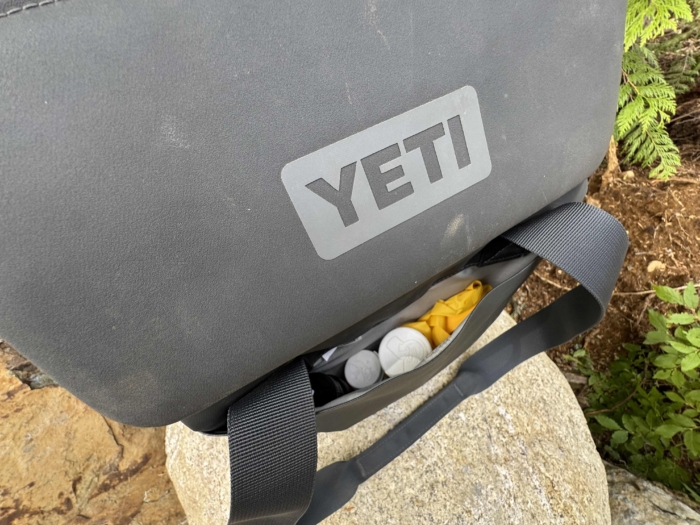
What We Like: We appreciated the two lengthy shoulder straps and the smooth Velcro handle that keeps them neatly together for a comfortable carry. For bike park builder Dane Tudor, who worked 12-hour shifts at RED Mountain Ski Resort, the two exterior stash pockets were essential for organizing utensils, first-aid supplies, and multiple meals. The durable outer material is remarkably easy to wipe clean, and the addition of a grid on the back allows you to clip on extra gear as needed.
What We Don’t: The magnetic closure is convenient but not leakproof, meaning loose ice cubes should be avoided in favor of ice packs. Because the top does not create a hermetic seal, this isn’t the best choice for SUP missions. We also noted that the lid will not snap shut if items like fruit or Tupperware press too close to the top, which limits its overall utility. Additionally, we saw a small amount of exterior condensation under hot, humid conditions.
Should You Buy It? At more than a C-note, the Daytrip is a premium splurge designed more for urban outings and office commutes than a utility workhorse made for comfort. While it has less carry power than the Arctic Zone Titan Bucket Tote, it excels as a snazzy accessory for those who prioritize style and ease of access. If you want a cooler that performs well and looks good in a park or office setting, this is a top-tier pick.
YETI Hopper Flip 12 Soft Cooler
Specifications
Pros & Cons
Pros
- Lightweight
- Durable
- Waterproof
- Great Insulation
- Floats
Cons
- Pricey
- Zipper is not the most durable
Bottom Line: For outdoor pros who need a cooler that retains ice for multiple days without leaking a drop, the Hopper justifies its investment. Points are docked for the slightly stiffer zipper, but YETI’s Hopper Flip sets the benchmark for a bulletproof, super-cool personal cooler.
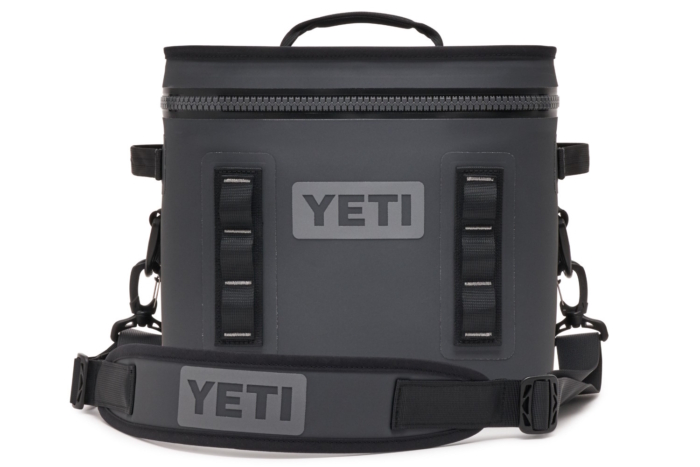
This 12-can soft cooler is the Goldilocks choice for outdoor day missions, as long as you can stomach the higher price. From the get-go, the YETI Hopper Flip 12 Soft Cooler ($250) proved to be the most reliable and durable companion in our soft cooler testing. While it also comes in a smaller “8” or a larger “18-can” size, this one meets a happy middle ground. We put this cooler through the wringer, from multiple fishing trips to a grueling 9.5-hour drive from Southern Utah back to Colorado. It never wavered in its ability to keep contents chilled through varying sun exposure.
The Tech: Behind the rugged exterior is YETI’s ColdCell technology, a closed-cell rubber foam that offers far superior insulation compared to standard soft coolers. The shell is constructed from DryHide, a high-density fabric that is waterproof and resistant to punctures and UV rays. To seal it all in, the HydroLok Zipper (borrowed from survival suits) ensures the bag is 100% leakproof and airtight, allowing the cooler to actually float if it takes a swim.
What We Like: We were impressed by the rigid, boxy construction that refuses to collapse even when other heavy gear bags are stacked on top of it in the car. Assistant Ski Patrol Director at Brian Head Resort, Makena Gross, specifically praised the additional clip-on shoulder strap for its soft, memory-foam-like padding, which made trekking along rocky trails much more comfortable. Inside, the antimicrobial liner is a breeze to clean. The wide-mouth opening makes it painless to organize and view your snacks. In our ice retention tests, it held ice for a full 3 days, matching top-tier competitors like the RTIC 20.
What We Don’t: The primary hurdle here is the price point. At $250, it is a significant investment for a 12-can capacity. Additionally, because the HydroLok Zipper is airtight, it can be quite stiff to pull. YETI includes a maintenance lubricant, but it requires more effort than a standard zipper. Also, while the shell is incredibly durable, the C0-equivalent finishes on modern gear mean you should still wipe away oils and sunscreen to prevent long-term staining.
Should You Buy It? If you are a casual picnicker, the Hopper Flip 12 is overkill. However, for the backcountry adventurer, angler, or road-tripper who demands pro-grade gear that won’t leak in the trunk or fail after one season of abuse, the Hopper Flip 12 is the premier choice. It’s a style-forward, ethically built shield against the heat that simply stands apart from the rest of the market.
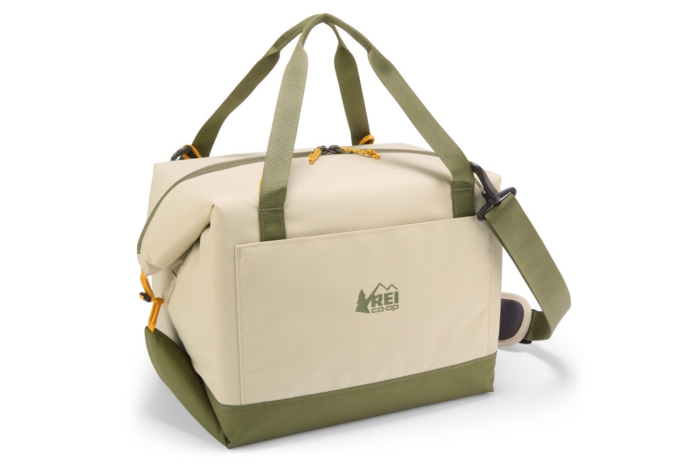
REI Co-op Campwell Folding Cooler
Specifications
Pros & Cons
Pros
- Daisy chains and spacious external pocket with a zipper
- Transforms into a tote, cube, and flat for storage
- Lightweight
Cons
- Can’t stack any items on top of this soft cooler
- Tote is wobbly and doesn’t dependably stand upright
- Top zipper is not waterproof
Bottom Line: Its ability to fold completely flat makes it the best travel-friendly option, ideal for flying to a destination and having a cooler ready for the rental car. If you prioritize convenience and space-saving over 3-day ice retention, this is a must-have utility piece.
If you have limited storage space, the REI Co-op Campwell 18L Folding Cooler ($40) is the ultimate space-saver. This origami-inspired design allows the cooler to collapse and fold completely flat when not in use. When transformed into its cube or tote shape, the cooler is light, nimble, and malleable — features we appreciated when squeezing it into the awkward floor space behind our Jeep seats, where no other cooler would fit.
The Tech: The Campwell is built with an emphasis on environmental responsibility, featuring a recycled polyester upper and an abrasion-resistant recycled nylon outsole. It is also Bluesign approved, ensuring the materials meet strict environmental and worker safety standards. Despite its folding nature, it offers surprisingly decent insulation for a soft-sided bag. Our ice retention tests showed it can hold ice for up to 57 hours and has a total capacity of 24 12-ounce cans.
What We Like: Ultrarunner Nick Couts put this cooler to the test while jeeping Colorado’s high-altitude Alpine Loop, a rugged 65-mile route through the San Juan Mountains. The light, packable design was ideal for hauling lunch meats, cheese, and seltzer waters across bumpy mining roads. We found the construction to be remarkably durable for the price, and the ability to switch between a boxy cube and a carry-all tote makes it one of the most versatile grab-and-go options in our fleet.
What We Don’t: Because of its collapsible, malleable nature, this cooler lacks the rigid structural integrity of a hardbody or box-style soft cooler. If you stack heavy gear on top of it while it’s in the car, it squishes softer food items like bread or fruit inside. While the 57-hour ice retention is impressive on paper, it is best suited for single-day outings rather than multi-day camping trips, where constant opening and closing reduce its cooling power.
Should You Buy It? If you live in an apartment or drive a compact vehicle where every inch of storage matters, this is a must-buy for your summer kit. It’s an affordable, eco-friendly, and highly portable solution for day-trippers and trailhead tailgaters who want a packable cooler that still gets the job done.
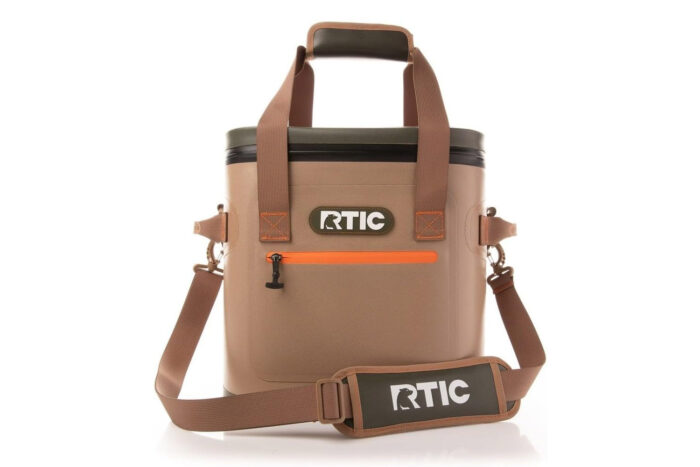
RTIC 20 Can Soft Pack Cooler
Specifications
Pros & Cons
Pros
- Multiple handles for carrying options
- Great insulation
- Ability to float
Cons
- Narrow storage makes it difficult to organize and see cooler items at the bottom
- Additional pocket is small and tight
Bottom Line: Arguably the best bang-for-your-buck technical cooler on the market. For outdoor enthusiasts who need a cooler that floats, won’t leak in the backseat, and can take a beating on the river, this is a top-tier contender without a premium tax.
Compared to the YETI Hopper Flip 12 soft cooler, the RTIC 20 Can Soft Pack Cooler ($99) delivers equally impressive ice retention and insulation. Plus, it is significantly cheaper. We brought this cooler car camping with us in Leadville, Colo., for 3 days. We started with a large ice pack. And once that thawed, we switched to bags of ice. Our food stayed nice and cool for the first couple of days before the ice started to melt faster and the air inside the cooler warmed.
The Tech: This RTIC pack was reliable and effective at its job thanks to thick walls composed of closed-cell foam. The cooler is built to be leakproof, waterproof, and buoyant, making it ideal for any activity on the water. These floating capabilities would come in handy after a boat flips on a rapid. RTIC claims the 20-can volume keeps your drinks cool for 24 hours, but our ice retention test ended after approximately 3 days, by which point all the ice had fully melted. What a win.
What We Like: Considering it was sitting in the sun for most of the day during our testing, we found it to be a very capable performer. The fact that its stats were comparable to the YETI Hopper Flip 12 while remaining much more budget-friendly is a major win. This RTIC soft cooler did indeed fit 20 cans, just as its name suggests, and it proved to be a great overall cooler for watergoers.
What We Don’t: Unfortunately, the shape and height of the cooler make the storage space pretty narrow, as noted by Wilderness Medicine course instructor Makena Gross. Looking at it from the outside, the cooler looks like it will fit more than it actually can because the walls are two inches thick and the lid is robust. The shape works well for canned drinks. Otherwise, the limited storage space makes it difficult to organize.
Should You Buy It? If you are looking for YETI-level ice retention without the premium price tag, this is an excellent alternative. It is particularly well-suited for rafters, boaters, or anyone spending time on the water who needs a waterproof, buoyant shield for their beverages. While it may not be the easiest to organize for bulky food items, its cooling power and price make it a high-value choice for short trips.
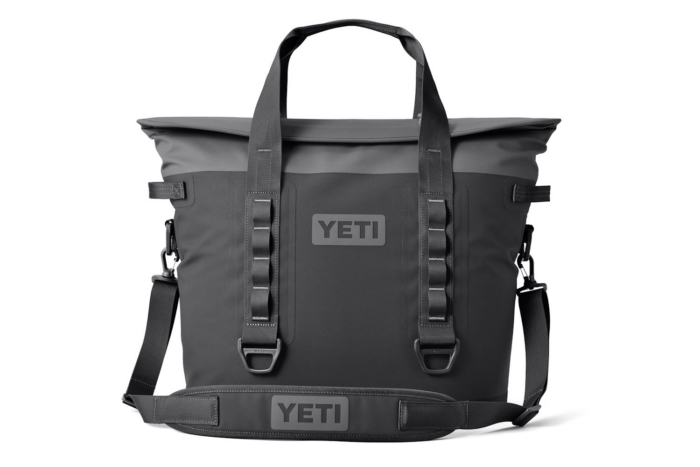
YETI Hopper M30 2.0 Tote
Specifications
Pros & Cons
Pros
- Comfortable, smooth shoulder strap
- Powerful magnetic closure stays shut
- The closure doesn't snap shut when you're shuffling items in and out
- Excellent ice retention
Cons
- Narrow closure toward the top: it's hard to see the bottom of the tote
- Premium build means high price
Read Review: YETI Drops 2 Sizes of Its Fan-Favorite M Series Soft Coolers
Bottom Line: The evolved soft cooler that ditches a zipper in favor of high-powered magnets. You get the thermal performance of a premium cooler without the maintenance or two-handed struggle of a traditional waterproof seal.
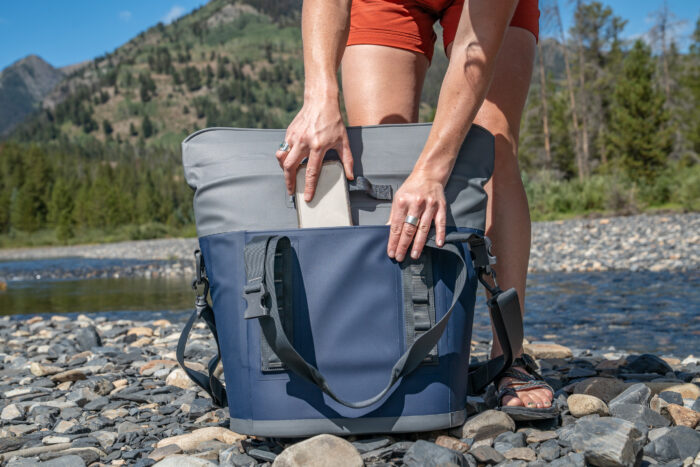
YETI completely reworked and relaunched the magnetic closures for their soft coolers, and the powerful design is back and better than ever. The brand launched the Hopper collection with magnetic closures, including the YETI Hopper M30 2.0 Soft Cooler ($350). This version comes in a large tote style that holds 42 cans, offering significantly more capacity than the smaller M15, M12, or M20 backpack versions. Despite being a large bag, it feels remarkably slender due to a tapered design and sleek crown.
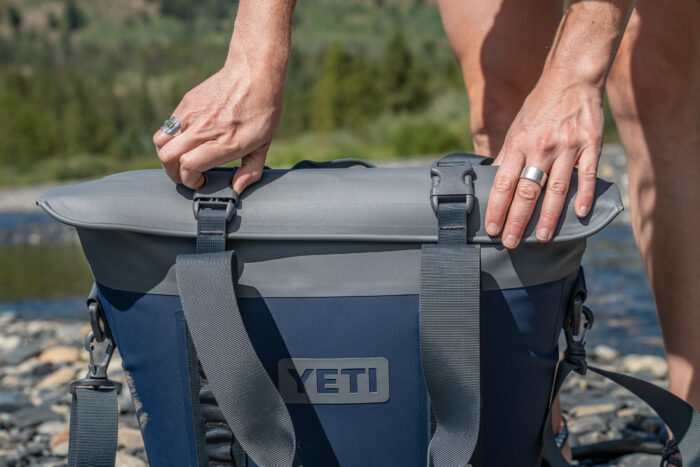
The Tech: To close up this cooler, you snap the top of the tote shut, fold down the rim, and then click two wide buckles over the top for extra security. Either side of the mouth is lined with a strip of super-strong magnets. We can confirm that, despite the shark-clamp grip that this magnet offers for holding in cold air or liquid, when the clasp is manually set open, the gap remains. Senior Editor Morgan Tilton never saw the cooler slam shut when propped open. Without a doubt, the ice retention of this soft cooler is among the industry’s frontrunners.
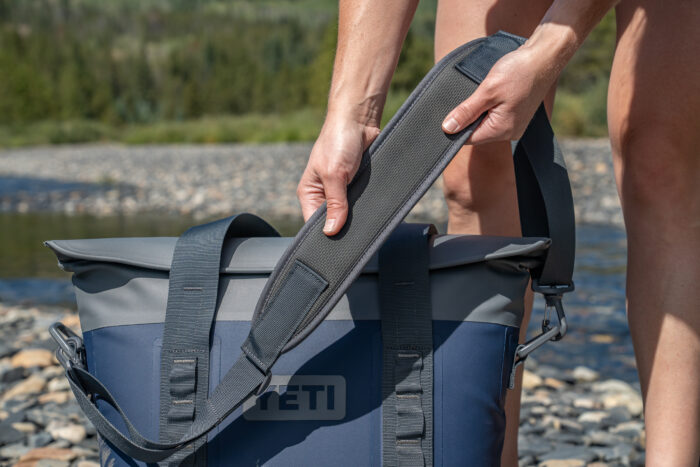
What We Like: We were impressed with how comfortable this YETI tote is to carry. The base is wide and sturdy, so we don’t need to worry about setting the load down on gravel or uneven ground. One of our favorite details is the removable shoulder strap, which features a lean yet cushy, grippy, and soft pad. There are also two additional hand straps for a close-to-torso carry. A narrow yet wide slide-in kangaroo pocket on the side is perfect for a phone or wallet, and the exterior is buttery-smooth, easy to wipe down, and durable from top to bottom.
What We Don’t: The only challenge we had was closing the two buckles. One of our easiest solutions was to place a knee on top of the tote to slide the ends together more easily, though the pressure of a palm also works. Additionally, the specific shape of this cooler means it is not our first choice for grocery store runs, as it is simply not big enough for certain food containers. The barebones hand straps are convenient but not nearly as comfortable as the longer padded body strap.
Should You Buy It? The Hopper M30 is a premium, classy soft cooler that will last through whatever you throw its way. It is a top-notch design for day adventures that require high-capacity cooling and a rugged build that can handle rough terrain. If you want a pro-grade tote that balances a massive 42-can capacity with a comfortable, sleek silhouette, this YETI is a premier investment for the long haul.
Other Soft Coolers That Keep Our Snacks Fresh
Specifications
Pros & Cons
Pros
- Great ice retention
- Durable
- Leakproof
Cons
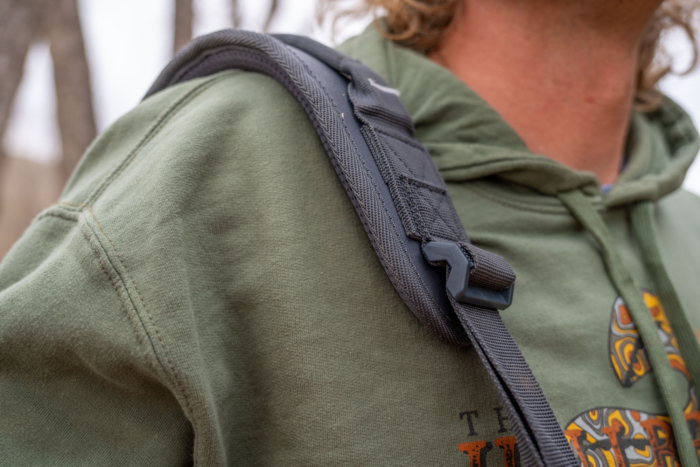
- Heaviest soft cooler we’ve tested
Bottom Line: A beefy, airtight vault that bridges the gap between soft bags and hard chests. It’s built for the user who values a secure seal and effortless interior cleaning over lightweight portability.
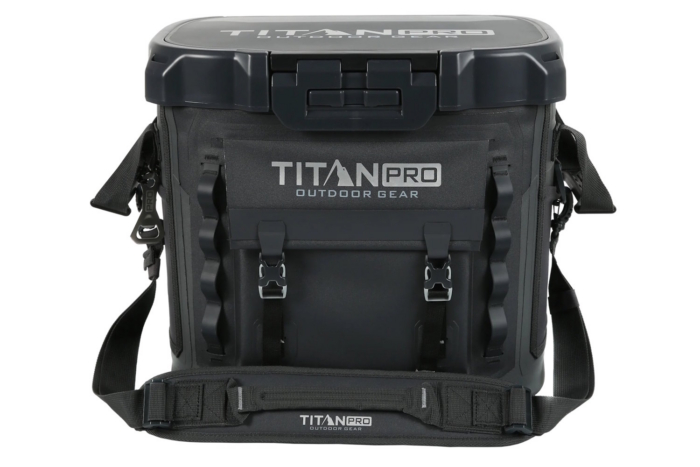
The hybrid Titan PRO 36 Can High Performance Welded Cooler ($225) serves as a rugged middle ground, trading the collapsible convenience of a typical bag for the rigid, easy-to-clean interior of a hard-sided chest. At 13 pounds empty, it is the heaviest option in the category and clearly a cooler for people who will treat it as serious gear.
The Tech: This cooler features a flip-up lid and an Air Lock latch that seals with a distinct, refrigerator-like hiss. The seal is remarkably secure. Even when tipped upside down or jostled in a side-by-side, not a single drop escapes. In our testing, the PRO Welded Cooler held ice for 4.5 days, placing it in high-performance territory for a soft-sided hybrid. While it won’t replace a massive 60-quart rotomolded chest for a week-long expedition, it offers plenty of ice retention for long weekends.
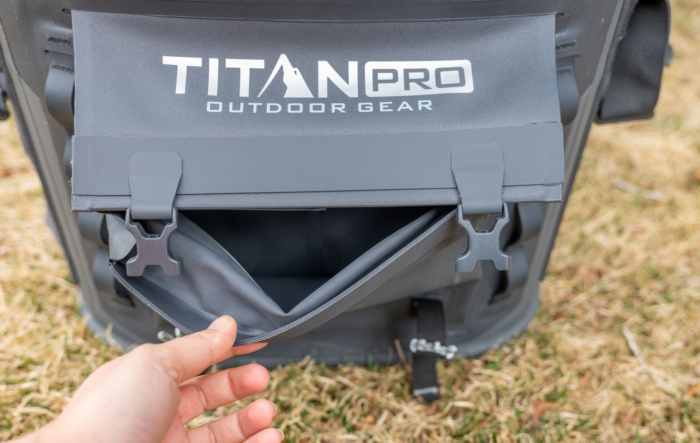
What We Like: Maintenance is where this cold-storage unit pulls ahead of the competition. It features a removable HardBody-style liner that can be lifted out of the welded shell, allowing you to hose it down in the driveway. Colorado-based outdoor expert Constance Mahoney appreciated the ease of cleaning after using it as a runner aid station; sticky gels and spilled electrolytes rinsed out easily. She also liked the removable interior shelf that creates a dedicated dry zone for sandwiches, keeping delicate items away from the ice and cans below.
What We Don’t: The weight is a factor; it’s hefty when fully loaded. While the oversized, reinforced handles help, the two mesh side pockets are somewhat obstructed by the shoulder strap clips, making them difficult to use for taller items. Additionally, pulling the liner out for cleaning requires some muscle; our tester found the best way was to step on the shoulder strap and pull up on the handles to break the tight fit.
Should You Buy It? If you need the durability of a hard chest but want the carry profile of a tote, this pro-grade hybrid takes a beating. It is an excellent choice for off-roaders or group event organizers who need a secure, leakproof seal and a liner that sanitizes in seconds. For those who want the organization shelf without the 13-pound starting weight, the Titan by Arctic Zone 30 Can Zipperless HardBody is a lighter alternative.
Specifications
Pros & Cons
Pros
- Lightweight
- Waterproof
- Slim profile
Cons
- Black color gets hot to touch
Bottom Line: A streamlined, user-friendly cooler that trades bulky insulation for a slim, cart-friendly profile. It’s the perfect high-end grocery and day-trip companion for those who prioritize a smooth, leakproof zipper and easy carrying.
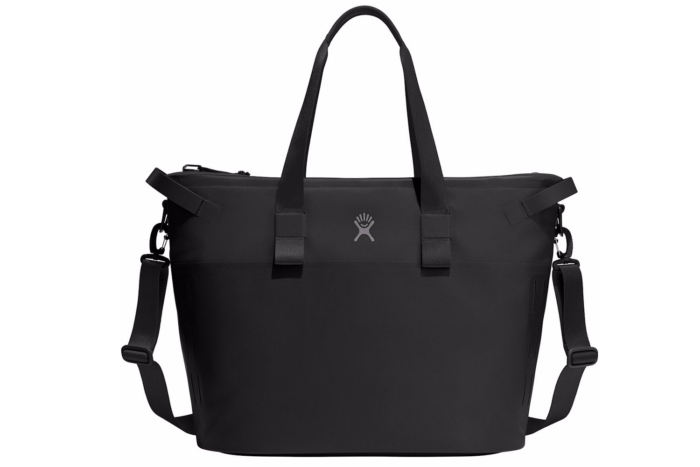
The Hydro Flask 26L Day Escape Soft Cooler ($200) hits a nice balance between everyday usability and performance, especially for those who want a lighter, slim cooler that still holds its own on longer outings. While the YETI Daytrip leans into urban aesthetics, the Day Escape is built for the field, offering a fully submersible zipper and a more rugged shell that handles the grit of a ranch or a raft better than a standard lifestyle tote
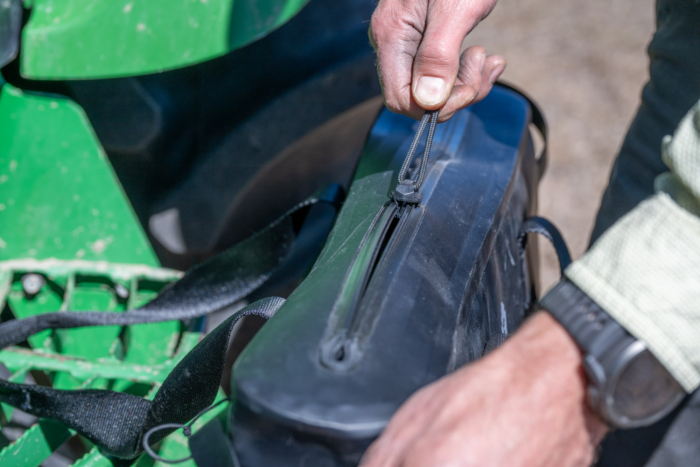
The Tech: In our ice retention test, it kept ice for about 3.5 days — solid performance for a cooler in this category. The TRU Zip zipper paired with welded seams creates a fully leakproof design, and Colorado-based tester Constance Mahoney really appreciated how smooth it felt in use. This specialized zipper eliminates the scraping and fighting common with stiffer, pro-grade waterproof seals. Tradeoff: While the interior stays chilled, the black polyester shell can get quite warm to the touch when left in direct sun for hours.
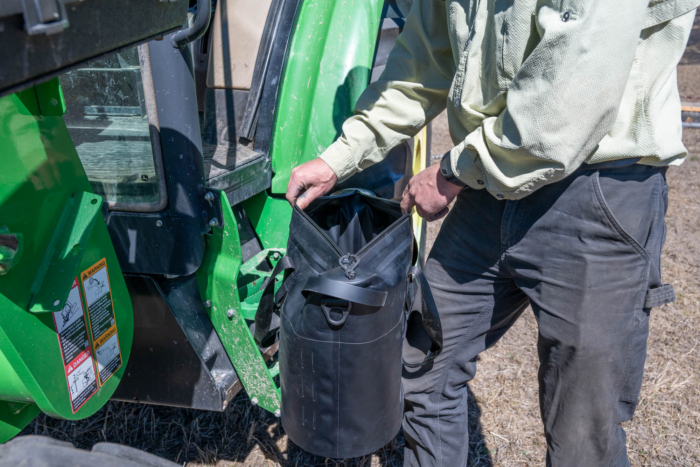
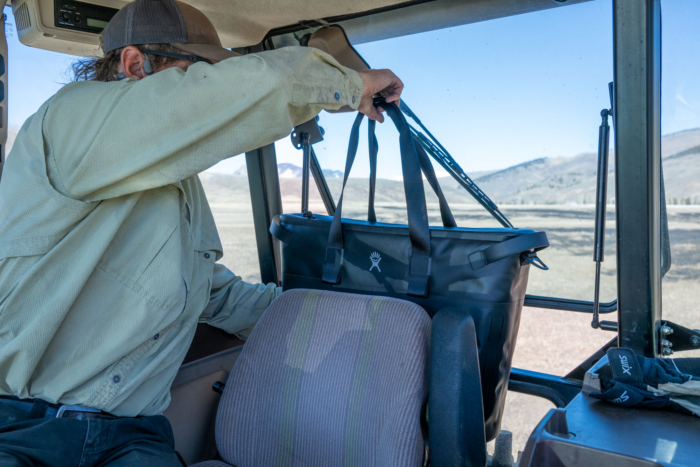
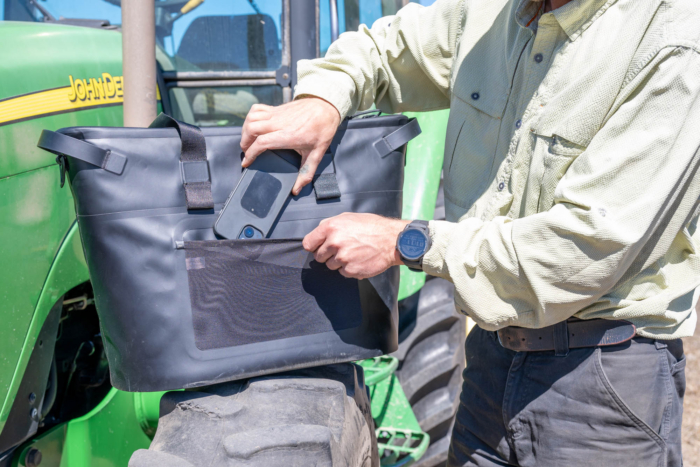
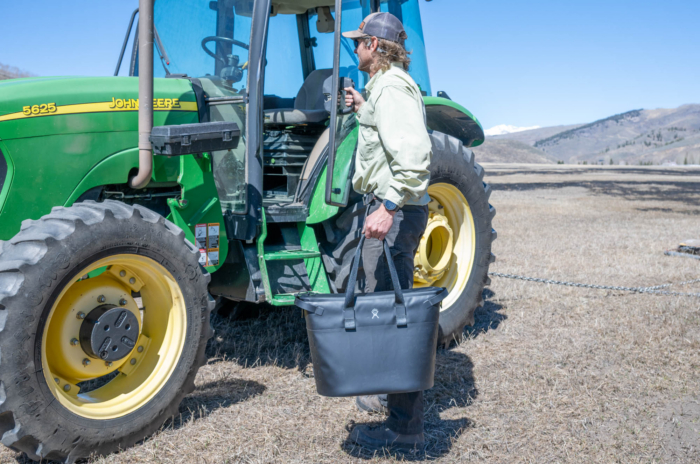
What We Like: The overall build is thin and lightweight, making it easy to carry even when fully stocked. Because of its slim profile and wide shape, this quickly became one of Mahoney’s go-to grocery coolers. It fits nicely in a cart and accommodates bulky items like gallons of milk or rectangular containers without awkward stacking. Mahoney, who manages a ranch, also found it to be a perfect fit behind a tractor seat. She also found the dual top handles and side handles especially useful for lifting the load in and out of a truck.
What We Don’t: While the streamlined design is excellent for portability, the lack of external pockets means you have nowhere to stash dry goods or small essentials like a phone or keys. Additionally, while the shell is easy to wipe clean, the soft-sided nature of the bag means it doesn’t offer the same crush protection for delicate food items as a more rigid hybrid or hard-sided cooler.
Should You Buy It? If you are looking for a leakproof, lightweight cooler that excels at grocery runs, day trips, and everyday commutes, the Day Escape is a top contender. It is particularly well-suited for someone who values a smooth-operating zipper and a shape that tucks away easily in tight spaces. For those who need a reliable, waterproof hauler that is easy to clean after a day in the field, this Hydro Flask delivers.
-
-
(Photo/Conni Mahoney)
-
(Photo/Conni Mahoney)
-
(Photo/Conni Mahoney)
-
(Photo/Conni Mahoney)
-
(Photo/Conni Mahoney)
-
(Photo/Conni Mahoney)
Specifications
Pros & Cons
Pros
- Compact fit for road trips
- Multiple carry options
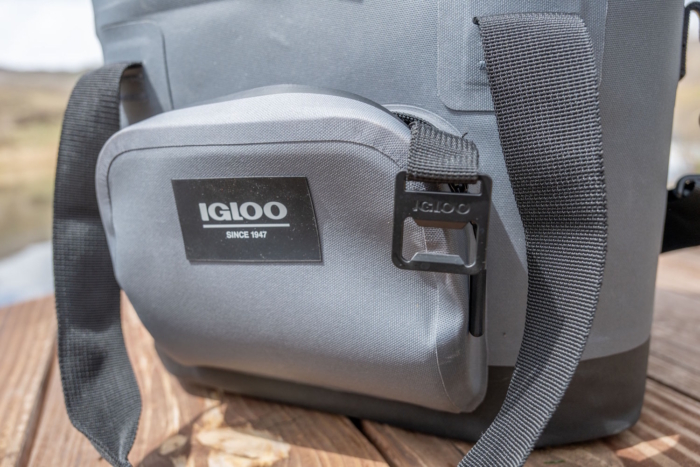
- Includes bottle opener
Cons
- Can leak if tipped over
Bottom Line: Hits the sweet spot for those who don’t want to drop $200 on a soft cooler. While it isn’t 100% leakproof when it tips, its blend of smart storage, solid insulation, and no-lube-needed zips makes it a practical daily driver.
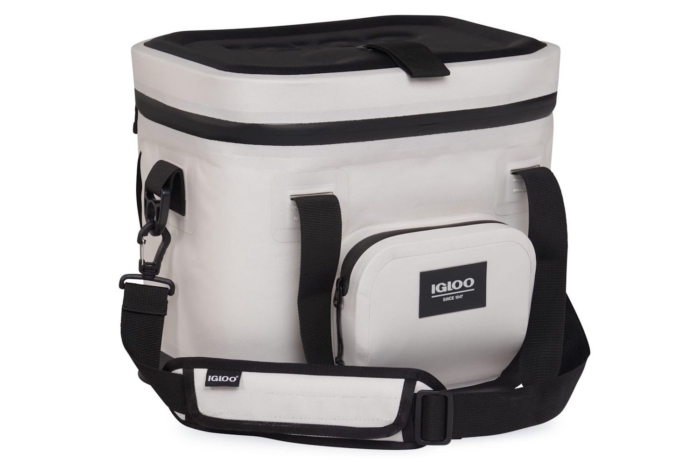
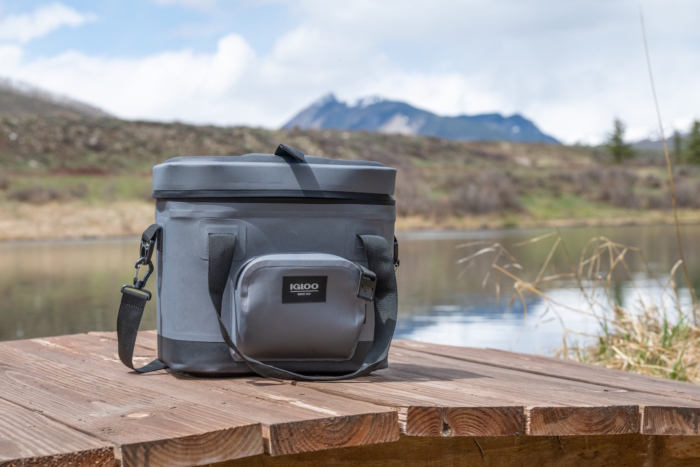
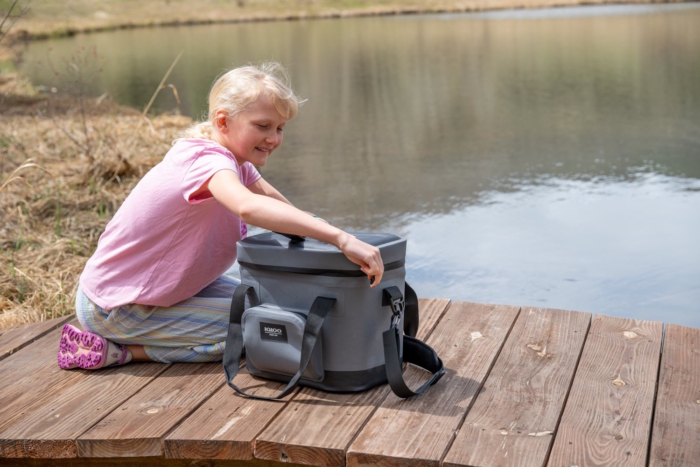
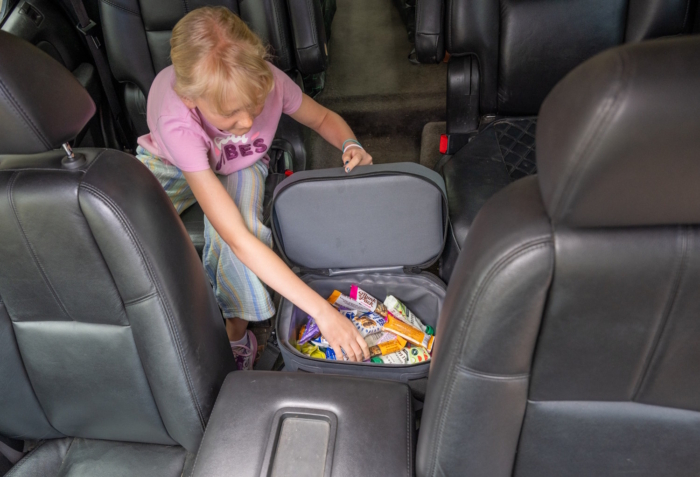
The Igloo Trailmate 18-Can Cooler Bag ($70) became our favorite snack-and-drink companion for road trips thanks to its compact size, efficient insulation, and travel-friendly design. With room for up to 18 cans, our snacks and drinks for a family of three were cold for a full day on the road. While it doesn’t match the ice retention of the similarly designed YETI Hopper Flip 12 Soft Cooler, the Igloo Trailmate was our top pick for riding up front. It is the right size to keep snacks and drinks within easy reach at a fraction of the price.
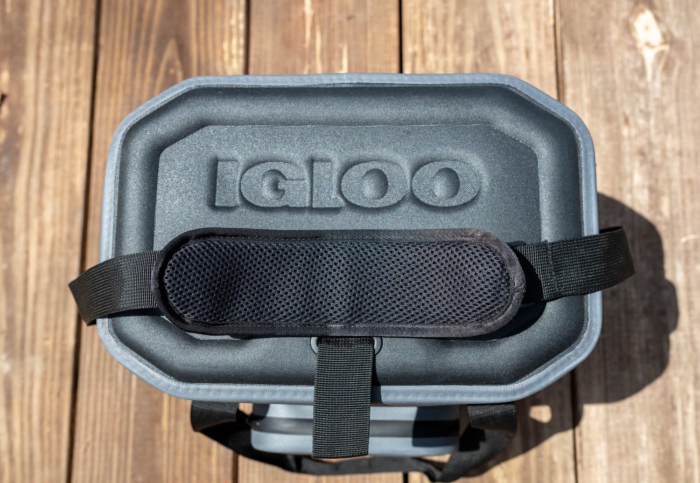
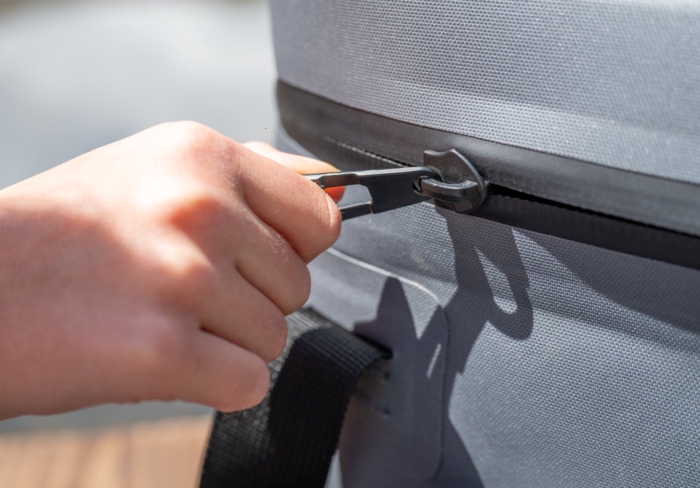
The Tech: This cooler utilizes MaxCold Ultra insulation with 20mm HDPE foam to maintain temperatures throughout the day. Its structured EVA top and bottom provide superb stability and shape, whether fully packed or half empty. Outdoor expert Constance Mahoney found the 600D-coated polyester exterior durable despite tossing it in and out of the car during a long desert road trip. Additionally, while zippers can be tricky, these water-resistant zippers with corded pulls were smooth and easy to use.
What We Like: The low profile and boxy shape make it easy to stack on and around when not using it up front for snacks. When placed up front in the car, the wide zippered lid with a pull tab makes it easy to pack and access food and drinks from nearby seats. Dual top handles and a removable padded shoulder strap were nice touches that offered varied carrying options. We also appreciated the built-in bottle opener hidden in the front pocket and the front zip pocket with space for napkins, utensils, or a phone.
What We Don’t: Because this is a pro-grade day-tripper rather than a deep-freeze vault, it lacks the multi-day ice retention required for extended camping trips. The water-resistant zippers, while easy to glide, do not provide a 100% submersible seal. Be careful not to tip it over if it is filled with loose ice melt. We also noticed that while the shoulder strap padding is helpful, it can slip slightly during longer walks when the bag is loaded to its full 18-can capacity.
Should You Buy It? If you are looking for a highly functional and durable road trip companion that fits perfectly in a passenger footwell or trunk, this is an excellent value. It is the ideal choice for those who want an easy-to-organize cooler without paying a premium price. For everyday errands and weekend excursions, the Trailmate offers all the utility most users will ever need.
Specifications
Pros & Cons
Pros
- Compressable when not in use
- Waterproof
- Lifetime warranty
- Compatible with RUX gear system
Cons
- Dark colors absorb heat
- No exterior pockets
Bottom Line: A modular, high-performance cooler built for the system-oriented adventurer. It trades traditional carry features for rugged versatility and a unique collapsible design that integrates perfectly into a larger gear kit.
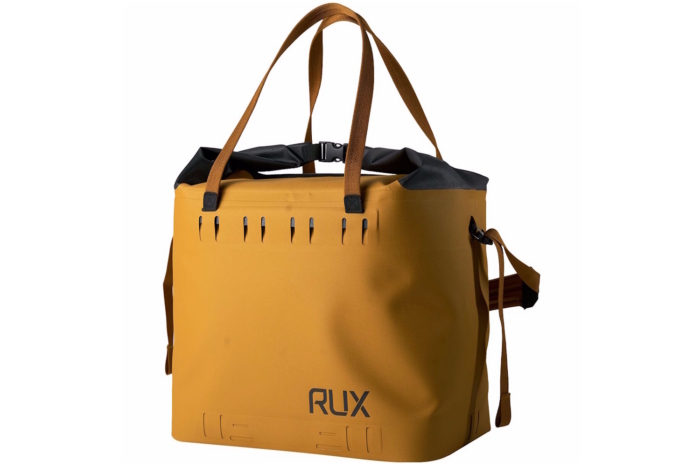
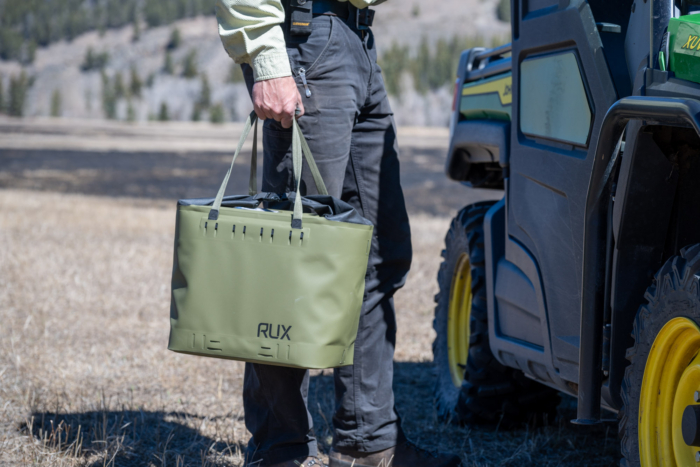
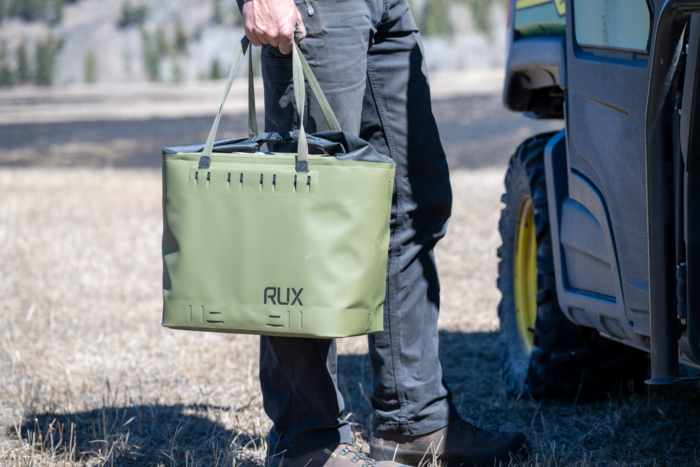
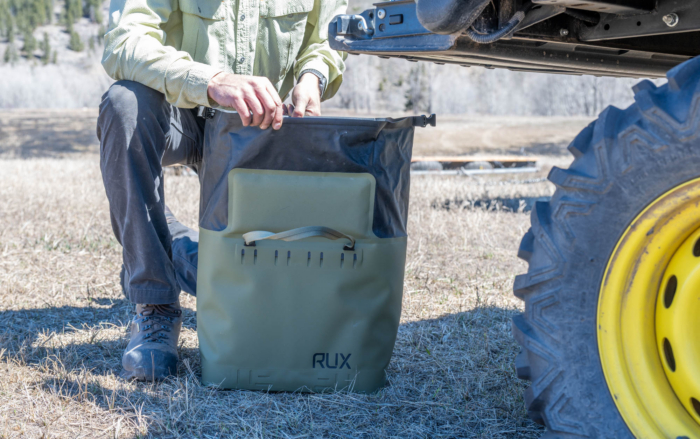
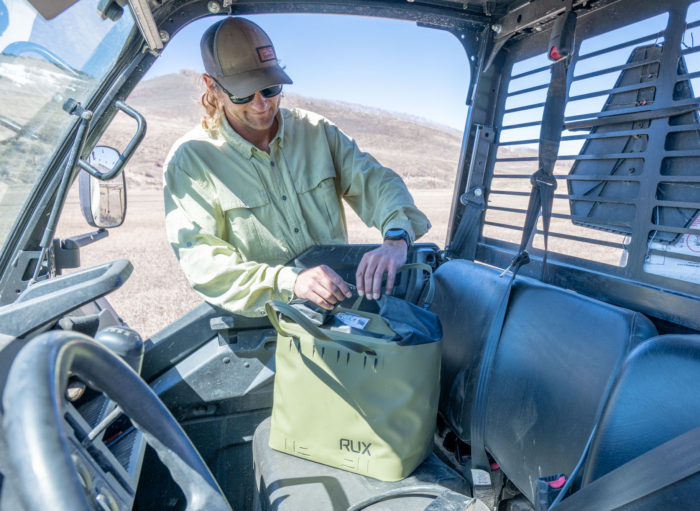
The Rux Soft Cooler ($200) leans more into the gear system category than your typical soft-sided hauler. Designed to integrate seamlessly with the RUX 70L gear box, it is a specialized option for everything from long road trips and basecamp setups to serving as a rugged lunch box. Much like the REI Co-op Campwell 18L, this cooler can be folded flat when not in use, making it easy to tuck out of the way once the day is done.
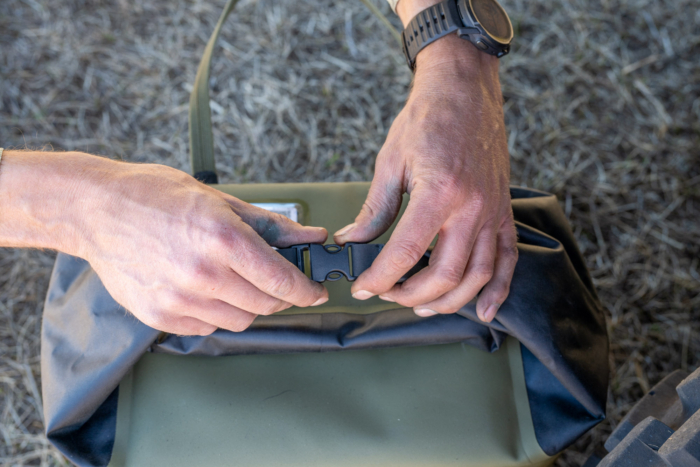
The Tech: In our testing, ice retention was highly impressive. This unit held ice for up to 4 days, putting it on par with elite options like the YETI Hopper M30 2.0. Credit: the roll-top closure system, which we found made loading and unloading much more straightforward than traditional zippers or magnetic seals. The exterior is exceptionally tough and features lash points on every side for securing the load in a truck bed, raft, or trailer.
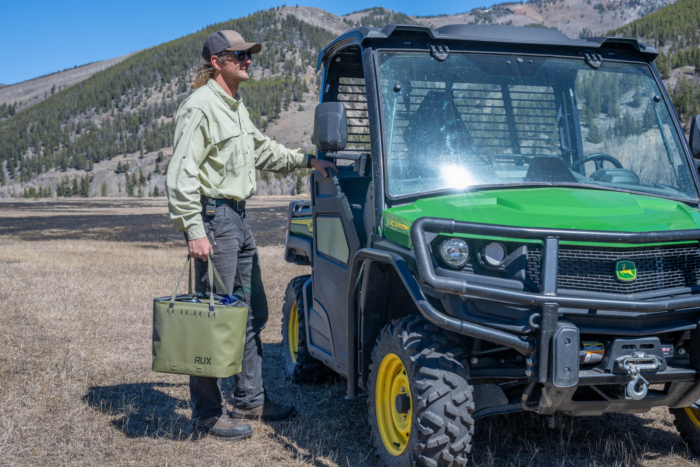
What We Like: The roll-top design is a major win for utility. Field tester Constance Mahoney works on a ranch and was able to quickly access the interior even while wearing heavy work gloves. We also value the system-based versatility. For those who prioritize organization, the cooler functions like a nesting doll. You can fit four 5L Cooler Cubes inside this soft cooler, which then fits neatly into the larger RUX Gear Bag. The wide, flat bottom ensures it stays stable on uneven ground. And the lifetime warranty provides peace of mind for long-term use.
What We Don’t: The roll-top design is not for everyone. It can feel like you are reaching through extra fabric to get to your items, and the lack of a rigid lid makes it easier to overpack, which can compromise the seal. While the nesting capabilities are a highlight, the cooler is clearly at its best when used within the Rux ecosystem. As a standalone unit, some users might find the lack of traditional pockets or a shoulder strap limiting compared to more conventional totes.
Should You Buy It? If you already own the RUX 70L or plan to build a modular gear system for overlanding and camping, this is a pro-grade addition. It offers top-tier ice retention and a ruggedness that few other soft coolers can match. For the user who wants an adaptable, collapsible cold-storage unit that can be lashed down anywhere, the Rux is a versatile and durable investment.
Specifications
Pros & Cons
Pros
- Large opening
- Multiple carry options
- Fun color options
Cons
- Can leak if tipped over
- Pocket is tight with no keyring or bottle opener
Bottom Line: A path-of-least-resistance cooler, this is an elite choice for the weekend warrior who wants a stylish, high-capacity hauler for the beach or for driving home from the store. Although it lacks waterproof seals, the zipper moves more easily.
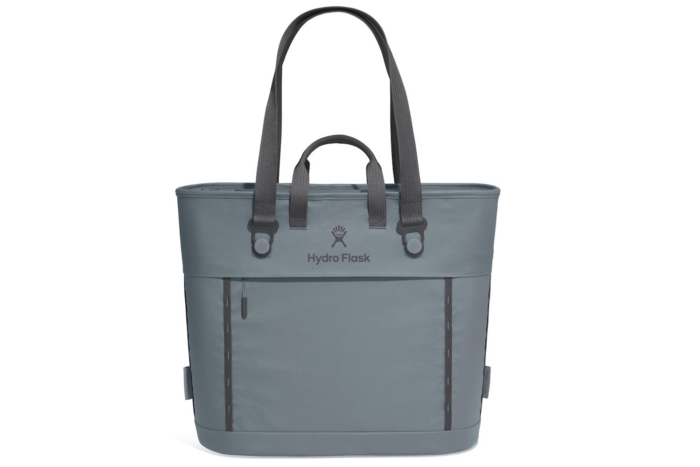
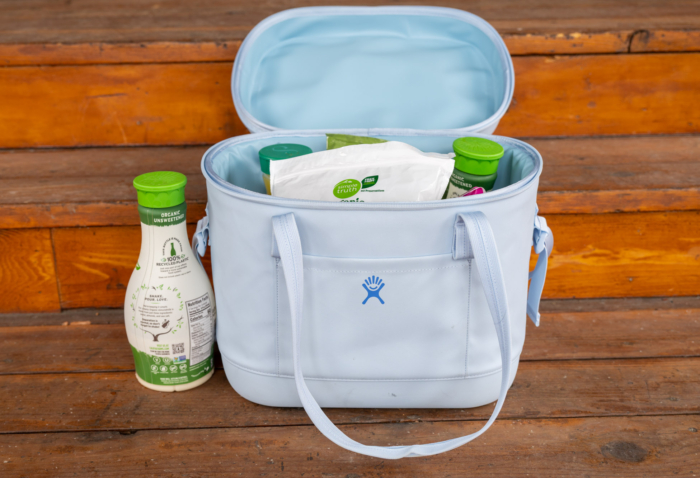
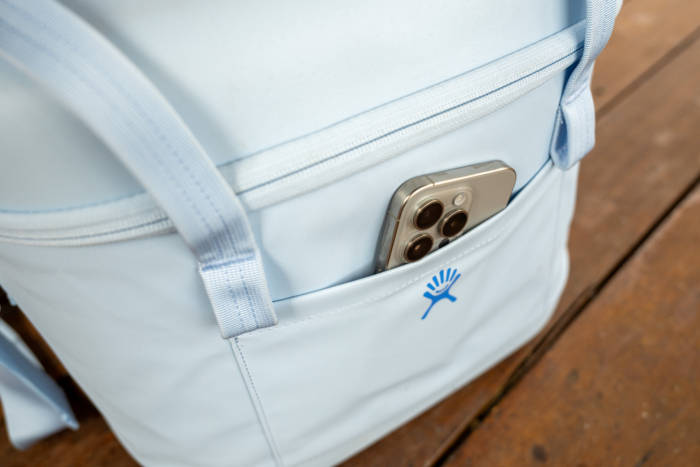
The Hydro Flask 20L Carry Out Soft Cooler ($100) is a lightweight, everyday cooler that shines in short-term use. We found it perfect for grocery runs, day trips, or keeping in the back of a vehicle for errands and impromptu adventures. If you are looking for something compact, lightweight, and easy to grab, it is a great choice — just don’t expect it to replace a heavy-duty hauler.
The Tech: While it is not designed to keep items frozen for a week, it reliably holds a chill for over 24 hours in real-world use and nearly 3 days in our ice-retention test. The shell is made from 100% recycled polyester with a durable 600D water-resistant coating, offering solid protection against everyday wear and light moisture. The compression-molded lid and base add much-needed structure. According to lead tester and angler Constance Mahoney, the cooler stays upright whether in a trunk or on uneven rocks by the river.
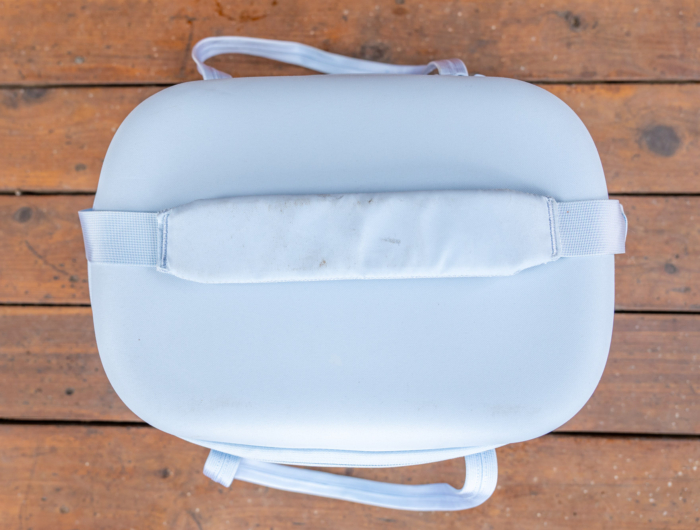
What We Like: With a 38-can capacity and a wide top opening, the Carry Out is incredibly easy to pack and can accommodate bulky items like Tupperware or large juice jugs. Mahoney especially appreciated the stable, flat base that prevented tipping during grocery runs in rural Colorado. The inclusion of a removable cross-body strap makes carrying heavier loads much more convenient, and the external webbing loops allow you to attach accessories for added versatility in the field.
What We Don’t: One thing to note is that while the lighter color options look great out of the box, they tend to show dirt and scuffs quickly after being tossed in a car trunk or used outdoors. Additionally, the exterior stash pocket is quite tight and lacks a secure key ring or interior organization — features that make the YETI Daytrip 14L Tote a more convenient option for those who need to keep small essentials separate from the main cold compartment.
Should You Buy It? For the user who needs a reliable, straightforward soft cooler for all-day adventures or errands, the Carry Out is a high-value pick. It is a pro-grade grocery and day-trip companion that prioritizes ease of access and a lightweight build. While bumpier 4×4 roads might require extra strapping to keep it secure, it remains one of the most user-friendly grab-and-go options for active daily use.
-
-
-
Senior Editor Morgan Tilton testing soft coolers; (photo/Eric Phillips)
-

Specifications
Pros & Cons
Pros
- Super adaptable cooler
- Interior sleeve for ice pack or food item
- Fits on bike handlebars super well
- Cross-body tote is comfortable
Cons
- Not quite large enough for a picnic for two with bevies
Bottom Line: This adventure musette is a specialized tool for cyclists, hikers, or commuters who want to bring a cold celebratory beverage or a fresh lunch. Its ability to transition from a handlebar bag to a shoulder tote makes it one of the most clever pieces of hydration gear.
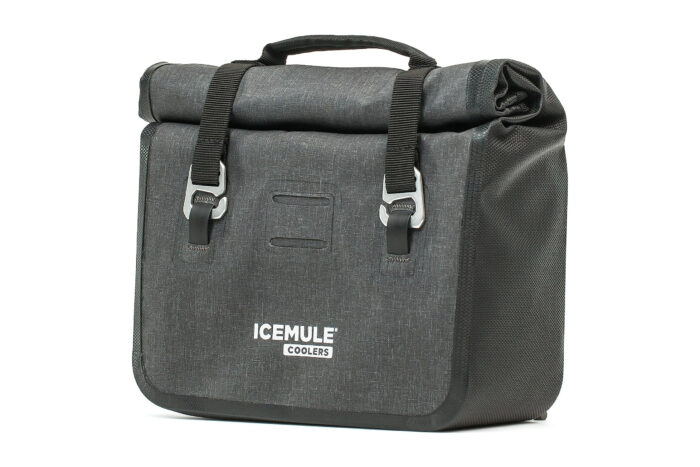
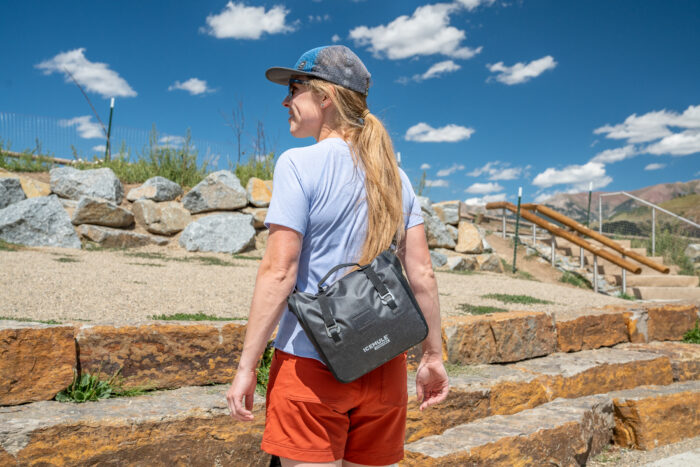
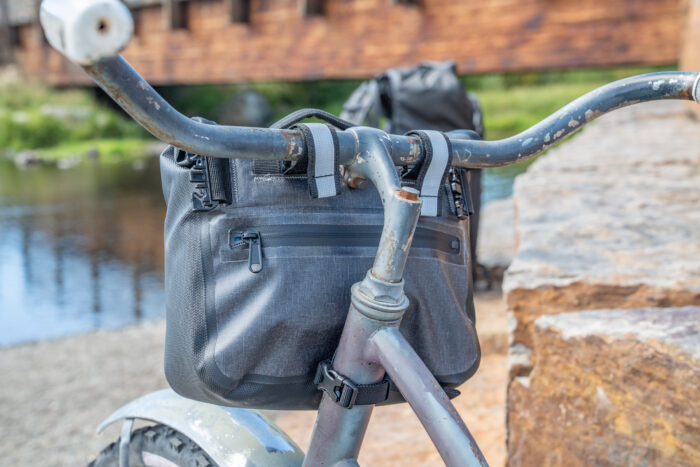
This soft cooler is a triple-whammy design. Dubbed the ICEMULE Impulse ($100), this lunch cooler adapts with simple straps to become a hand-carry, cross-body tote, or a bike handlebar bag. Inspired by the musette bags that became common in the U.S. following mega race events like the Tour de France, this design is a major step up. It is waterproof in any weather or in puddles and — of course — insulated to keep your grub or drinks cold.
The Tech: This bag really does feel built with tenacity, much like any pro-grade bikepacking bag. Senior Editor Morgan Tilton was pleasantly surprised by how durable, soft, and dense the material feels, especially for such a small pail. Inside, there is a sleeve that works great for a slender ice pack to maintain temperatures. It is waterproof enough to handle any environment, and the two straps that attach the soft cooler to bike handlebars feature reflective material for added safety.
What We Like: We love that we can cruise to a riverside park with the weight on our bike, easily pull off our lunch bag, transition the tote to a cross-body bag, and hike around to find a picnic spot. For the crossbody tote, the strap is thick and features a central buckle for easy detachment. On the backside of the exterior, there is a small pocket with a zip closure that is big enough for a spork, ID, or the removable shoulder strap itself. The Impulse is a cool triple-bargain and a well-executed design.
What We Don’t: To use the crossbody feature on the go, you have to carry the removable shoulder strap. While it isn’t too cumbersome, it is one more thing to keep track of. Because it is a small, specialized pail, it lacks the volume for group supplies and is strictly for solo meals or a few cans. Additionally, while the material is dense and soft, the small exterior pocket is only large enough for lightweight items and won’t comfortably fit a bulky set of keys or a larger smartphone.
Should You Buy It? If you are a cyclist, commuter, or hiker who wants a versatile, waterproof lunch hauler that transitions seamlessly between activities, this is a fantastic investment. It offers multi-sport adaptability that most standard soft coolers can’t match. For anyone looking for a durable, compact, and clever way to carry a meal on or off a bike, the Impulse delivers high-performance utility.
Specifications
Pros & Cons
Pros
- Large capacity
- Supple and easy to carry
Cons
- The lid’s zipper is not waterproof
- A bit overpriced for the low ice retention but worth the cost for collapsibility
Bottom Line: Won’t win an ice-melt contest against a rotomolded box, but it is the king of capacity. It avoids the heavy-duty weight and stiff zippers of its competitors in favor of a massive, accessible interior and a foldable footprint.
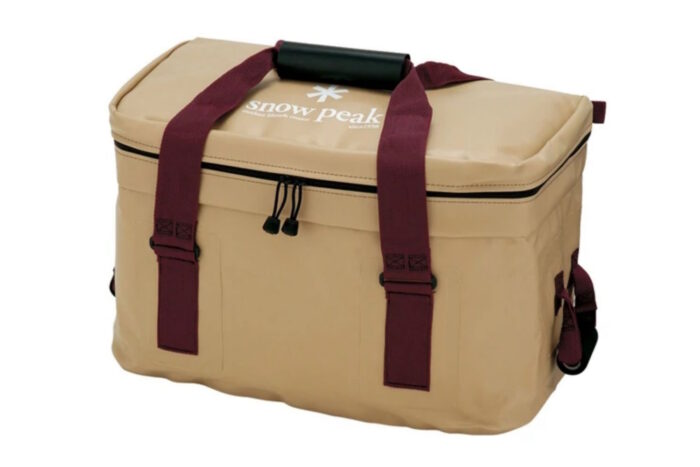
Our favorite larger soft cooler was the Snow Peak Soft Cooler 38 ($130). Even given its large size, it was still very comfortable to transport due to the soft, malleable walls. If you want a versatile cooler with a bit more volume than a traditional soft-sided hauler, look no further. This Snow Peak did well on a weekend road trip to climb in Colorado’s Sangre de Cristo Mountains and camp out, according to Senior Editor Morgan Tilton.
The Tech: The insulated walls have a unique interior aluminum coat that helps trap cold air, making the ice retention adequate for single- and two-day adventures. In our ice-retention test, the cooler was capable of holding ice for nearly 2.5 days. The exterior is made of a synthetic plastic and nylon blend. While it is suitable for basecamp, it is not resilient enough for a rugged whitewater trip where it might face heavy abrasion.
What We Like: With the simple, wide handles Velcroed together, we could comfortably sling the cooler over our shoulders even when it was fully loaded. A hard cooler this size would require two hands to move, but the flexible walls here allowed us to flatten and fold the unit for easy storage, saving us space in a tight apartment. There is also ample space inside to carry multiple meals for several people.
What We Don’t: The soft-sided nature of this cooler means it will not retain ice for longer durations compared to more heavily insulated, rigid models. We also found that the exterior material can be susceptible to scuffs and dirt if placed on rougher terrain. While the handles are strong, the bag can feel a bit unwieldy if it is unevenly packed, as the walls do not provide much internal structure to keep contents from shifting.
Should You Buy It? For those who need a high-capacity, space-saving tote for weekend camping or group picnics, this is a top-tier choice. It is a good option for basecamp that prioritizes easy storage and comfortable carrying over long-term ice retention or a rigid structure. If you have limited space in your home but need plenty of ice-box room for your adventures, the Snow Peak 38 is an excellent investment.

Soft Cooler Comparison Chart
Scroll right to view all of the columns: Price, Capacity, Weight, Ice Retention Test.
| Soft Cooler | Price | Capacity | Weight | Ice Retention Test |
|---|---|---|---|---|
| REI Co-op Trail Gate | $160 | 30 L | 5 lbs., 15 oz. | ~6 days |
| Titan by Arctic Zone Zipperless HardBody | $70 | 11 L | 3 lbs., 10.2 oz. | ~3 days |
| YETI Daytrip Tote | $145 | 14 L | 2 lbs., 6.8 oz. | ~2.5 days |
| YETI Hopper Flip | $250 | 12 L | 3 lbs. | ~3 days |
| REI Co-op Campwell Folding | $40 | 18 L | 1 lb., 2.2 oz. | ~2+ days |
| RTIC Ultra-Tough Soft Cooler | $99 | 12 L | 3 lbs. | ~3 days |
| YETI Hopper M30 | $350 | 30 L | 6 lbs., 12.8 oz. | ~4 days |
| Titan PRO High Performance Welded | $225 | 21.8 L | 13 lbs. | ~4.5 days |
| Hydro Flask Day Escape | $200 | 26 L | 2 lbs., 14.7 oz. | ~3.5 days |
| Igloo Trailmate | $70 | 6 L | 2 lbs., 8.1 oz. | ~2.5 days |
| Rux Soft Cooler | $200 | 25 L | 2 lbs., 7.2 oz. | ~4 days |
| Hydro Flask Carry Out | $100 | 20 L | 2 lbs., 12 oz. | ~3 days |
| ICEMULE Impulse | $100 | 4.5 L | 1 lb. | ~1.5 days |
| Snow Peak | $130 | 38 L | 3 lbs., 12.8 oz. | ~2.5 days |

How We Tested Soft Coolers
Our team has developed cooler guides year after year, objectively testing hundreds of soft, rigid, electric, and backpack coolers from whitewater raft trips to fly fishing adventures and music festivals in the mountains.
Today, nine icebox aficionados have contributed expert insights and reviews for 41 soft coolers since the guide debuted in 2022.
We continue to test soft coolers for thousands of hours year-round.
Our Expert Testers
Rancher & Ultrarunner: Outdoorswoman and lead soft coolers expert Constance Mahoney explores trails, goes fly fishing, and crews 100-mile races. She’s also a farmer. Mahoney knows when to invest in high-quality gear and when budget-friendly options will do the job. She’s scrutinized soft coolers for GearJunkie since 2019.
Machine Operator & Trail Builder: Professional athlete and gear analyst Dane Tudor is a manager for Gravity Logic, where he designs mountain bike trails and operates machinery when he’s not big mountain freeskiing. For the heavy lifting, Tudor takes along soft coolers and backpack coolers, carrying thousands of calories into the woods for 12-hour days building bike parks throughout North America.
Road Tripper & Camper: Managing tester Morgan Tilton, Senior Editor specializing in SnowSports Buyer’s Guides, coordinated five gear testers to adventure with and examine the soft coolers for this guide from ultrarunners and ski mountaineers to fly fishing and whitewater rafting guides. With that test team, she wrote the original soft coolers and backpack coolers buyer’s guides that were first published in 2022. She’s continued to manage studious testers since.
Bike Patroller & Wilderness Medicine Instructor: Gear tester Makena Gross is the assistant ski patrol director and a ski and bike patroller at Brian Head Resort, alongside teaching wilderness medicine courses. While adventuring throughout the Southwest, Gross took these coolers on a multitude of activities, ranging from day trips to the lake to go fishing and swimming to multiday road trips. Gross always tests the coolers across a range of conditions.

Our Soft Coolers Rating System
Beyond the overall rating, we rate each of these four pillars of soft cooler performance on a scale of 1-10:
1. Field Durability
Soft coolers are inherently more vulnerable than rotomolded hard chests. We evaluate the burly factor: the denier of the outer shell (like YETI’s DryHide or Arctic Zone’s Rhino-Tech), the integrity of RF-welded seams, and the quality of the hardware. The exterior should withstand tree sap from the ground and overgrown branches while hiking to the river.
2. Ice Retention
While soft coolers aren’t designed for multi-day trips, they should preserve ice or keep an ice pack cold enough for the intended use. Beyond field testing in real-world scenarios, we perform standardized ice-melt tests — typically filling the cooler two-thirds with ice in a controlled environment — to provide an objective baseline. This allows you to differentiate between a 6-hour picnic tote and a 48-hour weekend workhorse.
3. Portability & Ergonomics
The primary reason to choose a soft cooler over a hard one is the ease of transport. We rate how the cooler feels when fully loaded. We look at strap padding, weight distribution (like Backsaver technology), and the slap factor — whether a boxy cooler uncomfortably thumps against your leg while hiking. If it’s a burden to carry from the car to the campsite, it fails a key goal.
4. Ease of Access
Waterproof zippers seal off liquid but are often hard to open and close. Alternative designs, with magnets or zipper-free lids, can add convenience for one-handed use and eliminate the struggle. While both options have their merits, we field test for performance. We also consider extra conveniences, such as external stash pockets, integrated bottle openers, and internal dry-storage shelves.

Our Testing Grounds
Our crew took these soft coolers through a myriad of conditions from camping in Colorado’s Sangre de Cristo Mountains and bike trail building in British Columbia to guided fly fishing and road-tripping to ski mountaineer on volcanoes in the Pacific Northwest.
Our Testing Process & Cooler Selection
In addition to real-world testing on rivers, road trips, and sport events, we perform a controlled in-house ice retention test to verify brand claims.
- Stage 1: For the experiment, we fill each pre-cooled cooler approximately 70% with fresh, frozen cubed ice.
- Stage 2: we set them in a shaded, dry indoor space at a steady average of 65 degrees.
- Stage 3: We periodically check, making notes regarding melt rate, condensation, and leaks. Each reported time is based on when 100% of the ice was converted to water.
- Stage 4: When the ice is fully melted, the test is complete. This data provides a benchmark. (When traveling outdoors, these controlled variables disappear and the ice will likely melt faster.)
For this soft cooler guide, we continuously re-examine the most popular, innovative, highly acclaimed, and bestselling designs. We curate a selection with diverse storage and carry capacities and ice retention ability across a price spectrum.

Ice Retention: The Key to Being a Cooler
We complete our ice retention tests with controlled variables. Each soft cooler is stationed indoors at around 65 degrees, shaded, and filled with the same ratio and type of ice.
Ice Retention Test Results
- REI Co-op Trail Gate — 156 hours
- Titan PRO High Performance Welded — 120 hours
- Hydro Flask Day Escape — 95 hours
- Rux — 86 hours
- Titan by Arctic Zone Zipperless HardBody — 75 Hours
- YETI Hopper Flip — 72 hours
- RTIC 20 — 72 hours
- Hydro Flask Carry Out — 70 hours
- YETI Daytrip Tote — 60 hours
- Igloo Trailmate — 60 hours
- Snow Peak — 60 hours
- REI Co-op Campwell Folding — 57 hours
- ICEMULE Impulse — 36 hours
For a variety of conditions, the soft coolers in this guide provide enough cooling power to serve a range of recreation needs.
When you use a cooler outside, many factors influence a pack’s ice retention, including the frequency of opening the cooler, direct sunlight, and ambient temperature. For instance, one soft cooler preserved ice for 60 hours during our test but only for 18 hours during one toasty car camp trip.

How to Choose a Soft Cooler: The Right Storage Capacity
When selecting a soft cooler, consider both the volume and the structural integrity of the bag. A soft-sided hauler should be chosen based on your group size and the specific weight of your provisions.
Structure vs. Load Weight
Not all soft coolers handle heavy weight equally.
- Structured & Rigid: Designs like the RTIC 20 Can or the Titan PRO Welded feature thick, high-density foam that maintains its shape. These are the best choice for carrying dozens of heavy cans or glass bottles without the bag sagging.
- Malleable & Soft: Super soft designs, like the Snow Peak, prioritize packability and comfort. While they offer massive volume, they are better suited for lightweight food containers, snacks, and a mix of drinks rather than being loaded purely with heavy liquids.
Capacity Benchmarks
We categorize soft coolers into three primary sizes based on the length of your mission and the number of people in your party:
| Size Category | Capacity (Liters) | Best For… |
| Personal | 4L – 12L | Solo lunches, bike commutes, or a 6-pack for the trailhead. |
| Day Trip | 14L – 20L | 12–24 cans; ideal for couples or a family of three on a day hike. |
| Basecamp | 30L – 38L | 30+ cans; designed for group multiday trips and large tailgates. |
Pro Tip: The 2:1 Ratio
Remember that advertised capacity often refers to the bag when empty. For pro-grade performance, you should follow the 2:1 ratio: two parts ice for every one part food or drink. If you need to fit 12 cans and enough ice to keep them cold for 48 hours, you should look for a cooler in the 18L to 20L range rather than a compact 12L bag.

Dry Compartments & External Storage
When you’re out for a full day, you often need space for gear that shouldn’t get wet, like your phone, car keys, or dry snacks. We evaluate soft coolers based on their ability to offer these dedicated dry zones without compromising the main thermal compartment.
Types of Dry Storage
- Integrated Interior Shelves: Some pro-grade models, like the Titan PRO Welded, feature a removable interior shelf. This creates a hard-walled dry zone at the top of the cooler to prevent sandwiches and delicate fruit from being crushed by heavy cans or soaked in meltwater.
- External Stash Pockets: Look for zippered or mesh exterior pockets for items like utensils and napkins. The YETI Daytrip and Igloo Trailmate offer streamlined pockets that keep essentials within reach without having to unzip the main lid and let cold air escape.
- Modular Grid Systems: High-end haulers often feature daisy-chain webbing (MOLLE loops) on the exterior. This allows you to clip on extra pouches, bottle openers, or waterproof cases, effectively expanding your carry power.
The Liner-Gap Hack
Some hybrid designs offer a unique storage solution where the rigid interior liner can be partially separated from the exterior shell. This allows you to slide flat items — like a thin cutting board or extra bags — between the insulation and the outer fabric. This is a great way to utilize every inch of space, provided the items don’t interfere with the cooler’s ability to seal properly.
What to Watch For
While extra pockets are convenient, be wary of non-zippered mesh pockets if you’re heading into dusty or muddy environments, as they can quickly collect grit. For those planning river trips or rainy hikes, prioritize water-resistant zippers on all external dry compartments to ensure your tech stays protected.

External Pockets & Organization
When you are deep in the field or navigating a crowded campsite, organization is key. Beyond the main cold-storage area, we look for soft coolers that offer dedicated space for small essentials like phones, keys, multi-tools, and utensils.
Zippered Security Pockets
If you are using your cooler as a primary hauler for a beach day or a hike, a zippered exterior pocket is essential.
- Performance: Models like the RTIC 20 Can feature water-resistant zippered pockets that provide a safe haven for electronics and wallets.
- Lead Tester Morgan Tilton’s Pro Tip: While these pockets protect from splashes, they are rarely fully submersible. Always double-check the zipper type before storing sensitive tech in wet conditions.
Mesh vs. Envelope Pockets
- Mesh Sleeves: Found on coolers like the Titan by Arctic Zone Zipperless HardBody, these are perfect for high-frequency items like chapstick, sunscreen, or trash. The visibility of mesh makes it easy to see exactly what you’ve stashed.
- Envelope Pockets: These flat, open-top sleeves are great for slim items like trail maps or a cutting board. They keep the cooler’s profile sleek but offer less security if the bag tips over in a vehicle.
Specialized Storage
Some pro-grade designs include niche storage options that solve specific problems:
- Interior Mesh Organizers: These keep small items from getting lost in the ice slurry at the bottom of the bag.
- Kangaroo Pockets: A wide, flat slide-in pocket — found on the YETI Hopper M30 2.0 — is ideal for quickly tucking away a phone or a pair of gloves while you’re on the move.

Lash Points, Accessory Grids & Versatility
A high-performance soft cooler should do more than just sit in a trunk. It should be capable of being lashed to a raft, secured to a motorcycle, or integrated into a larger gear kit. We evaluate attachment points based on their durability and their ability to handle real-world tension.
The HitchPoint Grid & Daisy Chains
You will often see coolers featuring a HitchPoint Grid (a YETI signature) or daisy chain loops (common on the Hydro Flask Carry Out).
- Utility: These heavy-duty webbing loops allow you to clip on carabiners, keys, or specialized accessories like waterproof tool pouches and dry bags.
- Stability: Beyond just hanging gear, these grids are vital for security. They provide a structural point to run cam straps through when securing your cooler to a standup paddleboard (SUP), the floor of a raft, or an ATV rack.
Bungees & Tension Straps
For items that are too bulky for a pocket — like a rain shell or a light towel — bungee cord systems are a major plus. Models like the Titan by Arctic Zone utilize these on the lid to keep extra layers accessible and dry. If you are a cyclist, the ICEMULE Impulse stands out for its specialized, reflective Velcro straps designed specifically to lock onto bike handlebars.
Integrated Tools
In the field, the best gear is the gear that serves two purposes. We look for:
- Built-in Bottle Openers: Found on the Igloo Trailmate, these ensure you’re never stranded without a way to open a cold one.
- Reflective Detailing: Crucial for visibility during low-light commutes or finding your basecamp after dark.
The Tie-Down
It is worth noting that many consumer-grade soft coolers lack reinforced tie-down points. If your adventures involve river running, motorcycle touring, or 4×4 trails, prioritize a cooler with a welded or reinforced webbing system. Without these dedicated points, a cooler can become a projectile in a vehicle or a lost asset in a river flip.

Straps & Carry Systems
Since soft coolers are designed for mobility, the quality of the handles and straps is just as important as the insulation. A poorly designed strap can turn a 20-pound load into a literal pain in the neck. We look for ergonomic designs and reinforced attachment points that can handle the stress of a fully loaded bag.
Types of Carry Systems
- Dual Swing-Up Straps: Common on tote-style coolers, these are designed to be gripped in one hand or slung over a single shoulder. In our testing, we particularly liked the wide, soft material of the straps on the Snow Peak Soft Cooler, which stayed comfortable even when the 10-gallon bag was at capacity.
- Removable Shoulder Straps: For longer treks from the car to the beach, a crossbody shoulder strap is essential for weight distribution. Look for high-density foam padding and no-slip textures that prevent the strap from sliding off your shoulder while you walk.
- Grab Handles: Often located on the ends or the top, these are for quick maneuvers like pulling a cooler out of a truck bed or a tractor seat. On beefier models like the Hydro Flask Day Escape, these handles are reinforced with extra stitching to ensure they won’t tear under tension.
The Importance of Padding
For coolers with a 20L capacity or higher, padding isn’t just a luxury it’s a requirement. A fully loaded 36-can cooler can weigh upwards of 40 pounds.
- Shoulder Pads: Look for contoured pads that distribute the bite of the strap across a larger surface area.
- Handle Wraps: Neoprene or padded Velcro wraps that bind dual handles together make it much easier to carry a heavy load in one hand without the straps digging into your palm.
Hardware & Durability
We pay close attention to the clips and buckles. Pro-grade coolers often use metal hardware or heavy-duty Duraflex clips rather than thin plastic. If you plan on lashing your cooler to a moving vehicle or a raft, ensure the strap mounts are welded or box-stitched into the cooler body for maximum security.

Soft Cooler Weight
The weights of soft coolers are typically reflected by their size and capacity. The smallest design in our guide is the which weighs less than a pound.
At 13 pounds, the Titan PRO 36 Can High Performance Welded Cooler is the heaviest option in the category, serving up 4.5-day ice retention and 23 liters of space.
Even the heaviest soft cooler in our guide is lighter than a hard cooler.
Understanding Soft Cooler Weight
Weight is the primary trade-off in soft cooler design. Generally, a lighter bag is easier to carry but offers less ice retention, while a heavier hybrid soft cooler mimics the performance of a hard-sided chest.
The Spectrum: Lightweight vs. High-Performance
The weights of soft coolers are typically reflected by their size, capacity, and the density of their insulation.
- Ultralight Tier: The smallest designs, like the ICEMULE Impulse, weigh less than a pound. These are optimized for mobility and active use where every ounce matters — such as bikepacking or hiking.
- High-Performance Tier: At 13 pounds, the Titan PRO 36 Can High Performance Welded Cooler is the heaviest option in our guide. This weight comes from its pro-grade construction, including a rigid internal liner and heavy-duty welded exterior, which allows for a massive 4.5-day ice retention.
Soft vs. Hard Cooler Weights
Even the heaviest soft cooler is significantly more portable than its rotomolded, hard-sided counterparts. For context, a standard 45-quart hard cooler typically weighs between 23 and 37 pounds when empty. By choosing a high-capacity soft cooler instead, you can save nearly 20 pounds of dead weight before you even add your first bag of ice.
For comparison, the YETI Tundra 45 Cooler weighs 23 pounds, and the RovR Products RollR 45 weighs more than 37 pounds.
Load-In Reality
When selecting a cooler, remember to factor in the weight of your cargo. A gallon of water weighs approximately 8 pounds, and a 12-pack of cans adds another 9 pounds.
- Short Hauls: If you’re just walking from the car to a picnic table, a heavier, high-performance soft cooler is worth the extra thermal protection.
- Long Treks: If you are hiking a mile to a hidden beach, prioritize a lightweight tote under 4 pounds to ensure the total load remains manageable once the ice and drinks are added. Or, check out a backpack cooler for an easier haul.

Choosing a Shape: Totes, Boxes, & Sleek Profiles
The geometry of a soft cooler dictates more than just how much it holds; it defines how the bag carries against your body and how it fits into your vehicle. Choosing the right form factor is a balance between accessibility and spatial efficiency.
Totes & Slender Profiles
Tote-style coolers are generally long, thin, and streamlined.
- The Carry: These are the most comfortable to carry over a single shoulder because they stay close to your center of gravity and don’t bump against your hip as much as wider bags.
- The Trade-Off: Taller, slender coolers can make it difficult to find items buried at the bottom. To avoid digging through ice, we recommend a vertical packing strategy — placing your drinks at the base and your delicate snacks at the top.
Boxy & Wide-Mouth Designs
Wider, bucket-style coolers provide the best visibility.
- The Access: A wide top opening allows you to see your entire inventory at once, making it much easier to grab a specific drink without letting all the cold air escape.
- The Carry: These can feel more cumbersome when slung over a shoulder. Look for designs with a broad, flat back panel; This helps the cooler hug your side and reduces the annoying bounce-and-swing effect during a walk.
Rigidity & Packability
The shape also determines how well a cooler plays with your other gear.
- Structured Boxes: If a cooler has rigid walls and a flat base — like the Igloo Trailmate — it can serve as a stable platform or be stacked under other gear without collapsing.
- Sleek & Malleable: Slimmer, softer coolers are the storage chameleons of the group. They are much more likely to slip into the narrow gap behind a truck seat or tuck into a tight corner on a boat or raft where space is at a premium.
Lead Tester Morgan Tilton’s Pro Tip: Test the Tip Factor
Before you buy, consider the base. A cooler with a narrow base and a tall height is prone to tipping over in a car trunk or on a moving boat. For off-road adventures, truck beds, or marine use, prioritize a wide-base design to help ensure your ice and lunch stay upright.

Technical Materials & Construction
A soft cooler is only as good as the sum of its parts. From the denier (D) of the face fabric to the type of insulation used, materials dictate everything from ice retention to long-term durability. We evaluate these components to determine if a cooler is built for a casual picnic or a pro-grade expedition.
Exterior Shells & Durability
The face fabric is your first line of defense against abrasion, UV rays, and moisture.
- Heavy-Duty TPU & Welded Seams: High-end coolers often use a Thermoplastic Polyurethane (TPU) coating on high-denier nylon. When paired with RF-welded seams (instead of traditional stitching), the bag becomes a single, waterproof unit that won’t leak or soak up external water.
- Recycled Polyesters: For the eco-conscious adventurer, many modern designs now use 100% recycled 600D polyester. While these are durable and water-resistant, they may not offer the same bombproof puncture resistance as TPU-coated shells.
Closures: Zippers vs. Magnets vs. Zipperless
The top closure is the primary fail point for cold air and leaks.
- Waterproof Zippers: Submersible zippers (like those on the Hydro Flask Day Escape) create a vacuum-tight seal. These are essential if your cooler might flip in a raft or boat, but they do require more pull to operate.
- Magnetic Seams: Pioneers like YETI utilize powerful magnets to ensure a quick, automatic seal. This is the most user-friendly option for high-frequency access but requires a specific fold to remain 100% leakproof.
- Zipperless Flip-Tops: Designs like the Titan by Arctic Zone 30 Can Zipperless HardBody Cooler use a structural lid that drops into place. These are the fastest to access and can’t jam, though they should generally be kept upright to avoid spills.
Insulation & Thermal Performance
Most soft coolers utilize closed-cell foam, which is much denser and more efficient than the open-cell foam found in cheap grocery bags. This density prevents the insulation from absorbing water and helps the cooler maintain its shape while trapping cold air for days rather than hours.
Condensation & Sweating
Lower-quality materials often lead to condensation on the exterior, which can dampen your car seats or clothing. We prioritize coolers with non-permeable liners and high-quality face fabrics that prevent this sweating, ensuring your gear stays dry on the outside while staying ice-cold on the inside.

The Foundation: Why the Base Matters
The base of a soft cooler is often the most overlooked component, yet it plays a critical role in both structural integrity and thermal performance. Because the bottom of your bag is the primary contact point with external heat sources, its construction can make or break your ice retention.
Structural Support & Stability
A strong, reinforced base prevents cooler walls from collapsing under a heavy load. Flimsy bottoms often result in the walls caving in, which creates air gaps and accelerates ice melt.
- Molded Bases: High-performance models like the RTIC 20 Can and YETI Hopper Flip utilize compression-molded or thick, high-density foam bases. This box-shaped foundation provides superior stability, ensuring the cooler stays upright in a truck bed or on a rocking boat.
- Welded Bases: On tote-style coolers, a wide, welded base is essential. This construction method prevents leakage from internal meltwater and ensures that the cold insulation remains trapped, even when the bag is under pressure from a full 30-can load.
Thermal Barriers and Ground Insulation
Heat transfer from the ground — known as conduction — is a major cause of ice loss. When your cooler is sitting on a hot truck bed, a sun-baked dock, or a scorching boat deck, the base is your only line of defense.
- The Insulation Gap: Cheaper bags often have thinner insulation on the bottom to save on weight, but pro-grade coolers maintain a consistent thickness throughout. A thicker base acts as a thermal barrier, protecting your ice from the radiant heat of the surface it’s resting on.
- Durability: Beyond insulation, the base needs to be bombproof. We prioritize coolers with reinforced, abrasion-resistant materials on the bottom to withstand being dragged across gravel, sand, or rough pavement without compromising the waterproof seal.
Lead Tester Morgan Tilton’s Pro Tip: Heat-Protecting the Surface
Even the best-insulated base can struggle against a toasty truck bed. If you’re heading out on a long trip, try to place a piece of cardboard or a moving blanket beneath the cooler. This simple layer of secondary insulation works in tandem with the cooler’s base to significantly extend your ice life in extreme conditions.

How to Properly Pack a Soft Cooler
- The best way to pack a soft cooler is to pre-chill it. This simple step can make a significant difference in keeping your food and drinks cold. You can pre-chill the cooler by placing ice packs or crushed ice inside for a few hours to maintain a low temperature.
- After a pre-chill, begin with a layer of ice at the bottom, followed by your food and drinks. Pack these tightly to minimize air space, which helps keep everything cold. Overall, you want a ⅔ to ⅓ ice to food/drink ratio.
- Place heavier items at the bottom and lighter ones on top, grouping similar items for easy access. This will not only keep your cooler organized but also make it easier to find what you need. Utilize any external or internal pockets for small items like utensils, keeping them separate from the main contents.
- Once packed, ensure the cooler is closed up completely to minimize air exposure and prevent temperature loss. Fill any extra space with contents, because air speeds up the ice melt. If needed, you could pack crumpled paper or small towels to take up air space. Try to avoid frequent openings — as each time you do, cold air escapes, raising the temperature inside.
- Ideally, when you arrive at your destination, place the cooler in the shade on a cool surface. This will help maintain its temperature and prevent the acceleration of ice melt.

How to Care for Your Soft Cooler
Some soft coolers have materials that are mildew-resistant and antimicrobial like the interior liner of the RTIC Soft Pack. YETI also treats the interior and exterior of its Hopper Flip soft coolers to be mildew-resistant, which helps with keeping your tote sanitary while extending the life of the product.
Between Use: Clean the interior of a soft cooler with a sponge, lukewarm water, and standard dish soap. You can wipe down the exterior and zipper, too — don’t miss the feet and bottom, which touch ground surfaces.
Before Storage: Let the interior completely air dry or use a towel to wipe down before zipping shut for storage.
Zipper Upkeep: The most airtight, temperature-regulated, and waterproof soft coolers boast burly zippers that take hand grease to open and close. A handful of brands even send you home with zipper lubricant, like RTIC and YETI. For instance, YETI advises applying the lubricant to the front and back of the zipper including the teeth and seal. RTIC says to add a couple of drops, and then open and close the zipper a few times. The moisturizer can be applied every 6 months to help protect the zipper teeth — around the time you head in for an oil change. Easy.

Price & Value
The price of a soft cooler is reflected by the volume, weight, carry design, durability, quality of materials, accessories, dry storage, and ice retention.
Checking the tags, the soft coolers in our guide range from the REI Co-op Campwell Folding ($40), which is among the smallest coolers, to the YETI Hopper Flip 12 ($250) with top-shelf ice retention.
Budget Soft Coolers ($40-$95)
Plenty of soft coolers are fairly comfortable to use and reliable (as long as it’s not too sunny or scorching hot out) in the less-than-$100 category. Those choice designs include a range of designs such as the Titan by Arctic Zone Bucket Tote ($53).
You can anticipate that these coolers will serve you well on a half-day outing, office commute, grocery store run, or picnic. They’ll be fairly small and on the softer side of the spectrum — don’t expect much spine or weight-bearing prowess.

Mid-Tier Soft Coolers ($100-$195)
Moderately priced soft coolers have more garnish than budget designs. The size is larger — like for the Snow Peak ($130) — or the design is more intricate and niche, like the bicycle-friendly ICEMULE Impulse ($100), which comes with handlebar attachments.
The RTIC 20 Can ($99) is among the sturdiest, stoutest soft coolers in our guide. If you don’t want your soft cooler to topple over, snag this one.
You can also find designs built with high-end materials, like the YETI Daytrip 14L, but they are relatively compact and lack sturdiness, so they haven’t bumped into the premium price tier.

Premium Soft Coolers ($200-$350)
The YETI Hopper M30 2.0 ($350) occupies the premium end, which was the queen of ice retention with 96 hours of stay power. The volume is on the larger end for soft coolers. The attachable shoulder strap is really sleek, durable, and comfortable, plus there’s an exterior pocket and ample attachment points for accessories. These are the details that comprise a top-notch soft cooler design.

Frequently Asked Questions
There’s utility for both.
Hard coolers are more durable, stout, and have a larger size range, given they can hold more weight without collapsing. Hard coolers can preserve ice longer and some are electric-powered, ensuring consistent cooling power. If you’re going on a weeklong car camping trip with limited access to ice, it’s advantageous to have a hard cooler for fresh food.
Soft coolers are preferred when lightweight, easy-carry is priority — especially for one person — and for simple transport. The compact sizes are great for picnics, day trips, overnight camping, and groceries. Some softies are collapsible, so they pair well in tighter storage.
Ideally, we use both: A soft cooler is great for daytime beverages and snacks, which limits opening the hard cooler, which carries ingredients for cooking.
If the cooler’s seams are not welded and leakproof, they can leak. Soft coolers can also leak through the lid closure if the zipper isn’t waterproof or the clasp isn’t leakproof.

Some soft coolers offer superior ice retention, which is generally reflected in a higher price tag but not always. Some pricier coolers offer adequate ice retention mixed with other qualities like durability, comfortable carry straps, and larger capacity.
In our side-by-side ice retention test, the soft coolers that retained ice the longest were the:
- REI Co-op Trail Gate — 156 hours
- Titan PRO High Performance Welded — 120 hours
- YETI Hopper Tote — 96 hours
The lowest ice retention recorded in our in-house test was for the ICEMULE Impulse at 36 hours
In daily adventures, melt speed is influenced by a range of factor: the frequency of opening the cooler, duration its open, ambient heat, and direct sunlight. The type and quantity of ice, extra space in the compartment (which decreases effectiveness), and if the cooler was pre-chilled also influence cooling prowess.
For most soft coolers, dry ice will burn the interior materials. Instead, you should use freshly frozen cubed ice, ice blocks, or reusable ice packs.

For the longest-lasting ice retention and cooling capability, aim for a 2:1 ratio of ice to contents.
Pre-chill your cooler with a sacrificial bag of ice for a few hours before loading it up, especially if the cooler was stored in a hot place. At a minimum, bring the cooler inside a cool room to lower the internal temp the night before use.
The type of ice makes a difference. Block ice and fresh cubed ice from freezers are denser than chipped ice or crushed ice from ice machines. If you get super strategic, you can use a mix of block ice — which melts slowly — and cubed ice, which cools down the container quickly.
As the ice melts, it’s good to retain the ice water, which helps the remaining ice stay cold. Limit your access to the cooler, because opening it releases the cold air.
Keep your cooler in the shade to prolong that low temperature. If you’re under direct sun, toss a towel or blanket over the cooler to help alleviate a heat spike.

Both soft coolers and hard coolers have their strengths and weaknesses. Hard coolers tend to be better for longer trips or larger groups, while soft coolers are great for shorter trips and fewer folks.
Hard coolers are typically are more durable, sturdier, and keep ice longer than soft coolers. But, they are more difficult to move and carry, and they can be harder to store since they don’t collapse like softer soft coolers.
On the other hand, soft coolers are lighter-weight and, therefore, easier to carry. The cooling power is getting better than ever in soft cooler design. While many don’t preserve ice for as long as hard coolers, soft coolers come with useful features like pockets, hitchpoints, carry handles and shoulder straps.
For many trips, it’s ideal to have both: A hard cooler that’s designated for perishable ingredients while the soft cooler services drinks.

It’s crucial to factor in the number of people you’ll be serving and the duration of your outing. A larger cooler that stores more food and drinks might be necessary for a longer 4-day campout.
Be sure to consider the recommended amount of ice for optimal cooling: a ⅔ to ⅓ ice to food and drink ratio.
Consider the items you’ll pack: A few beverages and sandwiches often fit in a smaller cooler. Leftovers in Tupperware might need a larger box.
Some soft coolers offer external pockets that can extend the carry capacity for dry items like utensils.