Hop on any ski chairlift in North America, and you’re guaranteed to see Smith snow goggles. While there’s a lot of competition in the ski goggle space, Smith is a dominant force for good reason. The brand makes some of the best ski and snowboard goggles on the market.
Personal hot take? The Smith Squad offers the best optical clarity and excellent features at a great price. They should be at the top of the list for many skiers. So, if you already love the brand or own a Smith helmet and want perfect lens integration, don’t hesitate.
In our most recent 4-month-long winter field tests, Senior Editor Morgan Tilton tested six new pairs of snow goggles for more than 140 hours across North America while snowboarding, splitboarding, skiing, and snowmobiling.
Editor’s Note: In our recent update of the Best Smith Ski Goggles buyer’s guide on August 14, 2026, we added the new Smith Preview snow goggle, as well as overall ratings, extended ratings, Bottom Line summaries, and signposts to make this guide more scannable.
Smith Goggles Compared


Smith I/O Mag ChromaPop
-

-
(Photo/Bergen Tjossem)
-
(Photo/Bergen Tjossem)
-
(Photo/Bergen Tjossem)

Specifications
Pros & Cons
Pros
- Easy to quickly change out lenses
- Anti-fog interior lens design
Cons
- Lenses are easily smudged while swapping due to the frameless design
Bottom Line: Benchmark spherical goggle that combines crystal-clear ChromaPop optics with an effortless magnetic lens-change system. While commanding a premium price, its versatility, fog resistance, and plush face foam make it a top-tier performer for serious skiers.
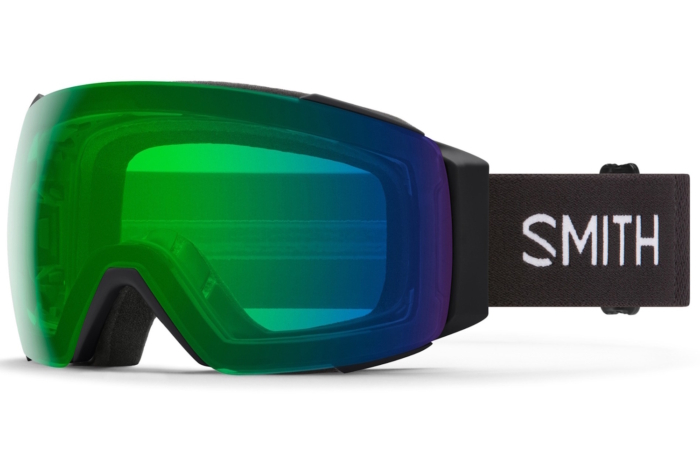
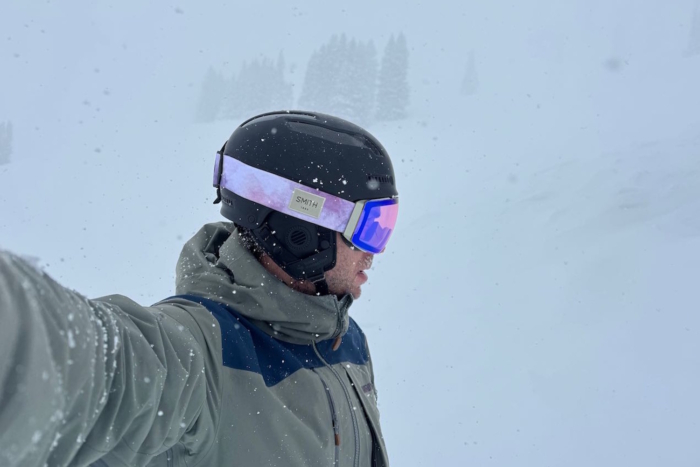
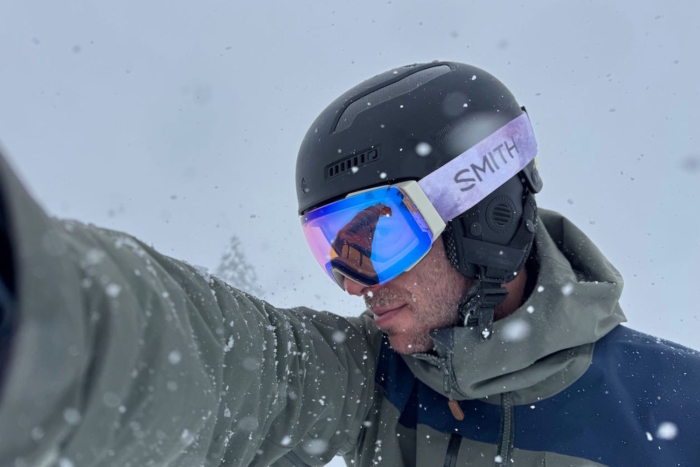
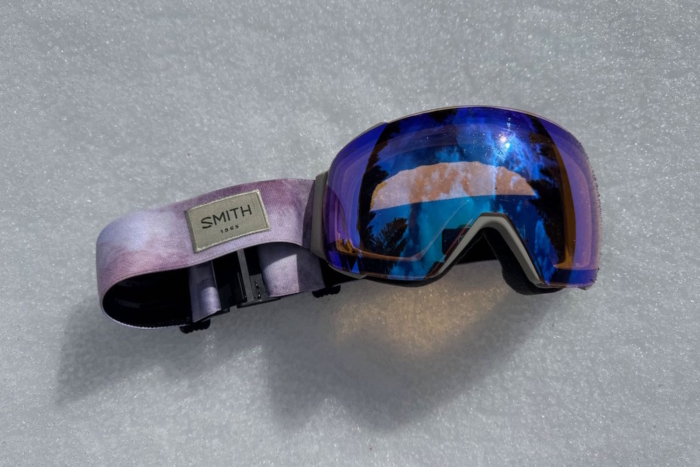
The Smith I/O Mag ($295) packs most of the features of Smith’s flagship 4D MAG ($355), but with a slightly more traditional spherical lens shape. These remain among the best goggles on the market — a remarkable run for ski goggles introduced a full seven years ago. The medium shape is surprisingly versatile for faces and helmets and provides excellent comfort. The I/O MAG also comes in a small frame, low-bridge option, or XL version.
The Tech: The I/O MAG’s exceptional spherical lens shape provides a huge field of vision. Its proprietary ChromaPop lens technology offers a vibrant, high-contrast field of view. Each pair includes a primary lens for sunny days and a secondary low-light lens. The quick-change magnetic interchange system uses dual locking mechanisms to hold optics securely while allowing rapid swaps. Moisture control is managed by a 5X anti-fog inner lens and dense triple-layer moisture-absorbing foam.
What We Like: In field testing, Senior Editor Morgan Tilton and ski gear tester Bergen Tjossem relied on the secondary low-light lens during whiteout blizzard conditions at Vail. Those brutal conditions thoroughly tested the anti-fog lens and dense triple-layer moisture-absorbing foam, which proved top-notch by resisting fog even in wet, sweaty conditions. The foam is a huge upgrade even among Smith’s diverse line, delivering a plush seal. Unlike the ultra-curved optics on the 4D MAG, the classic spherical shape delivers distortion-free vision across the whole frame.
What We Don’t: While it costs less than the flagship 4D MAG ($355), $295 is still a substantial investment. While the spherical optic provides an expansive view, it does not match the extended downward peripheral coverage provided by Smith’s BirdsEye 4D lens technology.
Should You Buy It? Skiers and riders who want proven, top-tier performance, effortless lens swaps, and reliable fog protection in any weather will find this model well worth the spend. It remains an industry benchmark for a reason.
Smith Transfer Goggle
-
-
(Photo/Will Brendza)
-
(Photo/Will Brendza)
-
(Photo/Will Brenda)
-
(Photo/Will Brenda)
Specifications
Pros & Cons
Pros
- Good, sharp lenses
- Competent fog resistance
- Versatile lens options
- Great price
Cons
- Lenses not interchangeable
- Foam isn't as comfortable as higher-end goggles
- Can allow uncomfortable wind intrusion at some angles
Bottom Line: Budget-friendly workhorse that delivers clear vision and dependable eye protection for a fraction of the cost. The Transfer is an ideal entry-level choice for skiers and riders who prioritize savings over high-end features and quick-change lenses.
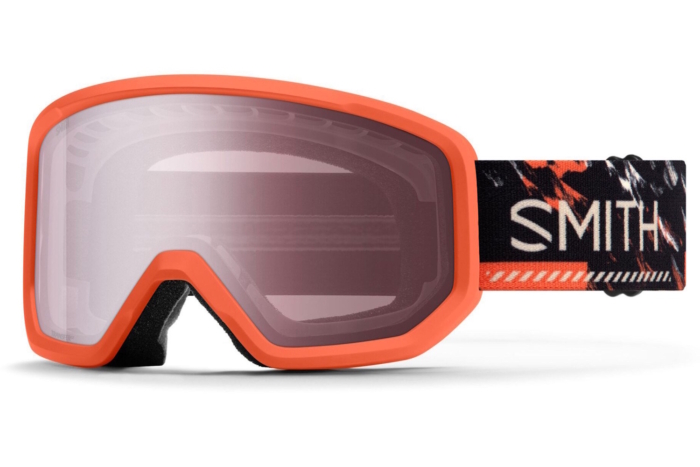
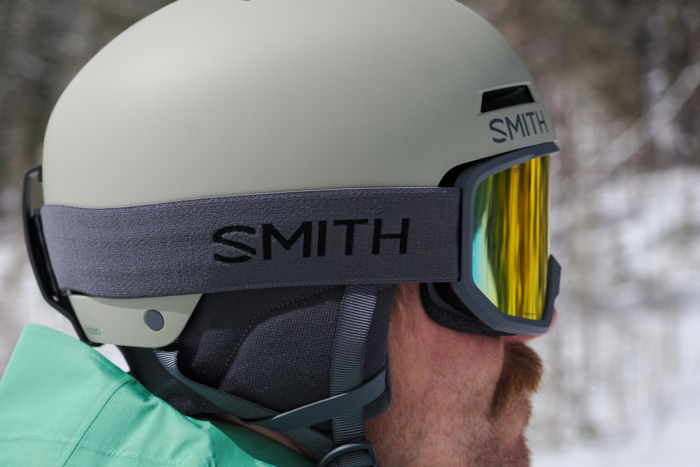
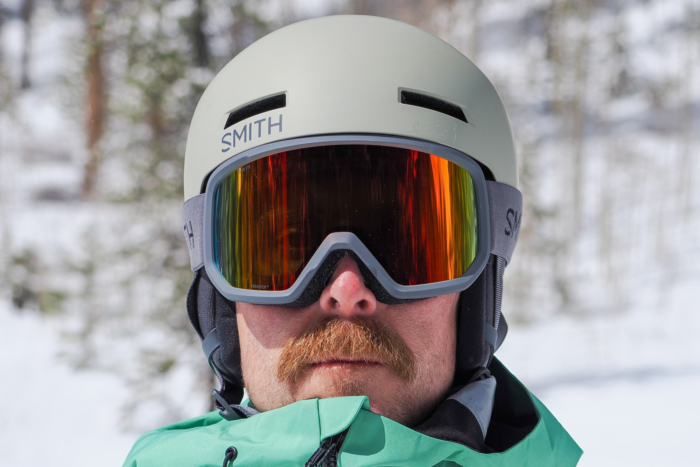
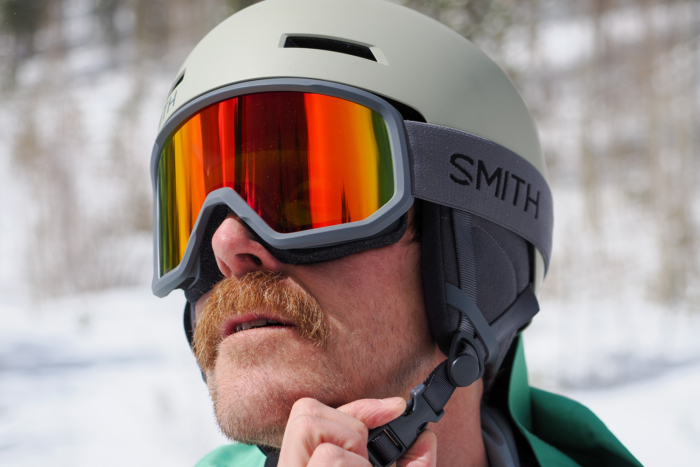
Newer to the brand, the Smith Transfer ($55) is a value goggle with very good performance. Compared with the budget goggles of yesteryear, they are comfortable, non-fogging, and offer very good visual clarity for skiers and snowboarders. While these lack the bells and whistles of higher-priced goggles, the Smith Transfer is nonetheless an excellent choice for those who don’t need to change lenses and don’t mind slightly less cushy foam. They still protect eyes from harsh light, snow, ice, and wind.
The Tech: Built as a budget-conscious entry-level option, this goggle has two layers of face foam and enhanced frame venting designed to maintain clear airflow. Rather than Smith’s premium ChromaPop optics, it uses SOL-X lens technology to enhance contrast in flat light conditions. The frame comes with a fixed lens, meaning it is not interchangeable, and ships with a soft micro-fiber goggle bag rather than a hard case.
What We Like: Even at just $55, these goggles do a solid job of both eye protection and visual enhancement for riding. The SOL-X lens technology provides quite good contrast for skiing in flat light, keeping terrain visible when conditions turn grey. They provide reliable, non-fogging performance and solid clarity that keeps you moving safely on the mountain without breaking the bank.
What We Don’t: In testing, Editorial Director Sean McCoy noticed that the foam is more abrasive than the Squad ($129) and 4D MAG ($355). It’s not awful, but even with two layers of foam, it’s less comfortable on the face over time. He also noticed high winds hitting his eyes more often in the Transfer Goggles. That’s likely because they rely on more venting to keep fog at bay. McCoy did feel the cold breeze on his face while riding the chairlift at Arapahoe Basin more than he did with other test models. Additionally, the lens is not interchangeable, so if it’s damaged, you will need to replace the entire goggles.
Should You Buy It? Overall, the Smith Transfer is a very good budget goggle. If price is a primary concern, the Transfer will not hold back your skiing or riding and will leave your wallet with a lot more dollars intact.
Smith 4D MAG ChromaPop
-
-
(Photo/Will Brendza)
-
(Photo/Will Brendza)
-
(Photo/Will Brendza)
-
(Photo/Will Brendza)

Specifications
Pros & Cons
Pros
- Excellent peripheral vision
- Easy lens-changing system
- Wide variety of lenses and strap colors and patterns
- Excellent hard case to store goggles
Cons
- Expensive
- Some people might notice a little distortion because of lens curvature
Bottom Line: The pinnacle of snow goggle engineering, offering an unmatched downward and peripheral field of view. While it commands a premium price, the combination of quick-change magnetic optics, custom storage, and plush comfort justifies the investment for dedicated skiers.
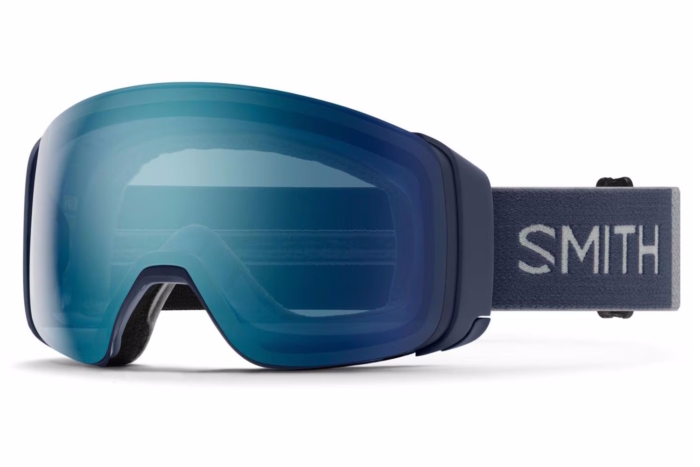
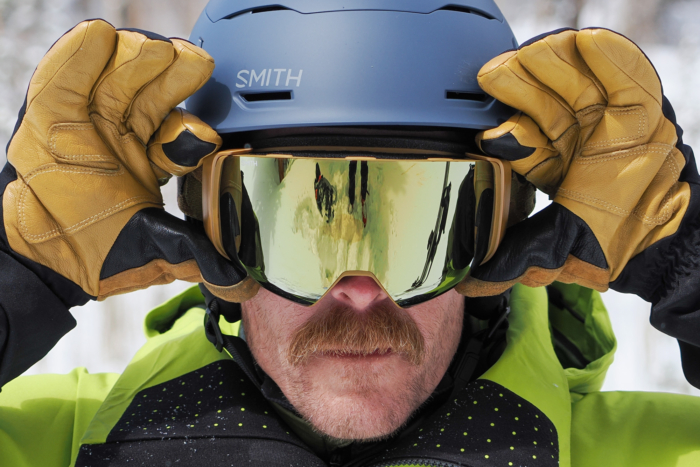
The Smith 4D Mag ChromaPop ($355) goggles sit at the top of the line, not only within Smith’s lineup but across the entire snow goggle market. They combine advanced optics with an incredible field of view and top-shelf features that serious skiers will appreciate. If you are considering this line, keep in mind that the family is extensive, encompassing standard medium, “XL” large, and “S” small fits. Sizing generally aligns with standard sunglass fit, and regardless of size, they integrate seamlessly with Smith helmets.
The Tech: Smith utilizes its BirdsEye Vision technology, which curves the bottom of the lens downward to extend the total field of view by a claimed 25% over traditional lenses. The dual-mechanism magnetic lens swap system uses two small mechanical side levers to release the optic, allowing you to pull it free from the frame’s magnets. Snapping a replacement onto the frame pulls it directly into alignment until the levers lock shut. Out of the box, Smith includes a sturdy, vented hard case, a protective soft cover, and a secondary low-light lens stored in a micro-fiber sock.
What We Like: Once on your face, these goggles reveal some of the best peripheral and downward vision on the market. Looking down, sightlines are nearly as wide as unassisted vision, making it easy to scan steep lines or check jacket pockets on the chairlift. Editorial Director Sean McCoy put these through extensive field testing, finding the three-layer face foam so soft, quick-drying, and well-ventilated that he never felt the urge to take them off. Even while sitting in the afternoon sun at après, the comfort held up without needing a switch to sunglasses.
What We Don’t: Beyond the hefty price tag, the unique optical bend causes a subtle trade-off. Because the bottom portion curves dramatically, light distorts ever so slightly as it passes through the edge. It is barely noticeable in action, but if absolute edge-to-edge clarity is your top priority, a flat-lens option like the Smith Squad offers a sharper, distraction-free view at a fraction of the cost.
Should You Buy It? Skiers who want maximum situational awareness and seamless lens changes will find this model well worth the spend. It delivers a plush fit, top-tier peripheral coverage, and a complete protective storage system that ensures your investment lasts for years.
Smith Squad Goggles
-
-
(Photo/Sean McCoy)
-
(Photo/Sean McCoy)
-
(Photo/Sean McCoy)
-
(Photo/Sean McCoy)
-
(Photo/Sean McCoy)

Specifications
Pros & Cons
Pros
- Top-tier lens clarity and sharpness
- Semi-rimless offer great field of view
- Excellent fog resistance
- Good ventilation while minimizing wind to eye
Cons
- Slightly less field of view than 4D Mag
- Lens change is a little difficult
Bottom Line: A high-performance sweet spot that prioritizes tack-sharp optical clarity and reliable weather protection for a modest price. The Squad is the ideal choice for skiers and riders who want top-tier performance without shelling out for premium magnetic models.
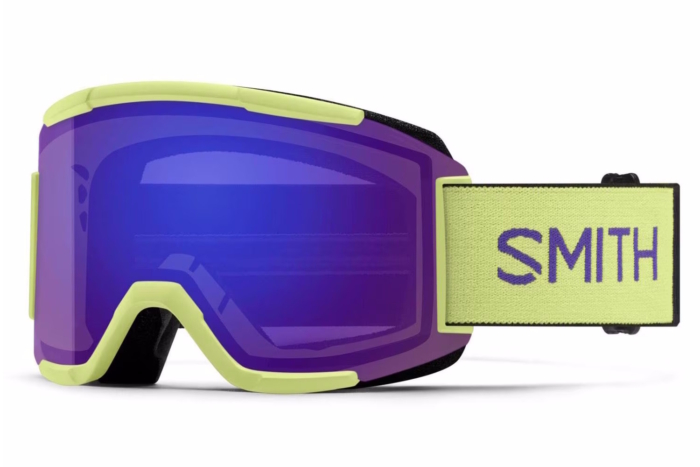
The Smith Squad ($129) hits a very sweet spot for snow goggles. With a retail price between $75 and $160, depending on the lenses, the Squad is relatively easy on the bank account. But make no mistake, these are absolutely top-notch goggles for skiing or snowboarding.
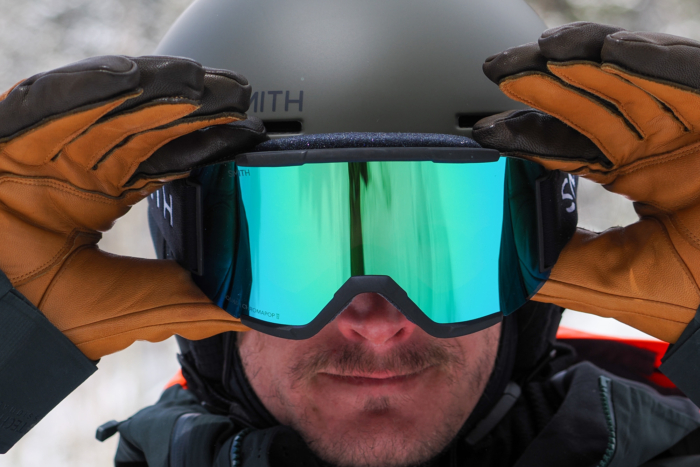
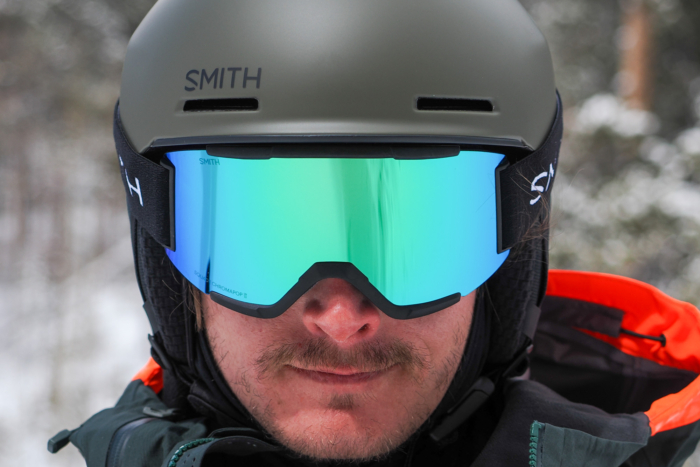
The Tech: Built around a semi-rimless frame design and an oversized cylindrical lens, this goggle yields a wide field of view and crisp optical quality. An ultra-wide, silicone-backed strap with a dual-slide strap makes size adjustment easy and holds the goggles firmly in place. The goggles rest against skin on two layers of DriWix face foam. The Squad collection comes in small (S), medium, and large (XL) fit, as well as low-bridge, so it should work well on most face shapes and integrate perfectly into Smith helmets.
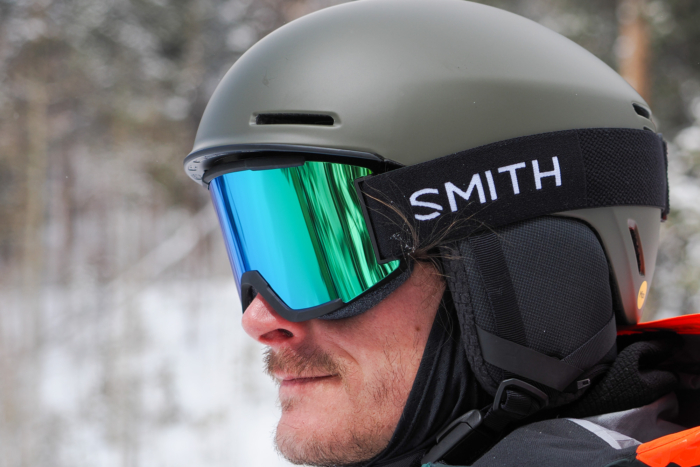
What We Like: Editorial Director Sean McCoy tested the Smith Squad over several days of skiing. In some ways, primarily optical clarity, they became his favorite choice among Smith models. Run after run, the Smith Squad provides tack-sharp, fog-free vision. They also keep the cold at bay even in howling winds while still providing ventilation. Compared to the $355 4D MAG, the flat cylindrical optics deliver distortion-free vision. I have a slightly large face and head and found the standard fit worked well.
What We Don’t: The only major downside of these goggles is that the lens change system is a little tough. You have to press the lens out of the frame with quite a bit of force. Compared with the 4D MAG, it’s a bit of a chore. One other downside is the lack of a hard carrying case. However, for the substantial savings, many people will be entirely happy with it, especially those who rarely change their lenses.
Should You Buy It? Ultimately, the Squad is a perfect snow goggle for many people. It offers excellent performance at a great price. If you’re in the market for a solid snow goggle but not ready to shell out for top-shelf, the Squad is a great choice.
Smith Preview
-
-
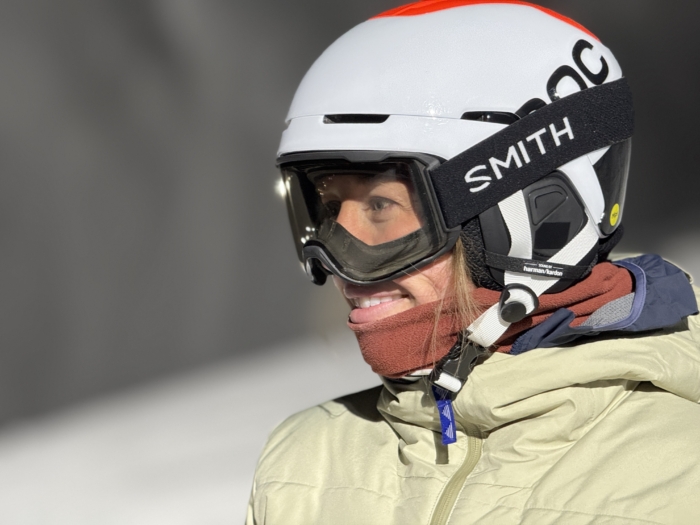
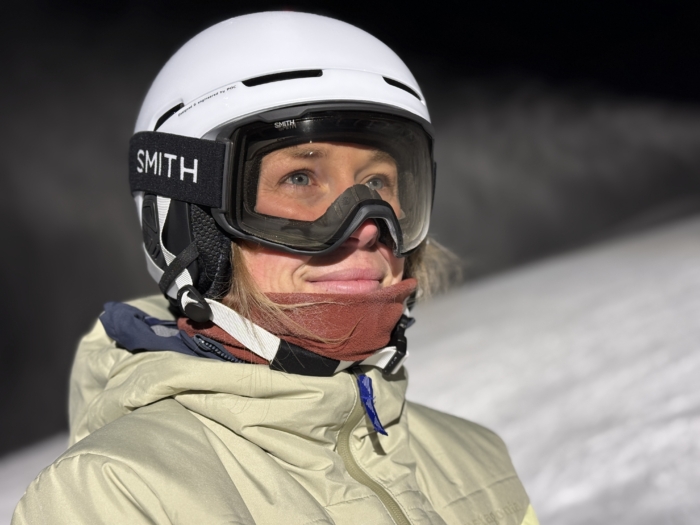
Morgan Tilton testing Smith Preview ChromaPop Snow Goggles; photo/Dane Tudor
-
Morgan Tilton testing Smith Preview ChromaPop Snow Goggles; photo/Dane Tudor
-
Morgan Tilton testing Smith Preview ChromaPop Snow Goggles; photo/Dane Tudor
Specifications
Pros & Cons
Pros
- Expanded downward field of view
- Ultra-plush, flexible frame comfort
- Lower price for 4D-lens tech
- Vibrant ChromaPop color contrast
Cons
- Slight distortion
- Edge fogging possible on humid powder days
- Single lens included
- No hard case
Bottom Line: This innovative goggle brings advanced downward sightlines to a traditional non-magnetic frame for a more accessible price point. It delivers plush comfort and expanded vision, making it an ideal match for set-it-and-forget-it skiers who rarely switch optics.
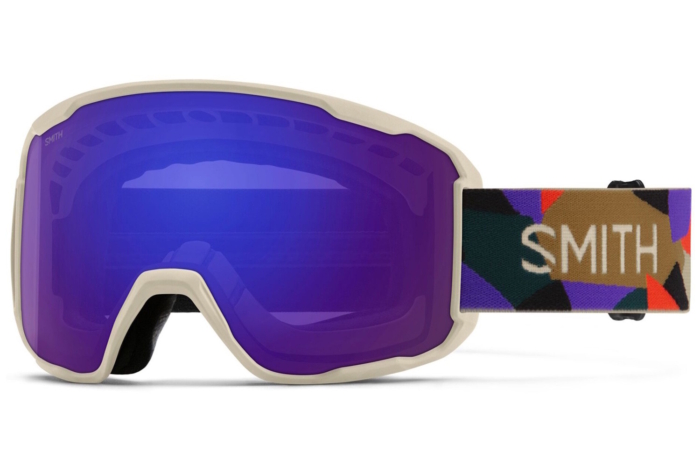
Few goggle brands can claim more than 60 years of ideation like Smith, and the brand continues to push the needle for spectacles. Senior Editor Morgan Tilton tested the innovative Smith Preview ($208), which brings unique optics previously reserved for higher-end lines to a broader audience.
The Tech: Smith incorporates its BirdsEye Vision technology into this design. Unlike traditional spherical or cylindrical lenses that have a flat frame along the bottom edge, these lenses curve downward and inward at the bottom of the frame. This curvature expands peripheral vision and removes the physical barrier of the lower goggle frame that typically blocks the downward line of sight. Aimed at the set-it, forget-it crowd, this model has a traditional non-magnetic interchangeable design. Swapping involves pulling up on the brow, popping the optic out of the channel from the sides and nose, and aligning the frame dovetails to reinstall. The Responsive Fit frame utilizes flexible material paired with soft, three-layer DriWix face foam, an easy-adjust quick-fit strap, and an ultra-wide silicone backing.
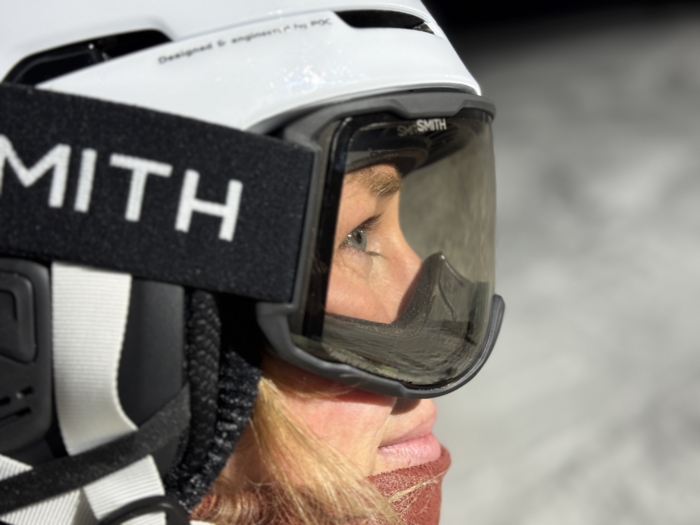
What We Like: This model offers 4D optical geometry at a value-driven price compared to the $355 Smith 4D MAG. Tilton tested the ChromaPop Storm Amber lens (67% VLT), finding it perfect for crisp night skiing under the bright lights at RED Mountain Ski Resort. The ChromaPop technology filters light effectively to provide better color definition and contrast. The flexible frame adjusts to the face for a precise, comfortable, and secure match, while the silicone strap grips firmly against a helmet.
What We Don’t: The curved boundary opens visibility, though clarity is slightly distorted through the bend. While Tilton experienced zero fog night skiing, the lenses steamed up along the edge during an hour of powder laps at Whistler Blackcomb in cold, blustery alpine conditions. In contrast, she wore the Giro Axis for the first three hours of that same storm day with no fog whatsoever. At this price point, we would also like to see a second optic or a hard case rather than just a soft goggle bag. Additionally, the Storm Amber tint reaches its limits in low-visibility blizzards and is not recommended for bluebird or partly cloudy days.
Should You Buy It? For skiers who want maximum field of view without paying for magnetic mechanics they will rarely use, this option hits a great middle ground. It delivers top-notch frame comfort, expanded downward sightlines, and solid contrast enhancement for dedicated mountain days.
Smith Goggles Comparison Chart
Scroll right to view all of the columns: Price, Best for, Lenses, Frame size, and Lens shape
| Smith Snow Googles | Price | Best for | Lenses | Frame Size | Lens Shape |
|---|---|---|---|---|---|
| I/O Mag | $295 | Excellent clarity, especially in variable and low-light conditions | 2 | M, S, low-bridge | Spherical |
| Transfer | $60 | Great value for affordable price | 1 | M | Cylindrical |
| 4D MAG | $355 | Peripheral vision, fog resistance, lens quality, comfort | 2 | L, M, low-bridge | Spherical |
| Squad | $129 | Remarkable lens clarity, comfort | 2 | L, M, S, low-bridge | Cylindrical |
| Preview | $208 | Expanded field of view, plush comfort | 1 | M | Spherical with BirdsEye 4D curved lower edge |
Smith Goggles: Head-to-Head On-Snow Tests
Senior Editor Morgan Tilton and ski gear tester Bergen Tjossem have contributed to this guide. Most recently, Tilton tested the new Smith Preview at RED Mountain Ski Resort and Whistler Blackcomb in Canada, including night skiing and whiteout conditions.
For this guide’s debut in the 2024-2025 season, GearJunkie Editorial Director Sean McCoy tested six pairs of Smith goggles with a primary focus on the 4D Mag. These proved to be fantastic over a wide range of conditions, from bright bluebird days to deep powder storms.
McCoy collected field notes from ski tester Will Brendza. He also interviewed Jeremy Tricola, a product manager at the brand, and external brand representatives.
For head-to-head goggle tests, our team closely examined the foam, lens interchange, coatings, and straps. We also highlighted comfort, lens clarity, protection, and field of view.
Smith Snow Goggles: A 60-Year History
In 1965, Dr. Bob Smith, an orthodontist, built the first sealed thermal lens and breathable vent foam. He started hand-building goggles in his garage and sold them out of his van in Colorado and Utah. I’ll do the math for you. Smith Optics turned 60 years old in 2025.
For six decades, the brand has evolved from a simple one-man operation into one of the largest snowsport-oriented optics companies in the world. Today, Smith Optics manufactures and sells eyewear, helmets, goggles, and even some apparel. It has pioneered many innovations in the eyewear space, such as ChromaPop lenses that enhance specific color wavelengths and Koroyd protection in snow helmets.

Smith Goggles Compared to Other Snow Goggles
Smith competes actively with several top brands of snow goggles:
- Oakley: Renowned for Prizm lens technology, stylish designs, and a deep catalog of sunglasses and other eyewear. Oakley competes well with Smith, but lags in field of vision versus the 4D Mag.
- Dragon Alliance: Popular for high-performance goggles, Dragon offers edgier styling popular among younger skiers and riders.
- Giro: Known for its focus on performance and value, with a range of goggle options.
- Anon: A sub-brand of Burton, Anon builds premium, snowboarding-first optics. Its Toric lens is highly regarded but pricey.
- Julbo: A brand known for its photochromic lenses, high-quality optics, and unique ski touring goggles that allow exceptional venting.
- POC: Popular with racers, POC is known for its focus on safety and protection.
- Spy Optic: A popular brand for style and performance, Spy Optic offers good quality at a slightly lower price range than Smith.
- Sweet Protection: A Swedish company with roots in whitewater protection, Sweet Protection is a legit player in the eyewear space. It offers some unique functionality, such as venting between double lenses to account for changes in altitude.
There are obviously many good choices in ski goggles. Smith stacks up well against all these brands and is often regarded as the leader. Especially if you plan to wear a Smith helmet, Smith goggles will integrate perfectly.

The Best Smith Goggles: How to Choose
If you’re shopping for snow goggles, there’s a very good chance Smith will be one of your options. The brand offers 22 ski goggles, each with several sizes, lens colors, and styles.
After testing many pairs of Smith’s goggles head-to-head, we believe that all the models Smith manufactures are capable of giving skiers and snowboarders a good experience. But as with most things, spending more will result in a better product and better performance on the slopes.
Budget: $60-$99
The starting point is the Transfer at $60. This model is a medium cylindrical design with one lens, and will fit the needs of most casual skiers. This pair offers great value for an affordable price.
Mid-Tier: $100+
For many riders, the sweet spot will be the Squad ($129) line. Here, you get excellent fit, peripheral vision, and comfort with top-tier lenses. These goggles have interchangeable lenses, so you can simply replace old lenses if they get worn and scratched during use. We don’t change lenses frequently, so we don’t often need the fast-change ability of the magnetic interchange.
Premium: $250+
Smith’s top-of-the-line 4D Mag Chromapop goggles are fantastic.
The top-tier 4D MAG ($355) line offers incredible peripheral vision and great lenses. They have an excellent lens interchange system, solid frames, and various straps for both style and function. They also have a superb hard case that will protect them for many years of riding. For those who ski or ride many days each year, they are worth the investment.

Smith Goggles: Every Model Available
Below, find every model. Generally, these range from cheapest to most expensive, with prices varying depending on lens selection:
- 4D MAG Family (4D MAG S, 4D MAG, 4D MAG XL): $348 – $355
- Kids Models:
- Rascal: $38 – $45
- Snowday: $48 – $58
- Daredevil: $50 – $60
- Grom: $95
- Over-the-Glasses (OTG) Models:
- Cariboo (Caribou): $58 – $60
- Reason: $80 – $100
- Sequence OTG: $145
- Showcase OTG (women’s smaller frame): $142 – $145
- New Entry-Level Adult Models (2025–2026):
- Tribute (smaller fit): $48 – $60
- Transfer (larger fit): $55 – $60
- Carry-through Models:
- Rally (smaller fit): $98 – $105
- Blazer (larger fit): $98 – $105
- Squad Family (Squad S, Squad, Squad XL): $75 – $160 (depends on lens package: Standard vs. ChromaPop)
- Mid-Price Spherical:
- Proxy (larger fit): $155
- Moment (smaller fit): $155
- Carry-through Spherical:
- Skyline: $185
- Skyline XL: $185
- New for 2025–2026:
- Preview (full-frame, non-MAG, BirdsEye/4D lens): $200 – $215
- Magnetic Cylindrical:
- Squad MAG: $253 – $283
- I/O MAG Family (I/O MAG S, I/O MAG, I/O MAG XL): $275 – $295 (up to $335 for Photochromic models)
Helmet Integration
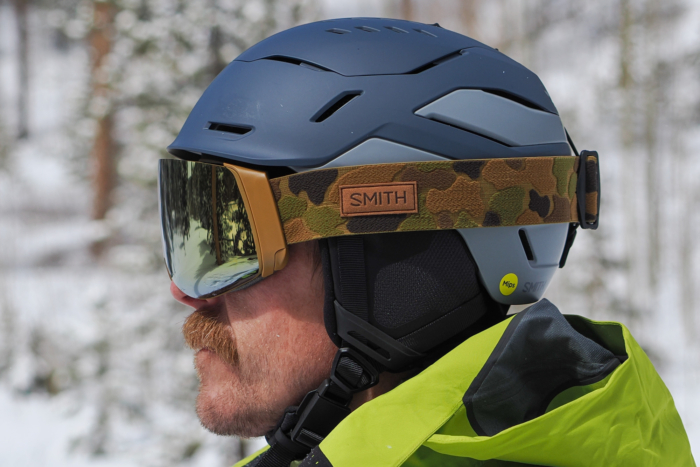
Don’t want a gaper gap? Smith helmets and goggles work together seamlessly. In testing various combinations of helmets and goggles, every pair matched beautifully, providing a gap-free fit between helmet and goggle.
Many brands similarly make sure their helmets and goggles work together. Generally, the best way to ensure your helmet and goggles work well together is to buy them from the same brand. But we can confirm that Smith goggles and helmets will integrate perfectly for draft-free skiing and riding.
Warranty & Exchanges
All Smith sunglasses and goggles (including custom goggles) are covered for the lifetime of the product to be free from manufacturer’s defects. And no, that won’t cover scratches, cracks, or breakage if you sit on them, run them over with your car, or let your dog chew on them.
Goggle Cases: Don’t Overlook This Extra
One of the most overlooked parts of snow goggles is the case or sock. You’re investing hundreds of dollars into good optics, and a good case will protect them, whether bouncing around in the back of a car or stuffed in a backpack. Yet many people completely ignore the case when buying goggles.
Smith’s top-tier I/O family of goggles comes with some of the best cases we’ve tested. Its mid-tier goggles also come with a good case. Its entry-level goggles come only with a sock. While serviceable, the sock offers only minimal protection. So keep in mind that when you’re buying a pricey pair of goggles, you’re also getting a great tool to keep them clean and scratch-free for a long time.