Don’t be distracted by the white noise: Snowboard boots are mid-renaissance. From complex wrap systems to BOA-integrated liners and triple BOA closures, boots for riders have never seen so much attention to detail, craftsmanship, and puzzle solving for the perfect hold.
To keep pace, three gear experts tested 14 pairs over the past year to revamp our entire encyclopedia. SnowSports Senior Editor Morgan Tilton carved lines in four pairs across Colorado and British Columbia. From ski resorts to backcountry missions, professional athlete Dane Tudor and outdoor photographer Eric Phillips hammered technical routes in ten progressive designs.
On the premium side, step-on riders can opt for the elite triple-BOA Burton Highshot X Pro Step On, setting a gold standard for comfort, durability, and support. At half that price, entry-level slippers like the iconic dual-BOA Vans Encore Pro 2.0 are plush, roomy, and warm with lateral ankle stability.
Editor’s Note: From the new Nidecker Kita to the Head PSI Triple BOA, we overhauled our Snowboard Boots guide on August 20, 2026, with 13 field-tested hard-hitting, groundbreaking pairs including the DC Phase BOA and Burton Highshot X Pro Step On plus extended ratings, signposts, and Bottom Line summaries.
The Best Snowboard Boots of 2026


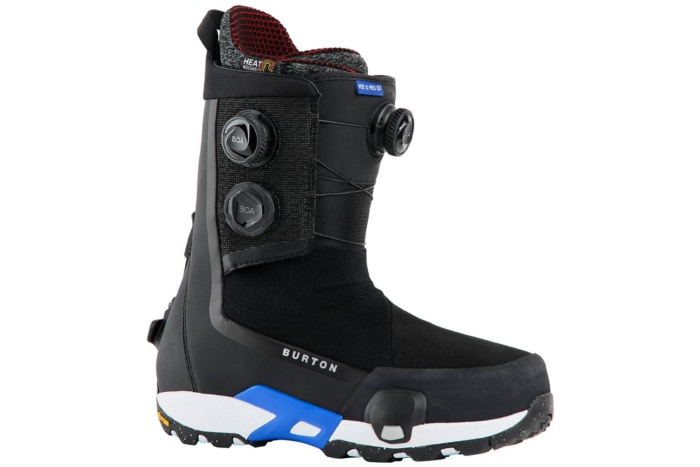
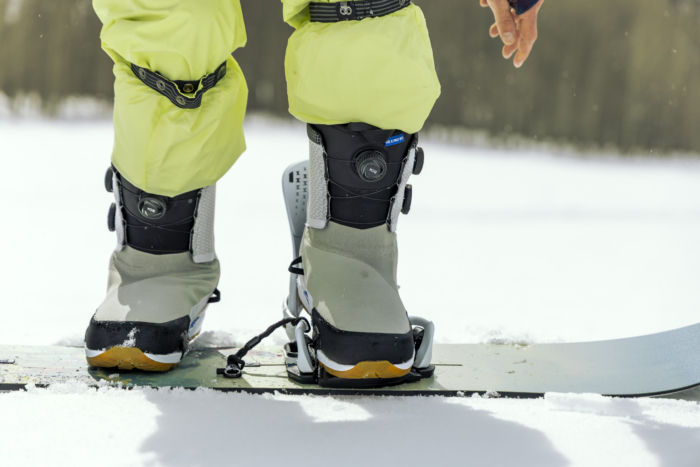
Burton Highshot X Pro Step On Snowboard Boots

Specifications
Pros & Cons
Pros
- Triple BOA system provides superior performance and comfort
- Step On system is lighter and faster than traditional bindings
- Asym life liner blends warmth, comfort, and performance
Cons
- Premium price point
- Boots only compatible with Burton Step On bindings
- Step On system has small learning curve
- Signs of wear present
Bottom Line: Top-tier Step On boot that delivers unrivaled heel hold and immediate responsiveness for hard-charging riders. It’s ideal for advanced snowboarders willing to invest in strap-free convenience without giving up precise edge control.
For aggressive all-mountain riders looking to push performance limits without traditional strap bindings, the Burton Highshot X Pro Step On ($730) sets a new benchmark in boot technology.
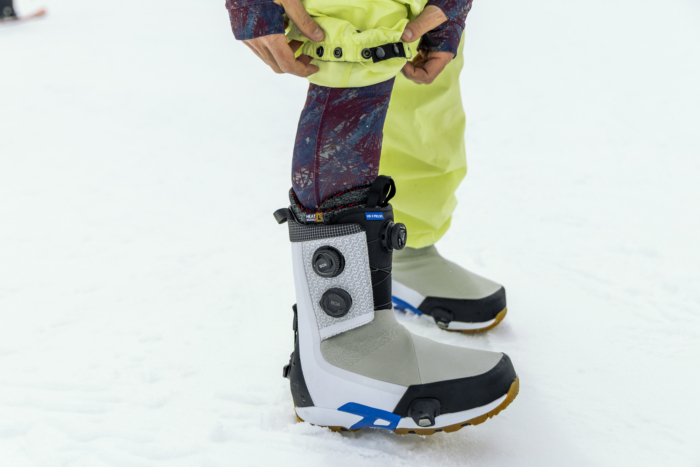
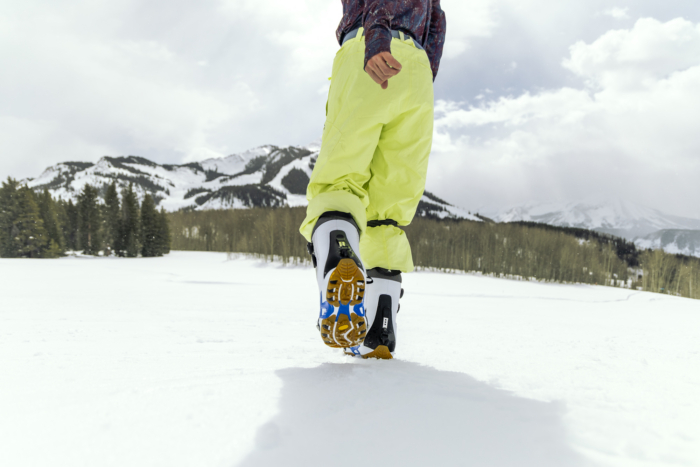
The Tech: Designed specifically for Burton’s Step On system, this boot introduces an innovative triple BOA PerformFit setup. The third BOA dial controls an internal Ankle Hammock, cinching downward and rearward over the ankle to deliver exceptional heel hold, precision response, and virtually zero slop when initiating hard carves, charging through moguls, or dropping steep double blacks. Below the foot, a rugged Vibram outsole provides reliable traction for walking through icy resort areas.
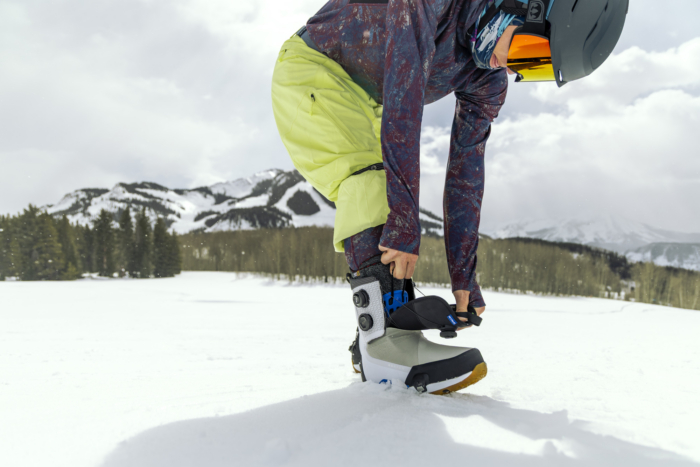
What We Like: Equipped with a medium-stiff flex (rated 7/10) and an asymmetrical, quick-drying heat-moldable liner, this model balances power transfer with comfortable out-of-the-box ergonomics. Gear tester Eric Phillips, a professional photographer and certified drone pilot, field-tested these boots over multiple weeks at Crested Butte Mountain Resort in Colorado across icy bluebird mornings, fresh powder, and spring slush. He found that the Step On interface reduces overall weight, enhances board feel, and enables lightning-fast entries and exits once past a brief learning curve. Compared to medium-flex options like the ThirtyTwo TM-2 Double BOA, the Highshot X Pro offers significantly more immediate edge engagement and localized ankle clamping power.
What We Don’t: The main drawbacks are the premium price tag and system exclusivity — since the boot hardware is built strictly for Burton Step On bindings, you must commit to the entire ecosystem. Additionally, Phillips noted some early cosmetic creasing and wear around ankle flex points after his initial testing rounds on the mountain.
Should You Buy It? If you are an experienced rider who demands maximum response, precise micro-adjustability, and strap-free convenience, this design provides an elite ride experience.
Vans Encore Pro 2.0
-

-
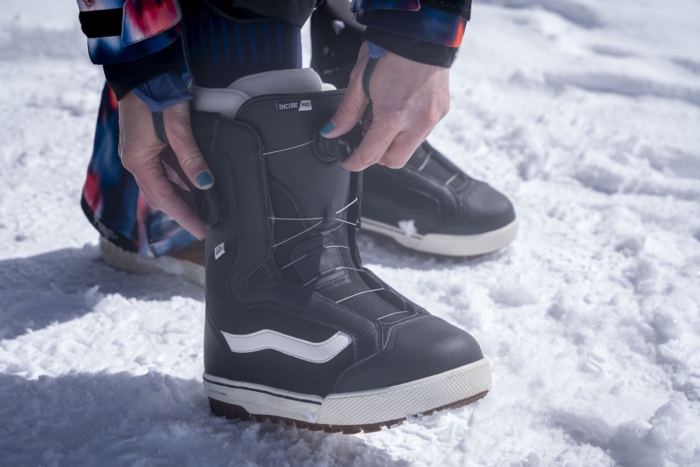
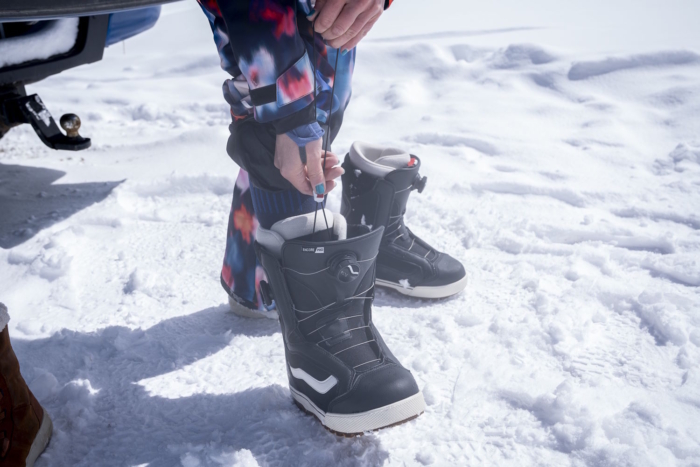
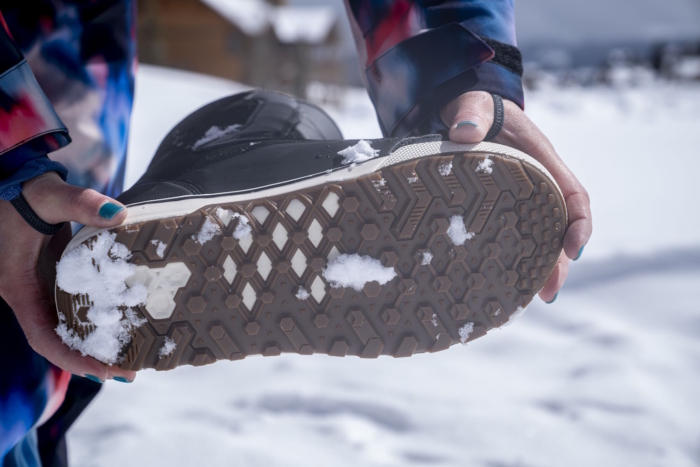
Morgan Tilton testing the Vans Encore Pro Snowboard Boots; (photo/Eric Phillips)
-
(Photo/Eric Phillips)
-
(Photo/Eric Phillips)
Specifications
Pros & Cons
Pros
- Comfortable footbed and midsole with no break-in period
- Dual-zone BOA is adjustable and quick
Cons
- When you ride aggressively, dual BOA system needs tightening throughout the day
- Ample ankle flexibility in the coronal (vertical) plane might not be everyone's cup of tea
Bottom Line: A plush, highly adjustable dual-BOA resort pair with out-of-the-box comfort and lateral ankle stability. It’s an ideal pick for female riders who want reliable warmth and easy dual-zone tensioning for all-mountain cruiser days.
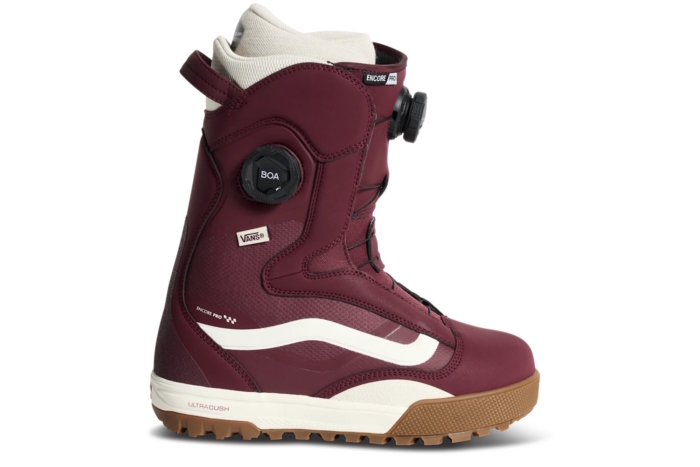
If you want a boot with iconic skate-inspired style and comfort without sacrificing side-to-side support, pull on a pair of the Vans Encore Pro 2.0 ($310). Vans updated this 2.0 iteration with a redesigned outer silhouette, a refined progressive flex profile, and soft BOA TX3 textile laces for a more natural forward bend. (Guys, check out the men’s equivalent, the Vans Aura Pro BOA.)
The Tech: Constructed around a mid-flex shell structure, this model has a dual-zone Custom Focus BOA setup routed through Vans’ Custom Slide Guide to concentrate lace tension directly over the instep. Inside, an internal harness works with a structured butterfly cushion surrounding the ankle to lock the heel in place without requiring shell modifications. A 360-degree thermal retention layer wraps underfoot to seal out ground cold, while the Smartwool-infused V2 UltraCush liner manages moisture, breathability, and odor control.
What We Like: SnowSports Senior Editor Morgan Tilton put these boots through extensive field testing across stormy resort days, blustery winds, and sub-zero temperatures down to 0 degrees Fahrenheit. She highlighted how the liner’s butterfly ankle support delivered an exceptional fit even on narrow feet, preventing heel lift without pinching. While the shell offers generous forward dorsiflexion for deep knee bends into turns, its lateral firmness prevents ankle rollover. Compared to stiffer options like the Salomon Echo Lace SJ BOA, the Encore Pro 2.0 offers a far more forgiving forward flex that feels comfortable straight out of the box.
What We Don’t: Despite the convenience of the dual BOA dials, the cables require periodic retightening throughout the day as the boot shell flexes during riding. Additionally, despite marketing tags referencing backcountry compatibility, the medium-soft forward flex lacks the structural rigidity needed for demanding side-country tours or technical freeride lines.
Should You Buy It? Resort-focused female riders who prioritize immediate fit, cozy thermal insulation, and reliable side-to-side stability will happily assign this boot as a daily driver — as long as they don’t mind the volume.
ThirtyTwo Lashed XLT Double BOA X POWELL
-
-
(Photo/Eric Phillips)
Specifications
Pros & Cons
Pros
- Medium flex for all riding types
- Dual BOA for precise foot and shin hold
- Zeb Powell signature style
- Reinforced liner harness for equal pressure
Cons
- Might not be stiff enough for advanced all-mountain riding
- Must take to a boardshop to heat-mold liners
- We had issues with these BOA dials malfunctioning
Bottom Line: A freestyle-focused signature boot that balances surfy flex with locked-in heel retention. It is a fantastic option for park riders and resort cruisers looking for customizable dual-zone closure and eye-catching pro style.
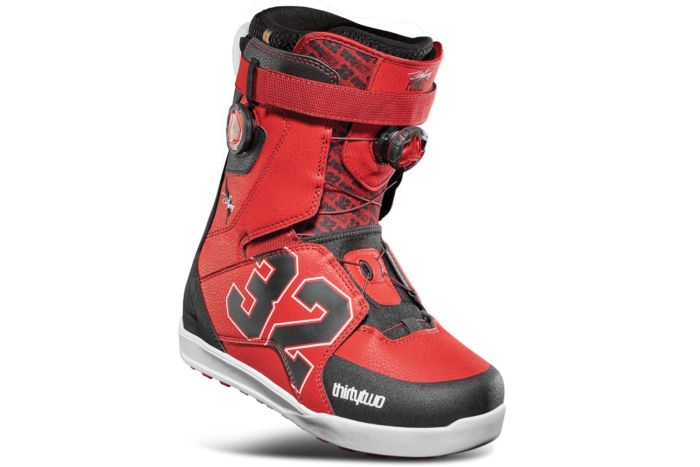
Created in collaboration with pro snowboarder Zeb Powell, the ThirtyTwo Lashed XLT Double BOA X POWELL ($430) blends freestyle playfulness with reliable support. (Note: Female riders can scope out the women’s ThirtyTwo Lashed Double BOA, which shares the same underlying tech and dual-zone adjustability with a women-specific fit.)
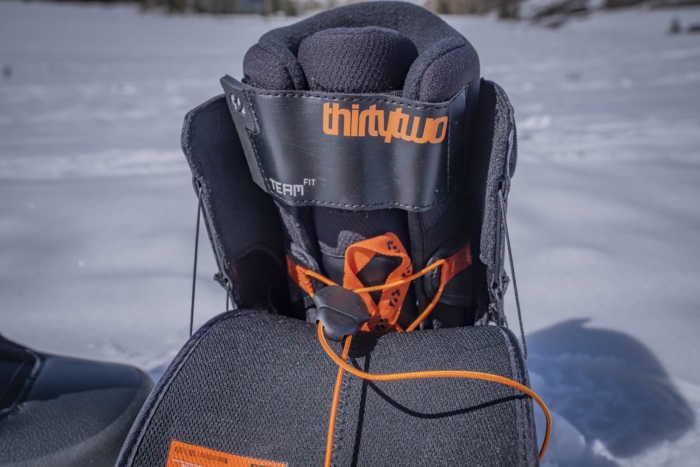
The Tech: This boot utilizes a Dual BOA Fit System equipped with TX3 laces, giving you independent control over the upper calf and lower foot zones. Inside, an internal harness cinches over the ankle independently from the Team Fit liner, locking down the midfoot without creating uncomfortable pinch points. The heat-moldable liner also incorporates an adjustable heel-hold kit with removable foam inserts to eliminate lift.
What We Like: Gear tester Eric Phillips put these boots to work in Colorado, laying down carves, hitting rails, and launching park jumps. He appreciated how the top Velcro power strap can be cinched tight for aggressive lines or loosened for a surfier feel in the park. Compared to stiffer options in our lineup like the ThirtyTwo TM-2 Double BOA, this model provides a more forgiving flex that excels on slopestyle features and groomed runs. It also stands out visually, featuring a camouflage tree bark pattern and Zeb’s signature logo homage.
What We Don’t: The medium-soft flex lacks the rigidity required for steep double-black terrain and high-speed backcountry freeriding. Additionally, custom heat-molding requires a trip to a local shop, and unlike the women’s version of the Lashed line, this boot lacks built-in heat foil or specialized thermal insulation for frigid midwinter days.
Should You Buy It? Park riders, jibbers, and resort cruisers who prioritize custom fitment, foot freedom, and distinct style will find this pair to be a rewarding pick.
Head PSI Triple BOA
-
-
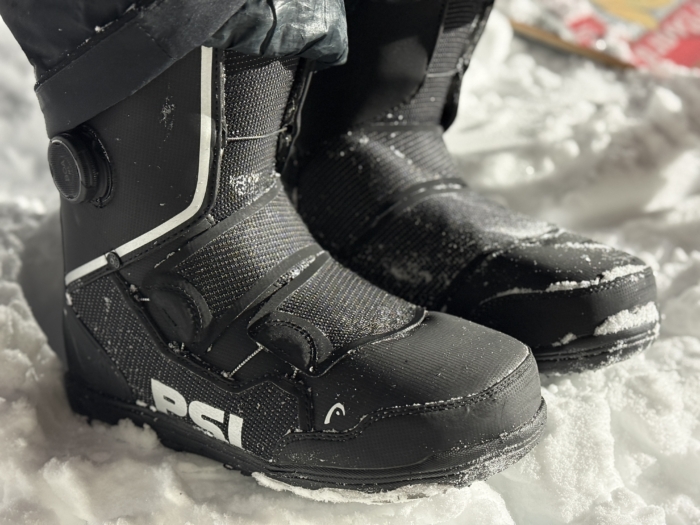
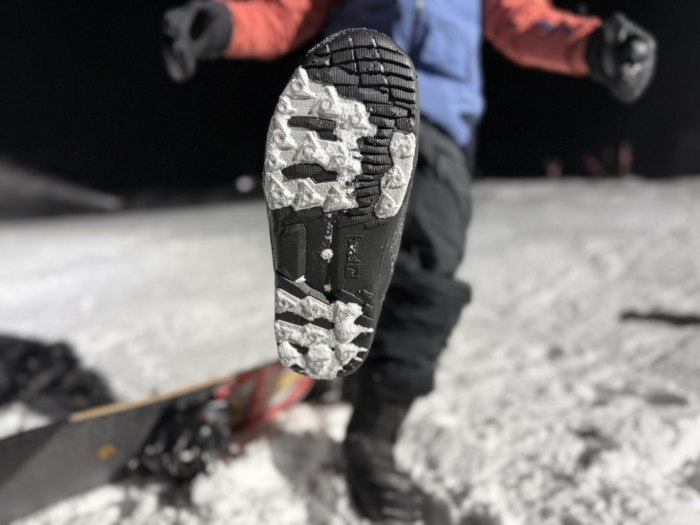
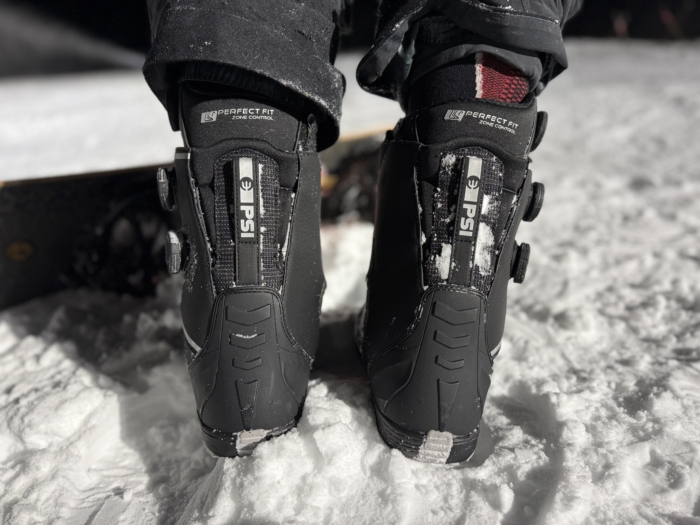
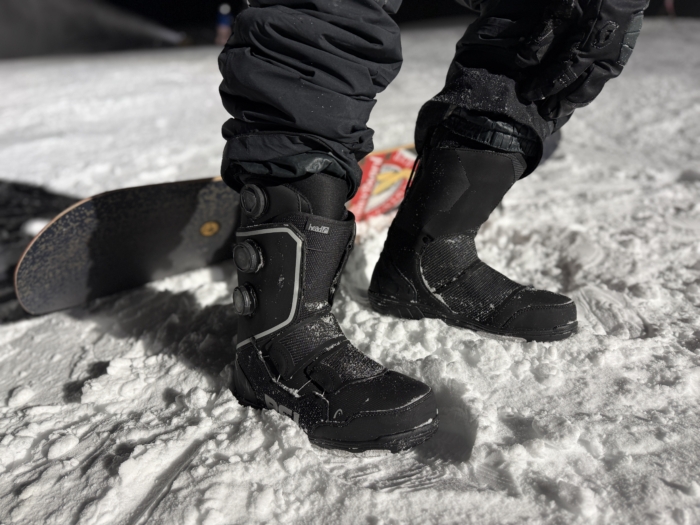
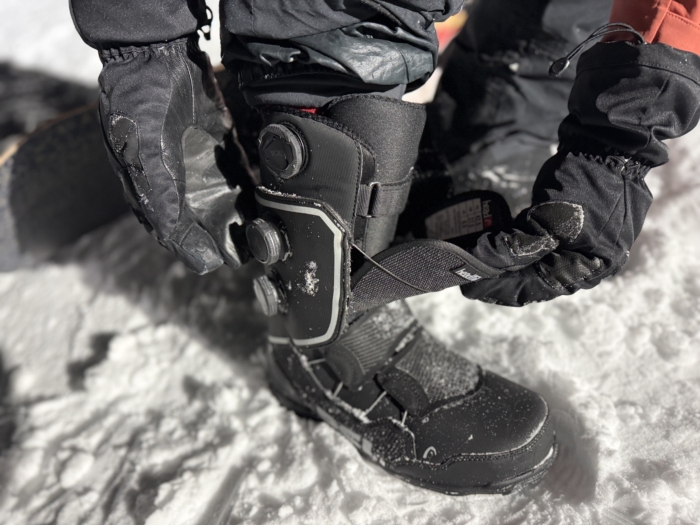
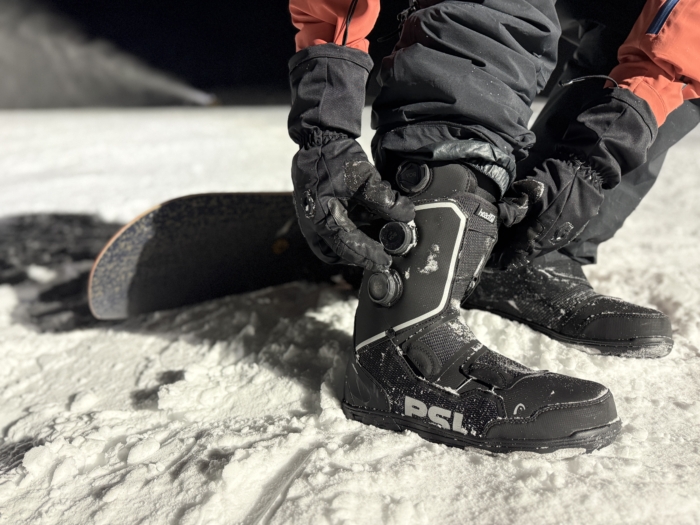
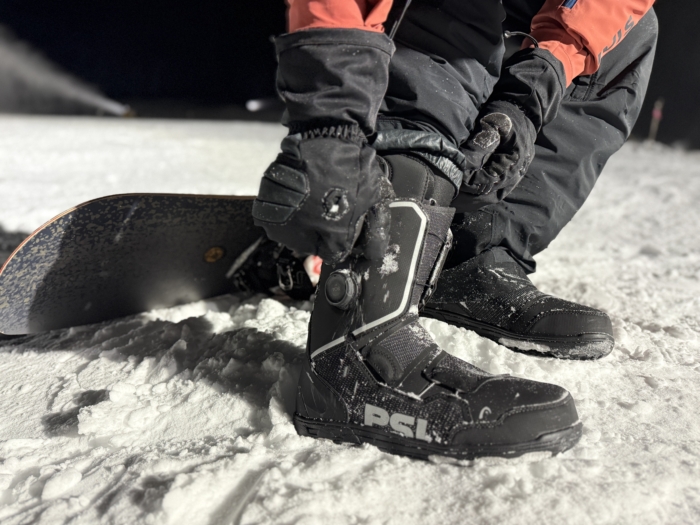
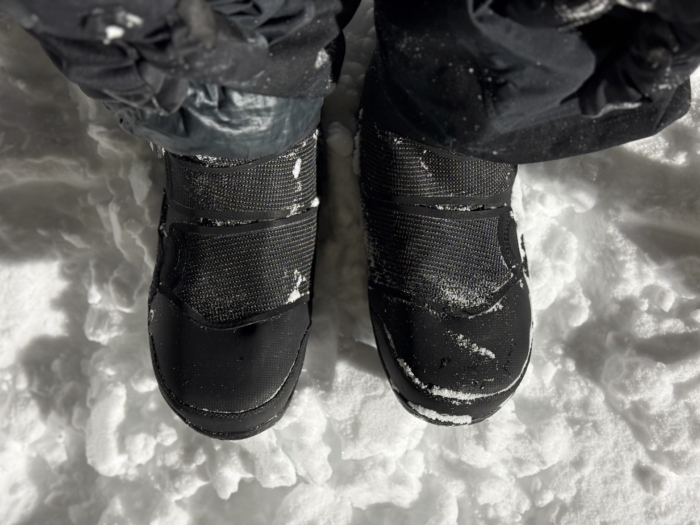
Dane Tudor testing the Head PSI Triple BOA snowboard boot; (photo/Morgan Tilton)
-
Dane Tudor testing the Head PSI Triple BOA snowboard boot; (photo/Morgan Tilton)
-
Dane Tudor testing the Head PSI Triple BOA snowboard boot; (photo/Morgan Tilton)
-
Dane Tudor testing the Head PSI Triple BOA snowboard boot; (photo/Morgan Tilton)
-
Dane Tudor testing the Head PSI Triple BOA snowboard boot; (photo/Morgan Tilton)
-
Dane Tudor testing the Head PSI Triple BOA snowboard boot; (photo/Morgan Tilton)
-
Dane Tudor testing the Head PSI Triple BOA snowboard boot; (photo/Morgan Tilton)
-
Dane Tudor testing the Head PSI Triple BOA snowboard boot; (photo/Morgan Tilton)
Specifications
Pros & Cons
Pros
- Snag-free recessed dials
- Independent triple-zone control
- Uncompromising heel lockdown
- Exceptional powder weatherproofing
Cons
- Awkward rear pull-loop
- Too stiff for park
- Firm initial entry
Bottom Line: A high-performance power boot that delivers a down-to-the-millimeter, customizable fit for aggressive all-mountain charging. This tool is for experienced riders who demand zero heel lift, a snag-free profile, and independent triple-dial precision.
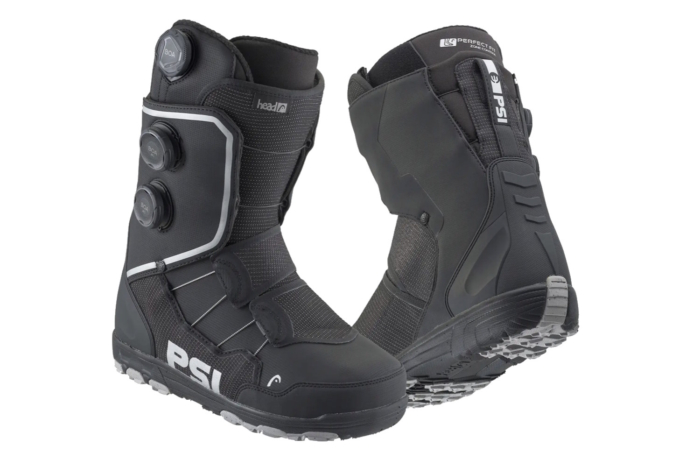
New and innovative, the Head PSI Triple BOA ($459) is a masterclass in snowboard boot design, offering extreme adjustability for riders who demand total edge control.
The Tech: Built around a stout 8/10 flex profile, this design utilizes a Triple BOA system with recessed H5 shell dials and an M+2 liner dial. The bottom dial secures the forefoot, the middle dial tightens the upper shaft around the shin, and the top dial acts directly on the internal liner. A minimalist, flush-fitting liner tongue eliminates bulk, while an overlapping exterior shell with an internal gusset seals out deep powder moisture. Underfoot, a lower rear-cuff profile provides an aggressive, ergonomic stance, complemented by two Velcro power straps on the liner for on-the-fly tensioning.
What We Like: Athlete Dane Tudor field-tested these boots at RED Mountain, praising the streamlined, snag-free exterior shell that prevents dials from catching on pant cuffs. The dedicated liner BOA paired with dual Velcro power straps virtually eliminates heel lift, allowing riders to fine-tune ankle hold on the fly. The overlapping shell and internal gusset proved exceptionally weather-resistant during deep powder days. Compared to double-BOA options like the DC Mora BOA, the Head PSI offers a significantly stiffer, more customizable backbone alongside precise three-zone isolation.
What We Don’t: The rear pull loop is positioned slightly low on the boot spine and feels overly tight for two fingers, making initial entry a bit awkward. Additionally, the unyielding stiffness and firm liner architecture require an advanced skill set and will feel too rigid for casual cruising or park sessions.
Should You Buy It? Experienced snowboarders seeking an ultra-clean, customizable boot with an uncompromising flex and elite ankle hold will find this design an outstanding performer.
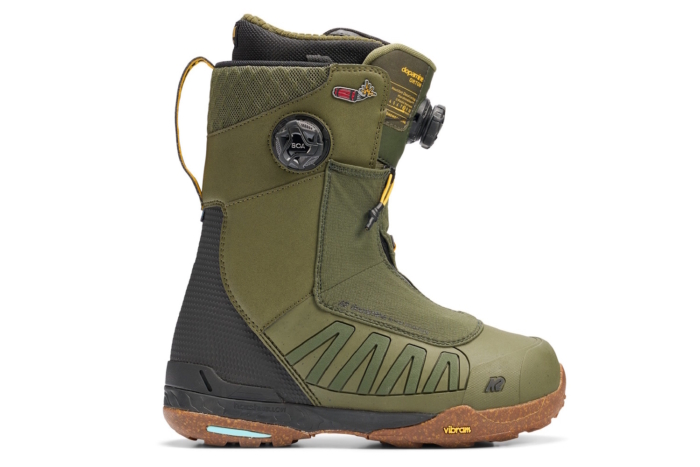
K2 Orton
Specifications
Pros & Cons
Pros
- High Performance Flex (8/10)
- Dual BOA Fit System with upper and lower zones enables tailored, custom fit
- Half gaiter keeps snow out
- Waterproof construction
Cons
- Upper-tier price point
- Stiffer flex might not suit every rider
- Longer break in process
- Stiff boots can be harder to get on
Bottom Line: An ultra-stiff, highly responsive power boot built for aggressive all-mountain riders and cold-weather backcountry missions. It’s an ideal pick for experienced snowboarders who want maximum edge control and exceptional thermal insulation.
Tailored for advanced riders with several seasons under their belt, the K2 Orton ($490) delivers relentless performance and heavy-duty structure across the entire mountain.
The Tech: Developed alongside Olympic gold medalist Sage Kotsenburg, this model utilizes a Dual-Zone H4/M3 Coiler BOA Fit System paired with flexible TX3 laces woven from recycled PET. An Intuition Pro Foam 3D liner combines with heat-reflective SpaceHeater technology to trap warmth, while an internal 3-point harness system clamps down over the ankle to stabilize the heel. Construction details include S’Cafe coffee-infused liner mesh for natural odor control and a Vibram V5 outsole composed of 30% recycled rubber for parking lot traction.
What We Like: Snowboard boot aficionado Eric Phillips put these boots through demanding field tests, including resort laps and backcountry snowmobile tours in -15 degree Farenheit temperatures. He found the thermal lining kept toes comfortably warm in sub-zero conditions, while the liner fit refused to pack out over time. Compared to medium-stiff models like the ThirtyTwo TM-2 Double BOA, the Orton provides a noticeably stiffer, more rigid backbone that transmits power into turns, jumps, and slashes with immediate, telepathic response.
What We Don’t: As one of the stiffest models tested, the Orton involves a lengthy break-in period and requires extra effort to pull on due to its rigid shell structure. The stiff spine even alters walking gait around the base area, and while the recycled TX3 laces perform well, their long-term abrasion resistance remains a question mark under heavy seasonal abuse.
Should You Buy It? Hard-charging riders willing to pay for long-term durability and unyielding edge control will find this design worth every penny.
ThirtyTwo TM-2 Double BOA
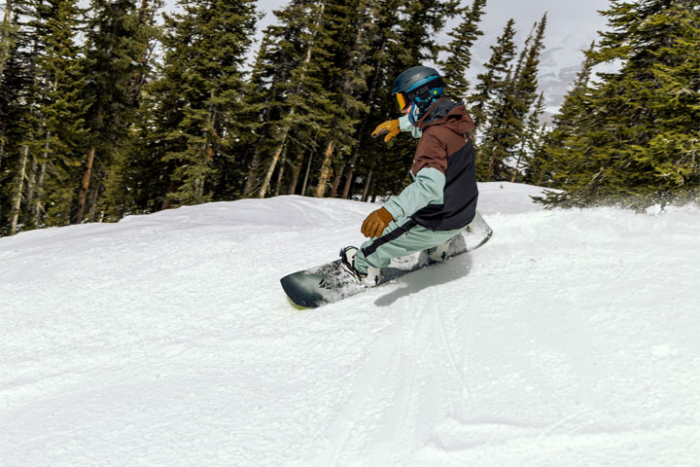
Specifications
Pros & Cons
Pros
- Dual BOA system for easy micro-adjustments
- Balance of shock absorption and board feel
- ThirtyTwo’s unique adjustable heel-hold liner
- Durable
Cons
- Heat molding is essential for comfort
- Break-in period is substantial
- Tread could be more aggressive
- Velcro power strap hard to dial in
Bottom Line: A durable, all-mountain workhorse that strikes a rare balance between edge-holding support and park-ready forgiveness. It is an ideal pick for intermediate to advanced riders seeking a single option that can survive multiple heavy resort seasons.
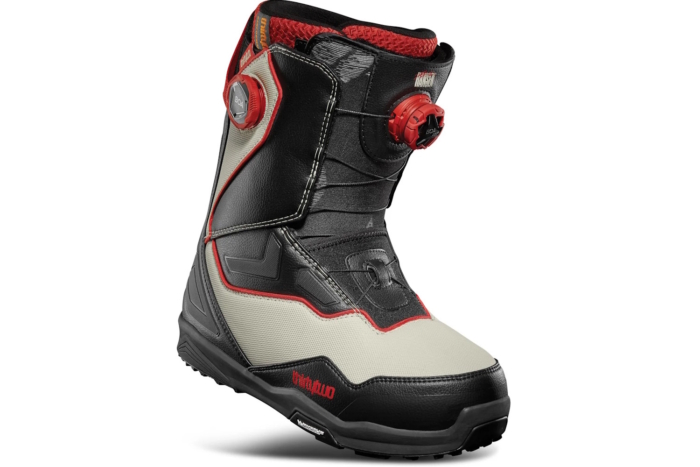
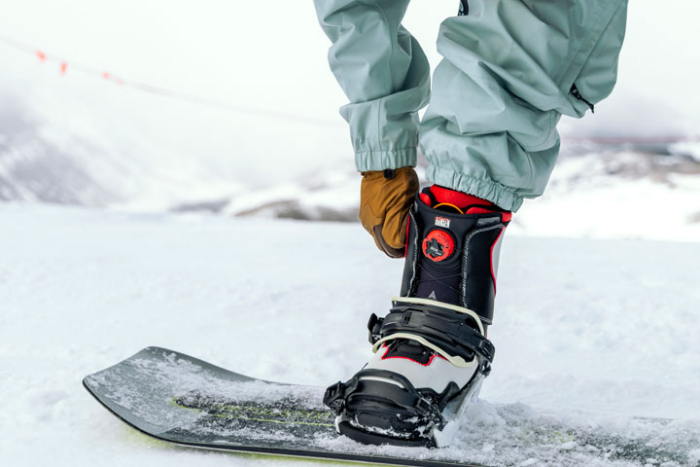
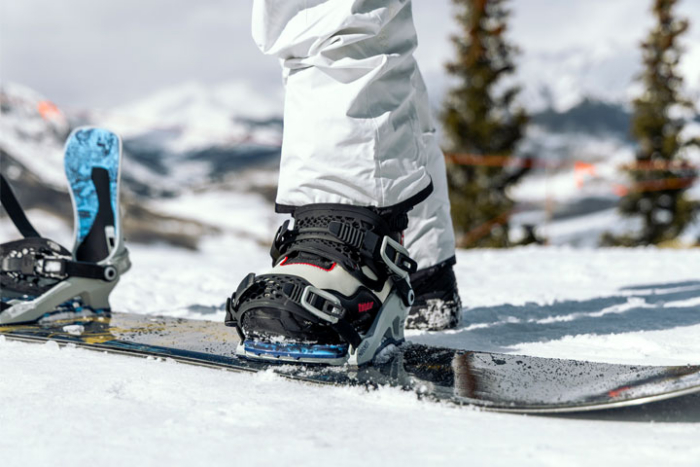
If you need a true single-boot quiver that seamlessly transitions from double-black steeps to spring park laps, the ThirtyTwo TM-2 Double BOA ($480) is built to handle it all.
The Tech: Constructed with a medium-stiff flex, this design uses a rigid spine along the back of the ankle to lock in edge hold while incorporating a flexible upper cuff for pressing rails and buttering. It pairs a Dual BOA fit system for independent calf and forefoot adjustments with ThirtyTwo’s Performance Fit Intuition Liner. To eliminate unwanted foot lift, the liner has an adjustable heel-hold system with swappable foam spacers ranging from 3mm to 8mm.
What We Like: Gear tester Eric Phillips, a year-round search and rescuer, field-tested the TM-2 Double BOA at Crested Butte Mountain Resort across icy mornings, deep powder, and slushy spring laps. He highlighted its exceptional long-term durability and versatile ride quality. Compared to more park-focused options like the ThirtyTwo Lashed Double BOA X POWELL, the TM-2 provides noticeable added stiffness along the rear spine, offering greater stability on technical terrain without sacrificing board feel.
What We Don’t: Straight out of the box, the forefoot fit feels tight, making a heat-molding session at a local shop essential to bypass a lengthy break-in period. Additionally, the internal ankle harness can snag when sliding the liner into the shell, and the two-piece shin Velcro strap is somewhat awkward to align properly.
Should You Buy It? As a dependable, multi-season performer, this boot is capable of handling any terrain on the mountain. The TM-2 Double BOA is well worth the initial break-in effort.
Salomon Echo Lace SJ BOA
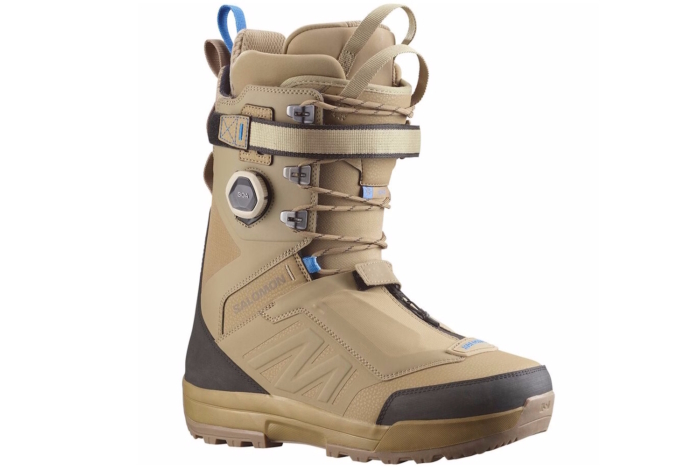
Specifications
Pros & Cons
Pros
- Half gaiter keeps feet and lower legs dry
- Recycled and bio-sourced materials
Cons
- Too stiff for mellow and intermediate riders
- If you’re over traditional laces, these aren’t for you
Bottom Line: An eco-conscious, medium-stiff boot that delivers top-tier heel retention and side-country versatility for hard-charging riders. It is a fantastic match for advanced snowboarders who want a traditional lacing feel with a modern BOA heel lock.
The Salomon Echo Lace SJ BOA ($440) is a compelling option for expert riders who prioritize environmental responsibility without sacrificing aggressive responsiveness.
The Tech: This design pairs traditional laces with a quick-release power strap and Salomon’s STR8JKT BOA Pro system — a specialized three-point internal heel harness that locks the ankle back to eliminate lift. Sustainability is integrated directly into the construction, featuring an Ortholite Eco-Hybrid footbed made from recycled and bio-sourced materials, a FUZE SURGE midsole containing 30% natural rubber, and 78% recycled 3M Thinsulate insulation. A built-in half snow gaiter keeps powder out when stepping off-piste.
What We Like: Gear tester and professional photographer Eric Phillips put these boots through extensive resort testing, finding them equally capable when embarking on short bootpacks or light side-country tours. He noted that the Precision Liner with its heat-moldable, multi-density foams provided excellent cushion, while the Quickdry insole effectively prevented odor buildup over back-to-back riding days. Compared to full BOA models like the ThirtyTwo TM-2 Double BOA, the Echo Lace offers the micro-adjustable heel security of a BOA harness alongside the traditional, customizable tensioning feel of standard laces across the outer shell.
What We Don’t: The medium-stiff flex profile is too aggressive for casual intermediate riders seeking a forgiving feel. Durability-wise, a portion of the traditional laces runs through fabric loops rather than metal eyelets, creating friction that led to visible fraying during testing.
Should You Buy It? Advanced and expert riders who want a responsive, environmentally focused boot that bridges resort charging and side-country hiking will find plenty of value here.
Other Shred-Ready Snowboard Boots We Field Tested and Dig
While these seven snowboard boots didn’t receive superlatives, each pair is one we’d recommend to friends at the hill for dialing in their ride goals.
-
-
Morgan Tilton testing the Burton Women's Highshot X Pro Step On snowboard boot; (photo/Jason Hummel)
-
Morgan Tilton testing the Burton Women's Highshot X Pro Step On snowboard boot; (photo/Jason Hummel)
-
Morgan Tilton testing the Burton Women's Highshot X Pro Step On snowboard boot; (photo/Jason Hummel)
-
Morgan Tilton testing the Burton Women's Highshot X Pro Step On snowboard boot; (photo/Jason Hummel)
Specifications
Pros & Cons
Pros
- Instant Step On entry
- Exceptional triple-zone fit
- Superior heel lock
- High-level thermal insulation
Cons
- Premium price tag
- Requires Step On bindings
- Minor pressure spot on choppy snow
Bottom Line: A top-tier, highly responsive Step On option that delivers unrivaled foot containment with effortless strap-free convenience. This ideal pick is for advanced female riders who want zero binding pressure points and exact, triple-zone micro-adjustability for steep resort charging.
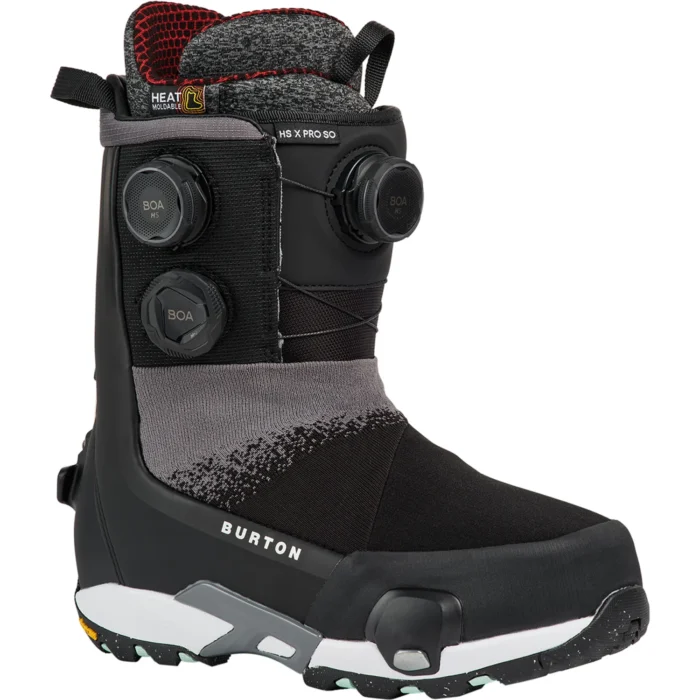
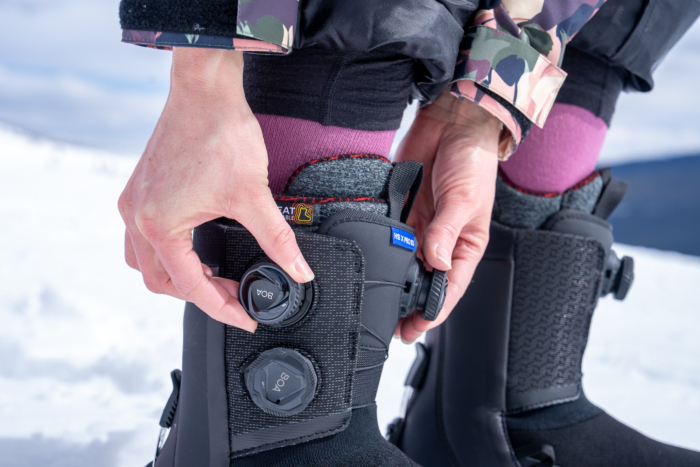
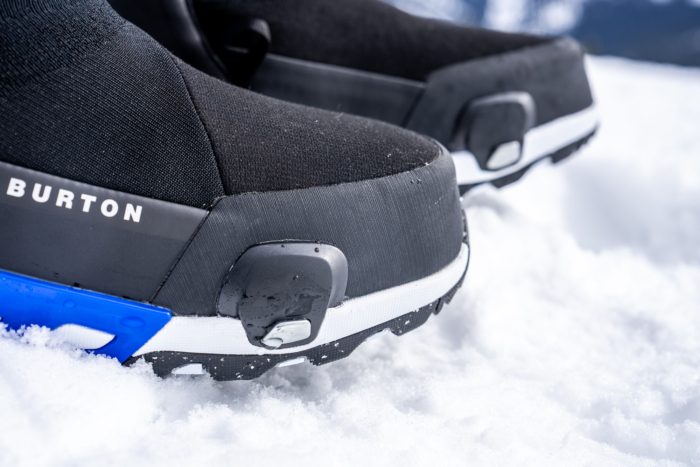
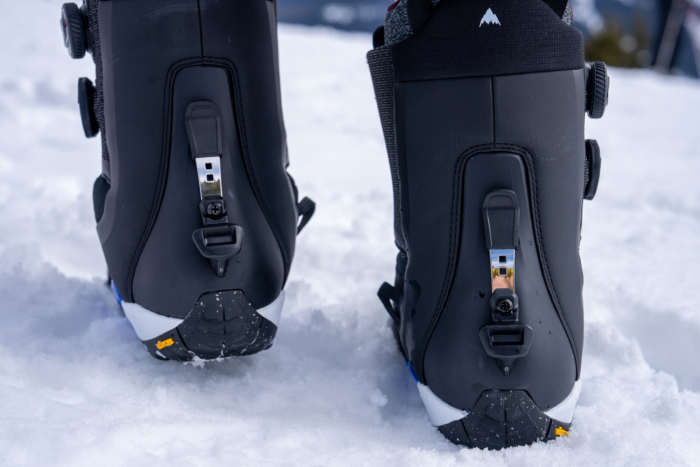
If you want to liberate your boots and nix binding straps, the Women’s Burton Highshot X Pro Step On ($730) delivers elite-level response and total fit control.
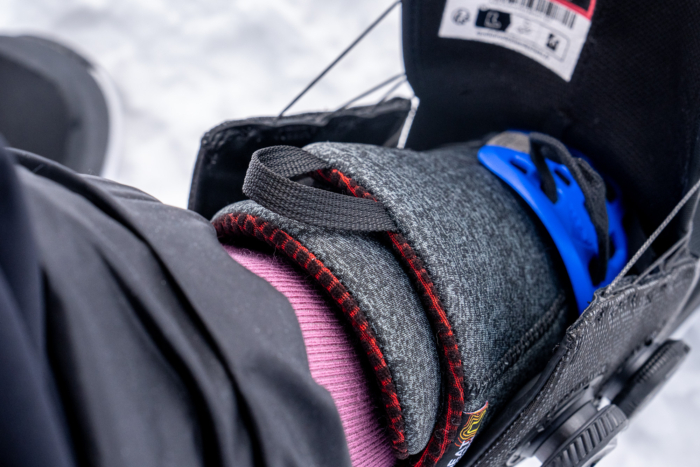
The Tech: Purpose-built to pair exclusively with Burton Step On bindings, this design utilizes a three-cleat connection — a dual-click heel latch alongside two forefoot clips — to eliminate strap weight and pressure spots. A Burton BOA Triple Dial PerformFit Wrap system allows for independent micro-adjustments across the outer cuff, internal liner, and forefoot toe box. Inside, an asymmetric Life Liner wraps around the shin to relieve pressure, while underfoot Sleeping Bag reflective foil and DRYRIDE Heat Cycle insulation radiate warmth.
What We Like: GearJunkie Senior Editor Morgan Tilton field-tested these boots at Vail Ski Resort during GearJunkie Ski Week, pairing them with Burton Step On Lexa X EST bindings. She noted that clipping in was seamless, and the triple-BOA configuration allowed even narrow-footed riders to lock down the forefoot and heel with pinpoint precision. The asymmetric liner eliminates tongue pinch spots across the shin, and an integrated rigid lateral panel drives immediate power into turns. Compared to traditional strap-compatible options like the Vans Encore Pro 2.0, the Highshot X Pro provides an infinitely faster entry-and-exit system alongside significantly more rigid edge support.
What We Don’t: Beyond the eye-watering price tag, stepping into the heel cleat requires careful attention to achieve both clicks for a snug, snow-free connection. Additionally, during fast, choppy riding across rough terrain, the rigid lateral panel inside the liner can create a slight pressure spot against the top of the foot (dorsum).
Should You Buy It? Advanced riders willing to invest in a dedicated Step On system will find this boot delivers unmatched heel hold, incredible board feel, and instant turn initiation.
-
-
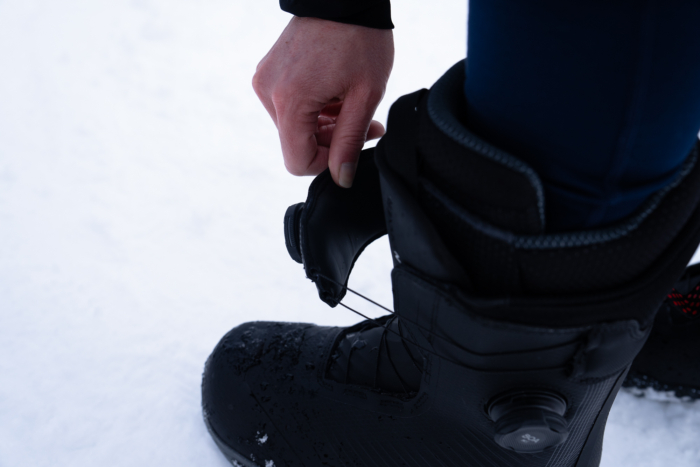
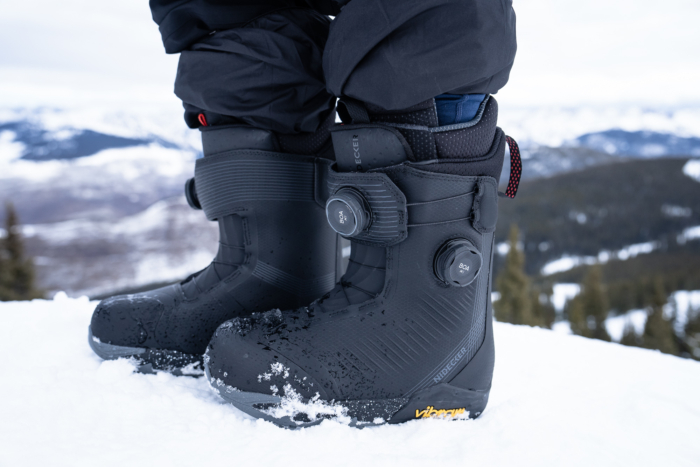
Morgan Tilton testing the Nidecker Kita; (photo/Jason Hummel)
-
Morgan Tilton testing the Nidecker Kita; (photo/Jason Hummel)
-
Morgan Tilton testing the Nidecker Kita; (photo/Jason Hummel)
-
Morgan Tilton testing the Nidecker Kita; (photo/Jason Hummel)
-
Morgan Tilton testing the Nidecker Kita; (photo/Jason Hummel)
-
Morgan Tilton testing the Nidecker Kita; (photo/Jason Hummel)
-
Morgan Tilton testing the Nidecker Kita; (photo/Jason Hummel)
-
Morgan Tilton testing the Nidecker Kita; (photo/Jason Hummel)
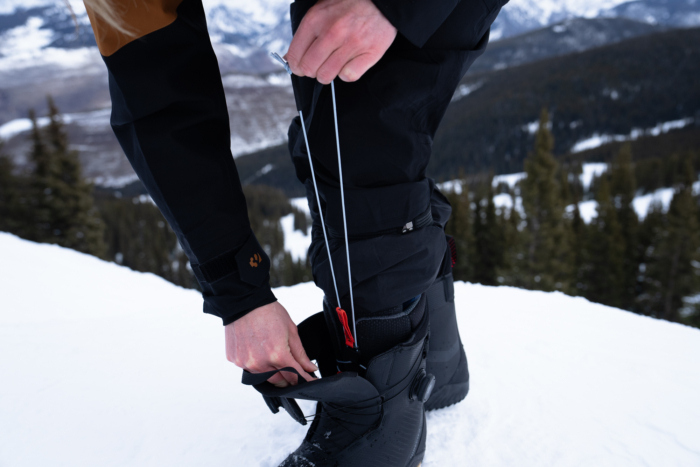
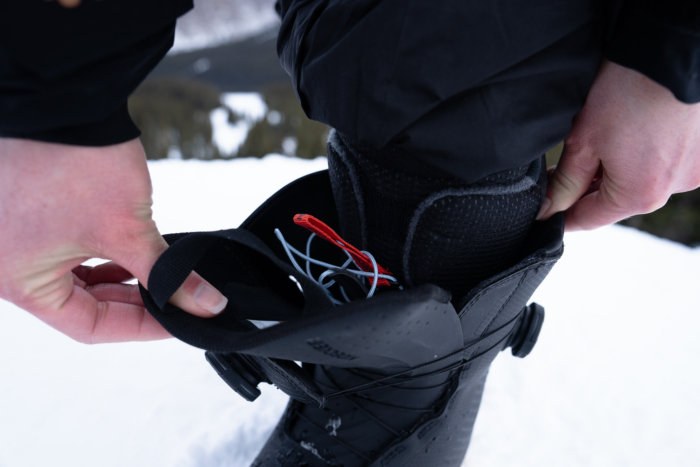
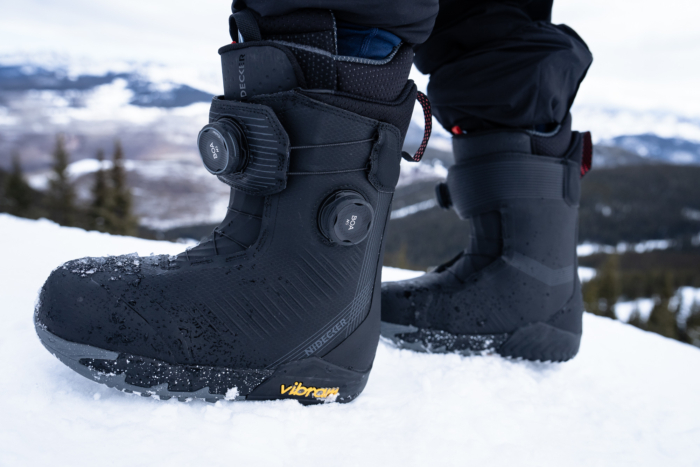
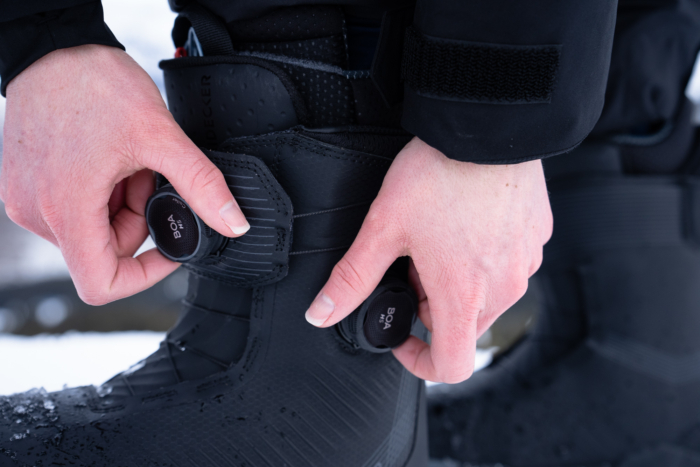
Specifications
Pros & Cons
Pros
- Superior shin power-wrap
- Industry-leading heel lockdown
- Exceptional ice traction
- Seamless binding integration
Cons
- Premium price point
- Overly stiff for park
- Firm initial break-in
Bottom Line: An ultra-stiff power boot that combines incredible shin containment with seamless easy-entry binding compatibility. It is an ideal pick for hard-charging female riders who want immediate edge control and elite traction on frozen resort terrain.
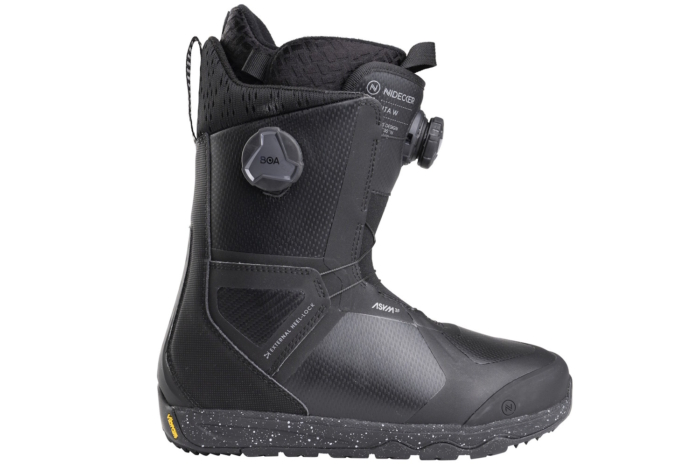
These boots are dynamite for aggressive all-mountain shredders, delivering a stiff resort footprint loaded with cutting-edge tech like a unique BOA Wrap Strap closure, a high-tier liner, and a grippy Vibram outsole. The Nidecker Kita ($480) serves as the dedicated women’s complement to the men’s version with zero cut corners.
The Tech: Engineering highlights center around an innovative Wrap Strap closure system across the upper shin powered by an H5 BOA dial, distributing pressure evenly to add structural rigidity. Two micro-adjustable H5 BOA dials handle precise tensioning, while a fully seamless TPU-and-mesh exterior creates a low-profile shell built for rear-entry or step-in bindings like Nidecker’s Supermatic. Inside, a redesigned gold-level liner hosts an injected 3D Permaflex tongue, latex J-Bars for heel lock, EVA foam shin guards, and antimicrobial silver-ion odor control paired with heat-reflective foil.
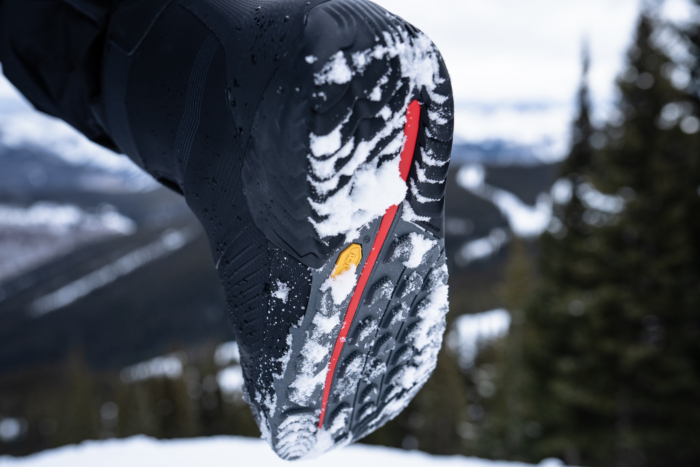
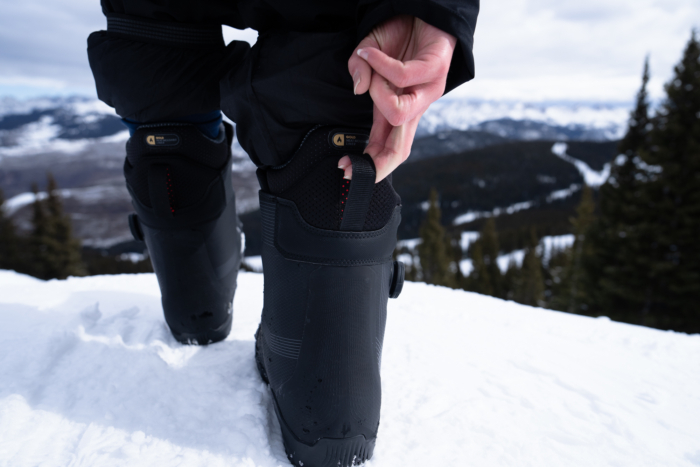
What We Like: Senior Editor Morgan Tilton field-tested these boots on steep groomers and completely frozen faces at Crested Butte Mountain Resort. Rated at an 8.5/10 stiffness, the boot feels surprisingly effortless to pull on thanks to a pre-shaped inner cuff and sturdy dual pull loops. The Vibram Approach outsole utilizing Icetrek compound and aggressive traction lugs provided exceptional surface bite over icy terrain. Compared to single-dial options like the Ride Lasso Pro, the Kita’s dual-zone setup combined with the shin Wrap Strap offers far superior, custom-tailored pressure distribution that eliminates calf slack.
What We Don’t: Given its unyielding 8.5/10 stiffness profile, this model is far too rigid for park riders or intermediates seeking a surfy, forgiving flex. Additionally, while the micro-adjustable H5 dials have a recessed profile to prevent snagging, the extra wrap strap adds another step to your morning boot-up routine.
Should You Buy It? Expert riders who demand maximum power transfer, instant edge response, and foot-reinforcing stability for high-speed charging will find this feature-packed design worth every penny.
-
-
(Photo/Mattie Schuler)
-
-

Specifications
Pros & Cons
Pros
- Excellent heel hold
- Toasty
- Roomy toe box
Cons
- Moderately aggressive tread
- Toasty for spring conditions
- Topside of toe box offers lower leverage for narrow feet
Bottom Line: A well-cushioned, highly comfortable option that merges an exceptional heel lock with a surprisingly roomy forefoot. It is a superb choice for resort riders who prioritize all-day warmth and zero pinching once the feet swell.
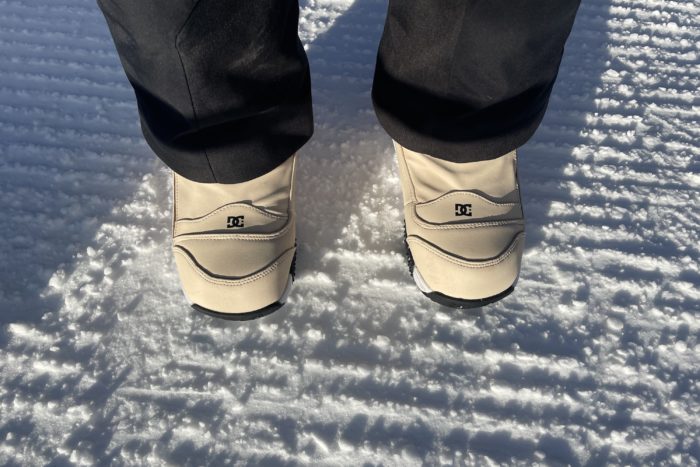
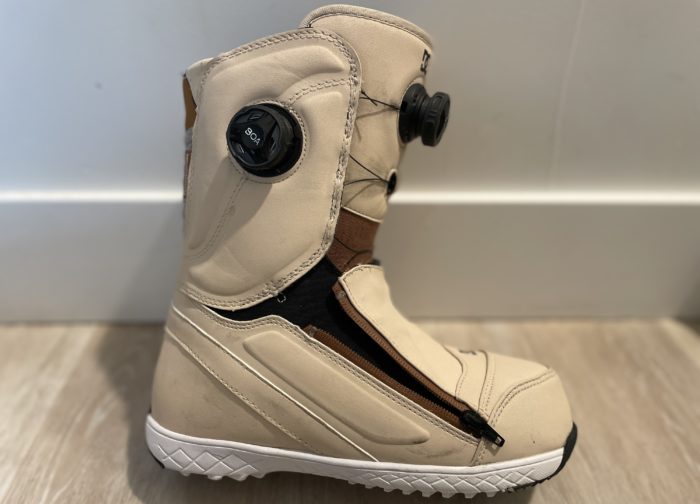
We’ve never tested a boot quite like the DC Mora BOA ($420), which earns high points for securing the ankle while keeping the toes relaxed.
The Tech: Built around an articulated shell, this model employs a Dual BOA Fit System using H4 coiler dials to manage tension across upper and lower zones independently. Inside, the heat-moldable Response Liner II incorporates Primaloft insulation to maintain thermal comfort without adding bulk, trimmed with a faux-fur cuff to block cold drafts. Underfoot, a lightweight Unilite rubber outsole cushions harsh landings, while an exterior storm flap zips over the tongue to seal out melting slush and snow.
What We Like: GearJunkie Senior Editor Morgan Tilton tested these boots across corn snow at Aspen Mountain and through variable conditions — from deep powder to wind-affected boilerplate — at Whistler Blackcomb. Featuring a 7/10 flex rating, the boot locked down her narrow heels without requiring mid-day liner adjustments during lunch breaks. On blustery 25-degree days, the Primaloft insulation kept toes warm without overheating. Compared to stiffer, high-charge models like the Nidecker Kita, the Mora BOA offers a much more forgiving, comfortable forward flex that eliminates early-season foot fatigue.
What We Don’t: On fast heelside carves through choppy snow, the spacious toe box creates an open gap above narrow feet, slightly reducing leverage and edge-to-edge response. Additionally, on warm 50-degree spring days, the heavily insulated liner can run noticeably hot. On the other hand, gear tester Mattie Schuler put these boots through sub-zero first-chair mornings across groomers, tree runs, and deep-powder moguls at Winter Park, Eldora, and Arapahoe Basin, confirming that while the integrated storm flap kept her feet completely dry, her toes felt chilled in the mid-20-degree cold.
Should You Buy It? Riders seeking a secure heel pocket paired with a roomy forefoot will find this warm, mid-flex cruiser delivers superb all-day comfort.
-
-
(Photo/Eric Phillips)
Specifications
Pros & Cons
Pros
- Dual-Zone BOA Fit System on the shell and liner
- Wrap Fit Liner provides exceptional comfort vs. traditional liners
- Comfortable right out of the box
Cons
- Single-shell BOA often tightens unevenly
- Overfoot liner strap requires liner removal before putting on
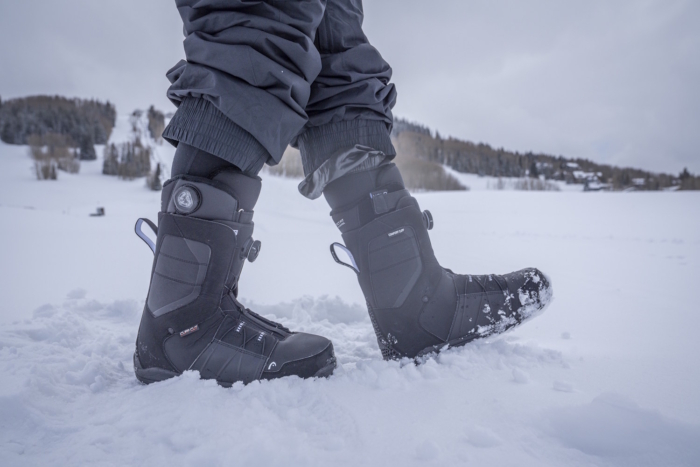
Bottom Line: An ultra-comfortable, all-mountain option that prioritizes plush cushioning and pressure-free instep room over extreme stiffness. The Raker BOA Zonal is a great match for resort riders who want bell-to-bell ease without fighting their footwear.
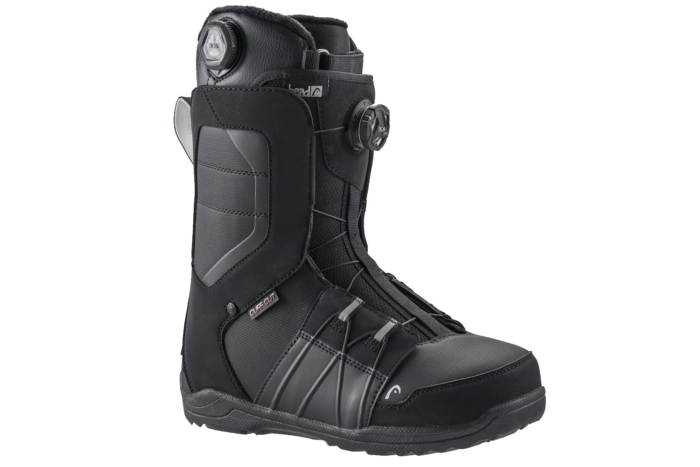
Built for all-mountain riders seeking a balance of support and cushion, the Head Raker BOA Zonal ($379) is a forgiving design suited for varied resort terrain. While intermediate and advanced snowboarders can easily charge in them, even beginners will appreciate how plush they feel during full days on the slopes.
The Tech: This model centers around a dual BOA Fit System featuring a shell-mounted BOA Coiler alongside a dedicated zonal BOA for the liner. Inside, the heat-moldable liner incorporates recycled coffee grounds into the textile weave to naturally combat foot odor. To keep heels locked down, the closure system cinches around the midfoot and ankle rather than solely hugging the upper cuff, while a lightweight outsole delivers reliable ground grip during parking lot treks.
What We Like: Gear tester and professional photographer Eric Phillips field-tested these boots at Crested Butte Mountain Resort across long resort laps. He found them to be among the softest, most plush options tested, making them a joy for bell-to-bell riding. Head builds the shell and liner with a generous interior volume to accommodate higher insteps — easing medial pressure points on the foot — and pairs it with an anatomical toe box that allows toes to splay naturally. Compared to stiffer options in our guide like the Burton Highshot X Pro Step On, the Raker offers a far more forgiving, natural range of motion that excels on casual cruisers and side hits.
What We Don’t: Although Head assigns a 7 out of 10 flex rating, field testing revealed it rides closer to a soft-to-medium 5. The biggest drawback lies in the outer shell’s single BOA dial, which pulls unevenly — tightening firmly near the dial while leaving slight slack down near the toes. A separate lower-zone dial would better equalize forefoot tension without compromising responsiveness.
Should You Buy It? Snowboarders who value all-day comfort, extra instep relief, and easy-walking flexibility over rigid, hard-charging control will find this an exceptionally comfortable choice.
Specifications
Pros & Cons
Pros
- Dual BOA Fit System upper and lower adjustment ensures a precise, customized fit
- Exceptional comfortable out-of-the-box
- Extra warm with sleeping bag reflective foil
- Vibram outsole with Ecostep rubber offers solid traction
Cons
- Premium price point
- Stiff flex not for everyone
- BOA system can come loose during riding
- Stitching showing wear
Bottom Line: A plush, highly approachable option that combines immediate out-of-the-box comfort with quick dual-zone adjustability and dependable cold-weather warmth. It is a fantastic match for intermediate to advanced riders who prioritize damp cushioning and zero break-in pain for resort laps.
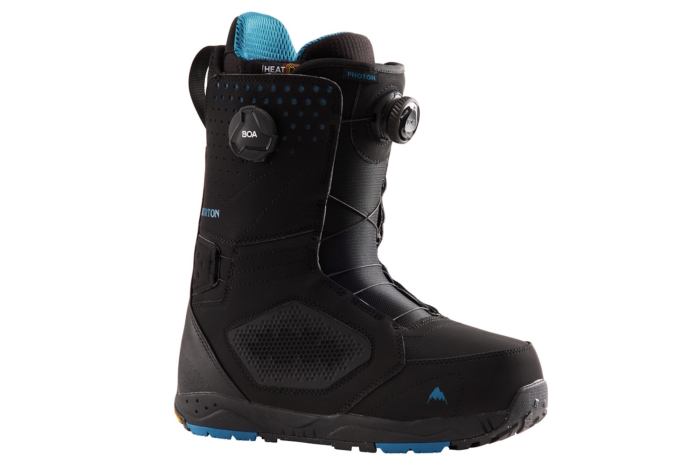
Offering a balance of control, comfort, and quick-lace convenience, the Burton Photon BOA ($480) stands out as a responsive yet forgiving resort boot.
The Tech: Built around a Dual-Zone BOA Fit System, this model allows for independent tensioning over the upper cuff and lower forefoot to secure the ankle. Beneath the footbed, a heat-reflective foil radiates body warmth upward during cold midwinter sessions, while B3 gel cushioning absorbs heavy chatter and landing impacts. Inside, an Imprint 3 heat-moldable liner works with Burton’s Focus Cuff heel hold system to drive power to the edges, all anchored by a grippy Vibram Traction Lug outsole made with EcoStep recycled rubber.
What We Like: Snowboard instructor and gear hound Eric Phillips put these boots through their paces at Crested Butte Mountain Resort in Colorado, hiking the steep Extremes terrain and bootpacking past park jumps. Thanks to Burton’s Total Comfort Construction, he experienced an instantly broken-in feel straight out of the box, feeling confident enough to land backflips on his very first day of testing. Compared to stiffer, ultra-aggressive Step On setups like the Burton Highshot X Pro, the Photon BOA offers a much more forgiving flex profile and traditional binding compatibility that easily caters to intermediate riders refining their all-mountain skills.
What We Don’t: Despite the impressive initial comfort, Phillips noted minor heel lift during high-speed, aggressive runs down steep terrain, attributing it to Achilles liner padding that feels less locking than the specialized harness kits found in ThirtyTwo or Salomon models. Additionally, early signs of cosmetic wear appeared around the outer stitching after only a few days of heavy resort lap testing.
Should You Buy It? Resort riders seeking a warm, exceptionally cushioned boot that eliminates early-season foot pain will find this a versatile and enjoyable daily driver.
-
-
Eric Phillips testing the Ride Lasso Pro; (photo/Eric Phillips)
-
(Photo/Eric Phillips)
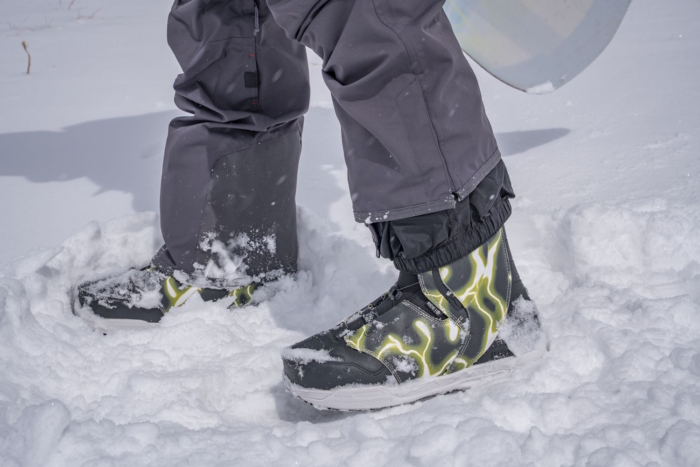
Specifications
Pros & Cons
Pros
- Excellent heel-hold BOA system secures the ankle without an internal harness
- Dreamwrap liner provides extra padding on outside of shins
- Standout exterior lightning graphics
Cons
- Single zone shell BOA results in uneven pressure distribution
- BOA system can come loose during riding
Bottom Line: A stiff, hard-charging option that provides incredible ankle lock and lightweight warmth for steep terrain. It is a compelling pick for expert resort riders who value elite heel hold and a low-profile shell structure.
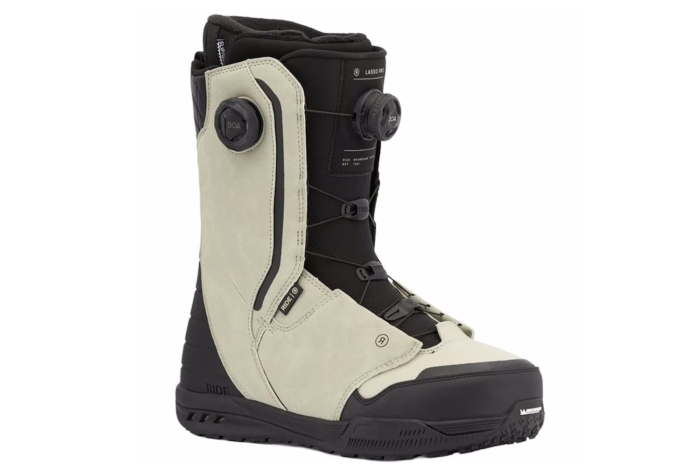
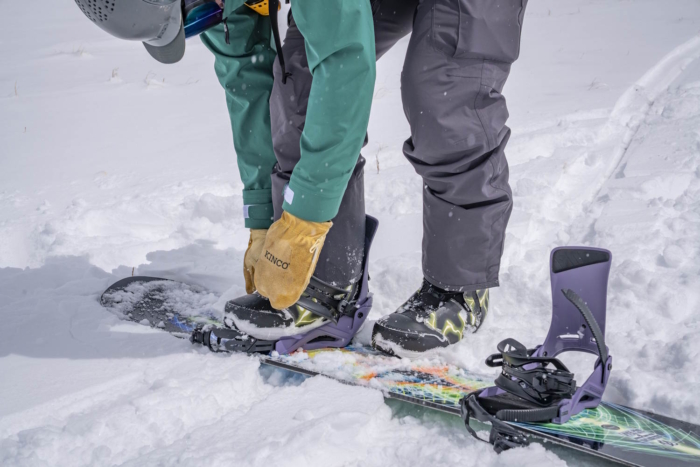
Tailored for riders who constantly rack up high vertical feet, the Ride Lasso Pro ($460) delivers a supportive, responsive platform for aggressive resort riding.
The Tech: Engineered with an 8/10 flex rating, this design relies on Ride’s IN2GRATED shell construction to create a streamlined, lightweight body that minimizes foot fatigue. An H4 BOA Coiler works in tandem with an internal Tongue Tied system, pulling tension across the tongue to secure the heel without requiring a traditional internal harness. Underfoot, a heat-reflective foil traps warmth, while a Michelin Summit rubber outsole delivers durable ground grip on icy bootpacks. The Intuition Trap Wrap Liner incorporates J Bars around the ankle for lateral stability, alongside bamboo-charcoal-infused Black Gold mesh to control moisture and odor.
What We Like: Snowboard gear expert Eric Phillips put these boots through extensive field testing at Crested Butte Mountain Resort, navigating icy winter winds and tackling steep lines in the Extremes terrain. He noted that the boots performed exceptionally well straight out of the box with zero pressure points or pinch spots. Compared to models with external harness straps like the Burton Photon BOA, the Lasso Pro achieves superior ankle lock with a cleaner, integrated internal cable configuration.
What We Don’t: The primary drawback lies in the single-zone outer shell BOA setup, which tends to pull tension unevenly. Tightening the dial often over-cinches the upper cuff while leaving the lower foot loose; as you ride, the cable shifts, making the forefoot overly tight while the calf area slackens. This migration requires periodic readjustments throughout the day to maintain balanced comfort.
Should You Buy It? Seeking maximum heel security, reliable thermal protection, and immediate turn initiation? You’ll find this rigid boot is an impressive resort performer, especially for advanced and expert riders.
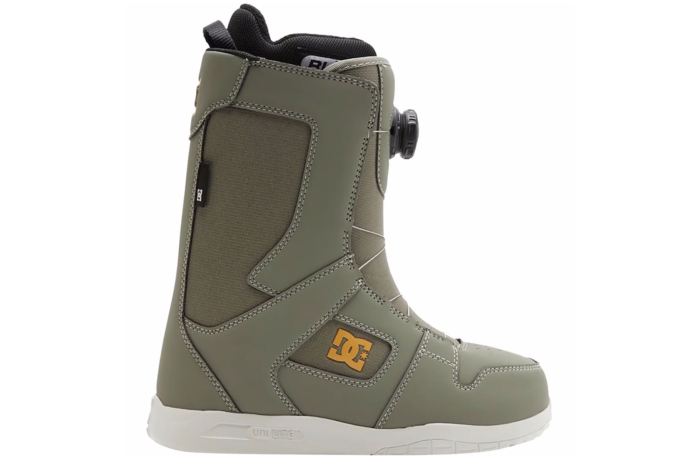
Specifications
Pros & Cons
Pros
- Budget-friendly price
- Soft, forgiving flex
- Lightweight UniLite outsole
- Eco-friendly algae liner
Cons
- Single-zone tensioning only
- Slick on smooth ice
- Too roomy for narrow feet
Bottom Line: A lightweight, budget-friendly option that delivers easy entry and skate-inspired comfort for entry-level riders. The Phase BOA is a fantastic match for beginners and casual weekenders who want a forgiving flex and simple single-dial adjustability without breaking the bank.
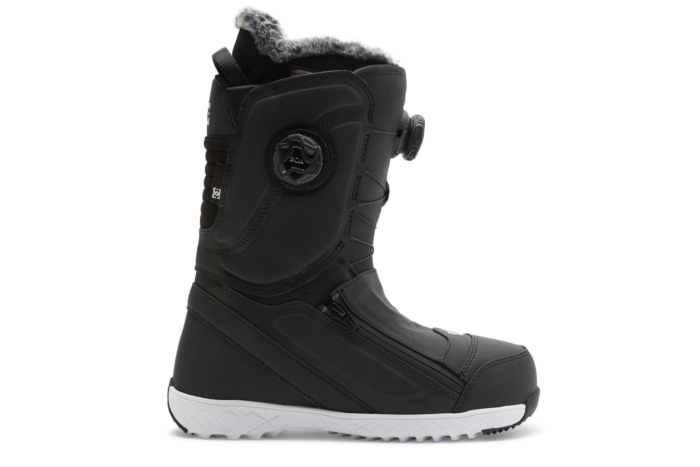
Getting into the sport or weekend-warrioring your way around the slopes? The skate-inspired DC Women’s Phase BOA ($250) is calling your name with an unbeatable price tag that delivers effortless micro-adjustment and a more precise fit.
The Tech: Built around a gentle 4/10 flex rating, this straightforward design relies on a single H4 BOA Coiler dial for fast, uncomplicated shell closure. Inside, the heat-moldable Response Liner I incorporates plush memory foam, a thermo-regulating fleece lining, and eco-friendly Bloom Algae foam harvested from biomass. Underfoot, a lightweight UniLite foam outsole prioritizes cushioned walking comfort over heavy, deeply lugged rubber.
What We Like: GearJunkie Senior Editor Morgan Tilton tested these boots on resort laps, noting that simplicity reigns supreme with exceptionally easy entry, exit, and tensioning. The plush memory foam liner and thermo-regulating fleece offer cozy out-of-the-box warmth, while the moderate shell last provides a comfortable fit for average-to-wider feet. Compared to stiffer, technical boots like the DC Mora BOA, the Phase BOA provides a far more forgiving, playful forward bend that helps newcomers build confidence without foot fatigue.
What We Don’t: Because the UniLite outsole is made from lightweight foam composite rather than deeply lugged rubber, traction on icy parking lots and frozen snowbanks is limited. Additionally, the single-dial setup cannot isolate upper and lower lace zones, and narrow-footed riders like Tilton may find the moderate forefoot last a bit too spacious for high-speed edge control.
Should You Buy It? Casual snowboarders and new riders seeking maximum comfort, zero break-in pain, and an accessible price point will find this OG model an incredible value.
Snowboard Boots Comparison Chart
Scroll right to view all of the columns: Price, Flex, Lacing, Ride Style, Experience Level.
| Snowboard Boot | Price | Flex | Lacing | Ride Style | Experience Level |
| Burton Highshot X Pro Step On Snowboard Boots M – W | $730 | Medium stiff | Burton BOA Triple Dial PerformFit | All mountain | Advanced |
| Vans Encore Pro | $310 | Medium | Double BOA | All-mountain | Intermediate to Advanced |
| ThirtyTwo Lashed XLT Double BOA X POWELL | $430 | Medium | Dual BOA fit system, Velcro power strap | Freestyle | Intermediate to Advanced |
| Head PSI Triple BOA | $459 | Stiff | Head PSI Triple BOA (H5/M+2) | All mountain / Freeride | Advanced to expert |
| K2 Orton | $490 | Stiff | Dual TX3l BOA External lacing with 3 point harness liner | Freeride, Freestyle, Backcountry | Advanced to Expert |
| ThirtyTwo TM-2 Double BOA | $480 | Medium stiff | Dual BOA fit system | Freestyle | Intermediate to Advanced |
| Salomon Echo Lace SJ BOA | $440 | Medium stiff | Lace up, powersStrap, BOA | All Mountain, Freeride, Side country | Advanced to Expert |
| Nidecker Kita | $480 | Stiff | Dual BOA with H5 Wrap Strap | All mountain | Advanced |
| DC Mora BOA | $420 | Stiffer | Dual BOA Fit System with BOA SS laces | All Mountain, Freeride | High Intermediate to Advanced |
| Head Raker BOA Zonal | $420 | Medium to Stiff | External BOA and Liner BOA | All-mountain | Intermediate to Advanced |
| Burton Photon BOA | $480 | Medium to Stiff | Dual Zone BOA | All Mountain, Freeride, Bootpack | Advanced |
| Ride Lasso Pro | $460 | Medium to Stiff | External BOA and Liner BOA | All Mountain, Freeride, | Advanced |
| DC Phase BOA | $250 | Soft medium | Single Dial BOA H4 Coiler | All Mountain | Beginner to intermediate |

How We Tested Snowboard Boots
Eight snowboard experts have contributed testing to this guide since its inception in 2022. It’s been updated 10 times.
While our snowboard boot testers frequent ski resorts, many of us are also diehard splitboarders and mechanized backcountry users with AIARE 2 certifications, testing boots deep in unforgiving backcountry zones.
We’ve faced plenty of challenges with finding the best-fitting snowboard boots, due to foot shape and injuries, and are aware of the obstacles.

Our Expert Testers
- Leading the gear testing, Snowsports Senior Editor Morgan Tilton has been snowboarding since 2002. She’s a splitboarder, snowmobiler, and pow surfer. In the 2025-2026 winter season, she descended 413,845 vertical feet while testing snowboard boots at Crested Butte Mountain Resort, RED Mountain Resort, Whistler Blackcomb, Vail Ski Resort, and in the backcountry. Those boots tallied 143 hours and 770 miles on snow.
- Professional athlete Dane Tudor contributes snowboard gear testing and analysis.
- High-vertical contributor Eric Phillips has been snowboarding since 2005. Teaching professionally at multiple ski resorts, he is an avid resort charger, splitboarder, snowmobiler, and pow surfer, and works in search and rescue in Southwest Colorado.
- Longtime GearJunkie contributor Drew Zieff has also chipped in with testing — he’s the director of Backcountry Magazine’s splitboard test and Outside Magazine’s snowboard test.
- Contributor Austin Beck-Doss has been snowboarding since 2005.
- Contributor Nate Mitka has hammered lines in boots for this guide.
- Outdoor school teacher and snowboarder Mattie Schuler has tested snowboard boots for GearJunkie.
- Off-piste tester Whitney Gilliam, an AIARE instructor and avid splitboarder based in Southwest Colorado, has tested boots.

Our Testing Grounds
Our test team is centered in Crested Butte, Colo., home to world-class resort steeps and legendary backcountry riding. We also have testers based in the Tahoe Sierra and Colorado’s Front Range, including test laps at Eldora Mountain.
Boots in this guide were also tested everywhere from Jackson Hole, Wyo., and Thompson Pass, Alaska, to Bella Coola, British Columbia, and Swedish Lapland.
The GearJunkie team meets for an annual on-snow test week to grind out turns and swap notes, including two previous gatherings at Crested Butte Mountain Resort, which is known for its expert terrain, as well as a meetup at Vail Ski Resort.

Our Testing Process
While testing our boots, we consider overall fit, stiffness level, durability, comfort, support, outsole grip, warmth, insulation, odor resistance, heel loop, tread, and lace design. We also consider the most popular, highly rated, and legacy products across a range of price points, performance, and style.
But boots are also subjectively ideal for certain feet. For reference, Beck-Doss has wide feet and a high arch. Zieff has narrow feet and unfortunately long second toes, as does Tilton, plus that very narrow heel. She’s experienced superficial frostbite on both feet — the first level of frostbite damage — which made her feet extremely sensitive to cold. We definitely recommend trying on your boots — or 12 of them — to narrow down which brand’s last is a best fit for you.
Otherwise, we’re confident this list includes the best snowboard boots on the market for a range of athletes, goals, and budgets.

Our Snowboard Boots Rating System
We score each pair of snowboard boots on a 1–10 scale for Fit and Flex, Lacing System, Liner Quality and Heel Hold, and Comfort and Cushioning.
Fit & Flex: The most critical factor of a boot design is how it fits. It should feel snug without any pressure points. While there’s a spectrum of foot shapes and sizes, there’s a general quality to a boot fit that makes it a solid match for most people. The flex rating plays a role in how versatile the boot is. The softer it is, the less likely it is to be an everyday queen. The firmest boots also tend to be best for specific objectives versus all-day, every-day rippers.
Lacing System: A huge variety of systems are out there. Double, single, and triple BOA. Traditional laces. And a hybrid of the two, as well as speed laces and power straps. Each system has tradeoffs between speed, comfort, personalization, rigidity, dependability, and durability.

Liner Quality & Heel Hold: Most of our favorite boots have heat-moldable liners. Liners have unique internal harnesses for security, so we test how easy those are to enter and exit, as well as the degree of security. The heel hold is a huge factor. We need our heel to stay put and for cushion to be in all the right places.
Comfort & Cushioning: These points go up in a boot depending on the comfort and design of the footbed, as well as the midsole cushioning and the overall breathability of the liners and exterior.
The Overall Rating is based on contextual, editorial judgment, and the complex user experience across various scenarios and conditions.

Buyer’s Guide: How to Choose the Best Snowboard Boots
For starters, snowboard boots are generally categorized by terrain preference or rider “style.”
Style
The three most common categories are all-mountain, freeride, and freestyle, followed by a fourth small category that’s growing in popularity: backcountry. Here’s a basic breakdown of riding style.
- All-mountain: All-mountain covers everything from Groomers and powder to jumps and jibs
- Freeride: Off-piste (backcountry, slackcountry, side country, big mountain), steep terrain, firm snow
- Freestyle: Half pipe, jumps, jibs, tricks in the park and around the mountain
- Backcountry: Ascending and descending slopes out-of-bounds, uphilling at the resort

Backcountry Snowboard Boots
Most backcountry boots are freeride boots with backcountry-specific features, but they’re not the only boots that work in the backcountry — far from it. If you’re a splitboarder, you’ll want a stiffer, technical, off-piste-oriented boot. These boots have specific features tailored to backcountry travel, like a walk mode, deep lugs for traction, and a crampon-compatible outsole.
However, depending on personal preference, mode of transportation, and your backcountry objectives, some freeride, all-mountain, or even freestyle snowboard boots could work well in the backcountry, too. For instance, if you’re using a snowmobile to access a backcountry zone and then building a booter, you don’t need a walk mode at all, and a freestyle boot might provide the flex you’re looking for.

Women’s vs. Men’s Snowboard Boots
Snowboard boots are broadly categorized for men or women. The biggest difference between the anatomy of women and men is that the calf muscle is lower on a woman’s leg. For better support and comfort, the cuff of a woman’s snowboard boot is shorter in length.
Women’s boots also generally have a narrower heel, a more streamlined shape, and greater flex. Some women with longer or wider feet find men’s boot options work great. For some men with narrower feet, women’s boots are a better fit.

Hard Boots vs. Soft Boots
The vast majority of snowboarders are looking for soft boots — these are traditional snowboard boots crafted from materials like leather, rubber, and various fabrics, and they’re traditionally considered the best boots for snowboarding. However, a select group of snowboarders, particularly splitboarders who spend long days in the backcountry, may be interested in hard boots.
Hard boots are crafted from plastic and closely resemble ski boots. In fact, one of our favorite splitboard hard boots, the Phantom Slipper, is quite literally a splitboard-specific riff off of a popular backcountry ski boot, the Atomic Backland.
The benefit of a hard boot over a soft boot is the walk mode. Hard boots have much better walk modes than their soft boot cousins, as the hard plastic pieces can pivot much more efficiently than high-friction materials in soft boots. The Phantom Slipper and the Key Equipment Disruptive, for instance, both have a much bigger range of motion in walk mode than a soft snowboard boot design.
Additional benefits of hard boots? Some riders, particularly those with racing backgrounds, will appreciate the level of response that comes from switching to a plastic boot. Also, hard boots are much better for sidehilling, kicking steps, and utilizing crampons.
However, the main demerit of hard boots can be an unsurmountable one: some riders, particularly those with freestyle backgrounds, will miss the comfort and ride quality of soft boots.

Step-On Snowboard Boots
Step-in snowboard boots are designed to be used with step-in snowboard bindings. These boots incorporate built-in attachment points that allow the boot, when engaged, to lock directly onto designated bindings with mirroring attachment points.
For some riders, these systems minimize time while strapping in and also help make the boot’s connection with the binding consistent across runs. Some riders like being able to stand up straight while sliding their boot in versus bending over or sitting down.
On the other hand, some riders will miss the ride quality and feel of traditional bindings, as well as the customized pressure from run to run. As such, we mainly recommend these systems for aging parents trying to keep up with their kids, riders with injuries that make bending over difficult, and adults who are just learning how to snowboard.
While you might dig step-in systems for ease of use or other reasons, we highly recommend demoing before purchasing.
Step-In Setups
There are a couple of step-in boot and binding systems on the market, most notably K2’s Clicker and Burton’s Step On. By far, the best step-in interface on the market is the Burton Step On system. In partnership with Burton, DC, and Nitro both launched their own goods with the Step On technology.


It is worth noting that Burton Step On boots aren’t compatible with normal strap bindings due to their bulky tongue design — with a single BOA strap that goes across the front of the ankle — and neither are the K2 Clicker boots, which have metal components embedded into the outsoles.
Long story short? Try step-in systems before you buy, and plan to invest in a separate pair of boots and bindings if you’re going the step-in route.
Here are the various setups that are available today:
Step-In Boots Only Compatible With Burton Step On Bindings
- Nitro Cave TLS and Profile TLS ($420): made with the Burton Step On Snowboard Boots interface
- DC Men’s Phase, Judge, or Control BOA and two women’s models ($370-450): made with the Burton Step On Snowboard Boots interface
- Burton has 12 models, including a kids’ pair and wide widths for men and women ($200-620)
- K2 Clicker X HB: five models ($370-550) only compatible with the K2 Clicker Step-In Snowboard Bindings
Step-In, Rear-Entry Bindings Compatible With Traditional Snowboard Boots
- Nidecker Supermatic Snowboard Bindings ($400) — Nidecker acquired Flow in 2017, so there are Flow step-in bindings, too

Clicking In: Burton Step On
All Burton Step On boots have two attachment points on either side of the toebox and one on the heel. Burton Step-On bindings have corresponding attachment points. When you step into the Step On bindings, the toes and heels lock, and you have three points of contact for a secure, responsive ride.
Clicking Out: Burton Step On
To release, you pull a simple lever, and the boot pops free. It’s a fairly easy system once you get used to it, although some riders report difficulty when using Step Ons on steep slopes or in powdery snow.

Fit & Sizing
Beyond these two broad categories — men’s and women’s snowboard boots — snowboard boots can have a narrow, wide, or regular width. Their shape can also be more precise and streamlined for refined performance.
It’s important to determine your correct boot size for a particular boot, which can vary slightly from brand to brand. The best way to determine your boot size is to visit a retailer, get accurate foot measurements, and try on different pairs with your preferred snowboard socks.
When you wear snowboard boots, your toes can lightly graze the front of the boot, but you don’t want your toes to curl under. You also want to be sure there’s no heel lift, an indicator that the boots are too long or wide.
Be sure to go to your local snowboard boot shop to try on boots across different brands so that you have an idea of which size boot for each brand fits your feet. The size runs across each brand, and the tightness across styles of boots is unique.

A Note on Sizing Down Boots
With an age-old perspective, many aggressive or elite snowboarders swear on “sizing down.” Sizing down refers to getting a smaller snowboard boot size than your standard shoe size — say, an 8 boot if you usually wear a 9 shoe. The idea here is that all boots pack out, and once you do pack out the smaller-sized boots, the boots will fit perfectly.
But with the advancement of snowboard boot designs, available customization, and the skills of boot technicians, we recommend going to a local shop to work with the on-site boot fitter and customize the materials to your foot. That way, you can skip some of the aches and pains.

Breaking in and packing out smaller boots can be extremely painful, as circulation problems and blisters are par for the course. The benefit of sizing down is that you’ll eventually find better responsiveness with a snugger fit. If your feet are swimming around in your boots after they pack out, you’re not going to get next-level response.
However, it’s tough to enjoy snowboarding if your feet are on fire, so for the most part, we recommend you find a pair of boots that are snug and reasonably comfortable, or at least tolerable, from the jump. The best boots for snowboarding, especially if you’re a casual rider, are the ones that let you ride all day without pain.
If you’re smack dab between sizes, go with the smaller size, and expect a short but painful break-in period.

Get Your Boots Fit by the Pros
Many skiers won’t shop for ski boots without visiting a trusted boot fitter. Snowboarders, on the other foot, don’t place as much value on boot fitters, which is, in our opinion, a huge mistake. Boot fitters can point you to the right boots for your skill level and foot shape, or, if you already have a pair of boots, help customize the fit to the shape of your foot. Here are a few ways we’ve had boot fitters help us in the past:
- Throw flimsy, stock insoles in the trash and replace them with custom footbeds.
- Heat-mold liners. Heat-molding liners is a great way to speed up the break-in process. While it’s possible to do this at home, boot fitters have the right tools and tricks to ensure success.
- Punch out hard boots like the Phantom Slipper.
Finding the right boot fitter is tough, as many boot fitters are skiers, and you want an expert boot fitter who also is an expert snowboarder. If you’re in the Sierra, stop by Tahoe Sports Hub and ask for John Lauer — he’s our go-to guy.

Shims, J-Bars, and Other Boot-Fitting Tricks
While punching and heat-molding will provide you with more room inside snowboard boots, sometimes, you’re actually going to want less space. Less space can result in less blister-inducing foot movement and more response. Using a shim to take up real estate beneath the insole, or boomerang-shaped J-bars on the ankle to hold your heel, are two popular ways to fix common problems.
Some boots, like those from ThirtyTwo, come with helpful heel-hold kits, making it easy for casual riders to tweak the fit. Burton has a J-bar pack, too, that can be a lifesaver. If you’re not confident or looking to DIY, again, this is a fit issue that most boot fitters can solve in a matter of minutes.

Binding Compatibility
One important thing to consider when shopping for snowboard gear is that there is interplay between boots, bindings, and boards. We already touched on step-in boots, and how Step On boots from Burton and their partner brands, as well as K2 Clicker boots, aren’t compatible with traditional strap bindings.
We also discussed hard boots and soft boots — this one is a bit obvious, but soft boots aren’t compatible with hard boot bindings, and vice versa.
Beyond these specific examples, all soft boots are more or less compatible with all hard boot bindings. However, you still need to think about sizing and compatibility.
Always match your boot size to the binding size. When a boot fits in a binding correctly, you’ll have better performance. If you have a size 11.5 boot, a medium binding that fits boots sizes 8-10 won’t cut it.

Also, each binding size fits a range of boots (e.g., a medium fits sizes 8-10), but they better accommodate different sizes when adjusted. Don’t be afraid to tweak the heel cup positioning, strap placements, strap lengths, etc., to better accommodate your boots.
Furthermore, it’s worth noting that two boots that are the exact same size may have different profiles. A size 11 in a low-profile, small-footprint boot might squish into a medium binding, while a size 11 with a bulky footprint won’t come close.
You might not think about it while shopping for snowboard boots, but your boot sizing also impacts what size boards you can ride. If you have an 11.5 boot, for instance, you may want to consider a volume-shifted or wide snowboard that accommodates a larger boot and minimizes the chances of the dreaded toe or heel drag.
For all of these reasons, we like to recommend shopping for boots first before purchasing a snowboard and bindings — at least if you’re buying a full setup. And if you find a pair of boots that work well for you but your bindings are too small or your board is too narrow, stick with the boots and plan to upgrade the rest of your kit.

Comfort
A boot’s overall comfort is delivered through the combination of the midsole, liner, and footbed, as well as the level of overall support, which prevents fatigue. For instance, the Head Raken BOA snowboard boot has a Wrap Fit system, which adapts to the midfoot for optimal heel hold and a better connection to the midsole. This design offers more freedom in the forefoot area, resulting in a precise and uniform fit that ensures optimal comfort.
Sometimes, comfort and performance don’t go hand in hand, with super-stiff, extreme-performance boots not being the most comfortable for long days, while other, more comfortable boots aren’t as responsive.
A soft boot might provide immediate comfort. But a softer boot doesn’t necessarily deliver stability for preserving energy on a bell-to-bell or big-objective day. All considered, what feels most comfortable is based on each rider’s preference and foot needs.

Flex & Riding Style
One of the biggest differentiators for snowboard boots is the flex profile and the rider’s preferred riding style. A snowboard boot designed for backcountry use isn’t going to ride well in the park or for a beginner rider. Be sure to match the flex and riding style of prospective boots with your own style. Let’s break down the flex profile a bit more below.
Snowboard boots are constructed on a flex range from soft to medium to stiff. Often, brands use a scale of 1 to 10, with 10 being the stiffest. Occasionally, boots have an adjustable flex, like using tongue stiffeners and ranges from 6 to 8 on the stiffness scale.
Softer boots typically pack out and break down faster, while stiffer boots last longer and cost more.
We’ll dive more into the specifics below, but ultimately, the ideal flex of a snowboard boot hinges on personal preference and foot needs.
- 1-4: These are softer boots with forgiving flex and comfortable constructions. These boots are great for beginners, but that’s not all: They are also ideal for jibbing, freestyle riding, and tweaking grabs.
- 5-7: These are moderately stiff boots, a solid middle ground for intermediate riders and all-mountain riding. These boots are the most versatile boots, capable of cruising through the park and ripping the entire resort.
- 8-10: These are the stiffest boots out there. These boots are more suited to expert-level riders who demand instantaneous response. They are best for aggressive all-mountain riding and, even more so, unadulterated freeriding.

Soft Flex Snowboard Boots
Soft boots like the Ride Harper are the most comfortable boots, meaning they’re best for beginners or instructors who need to be on their feet all day. Some park riders also prefer a softer boot, as the flex makes locking into jibs and tweaking grabs much easier. However, the flex is too forgiving for high-octane freeriding.
Moderate Flex Snowboard Boots
Medium-stiff boots, like the ThirtyTwo Lashed Double BOA is ideal for progressing intermediates and all-mountain riding. They’re versatile, still reasonably comfortable, and can take on everything from terrain park laps to technical steeps.

Stiff Flex Snowboard Boots
Stiffer boots are best for freeriding. They enhance the reactivity and precision of the board, a trait more experienced and aggressive riders often prefer.
Backcountry riders also often prefer a somewhat stiffer boot. Stiffer boots provide better response on the uphill and the descent, which can be critical in technical, exposed terrain. Additionally, softer boots will get torn to shreds while touring, while stiffer boots can last longer.
While these are general guidelines, they’re not written in stone. A rider’s preferred stiffness level can also come down to personal preference. For instance, some park riders prefer a slightly softer boot for nimble movements while hitting jibs, while pipe riders may opt for a much stiffer boot.
Other advanced or expert riders don’t necessarily prefer the stiffest boots, despite heading into steep and challenging terrain, because they can take away comfort depending on your foot shape. Be sure to try on lots of different types of boots in person before you choose!

Flex of the Snowboard Boots in This Guide
- Burton Highshot X Pro Step On: Medium-Stiff
- Vans Encore Pro 2.0: Medium
- ThirtyTwo Lashed XLT Double BOA X POWELL: Medium
- Head PSI Triple BOA: Stiff
- K2 Orton: Stiff
- ThirtyTwo TM-2 Double BOA: Medium-Stiff
- Salomon Echo Lace SJ BOA: Medium-Stiff
- Nidecker Kita: Stiff
- DC Mora BOA: Medium-Stiff
- Head Raker BOA Zonal: Medium-Stiff
- Burton Photon BOA: Medium-Stiff
- Ride Lasso Pro: Medium-Stiff
- DC Phase BOA: Soft-Medium

Outsole
The outsole is the rubber located on the underside of the boot, which grips both your snowboard binding while riding, and also the snow, ice, and rocks when walking or pushing. Each boot has a unique lug design and outsole material to help provide great traction while walking on sidewalks or up a slope.
The Ride Lasso Pro sports a Michelin-branded outsole that’s perfect for an all-mountain boot — it’s grippy on slick surfaces, capable of scrambling, and isn’t so bulky that it minimizes downhill performance.
If you’re in the market for a backcountry or splitboard mountaineering boot, pay attention to this feature. Look for an outsole with aggressive lugs and dependable, well-vetted materials, such as the Vibram V5 outsole on the K2 Orton.
Or, if you’re looking for an even beefier build, check out the ThirtyTwo Jones MTB — these burly boots sport a heavy-duty Vibram outsole that’s comparable to those on mountaineering boots.

Lacing & BOA Closures
Traditional snowboard boots close up with laces, which certain riders prefer for a more fine-tuned fit all the way up the boot.
Conventional quick-pull closure systems are faster and easier to operate while wearing gloves. Various designs exist across brands, like the speed zone lacing. Other models have a single- or dual-zone BOA system.
Some folks feel quick closures provide a more uniform hug that doesn’t pack out compared to lace setups. One tradeoff is that laces are simpler to replace as they wear out or if they break in the backcountry. Overall, laces are more economical than quick-pull and BOA systems.
A handful of designs mix these options with laces plus a single BOA. And several backcountry and powder-conscious boots have a zippered shroud to protect the lower portion and closure of the boot from ice and snow. Some boots add extra reinforcement with a Velcro strap.


Single, Double, and Triple BOA
You’ll often see affordable boots, like the Burton Moto, using a single BOA system, while more expensive boots, like the Burton Ion, have a double BOA. Some boots, even have triple BOA.
The pros of a single BOA design are simple: you have fewer breakable parts, and tightening the boot is extremely easy. However, because one BOA controls the entire lacing system, you have limited adjustability.
Vice versa, the more BOA dials you have on a pair of boots, the more complex the lacing system, and the more breakable parts you have to deal with. However, this also enables way more adjustability. If you like a tight ankle but loose calf, a boot with dual BOA dials is the way to go.

How to Replace Laces or BOA
Replacing traditional laces is easy, and many boots come with a spare pair of laces in case yours breaks. Just yank out the old laces, thread the new ones, and you’re good to go.
Replacing BOA, on the other hand, is more complicated. If your BOA breaks, it’s possible you just might need a new lace or cable to rethread, which you can learn how to do here. However, it’s also possible that you’ll need to replace the dial itself, which you can also learn how to do here. It’s not a bad idea to grab a spare parts kit in advance, especially if you’re going on a hut trip or traveling overseas.
If DIY fixes aren’t your cup of tea, just bring your busted BOA to your local snowboard shop. Solid snowboard shop techs are usually familiar with typical BOA issues. If your boots are fixable, chances are they can help.
BOA is extremely convenient — until it’s not. That’s why we like using a backcountry boot that doesn’t exclusively rely on BOA. If the BOA breaks while you’re deep in the backcountry, you’ll be able to get back to the trailhead with no problem.

Liners & Footbed
The liner is a boot-shaped layer that fits inside the boot’s exterior shell. Most liners are removable, which is helpful for drying them out after a long day.
Liners are typically constructed with EVA foam, a lightweight and malleable polymer. The foam provides a cushion-like feel and stabilizes the foot. Some liners are heat-moldable, which is great for a more custom fit and shorter break-in period. We discussed this above in our Fit section, but we recommend going to a boot fitter if you are uncomfortable heat-molding your boots at home.
The liner slides into a boot and is cradled by its own lace system, which typically tightens down with a drawstring that also has a release tab. For a better fit, it’s essential to secure the internal harness before tightening the exterior lace system. Some liners now have integrated BOA systems, such as the HEAD Raken BOA. Be sure to snugly tighten the liner before starting on the exterior shell.
The footbed is removable, so you can upgrade with an aftermarket option that provides tailored support or cushion.
It’s also worth noting that liners are the source of stinky boots, and more and more brands are experimenting with materials that seek to minimize offensive odors. K2, for instance, has equipped designs with a moisture-managing mesh manufactured from post-consumer polyester and coffee grounds. However, the best way to combat odors is to keep your boots dry.

Warmth
Many new-age snowboard boot designs boast unique technologies to help keep your toes safe and toasty. For instance, some boots have FlashDry, a technology from The North Face that pushes moisture to the liner surface and keeps the feet dry. The shell has waterproof/breathable valves to release moisture. There’s also a heat-retention wrap integrated around the toebox and above the outsole to hold heat.
However, it’s worth noting that a GearJunkie tester felt the boots lost their warmth after a couple of seasons, and she turned to thicker socks to compensate. Other GearJunkie testers have seen the boots last multiple seasons before the technology began to deteriorate, which is eventually bound to happen with gear.
Some designs also have an integrated heat-reflective foil beneath the feet.
If your feet tend to get cold or you’ve experienced a cold injury, prioritize getting a pair of boots constructed with heat-regulating technology. And don’t forget to choose a warmer snowboard sock if needed. Furthermore, if you’ll be hanging out after the lifts close or have a long drive, bring a dry pair of socks and cozy snow boots to change into.
If your feet still get cold, consider purchasing a pair of rechargeable heated liners, footbeds, or socks.

Snowboard Socks
Choosing the correct snowboard socks can help manage foot temperature and moisture.
They’re available across various densities depending on how cold the climate is where you ride most and your overall body temperature needs. You can find lightweight, medium-weight, and heavy-weight socks.
Snowboard socks also provide targeted cushioning for overall protection and comfort in your boots. These sport-specific socks are woven with a synthetic or merino wool blend.

Backcountry Riding & Splitboarding
When snowboarding in the backcountry, you’ll need an effective method of traveling uphill. Most snowboarders hike in their boots and snowshoes or invest in a splitboard and set of skins.
In general, backcountry snowboarding does not necessitate the use of a specific boot. However, certain boot features can significantly improve your comfort and performance. Backcountry terrain requires both uphill and downhill travel. It’s tricky for manufacturers to craft boots that can handle both.
Stiff boots will be efficient while hiking and carving on firm surfaces, while softer boots will feel more playful and nimble in the power. Ultimately, you’ll need to decide which aspects of the backcountry experience you want to prioritize. If you tend to take longer tours that are more than 1-2 hours long, we suggest opting for a stiffer boot that will provide more support.
Backcountry-specific boots do exist, though many riders stick to the boots they wear at the resort. Some features commonly found on backcountry-specific boots include crampon compatibility, a reinforced toebox for kicking in steps, deeper and more strategic lugs for snow and ice traction, and extra rigidity for traversing across steep slopes.

Sustainability
Sustainability is a hot topic across all of snowboarding. Still, it’s still much more common to discuss sustainable board-manufacturing techniques than sustainable boot-manufacturing techniques. However, that is starting to change.
Brands like Ride focus on innovative eco-friendly technologies. The new Torrent, for instance, which we’re currently checking out, is built with a bio-based toe and heel cap, anti-stink bamboo and charcoal mesh, and a sugarcane-derived EVA foam midsole.
While we’re always on the hunt for sustainable manufacturing techniques, we still have a long way to go. That said, one of the best ways you can minimize your impact is by purchasing well-made boots that will last multiple seasons instead of snagging cheap ones that’ll blow out in a few weeks.

How to Take Care of Your Snowboard Boots
If you’re a hard-charger who is riding 100+ days a season, it’s not out of the ordinary to need a new pair of boots every year. However, if you’re a more casual rider, boots should last several seasons. Regardless, with a little care, you’ll extend the lifespan of your boots.
The most basic way to care for your snowboard boots is to keep them dry, and the best way to dry your boots is to bring them inside every day after riding. Pull the liner out of the boots and pop the liner on a boot dryer. This process moves air through the liner material, which helps eliminate odors and prevent mold while getting the liner dry for the next day.
While many boot dryers have heat settings, we like to use air dry settings, as room temperature air won’t compromise any heat-molding or boot-fitting work you’ve done. Avoid putting boot liners too close to blasting heaters or hot fireplaces, as this can impact boot-fitting and heat-molding work.

Price & Value
Our favorite snowboard boots range from $200 to $800. On that lower end, you’ll find more forgiving construction, which equates to a softer boot that’ll also break down faster. The higher the price, the more built-out the boot is with high-end materials that are more durable, technical for various terrain like booting up an inbounds hike or hiking along a ridge. Generally, costlier boots are more aggressive for experienced riders and off-piste terrain.
Budget: $300-400
If you’re shopping on a budget, you’ll find worthy boots starting at $300. The construction is on the more forgiving side, being softer and better suited for freestyle or beginner riders. While they might not be as feature-packed or aggressive, these are great boots for once-in-a-while riders, so that your feet can feel good in the boots.
Economically priced boots include the Head Raker BOA Zonal ($379), which is a forgiving design suited for varied resort terrain. As is the Vans Encore Pro 2.0 ($310), which is a plush, highly adjustable resort pair with out-of-the-box comfort and lateral ankle stability.

Mid-Tier: $420-599
At the mid-tier, $450-550 is the sweet spot for most riders, as you’ll find everything from premium freestyle boots to burly freeride boots in this range. For instance, the ThirtyTwo Lashed XLT Double BOA X POWELL ($430) blends freestyle playfulness with reliable support. And the K2 Orton ($490) is a highly responsive boot with elite thermal insulation.
At this price range, you start to see boots with modifiable size ranges, hybrid BOA and lace systems, more durable tread and rubber in the outsole, and textiles or layers that rebound and regulate body heat to help your feet stay warm. You advance from a softer to a moderate or stiff boot.

Premium: $600+
Above $600, you’ll find more complex, specialized, and durable or stiffer boots, such as the Burton Highshot X Pro Step On ($730). Outfitted with triple BOA closure and a step-on design, as well as a supreme balance of durability, comfort, and stiffness, this Highshot design sets a benchmark for price and technology.

Frequently Asked Questions
Snowboard boots should feel snug all around your foot, with your toes barely reaching the end of the boot. Most boots have liners that can either be custom-fitted to your foot or naturally adjust over time.
Your snowboard boot size will likely be equivalent to your shoe size, give or take a half-size on either end. Like standard shoes, every company’s fit will vary.
Each snowboard boot feels different based on the fit, softness/stiffness profile, and the materials used to create the interior liner and the exterior shell. Some ingredients degrade and soften faster with use, while others are more rigid and durable. Typically, higher-end materials reflect a bigger price tag.
Many snowboard boots have heat-moldable liners that are removable. Heat-moldable liners will eventually conform to your feet if you simply ride in them. To speed up the process for immediate comfort, take your boots to a snowboard shop to get the liners molded.
A retail specialist sticks the liners onto a special heater that warms the components and then puts the footbeds back inside. With the materials all toasty, you stand in the liner for up to 15 minutes to cast the shape of your foot.
You can also pull on your boots and snowboard socks at home to help with the break-in process.

Snowboard boots are harder to walk in than shoes, as they only allow for forward ankle movement. On the flip side, the increased softness and flexibility make them easier to walk in than standard ski boots.
If a snowboard boot is packed out and too big or the support is too soft, riders can try to compensate by clamping down the closure system and binding. As a result, the pressure applied to the top of the foot can cut off circulation and lead to numbness.
On the other hand, riders who size down for a better heel hold can face the same issue, especially if the boot is stiffer and doesn’t pack out as much as they anticipated. Furthermore, some stiff designs and particular shapes are not ideal for certain foot shapes and can decrease blood flow.
Make sure you properly measure the length and width of your foot and try on various boot sizes at a retail store. Adding a new insole, J-bars (also known as l-pads), C-pads, ankle wrap pads, a foam narrowing pad, or boot-fitting foam can help snug up the boots in the right spots without downsizing.

The most noteworthy difference between the anatomy of women and men is that the calf muscle is lower on a woman’s leg. For better support and comfort, the cuff of a woman’s snowboard boot is shorter in length.
Women generally have narrower feet than men. Snowboard boots built for women often have a narrower heel and an overall more streamlined shape. For greater flex and easier transfer of energy, women’s snowboard boots are also generally less stiff.
Some women with longer or wider feet find men’s boot options work great. For some men with narrower feet, women’s boots are a better fit.
If you choose a women’s boot, it’s good to get a women’s binding for the best compatibility. Likewise, if you opt for a men’s boot, consider getting a men’s binding.

Ahhh, the age-old argument — BOA versus Lace-up. In our experience, lace-up snowboard boots can be snugged more precisely than a BOA system, and generally, the laces will wear out more slowly and be easier to fix than a BOA system boot. BOA boots, on the other hand, hold tighter, are faster and easier to close and undue, and in modern times are pretty dang reliable. Ultimately, some riders favor lace-ups over the BOA setup. As BOA technology improves, we are seeing the industry shift increasingly to the BOA closure system, and frankly, we are not complaining.
Having a tighter-fitting boot will provide better performance on the hill. But we don’t recommend sizing up or down with snowboard boots. Snowboard boots should fit snug around your heel and ankle without feeling like your toes or toe box are crushed.
Yes, snowboard socks often have extra cushioning along the shin and provide more warmth than traditional socks. For a comfier and warmer ride, using snowboard (or ski) specific socks will always be a good idea.