Camping doesn’t have to mean roughing it, and a good pillow can make all the difference in getting restorative sleep outdoors. Experienced campers Nick Belcaster and Erika Courtney tested the newest 2026 options over the last 6 months, sleeping on five new camping pillows across 21 overnights in Washington and British Columbia.
Whether you’re after the do-it-all comfort of the Sea to Summit Aeros Premium Pillow, or need a few budget-friendly options like the Teton Sports Camp Pillow, we’ve pulled together our list of the top cushions for camp snoozes. Our testing has been ongoing since 2020, and in that time, we’ve used just about every camp pillow available. Check out our recommendations below.
Editor’s Note: We updated our Best Camping Pillows guide on August 19, 2026, with the redesigned Sea to Summit Aeros Premium Pillow, as well as revamped buying information to get you locked in on the essential considerations when choosing a camp pillow.
The Best Camping Pillows of 2026


Sea to Summit Aeros Premium Pillow
-

-
(Photo/Erika Courtney)
-
(Photo/Erika Courtney)
-
(Photo/Erika Courtney)
-
(Photo/Erika Courtney)
-
(Photo/Erika Courtney)
-
(Photo/Erika Courtney)

Specifications
Pros & Cons
Pros
- Perfect fit in many mummy sleeping bags
- Memory foam and soft stretch knit face material
- Slight scalloped edge to tuck under your neck
- Very small packed size and weight
Cons
- Pillow cover can become grungy, but can recover with some soap and water
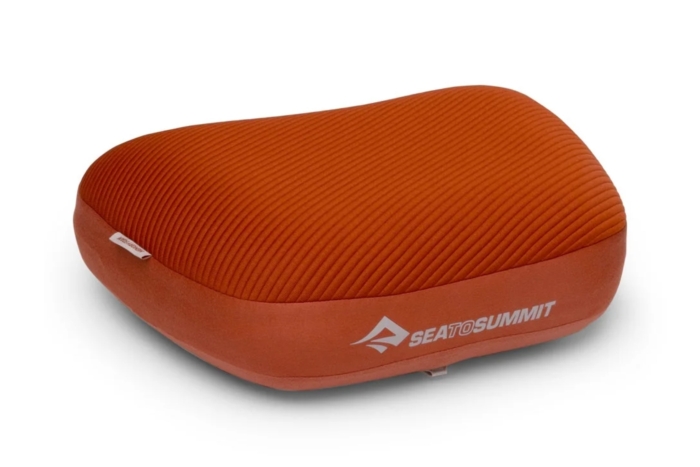
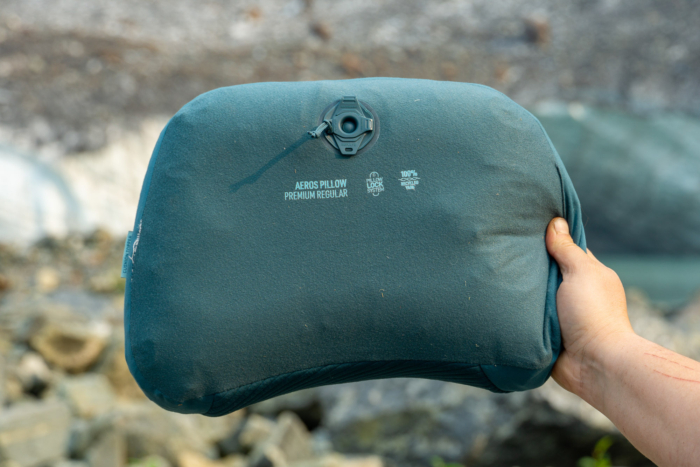
Made of technical fabrics from the brand’s sleeping bags and laminated on a TPU air bladder, the Sea to Summit Aeros Premium Pillow ($55) is contoured to provide secure comfort while you sleep. We’ve used these pillows for entire thru-hikes, and they’re still going strong. It provides the ideal solution for trekkers carrying everything on their backs.
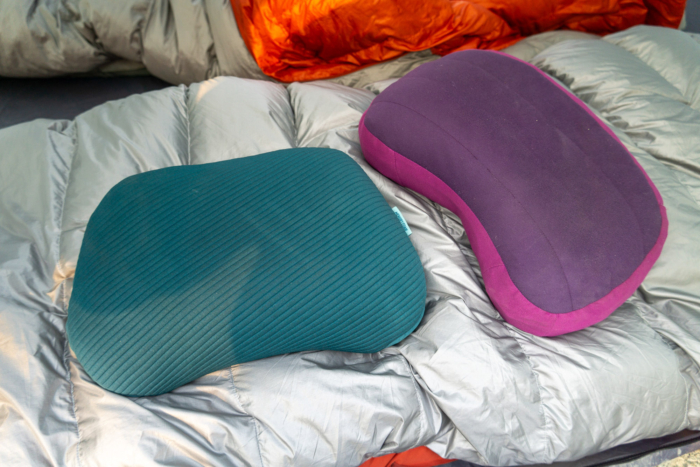
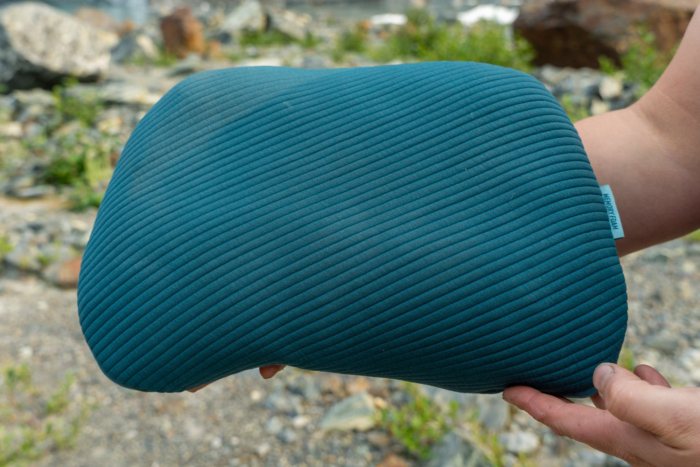
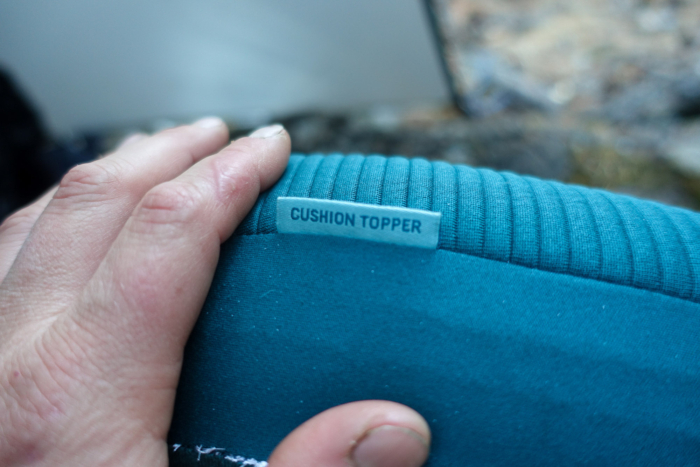
Backcountry trail crew leader Erika Courtney has been using the same Aeros Premium pillow since 2018, and besides needing to be washed a few times, it’s been perfect. Updated for 2026, the pillow gains a new memory foam cover that is impressively comfortable, and only comes at a slight weight addition. This layer is thin but makes this pillow cozy enough for camping, yet compact enough for backpacking.
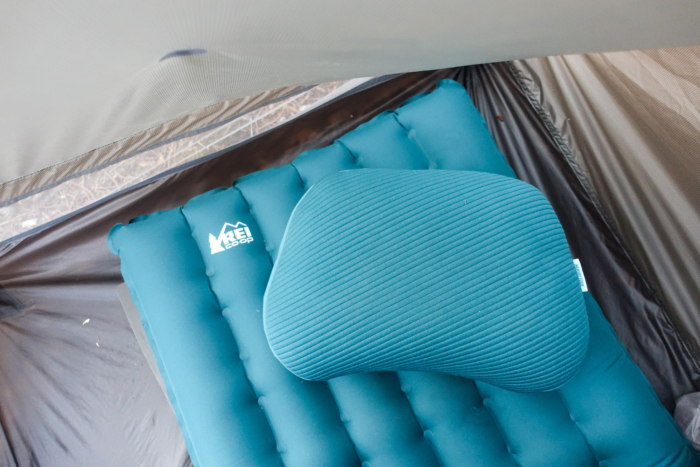
The scalloped bottom secures the pillow to your shoulders, keeping it in place whether you’re sleeping on your back, stomach, or side. It even works well when sleeping upright in a chair, making it a great choice for road trips or long flights.
One of Courtney’s favorite details of this premium inflatable pillow is the three-way mini valve, which allows for rapid inflation and deflation. It also has a press-button release valve, which lets you fine-tune the pillow’s softness to your preference.
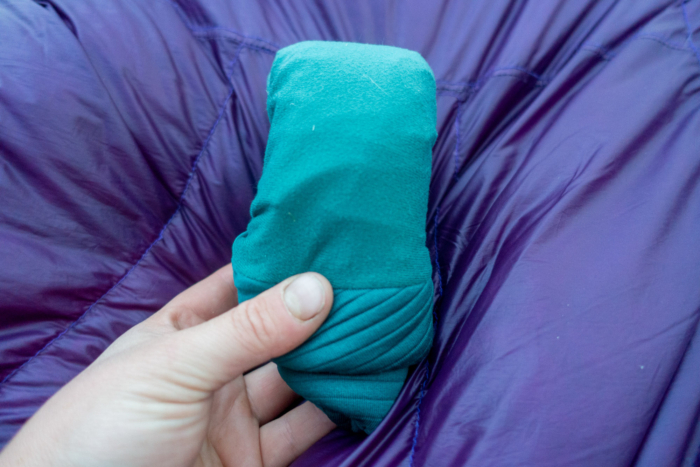
We love Sea to Summit’s proprietary PillowLock system, which is on all of the brand’s pillows. This system works with Sea to Summit sleeping pads to attach to the pad while you sleep. When you pack it up, the pillow compresses into its stuff sack to about a third of the size of a water bottle. If you want a more pillowy topper, try the Aeros Down Pillow for very similar features but an extra layer of warmth and fluffiness.
The only thing Courtney wasn’t crazy about with the Aeros Premium was its price, which is on the high end. But when ounces count, it’s an easy trade-off we’re willing to make.
Teton Sports Camp Pillow
Specifications
Pros & Cons
Pros
- Dependable summer camp-style pillow
- Deep 7" of cushion
- Two different face fabrics with fleece and cooler polyester
- Affordable pricing
Cons
- Stuff sack isn't the best
- Synthetic fill can hold onto heat
Bottom Line: A solid synthetic camp pillow that’ll be a trusty companion for many years outdoors. It doesn’t pack down the smallest (or provide the most comfort), but it gets the job done at a great price.
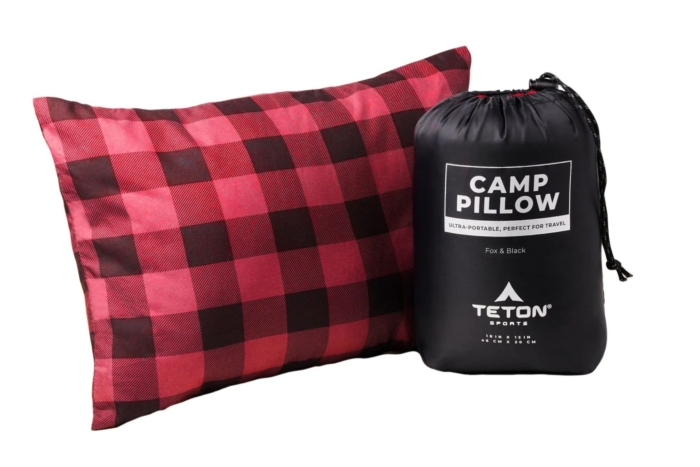
At $36 (and often on sale for less), the Teton Sports Camp Pillow is a trusty classic pillow design that doesn’t demand much in return for its loyalty. This pillow jams in features of our other favorite pillows, but for a bit less out of pocket.
Offered up in both regular and grand sizing (we tested the Grand), this pillow is covered in both a cooling polyester and a fleece side so you can dial in your comfort. The hollow fiber fill is fairly basic compared to the memory foam and down options out there. Still, it’s also not going anywhere for a long time, and is durable enough to withstand being forgotten outside in the rain (ask us how we know).
Thankfully, that pillowcase is removable, so even after a soggy evening, we could revive the Grand Camp with a pass through the washer. The pillow itself packs down pretty compactly into the included drawstring bag as well, and lands about in the middle of the pack in compressed size compared to the rest of our lineup.
For just a bit more than our best budget pick, the Grand Camp pillow is an excellent option if an inflatable pillow isn’t your style.
LUNO Packable Camp Pillow
Specifications
Pros & Cons
Pros
- Super soft memory foam fill has 6" of cushion
- Adjustable firmness with access zipper
- Warm and cool sides of the pillow
- Washable cover
Cons
- On the pricier side
- Won't pack down very small
Bottom Line: A uber-comfy camp pillow filled with memory foam and soft face fabrics for all-night snoozing. Not a great camp-to-backpack option due to its weight and bulk, but excellent for car camping.
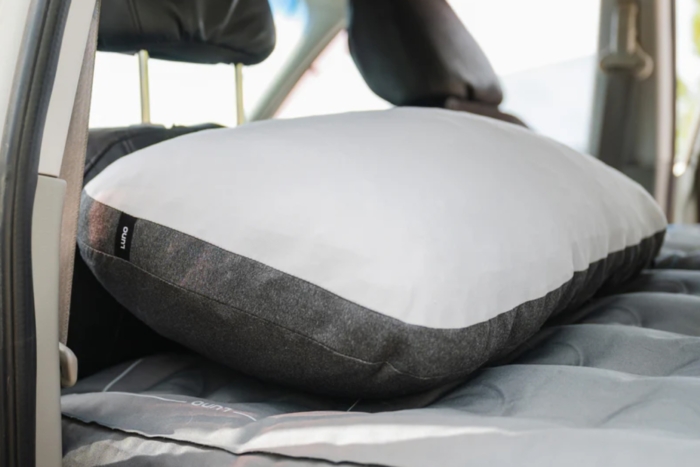
The LUNO Packable Camp Pillow ($60) became the primary pillow for our campers this spring, and we’re even talking domestic use here. This memory foam pillow is swaddled in ultra-premium materials that land it on the high-brow end of camp pillows, but it manages to do so without asking for a silly amount out of your pocket. We think this is the best overall camping pillow out currently.
With a warm and a cool side of the pillow, most of our campers were won over. LUNO uses a polyester jersey blend on one side for cozying up and a very fine polyester spandex mesh on the other to shed excess warmth on summer nights. This avoids the common issue of memory foam pillows that trap heat and stay hot, making them less ideal on super-warm evenings.
Camper Erika Courtney broke this pillow in on a road trip across Washington recently, where it showed up every night and was a soft place to crash out on after miles on the road. There’s no stuff sack of any kind, so you’ll need to keep it clean while traveling, but that’s no heavy lift.
There’s a hidden zipper on the side of this pillow, which allows you to adjust the amount of shredded memory foam filler to your liking, though Courtney found the standard amount worked well for her. When you play around with adjusting the amount of memory foam fill, realize you’ll need to find a safe place to stash your excess foam, but the trade-off is being able to really dial in your comfort.
The Packable Camp Pillow is available in two sizes, and even the regular is a healthy 11” x 16.5”, making these cushions ideal for car and front-country camping. The packed size is a bit larger, but that’s less of an issue when you’ve got a trunk to fill instead of a backpack.
At $60, the Packable Camp Pillow undercuts several other premium pillows on our list but bests more than a few in comfort. A similar cushion to consider would be the HEST Camp Pillow, a similar memory foam-filled design but at a higher price of $89. For most folks, we think that the LUNO option does it better. It certainly isn’t a pillow we’d backpack with, but instead has become our go-to for car camping.
Rumpl Camp Pillow
-
-
(Photo/Erika Courtney)
-
(Photo/Erika Courtney)
Specifications
Pros & Cons
Pros
- Extra tall pillow for side sleepers
- Adjustable memory foam fill
- Warmer fleece and cooler polyester sides for temperature regulation
- Nice looking design
Cons
- Tough to get back into its stuff sack
- Too heavy for backpacking
Bottom Line: A 7″ tall pillow with plenty of support for those who sleep on their side (or who need the extra height). A bit spendy, but worth it for some campers.
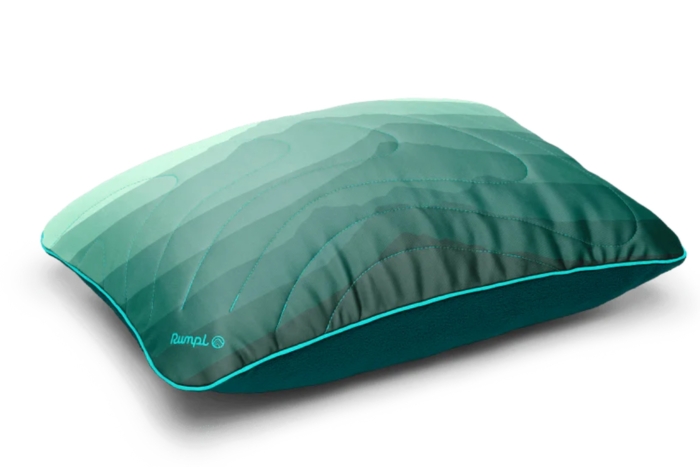
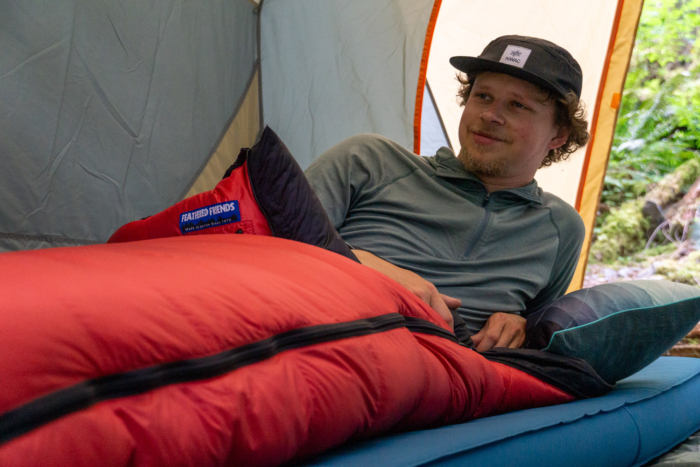
The Rumpl Camp Pillow ($60) is our new choice for side sleepers, as it is one of the most supportive pillows right out of the box and can even cushion sore knees or backs.
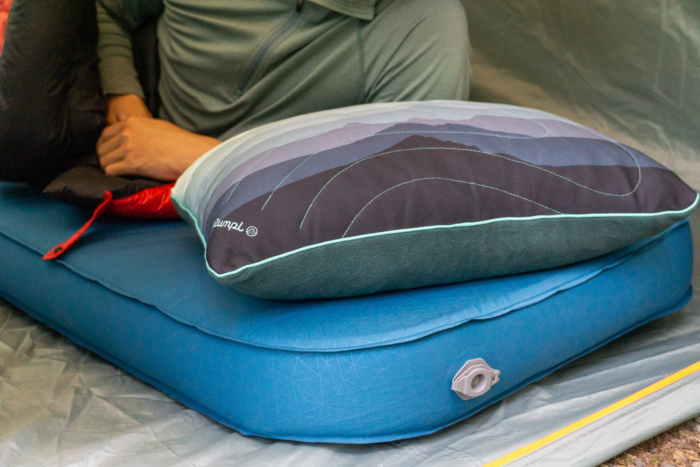
At 7″ tall, this pillow has plenty of plush for any-sized camper. If the stuffing is just a bit too much for you, there’s also a zipper to pull a bit of the memory foam out for a softer experience. Our side sleeping campers lauded the pillow height, saying it was perfect for those needing a bit more neck support.
The Camp Pillow is 22” x 15”, close to the typical pillow size, and is covered in two different fabric types for alternative cool and warm-weather use. We found ourselves on the warmer polar fleece side more often this spring, but the quilted polyester side (with its pretty mountain motif) will be excellent to pivot to as the nights warm up.
Other side-sleeper specific pillows to consider include the NEMO Fillo King, a half-foam, half-air bladder option that also provides a good 6” of pillow height, just at a higher price point (and complexity). It is, however, easier to dial in your neck height, and if that’s important to you, give the NEMO a look.
The Camp Pillow isn’t the easiest to get back into its stuff sack, but with enough gumption, it’ll go. It’s also ‘heavy’ for a camp pillow at just north of 2 pounds, but we wouldn’t weigh this much against it. If you need a bit of extra support in a camp pillow, certainly check out this option from Rumpl.
Feathered Friends Geoduck Travel Pillow
-
-
(Photo/Erika Courtney)
-
(Photo/Erika Courtney)
-
(Photo/Erika Courtney)
Specifications
Pros & Cons
Pros
- Ultra-premium goose down fill
- Quite light
- Fills out the hood of a mummy sleeping bag well
- Relatively affordable for a down-filled pillow
Cons
- Pillow can invert if compressed too quickly
Bottom Line: One of the best backpacking pillows out there if you’re after a fully down-insulated option.
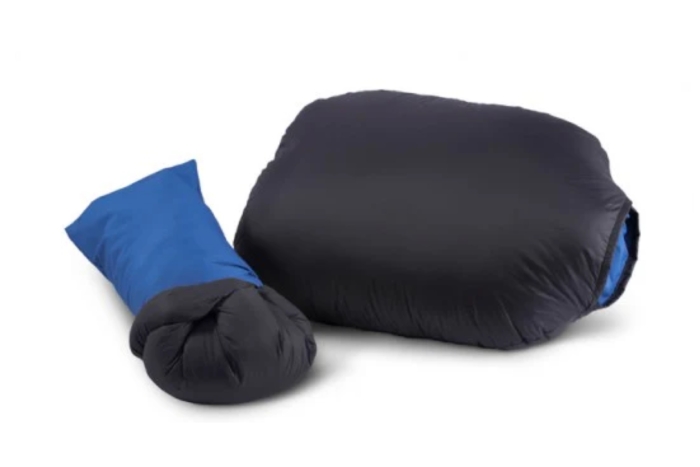
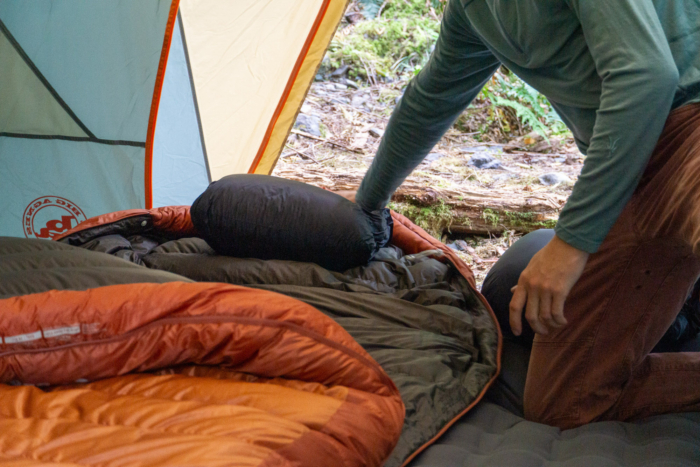
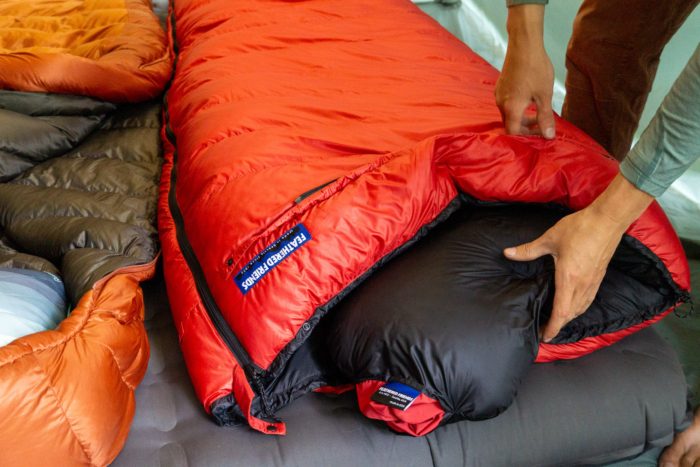
Bringing a pillow on long backpacking trips typically means being stuck with an inflatable option, but the down-filled Feathered Friends Geoduck ($45) isn’t buying it. Just as soft as the brand’s premium sleeping bags, this camp pillow tucks into the hood of your mummy bag for an all-in-one experience.
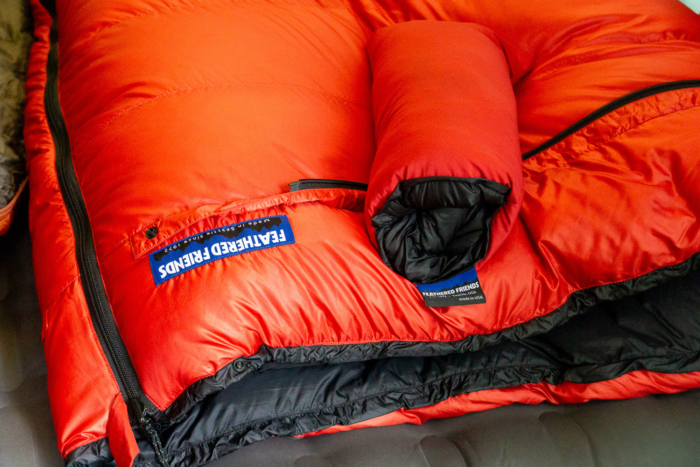
Packed with 800-fill power grey goose down (we own puffies that don’t even use this nice a feather), the Geoduck is a simple design made to compress into its own pocket when you aren’t getting some shuteye on it. It’s as simple as inverting the pillow into the small internal stuff sack, which reduces the volume by about a third.
Comfort on the Geoduck is impressive, and it’s certainly on the plush side of the spectrum of camp pillows. We think it works best when used inside the hood of a sleeping bag, as it’s wrangled and allowed to puff up completely. Otherwise, the pillow’s exterior is slick, which can slide around a bit.
The only flaw we could drum up came when enthusiastically lying down on the Geoduck, which sometimes forced down from the pillow and into the stuff sack portion. This happened enough that our resident gear hacker added a single snap to the aperture, which kept things where they belong.
We even found that the Geoduck Pillow does excellent double duty as a travel pillow. If you don’t want to compromise on backpacking comfort, we think this pillow is about the best thing currently available.
Therm-a-Rest Air Head Down Pillow
Specifications
Pros & Cons
Pros
- Very comfortable against skin
- Different sizes available
- Sleeping-bag-hood compatible
- Removable and washable cover
- Seasonal versatility
Cons
- More expensive
- A little sticky
- Side sleepers may want more support
Bottom Line:
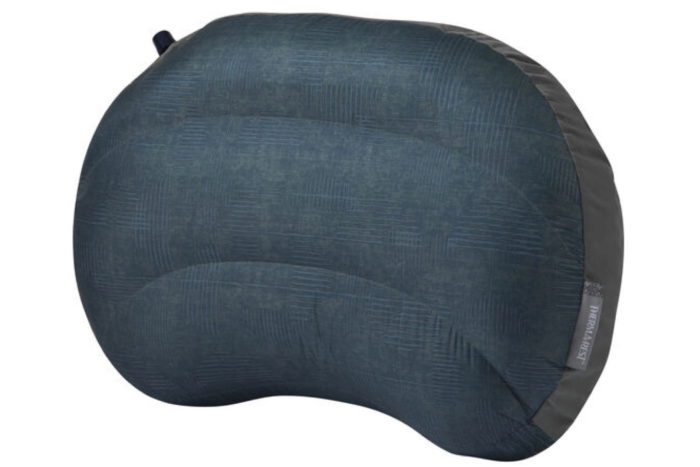
The Therm-a-Rest Air Head Down Pillow ($65) is lightweight enough for extended backcountry missions but soft and insulated enough to feel like a luxury. How? This iteration of the Air Head pillow has a topper of down added underneath the polyester cover on the outside of this inflatable pillow.
Aside from the insulation and comfort the down provides, the Air Head Down Pillow is also specifically designed to fit in the hood of a sleeping bag. We found good compatibility with snug mummy bags and spacious camping sacks alike.
The inflatable body inflates and holds air well across a whole variety of temps. And if you spend time camping or backpacking in any season outside of summer (think: winter camping or those fall hunting trips), you’ll be thankful to have a pillow like this when the temps drop. While testers reported that the down could feel a little sticky on hotter nights, there are none of the dreaded crinkle noises that some other down pillows may have.
Lastly, we love the Air Head because it comes in two sizes — so you can pick the best one to fit your sleeping bag or general backpacking needs.
Other Camp Pillows to Catch Some Zs On
Specifications
Pros & Cons
Pros
- Substantial size
- Washable cover
- Customizable loft
Cons
- Noisy zippers
- On the heavier and larger side
- Price
Bottom Line:
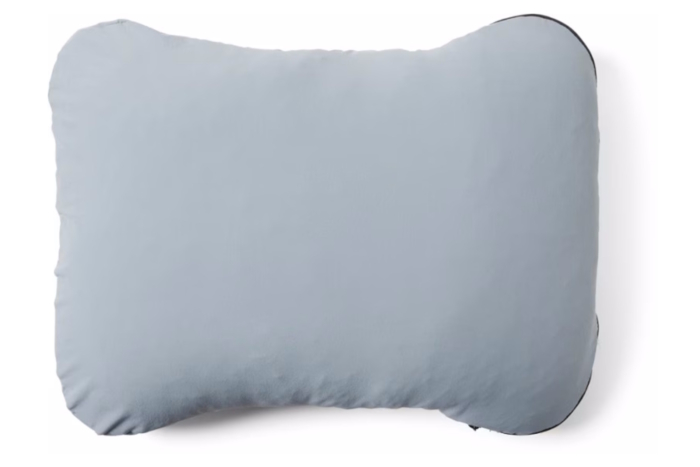
If you’re looking for a camp pillow that feels like your pillow at home, maybe even better, look no further than the HEST Camp Pillow ($89). We were pleasantly surprised when we unzipped this pillow from its traveling case and saw how large and supportive it was, right out of the bag.
This pillow is a little tricky to set up initially without instructions, especially if it’s dark and you’re already at your campsite for the night. We suggest checking out the instruction card prior to when you want to fall asleep. A little extra preparation is worth it, though: this pillow comes with an integrated stow cover that’s dirt- and water-resistant for keeping it clean while transporting, as well as a machine-washable cover to get out all the stink of camping. You can also adjust the loft by removing or adding more fluff for your ideal thickness and size. Go to the brand’s website for detailed instructions.
A blend of memory foam and polyester makes the pillow poofy, dense, and heavy — ideal for a good night’s sleep, but not a good option for backpacking or any other trip where space is at a premium. HEST has the largest packed size of all the pillows on this list. Our other knock on this model is zippers that one testing partner noted were noisy while sleeping and rattled around when he shifted his head.
The HEST Pillow is best for people who like a substantial, soft, large pillow and who don’t have weight or budget concerns. Pack it along on your next car camping trip for a luxurious touch and sound sleep.
Specifications
Pros & Cons
Pros
- Tiny packed size
- Choice of two fabrics
- Budget-friendly
Cons
- Slightly finicky valve cap
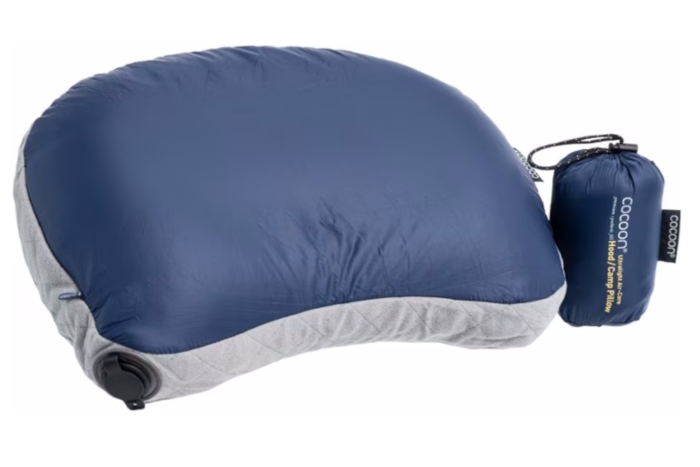
We absolutely loved the Cocoon AirCore Hood/Camp Pillow ($37) as a budget-friendly camping pillow that is still comfortable and small enough for backpacking with ease.
For only $10-15 more than our cheapest pillow on the list, the AirCore Hood/Camp has a lot more bells and whistles. It’s the second-smallest pillow on this list (only to the Aeros Down Ultralight Pillow) and third cheapest (behind the REI Co-op Trailmade Mummy Bag Pillow and the Trekology ALUFT 2.0).
When we tested this pillow in Montana’s Swan Valley this spring, we really appreciated the difference in fabric between the two sides of the pillow. With nylon and quilted sides, you can decide if you want that cozy feel of the fleece-esque quilt or the cooling relief of nylon.
We also found the setup to be a breeze: simply puff out two breaths, and the pillow is totally full. You can release pressure slightly if you want a softer pillow. Three sizes give campers a choice between small, medium, or full-sized pillows.
We loved this pillow so much that we took it on various hammock reading excursions in parks and by streams in Missoula. That’s when we noticed the need to firmly secure the cap to avoid losing air. Twice, we thought we had secured the cap, but instead, air was leaking out. Avoid doing this overnight by checking that the cap on the valve is firmly in place.
If you’re looking for a compact, lightweight pillow that won’t break the bank, look no further than the AirCore Hood/Camp Pillow. It’s safe to say we’re hooked.
Specifications
Pros & Cons
Pros
- Tons of loft
- Huge expanded size
- Integrated stuff sack
- Machine washable cover
Cons
- Larger packed size than regular-size pillows
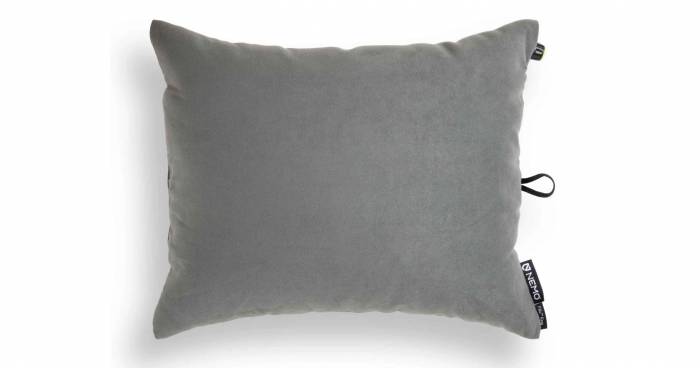
The king-size version of the excellent Fillo camping pillow, the NEMO Fillo King Luxury ($80), offers 6 inches of loft, which provides great support for side sleepers. The first camp pillow we’ve seen to incorporate recycled foam filling with an inflatable interior, the Fillo Series combines softness and support better than any other pillow we’ve used.
This mix is perfect for side sleepers. You can inflate the pillow to just the right amount of loft to sleep on your side without cranking your head toward the ground. In addition, the polyester jersey outer feels great against your face and soaks up drool (not a listed benefit, but we’ve verified this during repeated tests).
The stuff sack is integrated into the pillow, sliding into a pocket on the bottom of the pillow. This is huge for those of us who’ve tossed the contents of our tents looking for our pillow’s tiny stuff sack, only to find it stuck to the bottom of our sleeping bag. The soft face fabric mimics your favorite pillowcase at home.
The Fillo King Luxury is great for camping, but its packing size and functionality make it ideal for road trips, long flights, and even for lumbar support on the road.
Specifications
Pros & Cons
Pros
- Large when inflated but packs down small
- Soft tricot nylon material feels good on skin
- Can be attached to a mat
- Removable, washable cover
Cons
- Doesn't fit easily in some sleeping bag hoods
- Can be a little too thick when fully inflated
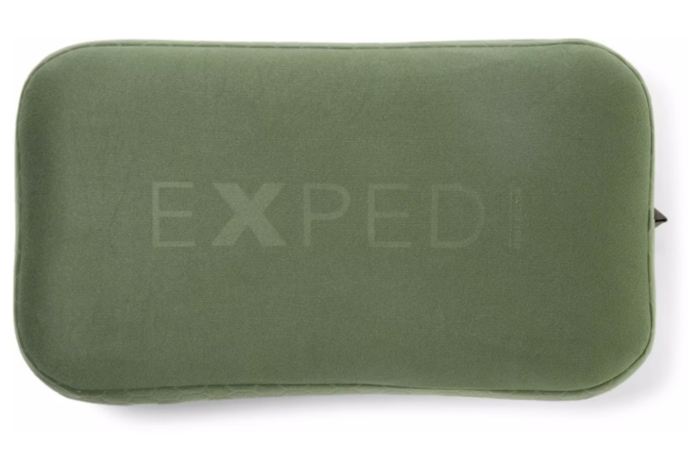
Big pillow lovers, rejoice. You’ll never need to spend another camping night with your head sliding off the pillow or feeling like there juuuuust isn’t enough support. The EXPED Mega Pillow ($70) is mega in all the ways you want and none of the ways you don’t.
This pillow packs down relatively small and light, ideal for everything from car camping to backpacking, but blows up big. Hence the name. We loved how supportive and comfortable this pillow was. In fact, our secondary tester started out the night with this before our primary tester had to steal it and try for herself. It’s just that good. The soft cloth feels good on our face and both back and side sleepers will find adequate support.
It’s hard to find much to complain about. If fitting your pillow into your sleeping bag’s hood is important to you, and if your hood is super tight to seal in warmth, you might find the large square shape of this pillow tough to stuff in. Eyelets on the pillow’s sides allow you to attach the pillow to a mat if you’re sleeping outside your hood.
While this isn’t the lightest pillow on our list (the ALUFT 2.0 from Trekology manages to shave about 3 ounces and $30, for example, while Sea to Summit and Cocoon also have slightly lighter options), unless you’re packing your backpack ounce by ounce, you’re fine right here.
If you’re going to get just one camp pillow that’s comfy enough for truck camping but small and light enough to shove in a backpack without a second thought, the Mega Pillow is it.
Specifications
Pros & Cons
Pros
- Very lightweight
- Won't slip off pad
- Down pillow top for extra comfort
- Inflate with a few breaths
Cons
- Not machine washable
- Hot sleepers might not need or like the down topper
- A little noisy
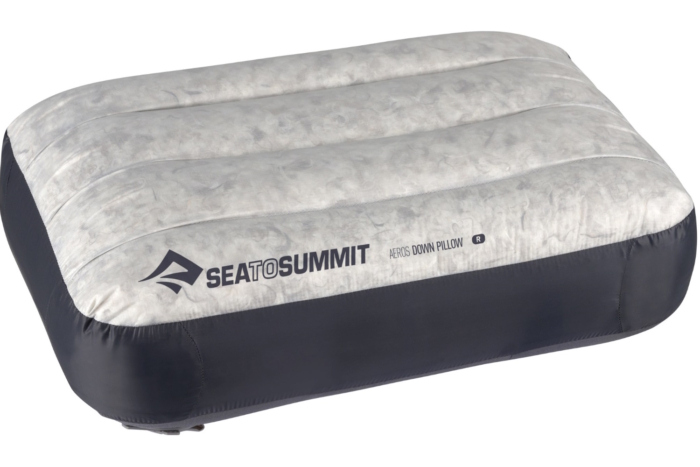
Already an avid user of the Sea to Summit Aeros Ultralight pillow? Upgrade your backpacking and camping kit with its sister, the luxuriously plush Aeros Down Ultralight Pillow ($65-90).
The Down Ultralight Pillow is, perhaps unsurprisingly, pretty similar to the Ultralight pillow from the same brand. New with this model, though, is the down pillow top for added insulation and comfort.
This pillow has all the same features we love in the Aeros Ultralight — a pillow lock system to keep your pillow on the brand’s sleeping pads, and technical fabrics used in the brand’s Spark sleeping bags to keep the weight down. The pillow is so small — the smallest packed size of our roundup — that we actually thought we lost it for a minute there. A good problem to have! Three sizes (regular, large, and deluxe) give campers a variety to choose from.
The pillow top, though very plush and comfortable, does crinkle a tiny bit. We didn’t find it to be a dealbreaker, but if you’re sensitive to noise, consider that fact. This pillow is also a little bit challenging to get back in its (very small) stuff sack prior to your morning coffee, and you’ll need to hand-wash the pillow if it gets dirty or use a pillowcase if you’re concerned about washability. It’s for these reasons that the Therm-a-Rest Air Head Down Pillow eeks out the award for down-insulated pillow.
Still a ridiculously comfortable, albeit pricey, camp pillow, the Aeros Down Pillow is a soft and supportive option that’s incredibly compact. The down topper provides a nice bit of insulation and a little bit more lift for all of us side-sleepers.
Specifications
Pros & Cons
Pros
- Incredibly soft
- Mimics the feel of a full-size pillow
- Fun patterns
Cons
- Takes time for the foam to fully expand
- Some users find it lumpy
- Not as lightweight as some competitors
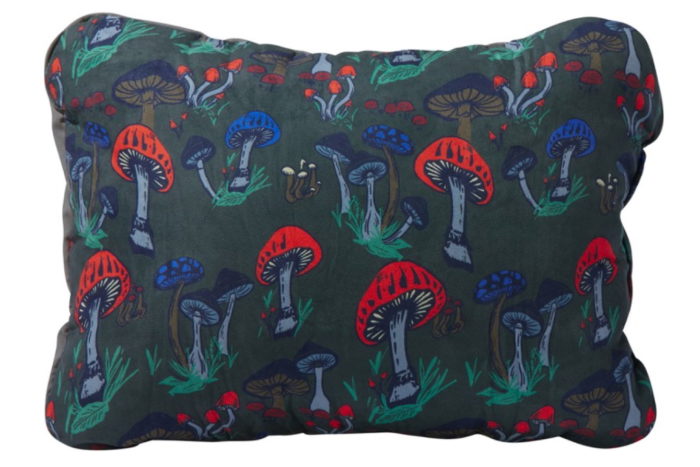
A lightweight and compressible offering, the Therm-a-Rest Compressible Pillow ($32-47) is a close approximation to the pillow we sleep on at home. Filled with leftover pieces of the high-quality foam Therm-a-Rest uses in its sleeping pads, this pillow expands to a whopping 27 x 16.5 inches for the XL size.
The foam gives it a luxurious, fluffy feel and provides a nice bit of insulation from any cold that comes up from the tent floor. The soft, recycled polyester fabric cover feels snuggly and warm against your face. When you’re not using it, the pillow packs into itself and compresses down to the size of a Nalgene bottle.
While not as compact as some other pillows on this list, this pillow is light enough for backpacking, and it’s plush enough to leave your bed pillows at home during car camping. This perfect blend of versatility and comfort make it a solid option for campers.
Camping Pillow Comparison Chart
| Compare |
|
|
|
|
|
|
|---|---|---|---|---|---|---|
| Price |
$55
|
$36
|
$60
|
$60
|
$45
|
$65
|
| Type |
Inflatable and foam
|
Synthetic fill
|
Foam
|
Foam
|
Down
|
Inflatable and insulated
|
| Materials |
Memory foam, brushed polyester stretch knit face, air bladder
|
Polyester shell and hollow fiber fill
|
Polyester jersey and spandex blends outside, shredded memory foam fill
|
Polarfleece, polyester, recycled memory foam
|
Textile outer, 800+ fill-power goose down
|
Partially recycled polyester, urethane insert, down fill
|
| Weight |
3.7 oz.
|
1 lb., 11.2 oz.
|
2 lbs., 9 oz.
|
2 lbs., 1.6 oz.
|
6 oz.
|
4.9 oz.
|
| Thickness |
4.7"
|
7"
|
6"
|
7"
|
3.5"
|
4"
|
| Stuff Sack |
Included
|
Included
|
Included
|
Included
|
Attached
|
Included
|
How We Tested the Best Camping Pillows

Our Testing Process and Testing Grounds
The GearJunkie testing crew knows its way around a campsite, and we brought decades of collective backcountry experience to bear to find the absolute best camping pillows available today. From luxury-minded car campers to ounce-counting ultralight backpackers, we fielded a slate of pillows across the entire outdoor spectrum. To separate genuine neck support from glorified balled-up jackets, our team logged dozens of nights under the stars, cycling through models to ensure every pillow was vetted by different sleeper types — side, back, and stomach alike.
- The Kettlebell Compression & Spec Check: We don’t just rely on manufacturer claims. In our testing lab, we broke out calibrated scales and measuring tapes to verify exact trail weights, packed dimensions, and true loft heights. To quantify support and weed out pillows that bottom out under pressure, we applied a standardized 2-pound weight to each inflated shell and foam core to measure relative sag. We also evaluated valve ergonomics, fine-tuned inflation adjustability, and laundered every cover to see how materials handled camp grime and trail sweat.
- Sleeping Bag Hood & Trail Integration: A pillow is only as good as its ability to stay beneath your head. We stuffed each model into a variety of sleeping bag hoods (from snug technical mummies to roomy rectangular bags) to test slip resistance, fabric noise (eliminating crinkly materials that wake up tentmates), and overall fit. Pillows were then taken into the field to evaluate long-term durability, seam integrity, and whether internal baffles or hybrid foam clusters held up after repeated stuffing into compression sacks.
After hundreds of hours on everything from truck beds in the desert to ultralight pads in the backcountry, we aggregated our field notes, debated the trade-offs between packability and plushness, and rendered our final verdicts. The result is a definitive, field-tested guide designed to ensure you never wake up with an aching neck again.

Our Camping Pillow Rating System
To ensure our reviews remain objective and repeatable, we score every camping pillow on a 100-point scale across four weighted categories:
- Comfort (35% weighted): The primary metric for any pillow. We evaluate true cushion height, support for side and back sleepers, and sag resistance under head weight. We also factor in cover fabric softness, breathability, and noise, and penalize crinkly materials that disturb sleep.
- Packability (25% weighted): We verify trail weights on calibrated scales and measure packed dimensions down to the cubic inch. Higher scores go to pillows that compress down to the size of an apple without losing loft recovery, as well as those with hassle-free stuff sacks.
- Ease of Cleaning (20% weighted): Camping gear gets dirty. We test how easily covers remove, whether materials are machine-washable or require hand-spotting, fabric stain resistance against trail sweat and oil, and overall drying time.
- Value (20% weighted): We weigh overall performance and durability against retail price. High scores are awarded to affordable options that punch above their weight class and premium models whose durability and comfort justify a higher investment.

Our Expert Testers
Lead tester Kylie Mohr has been sleeping under the stars since her childhood days at YMCA camp in northwestern Washington. Today, she explores the mountain wilderness of Montana, Idaho, and Wyoming across a wide spectrum of trips. Kylie evaluated these pillows on over five dedicated spring outings that ranged from car camping before a morning fishing session to backpacking into alpine basins. To establish a clear baseline, she tested every model during a real-world tent overnight, a control night in her bed at home, and during afternoon hammock hangs to log maximum testing hours.
Pacific Northwest-based gear editor Nick Belcaster brought a technical, backcountry-focused lens to the evaluation. Nick put the lineup through its paces across sea-kayaking beach camps, damp timberline bivies, and high-elevation ridge sites. He paid close attention to how well each pillow compressed into a stuffsack, how securely it tucked inside mummy bag hoods, and how easily the inflation valves operated.
Outdoor photographer and field tester Erika Courtney focused on material resilience, washability, and long-term comfort across desert campsites, truck-bed setups, and multi-day trail outings. Courtney vetted cover-fabric softness against bare skin, evaluated seam durability after repeated compression, and paid special attention to crinkle noise — penalizing loud, crunchy fabrics that wake up tentmates during middle-of-the-night position shifts.

Buyer’s Guide: How to Choose a Camping Pillow
All-Night Comfort
- Ergonomic Baffling & Head Cradle: To eliminate your head falling off the pillow in the night, look for models with scalloped contours and curved internal baffles. Budget options like the Cocoon AirCore and technical designs like the Sea to Summit Aeros Premium Pillow use these centered cradles to stabilize the head and maintain neutral alignment for side and back sleepers alike.
- Next-to-Skin Face Fabrics: High-end models replace nylon with brushed stretch-polyester, knit face fabrics, or fleece-topped covers. The NEMO Fillo, for example, utilizes a plush jersey cover that dampens crinkly sounds during position shifts and manages moisture far better than bare TPU bladders.
- Pad Integration & Drift Prevention: Smooth nylon surfaces cause unanchored pillows to migrate across the tent floor. Manufacturers combat drift using high-friction silicone prints, elastic retention straps, or integrated pad sleeves.
- Hybrid vs. Pure Inflatable Construction: While pure TPU air bladders provide a compact packed volume (which is ideal for backpacking), hybrid foam-air constructions offer vastly superior pressure-point relief, insulation, and comfort. Models like the NEMO Fillo combine upcycled open-cell foam over an adjustable air bladder, delivering home-pillow plushness for a minor weight trade-off.
Tester’s Tip: “Never inflate an air pillow to 100% capacity. Fill the bladder to roughly 70–80%, lie down in your sleeping bag, and use the bleed valve to release tiny bursts of air until your neck rests comfortably.” — Tester Nick Belcaster

How Small Should a Camping Pillow Pack Down?
- Car Camping vs. Backcountry Volumes: For frontcountry or truck-bed camping, packed volume is a non-issue. For wilderness backpacking, however, every cubic inch of pack volume counts. Choosing pillows that pack up compactly frees up vital space in your main compartment for food, insulation layers, and essential electronics without forcing you to upgrade to a larger pack.
- Air Bladders: Pure TPU air bladders deliver the highest compression ratios on the market. Ultra-minimalist models like the Sea to Summit Aeros Ultralight stuffs down into integrated storage sacks no larger than a lime or an apple, adding negligible weight to your base load.
- Compressible Foam Cores: Pillows constructed with shredded open-cell foam or upcycled memory foam (such as the HEST Camp Pillow) trade ultra-compact packability for home-like plushness. These generally compress down to the volume of a 1L Nalgene bottle and rely on cinch cords or roll-top compression sacks to pack down tight.
Comparing Camping Pillow Construction Types
| Pillow Type | Compressed Size | Weight Range | Key Trade-Offs | Representative Models |
| Pure Air / Inflatable | Lime to Apple (0.2–0.5 L) | 1.5 – 3.5 oz. | Pros: Maximum packability, ultralight. Cons: Prone to motion noise, firmer feel. | Sea to Summit Aeros Ultralight, Trekology ALUFT 2.0 |
| Compressible Foam | 1L Nalgene Bottle (1.0–2.0 L) | 7.0 – 12.0 oz. | Pros: Puncture-proof, home-pillow comfort. Cons: Bulky, heavier, slower loft recovery. | Therm-a-Rest Compressible, HEST Camp Pillow |
| Hybrid (Air + Foam/Down) | Softball / Avocado (0.5–0.8 L) | 3.5 – 9.0 oz. | Pros: Balanced cushion, motion dampening. Cons: Moderate weight, higher price point. | NEMO Fillo, Sea to Summit Aeros Down Premium |

How to Wash Your Camp Pillow
- Drying & Storage: Hang your pillow up to air-dry in the shade, since hot sun can weaken the fabric over time. Never throw inflatable pillows in the dryer. Before storing it away for the winter, make sure it’s 100% dry and leave the valve open so no leftover moisture gets trapped inside.
- Pillows With Removable Covers: If your pillow has a zip-off cover (like the NEMO Fillo or Hest Camp Pillow), cleaning is easy. Just unzip the cover and toss it in the washing machine on cold. For the air bag or foam inside, just wipe it down by hand with a damp cloth and a little soap.
- One-Piece Inflatable Pillows: Simple air pillows (like the Sea to Summit Aeros or Trekology ALUFT) shouldn’t go in the washing machine — the rough cycle can tear the inside seams. Wash them by hand in a sink with warm water and a bit of mild soap. Just make sure the air valve is sealed tight first so water doesn’t sneak inside.
- Detergent Tips: Skip bleach, fabric softeners, and harsh laundry soap. Softeners leave a greasy film that ruins soft fabrics and can break down the inner waterproof coating over time. A few drops of gentle dish soap or plain laundry detergent do the job just fine.

Durability & Care on the Trail
- Clear Out Tent Debris: Even inside a tent, stray pine needles, grit, and small twigs can migrate onto your pad. Give your tent floor a quick sweep with your hand before tossing down your sleep system to prevent accidental punctures.
- Foam vs. Inflatable Risks: Foam pillows are virtually indestructible, and a tiny snag or tear typically won’t ruin your sleep. Inflatables, on the other hand, need a little more respect. Even a tiny pinhole will leave you resting on the hard ground by morning.
- Materials & Valves To Look For: Seek out tough fabrics like thermoplastic polyurethane (TPU) or models that feature a rugged outer sleeve (like the HEST Camp Pillow). Keep an eye on the valve, too—sturdy flat valves or dual-cap designs hold up much better over seasons of use than cheap pop-valves.
- Safest Inside Your Pack: Always store your pillow inside your backpack rather than strapping it to the outside. Wandering branches and sharp rocks along the trail can easily snag and tear the fabric before you even reach camp.

Price & Value
In general, the more features a pillow has, the higher the price will be. Lighter, more compressible pillows tend to cost more than their heavier, bulkier counterparts. On the plus side, well-established companies like NEMO and Sea to Summit have spent more time developing their products, dialing down more durable and comfortable designs.
When you shop for a pillow, determine your must-have features, weigh them against your budget, and find a camping pillow that’s best for you. If you’re new to camping and still trying to figure out what kind of pillow you want, go for a good budget pillow. It’s a great way to test a pillow without making too big of an investment.
Budget
If you’ve got 2,600 more miles ahead of you, you’re likely looking to save some coin, and choosing even a budget camp pillow is better than wadding up your socks under your head. More often, a simpler air bladder design, budget pillows don’t offer up much in terms of modulating the comfort level, but will get the job done. Expect to pay between $20 and $35 for pillows like the Cocoon Aircore Hood/Camp Pillow and Teton Sports Camp Pillow.
Mid-Tier
Primed for backpacking and camping, even mid-tier camping pillows can afford to pile on the luxury, with microfleece covers, added synthetic insulation, and be offered in multiple sizes. For between $40 and $75, you can tuck into pillows like the EXPED Mega Pillow ($60) that have a bunch of support, squishy and soft like the Therm-a-Rest Compressible Pillow ($37), or even primed for car camping like the LUNO Packable Camp Pillow ($60).
Premium
The inclusion of down insulation is typically the difference between middle-of-the-pack camping pillows and premium options — but not always. The HEST Camp Pillow ($89) asks for near a hundo for the real-deal memory foam pillow feel it provides.
Frequently Asked Questions
Pillows migrate because smooth nylon fabrics create zero friction. The easiest field fix is tucking your pillow directly inside your sleeping bag’s hood or slipping a cotton/fleece T-shirt over both the pillow and the top of your pad. If you’re buying new gear, look for pillows with built-in elastic retention straps, high-friction silicone backings, or brand-specific attachment systems like Sea to Summit’s Pillow Lock patches.
Cap your inflation at roughly 70–80% capacity. Fully inflating an air bladder creates a rigid, rounded surface that pushes your neck out of alignment and causes pressure spots. Lie down on your side or back in your sleeping bag, reach behind your head, and tap the micro-adjust valve to bleed out tiny bursts of air until your spine sits straight and relaxed.
Side sleepers require higher loft (typically 4 to 5 inches) to fill the gap between their ear and shoulder blade. Hybrid models (which layer a thick foam cap or synthetic insulation over an adjustable air bladder) work best. They provide the deep cushion and motion dampening of a home pillow without bottoming out under the weight of your head.
To find a pinhole leak in the field, inflate the pillow firm, submerge it in a calm stream or smear soapy water over the surface, and watch for tiny air bubbles. Once located, dry the fabric completely, clean the area with an alcohol wipe, and press a round patch of flexible repair tape (like Gear Aid Tenacious Tape) or TPU patch firmly over the hole. Avoid square patches, as sharp corners tend to catch and peel off inside your stuff sack.