I love me some hardcore hunting boots. Crispi, Zamberlan, Meindl, Kenetrek, Schnees, you name it. Yes, they’re all expensive, but you know what else they are? Awesome and worth it. You really can’t go wrong with any of those brands’ offerings.
I say that because, if we’re being honest, all the top-end boots from those companies are pretty darn similar. At least, that’s what I thought, until I got an opportunity to test out the Meindl Boa Speed Hunter. They’re not like the rest of ’em, and not for the obvious reasons.
At first sight, I didn’t think I’d like these boots because of the laces. But after testing them over the last 2 months, I think I found my new favorite mountain hunting boots.
In short: The Meindl BOA Speed Hunter ($460) is a unique boot, and not just because of its new-age lacing system. In my opinion, they offer a near-perfect blend of lightweight comfort and rugged mountain support. There are certainly pros and cons to the BOA laces, but for Western big game hunters who don’t plan on tackling sheep country all the time, these boots may be the best thing to grace your feet.
See how they stack up in GearJunkie’s “Best Hunting Boots for Men of 2026” Buyer’s Guide.
Meindl Boa Speed Hunter Review
-

-
(Photo/Morgan Nowels)
-
(Photo/Morgan Nowels)
-
(Photo/Morgan Nowels)
-
(Photo/Morgan Nowels)
Specifications
Pros & Cons
Pros
- BOA system makes for easy on and off
- A fantastic blend of lightweight and supportive
- Extremely comfortable underfoot
- Durable build from the outsole up
Cons
- Can't fine-tune the lacing system
- Too soft for extreme hunts (goats, sheep, etc.)
Meindl BOA Speed Hunter: Is It Just Another Mountain Boot?

When it comes to hunting boots, I am of the opinion that you should plan for the worst. It’s best to have more boot than you’ll need.
Because of that, I’ve spent years using and abusing what most would consider extremely rugged mountain boots like the Zamberlan Outfitter GTX and the Meindl Air Revolution Alpine Pro 200. Those boots are burly and built for the nastiest hunts you can imagine. They make hiking boots look cute. I refer to them as my mountain boots.
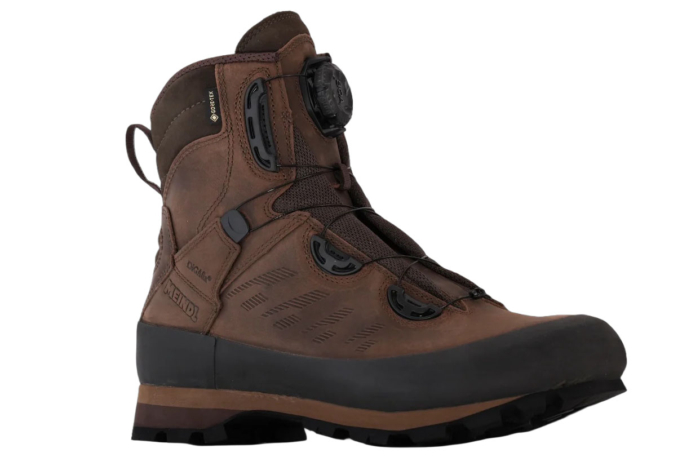
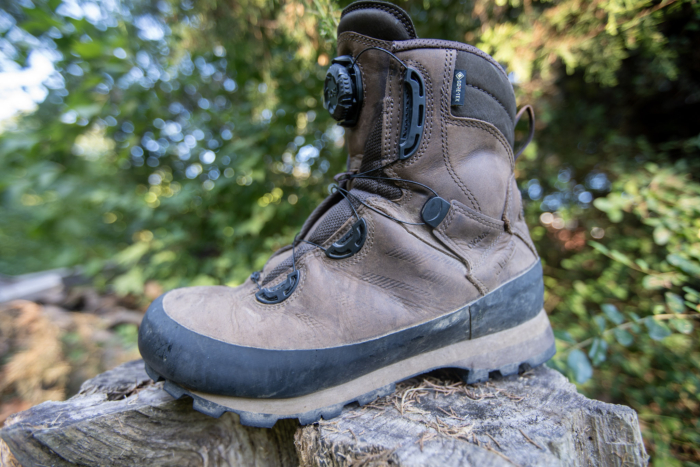
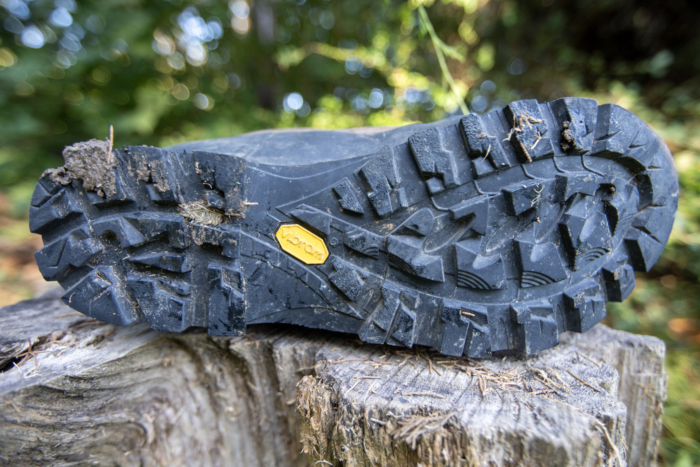
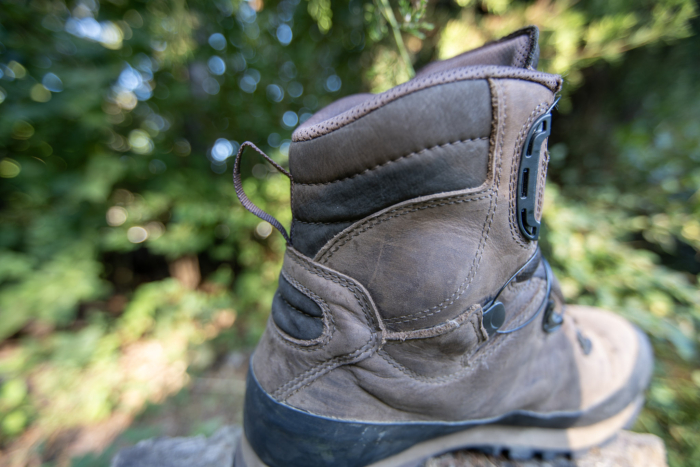
On the face of it, the Meindl Boa Speed Hunter appears to be cut from the same cloth with its Nubuck leather upper, an inch-thick, ultra-durable rubber liner surrounding the boot, and a knobby Vibram outsole. However, after a few months in these boots, I wouldn’t quite put them in the same category as those boots. They might be better.
What Makes the Speed Hunter Different Than Other Mountain Boots?

There are three things about these boots that make them noticeably different than my other mountain-tough boots.
Roomier Fit and Open Toe Box
Most aggressive hunting boots I own have a fairly narrow fit. They lock my entire foot in and feel a bit restrictive.
The Meindl Boa Speed Hunter doesn’t feel like that at all. As you can tell from the image above, the toe box on these boots is massive. My foot has enough room to comfortably wiggle around in them without slipping as I walk. The roomy fit throughout the whole boot is perfect. It’s just enough for comfort without sacrificing security.
And a quick note on sizing: Meindl recommends ordering a half size down. That’s what I did, and the fit was perfect.
Lightweight Build

They’re also noticeably lighter than my other boots. When I first got them, I didn’t consider weight at all. I assumed they’d be heavy and clunky, which is generally a given for a boot of this caliber.
But after a day of bushwhacking and climbing the hills of steep Tennessee bluff country, I noticed I felt less fatigued. When I stopped to think about it, I realized they did, in fact, feel lighter than my other boots. So, rather than rely on a spec sheet, I personally weighed them next to my other Meindls and my Zamberlans. Here are the results (per boot):
- Boa Speed Hunter: 1 lb., 12.4 oz.
- Meindl Air Revolution Alpine Pro 200: 2 lbs., 2.6 oz.
- Zamberlan Outfitter GTX: 2 lbs., 3.5 oz
As you can see, they’re considerably lighter in the world of mid-calf hunting boots. The difference clearly isn’t just a number. While they aren’t anywhere near approaching lightweight hiker status, to me, I feel a bit more “froggy” when I put them on compared to other mountain boots.
Mid-Level Stiffness

These boots also have what Meindl calls a “medium stiff” flex, compared to the “stiff” flex found on the Alpine Pro 200. Zamberlan uses a different rating than Meindl, and puts the Outfitter GTX at a level 3 stiffness on a scale of 1–5. Despite the different rating system, it’s abundantly clear that the Speed Hunter is softer than the Zamberlans. It’s immediately noticeable when wearing them.
While hiking up extremely steep scree slopes or mountainsides that are nothing but car-sized rocks, I do appreciate the stiffer soles of my other boots. The issue is that I’m rarely doing that while hunting.
More often, I’m hiking up mountains that, while steep, have pretty safe footing. Or, I’m covering big miles on ridgelines or valleys — moderate terrain if we’re being honest. The mid-level stiffness is fantastic in those situations. Overall, it makes for a more comfortable boot over the course of the day.
So, while a stiff sole may be better in the one-off extreme situations I occasionally find myself in, the mid-flex Speed Hunters can perform in a pinch. More importantly, at the end of the day, I have less of the achy, sore-foot feel that’s so common with stiffer boots. These boots have made me believe that, for most hunters, mid-level flex is the way to go.
Traction, Support, and Waterproofness Built for Rugged Terrain

Believe it or not, just because I live in Middle Tennessee doesn’t mean I can’t assess a mountain boot fairly. As a transplant to the area, I was just as surprised as anyone to find that the contour lines on a map here are just as tightly squeezed together as they are out west. In fact, in many places, the hills are steeper. They just don’t go as high into the air.
One day, I found myself quite literally crawling up a mountain to go place trail cameras. At one point, I had to shoot up a near-vertical gap between two limestone bluffs. The footing was questionable at best, and a slip would have been… consequential.
Despite the lighter build and softer flex rating, my feet and ankles felt completely secure in the Speed Hunters. The knobby Vibram tread bit into the chunks of shale rock, and my ankles never once felt like they were going to roll. In a tough spot, I never felt like the Speed Hunters weren’t enough boot.
Plus, you can trust the GORE-TEX lining to keep your tootsies dry. It’s been an unseasonably wet summer in my area, and I don’t think I’ve even had a chance to test these boots in a dry environment. Everything has been completely soaked, and no water has penetrated the boots, even at the seams on the tongue of the boots.
Lacing System on the Meindl Boa Speed Hunter

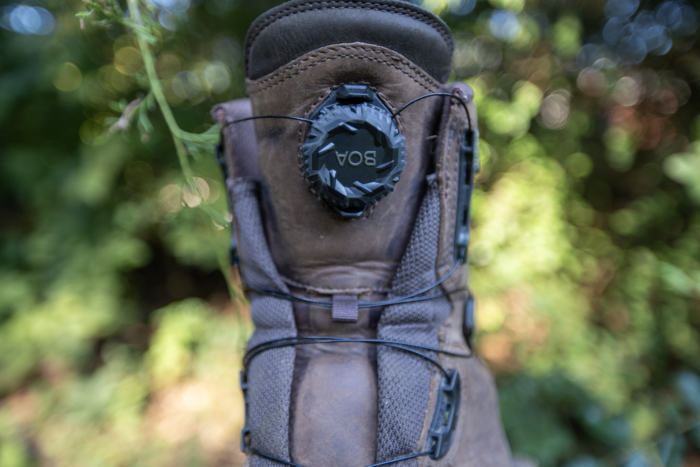
I know a lot of people who do nothing but sing praises for Boa lacing systems. I myself have never been sold on the concept, despite trying Boa systems in the past on lightweight hikers and wading boots for fishing. To be honest, the Speed Hunters didn’t change my mind on the system. I think there are some pros and cons, and I’m not sure it’s always the best answer for footwear.
What I Like About Boa
Let’s start off with the pros. This isn’t an earth-shattering insight, but the lacing system makes it ridiculously easy to put the boots on and take them off. Now, in the grand scheme of things, that may not seem like a huge deal, but I really do appreciate it from a functional hunting standpoint.
I’ve only worn these boots during summer scouting missions. Those scouting missions have been at least 8 hours a pop in the field and covering big miles in hilly terrain. With temps and humidity both hitting triple digits, it’s been sweaty, exhausting, and filled with plenty of hydration and rest breaks.
Since the Speed Hunters are so easy to put on and take off, I find myself popping them off and letting my feet breathe multiple times throughout the day on those rest stops. Call me lazy, but I never did that with standard boots. It feels absolutely amazing, and it’s not a hassle of any sort with the Speed Hunters.
Another pro? The boots never come untied. Again, it’s something minor, but it is noticeable, especially when walking through thick, tangled brush. Upland hunters should take note.
Where Boa Doesn’t Do It for Me

Now, onto the cons.
Meindl itself says BOA lets you fine-tune the fit. I think it actually does the exact opposite, although I do get where the brand is coming from. Each click micro-adjusts how tight it is, and you can’t achieve that precision with laces.
The problem with Boa lacing systems on boots, and especially a boot almost 9 inches tall, is that you don’t get to control where the system tightens down. I can’t tighten the boot around the top of my foot, loosen it at my ankle, and then retighten it near the top. I can’t do any variation of tightening and loosening.
With Boa, you’re pretty much stuck with the boot tightening down wherever the Boa system naturally chooses. On the Speed Hunter, the boot mostly tightens above the ankle. It’s tough to tighten these boots on the top of your foot.
It’s not like they fit loose or that it’s a real problem. They do lock in just fine for all of the hiking I’ve done in them. However, I have, on multiweek hunts, adjusted how I tighten my boots based on fatigue, blisters that pop up, and even injury when I rolled an ankle pretty badly. It sucks not having that ability.
And You’d Better Hope It Doesn’t Break
I’ve heard many people say, “I’ve never had a Boa lace break. You don’t need to worry about it.” Well, I have. Admittedly, though, not on these boots.
About 12 years ago, I had a Boa lace break on wading boots in the middle of a guided fishing trip. It was a huge pain. I had to spend hours walking around with a boot flapping around all willy-nilly. If I break a shoelace, on the other hand, I can almost always jerry-rig up a fix in the field.
Now, I will say that Boa laces are more durable and won’t break nearly as often as shoelaces. They can take a beating and, for the most part, you can trust them. The issue is that when they break, it’s a much bigger problem.
Fortunately, there is a workaround. You can buy spare Boa parts here. I think if you replace your laces once a year, you’ll never have an in-field issue as I did. You could also carry a repair kit in the field for extra insurance.
Final Thoughts: Are the Meindl Boa Speed Hunters the Boot for You?

Despite my hesitation around Boa lacing systems, I really do love these boots. After putting a decent number of miles on them, my verdict is that they provide all of the support you need in a mountain boot while being considerably more comfortable. At the end of a long day in the field, my feet simply hurt less than they do in my other boots. Because of that, I can get over my concerns about Boa laces.
I can’t even really complain about the high price. Yes, $460 is a lot, but hunting boots are something that anyone with any amount of experience will tell you are worth spending the money on. And honestly, that’s really competitive in the high-end hunting boot world. And $400-500 has been standard for the last decade; I’m surprised Meindl hasn’t raised prices. It’s a solid value, especially since they can be resoled.
The only person I would steer away from these boots is someone who is hunting sheep and goat country all the time. Those guys may want a stiffer boot with a bit more adjustability in the laces. Fortunately for Meindl, those people are very few and far between.
With that in mind, I think these are fantastic boots for any deer and elk hunter out West. The Meindl Boa Speed Hunter offers the support, traction, and weatherproofness mountain hunters need in a lightweight, noticeably more comfortable package. Grab a set now and have happy feet throughout the entire hunting season.