No matter where you ride, every motorcycle boot balances comfort, precision, and protection. The real question is how much of each you need. For this guide, we mostly zeroed in on adventure (ADV) motorcycle boots that strike the sweet spot — protective enough for the ride, comfortable enough to keep on once you’re off the bike.
Options range from mid-height adventure kicks like the Fox Racing Defend ADV with BOA quick-closure. Or, you might want a taller pair like the waterproof, lightweight TCX Drifter. Otherwise, the Fox Racing Motion X Off Road is geared toward off-road and trail rides, while the adventure-focused Alpinestars Corozal V2 Adventure Drystar shines for long tours and dual-sport days.
Our most recent annual field tests included adventure motorcyclist Sean Galaway, motocross and enduro expert Dane Tudor, and track-and-trail rider Morgan Tilton. The trio tested five pairs of motorcycle boots and collectively covered tens of thousands of miles across California, Oregon, Colorado, Baja, Eastern Europe, Turkey, and British Columbia.
Editor’s Note: We updated our Motorcycle Boots buyer’s guide on August 14, 2026, with Bottom Line summaries and signposts to help you quickly find the info you need.
The Best Motorcycle Boots of 2026


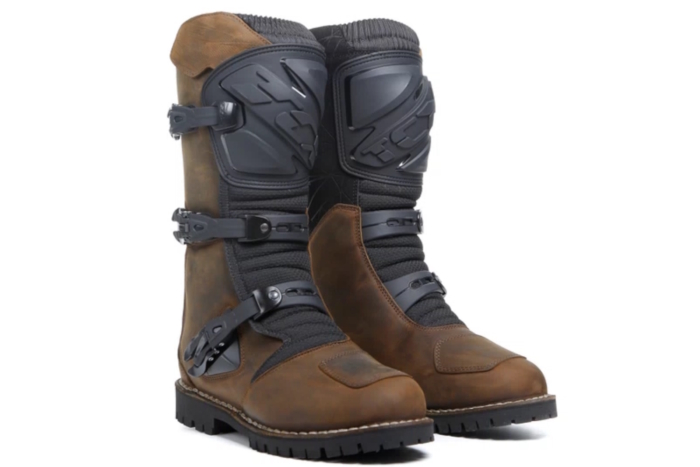
TCX Drifter
-

-
(Photo/Michael Frank)
-
(Photo/Michael Frank)
-
(Photo/Michael Frank)

Specifications
Pros & Cons
Pros
- Waterproof membrane
- Rebuildable stitched-down sole
- Comfortable for walking
- Excellent buckle system
Cons
- Not quite as protective as alternatives
Read Review: Everyday Comfort Meets Solid Protection: TCX Drifter Motorcycle Boots Review
The Bottom Line: A versatile CE Level 2 motorcycle boot that strikes an ideal balance between off-road protection and off-bike walkability. Its updated buckle system, waterproof membrane, and flexible ankle articulation make it a top-tier choice for daily commuting and light adventure touring.
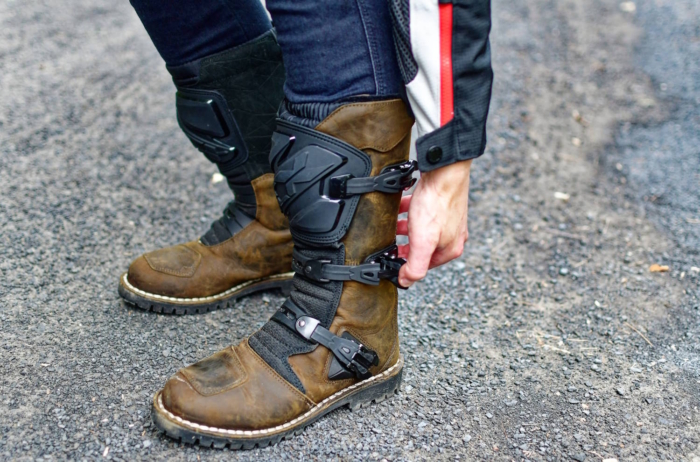
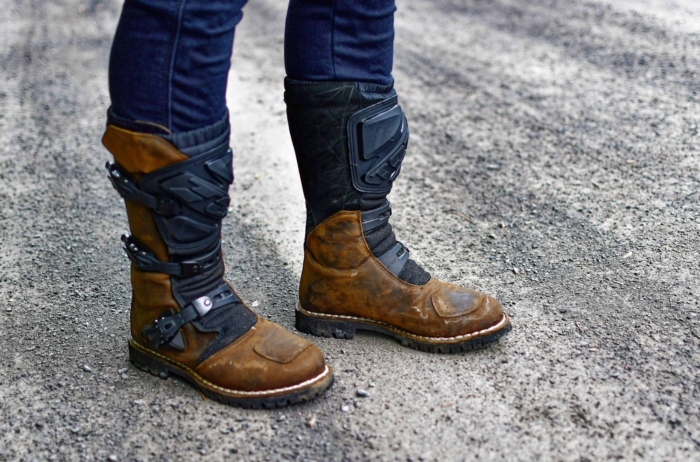
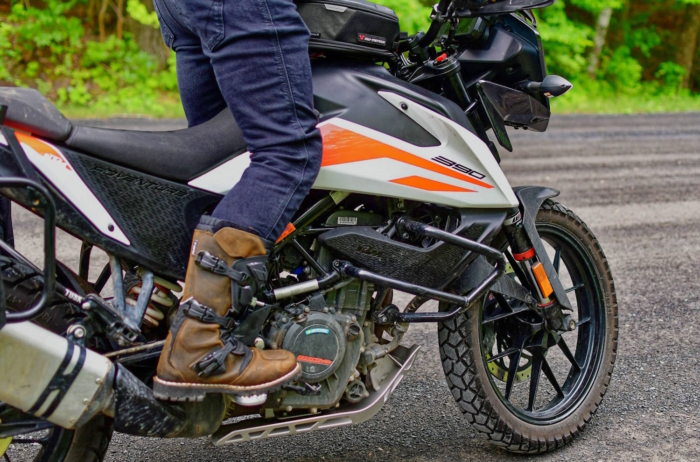
The TCX Drifter Waterproof ($399) builds upon the foundation of its predecessor, the Terrain 3, with enhanced protective armor and structural upgrades. GearJunkie tester and motors expert Michael Frank put these boots through the paces across toasty adventure rides and slow, technical motocross trails, evaluating weather resistance, long-term comfort, and off-bike mobility. Our take? The Drifter seamlessly strikes a balance between light adventure and crossover rides from pavement to double-track. It offers CE Level 2 protection but also doesn’t sacrifice ankle flex. And it doesn’t make our wallet cringe.
The Tech: Constructed from full-grain vintage leather with a T-Dry waterproof lining, the boot carries a CE Level 2 safety certification. Upgrades over earlier designs include a reinforced gear shift pad, an expanded suede heat shield on the inner leg, and dedicated armor across the shin, ankle, and Achilles heel socket. A flexible accordion gusset and a tapered collar shut tightly around riding pants to seal out rain and debris, while three micro-adjustable 6060 aluminum lever buckles utilize a stronger cam mechanism to remain locked in place.
What We Like: Despite the robust protective armor, the boot remains surprisingly lightweight and nimble. Deep lugged outsoles provide dependable foot traction when pushing a bike through mud or loose trail sections. The forward ankle flexion allows for natural movement, making it far easier to walk in than typical rigid off-road footwear once broken in. Additionally, the adjustable buckle hardware maintains its tension under strain without loosening during aggressive riding.
What We Don’t: Compared to more heavy-duty adventure alternatives like the Alpinestars Corozal, this boot offers slightly less lateral ankle rigidity, which allows for more forward lean but marginally sacrifices maximum impact resistance. It is also bulkier than a standard street riding boot, making it less suitable for casual urban wear.
Should You Buy It? Riders who need a protective, fully waterproof boot that can handle everything from asphalt commutes to rocky trail detours without feeling like a heavy ski boot will be happy with this investment. The Drifter provides the perfect middle ground between high-level armor and all-day wearable comfort.
Fox Racing Motion Boots
Specifications
Pros & Cons
Pros
- Extremely comfortable out of the box
- More affordable than the premium-level Instincts
- Easy to adjust buckle levers and clasps
- Air mesh liner is treated for antimicrobial and odor control
Cons
- Half sizes not available below size 9
- Giving up several top-tier design details of the Instinct
The Bottom Line: A high-performance motocross boot that brings pro-level safety features down to an accessible price tag. Its instant step-in comfort, secure hinge lockout, and intuitive grip make it a stellar choice for progressing athletes.
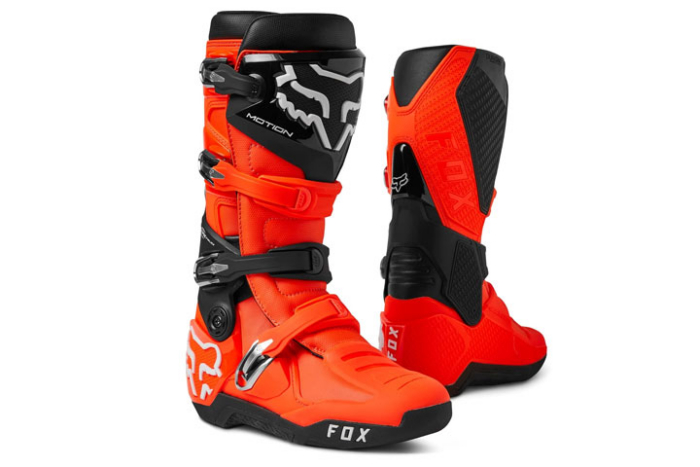
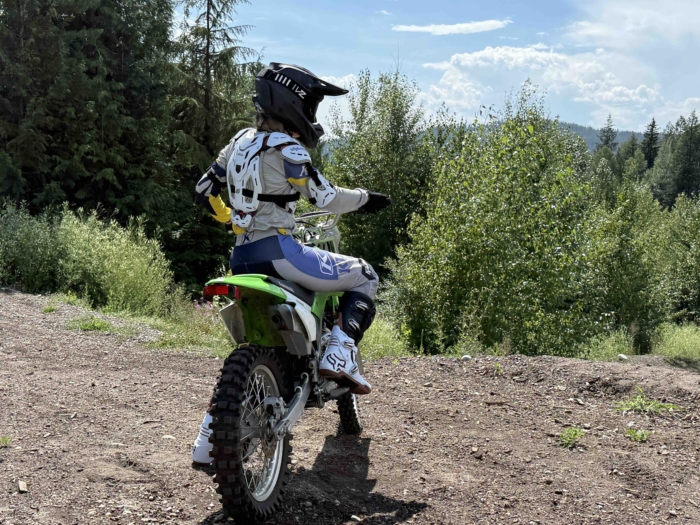
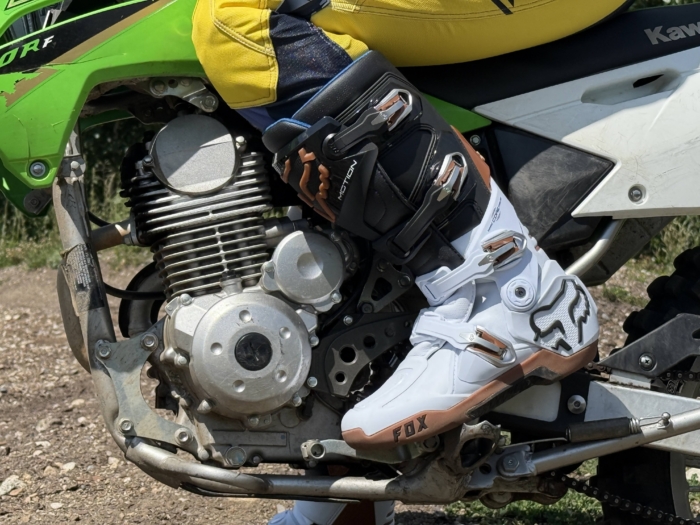
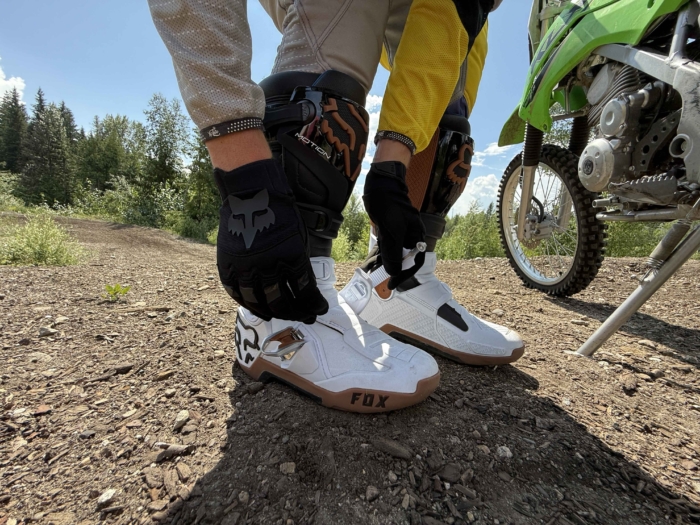
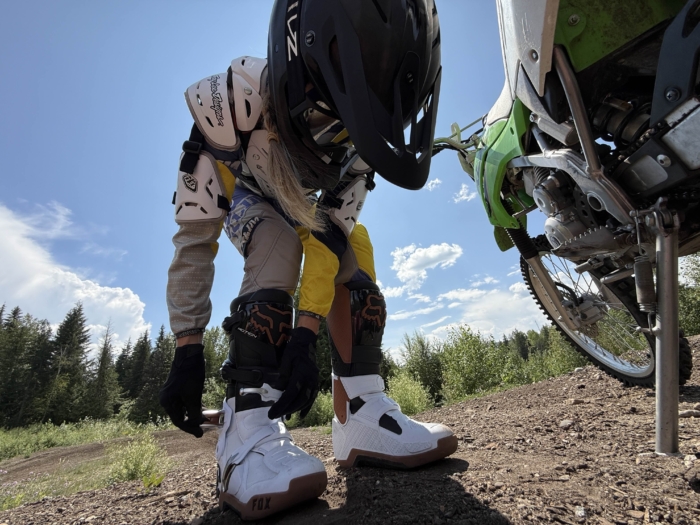
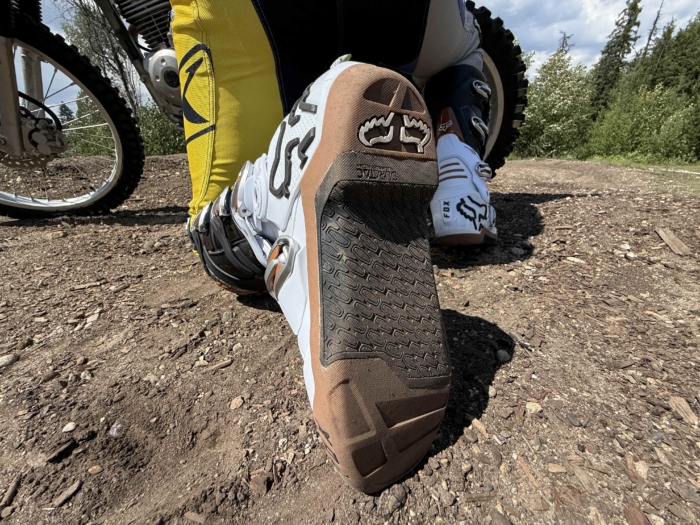
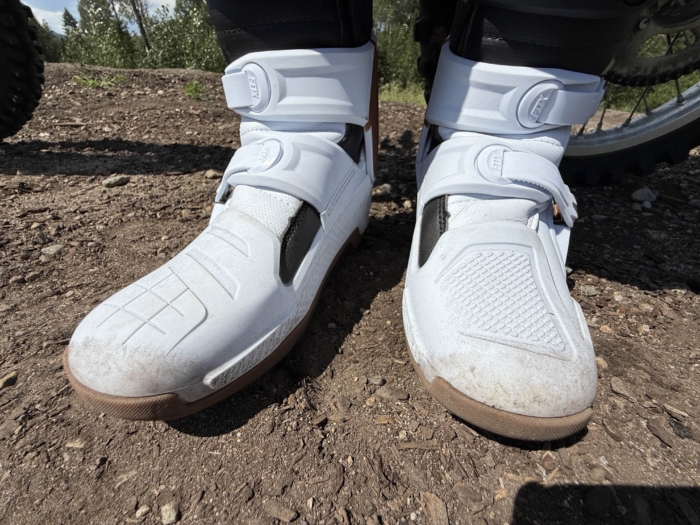
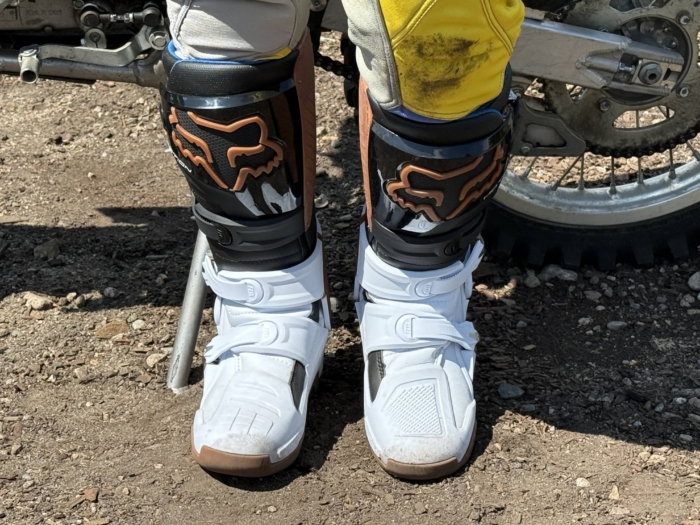
For motocross riders, there is no better choice than the Fox Racing Motion Boots ($420) when it comes to comfort, protection, and style. Inspired by the pro-level Instinct, this model is a great choice for intermediate and advanced athletes seeking a high-performance boot at a lower price point. GearJunkie Senior Editor Morgan Tilton stacked hours in the boot on two routes at the Kootenay Motocross Track — navigating banked turns, steep hills, rollers, and tabletops — along with double-track woods adventures. Sturdy and stout, it checks the boxes for security plus an approachable out-of-the-box fit, thanks in part to an improved last shape.
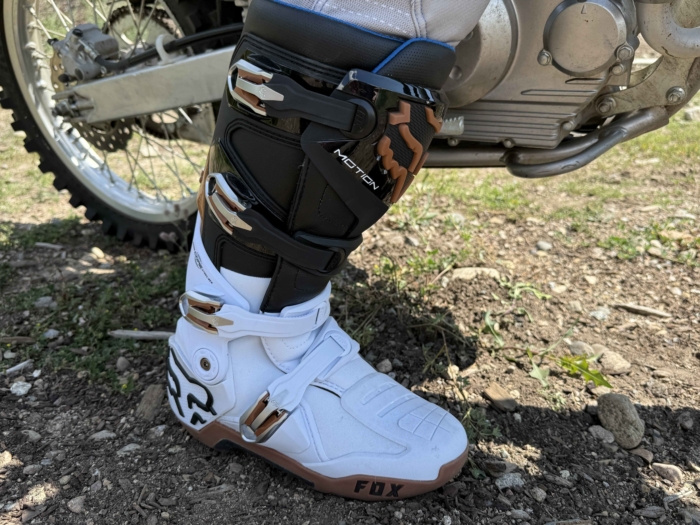
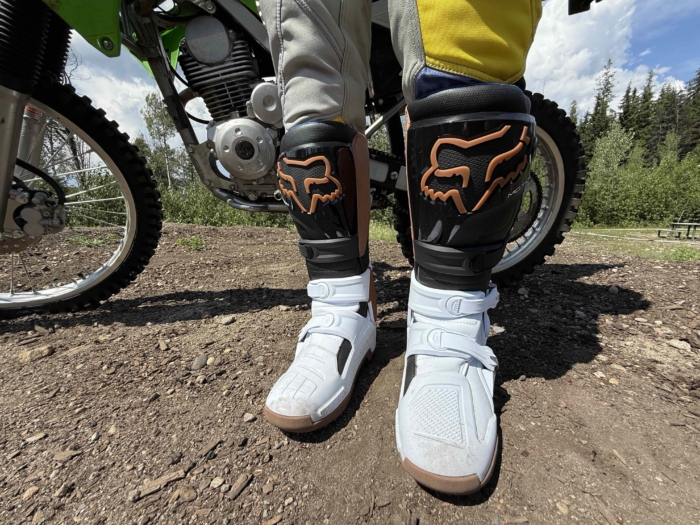
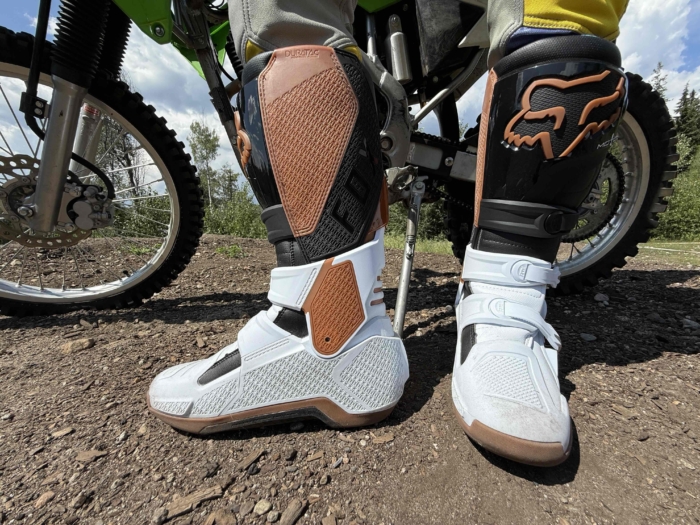
The Tech: Constructed around a low-ride chassis that brings the foot closer to the footpegs, the boot utilizes a Duratac rubber compound across the outsole and inner burn guard for balanced frame grip and durability. For comprehensive protection, it incorporates a thermoplastic polyurethane (TPU) shin plate, toe cap, heel cap, and full-length calf guard. A composite nylon-fiberglass cuff secures the ankle, while a patented hinge lockout mechanism prevents hyperextension. On the inside, an air-mesh liner treated with Microban antimicrobial coating manages moisture and squelches odor, while a four-buckle closure system relies on forged metal levers for secure adjustability.
What We Like: Footpeg traction is excellent across varied terrain, handling deep rain-doused soil, scattered rocks, mud, water crossings, and dry dirt effortlessly. A defined heel shelf provides a consistent leverage point on the bike. While the flagship Instinct uses an Ultratac rubber sole that rider Dane Tudor wore down after a full season of podium wins, races, and training, the Motion’s Duratac outsole has held up without shedding rubber. Asymmetric upper patterning adds functional precision: the left boot has raised shifter ridges on the toe and instep, while the right boot uses a textured design for rear brake control. The adjustable straps slide easily to fine-tune fit on the fly, and the Microban lining captured full approval during long testing days in 90-degree summer heat.
What We Don’t: Compared to the top-tier Fox Instinct ($600), the Motion features a slightly less grippy rubber compound on the outsole and a less extensive ankle cuff and shin guard. While the sole holds up well, it may eventually wear under heavy footpeg pressure, though Fox Racing offers a resole program to extend boot longevity.
Should You Buy It? Intermediate and aggressive track riders who want robust 360-degree impact protection, intuitive peg feel, and reliable hinge control without paying premium race-day prices will find this model is a solid investment. It provides outstanding comfort and track-ready security in a stylish package.
Fox Racing Defend ADV Boots
Specifications
Pros & Cons
Pros
- Comfort out of the box
- Extremely versatile
- Excellent durability
- BOA lacing system
Cons
- GORE-TEX can run hot
- Moderate height
The Bottom Line: A high-performing, mid-cut touring boot that marries out-of-the-box walkability with reliable impact armor and quick micro-adjustability thanks to BOA. Its low-profile design and durable, high-grip outsole make it a top-tier choice for long-distance adventure touring and light off-road riding.
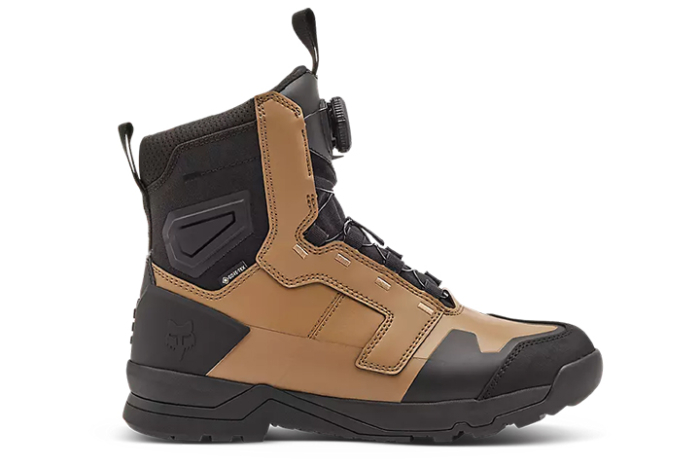
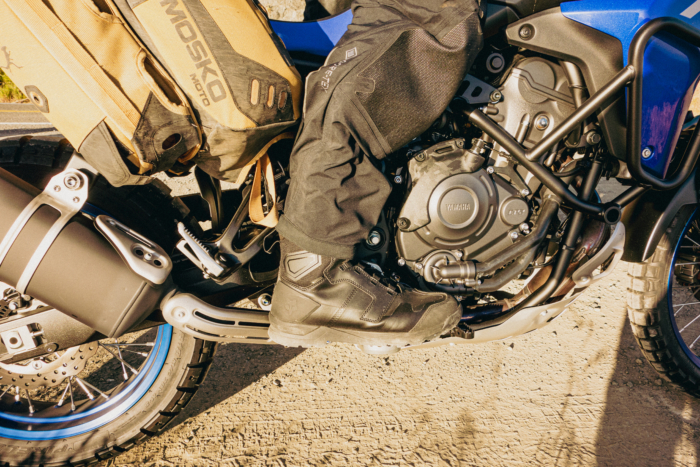
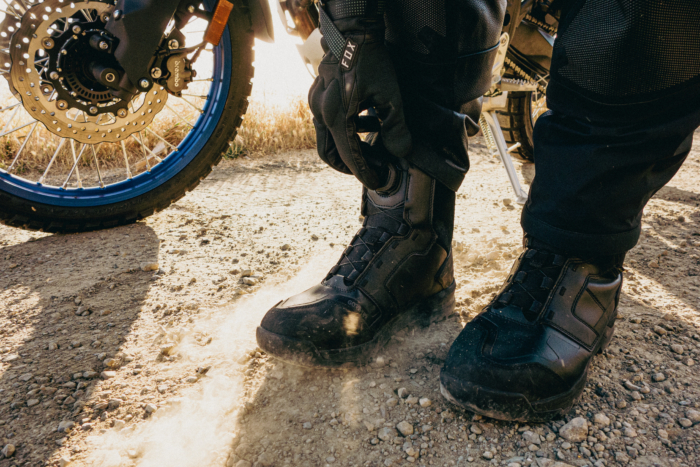
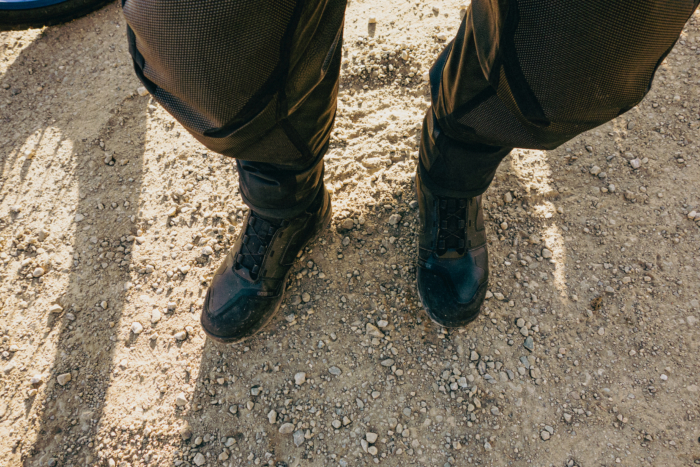
We pulled the tags off the mid-cut Fox Racing Defend ADV Boots ($345) and immediately started a 1,200-mile ride across California and Oregon. Adventure motorcyclist Sean Galaway found quick approval. Combining long-haul comfort with a quick, customizable closure, these boots establish a benchmark for touring adventure footwear.
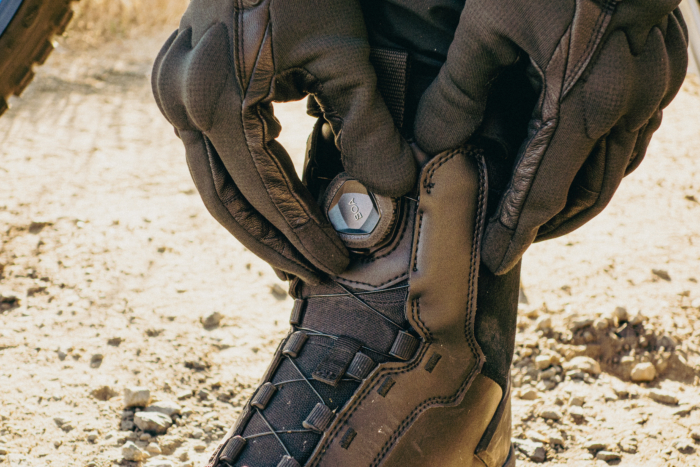
The Tech: Constructed with a GORE-TEX waterproof upper, the boot utilizes a micro-adjustable BOA Fit System for quick, secure entry and tension adjustments. Impact protection is handled by integrated D3O foam across the ankles and tongue, supported by a rigid TPU heel counter and a composite nylon-fiberglass insole shank for standing stability on footpegs. Underfoot, an Ultratac rubber outsole delivers dampening against bike vibrations while maintaining high-friction traction.
What We Like: Exceptional comfort out of the box eliminates hot spots and pressure points during consecutive all-day rides. The BOA dial allows effortless fine-tuning without unbuckling bulky straps, making transition stops simple. Despite removing the bike’s rubber footpeg inserts, the Ultratac sole absorbs engine vibrations effectively while delivering exceptional footpeg traction. The boot also demonstrates impressive structural toughness, showing no signs of wear even after grazing tarmac during aggressive lean angles on a Yamaha Ténéré 700.
What We Don’t: The mid-cut height leaves the upper shin exposed, making higher-cut off-road options better suited for aggressive hard-enduro riding. Additionally, because the waterproof membrane prioritizes weather protection, feet can feel warm when ambient temperatures rise above 90 degrees Fahrenheit.
Should You Buy It? For adventure riders who spend most of their miles touring on pavement and gravel roads with light trail detours, the Defend ADV is an outstanding choice. This model delivers a refined blend of all-day walkability, weather protection, and convenient adjustability.
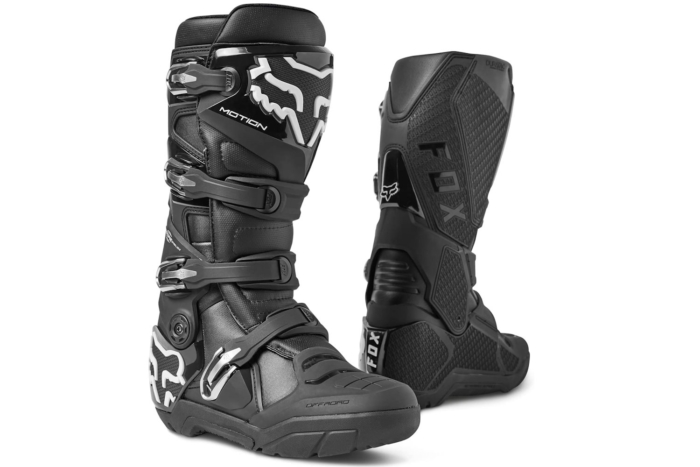
Fox Racing Motion X Off Road Boot
-
-
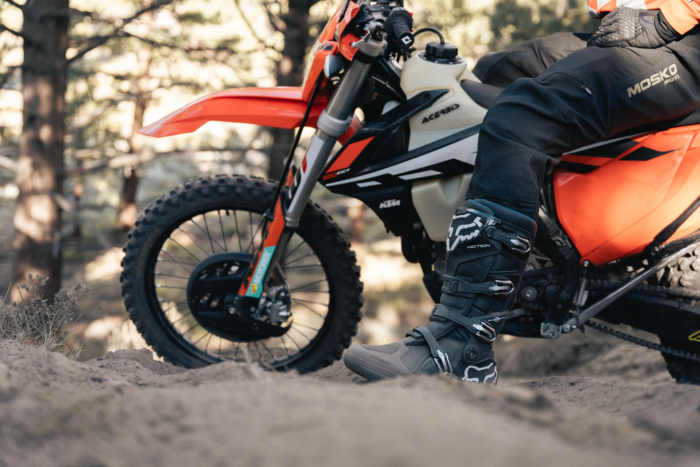
The Fox Racing Motion X Off Road boot has extra tread for off road situations; (photo/Cody Mathison)
-
-
Specifications
Pros & Cons
Pros
- Incredible protection
- Waterproof membrane
- Off bike traction
- Replaceable outsole
Cons
- Can run hot
The Bottom Line: A high-level off-road boot that combines motocross-grade hinge protection with all-day comfort, off-bike walkability, and a waterproof lining. Its open-tread lugged sole and replaceable components make it an exceptional pick for remote adventure touring and technical singletrack.
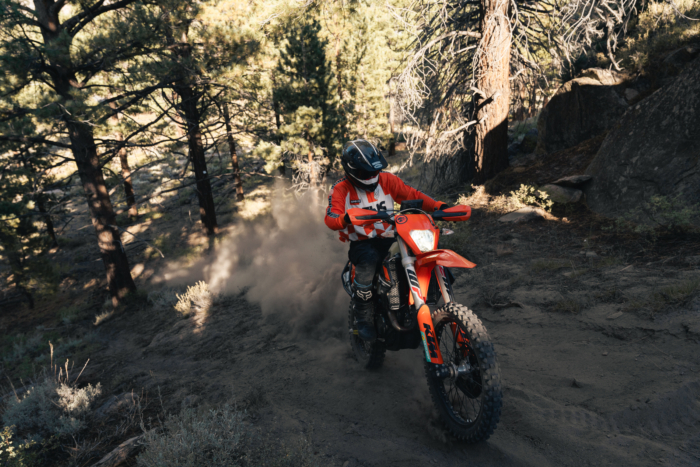
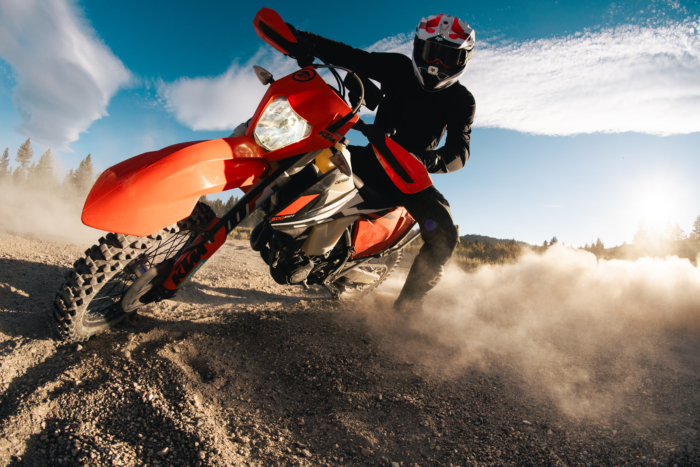
When you are riding a Yamaha Ténéré 700 World Raid loaded with 50 pounds of four-season gear for 10,000 kilometers across the best dirt Eastern Europe and Türkiye has to offer, you need a boot you can trust to protect you. It needs to be versatile enough to walk off the bike, protect you if you go down at high speeds on the autobahn, and provide enough grip when you are doing your best Graham Jarvis impression through creek beds. The Fox Racing Motion X Off Road ($505) boots strike a unicorn-like balance between all-day comfort, extreme protection, off-bike walkability, reliable grip, and durability.
The Tech: Geared specifically for off-road and trail riding, this design borrows performance cues from the motocross Instincts — like the hinge lockout system that stops motion before hyperextension — while optimizing flexibility and bike control. It features an internal waterproof membrane alongside an open-tread DURATAC rubber outsole engineered for traction across variable terrain. Adventure motorcyclist Sean Galaway found the full-coverage thermoplastic polyurethane (TPU) plating shields the shin, toe cap, heel cap, and calf, and the four patented forged metal buckles deliver a durable, precise closure.
What We Like: Step-in comfort is surprisingly high out of the box, with an updated last shape offered in half-sizes to provide a precise fit that only improves with age. The DURATAC compound across the outsole and full medial side of the boot proves durable, grippy, and effective at heat dissipation. Slim toe boxes enable effortless shifting during long days in the saddle. The replaceable soles and forged buckles hold up under strain, allowing these boots to span a wide range of motorcycles and environments — from an initial 10,000-kilometer trial by fire to technical singletrack at home and quick missions into Baja, California. Compared to the mid-cut Fox Defend ADV, the Motion X delivers far greater shin coverage and rigid hinge security for high-risk remote terrain.
What We Don’t: The internal waterproof membrane combined with the dark colorway causes these boots to run warm during long days of desert riding. However, that heat buildup is a small price to pay for a boot as capable as the Motion X Off Road.
Should You Buy It? Adventure and off-road bikers who can’t risk compromising protection when riding over a day’s travel away from help will find this model is an outstanding choice. The Motion X delivers pro-level ankle security and rugged trail durability without sacrificing the comfort required for multi-day trips.
TCX Street 3 WP
Specifications
Pros & Cons
Pros
- Sneaker-like design is extremely comfortable on and off bike
- CE Level 2 rated
- Pricepoint
Cons
- If you need a higher reaching boot, check out other designs
The Bottom Line: A high-top street riding sneaker that seamlessly blends certified ankle armor with all-day walking comfort. Its waterproof membrane and urban style make it an ideal pick for daily commuting, city errands, and multi-state touring.
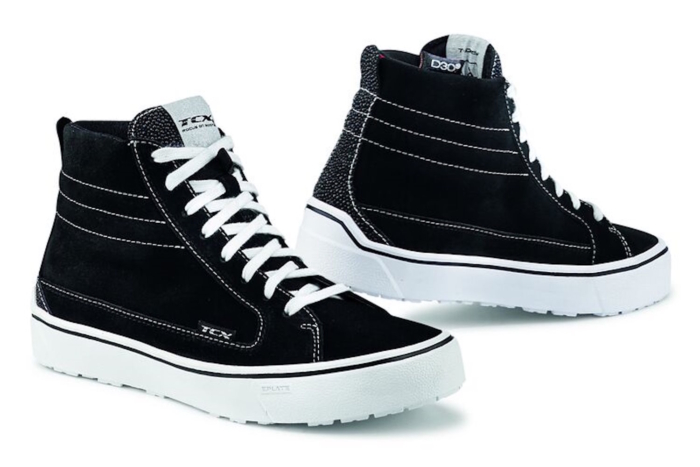
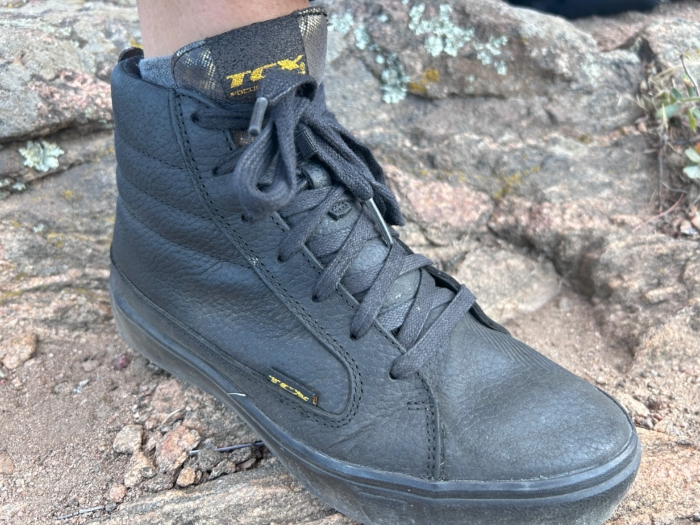
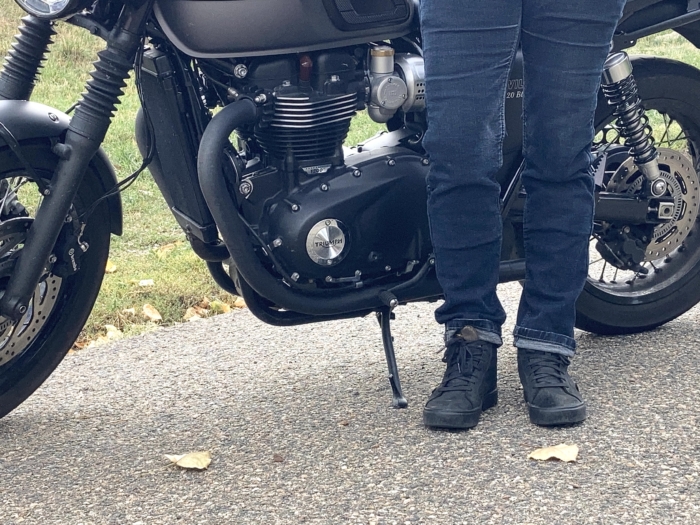
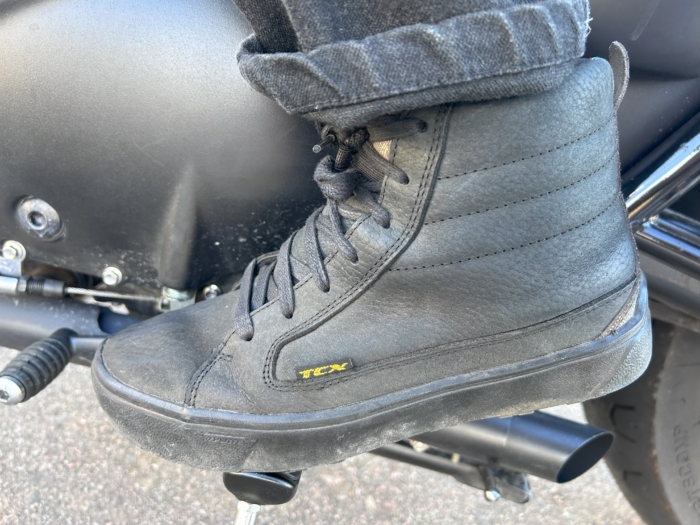
We love versatility, and a shoe that can go from the bike to the office and around town is a game changer. The TCX Street 3 WP ($189) packs CE Level 2 protection into a leather high-top sneaker that will make you forget you are wearing motorcycle footwear.
The Tech: Constructed with a full-grain leather upper, the boot — er, high-top — incorporates TCX’s proprietary T-Dry waterproof membrane to block rain while maintaining breathability. Armor includes flexible D3O malleolus ankle inserts, reinforced toe and heel counters, and a ZPLATE shank in the midsole designed to provide transverse crushing rigidity without sacrificing longitudinal flex for walking. Underfoot, an OrthoLite foam footbed delivers long-term cushioning, while a Groundtrax wear-resistant rubber outsole offers grip on wet pavement and footpegs. A lace-up closure features a dedicated elastic keeper band on the tongue to store excess laces securely.
What We Like: These sneakers are comfortable right out of the box, requiring zero break-in time. GearJunkie reviewer Hilary Arthur has been riding in a pair of TCX Street 3 Lady WP boots for more than seven years, and she donned the updated version for a 1,100-mile tour through Colorado — navigating high alpine passes, Labor Day traffic jams, and mountain towns. While designed for city commutes, these shoes hold up for multi-state touring. Build quality and comfort remain consistently high following Dainese’s acquisition of TCX. Unlike full-height adventure boots like the TCX Drifter WP, the Street 3 WP looks like casual street footwear off the bike.
What We Don’t: Because these high-tops prioritize low-profile urban styling, they lack the extended shin protection, rigid hinge lockouts, and calf coverage needed for aggressive off-road or track riding. Additionally, the waterproof lining can feel warm during slow traffic in peak summer heat.
Should You Buy It? Riders looking for an everyday riding shoe that shifts effortlessly from motorcycle footpegs to city sidewalks will find great value in this pair. It offers dependable weather protection and certified armor in a casual package. If purchasing the women’s version, we recommend sizing down a half size from your standard street shoe size, as the footbed runs slightly large.
Danner Moto Wedge GTX
Specifications
Pros & Cons
Pros
- Supremely walkable
- Waterproof
- Looks like a regular hiker
Cons
- Not CE-rated
The Bottom Line: A premium, US-made riding boot that blends timeless work-boot aesthetics with integrated ankle armor and a waterproof lining. Its stiff shank platform and flexible forefoot make it a top choice for urban commuters who split their days between walking and riding.
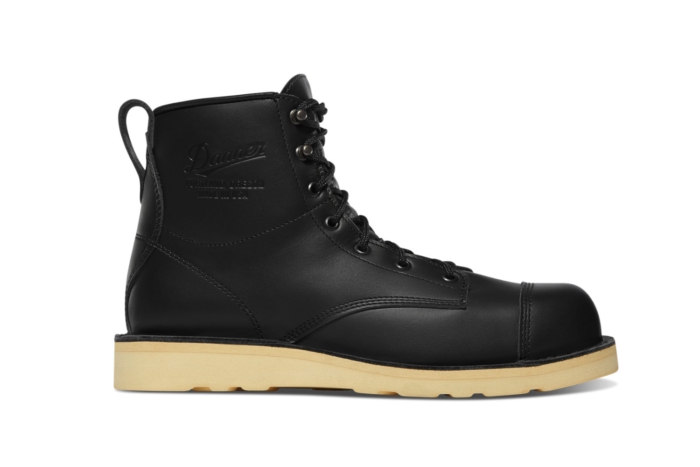
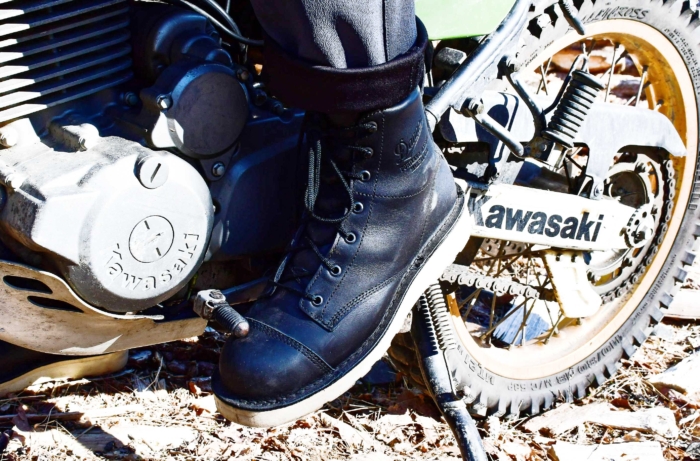
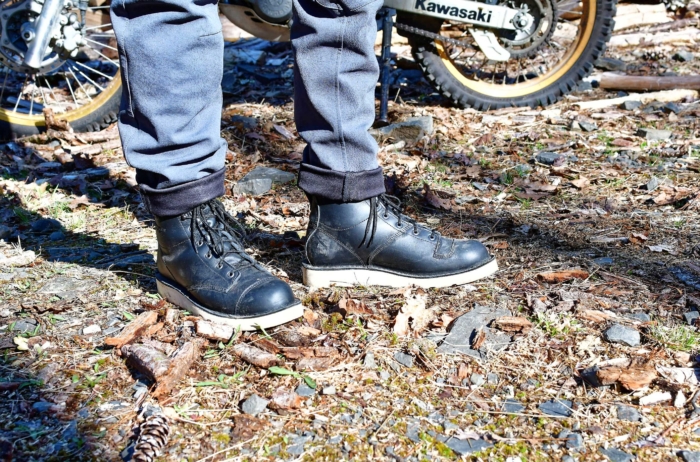
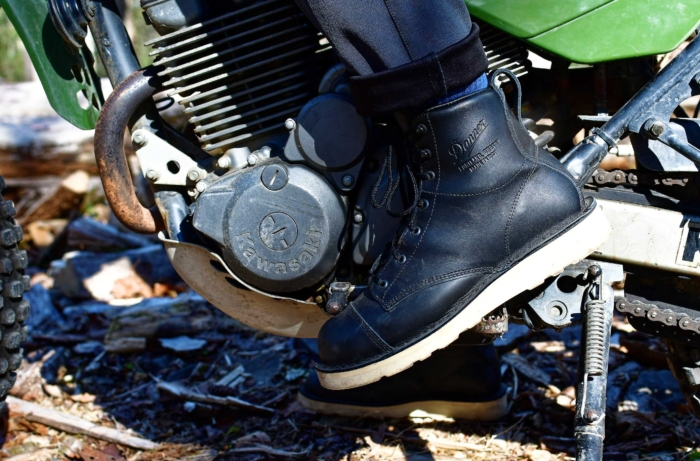
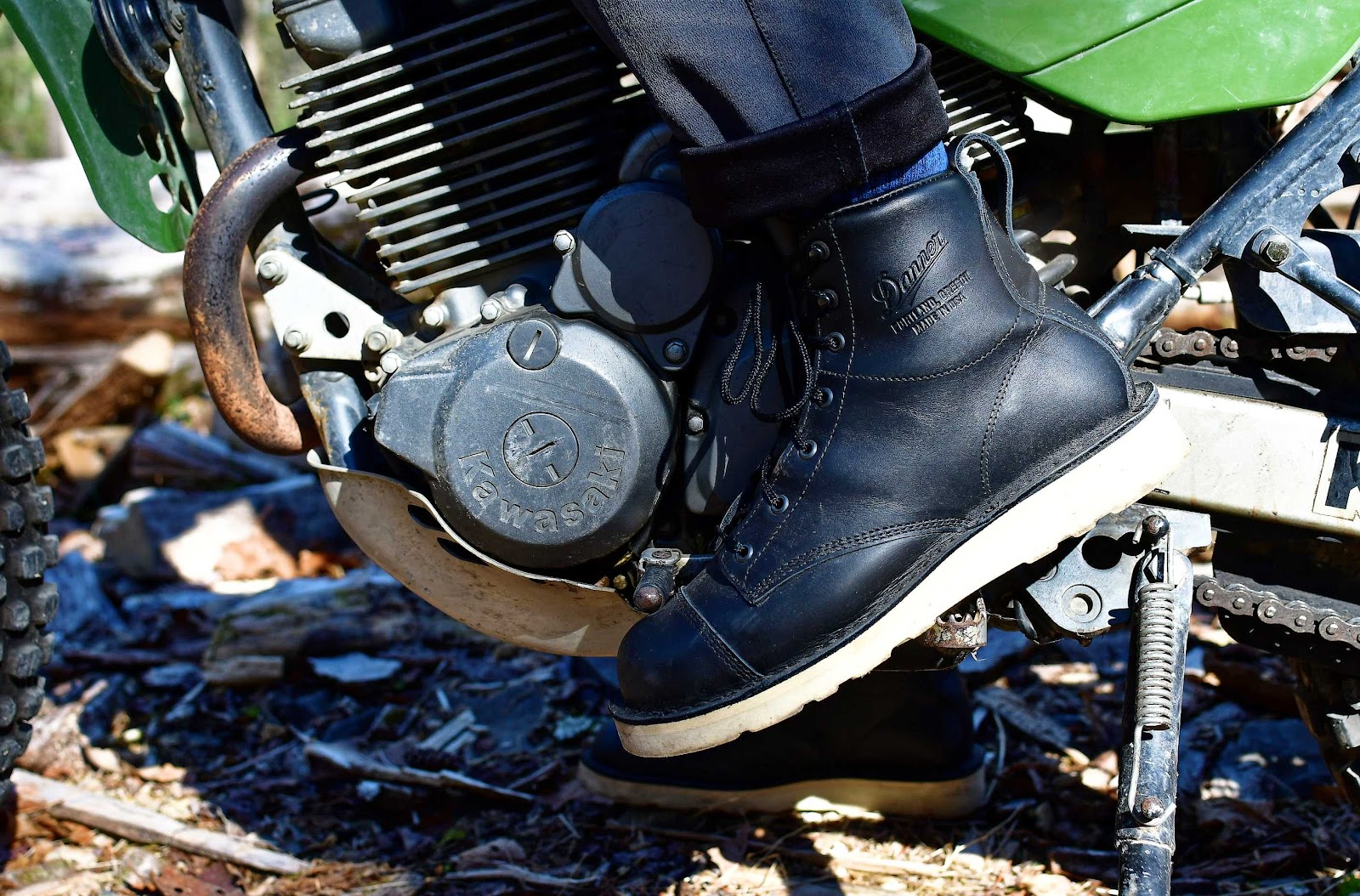
Sometimes getting geared up for a local ride feels like a major hassle, especially if you know your day is going to be two-thirds walking and one-third riding. Urban riders are bound to compromise footwear for that reason, but the Danner Moto Wedge GTX ($500) delivers a stylish solution without sacrificing functionality. Tester Michael Frank put these boots through their paces on local urban commutes, evaluating their all-day walkability, peg stability, and weather protection.
The Tech: Handcrafted in Portland, Oregon, using 5.5-ounce full-grain leather, the boot incorporates a GORE-TEX lining for breathable waterproofing. Designed with input from See See Motor Coffee Co. and Vahna, it features an extra leather shift guard on the toe and a medial clutch panel for abrasion resistance. Flexible D3O impact foam lines the ankle collar to harden upon impact while remaining pliable during normal movement, while a fiberglass shank in the midsole provides torsional stiffness over footpegs. Underfoot, a non-marking, slip-resistant Danner Wedge outsole delivers smooth-surface grip.
What We Like: The aesthetic appeal of this boot is matched by excellent structural support. The supremely stiff midsole platform provides a stable foundation for shifting, standing on pegs, and spending long hours on the bike. Meanwhile, the forefoot retains enough flex to make walking natural and comfortable. D3O collar padding eliminates bulk, and the thick leather upper breaks in to deliver an exceptionally high comfort index. Compared to urban riding sneakers like the TCX Street 3 WP, the Moto Wedge GTX offers heavier 5.5-ounce leather construction and recraftable stitchdown soles for multi-year longevity.
What We Don’t: The boot lacks an official CE safety rating, which may deter riders seeking verified laboratory impact certifications. Additionally, the flat wedge outsole lacks deep lugged tread, making it less suitable for muddy trail detours or loose off-road terrain.
Should You Buy It? City commuters and style-conscious riders who want a premium, American-made boot that transitions seamlessly from motorcycle footpegs to sidewalk pavement will find great utility in this pair. It delivers an ideal balance of casual comfort, waterproof protection, and refined craftsmanship.
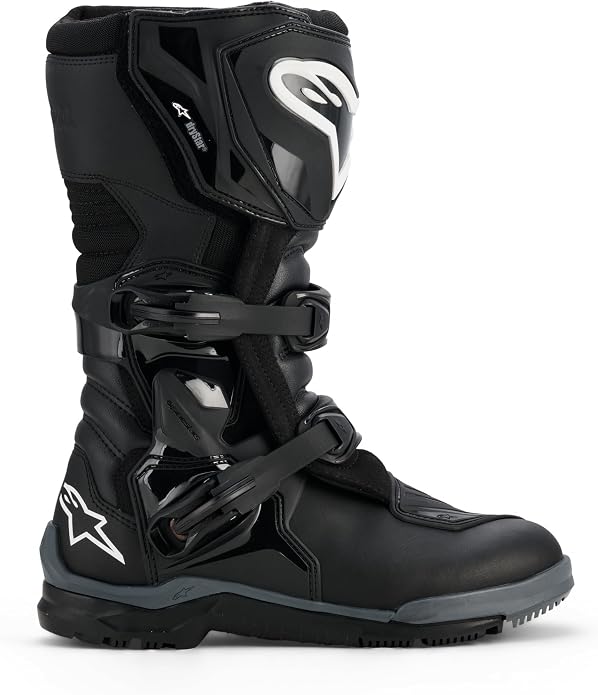
Alpinestars Corozal V2
Specifications
Pros & Cons
Pros
- Highly protective
- Reasonably walkable
- Great buckle system
- Overbuilt ankle
Cons
- Bulkier than alternatives
The Bottom Line: A high-level adventure boot that balances robust CE Level 2 safety with long-distance comfort and all-weather waterproofing. Its updated lateral pivot system, reinforced buckle closure, and grippy outsole make it a top-tier choice for riders transitioning between highway commutes and rugged off-road routes.
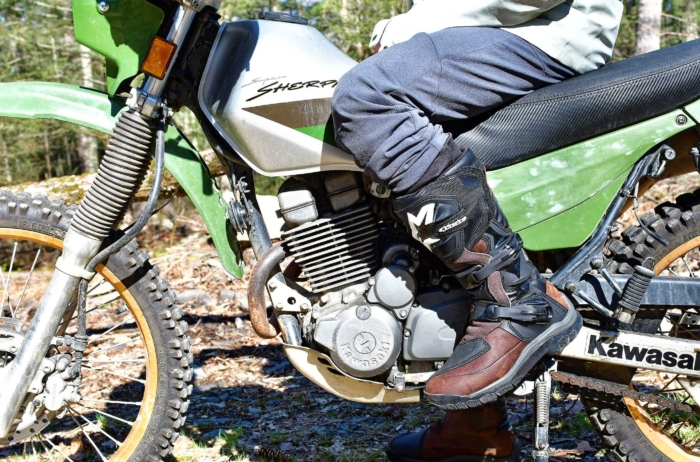
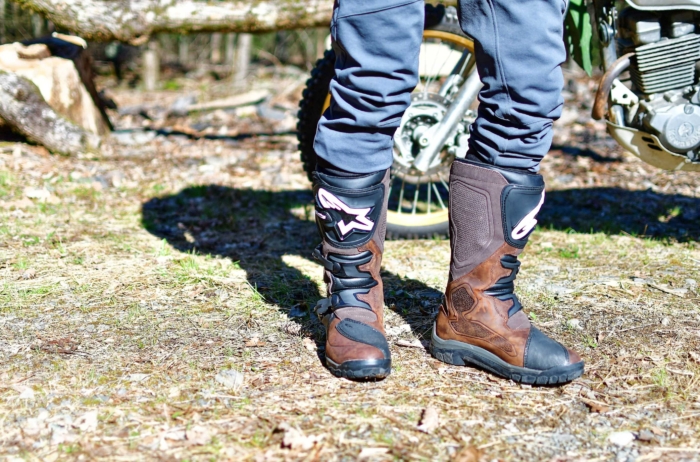
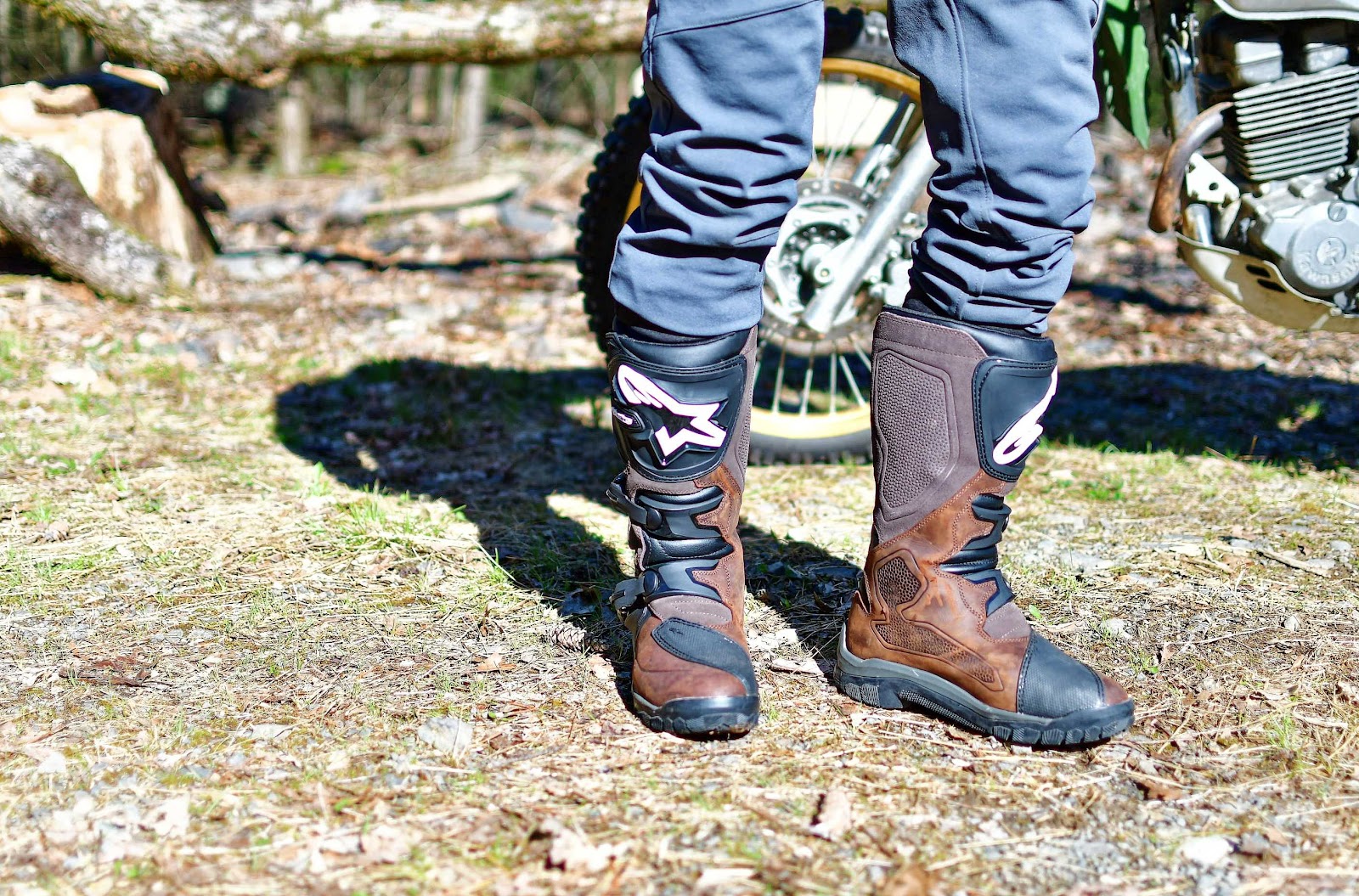
If your goal is to tackle dirt roads, mud, and rugged routes but also to have an everyday boot for highway routes and commutes, your choice of footwear will need to skew toward protection over malleability. That is why our top choice for an adventure boot is the CE Level 2-rated Alpinestars Corozal V2 Adventure Drystar ($360). GearJunkie reviewer Michael Frank tested this series across multi-day adventure tours and dual-sport routes, evaluating its all-weather resilience, footpeg grip, and lower-leg armor.
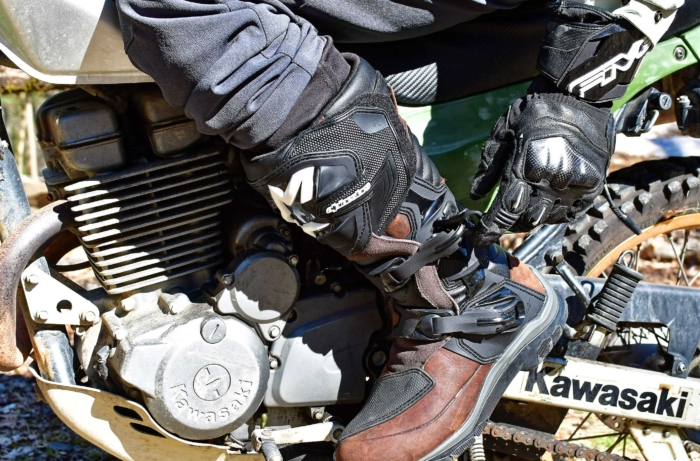
The Tech: Constructed from a multi-material upper featuring oiled PU-coated leather, microfiber, and suede, this boot incorporates Alpinestars’ waterproof and breathable Drystar membrane. The V2 update introduces an upgraded Lateral Pivot System that delivers front and rear ankle mobility while resisting lateral twisting forces. Impact defense includes a low-profile polymer shin plate, TPU calf guard, TPU shift pad, and a dedicated TPU back bridge designed to safeguard the Achilles tendon. Underfoot, a co-injected polypropylene insole with a steel shank provides torsional rigidity, paired with a vulcanized all-terrain rubber outsole for off-bike traction. The closure system utilizes a wide-aperture hook-and-loop top flap and two self-aligning, quick-release polymer ratchet buckles with memory settings.
What We Like: This updated design delivers a substantial protective zone around the ankle and lower leg, utilizing a reinforced lower buckle to prevent excessive lateral movement during dismounts. While not quite as impenetrable as the ultra-rigid Sidi Adventure 2 GORE-TEX, the stout toe box remains forgiving enough for walking. The grippy outsole offers dependable traction, which we proved firsthand while pushing a motorcycle with a dead battery several hundred yards through the woods. The self-aligning cam-lock buckles operate smoothly without releasing mid-ride. Furthermore, the low-profile shin plate makes it much easier to fit adventure pants over the top compared to bulkier motocross footwear.
What We Don’t: The built-in extended gaiter effectively seals out water and trail debris, but the top cuff volume still requires pant legs with a generous opening. Additionally, the protective chassis feels slightly more cumbersome during extended foot exploration than softer dual-sport options such as the TCX Drifter.
Should You Buy It? Adventure touring and dual-sport riders who want maximum lower-leg armor, secure footpeg support, and reliable wet-weather performance will find great value in this pair. It provides an ideal compromise for those who refuse to wear flimsy street shoes on unpredictable terrain.
More Motorcycle Boots Shielding Our Bedrocks
While these motorcycle boots did not take top awards, their build quality and specialized performance earned them a permanent spot in our gear gallery as dependable options for trail, track, enduro, adventure, and urban riding.
Specifications
Pros & Cons
Pros
- Top tier protection
- Excellent off bike traction
Cons
- Larger footprint than competitors
- Inner bootie isn’t for everyone
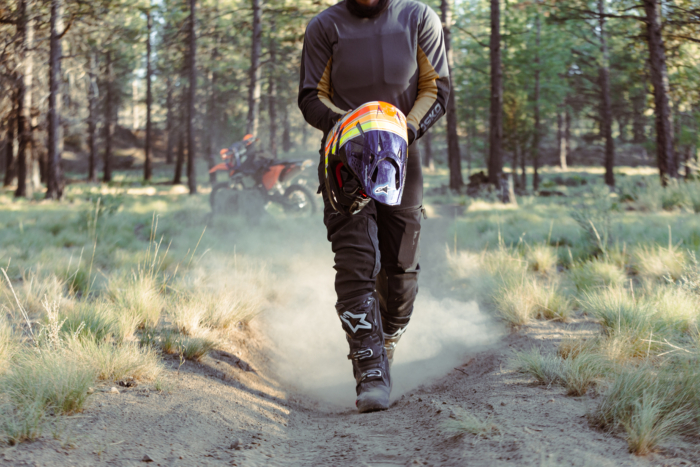
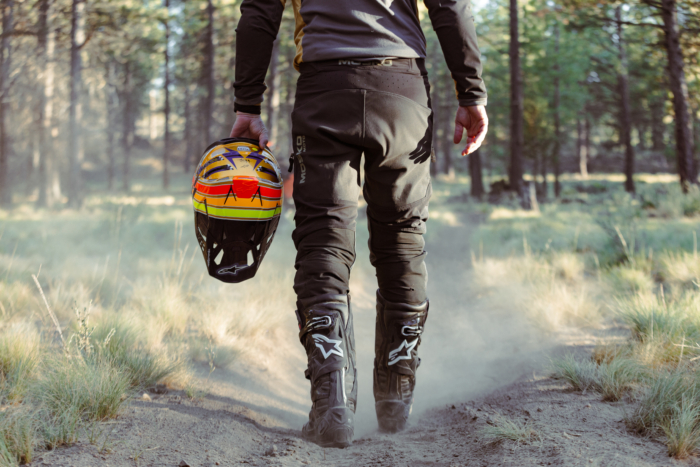
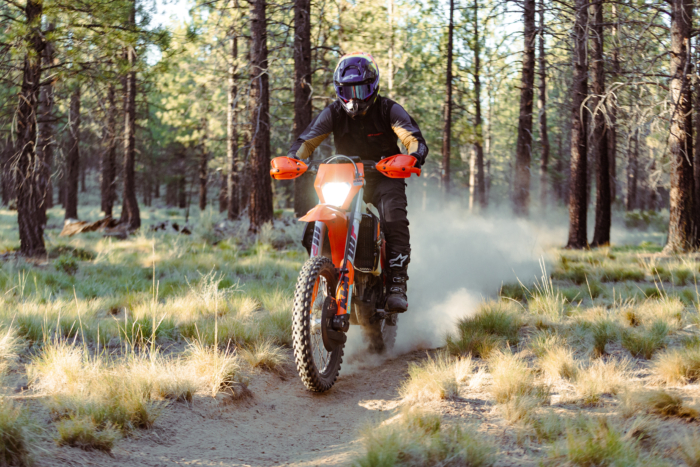
The Bottom Line: A dedicated off-road boot that adapts Alpinestars’ top-tier motocross armor for technical singletrack and rugged trails. Its dual-compound Enduro sole, inner ankle bootie, and tuned flexion control make it a premier pick for hard enduro riders demanding maximum foot-and-leg safety.
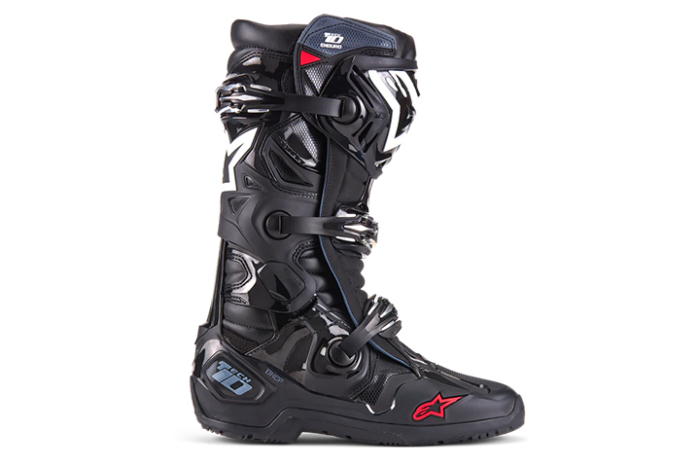
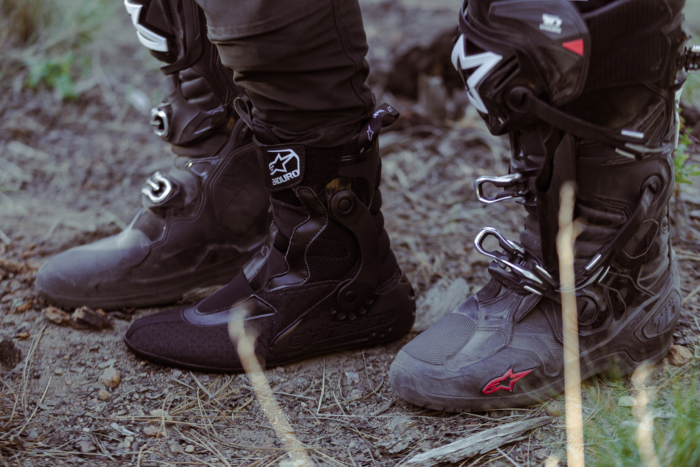
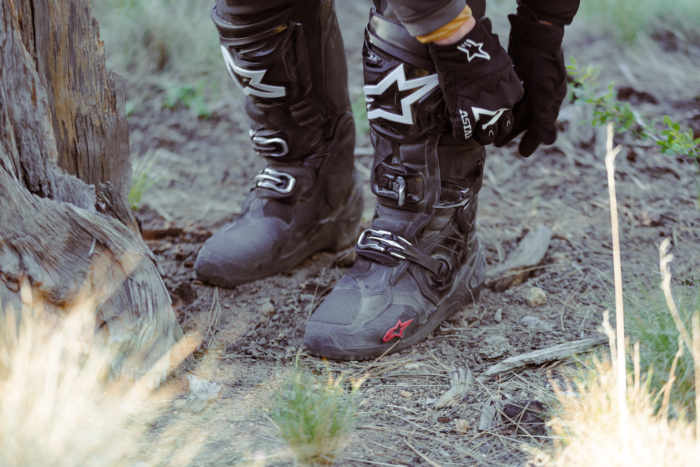
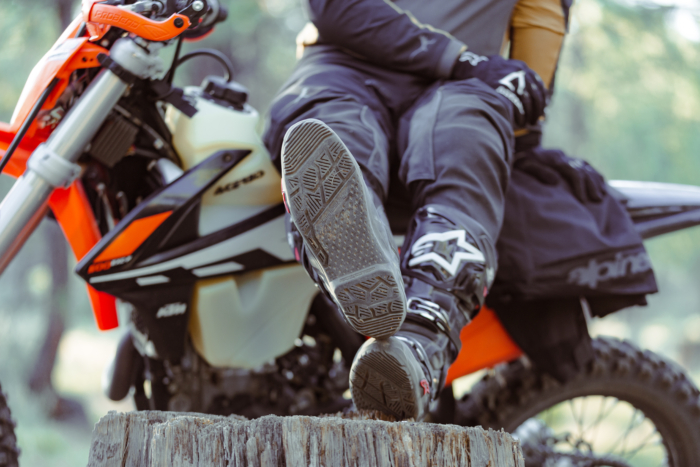
The Alpinestars Tech 10 Enduro is the most worn boot by the best racers in the world, so when they launched an Enduro model, we were eager to test it out. The Alpinestars Tech 10 Enduro ($750) is a phenomenal off-road boot with high-quality build and tried-and-true features. GearJunkie reviewer Sean Galaway put this boot through its paces, evaluating its off-road peg control, desert whoops impact absorption, and long-term durability.
The Tech: Constructed with a multi-density TPU shell and lightweight microfiber upper, this CE-certified boot incorporates a dedicated Enduro dual-compound lugged outsole. An inner biomechanical ankle bootie with a patented Dynamic Heel Compression Protector (DHCP) guards against high-impact forces. Control comes via a Frontal Flexion Control Frame working alongside dual front and rear blade connectors to prevent hyper-extension and over-compression. Underfoot, a metal shank bolsters the footbed, while a slim forefoot profile preserves shifter sensitivity. A triple buckle system featuring self-aligning aluminum frames and polymer ratchets secures the foot, complemented by a soft microfiber gaiter that seals out water and dirt.
What We Like: The standout feature of the Tech 10 line is the inner bootie, providing a unique approach to robust ankle defense. Unlike standard track motocross boots, this model is built specifically for hard off-road riding, offering slightly more flex to improve control on technical terrain. Comfortable right out of the box, the slim forefoot allows for easy shifting and brake modulation. Blasting through desert whoops feels controlled and dialed, backed by excellent shock absorption. Unlike adventure touring boots, the Tech 10 Enduro delivers maximum structural safety for high-risk singletrack routes.
What We Don’t: The boot has a larger physical footprint than competitors of the same size without an inner bootie, such as the Fox Racing Motion X Off Road boot. It can also pack out quicker than expected, so sizing slightly down or fitting carefully is recommended. Additionally, some riders may experience mild pinching from the internal ankle brace attached to the bootie.
Should You Buy It? To sum it up, track-focused riders who spend most of their time on open off-road trails and technical terrain will find incredible performance in this pair. If you already trust the Tech 10 platform but want specialized Enduro sole traction and enhanced flexibility, this boot provides incredible value and protection.
Specifications
Pros & Cons
Pros
- Waterproof membrane
- Super lightweight
- Comfortable for walking
- Easy zip closure stays put
Cons
- Not quite as protective as alternatives
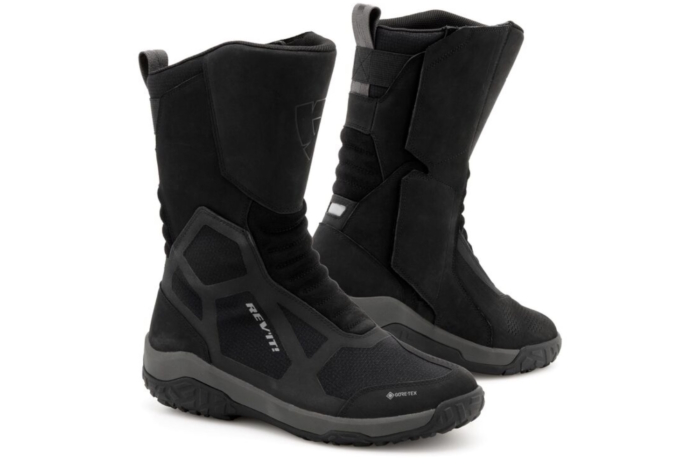
The Bottom Line: An exceptionally comfortable adventure-touring boot that merges light-hiker walkability with serious weatherproofing and certified motorcycle armor. Its side-zip entry, flexible forefoot, and reliable GORE-TEX membrane make it a top pick for everyday commuters and long-distance road riders.
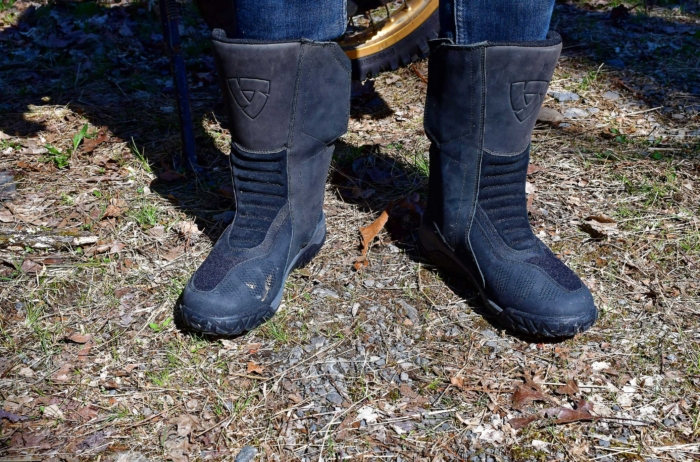
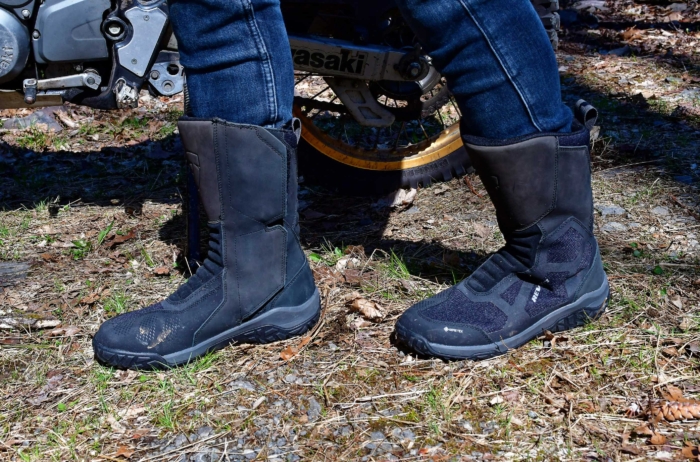
Like the Danner Moto Wedge GTX, the REV’IT! Everest GTX ($340) is very comfortable while providing much higher impact protection than a casual high-top. GearJunkie reviewer Michael Frank evaluated this boot on daily rainy-day commutes, testing its off-bike walkability, GORE-TEX waterproofing, and peg stability.
The Tech: Constructed from Hypalon, high-density polyester ripstop, and nubuck leather, this boot integrates a GORE-TEX Performance Comfort membrane for breathable waterproofing. Protection features an integrated TPU ankle cup, reinforced heel cocking, a stout Achilles shell, and a reinforced toe cap. Underfoot, an OrthoLite Imperial insole pairs with an EVA midsole and a custom rubber outsole to deliver hiking-boot cushion and peg grip. Entry is streamlined via an inner ankle zipper protected by a hook-and-loop storm flap.
What We Like: The prominent flex zone in front of the ankle and flexible forefoot make walking as natural as wearing a light hiker. Slipping them on is effortless thanks to the inner zip closure, bypassing the chore required by ski-boot-style buckle designs. The grippy outsole holds purchase on footpegs and slick garage floors alike. The GORE-TEX lining keeps feet dry during heavy downpours. Additionally, the boot achieves a CE Level 2 rating for lateral crush resistance, ensuring robust safety if a motorcycle falls on your leg.
What We Don’t: To achieve its lightweight feel, the overall chassis is lighter than heavy-duty off-road footwear, resulting in a CE Level 1 score for slide abrasion resistance. The lower-profile shaft height also means taller adventure boots are better suited for riding through deep standing water or water crossings.
Should You Buy It? Riders who want an easy-to-wear daily boot that transitions seamlessly from rain-soaked highway miles to long walks on foot will find immense value in this pair. It delivers an outstanding mix of casual comfort, weather protection, and certified safety.
Specifications
Pros & Cons
Pros
- Interlocking layers of armor and motion prevention
- Nearly every part is replaceable
- Bomber, unsurpassed protection
Cons
- Tough to walk in or wear off the bike
The Bottom Line: A track-focused motocross boot that combines lightweight agility with dual-hinge ankle defense and a replaceable sole insert. Its anti-hyperextension lockouts and smooth three-buckle closure make it a top choice for racers seeking uncompromised lower-leg armor.
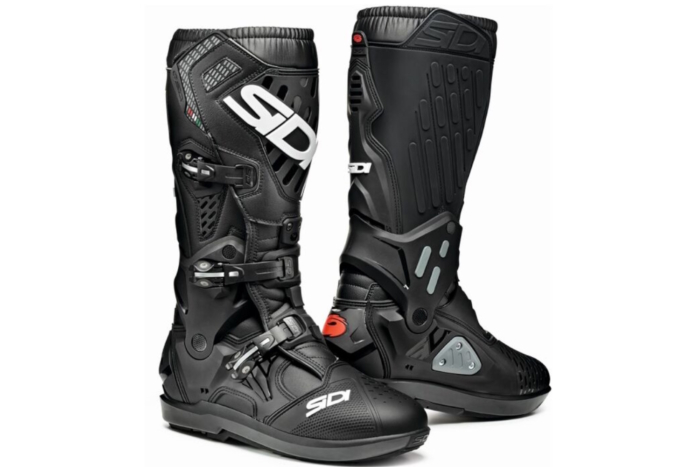
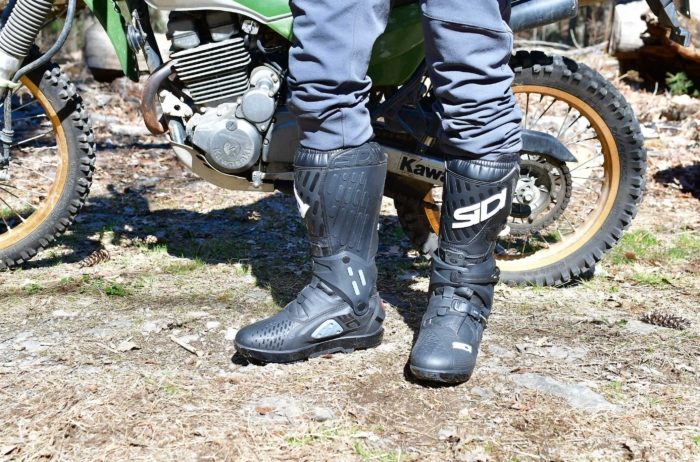
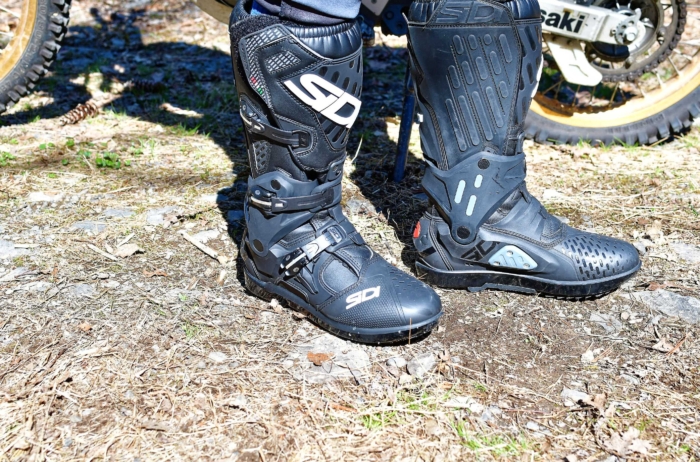
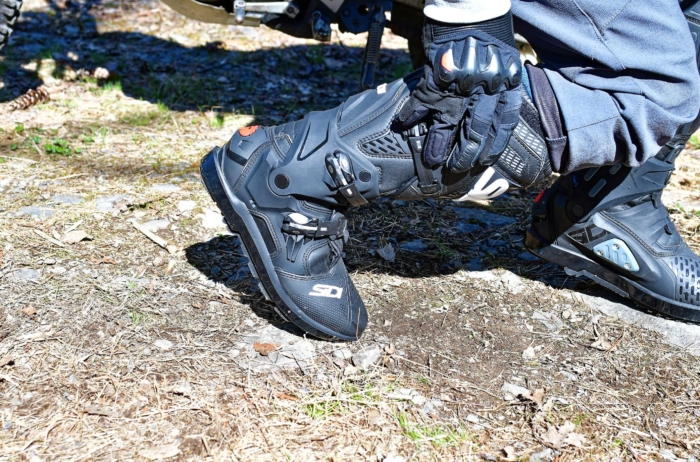
Designed with input from world-champion motocross riders, the SIDI Atojo SRS ($550) delivers high-level impact defense without unnecessary bulk. GearJunkie reviewer Michael Frank evaluated this boot on motocross tracks, testing its dual-hinge stability, ankle lockouts, and replaceable sole mechanism.
The Tech: Constructed from a Technomicro microfiber upper reinforced with high-impact plastic armor, this CE-certified boot incorporates a dual-hinge ankle system to restrict hazardous lateral rotation. A frontal plastic fin permits natural forward movement while locking out backward hyperextension to protect the Achilles tendon. Underfoot, Sidi’s patented Dovetail Sole Replacement System (SRS) features a central rubber tread secured by four screws for easy tread swaps. Closure relies on three independently adjustable aluminum buckles with memory settings, backed by an inner suede calf panel that shields against exhaust heat.
What We Like: The dual-hinge architecture provides fluid forward movement for precise shifting and braking while blocking over-compression and twisting forces. Heavy armor encompasses the shin, heel, ankle, and calf for thorough impact absorption. The three-buckle system actuates smoothly and remains securely shut under heavy track vibration. Compared to bulkier off-road options that utilize an internal bootie — such as the Alpinestars Tech 10 Enduro — the Atojo SRS offers a sleeker footprint and a noticeably lighter feel on the footpegs. Additionally, the lack of a waterproof membrane keeps the boot breathable during high-exertion motos.
What We Don’t: Uncompromising protection limits off-bike walkability, as the rigid toe box does not flex, forcing a stiff stride off the motorcycle. The boot also demands a dedicated break-in period before the protective chassis conforms comfortably to the foot.
Should You Buy It? Racers and track enthusiasts who prioritize maximum lower-leg security over casual walkability will appreciate this design. It provides uncompromised safety and lightweight agility for riders pushing high-speed boundaries on the track.
Motorcycle Boots Comparison Chart
Scroll right to view all of the columns: Price, Materials, Protection, Weight, Best Use.
| Motorcycle Boots | Price | Materials | Protection | Weight (per boot) | Best Use |
|---|---|---|---|---|---|
| TCX Drifter | $399 | Full-grain leather, T-DRY waterproof membrane, polyurethane armor | CE Level 2 | 2.44 lbs. | ADV, commutes |
| REV’IT! Everest GTX | $340 | Hypalon ripstop, GORE-TEX waterproof-breathable membrane, ripstop polyester, laminated armor frame | CE Levels 1 and 2 | 1.58 lbs. | ADV, commutes |
| Alpinestars Corozal V2 Adventure Drystar | $360 | Full-grain leather, Drystar waterproof-breathable membrane, TPU armor and steel shank at midsole | CE Level 2 | 2.84 lbs. | ADV |
| Fox Racing Motion | $420 | TPU (thermoplastic polyurethane) plating, composite nylon-fiberglass cuff | None | 2.25 lbs. | Motocross, off-road |
| TCX Street 3 WP | $189 | Full-grain leather, T-Dry waterproof membrane, D30 and Zplate inserts, GroundTrax outsole, OrthoLite insole | CE Level 2 | 2.4 lbs | City, commutes |
| Fox Racing Motion X Off Road | $505 | DURATEC compound on treaded outsole and medial side, waterproof membrane, composite nylon fiberglass (cuff, hinge, insole), TPU impact plates, microbial lining | CE Level 2 | 2.06 lbs | Off-road, ADV |
| Danner Moto Wedge GTX | $500 | Full-grain leather, GORE-TEX waterproof-breathable membrane, D30 armor, fiberglass shank at midsole | Not rated | 1.54 lbs. | City |
| SIDI Atojo SRS | $550 | Synthetic suede, polyamide, Teflon, PU armored with anti-hyperextension zones | CE Level 2 | 3.94 lbs. | Off-road |
| Alpinestars Tech 10 Enduro | $740 | TPU and rubber compound panels, ventilated shin plate, microfiber gater, polymer buckles with aluminum frames, inner bootie | CE certified to EN 13634:2017 | 4.2 lbs | Off-road, enduro, trail |
| Fox Racing Defend ADV | $345 | GORE-TEX upper, BOA fit system, D30 Impact protection, Ultratec outsole, Microban liner, nylon-fiberglass insole | CE Level 2 | 2.06 lbs. | Off-road, ADV |

How We Tested Motorcycle Boots
For this motorcycle boots guide, we focused on off-road boots, adventure (ADV) boots, commuter boots, and touring boots.
Our Expert Testers
Moto expert Sean Galaway contributed to this guide as a tester and reviewer. In addition to countless hours riding enduro, Galaway has several cross-continental ADV trips under his belt. He tested for over 10,000 km across the Trans European Trail, technical single track at home in the eastern Sierra, and wide open double track in Oregon and Baja California. The boots were put through their paces, from testing waterproofness on Baja beaches to walkability on the cobblestone streets of Istanbul and Prague.
Professional athlete Dane Tudor is a trail builder for motocross tracks and downhill bike parks who’s been riding and racing dirt bikes for nearly 25 years. Tudor knows how to analyze motorcycle boots.
GearJunkie Senior Editor Morgan Tilton owns and rides a dual sport Honda CRF 230F and a Kawasaki KLX140R dirt bike for the motocross track. One of her favorite, longest adventures was covering the Alpine Loop in her home mountain range. She’s tested moto gear in the Colorado Rockies and British Columbia.
GearJunkie reviewer Hilary Arthur has been riding in a well-worn pair of TCX Street 3 Lady WP for more than seven years. This summer, she donned the new 2024 model for a 1,100-mile Colorado tour. From high alpine passes to Labor Day traffic jams and all the cute mountain towns in between, a versatile boot made all the difference on and off the bike.
Field tester Michael Frank evaluated the bulk of these boots over the course of a year. He rode a handful of different bikes on backwoods trails and open highways while putting these boots through the paces. Luckily — for you, not for him — his 2001 Kawasaki died a few times. While push-starting the bike, Frank learned the very hard way how important boot walkability can be. We also sauntered into coffee shops to see how walkable these boots are.

How We Rate Motorcycle Boots
We have an Overall Rating based on editorial judgment and field testing. We also score each boot on a 1–10 scale across four critical categories:
- Crush & Impact Protection: We evaluate the structural integrity of the boot. We look for CE Level 2 certifications, stiff midsole shanks to prevent foot folding, and reinforced armor at the shins, heels, and ankles (like the TPU plates found in the Alpinestars Corozal).
- Walkability & Ergonomics: This category measures how well the boot transitions to life off the bike. We test the sole’s flexibility, the weight of the materials, and the efficiency of the closure systems — ranking the BOA-dialed Fox Defend high for ease of use, for instance.
- Weather Resilience: We assess how well the boot handles the elements. This includes the effectiveness of waterproof-breathable membranes like GORE-TEX, Drystar, or T-Dry, as well as whether the boot remains comfortable during creek crossings and highway downpours.
- Off-Bike Utility & Style: We look at real-world versatility. Can the boot fit under standard pant cuffs? Does the sole provide enough traction for pushing a bike through mud? We reward boots that look as good at a pullover as they do on a bike.

Our Testing Grounds
Our riders covered pavement, double track, technical singletrack, and deep motocross dirt while testing these motorcycle boots.
Broadly, our testing focus was versatility for terrain and conditions. We looked for commuter boots that provide enough sensation for continuous shifting through urban zones. Outsoles’ adhesion on wet pavement was key. We also looked for boots with exterior material that could handle the engine heat and protect our interior calf.

Our Testing Process
Function was king. We searched for boots that we could pull on and remove with relative ease. We also checked for strong buckles that stayed put, no rub points, and comfortable midsoles for walking across variable terrain.
While aesthetics are subjective, you won’t find loud colors or racing styles here. We aimed to find boots with a more timeless, everyday look.
All motorcycle boots have compromises. Fully waterproof boots tend to ride hotter, and heavily armored boots are also toasty. We cut out some options that didn’t meet our metrics and honed in on the boots that would work for most riders most of the time.
Buyers Guide: How to Choose the Best Motorcycle Boots
There are a lot of subcategories of motorcycle boots. The right boot for your riding depends on the kind of terrain you tackle for most of your rides.
When you check out the racks, you’ll find boots for touring/cruising, motocross (MX), racing/track, adventure/dual sport, sport touring, and riding footwear, which is generally shorter.
Here are the categories we cover in this guide:
- Off-Road Motorcycle Boots: These boots, like the Fox Racing Motion X Off Road, generally combine motocross-level protection with a treaded sole for off-bike traction. They can be used for a variety of disciplines, from trail riding to enduro to ADV.
- ADV Boots: ADV boots, like the TCX Drifter or Alpinestars Corozal, provide a great combination of protection and off-bike walkability. These often have waterproof inserts and a grippy outsole, too.
- Touring Motorcycle Boots: Boots like the REV’IT! Everest GTX blur the lines between an ADV boot and a touring boot, making them great options for mostly road-based long rides. These boots typically lack the buckle closure found in off-road, motocross, and burlier ADV boots.
- Motocross Boots: These boots offer the pinnacle of protection, as shown in the burly build of the Sidi Atojo SRS. With their smooth outsoles and overbuilt protection, these boots are made for riding, not for walking.
- City Motorcycle Boots: The Danner Wedge GTX offers great style, walkability, and much more protection than your standard casual boot, making it a great representative of this category of boots.

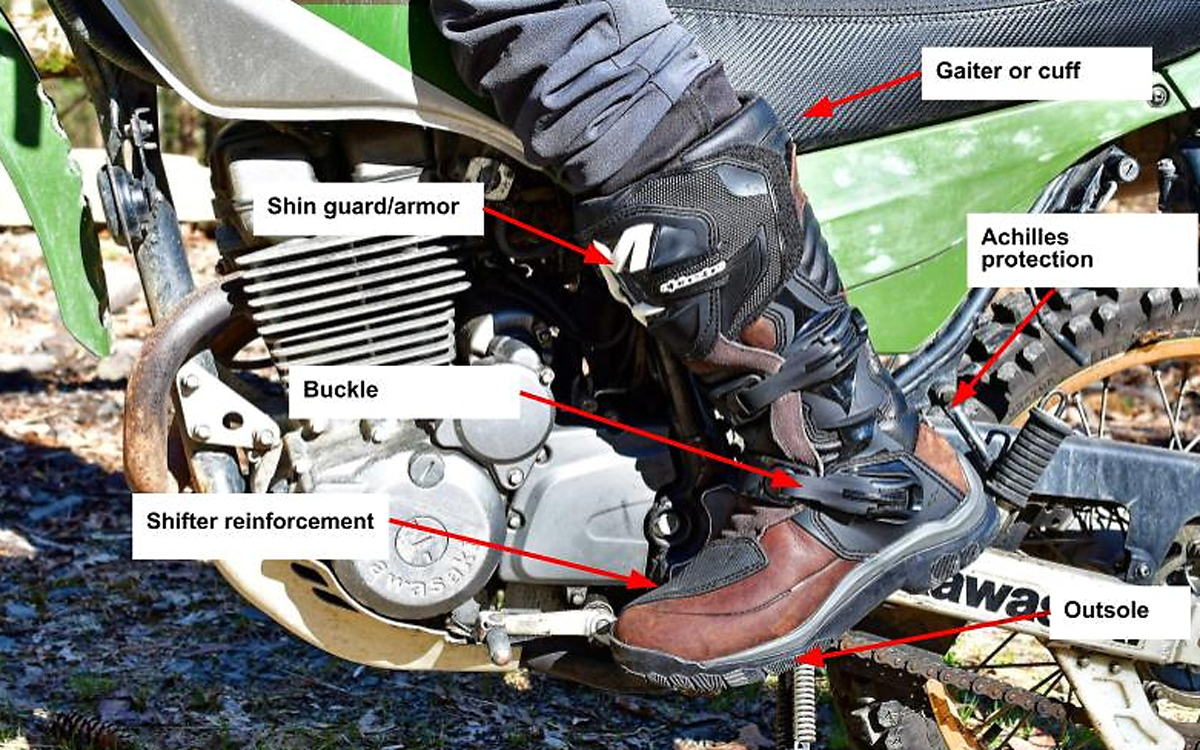
Parts of Motorcycle Boots
When you try on motorcycle boots at the store, think about the following details:
Buckles or Closure System
You don’t want a buckle to pop open on a ride, so pay attention to that in the store.
Buckles should be easily adjustable and stay shut once the cam spring is closed. That’s one reason we love the TCX Drifter and the Fox Racing Motion X Off Road.
We see under designed buckles more than we wish. A safe, protective boot needs to stay clasped when you ride, while loading or picking up your bike, and if you crash. Our favorite buckles are made of durable metal and are replaceable if they do break.

Alternatives to buckle closures are slip-on (which we don’t prefer in a crash), boa closures (which are becoming more popular in the ADV category), and, of course, laces for the most casual and least protective applications.
When it comes to more casual styles like the TCX Street 3 WP, the closure systems are often laces rather than buckles. This shoe has an integrated elastic loop at the tongue to tuck your laces into. We thought this was a nice feature to reduce the potential for a snag hazard and keep them from whipping in the wind.

Reinforcement
Boots should be built to make riding more safe and intuitive. Here’s a look at some of the protective elements that you should key in on when making a purchase:
- Toebox: The toebox should not collapse. A boot that strikes a balance between protection against impact and while shifting is key. Boots that offer protective but low-profile construction for easy shifting are ideal.
- Heat Protection: Taller boots should have adequate heat protection on the medial side of the boot. These are typically made of rubber composite materials, like Fox Racing’s DURATEC compound, or a leather material that won’t burn against exhaust pipes or the engine.
- Ankle protection: Burlier boots have composite nylon-fiberglass cuffs and/or flex-lockout or hinge systems to provide mobility and protection for the ankle and Achilles from hyperextension and twisting.
- Shin-Protection: We like taller boots with TPU plating on the shins, heels, and other high-impact parts of the ankle. This design will pay dividends during impacts and slides.
- Foot Protection: Most boots have a reinforced insole design to protect your foot from injury in case of an impact or crash. These are typically made from a composite nylon-fiberglass material that balances rigidity with light weight.

Outsole
To choose the best outsole, consider when you ride and on what kind of terrain. Smooth outsoles like those on the Danner Moto Wedge GTX work fine on the street but aren’t great on dirt. Unpaved sections need lugged soles, which offer more grip and are handier for hiking sections of trail.
Gaiter or Cuff
Waterproof systems are pretty common in motorcycle boots but pointless if rain rolls down your pant leg and into your boot. Ideally, your pants or rain gear will fit over the top of your boot. But if they don’t, a snug cuff closure is key.

Materials & Weight
Heavier motorcycle boots are built for a specific application. For instance, the Sidi Atojo SRS is an amazing choice for riding very technical terrain. The build is lighter than SIDI motocross footwear, but they are also three times heavier than the REV’IT! Everest GTX.
CE safety ratings don’t account for weight, but we pay attention because the grams influence comfort.
On the materials front, synthetics tend to be lighter than leather. You’ll find synthetic boots that meet the same CE rating as leather boots, too. Leather lasts longer and is more resistant to grease and road grime than synthetics.
The weaker and cheaper points of boots tend to be the clasps, closures, and buckles. The TCX Drifter hits the center of the target for material and weight. They’re not ultra-lightweight but are a bit less hefty than the Alpinestars Corozal. The high-wear zones are built with leather, and weight-saving synthetic materials are used where you need a greater range of motion.
When you consider materials, think about the type and specific location on the boot. Also, consider where you’ll be riding whether that’s down the street or through the Chilean Andes.

Waterproofing
Motorcycle boots made with a waterproof-breathable membrane dominate this list. To point, the Danner Moto Wedge GTX low-top boot incorporates Gore-Tex. With a shorter boot, the inside of the footwear might still get soaked unless you were wearing a waterproof gaiter. The REV’IT! Everest GTX is taller, which is a better choice if wet weather is a concern.
Another taller boot with a gaiter-like closure is the Alpinestars Corozal or the TCX Drifter.
What’s the downside of truly waterproof boots? They don’t breathe as well, so they can get hot.
Overall, if you’re really concerned about getting wet, be sure that the interface between your motorcycle pants and your motorcycle boots is compatible and well-sealed.

Safety Certifications & Crush Protection
The European Union rates the armoring and slide protection of motorcycle boots. These fall within CE (Conformité Européene) Level 1 and 2 standards. The EU measures the sole, front, and back of the boot, and the lateral components. They also measure abrasion and crush resistance.
For abrasion, the EU uses a tool like a belt sander. A boot that scores a Level 1 needs to withstand 1.5 seconds against the belt without forming a hole on the sole, front, or back. A Level 1 resistance for the sides of a boot needs to resist for 5 seconds against the belt sander. (Because you’re more likely to slide sideways in an accident.)
Meeting the Level 2 certification is more stringent. A boot’s front, back, and sole needs to withstand 2.5 seconds against the belt without developing a hole. The inner and outer soles need to survive 12 seconds of contact with the belt.
The boots are also tested for crush protection, also known as transverse rigidity. This is important because when riders step off the bike their trusty steed occasionally falls on their foot. Two plates are pressed against the boot’s sole to try to smash it. The boot needs to withstand a force that’s equivalent to at least 214 pounds of pressure to meet Level 1 standards, and the boot can deform very minimally. The rate is 337 pounds for the Level 2.

The EU doesn’t test crush protection at the ankle bone or the toe box. Though, both of those are very vulnerable zones that you should consider during the purchase process. You’ll find decent ankle protection in the REV’IT! Everest GTX. There’s more ankle protection in the TCX Drifter, and even better toe and ankle protection in the Alpinestars Corozal V2 Adventure.
You’ll find protection around your entire lower leg with the Sidi Atojo SRS and Fox Racing Motion X Off Road.
For a city shoe that meets CE Level 2 quality, you can’t go wrong with the TCX Street 3 WP. TCX achieves this high rating by integrating D30 armor into the ankle and boot, as well as ZPlate technology to stiffen the sole laterally, but maintain comfort and walkability.
The Danner Moto Wedge GTX offers a very rigid sole, so it might pass a Level 1 for crush-proofness in the CE test, and there’s some armoring at the ankle bone, too.
Women’s Motorcycle Boots
Properly fitted footwear is key, especially since we use our feet for important controls and stability on a motorcycle. Women’s footwear designs will start at a lower size range than men’s, opening up options for those with smaller feet. That being said, if you fall within a range that can also wear men’s sizing, feel free to try unisex boots as well to find the right features and fit for your needs.
Our female reviewer wears a women’s size 7.5 but struggles with the narrow width that many women’s boots have. That’s why we love the TCX Street 3 Lady WP, which has ample width in the toe box, and is a fully lace-up design to allow for maximum fit customization throughout the boot.
You definitely don’t want a boot that’s too tight and restricts blood flow to your extremities or compromises comfort while off the bike. On the flip side, if you have a narrower foot, make sure you’re not swimming in the boot you choose.
Price & Value
Budget: $150-$300
On the lower end for price, you’ll find designs like the TCX Street 3 WP ($180) with a lower height, so they inherently require less material to create. Despite that, this boot is made of full-grain leather, and without a taller neck, there’s no impact protection that extends higher. The protection of this boot is verified through additional certifications like the CE Level 2 stamp on this pair.
Mid-Tier: $310-$490
The majority of our favorite motorcycle boots fall in this zone, in the $300 range. The Alpinestars Corozal V2 Adventure Drystar ($360), for instance, has full-grain leather with Drystar waterproof-breathable membrane plus TPU armor and steel shank at the midsole, so you’ll notice a step up in protection.
Premium: $500+
On the high-price end, you’ll find the beefiest, most built-out construction. Take the SIDI Atojo SRS ($550): This boot has synthetic suede, polyamide, and Teflon, plus it’s PU armored with anti-hyperextension zones. This is a great option for touring and long-distance highway road trips. But a super built-out boot isn’t the priority for all riders. If you prefer a boot with a bit more give and flexibility, like for dual-sport bikers, check out a more flexible design that’s still protective.

Frequently Asked Questions
There’s no single answer to this question.
The outsole shouldn’t be able to twist or be crushed from the side. The outsole should be able to withstand friction. You’ll also want protection from the heat of the motorcycle against your inner leg and from hot pavement. A good boot should be reinforced at the ankle and at the top of the left boot to protect from the wear caused by shifting.
A couple of our favorite motorcycle boots include the TCX Drifter and the Alpinestars Corozal.
Yes. Riding is dangerous and it’s dangerous to your extremities.
Motorcycle boots provide crush protection, especially during one of the most common accidents: having the bike fall on you at a stop or while dismounting.
Moto boots are also built to last, because they’re constructed with durable materials. They’re going to resist damage, and can sometimes be repaired with new parts.
The initial investment pays dividends when you consider the injury prevention and repairable construction, so you’re not replacing them year after year.

There’s zero doubt here: You want a snug motorcycle boot. However, they shouldn’t cut off circulation.
Choose a boot that you can comfortably wear for many hours without pain. But a loose fit will alter the protection. A boot should be able to prevent hyperextension or an ankle roll.
The boot will also need to withstand the extra weight and force from your leg anchored against the ground, which is what stops a bike from rolling backward.
Hands down, if you are riding technical and off-road terrain, shin protection is a must-have.
For city riding, sport touring, and commuting, it comes down to personal and safety preferences. A higher boot is going to be hotter, less comfortable to walk in, and often more expensive than an ankle boot. However, the added protection in a slide or impact may be worth it. If your preferences lean more toward casual style, opt for a CE-rated low boot that you feel comfortable in. The most important part is picking safe gear that you will actually want to wear.
Although we might be stating the obvious, all riding footwear should include protection up to your ankle bone at the very least.