Nothing says fall like a women’s flannel. Crisp nights by the campfire, brisk mornings chopping wood, and chilly days in town all pair perfectly with the warm, stylish shoulder-season staple.
Flannels evolved from 17th-century farming roots, eventually reaching outdoorswomen in the last two decades. Today’s myriad designs include various fabric blends, technical features, and even heavy-duty jackets. You might want a mid-weight lifestyle piece like the Pladra Every Day or a slightly looser-fitting, lighter option like the Roark Alpine Long Sleeve.
Over the past year, Managing Editor Morgan Tilton and gear expert Constance Mahoney have tested flannels daily for hundreds of thousands of hours in Colorado’s high alpine while running errands, gardening, and chopping firewood.
Editor’s Note: We updated our Women’s Flannel Shirts buyer’s guide on November 1, 2026, with updated prices plus fresh awards, Bottom Line summaries, and signposts for easier navigation.
The Best Flannel Shirts for Women of 2026


Patagonia Fjord Flannel
-

-
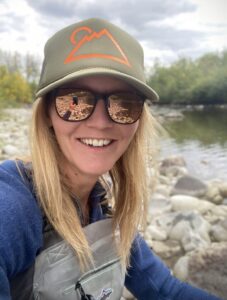
We tested the women's Patagonia Fjord Flannel in a variety of conditions; (photo/Constance Mahoney)


Specifications
Pros & Cons
Pros
- 2 chest patch pockets
- Pockets have button-flap closures
Cons
- Cotton is not as technical as synthetic fibers
Read Review: Cozy, Durable, Sustainably Made: Patagonia Women’s Fjord Flannel Review
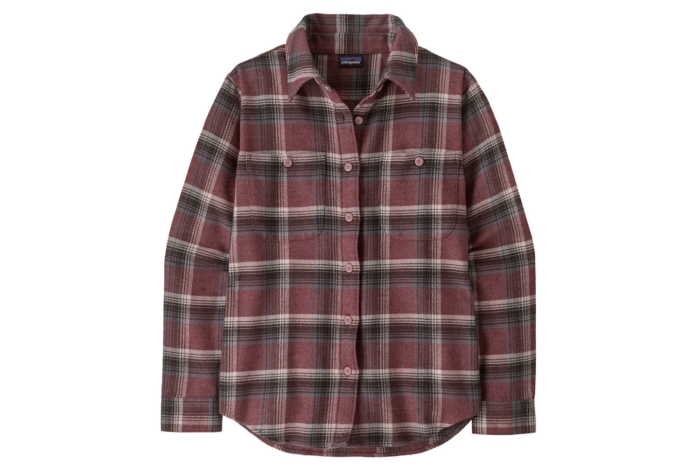
Bottom Line: A heavyweight organic cotton layer that balances rugged workwear durability with everyday comfort. It remains a classic cold-weather staple for chores and downtime alike, provided your plans do not require synthetic performance on strenuous ascents.
The Patagonia Fjord Flannel ($129) is a quintessential cold-weather shirt that blends traditional styling with conscientious construction. Designed with a timeless button-up silhouette and dual chest pockets, it transitions smoothly from casual outings to outdoor tasks without missing a beat. While pure cotton naturally limits its utility during high-output backcountry pursuits compared to technical options like the polyester-blend Outdoor Research Feedback Flannel, the Fjord delivers reliable warmth and lived-in comfort for everyday wear.
The Tech: Constructed entirely from 100% organic cotton, the heavyweight twill weave substantially lowers the garment’s environmental footprint compared to conventionally grown fibers. The thick fabric structure serves as a durable exterior barrier that maintains warmth across shifting temperatures while feeling soft straight off the hanger. It is tailored with standard button-adjustable cuffs and classic flap-closure pockets to secure daily essentials.
What We Like: Tested across weeks of fieldwork on a Montana potato farm by gear tester and ranch hand Constance Mahoney, the garment held up to demanding physical chores. It reliably warded off chilly mornings while rubbing up against machinery, hauling supplies, and handling farm soil without fraying or thinning. The weave allows sufficient airflow to manage routine sweat during physical labor, while the relaxed fit layers easily over a T-shirt or thermal base.
What We Don’t: Because of the all-cotton build, the fabric absorbs moisture and dries slowly if fully soaked in freezing conditions or high-sweat pushes. It is on the heavier side, meaning it occupies significant pack volume if stashed inside a weekend duffel.
Should You Buy It? Ladies in the market for a durable, responsibly built layer to handle farm chores, woodstove maintenance, or crisp evenings around camp will find steady value here. It delivers dependable longevity and timeless comfort, and Patagonia offers both men’s and women’s cuts.
Stio Women’s Miter Stretch Lightweight Flannel
-
-
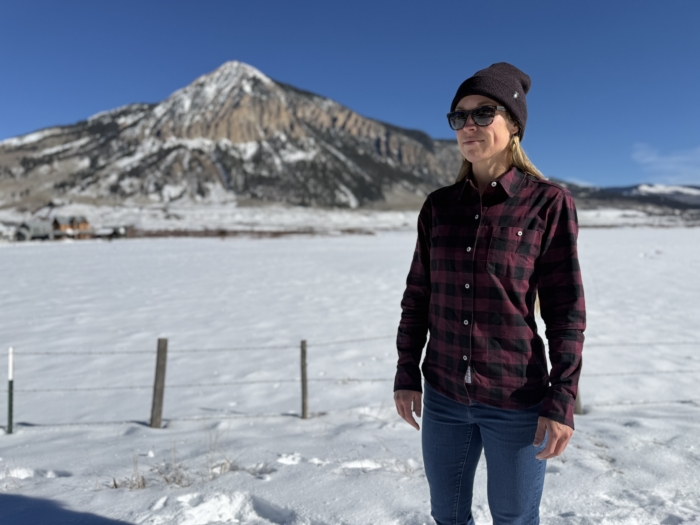
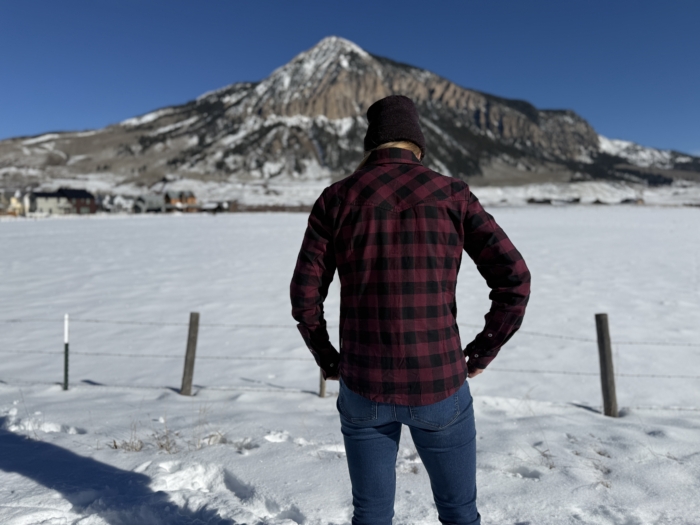
Morgan Tilton testing flannels; photo/Dane Tudor
-
Morgan Tilton testing flannels; photo/Dane Tudor
Specifications
Pros & Cons
Pros
- Lower half of the price spectrum
- Flexible fabric
- Feminine and tailored side seam hem
- Long, dense cuffs are easy to flip up
Cons
- Integrated brand motto label on button-front placket is hit-or-miss
- Not as warm as medium or heavyweight designs
- Only checkered and striped patterns, no plaid
Bottom Line: This wallet-friendly, double-brushed organic cotton shirt pairs mountain chic aesthetics with built-in stretch for daily comfort. It serves as an approachable, stylish top layer for relaxed outings and errands — provided sub-freezing outings do not demand heavy wool insulation.
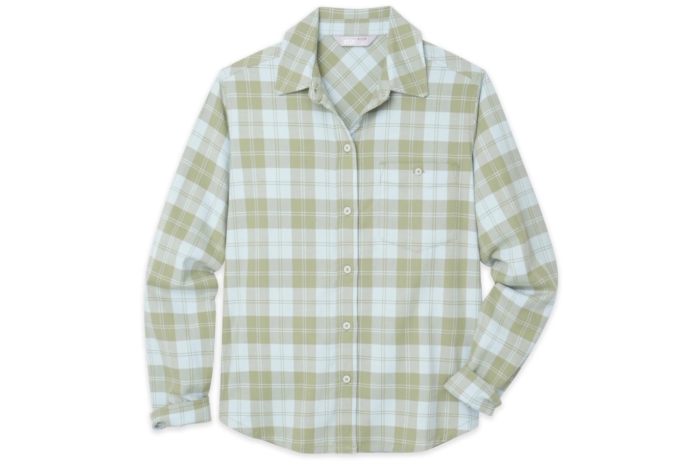
Like a cozy cabin vibe in shirt form, this flannel feels like your favorite fleece’s cousin — without making your wallet gasp. The Stio Miter Stretch Lightweight Flannel ($99) is a lighter design built with organic cotton that is double-brushed for extra softness. With a casual silhouette that avoids feeling overly baggy or snug, the tailored profile incorporates a hint of spandex to deliver comfortable flex through routine daily movements.
The Tech: The garment blends 98% organic cotton with 2% spandex to yield a lightweight fabric with functional two-way stretch. Custom Stio buttons are fabricated from recycled materials for an eco-conscious closure, complementing a patch-on chest pocket secured with a single button. Construction details include a dense double-layer collar that holds its shape, structured deep cuffs that roll back cleanly, and a Western-inspired back yoke that adds visual character across the shoulders.
What We Like: Taking it on sunset strolls down rural roads and around town, Managing Editor Morgan Tilton tested the Miter across daily errands, date nights, and virtual meetings. The subtle side hem tuck-under delivers a clean, feminine silhouette that easily dresses up or down. Because the breathable cotton blend prevents overheating in indoor venues or packed restaurants, it transitions seamlessly from home offices to evening hangouts while remaining easy on the wallet.
What We Don’t: Cotton lacks the heavy thermal insulation needed for brisk 15-degree evening walks, where a dedicated wool piece like the Fjällräven Canada or the thicker cotton of the Pladra Every Day offers much more defense against the chill. Tilton also noted that the contrasting interior brand motto label can initially be mistaken for a hang tag when slipping the shirt on, especially against darker plaid colorways.
Should You Buy It? Folks hunting for an affordable, polished button-down that excels in temperate weather and casual social settings will get plenty of mileage here. It nails the sweet spot between soft everyday lounge comfort and put-together mountain style for three-season wear.
Fjällräven Canada Shirt
-
-
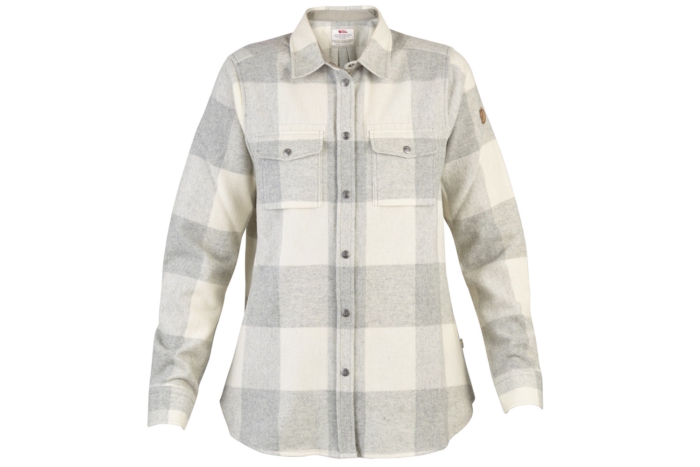
We tested the Fjällräven Canada Shirt flannel for ladies and walked away impressed; (photo/Constance Mahoney)

Specifications
Pros & Cons
Pros
- Wide size run from XS to XXL
- Wool helps squelch body odor
- PFC-free
- Lifetime repairs
Cons
- Pricier choice
- The flannel runs long
Read Review: A Legacy Wool Flannel: Fjällräven Canada Shirt Review
Bottom Line: A rugged recycled-wool overshirt that delivers dependable warmth, natural odor resistance, and weather-ready reinforcement. It serves as an enduring cold-weather staple for drafty cabins and winter camps, provided you do not expect the silkier next-to-skin touch of brushed cotton.
Looking for a time-honored wool flannel shirt? Then you need to meet the Fjällräven Canada Shirt ($190). It checks all the important boxes for cold-weather utility, pairing natural thermal regulation with long-term abrasion defense. Unlike purely casual cotton button-downs like the Patagonia Fjord, this burly layer functions equally well as a burly midlayer or a lightweight chore jacket when temperatures drop.
The Tech: The main body relies on an eco-conscious blend of 70% recycled wool and 30% polyester, allowing the fabric to wick moisture, dry quickly, and resist odors across back-to-back days of wear. Fjällräven reinforces the high-friction contact areas — including the interior collar, pocket flaps, cuff linings, and front snap placket — with its proprietary G-1000 Original fabric. That dense 65% polyester and 35% cotton weave can be treated with Greenland Wax to boost resistance against biting wind and moisture.
What We Like: Colorado-based field tester Constance Mahoney evaluated the Canada Shirt through cold winter outings and chilly camp evenings, noting that the tailored overshirt cut layers easily over base layers. The snap-secured chest pockets are sized to securely stash a card or cash without adding excess bulk to the chest. Its wool composition retains warmth even when damp, while the tough exterior holds up against coarse firewood and brush.
What We Don’t: Wool naturally carries a slightly rougher texture than double-brushed cotton or plush fleece, meaning sensitive skin will likely prefer a long-sleeve tee underneath rather than bare skin. The tailored chest pockets are also too compact to accommodate a modern smartphone.
Should You Buy It? Women seeking a durable, weather-resistant outer layer to chop firewood, survive frosty morning commutes, or lounge around basecamp will appreciate its timeless build. It delivers hard-wearing utility and thermal consistency that outlasts standard fashion flannels season after season.
Stio Women’s Buckhorn Insulated Snap Shirt

Specifications
Pros & Cons
Pros
- Super comfortable
- Nicely insulated
- Stylish
- Deep hand pockets
Cons
- Bulkier than an everyday flannel
- Not a feminine cut
Bottom Line: A synthetic-insulated shirt-jacket hybrid that pairs cozy camp blanket warmth with exceptional everyday pocket storage. It shines as a standalone shoulder-season outer layer for mountain towns, though its boxier volume makes it cumbersome under a tight winter hardshell.
When you want to feel bundled up like a down blanket while maintaining classic style, look no further than the Stio Buckhorn Insulated Snap Shirt ($199). Designed to bridge the gap between casual flannels and lightweight puffies, this synthetic-stuffed shirt was made for campfire hangs and brisk strolls down Main Street. Unlike fleece-backed shirts like the Flylow May, the Buckhorn uses lofted insulation and a slick taffeta lining that easily glides over thick sweaters or base layers.
The Tech: The shell is crafted from brushed 100% organic cotton yarn-dyed flannel treated with a water-repellent finish to shed light moisture and snow flurries. Inside, Stio packs body-mapped Thermore Ecodown recycled synthetic insulation — placing higher density fill through the core to protect vital organs and lighter insulation down the sleeves to maximize arm mobility. Smooth polyester lining facilitates frictionless layering, while durable metal pearl snaps secure the front placket, cuffs, and dual flap chest pockets.
What We Like: Managing Editor Morgan Tilton tested the Buckhorn across daily errands, backyard gatherings, and loading mountain bikes onto hitch racks in chilly mountain air. The pocket layout is a standout achievement: two deep hand pockets cradle cold hands, two oversized internal drop pockets easily swallow a plus-sized smartphone in a protective case, and dual chest pockets supply quick-grab convenience. The collar stands up cleanly to block drafts, the midweight cuffs fold back with ease, and the workwear aesthetic transitions smoothly from outdoor chores to local watering holes.
What We Don’t: The cut leans distinctly boxy and utilitarian rather than tailored, offering minimal waist shaping. Because of the lofted fill and structured exterior, it is too bulky to comfortably slide beneath trim alpine shells, and while the exterior repels light flakes, it cannot replace a fully seam-taped waterproof rain shell in sustained wet weather.
Should You Buy It? Gals needing a burly, grab-and-go outer shirt for crisp shoulder-season weather will appreciate this piece’s warmth and generous storage. It delivers jacket-grade insulation wrapped in timeless Western styling that holds up to daily mountain-town life.
Flylow May Flannel
Specifications
Pros & Cons
Pros
- Super thick and cozy
- Snap buttons are so efficient and durable
- Excellent against skin or over another shirt
- Hand pockets!
Cons
- Too bulky to fit under a jacket
- Not the most comfortable to wear at the desk while typing with arms bent
Bottom Line: A fleece-lined, sherpa-soft overshirt that pairs work-ready mobility with the substantial warmth of a light jacket. It excels as an insulated outer layer for brisk outdoor chores, though the sheer bulk limits its use under trim shell jackets.
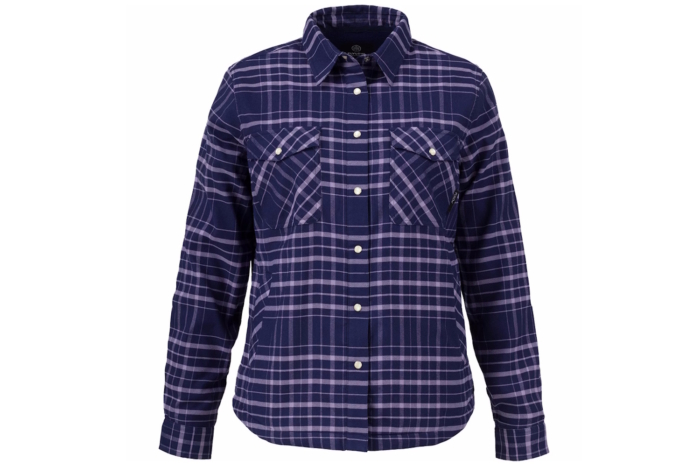
We’ve been pleasantly surprised by the Flylow May Flannel ($150). This shirt carries substantial weight, and with that heft comes an exceptionally warm feel that mimics a favorite heavy fleece. While lighter unlined cotton tops like the Stio Miter Stretch lean into indoor casual wear, the May is designed as an insulated outer utility layer that holds up against biting cold during outdoor tasks.
The Tech: The exterior is built from 100% durable cotton twill, backed on the interior by a plush polyester fleece lining running throughout the torso. High-grade custom pearl snaps line the front placket, secure the dual chest pockets, and adjust the wrist cuffs. Flylow thoughtfully integrated two low-profile hand pockets along the side seams that lay flat when empty to preserve a clean line.
What We Like: You can pull the May on over a base layer or wear it directly against skin, and the fully lined interior locks in warmth. When the air turns crisp, the streamlined side pouches offer quick refuge for cold fingers without creating bulk across the hips. Better yet, the roomy fit hangs naturally without billowing like a potato sack. Whether shuffling storage bins or wrestling with the dog in the yard, the cut leaves zero tension through the shoulders and upper back, found Managing Editor Morgan Tilton during test rounds.
What We Don’t: The thick lining and cotton shell make for a heavy garment that takes up significant real estate in a travel bag. That same insulating volume also makes it too cumbersome to slide comfortably under athletic midlayers or slim-fitting technical ski shells.
Should You Buy It? Cold-climate dwellers looking for a true lumberjane workhorse will get endless use out of this sturdy snap-down. It bridges the gap between a classic button-up and an insulated barn coat, providing rugged everyday warmth for chopping wood, tailgate hangs, and winter chores.
Pladra Women’s Every Day Flannel Shirt
Specifications
Pros & Cons
Pros
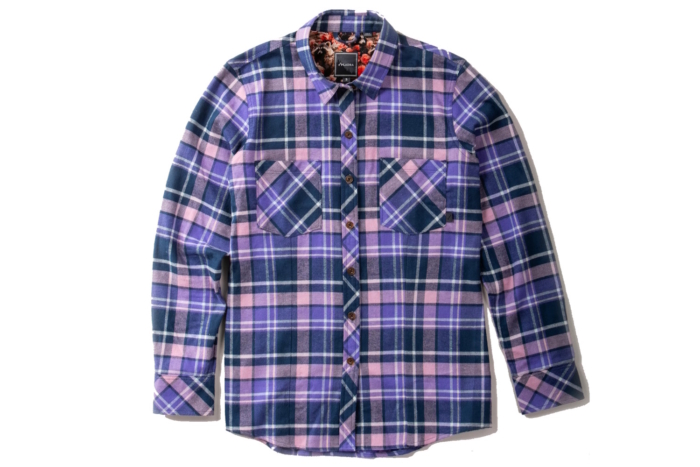
- Beautiful artwork printed on the interior cuff and collar
- Super comfortable
- Lengthier shirt that is slightly tapered and flattering
- Broad and inclusive size options from XS to 3XL
Cons
- Cotton can shrink so be aware
- While its not tight, the weave is not the loosest or stretchiest
Bottom Line: A double-brushed cotton midweight that seamlessly integrates custom collar-and-cuff artwork with a balanced, comfortable silhouette. It stands out as a versatile daily staple for town and travel, provided you do not need the active mechanical stretch found in technical synthetics.
While some designs are specialized, the flannel we consistently reach toward for everyday wear, durability, and style is the Pladra Every Day Flannel ($99). Constructed from an ideal medium-weight textile, it delivers substantial softness straight off the rack without trapping excessive heat. Unlike heavier sherpa-backed utility options like the Flylow May, this balanced midweight layer transitions effortlessly from casual bike rides to indoor dinners without feeling overly warm.
The Tech: The garment is crafted from 100% long-staple Portuguese cotton that is double-brushed on both the interior and face, raising the surface fibers to achieve a soft hand-feel and light thermal loft. Built with a structured, closer-set weave for long-term abrasion resistance, the fabric avoids stiffness while holding its tailored silhouette. A signature hidden design feature lines the under-collar, interior cuffs, and back neck with durable cotton canvas printed with custom outdoor artwork, including collaborations with mountain-inspired artist Rachel Pohl.
What We Like: Tested across town strolls, errands, and casual cycling outings, apparel examiner and Managing Editor Morgan Tilton found the shirt remarkably breathable for someone who normally overheats easily in cold-weather tops. Formerly known as the Leon Workhorse, the updated silhouette adds welcome torso length in the front and back, paired with a gently tapered hem that stays tucked or hangs cleanly untucked. The shoulders, sleeves, and chest offer sufficient room to move comfortably without excess fabric billowing around the midsection.
What We Don’t: Because the weave is tightly woven rather than loose or blended with spandex, the textile offers very little mechanical stretch or give. If you fall between sizes or have broad shoulders, sizing up is necessary to prevent tension across the upper back during overhead reaches.
Should You Buy It? Anyone searching for an artful, enduring cotton button-down that excels in social settings and daily life will find lasting value here. It delivers a tailored, flattering cut with one-of-a-kind cuff details that easily set it apart from run-of-the-mill plaids.
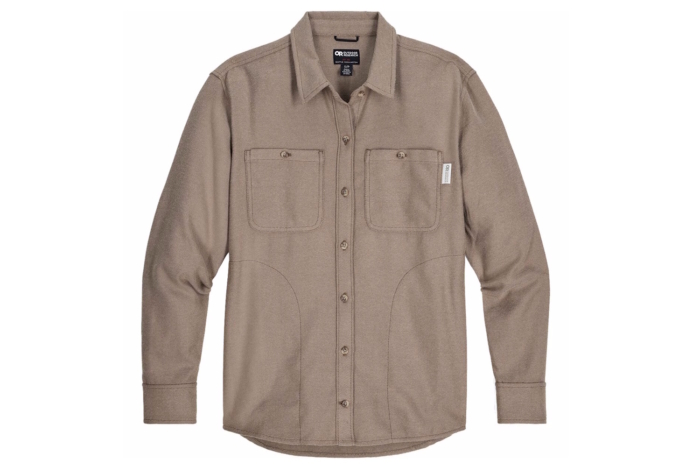
Outdoor Research Feedback Flannel Twill
Specifications
Pros & Cons
Pros
- 2 hidden extra hand pockets near the hem (plus 2 chest pockets with button closure)
- 100% Bluesign-approved polyester
- UPF 50+ for sun protection
Cons
- Less tailored, wider cut isn’t everyone’s first choice
Bottom Line: A quick-drying synthetic workhorse that combines generous size-inclusivity with functional warmth and integrated hand-warmer pockets. It serves as an active, breathable layer for high-output shoulder-season hikes, provided you prefer a boxier shacket profile over a tailored silhouette.
The Outdoor Research Feedback Flannel Twill Shirt ($115) is understandably a fan favorite across all four seasons. Offering expansive sizing from XS to 4X, it breaks away from heavy, moisture-trapping heritage cotton like the Patagonia Fjord by relying entirely on technical fleece-like fibers. Whether serving as a breathable midlayer under an alpine shell or acting as a standalone sun-blocking outer garment, it handles active pursuits without breaking a sweat, found Colorado-based field tester and farmer Constance Mahoney.
The Tech: Constructed from bluesign-approved 100% polyester twill, the fabric delivers quick-wicking performance, rapid dry times, and built-in UPF 50+ sun protection. It has classic button-flap dual chest pockets alongside two discreet drop-in hand pockets integrated into the side seams, lined with brushed stretch material. The hem is finished with a protective drop-tail rear cut and 2.5-inch side slits to preserve natural hip mobility on uneven trails.
What We Like: Those soft-lined side-seam pockets provide a welcome refuge for chilly fingers and extra everyday storage, a detail rarely found on standard button-downs. Thanks to the lightweight polyester weave, it dumps excess body heat and pulls sweat away from skin far more efficiently than cotton when physical output climbs. The relaxed profile lets cool breezes circulate during mild afternoon treks while leaving plenty of room to slip a thermal top underneath when temperatures dip.
What We Don’t: The unfastened side pockets lack zips or buttons, leaving phones or keys vulnerable to slipping out when bending down to tie boot laces. In addition, the overall cut leans distinctly boxy and broad through the torso, behaving more like a lightweight chore jacket than a slim-fitting button-down.
Should You Buy It? Backcountry adventurers who want the classic plaid aesthetic without the cold, soggy drawbacks of traditional cotton will find their match here. It stands out as a versatile, size-inclusive technical layer built for trail hikes, crag sessions, and breezy travel days.
6 More Women’s Flannels We Tested & Love
Specifications
Pros & Cons
Pros
- Comfortable lightweight flannel for any activity
- High-movement ready
- 25% recycled buttons
- Elbow patches for style, comfort and durability
- Great price
Cons
- Lightweight means it might not be top choice for the coldest winter days
- Not as durable as other builds
Bottom Line: An airy, lightweight layer featuring retro corduroy elbow patches and recycled hardware at a wallet-friendly price. It shines during yard work and sunny shoulder-season chores, provided you do not need heavy thermal insulation for sub-freezing mornings.
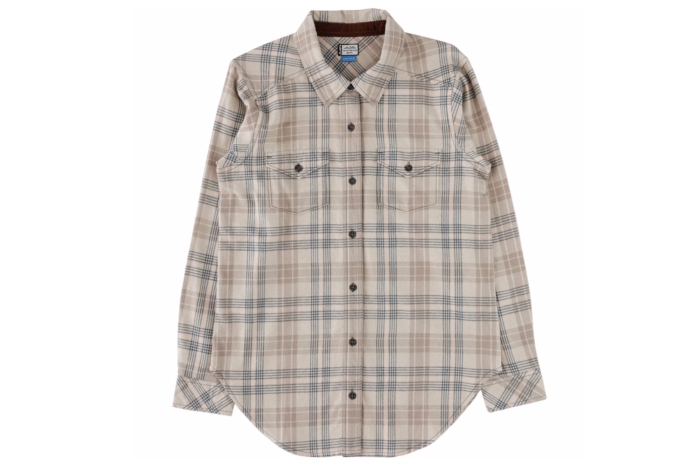
Sweating out a heavy button-down while shoveling garden soil is never fun, especially when there is a slight nip in the air, and you still want long-sleeve coverage. The KAVU Billie Jean ($70) steps in as a breezy alternative that keeps you covered without overheating or draining your bank account. Unlike burly 300 g/m² overshirts like the Cotopaxi Mero that act almost like winter coats, this featherweight build prioritizes continuous airflow and uninhibited mobility.
The Tech: Woven from an airy 4.5 oz 100% yarn-dyed cotton weave, the fabric structure is intentionally loose enough that you can see ambient light pass through when held overhead. Fine-wale corduroy elbow patches add functional abrasion resistance and soft padding when leaning against wooden railings, while matching corduroy trims the inner collar stand. The front placket and single chest flap pocket fasten with custom matte buttons cast from 25% certified recycled polyester.
What We Like: Managing Editor Morgan Tilton tested the Billie Jean across Gunnison Country during gardening and chores, noting that its breathable weave effectively shields skin from intense high-altitude sun without trapping heat. The relaxed, boyfriend-style cut provides easy reach across the shoulders, whether raking autumn leaves or tossing timber into a truck bed. Between the distinctive corduroy accents and the playful plaid patterns, it delivers plenty of outdoor personality for very little cash.
What We Don’t: Because the single-layer cotton is quite thin, the buttoned chest flap and hem tend to wrinkle and curl straight out of the dryer if not hung immediately. It also provides minimal thermal barrier against brisk gusts, meaning chilly evening breezes cut right through unless paired under a wind shell.
Should You Buy It? Casual DIYers and sunny-day gardeners seeking a featherweight top with charming workwear accents will love having this in their rotation. It delivers airy sun defense, dependable chore mobility, and retro styling without the steep price tag of premium boutique flannels.
Specifications
Pros & Cons
Pros
- So soft and cozy
- Price
- Regular, petite, plus, and tall sizing
Cons
- Only one small chest pocket with no button closure
Bottom Line: An exceptionally plush, heritage cotton button-down that offers unmatched sizing inclusivity and timeless tartan patterns at an accessible price. It serves as an everyday staple for casual layering, provided you do not plan on wearing it for sweat-heavy outdoor pursuits.
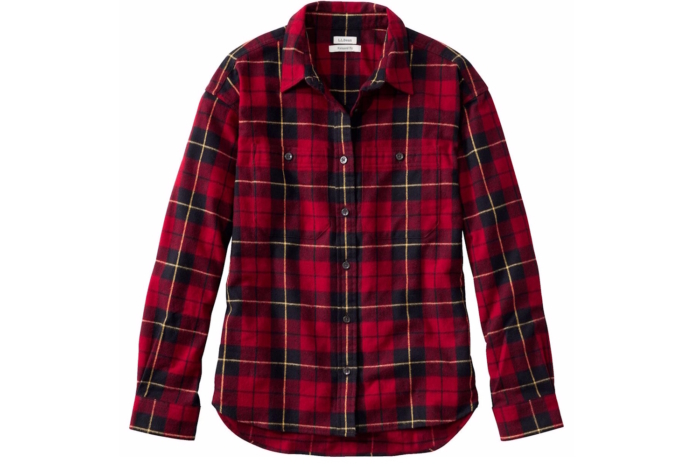
The L.L.Bean Scotch Plaid Flannel ($70) delivers comforting warmth and a remarkably plush next-to-skin touch on chilly days. It stands out in this guide as a traditional lifestyle piece, prioritizing classic heritage comfort over the technical wicking performance found in synthetic models like the Outdoor Research Feedback.
The Tech: L.L.Bean constructs this shirt from 100% yarn-dyed Portuguese cotton flannel to preserve vibrant patterns through years of washing without fading. The textile is meticulously brushed eight times on both sides, requiring a master weaver to approve the hand-feel through a tactile test before production. The construction includes a standard button placket, button cuffs, and a single left chest pocket.
What We Like: Finding the right cut is unusually easy thanks to comprehensive sizing across Regular, Petite, Plus, and Tall profiles. The relaxed silhouette hits right at the low hip with a classic curved shirttail hem, leaving plenty of room to move without billowing around the midsection. Woven with authentic Scottish tartans and diverse colorways, it layers smoothly under heavy parkas or pairs naturally over a basic tee for coffee runs and casual weekends, found high-elevation examiner Constance Mahoney.
What We Don’t: Because of the pure cotton fibers, the shirt absorbs perspiration and takes a long time to dry if soaked, making it ill-suited for vigorous uphill hiking or wet conditions. The single chest pocket is also somewhat compact, serving more as a subtle stylistic accent than a practical pouch for larger items.
Should You Buy It? Anyone seeking a timeless, budget-friendly button-down with rich color depth and superior softness will get years of dependable wear out of this piece. It remains a reliable fall and winter layer for easygoing outings and cozy cabin mornings.
Specifications
Pros & Cons
Pros
- Lifetime warranty and repairs
- Thick fabric with reinforced seams
- Cotopaxi offers factory information so you can learn about where it was made
Cons
- Can shrink, be sure to wash cold and line dry!
- The two chest pockets have no buttons or snaps
Bottom Line: A high-density workhorse that bridges the gap between a heavyweight midlayer and a durable chore jacket. It is a solid match for chilly camp mornings and town strolls, though its substantial thickness makes it feel overly warm for heated indoor spaces.
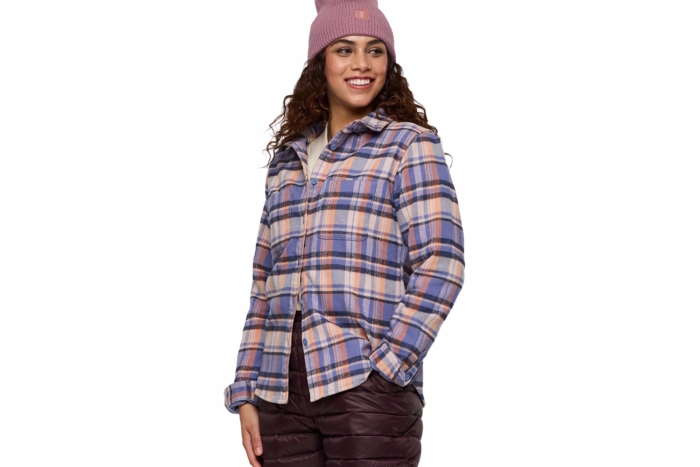
The Cotopaxi Mero Flannel ($95) is a workhorse of a flannel built for true cold-weather utility. Thick, soft, and durable, it behaves far more like a rugged overshirt or light jacket than a standard next-to-skin button-up. While lighter options in this guide like the Stio Miter Stretch focus on indoor casual wear and relaxed drape, the Mero provides substantial outdoor defense that holds up when temperatures plummet.
The Tech: Constructed from a dense 300 g/m² textile made of 60% organic cotton and 40% recycled polyester, the heavy fabric delivers durable abrasion resistance alongside reliable warmth. The front placket features a double-layered opening that helps block chilly gusts without making the buttons stiff to fasten. Cotopaxi also reinforced the collar with a matching double-layer construction, ensuring it stands upright and stays popped when sealing out the elements.
What We Like: Field testing by gear expert Constance Mahoney proved its value during frosty morning starts, working smoothly as a burly midlayer slipped underneath an insulated puffy jacket until the day warmed up enough to ditch the outer shell. The relaxed cut strikes an ideal balance — roomy enough to slide over a base layer without billowing awkwardly. Cotopaxi’s signature vibrant colorways and retro-inspired color-blocked patterns bring cheerful energy to both town errands and evening campfire circles.
What We Don’t: At 300 g/m², this heavyweight weave generates considerable warmth, which can easily lead to overheating once you step inside a heated restaurant or cabin. That same burly density adds pack volume, making it noticeably bulkier to roll up and stow in a daypack compared to thinner cotton tops.
Should You Buy It? Cold-weather campers and outdoor workers searching for a rugged, lively overshirt at an approachable price will get tremendous mileage out of this piece. It delivers lasting jacket-grade insulation and cheerful mountain style for anyone needing extra defense against biting shoulder-season breezes.
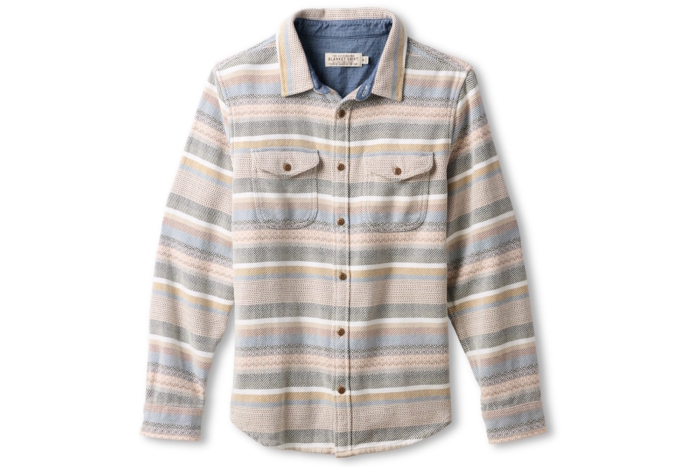
Specifications
Pros & Cons
Pros
- Versatile yet thick layer
- One of the few completely cotton options on our list (providing priority softness)
- More than 20 vibrant color and pattern choices
Cons
- Density is not very compressible for packing away
- Bigger investment
- Only two size options: XS/S and M/L
Bottom Line: A rugged yet smooth organic cotton overshirt built with sustainable craftsmanship and timeless coastal workwear style. It functions as an enduring all-season midlayer for breezy shorelines and chilly evenings.
For a heavyweight flannel, we’re in awe of how versatile the Outerknown Blanket Shirt ($168) is — and how many compliments we’ve received wearing it from guys and gals alike. Rather than leaning toward a strictly technical synthetic weave like the Outdoor Research Feedback, this design doubles down on substantial, lofty organic cotton that feels like throwing on a soft travel throw. It bridges the gap between a casual button-down and a relaxed overshirt, making it an easy companion and shacket across shifting seasons.
The Tech: The material is crafted from 100% organic cotton twill woven with heavy yarn to create a thick, breathable texture that naturally resists stiff wind. Outerknown garments are dyed in bluesign-certified facilities to minimize chemical runoff and water waste, and manufacturing is Fair Trade Certified and accredited by the Fair Labor Association. Fastening the front placket, cuffs, and dual chest pockets are custom corozo buttons carved from fallen tagua palm nuts gathered in South American rainforests, supporting local harvesting economies without deforestation.
What We Like: Managing Editor Morgan Tilton used this hefty layer as a relaxed, boxy topper while picnicking lakeside, tossing it on after cold lake plunges, rope swing leaps, and stand-up paddleboard crossings from sandy beaches to rocky shores. Despite its dense hand-feel, the weave breathes easily and blocks brisk gusts coming off the water. It slipped right into our regular rotation over basic tees and tanks, easily moving from summer shoreline outings into deep autumn campfires.
What We Don’t: The boxy, oversized silhouette leaves little room for feminine contouring, so anyone wanting a trim or tailored fit around the waist will need to size down. The thick, loosely woven cotton twill also adds noticeable bulk and weight inside a duffel bag when traveling light.
Should You Buy It? Outdoorsy travelers seeking an heirloom-grade button-up that prioritizes sustainable materials and laid-back comfort will find lasting satisfaction with this piece. It serves up cozy, blanket-level warmth with a rugged coastal aesthetic built to survive years of routine wear.
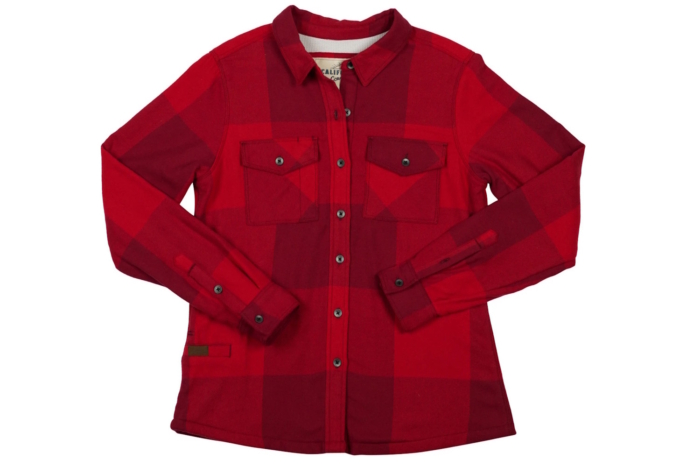
Specifications
Pros & Cons
Pros
- Interior hidden glove loop
- Bottle opener is included
Cons
- Too warm for warmer autumn days
- An investment
Bottom Line: A purpose-built après-ski statement piece loaded with beverage pockets, towel lining, and reinforced hardware. It serves as an ultra-plush conversation starter for snowy hut trips and tailgates, though its substantial weight keeps it firmly in cold-weather territory.
California Cowboy impressed us with its initial run of flannels as a brand — and now they are back with more women’s options. The star of the show? The California Cowboy High Sierra Flannel ($178), updated with an improved curved side seam. While minimalist midweights like the Pladra Every Day focus strictly on traditional button-down styling, this feature-packed design doubles down on playful luxury and tailgate-ready utility.
The Tech: The fabric is woven from premium Portuguese cotton flannel, backed completely by an absorbent thermal terry cloth lining that feels like slipping into a warm luxury bathrobe. California Cowboy stepped up durability with sleek, custom metal alloy buttons engineered to resist snapping during wash cycles or active use. Specialized storage includes a hunting-inspired water-resistant zippered dry pocket, a dedicated pocket for the included custom bottle opener, a pen slot, a sunglasses loop, an interior glove-clip loop, and dual insulated beverage pockets sized for cans or seltzers.
What We Like: Testing by Managing Editor and SnowSports Senior Editor Morgan Tilton proved this layer genuinely shines as an après-ski companion for frigid days around the ski resort or hunkering down in a backcountry hut. The tailored silhouette hits at a flattering spot thanks to the updated curved side hem, and the generous sleeve length ensures your wrists stay shielded from drafts when reaching forward. It feels remarkably plush against the skin, delivering substantial insulating warmth that lets you skip a midlayer on brisk evenings.
What We Don’t: With dense terry lining and heavy cotton construction, it is the bulkiest and heaviest shirt in the test pool, making it far too warm for sunny mild days or high-output hikes. Packing it for travel also demands serious duffel space compared to standard unlined flannels.
Should You Buy It? Skiers and cabin dwellers who appreciate functional party tricks wrapped in premium, heavy-gauge fabrics will find entertainment and comfort here. It provides plushness and clever beverage storage that make it an instant hit at chilly outdoor gatherings.

Specifications
Pros & Cons
Pros
- Sustainable materials
- Moderate price
Cons
- Not the heaviest flannel if you're looking to bundle up in arctic conditions
Bottom Line: A featherweight organic cotton blend that pairs effortless drape with a flattering, feminine cut at a sub-$100 price point. It works well as an everyday casual top for travel and warm autumn days, though long-term laundering can reveal surface pilling.
When this surf and travel-inspired brand launched its first women’s apparel collection, the Roark Alpine Long Sleeve Flannel ($89) immediately stood out. Rather than leaning into the structured, chore-ready heft of traditional work shirts like the Cotopaxi Mero, this design acts like an airy throw-on layer with a relaxed, contemporary drape. It strikes a balance between laid-back beach-town ease and mountain-town aesthetic.
The Tech: The fabric combines certified organic cotton with recycled polyester sourced from post-consumer plastic bottles, yielding a lightweight, brushed weave with a soft hand-feel. Roark outfits the front placket and wrist cuffs with durable metal snaps that fasten and open quickly, while the dual chest pockets stay secured via color-matched buttons. Construction details include a contoured hemline and a tailored back yoke designed to follow the natural lines of the torso.
What We Like: Sliding into this brushed shirt feels as effortless as draping on a lightweight shawl. The tailoring leaves plenty of room through the shoulders, chest, waist, and hips without drowning your frame in boxy excess fabric, found Managing Editor Morgan Tilton. After several years of use, this flannel remains one of her favorites for its versatility. The metal snaps make daily on-and-off transitions seamless, and the conscious materials package delivers solid construction without crossing the $100 threshold.
What We Don’t: Tilton noted visible fabric pilling after a year of routine weekly wear and regular laundry cycles. In addition, the thin, lightweight textile offers minimal resistance against stiff, biting winds, requiring a sturdier shell or fleece when temperatures take a real plunge.
Should You Buy It? Casual wanderers and budget-conscious shoppers looking for an easy-wearing, stylish button-down for mild days and travel bags will find great value here. It delivers a flattering cut, reliable hardware, and sustainable fibers without an inflated price tag.

Women’s Flannel Shirts Comparison Chart
Scroll right to view all of the columns: Price, Material, Density, Best For.
| Women’s Flannel Shirt | Price | Material | Density | Best For |
| Stio Miter Stretch Lightweight | $99 | Double-brushed, 97% organic cotton, 3% spandex | 160g/m2 (lightweight) | Town-to-Trail, Stretch Comfort |
| L.L.Bean Scotch Plaid | $70 | 100% cotton | Lightweight | Budget, Casual Layering |
| Pladra Every Day | $99 | 100% cotton, double-brushed | Midweight | Premium Daily Wear, Style |
| Fjällräven Canada | $190 | 70% recycled wool, 30% polyamide | Heavyweight | Wool Warmth, Heavy-Duty Wear |
| Flylow May | $150 | 100% polyester flannel lined with 100% polyester fleece | Heavyweight | Fleece-Lined Warmth, Cold Weather |
| Stio Buckhorn Insulated Snap | $199 | Cotton | Heavyweight | Shoulder-Season, Insulated Layering |
| Outerknown Blanket | $168 | Cotton | Heavyweight | Cozy Travel, Sustainable Comfort |
| Roark Alpine Long Sleeve | $89 | 60% organic cotton, 40% Repreve | Light | Travel, Lightweight Style |
| Outdoor Research Feedback Twill | $99 | Polyester | Lightweight | Active Hiking, Sun Protection (UPF) |
| KAVU Billie Jean | $70 | 100% cotton and 100% cotton corduroy | Lightweight | Breathable Work, Warm-Weather |
| Patagonia Fjord | $129 | Organic cotton | Midweight | Organic Cotton, Eco Workwear |
| Cotopaxi Mero | $95 | 100% organic cotton | Heavyweight | Heavyweight Warmth, Camp Life |
| California Cowboy High Sierra | $178 | Portuguese flannel, cotton-polyester lining | Heavyweight | Après-Ski, Cold-Weather Cabin |

How We Tested Women’s Flannel Shirts
Our Expert Testers
Constance Mahoney, a GearJunkie tester and writer, is a Colorado transplant from Montana. She grew up on her family ranch, which dates back to the 1800s. She understands the value of quality work clothes that can keep up with the task at hand. Mahoney is also a wife, mom, hunter, angler, and trail runner. Flannels are not just a statement piece, but also a true staple in her wardrobe.
Senior Editor Morgan Tilton was born and raised in the high-altitude Rockies of Colorado, where she plays outside year-round. Across all four seasons, flannels are a true testament of versatility, universal comfort, and outdoor mountain style. While she manages the test crew, she also pulls on flannels for yard work, shoveling, dinners out, road trips, and running errands.
Our Testing Grounds
Based high in Colorado’s Gunnison Country — and logging miles across the globe — our team has tested flannels in the Rockies and beyond for years, backed by decades of hands-on experience with this essential mountain layer.
Our Testing Process
We evaluate every flannel on key performance metrics: fit, mobility, breathability, insulation, and overall value. We inspect critical design details — softness, center-back length, seam construction, pocket utility, and button durability — while favoring brands that prioritize sustainable materials.
Our lineup spans top-rated legacy staples, innovative new releases, and budget-friendly options to fit every style and activity.
Shopping for the guys? Check out our guide to the best flannels for men.
How We Rate Women’s Flannels
In addition to the overall score based on our comprehensive experience, we score each flannel based on field testing granulars to help articulate how each product excels:
- Fit & Style: Evaluates shoulder movement, bust/torso coverage without gapping buttons, arm reach, silhouette, length, visual appeal, colorways, versatility, and availability of inclusive cut options.
- Material Quality: Evaluates fabric softness, weight, breathability, and fiber composition.
- Construction: Assesses stitching, hardware, collar structure, cuff durability, and overall build craftsmanship.
- Durability: Measures long-term wear, shrink resistance, pilling, and wash retention.

Buyer’s Guide: How to Choose a Women’s Flannel Shirt
Iconic women’s flannels stand out for three reasons: exceptional softness, reliable warmth, and natural moisture-wicking.
A Brief History
- 17th-Century Wales: Welsh textile workers created flannel using leftover sheep’s wool. For farmers in cool, wet climates, wool was ideal—it held warmth when wet, blocked wind, and resisted odors and UV light.
- Evolution: Over time, makers introduced worsted yarns, blending fibers like cotton with traditional wool.
- World War I: Flannels crossed the Atlantic when the U.S. military integrated flannel layers into soldier uniforms, cementing the shirt as a North American staple.
When to Wear a Flannel: While a lightweight fleece is better suited for high-output cardio, a flannel is the ultimate layer for slow-paced outdoor pursuits. It shines during yard work, campfire hangouts, and around-town wear, easily bridging the gap between rugged utility and timeless style.

Materials
In addition to wool, many fibers and hybrid blends are used to create women’s flannels today including cotton, polyester, or other synthetic materials.
- Cotton: Soft, comfortable next to skin, notorious for not drying fast when it becomes wet
- Wool: Warm/insulating, breathable, resists odors, not as soft as cotton, retains warmth when wet
- Synthetics: Increase durability and elasticity in a shirt, dry quickly when wet, not as warm as wool
If you plan to do high-output activities that’ll make you sweat while wearing your flannel, we recommend a synthetic blend. Although wool is likely the best choice if insulation is the number one priority.
Wool doesn’t dry as quickly as a synthetic fiber when wet, from sweat or rain, but retains warmth regardless of dampness. If you won’t be sweating outdoors, cotton is a comfortable, excellent choice.

Fit
One of the greatest evolutions of the flannel has been women’s-specific designs. The best flannels for women offer a proper complementary cut around the shoulders, chest, and waist compared to men’s shirts, which are often boxy, wide, and loose. The length of the torso and arms is also dialed for ladies.
All women’s flannels are generally at least a tad roomy, super comfortable, and offer a range of movement. But some cuts and fabrics hit those three marks more than others.
Be sure to utilize each brand’s size chart as they are specific for each brand. The chest, waist, and sleeve length are especially important to find which size will fit you best. The fit, or cut, of each flannel also slightly varies between silhouettes, even from the same brand.
Some styles offer a relaxed, moderately baggy fit, like the California Cowboy High Sierra. Another unique take on the feminine flannel is a tunic, like the Fjällräven Canada Shirt, which offers an extended length. You can always size up if you prefer an even roomier top.

Warmth
How much warmth a flannel offers depends on the main fabric, density or weight of the flannel’s main fabric, and lining. To plan ahead, think about the environment where you will most wear your flannel and the level of output you’ll be exerting or if you’ll be sedentary.
Textile
Wool is the warmest textile and will keep you cozy even if the shirt gets wet. A wool-based flannel, like the Fjällräven Canada Shirt, is a good option if you need a shirt that keeps you warm during a drizzle.
Synthetic flannel blends can also offer warmth. Cotton can likewise provide a bit of warmth and is known for softness. The tradeoff with cotton is that the material does not dry fast or well once wet and does not retain warmth if it gets damp. Alternatively, synthetic materials dry very fast.
Interior Lining
A flannel can also be lined with a secondary fabric. A thick and cozy choice, the Flylow May Flannel has an interior liner of a thick, soft fleece, which bumps up the flannel’s overall product weight and thickness.

Warmth Factor: Fabric Weight & Density
When we talk about the weight of a flannel, there are two types: How much the entire shirt weighs and also the weight of the fabric itself, before the textile was made into a shirt.
When the density or fabric weight of the primary material is higher, the warmth factor and protection against the elements, like a cool breeze, is increased, too.
If you are being active, like taking a long walk or hike, reach for a lightweight, and thus more breathable, flannel. A midweight flannel like the Patagonia Fjord Flannel is a great option for chillier, lower-output days. If it’s chillier out, we recommend a denser and warmer flannel like the wool-based Fjällräven Canada Shirt. A heavyweight shirt, like the Flylow May Flannel or Outerknown Blanket Shirt, is best for downright cold days.
Layering Systems
Another way to maximize warmth is with how you layer your flannel. For instance, a cotton flannel will stay dry and retain heat if you layer a waterproof jacket on top. You could also wear a synthetic or cotton t-shirt beneath your flannel for extra insulation.

Fabric Weights or Density
The heavier the flannel weight, the thicker the material will be and the more insulation it will offer. In technical terms, g/m² (grams per meter squared) is the weight of a square meter of fabric.
- 150-190 g/m²: Lightweight flannel, great for fall and spring, wearing indoors, mild climates
- 200-250 g/m²: Midweight flannel, moderate winter climates, outdoor activity
- 250 g/m² and above: Heavyweight flannel, extreme winter conditions
For the most part, the actual fabric weight is not typically easy to find during research. Here, we categorized our flannels into three general areas — lightweight, midweight, and heavyweight — to help give you an idea of what to expect for each shirt’s density.
In our guide, the majority of our top picks for women’s flannels are midweight options. The California Cowboy High Sierra is our premier heavyweight choice. Our pick for the less dense, lightweight flannel shirt (which still provides warmth) is the Outdoor Research Feedback Flannel.
The fabric used in each flannel also plays a hand in overall warmth such as wool, which offers great insulation.

Jacket vs. Shirt
Another consideration before buying a women’s flannel is how you plan to wear it. If you are looking for a heavyweight jacket-type flannel, know that a high-quality flannel will not be as lofty as a winter jacket. But a heavyweight flannel should have some heft to it when you take it off the hanger, like the California Cowboy High Sierra.
If you are looking for an everyday shirt that is typically worn next to the skin and can be more easily worn beneath other layers, check out options like the L.L.Bean Women’s Scotch Plaid Flannel Shirt. The material will be thinner but certainly not flimsy or as thin as a T-shirt. It’s typically still dense enough to provide some warmth and protection on chilly fall days.


Closure & Front Placket
From the hem to the collar, the most common closure on the front placket is a line of buttons. The second choice is snaps, which we’re also a fan of using.
Most of our top picks are outfitted with buttons, simply because they’re most common. The Fjällräven Canada Shirt has snaps, which are a great form of insurance for a technical flannel, because buttons are more likely to become unthreaded, break, or tear off during intense activity like mountain biking or lifting hay bales.
Snaps are easier and quicker to undo compared to buttons. Some people prefer snaps for the aesthetic.
Not all buttons are created equal. Cheaper or less durable buttons can be prone to cracking and quickly break down in the washing machine, based on our experience. Unfortunately, many brands do not openly share their button selection. But the best flannels for women include an extra button — be sure to keep that on hand!

Pockets
Pockets are either deemed a necessity or not. While looking for your choice flannel, make sure you think about what type of pockets you prefer.
Most flannels have at least one chest pocket like the L.L. Bean Women’s Scotch Plaid Flannel Shirt. Others have double chest pockets like the Roark Alpine Long Sleeve Flannel. Some chest pockets are a flap pocket design with a button or snap closure to safely store things. Other chest pockets are a patch pocket style with easy access and no secure closure.
The Outdoor Research Feedback Flannel has two hand pockets to go along with its two chest pockets.
But nothing compares to the number of pockets in the California Cowboy High Sierra. Two chest pockets. A zippered and water-resistant back pocket large enough for a phone. Reinforced bottle pocket. A slender seltzer can pocket. Stealthy pocket for a pen. A bonus bottle opener, which has its own pocket. Also hidden are a secure sunglass loop and an interior hidden glove loop. What more could a pocket lover ask for?

Collar & Cuffs
Women’s flannels are designed knowing the cuffs will be rolled up at some point. The cuffs of the Fjällräven Canada Shirt are made with a proprietary durable textile that’s water-resistant and windproof.
The KAVU Billie Jean is detailed with corduroy inside the cuff. The Pladra Women’s Every Day Flannel Shirt is next level with artistry. The cuffs are a canvas printed with highly detailed scenes like mountains and wild forest creatures.
Cuffs are typically thicker than the arms and body of the shirt. In order to easily peel back, there is a slit in the side of the arm and typically two buttons or snaps that allow the wrist to securely close. When the cuffs are rolled down and buttoned or snapped shut, the fabric protects your wrists when working, carrying wood, and bushwacking all while keeping the weather out.
Another key garnish to a flannel shirt is the collar, which often matches the cuff with the accented patterns and colors. Collars can be popped up to help protect your neck from sunshine, bugs, and wind or help to keep you warm. In a unique touch, the undersides of the Pladra Women’s Every Day Flannel Shirt feature a playful print that matches the interior cuffs.
Most of the collars on these outdoorsy flannels do not have buttons on the collar points to snatch the fabric down, which helps the collar be more accessible — it can easily flip up. There is typically a highly-placed button or snap on the band, above the front placket, which helps secure the collar placement through tension.

Pleats & Arm Gussets
If you wear your flannel for manual labor, consider a shirt with shoulder pleats or arm gussets.
Pleats are additional folds in the fabric that add mobility to your flannel. Have you ever reached to pick something up, and you felt like you were going to turn in the Incredible Hulk and rip the back of your shirt? Shoulder or back pleats allow for more mobility and less restriction in the back of the shirt so that you won’t have your “Hulk Moment.”
Arm gussets, on the other hand, are strategically placed in the armpit area. They’re essentially extra triangles of fabric sewn into the armpit, designed to enhance freedom of motion and relieve stress on the seams. Whether you’re swinging an ax or performing any other task, the extra room they provide is a welcome feature.

Shirttail Hem
The classic shirttail hem is a simple curved hemline in the front and back of the bottom hem, making a higher cut at the hip. It is the staple hemline for women’s flannels.
A curved hem allows for more movement and a casual look when left untucked. The extra length of the shirttail hem also allows you to tuck away the fabric of the shirt, which will stay in place as you reach and work, without pulling out the sides.
Accessories
When it comes to accessories, nothing beats the extras on the California Cowboy Women’s High Sierra Flannel. It offers details like a reinforced bottle pocket with a hidden slim can pocket and a water-resistant dry pocket for phones and other valuables. It also includes a sunglass secure loop, an interior hidden glove loop, a secret pen pocket, and a bottle opener. It’s packed with surprises!

How To Layer
Layering women’s flannels is a great way to help bump up the warmth and extend the use of your flannel, regardless of the fabric weight, through any weather conditions or season.
You could add a baselayer beneath your flannel, which will wick away any sweat and help keep you dry. Need help finding a baselayer? Check out this GearJunkie article. A range of densities for base layers exist, and you could go with a long-sleeve or short-sleeve. You could also wear a T-shirt. Your favorite women’s flannel goes on top.
For an outer layer, you could pull on a softshell, rain jacket, vest, or down jacket over your flannel. The lighter the flannel is, the easier it’ll be to layer beneath a jacket. We’ve found that some synthetic jackets have slimmer sleeves, too, which don’t feel comfortable pulling on over a flannel sleeve. The densest fabrics and flannels on our list can be downright uncomfortable inside a jacket, because the fabric becomes too stiff and crowded around the elbow pit, and are not the best choice for layering beneath slim-fitting outerwear.
Keep in mind your layering routine when you purchase your flannel, because you might consider sizing up if you plan to use the shirt as an outer layer.

Construction
A high-quality, long-lasting flannel shirt is defined by the materials and overall construction.
For example, some shirts are double- or triple-stitched in high-use areas such as the shoulders. The use of flat-fell seams increases durability, removes the raw edge, and looks svelte without adding bulk.
Alternatively, shirts can have a basic serger, or overlock, stitch, where the two opposing panels are stitched together with an exposed edge on the inside. An overlock stitch is easier to produce and is reflected in a lower price. However, an overlock stitch doesn’t feel as smooth as a flat-fell seam plus it can snag or fray.
While a well-constructed shirt will cost more upfront, the invested time and materials for the construction will help increase the lifespan.

Durability & Lifetime Repairs
How the flannel is constructed will directly impact its durability. The best women’s flannels will have double or triple stitching in high-use areas, and the fabric will be thick and double-napped. Napping, or brushing, is a finishing process in which a metal brush is pulled along the fabric to raise the longer fibers while keeping the short fibers intact, making the material soft and thicker, ultimately making it more insulating.
A quick test to see the quality of material and napping is to raise the shirt to a light source to check if it is see-through. If the fabric is thick and you cannot see through it, you have a more durable product that will last much longer than if the textile is transparent.
The more durable a flannel is, the more of an investment it will be. But brands like Fjällräven Canada Shirt and Cotopaxi Mero have lifetime repairs, ensuring your investment lasts. Brands that offer lifetime repairs not only help extend the use of your apparel but also keep worn items out of the landfill. To find more brands with free repairs, check out this article from GearJunkie.

Sustainability
Many brands prioritize sustainable practices when manufacturing women’s flannels, utilizing eco-conscious materials, non-toxic manufacturing processes, and ethical labor standards.
- Organic Cotton: Grown with minimal environmental impact and certified by third-party organizations to ensure no prohibited synthetic materials are used.
- Patagonia Fjord and Cotopaxi Mero use 100% organic cotton.
- Outerknown Blanket Shirt uses 100% organic cotton paired with plastic-free buttons crafted from gathered tagua palm nuts.
- Recycled Materials & PFC-Free: Reduces waste while avoiding perfluorocarbons (PFCs) — forever chemicals used in water repellents that do not naturally break down.
- Fjällräven Canada utilizes PFC-free construction and recycled wool that is color-sorted, shredded, and blended with synthetic fibers for added strength.
- Bluesign-Approved Fabrics: Guarantees that textiles meet strict global environmental safety and factory worker standards.
- Outdoor Research Feedback uses 100% Bluesign-approved polyester.
- Fair Trade Certification: Ensures workers and farmers receive fair compensation, safe working conditions, and social development funds.
- Patagonia Fjord is Fair Trade Certified sewn, reflecting the brand’s industry-leading commitment to ethical labor practices.

Price & Value: $40-$180
The tags on our favorite women’s flannel shirts range from $50 to nearly $200.
Budget: $50-$90
To start, our lowest-tier favorites are the KAVU Billie Jean ($70), L.L. Bean Scotch Plaid ($70), and the Roark Alpine Long Sleeve ($89). Overall, we notice that these flannels are not as dense nor as warm. They’re leaner, less articulated, and the fabric pills sooner than higher quality weaves.
But they’re still really comfortable, and we end up wearing ’em most of the time. A light or midweight flannel ends up being the most adaptable year-round.
Mid-Tier: $95-$120
Higher-priced flannels typically reflect a higher quality, more refined, tailored fit, technical design points — such as articulated shoulders or unique pockets — and sustainable materials.
Our middle-of-the-road flannels that hover near $100 include the Pladra Every Day $99), Outdoor Research Feedback ($99), and Cotopaxi Mero ($95). We see the softness, stylization, and tenacity of the fabric increase with these options, as well as the warmth factor.
Premium: $120+
At the highest price point, you’ll find the Patagonia Fjord Flannel ($129), Flylow May ($150), California Cowboy High Sierra ($178), Fjällräven Canada ($190), and Outerknown Blanket ($168).
Typically, these highest-end flannels are the most durable. They are made of well-constructed wool or fabric blends that are flexible, breathable, and warm. Or, the fabric composition is unique and sustainable like the Outerknown Blanket, which is 100% organic cotton with buttons made from nuts.
Flannels with a larger price tag can often be denser, lined, or heavier-weight materials for colder conditions or sedentary activity. You’ll also find more complex patterns such as the myriad of pockets in the California Cowboy High Sierra and Flylow May.

Frequently Asked Questions
A flannel is a warm shirt constructed with loose-fitting fabric that’s noticeably soft to the touch. Flannels are made with a range of fabrics including wool — the most traditional material used to make a flannel — as well as cotton, synthetic fibers, or various blends.
After being loosely woven together, the yarns are brushed using a fine metal brush on the interior, exterior, or both to create a buttery smooth texture. The brushing technique is called napping, which raises the fibers.
Typical flannels are long-sleeve. They come in various densities or fabric weights including light, medium, and heavy. Flannels are utilitarian, excellent layering pieces, and cozy!
In our experience, the most durable women’s flannels are often synthetic and wool blends followed by cotton flannels.
Some flannels are reinforced for additional tenacity like with elbow panels on the KAVU Billie Jean. However, the lifespan of a flannel is also influenced by how the shirt is used — are you mountain biking through dense forest, hauling firewood, or walking the dog?
Following the shirt’s care instructions will also help keep your flannel in good condition.

Plaid is a pattern. The popular arrangement is a crisscross of horizontal and vertical lines of various colors, which often range in width and boldness. Plaid patterns vary in color combos and fabric types. Tartan is a plaid design originally from Scotland: The vertical and horizontal lines are placed in an identical pattern whereas regular plaid can have a variation of color, size, and frequency within the criss-crossed pattern.
Many flannel shirts are designed with a plaid or Scotch tartan option. Flannels are also available in solid color options or other unique patterns.
Start with how and where you want to use your flannel shirt.
If you intend to wear your flannel outside or as a jacket, consider a wool, insulated, or heavyweight flannel. In our guide, that would be a flannel like the California Cowboy Women’s High Sierra Flannel Shirt, Stio Women’s Hutkeeper Flannel Shirt, or the Fjällräven Canada Shirt.
Otherwise, for everyday use, camping out, or light chores we enjoyed a range of women’s flannels like the Legendary Whitetails Cottage Escape, Duluth Trading Folklore Flannel Tunic, and the Outdoor Research Feedback Flannel.
Ultimately, the best women’s flannel will be the design that meets your needs. Take stock of how you want to use it, and then use our guide to find the best women’s flannel for you.
The warmest flannel in our guide is the Flylow May Flannel, which is lined with a super soft, thick fleece.
Another one of the warmest flannels in our selection is the California Cowboy Women’s High Sierra Flannel Shirt, which is lined with a cotton-polyester thermal layer and a dense, softly brushed exterior. The brand says it’s made for on and off the ski lift — on a calm, sunny spring day, we’d definitely wear this shirt on the lift as our outer layer.
We love wearing these warm flannels as a daily driver on super frigid winter days.

The most comfortable flannel is the one that fits us best. Nothing is more uncomfortable than feeling like you’re going to bust open the shoulder, upper back, or buttons across the chest on a women’s flannel shirt while shoving a bag into the overhead bin on a flight or riding your bike to work.
Take a close look at the sizing charts for each brand because they’re all unique and measure yourself for your most up-to-date size. Be sure to consider if you’ll need extra room for high-stakes movement like picking up the kiddos or swinging an axe to cut firewood.
Our high-end flannels typically last 4-6 years with the most consistent use in the fall, winter, and spring months. Many of those flannels have experienced broken buttons, unthreaded buttons, small holes, pilling, or a decrease in elasticity over that time.
The lifespan of a flannel is also influenced by how the shirt is used: Is it a statement piece or used during physical labor? Are you hauling firewood or walking the dog?) Following the shirt’s care instructions can go a long way to making the product last.
We’re big proponents of washing our clothes less to be mindful consumer while saving water, electricity, laundry detergent, and money. Washing clothes less also lengthens the lifespan of the material.
That said, when we go away for a 3-day campout and only bring one flannel, we usually need to wash it when we come home. When there’s a noticeable stench, from B.O., campfire, or dirt smudges, or when we’ve used bug spray, those are all signs of needing to get a good wash in.
Be sure to follow the instructions on the garment.
Lower quality flannel will pill more than higher quality flannel. The best way to keep your flannel from pilling is to wash it on a gentle cycle in warm to cool water (be sure to check the tag!!) Another tip is to turn your flannel inside out for washing.

Flannels are not just for outdoor adventurers and fall lovers — we’ve seen flannels paired with just about anything: shorts, leggings, dresses, jeans, and even at weddings (but check your invitation for the dress code).
You could layer a regular or sports bra underneath or another synthetic t-shirt, with short or long sleeves, and you can wear a midlayer or jacket on top.