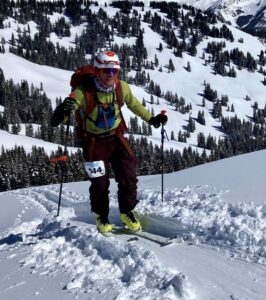
From steep crag trails to slabby scrambles, the best approach shoes blend hiking comfort with sticky rubber. We also look for climbing precision and enough durability for repeated abuse on rock.
For this update, GearJunkie editor Chris Kassar and lead tester Ryan Kempfer tested five new approach shoes over a three-month cycle. From the Tetons to Moab, we logged rocky approaches, desert scrambles, crag days, and mixed trail miles to see how each shoe handled grip, fit, stiffness, support, and durability.
After further testing, we awarded our top spot to the La Sportiva TX4 EVO for its unmatched mix of durability, comfort, and technical grip. We also awarded the SCARPA Rapid XT our top pick for best hiking thanks to its deep lugs and outstanding trail comfort.
Over the past five years, our team of five experts has vetted more than 50 approach shoes.
Editor’s Note: We updated our Best Approach Shoes guide on May 14, 2026, adding three standout models: the fast-and-light Salewa Wildfire NXT, the sticky, scrambling-focused Black Diamond Technician Pro, and our new budget pick, the rock-crushing Five Ten Guide Tennie. We also refreshed all of our existing reviews with updated testing notes and direct comparisons.
The Best Approach Shoes of 2026


La Sportiva TX4 EVO
-

-
(Photo/Ryan Bode)
-
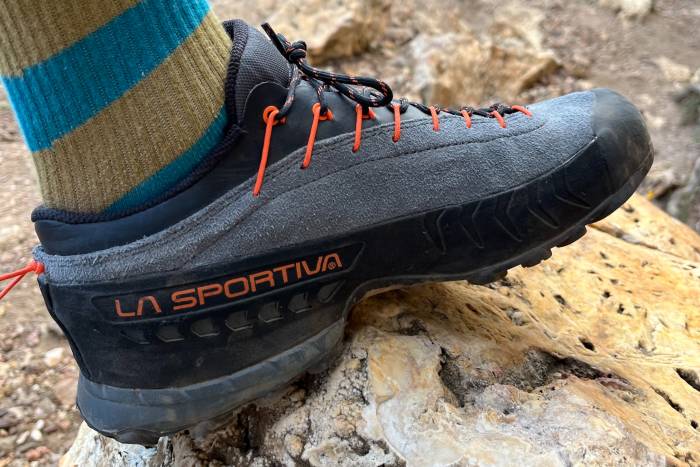
The TX4 has a durable leather upper and stiff sole. (photo/Austin Beck-Doss)
-


Specifications
Pros & Cons
Pros
- Roomy in the front
- Very durable
- Supportive for heavy loads or standing in aiders
Cons
- Not very breathable
- Heavy
- Bulky
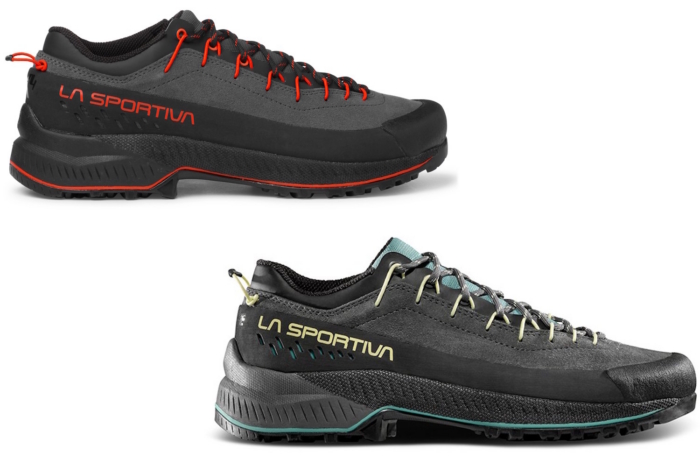
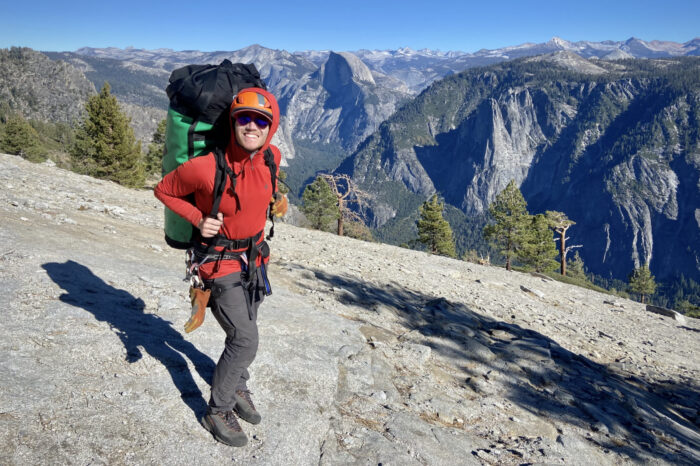
The La Sportiva TX4 EVO ($189) takes our top overall spot because it is a veritable tank that perfectly balances hiking comfort with top-tier climbing performance. We’ve hiked hundreds of miles, traversed sharp Connecticut trap rock, and even climbed a few offwidths in these. And yet, just keep on ticking. The eco-friendly nubuck leather upper handles unforgiving terrain with ease, and after a short break-in period, they become incredibly comfortable. In fact, they are so supportive that we even know of backpackers using them to complete an entire PCT thru-hike. We wouldn’t necessarily recommend them as a dedicated backpacking shoe, but it proves they are more than capable of handling massive mileage.
When it comes to vertical terrain, the TX4 EVO climbs exceptionally well. The lace-to-toe design provides a secure, restrictive fit that keeps your foot firmly in place — crucial for edging and preventing your toes from getting jammed in cracks. Outfitted with an insanely sticky Vibram Megagrip outsole and a smooth climbing zone under the toe, it smears reliably and holds its own on tiny footholds. While shoes like the SCARPA Rapid XT offer a bit more volume for wide feet and deep lugs for muddy trails, the TX4 EVO’s snugger, more sensitive profile gives it a distinct advantage when the scrambling gets steep and technical.
For light alpine missions, we had no trouble strapping crampons to the burly uppers and kicking steps up steep snowfields. Really, the only wear issue we can identify is that the foam midsole eventually deforms based on the nuances of your stride. But this takes several seasons of heavy use to manifest.
The only time we had issues with the TX4 EVO was when they were off our feet and clipped to our harnesses. They are undeniably heavy, and you definitely don’t want them swinging from your gear loops while free climbing at your absolute limit. If you must carry your shoes up a difficult route, a lightweight model like the La Sportiva TX2 Evo is a much better bet. But for steep, rocky approaches and long high-country scrambles, the TX4 EVO simply cannot be beat.
Adidas Five Ten Guide Tennie


Specifications
Pros & Cons
Pros
- Sticky grip on rock
- Durable leather upper
- Stable under load
- Secure fit for smearing and edging
Cons
- Stiff break-in
- Firm, less flexible hiking feel
- Not great in mud or loose dirt
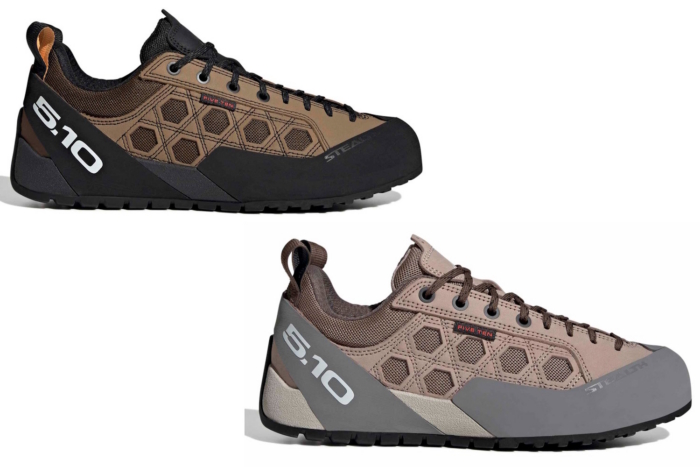
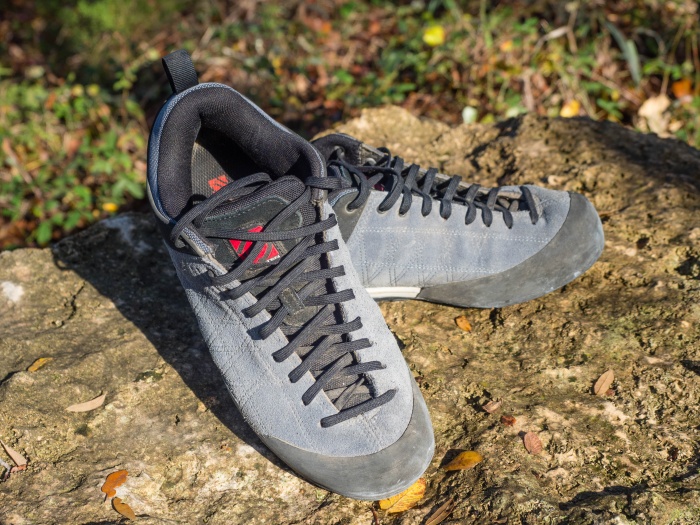
We’ve been testing some iteration of the Five Ten Guide Tennie ($165) for nearly a decade, and it remains one of the most rock-capable approach shoes in our lineup. During our long-term testing, we logged guide days at Central Texas limestone crags, hiked in Baja, Mexico, and hauled pack loads ranging from 20 to 40 pounds in both dry and damp conditions.
Fit is a major part of what makes the Guide Tennie work so well on stone. The lace-to-toe design helps lock the foot in place when smearing, traversing slabs, or edging on moderate terrain, while the firm platform adds stability under a heavy pack. Some testers found the shoe runs a little large, so climbers planning to use it on more technical rock should consider a snugger fit or sizing down a half size. This is a stark contrast to the SCARPA Rapid XT, which tends to run narrow and often requires sizing up.
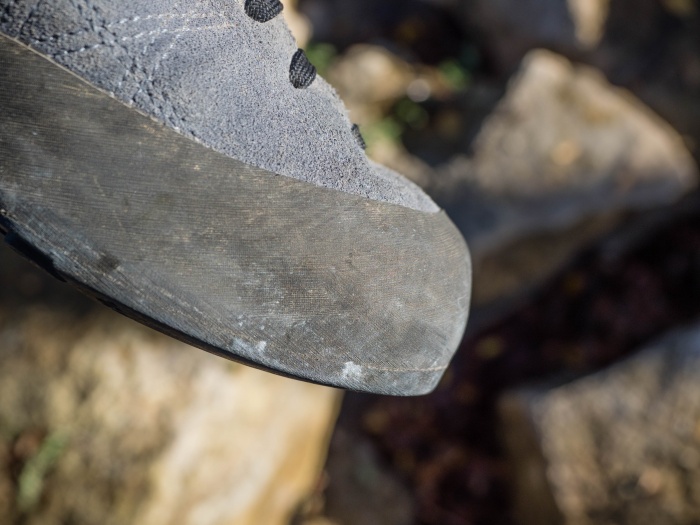
The Stealth Phantom rubber outsole is still the shoe’s biggest advantage. It grips exceptionally well on rock, giving the Guide Tennie far more confidence on slabby approaches, boulder fields, and scrambly terrain than a softer, trail-focused hiker. It isn’t a replacement for a true climbing shoe, but the secure fit, stable feel, and dedicated climbing zone make it a strong choice for climbers who demand real approach-shoe performance.
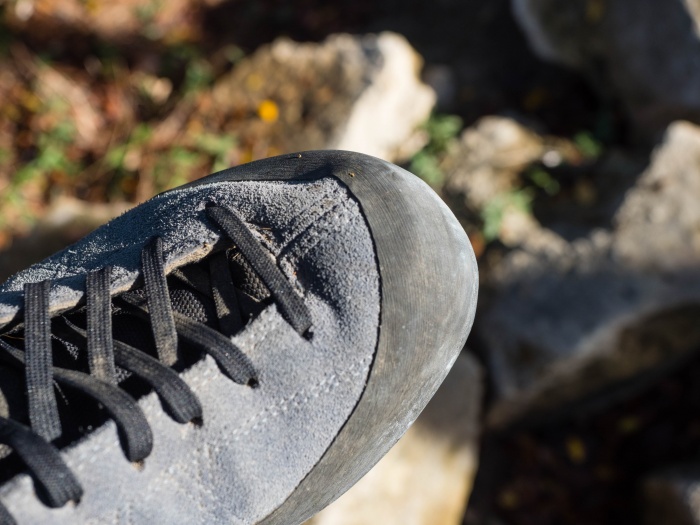
The leather upper adds excellent durability and support, especially when scraping through talus, brushing against rough rock, or carrying heavier loads. That sturdy build can run warm, however, and the shallow tread isn’t ideal for mud, loose dirt, wet leaves, or gravel over hardpack. (If your local crags require steep hikes through loose dirt rather than boulder-hopping, the deep, biting lugs of the SCARPA Rapid XT will serve you better).
The Guide Tennie can also feel stiff out of the box, so we highly recommend breaking it in before committing to a long approach. But for climbers who prioritize sticky rubber, durability, and stability, this remains a reliable workhorse for rocky approaches, guide days, and light climbing terrain.
SCARPA Rapid XT
-
-
(photo/Miya Tsudome)
-
(photo/Miya Tsdome)
Specifications
Pros & Cons
Pros
- Rugged
- Supportive for carrying heavy loads
- Great traction for scrambling
- Stiff platform for standing in aiders/jugging
Cons
- Heavy
- Not as precise for climbing as a thinner soled lightweight shoe
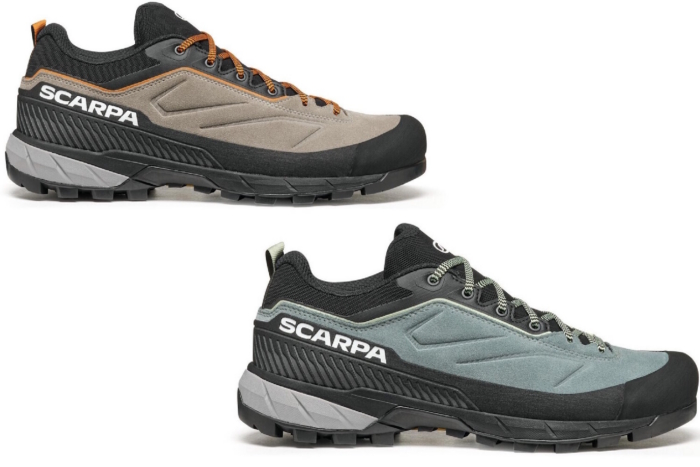
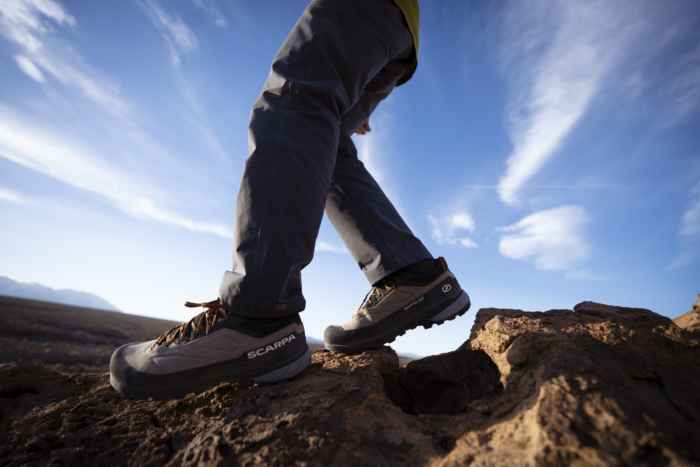
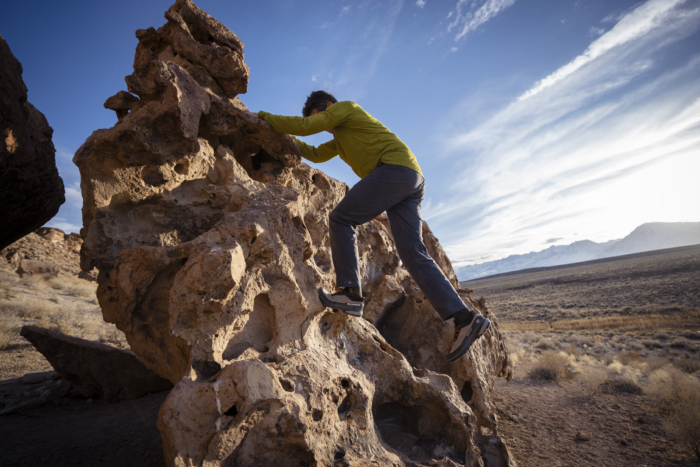
The durable, comfortable SCARPA Rapid XT ($179) is one of the best new approach shoes we’ve tested in a long time. It can take a serious beating, whether you’re bushwhacking your way to a backcountry first ascent or grinding against a big wall while jugging lines. While some shoes are more precise for pure scrambling and easy 5th class, the Rapid XT is your best bet for heavy hauling across varied terrain that doesn’t quite require a proper mountain boot.
SCARPA’s approach shoes tend to run a little narrow, so our tester went a half-size up from his street shoes and found the fit near-perfect. While a snugger, precise fit is great for scrambling, it becomes quickly uncomfortable on long hikes with a heavy pack. Sized correctly, the Rapid XT served us well on a variety of terrain, including slabs, hardpack trails, and the eroding, pea-gravel hillsides typical of Eastern Sierra approaches.
An extended polyurethane (PU) rand wraps around the shoe’s entire perimeter. Combined with the sturdy leather upper, there’s plenty of protection. You won’t find your toes busting out of the sides after a season of scrambly approaches, as you might with a breathable synthetic mesh shoe. While the heavy leather isn’t incredibly breathable, the padded tongue is noticeably thinner and airier than the one found on the La Sportiva TX4 EVO.
Head-to-head, the TX4 EVO edges out the Rapid XT slightly on pure climbing performance. The TX4 is a bit snugger and more sensitive, instilling greater confidence in delicate footwork. However, where the TX4 uses dot rubber lugs tailored for smearing on slabs, the Rapid XT has deeper, chevron-shaped lugs that provide vastly superior traction in mud and loose gravel. Neither is waterproof (though GTX high-top versions are available), and both handle strap-on crampons just fine for short snowy sections.
But for wider-footed climbers, those who don’t love Sportiva’s narrow heel, or anyone looking to comfortably crush a long approach, the SCARPA Rapid XT is a phenomenal choice.
Black Diamond Technician Pro Approach Shoe
-
-
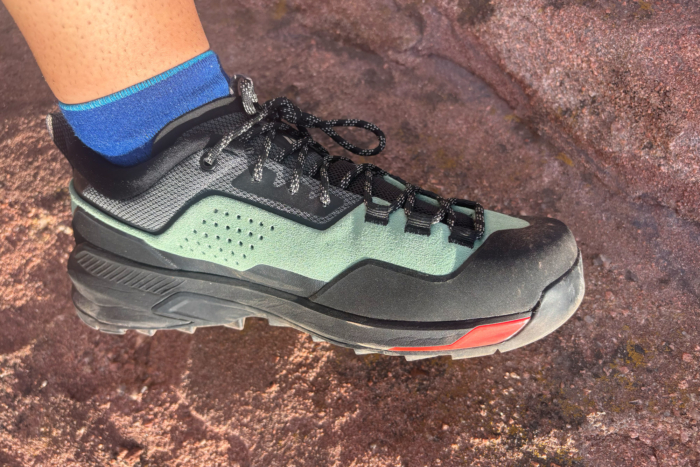
Durable leather and polyester upper resisted abrasion through repeated use on rough terrain; (photo/Mary Beth Skylis)
-
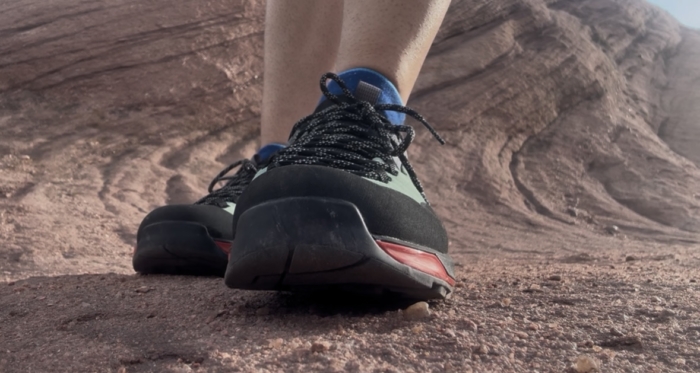
We tested the Black Diamond Technician Pro across trails and crags to evaluate comfort, grip, and durability; (photo/Mary Beth Skylis)
-
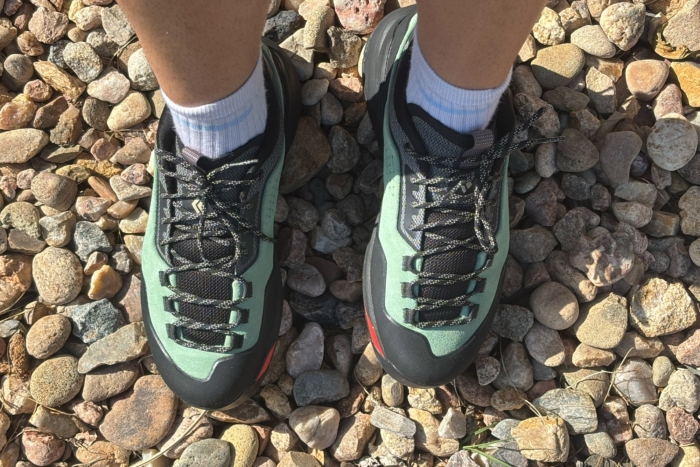
The Technician Pro balances durability with flexibility, but its weight and price limit versatility; (photo/Mary Beth Skylis)
-
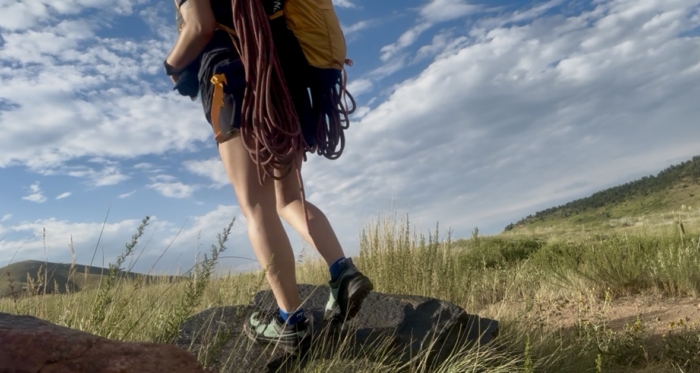
A rigid heel caused occasional friction on longer approaches despite overall comfort; (photo/Mary Beth Skylis)
Specifications
Pros & Cons
Pros
- Flexible for long approaches or long days at a crag
- Comfortable to wear for long periods
- Sole is very sticky and edges well on rock
- Looks good
Cons
- Expensive
- Some heel chafing issues
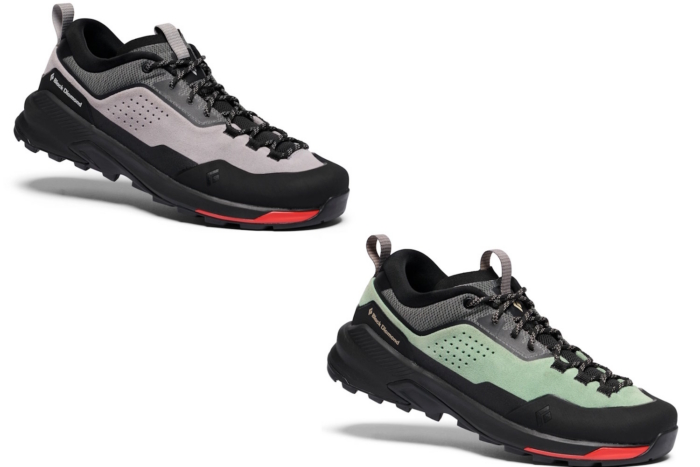
We tested the Black Diamond Technician Pro ($230) across miles of local crag approaches and long, multisport scrambling days. Designed as a crossover between a trail running shoe and a dedicated approach shoe, it aims to deliver dynamic comfort on the hike without sacrificing precision when the terrain turns vertical.
Where the Technician Pro truly earns its keep is on the rock. Outfitted with an incredibly sticky Vibram MegaGrip outsole, this shoe adheres to slick slabs and loose gravel without batting an eye. The front of the shoe has a slightly narrow toebox and a dedicated climbing zone that caters perfectly to edging and smearing. The support and precision are so dialed that we felt confident enough to comfortably lead 5.4 and 5.5 terrain without ever needing to swap into actual climbing shoes.
The back half of the shoe draws inspiration from trail runners with a hybrid foam midsole that provides much-needed cushioning and flexibility for long miles. The tread pattern also mirrors a running shoe more than a traditional lugged approach shoe, allowing for smoother, faster travel on hardpack dirt. Up top, the durable leather-and-polyester upper held up flawlessly against abrasion while rock-hopping and navigating tight canyons.
While it performs brilliantly on technical terrain, that hybrid design does come with a few quirks. The heel is taller and noticeably rigid, which caused some friction and required a break-in period for our testers before it felt comfortable on long days. At $200, it also represents a significant investment, costing noticeably more than our overall pick, the La Sportiva TX4 EVO. But while the TX4 EVO is built like a burly battle tank for hauling heavy loads, the Technician Pro offers a more nimble, trail-runner-inspired ride. If your goal is to move fast on the dirt and feel secure on exposed, technical scrambles, the Technician Pro is a top-tier hybrid.
Other Sticky Rubber Approach Shoes We Tested
-
-
The shoe is perfect as a daily wear choice; (photo by/Bergen Tjossem)
-
While a good fit for a short jog, these shoes won't replace my trail runners; (photo by/Jakob Schiller)
-
The Wildfire NXTs proved as a great hiking shoe; (photo by/Bergen Tjossem)
-
The Vibram All-Terrain Megagrip balances stick with durability; (photo by/Bergen Tjossem)
Specifications
Pros & Cons
Pros
- Comfortable fit
- Excellent grip on rock and dirt
- Cushioned heel adds hiking versatility
- Dual insole package adds fit options
Cons
- Not enough cushion for extended runs
- Accommodating fit trades precision
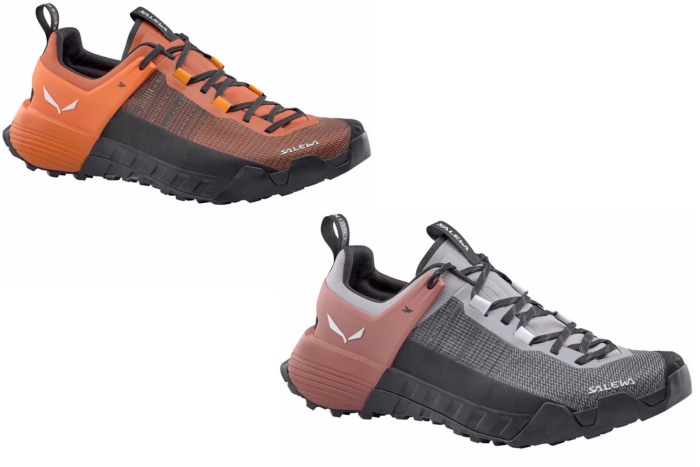
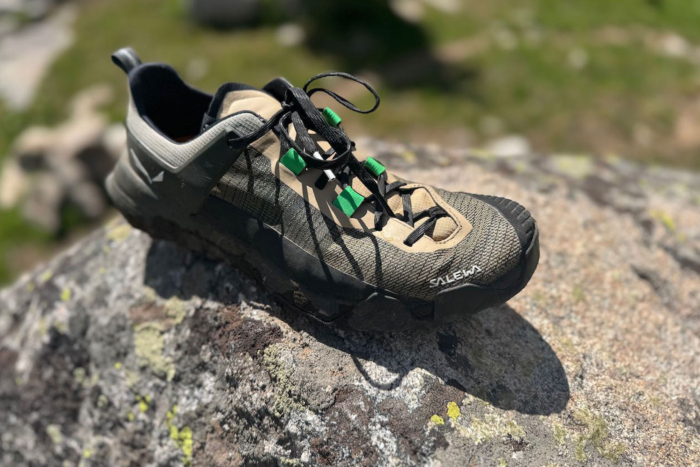
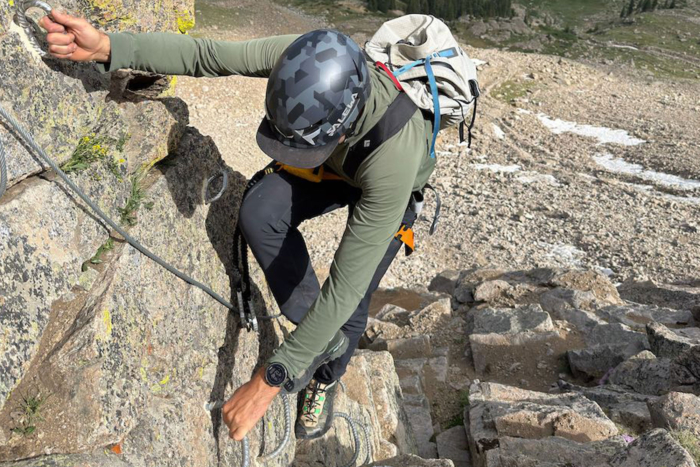
Bridging the gap between a light hiker, a trail runner, and a dedicated approach shoe, the Salewa Wildfire NXT ($190) is a versatile crossover built for rocky routes that refuse to fit neatly into one category. We put it through its paces on Arapahoe Basin’s via ferrata, local trail runs, steep dirt, granite slabs, and a class 4 scramble known for chewing up less precise footwear. Across that mix, it felt most at home on technical hikes, moderate scrambling, and fast approaches where grip and support matter more than pure running comfort.
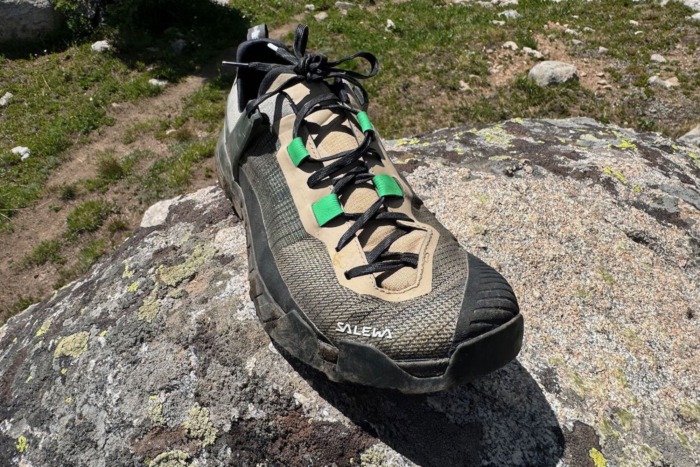
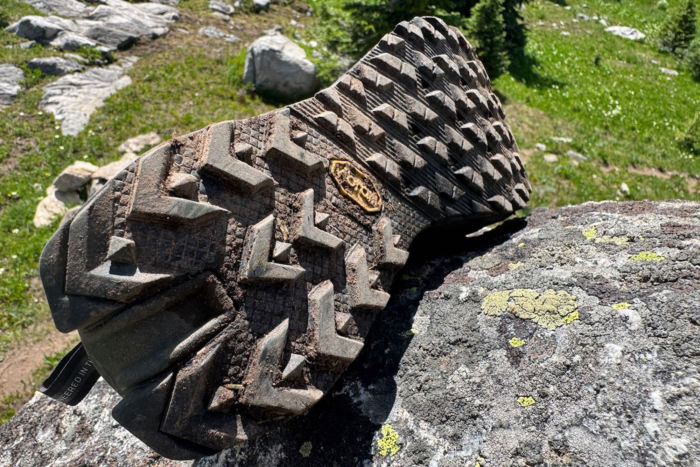
The Vibram All-Terrain Megagrip outsole provides solid traction across both rock and dirt. A climbing-style toe helps with edging and smearing, and smaller forefoot lugs balance rock contact with bite on softer surfaces. The heel tread also adds much-needed braking power on loose descents. That layout worked incredibly well on terrain that shifted constantly from slabby rock to dusty trail to loose dirt over stone.
The fit is notably more forgiving than many traditional approach shoes. The forefoot offers enough room for comfortable long approaches and downhill hiking, while the toe-to-ankle lacing allows you to snug things down when the terrain gets technical. Salewa’s supportive heel system keeps the rearfoot securely planted, and an included volume shim adds fit flexibility depending on the route or how much your feet swell. If you find burly, traditional approach shoes (like the La Sportiva TX4 EVO) too heavy and clunky for fast-and-light missions, the Wildfire NXT offers a much more nimble, agile alternative.
That said, the Wildfire NXT still isn’t a true trail runner. The forefoot feels firm, and we’d recommend saving longer, pure trail runs for a more cushioned shoe. But for via ferratas, class 3 and 4 scrambles, rocky hikes, and shorter run-hike approaches, it is a highly capable option for climbers who want one shoe that moves comfortably between the trail and the rock.
-
-
The Black Diamond Session Suede has a collapsible heel for easy ons and offs. (photo/Austin Beck-Doss)
-
Some approach shoes — like the Black Diamond Session Suede — are great for walking to the crag… and the grocery store. (photo/Austin Beck-Doss

Specifications
Pros & Cons
Pros
- Versatile
- Trendy appearance
Cons
- Not ideal for technical climbing
- Not very supportive
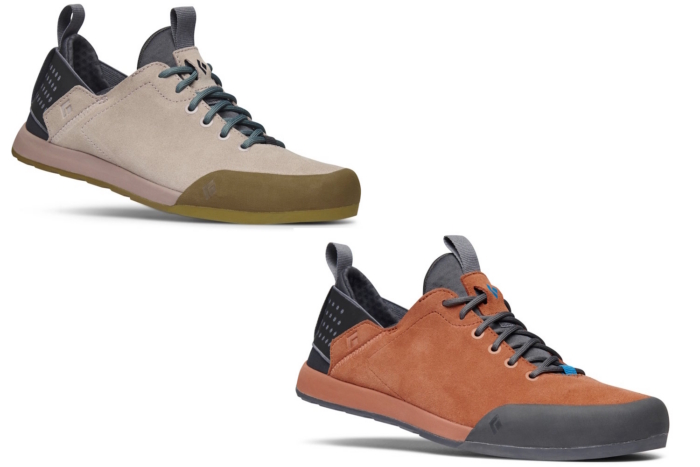
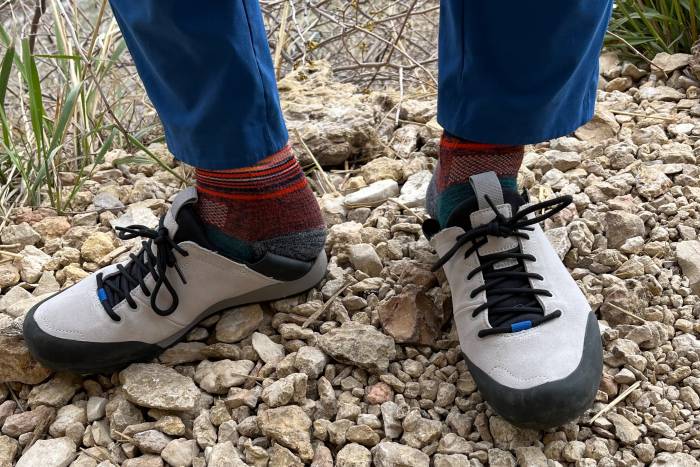
The Black Diamond approach shoe lineup has expanded significantly in recent years. One of the standout models is the Black Diamond Session Suede ($160), a “performance lifestyle” crossover designed for the crag and city streets alike.
We’ve worn the Session to the climbing gym, the sport crag, and even clipped them to our harnesses for multipitch descents. Creating a true urban/approach hybrid isn’t easy, but Black Diamond has struck an impressive balance.
Ultimately, this shoe is built for relatively casual approaches. The minimalist suede upper and soft, flexible structure aren’t ideal for long, heavy-pack hikes through rugged terrain. The midsole and outsole are quite thin, meaning you will feel every root and sharp boulder underfoot. While Black Diamond’s own Technician Pro leans into its trail-running DNA to provide cushioning and aggressive edging support for long, technical miles, the Session Suede keeps things firmly casual. Over steep, endless talus, that minimalist profile is a recipe for sore feet.
Still, for such a light and packable shoe, the Session handles moderate approaches and short scrambles remarkably well. It takes up minimal space on a harness and functions perfectly as a multipitch descent shoe. Plus, at $160, it costs noticeably less than its highly technical counterparts.
The Session’s best feature is its collapsible stretch-fit heel, which lets you easily slip the shoe on and off without untying the laces. When it comes time to belay your partner or shuffle crash pads around the boulders, quick footwear transitions are a huge luxury. Overall, the Black Diamond Session Suede is an outstanding light-duty approach shoe for city dwellers, gym-goers, and weekend warriors who want to seamlessly transition from the street to the crag.
Specifications
Pros & Cons
Pros
- Good value
- Durable
- Comfortable
Cons
- Heavy
- Not the best for fifth-class climbing
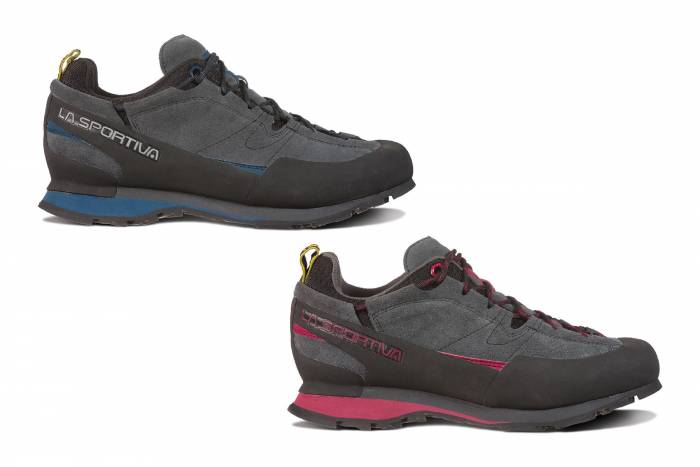
While most high-quality approach shoes are priced north of $170, the La Sportiva Boulder X ($159) offers impressive performance and long-term durability at an accessible price point.
The Boulder X is one of the most affordable shoes on our list, but it is also one of the most rugged. A plush, padded tongue and a heel-hugging shape provide a cozy, locked-in feel that most modern, streamlined approach shoes simply don’t offer. We wore this shoe as a daily driver for a full year, and the leather upper looks flawless. Thanks to that thick, padded construction, the Boulder X functions beautifully as a warm, three-season workhorse. However, during peak summer months, its lack of breathability becomes very apparent; our feet frequently overheated on longer hikes.
Ridge scrambles and steep, heavy-pack trails are no problem for the Boulder X, but it isn’t the best option when the terrain turns vertical and enters fifth-class climbing. The shoe sits relatively high on a thick foam platform, which limits ground feel and makes precise footwork difficult. If you plan to actually climb low-grade routes in your approach shoes, you will be much better served by the lower-to-the-ground profile and superior edging of our top budget pick, the Five Ten Guide Tennie ($165).
In a men’s size 10, the Boulder X weighs more than a pound per shoe. They’re undeniably heavy and clunky, so we definitely don’t recommend carrying them clipped to your harness up a multipitch route. But if you’re looking for a durable, highly cushioned approach shoe that will devour endless miles of trail without breaking the bank, the Boulder X is a proven winner.
-
-
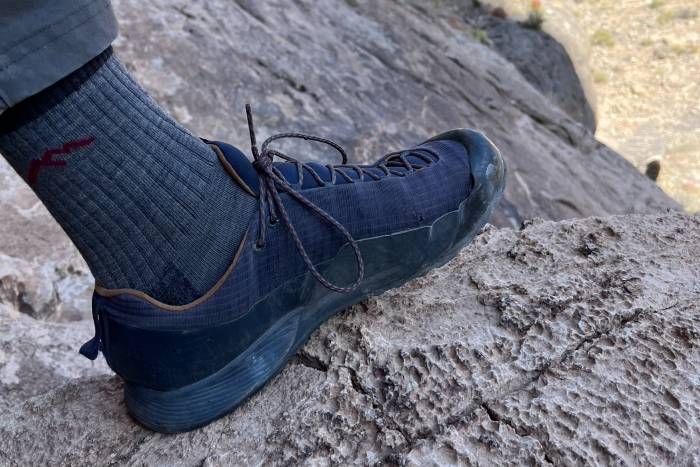
The Arc'teryx Konseal going strong after years of use. (photo/Austin Beck-Doss)
-
(Photo/Arc'teryx)
-
(Photo/Arc'teryx)
Specifications
Pros & Cons
Pros
- Durable
- Capable on technical terrain and cracks
- Waterproof
Cons
- Hot
- Expensive
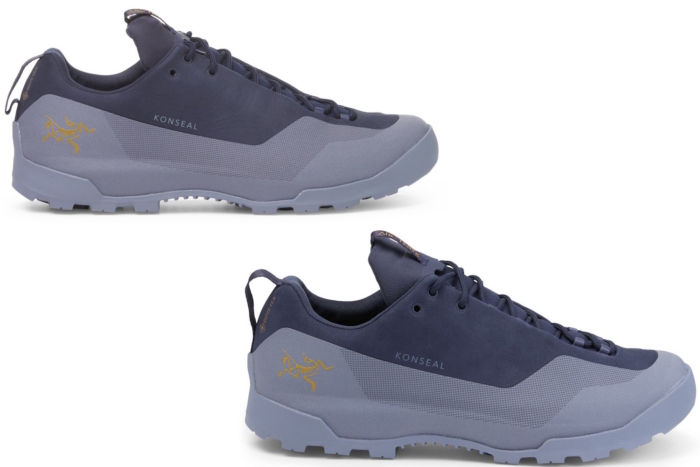
“Konseal” is the moniker for Arc’teryx’s dedicated line of rock climbing gear, and the Arc’teryx Konseal GTX ($220) is a premium, do-it-all approach shoe that goes toe-to-toe with the very best on the market.
We’ve been fans of the Konseal lineup since the first iteration launched back in 2017. We climbed, hiked, and approached in the original model for three straight years, and they served us flawlessly. Based on our ongoing testing, the current generation is every bit as bomber as its predecessor.
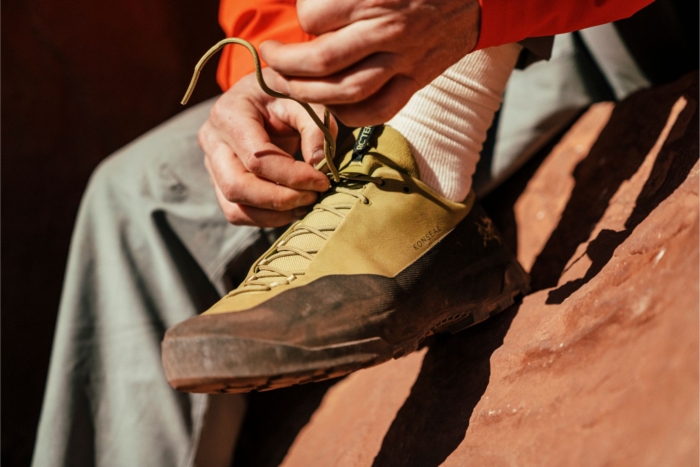
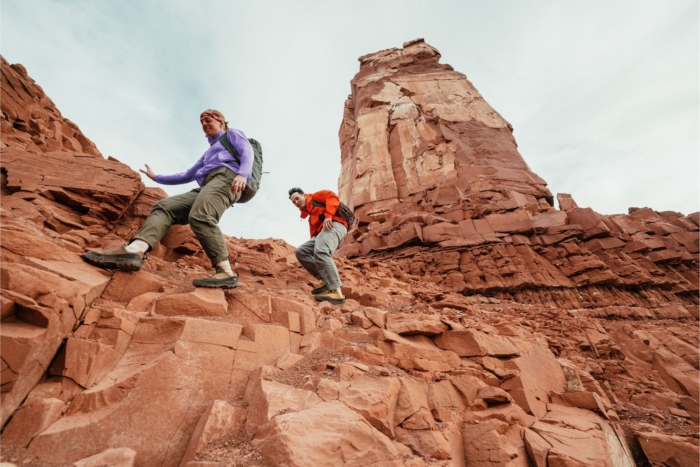
This rugged shoe comes with all the bells and whistles you’d expect from top-tier alpine footwear. The Vibram Megagrip outsole—complete with a rubber-capped toe and a sticky, dedicated climbing zone—handles technical terrain and slabby approaches with ease. A stiff midsole provides excellent stability when hauling heavy climbing packs, while the durable leather upper and GORE-TEX membrane keep your feet protected and dry in nasty alpine weather. (If you frequently tackle fast-and-light approaches in hot climates, Arc’teryx also makes a highly breathable, non-waterproof version for $190).
The primary hurdle with this shoe is the price tag. At $220, it requires a serious investment and costs noticeably more than our top overall pick, the La Sportiva TX4 EVO. While we wouldn’t say the Konseal definitively outperforms the TX4 EVO, it absolutely matches it in durability, grip, and comfort while offering a slightly sleeker aesthetic. It doesn’t come cheap, but top-tier Arc’teryx quality rarely does.
Approach Shoe Comparison Table
| Approach Shoe | Price | Weight Per Pair | Outsole | Best For |
|---|---|---|---|---|
| La Sportiva TX4 EVO | $189 | 1 lb., 8 oz. | Vibram Megagrip Traverse | Long approaches and all-day scrambling |
| Adidas Five Ten Guide Tennie | $165 | 1 lb., 10.8 oz. | Stealth Phantom | Budget rock grip and technical approaches |
| SCARPA Rapid XT | $179 | 1 lb., 8 oz. | Vibram Agility XT / Megagrip | Hiking-focused approaches and heavy packs |
| Black Diamond Technician Pro | $230 | 1 lb., 14 oz. | Vibram Megagrip | Technical scrambling and hybrid hike-climb days |
| Salewa Wildfire NXT | $190 | 1 lb., 8.3 oz. | Vibram All-Terrain Megagrip | Fast approaches, via ferratas, and mixed routes |
| Black Diamond Session Suede | $160 | 1 lb., 5 oz. | BD Black Label-Street | Urban use and mellow approaches |
| La Sportiva Boulder X | $159 | 2 lbs., 3 oz. | Vibram Megagrip Idro-Grip V-Smear | Long-term durability and rugged crag approaches |
| Arc’teryx Konseal | $220 | 1 lb., 12 oz. | Vibram Megagrip | Technical approaches, scrambling, and rocky trails |

How We Tested the Best Approach Shoes
Our Expert Testers
This guide is led by GearJunkie editors Chris Kassar and lead tester Ryan Kempfer, who tested five new approach shoes over a three-month spring cycle in the Tetons and Moab. As avid lovers of alpine terrain, they regularly move through steep, rocky mountains where approach shoes are essential — from Teton objectives like the Middle Teton and Buck Mountain to long desert hikes, technical scrambles, and high-angle slickrock.
We also draw on extensive long-term testing from Matt Bento, Miya Tsudome, and Austin Beck-Doss. Bento brings more than 20 years of climbing experience, including four years with Yosemite Search and Rescue (YOSAR), while Tsudome has vetted dozens of models on steep trails, muddy approaches, and alpine routes in the Sierra. Beck-Doss is based in Lander, Wyo., where steep, muddy treks to sport crags and long slogs to alpine routes provided the ideal testing ground for approach shoes.
Our Testing Process & Grounds
To ensure every shoe on this list meets a high performance standard, we established a minimum testing threshold. Each approach shoe was tested on at least three separate outings, covering a minimum of 8 to 10 total miles while carrying a typical climbing load (20–40 lbs).
Furthermore, we required at least one “rock-focused” outing per shoe. This included testing on slabs, talus, boulder fields, and easy scrambles where edging, smearing, and foot security were paramount. For this update, our primary testing grounds included the Teton Pass, Grand Teton approach trails, and alpine talus, as well as Moab slickrock, desert washes, and loose “kitty litter” over hardpack. We specifically tracked break-in periods, hot spots, lace security, torsional stiffness, ground feel, and outsole grip.

Our Approach Shoe Rating System
Comfort: Evaluates fit, break-in time, cushioning, flexibility, and breathability over long distances under load.
Traction: Tests grip across dry and wet rock, loose dirt, gravel, mud, talus, slab, and mixed approach terrain.
Climbing: Focuses on edging, smearing, sensitivity, toe shape, and confidence on low-grade technical terrain.
Durability: Assesses the longevity of upper materials, rand coverage, outsole wear, and abrasion resistance.
The overall score for each shoe is a weighted reflection of its total performance and versatility during extended real-world use. It is not a simple mathematical average of the category scores, as certain factors (like traction and durability) may carry more weight depending on the shoe’s intended use.

Buyer’s Guide: How to Choose Approach Shoes
What Are Approach Shoes?
Approach shoes are a cross between hiking shoes and climbing shoes. They combine the best traits of both parent categories to maximize performance between the car and the crag.
Though our list of recommendations includes a broad spectrum of features, approach shoes generally have a few key characteristics. Most importantly, they have a sticky rubber outsole. To earn a place in the “approach” category, a pair of shoes must have some capacity to stick to rock and execute relatively technical movements.
Many approach shoes come with a built-in “climbing zone” — which is a patch of smooth rubber near the toe that can be used to smear and stand on small footholds. Accessing the base of climbing routes often requires fourth or low-fifth-class climbing — this is where approach shoes shine.
Along with durable sticky rubber soles, approach shoes should also have a durable upper and offer some baseline stability. From long slogs on the trail to boulder hopping up talus, approach shoes must put up with serious wear without falling apart. If they’re too flimsy or thin, they probably can’t withstand the abuse that a true approach shoe should. Ultralight trail runners and legitimate approach shoes are not the same.
While hiking shoes tend to have a curved, rocker profile, technical approach shoes usually have a flat sole. A flat sole makes it easier to channel power into your toes and stand on small footholds.
All of the shoes on this list are proper approach shoes. Some are light and nimble, others are super supportive and robust, but they’re all built to meet the needs of climbers on a mission.

Climbing Ability & Outsole
By design, approach shoes are far more suited for technical climbing than hiking shoes. For the most part, the superior grip and climbing ability come from a soft and sticky rubber outsole. As climbers know, super soft, tacky rubber is the ideal material for climbing rock with confidence.
Approach shoes have hybrid outsoles that combine climbing shoe and hiking boot features for maximum versatility. Approach shoe rubber is relatively soft, but it should still maintain traction on the trail.

When shopping for climbing shoes, it is important to consider where and how you will use them. If you plan to wear your approach shoes while scrambling on steep terrain and climbing 4th- and 5th-class rock, be sure to choose a shoe with soft rubber and an ample climbing zone. If you’ll mostly be hiking on low-angle trails, general performance and comfort should be greater priorities than technical climbing features.
If you are a well-rounded mountain goer, we recommend approach shoes with a customizable fit that you can adjust according to the activity at hand. For maximum customization, look for a lacing system that runs the length of the upper and all the way down to the toe.
Upper Material: Synthetic or Leather?
On this list, the La Sportiva TX4 EVO is an approach shoe with ultra-impressive technical climbing ability. For moderate terrain and casual multi-pitch days, the Black Diamond Session is a good comfort-forward option.
A shoe’s upper is the material that makes up the top of the shoe. In the approach shoe category, most uppers are made from either leather or synthetic material. Both options have their pros and cons, and neither is strictly better than the other.
Leather uppers, similar to those found on traditional hiking footwear, offer supreme durability. We’ve long-term tested both leather and synthetic approach shoes, and the leather styles seem to hold up to more rugged use.
Leather also has an advantage when it comes to water resistance. It naturally repels water and doesn’t fully rely on a Durable Water Repellent (DWR) treatment to keep your feet dry.

In warm conditions, leather does not breathe especially well and can cause uncomfortable, hot feet. If you plan to wear your approach shoes for desert climbing in places like Joshua Tree or Red Rock, leather may not be the ideal choice.
Leather also stretches, while synthetic does not. If you purchase leather approach shoes, it is important to realize that they will become a bit roomier over time.
The SCARPA Rapid XT and the La Sportiva TX4 EVO have durable and water-resistant leather uppers. In contrast, the non-waterproof version of the Arc’teryx Konseal is highly breathable. The Salewa Wildfire NXT has a nylon upper that falls in between.
Durability
Approach shoes are meant to be worn in rugged and rocky terrain, and long-term durability is a must. In our experience, the upper materials on approach shoes wear out long before the rubber outsoles do.
As the outsole wears, the tread becomes smooth and shallow, but the shoes can typically go on functioning without issue. Plus, many approach shoes can be resoled. When the upper falls apart, however, the shoes no longer function as needed.
When climbing on rock or standing in aid ladders, the toe-end of approach shoes take a lot of abuse. Most shoes on this list have a sticky rubber rand that wraps up and over the toe, which adds durability in a key area — just about all of the longest-lasting styles have it.
If durability is a priority for you, we recommend a pair of heavy-duty approach shoes with a rubber toe rand and a leather upper. Leather does get warm in summer conditions, but it also tends to last longer than synthetic material. On this list, the La Sportiva Boulder X is an impressively durable and long-lasting approach shoe.

Support & Stiffness
Climbing gear is heavy, and hauling a fully loaded backpack calls for supportive footwear. Backpackers tend to wear stiff and supportive boots for stability, and in many ways, climbers have similar needs.
Additionally, stiff shoes tend to work better for standing on small edges and climbing cracks. Aid climbers also tend to prefer stiff shoes — standing in slings is downright painful in floppy shoes. On this list, the SCARPA Rapid XT is on the very stiff end of the approach shoe spectrum.

Not all approach shoes are stiff and supportive. While super stiff shoes may be nice while hiking with a full rack and a rope, they have some downsides.
Firstly, stiff shoes sacrifice agility and flex, which can come in handy while scampering up a talus field or soloing an easy approach pitch. If you’re looking for a soft and nimble approach shoe, check out the Black Diamond Session Suede.
Style
Approach shoes are built for the outdoors, but many climbers choose to rock them as their go-to, do-it-all footwear. While aesthetics aren’t the main purpose of approach shoes, some recent styles have become quite spiffy.
On this list, shoes like the Black Diamond Session Suede have a lightweight profile and modern styling that looks great in the climbing gym and other front-country settings.

Weight & Packability
When multi-pitch climbing, it is common to clip a pair of approach shoes to your harness to wear while rappelling or hiking back to the base of the route. For this reason, we love it when approach shoes are light and packable.
Light shoes come in handy, but it’s important to maintain a balance between total weight, performance, and durability. Super light approach shoes like The North Face Cragstone Pro are not the most stable or long-lasting. Burly and stiff shoes like the La Sportiva Boulder X can foot jam beautifully, but they take up lots of space on a harness. If you’re looking for something that you can just clip to your haul loop and forget about, the Session Suede weighs just over 1 pound per pair. Plus, the heel collapses down so they’ll take up less space on your harness.

Price & Value
Approach shoes in this guide sit in a fairly tight range, from about $160 to $230. While paying more typically nets you specialized features like GORE-TEX waterproofing, premium leather, or trail-runner-inspired midsoles, the highest price tag doesn’t always mean the best performance for your specific home crag.
Budget: Under $170
Even at the entry-level price point, you can find highly capable, rock-focused footwear. The La Sportiva Boulder X ($159) is a proven workhorse for climbers who prioritize long-term durability and thick underfoot cushioning. While it’s heavier and less precise than technical models, it excels on rugged crag approaches where comfort is king. Similarly, our top budget pick, the Adidas Five Ten Guide Tennie ($165), provides the legendary grip of Stealth rubber and a stable, rock-first platform without pushing into the premium price bracket.
Mid-Tier: $170–$199
This is the “sweet spot” for most climbers, where you find the best balance of hiking comfort and technical scrambling precision. The SCARPA Rapid XT ($179) is a standout for those who face long approaches or carry heavy packs, as its deeper lugs provide better traction on loose dirt and mud than traditional slab-oriented shoes. Our Best Overall pick, the La Sportiva TX4 EVO ($189), dominates this category by justifying its price with a near-perfect blend of stickiness, durability, and a comfortable fit that holds up over hundreds of miles. For those seeking a more agile feel, the Salewa Wildfire NXT ($190) offers a nimble, fast-and-light alternative for mixed rock-and-trail routes.
Premium: $200+
In the premium tier, you are paying for weather protection, weight savings, or high-performance hybrid designs. The Arc’teryx Konseal Leather GTX ($220) commands a higher price due to its waterproof GORE-TEX membrane and signature build quality, making it the ideal choice for wet alpine approaches and technical scrambling. The Black Diamond Technician Pro ($230) is the most expensive option on our list and functions as a specialized tool for climbers who want a “best of both worlds” hybrid, combining the precision of a high-end approach shoe with the flexible, responsive ride of a trail runner.
Frequently Asked Questions
Hiking and approach shoes are similar, but there are a handful of key characteristics that differentiate the two categories. While hiking shoes are designed for waking on relatively flat surfaces, approach shoes are made to venture into rocky and technical terrain.
In general, approach shoes have a flat sole with a soft and sticky rubber outsole that is similar to a climbing shoe. The soft rubber conforms to rock and provides lots of friction when smearing or edging. Hiking shoes tend to have a rockered profile and a harder rubber compound that prioritizes durability and works well on dirt and mud.
Approach shoes have semi-shallow tread patterns that are far less aggressive than the deep lugs of most hiking shoes. While climbing or scrambling over rock, shallow tread maximizes surface contact and increases friction.
Many approach shoes have a “climbing zone,” which is a completely flat plane of sticky rubber underneath the toe. This feature is great for climbing rock, but it can also be a detriment while hiking through mud or sand.
Ultimately, there is a lot of overlap between hiking and approach shoes. In many cases, you could use hiking shoes as approach shoes and vice versa.
The shoes don’t make the climber. The climbing ability of any shoe depends on the skillset and comfort level of the user. With that said, all of the approach shoes on this list are designed to handle technical, rocky terrain. Some, however, are far more capable than others.
Of the numerous shoes that we tested, the La Sportiva TX4 has the most impressive climbing ability.
If you’re looking for great value without sacrificing technical ability, check out the La Sportiva Boulder X.