I spend an unreasonable amount of time looking at animals through spotting scopes. Sometimes I’m scouting. Sometimes I’m hunting. Sometimes there’s a mule deer in full velvet standing on a ridge, and I have nowhere better to be.
So, Swarovski’s AT Endura 21-65×75 landed in my hands at a pretty ideal time. Summer was rolling toward hunting season in Montana, elk and pronghorn scouting was underway, bears were moving during the thin light at either end of the day, and there was plenty of country begging to be picked apart through a spotting scope.
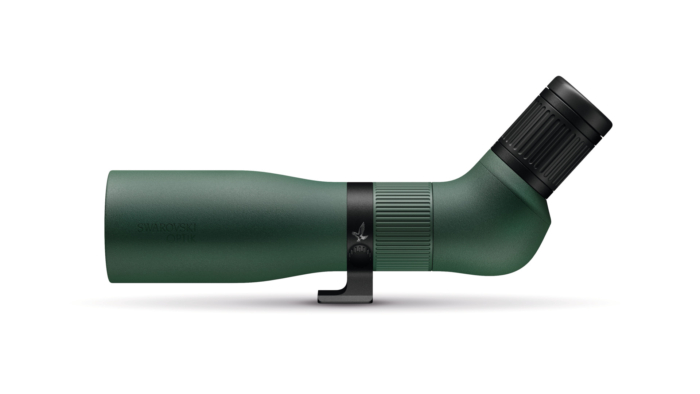
The Endura is a 75mm angled spotter with 21-65x magnification, 90% stated light transmission, and a weight of 53.3 ounces. That’s a compelling combination for anyone who wants full-size glass without having to carry the biggest scope on the mountain.
I also own Swarovski’s ATX 30-70×95, which gave me a very familiar reference point. The ATX is (objectively) a higher-caliber scope. It’s also larger and heavier, and it belongs in a different class of optics. But I’ll get into that comparison later.
The Endura deserves to be judged for what it is.
At $2,899, this isn’t a “cheap” purchase. This is still Swarovski we’re talking about. This is just “more attainable” for a brand name known for heavy price tags. But after a summer behind it, I came away impressed by how much optical performance Swarovski managed to cram into a scope I’d actually be willing to haul a long way.
In short: The Swarovski AT Endura 21-65×75 delivers excellent image quality, strong low-light performance, and useful 65x magnification in a relatively packable 53.3-ounce body. It’s expensive, and it isn’t ATX-level glass, but for western hunters who actually have to carry their spotter, the balance makes a lot of sense.
Swarovski AT Endura 21-65×75 Review
Specifications
Pros & Cons
Pros
- Strong low-light performance
- 75mm objective at a manageable weight
- Useful 21-65x magnification range
- Easier to pack than larger premium spotters
Cons
- $2,899 is still $2,899
- Relatively narrow field of view at 21x
Features
The AT Endura is a fixed, angled spotting scope built around a 75mm objective lens and a 21-65x zoom range. Unlike Swarovski’s modular ATX system, the eyepiece and objective are integrated into a single unit. There are no interchangeable objective modules or eyepieces to mess with.
It’s listed with 90% light transmission, a 20mm eye relief and a close-focus distance of 13.5 feet. The zoom range is controlled at the eyepiece, while the large focus ring sits farther forward on the body for quick adjustments while you’re behind the scope.

The body can rotate in its tripod collar, which helps when you need to change the viewing angle without moving the entire tripod. It doesn’t have an extendable sunshade, and the rotating collar skips the indexed detents found on some of Swarovski’s other spotting scopes.
The Endura is also built for actual field use. Swarovski rates it waterproof to 13 feet and for operating temperatures from -4 to 122 degrees Fahrenheit.
At 15.1 inches long and 53.3 ounces, it’s still a full-size spotting scope. The 75mm objective is what makes the package interesting, giving you substantially more glass than a compact spotter without jumping all the way to an 85mm or 95mm setup.
Testing the AT Endura Across Montana

Montana is pretty good at exposing weaknesses in optics. Bright summer sun and heat shimmer can wreck long-distance detail. Timber and shadows test contrast. Early mornings and late evenings show you what the glass can still resolve when there isn’t much light left.
I used the Endura for early-season elk and pronghorn scouting and for general wildlife viewing. I spent time watching mule deer in full velvet and bears during the first and last parts of the day.
The 21-65x magnification range worked well for the way I scout. At 21x, I could get onto an animal easily enough. From there, I could increase the magnification to examine horns, antlers, body size, and other details.

I used 65x when conditions allowed it. During the hotter parts of the day, heat shimmer usually limited how well I could resolve before I ran out of magnification. That’s true with my more expensive glass, too. When the air settled, the Endura’s upper magnification was genuinely useful.
Optical Quality
We all expect Swarovski glass to be good. The Endura is.
The image is sharp, contrast is excellent, and colors look natural. Velvet mule deer gave me plenty of opportunities to look at fine detail, and the Endura held that detail well. It was equally useful for sorting through elk and pronghorn at a distance after I’d located them with binoculars.
I saw some softening at 65x, particularly when I compared the Endura directly with my ATX. It wasn’t enough to keep me from using the top end, and during warm summer afternoons, the atmosphere was usually the bigger limitation anyway.
Most importantly, I didn’t spend much time thinking about the scope while I was behind it. I could find an animal, focus, increase magnification, and see what I needed to see. For expensive glass, that’s exactly what I’m paying for.
Low-Light Performance
The bears gave me some of my best low-light testing. I watched them early in the morning and late in the evening, when available light was already fading. The Endura stayed bright enough to continue seeing useful detail in the animals and surrounding terrain.
With 90% light transmission and a 75mm objective, the Endura performed well during those first and last stretches of daylight.
I’m hesitant to go too small with a hunting spotting scope for exactly this reason. The weight savings of a compact spotter are nice, but I also know when I’m most likely to need the thing. Elk, deer, and bears have a bad habit of being most cooperative when the light isn’t.
The Endura gives me a noticeably easier scope to carry without giving up the low-light performance I want from full-size glass.
Size, Weight, and My ATX Comparison

The Endura weighs 53.3 ounces, or a little over 3.3 pounds. That isn’t ultralight, especially once you add a tripod, head, and maybe a phone adapter. But for a 75mm spotting scope, it’s a very manageable number.
The size difference is just as noticeable as the weight. The 75mm objective takes up considerably less room in a pack than the 95mm objective on my Swarovski ATX 30-70×95, and I noticed that every time I handled the two side by side.
My ATX system is a higher-caliber setup. There’s no reason to pretend otherwise. My system has a 95mm objective, tops out at 70x, and sits in Swarovski’s higher optical tier. If I’m glassing somewhere that weight and bulk don’t matter, I’ll take it.

On paper, the ATX’s listed weight is about 67.4 ounces (depending on your configuration) compared with the Endura’s 53.3 ounces. That puts an average of around 14 ounces between them, plus a pretty substantial difference in overall bulk. When I weighed mine, I saw an even greater gap, and that was without the lens cap on my ATX.
The ATX spent a stretch of last year being carried through mountain goat country, and well over a pound of weight is enough to convince me to swap. The ATX went along because obviously, you want the best glass you own on those kinds of hunts. If I’d had the Endura at the time, the pack would have been noticeably lighter.
Sure, you have to give up some optical performance, but you still have a 75mm objective and 65x magnification while cutting almost a pound or more from your pack.
Price and Value

The AT Endura costs $2,899. That makes it less expensive than Swarovski’s flagship full-size systems, but nearly three grand is still nearly three grand. There are good spotting scopes for much less money, and I wouldn’t recommend spending that much just because Swarovski makes excellent glass.
I use spotting scopes enough to care about the differences. It’s also my job to care about the difference. In my not-work life, image quality, low-light performance, useful magnification, and weight all affect how much I’ll actually use a scope.
The Endura does all of those things well. Whether that’s worth $2,899 depends on how much time you spend behind one and what tax bracket you fall into. For a serious hunter with the budget to do it, it absolutely makes sense.
Who Should Buy the Swarovski AT Endura?
I think the Endura is great for western hunters and serious wildlife viewers who want a full-size spotting scope but also need to carry it. If shaving every possible ounce is the priority, I’d go smaller.
If you want Swarovski’s best optical performance and weight isn’t much of a concern, the ATX is the better scope.
For hunters who want strong optical performance without committing to the size and weight of a bigger 85mm or 95mm spotter, the Endura makes a lot of sense.
Swarovski AT Endura 21-65×75 Review: Final Thoughts

The AT Endura didn’t make me want to sell the ATX, but it did make me reconsider when I actually need to carry it.
For hunters who spend a lot of time behind glass, the Endura is a really compelling combination of image quality, magnification, low-light performance, and weight. It’s full-size glass without quite so much full-size baggage.