Waders are essential gear for anglers. But dang, they’re tough to get right. They need to be the epitome of waterproof, all while standing up to constant streamside abuse. The best fishing waders will keep you dry and function so well that you forget about them. The wrong set will leave you cold, wet, and miserable.
In the latest 10-month test round, lead contributor Morgan Nowels tested two sets of waders across Tennessee, Montana, Idaho, and British Columbia over 40 days. Our best overall pick, the Skwala RS, still reigns supreme, while the Orvis Clearwater is the best option for those on a budget.
Nowels has been in the business of fly fishing for 14 years and relies on waders daily. He has no bias and assesses waders only on what works and what doesn’t.
Editor’s Note: We updated this guide on April 16, 2026, to include the Grundéns Vector Zip and the SITKA Crosscurrent GTX. We also included a ‘Quick and Dirty’ segment for each wader, giving you a review at a glance.
Skwala RS Waders

Specifications
Pros & Cons
Pros
- Comfortable
- Great fit
- Many usable pockets
Cons
- Expensive
- No women’s line
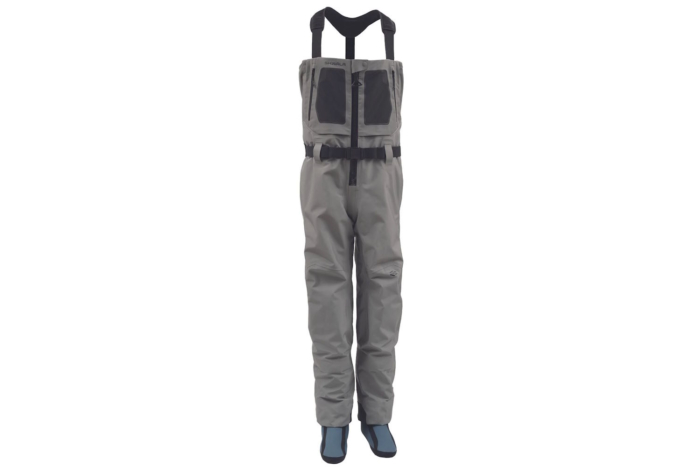
The Quick and Dirty: In two decades of testing waders, these are the best-fitting we’ve ever worn. Fit, extra features, and an antimicrobial treatment make the RS the cream of the crop. On top of fantastic performance, the price is pretty darn good for premium waders.
A few years ago, a new Montana-based brand popped up, and it has been making waves since its inception. Skwala put its best foot forward with its RS Waders ($899), and it shows. Its quality and details rival the most time-honored brands in the fishing industry.
First, the RS is comfortable. Waders are not known to be comfortable, but Skwala found a way to make them more so. A big help in this is the way they minimized the material. Often, uppers have extra material that is hard to cinch down, and lowers end up feeling like balloons. Skwala streamlined its design, making it slimmer and more comfortable.
An internal drawcord cinches out the elements to help customize the upper. Due to the slimmer fit, buying the right size is essential. Its offer sizes from M-Short to XXL with 2-foot size options (9-12 and 12-14), so you’d be hard-pressed to find something that doesn’t work.
Speaking of feet, the stockings are made with 4mm neoprene with an abrasion-resistant sole panel. We loved this detail and were less worried about puncturing the neoprene while changing in and out of these waders in the backcountry. We know you aren’t supposed to walk around without your wading boots, but the reality is that it happens, and it’s nice to have some reassurance that we won’t damage the stockings instantly.
The icing on the cake is the interior jersey with an antimicrobial treatment that helps regulate sweat and reduce bacteria and odor build-up. No more stinky wader smell after a hot day(s) on the river! Our tester’s mudroom can reek after fishing trips, and with the RS, it didn’t! This should be the new standard for all waders.
The wading belt isn’t just a wading belt — its built-in design also offers lumbar support. Anything that helps our bodies avoid fatigue is a win in our book! The layered front pockets have enough room to be usable even when each has a fly box. The top pocket has made of stretch-woven material, making it expandable. The hand warmer pockets are lined with enough fleece to actually warm your hands. The RS also has two interior pockets large enough for a fly box or phone, one on each side of the zipper.
The shoulder straps are comfortable, but it took our tester a moment to figure out how to adjust their length. The hook-and-ladder adjustments are hidden under a tight mesh sleeve. Once he figured out how to push up the mesh sleeve, adjusting it on the next side was much easier. The zipper was easy to use, and the oversized pull tab is handy when your hands are cold or when you are wearing gloves.
We’ve been in the fly-fishing industry for over 2 decades, and these were the best-fitting waders we’ve ever used. Considering how impressed we are with the RS Waders, we can’t wait to see what else Skwala has to offer!
Orvis Clearwater Wader
Specifications
Pros & Cons
Pros
- Affordable
- Athletic fit
- Men's and women's options
- 4-layer lower
Cons
- Easy to get cold due to thin material
- Lack of storage and pockets
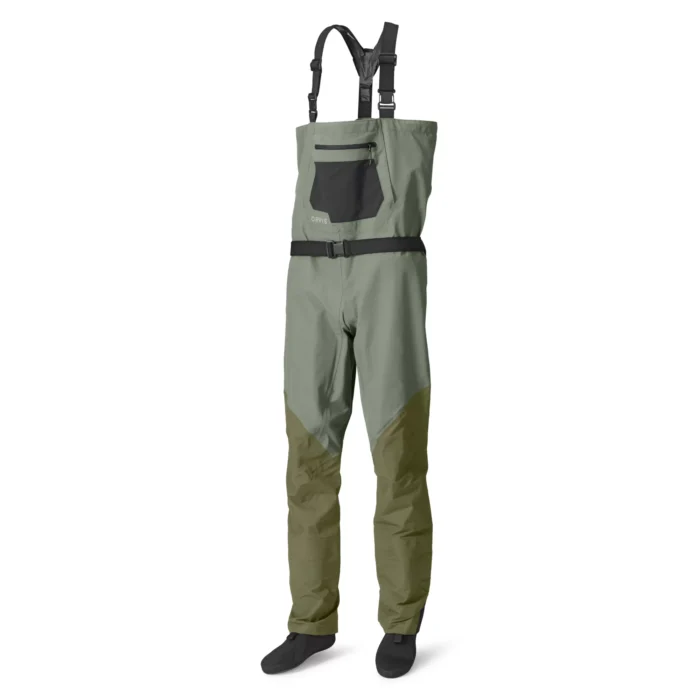
The Quick and Dirty: The Clearwater offers solid performance and great fit, something that’s hard to find in budget waders. If you’re just getting into the sport or only occasionally wear waders, these are the answer. However, if you plan on fishing hard and consistently, you may want to look elsewhere.
Waders have been increasing in price, and many budget models are likely to leak within a few outings. This is not the case with the Orvis Clearwater Fishing Waders ($298), a quality wader at a reasonable price.
The main draw of the Clearwater is Orvis’s use of four layers in the lower portion of the wader. Most budget offerings offer only three or fewer layers, making the wader prone to leaks. Orvis gives you four, and more importantly, the waders are held together by low-profile seams. Orvis has been in the wader business for decades, so you can trust that its seams are sturdy, unlike those of newer brands with less experience in manufacturing waterproof seams. Our tester works for an outfitter that uses the Clearwaters for client waders and can attest to their waterproofness while being used every day on guide trips, twelve months out of the year.
Many budget options fit poorly and don’t offer a women’s-specific fit. Fortunately, Orvis has been a strong proponent of women’s fishing through its 50/50 on the water campaign. This isn’t just a marketing campaign. Orvis offers quality, women-specific products, and the Clearwater wader is no exception. Both the men’s and women’s waders have a fantastic fit, with excess material removed while still providing you with room where you need it. A good fit is almost non-existent in other budget wader options.
There are some things you give up in a budget wader. The most noticeable downside to the Clearwaters is that they tend to run much colder than thicker, sturdier waders. You can solve this by layering more underneath the waders when fishing in the winter or in frigid tailwater rivers. The thinner material, while sturdy, is also easier to puncture than high-end waders. If you fish 100+ days a year or are hard on equipment, these are not the waders for you.
Storage is limited, with one storage pocket on the exterior of the wader that can fit a fly box and a few spools of tippet as well as a lined hand-warming pocket. There is a spot to add a removable waterproof interior pocket, but you have to purchase that separately. But, if you’re on a budget, or you mainly wet wade and use waders for a few outings in the shoulder seasons, the Orvis Clearwater Waders are a perfect option.
Grundéns Vector Zip Waders
-

-
(Photo/Morgan Nowels)
-
-
(Photo/Morgan Nowels)
-
(Photo/Morgan Nowels)
Specifications
Pros & Cons
Pros
- Price
- Some of the best pockets in the wader game
- Discreet, but functional knee pads
- Excellent fit
- Supportive straps
- Durable build
Cons
- No fleece in handwarmer pocket
- Booties are a touch large
- Not GORE-TEX
- No hook on gravel guard
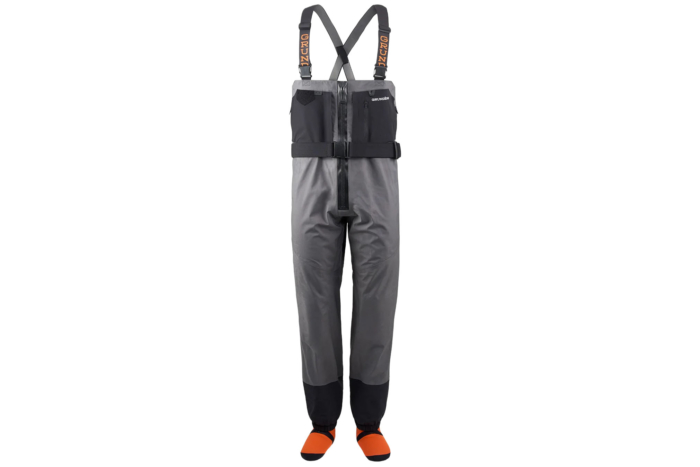
The Quick and Dirty: These waders are the lowest-priced premium waders on the market. They have a durable four-layer build, a zip front, pockets galore, and come in a few hundred dollars less than most of the competition, with few drawbacks. If you can’t swing $900 for the RS but still want the best, these are an excellent choice.
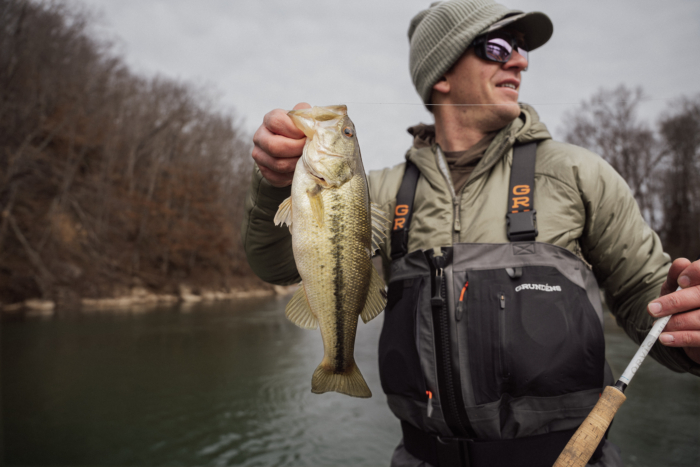
When it comes to overall value, the Grundéns Vector Zip front waders can’t be beat. After testing, we’d put them right next to any ultra high-end wader on the market, including the top-end offerings from Simms, Skwala, Patagonia, Orvis, and SITKA.
But these are the cheapest of the bunch. Prices for four-layer zip-front waders from the competition range from $835 to $1,100. These waders will set you back $750 and are pretty much the same darn thing. The Vector Zip are premium waders with a watertight zipper and a durable, reinforced, four-layer build.
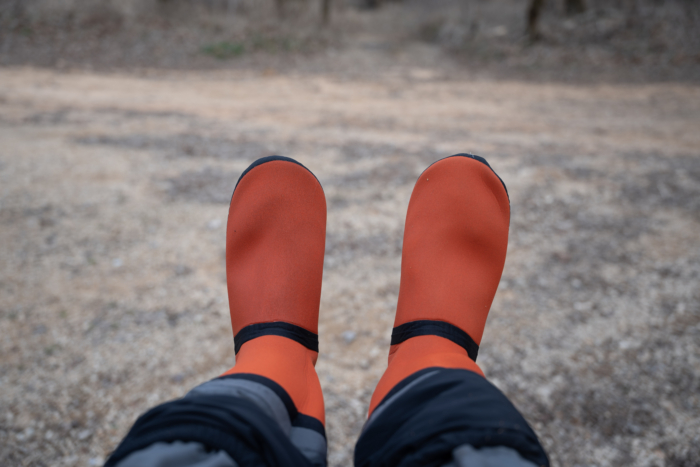
Fit in the wader itself is excellent. The cut is athletic while still allowing a full range of motion for hopping in and out of boats or scrambling over streamside boulders and logs. There is no excess baggage throughout the body of the wader. The only reason they get knocked on fit is that the booties run a touch large; this can be solved by pulling them tight before putting on your wading boot. You won’t notice the odd bootie fit after that.
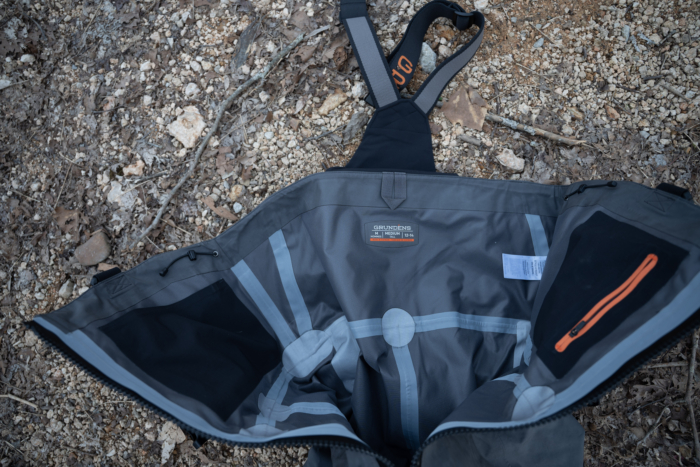
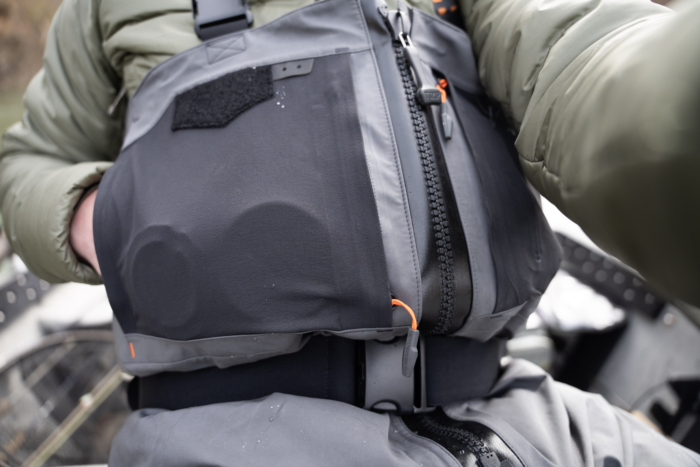
There are two zippered hand pockets (though they aren’t lined with fleece) on the front, and three additional pockets on the chest of the wader. Internally, there are two pockets, one zippered and one wide open, allowing for easy reach-in access. An additional kangaroo-style pocket on the back of the wader is perfect for storing a water bottle or fly boxes while wading. These waders, hands down, have the most storage of any option in this guide.
The only reason they’re cheaper than the Boundary Zip wader, also by Grundéns, is that they aren’t made from GORE-TEX. But heck, the other premium non-GORE options on the market are more expensive than these.
You can trust the material. While GORE-TEX is generally easier to repair, the four-layer laminate used in these burly waders seems to breathe just as well and is just as watertight. They’re a homerun.
Simms Flyweight Wader
-
-
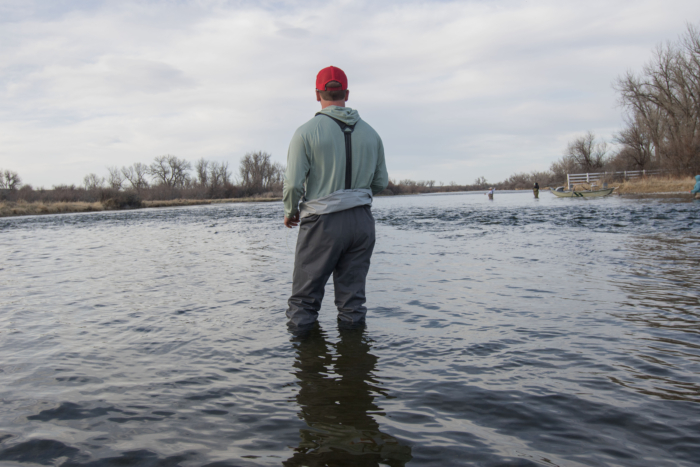
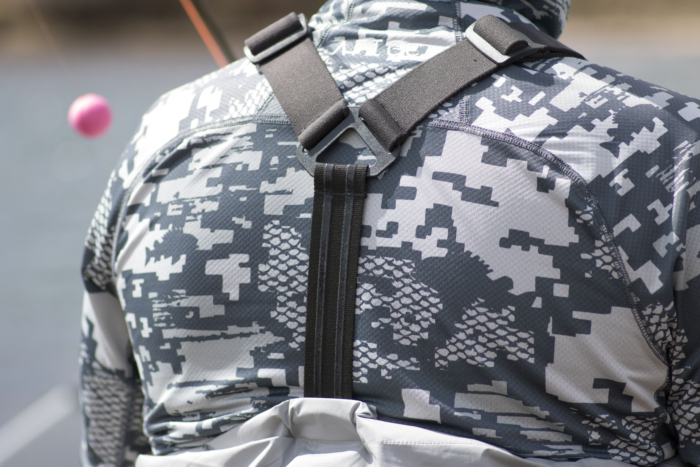
The strap system on the Simms Flyweights allow the waders to quickly convert to waist highs. (Photo/Rob Nowels)
-
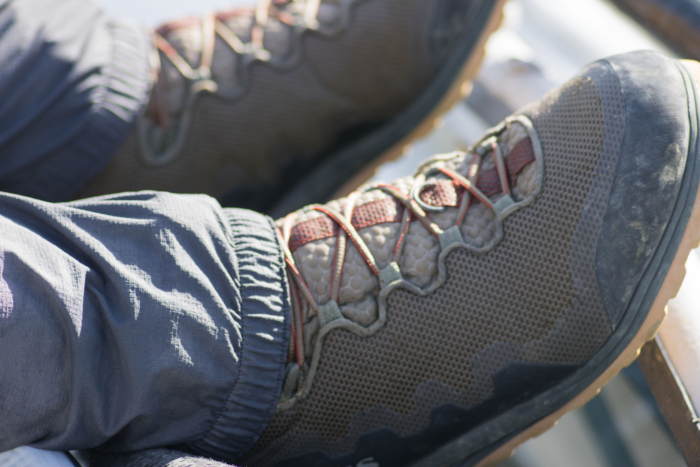
The thin gravel guards on the Flyweights do not feature a hook, but stay put during testing. (Photo/Morgan Nowels)
-
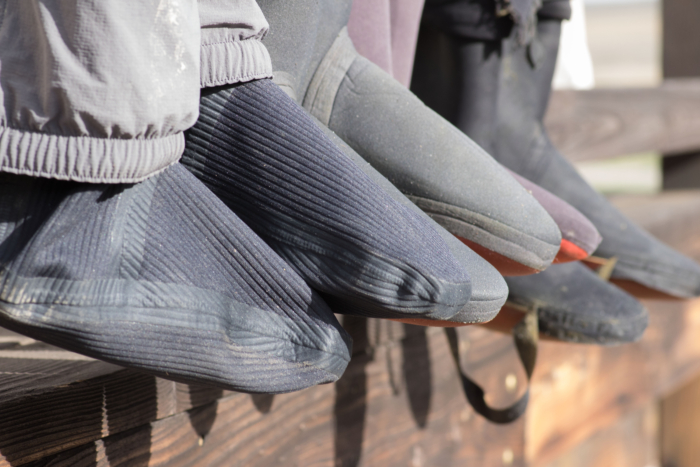
The ultra-thin neoprene booty on the Flyweight is waterproof, and comfortable (Photo/Morgan Nowels)
-
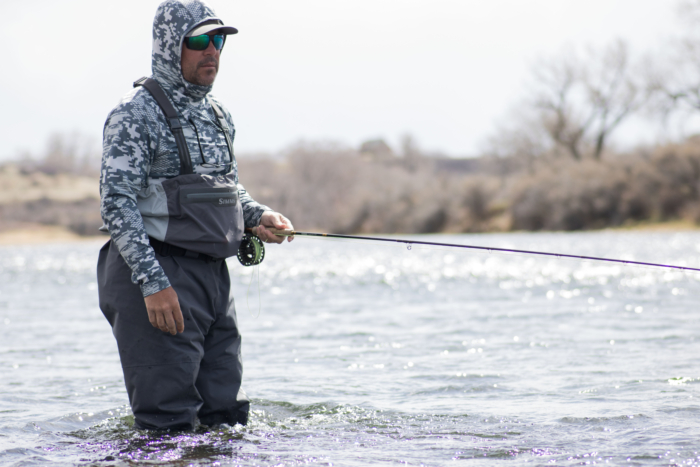
(Photo/Morgan Nowels)
-
(Photo/Morgan Nowels)
Specifications
Pros & Cons
Pros
- Packs down into a tiny size
- Dry bag included for storage
- Thin neoprene booties are comfortable and lightweight
- Durable four-layer lower
- Easily converts to waist height
Cons
- Strap system can slip down when using the front pocket
- Doesn't fit as perfectly as other waders
- No handwarming pocket
The Quick and Dirty: Thanks to the Simms Flyweight, you don’t have to give up durability for packability. With the ability to fold into their own pocket, the four-layer Flyweights can be stuffed into any nook or cranny on a boat, bush plane, or luggage.
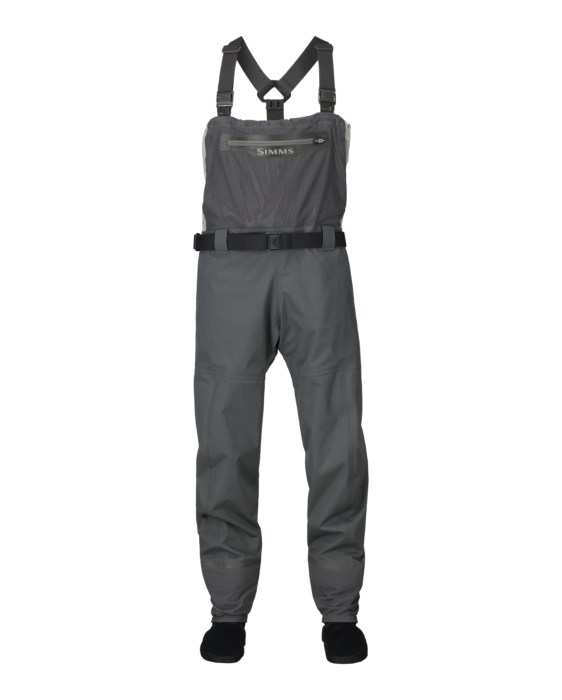
Simms has changed the game for those looking for a packable wader with the Simms Flyweight Wader ($400). Most “ultralight” waders leave a lot to be desired, sacrificing durability for light weight and packability. That’s not the case with these waders.
The most striking thing about the Flyweights is their ability to roll up into their own pocket, packing down to the same size as a large streamer fly box. Once rolled into the pocket, they can be placed in an included dry bag to keep them dry while in a raft, backpack, or boat storage box. These waders will save space and weight if you’re hiking or flying into a remote place.
Another standout is its durability. Rather than break from the tried-and-true in pursuit of minimalism, Simms constructed these waders with a four-layer lower, as found on some of its standard waders. That means anglers can still rely on the Flyweights in harsh conditions while breaking brush to get to the next spot.
These waders are made from a lightweight material. It’s located in the upper portion. It’s very thin and feels like a summer rain jacket, but the placement was well thought out. The upper portion starts on your sternum, an area you’ll rarely wade deep enough to submerge.
You’ll also find 1mm neoprene booties, a huge upgrade from the plastic booties we’ve found on other packable waders. They’re warmer than the plastic booties, and among the most comfortable we tested. Our tester said wearing them made him feel like he was wearing tennis shoes.
The Flyweights also have a strap system that allows quick conversion to waist-highs. The strap system isn’t perfect, and our tester found that placing too much weight in the front pocket can cause the waders to slip down. Speaking of pockets, you won’t find a handwarming pocket on these waders, which is common in waders that pack down to a tiny size.
From being easy to take off and store through midday heat to packing for a backcountry trip or just having a backup wader in the boat, the Simms Flyweight wader is a great option. You may find you like their packability and ease of use so much that you use them more than your standard wader.
Patagonia Swiftcurrent Traverse Waders
-
-
(Photo/Alex Joseph Hansen)
-
(Photo/Alex Joseph Hansen)
-
(Photo/Alex Joseph Hansen)
-
(Photo/Alex Joseph Hansen)
Specifications
Pros & Cons
Pros
- Comfortable and flexible for long, demanding approaches
- Simple conversion from chest to waist height
- Lighweight and relatively packable
- Environmentally friendly
- Tons of sizing options
- Covered with Ironclad Guarantee
Cons
- Lack of exterior hand pockets
- Singular color option
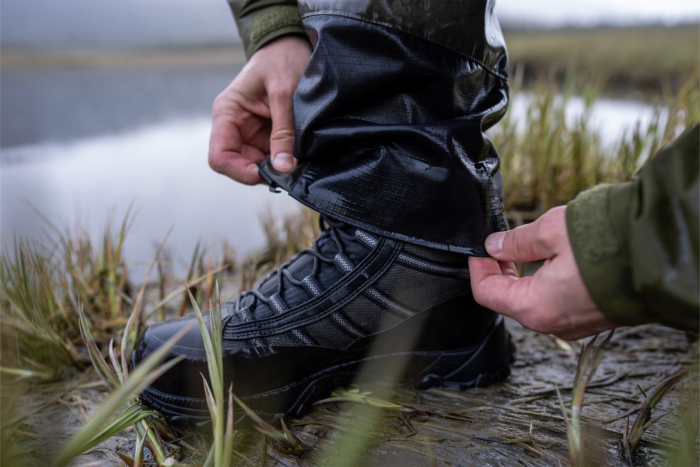
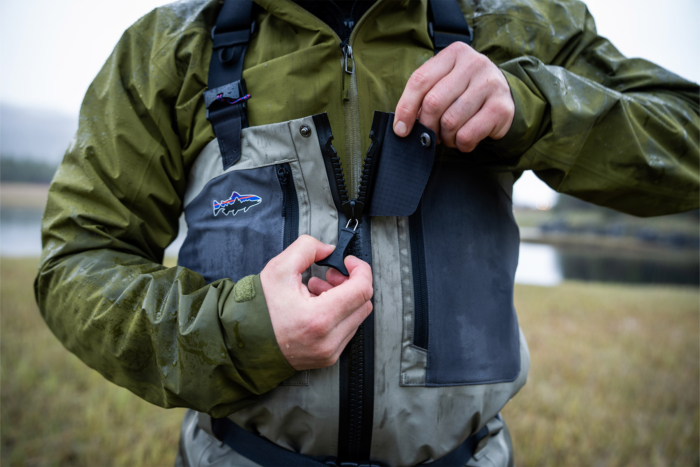
The Quick and Dirty: Despite the middle-of-the-road price, the Patagonia Swiftcurrent Traverse waders deliver just about everything an angler could ask for. They breathe well, can be easily converted to waist highs, and have a front zip. They’re the perfect option for dedicated anglers who don’t need something to stand up to guide-level abuse.
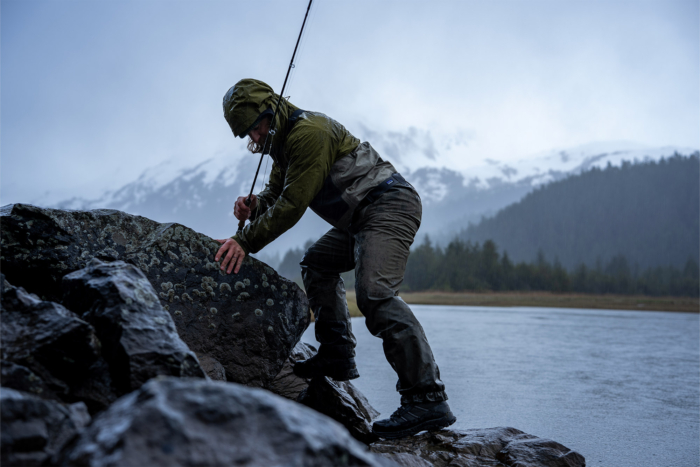
Serious anglers will be hard-pressed to justify spending more than they will on the Patagonia Swiftcurrent Traverse Waders ($549). Our tester used them through chilly rains in Alaska to warm spring days in the Midwest and found little to complain about.
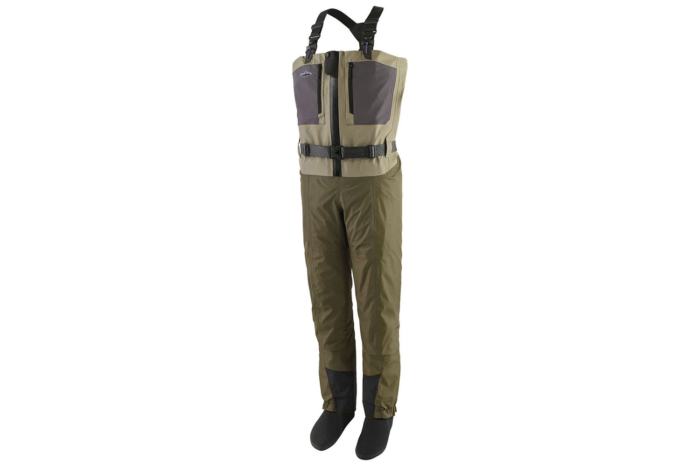
The name of the game with these waders is maneuverability. Oftentimes, ultra-durable, high-end waders are so thick that they become cumbersome. They feel more like you’re wearing a HAZMAT suit than fishing apparel. Fortunately, these waders feature articulation throughout the legs and a gusseted crotch. Those features allowed our tester to feel unrestricted while climbing up and down steep rock banks.
For longer hikes, these waders breathe noticeably better than other waders in our test. Obviously, they can still get toasty, but our tester said they were considerably cooler than other waders he has used.
Patagonia also packed in features usually found on waders that cost significantly more. Most notably, they have a fully sealed, waterproof zipper. On top of the zipper, the Traverse also features a quick conversion strap system, allowing you to turn the waders into waist-highs while still having suspender straps to hold the lower up. We’ve seen these features individually on waders, but it’s rare to find both on a wader. That gets major props from us, especially considering the price.
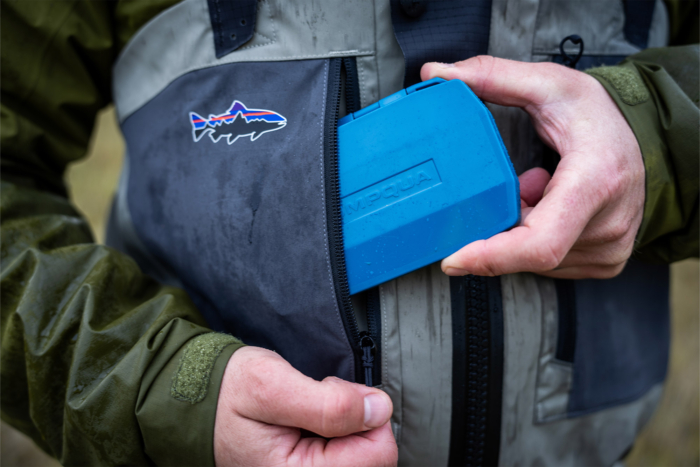
There is one major downside to these waders: there is no exterior hand-warming pocket. That isn’t uncommon to find on budget waders or ultralight waders, but on a mid-priced set of waders? That’s a little ridiculous in our opinion. They also aren’t as suited for serious bushwacking as the more premium options out there.
Aside from that, the Patagonia Swiftcurrent Traverse Waders are perfect for long approaches or those who find themselves covering a lot of ground in a day of fishing.
SITKA Delta VentLite GTX Zip Wader
-
-
The boots on the waders are very similar, although not an exact replica of the standalone VentLite boots; (Photo/Alexis Totin)
-
Of course I had to test the waders in the field as well;(Photo/Alexis Totin)
-
The internal pocket is massive and includes an internal key ring;(Photo/Alexis Totin)
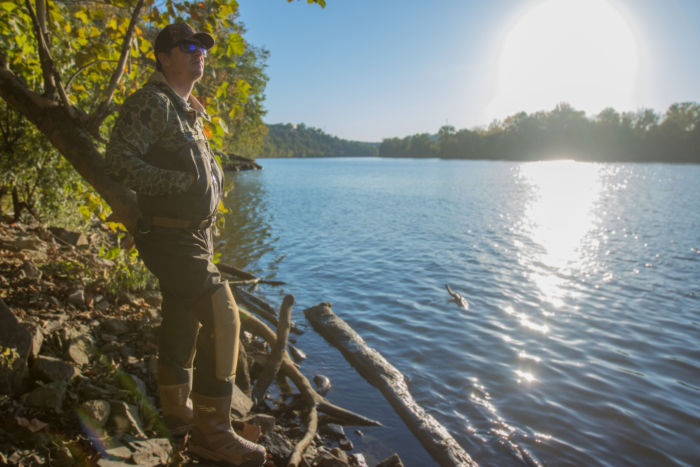
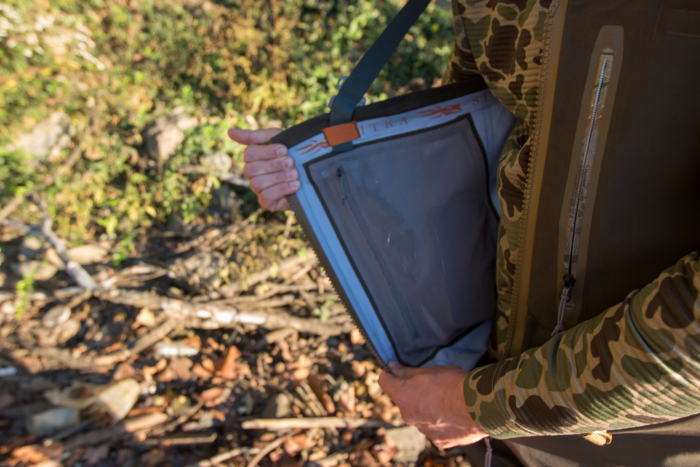
Specifications
Pros & Cons
Pros
- Very lightweight boots
- Comfortable boots
- Easy to put on and remove
- Solid pockets
- Durable build
- Knee pads
- Easy-to-adjust shoulder straps
Cons
- Price
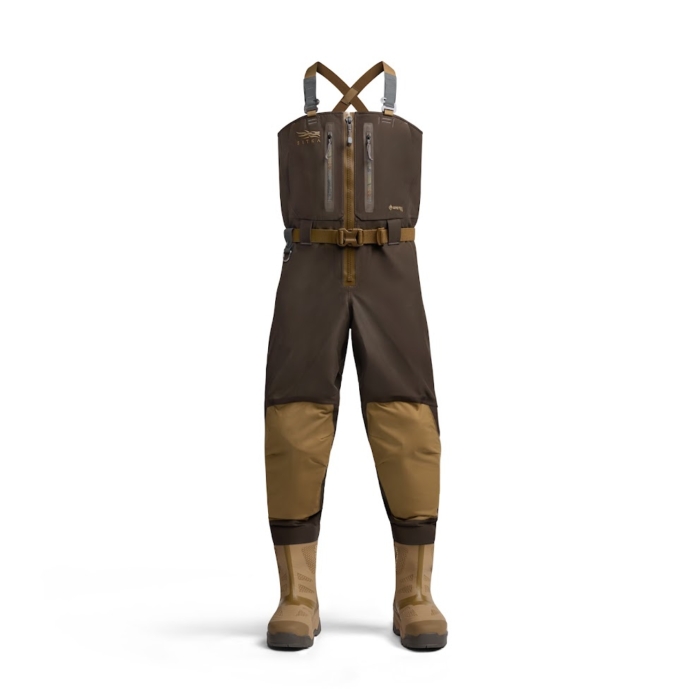
The Quick and Dirty: These are the first waders ever to let your feet breathe. SITKA ditched rubber and neoprene and made the boots on these waders out of GORE-TEX laminates that breathe well and are lightweight. And the wader upper? It lives up to the price.
Yes, technically, the SITKA Delta VentLite GTX Zip wader ($1,500) is a “hunting wader,” but the line between “fishing” and “hunting” waders is a bit blurred anyway. Hunting wader manufacturers have moved on from the ol’ neoprene and shifted to breathable materials, and many fishing wader manufacturers have started putting more emphasis on producing solid bootfoot waders. That’s right, bootfoot waders have been making a comeback in fishing circles over the last five years or so.
Steelheaders, winter-time tailwater trout guys, and driftboat anglers are seeing the light in having warm, comfy, insulated boots. It really is a godsend in cold weather, and bootfoot waders will allow you to kiss freezing, aching feet goodbye.
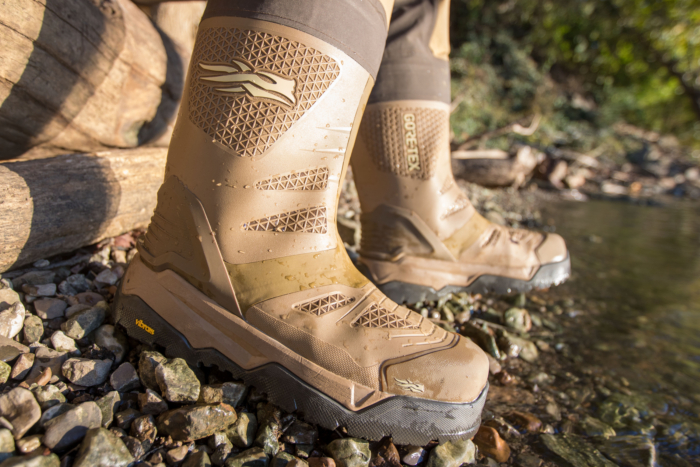
The VentLites are unequivocally the best option out there. The magic is in the VentLite boots, which are truly groundbreaking. Instead of following the industry standard, SITKA ditched the rubber and neoprene used to make boots and instead utilized time-tested GORE-TEX laminates and Primaloft Gold insulation to make the boots on these waders. The result is some of the best-performing, most advanced “rubber boots” out there.
Tester Morgan Nowels said the boots were incredibly lightweight. Most bootfoot waders feel heavy, but these are extremely similar to wearing a pair of wading boots. They’re comfortable to walk in, and can easily perform on longer jaunts. While hiking around a tailwater in Tennessee, he found himself forgetting he was even in bootfoots.
The synthetic insulation is warm when needed, and even in cold water temps, Nowels’ feet didn’t start to get unbearably cold. In the heat, that insulation and GORE-TEX provided decent breathability, and the boots didn’t get as hot and sweaty as others. He even tested them by running on a treadmill, and found his feet stayed pretty cool and dry. You get warmth and breathability in a lightweight package. What’s not to love?
It doesn’t stop at the boots, though. The rest of the wader is killer, and can hold its own against anything on the market. The zipper, in conjunction with kick tabs on the boots, makes for easy removal. The shoulder straps are among the easiest to adjust, thanks to a unique hook-and-loop system that runs along each strap. And durability is top-notch with four layers of GORE-TEX throughout. If you’re a hunter as well, you can get them in camo, or go with a solid color if you don’t want to make a statement on the water.
So again, what’s not to love? The price. $1,500 is obviously pretty darn steep, but in our opinion, it’s justified. These are some of the coolest waders we tested. If you want warmth without feeling like you’re wearing clunky rubber boots, these are the deal.
Other Excellent Waders, Field-Tested
Specifications
Pros & Cons
Pros
- Easily converted to waist highs
- Durable GORE-TEX build
- Strap system
- Quick access pocket on front
- Light and breathable, despite tough build
Cons
- "Handwarmer" pocket doesn't have fleece
- Setting up the strap is an absolute pain
- Fit isn't as good as others
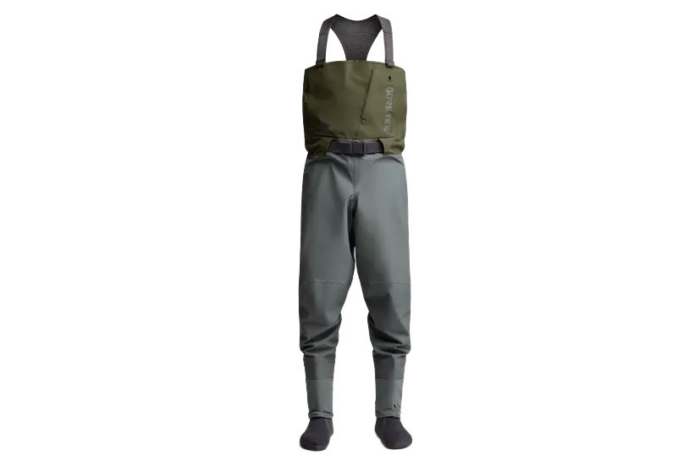
The Quick and Dirty: The CrossCurrent is SITKA’s first stab at a true fishing wader. While solid, it could use a little refinement. They’re excellent in terms of durability and breathability, and the strap system is great. But a poor fit and odd pocket layout keep it from the awards list.
With such a storied history of being one of the best brands in the hunting world, it’s great to see SITKA entering the fishing space with its CrossCurrent GTX Wader ($800). These are convertible, non-zip waders, designed to withstand abuse from hard-charging anglers and live up to the SITKA name.
After testing a set for roughly eight months, Gear Junkie tester Morgan Nowels says they do live up to the brand name in terms of durability and breathability. It’s very difficult to create a four-layer lower that breathes well, but the difference in breathability between these waders and others on hot days was immediately noticeable. The three-layer upper also helps bolster the impressive breathability by adding layers only where absolutely necessary.
In terms of durability, Nowels has sprung zero leaks in the Crosscurrent, despite frequenting riverside briar patches in TN and boulder scrambling on rivers in British Columbia.
However, some quirks and imperfections detract from the waders’ performance. Most notable is the fit. Despite trying numerous sizes, Nowels said he couldn’t ever quite get it nailed. These waders feel tight from the knee down and have more baggage around the thigh than other waders. Going up in size helped with the lower fit, but resulted in even more excess material in the middle portion. Additionally, the seam where the three and four layers meet is a bit tight, despite a loose fit around the thighs.
None of the fit problems is so bad that the waders don’t work. They do and aren’t as bad as the waders of old. But given the price, we’d expect these to fit perfectly, and they simply don’t. Additionally, there are few pockets for storage, and the quick conversion system makes them a bit of a chore to get in and out of.
Overall, the CrossCurrent is a durable, breathable wader you can rely on, but some annoyances may leave you a little peeved about the price you paid.
Specifications
Pros & Cons
Pros
- Durable
- Multiple waterproof pockets
- Made in Bozeman, Mont.
Cons
- Expensive
- Stocking might be too narrow for some
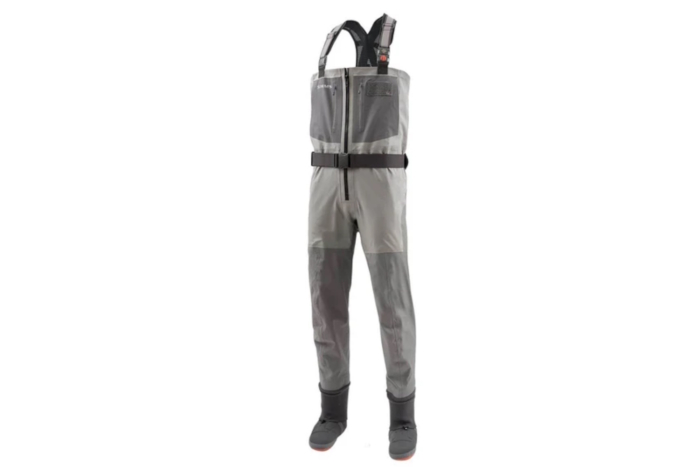
The Quick and Dirty: Many, many years ago, Simms set the standard for premium waders with the G4Z. In 2026, it’s still a bomber wader that lives up to the hype. The higher price is the only thing keeping it from sitting atop this list.
Simms G4Z ($1,100) is a powerhouse — and with a price tag like that, it had better be. We particularly loved the upper features of these waders. With multiple pockets, including handwarmer pockets, a fly patch, comfortable shoulder straps, and the best wading belt we’ve seen come with a wader, the upper design caught our attention.
The G4Z is also highly durable. Made with a 3-layer GORE-TEX PRO upper and 4-layer GORE-TEX PRO lower, these are the definition of durable.
The fully waterproof center zipper is stitched for maximum flexibility. Our tester didn’t feel any restriction from the zipper when bending down to release fish or tighten laces. The center zip makes putting on/off waders so much easier. However, it would be nice if the zipper had a house or guard to ensure it doesn’t snag on anything.
The G4Z has plenty of pockets. The exterior has a zippered lined handwarmer pocket and two large stretch woven chest pockets. The stretch-woven pocket is a nice touch if you need to pack extra supplies. The hand warmer zippers are smaller and lay flat to help prevent the outside of the hand from being scratched when going in and out of the pocket. They do still rub a little, but not as much as some. The two interior pockets are fully waterproof and large enough to hold a phone and other valuables.
Simms stepped up its wading belt game. This belt is not one you will want to replace. It’s wide, thick, and neoprene. As a bonus, it can also provide lumbar support. The GZ4 utilizes snag-free 2mm neoprene gravel guards. Our tester was concerned with how well the guards would stay in place, but they didn’t budge while post-holing through two feet of snow. Just tuck your laces under so they don’t snag on anything underwater or on the trail.
Make sure to store the neoprene guard straight. One tester unknowingly kept one guard folded, and when he went to fish again, he noticed a crease that would not come out. Over time, creases will create weak spots, and the neoprene could fail. Also, there is a seam that runs across the top of the foot near the ankle; one tester felt that it was too tight on his feet and uncomfortable, and another tester didn’t even notice. This might be a wader you want to try on before buying to ensure the neoprene boot isn’t too tight on your ankle.
Outside of that, the only reason the overall score of this wader suffers is pricing. With new players in the wader market, you can get something similar for a considerably lower price. But since 1980, Simms has set the standard in the wader game. The Simms G4Z is no different. These waders are innovative and built to endure whatever weather comes your way.
Specifications
Pros & Cons
Pros
- Durable
- Warm
- Customizable shoulder straps
Cons
- Loose-fitting neoprene gravel guard
- No zipper house
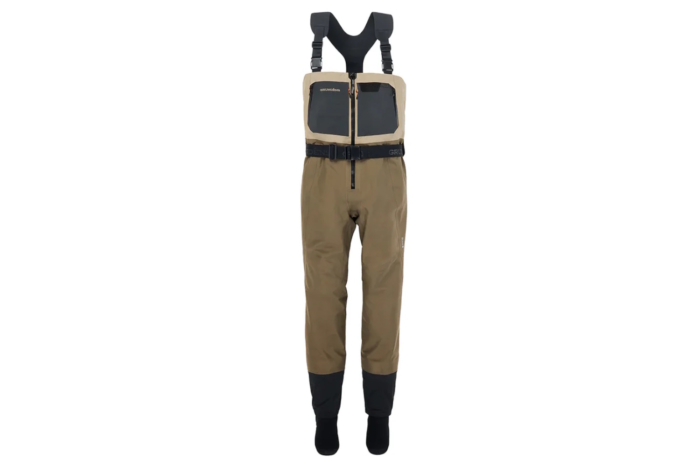
The Quick and Dirty: These are bomber waders, and one of the least expensive GORE-TEX Zippered waders on the market. You won’t be disappointed with them, and the only reason they didn’t rank higher is the lower price and almost identical performance to the Grundéns Vector Zip front waders.
Grundéns took a giant competitive leap into the fly-fishing wader world with its Boundary Zip Stockingfoot Wader ($999). For a brand traditionally known for making the best and most durable commercial marine clothing, it was only a matter of time before they broke into the fly-fishing wader world.
Grundéns already has the base knowledge of waterproof gear. It uses GORE-TEX laminate to create a breathable and flexible wader. For an easy on/off experience, the brand employs a YKK Aquaseal waterproof and submersible center zipper. Our tester noted it was like putting on a large pair of jeans.
These waders proved sufficiently durable. With an “aggressive” fishing style, our tester often bushwhacks his way to the river along the banks or climbs rocks and then slides off them in the middle of the river to get to the best fishing hole. The Boundary Zip Stockingfoot waders never once got snagged or sprung a leak.
They are equally comfortable as well. While kneepads would have been a comfy addition, there is no restriction while bending or climbing up banks. The shoulder straps are highly customizable, broad, and slightly cushioned, ensuring your shoulders won’t fatigue after hours on the river. On the back of the straps, there is a D-ring hook for your net.
The stockings are comfortable and made with titanium coating layers that reflect body heat back to your feet. They were tested during Montana’s spring runoff, and our tester’s feet never got cold. He noted they felt slightly narrow, so if you have extra-wide feet, these may feel snug.
The double-weave stretch-woven gravel guard negates the need for a metal hook. However, our tester thought it was a little too loose, as his laces would wiggle out of the guard, raising concern about snagging on unseen dangers under the water. If using a lace system, be sure to double-knot them and tuck them high up under the guard. Boa systems will not have this same problem.
The Boundary Zip Stockingfoot Wader is an impressive wader, right up there with other high-end waders. It is durable and has a submersible zipper, handwarmer pockets, and a fly patch. It is also comfortable and warm, making it ideal for cold-water fishing.
Specifications
Pros & Cons
Pros
- Affordable
- Double reinforced knees
- Ample size options
Cons
- Runs large
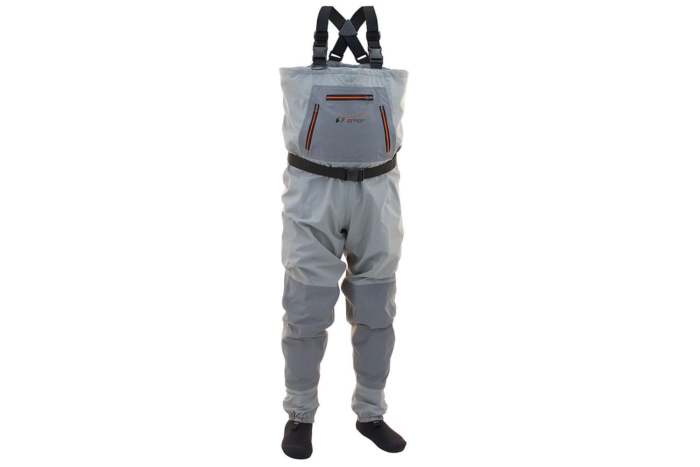
The Quick and Dirty: If you’re on an extreme budget and just need a set of waders to get you through a season, these are your best bet. They are far from perfect and can’t hold a torch to others on this list, but they’ll get the job done at a really great price.
Are you new to fishing or simply looking for a budget-friendly option for waders? The Frogg Toggs Hellbender Waders are a steal at just $120. This leaves you with more cash to splurge on other fishing gear, making it a smart choice for those who are still testing the waters of fly fishing (spoiler alert: it’s going to be your new favorite hobby!).
Frogg Toggs has been around since 1996 and has consistently made affordable waders and rain gear. Affordable is not to be confused with cheap — these wouldn’t be around if the products didn’t hold up.
The Hellbender Waders check the list of what waders need and then some! They have a zippered fleece-lined kangaroo pocket with enough fleece to actually warm up your hands. It might seem silly to get so excited over fleece-lined pockets, but once you have experienced absolutely freezing-cold hands, it is nice to have waders that can warm them up.
Some higher-priced waders claim to have fleece-lined pockets, but the fleece is so thin that it doesn’t actually do anything helpful. They should take a page from Frogg Togg’s book on this aspect.
The top horizontal pocket is large enough to stash plenty of tippets, fly boxes, a phone, and snacks — that is a lot of storage! They also have a clear flip pocket that fits a phone and is a convenient place to store your fishing license for quick access.
The four-ply material with double-reinforced knees helps keep these waders durable. While they may not have been our top pick for a several-week backcountry fishing excursion, they held their own hiking up and down banks with thorny bushes. We never felt restricted while releasing fish or hiking to the river.
The Frogg Toggs Hellbenders are a budget-friendly choice that easily ticks off the list of things we want in our waders. While they may not be a long-term investment, they are an excellent option for those not looking to break the bank on their fishing gear. With these waders, you can enjoy your fishing adventures without worrying about the cost.
Best Fishing Waders Comparison Chart
| Fishing Waders | Price | Front Zipper | Knee Pads | Gravel Guard Style | Handwarmer Pocket |
|---|---|---|---|---|---|
| Skwala RS Waders | $899 | Yes | No | Metal hook | Yes |
| Orvis Clearwater Waders | $298 | No | No | Metal Hook | Yes |
| Grundéns Vector Zip Waders | $750 | Yes | Yes | Elastic Cuff | Yes |
| Simms Flyweight Waders | $400 | No | No | Lightweight, Synthetic | No |
| Patagonia Swiftcurrent Traverse Waders | $549 | Yes | No | Metal Hook | No |
| SITKA Delta VentLite GTX Zip Wader | $1,500 | Yes | Yes | N/A (Bootfoot) | Yes |
| SITKA CrossCurrent GTX Wader | $800 | No | No | Metal Hook | Yes |
| Simms G4Z | $1,100 | Yes | No | Neoprene | Yes |
| Grundéns Boundary Zip Stockingfoot Wader | $999 | Yes | No | Neoprene | Yes |
| Frogg Toggs Hellbender Waders | $120 | No | No | Metal clip | Yes |
Our Scoring System, Explained

Scoring systems aren’t perfect, but we try our best to make it as fair as possible. For waders, we focused on four attributes outside of price that we think are the most important aspects of a wader. Those are durability, fit, pockets, and straps/extra features.
It should also be noted that our overall scores are not an average of the four individual feature scores. That’s because, for one, those feature scores don’t consider price, and it’s unfair to compare a $250 wader to a $1,500 wader. Some budget waders should still score well based on the value, and the overall score allows us to show where that value is offered.
Also, some waders are very specialized, like the Simms Flyweight. While it scores low on some of the features, it’s a great wader for its intended purpose, and thus receives a higher overall score to reflect that.
Durability

All waders will leak. But how long it takes for them to leak, or how badly you can abuse them before they leak, will vary. Waders with multiple layers in high-wear areas and a sturdy construction score well. Waders with thin layers that are more easily penetrated score low.
Don’t get us wrong, you can make even the most bombproof waders leak on day one if you’re rough enough. But this will give you a general idea of what to expect.
Fit
In the past, all waders fit terribly. Some still do. However, many modern versions have articulated legs and have eliminated unnecessary material. Baggy waders, or those with ill-fitting booties don’t fare well in this score. Articulated, athletic designs score well. Bonus points go to those with a women’s option.
Pockets

Anglers carry all sorts of tools and trinkets with them on the water. Pockets are important. Waders with multiple, organized exterior pockets, interior pockets, and fleece-lined hand-warming pockets scored the best. Others only have one pocket, or omit hand-warming pockets, which reduces the score.
Straps and Extra Features

Straps are pretty self-explanatory. Is it a basic system? Are they padded? Can they easily convert your waders into waist-highs? A basic strap system gets a four. If a wader has an excellent strap system and nothing else, it will receive a seven.
Extra features will give additional points in this category, but they could include various elements. A zip front is an obvious bonus. The Simms Flyweights also come with a dry bag, and pack down into a ridiculous package. The SITKA VentLite waders provide a breathable boot, which is the only wader in existence with that feature. The most feature-rich waders will end up with a 10 in this category.
Our Expert Testers

Morgan Nowels, our tester based out of Nashville, Tenn., spends more days in waders than not in waders. He’s been eaten up with fly fishing for the last 19 years and has spent 13 years working professionally in the industry as a guide, writer, and sales rep. Over his career, he’s worn waders from virtually every manufacturer and has seen the progression in wader technology.
Known for being hard on equipment, Morgan has extensive experience pushing waders to the limit in Utah, Wyoming, Tennessee, Arkansas, Montana, Colorado, Idaho, and Washington. This year, he tested waders in the late winter and early spring on bass rivers and tailwater trout streams in the southern U.S.. Hopping in and out of boats, trudging through thick, vine-infested forests of the south, and slipping down mud banks on post-run-off rivers gave Morgan excellent proving grounds for waders.
John Mahoney has worked in and guided through fly-fishing shops in Bozeman, Mont., and Crested Butte, Colo. Across the board, John knows fishing and the gear. He is a backcountry fisherman, always hiking, climbing up and down banks, and in all the weather. This means he understands the value of quality waders. He needs something that can keep up. He can quickly spot design flaws and useless details that look good but add no value.
John and his wife, Constance, brought the waders across state lines to the Gunnison and Gallatin Valleys for some solid spring Fishing. The weather constantly shifts from sunny blue skies to random heavy snowstorms. They tested the durability through snowbanks, mud, and leaf-barren trails. From multi-day fishing adventures to quick after-work sessions, they put these waders to the test. If you’re looking for women’s-specific waders, check out our guide to Best Fishing Waders for Women.
Buyer’s Guide: How to Choose the Best Fishing Waders
Fishing waders are an essential piece of equipment for anglers who want to enjoy their favorite pastime in comfort and safety. Whether fishing in cold mountain streams or warm coastal flats, choosing the right pair of waders can make all the difference. Here’s a comprehensive guide to help you make an informed decision

Bootfoot or Stockingfoot Waders
Bootfoot waders have the boots attached, offering convenience and eliminating the need for separate wading boots. As many of the attached boots are insulated, bootfoot waders also tend to be warmer.
Stockingfoot waders have a sock-like bootie attached to the feet. They require separate wading boots, providing more versatility in terms of fit and performance.
Who Should Opt for Stockingfoot Waders
Stockingfoot waders are the most popular fishing waders; they are more adaptable, versatile, and considerably more comfortable to walk in. They come with a neoprene or plastic bootie that fits into a separate boot. You can match your wader to whatever wading boot fits you the best. Because the boot is individual, it makes for a more customizable fishing kit. You can have boots with felt bottoms that grip slime-covered rocks on trout streams and rubber-soled boots for muddy conditions and backcountry hikes.
Some brands have upped the ante on the standard neoprene bootie, like Simms G4Z waders, which use a patented compression-molded bootie for enhanced comfort and improved fit. Skwala RS Waders designed booties with an abrasion-resistant sole panel and infused them with an antimicrobial to help reduce bacteria and odor. You want to find something you feel most comfortable and confident in while hiking and wading through different water and terrain.
Who Should Opt for Bootfoot Waders

Bootfoot waders are best for anglers who find themselves in three scenarios: cold-weather fishing, fishing out of boats, and fishing in areas with soft substrate.
Bootfoot waders tend to run warmer as they are made of rubber and feature insulation, making them an excellent choice for cold winter fishing days. Having insulated boots will keep you in the water longer, rather than crawling up the bank to thaw your feet. The SITKA Ventlite GTZ Zip waders, for example, keep your feet very warm with Primaloft Gold insulation.
If you find yourself fishing out of a watercraft and wear waders for the few occasions you get out to walk and wade, boot feet are a great option. Since you won’t be walking much, the negatives of boot feet are minimized, and you can save yourself some coin by not having to buy separate wading boots.
We tested waders in the South on warm-water rivers and lakes with mud bottoms. If you wear stockingfoot waders in extremely muddy areas, you can find yourself in a predicament where thick muck sucks the boot right off of your foot. Bootfoot waders solve this problem.
Materials and Durability

The materials and the amount of material used to create waders will have the most significant effect on a wader’s performance. Longevity, ease of repair, and breathability are all at stake.
Materials of the Best Fishing Waders
The materials used make a huge difference in the wader’s durability and longevity. Entry-level waders are often made from nylon or PVC. While these are more affordable, they lack the breathability and durability of higher-end options, and you will find yourself needing to replace them sooner. Higher-quality waders will be made of GORE-TEX material or something similar.
The type of material will affect how easily waders can be repaired. In GORE-TEX models, you can mix a 50/50 solution of water and alcohol in a spray bottle and spray the interior of the waders. Small pinhole leaks will appear as dark spots when the solution is applied, making it easy to identify and repair. That trick doesn’t always work with non-GORE competitors, and you’ll have to use other, more time-consuming methods to identify leaks.
Durability of the Best Fishing Waders
The construction of waders is usually divided into three sections: the upper (chest), lower (legs), and booties/stockingfoot (feet). The upper and lower are generally made of the same material but in different amounts. The upper commonly has two to three layers, while the lower often has three or more. Typically, extra layers are added to the lower section to enhance durability, especially since the legs often encounter abrasive surfaces.
Consider where the extra layers extend. On some models, it will just be in the lower leg, while on others, it extends to the seat. If you’re sitting on a boat often, that extra material in the seat could be a huge benefit.
The stocking feet conventionally utilize neoprene, which has a thickness ranging from 1mm to 5mm. Greater thickness ensures increased warmth for the feet. Waders like the Simms Flyweight feature thin 1mm booties to offer a wader that can pack down to a compact size.
As durable as waders are, they are not bulletproof. Be mindful of what you are walking through. Pinhole leaks will happen eventually; having a patch kit on hand is always a good idea.

Zipper or No Zipper
Zip front waders have been around for years and offer a plethora of benefits. In fact, they’re so great that many people who wear them swear they will never go back to standard waders.
First, they’re considerably easier to put on and take off than standard waders. Second, they make going to the bathroom much easier for men — unzip, and you’re good to go! Not only is it easier to go, but they also keep you drier while going in inclement weather because you don’t have to remove layers. You unzip your waterproof jacket, then unzip your waders. Your shoulders and insulating layers stay nice and dry.
Zippered waders also offer an easy way to cool down in warm weather. They’re easy to unzip and let your core breathe while keeping the waders held up by the shoulder straps. You no longer have baggy waders bunched up around your midsection when you convert them to waist height.
Some people worry that having a zipper is another weak point that will fail and result in leaks. Our tester, Morgan, has been fishing in zippered waders for 7 years and claims that it is a baseless worry. He is hard on waders, burning through a pair a year, and has yet to have a zipper leak. His waders, like all waders, have sprung leaks, but in every location except the zipper.
If zippers are so great, why don’t all waders have them? It’s because of the prohibitive cost. If you want the most durable wader and want a zipper, you will be spending close to a grand. There are more budget-friendly zippered models on the market, but then you give up durability and storage features.
Sizing and Fit of the Best Fishing Waders

Ensure proper sizing by referring to the brand’s size chart. Ill-fitting waders can be uncomfortable, restrict movement, and be unsafe. Often, you will measure your circumference (the widest part of your body), your inseam, and your foot size.
Each brand has different charts; many now include a tall version for every size. Our 6’2″ tester could wear a medium-tall in almost all the brands he tested. Another tester standing at 5’4″ wore a medium in one brand and a small in another. You must check with each brand and with each model of waders, as each version can have a different chart.
Consider your layering system when determining size. You’ll want enough room to wear insulating layers underneath comfortably. If you are primarily fishing in warm places, you may get away with a slimmer fit. However, if you want a four-season wader, you may want one that is a little looser, allowing for additional layers.
Pay special attention to the inseam chart. One of the worst sizing mistakes is purchasing a wader that is too short for you. Waders that are too short restrict motion, and you might have a tough time climbing banks, bending down to release fish, and adding unnecessary stress to the crotch area, which could rip at the seams. When in doubt, call customer service.
Features to Consider on the Best Fishing Waders
Reinforced Knees and Seams

Waders with reinforced knees and seams offer increased durability, primarily if you frequently fish in rugged terrain. Some waders, like the Grundéns Vector Stockingfoot, have sleek knee pads sewn in, which keep you more comfortable if you often crawl or kneel to keep yourself hidden from spooky fish.
Gravel and Scuff Guards
Gravel guards prevent gravel and debris from entering your boots, keeping them comfortable and prolonging their lifespan. Often made out of the same material as the lower, they have elastic, Velcro, or a clip that holds them tight around your ankle. The Simms G4Z and Boundary Zip Stockingfoot Wader use a lower-profile neoprene gravel guard to minimize snagging and rubbing while walking.
A scuff guard shields the inner ankle area from abrasion during walking, preventing damage or punctures. The Skwala RS utilizes extra-resilient material to fortify this vulnerable area.
Pockets and Storage

Even if you fish with a vest or a pack, wader pockets come in handy for quick fishing missions or additional storage on longer days. Look for waders with convenient pockets for storing essentials like flies, leaders, and tools.
If you do fish with a vest or pack, keep in mind the pocket placement under your preferred fishing apparatus. Or if you like to fish only with a net and want your waders to store all your gear, make sure you have enough storage.
Many waders have designated hand warmer pockets. They can be lined or unlined, but having a spot to get your hands out of the wind for a quick thaw after releasing fish can be valuable and can extend your fishing hours when the weather or water is chilly. A few of our favorite waders with lined hand warmers are the Orvis Clearwater Wader, Frogg Toggs Hellbender Waders, and Skwala RS Waders.
Some waders also have submersible and water-resistant pockets. Submersible pockets are totally sealed. Water-resistant pockets have waterproof zippers, but the pocket will take on water if submerged, like the Orvis Clearwater Wader.
Cinches
A top-hem drawcord cinch system allows the user to tighten the top hem to help customize the fit and keep the elements out. It’s also used on drop-seat systems. If you want to keep the chest section down on hot days, you can cinch it tight to keep the upper from being too baggy.

Shoulder Straps on the Best Fishing Waders
One of the biggest things to consider when looking at shoulder straps is if you want a quick conversion system. Quick conversion shoulder straps allow you to drop the upper portion of your waders down to your waist, while still wearing the shoulder straps like a pair of suspenders.
Such systems are awesome on warm spring days, when you may start off bundled up in the morning but need to dump heat by midday as temperatures climb. Convertible straps allow for that versatility, without being as cost-prohibitive as a front zipper on the wader itself.
The only downside to conversion system shoulder straps is that they often don’t unbuckle from the wader body, making getting in and out of the waders a bit of a chore. Also, poorly designed systems may slide down accidentally.
Outside of whether you want a conversion strap or not, also consider padding. Padded, breathable straps are a plus and more comfortable over the course of 8 hours on the water. However, non-padded shoulder straps aren’t a dealbreaker. If there’s a set of waders that checks the boxes for you in durability, price, and other features, don’t let a basic strap system keep you from buying them.

Waist Belts
Waist belts are a must for waders. They help create a more custom fit and, more importantly, provide a crucial safety feature. If you fall into the river, a correctly worn waist belt will help stop water from filling the legs of the waders and allow the air trapped in your legs to act like balloons, which helps maintain buoyancy. It will also keep you dry(ish) in the event of a fall, hopefully preventing an early end to your outing.
To wear a waist belt correctly, you need to cinch it tight. Not too tight to where you can’t breathe, but you don’t want it hanging there, not doing anything. Belts are included with your waders, but can be easily lost in the hustle of pulling gear in and out of vehicles. Additional waist belts are inexpensive, and it is wise to have extra on hand for yourself or if you see someone fishing without one. They are not an accessory; they are a safety feature.
Care and Maintenance for the Best Fishing Waders

Taking care of your waders is crucial to their longevity, and they are pretty low-maintenance. Don’t keep them in your vehicle for days on end, as the heat and UV rays will damage them. When you are done fishing, make sure to dry the inside and outside. If you are saltwater fishing, be sure to rinse with fresh water after and let them dry.
Depending on use, you can wash the waders up to three times a year. Use a washing machine without an agitator or hand-wash. Use cold water and a detergent that does not contain bleach. Never put your waders in the dryer! Again, make sure you dry the inside and outside before you put them away in storage.
When storing the waders, you roll them up; don’t fold them! The creases will cause weak points.
Price and Value of the Best Fishing Waders

You can find dirt-cheap waders or buy some for more than your most recent car payment. Here’s a breakdown of what you get in different price points:
Budget
There is nothing worse than using your waders for the first time and feeling that cold, seeping, wet sensation. Unfortunately, that is where some people find themselves after buying their first set of waders. Your waders have one main job: keep you dry. That’s a lot harder than most people think.
Waders aren’t a rain jacket. They aren’t there to keep you dry in a cute little spring shower. You are going to completely submerge them in water and expect that not even a drop gets in. They are the ultimate test of waterproofness.
You can find sets of waders online or in stores for about 50 bucks. Do not ever buy those. You’ll spend the money and quickly realize it was a waste.
Finding a budget wader that you can expect to perform well over a full season will cost somewhere between $100 and $300. We love the Frog Toggs Hellbender ($119) and the Orvis Clearwater ($298) in the budget category. At those prices, you get a product that keeps you dry.
These waders won’t have fancy pockets or anything like that. Often, they have an odd fit and are not ergonomic. You’ll find a lot of excess material in the upper that make them fit like a parachute. That’s one of the reasons we love the Clearwater. It has an athletic, well-thought-out fit for both men and women, and will keep you on the water rather than going back to the truck to dry off.
Mid Tier

This is the price point most anglers will find themselves in. When you go to a mid-priced wader, you gain a few key benefits. First and foremost, you get durability. You can bushwack, climb in and out of boats, slide down hill sides, and not have to worry about puncturing the waders. Most budget options only have a few layers of material, making them susceptible to leaks. But mid-priced waders like the Grunden’s Vector Wader give you four layers, so you can get years of consistent use before springing a leak.
However, they won’t be as durable as the most expensive waders. They hit the sweet spot in price and durability for anglers who need performance but won’t ask their waders to take a beating daily over multiple seasons.
You’ll also find small, well-thought-out features such as knee pads and waterproof pockets. These waders won’t simply keep you dry- they’ll keep you organized and more comfortable. A prime example is the Patagonia Swiftcurrent Traverse. For under $600, they offer plenty of pockets, a convertible strap system, a zip front, and solid durability.
Waders in the $350-600 range are designed for avid anglers who don’t want to baby their waders and need something that will stand up to more use than just a few outings a year.
Premium Waders

If you want everything you could ever ask of a wader, you should plan on spending near a thousand bucks. That may seem like a lot to a new angler, but for those that spend multiple days a week in their waders, its well worth the cost.
Both the Simms G4Z and the Skwala RS waders feature a zippered front. These zippers make putting the waders on and off easier, make going to the bathroom easier, and are all around more convenient. The zippers are waterproof and fully submersible. Aside from cost, they offer zero downside compared to a traditional non-zip wader.
Waders in the $ 750 – $1,000 range are the most durable on the market. We tested the Grunden’s Boundary Zip Wader, which has a four-layer GORE-TEX through the entire lower portion of the wader. This ensures that branches, sticks, and anything else you stumble through won’t puncture the material.
You also get fantastic storage options with numerous pockets placed in well-thought-out places. You’ll be able to store multiple fly boxes, cellphones, car keys, and leader and tippet in separate pockets rather than one large pocket.
Best Fishing Waders Frequently Asked Questions
Fly-fishing waders are usually crafted from lightweight materials, enabling improved mobility and breathability. In contrast, hunting waders tend to feature thicker construction with non-breathable neoprene to provide warmth during prolonged periods of sitting or standing. Additionally, hunting waders often come with integrated boots. Thick neoprene waders end up being colder for active fishermen as they don’t breathe and users end up soaked in sweat.
There are two primary heights for waders: hip-high and chest-high. Hip-high waders extend only to the hips and consist of separate boots reaching up the leg with attachments to a belt or a pair of wading pants. On the other hand, chest-high waders come with suspenders that go over the shoulders. Certain chest-high waders offer the flexibility to drop down the chest section, allowing them to be worn more akin to wading pants. Hip high waders have fallen out of popularity as you almost always end up wading over the tops of them.
The choice may vary based on weather conditions. Still, as a general rule, wearing a base layer underneath (the thickness of which will vary depending on outdoor and river water temperatures) and a long-sleeve fishing shirt for sun protection is advisable.
In colder weather, opt for waders that allow enough room for additional layers, like a warmer jacket. Although not worn beneath waders, wearing a brimmed hat and polarized sunglasses is always recommended for sun and glare protection while on the water.
Do not wear waterproof jackets under your waders. Waterproof jackets will act as a rain gutter and filter water down into your warm layers in the wader. Put the waterproof jacket over the exterior of your waders.
Double-check your warranty, if you spring a leak in your waders. If they are still covered, repairs will be free. Outside of the warranty terms, all the brands we reviewed will repair waders for a fee and shipping costs. If it is not covered or you want to fix it on your own, grab a patch kit and get to work!
It depends on your fishing location and style. For something breathable and easier to move in GORE-TEX, waders are great! If warmth and a lower price range are your primary goals, then neoprene will do the trick.