Once mocked as a ’90s fashion faux pas, fanny packs are useful accessories.
Due to their renewed popularity, there are many fanny packs out there. To help you choose the best one for you, our team of experts has vetted more than 35 fanny packs, waist packs, and crossbody bags over the past five years.
Most recently, lead tester Chris Kassar and contributor Joybeth Sullivan put six new models through a 10-month testing cycle. From Colorado’s high-alpine trails to the Tetons’ glacially carved valleys to Washington’s windswept coast, they logged countless laps on foot, mountain bikes, and paddleboards to find the best fanny packs.
We crowned the Arc’teryx Mantis 1 Waist Pack as our best overall pick for its versatile size, comfortable carry, and ability to move easily between activities. The REI Co-op Trail 2 earned our best budget award for delivering simple, reliable storage at a price that frees up your budget for more snacks.
Editor’s Note: We updated this guide on October 31, 2026, with an all-new review format for every fanny pack, a new product comparison chart, and a closer look at how and where we conducted our thorough testing.
The Best Fanny Packs of 2026


Arc’teryx Mantis 1 Waist Pack
-

-
(Photo/Elk Raven Photography)
-
(Photo/Elk Raven Photography)
-
(Photo/Elk Raven Photography)
-
(Photo/Elk Raven Photography)

Specifications
Pros & Cons
Pros
- Smart internal organization for a micro fanny pack
- Discreet, scratch-free back phone pocket
- Comfortable, padded mesh back panel
- Sleek, low-profile styling
Cons
- 1.5L capacity fills up quickly
- Too small for water bottles or extra layers
- Narrow strap webbing can twist over long days
Bottom Line: Impressively thoughtful organization, a secure phone pocket, and easy waist-to-crossbody versatility make the Mantis 1 a can’t-miss fanny pack. It’s an adept companion for travel and everyday activities.
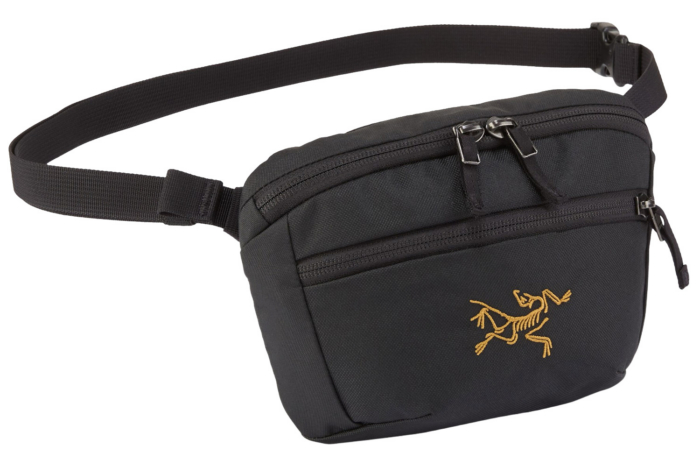
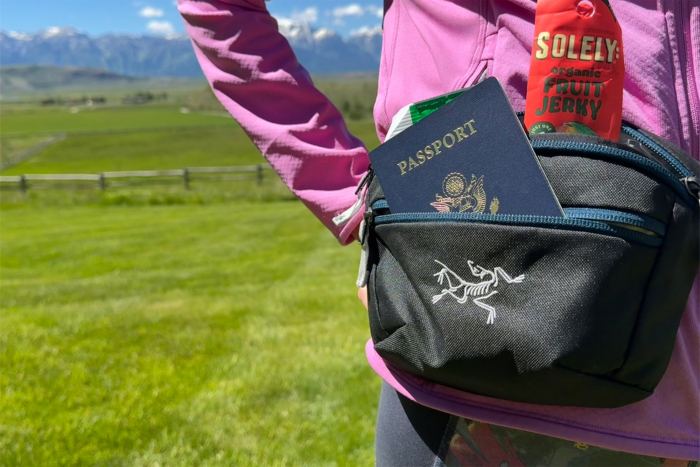
The Arc’teryx Mantis 1 Waist Pack ($40) brings unusually dialed organization to a tiny 1.5L package. Over six months and roughly 30 outings, we used it for airport travel, daily errands, short hikes, and quick photography sessions when we wanted essentials close without carrying a larger bag.
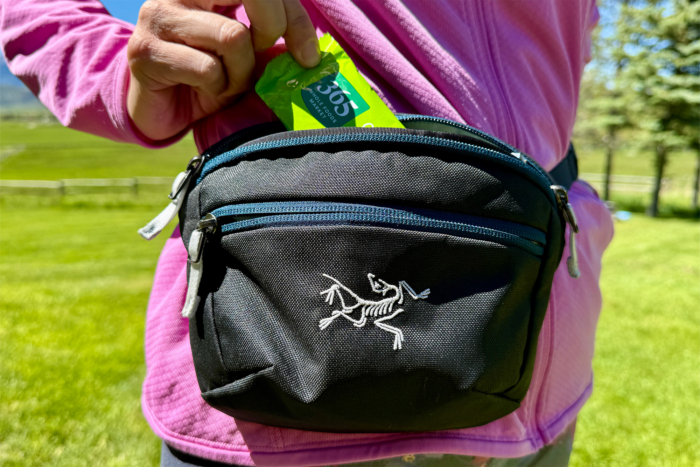
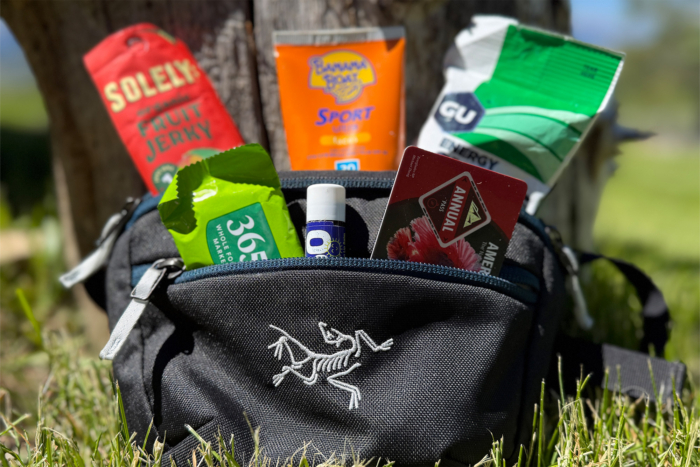
The Tech: The Mantis 1 can be worn around the waist or across the chest. The interior includes an open stash pocket, a zippered security pocket, and a key clip, while a separate front compartment adds quick-access storage. At the airport, it held lead tester Chris Kassar’s passport, phone, credit card, glasses, lip balm, earbuds, and a snack, eliminating the usual scramble through multiple pockets at security.
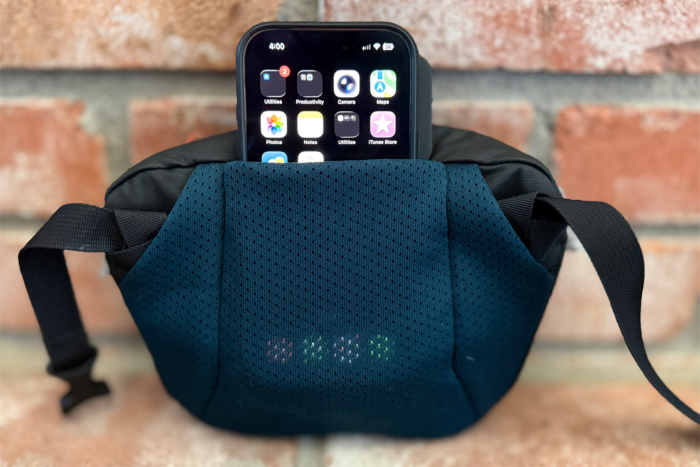
What We Like: Kassar’s favorite feature is the discreet back-panel phone sleeve, which keeps a smartphone against the body and away from keys and other scratch hazards. The bag’s slim, structured shape stays close to the body without sagging, and the lightly padded mesh back panel feels comfortable against a T-shirt. Kassar preferred wearing it crossbody around town because it kept the zippers easily accessible.
What We Don’t: Its 1.5L capacity is this bag’s clearest limitation. It won’t hold a water bottle, layer, or other bulky gear, so Kassar carried water separately on short hikes. The narrow strap can twist and may rub against the neck or delicate fabrics during extended crossbody wear. The Mantis also costs more than many similarly sized options. Compared with the REI Co-op Trail 2, it offers less space but a sleeker profile and more refined organization.
Should You Buy It? The Mantis 1’s smart storage, comfortable carry, and versatility make it a no-brainer for travelers and everyday minimalists who want small valuables secure, separated, and easy to access.
REI Co-op Trail 2 Waist Pack
-
-
(photo/Elk Raven Photography)
-
-
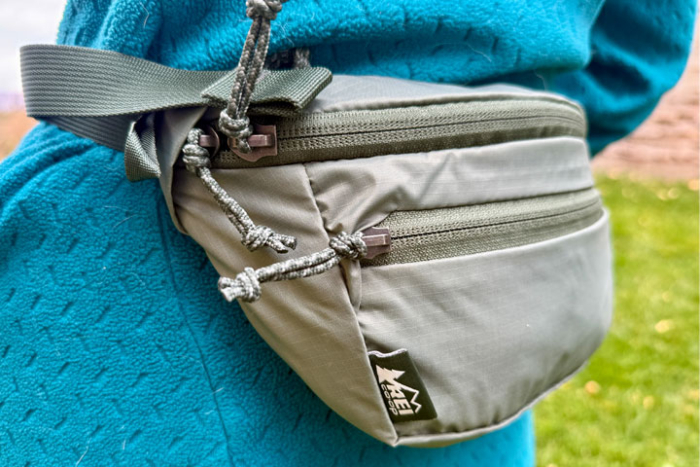
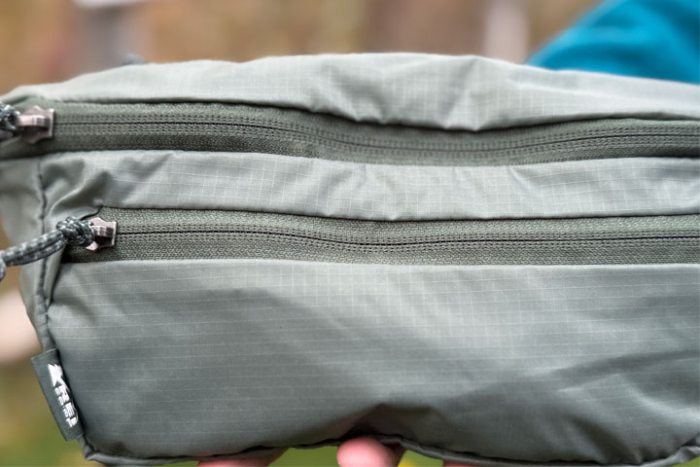
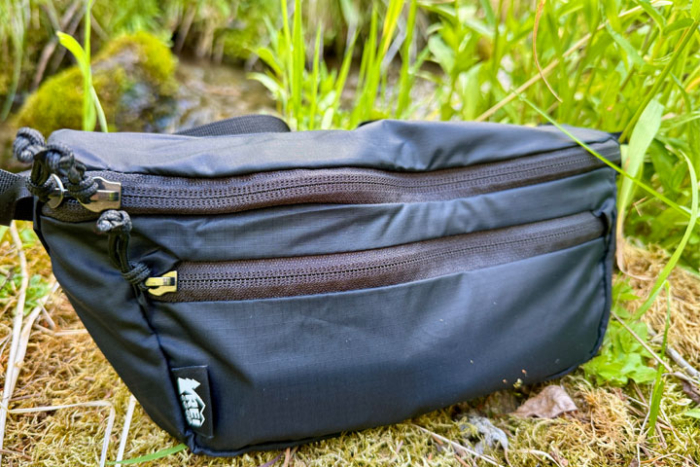
The ripstop fabric, simple zipper layout, and clean construction help the Trail 2 feel more refined than its $35 price suggests; (photo/Elk Raven Photography)
-


Specifications
Pros & Cons
Pros
- Made from recycled materials with a DWR finish
- Back stash pocket for valuables
- Simple and versatile for town-to-trail use
Cons
- No water-resistant zippers
- On the small side
Read Review: Small, Cheap, and Surprisingly Useful: REI Co-op Trail 2 Waist Pack Review
Bottom Line: A low-profile, affordable, do-it-all waist pack with surprising security and comfort, this is the one we grab most often for dog walks, quick hikes, errands, and everyday carry.
The REI Co-op Trail 2 Waist Pack ($35) strikes an appealing balance between outdoor functionality and casual, everyday use. A small 2L capacity is enough for the essentials, and overall it offers good value for its approachable price.
The Tech: The main compartment is simple and easy to access. This makes it less organization-heavy than other options but easier to use when you just want to toss in your daily essentials without overthinking. A DWR coating keeps the elements at bay, and a spacious back stash pocket keeps your valuables close.
What We Like: Unlike the JanSport Fifth Avenue, which keeps things very simple, the Trail 2 adds a more secure zippered back pocket without becoming bulky or overly technical. Because the capacity is on the smaller side, the weight stays manageable, and the pack never feels awkwardly heavy. Additionally, the Trail 2 lies flat on your body, isn’t bulky, and doesn’t sag down over your hips. We often found it pleasant to wear it as a shoulder bag while biking, and the slim profile ensured it didn’t get in the way.
What We Don’t: The only thing that this waist pack doesn’t have going for it is size. At only 2 L, it might not be large enough for extended outings; if that’s what you want to do with your fanny pack, check out some of the 3L and 6L options in this guide.
Should You Buy It? The Trail 2’s utility, sustainable materials, and affordable price make it one of the better models on the market. As long as you don’t need more space, it should fit right into your daily routine.
FlipBelt Zipper Running Belt

Specifications
Pros & Cons
Pros
- Stays snug and bounce-free
- Ability to be hidden under your clothes
- Water-resistant
Cons
- Not suited for heavy loads
- Limited capacity for larger items
Bottom Line: This sleek running belt disappears on the wearer better than any traditional fanny pack, making it ideal for bounce-free runs, hikes, and travel where you only need the barest essentials.
Built for runners and hikers who want to carry essentials without the bulk of even a small backpack, the minimalist FlipBelt Zipper Running Belt ($49) utilizes a snug, lightweight, and water-resistant design.
The Tech: One of the standout elements of this belt is its unique pocket system. Instead of a single traditional pouch, the belt has multiple stretch openings around the waistband, plus a zippered pocket for valuables like keys, cards, or a phone. This design allows you to store items securely without worrying about them shifting during your activities, which is especially welcome if you’re moving fast.
What We Like: Because it sits completely flat against your body, it eliminates the annoying bounce of a traditional fanny pack. We tested the FlipBelt on several runs, and its snug fit is a game-changer. The belt hugs the waist comfortably and has enough stretch to accommodate multiple items without feeling restrictive. It also shines as a travel accessory; the discreet, concealable design makes it the ideal security belt for carrying passports and other essential items.
What We Don’t: It isn’t meant for larger items. If you’re looking for a fanny pack to carry your water bottle, we recommend the Black Diamond Pursuit 6 Waist Pack. The Zipper is also not waterproof, so take extra care in wet conditions.
Should You Buy It? Any runner who’s tired of fanny packs that continually jostle them will appreciate the FlipBelt Zipper’s secure, body-hugging design. It’s not meant for mega efforts, but it has training outings and quick trail jaunts covered.
Osprey Talon 6 & Tempest 6 Waist Packs
-
-
-
-
Comfort and capacity make the Osprey Tempest and Talon 6 our top picks for hiking; (photo/Elk Raven Photography)
-


Specifications
Pros & Cons
Pros
- Generous 6L capacity with dual bottle holsters
- Stable, bounce-free fit for active use
- Women’s (Tempest) and men’s (Talon) designs offer dialed fit
- Durable recycled nylon construction
Cons
- Too large for everyday errands or casual carry
- Can feel bulky compared to smaller hip packs
Bottom Line: With 6L of storage, dual bottle holsters, and a supportive, padded wraparound belt, this is the most comfortable and capable hiking-focused waist pack in the lineup.
Hikers, runners, and fastpackers who want to go light without leaving critical small items behind will love the high-capacity Osprey Tempest 6 (women’s) and Talon 6 (men’s; each $95). With 6 L of space and dual bottle holsters, they’re made for long outings where hydration and a bit of extra storage matter.
The Tech: The two models are nearly identical in design. However, the Tempest is tailored for women with shorter torso lengths and sports a contoured hip belt, which we appreciated on the trail. The Talon is built for a broader frame and has a fit that we found comfortable and supportive. Like Osprey’s larger packs, the overall build quality feels dialed. Tough recycled nylon, durable zippers, and a supportive structure make carrying 6L surprisingly easy.
What We Like: Lead tester Chris Kassar wore the Tempest on day hikes in Colorado and the Tetons. It carried everything she needed: water, snacks, a light shell, phone, and keys without the bulk of a backpack. Its padded, wraparound hip belt and compression straps kept it snug and bounce-free, whether she was climbing steep singletrack or jogging back down. In addition to the dual bottle sleeves, the pack has zippered hip belt pockets and a roomy main compartment. Compression straps also help stabilize the load when the pack isn’t full.
What We Don’t: The Tempest and Talon are much larger than minimalist hip packs, so they won’t quite disappear on your waist. Compared to the Black Diamond Pursuit 6, the Osprey feels more structured and supportive when fully loaded, while the Pursuit is sleeker and better suited to faster, lighter movement.
Should You Buy It? For moderate day hikes, fastpacking, or travel when you want water at hand, the Tempest and Talon strike an excellent balance between size, accessibility, and comfort. Bonus: They’ll help you avoid some of the back sweat that comes with wearing a backpack.
EVOC Hip Pack Pro 3
-
-
(Photo/Paul Mandell)
-
-
(Photo/Paul Mandell)
-
(Photo/Paul Mandell)
-
(Photo/Paul Mandell)


Specifications
Pros & Cons
Pros
- Comfortable waist wrap
- Stays super secure for mountain biking
- Tons of room for water and supplies
- Waterproof phone pocket
Cons
- Runs warm
- Storage might not be enough for true all-day epics
- Spooky phone pocket placement
Read Review: Ditch Your MTB Backpack: I Love the Ventable, Padded EVOC Hip Pack Pro 3 + 1.5L Bladder
Bottom Line: Built for mountain bikers who want hydration and tool storage without a backpack, this robust hip pack carries securely through rough rides and long trail days.
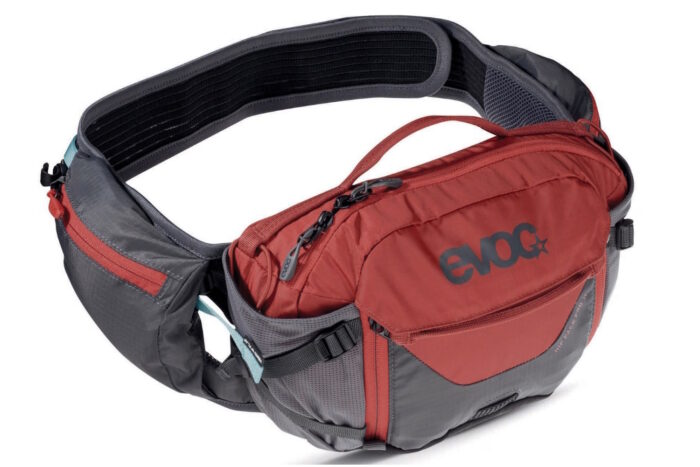
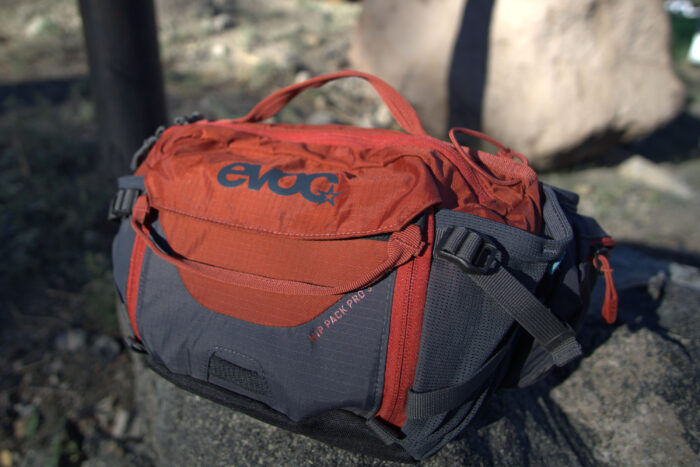
Riders looking to ditch the backpack on medium-to-long missions will find the EVOC Hip Pack Pro 3 ($150) an incredibly capable passenger. Utilizing an adjustable elastic and Velcro waist wrap, this pack offers best-in-class comfort and a super-secure fit for when the going gets rough. Its price is far above that of any other model in this guide, but the inclusion of a 1.5L reservoir helps soften that blow.
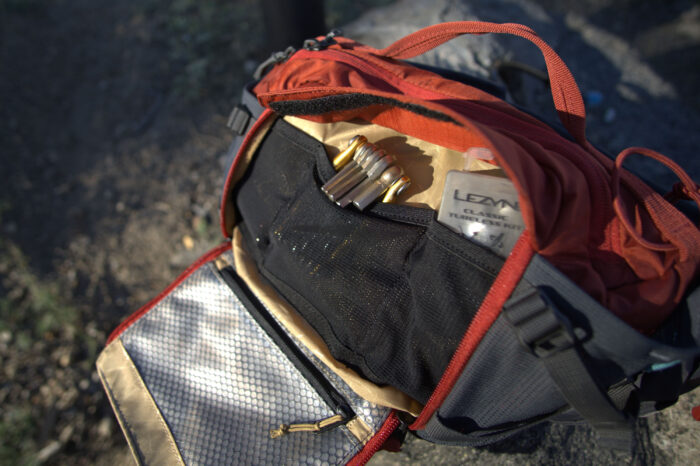
The Tech: The Hip Pack Pro 3 has plenty of storage for keys and smaller bits on the lumbar strap, as well as sleeves for two additional bottles. It easily carries a multitool, pump, levers, spare tube, plug kit, phone, keys, and wallet — in addition to the included 1.5L reservoir.
What We Like: The 1.5L Hydrapak reservoir rides close to the body and also works with a quick-release hose that can be routed out either side of the pack. Grabbing a quick sip on the go has never been easier. Compared to the Osprey Talon and Tempest 6, the EVOC is much more bike-specific, with better tool organization and hydration routing. However, it feels less natural for everyday errands or casual hiking.
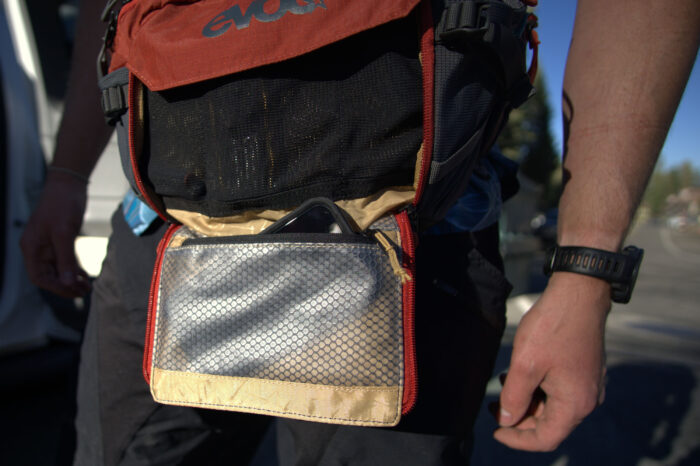
What We Don’t: Rounding out the Hip Pack Pro is a flip-out waterproof phone pouch that rides behind the front of the pack. While the waterproofing was reassuring, we did feel a little apprehensive about the placement during rowdy descents. Because many other fanny packs place the phone sleeve against your back for protection, you’ll need to be mindful of crashes with this front-facing design. That placement makes the phone easy to access, but it also feels more exposed than a back-panel security pocket.
Should You Buy It? This pack is an excellent option for mountain bikers who dislike the feel of a backpack, but who still want enough storage for snacks, water, and tools for a full-day ride. It’s unlikely you’ll be using it for everyday carry, which is worth considering given the price, but the Hip Pack Pro does its intended job quite well.
Cotopaxi Allpa X 3L Hip Pack
-
-
-
Consider what you will be carrying in your fanny pack. A few snacks and your phone and wallet? Or do you need something that has more space like in the Cotopaxi Allpa 3L pictured here; (photo/Elk Raven Photography)
-
-


Specifications
Pros & Cons
Pros
- Ideal size for travel essentials
- Durable recycled materials
- Multiple carry options (waist or crossbody)
- Fun, colorful design
Cons
- Minimal support when fully loaded
- Pricey
Bottom Line: If you’re searching for a model to carry through airports and for in-town exploration, this roomy hip pack combines a travel-friendly layout with smart security features and bold style.
Your travel companions might let you down, but this hip pack never will. The Cotopaxi Allpa X 3L Hip Pack ($75) has just enough space to stash a passport, wallet, phone, snacks, a book, and even a compact water bottle or windbreaker without feeling bulky. Inside, it has a divided main compartment with zippered organization. This makes it easier to separate your chosen items rather than letting everything get jumbled up in one open pocket.
The Tech: Cotopaxi’s signature color-blocking design makes it stylish, while the recycled fabric and sturdy zippers hold up to constant travel abuse. At 3 liters, it strikes a nice balance; it’s roomier than the 1.5L version but still far lighter and more compact than a daypack. Compared to the Cotopaxi Bataan 3L, the Allpa X feels more structured, travel-ready, and secure. It also fits inside the top of most backpacks, including the brand’s Allpa 35L or 42L.
What We Like: We carried it through airports and around town on a trip to Alaska, and it quickly became our go-to bag for keeping essentials close at hand. On flights, it fit neatly under the seat and kept our travel documents accessible. In the city, the hidden zipper pocket in the back-panel keeps important items close to your body, keeping them more secure. Back home, it’s just as useful for everyday errands. It easily transitions from wandering the farmers’ market to staying hands-free on dog walks, and we loved using it to keep our phone and sunscreen handy on SUP adventures.
What We Don’t: The only downsides are the lack of padding when it’s fully loaded and the fact that you’ll still need a bigger pack for longer excursions.
Should You Buy It? This colorful hip pack will help you stand out from the crowd, even as you glide your way through knots of people thanks to the Allpa X’s hands-free, well-organized convenience. You pay a bit of a premium, but its durable design will help it last for pages of passport stickers.
REI Co-op Stuff Travel Waist Pack


Specifications
Pros & Cons
Pros
- Lightweight and packable
- Stuffs into its own pocket
- Adjustable waist belt from XS to 4XL
- Made with high-quality recycled ripstop nylon
Cons
- Very small
- Minimal padding
- Thin material
Bottom Line: Low-profile but far from an afterthought, this ultralight, packable waist bag is just the right design for throwing into a suitcase to use as a just-in-case travel accessory or festival bag.
The REI Co-op Stuff Travel Waist Pack ($25) is a quality, highly packable option that’s great to toss in a suitcase when space is at a premium. Despite the thin material, it’s still water-resistant thanks to a DWR coating that causes moisture to bead on the surface.
The Tech: This fanny pack’s standout feature is that you can stash it away into its own pocket. When unpacked, that pocket becomes part of the simple storage layout. The minimalist design is best for people who want one lightweight place to stash essentials rather than a highly organized interior. However, we easily fit all of our essentials — phone, wallet, passport, keys, snacks — thanks to the 1.5L capacity.
What We Like: The Stuff’s strap is comfortable whether you wear it classically on your waist or sling it over your shoulder. We also appreciate that it comes in a variety of multicolored designs.
What We Don’t: The minimalist design may feel like a limitation to some. There aren’t multiple compartments, so it’s not easy to stay organized. And if you jam-pack it, wearing it all day may make the straps uncomfortable due to the lack of padding. Compared to the Patagonia Terravia Mini, the Stuff is the more budget-friendly, packable option. The Terravia Mini, on the other hand, feels a bit more refined and durable.
Should You Buy It? This is a simple fanny pack to add to your closet or travel kit, so you always have on-the-go storage. Sure, it’s simple, but for $25, there aren’t a whole lot of reasons not to.
Other Field-Tested Bum Bags to Bring Along
They may not be our top scorers, but these fanny packs are still worth your time.
-
-
(photo/Miya Tsudome)


Specifications
Pros & Cons
Pros
- Lightweight
- Available in many different colors and patterns
- Extremely affordable
Cons
- No inner security pocket
- Lacks breathable mesh back
Bottom Line: Delivering unpretentious, affordable, and fun-looking storage, this no-frills bag nails the basics but skips the security pocket and padding of more trail-ready options.
The JanSport Fifth Avenue Fanny Pack ($25) combines simple, functional design with dozens of color options, making it an excellent budget choice for everyday carry. We’d understand if you bought multiples to mix and match with your wardrobe.
The Tech: An adjustable waist belt allows you to wear this fanny pack comfortably as a crossbody bag. The layout is intentionally basic, with a roomy main zippered compartment and a smaller front zip pocket for quick-grab items like lip balm, keys, or earbuds. Its fabric is robust, made from 600-denier ripstop polyester. We also love that this textile is constructed from 100% recycled materials.
What We Like: The Fifth Avenue’s small size prevents it from getting too heavy and having the strap dig into your shoulder. It also simply covers less of your body, and we noticed the extra airflow on hikes, bike rides, or long dog walks.
What We Don’t: We tend to prefer fanny packs with a security pocket and a mesh back for breathability. The REI Co-op Trail 2 offers a more secure back pocket and a slimmer, more polished carry, but the Fifth Avenue keeps things simpler and less expensive.
Should You Buy It? If you like your rock-bottom prices with a splash of color, this fanny pack delivers all the storage and adjustability you need for casual outings. Those seeking a more feature-heavy hip pack should look elsewhere, perhaps at the aforementioned Trail 2.


Specifications
Pros & Cons
Pros
- Waterproof fabric throughout
- Ventilating mesh on back
- Compact, yet holds a lot
- Main compartment has key clip
Cons
- Seams and zippers are not waterproof
- Hard-to-wash material
Bottom Line: Ably blending urban style with outdoor durability, the High Coast offers better storage and weather resistance than most small everyday bags.
You can easily bounce between city life and trail adventures with the Fjällräven High Coast Hip Pack ($50). It benefits from the Swedish brand’s fashionable earth tones, as well as a mesh back-panel and enough organization to keep everything in its proper place.
The Tech: It may be relatively small, but it holds a lot. It has a security pocket, a mesh ventilated backing, and the main compartment even has a key clip. Compared to the JanSport Fifth Avenue, the High Coast offers better organization, a breathable back-panel, and more weather-ready fabric. It manages to deliver all this while still keeping the overall footprint compact.
What We Like: Thoughtful organization is the star here. The High Coast has multiple zippered compartments, where you can easily keep everything secure. During our test hikes, the adjustable waist strap prevented bouncing while we were moving, which is crucial for an enjoyable experience.
What We Don’t: While it is made from 100% recycled waterproof polyamide, the seams and zippers are not sealed. You may notice moisture seeping in during a heavy downpour, and of course avoid fully submerging the pack.
Should You Buy It? This fanny pack is an adaptable pick for those who enjoy exploring new neighborhoods as much as they do their local trails. It’s not very technical, but it excels in that hybrid role.
-
-
-
-
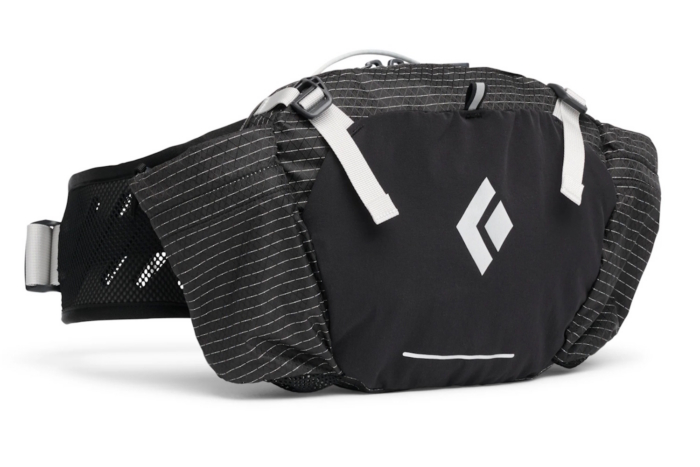
The stretchy, breathable waist band on the Black Diamond Pursuit 6 does a great job moving with your body; (photo/Miya Tsudome)
-
Wearing your fanny pack on your back works well for most applications as shown here with the Black Diamond Pursuit 6, but some packs can be worn in different ways; (photo/Miya Tsudome)


Specifications
Pros & Cons
Pros
- Highly comfortable harness
- Large carrying capacity
- Side pouches for water bottles
- Lightweight
Cons
- Waterproof zipper flap can make the main zipper hard to open quickly
- Bulky for everyday use
Bottom Line: This light, sleek hip pack is a technical option for fast hiking, scrambling, and trail running. It offers water-bottle storage and enough storage space for longer days out.
Serving as a highly competent option for trail running and mountain biking, the Black Diamond Pursuit 6 Waist Pack ($80) boasts a spacious 6L capacity. Built very similarly to the Osprey Talon and Tempest 6, it offers a slightly lighter and less bulky profile.
The Tech: A standard 20-ounce water bottle fits into the mesh pockets, and adjustable straps tighten to keep them secure. Those pockets are the defining feature of this pack, giving the Pursuit ample hydration capacity without requiring a reservoir. The main compartment has enough room for a light layer, snacks, phone, and small essentials. Meanwhile, the BD Continuous Fit harness keeps the load close and stable.
What We Like: The waistbelt is comfortable and moves well with your body. We took it on bike rides and mountain trails and emerged impressed by how well it wicks moisture away from our lower back. Even after a long day, the pack never felt too heavy or uncomfortable. Where the Talon and Tempest feel more supportive and structured under a full load, the Pursuit feels faster, lower-profile, and better suited to trail running or quick mountain missions.
What We Don’t: Made with recycled materials, this pack isn’t designed to be water-repellent. However, a water-resistant main zipper and a small flap covering the front zipper do a decent job of keeping out light moisture — just don’t keep it out in the rain for too long.
Should You Buy It? If you find yourself using your hands almost as much as your feet or you’re chasing a personal best in the alpine, the Pursuit 6 will most likely mesh with your plans. It will be an asset for anyone who wants to move fast without toting a backpack.
Specifications
Pros & Cons
Pros
- Cooling padded mesh backing
- Durable canvas material
- Stylish patterned designs
Cons
- Strap extension sold separately
- Limited storage space
Bottom Line: When style and simplicity matter more than capacity, this durable and colorful fanny pack is an eye-catching pick for short outings and casual errands.
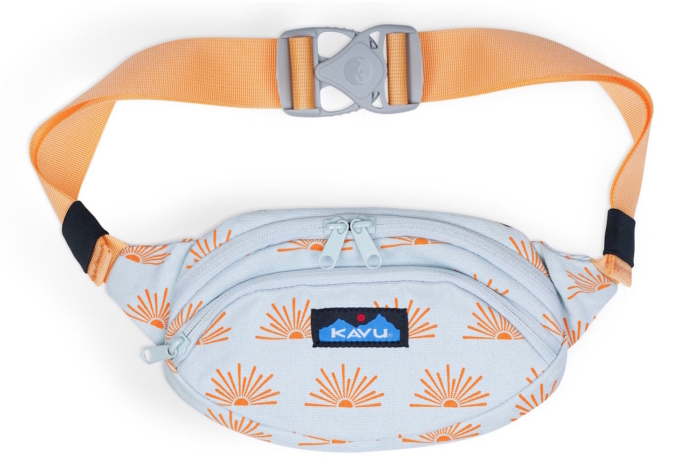
Living up to the brand’s reputation for fun patterns and tough construction, the KAVU Canvas Spectator ($30) offers stylish durability for everyday use. The small size, complete with two zippered pockets, is ideal if you don’t want to take a lot of stuff on short hikes, to concerts, or for bopping around town.
The Tech: A padded, cooling mesh backing minimized sweat patches on hot summer days, and the durable material showed no signs of wear after months of use. The waist strap is adjustable from 17 to 50 inches, and if you need more length, you can snag a strap extension ($6). Compared to the JanSport Fifth Avenue, the Canvas Spectator feels more durable and has a more comfortable back-panel.
What We Like: Two zippered pockets make it easy to separate small essentials compared to a single-compartment budget pack. Just keep in mind there isn’t much internal organization beyond that. Because you can wear it on your waist or across your body, we love bringing it along for city strolls and riverside walks.
What We Don’t: The Canvas Spectator doesn’t have enough capacity for big hikes since there’s no way to carry water bottles or extra layers. It also costs a little more than its closest competitors, but the feature set remains refreshingly simple.
Should You Buy It? If you like bold patterns and want a fanny pack that holds some key items while not being overbuilt — or too expensive — the Canvas Spectator should be up your alley. The ability to wear it two ways doubles the fun.

Specifications
Pros & Cons
Pros
- New version is made from all recycled materials
- Can stuff into its own pocket making
- Made of 70D, 100% recycled ripstop nylon for durability and weather resistance
Cons
- Minimal capacity
- Expensive for its size
Bottom Line: If your pockets aren’t enough but a full-size waist pack feels like overkill, this tiny, impressively lightweight fanny pack is a handy solution.
Weighing next to nothing, the Patagonia Terravia Mini Hip Pack 1L ($39) is all you need for festivals, short hikes, or walking the dog. It has a commendable feature set for its capacity, although it’s expensive for its size.
The Tech: Designers built this fanny pack with ripstop nylon fabric that’s impressively light yet strong. Its strap doesn’t offer any padding, but that shouldn’t be a problem — the small nature of a 1L pack naturally prevents heavy loads. The long zipper pulls are user-friendly as well.
What We Like: As an added portability bonus, the Terravia Mini folds into its own zippered compartment when not in use. That design makes it easy to stash in a carry-on, glove box, or larger backpack. When it’s unpacked, the simple zippered compartment is best for a phone, wallet, keys, and a few small extras.
What We Don’t: Given its tiny footprint, it won’t fit a book or an e-reader, but it can carry a phone, wallet, keys, and lip balm. Compared to the REI Co-op Stuff Travel Waist Pack, the Patagonia is smaller; though it feels more refined, it’s also about 50% more expensive for less space.
Should You Buy It? Those who want a small fanny pack that stays out of the way but is also highly functional for its size will dig the Terravia Mini. It’s an easy choice for quick outings that stay close to the car.


Specifications
Pros & Cons
Pros
- Ideal carrying capacity for quick hikes and everyday use
- Stylish, fun colors
- Made of repurposed nylon
Cons
- Thin webbing hipbelt
- Can’t order specific color combinations — each bag is unique
Bottom Line: This bright, surprisingly useful 3L pack keeps things lively and casual. It has handy internal mesh pockets but less structure than more travel-ready bags.
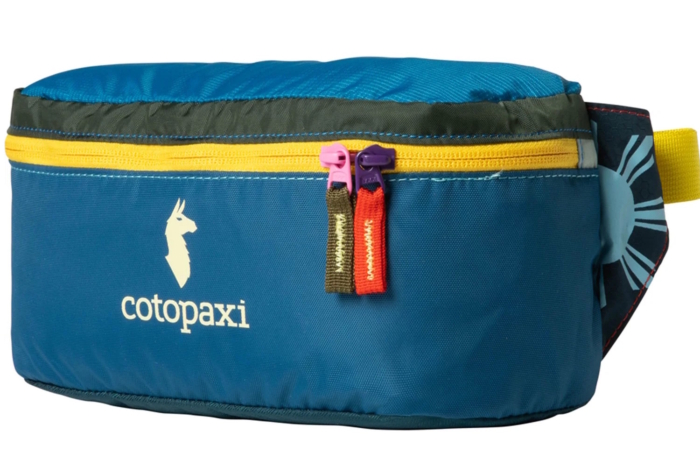
The Cotopaxi Bataan ($33) is a great fanny pack for biking around town, hanging out with friends, or wearing every day to add some flair to your getup. It’s the Cotopaxi pick for people who want playful, everyday utility rather than the more structured travel carry of the Allpa X.
The Tech: The main compartment has a two-way zipper, which makes accessing gear a cinch. Two internal mesh pockets keep small items easily accessible. And in case you haven’t noticed yet, it comes in Cotopaxi’s signature bright colors. Best of all, it’s extra versatile and quality-made with recycled materials.
What We Like: Its 3L size holds all the necessities without weighing you down, and the single webbing waist strap is simple and comfortable. Compared to the Cotopaxi Allpa X 3L, the Bataan is lighter, simpler, and more casual. It doesn’t have the same travel-focused structure or hidden back-panel security pocket. However, the internal mesh pockets give it more organization than many basic fanny packs.
What We Don’t: You might not want to get attached to a specific colorway, because each pack is designed by employees in the Philippines, who control the final product colors. Therefore, what you receive might not look quite like what you chose online.
Should You Buy It? We’re not scientists, but we’re convinced that wearing the colorful Bataan will increase your chances of having a good time for almost any social activity, easy ride, or quick hike you choose to rock it on.

Specifications
Pros & Cons
Pros
- Large capacity
- Water bottle pockets
- Comfortable, padded back
- Front compression attachment system for stashing a jacket
Cons
- Bulky
- Can get heavy if stuffed full
- Not an everyday fanny pack
Bottom Line: More of a lumbar pack than a classic fanny pack, this is a durable, high-capacity hauler for hikers, anglers, and mountain bikers who want daypack-esque storage around the waist.
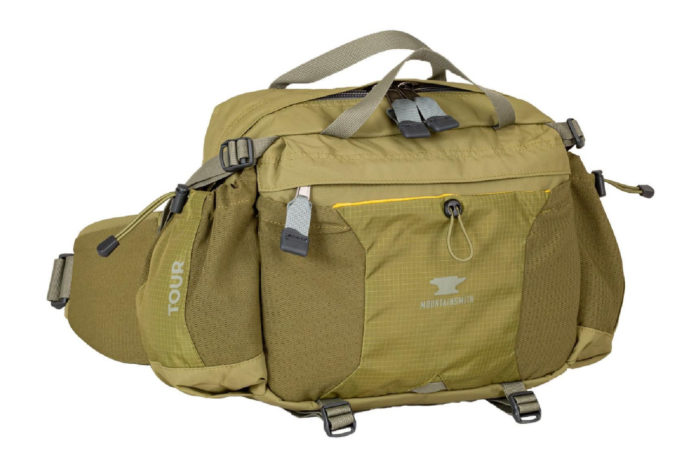
Mountainsmith is well-known for making bomber lumbar packs, and the Tour Lumbar Pack ($110) lives up to that reputation. It’s chock full of features and is just the right size for a long day hike or a full day of pedaling.
The Tech: For hydration on the trail, each side pocket holds a 32-ounce bottle, or you can stash water in one and snacks in the other for fast access. Compared to other large technical waist packs like the Osprey Talon and Tempest, the Tour feels more like a traditional lumbar pack. It has a wider, more structured body, and you won’t want to move as fast with it on the trail — but it can support its contents’ weight with the best of them.
What We Like: The bungee cord is great for storing a rain jacket, and the padded back provides plenty of comfort. An interior foam-padded pocket can keep an e-reader or a battery pack safe, and the hip pocket can hold a large smartphone. Overall, this well-appointed model boasts more organization than most classic fanny packs.
What We Don’t: With its large carrying capacity and trail-focused features, the Tour is too bulky for casual trips around town. For quick errands, the REI Co-op Trail 2 or Patagonia Terravia Mini will feel much less cumbersome. But for fishing, family hikes, or trail days when you want bottles, snacks, layers, and accessories close by, the Tour makes sense.
Should You Buy It? Fanny pack aficionados who want to carry as much as possible on their waist would do well to spring for this souped-up lumbar pack. It’s more than double the price of many models in this guide, but its capacity speaks for itself.
Fanny Pack Comparison Chart
| Compare |
|
|
|
|
|
|
|
|
|
|
|
|
|
|
|---|---|---|---|---|---|---|---|---|---|---|---|---|---|---|
| Price |
$40
|
$35
|
$49
|
$95
|
$150
|
$75
|
$25
|
$25
|
$50
|
$80
|
$30
|
$39
|
$33
|
$110
|
| Capacity |
1.5 L
|
2 L
|
Varies based on stretch
|
6 L
|
3 L
|
3 L
|
1.5 L
|
2.5 L
|
1.5 L
|
6 L
|
0.5 L
|
1 L
|
3 L
|
7 L
|
| Compartments |
4
|
2
|
4
|
3
|
3
|
2
|
1
|
2
|
3
|
3
|
2
|
1
|
Main compartment, 2 internal mesh pockets
|
Main compartment, interior sleeve, stash pocket
|
| Hydration Carry |
None
|
None
|
None
|
Dual bottle holsters
|
1.5L reservoir and 2 bottle sleeves
|
Stashable inside
|
None
|
None
|
None
|
Dual mesh bottle pockets
|
None
|
None
|
None
|
Dual 32 oz. bottle pockets
|
| Best Use |
Travel, Errands, Short Hikes
|
Everyday, Quick Hikes
|
Running, Secure Travel
|
Day Hiking, Fastpacking
|
Mountain Biking
|
Travel, Quick Hikes
|
Packable Travel
|
Budget, Casual
|
Urban to Fast Hiking, ScramblingTrail
|
Fast Hiking, Scrambling
|
Casual Outings, Everyday Wear
|
Minimalist, Festivals
|
Casual Outings, Everyday Wear
|
Long Hikes, Mountain Biking
|


How We Tested the Best Fanny Packs
Over the past five years, our team of experts has vetted more than 35 fanny packs, waist packs, and crossbody bags to assemble this lineup.
Our Expert Testers
The GearJunkie team has been on the fanny pack train for a while now, and we’re not afraid to admit it.
For this guide’s most recent update, lead tester Chris Kassar and contributor Joybeth Sullivan put six new fanny packs through a 10-month testing cycle. Kassar, based in Jackson, Wyoming, brought years of field experience from adventuring in the Tetons, Rockies, Alaska, and beyond. Sullivan added daily-use and travel feedback from her home base in Denver.
This guide was originally helmed by Miya Tsudome, an experienced gear tester with more than 10 years of outdoor experience. Her vetting helped build the foundation of these reviews by assessing a variety of carry styles, capacities, pocket layouts, sizing, comfort, and overall usefulness.

Our Testing Process & Grounds
Kassar and Sullivan embarked on more than 175 testing missions that ranged from Grand Teton National Park to Colorado’s high-alpine trails, Washington’s Olympic Coast, Point Reyes, Cape Cod, and SUP missions in Yellowstone. Activities included a broad mix of hot summer hikes, windy coastal walks, cold shoulder-season outings, bike rides, jaunts through airports, and traversing many miles of rolling trail.
- Real-World Activities: We aimed to use each fanny pack the way our readers would: for day hikes, dog walks, trail runs, town errands, farmers’ markets, travel days, and quick missions. On hikes, bounce and belt stability became obvious fast.
- Load Testing: To keep testing consistent, we wore each pack for at least five miles at a time with an average load of about three pounds (when capacity allowed).
- Detail Inspection: We closely examined materials, seams, buckles, zippers, waist belts, backpanels, and pocket layouts.
Testing doesn’t stop once a pack makes the guide. We continue using the top picks after publication to track zipper wear, belt stretch, fabric abrasion, and long-term comfort. We update this guide seasonally as new models are released and additional testing notes come in.
Our Fanny Pack Rating System
We rate fanny packs across four core metrics, ranking them from 1-10 in each. A pack’s overall score reflects extended real-world use and how well it performs for its intended purpose, and is not just a simple average of those four ratings.
Comfort: This measures how the pack feels against your body during prolonged wear. We evaluate back-panel breathability, strap width, padding, and whether the belt digs into your waist or chafes your neck when worn across your body.
Stability: This metric grades how well the pack manages its load. We look for zero bounce on trail runs, whether the pack sags under the weight of a water bottle, and security on steep descents or bumpy bike rides. A pack might be perfectly comfortable walking around town, but if it bounces wildly on the trail, it loses stability points.
Storage & Organization: Rather than grading pure volume, we score how smartly a pack uses its space. We assess pocket layouts, internal dividers, zippered security pockets, key clips, and exterior bottle sleeves to see how easily you can stash and find your gear without it becoming a jumbled mess.
Durability: We assess the pack’s long-term toughness. This includes the fabric’s denier, the quality of the buckles and zippers, weather-resistant DWR coatings, and how well the materials resist abrasion from dirt, rocks, and daily abuse.

Buyer’s Guide: How to Pick the Perfect Fanny Pack
Now that you’ve seen how awesome fanny packs are, you want one but don’t know which to choose. Here are a few considerations to help you pick the perfect pack.
Primary Use
First and foremost, how do you plan to use your pack? Do you need something sleek for travel or a carryall for hiking? Or is water capacity of utmost importance? These are important considerations.
What you’ll use your fanny pack for the most will determine what type of fanny pack to buy. Take care to look at each pack’s specifications closely, as some of them will specialize in a certain activity, while others are more hybrid.

Fanny Pack User Profiles
Fanny Packs for Backpackers & Hikers
The day hiker will want to choose between a small pack to carry their phone, wallet, keys, and a snack or look into purchasing a bigger pack with pockets for water bottles and space for a layer. Backpackers will typically use a fanny pack as a small accessory pouch for items that are nice to have easily accessible, such as sunscreen, GPS devices, bug spray, etc.
Some packs work well for ,backpacking and can even be integrated into a backpack’s waist belt. The Patagonia Terravia Mini 1L and the REI Stuff Travel Waist Pack are perfect for hiking where you just want to carry the bare essentials, and the Black Diamond Pursuit 6 and the Osprey Talon & Tempest Waistpacks are our top choices for when you want a pack that can carry a lot more.

Fanny Packs for Casual Users
Fanny packs are now ubiquitous for men and women alike, and are undeniably useful for carrying around the day’s essentials without resorting to a bag or overstuffed pockets. The casual user will want to look for a pack that is between 1 and 2.5 L in capacity, with 3 L bordering on too big to carry around all day comfortably. Choosing a fanny pack that also works when worn across the body will increase the functionality of this everyday carry. Other features to look for are a key leash, front pockets for organization, and a separate back pocket to keep valuables close to your body.
Style is likely an important consideration for those seeking a daily driver as well. For the more casual, color-appreciating user, the Fjällräven High Coast is a good choice.
Fanny Packs for Mountain Bikers
A solid waist pack is a great addition to the mountain biker’s kit. Backpacks tend to get very sweaty and often are overkill for what most bike enthusiasts may need on a ride. A fanny pack with a stretchy waistband, breathable back panel, pockets for small water bottles, and enough capacity to fit snacks, sunscreen, and some small bike tools will be the perfect companion on your next trail ride.
The EVOC Hip Pack Pro 3L includes a 3L bladder to make sipping water an easier affair. We also love the Black Diamond Pursuit 6 with its stretchy, comfortable waistband for long rides.

Fanny Packs for Runners
Let’s be real, running with any sort of bag on your body isn’t the most ideal. If you’re going for a short run or one where you will be able to access drinking water, give the Flipbelt Zipper Edition a shot. But when you start increasing the mileage, carrying some water and some nutrition becomes important.
Runners will want to look for a fanny pack that has either integrated water bottles or flasks, or a dedicated place to securely put your own bottle. You’ll want the bottle or bottles to be small so as not to feel cumbersome or slosh around too much as you trot, and you’ll want a comfortable, secure waistband that keeps everything in place for wherever the trail takes you.
Nathan is an athletic brand that makes fanny packs specifically for the dedicated runner. The FlipBelt Zipper Edition is our minimalist pick for short runs where you don’t need to carry much, while the Osprey Talon / Tempest 6 and Black Diamond Pursuit 6 work better when longer efforts call for water, snacks, and a little more storage. We also ran with the Osprey Tempest and Talon 6 and the Black Diamond Pursuit 6 and found those comfortable enough for longer runs.

Carry Style
While the classic way to wear a fanny pack is on your hips with the bag facing the front, there are actually a few different ways to wear one, which will change based on the weight of the pack, personal preference, or activity. Some, like the Kavu Spectator, can be worn on your waist or crossbody style.
Larger bags like the Cotopaxi Allpa X 3L Hip Pack, our top pick for travel works well as a bum bag or slung across your body. Some packs are heavy and are better worn on the back of the hips rather than the front for less awkward carrying.

Capacity
Not all fanny packs are created equal. It’s important to note the capacity of a pack before purchasing and also look at the number of pockets the pack has to make sure it’s going to fit your needs. We tested fanny packs ranging from ultra-lightweight to the 9L Mountainsmith Tour.
Some packs only have one major compartment, while others, like the Cotopaxi Allpa X 3L Hip Pack, have a variety of pockets, pouches, and even water bottle holders. Consider what level of organization you’re looking for in a fanny pack.

Compact
A compact fanny pack ranges in size from around a 1L capacity to 2.5 L. Fanny packs traditionally fall around these sizes, while bigger packs are sometimes referred to as “waist packs.” Being compact allows for a more comfortable carry throughout the day, as the weight they can hold is limited. Many fanny packs of this size can also be worn across the body, providing a different carry style.
This size pack is typically limited in the number of pockets it has, and is usually just big enough for a few small accessories. The Fjällräven High Coast Fanny Pack and REI Co-op Trail 2 are great compact packs that you’ll find yourself grabbing for your everyday carry. But if you want to carry around a full-size water bottle, eBook, or a light layer, you’ll have to delve into sizes beyond 2.5 L.

Mid-Sized
Mid-sized fanny packs can range anywhere from 3 to 9 L in size. These packs are typically more technical, and can be valuable for specific activities that require packing more accessories like hunting, fly fishing, mountain biking, or hiking. Mid-sized fanny packs will sometimes have thicker, padded waistbelts to enable you to carry weight more comfortably, and tend to have a variety of pockets, water bottle holders, and compression systems.
The Cotopaxi Bataan and Allpa X 3L are the larger casual packs we tested. The Black Diamond Pursuit 6 and Osprey Talon sit in the middle range at 6 L, and the Mountainsmith Tour Lumbar Pack is the largest in our roundup with its 9L capacity.

Materials
While nylon is a popular fanny pack material, it certainly isn’t the rule. Many innovative packs utilize high-tech fabrics to gain water resistance and durability or simply add some flash.

On the technical side of the spectrum, the 100% recycled 840D TPU-coated nylon of the Cotopaxi Allpa X 3L makes it water-resistant. We were also impressed with the Jansport Fifth Avenue Fanny, which is a budget pick still made with 600-denier ripstop fabric — a highly durable material.
Fanny packs also often integrate other textiles into their design to add special functionality, such as a stretch mesh used in a water bottle pocket or a neoprene divider that adds structure to the pack.

Compartments
From zippers to drop pockets to water bottle holders, there are a number of different ways to tote around your kit in a fanny pack. In any zippered pocket, look for high-quality YKK brand zippers that will last longer than their generic counterparts. Some will even be water-resistant.
A drop pocket won’t have any type of closure to keep things secure, but often these can be handy for quickly tossing a phone into while you’re out and about. We also greatly appreciated whenever a fanny pack included an internal compartment with a key loop to clip our keys to.
Straps
Because most fanny packs can only carry so much (the average across the packs we tested was 3.5 L), large padded waist straps aren’t often needed. Many will use a simple webbing hip belt, brought together with a single side-press buckle.
Some fanny packs, like the larger Mountainsmith Tour, offer slightly more padding in their straps and even include pockets that add to the overall capacity. We also especially appreciated the mountain bike-specific EVOC Hip Pack Pro 3L’s adjustable elastic and Velcro waist wrap.

Sizing
It’s always a good idea to take your measurements and check the pack specs. Most bags fit a variety of people, but some packs don’t cinch down small enough for petite packers, while others run surprisingly small. Measuring will help you pick the right pack for your body to maximize success and comfort.
Now it’s time to buckle up and get ready for a life of fanny-pack adventures. We’ll even let you call it a lumbar bag or hip pack if it makes you feel better. Just get out there and enjoy the awesomeness that is hands-free packing, whatever the activity.

Price & Value
Fanny packs range from about $20 to well over $100. A basic pack works fine for errands, festivals, and travel backup, but if you’re hiking, biking, running, or carrying water and layers, it’s worth paying more for better materials, organization, comfort, and stability.
Budget
Budget fanny packs under $30 are best for casual use, travel, and everyday essentials. They usually skip hydration carry, structured waist belts, and advanced pocketing, but still offer solid value.
The Jansport Fifth Avenue Fanny Pack ($25) is a simple, fun option with recycled 600-denier ripstop polyester, a roomy main compartment, and a smaller front zip pocket. It lacks the security pocket, breathable backing, and weather-ready features of more trail-focused packs, but it’s hard to beat for basic daily carry. The REI Stuff Travel Waist Pack ($25) is a strong travel value. It’s lightweight, water-resistant, and packs into its own pocket, making it easy to stash in a suitcase, backpack, or car. It doesn’t offer much organization or padding, but it’s a useful pick for minimalist travel, festivals, and short outings.
Mid-Tier
Mid-tier packs in the $30-$60 range usually add better fabrics, smarter pocket layouts, improved weather resistance, and more comfort for longer wear. This is the sweet spot for everyday carry, dog walks, day hikes, travel, and casual trail use.
The REI Co-op Trail 2 ($35) is our Best Overall pick because it balances price, comfort, low-profile carry, and outdoor-ready function. The Patagonia Terravia Mini Hip Pack 1L ($39) is a tiny, packable option for travel and minimalist everyday use, while the FlipBelt Zipper Running Belt ($46) is a strong value for bounce-free running.

Premium
Premium fanny packs around $75 and up are worth it when you need more capacity, better support, hydration carry, or activity-specific features for hiking, biking, travel, or gear-heavy days.
The Cotopaxi Allpa X 3L Hip Pack ($75) serves as a strong entry into this tier, offering excellent zippered organization and a hidden back-panel pocket for travel. For more rugged pursuits, the Osprey Tempest 6 and Talon 6 ($95) are among the most capable hiking packs in our lineup, featuring dual bottle sleeves, zippered hipbelt pockets, compression straps, and a supportive wraparound belt. At the top end of the price spectrum, the EVOC Hip Pack Pro 3L ($150) costs the most but adds mountain bike-specific tool organization, hydration routing, and a highly secure fit for rough rides.
At this level, you’re paying for better carry systems, stronger materials, more specialized storage, and features that matter beyond casual daily use.
Frequently Asked Questions
You can wear a fanny pack however you like! There are a number of different ways you might choose to saddle up your fanny pack, including across your waist (with the pack at the front or back) or worn as a crossbody bag.
Worn at the front of your waist can provide quick access to essentials, while a fanny pack worn at the back carries better if you choose to run with your pack. There are also fanny packs designed to integrate with your backpack hipbelt.
It all boils down to geographic slang! While calling it a fanny pack or waist bag is common with American English speakers, British English speakers will often call them bum bags. Other terms we’ve come across include lumbar packs, hip packs, and rump rucks (all right, we made that one up).
In many ways, fanny packs often are safer than purses when it comes to traveling internationally where pickpockets may be an issue. Because they are buckled around your waist as opposed to slung over a shoulder, they are much more connected to your body.
Fanny packs, often by default, will close with a zippered entry, which while not 100% secure can be a deterrent to prying eyes. And positioned at the front of your waist, fanny packs allow you to keep your valuables in view at all times.