A solid ski jacket keeps you dry and dropping in on bell-to-bell pow days — and looking good doesn’t hurt, either. This season’s surge of PFAS-free eco-tech and relaxed freeride cuts continues to elevate riders’ kits.
Colorado-based ski apparel experts Justin Park and Bergen Tjossem assessed seven ski jackets for more than 200 hours on snow over our 4-month test window. The duo skied everywhere from Vail Ski Resort to Grand Montets in the French Alps.
If you’re looking for a stylish, supremely waterproof, and durable ski jacket for resort laps, you can’t go wrong with the Stio Environ, which has a uniquely cozy collar and many size options. Veteran and dedicated skiers can shell out the big bucks for premium waterproofness and durability in the Arc’teryx Sabre, which includes a flannel backer.
Editor’s Note: We updated our Ski Jackets buyer’s guide on September 1, 2026, with the Stio Objective Pro, Arc’teryx Rush, and Helly Hansen Ridge Infinity 2.0.
The Best Ski Jackets of 2026


Helly Hansen Ridge Infinity Jacket 2.0
Specifications
Pros & Cons
Pros
- Top-tier weather protection
- Durable, resort-ready construction
- Ski-specific features, including a unique phone leash system
Cons
- Heavier and less packable than touring-oriented shells
- Bold styling won’t appeal to everyone
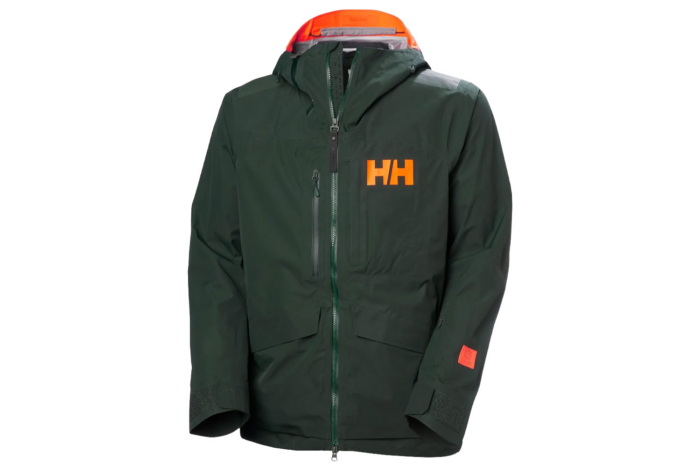
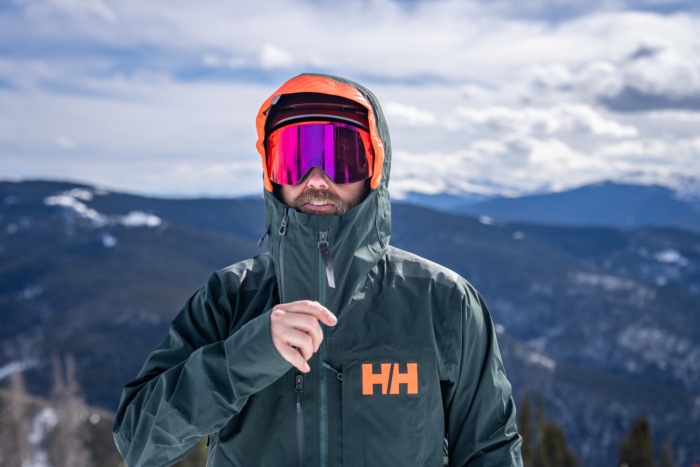
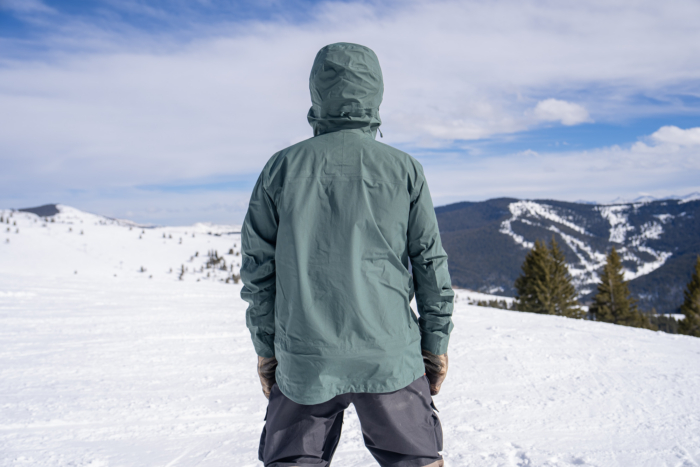
The Helly Hansen Ridge Infinity Jacket 2.0 ($650) is a premium freeride shell that skips GORE-TEX Pro weatherproofing in favor of the brand’s in-house LIFA INFINITY construction — and proves it can hang with the industry leader. After a dozen ski testing days in variable Colorado resort conditions, from cold powder days to wind and spring sleet, gear writer Justin Park found that it delivered consistently strong weather protection with a slightly heavier, more rugged feel than its GORE-TEX Pro counterparts.
Built with a thick 3-layer Helly Tech Professional fabric (unofficially 20K/20K), the Ridge Infinity leans into durability and storm performance. It has a distinctly armor-like construction that shrugs off wind and moisture while maintaining a softer, quieter hand feel than many crinkly GORE-TEX shells such as the Arc’teryx Rush. It’s heavier and less refined than the Rush, but offers similar real-world protection at a slightly lower price point.
The freeride fit is relaxed, leaving plenty of room for layering without feeling oversized. It’s not a minimalist touring piece — this jacket is clearly designed for lift-served skiing and harsh conditions. Breathability is solid but unremarkable, and while the pit zips help, it can run warm during bootpacks or spring days.
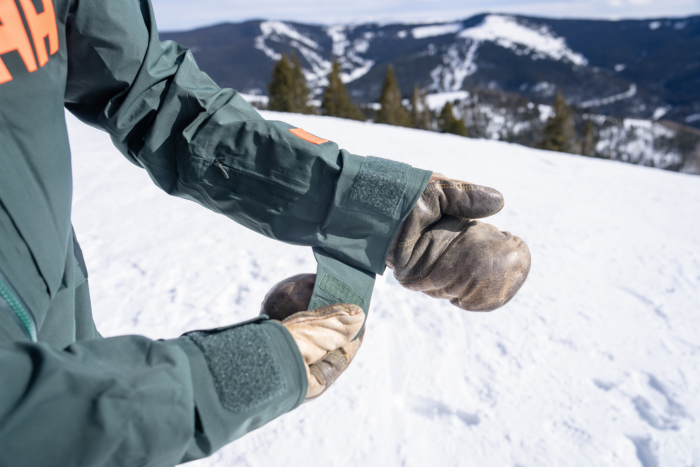
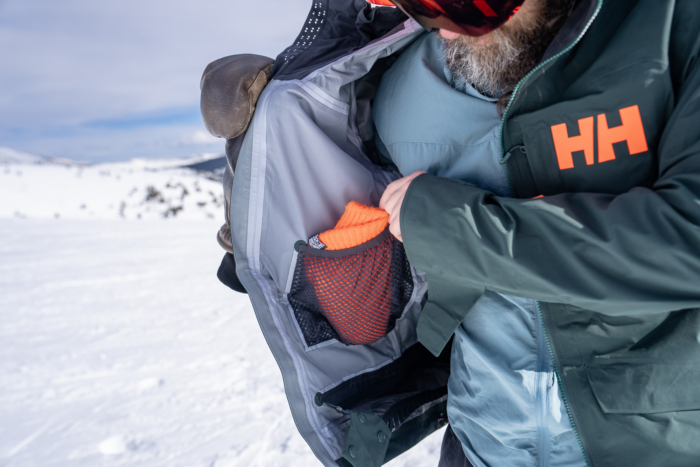
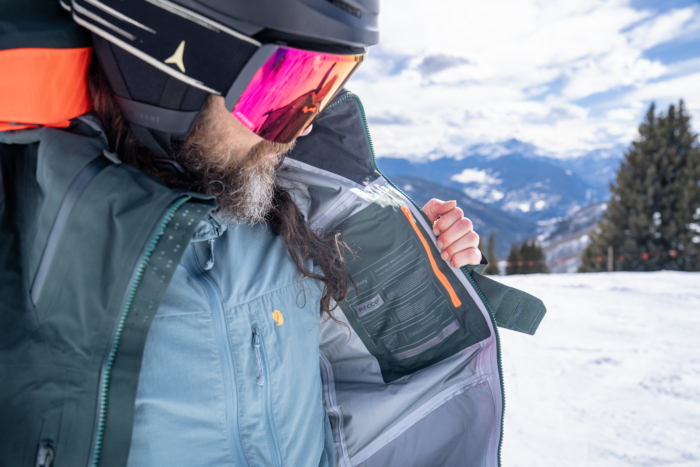
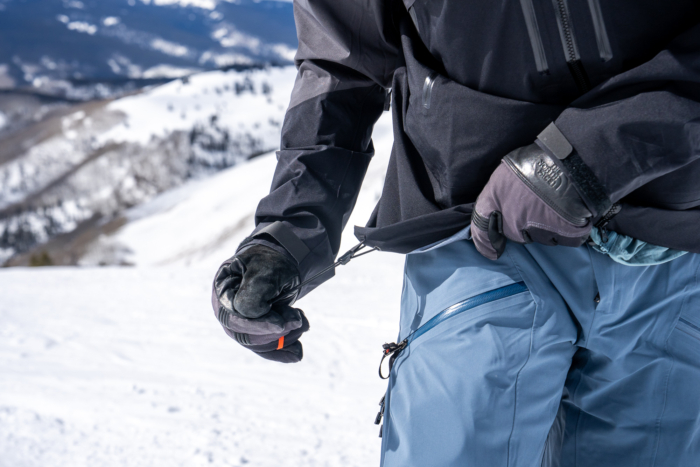
Where the Ridge Infinity stands out is in its practical, ski-specific details. Large, glove-friendly cuffs, a thoughtful pocket layout, and a unique integrated phone leash system all reinforce its resort focus. The bold fluorescent accents on hood, wrist, and chest won’t appeal to everyone, but they do make you easy to spot on the hill.
For skiers who prioritize durability, weather protection, and real-world usability over low weight and packability, the Ridge Infinity 2.0 is a dependable, storm-ready alternative to premium GORE-TEX Pro shells.
The North Face Dragline Jacket
Specifications
Pros & Cons
Pros
- Soft, comfortable fabric
- Roomy cut for layering and mobility
- Plenty of oversized pockets
Cons
- Fabric not as durable as stiffer jackets
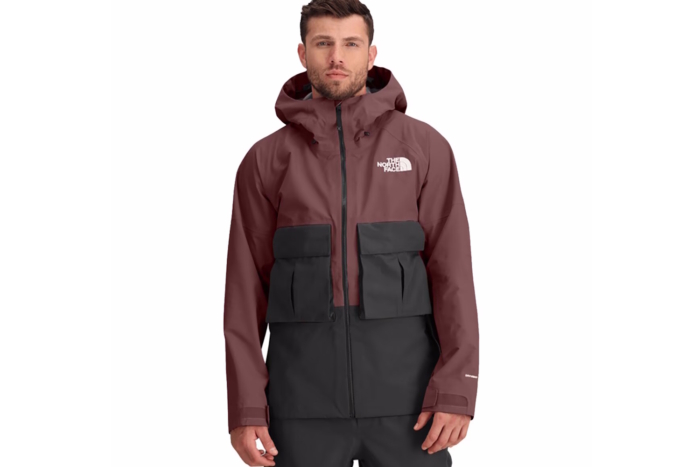
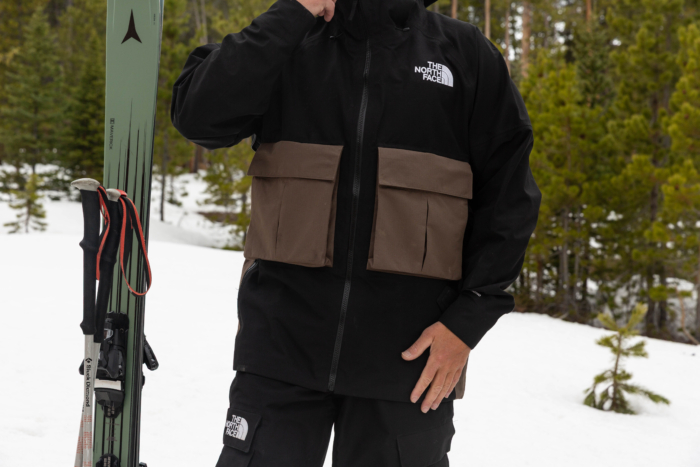
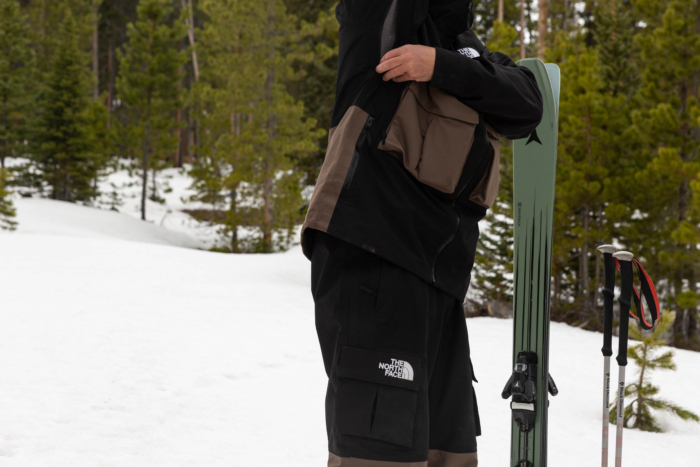
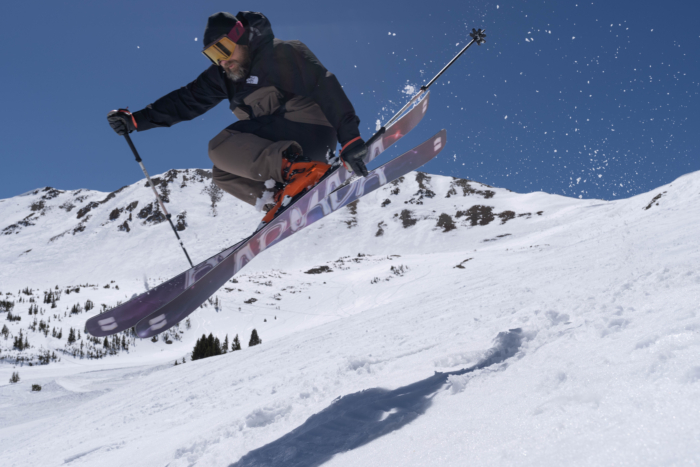
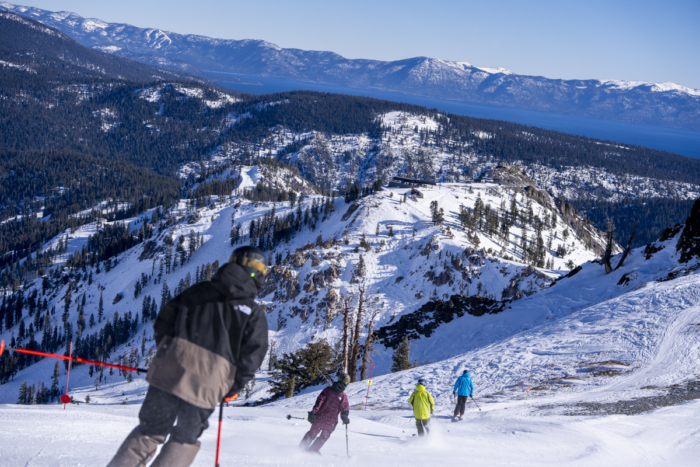
The North Face caught some heat for leaning into the fashion-first side of its business, but one upside is that it made some great-looking kits. The North Face Dragline ($450) jacket debuted a few seasons back and has had a consistently bold look with big, color-blocked pockets and a hyper-relaxed fit. There is also no slouch in the performance department, leaning on a new in-house DryVent Mono membrane that balances price and performance instead of the pricier industry standard GORE-TEX.
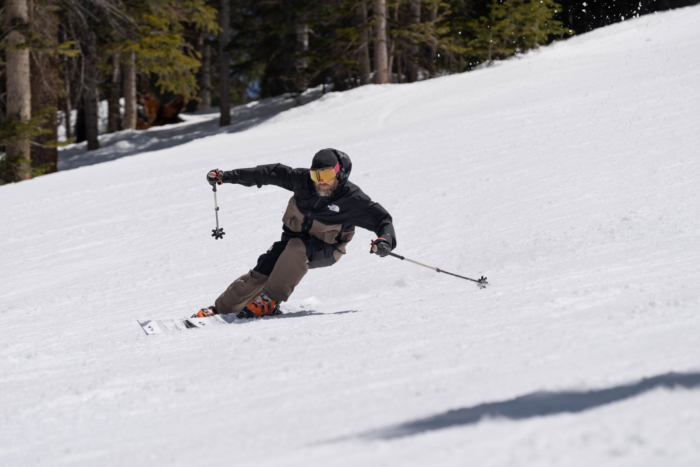
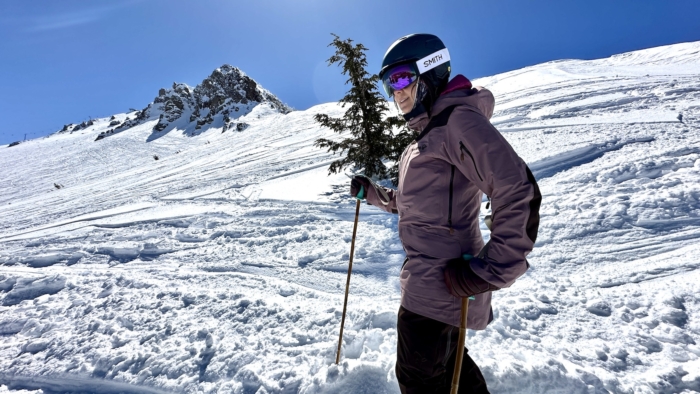
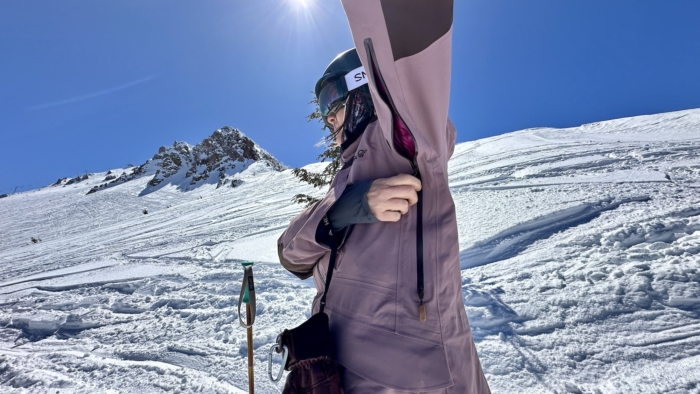
Skier Justin Park tested a relatively muted black and brown colorway, which is quite a departure from previous seasons’ high-contrast offerings, but still got more unsolicited compliments wearing the Dragline than any of the other dozen or so shells he tested throughout the ski season. The fit is “freeride,” which is ski-speak for relaxed. Thankfully, the Dragline doesn’t veer into territory so baggy that more modest fashionistas can’t wear it. When paired with the Dragline Bibs for a color-coordinated kit, Park couldn’t get enough freedom of movement compared to the slimmer, stiffer shell outerwear he has tested.
We have to guess because TNF doesn’t list waterproof or breathability ratings for DryVent Mono. Based on the price of the jacket relative to GORE-TEX options, as well as the performance of previous iterations of DryVent, we’d guess it’s middle of the road in waterproofing and breathability, likely 15K/15K.
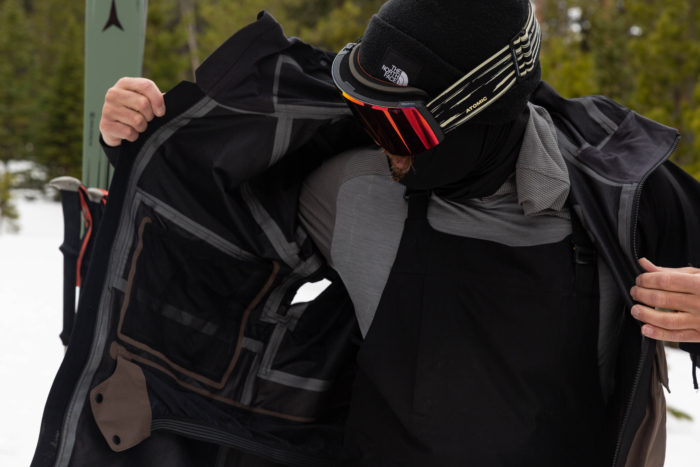
Park lives and skis above 10,000 feet, where snow and air are cold, and rain is mostly not a thing. In his experience, that kind of modest performance is plenty for resort riding. He reached for the Dragline kit over a half-dozen other “better” outerwear options because of the comfort and freedom of movement, not to mention the plethora of big pockets. The jacket has two oversized cargo-style pockets on the front. Behind each is a more secure, zippered pocket that’s a bit slimmer. Below are two zippered hand pockets. Two mesh stuff pockets are inside. The left sleeve has the requisite pass pocket and a handy tethered goggle wipe. In total, we’re talking nine pockets total.
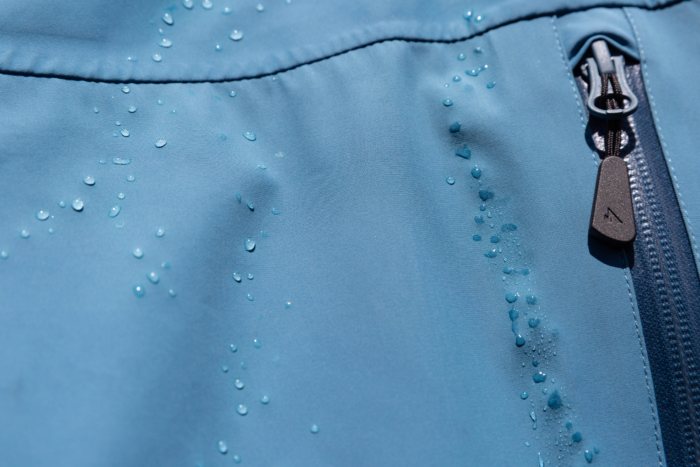
If you need more robust waterproofing, consider a GORE-TEX shell like the Rab Khroma Latok. Still, TNF highlights that because each of the three layers of the shell is polyester, it’s much easier to recycle — something they offer to do in-house for customers. Despite using PFAS-free DWR (less durable but more environmentally friendly), we had no issues with the face fabric wetting out, and water still beaded up on the jacket after 25 days or so of wear over three months of testing.
Despite holding up well all season, Park has a few cuts and abrasions on the Dragline Bibs, and one of the elastic boot cuff cinches pulled completely out. While you save a little upfront by going with the cheaper Dragline than top-of-the-line shells, it’s likely to have a shorter usable lifespan. Also, TNF has a limited lifetime manufacturing warranty, but it won’t cover wear.
Stio Objective Pro Jacket
-

-
(Photo/Bergen Tjossem)
-
The Objective Pro Jacket boasts a nice, comfortable, and accommodating fit; (photo/Bergen Tjossem)
-
The weatherproofing of the jacket is at about 28,000mm; (photo/Bergen Tjossem)
Specifications
Pros & Cons
Pros
- Feature-rich
- Pass-through front chest pocket
- Burly fabric denier
Cons
- On the heavier end of the scales
- Chest pockets share volume
- Price
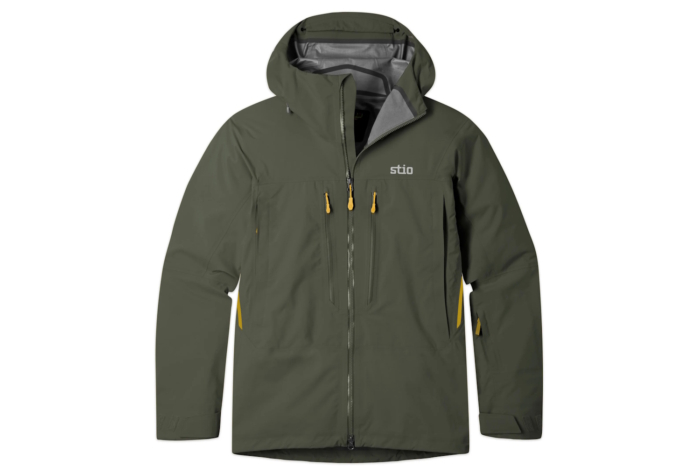
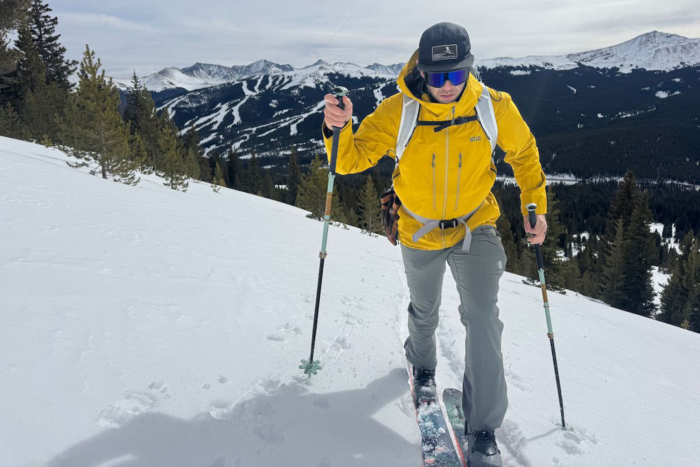
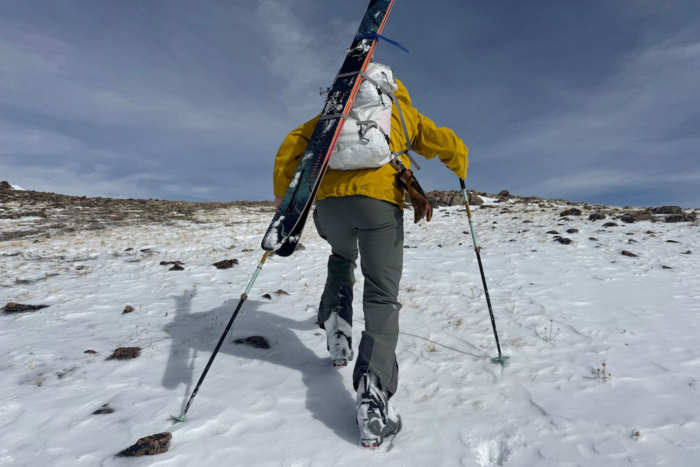
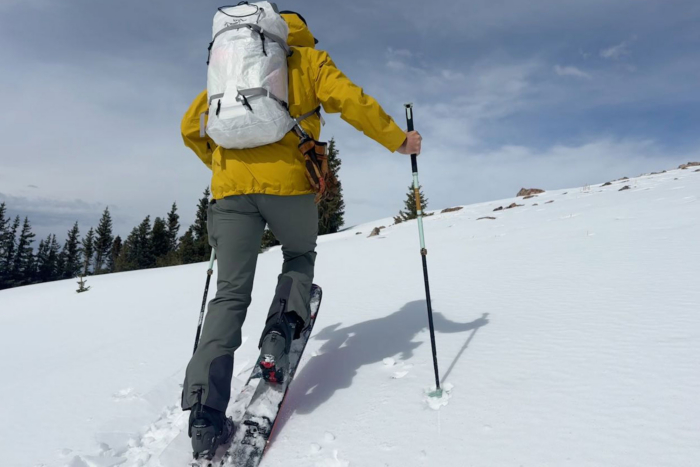
Colorado-based ski apparel tester Bergen Tjossem wore the Stio Objective Pro Jacket ($799) through the best and worst of it at both the ski resort and deep in Colorado’s backcountry — and couldn’t find much that this premium jacket didn’t excel at. The Objective Pro is built entirely from GORE-TEX Pro 3L ePE fabric, which is essentially a sturdy face fabric, waterproof membrane, and backer sandwich. GORE-TEX Pro offers premium protection from rain, snow, and anything else that will fall from the sky with its roughly 28,000mm waterproof rating. Simply put, we stayed dry in nasty weather.
What makes the Objective Pro’s fabric package stand out from the crowd is its up to 25,000 g/m²/24h breathability. It breathes with the best waterproof hardshells on the market. That didn’t translate to sweat-free uphill skin track laps, but it was about perfect for aerobic downhill skiing and short hiking bursts at the resort. It kept the interior dry and warm.
The Objective Pro comes with a minimalist feature set with a thoughtful pocket layout. Most useful to Tjossem were the two main vertical chest pockets that ate all of our odds and ends on their own. The left chest comes with a stretchy interior pocket for great phone storage that virtually eliminates phone flop. Big side hand pockets layer underneath the chest pockets and add additional storage options for carrying gloves and snacks to the ski hill. An internal drop pocket, pass pocket on the sleeve, and internal media pocket round out the storage options.
The Objective Pro sports a big, versatile hood that was plenty roomy for our bulky freeride helmets. When deployed, it stayed clear of our peripheral vision and didn’t restrict head movement. A toggle at the back made it possible to cinch down to a smaller mountaineering helmet or even a sun hat.
Stio has a reputation for making outerwear with immaculate fit, and the Objective Pro does not deviate from that trend. The jacket’s Regular fit provided plenty of room for layering, but it never felt too loose or baggy. At 6’1” 195lb, Tjossem found a perfect fit in a men’s large, his long running jacket size. The Objective Pro fits true to size and is offered in S-XXL for men. Being a lightweight, uninsulated shell, the Objective Pro proved a top-tier backcountry companion. It breathed and vented well and stuffed down small into a crowded backpack, ready to be deployed at the top of the run or whenever the weather deteriorated. Being so thin, proper layering was required at the ski resort to keep our testers warm — that’s versatility you don’t get from every ski jacket out there.
With an eye-watering $799, nobody is calling the Objective Pro jacket a bargain. But we agree that it’s a dialed product. A long list of pros strongly outweighs a small nitpick or two. Folks looking for one hardshell jacket to do it all won’t be disappointed in the Objective Pro.
Patagonia Insulated Powder Town Jacket
Specifications
Pros & Cons
Pros
- RECCO included
- Super comfortable to move in
- Underarm zippers are included
Cons
- Perfect amount of warmth on a cold day but a bit toasty on super warm spring days
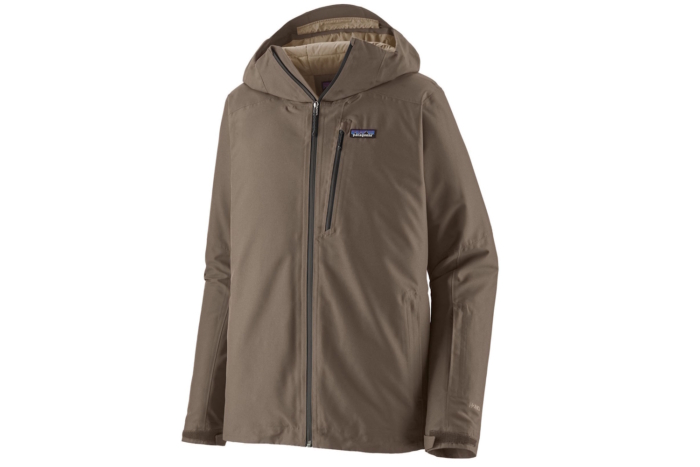
If you tend to get a bit chilled on the lift ride or ski in a wind-blown location, push this insulated jacket to the top of your list. Ready for a powder day and delivering excellent waterproofness is the Patagonia Men’s Insulated Powder Town Jacket ($399). Patagonia nailed the comfort and fit of this design. Beyond that, the jacket is completely free of PFC chemicals.
The 75-denier shell, liner, and lower body of the jacket are all 100% recycled polyester blends. Even the insulation is 100% recycled polyester. The lining is Bluesign-approved, while the product is Fair Trade Certified sewn. Inside, a taffeta liner is smooth without noise and ups the jacket’s class and quality.
We really appreciate the pockets on this jacket, which are ergonomic and functional. There’s a small pass pocket on the left forearm, a large left exterior chest pocket, a wide interior dump pocket with a zip closure, a wide-mouthed interior mesh pocket, and two softly lined hand pockets.
Patagonia is also launching the Warmth Index, a new metric that measures the warmth of each of the brand’s products. That way, skiers can compare jackets side by side for their own insulation needs. The Insulated Powder Town is the warmest all-mountain snow jackets that the brand makes.
Stio Environ Jacket
-
-
(Photo/Sean McCoy)
-
(Photo/Sean McCoy)
-
(Photo/Sean McCoy)
Specifications
Pros & Cons
Pros
- Durable construction
- Generous size run, XS-XXXL for men and XXS-XXL for women
- Recycled fabric
Cons
- A bit heavy for backcountry use
- Not very breathable
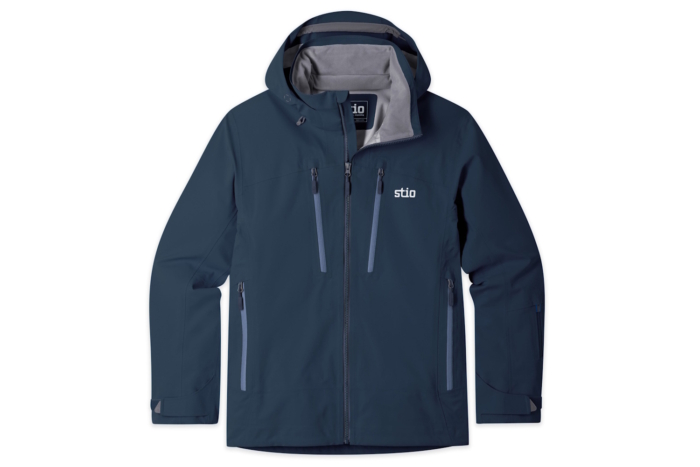
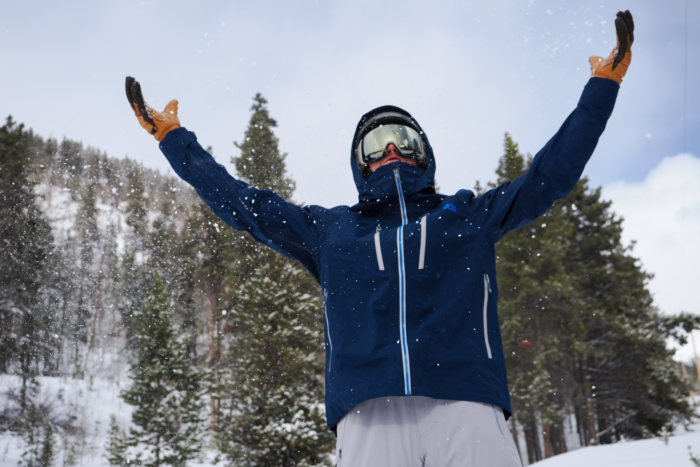
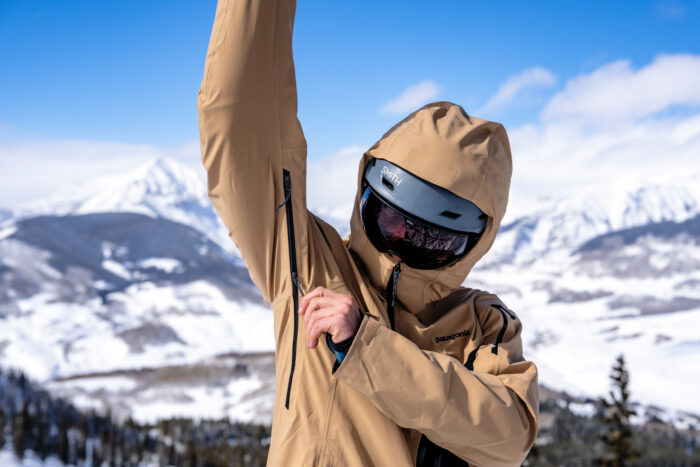
Built for mountain weather in all its moods, the Stio Men’s Environ Jacket ($479) blends storm-ready protection with an athletic cut that strikes the sweet spot: not too boxy, not too tight, and articulated to move with you when charging downhill or hiking uphill. The brand’s PeakProof 3-layer fabric brings density and resilience, delivering a confident buffer against biting wind and driving snow.
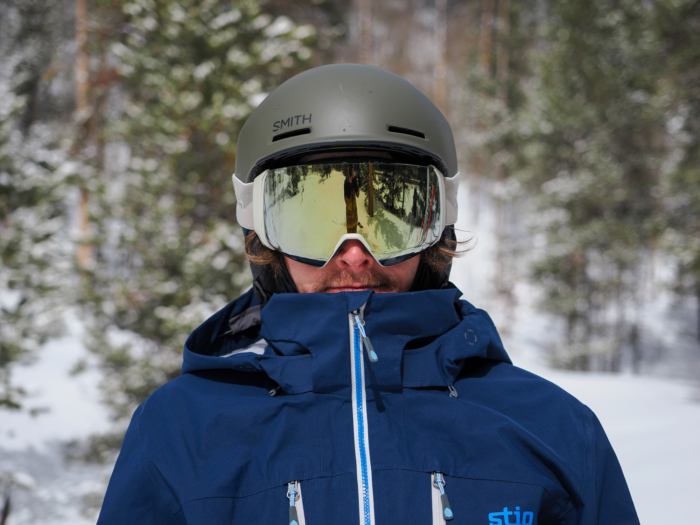
Despite its rugged build, the Environ feels polished. Smooth seams and a clean silhouette complement the jacket’s functional design. The standout is the high collar, which extends into the hood and is fully wrapped in soft brushed tricot — a welcome touch of warmth against the face and neck. Performance specs add reassurance: 20K waterproofing, 10K breathability, and a PFAS-free DWR finish that maintains 80% of its water-beading ability after 20 wash cycles. Even better, the face fabric is woven from 100% recycled polyester, making the jacket as sustainable as it is stormworthy.
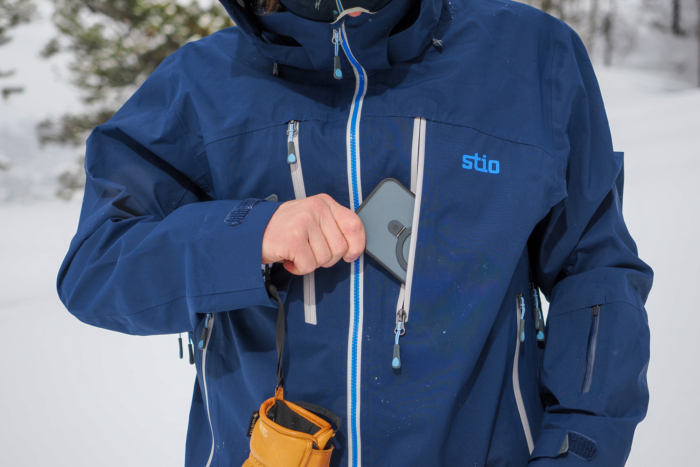
Organization is spot on. Seven pockets provide purpose-built stashes: two zippered hand pockets, a spacious external chest pocket (two are available on the men’s jacket), a lift pass pocket on the forearm, a secure interior chest pocket, and a stretchy drop pocket ideal for goggles or lenses. The helmet-compatible hood streamlines with a stiff brim to fend off precipitation and can be removed if you want to trim down bulk. Ventilation is equally well considered, with pit zips to dump heat during spring laps or big-effort tours. A fixed powder skirt locks out deep snow without riding up or bunching.
At 681 grams, the Environ isn’t featherweight but the extra heft translates to toughness and wind-blocking capability. In an era when many ski shells are slimming down, sometimes at the expense of abrasion resistance, we appreciated the resilience of this build.
We put the Environ through its paces during midwinter powder cycles, sunny spring sessions, and variable lift-line temps from Telluride to Copper Mountain. Across storm days at the resort, sidecountry laps, and skintrack pushes, the jacket proved itself a waterproof, windproof shield that remains a reliable favorite for the chairlift and beyond.
Patagonia SnowDrifter Jacket
-
-
(Photo/Jason Hummel)
-
(Photo/Jason Hummel)
-
(Photo/Jason Hummel)
-
-
(Photo/Jason Hummel)
-
(Photo/Jason Hummel)
-
(Photo/Jason Hummel)


Specifications
Pros & Cons
Pros
- Stretchy material makes for an incredibly comfortable fit
- One of the best-looking jackets tested
- Among the most sustainable, toxin-free, healthiest options on the market
Cons
- A bit lightweight for harsh weather and wetter snow climates
- Not insulated if that's a necessity
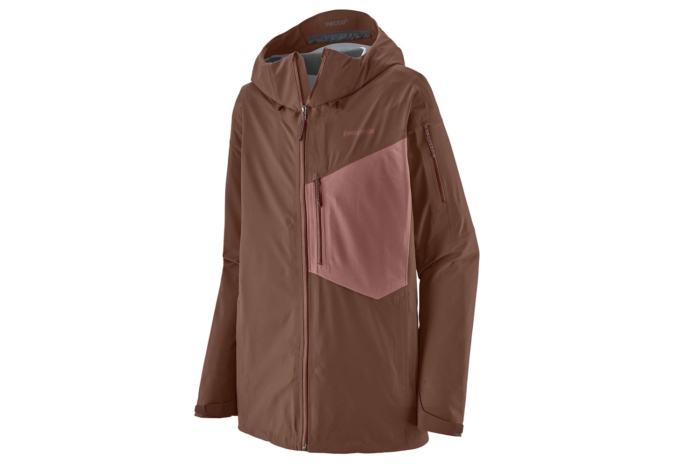
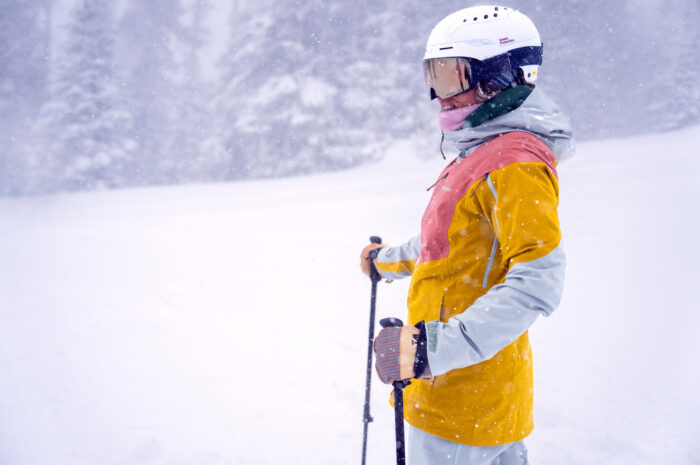
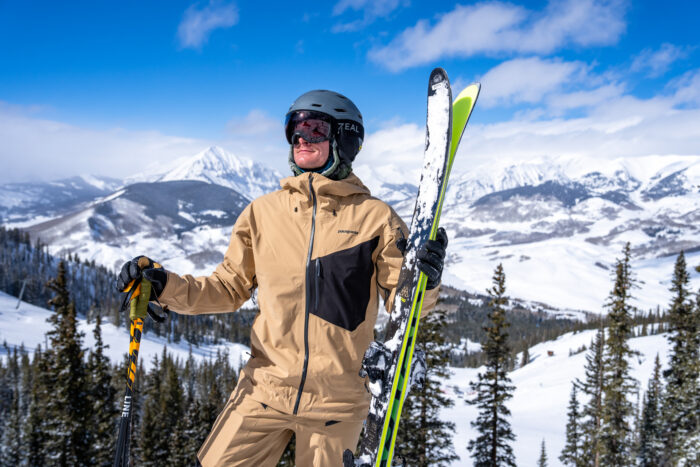
A resounding favorite from our crew, the Patagonia Men’s SnowDrifter Jacket ($449) is light enough to excel in the backcountry, yet sturdy enough to tackle resort riding. Tested by ski journalist Will Brendza, the SnowDrifter is a stylish, high-output layer that won’t hold you back from first chair to last, from alpine starts to backcountry summits.
A proprietary textile — rather than say, one made by GORE-TEX — this jacket was heavily tested through Patagonia’s multiyear testing rounds for waterproofness plus durability and breathability, called the H2No Performance Standard. This one passed. The factory where this kit was manufactured is also Fair Trade Certified.
Supporting uninhibited movement, the SnowDrifter Jacket incorporates a two-way stretch fabric throughout, which we loved. The waterproofness reaches 20K/20K, which is our baseline suggestion for use in a coastal snow climate including Pacific Northwest-based skiers. This lightweight pal even holds up through back-to-back heavy, wet snowstorms. The textile feels so buttery and lean, like a softshell, and simply put, it’s not diamond-level on the durability scale: Be mindful of sharp objects with this fabric. For a more traditional density, check out the Rab Khroma Kinetic Waterproof Jacket, which is still lightweight and durable and offers supreme waterproofness and breathability.
Similar to other options in Patagonia’s outerwear lineup, the SnowDrifter is an eco-friendly powerhouse setting an industry benchmark. The ingredients are also among the healthiest, and most toxic-free for you and the environment. While the former iteration of the SnowDrifter had 70% recycled fabric, this one is 100% recycled, including the 50-denier polyester stretch plain weave and the polyester knit backer. What’s more, the entire manufacturing process is free of perfluorinated chemicals (PFCs), including the fabric, membrane, and DWR finish.
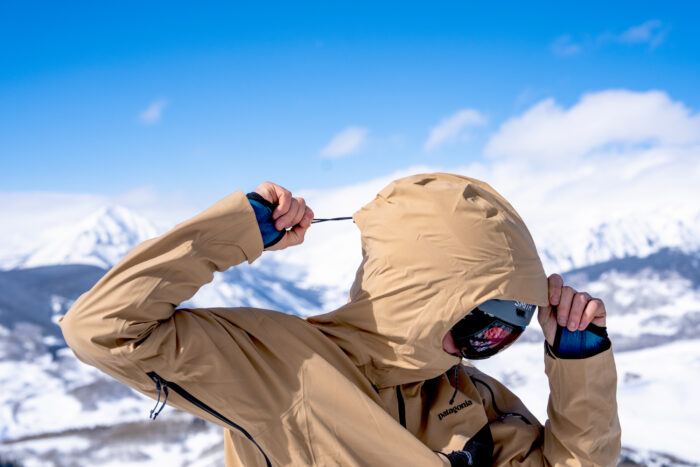
Like other Patagonia outerwear we’ve put to the grind, we found that this jacket ran a little large and the far-reaching length might swallow some torsos. And the lean fabric doesn’t feel the coziest against biting wind. But with an eye-catching aesthetic, the SnowDrifter comes in sharp colors — including some of our favorite combinations — clean design lines, all the features you need, and none that you don’t. The generous underarm vents help regulate heat in a pinch. That chin guard and hood provide great protection on stormy days. After being field tested by Brendza, we’re confident the SnowDrifter is a great jacket-of-all-trades for the skier who samples both the resort and backcountry goods. The full kit comes with bibs, too: Patagonia Men’s SnowDrifter Bibs Review.
Norrona Tamok GORE-TEX Performance Jacket
-
-
(Photo/Bergen Tjossem)
-
-
Extra long pit zips; (Photo/Heather Balogh Rochfort)
-
(Photo/Bergen Tjossem)
-
(Photo/Bergen Tjossem)
Specifications
Pros & Cons
Pros
- Exceptional durability and build quality
- New GORE-TEX ePE fabric slashes environmental footprint
- Excellent coverage for powder and storm days
Cons
- Expensive
- Too long, heavy for backcountry use
Read Review for Men’s Jacket: Weatherproof Fortress for All-Season Freeriding: Norrona Tamok GORE-TEX ePE Jacket and Bib Review
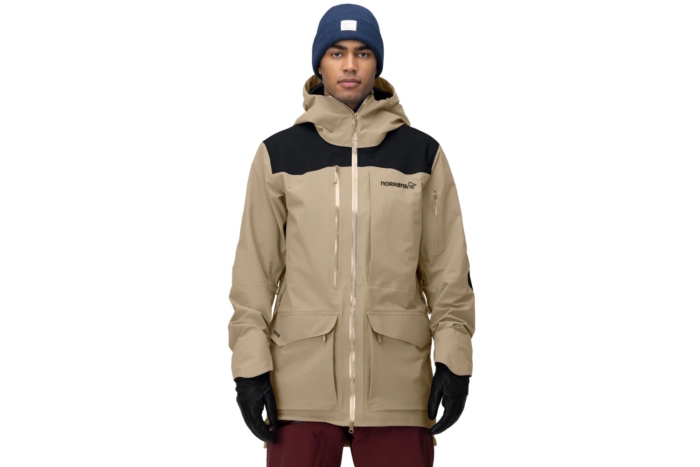
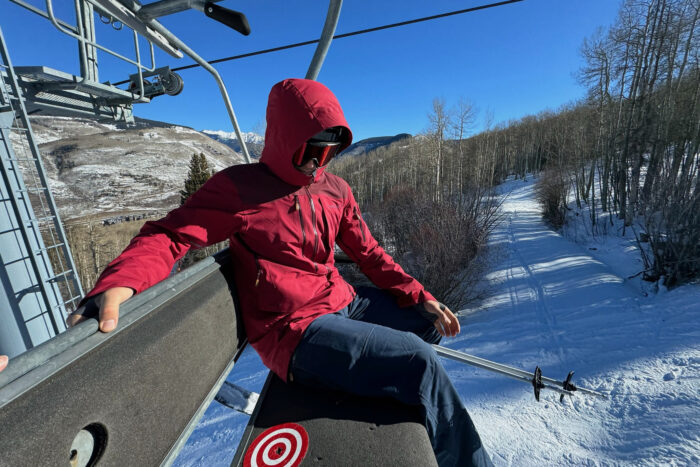
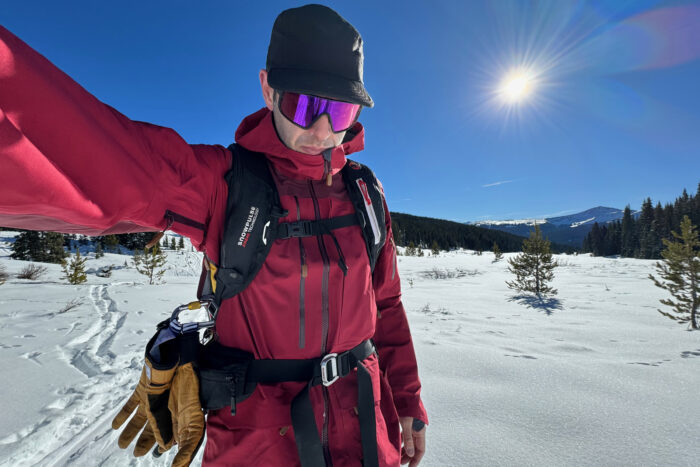
Norwegian outdoor apparel brand Norrona has been making outdoor gear since 1929, but its ski apparel has become more common in North American lift lines and skin tracks over the past half-decade or so. As of last season, the long-standing Tamok jacket now uses GORE-TEX’s PFC-free ePE membrane, which is more environmentally friendly while retaining most of the performance of the old GORE-TEX Pro construction. Now called the Norrona Tamok Men’s GORE-TEX Performance Shell Jacket ($799), this is a premium build and a high-performance tool for skiers. Especially when paired with the Tamok Bib, this is about the highest level of storm protection you can buy.
At the resort, this is a midwinter beast of a jacket. Yes, it uses the high-end GORE-TEX membrane, but notably, it pairs with 70D and 160D face fabrics that are thicker and more durable than most shells. There’s also reinforcement on the shoulders and elbows with even burlier 200D patches. Tested by ski adventurer Bergen Tjossem, he found that the Tamok is nothing if not durable, and this is a shell you could run through season after season of heavy use. It’s also backed by Norrona’s 5-year warranty just in case.
While the Tamok has great venting options, it’s not a realistic backcountry ski jacket option. The cut is extra-long, down to about mid-thigh, so it can be restrictive for active uphilling and definitely is a problem if using an airbag avalanche pack with the strap between the legs.
Beyond the robust build, there are several features that help the Tamok stand out. Because of the extra-long hem, there’s room for two oversized parka-style pockets with zippers and flaps that deliver plenty of storage, especially when paired with the two oversized zippered chest pockets, one of which comes with a tethered goggle wipe. There’s also the now-ubiquitous sleeve-mounted ski pass pocket. Ultimately, this eco-conscious shell is big, burly, and durable.
Field Tested & Approved: 7 More Shred-Ready Ski Jackets
Our awarded ski jackets don’t leave the orbit of our front door from fall to spring. Though we keep a collection of close seconds inside the closet for certain objectives, weather conditions, or style points.
Specifications
Pros & Cons
Pros
- Top-tier weather protection and durability
- Lightweight build that works for both touring and resort use
- Updated fit improves mobility and layering comfort
Cons
- Expensive
- Less breathable, packable, and flexible than softshell alternatives
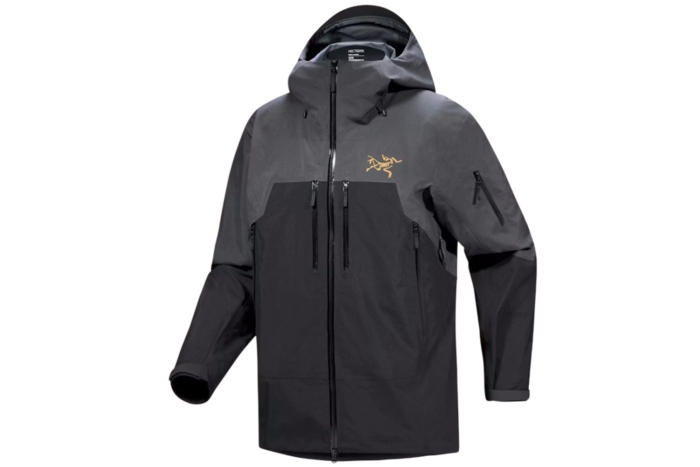
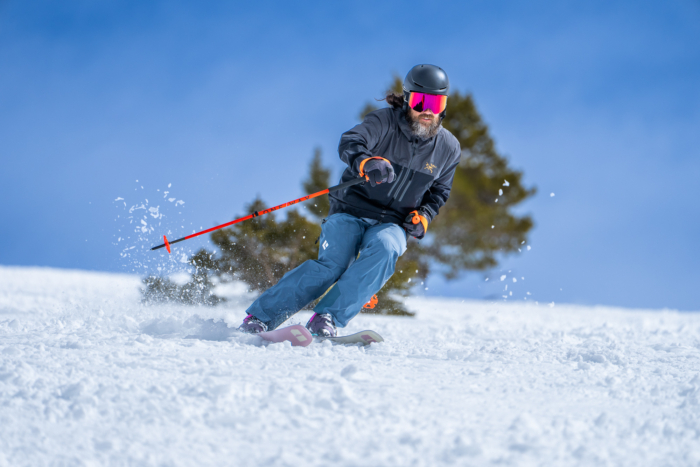
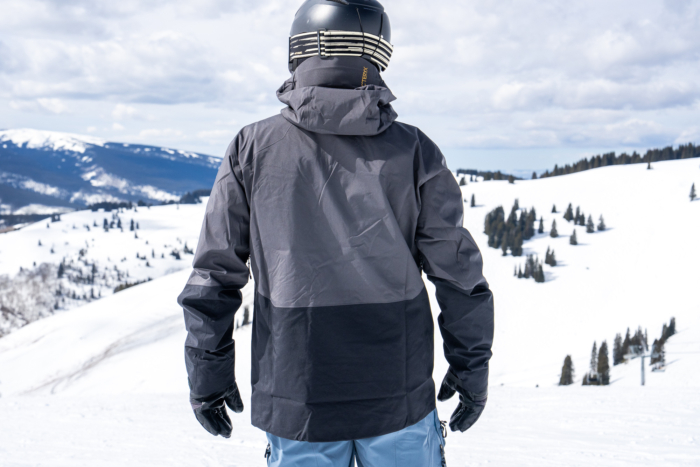
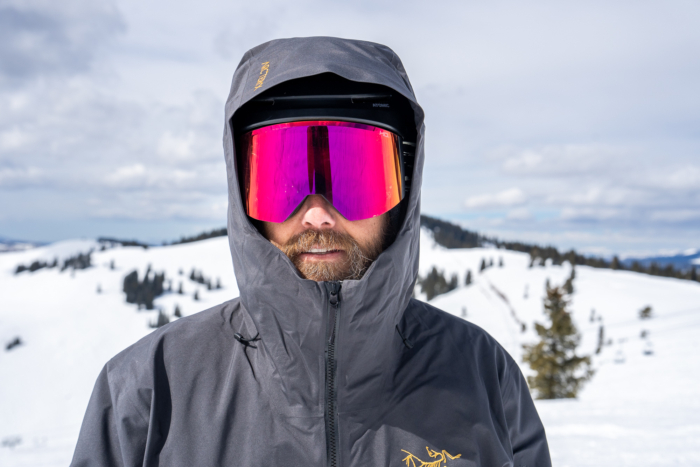
The Arc’teryx Rush Jacket ($800) shares the same design as the Rush Bibs tested by skier Justin Park: a lightweight, backcountry-first shell with best-in-class GORE-TEX Pro weather protection. It’s a lighter shell, built for skiers who split time between touring and lift-access laps, and want one jacket that can handle both without compromise.
Like the bibs, this latest iteration gets a meaningful fit update. There’s a bit more room through the torso and arms, which goes a long way in improving mobility, especially when layering or reaching overhead on bootpacks. The 3-layer GORE-TEX PRO ePE construction is weather-proof, but it prioritizes protection over stretch. The added space keeps the rigid jacket from feeling restrictive, even during high-output touring movements or resort descents.
Again, weather protection is about as good as it gets. The GORE-TEX Pro ePE membrane was unfazed in our testing during heavy snow, wind, and mixed precipitation. From breaking trail on exposed ridges to riding lifts in blowing snow over more than a dozen days testing split evenly between backcountry and resort, our tester Justin Park never worried about the weather in the Rush Jacket. Breathability is solid for a hardshell, though like most 3-layer pieces, it benefits from active venting and will be too hot on warm, sunny touring ascents. The Gore membrane releases some heat and steam, but large pit zips do the heavy lifting here, dumping heat quickly on the skin track.
The feature set is streamlined but functional. You get two high chest pockets that stay accessible with a pack or harness, plus an internal dump pocket for skins or gloves. It’s not overloaded with storage, but the primary chest pockets are large enough for skins, so you don’t have to fiddle with unnecessarily tight fits for your frequently accessed gear.
At 570 grams, the Rush Jacket is impressively light for a GORE-TEX Pro shell. It packs okay for touring, but it’s closer to resort armor than a lightweight touring shell and feels durable enough for regular resort use. The cut and stiffness are comparable to the Helly Hansen Ridge Infinity Shell, but the Rush is lighter. The 80D face fabric has that signature GORE-TEX stiffness — crinkly, not stretchy — making it confidence-inspiring in bad weather. If you want something more ultralight and ultra-packable, consider a non-GORE-TEX touring-specific hardshell or even softshell. If you like the Rush but don’t ski much backcountry, consider the beefier Arc’teryx Sabre Jacket which has a similar fit and feel, but adds a flannel backer.
The downsides of the Rush Jacket mirror the Rush Bibs. It’s Arc’teryx, so it’s expensive, and compared to dedicated touring options, it lacks that easy-breathing comfort on high-output days. But if your priority is maximum weather protection in a lightweight but still resort-ready package, the Rush Jacket is a premium choice that’ll last for years.
Specifications
Pros & Cons
Pros
- Stretchy
- Breathable
- Very comfortable
Cons
- No powder skirt
- Hemline a little high
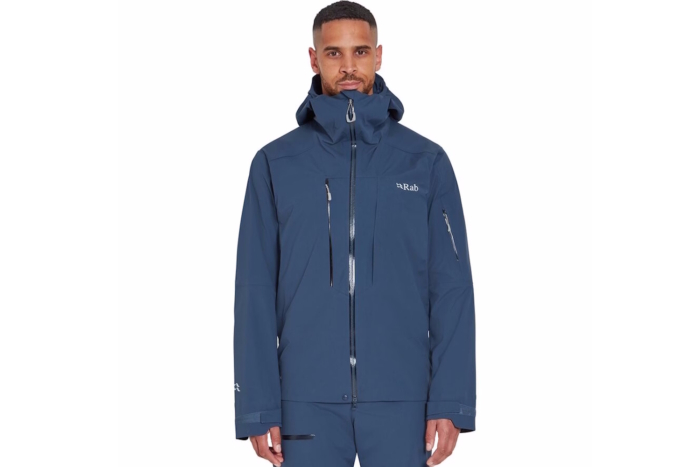
Especially for the backcountry or weather-ridden resort days, this Rab Men’s Khroma Kinetic Waterproof Jacket ($400) is one of our top choices for lightweight weather protection in a comfortable silhouette. Constructed from Rab’s proprietary Proflex material, the Khroma Kinetic balances breathability, waterproofness, and windproofness. The fabric has a malleable, forgiving feel, and the fluorocarbon-free DWR treatment keeps wet snow beading off the face fabric. Unless you need to invest in a premium waterproof build, in the Rab Khroma Latok GORE-TEX Pro Ski Jacket, this one is nearly $300 cheaper and fits the bill for the majority of resort or backcountry skiers and weather conditions.
In terms of comfort, we loved the stretch factor. A little stretch goes a long way, especially on cold days when we had to layer a fleece and a light puffy jacket underneath the shell. A large, two-way adjustable hood easily accommodates a ski helmet without restricting mobility, and we appreciate the low-profile internal cord locks.
This jacket also has a few venting options for when it’s time to shed some heat on the skin track. We found that opening the rear arm vents and the chest pockets can create a nice draft.
When it comes to technical features, the Khroma Kinetic is better equipped for touring and mountaineering than powder days at the resort. It has two large Napoleon pockets with plenty of room for a beacon, bars, and glove liners on a tour. A two-way zipper makes for easy access to a harness during mountaineering endeavors. This jacket doesn’t have a powder skirt. For resort skiing, it has a small shoulder pocket for a ski pass.
For skiers hoping to get by with one jacket for the resort and the backcountry, the Khroma Kinetic is an excellent choice. While the Patagonia Men’s SnowDrifter Jacket serves a very similar purpose and skier, the Khroma Kinetic feels slightly denser — and therefore a bit warmer and more wind-blocking — and has a higher breathability rate and two chest pockets, all at a lower price point.
-
-
(Photo/Nathanael Asaro)
-
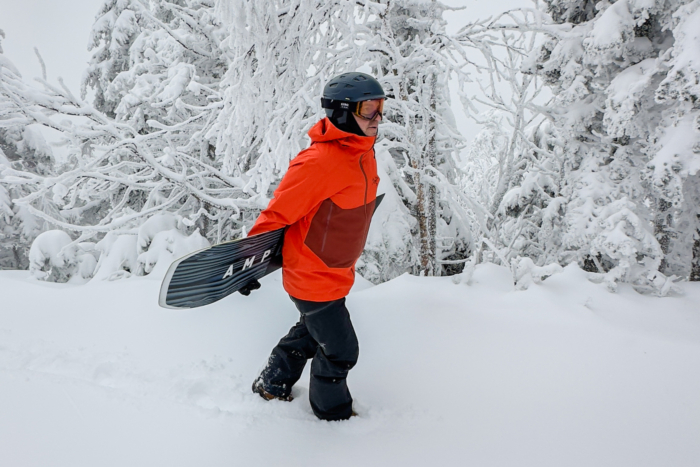
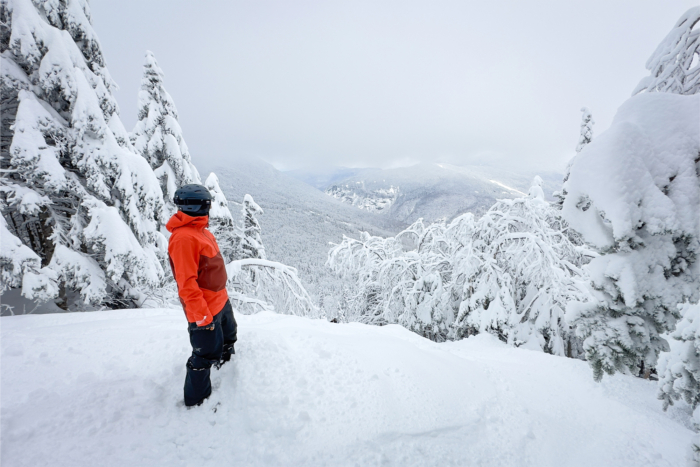
We tested the Arc'teryx Sabre 3L ePE GORE-TEX jacket in backcountry and resort conditions over six days; (photo/Nathanael Asaro)
-
The Sabre jacket offers a tailored fit with mobility for both resort and backcountry use; (photo/Nathanael Asaro)
Specifications
Pros & Cons
Pros
- Enough room to layer up a fleece or micro puff jacket beneath the shell
- Extremely durable
- Slightly longer drop in the back for extra protection
Cons
- Expensive
Read Review: Stormproof Ski Shell for Backcountry or Resort: Arc’teryx Sabre Freeride Jacket Review
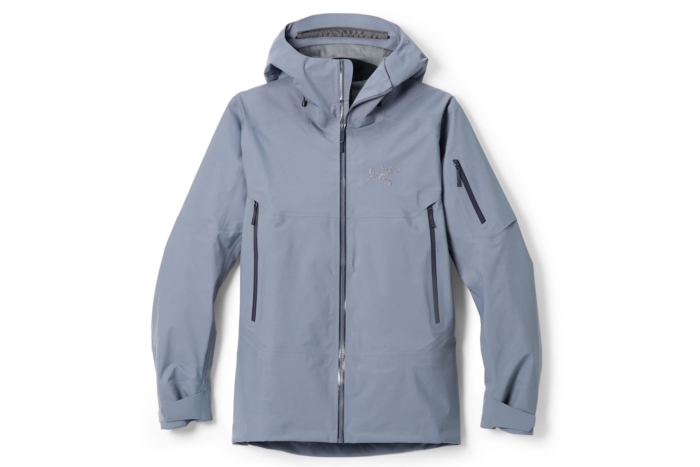
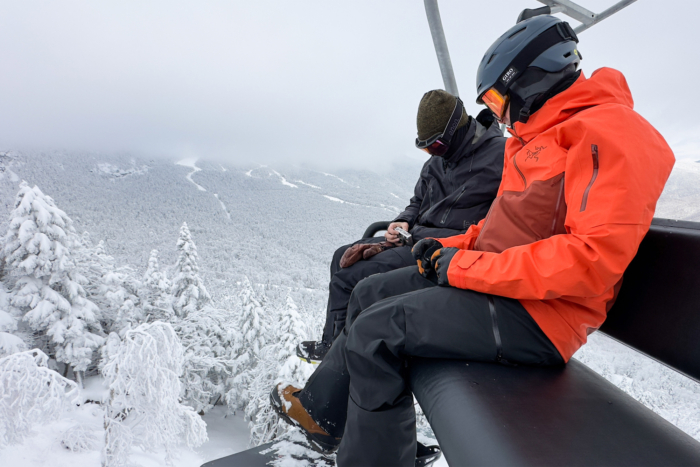
Arc’teryx delivers these tough, flexible shell jackets for tackling big mountain ski lines at the resort or in the backcountry: the Arc’teryx Men’s Sabre Jacket ($750). While this ski jacket is an investment, it continues to be at the top of our stack because it’s so functional, performs exceptionally well, withstands years of abuse, and looks good.
This design has a durable yet buttery 80-denier (70 in the Sentinel) nylon face fabric, so we don’t need to worry about exploring the glades or playing fetch with an excited pooch at the base. From blustery conditions to blower powder, the three-layer GORE-TEX fabric is waterproof, breathable, and blocks wind well for rider Jesse Huffman.
And the seams are fully sealed to bar moisture. If you build heat on deep-snow laps, the underarm vents are a lifesaver, and the powder skirt helps keep base layers dry. A soft flannel backer provides a bit of warmth for cooler days on the chair lift. The hood fits over a helmet. The Sabre has two external hand pockets, one small sleeve pocket, two internal mesh pockets, and one internal pocket with a zip closure.
If you’re looking for a comfortable, lightweight shell that stands season after season and manages variable conditions from spring sunshine to storms, the Sabre Jacket is a worthy choice.
Specifications
Pros & Cons
Pros
- Just warm enough without overdoing it
- Dialed feature set
- Durable construction and face fabric
- Comfortable, roomy fit
Cons
- Too warm and bulky for backcountry skiing
- Partially insulated — midlayer required on frigid days
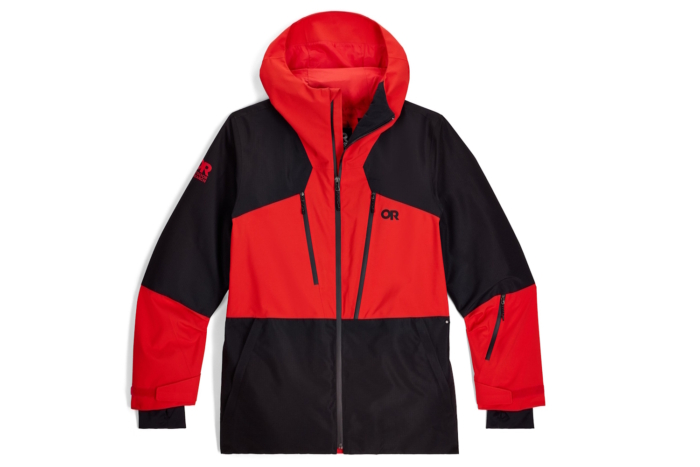
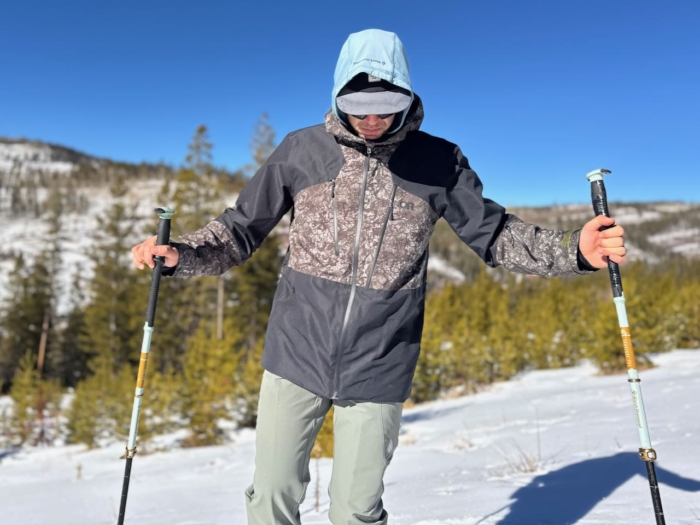
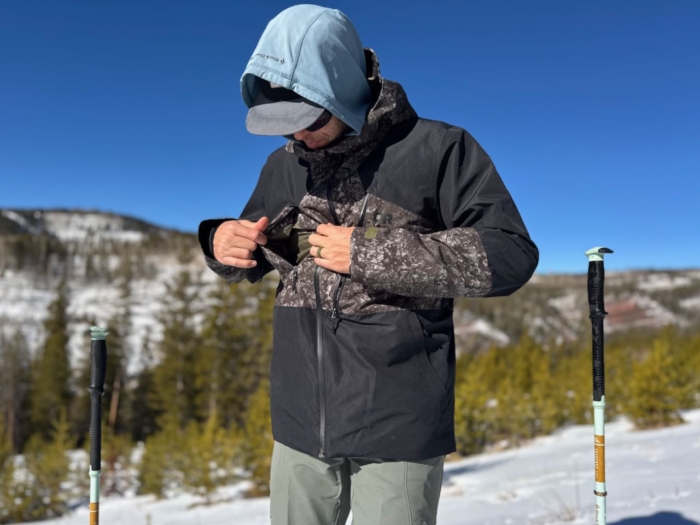
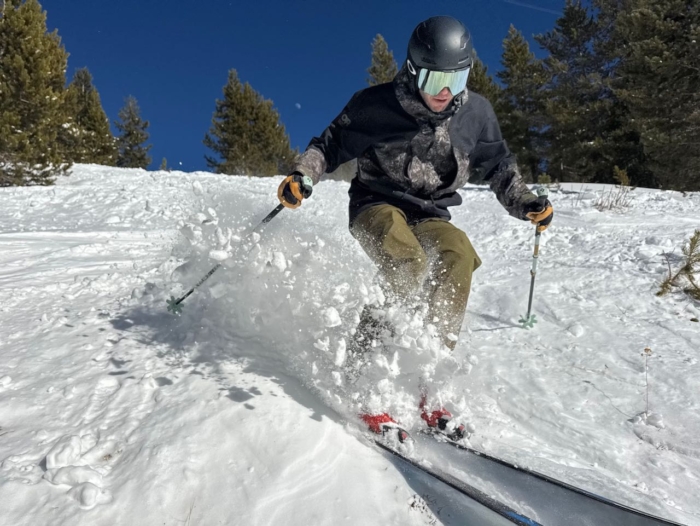
When the weather finally turned frigid in Colorado, tester Bergen Tjossem kept reaching for the new Outdoor Research Powderverse Jacket ($400) for in-bounds resort days. The Powderverse utilizes strategically mapped insulation and a bomber face fabric that protects riders from any weather conditions they might encounter at the resort. He came out warm and dry after many days of skiing in conditions ranging from excellent to “horrifying.”
When snowfall and even a short rain shower came down, the Powderverse’s 20,000 mm waterproof fabric proved to be a dependable barrier. Made with the brand’s proprietary AscentShell Dry, the 2-layer jacket has a burly exterior fabric. Tjossem found the jacket was sturdy when up against the ski lift, trees, and even rock — it’s built to last many winters.
The Powderverse takes a unique approach to warmth, mapping the core with insulation made with the brand’s proprietary VerticalX eco polyester. It adds a hint of warmth where it really matters and keeps the bulk to a minimum everywhere else. We still needed a midlayer on the coldest days, but it wasn’t too warm when the sun came out.
Sporting an oversized fit and cut, the Powderverse works great for resort riding. A relatively long length added protection on the nastiest ski days. We appreciated being able to add insulation underneath without feeling constricted. The helmet-compatible hood was roomy enough for a large freeride helmet without causing any constriction, and it included a wire brim and multiple adjustments.
During a few alarmingly warm December days, Tjossem was thrilled by the large underarm vents that let out some of the hot air. The jacket is decently breathable (with a membrane rated at 17k g/m²/24hr), but not quite to the level of a standalone hardshell.
The Powderverse is absolutely loaded with pockets. You get a massive pair of Aquaguard zippered chest pockets and hand pockets on the front of the jacket that swallow snacks and iPhones. The interior has a zippered media pocket on the left chest and a drop-in pocket on the inside right. Like any good resort jacket, you get a ski pass pocket on the left wrist.
Though the powder skirt isn’t removable (to Tjossem’s irritation), the interior snaps let you tuck the skirt’s ends so the whole thing stays out of the way. The Powderverse also hosts wrist gaiters. All around, this jacket offers a stellar feature set for a competitive price. You get a thoroughly waterproof, durable fabric, strategically mapped insulation, and mega pockets sprinkled throughout. While it wouldn’t be our first choice for backcountry skiing, the Powderverse Jacket is a great match for resort skiers and others who like to play outside in nasty weather.
-
-
(Photo/Justin Park)
-
(Photo/Justin Park)
-
(Photo/Justin Park)
Specifications
Pros & Cons
Pros
- Best-in-class weatherproofing
- Mobility-friendly fit
- Lightweight
Cons
- Expensive
- Inadequate breathability for high-output touring
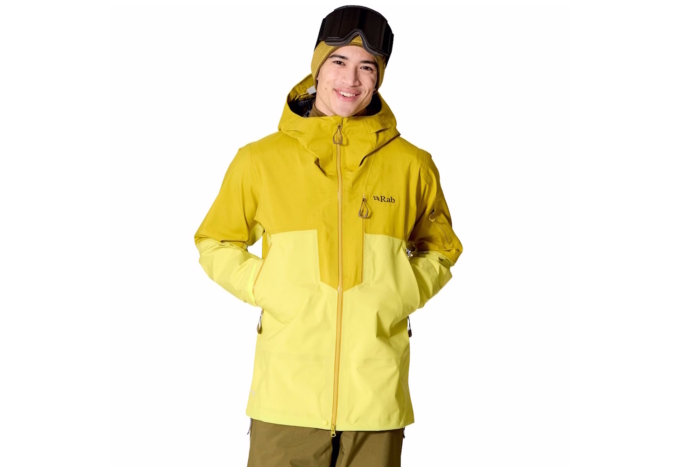
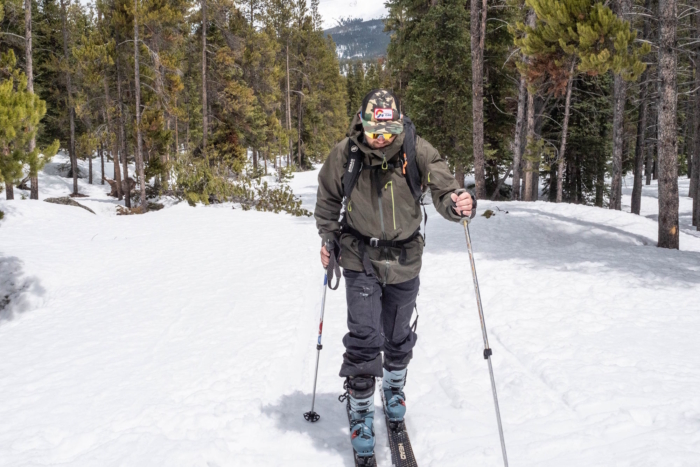
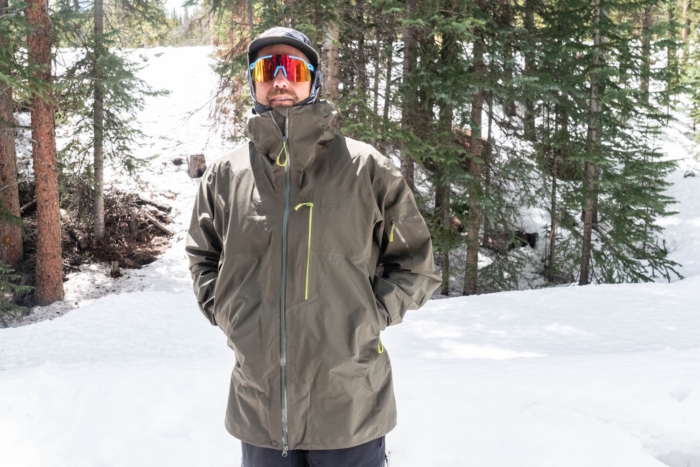
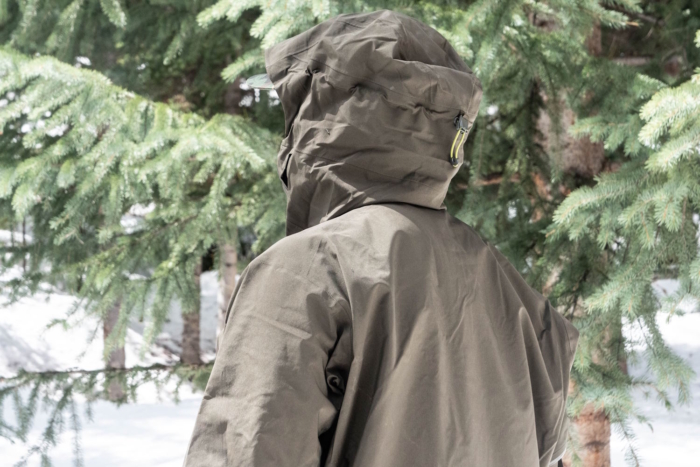
Rab entered the ski space with its Khroma line after years of making durable, high-end ski mountaineering gear. The lineup is geared toward backcountry skiers, but layers such as the Rab Khroma Latok GORE-TEX Pro Ski Jacket ($695) are just as suitable for the resort as on the skin track. As a bonus, the face fabric is 100% recycled.
Compared to the Rab Khroma Kinetic, the Latok is much more waterproof — it’s the highest level of waterproofness among any of our favorite ski jackets — and more durable with 40-denier and 80-denier textiles. As a result, the Latok is less breathable and much pricier. There are also additional pockets: two for hands, one Napoleon, and one for a ski pass.
Coming out strong, the 28K waterproofing is what sets this jacket apart. It won’t blink in heavy, wet snowfall or high winds and will be plenty of jacket even if you never leave the resort. But if you do take it out of bounds, the oversized chest pockets are accessible when wearing a pack and big enough to stash skins on quick transitions. Inside each sleeve is a slender wrist gaiter with thumb holes to help block the cold air.
The Latok employs best-in-class weatherproofing via GORE-TEX Pro, though they use the relatively lighter variant — which is the most breathable option — for an overall lower net weight and better packability in addition to slightly improved breathability. It’s still a pretty stuffy GORE-TEX shell (hence the 28K waterproofness) compared to a more dedicated backcountry design, like the Patagonia SnowDrifter. But the Khroma is a great option if you tour casually or occasionally in colder conditions.
Ski expert Justin Park found that this fit is roomy, which is great for mobility to make up for the lack of stretch and relatively stiff GORE-TEX fabric. This results in some blousing when wearing a pack, but you can size down if you’re between sizes for a trimmer fit for the backcountry. Our 6’0” tall tester fell right between an L and an XL but went with the XL for more mobility and comfort.
This is a perfect shell for the resort skier who gets out in the backcountry but isn’t screaming up the skin track, doesn’t mind stopping to shed the Latok when warranted, and also doesn’t want to have to buy a separate shell just for touring.
-
-
(Photo/Quinn Chody)
-
(Photo/Quinn Chody)
-
(Photo/Justin Park)
Specifications
Pros & Cons
Pros
- Excellent breathability
- Lightweight
- Relaxed fit
Cons
- Expensive
- Thin for cold resort days
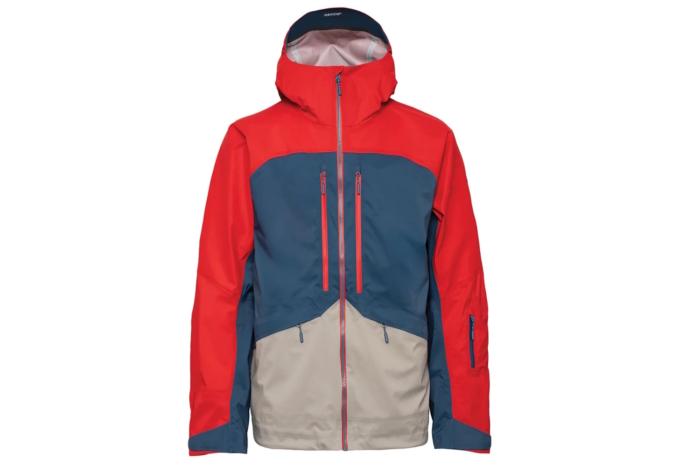
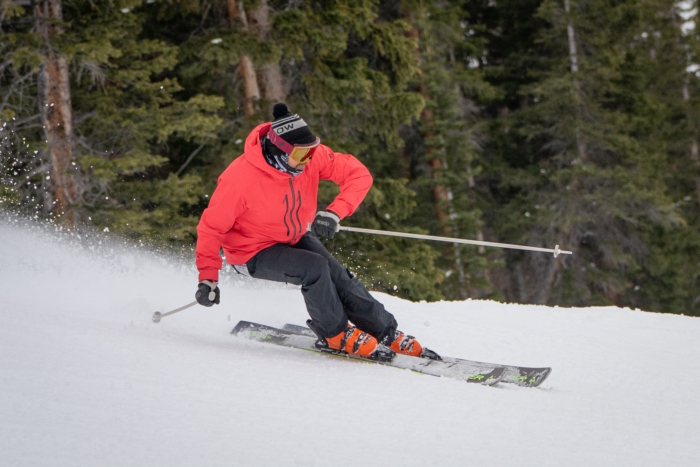
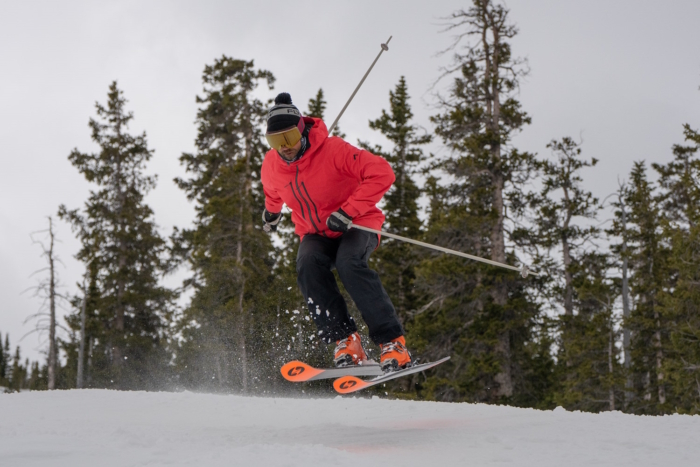
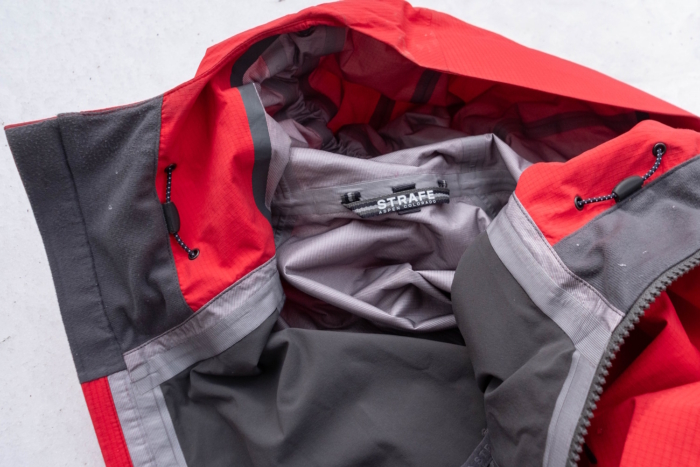
The growth of backcountry skiing has lots of ski apparel brands trying to create one jacket to span the boundary lines. On paper, this sounds much better than spending $1,000 or more to get two purpose-built jackets for each ski day. In reality, touring is a high-output sport that requires light, breathable layers, while resort skiing demands weather protection and warmth — and few jackets do both well. The Strafe Nomad 3L Shell ($679) comes as close as we’ve seen to threading the needle.
Within the fabric, the Nomad shuns a claustrophobic GORE-TEX membrane for an eVent membrane that sacrifices some weather resistance for much better breathability. In a lighter construction, the blend actually lets air escape before you build up enough heat and moisture to dampen your baselayers. In terms of build and handfeel, the Nomad is appropriately somewhere between a stiff, crinkly GORE-TEX Pro shell and a thinner, backcountry-oriented shell like the Patagonia SnowDrifter. For contributor Justin Park, the Nomad held up just fine in high winds and wet snow, but if weather resistance is a top priority, you’ll want to look elsewhere.
Regarding weight and packability for touring, it’s closer to most resort shells, but it’s the balance of breathability and weather resistance that sets it apart. Most other crossover shells are just lighter-weight versions of existing resort shells and aren’t realistic to leave on for most high-output touring in normal temperatures.
This baggier, freeride fit might be an adjustment if you’re used to a slimmer touring shell. But there’s enough room to ensure mobility, even though the fabric itself doesn’t have any stretch. Any shell can get too hot when touring on warmer days, and the Nomad is no exception. It also sacrifices some wind- and water-resistance compared to high-end GORE-TEX, but the compromise makes it one of the best options we’ve tested for a true 50/50 ski jacket option.
Specifications
Pros & Cons
Pros
- Softer stretch material allows more tailored fit
- Highly breathable and waterproof
- Durable face fabric
Cons
- Hard to layer underneath snug fit
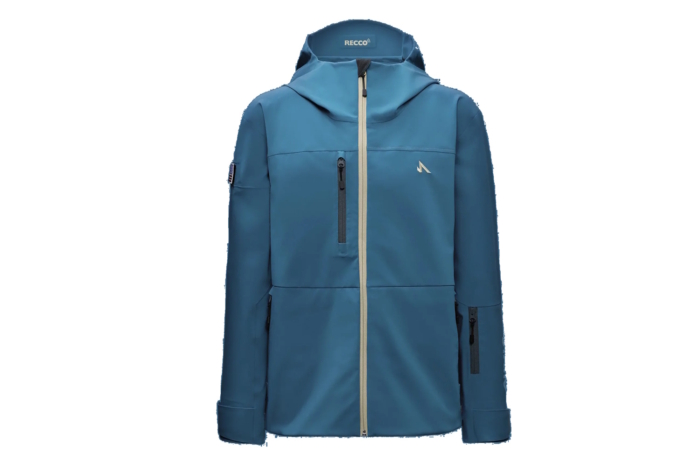
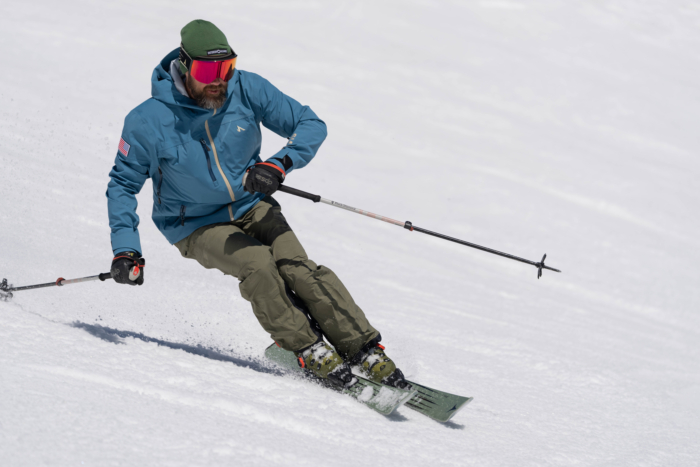
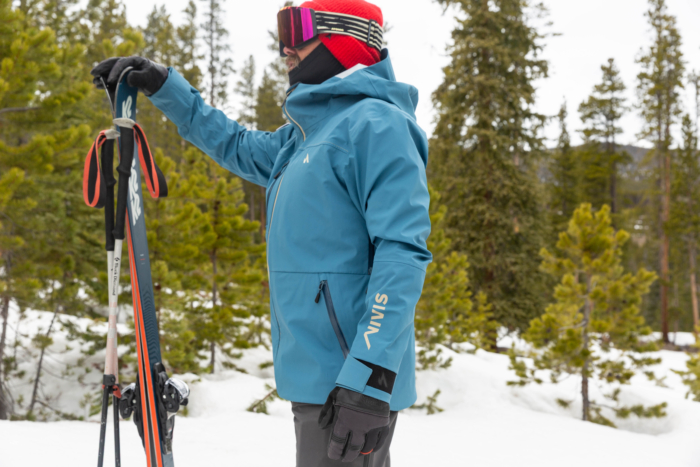
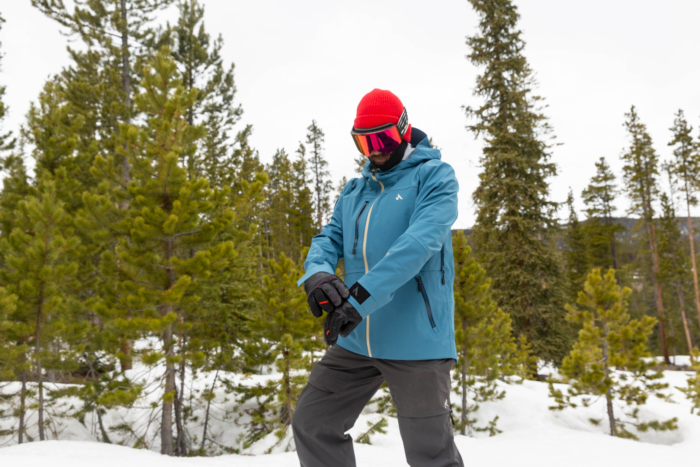
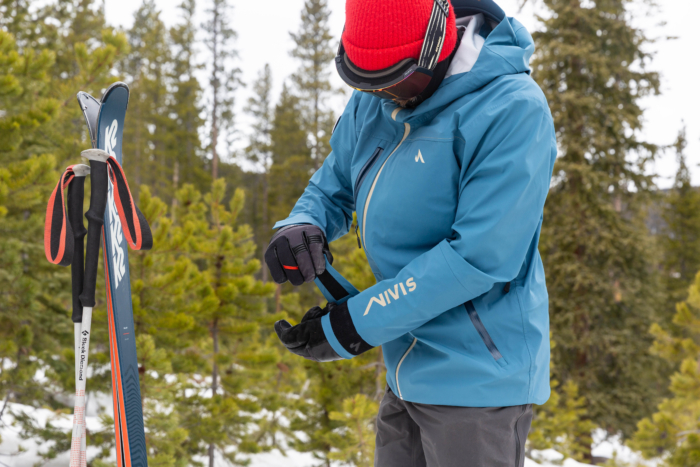
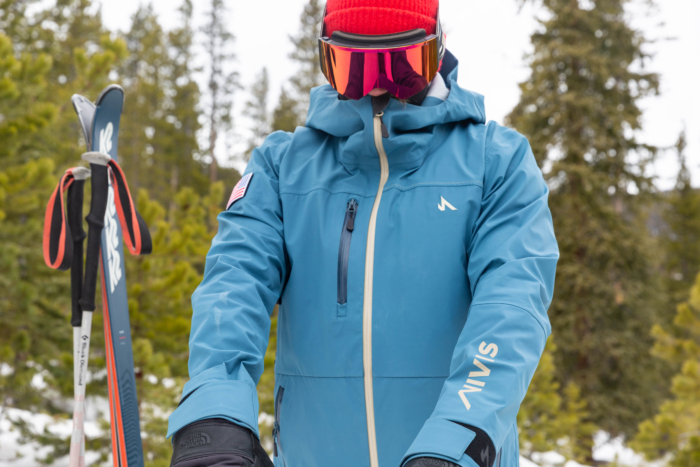
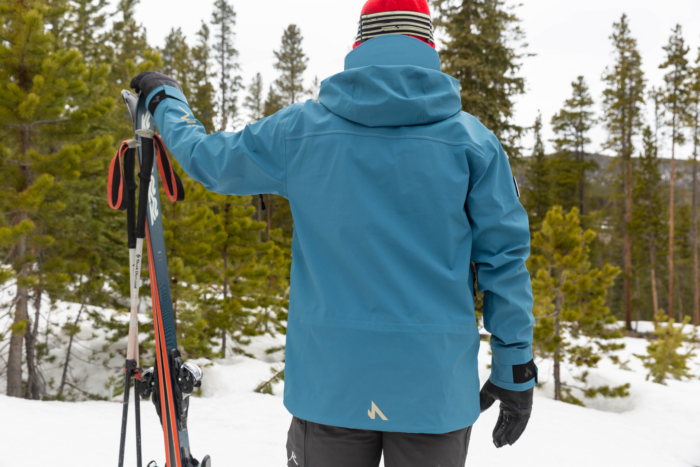
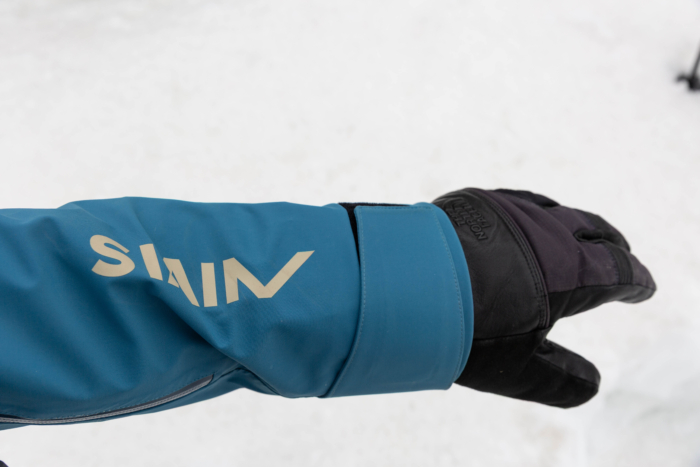
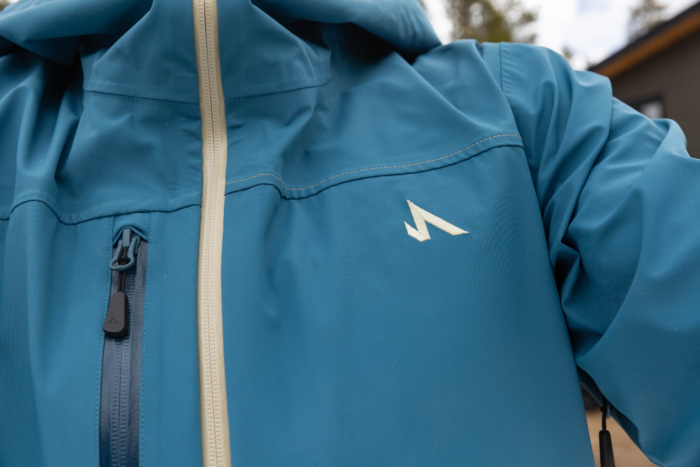
Nivis is a U.S.-based entrant specializing in ski jackets with high-end price points, materials, and construction that set them apart from the slew of GORE-TEX shells from the big ski brands. The Nivis Protego Pro Shell ($690) is the brand’s top-of-the-line model with a price tag to match. That’s a leap of faith for skiers, considering this is a lesser-known startup, so the question is: Is the Nivis jacket worth it?
Skier Justin Park wore the Protego Pro shell for about 8 days in wildly variable spring skiing conditions, from cold storm days to blindingly sunny spring slush runs, and was pretty impressed. While they use a little-known waterproof-breathable 3-layer membrane called MaxAliento, it’s not a drastic departure from classic ski shells. However, the 25K/25K waterproof-breathability ratings are comparable to GORE’s new ePE eco-friendly shells.
The biggest differentiators are the fit and feel of the jacket, which is slim and structured, and almost like a cross between a softshell and a hardshell. While the material is soft to the touch, it’s doubled up in the front, and the arrangement of the panels gives it a lot of structure. Raise your arms above your head, and the whole jacket moves up like a plate of armor.
Despite that rigidity, the fabric blend contains substantial spandex for four-way stretch, so it’s not an upper-body cast. Nylon is generally more durable than cheaper, more common polyester fabrics, so we’re optimistic about its long-term durability, which helps justify the price point. Park was worried the slim-fit arms would make layering uncomfortable, but he wore a puffy midlayer under the Protego Pro without issue.
If you prefer a baggy freeride cut like that found in The North Face Dragline Jacket, you might not love how the Protego Pro shell fits. The tailoring doesn’t have quirks for a young brand, though the waist hem is shorter than any other shells we tested this season. It hangs low enough not to look or feel goofy, but it’s noticeable, and you might consider using the (removable) powder skirt to keep snow out and your belly in.
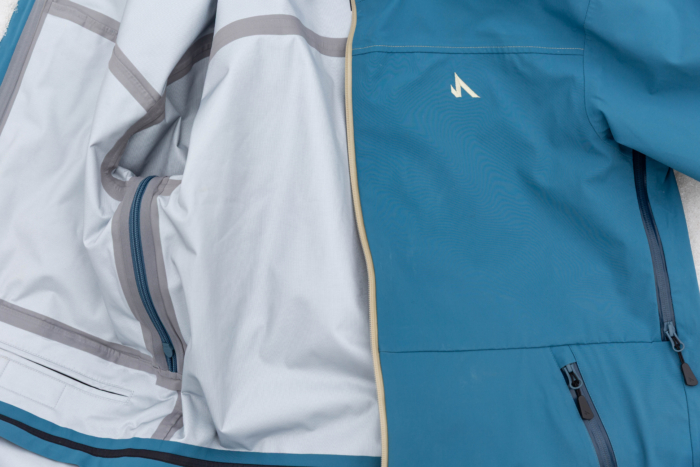
Speaking of powder skirts, Nivis touts “revolutionary pockets” on the shell’s inside that hang behind the powder skirt, which hinders other brands from placing pockets there. These oversized hook-and-loop dump pockets are nice, but Park isn’t sure they’re Che Guevara-level. As a bib enthusiast who has never used a powder skirt, he’d ditch the elastic waistband. More impressive is the inclusion of an Aerogel-lined interior chest pocket that insulates your phone to preserve battery life.
While it’s not necessarily a revolution in ski outerwear, the Nivis Protego Pro does stand out from the crowd with its business model, fit, and feel. The price tag is high, but there’s performance to match as long as you like the slimmer fit. As a direct-to-consumer boutique brand, you’ll theoretically save some cash on the purchase.
Comparison Chart: Ski Jacket Specs and Value (Budget to Premium)
| Ski Jackets | Price | Insulation | Construction & Fabric | Waterproof Rating | Best For |
| Helly Hansen Ridge Infinity Jacket 2.0 | $650 | None | 20K | ||
| The North Face Dragline | $450 | None | 3L 75-denier/170-denier DryVent Mono | ~15K | Freeride |
| Stio Objective Pro Jacket | $799 | 28K | Ski-touring, resort skiing | ||
| Patagonia Insulated Powder Town | $399 | 80g (40g in sleeves) Thermogreen 100% recycled polyester | 2L 150-denier H2No Recycled Polyester | 20K | Best Insulated Resort |
| Stio Environ | $479 | None | 3L 150-denier PeakProof Polyester | 20K | Best All-Mountain |
| Patagonia SnowDrifter | $449 | None | 3L 50-denier H2No Recycled Polyester | 20K | Best for Touring |
| Norrona Tamok | $799 | None | 3L 200-denier/70-denier GTX Pro | 28K | |
| Arc’teryx Rush Jacket | $800 | 28k | |||
| Rab Khroma Kinetic | $400 | None | 3L 20-denier Proflex Nylon | 20K | Best Overall |
| Arc’teryx Sabre | $750 | None (flannel backer) | 3L 80-denier GTX ePE | 28K | Best Premium |
| Outdoor Research Powderverse | $400 | 45 g VerticalX Eco (body-mapped) | 2L 75-denier/160-denier AscentShell | 20K | Best Value Insulated |
| Rab Khroma Latok | $680 | None | 3L 80-denier/40-denier GTX Pro | 28K | Backcountry |
| Strafe Nomad | $679 | None | 3L 40-denier eVent DV Alpine Nylon | 20K | Freeride |
| Nivis Protego Pro | $690 | None | 3L 4-way stretch proprietary shell | 25K | Resort, Freeride |

How We Tested the Best Ski Jackets
Our Expert Testers
Contributor Justin Park skis more than 100 days each season, split evenly between backcountry and resort days. From sub-zero January pow days to slushy June touring missions, he puts dozens of jackets, skis, boots, and pants through their paces at high elevations.
- In the 2026 four-month test window, Park tested three ski jackets for 83 hours and 25 days in temperatures ranging from -10 to 68 degrees Fahrenheit. He enjoyed laps around the globe including Vail Ski Resort, Deer Valley, Breckenridge, Loveland, Monarch, Steamboat, Arapahoe Basin, Silverton, Grand Montets, Courchevel, Andermatt, White Pass, and Flegere.
Gear tester Bergen Tjossem is a ski fanatic born, raised, and currently based in Vail, Colo., at the foot of his favorite mountain range, the Gore. Tjossem is a known destroyer of gear and a sharp critic of apparel breathability and fit.
- Through 2026’s four-month test window, Tjossem tallied vertical in four ski jackets for 120 hours and 30 days at Vail Ski Resort and Keystone, as well as backcountry missions in the Gore and Sawatch Ranges. His laboratories faced temps ranging from -5 to 60 degrees Fahrenheit.
Albert Kim, one of our lead GearJunkie testers, is in southern Utah. He cut his teeth in the snowsports industry working as a ski builder for Wagner Custom Skis in Telluride, Colorado.
Since 2021, additional contributors have included Steve Graepel, Ryan Wilchens, Editorial Director Sean McCoy, and Will Brendza.

Our Testing Grounds
In addition to managing two dozen gear testers, Tilton field tests from Crested Butte Mountain Resort to Wyoming, Montana, and British Columbia. So far in 2025, Tilton has tested ski jackets for over 165 hours, 700 miles, 195,000 vertical feet, and 44 days of winter adventures. In 2024, she tested apparel for 216 hours throughout 62 days of recreation from ski areas to the backcountry. In 2023, she tested gear for 114 hours across 35 days. Those days exclude the countless hours of shoveling.
Based in Breckenridge, Colo., Park tests ski gear more than 100 days each season. Despite the desert environment of southern Utah, Kim regularly skis at Brian Head Resort and the surrounding backcountry near an elevation of 10,000 feet. Constantly changing conditions have Kim putting his outerwear through its paces, which demands top-tier protection and durability.
The GearJunkie team has met for annual on-snow test weeks to grind out turns and swap notes, including two gatherings at Crested Butte Mountain Resort, which is known for its expert terrain, as well as a test at Vail Ski Resort.

Our Testing Process
Throughout the field tests, we note various metrics, including performance, protection, quality, longevity, fit, functionality, features, size range, and value.
In addition to our experience, we consider the most novel, style-specific, popular, highly rated, and legacy products across various price points. This collection of ski jackets serves a range of athletes and applications.

Our Ski Jackets Rating System
We score each ski jacket on a 1–10 scale for Weather Protection, Fit and Mobility, Durability and Construction Quality, plus Breathability and Ventilation. While considering weather protection, we take into account how the jacket shields moisture and wind. Fit and mobility examines how effortlessly the jacket moves with us while going uphill, downhill, ski pole planting, wearing a ski backpack, and bending over, as well as if there are any snag points. Durability and construction quality considers the overall material, seams, collar, hood, zippers, and pockets. The breathability and ventilation takes a look at how effectively the design releases moisture and heat during high-output activity, including the material and mechanical vents.
The Overall Rating is based on contextual, editorial judgment, and the complex user experience across various scenarios and conditions.

Buyer’s Guide: How to Choose a Ski Jacket
Ski jackets are useful for activities other than laps at your local ski hill or in the backcountry. These winter jackets are so functional that they can also be used for shoveling the driveway, walking the dog, snowmobiling, snowboarding, and more.
If you’re looking for a jacket specific to snowboarding, check out our Best Snowboard Jackets buyer’s guide. The main differences are the fit, style, and brand alliance.

Ski Jacket Fit
Generally, ski jacket designs land in two camps: trimmer with a more streamlined, athletic fit or roomier and boxier with a more relaxed silhouette. Both can be comfortable. If you’re wearing a backpack in the backcountry, it can be better to wear a well-fitted jacket so the fabric doesn’t get pinched up.
Each manufacturer has its size charts for ski jackets. Make sure to take your measurements and match them with the size charts.
Many companies deliver more size inclusivity with broader offerings for men’s apparel including TREW Gear, Columbia, Obermeyer, and L.L.Bean. While there are, unfortunately, no men’s ski jackets with extended sizes on our list, the Stio Men’s Environ Jacket offers the broadest size range of XS to XXXL. We’d like more size options for our favorite men’s ski jackets.
Everyone’s body is unique, so check the exchange and return policy before you buy.

Insulated vs. Non-Insulated Ski Jackets
Some ski jackets offer no insulation, which is a versatile option for use across various conditions. This waterproof, breathable layer helps you stay dry and protected from the sun, wind, or abrasion, like from a tree branch or snow burn if you slide out. There’s typically enough room to add a midlayer and base layer beneath for chilly or cold days.
This type of jacket works well for warm spring turns at the resort or powder days when you typically accumulate heat carving turns. A range of weights and densities exists so that you might prefer a heavier hand feel if you ski where there’s frequent wind chill.
Other ski jackets, like the Patagonia Insulated Powder Town, are insulated for additional warmth in cold, windy locations. For some skiers, especially those going into the backcountry, these jackets can pigeonhole them into donning too much warmth.
Insulated jackets also tend to be overkill on warm spring days or in milder winter locations. The type and warmth of insulation vary across each jacket, ranging from flannel to down-filled panels or synthetic proprietary fabrics.

2-Layer vs. 3-Layer
A two-layer jacket has a face fabric — such as polyester or nylon — connected to an inner liner that protects the fabric, is breathable, and adds comfort. These jackets usually feel less hefty than a three-layer jacket. One of our favorites is the Patagonia Insulated Powder Town, which combines a layer of insulation with an outer fabric treated for waterproof protection. The price is generally more moderate compared to three-layer jackets.
Regarding durability, a three-layer jacket is a waterproof/breathable membrane — often made by GORE-TEX — sandwiched between a tough face fabric and liner. Sometimes the outer fabric is treated for waterproofness. These jackets offer more protection for fierce weather conditions and are pricier. Broadly, you’ll want to scrutinize how robust you need your coat to be for your ski conditions.

Waterproofness
A waterproof jacket is ideal for skiing because weather can be flippant, and you don’t want to run the risk of getting wet from snow or rain. The top-A waterproof jacket is ideal for skiing because the weather can be unpredictable, and you don’t want to risk getting wet from snow or rain. The top-tier waterproofing standard is GORE-TEX, a membrane integrated into various jacket designs.
The material is waterproof, windproof, and breathable. Some brands have a proprietary version of waterproof/breathable fabrics.
Manufacturers rate waterproofing by how much water a fabric withstands before leaking, typically from 5,000 mm to 20,000 mm or higher. The latter end of the spectrum leads to a less breathable fabric.
- 0-5,000 mm: Resistant to light rain, dry snow
- 6,000-10,000 mm: Waterproof for light rain and dry, non-heavy snow
- 11,000-15,000 mm: Waterproof for moderate rain and dry, non-heavy snow
- 16,000-20,000 mm: Waterproof for heavy rain and wet snow
- 20,000 mm and greater: Waterproof for heavy rain and dense, wet, heavy snow
The most waterproof jacket we’ve tested provided 30,000mm protection. Jackets at 10,000 mm are adequate for many skiers and riders, though it depends on the environment.
Face fabric treatments, which can be eco-friendly formulas or chemicals toxic to the environment, can also make a jacket waterproof. And some jackets have sealed seams to block moisture.

Breathability & Air Permeability
For high-output skiing on powder days, aim for a jacket with 10,000-15,000 g of breathability. Backcountry skiers and uphill athletes should look for even more breathability — 20,000 g or more.
The breathability of a ski jacket is constantly in a constant balance or pull game with its waterproofness. Generally, the more waterproof an outer layer is, the more difficult it is for the fabric to be fully breathable. On the far end of that spectrum, imagine your favorite workout t-shirt you pull on for a hike or the gym: It’s not waterproof, but it allows your sweat to exit.
A few jackets, such as the Strafe Nomad Jacket, are air-permeable. These jackets use a different waterproof/breathable construction than the standard set by GORE-TEX. While GORE-TEX membranes allow moisture to escape in the form of vapor, air-permeable fabrics let air pass through, so you don’t have to start sweating to activate the jacket’s breathability. Fabrics with air permeability include the Strafe Nomad’s eVent and Flylow’s The Perm.
If you want a more breathable ski jacket, pay attention to that metric and whether there are underarm vents. Of course, if breathability is a priority, you’ll also likely want a jacket that is not insulated.

Ventilation
Ski jackets often offer ventilation through underarm zippers, which help regulate body temperature. This feature is great for warm-blooded folks or those who ski in warm conditions and for powder days when your body works hard to make turns. Some underarm zippers are longer than others.
One innovative ventilation design we’ve seen is a front-facing, closable mesh vent that parallels the front zipper. In terms of quality, YKK zippers are the toughest.
Overall Weight
A jacket’s overall weight is important for backcountry skiers who often need to stash a jacket in a pack and can’t sacrifice space for bulk.
Similarly, some uphill athletes want a jacket for weather protection but only need a light layer. And occasional resort skiers take laps with a backpack on and might need to store a jacket as the conditions warm.
The lightest jackets in our top picks are 450-550 g. Heavier jackets are closer to 900-1,000 g.
Ultimately, you shouldn’t compromise a jacket’s safety or comfort details and adequate warmth to lose weight.

Collar & Hood
An ergonomic collar and hood protect the face, head, and neck against sun, snow, sleet, hail, wind, or rain. Pulling up a hood can help the body retain heat in chilly conditions.
Jacket collars vary in height and ideally have an interior chin guard that feels snug against the face — a key component on a gusty chair lift.
Hoods can be helmet-compatible, a priority if you need extra protection and warmth around your face and neck while riding a lift or skiing during a snowstorm. Some hoods are adjustable via elastic pulls. And others have an integrated visor so they don’t collapse beneath moisture. Some jackets have removable hoods, while others have fixed ones.
One of our favorite hoods is on the Patagonia Men’s SnowDrifter Jacket. It offers a great shape that fits over a range of helmet sizes and doesn’t catch a draft. Plus, it has plenty of flexibility to swivel our heads while skiing downhill or sitting on the lift.

Sleeve Cuffs & Powder Skirt
Powder skirts can be a great addition to a jacket to prevent fluffy flakes from flying up and soaking your base layers or lower back. Some ski jackets have fixed powder skirts you can’t remove. Others have a zipper or attachment points to connect to your ski jacket.
Sleeve cuffs generally have a Velcro closure, though they vary in width, length, and pliability. Some designs have additional snaps. Many cuffs have an inner wrist gaiter or storm cuff (a cuff within a cuff). It’s usually made of stretchy fabric and adds warmth while blocking wind. Sometimes, it has thumbholes to help secure the fabric over the top of the hand.

Pockets
Most ski jackets include two exterior hand pockets with zip closures, which can be low or high to accommodate a backpack belt or harness for ski mountaineering. Other exterior pockets can include small pouches on the arm or the chest. Deep, wide, higher-placed exterior pockets can be nice for stowing a smartphone or notebook in the backcountry.
Interior pockets often have a zip closure, ports for headphones, or a mesh construction with an elastic band at the top. These can be great for carrying a credit card or ID.
Deep, wide interior pockets can be essential for holding backcountry skins, especially if the temperature is crisp and you must prevent the glue from freezing over between uses. Occasionally, a pocket is insulated to help extend your smartphone’s battery life.
Examine what you’ll need to carry, the adequate pocket size, and if the pockets are in the most comfortable place.

Sustainability
Outdoor brands such as Patagonia and outdoor retailers such as the REI Co-op have been pushing sustainability for years. Today, most outdoor brands have made at least minor moves in this direction: incorporating recycled fabrics, using less intensive production methods, and offering end-of-life options for old apparel.
Legislation at state and federal levels is getting into the fight, as well, with the EPA declaring several PFAS chemicals officially hazardous. California and New York both have PFAS bans for apparel, instated in 2025, so outdoor brands have been hard at work getting product lineups into compliance by eliminating these forever chemicals from garments.
Many brands now incorporate the GORE-TEX ePE fabric and membrane, which eliminates long-lasting perfluorinated chemicals from the fabric, membrane, and topical treatments.

How To Wash & Dry Your Ski Jacket
Many brands now incorporate GORE-TEX ePE fabric, which is PFAS-free, into ski jacket designs. Washing your PFAS-free fabric reactivates the DWR and removes the oil and grime that decreases the waterproofness and breathability. Also, ePE fabrics are more susceptible to oil-based stains, whether that’s oil from your breakfast burrito or a greasy chairlift.
“PFAS-free DWR coatings require more frequent wash and care to maintain water repellency on face fabrics,” explained GORE-TEX expert Marshall Balick at an outdoor industry presentation Senior Editor Morgan Tilton attended in Nelson, British Columbia.
According to Balick’s presentation, technical wash detergent is ideal because it does not contain additives. If one isn’t available, choose a conventional product that is scent-free and does not contain fabric softener, like Seventh Generation.
That said, if you only have a detergent with a scent and fabric softener, such as Tide, then it’s still better to wash your garment than not. But be sure to double-rinse. Later, it’d be best to wash your garment with a technical detergent, which will remove the additives from the fabric.
How frequently do you need to wash your ski jacket? It’s time to clean when your garment wets out and water no longer beads on the surface. You’ll hang the outer layer to dry. Then, you must put it in the dryer for 20 minutes on medium heat to fully reactivate the DWR.
If that process hits a roadblock and no longer rejuvenates the face fabric (to enable droplets to bead), you must reapply an after-market product like Nikwax.

Price & Value
Like most ski gear, purpose-built ski jackets from name brands aren’t cheap, and you can expect to spend a couple of hundred dollars even for the lower-tier options. Ski jackets that are the most robust, weatherproof, and built with the highest quality fit and materials can rack up a bill in the $700 range.
Budget: Basic Protection in a Ski Jacket
The best value pick on our list is the Outdoor Research Powderverse Jacket ($400), which is loaded with pockets and delivers 20K of waterproofing that’s more than adequate for most ski days while keeping the price very reasonable.
Mid-Tier: Articulated, Athletic Designs
At this tier, the Stio Environ ($479) has 20K of waterproof protection — a true storm jacket. The 3-layer fabric is a solid 150-denier PeakProof Polyester.
If you’re a dedicate skier, you won’t regret investing in more waterproof protection and better articulation.
Premium: High-Quality Construction & Fabric
High-end shells can cost as much as $700, and while it’s not necessary to spend that much to get a competent ski jacket, these high-end options usually pair a high-performing waterproof and breathable membrane such as GORE-TEX Pro.
To illustrate, the Rab Khroma Latok ($680) is highly waterproof at 28K, supremely breathable, and reinforced with 80D and 40D Recycled GORE-TEX Pro fabric. The jacket only weighs 611 g, too.
Premium fabrics deliver on performance and usually have better durability, allowing you to spread the jacket’s cost out over many seasons of hard use.
Frequently Asked Questions
Ski jackets are specifically constructed to be waterproof, breathable, and windproof, protecting you while you play outside in the snow all day.
These designs are also comfortable and ergonomic for the sport’s significant movements, like bending over to adjust boots and bindings, planting a pole, or shifting your shoulder orientation while riding moguls.
Overall, it’s a good idea to invest in a ski jacket that will help you stay warm and dry in the conditions where you most often ski.
Study the temperature range and weather conditions where and when you most often ski. Based on how much body heat you’ll build up during your activity, choose a jacket that will keep you comfortable and dry in that environment.
Backcountry-centric ski jackets are typically more substantial and slender, with specifics for off-piste travel. They’re often more expensive.
If you want a ski jacket that works well for other heat-inducing applications, like shoveling the driveway, look for a noninsulated jacket. You can usually add layers beneath.
Alternatively, choose an insulated jacket if you want a cozier ski jacket for mellow groomer skiing in icebox conditions or chairlift rides that get blasted with wind.
You’ll also want to consider your preferred qualities, such as the number of pockets, thumbholes in the wrist gaiters, or a removable hood.

Both athletic and relaxed ski jackets are usually a bit roomy, so you can fit a base layer and midlayer beneath if needed.
Each manufacturer has its size charts for male and female categories. Match your measurements to the size charts and check the return or exchange policy before purchasing.
Next to your skin, wear a long-sleeve synthetic base layer. You might even be more comfortable in a synthetic T-shirt on super-warm spring days.
On colder days and with noninsulated jackets, skiers often add a midlayer — usually a fleece or synthetic jacket.

Totally! If the day-to-day outdoor conditions where you live are a match for the jacket’s insulation and waterproofness, you could be comfortable wearing that ski jacket as a daily driver.
But beware: The new PFAS-free Durable Water Repellent coatings rolling out across ski jackets have a shortcoming. They repel water but not oil. Yes, olive oil from cooking your morning eggs, body oils, and chairlift grease can all break down the coating, leading to unfortunate stains on your favorite ski jacket. (Also, PFAS-free DWR coatings require frequent washing and drying to maintain water repellency on face fabrics.)
If you don’t want to increase the jacket’s wear and tear through daily use, you might prefer a cozier winter jacket that’s longer, more insulated, and more fashion-forward.
One of the warmest ski jackets is the insulated Patagonia Insulated Powder Town.

Ski jackets are a long-term investment worth the money for the protection and comfort they provide in winter.
The most economical options usually range from $200 to $300, and the average cost is $300-400. The most robust designs, which are best suited for long days in variable conditions and backcountry skiing or mountaineering, can reach up to $750.
You don’t want a ski jacket to fit tightly because skiing requires a lot of freedom of movement. Plus, it’s nice to have room for a comfortable, wicking synthetic long-sleeve beneath the jacket and a fleece midlayer if the temperatures are low or a micro-puffy if the temps plummet.
Hoods offer protection and warmth around your face, head, and neck for chair lift rides and skiing during a snow or wind storm. An ergonomic hood shields the elements, including sun, snow, sleet, hail, wind, and rain. Hoods can include an integrated brim that helps keep moisture from dripping into your ski goggles.
Pulling up a hood can help the body retain heat in chilly conditions. It’s essential to look for a ski jacket with a helmet-compatible hood. Some jackets feature removable hoods, while others have fixed ones.

A ski jacket can break down for many reasons, including exposure to sunshine, rain, and snow. Heavy pack rub points, brushes against equipment, and contact with skin or products like sunscreen wear down the materials.
Frequency of use, the roughness of the activity, and overall user care can dissolve a jacket, too. If you use your ski jacket for everyday activity, anticipate that it will deteriorate faster. Be sure to follow the care instructions, which are unique for each jacket. You can clean your ski jacket and then reapply the DWR coating to help extend its use.
With so many variables, you can’t predict the exact lifespan of each ski jacket. We typically use our favorite well-constructed ski jackets for 5-6 years, but that number is often lower for backcountry gear: 2-3 seasons.
If you ski inbounds a couple of weeks each season and take good care of your jacket, you can easily assume the product life will be longer, even a decade.