When regular gloves won’t cut it, winter mittens deliver the ultimate finger-warming cocoon. While dexterity takes a hit, preventing numbness and loss of fine motor control is well worth the trade.
Throughout our 4-month test window, SnowSports Senior Editor Morgan Tilton and Tetons-based Ski Guide Lily Ritter chiseled 200 hours across 72 days in the backcountry and at ski resorts in Colorado, Wyoming, and British Columbia to test ten mitts for riding and snow adventures.
On the bitterest days, opt for maximum warmth with the Outdoor Research Stormbound Down — with down and synthetic insulation — or the battery-operated Outdoor Research Prevail Heated. If you need mitts for backcountry missions or work days, look no further than the supremely durable, warm, and long-collared Black Diamond Mercury. For everyday riding, snag the supple, short-cuffed Hestra Fall Lhine, and for extended layering, The North Face Montana with a long-gauntlet and generous pull loop.
Editor’s Note: We overhauled this guide on August 28, 2026, with field-tested reviews of the Hestra Fall Line, LEKI Monterra Prime and Black Diamond Mercury, plus Outdoor Research’s Prevail Heated, Revolution, Arete Modular, Carbide Sensor, and Stormbound Down. We added Bottom Line summaries and signposts to help you navigate.
The Best Winter Mittens of 2026


Hestra Fall Line Mitt
-

-
-
-
-
-
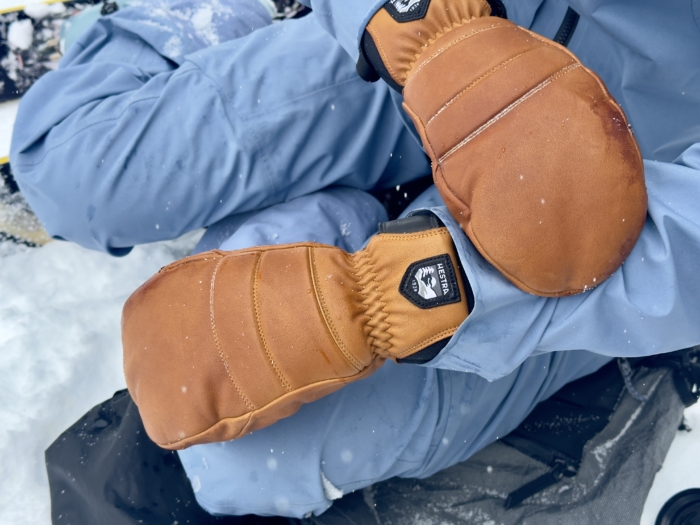
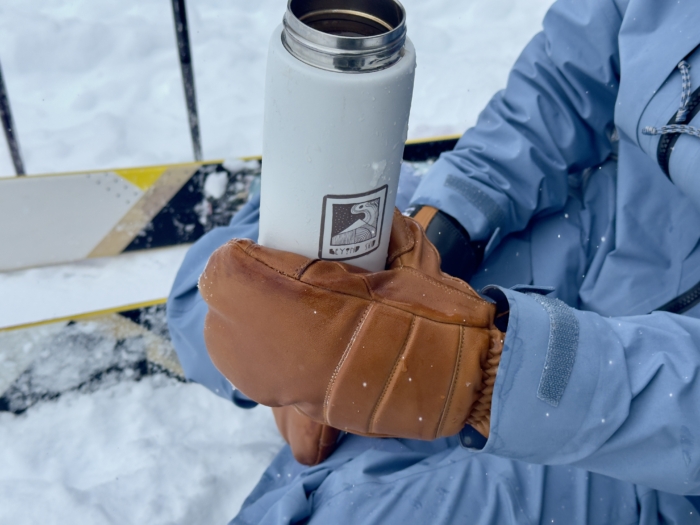
A wrist strap has saved me quite a few times; (photo/Max Ritter)

Specifications
Pros & Cons
Pros
- Toasty warm for stormy days
- Wrist straps help keep track of your mittens
- Versatile weight is ideal for the whole season
Cons
- Not fully waterproof
- Undercuff is less protective on deep days
Bottom Line: A time-tested, supple leather handwarmer that pairs a streamlined fit with reliable warmth for all-season resort riding. The Fall Line Mitts are the ideal choice for skiers who want a durable, undercuff option that softens over time and molds to the hands.
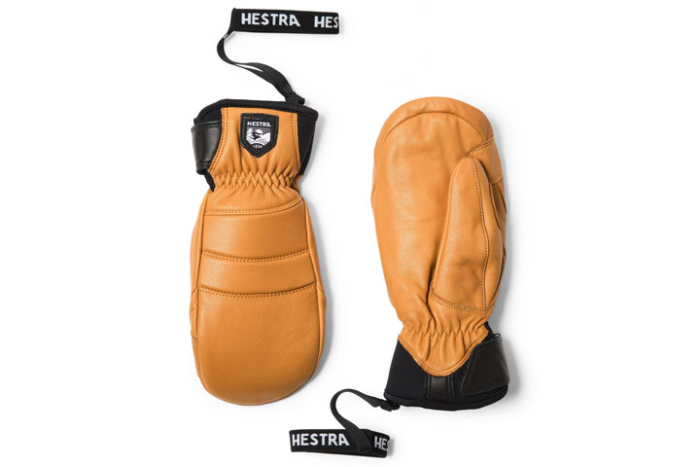
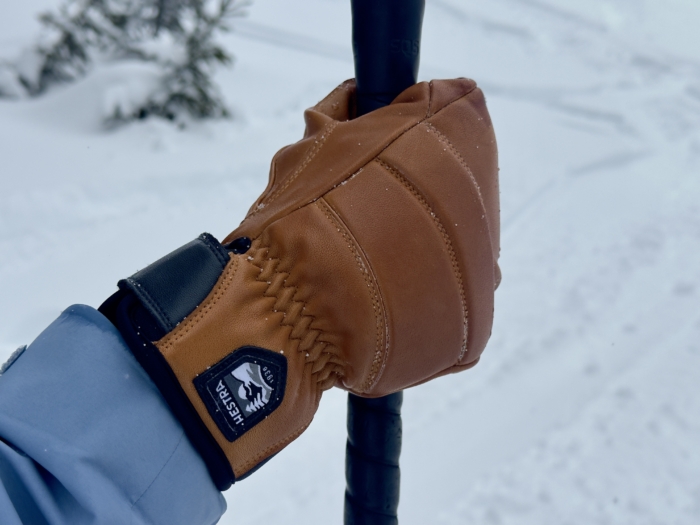
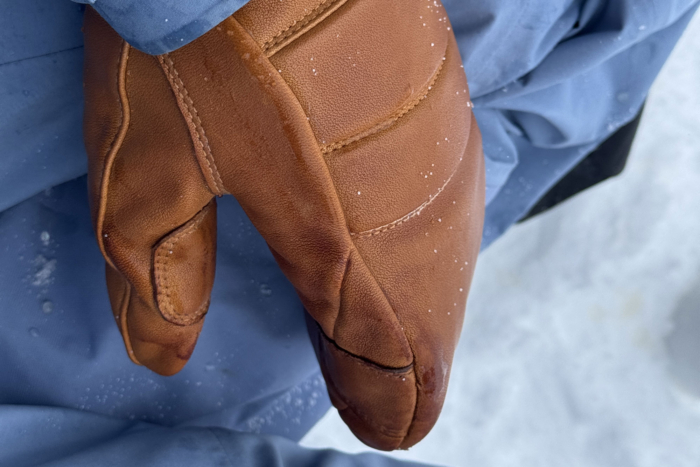
If we had to choose one mitten to stick with all season long, the Hestra Fall Line Mitt ($190) stands out as a true single-pair solution for chasing powder laps and cruising resort terrain. It addresses the annoyance of stiff, overly restrictive leather handwear by utilizing a pre-curved shape that breaks in quickly and contours to your natural grip. By pairing an undercuff silhouette with an internal five-finger lining, this model offers subtle agility alongside dependable storm defense. If you want a svelte, long-lasting hand oven that slides effortlessly beneath jacket cuffs, this classic design is well worth considering.
The Tech: Hestra constructs the outer shell from impregnated cowhide leather, which shields against biting wind while offering natural abrasion resistance. Inside, a soft brushed polyester lining encloses lightweight G-Loft synthetic insulation — a high-loft polyester fiber with excellent thermal retention that maintains warmth without adding excessive bulk. The women-specific cut has a narrower profile through the palm and wrist, complete with an elastic cuff, neoprene wristband, and hook-and-loop closure to seal out drafty air.
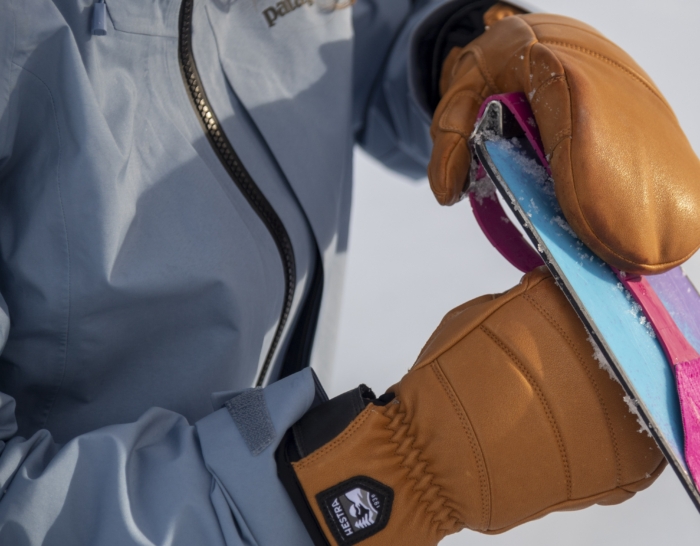
What We Like: Exum Guides Ski Guide and Ski Snacks cookbook co-author Lily Ritter put these mittens to the test while resort skiing on 10°F days at Jackson Hole Mountain Resort, noting that the pre-curved cowhide broke in and softened noticeably after just two days on the mountain. The low-profile undercuff construction tucked smoothly under her shell jacket, while the included elastic wrist leashes eliminated the fear of dropping a mitten from the chairlift. She also appreciated that Hestra includes a tin of specialized Leather Balm — containing beeswax, lanolin, carnauba wax, and neatsfoot oil — which easily restores water resistance and maintains supple leather after heavy Teton storm cycles.
What We Don’t: The undercuff design and neoprene wristband sit flush against the arm, which means deep spindrift can occasionally sneak inside on extreme powder days. While the internal five-finger glove lining adds subtle control, those with larger hands or a preference for a roomier, traditional mitten cavity might find the fit somewhat restrictive.
Should You Buy It? Skiers seeking a durable, low-bulk mitten that balances refined style with functional warmth will get immense mileage out of this build. Compared to a gauntlet-style alternative like the Outdoor Research Carbide Sensor Mitts — which uses an extended sleeve to lock out bottomless snow — the Fall Line provides a sleeker, less cumbersome feel that excels for 95% of resort conditions. It remains a premier choice for anyone wanting a high-end leather mitt that only improves with age.
Burton GORE-TEX Under Mittens


Specifications
Pros & Cons
Pros
- Warmth adjustability with glove liners, ventilation zipper, and pocket for hand warmers
- High-quality materials
- Streamlined design
Cons
- Touchscreen compatibility is not a selling point for material on palm — but it’s durable
- We’d like a stretchier stitch in the glove liners
Bottom Line: A sleek, low-profile barrier that pairs complete waterproof protection with an adaptable inner liner at an accessible price. The Under Mittens are the ideal choice for riders who want an undercuff fit that eliminates wrist bulk while allowing effortless binding adjustments.
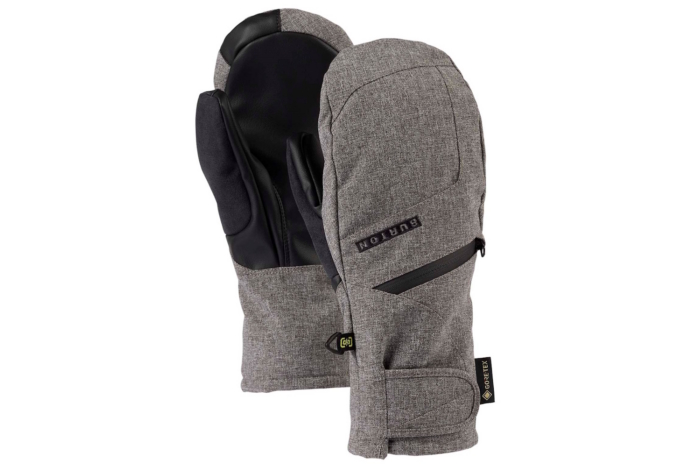
The Burton GORE-TEX Under Mittens ($85) — also available as the Men’s Under Mittens — offer a svelte, stylish solution for snowboarders looking to streamline their handwear setup. They solve the constant struggle of fighting thick, bunching gauntlets by sliding smoothly beneath jacket sleeves without sacrificing weather protection. By combining a waterproof shell with a removable, quick-drying five-finger glove liner, this pair handles shifting mountain conditions effortlessly. If you want a low-bulk design that provides dependable storm defense and dexterity for tinkering with bindings, this setup is well worth considering.
The Tech: Performance-wise, Burton utilizes a two-layer DRYRIDE shell integrated with a fully waterproof and windproof GORE-TEX membrane to lock out moisture. Lightweight Thermacore insulation provides consistent thermal coverage without creating an unmanageable silhouette. A diagonal zippered ventilation pocket on the back of the hand doubles as a stash spot for disposable heat packs on frigid mornings. Inside, the removable screen-grab liner has four-way stretch to wick sweat away and accelerate drying times.
What We Like: SnowSports Senior Editor Morgan Tilton tested these mittens while snowboarding at Crested Butte Mountain Resort, where they comfortably handled conditions ranging from 15°F windchills to sunnier 30°F afternoons. The palm and thumb have a durable faux-leather material that holds up to board grabs and edge friction, while the upper thumb includes a generous, ultra-soft polyester nose-wipe panel for stormy days. We particularly appreciated the liner gloves’ touch-compatible index fingers, which allow for quick phone use on lift rides without exposing bare skin to cold air.
What We Don’t: The touchscreen material integrated onto the outer shell palm feels awkwardly placed for navigating phone apps, leaving you dependent on the inner liner for detailed screen use. Additionally, the wrist seams on the fleece glove liner lack elasticity, making them somewhat stubborn to pull over your hands when putting them on or taking them off.
Should You Buy It? Riders who prioritize a slim, undercuff silhouette that easily interfaces with outerwear will find excellent value in this design. Compared to a heavier, full-leather option like the Dakine Galaxy GORE-TEX Mitt — which delivers higher overall warmth and heavy-duty palm defense for severe cold — the Burton Under Mitten offers superior flexibility and built-in ventilation for active resort riding. It stands out as a versatile, budget-friendly choice for all-season mountain trips.
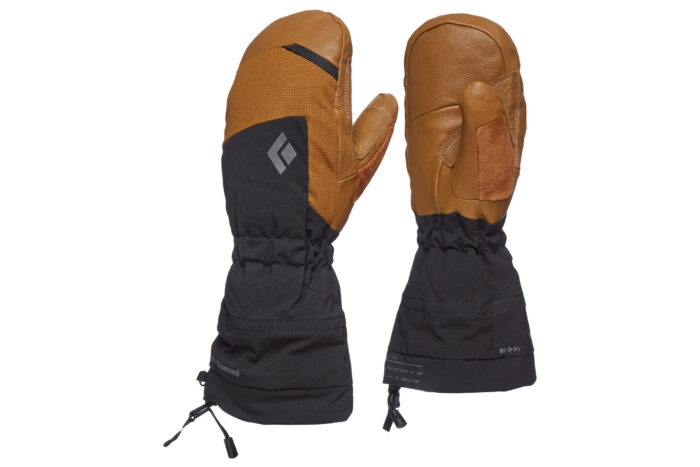
Black Diamond Mercury Mitts
-
-
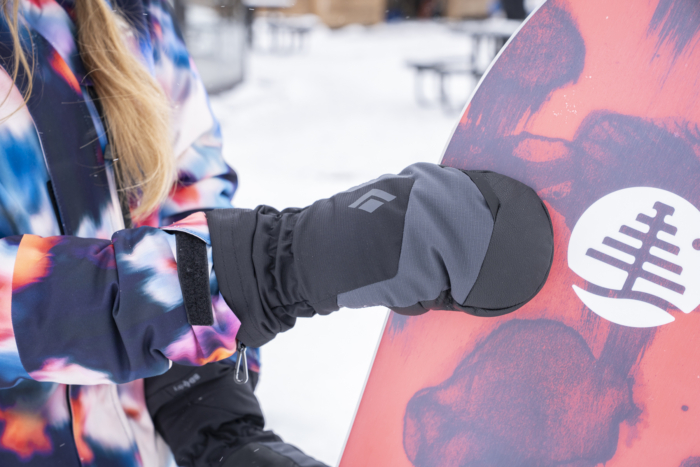
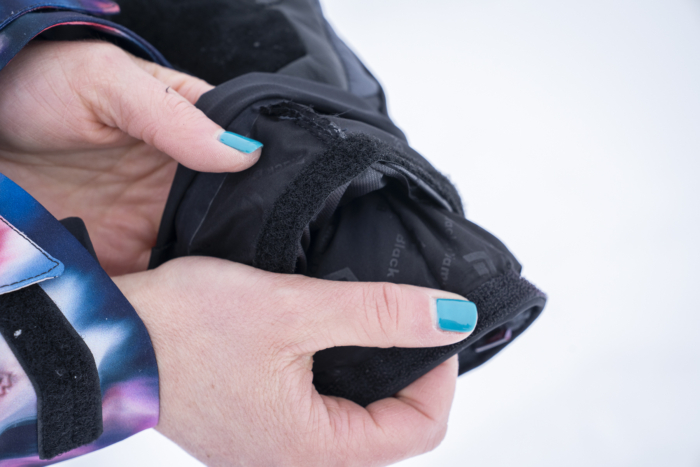
Morgan Tilton testing the Black Diamond Mercury Mitts; (photo/Eric Phillips)
-
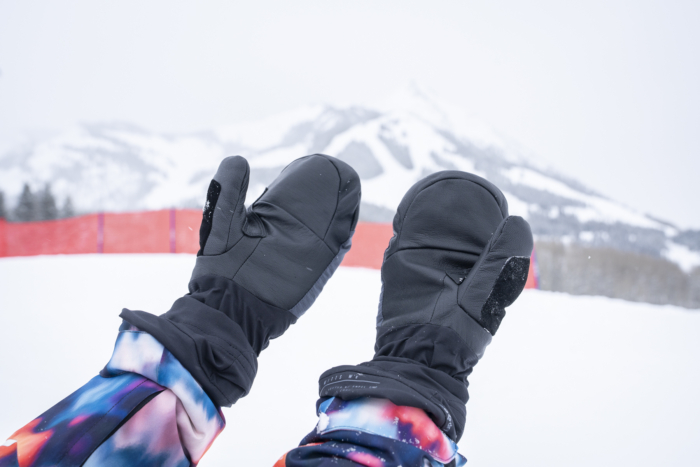
Morgan Tilton testing the Black Diamond Mercury Mitts; (photo/Eric Phillips)
-
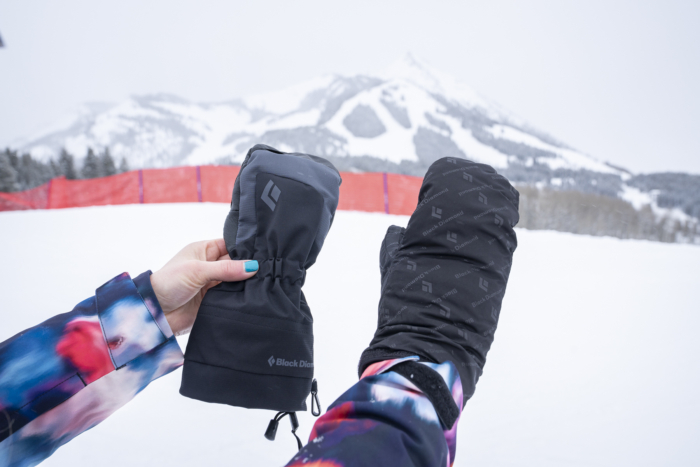
Morgan Tilton testing the Black Diamond Mercury Mitts; (photo/Eric Phillips)
-
Morgan Tilton testing the Black Diamond Mercury Mitts; (photo/Eric Phillips)
-
Morgan Tilton testing the Black Diamond Mercury Mitts; (photo/Eric Phillips)
-
Morgan Tilton testing the Black Diamond Mercury Mitts; (photo/Eric Phillips)


Specifications
Pros & Cons
Pros
- Very warm
- Good dexterity for a mitten
- Long cuffs keep moisture out
Cons
- Some users report a tight fit
Bottom Line: A high-performance cold-weather workhorse that prioritizes serious thermal output and modular drying for a reasonable price. Super durable and toasty, the Mercury is a top choice for frigid backcountry missions or outdoor jobs where keeping your fingers functional is non-negotiable.
The Black Diamond Mercury Mitts ($140) are specialized thermal tools engineered for extreme cold, rated to withstand brutal temperatures down to -25°F. They utilize a modular construction that separates the outer weather barrier from the internal insulation, allowing for fast drying times and versatile layering. By solving the age-old problem of sweat-soaked gloves that take days to dry in an unheated tent, these mittens deliver heavy-duty warmth without feeling like unmanageable boxing gloves. If you suffer from poor circulation but want to skip heavy battery-operated options, this pair is worth considering.
The Tech: Performance-wise, the internal construction does the heavy lifting. The removable liner has high-loft PrimaLoft Gold Cross Core insulation — a synthetic fiber fused with NASA-developed Aerogel to boost warmth without extra bulk. The insulation is mapped for functional mobility, with 170g on the back of the hand and a leaner 133g layer on the palm. A proprietary BD.dry waterproof insert pairs with a PFAS-free DWR coating on the 100% recycled shell to keep exterior moisture out completely.
What We Like: SnowSports Senior Editor Morgan Tilton tested these mitts on blizzard-ridden powder days at Crested Butte Mountain Resort and praised the svelte, locked-in fit. The extended gauntlet has a single-pull drawcord and an elastic wrist cinch that effortlessly seals out deep spindrift. Even when windblown powder flew directly into the mitts during field testing, her hands rewarmed quickly, and the hydrophobic synthetic liners recovered rapidly. For improved tactile durability, the goat leather palm includes a reinforced thumb patch that easily withstands friction from ski poles and rope handling.
What We Don’t: The design is built strictly for severe conditions, meaning your hands will overheat quickly in moderate temperatures. While the liners are removable, we would not recommend wearing them on their own — the exterior hook-and-loop closure strips and raw seams feel scratchy against bare skin. Additionally, those who prefer to tuck their handwear inside jacket sleeves might find the extended gauntlets a bit too voluminous.
Should You Buy It? For winter enthusiasts who prioritize maximum thermal output and weatherproofing over high dexterity, this is a top-tier choice. Compared to a more relaxed option like the Swany Calore Mitt — which has a shorter gauntlet and roomier fit — the Mercury provides a snugger, more protective barrier against relentless wind and freeze. It remains a reliable workhorse for deep-freeze ski days, winter mountaineering, and cold-weather backcountry travel.
Swany Calore
-
-
Morgan Tilton testing the Swany Calore winter mittens; (photo/Eric Phillips)
-
Morgan Tilton testing the Swany Calore winter mittens; (photo/Eric Phillips)
-
Morgan Tilton testing the Swany Calore winter mittens; (photo/Eric Phillips)
-
Morgan Tilton testing the Swany Calore winter mittens; (photo/Eric Phillips)
-
Morgan Tilton testing the Swany Calore winter mittens; (photo/Eric Phillips)
-
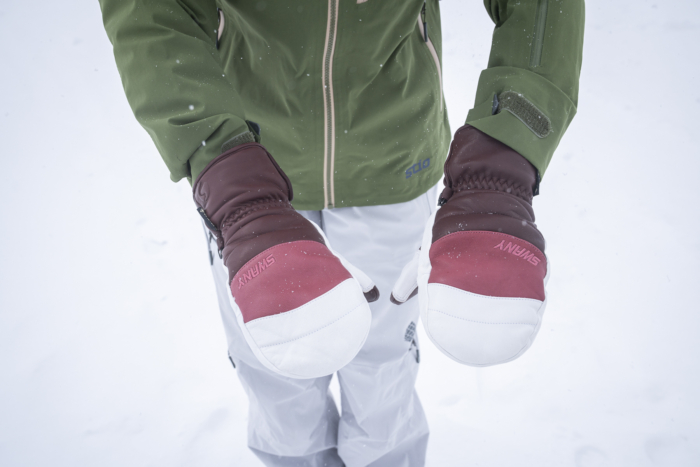
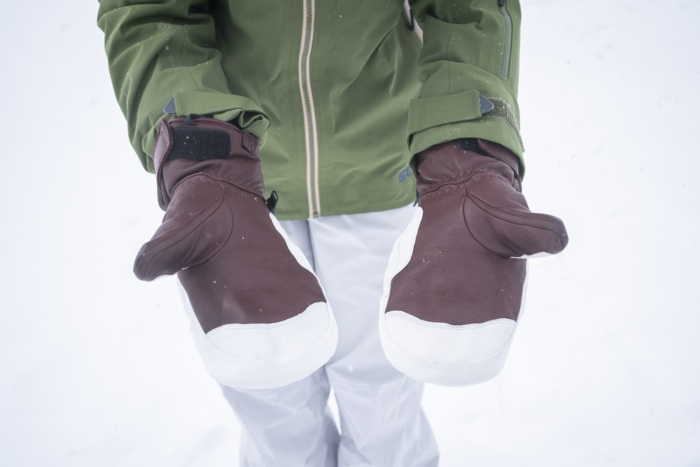
Morgan Tilton testing the Swany Calore winter mittens; (photo/Eric Phillips)
Specifications
Pros & Cons
Pros
- Extremely warm and durable
- Soft, pliable leather
- Articulated fit
Cons
- Lacks fleece-lined thumb for face or goggles
- Velcro tab on wrist cuff is fairly short
Bottom Line: A stylish, exceptionally warm leather hand toaster that slides effortlessly under jacket cuffs. The Calore Mitt is ideal for resort skiers seeking maximum insulation and supple durability without excessive bulk.
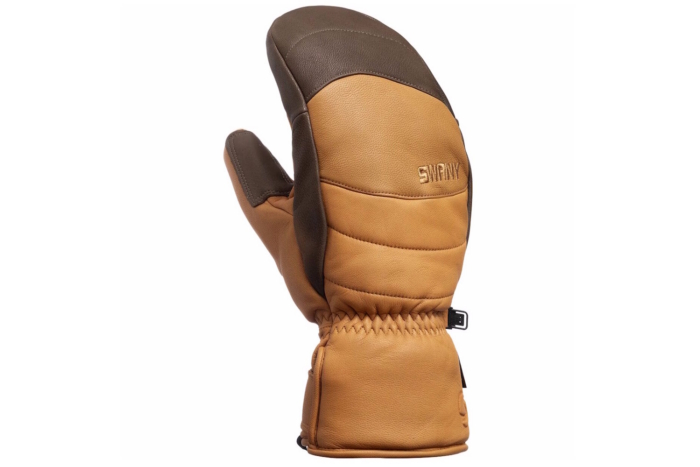
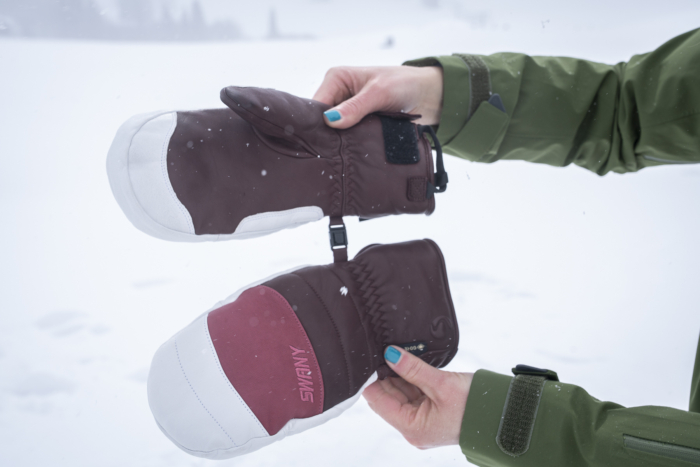
The Swany Calore Mitt ($160) delivers incredible warmth wrapped in smooth, pliable goat leather. Built with a GORE-TEX waterproof-breathable insert, these premium safeguards stop wind chill and dampness in their tracks on stormy powder days or frozen chairlift rides. They solve the common struggle of bulky mittens that fight against your jacket sleeves by pairing high-level heat retention with a streamlined, sleek silhouette. If you suffer from cold fingers but prefer an undercuff fit over an extended gauntlet, this stylish option deserves a spot on your radar.
The Tech: Swany utilizes a specialized Triplex construction with three distinct weights of Thermolite insulation. To maximize thermal efficiency without hindering your grip, the thickest layer covers the back of the hand while a leaner density lines the palm. The interior has integrated finger channels lined with flexible insulation between each digit for natural movement. Inside, a soft Dyna-therm lining wicks moisture, extends to the edge of the cuff for extra wrist coverage, and incorporates a Polygiene anti-odor treatment.
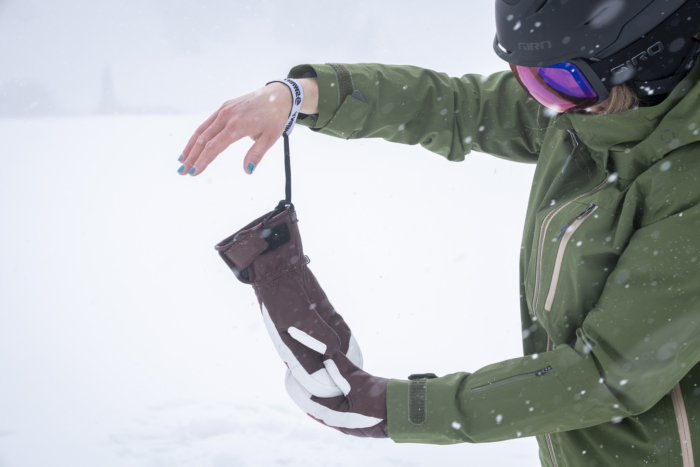
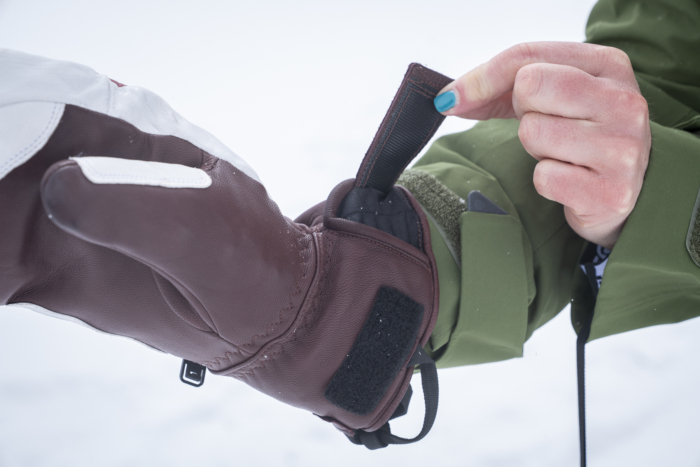
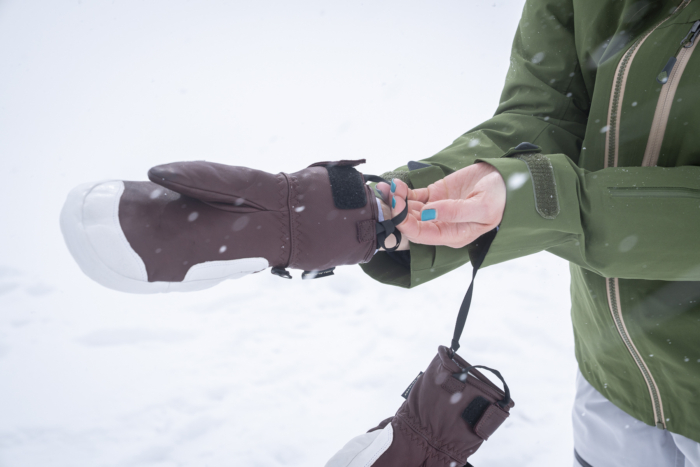
What We Like: Senior Editor Morgan Tilton tested the Calore while downhilling at Crested Butte Mountain Resort, noting that the elegant stitching and color-blocked leather earned unsolicited compliments on the slopes. She appreciated how easily the mittens pulled on using the slender leather wrist loop, while the included removable wrist leashes made it stress-free to slip her hands out for quick phone checks. Unlike the extended, gauntlet-style Black Diamond Mercury Mitts, the Calore has a smooth undercuff design that tucks neatly inside jacket sleeves. Given that Tilton’s original Swany X-Cell gloves show zero signs of deterioration after more than a decade of abuse, long-term durability is guaranteed.
What We Don’t: The design lacks a dedicated fleece nose-wipe panel on the thumb, which means clearing stray goggle drops or a runny nose requires a separate cloth. There are also no zippered vents, so if your hands run hot on sunny spring afternoons, you cannot easily dump heat.
Should You Buy It? Resort skiers who want high-end warmth paired with a refined, lower-profile aesthetic will find immense value in this build. It offers top-tier weather protection and supple leather comfort that holds up against years of heavy use. If you need a reliable, buttery-soft barrier against severe cold that seamlessly interfaces with your outerwear, the Calore is a standout choice.
Outdoor Research GORE-TEX Revolution Mitten
-
-
Morgan Tilton testing the Outdoor Research GORE-TEX Revolution Mitten; (photo/Jason Hummel)
-
Morgan Tilton testing the Outdoor Research GORE-TEX Revolution Mitten; (photo/Jason Hummel)
-
Morgan Tilton testing the Outdoor Research GORE-TEX Revolution Mitten; (photo/Jason Hummel)
-
Morgan Tilton testing the Outdoor Research GORE-TEX Revolution Mitten; (photo/Jason Hummel)
Specifications
Pros & Cons
Pros
- Affordable for this grade of mitt
- Handwarmer pocket for extra-cold days
Cons
- Buckle and cinch feel flimsy
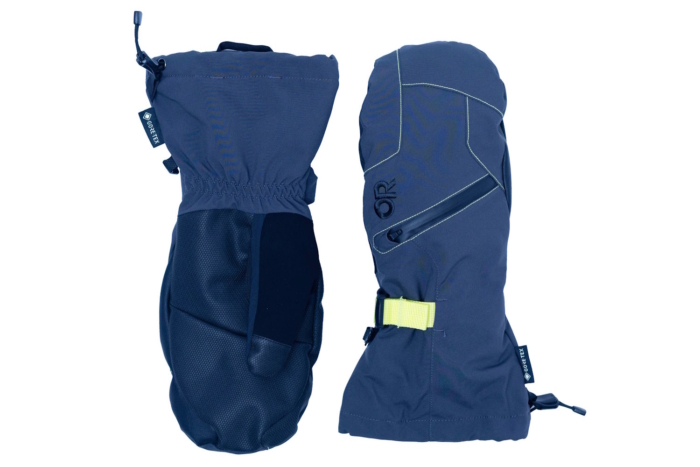
Bottom Line: A remarkably supple, weather-ready mitten that handles shifting conditions and high-output powder laps with ease. The Revolution Mitts are ideal for skiers who want complete moisture protection without sacrificing dexterity or packability.
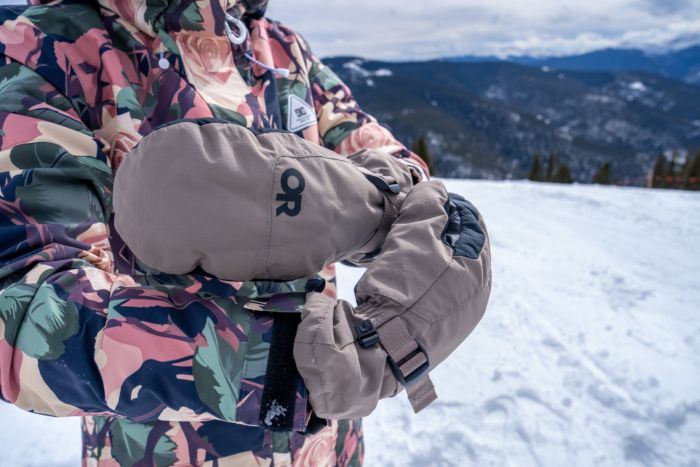
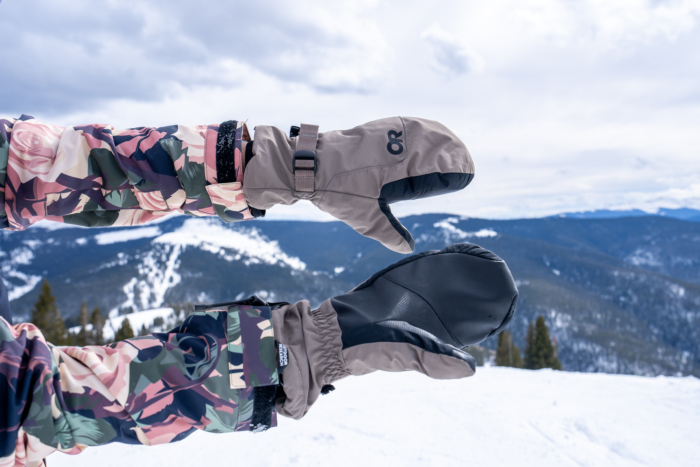
Not too hot, not too cold: The Outdoor Research Revolution GORE-TEX Mitts ($90) strike a balance between storm protection, just enough heat, and agile hand movement. They excel when managing wide temperature swings and high exertion levels. We gravitated toward this pair for powder days, tree laps — when we work up a sweat — and lift rides laden with British Columbia’s chilly fog. Lightweight and flexible, the Revolution is truly adaptable and, dare say, dexterous — a term we don’t typically pair with mittens.
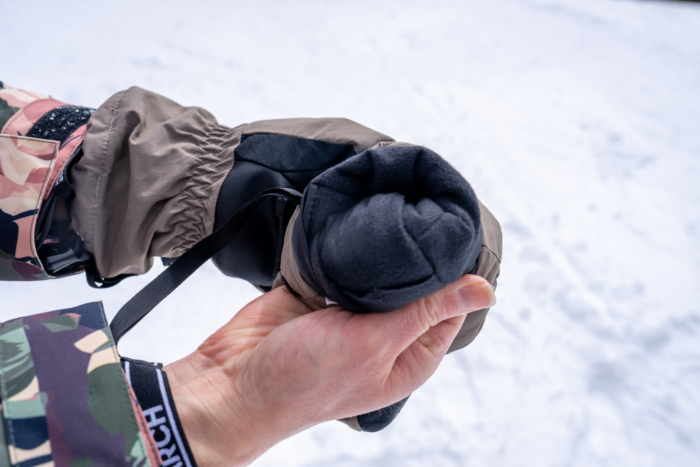
The Tech: Outdoor Research powers the Revolution with a fully waterproof, windproof, and breathable GORE-TEX insert designed to handle high humidity and wet snow. The targeted insulation uses 200g EnduraLoft ECO — a 100% recycled synthetic filler — across the back of the hand, paired with a leaner 130g layer on the palm. Inside, a soft tricot lining rests comfortably against the skin, while a dedicated zippered stash pocket on the back of the hand accommodates disposable hand warmers on colder mornings.
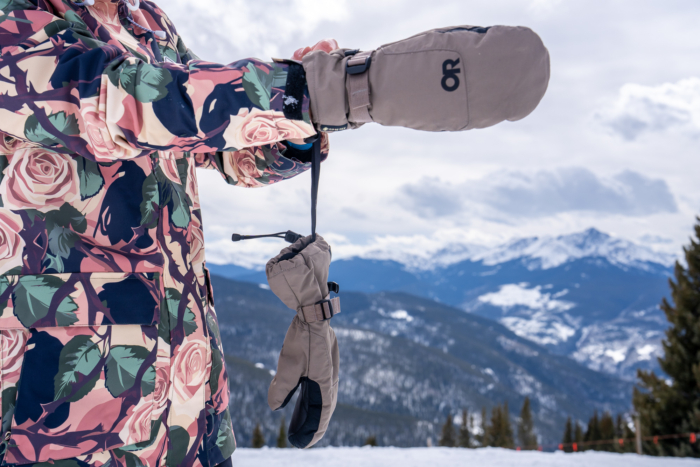
What We Like: Senior Editor Morgan Tilton put these mitts through their paces during storm cycles at RED Mountain Resort in southern British Columbia, finding them remarkably packable and supple. The low-bulk construction allowed her to easily stash them inside jacket drop pockets at the bottom of strenuous powder laps. Comfortably operating in a sweet spot of 25°F to 40°F, they easily repelled damp snow and coastal humidity. She also praised the comfortable, removable wrist leashes for making quick phone checks effortless, while the wide leather pull loops allowed for rapid re-entry with gloved hands.
What We Don’t: Touchscreen utility on the leather thumb proved clunky at best, making detailed smartphone navigation frustrating without removing the mitt. While windproof, the lighter insulation layout is not equipped to handle severe sub-zero windchills, as Tilton observed during bitterly cold sessions at Crested Butte Mountain Resort.
Should You Buy It? Active resort skiers who need waterproof reliability without excessive heft will appreciate this nimble design. Compared to a heavier, more insulated option like the Swany Calore Mitt — which provides denser padding for sub-freezing days — the Revolution offers superior dexterity and better temperature regulation for milder temperatures. It is a highly adaptable, workhorse choice for anyone seeking a supple handwarmer that keeps moisture out.
The North Face Montana GORE-TEX Mitts
Specifications
Pros & Cons
Pros
- Extremely warm
- Easy-to-grab, spacious, streamlined pull loop on cuff
- Lean elastic wrist straps
- Durable, soft goat leather
Cons
- Not many color options
- Gauntlet is not fully waterproof
- Etip is not super functional
Bottom Line: A high-end winter shield that delivers unmatched ease of entry and reliable warmth in sub-zero conditions. The Montana GORE-TEX Mitts are the ideal choice for resort and backcountry skiers who want extreme cold-weather protection without fighting stiff gauntlets.
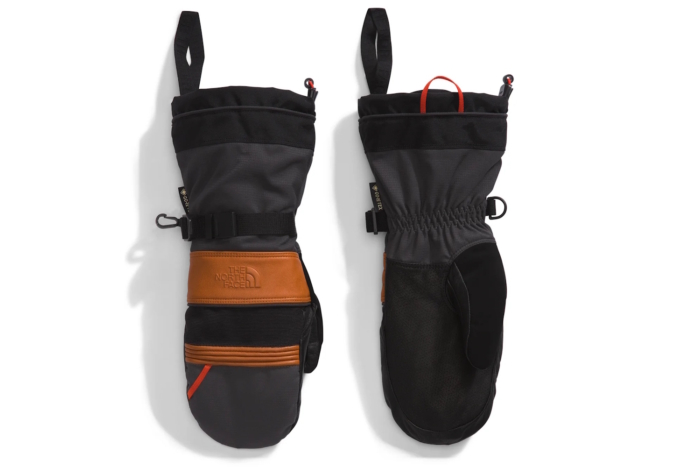
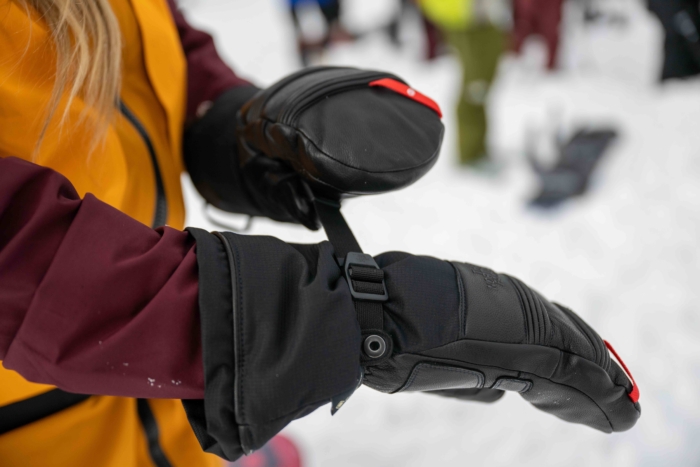
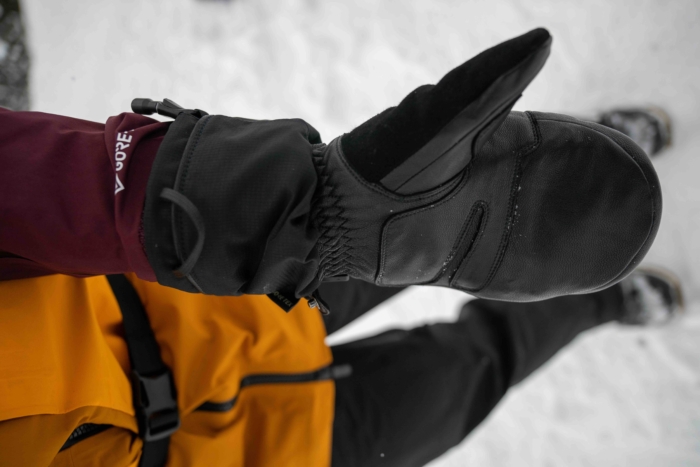
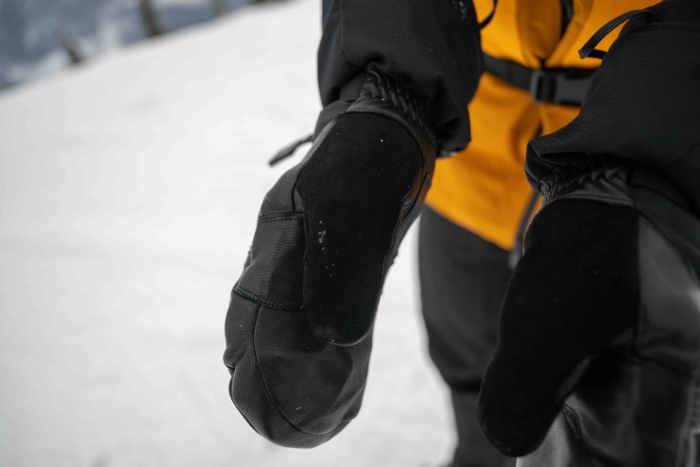
The North Face Montana GORE-TEX Mitts ($150) are built to tackle arctic blasts, negative temperatures, and relentless snow. They combine supple leather construction with high-loft insulation to keep hands completely dry and functional during extra-cold backcountry tours and frontcountry laps. By pairing heavy-duty thermal defenses with an exceptionally spacious entry layout, they solve the frustrating chore of wrestling frozen hands into tight openings. If you need a dependable, easy-wearing handwarmer for sub-zero ski trips across North America, this pair is well worth considering.
The Tech: Thermal power comes from a massive 300g insulation package across the back of the hand, balanced by 150g in the palm for functional grip. A fully waterproof GORE-TEX insert pairs with a PFC-free DWR coating to seal out wet snow and humidity completely. The ergonomic, pre-curved shape includes integrated carabiner loops on the index fingers for easy clipping to a harness, while a secure snap keeps the pair mated together in your pack or tent.
What We Like: SnowSports Senior Editor Morgan Tilton tested these mitts extensively in extreme environments, including sub-zero sessions at Big Sky Resort, mogul runs at Whitewater Ski Resort, and powder laps at RED Mountain. During a cat-skiing trip at Baldface Valhalla in British Columbia — totaling 11,000 vertical feet and 20 miles — they kept her hands warm while standing on deck in frigid air and working around base camp into the night. She particularly praised the oversized cuff pull tab, which easily accommodates multiple gloved fingers and makes pulling them on effortless. The soft fleece lining, comfortable elastic wrist leashes, and generous nose-wipe panels further enhanced long-term comfort in the field.
What We Don’t: The high insulation volume that makes these mitts a haven in negative temperatures makes them far too warm for sunny spring afternoons. Additionally, while the gauntlet cinch works smoothly, the overall bulk of the 300g back-of-hand insulation restricts fine dexterity when adjusting small pack buckles or jacket zippers.
Should You Buy It? Skiers and riders who routinely face single-digit or sub-zero temperatures will find exceptional value in this rugged build. Compared to a more nimble, lower-profile model like the Outdoor Research Revolution GORE-TEX Mitts — which excels in milder 25°F to 40°F ranges — the Montana provides significantly greater thermal defense and much easier entry for freezing conditions. It is a top-tier, reliable companion for anyone committed to riding through the absolute coldest days of winter.
Outdoor Research Arete Modular Mitts
-
-
Dane Tudor testing the Outdoor Research Arete Modular Mitts; (photo/Morgan Tilton)
-
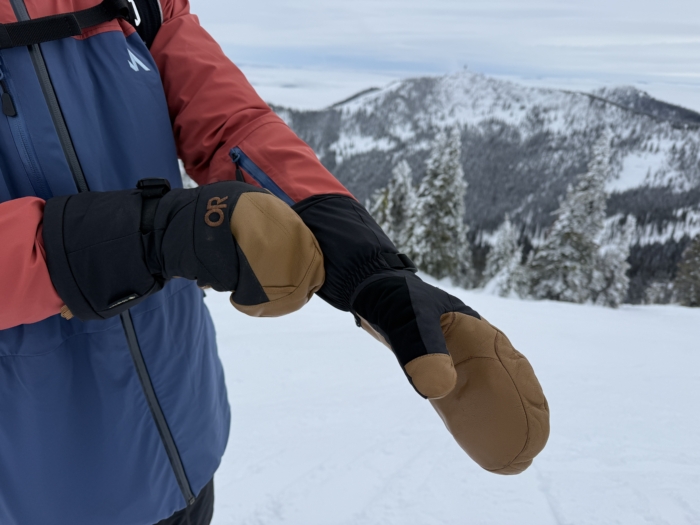
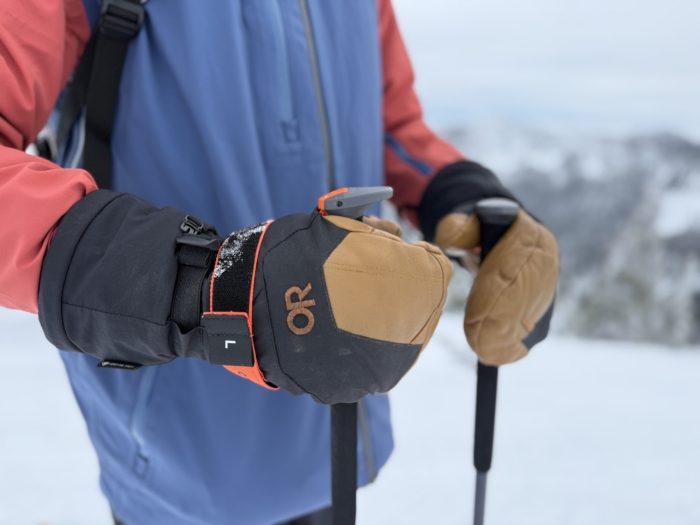
Dane Tudor testing the Outdoor Research Arete Modular Mitts; (photo/Morgan Tilton)
-
Dane Tudor testing the Outdoor Research Arete Modular Mitts; (photo/Morgan Tilton)
-
Dane Tudor testing the Outdoor Research Arete Modular Mitts; (photo/Morgan Tilton)
Specifications
Pros & Cons
Pros
- Adjustable warmth with removable thick liner
- Stylish
- Soft nose wipe
- Durable
Cons
- Non-elastic wrist leash lacks stretch
- Surface-level durability is low on palm and thumb
- Dexterity is limited while using liner
Bottom Line: A modular, heavy-duty winter mitt that adapts effortlessly to shifting resort temperatures and stormy weather. The Arete is a tool for skiers who want a single quiver-killer that handles everything from warm spring laps to freezing powder days.
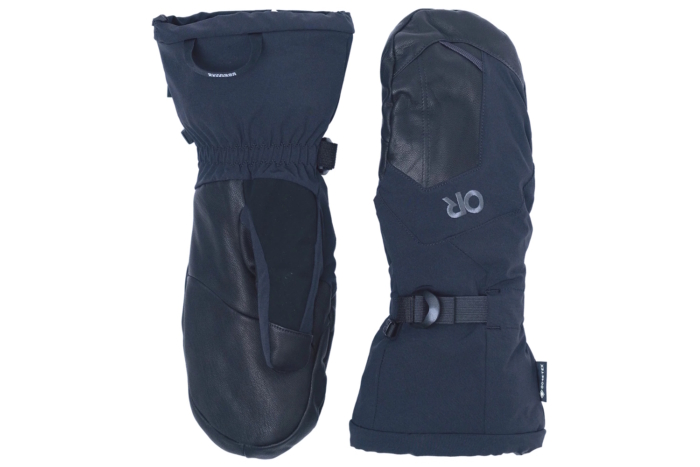
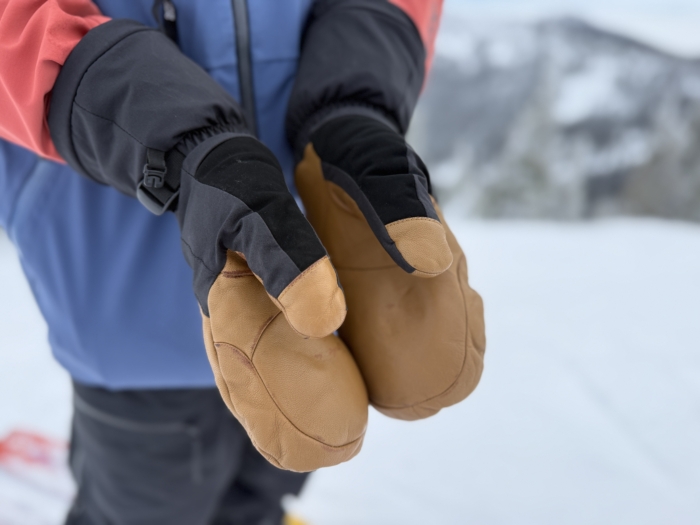
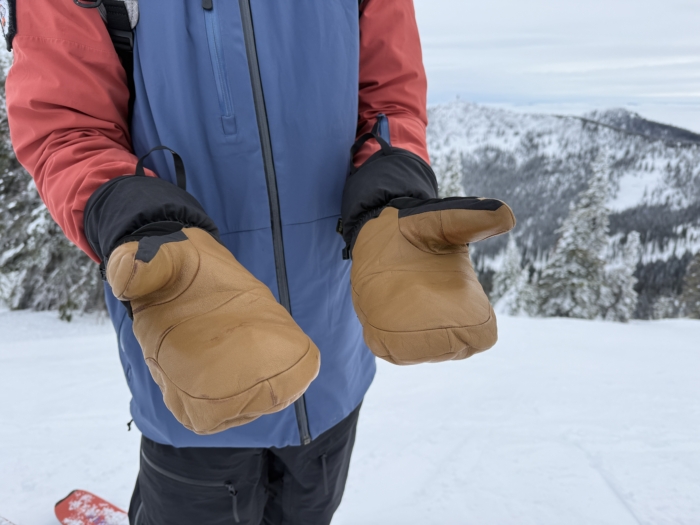
The Outdoor Research Arete Modular Mitts ($140) serve as a true quiver-killer for skiers facing unpredictable mountain weather. With a thick, removable fleece liner, this versatile layer adjusts on the fly to match changing thermal demands. It solves the headache of carrying multiple pairs of handwear for cold mornings and slushy afternoon laps. If you want a dependable, all-in-one safeguard that transitions smoothly between coastal moisture and severe freeze, this pair belongs at the top of your list.
The Tech: Outdoor Research arms the Arete with a fully waterproof and windproof GORE-TEX membrane, making it practically impervious to wet storm systems. Thermal regulation comes from 200g of SpaceLoft synthetic insulation mapped across the back of the hand, backed by a leaner 100g layer along the palm to preserve grip. A dense, high-loft fleece liner attaches securely inside using heavy-duty hook-and-loop strips, while a smooth 100% polyester tricot lining finishes the inner shell.
What We Like: While testing these mitts during heavy storm cycles and warm atmospheric rivers at RED Mountain Resort, our testers appreciated how effortlessly the system adapted to temperatures ranging from 24°F to above freezing. The pigskin leather palm stood up to high-impact riding — from throwing backflips off cliffs to handling icy rope lifts. Additionally, the soft, wide nose-wipe panel made clearing spindrift off goggles painless, while the outer cuff tightened down smoothly over jacket sleeves to seal out deep powder.
What We Don’t: Manipulating fine equipment like boot buckles, BOA dials, or jacket zippers proves difficult due to the mitten’s natural bulk. Taking the fleece liner out improves overall deftness, but the slick tricot interior reduces tactile feedback. Furthermore, the static wrist leash lacks stretch, making it annoying when you need to quickly slip a hand free to grab a phone or adjust gear.
Should You Buy It? Skiers and backcountry tourers searching for maximum storm protection without buying separate mid-winter and spring handwear will get tremendous mileage out of this setup. Compared to a lighter option like the Outdoor Research Revolution GORE-TEX Mitts — which provides superior finger freedom for milder days — the Arete delivers far greater thermal versatility for sub-freezing conditions. It remains a reliable workhorse for anyone who wants one rugged pair to tackle the whole season.
More Field-Tested Winter Mittens We Recommend for Skiing & Snow Play
These seven cocoons didn’t receive specific awards, but that doesn’t prevent us from keeping them in the mud room. Here are winter mittens we recommend to our friends for skiing, sledding, and more.
-
-
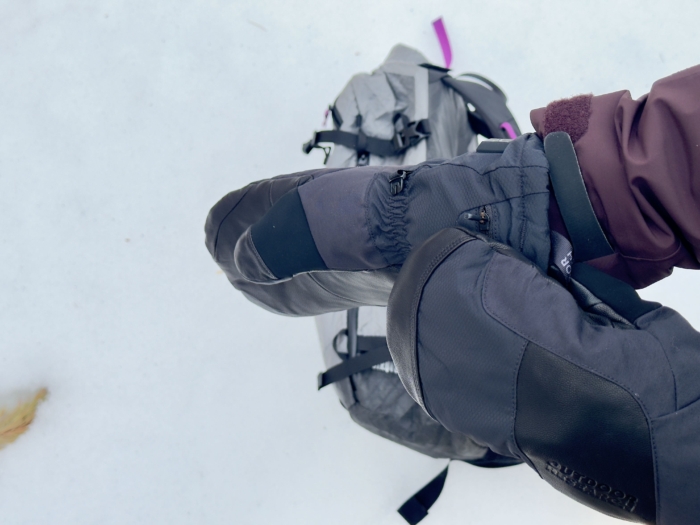
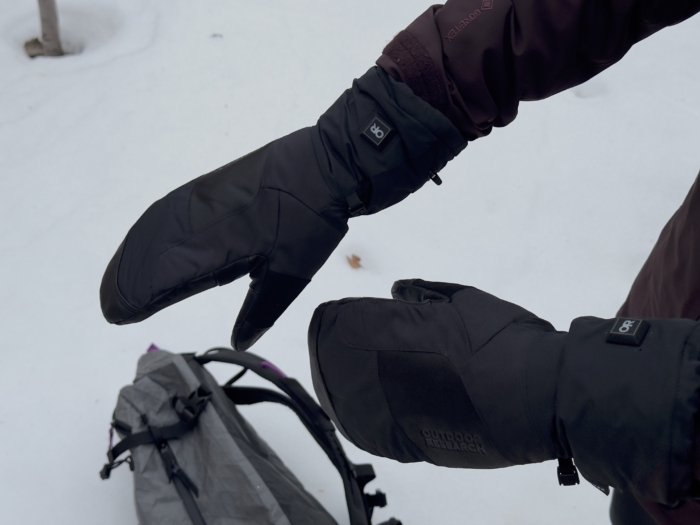
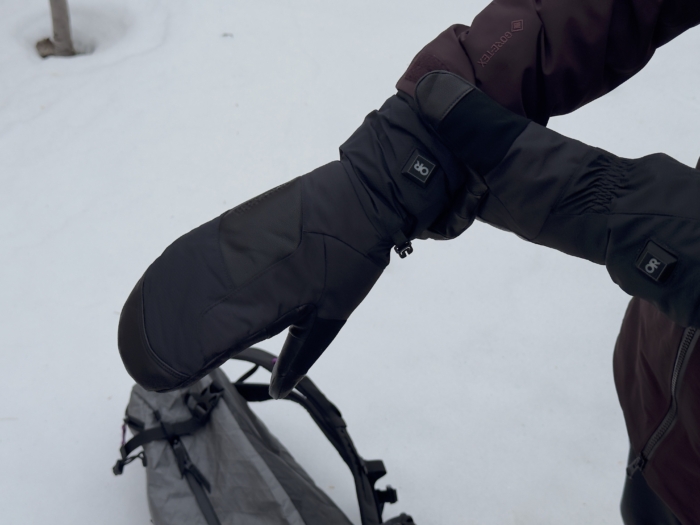
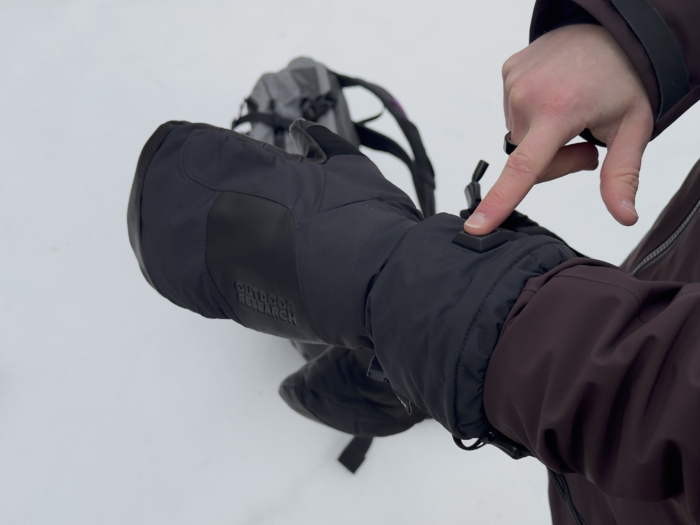
Lily Ritter testing the Outdoor Research Prevail Heated GORE-TEX Mitts; (photo/Max Ritter)
-
Lily Ritter testing the Outdoor Research Prevail Heated GORE-TEX Mitts; (photo/Max Ritter)
-
Lily Ritter testing the Outdoor Research Prevail Heated GORE-TEX Mitts; (photo/Max Ritter)
-
Lily Ritter testing the Outdoor Research Prevail Heated GORE-TEX Mitts; (photo/Max Ritter)
Specifications
Pros & Cons
Pros
- Heated design combats frigid days
- Gauntlet cuff seals out elements
- Waterproof design can handle it all
Cons
- Overkill for many days
- Expensive
- Lining isn’t as soft as other gloves
Bottom Line: Electronically powered winter armor that offers active, customizable heat for severe sub-zero conditions. The Prevail Mitts are for resort riders who battle poor circulation and need reliable, all-day warmth on frozen chairlift rides.
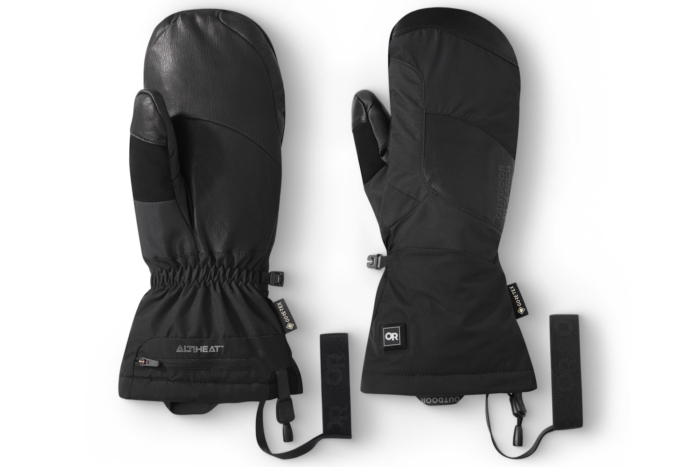
The Outdoor Research Prevail Heated GORE-TEX Mitts ($400) serve as heavy artillery against brutally cold mountain weather. They eliminate the suffering of numb fingers by pairing active battery heating with a windproof and waterproof protective shell. Designed for skiers who frequently battle sub-zero chairlifts, this high-tech pair delivers tailored thermal relief at the touch of a button. If you need consistent warmth that passive insulation cannot provide, this electronic system is worth the investment.
The Tech: Outdoor Research powers these mitts with the ALTIHeat rechargeable lithium-ion battery system, which connects via zippered internal wrist pockets and has high, medium, and low settings. Performance testing showed the battery lasts roughly three hours on high during single-digit mornings, while running on low provides continuous warmth for over eight hours. A waterproof GORE-TEX insert pairs with synthetic EnduraLoft insulation to trap battery heat and maintain solid baseline thermal protection even if the electronics are turned off.
What We Like: Tetons-based Ski Guide Lily Ritter relied on these mitts during freezing single-digit days at Jackson Hole Mountain Resort, praising how effectively the low power setting prevented cold-hand fatigue. Internal webbing pull handles make sliding the mitts on effortless when the opposite hand is already covered, while integrated wrist leashes prevent accidental drops on chairlifts. Additionally, the durable nylon and polyester shell easily repels harsh wind gusts and wet snow.
What We Don’t: The internal lining has fleece panels along the palm, but the material lacks a plush, sleeping-bag-level soft feel across the back of the hand. Furthermore, severe freezing temperatures drain battery life faster when cranked to the highest output setting.
Should You Buy It? Skiers who struggle with chronic cold hands or circulatory issues will find these active-heating mitts to be game-changers. Compared to a heavy passive-down option like the Outdoor Research Stormbound GORE-TEX Down Mitts — which relies strictly on thick insulation — the Prevail offers customizable electronic heat control for long, frigid resort sessions. It stands out as a premier investment for anyone needing guaranteed warmth on the coldest days.
-
-
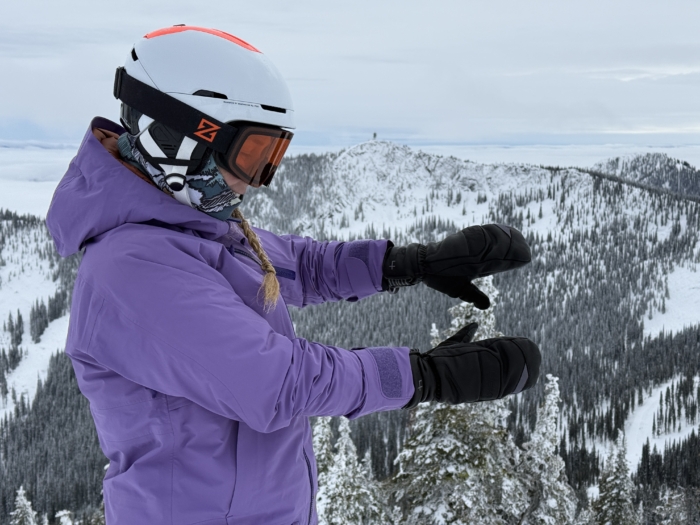
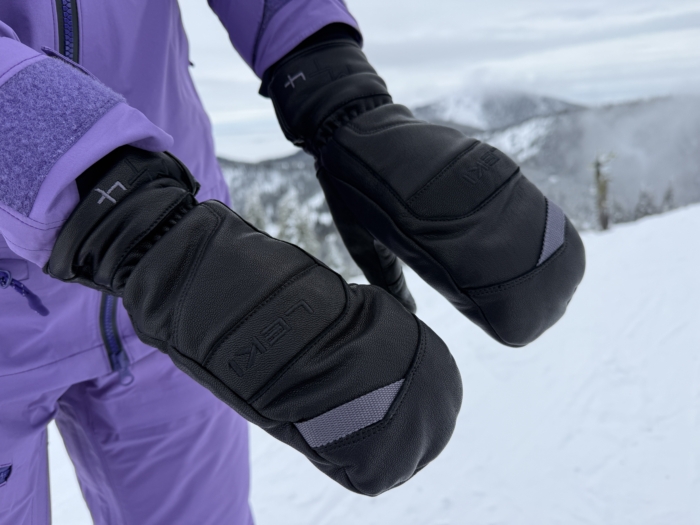
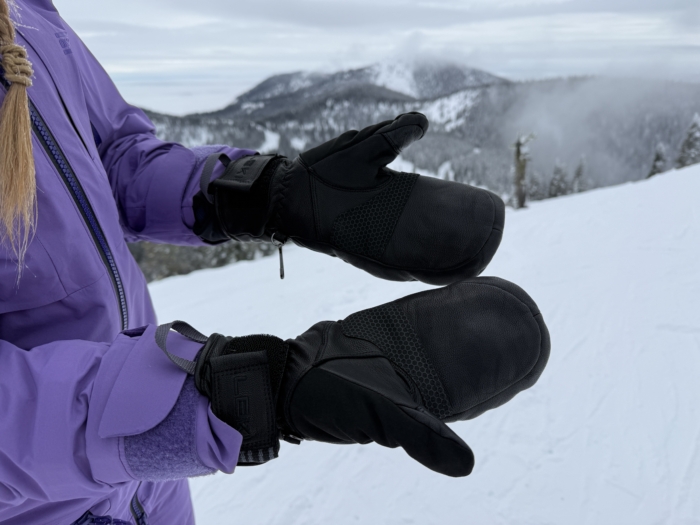
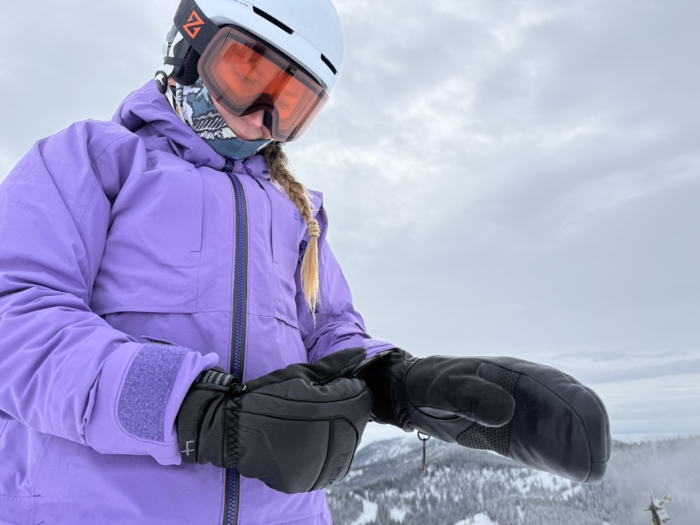
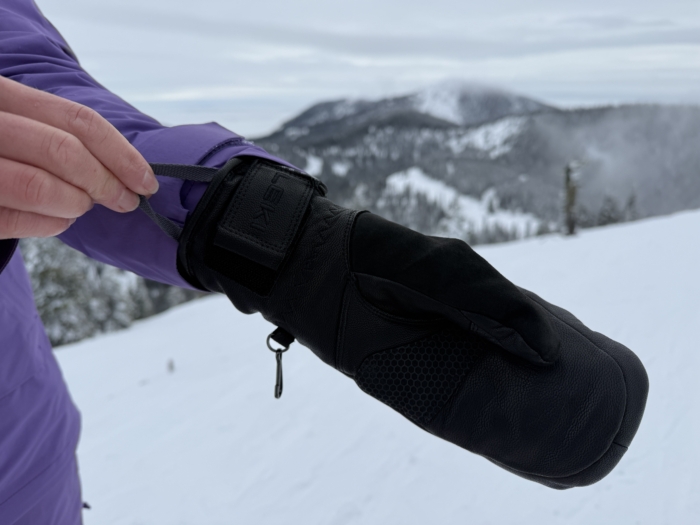
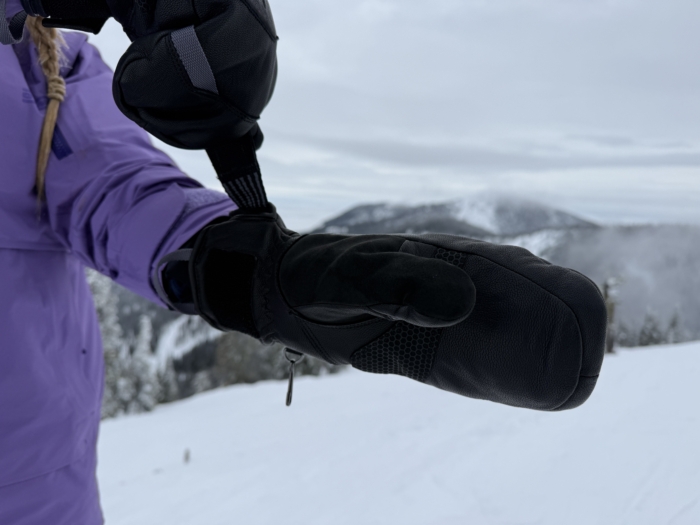
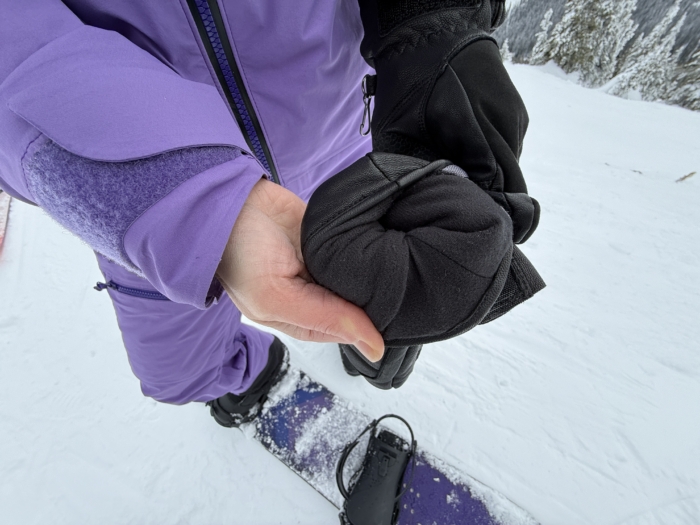
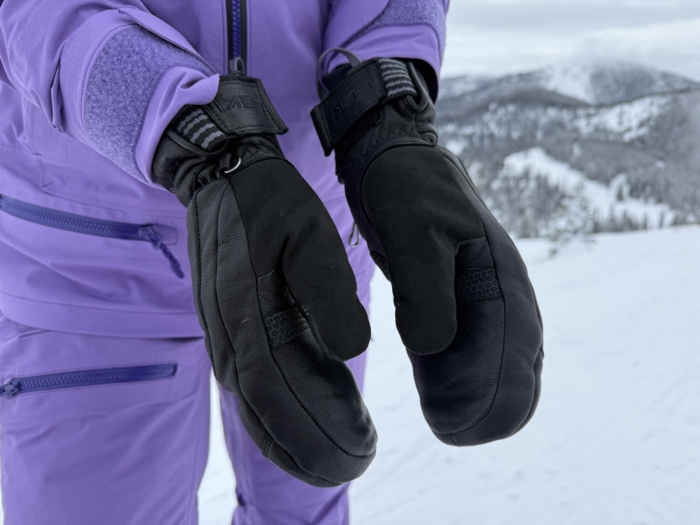
Morgan Tilton testing the LEKI Monterra Prime Mitt at RED Ski Resort; (photo/Dane Tudor)
-
Morgan Tilton testing the LEKI Monterra Prime Mitt at RED Ski Resort; (photo/Dane Tudor)
-
Morgan Tilton testing the LEKI Monterra Prime Mitt at RED Ski Resort; (photo/Dane Tudor)
-
Morgan Tilton testing the LEKI Monterra Prime Mitt at RED Ski Resort; (photo/Dane Tudor)
-
Morgan Tilton testing the LEKI Monterra Prime Mitt at RED Ski Resort; (photo/Dane Tudor)
-
Morgan Tilton testing the LEKI Monterra Prime Mitt at RED Ski Resort; (photo/Dane Tudor)
-
Morgan Tilton testing the LEKI Monterra Prime Mitt at RED Ski Resort; (photo/Dane Tudor)
-
Morgan Tilton testing the LEKI Monterra Prime Mitt at RED Ski Resort; (photo/Dane Tudor)
-
Morgan Tilton testing the LEKI Monterra Prime Mitt at RED Ski Resort; (photo/Dane Tudor)
Specifications
Pros & Cons
Pros
- Ultra-plush, velvet-like Micro Bemberg lining
- Supple goatskin requires zero break-in time
- Integrated finger channels boost warmth and moisture management
- Pre-curved shape offers excellent pole grip
Cons
- Lacks an internal GORE-TEX waterproof membrane
- No included wrist leashes
- MF Touch thumb lacks precision for texting
Bottom Line: A remarkably supple, luxury-lined handwarmer that delivers premium comfort and natural dexterity right out of the box. The Monterra Prime Mitts are ideal for resort skiers who want a buttery goat-leather build with a streamlined silhouette.
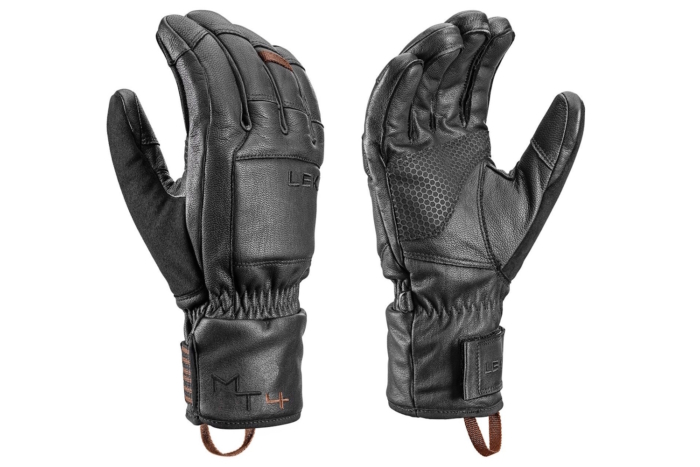
The LEKI Monterra Prime Mitt ($170) — available in both unisex and women’s-specific sizing — sets a new benchmark for internal comfort on the slopes. Designed as LEKI’s debut backcountry handwear capsule, it addresses the common pain point of stiff, break-in-heavy leather by using ultra-flexible hides paired with an extraordinarily plush interior lining. By combining an anatomical fit with targeted grip reinforcements, this pair makes handling equipment feel effortless. If you want a svelte, refined mitten that feels broken-in on day one while sealing out resort chills, this setup deserves a spot on your radar.
The Tech: LEKI constructs the outer shell from 100% premium goatskin leather, complemented by a targeted honeycomb rubber palm patch for added ski pole traction. Thermal regulation relies on high-loft insulation paired with internal finger channels that create individual moisture-wicking stalls for each digit. The interior has Micro Bemberg — a 100% polyester velvet-like lining — while an adjustable hook-and-loop neoprene cuff seals out drafts. Functional details include MF Touch technology on the thumbs, dual pull loops, and carabiner hanging loops on the index fingers.
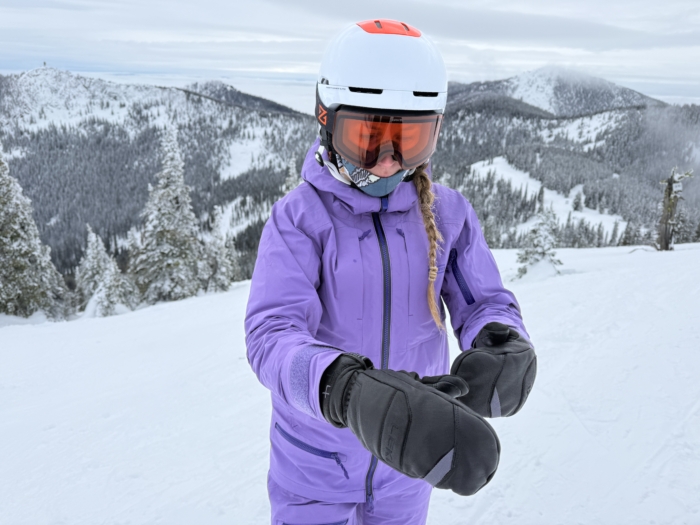
What We Like: SnowSports Senior Editor Morgan Tilton tested the women’s size 7 (matching her typical size small) while taking laps at Crested Butte Mountain Resort and RED Mountain Resort, praising the unrestricted movement when gripping pole handles. Operating smoothly on chairlift rides down to 10°F, she appreciated the slender leather pull loops for easy re-entry, the soft suede nose-wipe panels along both thumbs, and the secure hook-and-loop wrist fasteners.
What We Don’t: The design lacks an integrated GORE-TEX membrane, meaning prolonged exposure to wet, slushy rain will eventually push through the treated leather. Additionally, the mittens do not ship with wrist leashes, and while the MF Touch thumb allows basic screen taps, detailed texting on a smartphone remains impractical.
Should You Buy It? Riders seeking a sleek, low-bulk leather mitten with an exceptionally soft lining will find incredible value in this design. Compared to a heavier, extended-gauntlet option like the Black Diamond Mercury Mitts — which provides maximum sub-zero insulation for brutal freeze — the Monterra offers a more agile, undercuff silhouette that excels for active resort skiing. It stands out as an elevated, high-comfort choice for winter resort laps.
-
-
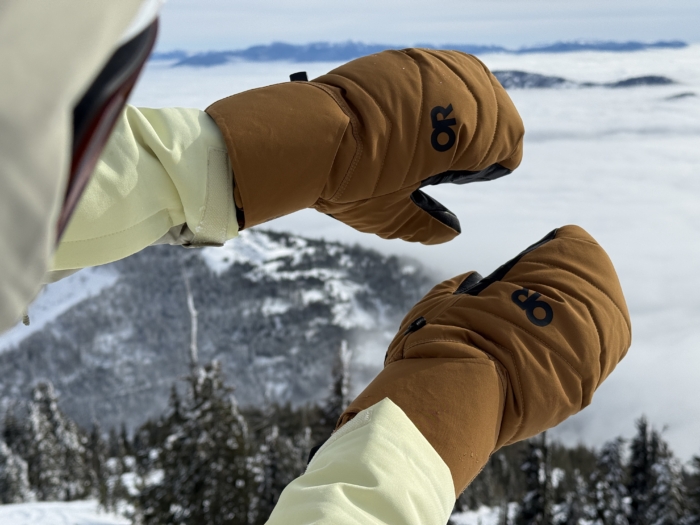
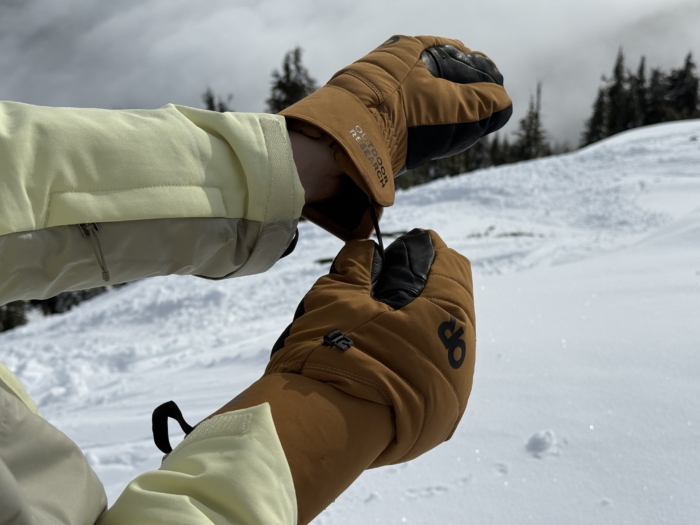
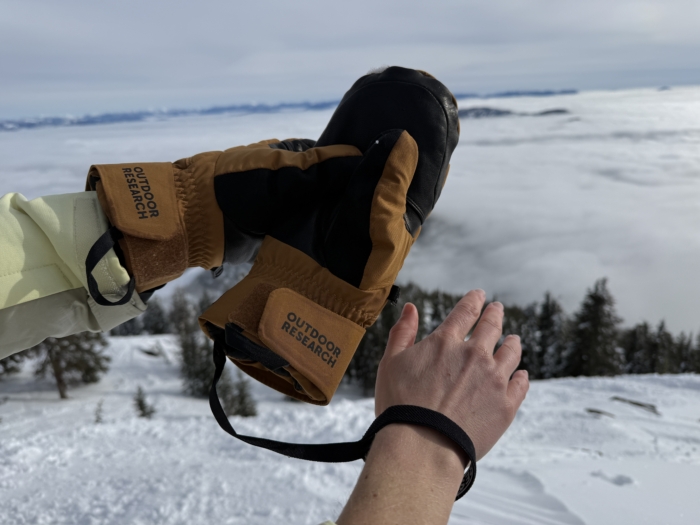
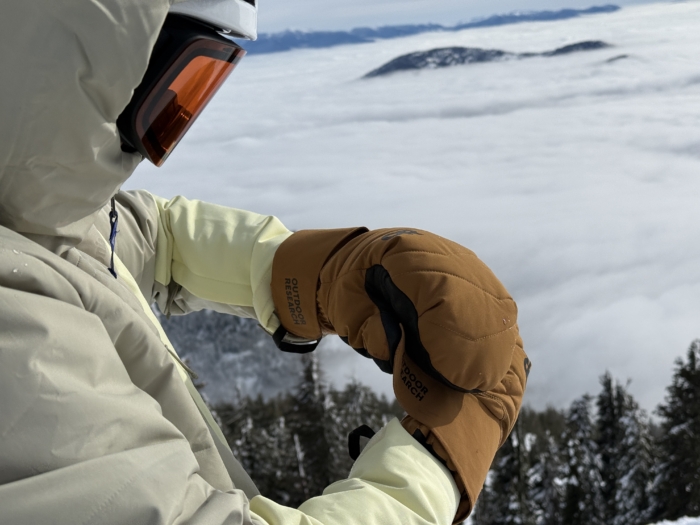
Morgan Tilton testing the Outdoor Research Stormbound GORE-TEX Down Mitts at RED Mountain Ski Resort; (photo/Dane Tudor)
-
Morgan Tilton testing the Outdoor Research Stormbound GORE-TEX Down Mitts at RED Mountain Ski Resort; (photo/Dane Tudor)
-
Morgan Tilton testing the Outdoor Research Stormbound GORE-TEX Down Mitts at RED Mountain Ski Resort; (photo/Dane Tudor)
-
Morgan Tilton testing the Outdoor Research Stormbound GORE-TEX Down Mitts at RED Mountain Ski Resort; (photo/Dane Tudor)
-
Morgan Tilton testing the Outdoor Research Stormbound GORE-TEX Down Mitts at RED Mountain Ski Resort; (photo/Dane Tudor)
-
Morgan Tilton testing the Outdoor Research Stormbound GORE-TEX Down Mitts at RED Mountain Ski Resort; (photo/Dane Tudor)
-
Morgan Tilton testing the Outdoor Research Stormbound GORE-TEX Down Mitts at RED Mountain Ski Resort; (photo/Dane Tudor)
-
Morgan Tilton testing the Outdoor Research Stormbound GORE-TEX Down Mitts at RED Mountain Ski Resort; (photo/Dane Tudor)
-
Morgan Tilton testing the Outdoor Research Stormbound GORE-TEX Down Mitts at RED Mountain Ski Resort; (photo/Dane Tudor)



Specifications
Pros & Cons
Pros
- Exceptional warmth from 700-fill down and dense PrimaLoft
- Waterproof GORE-TEX insert shields down from moisture
- Leaner leather palm preserves ski pole grip
- Ultra-soft suede thumb panel for wiping goggles
Cons
- Stiff wrist closure hinders cuff integration
- Unlined lower cuff feels slick against damp skin
- Touchscreen thumb is ineffective for phone use
Bottom Line: An ultra-plush, heavy-duty sleeping-bag-for-our-digits that provides toasty warmth for sub-zero chairlift rides. The Stormbound is for riders with chronically cold hands who need maximum thermal output without relying on batteries.
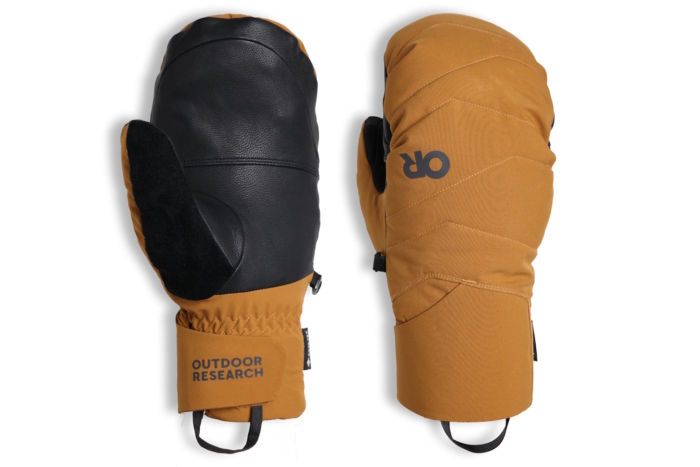
The Outdoor Research Stormbound GORE-TEX Down Mitts ($150) deliver extreme thermal relief, feeling much like sliding your hands into a sub-zero sleeping bag. They solve the misery of numb fingers during frigid storm cycles by combining high-loft down with heavy synthetic insulation. Designed specifically for severe winter weather, this heavy-duty pair keeps your hands cozy when standard resort gloves fall short. If you suffer from poor circulation or regularly ski in single-digit temperatures, this unyielding barrier is worth every penny.
The Tech: Outdoor Research combines 700-fill-power down across the back of the hand with 340g of PrimaLoft insulation and a plush high-pile lining. A fully waterproof, windproof GORE-TEX membrane protects the down cluster from exterior moisture, while the leather palm has a leaner insulation profile to preserve tactile feedback on ski poles. Internal soft dividers create individual finger stalls for extra warmth retention, and a pre-curved shape minimizes hand fatigue.
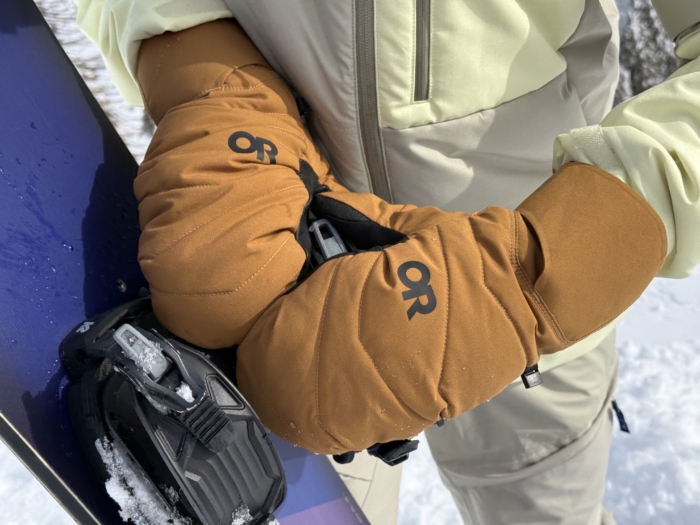
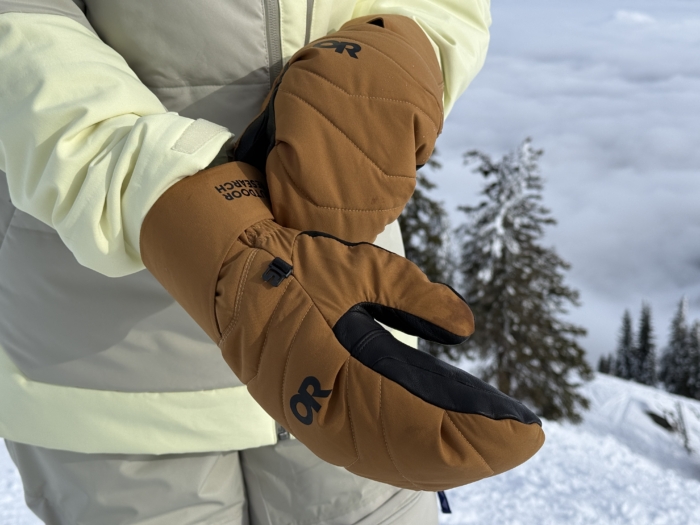
What We Like: SnowSports Senior Editor Morgan Tilton tested these mitts during freezing, windy, and damp storm cycles at RED Mountain Resort, finding them exceptionally protective on days dipping well below 15°F. She appreciated the extra-large webbed pull loop that makes pulling them on effortless, alongside the comfortable, removable wrist leashes. The back-of-thumb suede panel provides a remarkably soft surface for clearing snow off goggles, while the durable leather palm handles heavy rope tow and ski pole friction without wearing down.
What We Don’t: The wide, wrap-around hook-and-loop wrist strap is rigid, making cuff integration unforgiving whether you try tucking it inside or pulling it over your jacket sleeves. Furthermore, the silky interior fleece lining stops short of the lower wrist area, leaving a slick synthetic fabric against the skin that feels less welcoming when damp.
Should You Buy It? Cold-handed skiers riding in severe sub-zero conditions will find complete comfort in this model. Compared to a lighter option like the Outdoor Research Arete Modular Mitts — which uses a removable fleece liner for milder 30°F days — the Stormbound is built strictly for the deepest freezes. It remains one of the warmest non-heated options available for harsh weather while resort skiing.


Specifications
Pros & Cons
Pros
- Simple wrist cinch
- Streamlined and classy
- Soft interior
Cons
- Not everyone prefers dividers between fingers
- Pricier choice
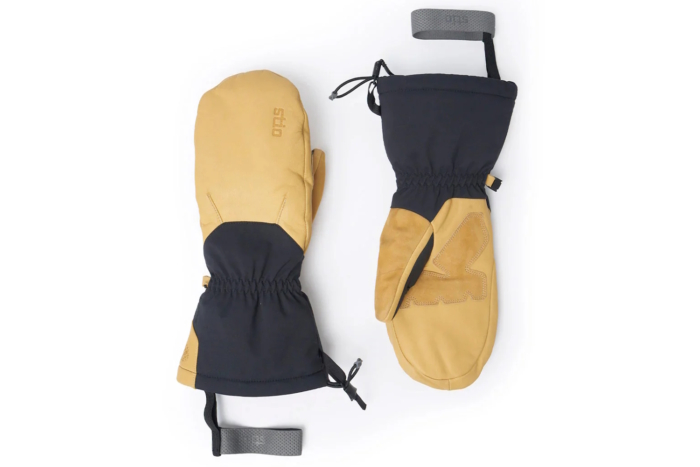
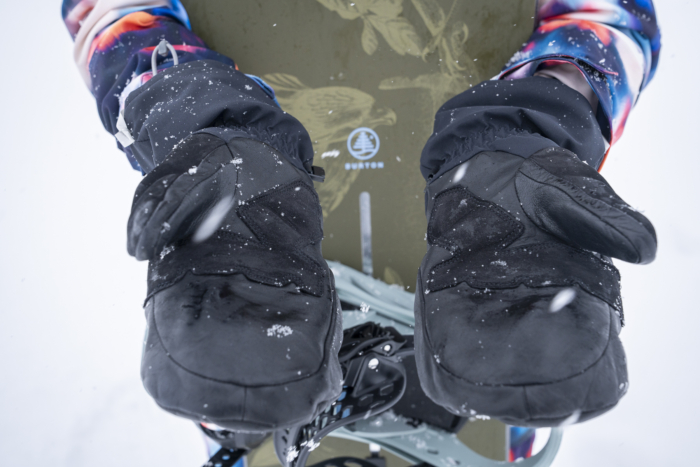
Bottom Line: A refined, stormproof mitten that pairs eco-friendly weather protection with low-bulk warmth. The Objective Insulated Mitt is ideal for resort riders seeking a supple leather gauntlet that performs in wet storm cycles without feeling cumbersome.
The Stio Objective Insulated Mitt ($189) combines a sleek silhouette with heavy-duty weather defense for deep powder days. It solves the issue of stiff, clunky leather mitts by utilizing pre-softened hides and a tapered gauntlet that easily tucks under or over outerwear sleeves. Hosting an innovative, eco-conscious waterproof membrane, it handles shifting mountain moisture and biting wind effortlessly. If you want an elevated, lightweight option that delivers reliable heat without bulky padding, this setup is well worth considering.
The Tech: Stio incorporates GORE-TEX’s ePE membrane — a PFAS-free waterproof and breathable barrier that replaces traditional fluoropolymer construction. Thermal efficiency comes from 100g of PrimaLoft Gold Eco insulation, paired with a hybrid liner made of 50% merino wool and 50% polyester with internal finger dividers for enhanced heat distribution and odor control. The palm and knuckles are reinforced with water-resistant nubuck suede overlays for long-term grip durability.
What We Like: SnowSports Senior Editor Morgan Tilton tested these mitts during cold, stormy resort sessions at Crested Butte Mountain Resort and praised their supple, unrestrictive feel through deep turns. Weighing just 8 ounces, the low-bulk synthetic fill maintained warmth during 15°F chairlift rides without making hand movement rigid. She also appreciated the narrow three-layer polyester gauntlet cuff, simple wrist cinch loop, removable leashes, and soft suede nose-wipe panels on the backs of the thumbs.
What We Don’t: Because of the specialized ePE GORE-TEX membrane, maintenance requires extra attention; you must hand-wash the mitts with a tech wash to maintain the DWR treatment. Additionally, the gauntlet cuff sits leaner than standard oversized designs, which can make pulling it over heavily padded coat cuffs slightly tight.
Should You Buy It? Resort skiers and storm chasers looking for high-end weatherproofing and a modern, sustainable build will find immense value in this model. Compared to a more streamlined undercuff option like the Dakine Galaxy GORE-TEX Mitt — which offers a tighter fit for smaller hands — the Objective provides greater gauntlet coverage for deep-snow days. It stands out as an exceptionally stylish, technical pick for all-season mountain riding.
Specifications
Pros & Cons
Pros
- Very durable exterior
- Streamlined cuff with space for fingers to move
- Recycled insulation
- PFC-free ePE GORE-TEX insert for eco-friendly waterproofness
Cons
- No nose wipe
- If you want a long collar, look elsewhere
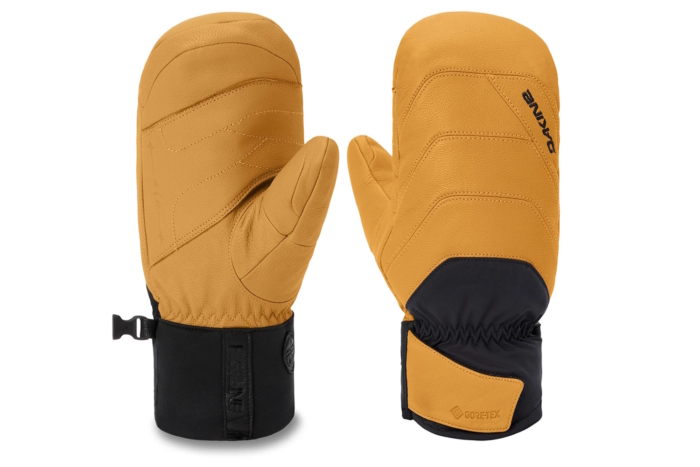
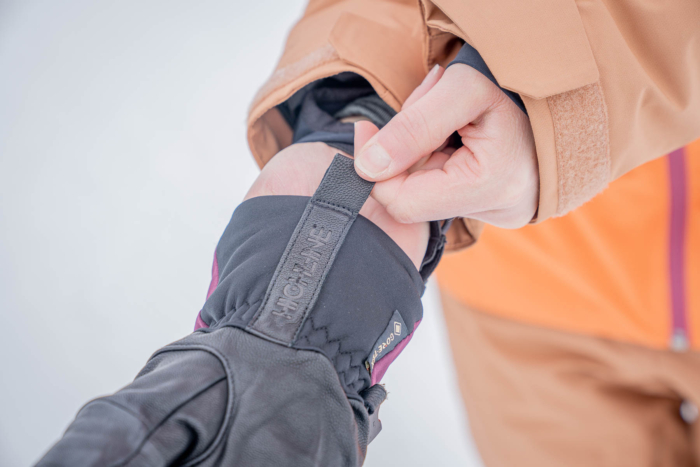
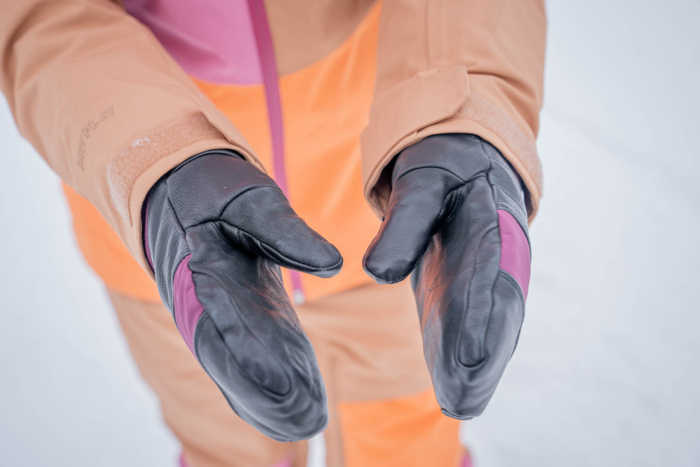
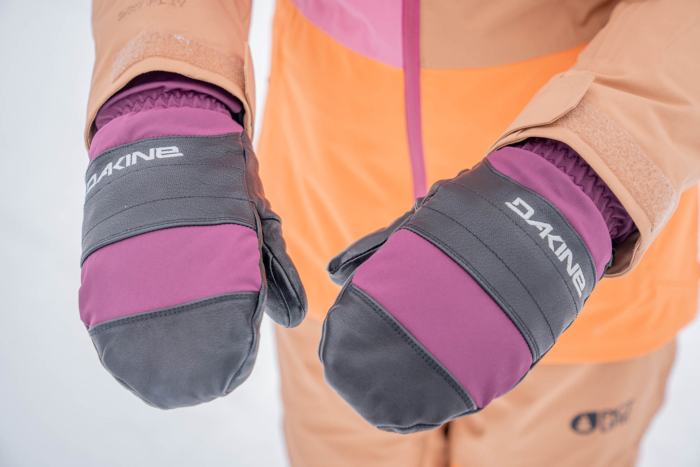
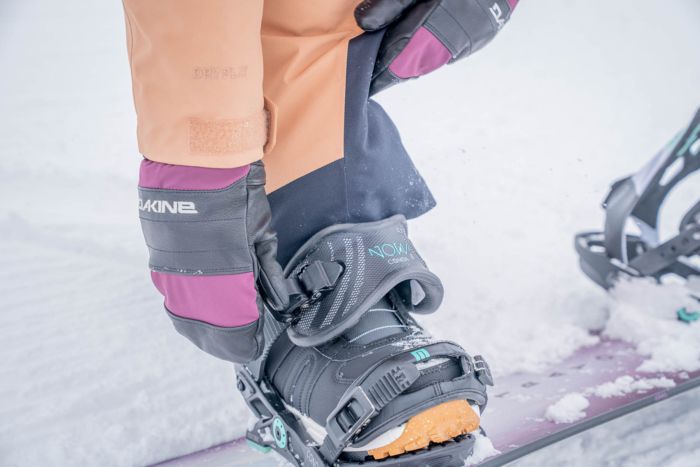
Bottom Line: Durable, tailored cocoon that provides serious thermal efficiency and stormproof protection for women’s hands. The Galaxy Mitt is a great selection for shredders who want long-lasting goat leather and high-heat performance in a streamlined undercuff design.
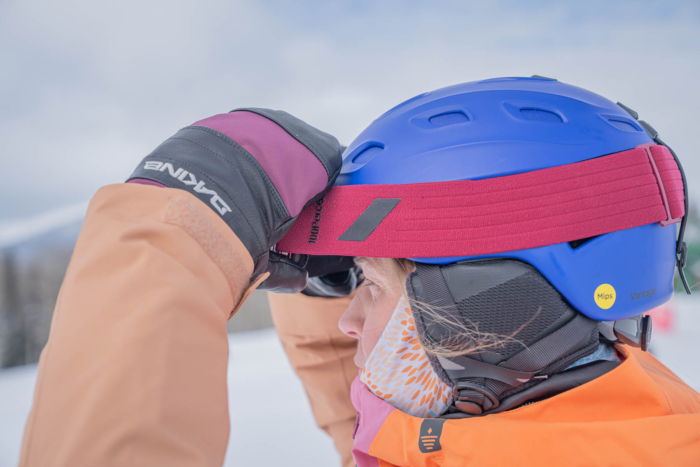
Here’s one for the ladies: The Dakine Galaxy GORE-TEX Mitt ($135) offers an intentionally fitted silhouette that prevents female hands from feeling lost in oversized insulation. Replacing the brand’s popular Baron model, this updated build integrates an eco-conscious waterproof liner while dropping the price tag. It solves the frustration of wide, sloppy mitten interiors that reduce grip control on ski poles and chairlift bars. If you want a robust, leather-wrapped safeguard for bitterly cold resort laps, this option deserves serious consideration.
The Tech: Dakine constructs the outer shell with full goat leather treated with a PFC-free DWR coating for extra moisture repellency. Weather protection comes from a GORE-TEX ePE waterproof-breathable insert built without fluorinated chemicals. Inside, a plush wool-blend lining pairs with high-loft synthetic insulation to capture heat, while an elastic wrist cinch and streamlined undercuff closure block drafty winds without crowding jacket sleeves.
What We Like: SnowSports Senior Editor Morgan Tilton tested these mitts during freezing sessions at Crested Butte Mountain Resort, finding them exceptional for temperatures ranging from 10°F to 20°F. The goat leather wrapping across the palm, fingertips, and back of hand showed zero wear after a full season of grabbing sharp metal board edges. She noted that the wide, flat-noodle wrist leashes were comfortable and easy to use, while the integrated pairing buckle made keeping the pair organized during foot travel simple.
What We Don’t: During high-output cardio runs on sunny days between 25°F and 32°F, the dense insulation caused palms to sweat quickly, and the build reaches its limit in extreme sub-zero windchills. Additionally, the exterior thumb lacks a soft nose-wipe panel, making it inconvenient to clear stray moisture on cold powder days.
Should You Buy It? Cold-handed riders seeking a tough, leather-dominant mitten with a tailored fit will find fantastic value here. Compared to a lighter setup like the Burton GORE-TEX Under Mittens — which has a removable five-finger stretch liner for easy temperature adjustments — the Galaxy delivers a much toastier, heavier-duty shield against severe freeze. It remains a reliable, long-lasting pick for mid-winter resort skiing.
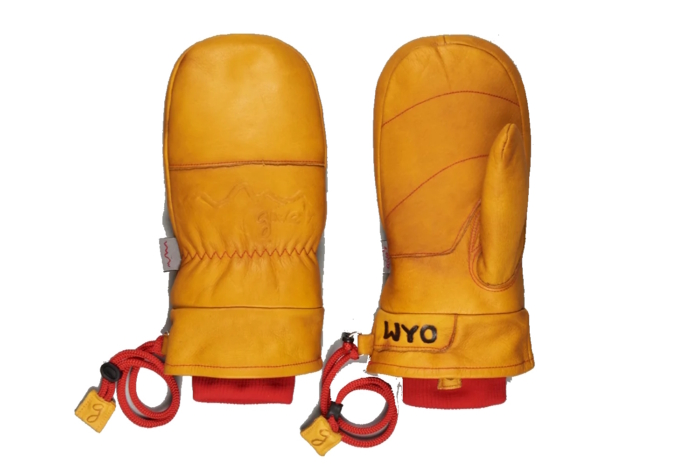
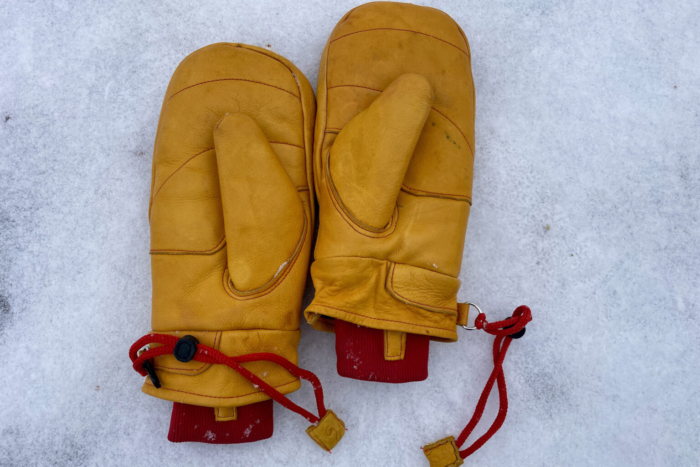

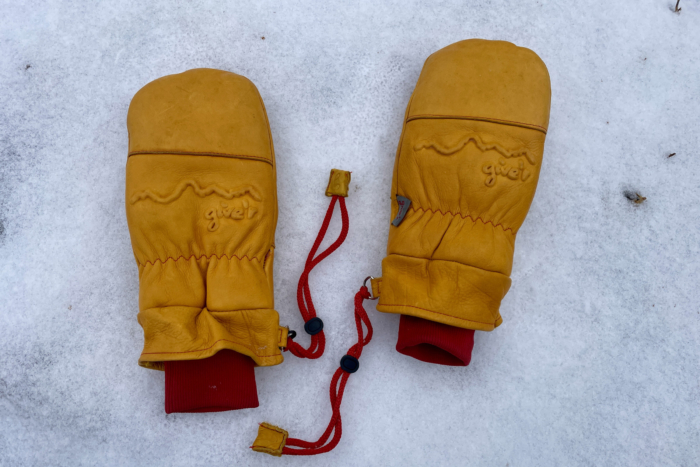
Specifications
Pros & Cons
Pros
- Durable
- Good dexterity
- Warm
Cons
- Requires a short break-in period to reach optimal feel
Bottom Line: A bombproof, customizable leather fortress that delivers five-layer thermal protection for rugged mountain tasks. The Frontier Mittens are the ideal choice for skiers and outdoor workers who want extreme durability and sub-zero warmth that breaks in over time.
The Give’r Frontier Mittens ($139) bring heavy-duty workwear durability to severe winter weather. Built by a brand famous for indestructible handwear, this design solves the problem of delicate ski mittens that tear apart on sharp ski edges or hot campfire logs. Combining a full cowhide shell with an inclusive size range spanning XS to 3XL, it offers a custom-feeling fit for all hand shapes. If you need a tough, weather-resistant shield for resort laps and outdoor chores, this pair is well worth considering.
The Tech: Give’r packs these mitts with a five-layer insulation system, with a heat-reflective barrier, 100g Thinsulate, and a plush fleece lining. A 100% waterproof membrane sits directly beneath the heavy-duty, hand-waxed cowhide exterior to lock out snowmelt and damp weather. The wrist construction uses an elastic undercuff to seal out cold drafts, while steel D-rings provide anchor points for wrist leashes.
What We Like: Tester and Forest School teacher Mattie Schuler put both the early prototype and updated 2.0 version through their paces while taking resort laps in Colorado, praising how warm and protective they felt during freezing conditions. The all-cowhide construction handles severe abuse without showing wear, and Give’r offers optional hand-branded initials on the leather cuff for a personalized touch. She also appreciated the secure fit of the elastic undercuff, which slides easily under jacket sleeves without bunching up.
What We Don’t: Due to the thick, premium cowhide shell, there is a mandatory break-in period where the mittens feel stiff before molding to your natural grip. Furthermore, maintaining water repellency and supple leather requires routine seasonal waxing treatments using Sno-Seal or natural beeswax balm.
Should You Buy It? Skiers and winter workers who value maximum physical durability alongside classic styling will get years of service out of this setup. Compared to a budget leather option like the Flylow Oven Mitt — which uses a thinner pigskin shell for easier out-of-the-box flexibility — the Frontier Mitten provides far heavier weather protection and superior long-term abrasion resistance. It stands out as an outstanding investment for anyone who demands indestructible handwear.
-
-
Lily Ritter testing the Outdoor Research Carbide Sensor winter mittens; (photo/Max Ritter)
-
Lily Ritter testing the Outdoor Research Carbide Sensor winter mittens; (photo/Max Ritter)
-
Lily Ritter testing the Outdoor Research Carbide Sensor winter mittens; (photo/Max Ritter)
Specifications
Pros & Cons
Pros
- Gauntlet style offers high coverage
- Toasty warm for ultra cold days
- Pull loop makes for easy on and off
Cons
- Less versatile
- Sizing runs really big
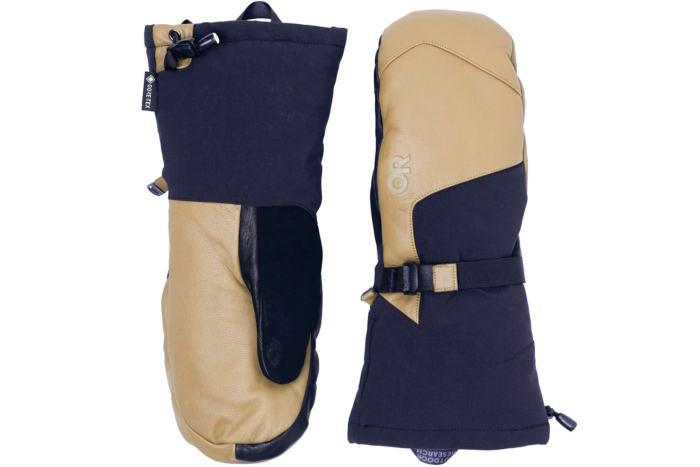
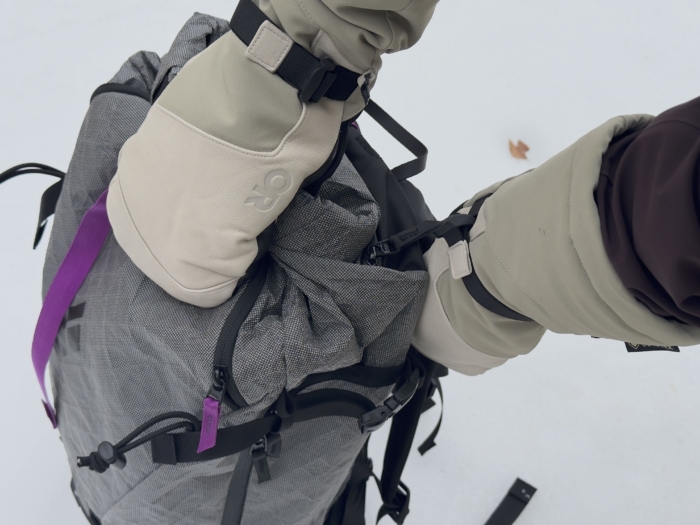
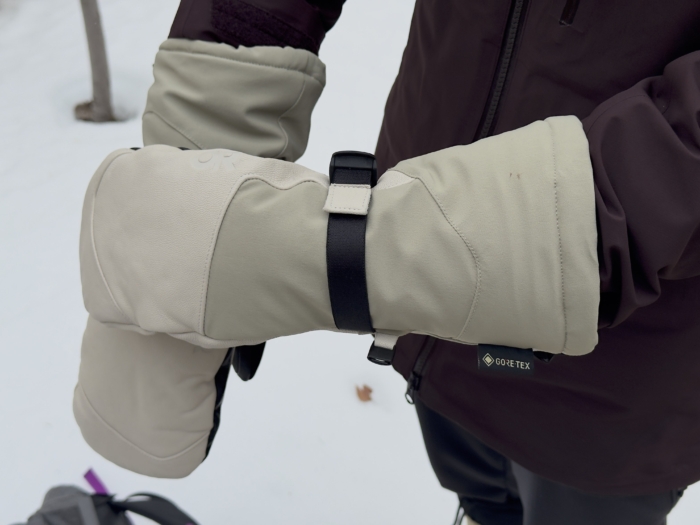
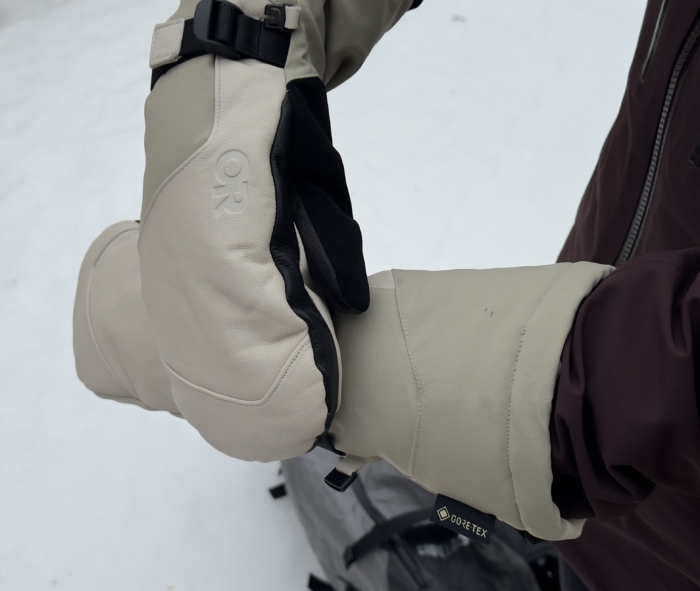
Bottom Line: A heavy-duty, stormproof shield that delivers sleeping-bag-level warmth during severe mountain weather. The Carbide Sensor Mitts are the ideal choice for skiers who want maximum gauntlet protection against deep powder and biting winds.
The Outdoor Research Carbide Sensor Mitts ($130) offer instant relief on harsh winter days, feeling much like stuffing your hands into a cozy sleeping bag. They solve the headache of spindrift sneaking into sleeves during deep turns by pairing a high-capacity gauntlet with dual cinch points. Built to withstand both waist-deep powder and wet coastal storms, this protective pair excels when weather conditions turn nasty. If you need a roomier, highly insulated barrier for midwinter resort riding or backcountry descents, this model is worth considering.
The Tech: Outdoor Research arms the Carbide with a waterproof, windproof GORE-TEX insert designed to block heavy humidity and driving snow. Interior insulation consists of VerticalX Eco — a 100% recycled synthetic fill that retains loft and thermal power even when damp. The outer shell uses lightweight 200D nylon ripstop, reinforced with a supple leather palm for increased grip durability and pole handling.
What We Like: Exum Guides Ski Guide Lily Ritter relied on these mitts as her top choice for storm days in the Tetons, where they easily repelled waist-deep powder and damp mid-30s moisture. After slogging up a 1,500-foot bootpack on Teton Pass, she was thrilled to pull them out at the summit of Mount Glory against howling 30 mph winds. She praised the extended gauntlet for completely sealing out blowing drift using its wrist and cuff-end drawcords, as well as the soft nose-wipe panel on the thumb and sturdy webbed pull loops that make pulling them on effortless.
What We Don’t: Sizing runs noticeably generous, with a size medium fitting more like a large and leaving extra interior volume for smaller hands. Additionally, the extended gauntlet profile is overly bulky for milder temperatures in the high 20s or low 30s, where lighter handwear feels less cumbersome.
Should You Buy It? Skiers and riders searching for a reliable midwinter fortress that effortlessly handles severe winds and deep snow will get immense value from this setup. Compared to a low-profile undercuff option like the Hestra Fall Line Mitt — which provides a sleeker fit for average resort days — the Carbide Sensor offers superior gauntlet defense against relentless spindrift. It remains a standout pick for cold backcountry summits and heavy resort storm cycles.
Winter Mittens Comparison Chart
| Winter Mittens | Price | Waterproofing | Shell/Palm Material | Insulation Type | Best Use |
| Hestra Fall Line Mitt | $190 | Water-resistant | Cowhide shell, polyester lining | G Loft | Resort Riding/Freeriding |
| Burton GORE-TEX Under Mittens | $85 | GTX | DRYRIDE 2-Layer fabric (100% polyester/nylon woven shell) | ThermacoreECO synthetic | Snowboarding/Value |
| Black Diamond Mercury | $140 | BD.dry waterproof insert | Recycled polyester/Goat leather | PrimaLoft Gold (340 g total) | Extreme Cold/Resort Riding |
| Swany Calore | $160 | Dryfinger II insert | Smooth grain leather | Insuloft (80 g) with charcoal liner | Resort Riding |
| Outdoor Research Revolution | $90 | GTX | 2L Polyester/PU palm | EnduraLoft (200 g/133 g) | All-Season/Value |
| Dakine Women’s Galaxy | $135 | GTX ePE | Polyamide/Goat leather | PrimaLoft Gold/Wool blend liner | Women’s Skiing/Resort Riding |
| The North Face Montana | $150 | GTX | Goat leather | Heatseeker Eco (300 g/150 g) | Resort Riding |
| Outdoor Research Arete Modular | $140 | GTX | Pigskin leather/Nylon | 200g SpaceLoft synthetic insulation (back of hand), 100g (palm) | High-output Mountaineering/Backcountry Touring |
| Outdoor Research Prevail Heated | $400 | GTX | Polyester and nylon shell, polyester insulation, polyester fleece lining | EnduraLoft | Cold-weather Work/Snowmobiling/Resort Riding |
| LEKI Monterra Prime Mitt | $170 | Water-resistant treated leather (no membrane) | 100% Goatskin leather, honeycomb rubber palm patch | High-loft synthetic insulation with Micro Bemberg lining | Resort Riding/Freeriding |
| Outdoor Research Stormbound Down | $150 | GTX | Water-resistant ripstop nylon with leather palm | 700-fill-power down (back of hand), 340g PrimaLoft Gold, high-pile fleece lining | Severe Winter Weather |
| Stio Objective | $189 | GTX | Full-grain leather/Suede | PrimaLoft Gold Eco (100 g) | Resort Riding |
| Give’r Frontier | $139 | Yes, waterproof hipora membrane | Cowhide leather exterior | 380 g Thinsulate insulation on inner palm, 490 g on back of hand | Storm-day Resort Riding |
| Outdoor Research Carbide Sensor | $130 | GTX | 88% nylon, 12% spandex (outer), goat leather palm, polyester insulation (85% recycled), tricot polyester lining | VerticalX ECO | Resort Riding |

How We Tested Winter Mittens
From certified ski guides, forest school teachers, and hunters to lifelong skiers, our team of seven gear experts has tested dozens of winter mittens across North America in storms, high humidity, and well-below-freezing temperatures to find the best protection for your digits.
This guide has been updated 12 times since 2022, when it first debuted.
Our Expert Testers
- SnowSports Senior Editor Morgan Tilton learned to ski in Telluride, Colo., and lives in one of the nation’s coldest locations, Gunnison Valley, where it’s not uncommon to drop into negative digits plus windchill.
- For the 4-month 2026 test window, Tilton tested six winter mittens across 60 days with 445,000 vertical feet of descent, 832 miles, and 149 hours of snow travel via snowmobile, downhill snowboarding and skiing, and backcountry tours. Her primary field tests were at RED Mountain Resort and Crested Butte Mountain Resort, plus stints at Whistler Blackcomb, Vail Ski Resort, and Whitewater Mountain Resort — all five of which delivered freezing, blustery whiteouts.
- In 2025, Tilton tested mitts on -10 degree days in Montana, at Big Sky Resort, and while cat skiing laps on 10-degree, blustery back-to-back days in the Valhalla range of British Columbia. In Canada, mitts kept her paws warm while backcountry camping at Baldface Valhalla, lapping Whitewater Ski Resort, and exploring RED Mountain Ski Resort. Those adventures totaled more than 30 hours of continuous testing (excluding time in the sleeping bag) across 33,300 vertical feet and 104 miles on snow.
- Lily Ritter is a gear tester, certified Ski Guide, and co-author of Ski Snacks, based in the Tetons in Victor, Idaho. She has worked as a writer, editor, and gear tester for over 10 years, and put these winter mittens to the test in her snowy backyard while storm skiing on Teton Pass in sub-zero temperatures and lapping the tram at Jackson Hole Mountain Resort.
- In the 2026 test window, Ritter tested four winter mittens for a cumulative 48 hours across 12 days of downhill and backcountry descents at Jackson Hole Mountain Resort, Grand Targhee Resort, and Teton Pass. The temperatures ranged from -2 to 51 degrees Fahrenheit.
- Tester Mattie Schuler is no stranger to cold weather. As a childhood educator for a nature school, the majority of Schuler’s days are spent outside teaching kids — in cold, windy, wet weather — through the outdoor classroom program she founded in 2019. Over the past decade, Schuler has tested dozens and dozens of gloves and mittens for personal and professional utility, so she has a solid grip on the metrics from warmth to comfort. She’s quite picky about certain variables like nose wipe placement and whether the wrist leashes are too long or too thick.

- Based in Carbondale, Colorado, Heather Balogh Rochfort has decades of experience in mountain snowsports, like backcountry skiing, downhill skiing, uphilling, and cross-country skiing. She typically tracks more than 50 days for the ski season, including boot packing Highlands Bowl.
- Our winter mittens test team includes lead GearJunkie lead gear tester, reviewer, and photographer Eric Phillips, a hunter, splitboarder, search-and-rescuer, and snowmobiler based in the Colorado Rockies.
- New Hampshire-based backcountry skier Matt Hart, who has decades of backcountry skiing and product testing under his belt, tested mitts, too. Hart first skied Tuckerman Ravine when he was a 16-year-old before heading west to live in the Cascades, Wasatch, and Front Range mountains. In 2023, he returned to New Hampshire, where he found the famously ridiculous weather of Mount Washington perfect for gear testing.
- Other contributors include snowboarder and gear tester Austin Beck-Doss, who hails from Wyoming.

Our Testing Grounds
On gear-shattering days, our team tests mittens throughout North America in the coldest locations, including Gunnison Valley, Jackson Hole, and Big Sky, Montana. SnowSports Senior Editor Morgan Tilton pulls on winter mittens at Crested Butte Mountain Resort or while taking a skate on the Crested Butte Nordic trails.

Schuler grew up in Wisconsin and, for more than a decade, has lived in Colorado, where she teaches outside for a childhood outdoor school curriculum she co-founded. When she’s not at work, she tests mittens while snowboarding at Eldora Mountain, which is known for frigid temps, gusty winds, and whiteout conditions.
Other testing zones include New Hampshire, which is renowned for its harsh and unforgiving winter conditions.
The GearJunkie team has also gathered twice annually for a ski week at Crested Butte Mountain Resort in 2022 and 2023, and at Vail Ski Resort in 2026.

Our Testing Process
While assessing pairs of winter mittens, we consider the insulation, warmth, waterproofness, windproofness, and durability. We examine the overall materials, sustainability, malleability, break-in period, ergonomics, comfort, style, cut, fit, liner, cuff, and value.
We also consider the accessory details, including the nose wipe, vents, wrist leash and cinch, eyelets or other attachment points, and carabiners. While dexterity is reduced compared to wearing gloves, there’s also a range of dexterity for mittens based on their silhouette.
We make an effort to test every pair of mittens in the coldest, windiest conditions over many days of field testing each winter.

Our Winter Mittens Rating System
We score each pair of winter mittens on a 1–10 scale for Warmth and Insulation, Weatherproofing, Dexterity and Grip, Durability and Reinforcements.
- Warmth and insulation in a mitten hinges on the type of insulation (down, synthetic, hybrid), as well as the insulation weight and removable liners. We test every set against the intended insulation value. The type of liner (soft fleece vs. wool) influences comfort and moisture-wicking power. Some liners are removable, washable, and touchscreen-compatible, which earn more points.
- While considering weatherproofing, we take into account how the mitts shield moisture and wind.
- Dexterity and grip examine the overall shape and how it translates to airflow and liners. We take note of pre-curved shapes to improve grip and feel, as well as stretch panels for flexibility.
- Durability and reinforcements consider how the pair will endure abrasion from ski edges or driving a snowmobile: Are there reinforced palms or fingers?
The Overall Rating is based on contextual, editorial judgment, and the complex user experience across various scenarios and conditions.

Buyer’s Guide: How to Choose Winter Mittens
If you’re using mittens in snowy, wet, and cold weather — say, on the ski slopes or in the backcountry — you’ll want a mitten that is insulated, waterproof, and has key details like a nose wipe or wrist leashes.
Many mittens will be a bit thicker or wider and more cumbersome than ski gloves and might compromise your dexterity.
Other mittens will be leaner with less insulation, because they are made for cardio activities like running or cross-country skiing, so you’ll get plenty of breathability. Some streamlined mittens are made with premium synthetic fill, making them extremely warm yet lean — and it’ll be pricier.
If the temps drop, you can add glove liners inside your mittens or hand warmers to help stave off the temperature plummet.

Warmth Value
Winter comes with huge range of temperatures and weather conditions including extreme wind, humidity, and snowstorms.
If you struggle with keeping your extremities warm, you may want mitts with a higher weight, down-fill insulation, or a thicker shell. Folks with Raynaud’s syndrome might also consider battery-powered mittens.
When the temps are near freezing (versus closer to 0 degrees) or you’ll be generating lots of body heat, consider mittens with ventilation or a multilayer system. That way, you can remove the liner, like the Burton Women’s GORE-TEX Under Mittens or the Black Diamond Mercury Mitts. Both of those designs have a lightweight removable liner.

Some manufacturers provide a warmth rating in degrees Fahrenheit. Others have a warmth rating system that compares mittens within the brand. Warmth can be tricky to measure. The type of materials (such as a windproof, waterproof face and internal liner) and fill (synthetic or down) have an impact, but so does a person’s circulation and body warmth.
Estimated Effective Temperature Range
- Burton GORE-TEX Under: –5 °F to 0 °F
- The North Face Montana: ~0 °F to 5 °F
- Black Diamond Mercury: ~0 °F to 10 °F
- Dakine Galaxy: ~5 °F to 15 °F
- Outdoor Research Revolution: ~20 °F to 30 °F

Insulation
In winter mittens, you’ll find natural down insulation, synthetic insulation, or a combination of both.
Down Insulation
Natural down mittens are a popular option for skiing, cross-country skiing, snowboarding, and snowshoeing. However, down loses its insulating powers when wet. Natural down fill is often made of duck down or goose down (the finest, lightest feathers) and is extremely lightweight, very packable (like what you want in a down jacket), and warmer overall than synthetic fill.
Thindown is a constructed fabric made of natural goose down rather than the down being loaded between layers of textile in a traditional baffled design.

Synthetic Insulation
Synthetic insulation keeps you warm even when the fabric becomes damp because it’s made from polyester, which retains warmth when wet. Ultimately, synthetic insulation also dries faster than down fill. More companies are opting for synthetic fill, including the Black Diamond Mercury Mitts.
Many companies use PrimaLoft synthetic insulation, which is a fiber made from recycled plastic bottles. PrimaLoft fill can also be recycled into another piece of gear.
Hybrid Down-Synthetic
Some winter mittens or gloves use a mix of synthetic and natural down. The benefit is to utilize synthetic fill where the hands most receive moisture while the down increases the warmth factor in certain parts of the hands like the wrists or ends of the digits.

Fill Value
The fill value of a mitten lets you know how much insulation, and thus warmth, is placed inside.
To calculate the fill, a one-ounce sample of down is put into a cylinder and then compressed. A higher number indicates a warmer option, which also means that you’ll need less down to get the same amount of warmth as a lower-fill down. A higher fill number means the down can trap more air, which leads to warmth, in the piece of apparel or gear. For you, that means a lighter, more compressible piece of gear.
- Burton Under Mittens: Manufacturer confirmed they do not publish fill amount of ThermocoreECO synthetic insulation while the Black Diamond Mercury does not have a fill value, it’s versatile with a removable liner that’s made with 340 g of PrimaLoft Gold Cross Core insulation.

Winter Mitten Liners
If they’re not included in the package, it’s a good idea to invest in a pair of liners, whether those are shaped like a mitten or a glove, even if the mittens provide adequate warmth.
You can pair a liner with your mittens for additional warmth. A glove liner also allows you to pull the mitten off and use your fingers for tasks that require a fine touch, all without directly exposing your skin to the cold air and risking dropping your heat too low.
Some liners are constructed with touchscreen capability, too, so you can send a text message or make a phone call without needing to remove the layer. Liners can also function on their own on warmer wintry days, so they’re never a bad investment.
Keep in mind that a handful of pairs already come with removable liners, such as the Black Diamond Mercury Mitts and the Burton Women’s GORE-TEX Under Mittens.

Ventilation
Certain mitten designs include ventilation options in the form of small zipper pockets. Zip it open to let some air in if your hands are hot, or use it to stash a hand warmer for extra warmth.
The Burton Women’s GORE-TEX Under Mittens has diagonal zipper pockets on the back of the hand, the perfect size and spot for hand warmers.
Waterproofness & Water Resistance
Many of the mittens on this list claim to be waterproof. Typically, a “waterproof” mitten is constructed with a layer of breathable membrane such as GORE-TEX. This layer is designed to keep moisture from reaching the inside of the glove and also allow moisture from the hands to evaporate out.
While some of these membranes work quite well, they aren’t completely impervious to water. If your mittens become completely saturated in a heavy rainstorm, your hands will probably get wet underneath.

If you’re seeking the highest level of waterproofing mittens can offer, be sure to select a style with a GORE-TEX (or similar) membrane. All leather options won’t provide full waterproofing, but with an additional wax coating, you’ll get pretty close.
Cuffs vs. Gauntlets
Mittens can have a roomy, high-reaching gauntlet cuff or a leaner undercuff. Choosing between the two designs comes down to the type of protection you prefer and need, which is influenced by your winter activities and the climate where you’ll be most outside.
Gauntlet
With a larger gauntlet, the cuff goes over the sleeve cuffs of your winter jacket, like the Black Diamond Mercury. Tightening the cinch at the base of the mitten’s gauntlet helps prevent snow and wind from entering throughout the snowball fight or shoveling mission.

Undercuff
With an undercuff you’ll have less bulk around your wrists, but a higher chance of snow or wind getting near your wrists and into your coat.
Certain designs have a secondary wrist strap that’s threaded through a quick-release slider buckle to ensure a secure attachment to your wrist when you take the mitten off.
Layering Cuffs & Sleeves
If your daily winter jacket has extended, dense cuffs, your wrists will be more covered and protected from any snow getting in, and a tight mitten cuff might not fit over the coat’s cuffs. While many midlayers have extended sleeve lengths with thumbholes, the material often absorbs moisture and we don’t consider that a replacement for a mitten that shields snow and wind.
You’ll also want to consider your layering system beneath your mitts so that the sandwich of the mitt, jacket, and midlayer isn’t cumbersome.

Nose Wipe
A tester-favorite when it comes to the details: A soft, velvety patch of fabric wrapped across the exterior thumbs of mittens is super handy and comforting to use as a wipe for your runny nose. When you’re out in frigid temps and don’t have access to a tissue, a nose wipe panel is key.
Many brands incorporate a nose wipe in their mittens, including the Black Diamond Mercury Mitts and the Burton Women’s GORE-TEX Under Mittens.
Wrist Leashes
If you tend to frequently take your mittens on and off throughout the day, wrist leashes will be your best friend.
One end of the stretchy leash is either fixed or attached to your mitten’s cuff zone. Shaped like a lasso, the end of the circuit expands and slides around your wrist, so the mitts can stay securely attached to you.
Some wrist leashes are sewn on and not removable while others are easy to remove.

Ski Poles Connectivity
A handful of winter gloves, like those from Leki with their Trigger System, have a specific feature where the gloves actually connect to ski poles. The connectivity is created via a built-in, tiny loop in the thumb saddle.
At this time, Leki offers one pair of women’s winter mittens with a built-in loop, the Snowfox 3D Lady Mitt. However, other mitten-wearers can pick up the Trigger S straps, a strap system with a small harness that goes over your mittens, so you can connect your choice pair of mittens to Leki poles, too.

Touchscreen Compatibility
While liners can help, you can also consider investing in mittens with touchscreen compatibility built in, so you don’t need to remove them to check your phone. We also like mittens with textured palms for grip and durability.
The Burton Women’s GORE-TEX Under Mittens are touchscreen-compatible with a grippy, synthetic leather palm and a removable five-finger liner with touchscreen-compatible fingertips, which is much more functional than a mitten for operating a screen.
While you can do your homework, not all systems are foolproof: the liners are more functional than the touchscreen-compatible leather palm on the Under Mittens, for instance.

Durability
Winter sports like skiing and snowboarding or major shoveling duties will add wear and tear to your mittens. Luckily, durable materials often make heavy-duty mitts strong enough to handle activities like buckling boots, gripping poles, and strapping into bindings.
For such sports, domestic work, and mountaineering pursuits, you’ll want mitts made with durable materials, like goat leather, or mittens that are reinforced in high-friction zones.
Besides polyester and leather, winter mittens often use wool, fleece, or cotton, which generally produce a slimmer mitten. Generally, cotton is not ideal, as it takes a long time to dry and easily tears. Liner materials, whether removable or not, are usually made from soft, slightly stretchy fleece.

Sizing
Most brands will now list the exact measurements of their mittens, specifically the dimensions of the palm. We recommend starting with your usual glove or mitt size, but always double-check any mitt’s specific sizing chart.
Most often, the sizing chart will have you measure from your wrist to your fingertips as well as the circumference of your palm. You should be able to make a fist without the mitten feeling too tight, and your fingertips should reach almost to the top of the mitt, with about ¼-inch of space left over. Mittens that are too big won’t be able to efficiently keep heat in, while mittens that are too small will be uncomfortable.

Sustainability & Eco-Friendly Materials
Sustainability is a key factor that many recreationists appreciate when buying gear. And with finite natural resources, the planet stands to benefit. Fortunately, more outdoor industry companies are pushing the needle regarding eco-friendly materials and manufacturing practices.
Responsible Insulation: Down & Synthetic
If you can’t guarantee that down for a product is harvested in a cruelty-free way, you can also opt for synthetic down.
PrimaLoft is a leader in sustainable fill options, as seen in the Black Diamond Mercury Mitts. Also, PrimaLoft synthetic fill comes in several versions, like Gold and Grip, and is made from recycled plastic bottles transformed into insulating fibers. Bonus: you can recycle PrimaLoft again to create new gear after retiring your mittens, jacket, or sleeping bag.

If you’re set on natural down, versus synthetic, check out Thindown. The material is sourced ethically, meets the Responsible Down Standard (RDS) metric, and is able to be recycled, meeting the Global Recycled Standard.
Recycled & Ethical Materials
A fair amount of outdoor apparel gear is made from polyester. The great thing about polyester is that it can be recycled and reused, like in the Black Diamond Mercury Mitts.
The brand Picture creates mittens with fabric sourced from the brand’s Circular Fabric program, which reuses material from previously used (and beat up) garments and factory cutting scraps that would otherwise go to the landfill.
If the material can’t be made from recycled products, there are fabric options that are Bluesign-certified. This certification verifies that the fabric has been tested to not be harmful to human health and the environment. Similar conscious certifications include Oeko-Tex-certified fabric and Fair Trade sewing.

Another detail to consider when shopping for sustainable, healthier options is to choose mittens that are treated with PFC-free water repellency, removing the harmful toxins that traditional water repellent treatments carry.
Price & Value
Our favorite winter mittens range from $55 on the low end up to $200 or more for premium materials and construction.
Budget: Moderate Insulation
On the economic end, our top picks for winter mittens are below $100. For starters, the waterproof Burton Women’s GORE-TEX Under Mittens ($85) and Flylow Oven Mitt ($55) are on the lower shelf. The Burton Under Mittens have moderate insulation paired with a glove liner, so they’re adaptable and effective for milder winter climates and a range of conditions. The 2-layer construction and low-profile cuff keep the price down. These mittens can still have details like wrist leashes and nose wipes.
Mid-Tier: More Insulation, Longer Cuff
The next price tier has winter mittens above the $100 mark, which utilize more durable materials, including leather, for a higher-quality, longer-lasting mitt.

You’ll see more leather, more insulation, a longer gauntlet, and generally a more technical construction like in the Black Diamond Mercury Mitts ($140).
Premium: High-End Construction, Battery-Powered
Battery-operated mittens can range from $150 to nearly $500.

Frequently Asked Questions
The best winter mittens will first depend on what activity you’ll be using them for most — skiing or snowboarding, or just keeping your hands cold around town during winter. Are you looking to prioritize warmth, durability, or a balance of both?
Our best mittens in testing were the Black Diamond Mercury Mitts — well-insulated, durable, and a great balance of warmth, quality, coverage, and price.
But of course, we’ve included several other best mittens on the market (best for biking, best synthetic versus down) to make sure you find one suited to your cold-weather needs.
There are several warm mitten options on our list, but the warmest would be the Outdoor Research Alti II GORE-TEX Mitts. The Alti is designed for expeditions with 170 grams of PrimaLoft Gold insulation in the body and a removable liner that contains 340 grams of PrimaLoft Gold insulation.

Generally, a high-level down-fill will be the warmest insulation you can get in a mitten. However, many of our favorite mittens have synthetic fill because it always insulates, even when wet or damp. Other design details like the thickness, liner, and exterior material will also affect a mitten’s overall warmth.
If you struggle with cold hands, be sure to look into everyday premium leather mittens with targeted zones of synthetic insulation. Or, get a battery-operated pair.
Wearing liners under mittens comes down to personal preference, which depends on your overall cold tolerance and the primary activity you’ll be doing while wearing them.
If you’re heading out on a super-cold day, a liner can be useful for additional warmth, even in a well-built mitten. On the flip side, liners can be nice if you are working hard on a snow tour, like snowshoeing or ski touring, or if you’re in the yard and need to slip off that outer shell for a bit of air.
Plus, if you frequently take your mittens on and off, liners help keep your skin from being fully exposed to the elements. Look for liners that are touchscreen compatible, like with the Burton Women’s GORE-TEX Under Mittens.

The main disadvantage of mittens is lack of dexterity. This means that when you don’t have your fingers free of the mitt, grabbing a pole or tool is not going to be the easiest. However, your hands will be much warmer than they would be in gloves. Depending on your cold tolerance, dexterity might be a compromise you are willing to make.
Keep in mind that sometimes mittens might be too warm, like on high-temp spring days or if you are really working hard on a powder day. Rather than ditching your mittens altogether, you can opt for a pair that has a removable liner or ones that have small zipper pockets on the top of the hands for quick, easy ventilation.
For most winter pursuits, mittens don’t need to be fully waterproof, but they should be water resistant.
A water-resistance mitt will hold up for most snowy days, even if you are really getting your hands into that snow as you work or play.
However, if you are heading out on a super wet powder day in a damp climate, a fully waterproof mitten might be a better option, like designs with a GORE-TEX membrane, to ensure your hands stay completely dry and warm.

Technically, yes, especially for mittens and gloves.
Women’s specific mittens typically have a shorter finger length and narrower palm circumference compared to men’s mittens, which allows for a better fit for many women.
Some of our testers have found that when following unisex sizing, the size runs seem to correspond more closely to men’s sizes rather than women’s, so our female testers will often size down for a unisex pair.
Whether you’re selecting a men’s, women’s, or unisex mitten, be sure to measure your hands according to that brand’s sizing chart to help you find the best fit.
Pay close attention to sizing charts. For instance, Hestra’s mitten sizes differ between the unisex and women’s selections: a women’s mitten with a 152mm circumference corresponds to a size 7, while a unisex mitten with a 152mm circumference corresponds to a size 6.
Mittens shouldn’t be too loose or too tight. Your mittens should have about a ¼-inch of space above your fingertips, and you should be able to make a fist comfortably without too much constraint or too much extra fabric.
Having a mitten that isn’t too loose or big and spacious is ideal, because that extra space and air requires body heat to warm.
If your mittens are slightly roomy, try wearing a thin, lightweight liner underneath. If your mittens are too tight, they will be annoying to get on and off and pose the risk of cutting off circulation at your wrists.

Mittens rarely need washing, so don’t go throwing them in your weekly laundry pile. That said, there are times when a filthy mitt needs some love. Start with a spot clean: Wipe down the exterior with mild soap and water then air dry.
If your mittens have separate liners, remove and wash them as needed. If the entire mitten needs a thorough machine wash, use a tech-specific wash like Granger’s Performance Wash on the delicate cycle. Lay flat to dry.
You can also condition leather, which is a great waterproof material but needs proper care. First, rub down the mitten with a damp cloth to remove any grit. Next, massage a leather wax like Sno-Seal into the surface. Allow to air dry at room temperature overnight. Use a soft cloth to remove any extra wax, and get ready to enjoy your supple, waterproof mittens.