I dropped my backpack on a grassy perch and pulled Windquester’s new Horizon Lite 2 Pro tent ($439) out as the wind almost ripped it from my hands. I struggled to stake down the flapping canopy as a wall of black cloud and rain, and the whipping winds preceding it, descended on my alpine campsite.
After a quick but hectic pitch, I cinched the tent’s forward guylines tight against the oncoming storm, positioning the head of the tent to take the storm’s brunt. Hail started pummeling, giving way to a burst of rain as I secured the last vestibule and threw my scattered gear into the tent before diving in myself.
Monsoon season in Colorado’s Gore Range is like that. Quick, violent storms that come on fast and leave lesser tents, especially the semi-freestanding and minimalist varieties, at best, quaking. At worst, flattened. The new Horizon Lite 2 Pro wasn’t so feeble. It’s the reason I wasn’t intimidated by a less-than-ideal forecast after a few weeks of testing under my belt.
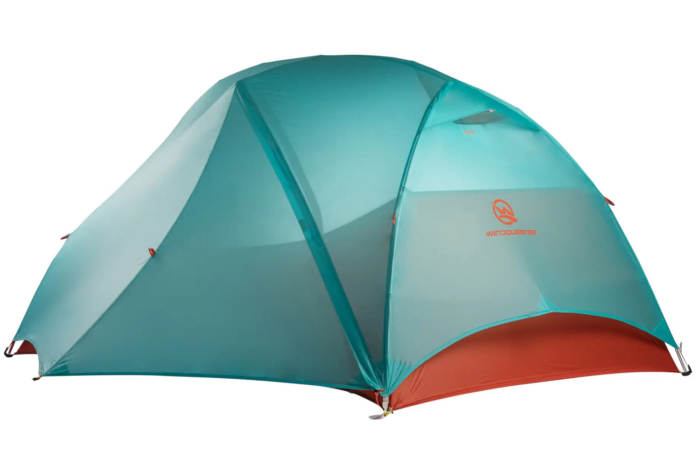
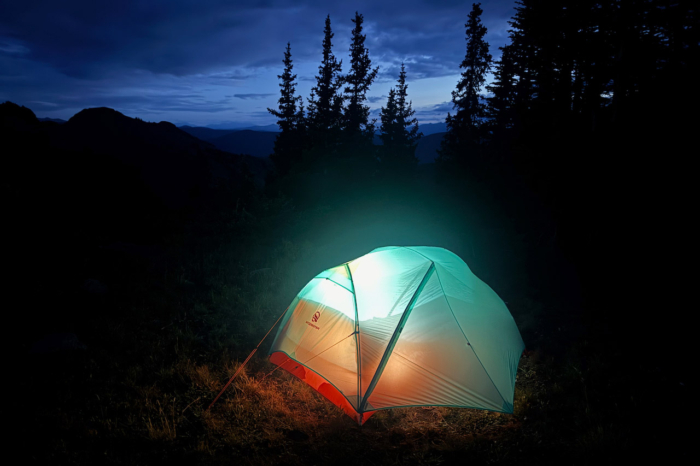
The proudly Canadian Horizon Lite 2 Pro is a lightweight backpacking tent with features, fabrics, and dimensions curiously similar to top tents from brands like Big Agnes and NEMO. But with a few unique twists and design choices aimed at fortifying the tent’s frame, the Horizon Lite 2 Pro proved stout in the face of complicated weather.
Storm protection and lightness typically exist on a corresponding spectrum. Does Windquester’s focus on strength over weight make sense for backpackers? I hauled it into the mountains during good weather and bad to find out for myself.
In short: Windquester’s new Horizon Lite 2 Pro is a lightweight backpacking tent designed for wet and windy conditions. Compared to its lighter competitors, the Horizon Lite 2 Pro packs more pole structure and guylines to help it withstand stronger gusts without skimping on usable space, vestibules, or venting. But like most backpacking tents, it’s a tight “2,” better suited to one sleeper and a dog than a pair of humans.
-

-
(Photo/Bergen Tjossem)
-
(Photo/Bergen Tjossem)
-
(Photo/Bergen Tjossem)
-
(Photo/Bergen Tjossem)
-
(Photo/Bergen Tjossem)
Specifications
Pros & Cons
Pros
- Excellent wind resistance when pitched correctly
- Vestibule tie-backs solve a common issue
- Good venting reduces condensation
- Plentifully waterproof for extended storms
Cons
- Very thin floor
- Tight squeeze for two sleepers
- Should include more stakes for a perfect pitch
Windquester Horizon Lite 2 Pro Review

I’ll be honest, Windquester was not on my radar until someone from the brand reached out, and even then, I was suspicious it was an Amazon knockoff. But part of that is because it’s a new Canadian brand, and the Horizon Lite 2 Pro is a heavily refined version of the platform that’s been on the market for just a year.
The Horizon Lite 2 Pro, its flagship tent model, doesn’t look much different than other high-end tents from Big Agnes, NEMO, Slingfin, and others, save for the fresh colorway. And while they may share rough silhouettes, details, and possibly even factories, the Horizon Lite 2 Pro is specifically positioned as a lightweight backpacking tent for wet and windy conditions.
Fortunately for me, the tent showed up as a strong monsoon season descended on Colorado’s mountains. I set it up in some of the most precarious and exposed spots I could find to test those wet-and-windy claims for myself.
Setup & Structure

Even while moving hastily to beat an oncoming storm, the Horizon Lite 2 Pro was very intuitive to set up. Poles into corners, clip the canopy, drape, and attach the rainfly. No instructions needed — it’s really that simple.
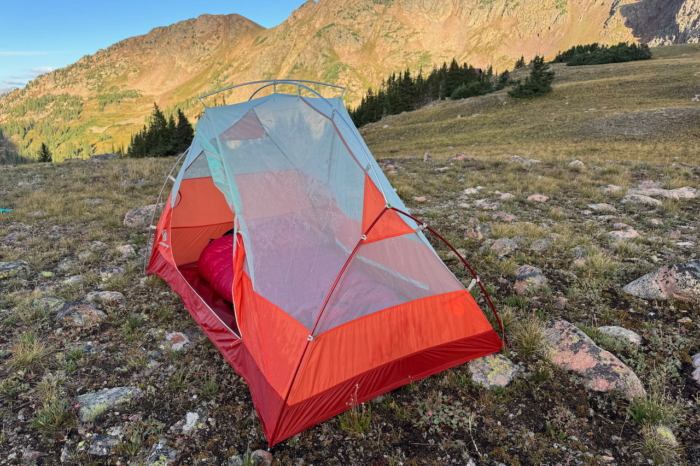
The tent has a fairly standard freestanding pole design. An H-shaped DAC Featherlite NFL pole (320g) connects to all four of the tent’s corners and extends over the spine like a backbone. What the Horizon Lite 2 Pro adds that others sometimes skip is a horizontal crossbar at the top of the canopy. That not only adds some additional skeleton to the structure, but also much more headroom, which came in handy while nervously waiting out an alpine storm.

The tent’s floor is a dainty 15D ripstop nylon. Despite being so thin, it’s watertight. I found that out the hard way when a puddle formed under the foot of the tent at one point.
But like all tents, waterproofing can disappear when holes emerge. I was actually impressed with the floor’s durability during the test period, but I personally wouldn’t pitch this tent often without the matching footprint or a floor tarp. 15D nylon isn’t indestructible.
The final step in setup is securing the five generous guylines. Each end has an adjustable loop that can be secured to tent stakes, rocks, or whatever else you can find. It’s a bomber structure once it’s fully pitched, especially along the vertical axis. But man, did I trip over those guylines while stumbling around in the dark.
One small nitpick while we’re on the topic of stakes: the Horizon Lite 2 Pro includes eight stakes, but it requires 11 to fully pin it to the ground (four tent body corners, five guylines, and two vestibules). Yeah, you can double up the guylines so they share stakes, but since the tent’s premise is wind protection, I say go all in. Give me 11.
Tent Size

The Horizon Lite 2 Pro isn’t going to win any awards from the gram counters, but it’s still on the light end of the burly spectrum. At 1,420 g (3.13 pounds), it hovers meaningfully above the lightest freestanding and semi-freestanding tents on the market.
The 1,100g Big Agnes Tiger Wall UL 2 is a good benchmark for semi-freestanding tents, whereas the 1,242g MEC Spark UL2 makes for a good freestanding comparison. There’s 200-300g of extra meat on the Horizon Lite 2 Pro with its 320g poles, 523g canopy, 60g worth of stakes, and 481g fly.
Most two-person backpacking tents are better utilized as one-person tents that can occasionally accommodate a companion. The Horizon Lite 2 Pro doesn’t deviate too far from that trend. At 135cm at the head and 112cm at the foot, it’s a very tight squeeze for two, especially with luxuriously large sleeping pads.
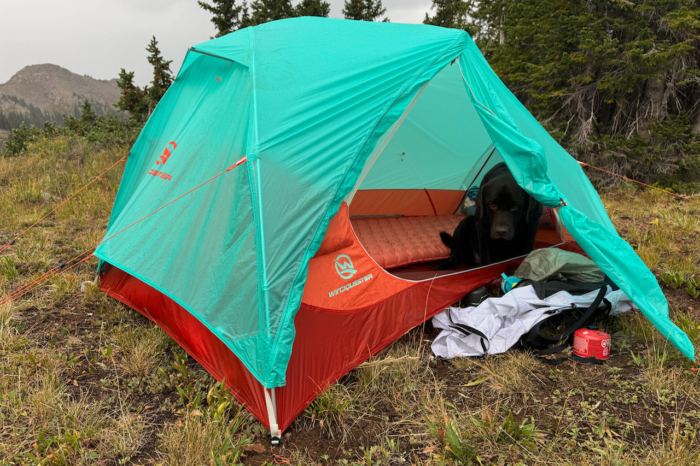
The floor space is interestingly an exact match with the last tent I reviewed, Big Agnes’ new Tiger Wall UL2 (the review of which was aptly named “Ultralight for One, Squeeze for Two”). But my chonky 100-pound lab, Gus, and I shared it well.

I happen to be trying out Windquester’s lovely new tapered 59cm-wide Elevate X sleeping pad, and it’s a great fit in the modestly sized tent. My rectangular 64cm-wide Nemo Tensor pad was unwelcome in the Horizon Lite 2 Pro because it left little room for my wife’s normal-sized sleeping pad.
The key to two-sleeper capacity in this tent, with only 112cm at the foot, is using tapered sleeping pads like the Elevate X — no extra-wide varieties unless you’re sleeping solo.
The Horizon Lite 2 Pro has just enough internal storage without feeling excessive. Each corner of the head gets a deep corner pocket for the immediately accessible odds and ends, like a phone, GPS, and headlamp. And my glasses wouldn’t have been broken had I stored them in there overnight (Gus sat on them).
The foot gets a long horizontal mesh pocket for everything else that demands organization. That’s it, and it’s enough storage for two sleepers.
Vestibules

Thankfully, the Horizon Lite 2 Pro offers doors on each side of the tent, each covered by its own vestibule. That makes for a much easier exit than a tube-style tent. And I needed it one 4 a.m. when Gus expelled his trail snacks all over the floor, and I scrambled to remove him before the second episode.
Poorly positioned door and vestibule tie-backs have been driving me nuts lately — the kind that constantly unravel when you try to stow them. Windquester did it right: the vestibule door can roll and stow reliably. And there’s an additional option to pull the entire vestibule back and hook it to the upper crest of the tent’s foot.
I left them tied back all night in one instance when I pitched the Horizon Lite 2 Pro on a rocky outcropping that was too narrow to deploy the vestibules. But it was also useful during camp breakdown while I was pulling gear out of the tent piece by piece.
Wind and Storm Resistance

I’m not afraid to haul a little extra weight when it’s put to good use, especially when the weather is looking nasty. I’ve spent more than my fair share of sleepless nights in ultralight tents that weren’t quite up to the task of defending me from the weather at hand.
The Horizon Lite 2 Pro is burly for such a light tent — not quite as bombproof as a winter-focused tent like TNF’s Assault 2 Futurelight AMK, but sturdier than what you typically find in this ~3-pound two-person tent category.
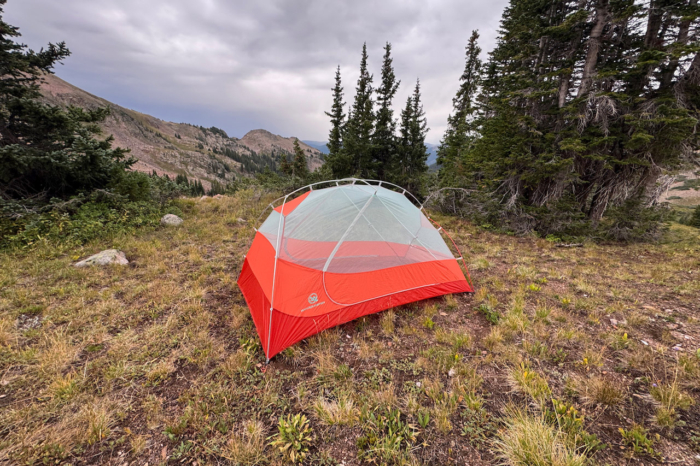
It was frankly a relief to be in the Horizon Lite 2 Pro during a powerful rain blast perched on an alpine bluff above treeline, where I pointed the head of the tent into the wind. It held up more than just well and kept me dry.
Aside from just feeling sturdy, it really cuts down on the amount of flapping compared to a similarly sized semi-freestanding tent like the NEMO OSMO 3p or the Tiger Wall. That meant an almost great night’s sleep despite the unsettled weather.

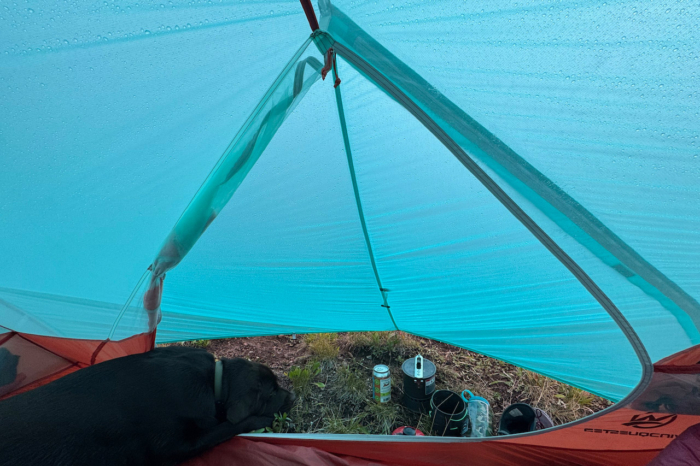
The fly is thoroughly waterproof. The brand claims the 15D high-tenacity Ripstop nylon with silicon coating offers a 2,500mm waterproof rating and that’s roughly 1,000mm higher than some of its direct ultralight competitors. It of course gets taped seams as well. Bottom line, the thing repels precipitation in all its forms.
Perhaps more importantly than excellent waterproofing is the Horizon Lite 2’s venting capability. It’s not an exact science, but I was surprised to regularly wake up with so little condensation on my sleeping bag. The Horizon Lite 2 offers a big vent at the head of the tent that seems to keep the air circulating — it’s a critical feature for when you’re really forced to batten down the hatches, as I did in the Gore Range.
Conclusion

For being such a new brand, Windquester did most things right with the Horizon Lite 2 Pro. It’s a solid all-weather, three-season backpacking tent that offers the strengths of the heavy hitters in the backpacking tent arena — ultralight fabrics, DAC Poles, sub-1,500g weight — while being uniquely suited to handle heavy storms thanks to generous anchoring options and a solid pole layout.
The primary tradeoffs with this tent are that it’s very snug for two people, 200-300g heavier than its ultralight competitors, and the floor is downright thin, even if it’s surprisingly durable. I’d be cautious to deploy it too often without the matching footprint, and you won’t catch me pitching it as my car camping workhorse tent, even if it’s not any more fragile than other ultralight tents in this class.

There are so many great backpacking tents on the market, including the aforementioned MEC Spark, Big Agnes Tiger Wall UL 2, and the others listed in Gearjunkie’s Guide to the Best Backpacking Tents. The Horizon Lite 2 Pro competes toe-to-toe with those options, but it’s best suited to backpackers who need a little extra weather protection for adventures into unpredictable conditions.