Whether touring the backcountry or riding the resort, a ski pack is essential for carrying avalanche tools, layers, or trail fuel. Selecting the right snow pack depends on your mission and terrain. While modern ski packs are exceptionally durable and share basic features like chest straps and a lined goggle pocket, they vary in size, weight, and carry capacity.
Many of our favorite ski packs have a moderate volume, durable construction, and intelligent pockets like the BCA Stash. Other higher-end designs have a larger volume and airbag compatibility, such as the Mammut Tour 30 Removable Airbag 3.0. Smaller day packs for lightning-fast missions or hydration at the ski area include the Black Diamond Cirque 25.
Over a 4-month testing window, SnowSports Senior Editor Morgan Tilton tested four ski packs that landed on our list, including a four-day adventure at Whistler Blackcomb Ski Resort with 48,800 feet of vertical descent, a Vail Ski Resort trip, plus backcountry tours and sled days in British Columbia.
Editor’s Note: We updated our Ski Backpacks guide on August 20, 2026, to include the Mammut Tour 30 Removable Airbag 3.0, Mammut Nirvana 18, Black Diamond Dawn Patrol, and Raide Research LF 30L, as well as extended ratings.
The Best Ski Backpacks of 2026


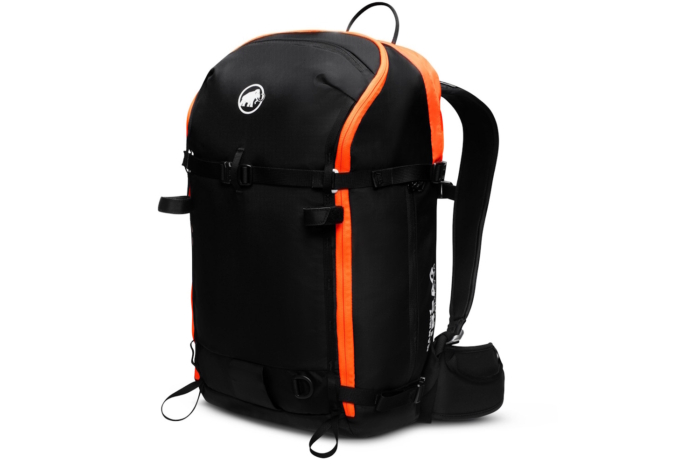
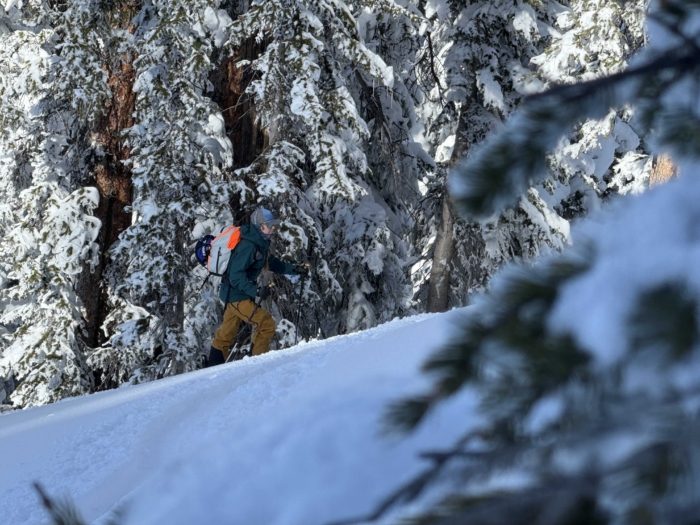
Mammut Tour 30 Removable Airbag 3.0

Specifications
Pros & Cons
Pros
- High volume
- Airbag compatible
Cons
- Not the most comfortable lumbar support and shoulder straps
Read Review: High-Volume Safety in a Compact Frame: Mammut Tour 30 Women’s Airbag Ski Backpack Review
When you’re carrying everything for a full day through avalanche terrain, the Mammut Tour 30 Removable Airbag 3.0 ($680) hits the sweet spot for athletes who want top-tier avalanche safety in a more compact, approachable format. While larger siblings support overnight hut trips or massive expeditions, the Tour 30 shines as a trusted daypack for half-day to full-day backcountry tours — offering a women’s-specific option alongside the men’s version ($780).
Storage is super spacious and convenient to access. The primary main compartment is reached via a clamshell back panel and a secondary zipper spanning the top and sides. That’s where the compressed air cartridge sits securely in a tight side sleeve, keeping it completely out of your way. On the opposite side, a deep mesh pocket holds a radio, which threads neatly out along the shoulder strap (we prefer a mic exit over a hydration hose, especially since uninsulated hydration tubes freeze fast in sub-zero temps). Sold separately, the Airbag System 3.0 cartridge is easily transferable between compatible Mammut packs.
An adjacent zippered alcove holds dedicated probe and shovel sleeves. High inside that compartment is a high-visibility, bright orange mesh pocket that helps you quickly spot snacks, skin wax, or a satellite communicator. However, we still wish it featured a secure zipper closure — when laying the pack flat to enter through the clamshell back panel, items can run loose from that unzipped mesh hammock. On the front sits a deep, softly lined goggle pocket for quick eyewear swaps (which we used to stash all kinds of things), while the right hip belt wing includes a small zippered pouch for a slope angle reader, sunscreen, or lip balm.
The pack accommodates diagonal ski carry, vertical snowboard carry, and A-frame splitboard mounting. While A-frame carry is great to keep board tails from striking your boots on long ascents, keep in mind that an airbag cannot properly deploy in an A-frame configuration. SnowSports Senior Editor Morgan Tilton tested the helmet carrier and ice axe attachments on spring mountaineering missions up Gothic Mountain and found both rock-solid. The side compression straps hold tri-section splitboarding poles well, though we wish the attachment loops were placed slightly closer together for a cleaner cinch. On top, a sturdy, streamlined pull loop makes quick ground shifts or hanging the pack to dry out effortless.
We love the eco-conscious build: the exterior is PFC-free, and both the shell and lining use recycled textiles. The lateral compression straps and load lifters offer great adjustability when your volume fluctuates throughout the day.
Where the Tour 30 falls a bit short is its suspension and lumbar support. The back panel uses a two-layer high-density EVA padding that sheds snow well, but it lacks the plush, ergonomic shaping or lumbar padding that Osprey packs are known for. That said, for narrow-waisted testers, the length of the back panel and adjustable hip belt, shoulder, and chest straps made the Tour 30 work well for more petite frames like Tilton’s.
If you prefer plush lumbar support, check out the Gregory Women’s Targhee 30, which hits that mark cleanly. Or, if you need an even lighter, mountaineering-centric design, look to the Mountain Hardwear Snoskiwoski 40. But for day tours where avalanche safety, crisp organization, and compact versatility matter most, the Mammut Tour 30 remains a benchmark choice.
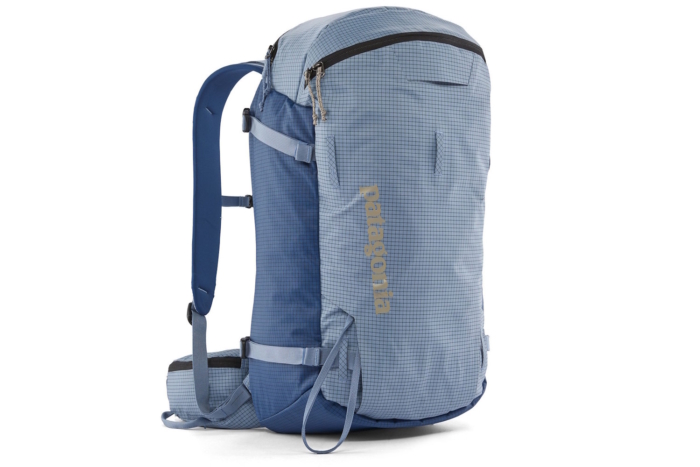
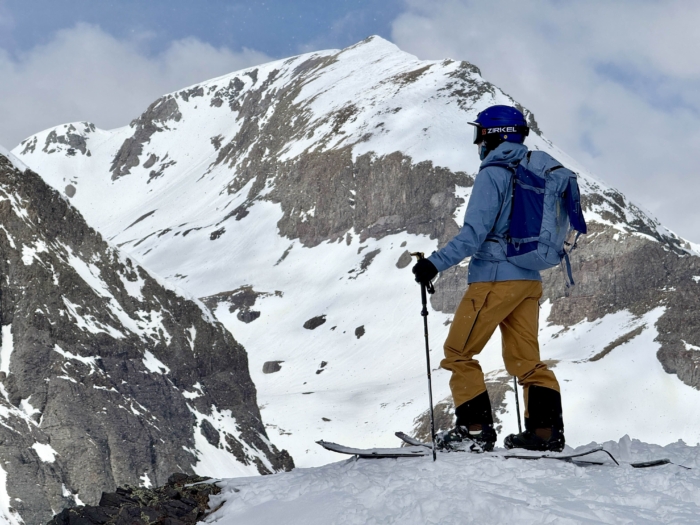
Patagonia PowSlayer Pack
-

-
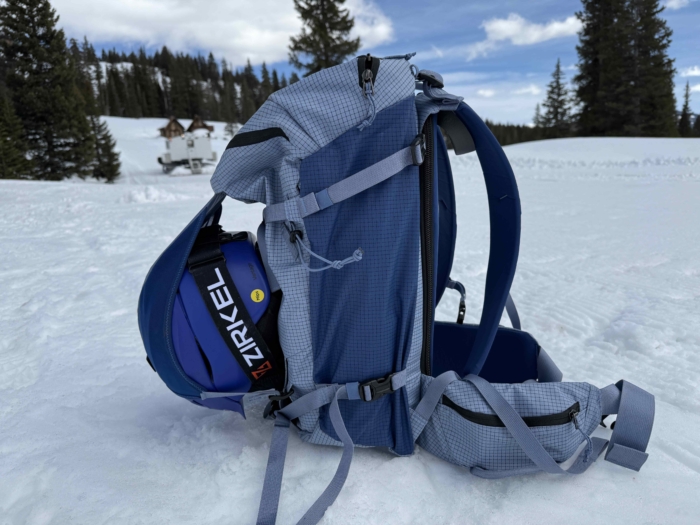
Morgan Tilton testing the Patagonia PowSlayer Pack; (photo/Dane Tudor)
-
-
-
Specifications
Pros & Cons
Pros
- Back panel easily sheds snow
- Two roomy hip belt pockets
- Top or front helmet carry
- Lightweight yet roomy
Cons
- Limited to back panel access for the primary compartment
- Back panel zippers and pulls stiffen and get sluggish in frigid, snowy conditions
- Adjustable chest straps securely attach to a daisy chain but don't easily slide on-the-go
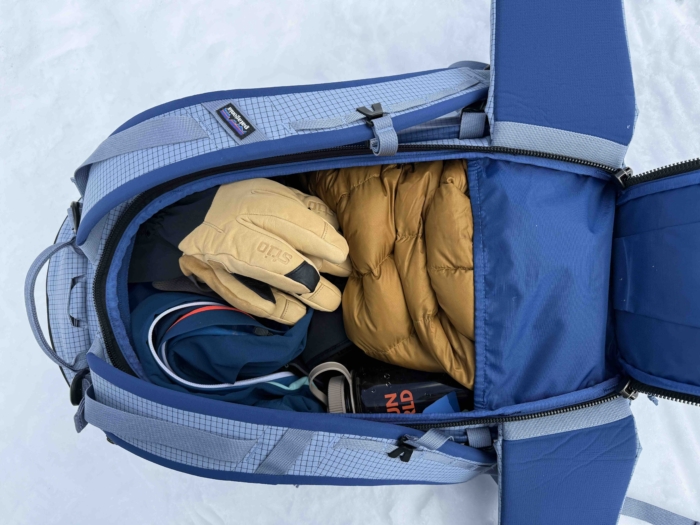
A full redesign of the SnowDrifter, the 38L Patagonia PowSlayer Pack ($249) brings thoughtful upgrades for backcountry skiers and snowboarders. Built for full-day tours, it’s lightweight yet spacious, offering a well-organized layout with dedicated pockets and versatile carry options.
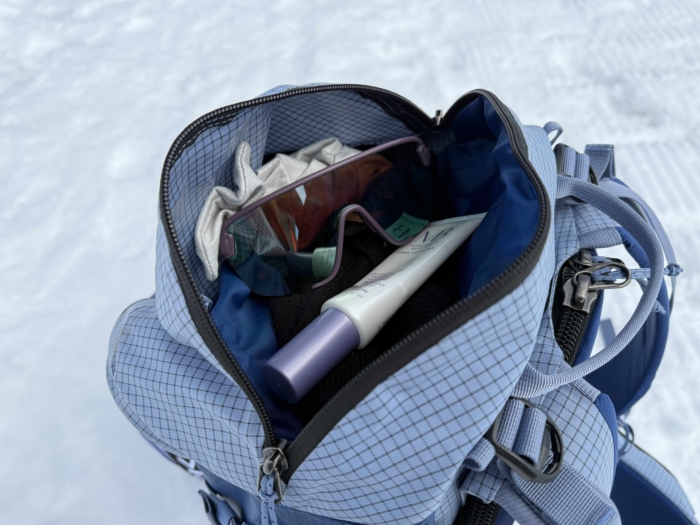
This winter adventure pack excels in organization with a snow-tool compartment that fits a shovel, probe, and snow saw with extra room to spare, while the large pocket on the crown adds roomy storage that’s quickly accessible. Two generous hip belt pockets let us quickly grab snacks and small essentials while skinning uphill in stormy weather, though they’re too tight for a large phone or other device. A versatile helmet hammock attaches to either the top or front, which lets us move our skullcap to the top or front depending on how we haul our skis or snowboard.
The PowSlayer’s back panel is low-profile and made from quick-drying, snow-shedding material that proved especially useful after deep powder falls. While the material dries quickly, the material bordering the back panel zippers can stiffen in extreme cold, which slightly slowed getting into the pack, but it was manageable.
The pack’s streamlined shape supports an efficient range of movement, and the shoulder straps and hip belt distribute weight well for a comfortable carry. However, the panel lacks the lumbar support, rigidity, and articulation that’s typically sought for toting heavier loads, which may be a drawback for field-workers carrying more weight or riders seeking extra plushness.
Ski and snowboard carry options are abundant in this Patagonia design with A-frame, diagonal, and vertical mounts. The pack only lacks a horizontal snowboard carry. The side compression straps can be used to carry three-piece splitboard poles. This pack also hosts large fixed carry loops — on the top and at the bottom of the dual hip belt pockets — making it easy to grab for a chair lift or cat ski ride or to load into a truck bed.
The PowSlayer fills out efficiently, fitting a surprising volume of gear, making it a solid choice for full-day ski tours. While not the most cushioned pack for hefty cargo, the PowSlayer Pack delivers a comfortable, efficient, pocket-loaded, and snow-resistant design for dedicated backcountry adventurers.
Black Diamond Dawn Patrol 25
-
-
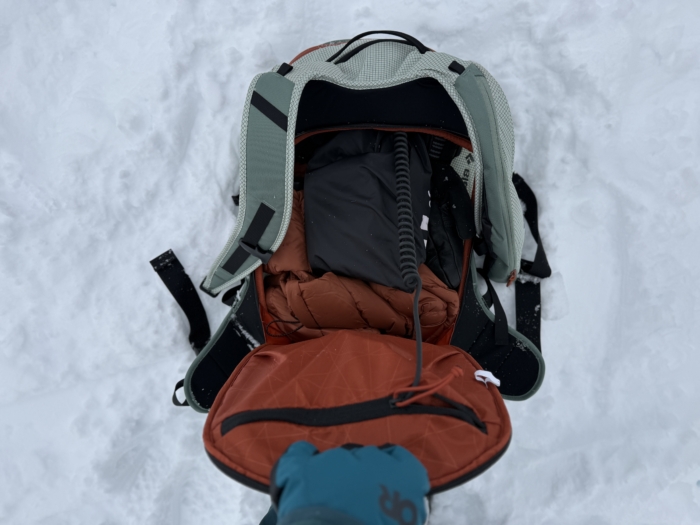
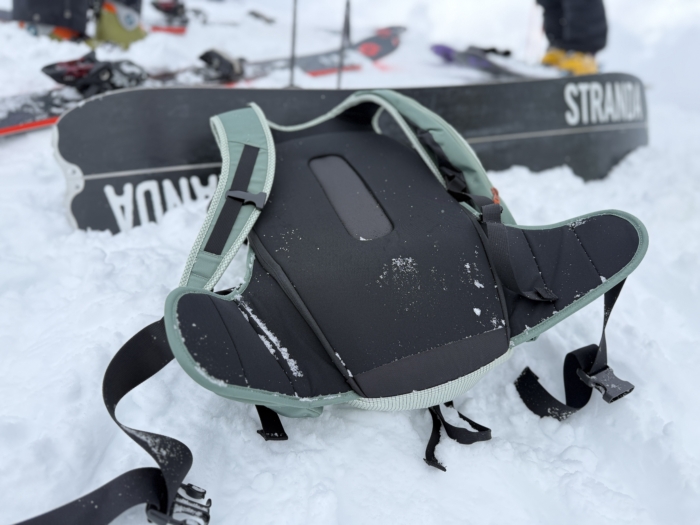
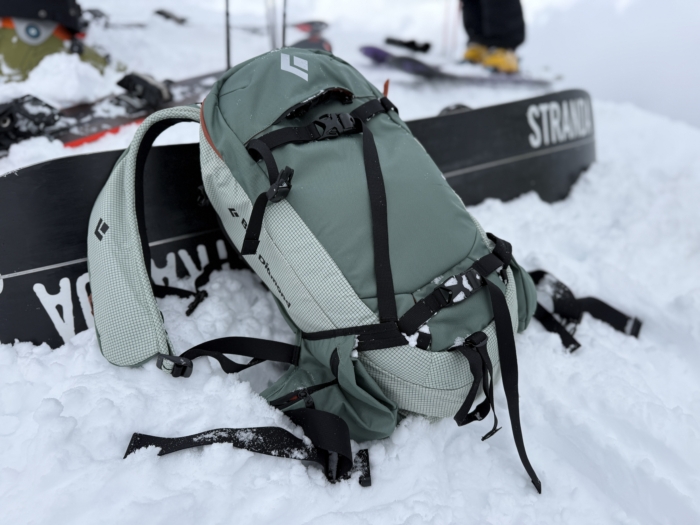
Morgan Tilton testing the Black Diamond Dawn Patrol Pack; (photo/Morgan Tilton)
-
Morgan Tilton testing the Black Diamond Dawn Patrol Pack; (photo/Morgan Tilton)
-
Morgan Tilton testing the Black Diamond Dawn Patrol Pack; (photo/Morgan Tilton)
Specifications
Pros & Cons
Pros
- Beefy and durable
- Four roomy zippered pockets
- Insulated sleeve for hydration/radio that integrates with compartment
- Comfortable back panel
Cons
- Lower breathability of back panel
- Lacks secondary side zip for main compartment access
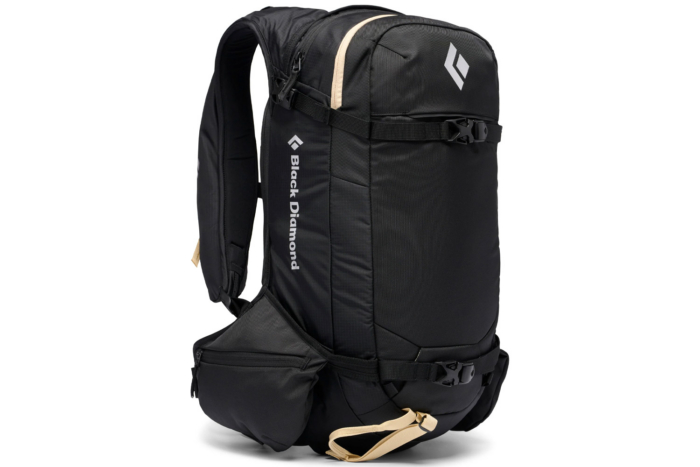
There’s a reason why you see Black Diamond Dawn Patrol 25 ($200) in the ski chair line for sidecountry use. This popular pack is a purpose-built backcountry companion that balances rugged sustainability with a streamlined, clean aesthetic. Constructed from 100% recycled 840D polyester and 210D nylon ripstop, the exterior material feels notably thick and durable, designed specifically to shed snow and withstand the rigors of high-alpine environments.
The suspension system leans into a premium, high-density feel. The shoulder straps are wider and denser than the mesh designs found on leaner packs, providing a secure carry at the cost of some breathability. While the back panel features a recessed spine strip for airflow, it is relatively closed-off, making it a better fit for cold-weather tours than high-output climbs for those prone to a sweaty back.
Organizationally, the pack is highly specialized. It hosts a dedicated avalanche safety pocket for rapid tool access and a roomy, fleece-lined goggle pocket in the brain. Field tester Morgan Tilton particularly liked the oversized, glove-friendly grab handle and the integrated hydration system, which includes an insulated zippered sleeve on the left shoulder strap to prevent hose freeze-ups. However, internal radio organization is a bit lacking; while there is a hydration bladder pouch, there is no dedicated elastic band for a radio body. For carry options, the Dawn Patrol is versatile. It offers a tuck-away diagonal ski carry — with the bottom strap smartly integrated into the waist belt — and a vertical snowboard carry. A stashable helmet cradle adds further utility for the skin track.
The main drawback lies in accessibility. The main compartment is only accessible via the back panel zipper. While this keeps your gear out of the snow when the pack is open, the lack of a side or top-entry zipper means you’ll often find yourself digging for items buried at the top. Additionally, while the dual zippered hip belt pockets are spacious enough for snacks and a tool, they sit slightly too far back for effortless on-the-go access. Overall, the Dawn Patrol is a robust, sleek, and eco-conscious choice for dedicated winter explorers.
BCA Stash
-
-
Contributor and gear tester Morgan Tilton backcountry splitboarding; (photo/Eric Phillips)
-
(Photo/Eric Phillips)
Specifications
Pros & Cons
Pros
- Excellent organization and comfort
- Stowable helmet sling
Cons
- Small goggle pocket
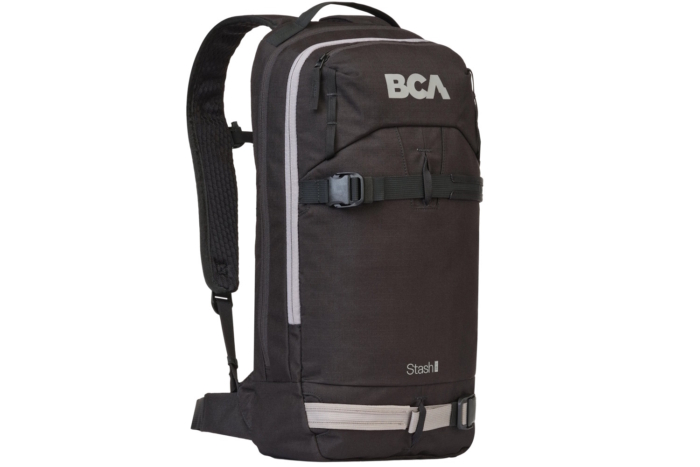
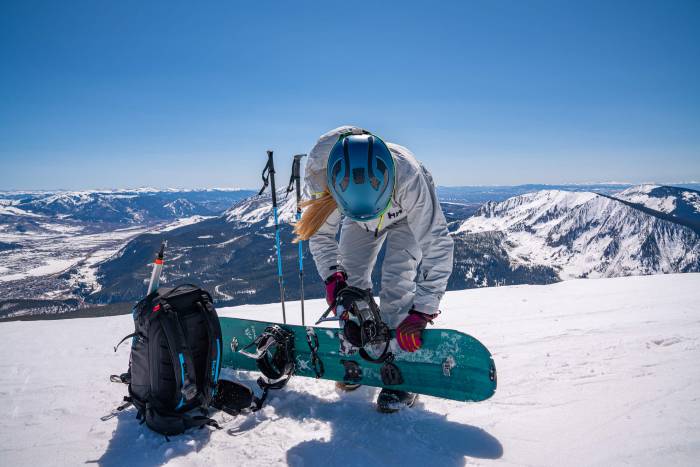
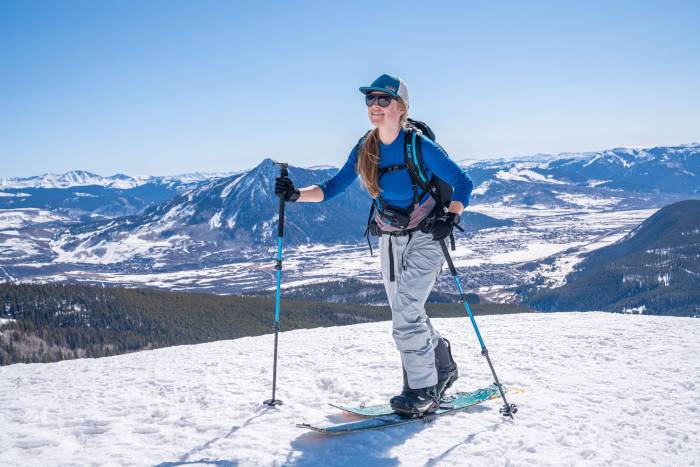
Despite testing ski packs for thousands of hours, we have yet to find a pack that more smartly organizes our on-snow gear than the BCA Stash ($130). Across male and female skiers alike, the sizing and overall fit pairs well, and there’s minimal swing weight with a full load. After abusing this pack for many seasons, we’ve seen little wear and tear. And at an ideal everyday volume, it doesn’t break the bank.
While most snowsport packs have fixed torso lengths, this one has a hip belt that can slide up or down for a personalized fit. We sent the pack out with testers with torso lengths that ranged from 16 to 20 inches. The pack fit them all like a glove. Also, the adjustable torso lets you drop the pack lower on your hips for when you’re doing miles of skinning across glaciers. Then, you can snug it up high and tight for better mobility when you’re hucking cliffs and dropping into couloirs.
The Stash was a favorite for athletes who pushed the envelope in the backcountry. The flexible frame sheet shadows your every movement thanks to its soft molded foam construction. The back panel consists of seven geometric pods separated with half-inch air channels. Horizontal channels increase airflow and let the pack flex with your every movement. The hip belt wings have about an inch of play, so the pack self-adjusts as you walk or ski.
Bonus features include channels on both shoulder straps (accessed via long zippers), so you can use one for hydration and the second for your radio. The pack is designed for vertical snowboard and both diagonal and A-frame ski carry. We loved the quick deployment of both skis and snowboards thanks to big, glove-friendly buckles and dedicated straps. The ski slots are reinforced, with compression straps in case your skis are smaller than the slots.
Due to its unmatched fit and practicality, we’re confident that the Stash is the best ski backpack in the game. Or, if you want this pack design with an airbag configuration and slightly more volume, hop on the BCA Float 42 Avalanche Airbag bandwagon. Alternatively, check out the roomier Gregory Targhee 45 L, which costs a bit more and has plenty of pockets.
Raide Research LF 30L Backcountry Ski Pack
-
-
Morgan Tilton testing the Raide Research LF 30L; (photo/Morgan Tilton)
-
Morgan Tilton testing the Raide Research LF 30L; (photo/Morgan Tilton)
-
Morgan Tilton testing the Raide Research LF 30L; (photo/Morgan Tilton)
-
Morgan Tilton testing the Raide Research LF 30L; (photo/Morgan Tilton)
Specifications
Pros & Cons
Pros
- Best-in-class avalanche safety tool accessibility
- Three options to access the main compartment
- Three variations for ski and splitboard-ski carry
- Good back ventilation
Cons
- Sparsely padded
- LF 30L doesn’t retro-pair with safeback system
- Organization and customization is not intuitive
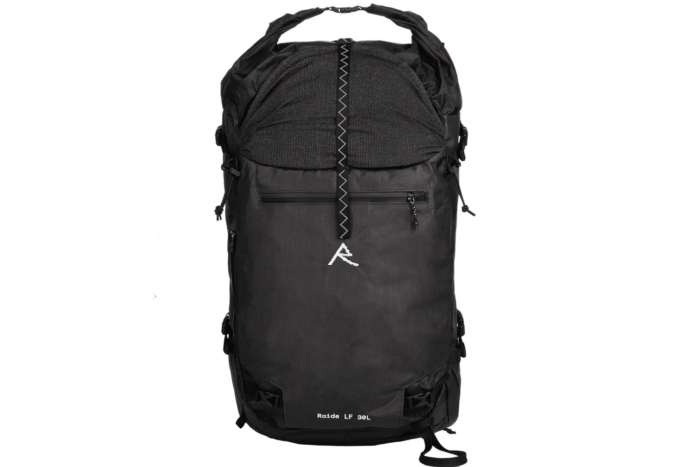
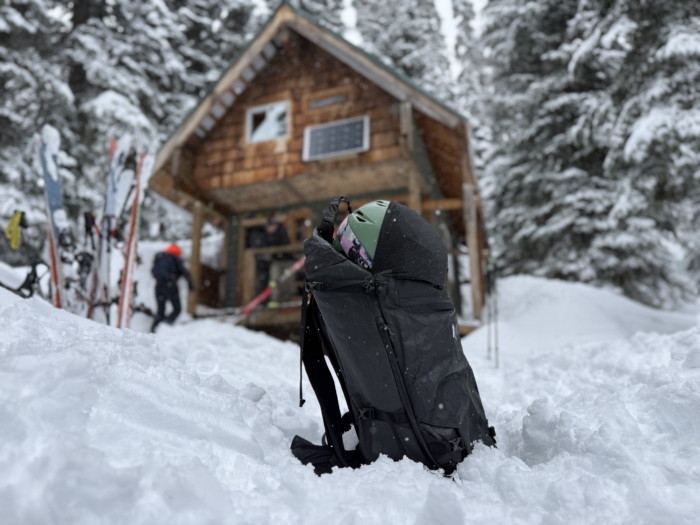
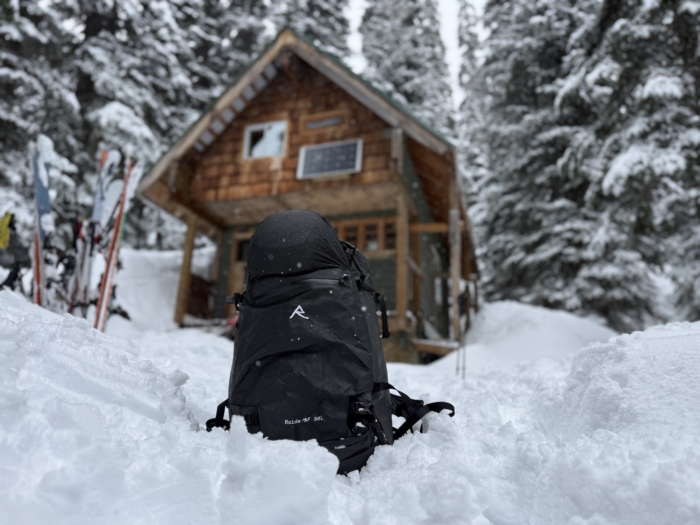
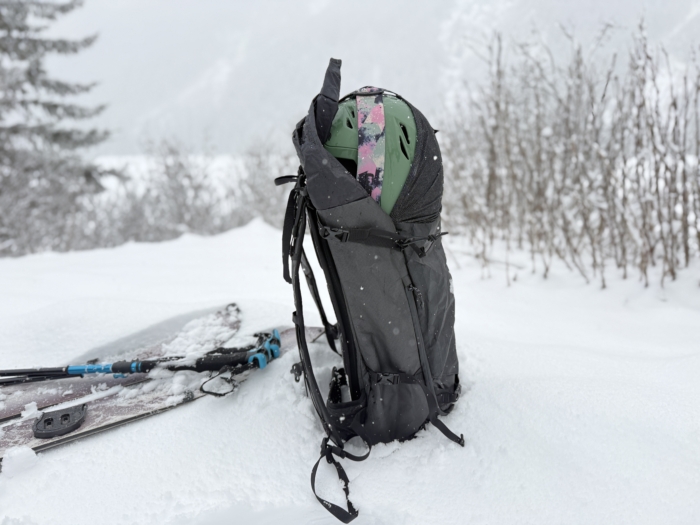
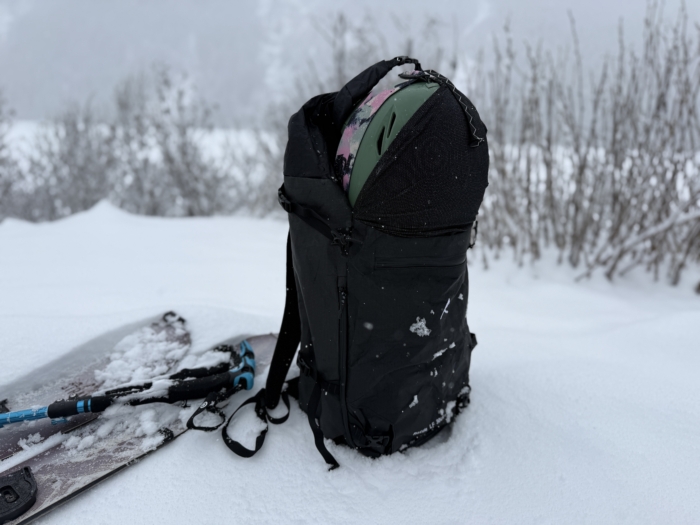
The tenacious, heavily-thought-out Raide Research LF 30L ($549) remains a standout in the crowded field of backcountry ski packs. The LF successfully balances light-and-fast design with mountain-travel functionality. According to GearJunkie tester Steve Graepel, the LF 30L shines as a “precision tool for big days deep in the backcountry,” to which our broader team agrees. Heavily updated this season, the pack offers functional improvements from the fabric to the back panel storage, hip belt closure, and pocket upgrades.
While ski touring in the Coast Mountains of Pemberton, British Columbia, the LF 30L delivered utmost practicality in a squall for Senior Editor Morgan Tilton. Most notably, the LF has innovative storage for the probe — a designated side pocket that can be unzipped and retracted from without removing the pack — and a peripheral zipper in the bottom corner allows you to quickly drop one shoulder strap to pull out the shovel blade and shaft. (Don’t worry, Tilton only did practice drills.) She particularly appreciated the aerated yet well-cushioned back panel while the conditions on a 6-hour adventure ranged from muggy spring-like temps to blizzard gusts. She also digs the round-up of five pockets, including a zippered pocket inside the back panel – but she wishes it and the frontmost pocket were deeper for more goods.
While the core DNA remains, Raide Research ultra-refined the 2026 LF 30L by swapping the body fabric to Ultra 200TX. The weight remains but offers superior durability and a smoother surface. The interior back panel sleeve pocket (which holds the pack panel insert) was upgraded to elastic rather than nylon, increasing the range and ease of storage for gear like a hydration bladder or SAM splint. Both hip belt pockets are now zippered (versus the previous fold-closure design). The exterior large stash pocket (below the helmet carry) now has a zipper below the hammock, to help keep gear snow-free. Lastly, the large, plastic hip buckle was leveled up to a robust 38mm metal closure.
Graepel particularly praised its load-carrying stability and intuitive access points, noting that the pack’s ability to remain organized — even when fully loaded — and its convenient back-panel access make transitioning on-the-go exceptionally smooth. For those who value efficiency, the pack’s quick exterior access to mountaineering tools is key. With a 30L capacity that extends to 38L via the roll-top, this LF is a versatile, purpose-built workhorse. It avoids the trap of stripping away too many features in the name of weight savings, resulting in a pack that is as rugged as it is refined. Whether you are skinning through the trees or booting up a couloir, the LF 30L is a masterclass in thoughtful engineering.
BCA Float E2-35 Avalanche Airbag
-
-
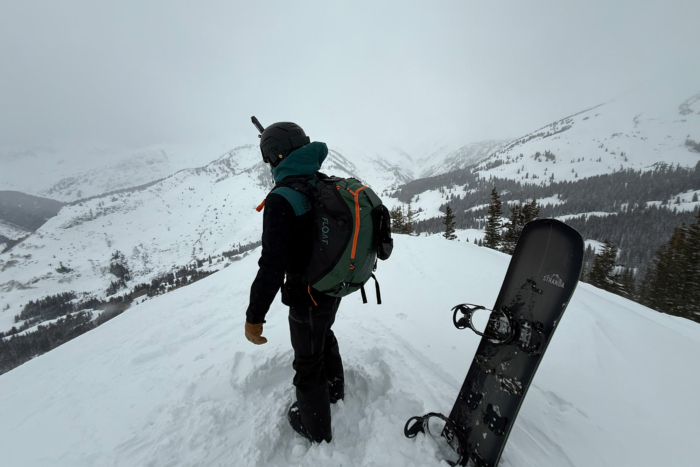
We tested the BCA Float E2 Airbag across a full season in varied backcountry conditions; (photo/Eric Phillips)
-
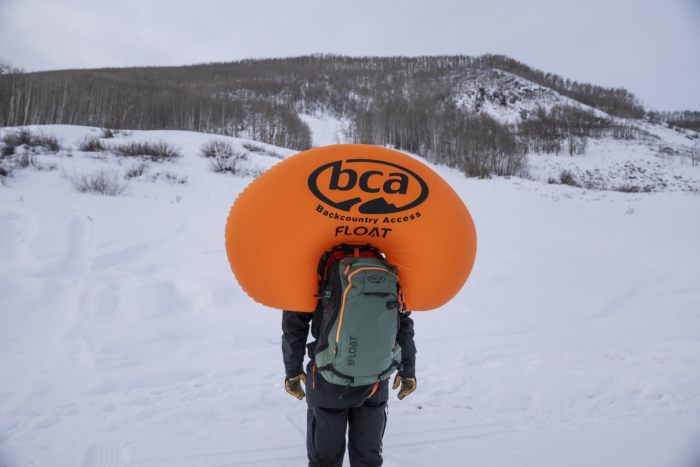
The BCA Float E2 Airbag system is lighter, more compact, and easily rechargeable with AA batteries; (photo/Eric Phillips)
-
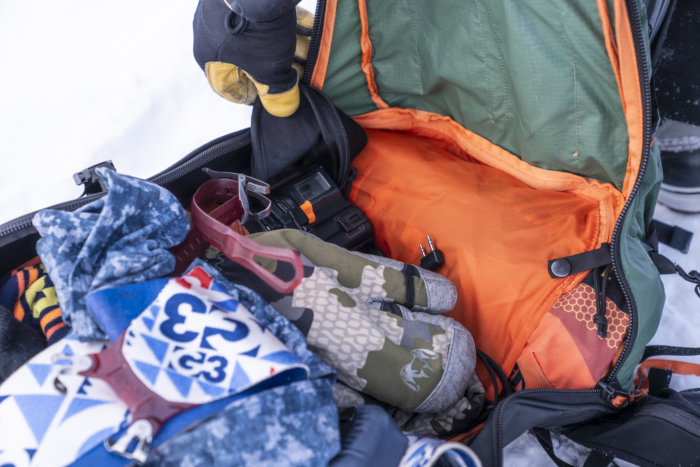
Plenty of internal storage keeps safety gear, layers, and electronics organized for backcountry travel; (photo/Eric Phillips)
Specifications
Pros & Cons
Pros
- Electric, re-deployable avalanche airbag system
- AA battery backup for additional deployments
- TSA approved for easy air travel
- Stash pocket for on-the-go access
Cons
- Snowboard carry could be better
- Helmet carry wont work with snowboard carry
- Pricier than canister airbag packs
Read Review: Durable, Electric Daily Driver for Backcountry Skiers: BCA Float E2 Airbag Ski Backpacks
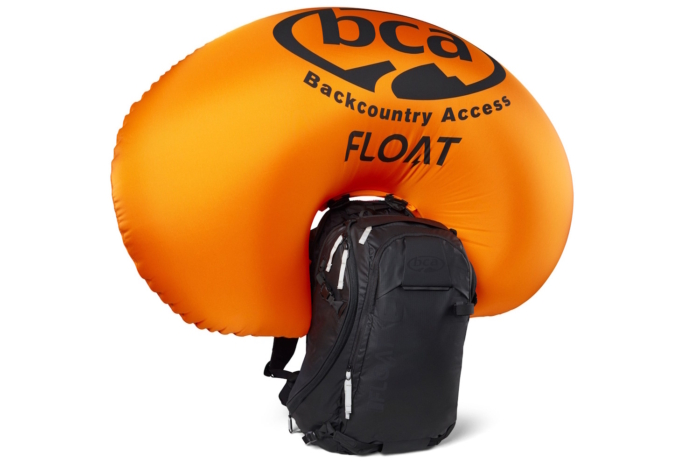
Avalanche airbags have increasingly become a staple for backcountry kits. Skiers, snowboarders, and snowmobilers often categorize airbag ski packs as an essential piece of gear alongside a beacon, shovel, and probe. In the event of a slide, these innovative ski backpacks can help reduce the likelihood of full burial if they’re promptly activated. After a season of testing, backcountry expert Eric Phillips found the BCA Float E2-35 Avalanche Airbag ($1,400) to be an incredibly well-made backcountry safety tool. This design is ergonomic, efficient, and feature-rich with top-of-the-line airbag technology.
The real showstopper of this bag is the progressive E2 Avalanche Airbag system. The E2 engine is 40% smaller and 25% lighter than the former E1 system. And the new 162-liter airbag offers superior cold-weather performance thanks to a supercapacitor system as opposed to a normal battery. Unlike a canister-powered airbag that is single-use, this electric system can easily be deployed multiple times in the backcountry.
An electric system also means this pack is TSA-compliant, just like a camera or laptop battery, so you can travel with ease. AA-battery backup (using a lithium battery rather than alkaline) enables 1-to-2 additional deployments in the field — depending on how cold the conditions are — so, you’re extensively protected.
The E2 Airbag system pairs great with this 35-liter size and only uses 4 L of space. Meaning, we still had 31 liters of usable volume inside the pack, which was enough to stuff gear for a full day in the backcountry. During rounds in the field, we brought our full safety kit, food, water, extra layers, binding repair kit, crampons, skins, ice axe, and helmet. We also packed a full-frame Sony camera with a 24-70 mm lens, a Mavic Air 3 drone and controller, plus extra batteries.
Besides the airbag, our favorite feature was the unique 10-liter stash pocket located at the bottom of the pack. This pocket is accessible from both sides of the pack. And you can open and reach inside the pocket without needing to take the backpack off. This design was very handy for carrying the things that we wanted easy access to while touring, like skins, water bottles, snacks, and even a mirrorless camera.
We also loved the integrated radio sleeve, which kept our radio easily accessible on the shoulder without needing to worry about cable management or having the radio flop around. We found that the buckles and zippers were easy to use with gloves on. However, the hip belt buckle could be a little bit bigger for use while rocking thicker gloves.
While touring with this pack, we did notice that the snowboard carry was a little janky. The attachment straps were small and not the most ergonomic to use or for vertical board carry. Also, carrying a snowboard blocked the helmet carry, and they couldn’t be used at the same time. While splitboarding, we avoided both of these issues by carrying the board in split mode with the pack’s A-frame carry.
The bag is also costly — over a $1,000 investment — compared to canister airbag packs, which are typically well below that threshold. The BCA Float is a few hundred dollars cheaper compared to other fully electric airbag packs like the Black Diamond Jetforce, however.
Overall, the E2-35 Avalanche Airbag is great for any snow athlete wanting a top-level avalanche airbag backpack. This BCA model delivers safety tech in a bag that’s large enough for a full day or overnight mission in the backcountry. Backcountry Access did a fantastic job designing this high-performance, feature-packed bag, which could easily become an essential part of your winter safety gear. For $50 less, you can snag the BCA Float E2-25 Avalanche Airbag pack, which provides a 25L volume. Both packs are available in two sizes.
Mammut Nirvana 18
-
-
Morgan Tilton testing the Mammut Nirvana 18; (photo/Jason Hummel)
-
Morgan Tilton testing the Mammut Nirvana 18; (photo/Jason Hummel)
-
Morgan Tilton testing the Mammut Nirvana 18; (photo/Jason Hummel)
-
Morgan Tilton testing the Mammut Nirvana 18; (photo/Jason Hummel)
Specifications
Pros & Cons
Pros
- Ergonomic, body-hugging fit
- Dedicated avalanche safety compartment
- Tough, eco-friendly recycled build
- Back protector compatibility
Cons
- Basic unpadded hip belt
- Shared hydration/radio hose port
- Limited 18L capacity
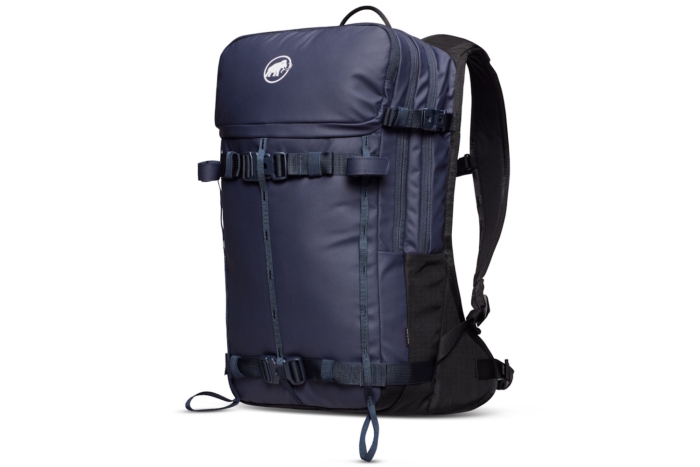
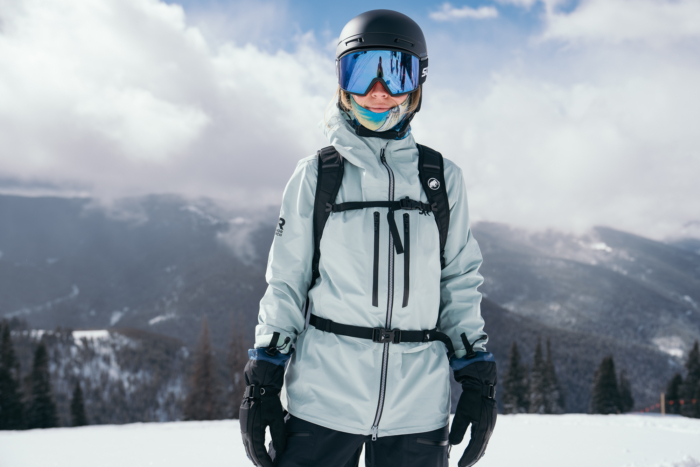
A perfect companion for venturing around Whistler Blackcomb Ski Resort, the Mammut Nirvana 18 ($150) is a paragon in streamlined design for big in-bounds days and the modern freerider. As the most compact offering in the Nirvana line, this 18-liter pack is purpose-built for lift-access sidecountry and North America’s largest ski area, where agility and snugness are equally paramount.
Comfort is an area where this Mammut ski pack excels. The Nirvana features a design that hugs the torso, ensuring the pack doesn’t shift during high-speed turns. For female riders, the women’s-specific fit — with a shorter back length, tailored hip belt, and adapted shoulder straps — provides a level of ergonomic precision often missing in unisex backpacks. On a ski trip to Whistler in Canada, Senior Editor Morgan Tilton found the female-specific iteration to be comfortable and sturdy with a close-hugging fit. That said, don’t expect a plush cushion or wing-reach from this basic hip belt. All considered, the belt provides enough support for this quaint volume.
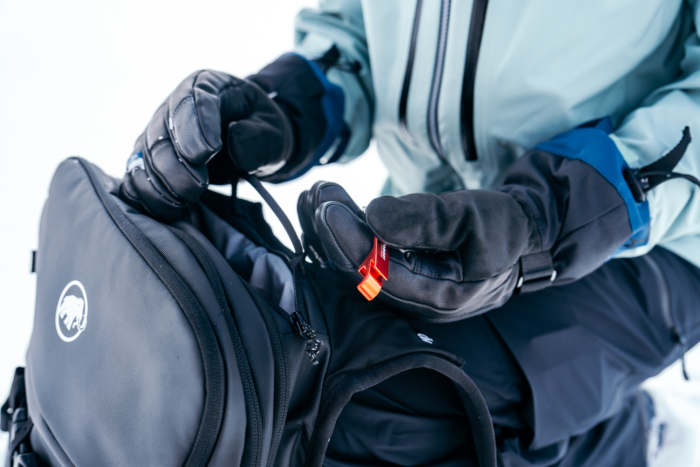
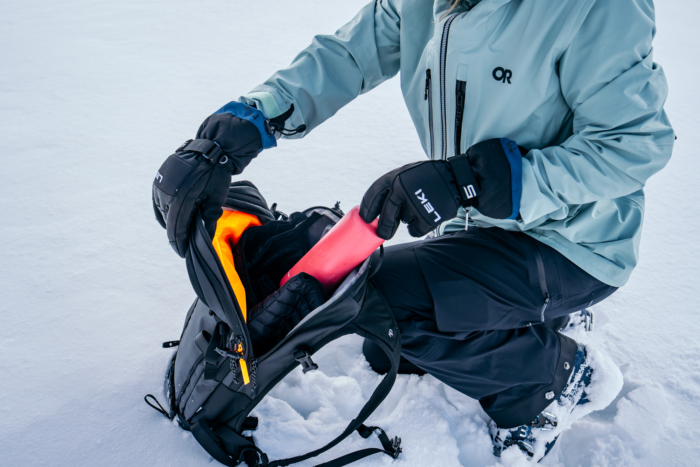
We gave good marks for this sporty pack’s pockets: Two are located up top, including one that’s fleece-lined for goggles or sunnies. Access is intuitive via the horseshoe-shaped entrance. The slender, strong grab handle at the top of the pack is easy to clasp with ski gloves. There’s an attachment system for ski poles and an integrated port for a hydration hose (or radio, but not both). For in-bounds hikes or skins, the pack supports A-frame ski (or split-ski) carry, or snowboard attachment, keeping the load stable and centered.
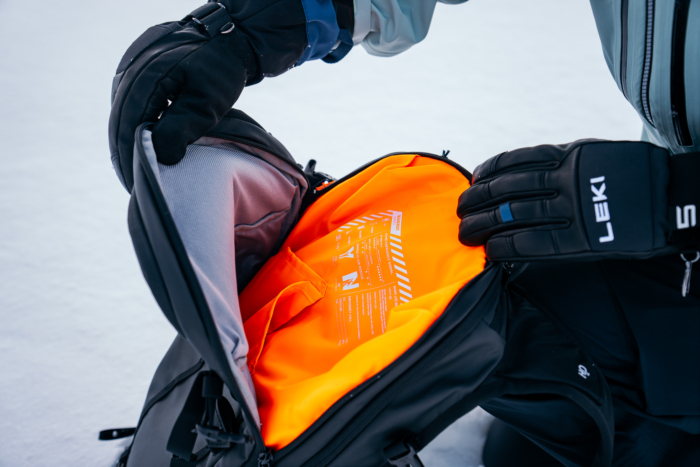
Despite its low profile, the Nirvana 18 doesn’t compromise on technical requirements. The standout feature is the dedicated avalanche equipment compartment for your shovel and probe. The zone features neon orange material and an SOS label with emergency response instructions like Alpine Emergency Signals and Basic Life Support. For those prioritizing safety, the back panel’s internal sleeve is even compatible with the Mammut Back Protector (sold separately), offering an extra layer of spine protection.
Constructed from PFC-free, recycled materials, the pack’s outer shell is robust and capable of withstanding the abrasion of ski edges or dense brush. While the buckles and hip belt are nothing special, if you’re looking for a budget-forward ski pack to be a sidecountry companion or support crew for lift-supported days at Whistler, look no further than the Nirvana.
Other Ski Backpacks Carrying Our Essentials
Specifications
Pros & Cons
Pros
- Lean and streamlined
- Fleece-lined goggle pocket and zippered mesh pocket
- Unique external glove-carry on left sleeve
- Large grab handle at top
Cons
- Basic hip belt is unpadded
- Volume and support is not a match for full-day tours
- No helmet-carry hammock
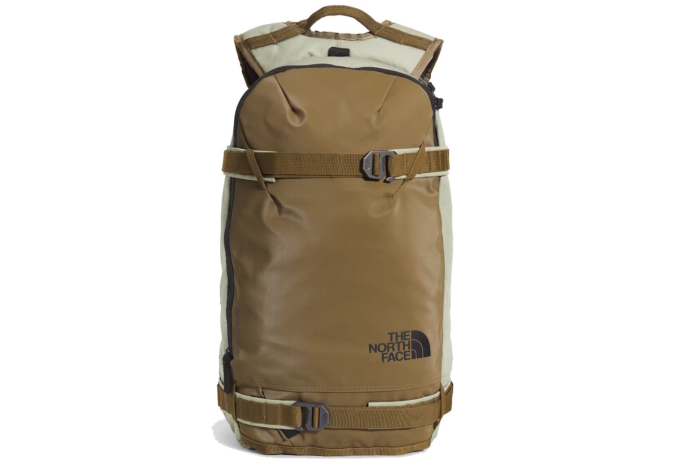
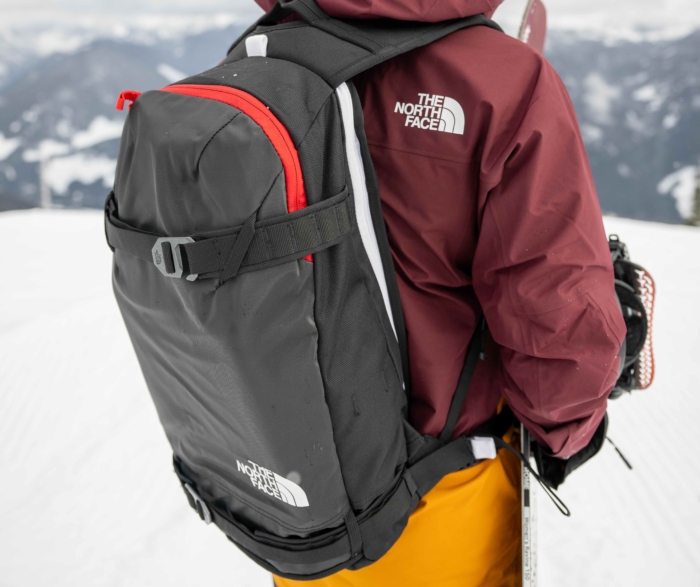
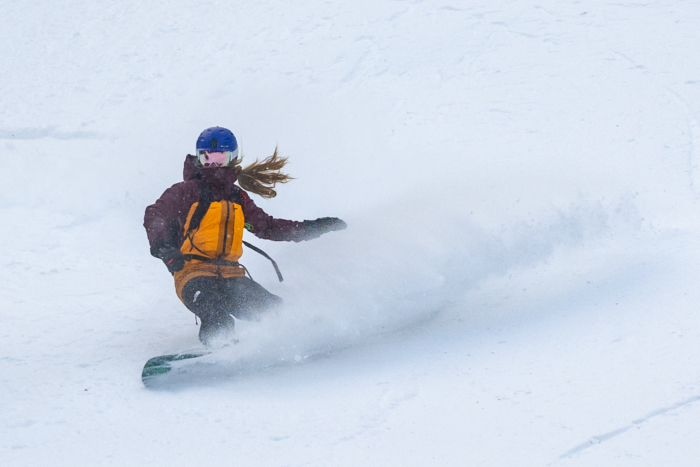
For skiers and snowboarders who opt to travel light, The North Face Slackpack 2.0 ($99) is a burly, low-profile companion that doesn’t leave behind durability. This compact ski backpack is a great build for sidecountry laps, hike-to terrain, resort slashing, and cat skiing trips.
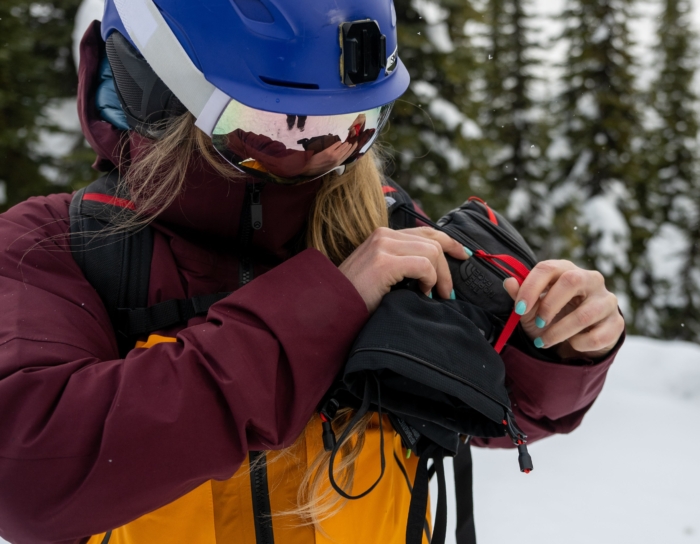
Among its unique traits, the Slackpack has a diagonal ski and vertical or horizontal snowboard carry — we have yet to find another ski pack with a horizontal option. The left shoulder strap also has a unique elastic loop that extends to hold a pair of gloves or a hat while your hands are busy. You simply pull down on a narrow nylon tab to reveal the carry system: Cool!
We tested this streamlined, strong bag for a 2-day cat skiing adventure with Baldface Valhalla, at the operation’s Valhalla tenure. The terrain was tucked deep in the Selkirk Mountains of British Columbia’s West Kootenay region. Conditions were blustery with temps around 10 degrees plus wind chill and blasts of snow. On the first 5-hour day, we covered 13 miles and 5,600 vert with the Slackpack, followed by a winter campout and second full day on snow: 6 hours, 20 miles, and 6,700 vert.
Made with a blend of 1,200-denier polyester (on the back and sides) and 600-denier polyester that’s reinforced with tarpaulin (on the front), this burly material can withstand a run-in with metal edges and rough terrain. This winter pack is also weather-resistant, coated with a health-friendly non-PFC DWR. Throughout our weather-bashed trip, the pack never wetted out and everything inside remained well-protected.
Tipping in at a hair above 2 pounds, this 20L design offers enough room for the essentials. A designated compartment for avalanche safety gear has two wide sleeves — for a shovel shaft and probe — and there’s room for the shovel blade in front. The primary zone for gear is accessed through the back panel. Inside, two pockets are up top: a fleece-lined goggle pocket and one zippered mesh pocket with a hanging key hook.
While we wish the goggle pocket had a zip closure, too, we’re happy with how spacious the pouch is. There’s also a hydration envelope on the panel for a bladder, and a port lets you thread the hose through the top to an elastic band on the left sleeve.
If you prefer a slim, movement-friendly ski pack that can be used for resort hike-tos, family days, short or sidecountry tours, and cat skiing ventures, look no further than the Slackpack 2.0. While we wouldn’t recommend this pack for a full-day remote ski tour — given the compact volume and lack of support in the hip belt, as well as the absence of a helmet carry and external pockets — this design is a suitable, sturdy pal for simpler days and lines.
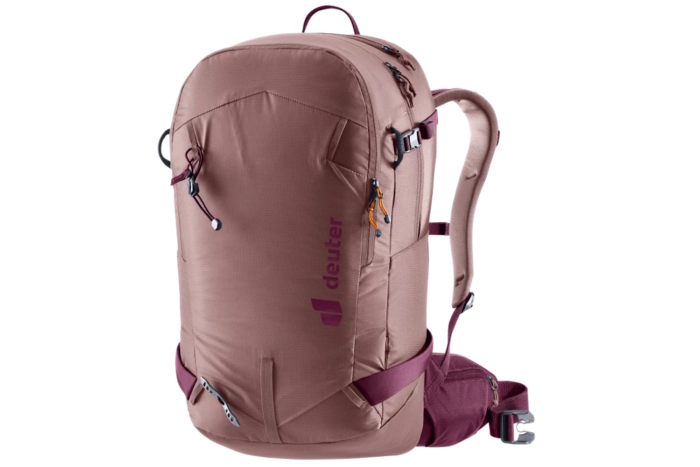
Specifications
Pros & Cons
Pros
- Adjustable sternum strap
- Load adjustment straps
- Ice axe attachment
Cons
- Only one hip belt pocket
- Helmet carry accessory is not included or directly integrated in the 28L or 18L pack
- No enclosed shoulder strap protection for hydration hose or radio line
Deuter has put their muscle into creating comfortable women’s-specific packs across recreational activities from mountain biking to hiking and backpacking. The Deuter Freerider 28 SL ($200) is no exception. It has a slim fit with ample space for backcountry gear, spared ounces, and generous comfort. The “SL” tag means this pack is constructed for the average size of female bodies. The back length is shorter compared to men’s packs, and the carrying system — the hip belt and shoulder straps — hugs a narrower build.
Providing ample comfort, the hip belt is also made in a conical shape. We found this streamlined pack extremely comfortable, and despite the pack feeling light, the design carries and distributes a heavy load well. We love that we can access our gear stash through the full-zip back panel. Inside, our avalanche gear is neatly organized in its own compartment.
We really noticed the Freerider 28 SL’s standout pockets: there’s a deep zippered pocket in the front avalanche gear compartment and another large mesh zippered pocket in the main compartment. A third large pocket, which is accessed from the top, is lined for goggles or sunglasses and features a divider to help collect other miscellaneous items.
There are two removable straps to use for the front vertical carry, such as for a snowboard or snowshoes, or to use for the vertical ski carry. The modular setup has its pros and cons, but it’s nice to be able to customize your pack on the fly. Adding an extra step (switching the straps around) while backcountry skiing can be energy-consuming, and we’re concerned about losing the straps given they aren’t integrated. It’s best to set up the straps for the day’s needs in advance.
We also like the unique holder for glasses on the face of one shoulder strap. There’s space for a 3L hydration bladder as well. For female shredders who want a more customized feel, the Freerider 28 SL Ski Tour Backpack is the ski backpack we’d recommend.
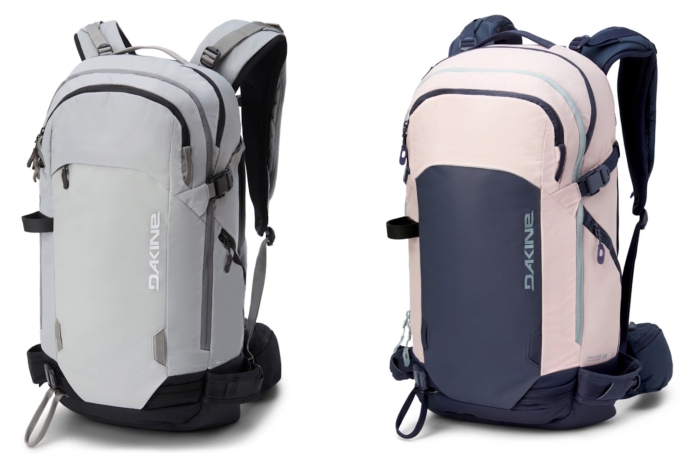
Specifications
Pros & Cons
Pros
- Rescue whistle integrated on chest strap
- Splitboard specific exterior straps that hold 3-piece poles
- Three options for snowboard and splitboard-ski carry
- Oversized fleece-lined goggle pocket
Cons
- Would like dual access to the primary compartment
- R.A.S. available on smaller volume but not larger volume
Not only does the Dakine Women’s Poacher Backpack 30L ($215) offer a moderate volume, but it also serves up a smart collection of intuitive, roomy pockets and compartments, so the day runs that much more smoothly. The design and straps are also splitboard-specific, so they easily hold three-piece collapsible poles. Also tailored to splitboarders is the vertical carry option alongside a diagonal or A-frame split-ski carry with straps that are wide enough to lasso a beefy width. The pack is also available in a 32L.
The men’s Dakine Poacher 32L ($215) offers a bit more volume and all the same features, or you can size up to a 36L. There are additional options, too: the Poacher 22L and Poacher R.A.S. 18L. The acronym R.A.S. stands for removable airbag system, which integrates with the 3.0 version made by Mammut (sold separately) that’s accessed through a roll-top closure. When deployed, the buckles remain clasped while the inflated airbag pushes through the rolled fabric. Plus, a rescue whistle is integrated into the sternum strap so it’s always there in case you need it.
Despite being sub $300, this pack is made with a durable 100% recycled nylon face fabric and a 100% recycled nylon liner. A spacious tool compartment has sleeves for your shovel, probe, and saw with a dual-zip closure. On the top-front is an oversized fleece-lined goggle pocket that we love.
Just below, a helmet hammock deploys from a stealthy zipper-enclosed stowaway (which is a squeeze to pull in and out with gloves on and a stuffed pack), and you can carry your helmet in two different ways. One side has an oblong, deep zippered pocket for a large water bottle. We also really dig that the smooth material of the molded back panel really does shed snow.
One of our favorite details of this pack is a large pocket that sits parallel to the goggle pocket for all sorts of goodies like snacks, a satellite communication device, and an ice scraper. A second mesh pocket sits inside to help organize smaller items. Another small pocket hangs on the hip belt. Two insulated sleeves are available for a radio (which we always use) or a hydration hose.
The primary compartment is accessed through a clamshell opening in the back — we’d be even happier if we could also access this large zone from the front, so we weren’t fishing around or unnecessarily exposing gear to the elements, especially on the deepest days.
We noticed that the women’s-specific back panel and 38mm-padded hip belt don’t offer the most lower back or hip support or comfort, and the hip belt straps do not easily slide to adjust as we adapt our layers and pack load throughout the day. That said, we really like the volume, splitboard-specific straps, pocket organization, and clean style of the Dakine Poacher series.
We wish that the R.A.S. system was available in the larger volume versus the smallest, but it’s cool to see the option. While we like the size and variety of pockets on the Poacher better, the Gregory Women’s Targhee 30 has a superior waist belt and lumbar support.
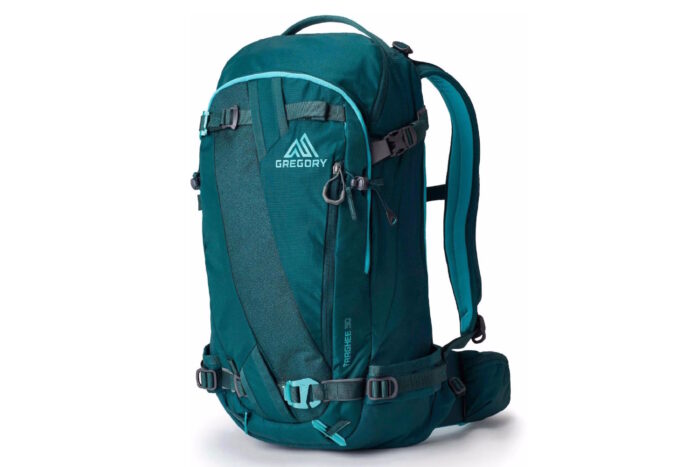
Specifications
Pros & Cons
Pros
- Extremely comfortable lumbar support
- Super deep, spacious top pocket – a well-integrated backpack brain
- Great ski and snowboard carry
- Both top and back panel access
Cons
- The lock levers on the two upper side buckles are annoying and not durable
- Slightly heavy for its size
Lady shredders can celebrate that Gregory offers women’s specific ski packs: the Gregory Women’s Targhee 30 ($230), which is known as the SUV of the pack world, with a floorplan that will please even the most nitpicky of organizers. The extremely comfortable, ergonomic fit, hipbelt, and articulated lumbar support quickly made this pack one of our favorites among our female testers. For men, there’s the Gregory Targhee 45 ($220) with all the same details, including six zippered pockets.
And on the pack’s front — which is reinforced with 1,000-denier CORDURA for extra durability — is a handy zippered pocket where you can stash sunglasses and snacks. The zippered snow-safety compartment and a roomy pocket on top of the pack (with a small interior pocket with a key clip). Then, the main compartment, accessed through the back panel, is big enough to house extra layers, a stove, a small bivy, and a helmet. One wing of the hip belt has a zippered pocket that’s big enough for a cellphone; the other side has a gear sling.
While the unisex Targhee has been in Gregory’s lineup for a while, the women’s specific pack offers a tailored feminine fit with shorter and narrower torso dimensions. The hipbelt and shoulder straps are likewise contoured to accommodate female physiology. The design launch was in response to requests from customers and ambassadors, as well as the brand’s effort to be more inclusive and to help women experience more comfort on backcountry adventures.
The pack also innovates more recycled material. The pack body is made of 210 high-density 45% recycled nylon with PFC-free DWR. Inside, the lining is 40% post-consumer recycled 135D polyester with PFC-free DWR.
One of the most cherished traits of this pack is the huge top pocket that sinks nearly halfway through the pack, which is a great dish for accessories from eyewear to a beanie or headlamp. Inside is a second streamlined, zippered, unlined pocket that fits snacks or sunglasses. At the pack’s front is a spacious compartment with two dedicated pockets for the shovel shaft and probe.
The largest primary storage is accessed via a full clamshell-style back entry, which is great. Though, we wish we could access the primary compartment through another zipper on the side or top (hopefully not at the expense of the large top pocket), because a back-entry is less ideal when a helmet is cradled on the front.
When strapped with splitboard skis for hiking to the summit, the pack suspends a full load really well. That’s in part thanks to the VertFlex suspension system, which offers stability yet torsional flexibility. We never found swing weight to be an issue. The chest straps slide, an important adjustment for women, though are not the quickest to adjust on the fly.
A couple of bugs: We didn’t like that the two upper-side compression straps have lock lever buckles, which require closure for tension and require opening for a quick slide-through. The lock levers don’t open and close quickly or easily, and they aren’t durable — we eventually broke one.
An integrated, stowable helmet carrier is a must, though the hammock (which extends from the pack’s side versus the bottom) is off-centered, and it doesn’t sit totally flush on the center of the helmet. That said, the beefy buckles offer security and we didn’t have issues with our helmet sliding around or flying down the slope.
We also like the sizable hipbelt pocket and large 9-inch-long grab loop on the pack’s top, which makes transport or hanging easier. Though we didn’t use it, there is an insulated sleeve for a hydration hose. A lightweight bungee system and sleeve lets you carry an ice axe.
Also, a tenacious 1,000-denier strip of Cordura fabric is placed diagonally on the pack’s front to prevent any ski edge dings during a carry. The Women’s Targhee 30 is a super-comfortable, well-made small-to-medium-size pack for quick laps and short tours.
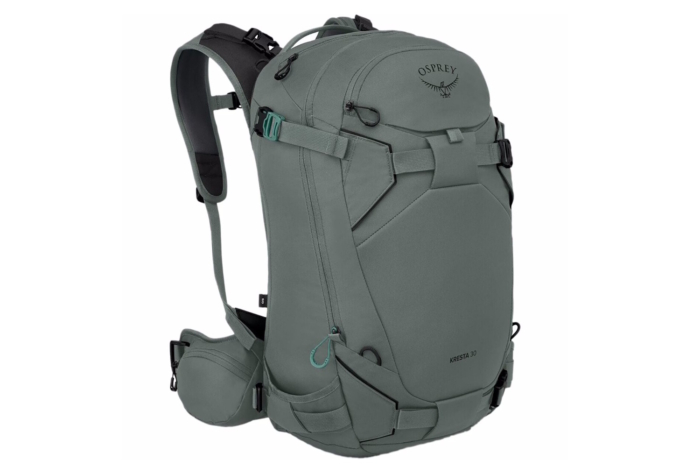
Specifications
Pros & Cons
Pros
- Premium lumbar support
- Bluesign approved recycled materials
- PFC-free DWR coating to shed moisture
- Sternum strap has integrated safety whistle
Cons
- It’d be even better if we could access the primary compartment through the front in addition to the back panel
- Goggle stash pocket isn’t fleece-lined
This is one of the most comfortable, back-supportive ski packs that we’ve tested: The Osprey Kresta 30 set a new standard for a lumbar hug.
The Kresta is built with the brand’s LightWire suspension, which is a peripheral plastic and aluminum frame that transfers the load to the lumbar belt, which is topped off with a fully padded and contoured EVA-foam hipbelt, making a heavy load feel easy, comfortable, and seemingly lighter to carry. The pack’s contoured shoulder straps also make lap after lap that much more energy-preserving.
Up top is a nearly 9-inch long pocket that’s unlined and spans the pack’s width. That’s also where you can deploy the stackable helmet carry that can clip your helmet to the front or top of the pack — a unique design. The first moderate-sized compartment has two sleeves for your shovel shaft and probe, and it’s accessed by three dual-way zippers.
The central, largest compartment is accessed by the back panel, which opens via a clamshell zipper. While we love a back entry, we think it’s even better if we can also access the largest compartment from the front so we do not need to dig around or expose our gear to the elements too much.
Inside the primary compartment is a spacious, zippered mesh pocket. There are also two long dump pockets on each side, which are the perfect size for a narrow water bottle but aren’t the easiest to slide one in and out of, especially if you’re on the go and the pack is stuffed. We like that there’s a streamlined hydration sleeve you can slide a reservoir into before threading the hose through an insulated, enclosed sleeve. A radio can thread to the other sleeve, which isn’t enclosed. We also love that there are two zippered hip pockets — most packs have one or none.
If you suffer from back or shoulder pain or spend a lot of hours on your feet, the Kresta 30 provides one of the best suspension designs out there. While the Kresta had excellent lumbar support, we found it was a tad firmer than the Gregory Targhee 30 and that the Kresta’s pocket design was a bit more complicated.
Specifications
Pros & Cons
Pros
- Super lightweight
- Roomy, convenient side pocket for skins or other goods
Cons
- No back panel entry so pack access is limited while loaded in the A-frame carry
- Detachable helmet carry poses the risk of blowing away or getting misplaced
- Straps on front are not secure and we lost our ski crampons on a snowmobile approach
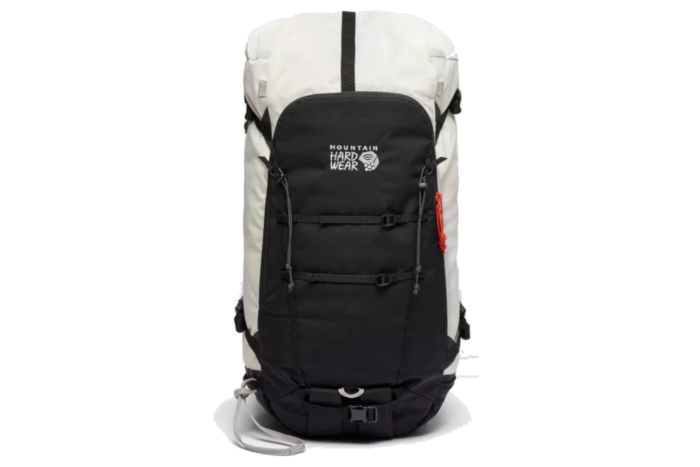
When you need to carry extra equipment like ski and boot crampons, an emergency sled, or overnight apparel for a hut trip in addition to all the other backcountry essentials, the Mountain Hardwear Snoskiwoski 40 ($260) steps up to the plate. Despite being super lightweight and minimalist, this robust design can haul.
With an aluminum frame, 500-denier CORDURA base, and recycled 210-denier high-tenacity nylon shell, this pack is durable for rigorous objectives and harsh elements. Inside, a foam insert helps protect back pressure from belongings and is removable to sit on, though it’s not as quick to extract when fully loaded.
A smaller front compartment is home to avalanche equipment and has a nice zipper-access mesh pocket, though the pocket is not very big. One of our favorite design details is a mega side-entry zipper to a long, deep pocket that can easily stash skins or a water bottle and snacks. Remaining gear is carried in the spacious primary compartment, which has a quick-draw top skirt opening and integrated storm flap as well as a side-entry zipper.
We really like the quick-access tool carry on the front of the pack and the reinforced A-frame ski loops for skis or splitboard skis. The shoulder straps have lash points for a radio or hydration hose, though they aren’t enclosed. On the face of the pack, two elastic straps with slidable adjusters do a great job of holding the shaft of an ice axe.
The removable helmet hammock is attached by slender straps that slide into and hook tiny daisy chains but do not lock in place, so they are only secure when fully weighted — otherwise, they can slide out. The hammock poses a risk of blowing away on windy summits or getting misplaced. A solid attachment point or direct integration would be an improvement.
Taking the same modular slide-and-hook design, there are two additional straps, which can be lengthened with small buckle adjusters, on the front of the pack to secure gear. The straps, likewise, do not lock into place. As such, our ski crampons fell off our pack on a snowmobile approach, and we had to buy a new pair. Not fun! Use those two lean straps with caution or scrap using them at all.
Despite the issues with the exterior strap attachments, we still keep the Snoskiwoski 40 as one of the best in our lineup due to its tenacious materials, sheer volume, ultra-lightness and ability to carry a heavy load with comfort. If you’re looking for more pockets in a high-volume pack, check out the Mammut Pro 45 Removable Airbag 3.0, which is also airbag-compatible.
Black Diamond Cirque 25
Specifications
Pros & Cons
Pros
- Extremely lightweight
- Thoughtful design for organization
Cons
- Only provides top access to goods
- Not much padding or support for heavy loads
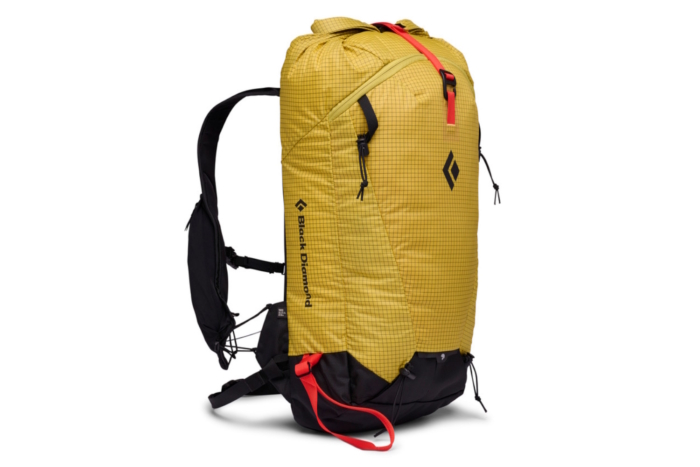
The ultralight Black Diamond Cirque 25 ($200) is svelte and minimalist for skiers and splitboarders who want to explore mountain lines without any extra ounces but want the option to carry safety tools.
After testing this pack on backcountry splitboard and ski days for the past few seasons, we still grab it for uphill sessions or fast missions. Overall, we’re impressed by the pocket organization despite the lean silhouette.
Inside the Cirque 25 pack, there’s a compartment for avalanche rescue equipment that’s separated by a divider with a buckle closure. The primary chamber has an expandable pocket with an elastic band for security. There’s a second pocket that’s large enough for extra goggles with a zip entry and key clip. Another sleek zipper-enclosed exterior pocket sits near the top, which is wide enough to hold extra goggles. It’s also a convenient spot for a snack or a cellphone.
This sternum strap also has a built-in whistle. Keeping things light, the hip belt of the Cirque 25 Pack is not padded but prevents pack sway. The back pad is removable for an even slimmer kit.
Ski Backpack Comparison Chart
Scroll right to view all of the columns: Price, Best Use, Weight, Capacity, Carry.
| Ski Backpack | Price | Best Use | Weight | Capacity | Carry |
| Mammut Tour 30 Removable Airbag 3.0 | $680) | Big day tours | 2.99 lbs. without airbag; 5.21 lbs. with airbag | 30L | Diagonal, front snowboard carry, A-frame carry (sans airbag and cartridge) |
| Patagonia PowSlayer | $249 | Backcountry tours, hike-to terrain | 2 lbs., 9 oz | 38 L | A-frame, diagonal ski (or splitboard ski), or vertical snowboard carry |
| Black Diamond Dawn Patrol 25 | $200 | Backcountry ski touring, sidecountry | 2 lbs., 9 oz. | 25L | Diagonal ski carry, A-frame ski carry, vertical snowboard carry |
| BCA Stash | $130 | Backcountry tours | 2 lbs., 9.6 oz. | 20 L | A-frame, diagonal ski (or splitboard ski) carry, vertical snowboard carry |
| Raide Research LF 30L Backcountry Ski Pack | $549 | Fast and light backcountry ski touring, technical mountaineering, skimo | 2.33 lbs | 30 L (expandable to 38 L via roll-top) | Modular 3-position diagonal ski carry (including skimo on-the-go option), A-frame ski carry, vertical snowboard carry |
| BCA Float E2-35 Avalanche Airbag | $1,300 | Airbag, backcountry tours, overnight and hut trips, ski and splitboard mountaineering | 6 lbs., 2.5 oz. | 31 L, 35 L | A-Frame, diagonal, vertical snowboard carry |
| Mammut Nirvana 18 | $150 | In-bounds resort skiing, lift-access sidecountry, freeride | 2.2 lbs | 18 L | A-frame ski carry (or split-ski carry), vertical snowboard attachment |
| The North Face Slackpack 2.0 | $99 | Cat skiing, hike-to in-bounds terrain, sidecountry | 2 lbs., 1.2 oz. | 20 L | Diagonal ski carry, vertical or horizontal snowboard carry |
| Deuter Freerider 28 SL | $200 | Backcountry tours | 2 lbs., 3 oz. | 18 L, 28 L, Pro 32 L+ | Diagonal, A-frame carry for skis, splitboard skis, vertical option snowboard |
| Dakine Women’s Poacher 30L & Men’s Poacher 32L | $215 | Full days backcountry splitboarding or skiing | 3 lbs., 14.4 oz. | 32 L, 30 L | A-frame or diagonal ski or split-ski carry, front snowboard carry |
| Gregory Women’s Targhee 30, Targhee 45 | $220-230 | Backcountry days, quick resort laps, guiding, hut trips | 3.18 lbs. | 24 L, 30 L, 45 L | Diagonal, A-frame, front snowboard carry |
| Osprey Kresta 30 | $210 | Backcountry and side-country skiing, splitboarding, and snowboarding | 3 lbs., 3.2 oz. | 30 L | Diagonal and A-frame ski carry, vertical snowboard carry |
| Mountain Hardwear Snoskiwoski 40 | $260 | Ski mountaineering, backcountry hut trips | 2 lbs., 8.7 oz. | 40 L, 42 L | A-frame or diagonal ski carry |
| Black Diamond Cirque 25 | $200 | Ski, splitboard mountaineering | 1 lb., 11 oz. | 30 L, 35 L, 45 L | Tuck-away diagonal ski carry (or split skis), A-frame carry |

How We Tested Ski Packs
Six backcountry experts have contributed field testing to this ski packs guide through exploring backcountry zones and inbounds ski areas across the United States and overseas.
Over the past four seasons, this guide has been updated nine times since its inception in 2022.
Our Expert Testers
- SnowSports Senior Editor Morgan Tilton started alpine skiing in her backyard at Telluride Ski Resort at age 4, followed closely by snowboarding. In 2007, she completed her first AIARE 1 course and has been hooked on backcountry travel since. Here’s the cumulative data for the ski packs she’s moved through terrain:
- 2025-2026 Season: 38 hours, 171 miles, 74,200 vertical feet
- 2025: 106 hours, 241 miles, and 76,400 vertical feet
- 2024: 75 hours
- 2023: 84 hours
- Professional freeride skier Dane Tudor tests ski packs on global film missions.
- Our test team includes GearJunkie gear tester, reviewer, and photographer Eric Phillips, a splitboarder, search-and-rescuer, and snowmobiler based in the Colorado Rockies.
- Based in Fort Collins, Colorado, David Young has contributed field testing.
- Located in Idaho, field tester Steve Graepel has covered snow with ski packs for our testing rounds.
- Since 2021, when this article was first published, backcountry skier Nancy Bouchard has also contributed.

Our Testing Grounds
We test ski packs across the U.S. and internationally, venture into the backcountry, hike uphill at the resort, and use off-trail snowmobiles.
Recent testing adventures included Tilton’s four-day trip at Whistler Blackcomb Ski Resort — with 48,800 feet of vertical descent, 84 miles, and 15 hours of ski pack testing — plus a backcountry adventure outside Pemberton with Whitecap Alpine Adventures.
The GearJunkie team meets for on-snow test weeks to grind out turns and swap notes, including two gatherings at Crested Butte Mountain Resort, which is known for its expert terrain, as well as a meet-up at Vail Ski Resort.

Our Testing Process
Throughout our field tests, we determine the best ski backpacks based on a range of metrics including:
- Fit adjustment
- Ergonomics
- Gear-carry
- Zippers and straps
- Hydration compatibility
- Ease of use
- Organization from compartments to pockets
- Access
- Load placement
- Comfort
- Hip belt and shoulder strap design
- Performance
- Quality
- Durability
- Value
These excellent ski backpacks serve a range of athletes, applications, volume of gear, and budgets.

Our Ski Backpack Rating System
We evaluate each ski backpack using four essential qualities to measure performance, design, and field functionality:
Organization & Access evaluates the efficiency and intelligence of the layout. We look at how quickly you can reach your dedicated avalanche safety tools (shovel, probe, saw) in an emergency, the ease of main compartment access (clamshell back panel, side zips, roll-top, or top entry), and smart secondary storage like goggle pockets, hip belt pouches, radio/hydration hose integration, and internal mesh sleeves.
Fit & Ergonomics inspects the suspension system, load distribution, and all-day comfort under weight. We analyze the effectiveness of the hip belt, lumbar padding, internal framing, shoulder strap shaping, and back-panel ventilation, while paying special attention to gender-specific geometry (such as shorter torso lengths and tailored shoulder/hip belts for women) to ensure the pack stays stable with minimal swing weight during aggressive turns.

Ski & Board Carry tests the versatility, speed, and security of external hardware. We examine how well the pack supports various mounting configurations — including A-frame ski carry, diagonal ski carry, vertical snowboard carry, horizontal board carry, and split-ski modes — alongside attachments for ice axes, splitboard poles, and integrated or stowable helmet cradles.
Durability & Build measures the quality of construction, weather protection, and material resilience. We assess how well high-tenacity face fabrics (such as recycled nylon, CORDURA, or Ultra 200TX) withstand sharp ski edges, dense trees, and rough alpine abuse. We also factor in weather resistance (like PFC-free DWR treatments and snow-shedding back panels), zipper quality, hardware durability, and avalanche airbag integration where applicable.
The Overall Rating provides a comprehensive verdict derived from our field testing and bench evaluations, giving you a clear picture of how each pack balances weight, functionality, comfort, and value on snow.

Buyer’s Guide: How to Choose the Best Ski Backpack
The trick to deciding what pack to buy is knowing what you’re going to use it for.
Do you want something small and compact you can carry for a quick uphill session at the ski hill after work? Or do you need a spacious, weight-bearing pack for an overnight hut trip or a weeklong summit snag with a remote basecamp?
Then, think about feature sets and overall capacity. Will you be carrying ice tools? A ski mountaineering axe? Crampons? Will you be on a splitboard or skis and what type? Will you be in-bounds only?
In your terrain, will you need avalanche safety equipment? Do you have room for all the necessary layers, enough food and water, and a tailored first-aid emergency kit? Do you need to carry a radio? Do you prefer to drink water through a bottle or hydration bladder?
These are a handful of the questions you should ask as you consider the best ski backpack for your needs.

Types of Ski Backpacks
A wide variety of ski backpacks exist. Depending on your objectives and the terrain you’ll be in, you might want a pack that’s lightweight and simplified for in-bounds use or uphill sessions at a ski area. Or, you might need a streamlined, minimalist pack for fast and light training and skimo races.
If you’re heading into the backcountry, the ski or snowboard backpack you choose will have unique features. Namely, there will be a dedicated compartment with pockets for your avalanche safety gear: shovel and probe.
There will also be a helmet carry and radio integration via sleeves on the shoulder straps and, on some packs, an elastic loop on the chest strap to secure the mic.
Other backcountry packs offer greater capacity, enhanced back and shoulder support, and special organizational features for ski and splitboard mountaineering or multiday backcountry tours.

Size & Capacity
It’s important to match the pack size to your body shape and size. You don’t want a pack that’s too big or it will shift around. Nor will it be comfortable if it’s too snug.
Pack capacity is a personal choice, dependent on whether you go fast and light or you’re the type of person who wants or needs room for plenty of gear.
In general, sub-20 L packs are ideal for resort skiing and riding, uphilling, or skimo races. Some of these compact packs even have a ski and snowboard carry, which is a nice feature for hike-to in-bounds terrain.
A pack from 20 to 35 L that can haul more is ideal for side-country, backcountry, and gear-intensive trips. A few of the packs in that house include the 20-liter The North Face Slackpack 2.0.
Some pack designs in the 20 L to 35 L realm are designed to support ski and splitboard mountaineering expeditions like the BCA Stash.
Packs from 40 to 50 L are more stout for backcountry overnight missions and hut trips as well as mixed alpine and mountaineering ascents.
The leanest pack among our top picks around a 22-liter pack for hike-to terrain and lift days. The beefiest load-carrying pack is a 50 L animal for backcountry tours, mountaineering, overnighters, and hut trips.

Suspension & Carry Comfort
Suspension refers to the shoulder straps, hip belt, and frame sheet. Generally, the bigger the backpack, the more weight you can carry. And more weight requires a more sophisticated suspension system for comfortable carry.
Shoulder straps are generally padded to help cushion your shoulders from the weight. They also help disperse the weight from the pack.
New materials provide cushioning with less bulk. Most modern shoulder straps are a combination of dense foam and breathable mesh. The more weight a pack is designed to carry, the more robust the foam in the shoulder straps.
Hip belts are designed to help keep the pack from swinging around on your back. Packs that will carry 20 pounds or more need some sort of padded hip belt to help transfer weight to the hip bones.
Most hip belts are made of the same dense foam as shoulder straps. They’re built to snugly wrap around your iliac crest so the weight of your load is dispersed between your shoulders, back, and hips.

Torso Length
This is the distance (generally in inches) between the top of your shoulder to the top of your hip bone (iliac crest). Most packs fit torsos from about 16 to 20 inches.
If you have a very short or very tall back, you need to do some research into the manufacturers’ recommendations. Fortunately, most packs come in small/medium, large/XL, or small/medium/large sizing.
And with shoulder strap adjustments and load-lifter straps, you can generally get 2 to 4 inches of adjustment out of any pack. Plus, some manufacturers make packs with back panels that have adjustable lengths. In most cases, this is done by moving the shoulder straps up or down the back panel or moving the hip belt up.

Women’s-Specific Packs
Most of our top choices for ski pack designs are unisex or men’s, which can work fine for many riders and skiers regardless of gender. That said, everyone’s body is unique. Some women swear by women’s-specific packs. If you generally have a smaller frame, consider checking out a women’s-specific ski pack.
Compared to men’s or unisex packs, a women’s pack is constructed based on the average size of female bodies. The back length is shorter, and the carrying system — the hip belt and shoulder straps — hugs a narrower body figure. The hip belt is also made in a conical shape, which sits more comfortably on the hips.

Materials
Modern materials are unbelievably tough. It’s really difficult to wear a hole in a pack when it’s used correctly.
Abrasion is most likely to occur on the bottom of a pack. This is more common in packs hauling heavy loads of solid gear but naturally happens from setting the pack down on various terrain from rocks to ice or snow.
Packs designed for carrying ice-climbing equipment will generally have a padded bottom. This keeps sharp objects from poking through the bottom of the pack when you set it on a hard, rocky surface.
These specialty packs often use durable material in places where you attach an axe or crampons. Ski packs also have reinforced attachment points so sharp ski edges don’t cut into the pack.

Organization
A major differentiator between ski pack styles is whether or not there’s a designated compartment for avalanche safety equipment — the shovel and probe. That design component is essential for backcountry and side-country recreationists because efficiency and organization are critical and life-saving.
Hydration Compatible
Many ski and snowboard packs have an internal sleeve for a hydration bladder and a sleeve to route the hose but not all sleeves are insulated. Beware — the water in your hose can freeze. To be proactive, you can blow the water back through the hose after each sip, but it can help to get a proper pack, too.

Pockets
Pockets add weight but are nice to keep everything in place. Efficiency is key when we are playing outdoors in cold, gusty, snowy elements.
We appreciate at least one spacious hip belt pocket if not two. These are handy if you want to keep snacks, sunscreen stick or sunscreen chapstick, slope angle reader, straps, or glove liners handy. Most packs for backcountry or front-country use have a softly lined goggle pocket and ski helmet carry, too.
Packs with one or two oblong pockets toward the top-front of the pack offer an easy-to-access placement for quickly grabbing items like a goggle lens, sunglasses, snack, ice scraper, rub-on skin wax, compact phone, or satellite communication device. Pockets that are buried deep inside the primary compartment are not ideal, because we typically need to dig through a pile of items to reach what we’ve stashed.


Ski & Snowboard Carry
Many ski backpacks have a ski-carry system — which can be used for skis or splitboard skis — and potentially one for snowboard carry, too.
Generally, backcountry skis — or a splitboard — can be attached to a ski pack via an A-frame setup, which many travelers feel is well-balanced. The caveat? An a-frame carry cannot be used with packs that are set up for an airbag to deploy. The other ski option carry is diagonal. Some pack designs feature straps for both of these arrangements. Other packs also provide a solid snowboard carry that is either vertical or horizontal.
Most of the time, how you carry your skis, split skis, or snowboard is a personal preference, but terrain management can also influence your choice, especially for split boarders. For instance, if you’re bootpacking a backcountry ridge or a short hike-to at the resort, you might not prefer a vertical snowboard carry if the tail is digging into your calves between steps.
However, if you are bootpacking a steep slope that will not top out with enough space to transition from split to solid or rappelling into the start of the descent, you might need to strap your assembled solid splitboard to the back of your pack.
You’ll want to be sure to practice clipping your skis, split skis, or snowboard onto your bag before you head to the backcountry to make sure you know how the strap arrangement functions. Be sure to pull on your pack to make sure your gear isn’t smacking the back of your calves or head.

Compartment Access
Snowsport packs often have back-panel access via a U-shaped zipper that lets you fold back the entire back panel like a clamshell. This method of entry is handy if you’re going to throw your pack down in the snow when you open it up. This way, your shoulder straps and back panel stand a better chance of staying dry and not soaking up water.
This design is also a convenient way to access gear that’s sitting in a certain quadrant of your pack without needing to unload all the goods into the snow or wind.
Some packs have front access through a large U-shaped zipper. Other designs blend the two entries with both a front and back-panel entry, which is super helpful. A handful of designs are top-loaders or have a roll-top closure.

Extra Ski Pack Features
Additional pack details range from a helmet carry system — usually a pouch or pocket that’s removable, stashable, or compressible — to a hydration sleeve for a bladder and an arm sleeve to protect the hose.
Compression straps are nice for hugging a load and making it more streamlined. Load-lift straps are key for adjusting how the pack sits on your shoulders and back, a fit that changes throughout the day due to adding or pulling out gear from inside the pack.
Some packs also have external and internal gear carriers — that are fixed, removable, or adaptable — for ice tools, an ice axe, poles, crampons, or a rope.

Price & Value
Ski packs have a huge price range from $120 to $1,500, and the investment is worthwhile no matter which end of the spectrum you’re on. Meaning that all of the packs on our list are of excellent quality and well-made. Here’s what you’re paying for on each end of the spectrum.
Budget: $120-$499
As far as price goes, the lowest-tier ski packs are designs that are lower volume with a few simple pockets and streamlined exterior straps or carry options. These designs are great for resort days, short backcountry outings — around a few hours — fast missions, or uphilling workouts.
For instance, the Black Diamond Cirque 25 ($220) is a straightforward, lean, tenacious mountaineering pack with an avalanche gear sleeve and not much else in the way of pockets.

Mid-Tier: $500-$850
The Mammut Tour 30 Removable Airbag 3.0 ($680) hits this sweet spot. It offers essential backcountry features like a high-visibility avalanche tool compartment, 3D-molded back panel, and versatile carry loops, trimming away high-end plush suspension and complex electronic tech to keep the price approachable.
The design strikes a middle-tier price point by utilizing a lightweight, mechanical canister-based Airbag System 3.0 that is more affordable than electronic supercapacitor or battery setups while remaining transferable between compatible packs.
Premium: $900-$1,500+
It’s easy to see a steep hike in price for ski packs that add on avalanche bag integration and a large volume. Adding volume to a pack involves more materials but including avalanche airbag systems really drives the price up. Some of our favorite mega-space and safe packs include the BCA Float E2-35 Avalanche Airbag Pack ($1,400).

Frequently Asked Questions
Generally, backpacks that are developed for ski and splitboard tours have a dedicated internal compartment for avalanche safety gear: the shovel and probe. (The beacon is worn on your person, not stored inside the pack.) These packs also have ski and splitboard or snowboard carry systems.
Ski touring packs usually have a hip belt to help support the load and prevent pack swing on the descent. Some hip belts are generously padded or even have zipper-enclosed pockets, while other designs are slim to help trim ounces.
Each pack has its own organizational features, including a potential hydration sleeve, radio integration, and lined goggle pocket plus various internal and external pockets for stashing items. Most conventional packs have some kind of helmet carry system that’s removable or stashable.
Some packs are larger and more robust than others in order to support a heavier load while touring for a day or more. Technical ski touring bags are outfitted with features to carry safety equipment from crampons to an ice axe or tools.
For resort riding, it’s certainly not a requirement. But it can be convenient to have for carrying extra snacks or a lunch, water, extra layers, gloves, an additional goggles lens in case the light conditions change, or a camera.
On the other hand, if you’re skiing in the backcountry, it’s an absolute must-have. You’ll need a backpack to carry avalanche safety gear, including your shovel and probe as well as a radio, satellite communication device, and first-aid kit.

An avalanche airbag pack combines a traditional backcountry pack with an inflatable airbag system.
For the most part, each brand has its own unique pack design that’s paired with an airbag system, which all function similarly and for the same purpose: to help protect a winter traveler in the event of an avalanche.
Airbag system designs are proprietary and can be developed through a partnership or licensed between brands. For instance, Arc’teryx and Ortovox teamed up to develop the lightweight LiTRIC avalanche airbag system, which each brand utilizes in its own pack line, that launched in fall 2022.
When the rider or skier is caught in an avalanche, they need to manually release an inflatable airbag, which fills up through compressed air or gas or via an electric fan. When the airbag explodes through the top of the pack, the firm cushion surrounds the head and neck to help prevent trauma.
The airbag also helps the skier or rider stay atop the moving snow. After the snow settles, the airbag can also potentially keep snow from blocking the victim’s airway.
For resort days, it’s nice to have a snack, some water, and room to stash a layer you may remove as the day heats up. And it’s never a bad idea to have a small first-aid kit and repair tool.
If you’re heading out of bounds, you’ll need more. In addition to a good pack with the right capacity and features, the list ranges from a down jacket, extra goggles, and ski straps to your shovel and probe. We’ve dedicated an entire article to the gear you need to start backcountry skiing.

While this varies depending on your adventure plans and gear needs, sub-20L packs are ideal for resort skiing and riding, uphilling, or skimo races. Some of these compact packs even have a ski and snowboard carry, which is a nice feature for hike-to in-bounds terrain.
A pack from 20 L to 35 L that can schlep more is ideal for side-country, backcountry, and gear-intensive trips. Some pack designs in the 30-35 L realm are also designed to support ski and splitboard mountaineering expeditions. Packs from 40 L to 50 L are more stout for backcountry overnight missions and hut trips as well as mixed alpine and mountaineering ascents.
When you pack for a backcountry ski or splitboard day, first put your shovel and probe into their proper pockets inside their designated spots. Usually, it’s most comfortable to put heavier and lesser-used items toward the bottom of the pack, like a first-aid kit, repair kit, or an extra down jacket and beefy gloves.
Make sure you keep your snacks in places you can quickly access while you’re on the skin track, so you can continue to take down fuel as you venture. Likewise, you’ll want your water in an accessible place. Sometimes that’s in a hydration bladder or in a water bottle that fits along the side of the pack next to a zipper entry so you can quickly grab and sip.
Battery packs, extra batteries for your beacon, or headlamps are nice to keep in a protective zip-enclosed pocket. If the backpack doesn’t have one, you can put those items in a tiny dry bag and put it toward the middle or bottom of the backpack. Of course, it’s a good match to put an extra pair of goggles or sunglasses in the goggle pocket.
Toward the top of the pack or in external pockets, you’ll want the layers you’ll most likely be rotating through, like a fleece or buff.
You’ll also want your downhill gloves or mittens toward the top of your pack, so you can put them on right away during a transition, especially if the temps are frigid or there’s windchill.