A hunting backpack is tasked with one of the most difficult things you can demand of gear: hauling massive loads of meat from the backcountry. But they must remain light and nimble for use while hunting. Editorial Director Sean McCoy and GearJunkie Hunt/Fish Editor Rachelle Schrute initially created this guide while hunting elk, deer, and bear in Colorado and Montana. In our most recent test round, contributor Morgan Nowels tested three big game hunting packs for 5 months. In that time, he went on dozens of hunts in three different states.
This article focuses on larger packs designed to haul meat and gear in the backcountry, such as our top overall pick, the Stone Glacier Sky 5900. But a few smaller models, like the Latitude Praxis, are also listed for whitetail hunting. No matter the hunt, we’ve found the right backpack for you.
The GearJunkie team field-tested more than 20 backpacks and spoke with dozens of hunters to suss out the top hunting backpacks on the market. We took the field in Colorado, Montana, Wyoming, and Tennessee to narrow down to the top ten. Many of these packs have been through multiple seasons, although we’re always testing the latest and greatest.
Editor’s Note: For our August 14, 2026, update, we added the Latitude Praxis, which took the award for best whitetail hunting backpack.
The Best Hunting Backpacks of 2026


Stone Glacier Sky 5900
-

-
(Photo/Sean McCoy)
Specifications
Pros & Cons
Pros
- Extremely durable. This pack will last for decades
- Carries heavy weight with ease
- Large primary sack carries large items well
- Versatile, modular system allows frame to be used with other packs if desired
Cons
- Heavy
- Not a lot of organizational options
- Requires expensive add-ons to get the most benefit of the system
Read Review: The Stone Glacier Sky 5900
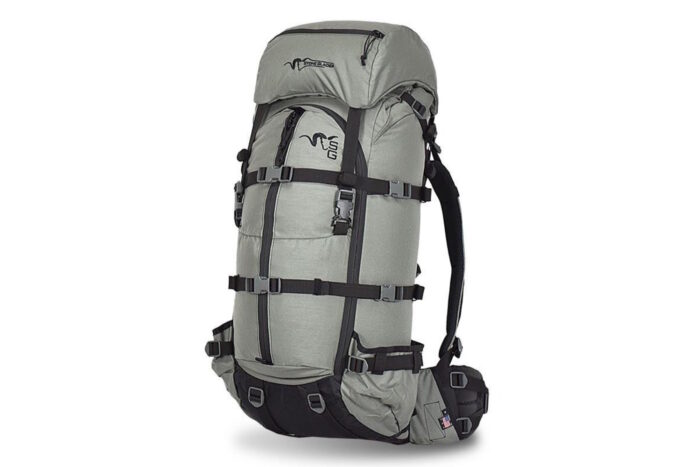
The Stone Glacier Sky 5900 ($725) is a formidable tool in the big-game hunter’s arsenal. And while there are many good packs on this list, the Sky 5900 has floated to the top after three years of rigorous testing.
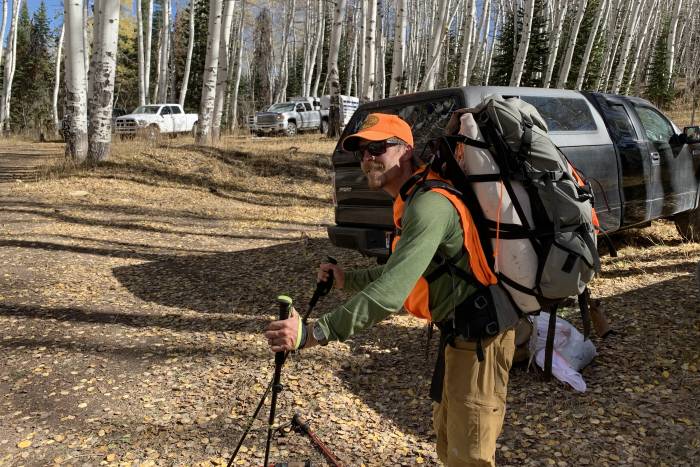
This is Editorial Director Sean McCoy’s go-to backpack whenever he needs to carry a lot of gear. He’s used it through multiple elk hunting seasons and on several multiday hiking trips in the Rocky Mountains. He’s grown to love this backpack for its comfort and simplicity.
The Sky 5900 is very durable and excellent for multiday hunts when you have to haul big loads for long miles. Coupled with the XCurve frame, the majority of the bag is a large, open cavity that eats up huge amounts of gear. It expands with a very useful meat shelf that can haul quarters or extra equipment. And by adding a lid (which McCoy highly recommends), plus using the meat shelf, you can expand this pack to carry a whopping 8,000 cubic inches.
McCoy hauled out two cow elk quarters in one trip, pressing his body to the limits with more than 100 pounds in the load. While the weight was a struggle, the pack was totally fine.
He found the Sky 5900 to be a perfect pack for 5 days of backcountry hunting. It easily hauled all of his gear for the Colorado first rifle season, loaded out two elk, and packed up camp.
During McCoy’s hunting days, he carried minimal gear and food while climbing up and down ridges and mountains. The large lid and organizational pockets keep things in place. And the pack can compress nicely to be used as a (admittedly heavy) daypack. And when hauling meat, the very robust shelf system locked in the heavy quarters.
ALPS OutdoorZ Commander + Pack Bag
Specifications
Pros & Cons
Pros
- A very capable bag for a great price
- Versatile enough for range of big game hunting
Cons
- An old-fashioned aluminum frame isn't the most comfortable
- Budget-sensitive materials aren't as durable or plush as more expensive options.
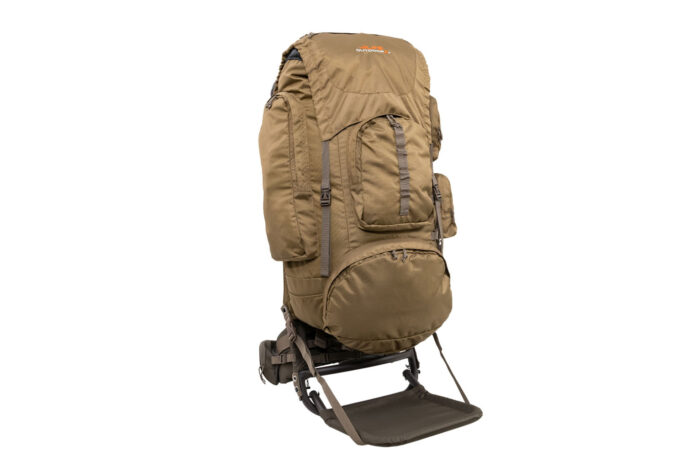
The ALPS OutdoorZ Commander + Pack Bag ($269) is a great pack at a great price. This combination has made it a favorite among hunters who don’t mind trading carbon fiber for aluminum to save significant money.
The pack is designed with firearm hunting in mind and has a dedicated rifle holder along one side. The brand designed a lashing system specifically to carry meat after the kill. With a volume of 5,250 cubic inches, it has plenty of space for overnight backcountry hunts.
Exo Mountain Gear K4 Pack System
Specifications
Pros & Cons
Pros
- Flexible comfort while load bearing
- Extended range of sizes to fit just about every hunter
- Quiet. No pack squeak, yet…
Cons
- Still too early to say. Will update as we continue testing.
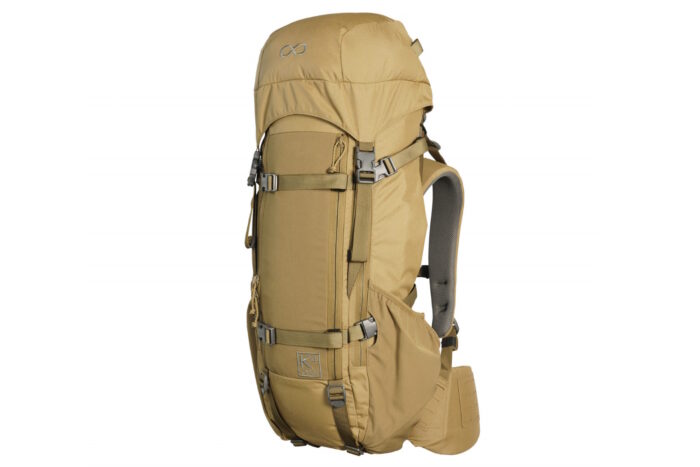
There’s a new kid in town and, OH is the hype big. The EXO MTN Gear K3 has been a favorite for frame/pack hunters for years. The new EXO MTN Gear K4 ($679) started as a rumor that grew into reality. Our team had a soft-hearted argument over whether or not the K4 was going to dethrone the Stone Glacier Sky 5900 — and we settled on this: The new K4 frame is rad. We just haven’t had enough time in the field with it to give it the top spot.
Our Hunt & Fish Editor, Rachelle Schrute, is currently testing the hell out of the pack. We’ll see if it lives up to the current internet mumblings.
Like many of the backpacks on this list, the frame and pack are separate units, allowing for customization on size and configuration. We’re currently running the K4 3600 pack system, which can be compressed down tight enough to use as a day pack if you so choose — or expanded out to pack in a one-person overnight camp, with room for some pack-out action.
The excitement is built entirely around the frame upgrade. It’s all about lateral movement. The frame shifts and moves with you. The carbon stays actually flex with you just a bit when you bend forward. With all the flex and movement, the vertical flex is almost nonexistent. This equates to comfort that supports massive weight.
We won’t get too deep into the specifics of this pack or our thoughts on it until we try to wreck the dang thing, but at this stage — this pack/frame combo is epic. We wouldn’t be surprised to see it rise to the top of the list by fall.
Latitude Praxis Pack
-
-
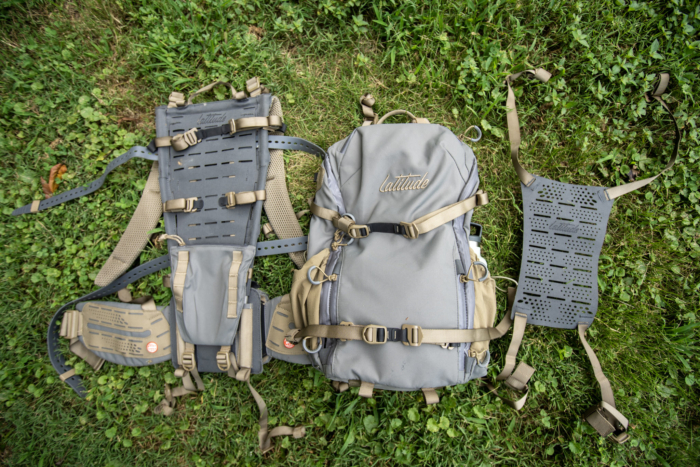
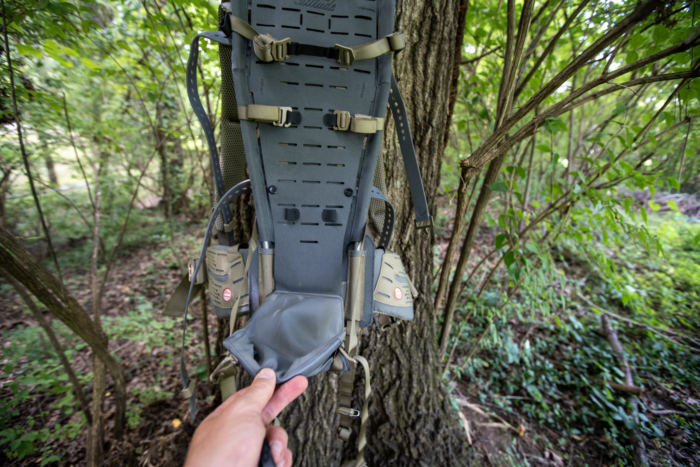
The customization of the Latitude Praxis lies in its ability to be disassembled and reconfigured in multiple ways; (photo/ Morgan Nowels)
-
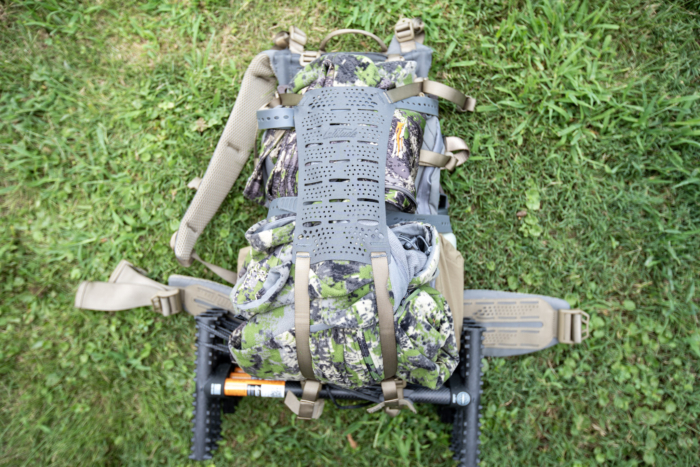
Thanks to the exterior webbing system, I can attach layers to the outside of the pack, keeping the interior organized and keeping overall pack size down; (photo/Morgan Nowels)
-
The Praxis frame has a meat shelf, allowing you to pack out a deer in far flung deer stands; (photo/Morgan Nowels)
Specifications
Pros & Cons
Pros
- Highly customizable
- One of the best packs for carrying climbing sticks, platforms, or stands
- Integrated meat shelf
- Excellent layout for tree stands
- Keeps things tidy and contained
- Surprising capacity
Cons
- Price
- No hydration bladder port
- Learning curve for set up
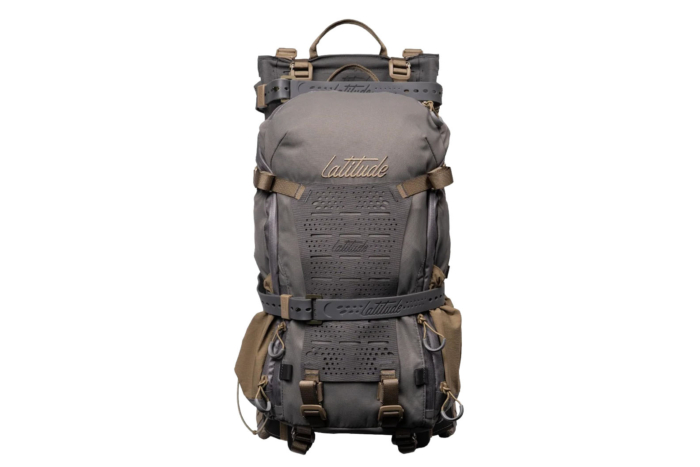
Whitetail deer inhabit the largest, most diverse habitat range of any big game animal in North America. Since they’re such a dynamic animal, it makes sense that a backpack built to pursue them should be dynamic as well. That’s where the Latitude Praxis ($450) comes in.
The entire concept behind the Praxis is customization, allowing whitetail hunters to configure the pack perfectly for the conditions they face. That’s made possible by the pack’s modular nature. It’s a classic frame pack with an easily removable backpack pouch and straps that go on for days.
If you hunt small parcels of farmland, the Praxis can be turned into the perfect little tree-stand pack. But if you need to hike miles deep, it can be transformed into a gear hauler capable of carrying layers, a lock-on stand, and climbing sticks with comfort and ease. If you shoot a deer way back in there, the frame has a meat shelf, turning the Praxis into a load-bearing workhorse.
Latitude thought through just about every detail with this backpack. All of the straps feature grippy rubber, keeping things tightly secured to the pack and frame. The buckles are completely noiseless, and the top of the pack flips open in the stand, converting the Praxis into an organized shelf.
After testing numerous options on the market, GearJunkie contributor Morgan Nowels states that it’s the most versatile, quality whitetail backpack he’s used. There really isn’t much to complain about, other than the price. If it’s too steep for you, the Mystery Ranch Treehouse and Badlands 2200 are almost as good, at a lower price.
But for whitetail hunters who demand the best, this pack is it.
Mystery Ranch Metcalf
Specifications
Pros & Cons
Pros
- Extremely durable
- Various straps allow for versatility
Cons
- Heavy
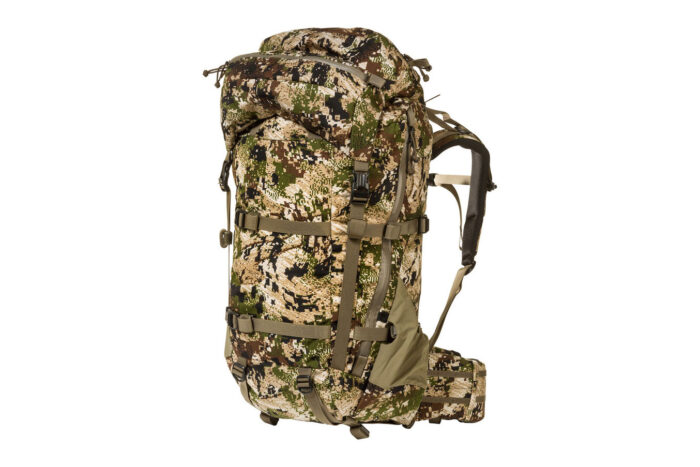
The Mystery Ranch Metcalf ($559) is a really sweet pack, but it loses a few points for its sheer weight (6.1 pounds complete) and complexity. Editorial Director Sean McCoy carried it some in testing, but his buddy has carried it more for elk and deer hunting in the Rocky Mountains. He likes it but would like to see the design simplified to remove some webbing straps.
The Metcalf is a versatile pack and ideally suited to multiday remote hunts. It sells as an all-in-one package, with both a large main packsack and a detachable, smaller day lid for quick stalks.
The pack easily slides away from the frame to create big shelf space for carrying big-game quarters (or other large, awkward items). And it carries heavy weight well.
We’ve tested this one over about 20 days, including thousands of feet of vertical gain and dozens of miles. The tough CORDURA fabric shows barely any wear (beyond a few bloodstains).
Kifaru Absaroka
Specifications
Pros & Cons
Pros
- Large but compressible
- Simple three-compartment organization
- Compatible with exceptional ARK frame
- Very water-resistant, durable
Cons
- Frame (not included) does not have water tube attachment
- Affordable bag requires expensive frame
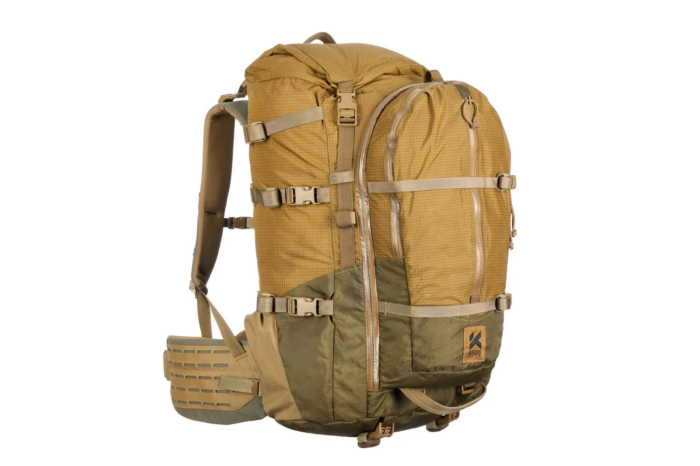
The Kifaru Absaraoka ($377 bag only, $877 bag and frame) is the best hunting pack we’ve tested for hauling huge loads while still maintaining a meat shelf. It’s a very simple pack, yet has refined details that make it a fantastic choice for hunts that require a lot of gear. And for such a large, heavy pack, it’s wildly light — right around 6 pounds for the entire pack, frame, and harness.
The pack has three compartments: a large main compartment offers huge space for most gear, while two smaller compartments on the back organize key gear into smaller spaces. The top-loading, roll-down design does not come with a lid but is available as an add-on. Our team has come to the conclusion that it’s not needed as the pack itself is huge.
The Absarkoa attaches to the excellent ARK Frame, which forms a foundation for several Kifaru packs.
Editorial Director Sean McCoy tested the pack elk hunting and found it great on a 5-day backpack hunt. In warm weather, it may be overkill. But it has plenty of extra space for more clothing or gear for colder weather. And it carries like a dream. McCoy tested it with about 50 pounds (he did not harvest an animal), and it was very comfortable. He loved the firm padding and thick lumbar pad. For hunters going far afield pursuing big game or long objectives, the Kifaru Absaroka is a winner.
Other Big-Game Hunting Packs You Should Consider
Specifications
Pros & Cons
Pros
- Exceptionally durable for its light weight
- Very capable of carrying heavy loads
- Strength-to-weight ratio is incredible
Cons
- No meat shelf requires meat to be loaded internally
- Tailor-made for sheep hunters. Less versatile than other packs on the list
Check out our full review here.
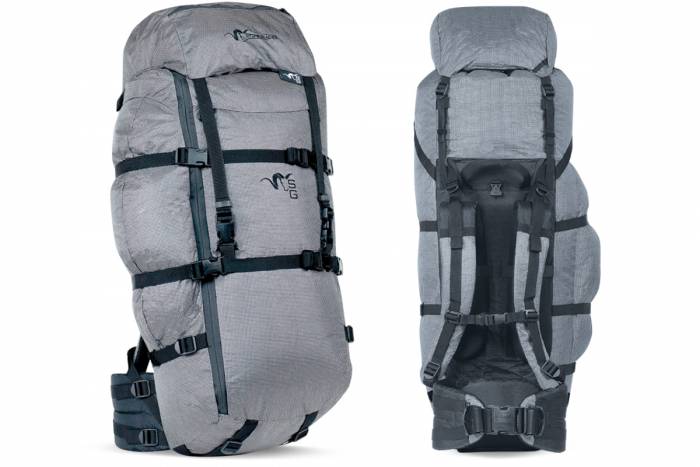
The Stone Glacier Terminus 7000 ($699) is a huge, very light pack (3 pounds, 15 ounces) with an excellent frame. The brand built it specifically with the needs of goat and sheep hunting in mind, although we believe it could flex into a lot of other situations well.
In testing, we found that the Terminus 7000 carries heavy loads extremely well. It has an excellent hip belt and shoulder straps, allowing you to hoist 150+ pounds without too much discomfort (at least caused by the pack — your legs will burn).
The Terminus 7000 pack is essentially a large tube with zipper access and an internal pouch to separate gear from meat. Designed for mid-size game animals, it would also work to pack out a deboned mule deer or similar critters. Because it does not have a meat shelf, I would hesitate to use it for larger animals like elk or moose, but it certainly has the internal space needed to haul all the gear for almost any kind of hunting.
If you need a huge, strong, ultralight pack, this one stands apart from the crowd, but at a hefty price.
Specifications
Pros & Cons
Pros
- Quiet
- Easily hangs next to stand
- Stays open for silent access
Cons
- May be larger than needed for whitetail
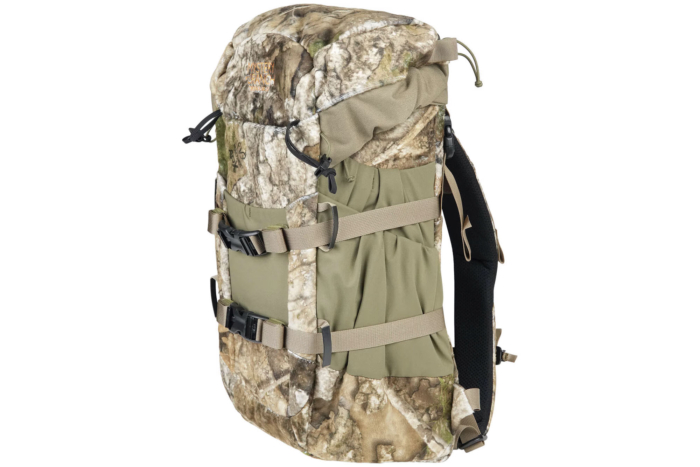
The Mystery Ranch Treehouse 20 ($250) is the perfect little whitetail pack that has more room than you might need in a quiet, compact package. If you have a bit of a haul to get into your tree stand or you want to bring extra layers (and extra snacks) for those longer sits, it holds everything you need.
The easy-open, full-access lid means no noisy fiddling with zippers or clips. With attachment points that allow you to easily hang it next to you in the tree or straps that allow it to hang itself, it does become a little base station in the canopy.
The fuzzy polyester outer build is dead silent (unless you’re dealing with loose-bark pine species), and the cinch pockets operate without a sound. With more than enough attachment points, Editorial Director Sean McCoy has started strapping his bow to the outside, a little white tail rattle rack, a grunt tube, and still had straps and pockets to spare.
McCoy admits it’s probably more pack than needed in his neck of the whitetail woods more of the year, but he also has the Treehouse 9, which can hold everything you need minus your actual bow. For late-season, though, McCoy is sticking with the Treehouse 20 for the extra layer space and pockets for his hand-warmer addiction. It’s the perfect all-around tree stand pack that fits the bill of everything you need without having to compromise.

Specifications
Pros & Cons
Pros
- Allows for good organization
- Great size for day hunts
- Multiple straps
- Excellent suspension system for a pack of this size
Cons
- Too small for most overnight hunts
- Expensive for size
- Water bladder compartment is odd
At $400, the Badlands 2200 Hunting Pack gets high marks for durability and hunting-specific design. It starts with a T-5 aircraft-grade aluminum frame and tough fabric. Hunt-specific features include the ability to carry a rifle, bow, or pistol. It also has a spotting scope pocket to protect the glass when traveling over rough terrain.
After the kill, the built-in meat shelf supports big loads to haul out elk quarters. It’s also available in blaze orange, a small bit of added safety but the kind of detail hunters appreciate.
Badlands also released its Vario system last year, another modular approach to developing a series of packs for one frame. GearJunkie contributor Jace Bauserman tested the Vario system and really liked it. From base frame to daypack to big ol’ multiday, Badlands has it all.
And if something goes amiss? Well, this warranty spells it out well: We don’t care what happened, or whose fault it was, we will fix it for free forever. We could care less if you bought it at a garage sale or a gear swap, as long as it says Badlands, it’s covered. All we ask is that you use and abuse your pack as much as possible so we can learn how to make our products even better.
Specifications
Pros & Cons
Pros
- Complete pack system, no add-ons needed
- Durable
- Carries weight well
Cons
- A little small for multiday hunts in cold weather
- Slightly heavy
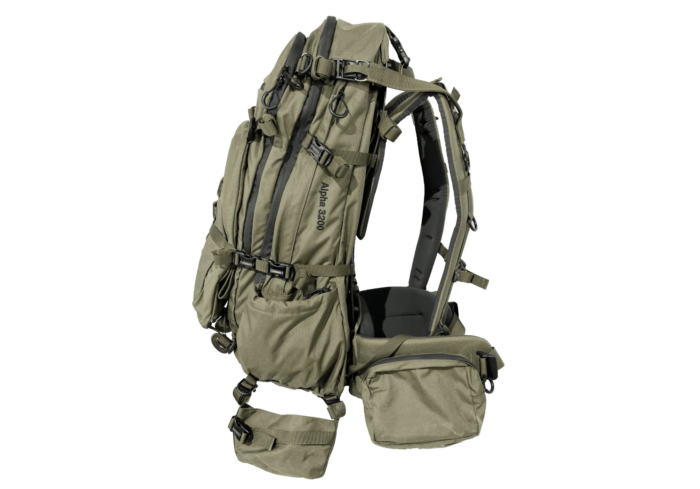
Akek is a relatively new brand. But its first product, the Alpha 3200 ($570), has proven itself a reliable, complete system for big game hunters. We tested the model for two solid years before giving it a slot in this guide due to its newness. But dang, if the Akek Alpha 3200 hasn’t proven itself to be a durable, versatile, and comfortable backpack.
Multiple testers used the pack over two seasons and during some pretty tough conditions. And while one is over 6 feet tall, and the other is 5’8″, the pack easily adjusted between the two. It took a serious beating in thick brush. Our testers also overloaded the pack’s volume and carried significant weight in the Rocky Mountains during archery elk hunting.
This pack really stands out as an all-in-one system. While many brands offer modular packs with lots of possible add-ons, Akek gives you everything you need — pockets, a gun or bow carry system, a rain cover, a carbon fiber frame, a meat shelf, and even a removable small pack — in one buy.
Pockets, zippers, and tools were all highly logical and efficient for hunt load-outs and heavy hauling. Its only downside is that this pack is slightly heavy compared to the competition. But for a mid-size pack most suited for day hunts and shorter overnights in temperate weather, the Akek 3200 has won us over.
Hunting Backpacks Comparison Chart
| Hunting Pack | Price | Weight | Volume (cubic inches) | Material |
|---|---|---|---|---|
| Stone Glacier Sky 5900 | $725 | 5 lbs., 8 oz. | 5,900-8,000 cu. in. | 500D CORDURA ripstop |
| ALPS OutdoorZ Commander + Pack Bag | $269 | 7 lbs., 5 oz. | 5,250 cu. in. | Nylon ripstop fabric |
| Exo Mountain Gear K4 | $679 | 5 lbs., 8 oz. | 4268- 7828 cu. in. | 500D CORDURA |
| Latitude Praxis | $450 | 4 lbs., 8 oz. | 1,648-2,348 cu. in. | Carbon fiber and 7075 aluminum frame, body material not listed |
| Mystery Ranch Metcalf | $559 | 5 lbs., 4 oz. | 4,335 cu. in. | 500D CORDURA |
| Kifaru Absaroka | $377-$877 | 6 lbs. 4 oz. | 6,580 cu. in. plus meat shelf | Carbon Fiber, Ultragrid and EPX 400 fabric |
| Stone Glacier Terminus 7000 | $699 | 3 lbs., 15 oz. | 7,000 cu. in. | SG ULTRA PE and X-Pac fabric |
| Mystery Ranch Treehouse 20 | $250 | 2 lbs. 13 oz. | 1,275 cu. in. | Fuzzy polyester backed with Nylon 210D laminate fabric |
| Badlands 2200 | $399 | 5 lbs., 10 oz. | 2,750 cu. in. | Badlands’ KXO-50™ |
| Akek Alpha 3200 | $570 | 5 lbs., 11 oz. | Volume: 3,200 cu. in. (expands with meat shelf) | CORDURA 500, carbon fiber frame |

Big-Game Hunting Backpacks Scoring System
When it comes to hunting backpacks, there are a litany of factors to consider. We’ve whittled it down to what we feel are the four most important.
1. Capacity: How much room do you need in a pack? Packs with a low score in this category are daypacks and aren’t used for overnight hunts or hauling meat. The best-scoring packs are capable of holding enough equipment for a weeklong backcountry hunt, as well as a meat shelf for the packout.
2. Organization: Some packs are little more than one giant pouch. Others have pockets galore, allowing you to stay organized. It should be noted that many hunting packs offer additional add-ons to improve organization. We scored this category based on the bare bones backpack.
3. Comfort: While there isn’t any way to “comfortably” pack out an elk, some backpacks are better at it than others. The best backpacks put the pain of a big packout on your legs rather than your shoulders, and won’t rub annoyingly against your waistline or shoulders.
4. Weight: A successful big game hunt means you’re going to move lots of weight. Your backpack itself shouldn’t unnecessarily add to that. Obviously, small day packs score well in this category, but the highest-scoring products are large packs, capable of multi-day hunts that are lighter than the competition.

How We Tested the Best Backpacks for Big-Game Hunting
Our team of testers are avid hunters with decades of experience in hunting, and first published this guide in 2020. Since then, we’ve filled plenty of tags and whittled the selection of hunting backpacks down to our ten favorites. We don’t see much turnover in these pack designs. They’re generally tough, durable, and as light as possible while still being able to carry heavy loads.
Lead writer Sean McCoy has been hunting since he was 12. That’s … a lot more years than he’d care to admit. But he still covers big ground chasing Colorado elk and mule deer each fall, and he also travels for hunts in the Midwest several times each year.
Rachelle Schrute, GearJunkie’s Hunt and Fish editor, also contributed to this guide. Based in Montana, she pursues elk, deer, mountain lion, and bear, as well as small game, every year. There are very few individuals who hunt as much as Schrute, and if there’s a hunting-related opinion you can rely on, it’s hers.
GearJunkie contributor Morgan Nowels also tested some of the packs in this guide. Nowels lived in the Rocky Mountain west until four years ago, where he hunted elk and mule deer. Now based in Tennessee, we rely on him to assess equipment for whitetail hunters.
Our testers put each of these packs through their paces with a range of applications. We know hunters will be using these load haulers to carry supplies far into the backcountry, or maybe walk a quarter-mile to hunt the back 40 for whitetail after work. To give a fair and thorough evaluation, we’ve had some packs in testing for over two years, providing plenty of opportunity for big miles and heavy loads.

Buyer’s Guide: How to Select A Backpack for Big-Game Hunting
Does My Current Backpack Work?
Don’t want to buy a new pack just for hunting? No problem. If you backpack, you already own a pack that’s entirely capable of serving you as a hunting pack. It just won’t be ideal.
Backstraps, tenderloins, and meat scraps will fit into the main compartment of most large, internal-frame backpacks designed for hiking. Most internal-frame packs can even carry the heavy load of a bone-in elk quarter. It probably won’t be comfortable, but it’ll do in a pinch. Just bring some paracord, lay the quarter on the pack, and get strapping. The job won’t be pretty or fun, but it will get the meat out of the field. And there will be a lot of backpack cleaning to be done at the end of the ordeal.
So what makes a hunting pack, a hunting pack? Well, a few things.

Haul Heavy Loads
If you intend to carry meat and/or camp gear, a hunting backpack should be able to handle a very heavy load. For big-game hunters who trek into the wilds, that means up to 100 pounds. Why? Because that’s the weight of a big elk quarter plus gear.
A true big-game-hunting backpack will have a meat shelf. A meat shelf is a spot on the pack to store quarters or game bags on the external portion of the pack. Some are between the frame and the body of the backpack, like the Stone Glacier Sky 5900. Others, like the Badlands 2200, feature a strap system that puts the meat on the rear of the pack with a strap system.
Speaking of heavy loads, pick up a set of the Best Trekking Poles. When carrying meat-laden packs, they’re almost as important as the pack itself.

Hunt Specific Features
All hunting packs will also have hunting-specific features. Often, this means the ability to link up a binocular harness to the shoulder straps of the pack. For whitetail hunters, it can mean specific locations to place tree stands and the associated equipment, like you’ll find on the Latitude Praxis.
Many hunting backpacks also have accessories available that can be purchased separately to customize the pack . That could include firearm storage, options to turn the backpack into a day pack, or bow holsters.

Which Backpack for Big-Game Hunting Is Right for Me?
Our hunting team’s has used standard backpacks as well as hunting backpacks to pursue big game. After doing both, it’s abundantly clear that if you plan on big game hunting, a hunting-specific pack is well worth the investment.
But every hunt is different, and every pack is different. Here’s how to select the best one for your next hunt.

Size is Everything
There is such a thing as too much pack. Be honest with yourself on this one, and consider how much time you’re going to spend in the field.
If you’re a whitetail hunter on farmland, it may be better to get a small, portable pack like the Latitude Praxis. It’s small enough to easily climb a tree with, and for the most part stays out of the way. Since most whitetail hunters drag deer out of the woods, there isn’t any need to spend the money on a large pack capable of hauling an elk out of the backcountry.
For those who do short hunts in the mountains, for example, “weekend warrior” western big game hunters, a mid-size option may be better. A pack like the ALPS OutdoorZ Commander may be all you need to haul camp and your meat out after a successful hunt. It can carry camp for a few days, as well as a big-game quarter.
However, if you’re going steep and deep for a week (or more) at a time, a huge backpack like the Kifaru Absaroka may be a better fit. Huge hunting packs, while large, are absolutely necessary to carry camp gear, food, hunting layers, knives, and other processing equipment for a week-long hunt.
The main point is, despite the temptation to go as large as possible for versatility, our team has found it’s best to go as small as possible. Too much pack is a thing, and only go as big as necessary. Smaller packs tend to be lighter, easier to handle, and better organized than huge backpacks.

But Most Importantly, Get a Proper Backpack Fit
Fit is arguably the most important part of a pack. The best hunting pack on the market will be miserable to wear if it doesn’t fit. Get it right, and you’ll be surprised at the weights you can comfortably carry.
Some, but not all, manufacturers offer the same pack in different sizes. If the pack you’re planning on purchasing comes in multiple sizes, two measurements will be important: waist and torso length.
The waist measurement is crucial to ensure that the pack’s hip belt fits snugly around your waist. While it may be tempting to shortchange this and go off of your pant size, don’t. The reason is that most manufacturers measure at your hip bones, which is often higher up and broader than the area where your pants sit. Use a flexible measuring tape to get an accurate measurement. If you’re between sizes, size down. This will ensure you have ample room to tighten more than needed.
To measure your torso length, you’ll need a friend. There are lots of fancy names that describe the points to measure from. Here’s the non-jargon version. Tilt your head forward and feel for the bump on your spine where your neck meets your shoulders. Put one end of the tape there.
To find the bottom point of the measurement, trace a line from the top of your hip bones across your lower back. The point in the small of your back at that height to the point at the base of your neck will give you an accurate measurement of your torso length.
Use those measurements in conjunction with the manufacturer’s sizing chart, and you’ll be good to go.
Frequently Asked Questions
The best backpack for deer hunting varies depending on your style of hunting. Will you drag the deer out of the woods, or do you need to quarter it for a long pack out? If you will quarter and carry your deer, it needs to be able to haul a heavy load comfortably. In that case, look for a pack that can handle 100 pounds or more, so you can pack out your game plus all your equipment.
Make sure that the pack you’re considering also operates quietly. Find a pack whose buckles and zippers operate quietly to prevent scaring off your quarry.
If you hunt close to the truck and can drag your deer out of the woods or haul it with an ATV or horse, a simple daypack will likely do the job.
It depends on how much time you plan on spending out in the field. For day trips, plan on carrying food, water, extra layers, your calls, a first aid kit, kill kit, and anything else you might need.
For multiday trips, add a tent, sleeping bag, and pad, plus extra food and a camp stove to cook your gear. Just make sure you have enough room to pack out a heavy load of meat.
Most importantly, prepare for your specific hunt. Every location and weather condition requires different equipment, so do your homework well in advance.
For elk hunting, you’ll want a pack that can haul at least 100 pounds. This will likely require a purpose-built backpack meant for big-game hunting.
The pack volume itself will depend on how long you plan on spending out in the wild. For multiday trips, you may be looking at 4,000-7,000 cubic inches, with additional space available in a meat shelf.
If it’s soaked in blood, you may need to spray it down with a power sprayer. Use a pressure washer to hose it off in the driveway. Then soak it in a tub of ice-cold water for about 30 minutes. Then hand or brush wash it, and then dump out the water and repeat with soapy water.
If you can, use a detergent made specifically for cleaning hunting gear. Give it a good rinse, and then hang it to dry.