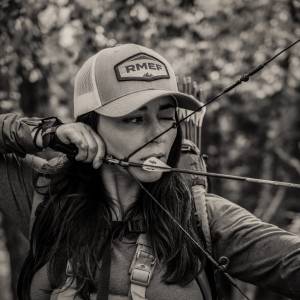
Women’s hunting pants have to be comfortable while offering protection. They need to move with you while traversing rugged terrain, keep you warm when the conditions get frosty, and ward off water when the clouds open up. During early-season hunts, I require a pant that keeps me both cool and protected, a big ask from a piece of clothing.
You don’t need a dedicated pair of hunting pants in the latest pattern from the biggest name. A pair of work pants, hiking pants, or, in some cases, yoga pants will get the job done. My mother hunted wearing Levi’s, and my father still wears the same style of Wranglers he hunted in when I was a kid.
However, the right pair of hunting pants, designed for your particular hunting conditions, can increase your comfort and capability in the field. The right materials, patterns, and shapes can make your hunt more pleasant and, in some cases, more successful. The pants on this list have been carefully scrutinized while hunting for elk, deer, and mountain lion, and I’ve also included a pair of waders for duck season.
Editor’s Note: GearJunkie updated this guide on August 25, 2026.
The Best Women’s Hunting Pants of 2026


KUIU Women’s Attack Pant

Specifications
Pros & Cons
Pros
- Good fit
- Stretchy
- Durable
Cons
- Short length; some taller women have mentioned the leg length being an issue
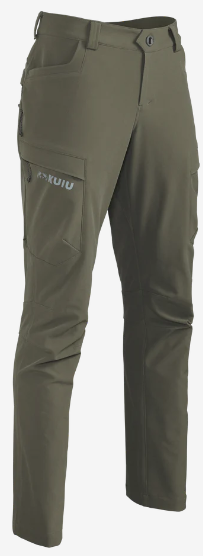
KUIU has earned this spot again for a reason. The Women’s Attack Pant ($149) is built tough, yet it moves like a second skin. The stretch fabric bends, climbs, and crawls with you instead of against you. These aren’t men’s pants with smaller measurements. They’ve been cut for women, and the fit proves it.
The hip vents are a feature most women have never had in a hunting pant. They work exactly how you hope, letting you dump heat when you need to.
Once you hunt in pants with vents, you won’t want to go back.
The first day of testing these pants involved horseback miles through mountains and streams. They never needed adjusting or second thoughts. That’s what makes them stand out. Good gear disappears, and these pants do exactly that.
They’ve since become the default choice for hunts ranging from early-season scouting trips to late-season predator calling, layered over wool when the cold sets in. When I’m not required to test something new, these are the pants that come out of the drawer first. They just work, and they work across seasons without complaint.
Sitka Women’s Timberline Pants
Specifications
Pros & Cons
Pros
- Unmatched protection
- Comfortable
Cons
- The reinforced knee and seat colors are odd
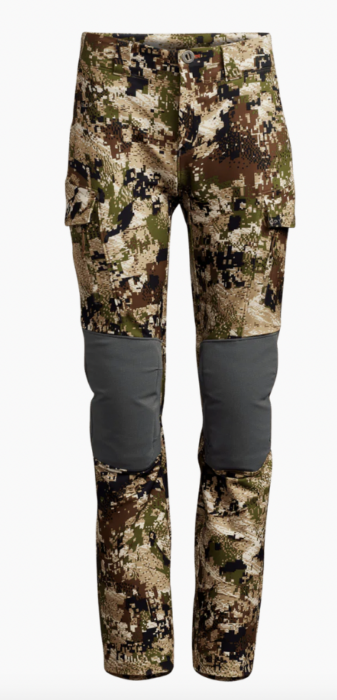
The SITKA Timberline Pant ($269) has been around for years, and there’s a reason it keeps hanging on. It’s built for rugged mountain hunting, with waterproof reinforced knees and seat, removable knee pads, and four-way stretch fabric that moves well when climbing, crawling, or packing an animal out.
These aren’t ultralight early-season pants. The fabric has some heft, which makes the Timberline better suited to cool weather, rough country, and hunts where you expect to spend time kneeling on rocks or sitting on wet ground. That extra protection pays off when snow, mud, and brush are part of the day.
GearJunkie has put the Timberline through years of Montana hunting in wind, snow, and wet conditions, and they’ve proven remarkably durable. They’re pricey and won’t replace insulated pants for bitter-cold, stationary hunts, but for hunters who cover rough country and are hard on their gear, the Timberline is a workhorse.
Magellan Outdoors Women’s Stonewell Cargo Pants
Specifications
Pros & Cons
Pros
- Low cost
- Comfortable
Cons
- Not water-resistant
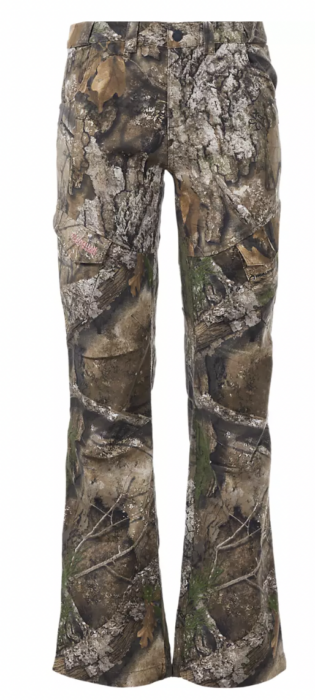
The Stonewell Cargo Pant ($40) is the definition of entry-level hunting gear. For 40 bucks, you get camo pants that fit, stretch a little, and hold your stuff. They’re not technical, they’re not fancy, and no one is pretending otherwise.
Made from a cotton blend, they’re comfortable enough to wear around town if Realtree is your idea of fashion. They’re fine for tree stands, scouting, and easy hunts when the weather cooperates. They are not fine for wet conditions. Cotton soaks up water and will leave you colder than you bargained for.
These pants won’t last forever, but that’s not really the point. They’ll get you in the woods for the price of a case of craft beer. If you want to dabble in hunting without committing to high-dollar gear, the Stonewells do the job.
First Lite Women’s 308 Lined Pant
Specifications
Pros & Cons
Pros
- Warm
- Comfortable
- Large dump pockets
- Long, wide-opening thigh vents
Cons
- Not waterproof/resistant
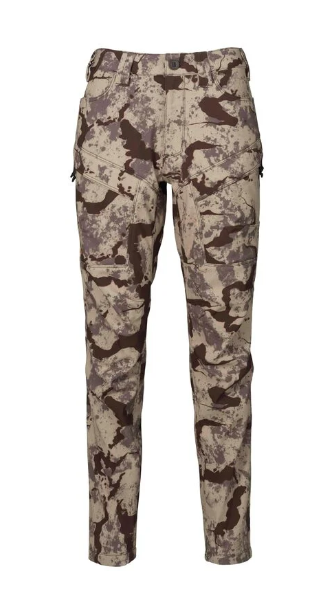
The First Lite Lined 308 ($175) is the pant you put on when “cozy” and “technical” finally decide to get along. At first glance, they look almost too comfortable to take seriously. After a few hunts, it’s clear they’re more than loungewear with camo slapped on. These pants handle real field use while keeping you warmer than you’d expect.
They don’t win the top slot because they’re seasonal. Wear them in August, and you’ll regret every step. For cold, dry hunts, though, the fleece lining makes them an easy choice. They move like a performance pant but feel like something you’d happily wear in a drafty cabin. That combination makes them dangerous in the best way.
They aren’t built for wet climates, so don’t expect miracles if you spend your season slogging through rain. The softshell face sheds a bit, but it won’t save you in a downpour. In the mountains on a bitter morning, though, they’ve proven themselves. After testing these pants for over a year, they’ve become a regular in my rotation.
SITKA Women’s Ascent Pants
Specifications
Pros & Cons
Pros
- Comfortable
- Breathable
- No constricting buttons or clips
- Stretchy
Cons
- Noisier than I'd like
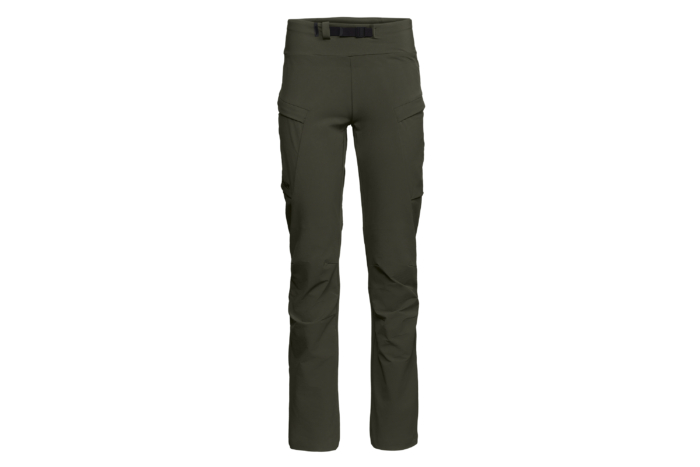
The SITKA Ascent Pant ($199) is marketed as the answer for early-season hunts, and in many ways it delivers. They’re featherlight, breathable, and built to move when the sun is cooking the backcountry. The Ascent is ideal for hunters covering big miles in August and September, when staying cool matters more than staying warm.
The fabric is thin and quick-drying, with stretch that keeps up whether you’re hiking, crawling, or glassing for hours. The ventilation zips are a welcome touch, letting you dump heat fast. On paper, they check nearly every box for an early-season pant.
The flaw comes when silence is part of the equation. The Ascent Pant is louder than it should be. The fabric has a swish that gives you away in close quarters, and that’s a problem when your hunt involves archery stalks in dry country. Elk and antelope may forgive a lot, but noisy pants are not on the list.
Durability is decent for something this light. They won’t last forever in cactus or thick brush, but the reinforced knees give them more life than most ultralight options. The fit is slim and athletic, which means less fabric catching on sage and rocks, and that’s always a plus.
These are not the pants you wear when the forecast calls for rain or the mornings are cold enough to freeze your water bottle. They are warm-weather specialists. If your season calls for mobility, airflow, and comfort above all else, the Ascent does the job. Just be ready to trade a little stealth for that cool, breezy feel.
First Lite Women’s Core Bib
Specifications
Pros & Cons
Pros
- Excellent warmth for late-season hunts
- Silent face fabric for treestand sits
- Designed specifically for women’s fit
- Reinforced knees and seat
Cons
- Bulky for active hunts
- Limited color and camo options
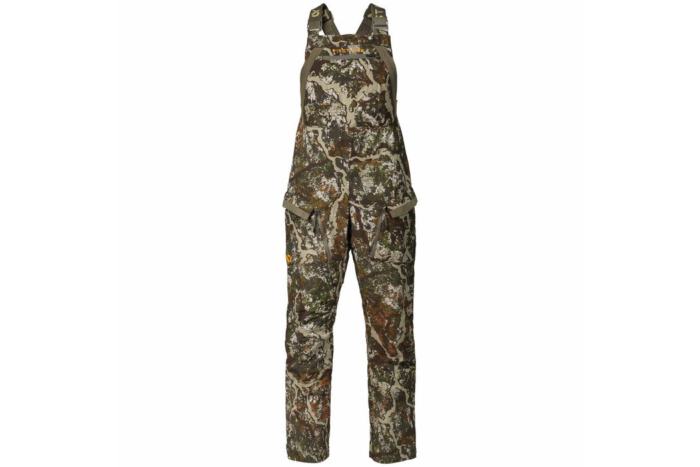
First Lite decided to hop on in and replace my former favorite bibs with a new favorite. The brand’s Sanctuary Bibs are no longer available (womp-womp), but the replacement in the lineup is nothing to scoff at. I was initially bummed to hear that my favorite “sleeping bag you could walk in” was being discontinued, but the Core Bibs ($450) are a pretty dang stellar step up.
That price tag certainly stings, but when you start looking at late-season, whitetail bibs, it’s right on par with what you can expect. So far, I’ve tested the Core Bib while sitting in a tree stand and even tried to sleep outside in them with temps dropping into the 30s.
They don’t feel nearly as bulky as the Sanctuary Bib, which is both a benefit and a detriment. I noticed far more dexterity and comfort when moving about in the Core Bib. They aren’t nearly as restrictive. That being said, I’m sure they might not be as warm in stagnant situations when the temps drop, though that’s still to be seen.
Another huge upgrade from my former winner in this category is sound. The Core Bibs are quiet. It isn’t that the Sanctuary Bibs were loud, but they weren’t silent. When it comes to swish swish, the Core Bibs have virtually none. This is a huge deal in the whitetail woods.
They won’t be as quiet material-on-material as the Fanatic System, but when it comes to sitting against tree bark and trekking through bramble and briar without grabbing literally everything (which the Fanatic System does), I think these bibs will be tough to beat.
The bibs’ cut is also cleverly tailored to fit women specifically, with a broader, higher chest for coverage and comfort.
LaCrosse Estuary Hunting Waders
Specifications
Pros & Cons
Pros
- Excellent fit
- Warm
Cons
- May not fit taller women
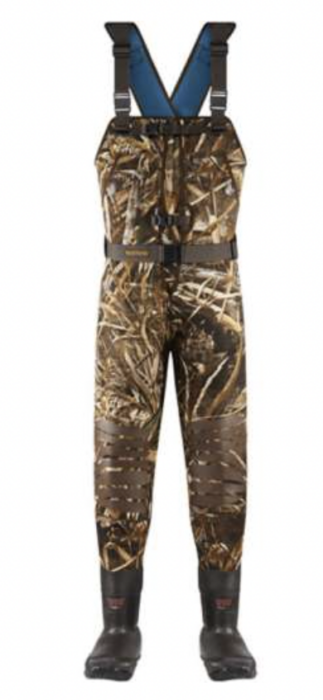
The LaCrosse Estuary Waders ($320) are one of the only women’s-specific options that actually hold up to a full waterfowl season. They’re an investment, but they solve the age-old problem of trying to make men’s waders fit when they never really do. The cut is designed for women from the boot up, and it shows in the way they move and wear.
The boots are insulated and shaped for women’s feet, which means less heel slip and fewer blisters when you’re slogging through muck with a dozen decoys on your back. The uppers adjust easily depending on how many layers you’re packing, and the chest pockets give you quick access to the gear you want handy without digging.
Durability is on point. The seams don’t leak after a season, the fabric can take abuse from brush and ice, and the boots aren’t prone to collapsing after a few months. They’re warm enough for standing in icy water at sunrise, yet not so bulky that you feel like you’re wading in concrete.
They do have a flaw. Tall hunters may find the fit a little short. That’s not an issue for me, but if you’ve been blessed with longer legs, be prepared to test sizing carefully.
Even with that caveat, the Estuary fills a void in women’s hunting gear. They’re tough, comfortable, and actually designed for women who waterfowl hunt, which is more than most brands can say.
KUIU Women’s PRO Brush Hunting Pant
Specifications
Pros & Cons
Pros
- Highly thorn- and abrasion-resistant
- Breathable
- Stretch in upper panels
- Generous ventilation
Cons
- No knee pads/knee pad pockets
- Hard plastic suspender keeper
- Noisier than non–thorn-resistant fabric
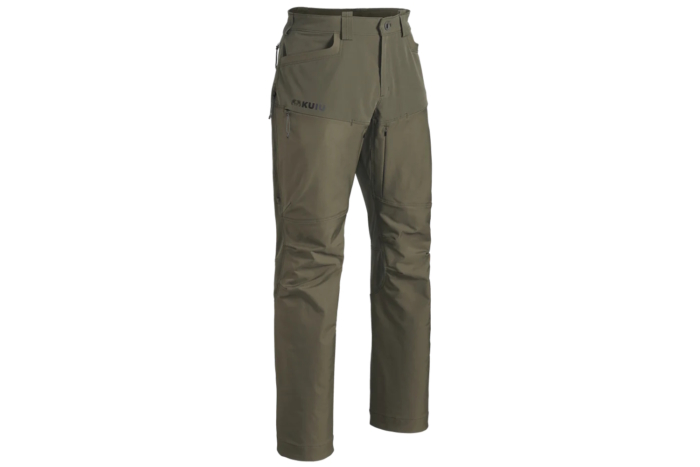
The KUIU Pro Brush Pant has long been a staple for men, and the women’s version finally gives us the same level of protection without the sloppy fit. At $199, they’re not cheap, but if you spend your seasons chasing birds or busting through country that eats lesser pants alive, they’re worth it.
These pants are built to take abuse. Thorn patches, cactus, and briars that usually leave you scratched and swearing barely make a dent here. The reinforced fabric shrugs it off, which means more time focusing on dogs and birds and less time picking stickers out of your legs. They’re also surprisingly light for how tough they feel, so you’re not dragging an extra pound of fabric with every step.
Ventilation is handled with double-thigh zips, which is a small detail that pays off big on hot days. Pop them open when the temperature climbs, and then close them down when the morning cool lingers. For shoulder seasons or crisp mornings, you’ll want a base layer underneath. The pants themselves aren’t warm, but that’s not their purpose. They’re meant to guard you from the terrain, not insulate you from the cold.
Water resistance is solid, enough to push through dew-covered grass or sit in wet ground without instantly soaking through. They’re not rain gear, but they’ll keep you drier than most pants this light.
The Pro Brush is one of those rare pieces that does exactly what it promises. It keeps you moving through the worst cover without complaint. Whether you’re chasing grouse, turkeys, or even scouting big game, these pants protect your legs from the punishment that comes with hunting in nasty country. They’re not flashy, they’re not insulated, and they don’t try to be everything at once. They’re tough, breathable, and built for the brutal side of hunting.
Prois Pradlann Field Pant
Specifications
Pros & Cons
Pros
- Women-owned and women-designed brand
- Lightweight and breathable for active hunts
- Stretch fabric with articulated knees for mobility
- Durable enough for upland or western terrain
Cons
- Not insulated for cold weather
- Limited camo patterns available
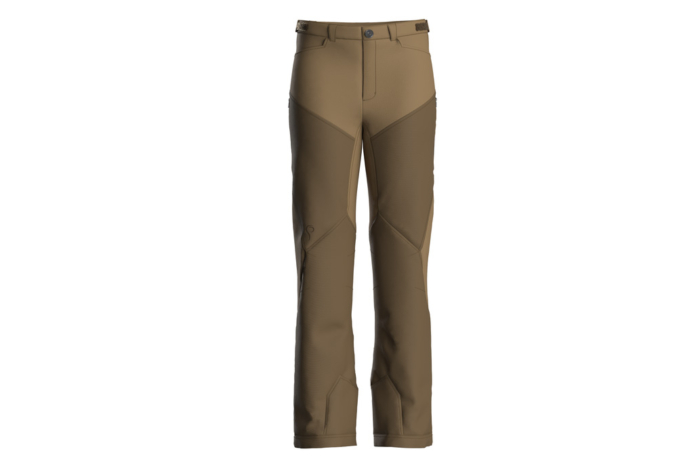
Plenty of brands claim they make pants for women. Prois actually does, and the Pradlann Field Pant ($170) is proof. They’re light, breathable, and tough enough to handle long days without feeling like you’ve strapped on cardboard cutouts. The stretch fabric bends when you do, and the articulated knees mean you can crouch, crawl, or climb without feeling stitched into place.
They aren’t insulated, so don’t expect them to carry you through December blizzards. What they are is a go-to pair for early- and mid-season hunts, or any time breathability matters more than bulk. Toss in a DWR finish, and you can plow through morning dew without ending up soaked before sunrise.
Here’s the bigger win. These pants come from a women-owned company that has been building serious hunting apparel for women long before it was fashionable to pretend inclusivity mattered. Buying them isn’t charity. It’s buying gear that fits, functions, and comes from people who understand hunters with ponytails and strong opinions.
Women’s Hunting Pants Comparison Chart
| Women’s Hunting Pants | Price | Material | Waterproofing | Insulation | Sizes | Colors |
|---|---|---|---|---|---|---|
| KUIU Attack Pant | $149 | Primeflex polyester | DWR finish | None | 2-14 | Valo, Verde, Vias, Solids |
| Sitka Timberline | $269 | Polyester stretch woven | DWR finish | None | 25-36 | Subalpine, Lichen |
| Magellan Outdoors Women’s Stonewell Cargo Pants | $40 | Cotton spandex blend | None | None | S-XL | Bottomlands, Realtree APX, Realtree Edge |
| First Lite Women’s 308 Lined Pant | $175 | Fleece-lined polyester softshell | DWR finish | 37.5 fleece | 0-18 | Fusion, Cerca, Solids |
| Sitka Women’s Ascent Pants | $199 | Nylon | None | None | 25R-36R | Subalpine, Lichen |
| First Lite Core Bibs | $450 | DWR-treated nylon, synthetic insulation | DWR treatment | PrimaLoft Gold 60gsm legs, 80 gsm body | XS-XXL | Specter |
| LaCrosse Estuary | $320 | Neoprene, spandex, Lycra, Thinsulate insulation | Waterproof neoprene | 1,200 gram | Boot 6-10 | Realtree Max-5 |
| KUIU Women’s PRO Brush Hunting Pant | $199 | 100% polyester, Primeflex 4-way stretch | K-DWR water repellency | None | 2-14 | Valo, Ash |
| Prois Pradlann Field Pant | $170 | Stretch nylon blend with abrasion resistance | DWR treated | None | XS-XL | Olive, Veil Cumbre |
How I Tested the Best Women’s Hunting Pants

I hunt in a variety of terrains in a ton of varying conditions, and I hunt year-round. From subalpine environments to the desert and everything in between, I’ve tested women’s hunting pants in just about every possible scenario.
After generations of hunting in hand-me-down hunting gear designed for men or forking over the cash for gear not made for me, I’m hard on women’s hunting gear because I want it to perform. I’m critical because I’ve had to be. There are nearly unlimited options for women’s gear now, and I’m always elated to put new hunting pants to the test.

I’m rough on hunting clothes. They get thrown, balled up, soaked, and soiled, and to be honest, a care label has likely not been read around here. My pants, in particular, get stained, snagged, and cut because I actually use them for hunting.
Aside from myself, we have testers on both coasts and everywhere in between. Collectively, we hunt everything from screaming elk in September to mountain lions in the snow. Our team loves to chase birds behind working dogs and crawl through brush to sneak up on the infamous speed goats of the West.

Whether in a tree stand, spot and stalk, on snowmobile, or on horseback, we certainly run as many hunt scenarios as we can to help you decide which hunting pants will work for your specific venture.
And we’re glad to beat our gear up so you know where your penny is best spent. Be sure to check out our women’s-specific hunting boots and hunting jacket guides to help keep your feet happy and the rest of you warm and dry all season.
Buyer’s Guide: How to Choose the Perfect Hunting Pants

Any pair of pants that offers you comfort, protection, and the ability to move about in varying terrain can make a great hunting pant. I spent the vast majority of my early years hunting in Wrangler jeans and Carhartts. To this day, I bet I toss on a variety of canvas work pants for quick day hunts more than my dedicated hunting pants.
Much of the reason for this was initially a lack of options. Today, there is no shortage of women’s hunting gear available. Just a few short years ago, I couldn’t make that same statement. So, how do you choose the best hunting pants for you? Let’s break it down.
Durability: Understand the Terrain

When it comes down to the best hunting pants for your chase, one of the most important aspects (besides budget) is knowing your terrain.
Are you going to be busting through the rough brush, or are you just walking up a maintained trail? Are you crossing streams and climbing? How many fences will you have to wiggle your way over? These are all questions you should be asking yourself before you invest your hard-earned money in a pair of hunting pants.
There’s no reason to go all in for a reinforced seat and knees if you don’t need them. If you end up going too lightweight and have to bushwhack your way to your target, you will regret it. Get a feel for your hunting terrain and take that into consideration before looking at pants.
Warmth vs. Breathability vs. Weatherproof

If you’re hunting in dry, hot conditions with a lot of sharp brush around, you’ll likely not care much about a waterproof pant and will care more about breathability and protection. For hunters who spend a lot of time in late-season, snowy conditions, you’ll want to look at lined or insulated pants. For wet weather, you should avoid cotton and wool as an outer layer.
You need to examine and consider the construction of your pants, including insulation, outer and inner material, and reinforced areas.
If warmth is what will keep you out there longer, make sure you invest in insulated pants and high-quality base layers.
If staying cool and hydrated is important, forgo waterproof layers and opt for lightweight breathability, such as nylon and wool.
Camouflage vs. Solids

Understanding your target species and how they perceive their environment will help you determine whether or not camo is really necessary for your hunt.
Are you hunting a species that relies more heavily on smell or sight? For a general elk and deer season, you may be just fine in solids (though camo never hurts). For turkey, you’ll probably want to make sure you have a camo pattern that most closely matches your environment.
If you’re rifle hunting, your need for camo is far less important than if you’re bow hunting.
From there, you can decide which colors and patterns best match your terrain and conditions. In the end, camouflage never hurts and can be used on a variety of hunts, so you really can’t go wrong choosing an applicable pattern for your area and utilizing those pants throughout the year.
Price & Value

Hunting gear is expensive, and pants are no exception to the rule. Though there is always a huge push for everyone to have the most expensive, top-of-the-line gear, I can assure you it isn’t the most important thing. If you already have a comfortable pair of pants that work in the conditions you’ll be hunting in, wear them. So long as you can stay in the field, be protected, and blend into your environment, go for it.
Budget
There is no reason to feel obligated to buy a pair of specific hunting pants. Canvas work pants are a great option for a hunting pant that doubles as a regular pair of clothing (though they can be noisy). Remember, your grandparents likely hunted in a red flannel and jeans. So long as you put in the work, you can get the job done. There are also so many options for budget hunting pants these days.
The Magellan Outdoors Stonewell Cargo Pant ($40) is my favorite budget pick thanks to its comfy fit, useful pockets, and camo options. However, these are a poor choice if you primarily hunt in the backcountry and need serious weather protection.
Mid-Tier
Spending from $150 to $250 can get you outfitted in a pair of versatile, technical hunting pants. We’re talking articulated and reinforced knees, durable waterproof treatments, and a fair amount of stretch for mobility. These pants sometimes even feature insulation for the colder months.
My top pick, the KUIU Attack Pant ($149), falls into this category. It does everything you need it to, doesn’t cost an arm and a leg, and while it isn’t insulated, you can always throw a base layer on underneath. If the budget only allows for one pair of hunting pants and you don’t need something waterproof, end your search here.
Premium
$250 and above gets you into specialty bibs and waders, and while they are expensive, their features are worth the price and sometimes mandatory for a successful hunt. The First Lite Core Bibs ($450) are designed to keep you warm during long stints in a treestand or whenever you need to be stationary for a while, and the temps are below freezing.
If you’re hunting waterfowl, a pair of waterproof waders is essential, and while not technically “pants,” the LaCrosse Estuary Hunting Waders ($320) are constructed from Lycra, neoprene, and Thinsulate to keep you warm while trudging through the water. And at $300, they’re pretty darn affordable as far as waders go.
Frequently Asked Questions

Of course, you can always wear a pair of men’s hunting pants, as long as they fit you and you are comfortable in them. Most adult female hunters who have been hunting their whole lives have likely spent more time in men’s gear than they have in women’s.
That being said, if you’re going to invest in a pair of dedicated hunting pants, you may as well go with a pair that has a fit and function best suited for your body. Many women’s hunting pants have adjustable waists, a higher rise, a curvier cut, and a bit more stretch than the men’s version.
It really comes down to what you are most comfortable in.
If you’re spending any amount of money on hunting gear, it pays to take good care of it. Wool certainly needs a gentler hand. And you’d be surprised how much body scent synthetics can retain even after going through your normal laundry routine.
Thankfully, there are simple options that can easily fold into your laundry routine. One option GearJunkie likes is Active Wear Detergent, and you can read founder Stephen Regenold’s review on it here.
Two other options come from Nikwax. Nikwax Wool Wash is a machine-friendly option for merino and other wools, and Nikwax Tech Wash does the same for synthetics.
Remember to use scentless products to eliminate any chance that a big ol’ whitetail deer catches a Cotton Fresh breeze and decides to book a flight from your deliciously scented location.
The short answer is yes, they can be. The longer answer is: they can either be the best or worst choice.
GearJunkie’s own Sean McCoy has been hunting in his grandpa’s 80-year-old Woolrich pants for a lifetime. They’re low on scent, high on warmth, easy to fix, and durable.
Wool can be expensive. However, if you’re pressed for cash, go to your local Goodwill, thrift store, or pawn shop. Sift through clothes until you find a heavy pair of wool pants.
Just be aware that when it comes to old-school wool, you can get in trouble really quickly if a sudden downpour breaks loose. Wool can absorb a ton of water, and those vintage spun pants can become a heavyweight ice box in a matter of minutes.
A safer choice may be to go with a water-resistant outer layer and keep your wool layer next to your skin.