Portable power stations squash the notion of roughing it. Over recent years, we’ve tested units while camping, road-tripping, and working off the grid. In our latest field testing, senior editor Nick Belcaster put three new models through their paces to find the best power stations of 2026.
From electric coolers and speakers to lawnmowers, we’ve pushed these stations to the limit, recharging via solar, wall outlets, and car sockets. If you want a future-proof, one-and-done unit, our top pick is the Anker Solix C1000 V2. For a budget-friendly, grab-and-go option, the Jackery Explorer 300 is hard to beat.
This buying guide highlights the best models for 2026, and we’ve been testing since 2023 to help you cut through the tech talk to find the perfect power source for your next adventure.
Editor’s Note: We updated our Portable Power Stations guide on October 31, 2026 to add the Anker SOLIX S2000, Jackery HomePower 1000 Plus V2, EcoFlow Delta 3 Ultra Plus, and Goal Zero Yeti 1500 power stations to our lineup.
The Best Portable Power Stations of 2026


Anker Solix C1000 V2
-

-
(Photo/Karuna Eberl)
-
(Photo/Karuna Eberl)
-
Recharging e-bikes is just one of the tasks we put the Solix C1000 to work on; (photo/Karuna Eberl)
-
(Photo/Karuna Eberl)
-
(Photo/Karuna Eberl)


Specifications
Pros & Cons
Pros
- Fast charging
- Large inverter for its size
- Expandable
- Quality components
Cons
- No longer expandable
- Doesn't host a light bar anymore like the V1
Bottom Line: A solid option for just about anyone, but ideal for powering a weekend away while camping. It did lose the expansion port of the previous version, but otherwise the V2 is a better unit.
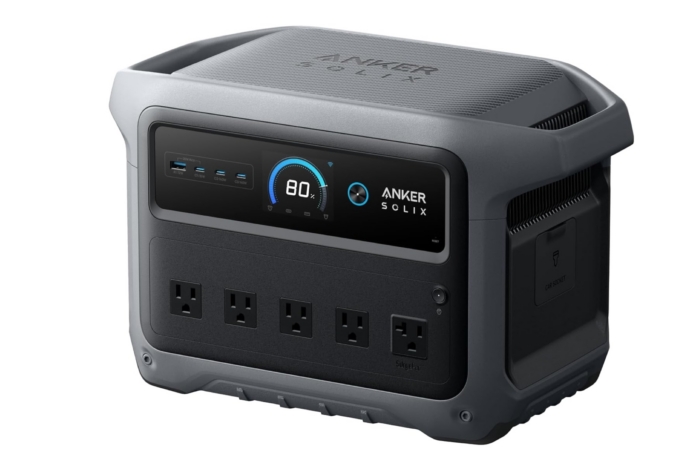
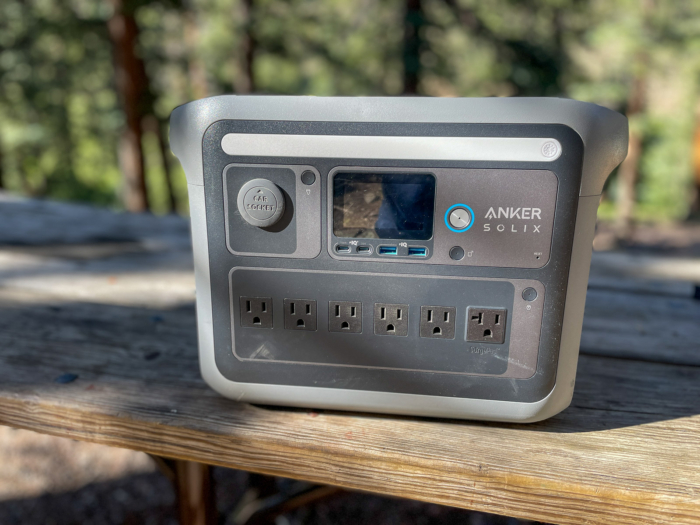
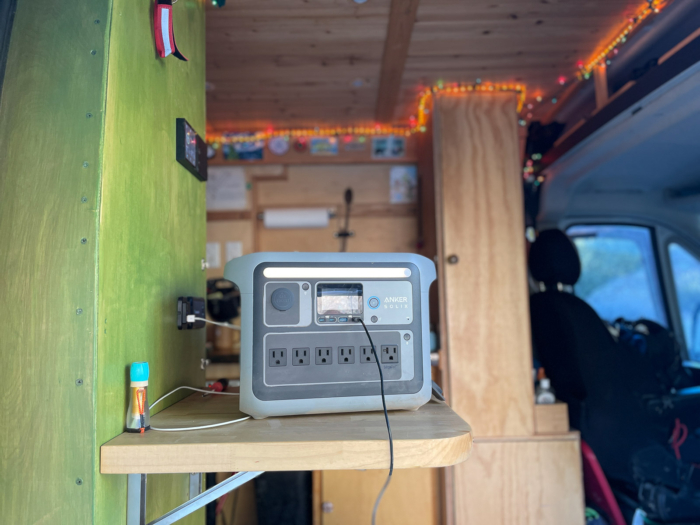
We awarded the Anker SOLIX C1000 Gen 2 ($550) our Best Overall designation because Anker refined a winning formula, making it faster, lighter, and more powerful than the original. It hits the definitive sweet spot for size and functionality, all wrapped in a package that’s now even more portable for the average camper.
A thousand watt-hours remains the magic number for most users. In tester Karuna Eberl’s field tests, the upgraded 2,000 W inverter (up from 1,800 W) handled high-draw appliances like a single-pod coffeemaker and an Instant Pot with even more overhead than the previous version. When paired with portable solar, she found it easily kept up with a dual-zone electric cooler on multi-day treks. If you’re near a wall outlet, the new UltraFast charging is a game-changer, hitting a 100% charge in a staggering 49 minutes.
The Gen 2 is notably easier to handle than its predecessor. Our team was impressed that Anker managed to shave off nearly 4 pounds, bringing the weight down to 25. This 11% weight reduction makes it significantly more practical to lug to the beach or out to a remote photography set. It’s the perfect size for topping off e-bike batteries or running high-powered work lights without straining your back.
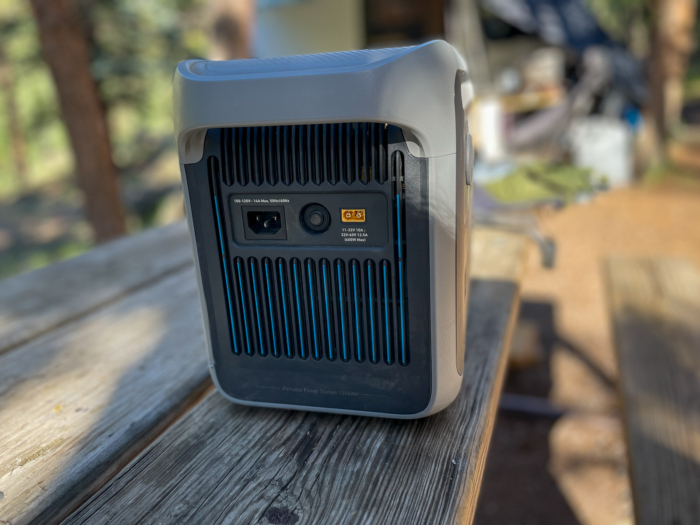
Under the hood, the C1000 Gen 2 maintains Anker’s industrial-grade quality, including a drop-tested unibody design and efficient GaN (gallium nitride) technology. This tech allows the unit to charge with less internal heat, resulting in a longer lifespan and (most importantly for a quiet campsite) less fan noise.
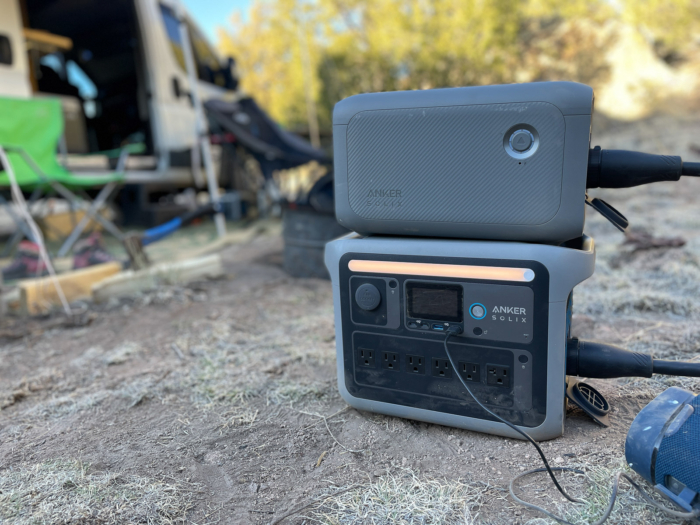
There is one significant trade-off to consider: expansion capability. To achieve a smaller, lighter footprint, Anker removed the expansion port from the V1. While the original allowed you to double your capacity to 2,112 Wh later on, the Gen 2 is a “what you see is what you get” unit. Additionally, the warm-toned light bar from the original has been removed to save space.
The bottom line is that the SOLIX C1000 Gen 2 is the ultimate tool for day trips, truck camping, or as a reliable home backup for the essentials. It is faster, leaner, and more efficient than ever, solidifying its place as the benchmark for the 1kWh category.
Jackery Explorer 300
-
-
(Photo/Sean McCoy)
-
(Photo/Sean McCoy)
-
-
(Photo/Sean McCoy)


Specifications
Pros & Cons
Pros
- Compact
- Light
- Versatile
- Good value
Cons
- Lithium-ion has shorter lifespan than lithium-iron
- Step up to the Explorer 300 Plus for small cost
Bottom Line: Impressive utility at a lower price point. You do trade a slower AC charge time and lower overall capacity for it, however.
For those who need a grab-and-go battery without the four-figure price tag, the Jackery Explorer 300 ($289) remains our top pick for pure value. Weighing just 7.1 pounds, it is the exact unit our Editorial Director, Sean McCoy, reaches for more than any other in his personal kit. While he uses massive batteries for long-term elk camps or to power portable refrigerators for weeks on end, the modest Explorer 300 is the one that consistently ends up in McCoy’s truck for day trips to the trailhead.
During a year of continuous testing, McCoy found the 293 Wh capacity perfectly tuned for the modern digital nomad lifestyle. It provides roughly two full laptop charges, which is the sweet spot for a full day of remote editing away from an outlet.
It isn’t built for high-draw appliances, as McCoy noted; it will trip the surge protector in about 10 seconds if you try to run an electric fireplace or a skill saw. But it handled hand drills and mid-size electronics without a hitch. Its utility lies in its footprint; it is small enough to tuck into the tiny nooks and crannies of a packed rig, yet powerful enough to ensure your phone, camera, and computer never hit zero.
The interface is refreshingly simple, hosting two 110 V AC outlets and a range of USB ports that are intuitive to operate even in low-light conditions. McCoy did point out that the 4.5-hour wall-recharge time is sluggish compared to the newer fast-charge models hitting the market in 2026. However, its ruggedness and library-quiet 36 dB operation make it a standout for the price.
For under $300, the Explorer 300 provides a reliable, entry-level gateway into portable power. It is significantly more practical for the average weekend warrior than the 100-pound behemoths we use for major expeditions.
Anker SOLIX S2000
-
-
(Photo/Nick Belcaster)
-
(Photo/Nick Belcaster)
-
(Photo/Nick Belcaster)
-
(Photo/Nick Belcaster)
-
(Photo/Nick Belcaster)
Specifications
Pros & Cons
Pros
- Industry-leading low-idle efficiency
- Very low weight for the watt-hour density
- Small footprint on spaces like kitchen counters
Cons
- Not expandable
- Handle ergonomics are a bit odd
- No durability improvements such as rubberized bumpers or port covers
Bottom Line: Quite compact for a 2 kWh unit, and hosts a very low active idle draw to keep appliances like refrigerators going for almost two days.
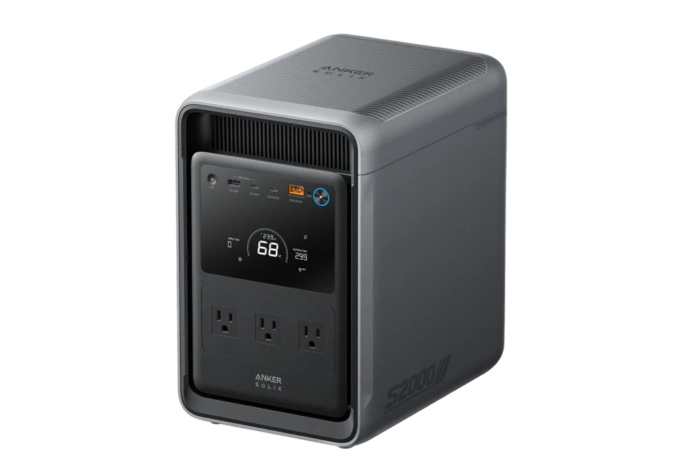
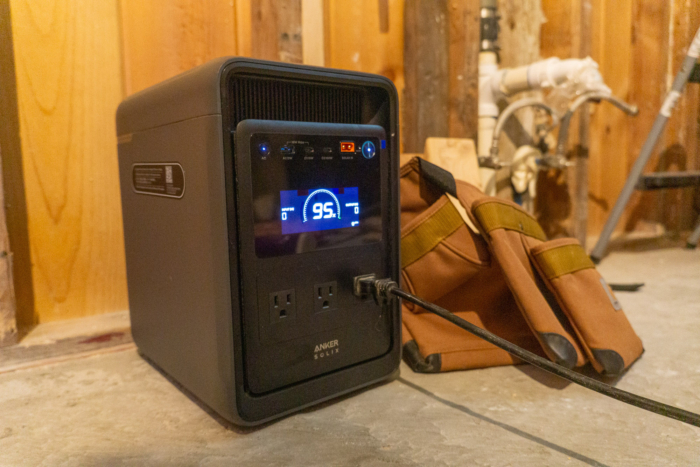
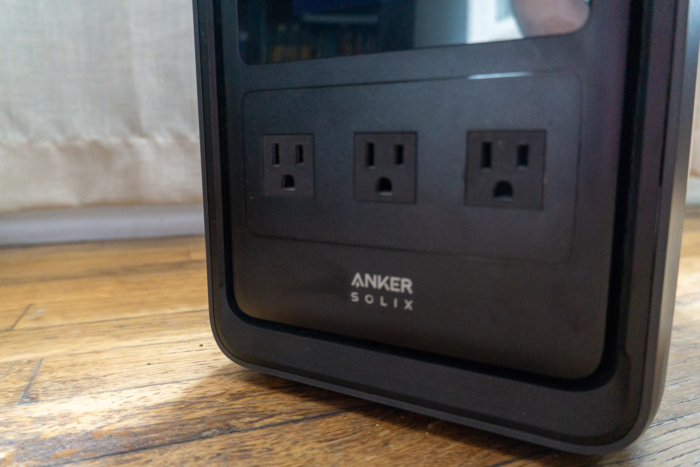
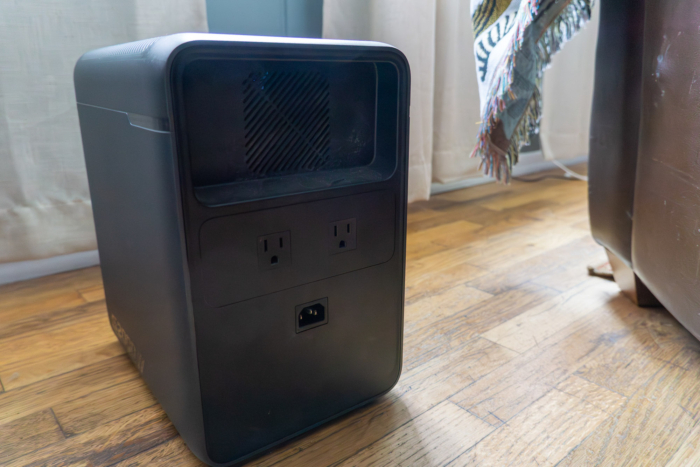
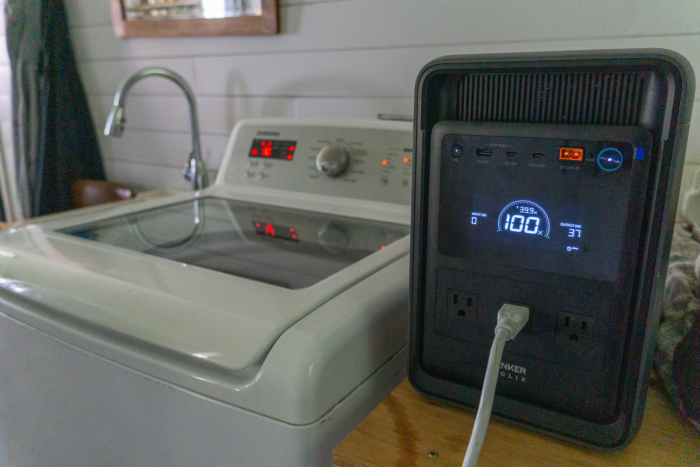
For homeowners seeking some grid backup without dealing with 70-pound appliances, the Anker SOLIX S2000 ($700) strikes an impressive balance. Designed for kitchen countertops, the S2000 packs a robust 2,010 Wh battery into a 36-pound frame that is ~30% smaller and lighter than typical 2 kWh power stations.
Senior Editor Nick Belcaster put the station’s claim to the test: keeping a refrigerator running through a multi-day outage. Hooked up to a Samsung refrigerator/freezer set to a standard 37°/-2° split, the S2000 shrugged off everyday use to clock 34 hours of continuous operation. Anker’s OptiSave feature is largely to thank here, which drops active idle draw down to a meager ~6 W when appliances like fridge compressors aren’t actively cycling.
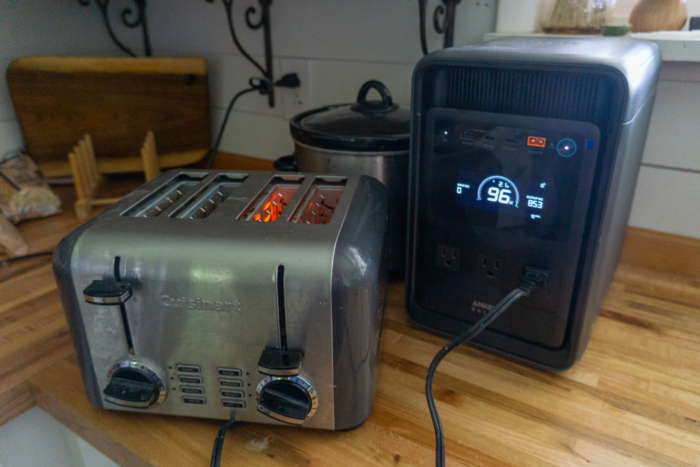
While the S2000 prioritizes efficiency and runtime over brute power (capped at a continuous 1,500 W), it still works well for everyday tasks. During home improvement testing, it easily powered site lighting, corded routers, shop vacuums, and an 850 W toaster. It only drew the line when pushed to run a heavy-duty portable planer pulling ~1,800 W continuously (with a 2,500 W surge), tripping the internal breaker.
Belcaster also took the S2000 off-grid on weekend camping trips, and while it lacks outdoor touches like rubberized bumpers or protective dust covers, it easily powered phones, camp string lights, and an electric cooler over a whole weekend, discharging only to 82%. Users should note one quirk: the 1-inch-deep recessed handles make single-handed carrying tough on the tall station unless you possess a rock-climber’s grip.
Ultimately, if you need a dedicated, highly efficient home backup solution that won’t dominate your kitchen counter, the SOLIX S2000 is the next generation in compact runtime efficiency.
EcoFlow Delta 3 Ultra Plus
-
-
(Photo/Nick Belcaster)
-
(Photo/Nick Belcaster)
-
(Photo/Nick Belcaster)
-
(Photo/Nick Belcaster)
Specifications
Pros & Cons
Pros
- Substantial output and inverter capacity
- Expandable to 11 kWh
- Quiet during even heavy loads
- Refined port design
Cons
- No 240 V output onboard
- Premium price point
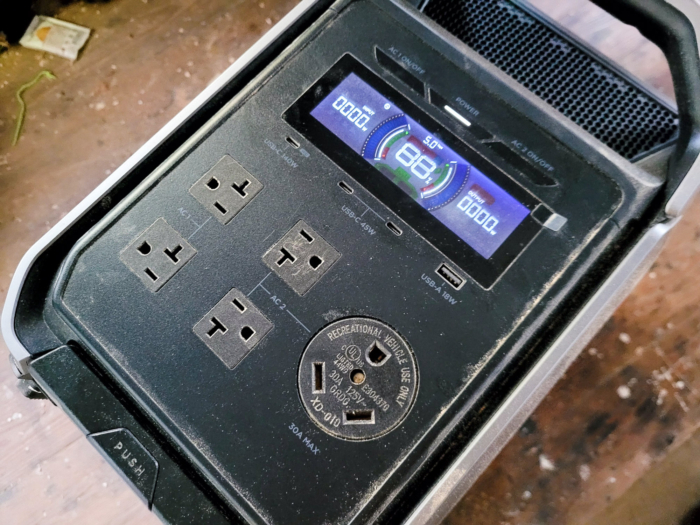
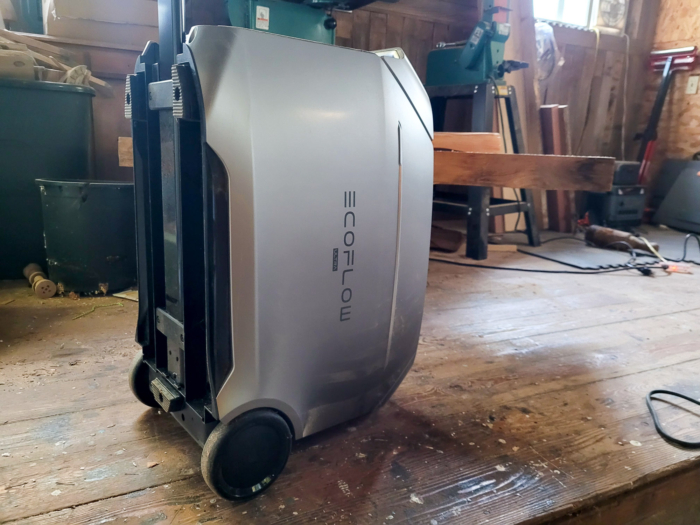
- Heavy (but easy to move around)
Bottom Line: An excellent option for those looking for home backup in a portable solution. The expandable capacity means it’ll grow with your needs (but it does lack 240 V output).
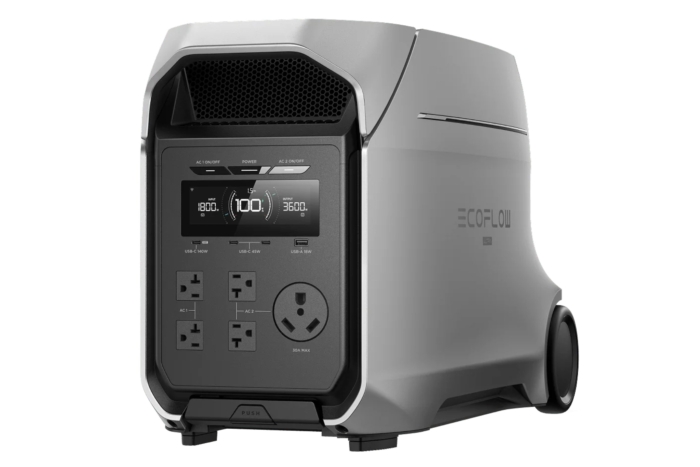
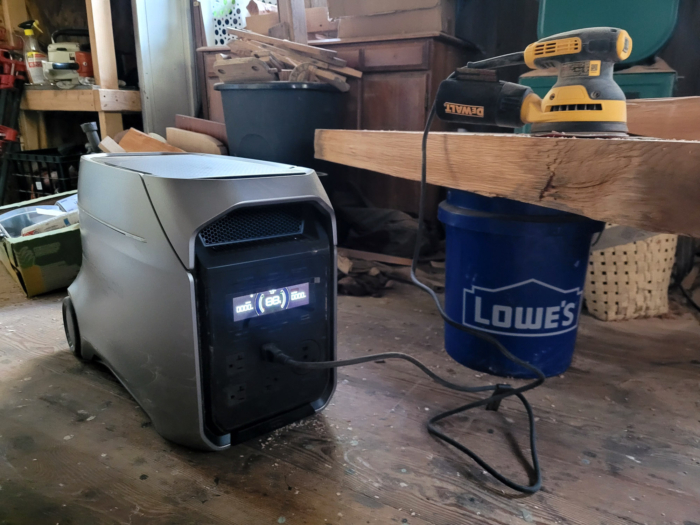
When storms knock out grid power, a home backup station needs enough output to run high-draw appliances without tripping breakers. Senior Editor Nick Belcaster tested the EcoFlow Delta 3 Ultra Plus ($1,600) through simulated power outages to evaluate real-world runtime, inverter stability, and thermal management under sustained load.
Built around a 3,072 Wh battery and a 3,600 W inverter, the Delta 3 Ultra Plus handles multi-appliance draws with ease. Belcaster ran a full-size home refrigerator and chest freezer simultaneously on the unit, and over extended 24-hour runs, the inverter maintained steady voltage through repeated compressor start-ups while also supplying a 1,200 W cooktop during meal prep.
In uninterrupted power supply testing, the unit’s 10-millisecond transfer time switched power fast enough to prevent home network routers from missing a beat. With both inverters working, the volume of the unit was impressively muted and easy to keep running inside an office.
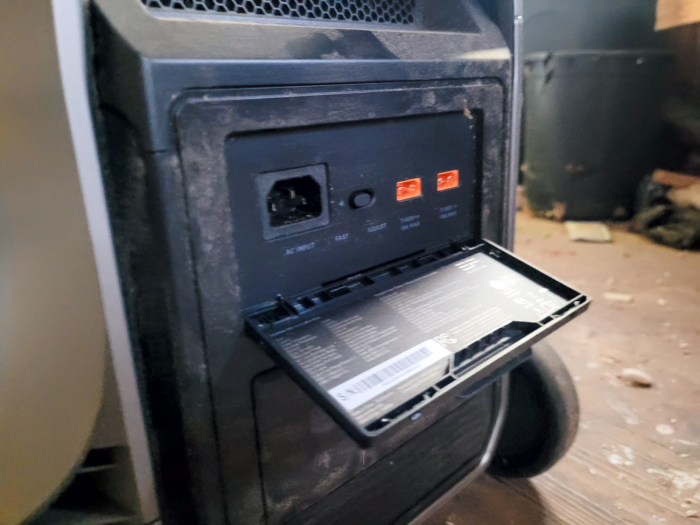
Compared to other home-backup stations like the Anker SOLIX F3800 and Jackery Explorer 3000 Pro, the Delta 3 U.P. hits a good balance. While the F3800 offers higher 240 V split-phase output right out of the box, it comes at the cost of a significantly bulkier 130 pounds. The Jackery 3000 Pro has the same 3 kWh capacity at a slightly lighter weight (74 pounds), but turns on slower and can match the maximum 1,600 W solar recharge rate of the EcoFlow. Additionally, the Delta 3 Ultra Plus accepts dual 1,600 W solar inputs and allows expansion capacity up to 11 kWh.
At ~75 pounds, the station is heavy and best suited for dedicated backup near an electrical panel or home office. However, for homeowners seeking reliability and rapid charging flexibility across all possible inputs, we think the Delta 3 Ultra Plus is the best home backup power station for total reliability.
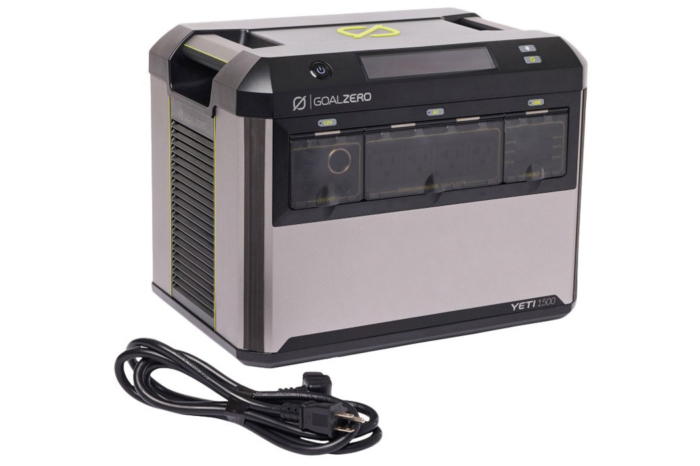
Goal Zero Yeti 1500
-
-
(Photo/Nick LeFort)
-
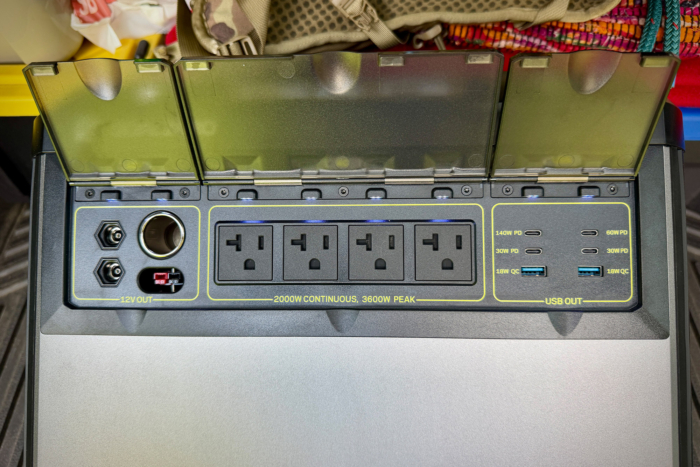
Not only are the inputs and outputs covered for protection from bad weather, they’re well lit for night time use; (photo/Nick LeFort)
-
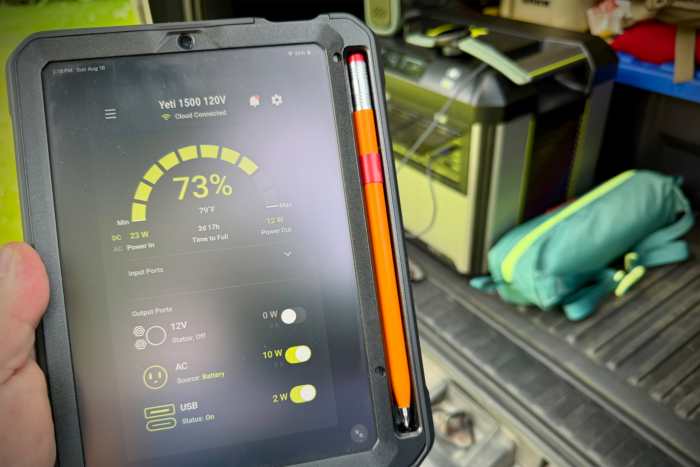
Remote monitoring and device control is a nice upgrade to the Yetil 1500; (photo/Nick LeFort)
-
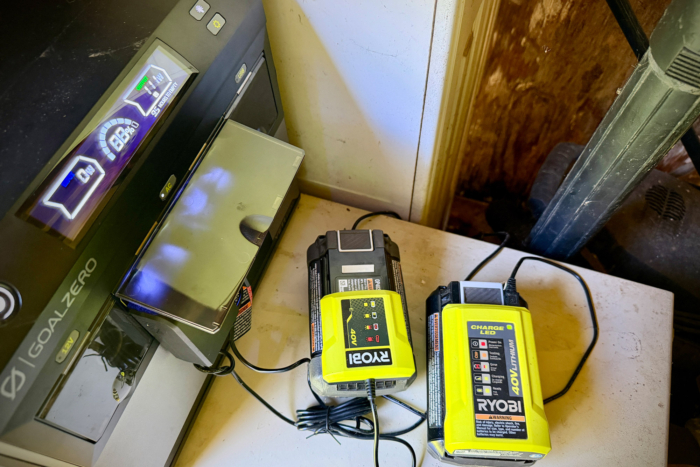
These Ryobi 40W batteries take 3x the amount of time to charge off a residential wall outlet; (photo/Nick LeFort)
Specifications
Pros & Cons
Pros
- LiFePO4 battery for reliability and longevity
- Input and output port assortment
- Durability and IPX4 rating for outdoor use
- Wide variety of solar panels and accessories
Cons
- It is heavier than some comparable models from competitors
- It's more expensive than some of the competition
Bottom Line: Ideal for those temporarily off-grid and looking to keep essentials powered up. It’s newly IPX4-rated for rugged conditions outdoors and supported by a great phone app.
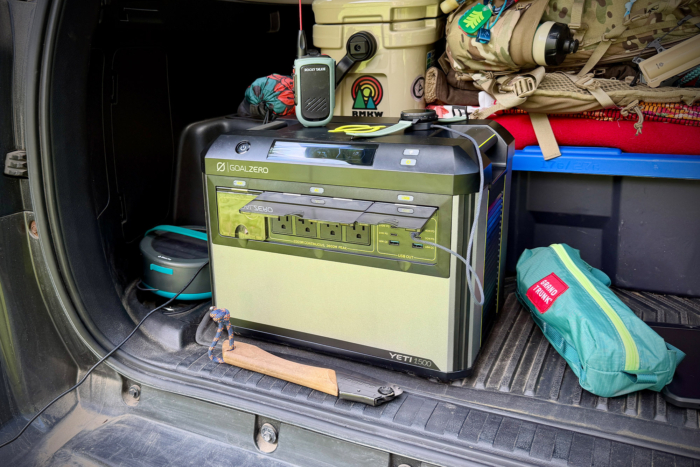
For campers, overlanders, and rig owners seeking a dependable, mid-sized power hub without committing to a massive footprint, the updated 6th-generation Goal Zero Yeti 1500 ($1,500) hits the sweet spot. Goal Zero completely revamped this workhorse with an IPX4-rated enclosure built for light rain, dust, and outdoor abuse, while transitioning to an ultra-reliable LiFePO4 battery pack rated for 4,000-plus cycles.
During testing, tester Nick LeFort relied on the Yeti 1500 across weekly New England summer storm outages, road trips, and off-grid workshop projects. What blew him away was the station’s fast-charge performance under load: when powering dead 40 V Ryobi yard tool batteries from the Yeti’s AC outlets, recharge times dropped to just 20 minutes (nearly three times faster than plugging directly into a standard residential wall outlet), consuming a mere 8–10% of the Yeti’s total capacity.
Additionally, its 2,000 W continuous inverter (3,600 W surge) effortlessly runs high-draw outdoor gear like pellet grills, power tools, or air mattress pumps, while keeping an electric camp fridge powered for over a week.
The Yeti 1500 offers more reserve capacity for multi-day vehicle trips than our top overall pick, the Anker Solix C1000 V2 (1,024 Wh / 25 pounds), without requiring the extra bulk or built-in wheels of the larger Anker Solix F2000 (2,048 Wh / 67 pounds). While comparable models from Jackery (like the Explorer 1500 Ultra) cost less and weigh less, Goal Zero has a broader ecosystem of solar panels and accessories, robust IPX4 weather sealing, and superior low-light port illumination.
At 53 pounds, it carries some heft, but Goal Zero offsets the weight by optimizing its user interface and smart connectivity. Brightly illuminated front ports make late-night campsite hookups seamless, and the Goal Zero Power App allows for precise remote power toggling, usage tracking, and charge alerts. For vehicle-based adventures and off-grid setups, the 6th-Gen Yeti 1500 is a solid option to consider.
Yoshino Power B4000 SST
-
-
(Photo/Karuna Eberl)
-
(Photo/Karuna Eberl)
-
(Photo/Karuna Eberl)
-
(Photo/Karuna Eberl)


Specifications
Pros & Cons
Pros
- Solid-state battery
- High inverter output
- GaN technology
- Expandable
- Lightweight, stylish
- Wireless phone charging pads
Cons
- Expensive
- No wheels
Bottom Line: The next generation of solid-state power stations. You’ll pay for the privilege, but the weight savings are impressive.
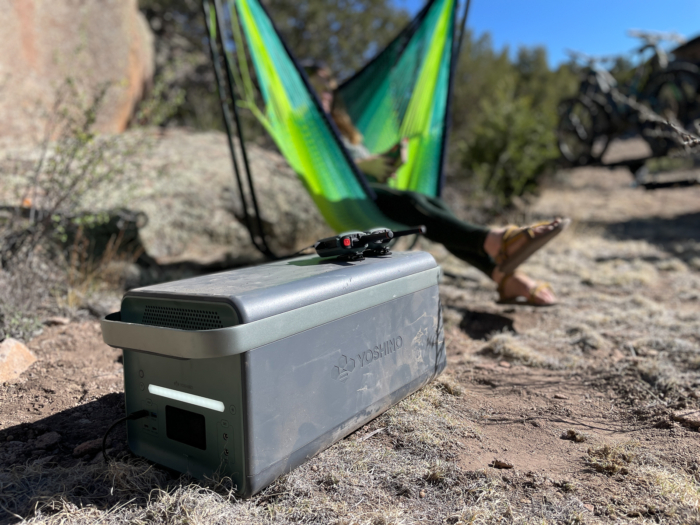
Yoshino Power’s B4000 SST ($2,800) is truly in a class of its own and could even be called the most avant-garde portable power station out there. At a bit less than $3,000, it’s a little pricey per watt-hour, but that buys an unrivaled level of sophistication.
For starters, it’s the only power station we know of using solid-state battery technology, which is what the next-generation EVs will be switching to. That means it’s immune to thermal runaways, plus extremely lightweight per watt-hour. Its 4,000 W inverter is also huge for its size, rivaling the largest power stations in this guide. That means it can power pretty much everything, all at the same time.
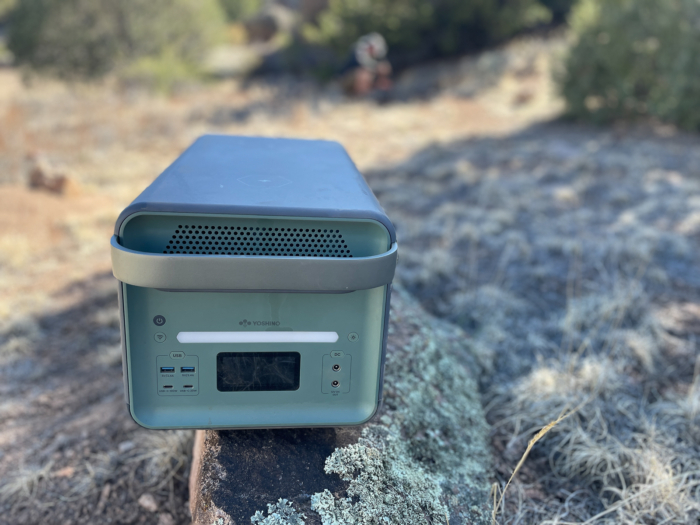
Other pluses: It uses GaN transistor technology, which is hugely more efficient at reducing energy loss, thus keeping its internals cooler and the fan running less often. It also has a speedy wall (AC) charge rate, two convenient wireless phone charging pads on top, a 30 A RV plug, an LED light bar, and a water-resistant, shatterproof interface and faceplate.
This year, Yoshino also started offering 2,562 Wh expansion batteries, and you can add up to three. As a bonus, each can function as an independent battery unit, recharging at 1,200W from solar, so you could also use their DC outputs to charge other brands’ power stations as well.
In addition to all of its excellent technical features, the B4000 SST is literally a work of art. Its matte finish and mellow green and gray tones, along with honeycomb-shaped accents, represent “a symbol of nature, hard work, and nonstop energy.” Fashion jokes aside, it is actually exceptionally elegant, and one of our friends in particular can’t seem to stop ogling it. Best of all, it’s not just a pretty face. Not surprisingly, it performed exceptionally well during the course of our testing.
Yoshino’s debut lineup includes smaller 241 Wh, 602 Wh, and 1,326 Wh models (also now with expansion capability). The brand’s solar panels are also of high quality. On the downside, the B4000 SST doesn’t have massive solar input like some other stations, but its 600W is adequate. We’ve found it impractical to cart around more portable panels than that, anyway. Also, at 53 pounds, it would also be very helpful if it had wheels, though the handles are decently ergonomic.
If you enjoy having the most unique and advanced toys, want to cultivate your inner haute-couture self, and have the extra cash, you gotta get the Yoshino B4000 SST. Period. It’s a spectacular unit. It narrowly escaped winning our overall best award, simply because of its price, plus lack of wheels — both of which are not important deciding factors for some people.
Other Portable Power Stations We Trust
The awarded power stations above are our top picks for most folks and uses, but there’s near-constant improvement in the industry, and new units come out monthly. Check out the following for a series of other units we’ve tested and like.
-
-
(Photo/Nick Belcaster)
-
(Photo/Nick Belcaster)
-
(Photo/Nick Belcaster)
-
(Photo/Nick Belcaster)
-
(Photo/Nick Belcaster)
-
(Photo/Nick Belcaster)
-
(Photo/Nick Belcaster)
-
(Photo/Nick Belcaster)
-
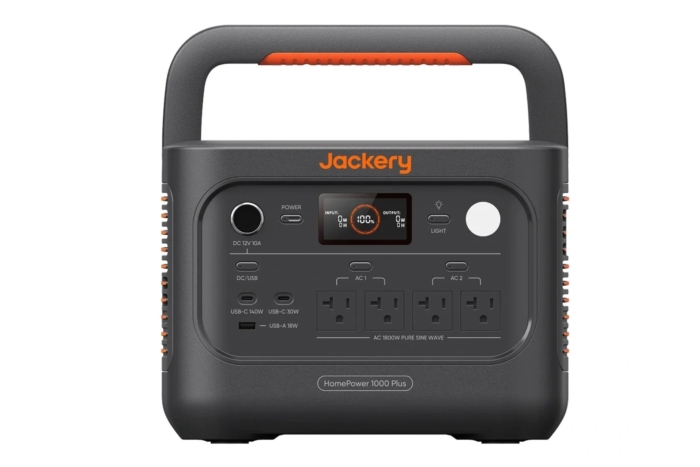
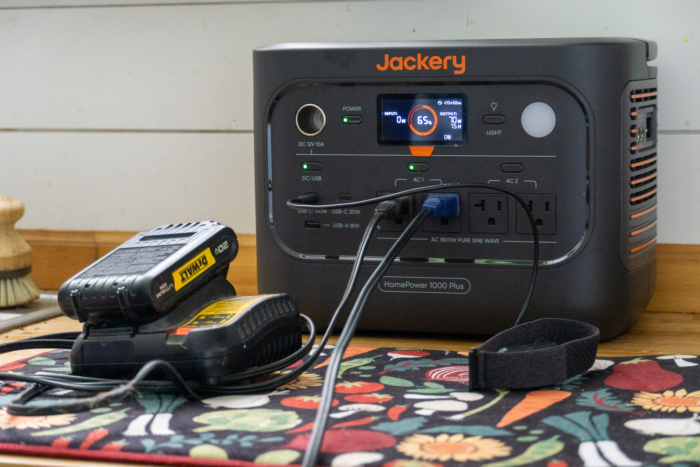
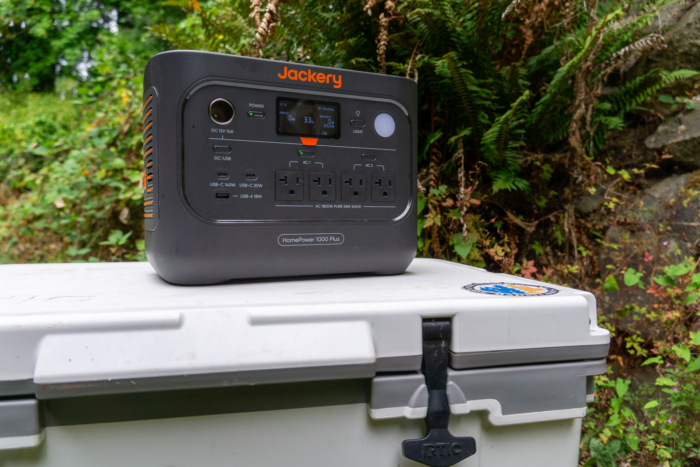
The new Jackery HomePower 1000 Plus V2 adds everything we expect in a modern portable power station; (photo/Nick Belcaster)
-
(Photo/Nick Belcaster)
-
(Photo/Nick Belcaster)
Specifications
Pros & Cons
Pros
- Modern feature-suite with good mix of outputs
- V2 version updates to LiFePO4 battery chemistry
- Sub–10 millisecond UPS performance
- Better sustained AC output of 1,500W
- Small profile
Cons
- Emergency charging requires the app to access
- DC8020 ports for solar input
Bottom Line: A great 1 kWh unit that doesn’t trim features to hit a weight and size. Powerful enough to handle running a 14″ bandsaw, but small enough to toss in your trunk for camping.
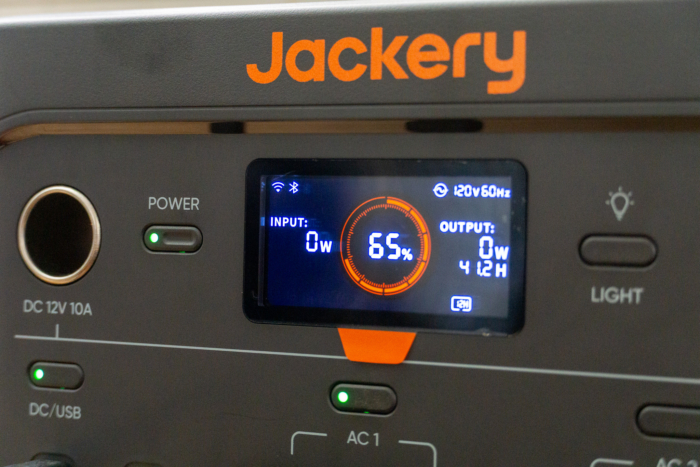
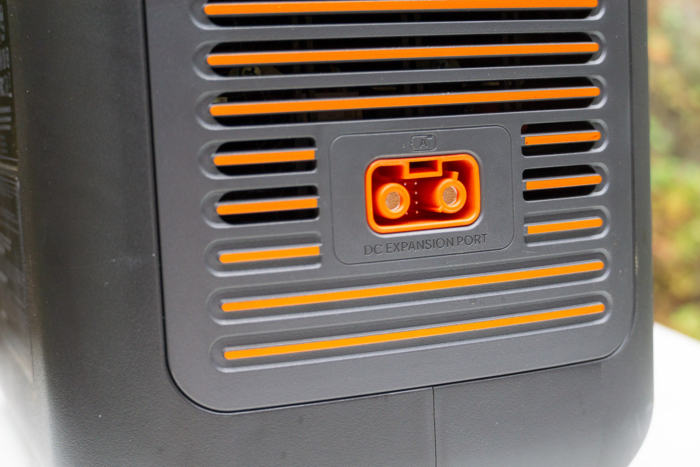
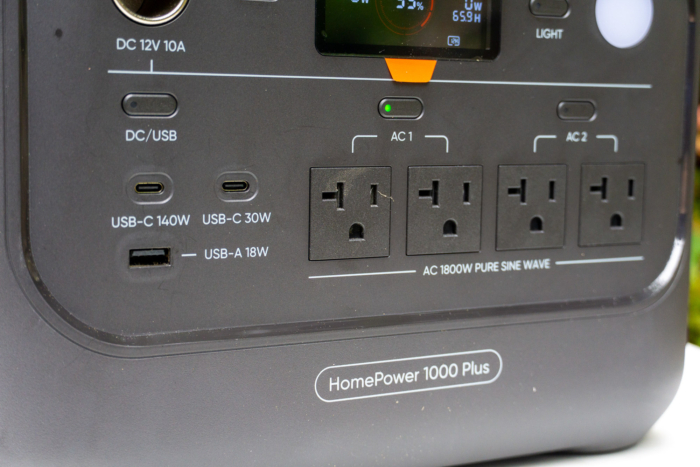
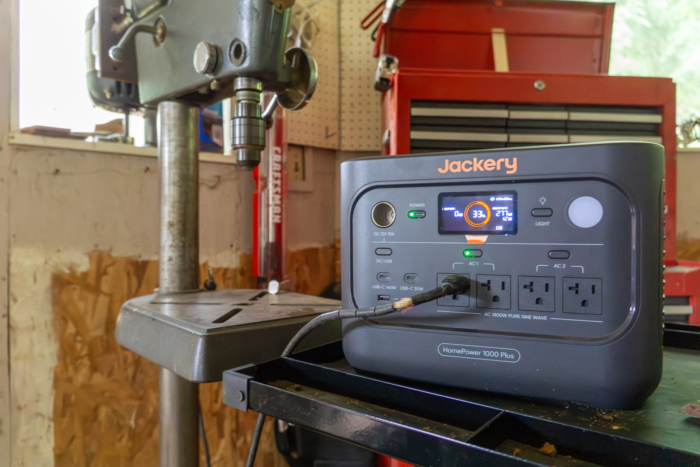
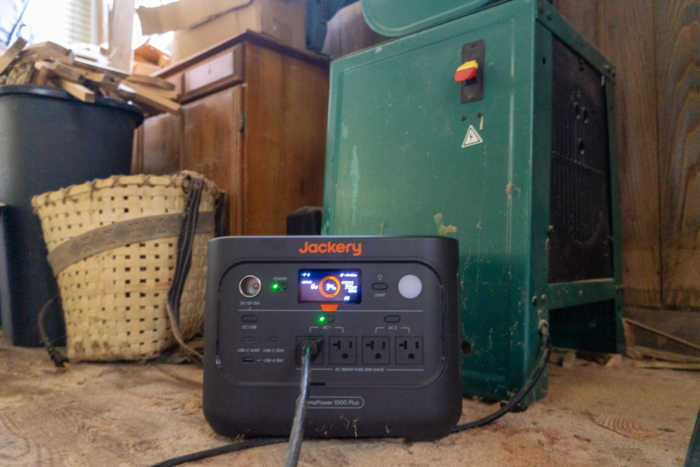
The 1 kWh tier is ideal for everyday versatility, and Jackery’s updated HomePower 1000 Plus V2 ($749) elevates the standard with sub-10ms Uninterrupted Power Supply (UPS) switching, split AC inverter circuits, and an expandable capacity. Where some units sacrifice key features to slim down (such as the Anker SOLIX C1000 V2, which dropped its expansion port in its second generation), the HomePower 1000 Plus V2 stays fully kitted out.
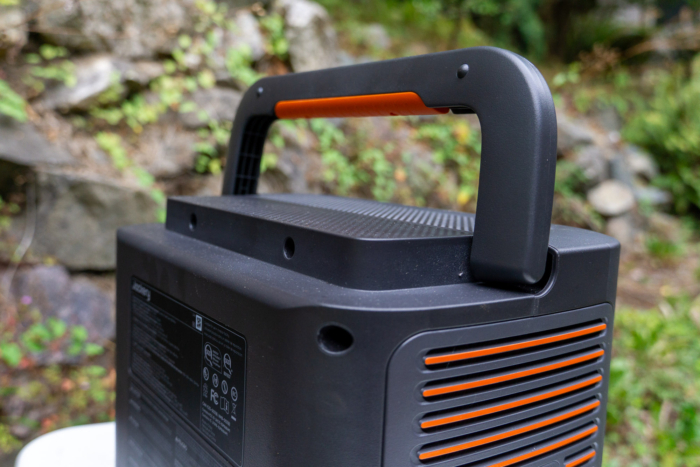
At just under 24 pounds with a fold-down top handle, the V2 leads the ~1 kWh category in packability. It is noticeably easier to toss into a vehicle trunk than bulkier options like the BLUETTI AC180 or the heavy-duty Goal Zero Yeti 1500 (at 53 pounds). While the Anker C1000 V2 edges it out on continuous output (2,000 W versus 1,800 W) and the EcoFlow DELTA 2 offers faster base solar input, the Jackery strikes a balance between quiet operation, small footprint, and dependable pass-through power.
Senior Editor Nick Belcaster put the V2 through trials across home renovations and off-grid workshop sessions. During a home reno that required killing power to parts of the house, Belcaster relied on the unit’s sub-10 ms UPS pass-through mode when a dropped circuit threatened to kill his WiFi router. The station kept everything running seamlessly without missing a beat.
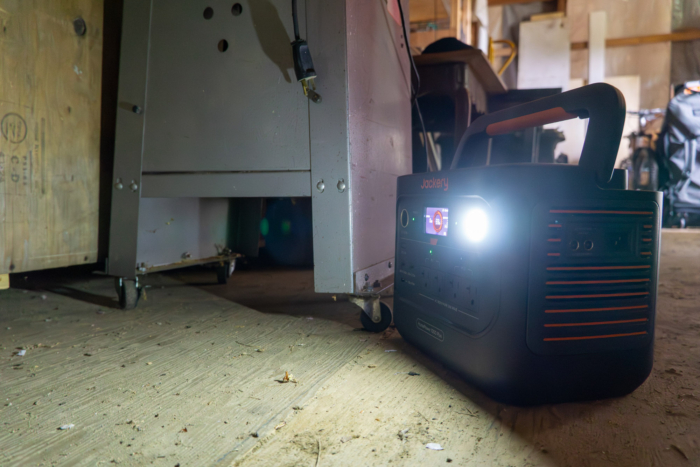
Out in his workshop, Belcaster used the unit’s built-in flashlight to navigate a dark garage to the breaker box, then chained four LED shop lights, a standing sander, and a drill press directly to the inverter. When pushed to its limits with a startup draw from a 14-inch bandsaw nearing the unit’s 3,600 W peak surge, the inverter momentarily blinked before recovering. Throughout these heavy draws, the cooling fans maintained a low hum rather than a whine.
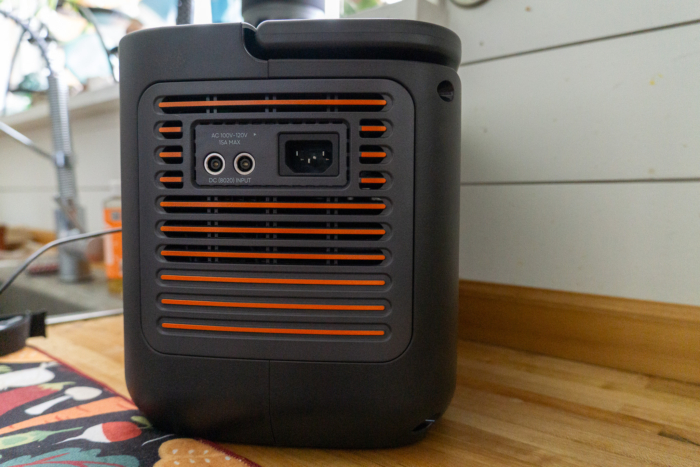
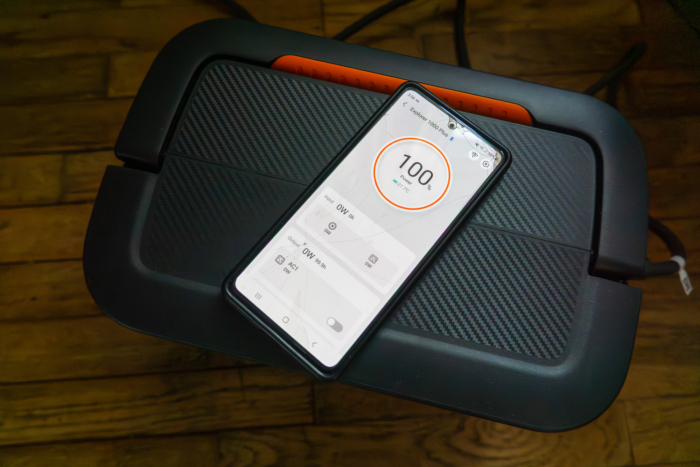
In terms of downsides: Recharging via solar requires Jackery’s proprietary connectors rather than standard XT60 ports, which means using adapter cables for third-party solar panels. Additionally, toggling the high-speed Emergency Charge mode requires using the app rather than a physical button, something that can annoy those with enough apps already.
The full feature set on the HomePower 1000 Plus V2 is enough to see past both of these issues for most folks, and if you need a 1 kWh-sized station with room to grow, it’s a solid bet.

(Photo/Goal Zero)
Specifications
Pros & Cons
Pros
- High output for its size
- Water resistant (IX4 standard)
- Fast recharge
- Solar compatible
- Light and portable
Cons
- Weatherproof cover is one piece
- Curve on lid tends to collect dew and spills
Bottom Line: A smaller Goal Zero unit that benefits from the brand’s legacy in portable power. Impressively rugged little unit, but keep an eye on the limited overall power.
Goal Zero is on its sixth generation of power stations, and after all of those iterations, it’s definitely hit gold with the Yeti 300. With a price of $350, it’s among the smallest and most affordable in the lineup, and it packs many standout features for its size.
This little powerhouse can run everything from an air pump to the TV. It takes 200 W of solar and can be controlled via the smart app. It’s also uncommonly rugged, with rubber coverings over the ports to keep out mud and sand. Pair it with Goal Zero’s Nomad portable solar panels and Goal Zero’s durable, soft carrying case for extra protection.
Tester Karuna Eberl recommends the 100 W panel, as the 50 W isn’t big enough to be practical for recharging it in one day, and the 200 W is unnecessarily bulky for this little guy. This is also the first generation of the Yeti 300 to have LFP battery chemistry (versus NMC), and she’s thrilled to see Goal Zero make this step in its product line.
The Yeti 300 tested well with an array of electronics, including laptops, speakers, and Goal Zero’s Skylight, which it powered all day with ease. During testing, Eberl uncovered only a couple of tiny gripes: because the weatherproof cover over the ports is one piece (versus having separate coverings for each port), it puts a bit of pressure on the plug heads; and plugging one cord in partially exposes all of the ports to the elements. Also, the plastic lid has a concave curve on the top, which collects some debris every so often.
Even so, the Yeti 300 is an ideal companion for keeping laptops, phones, speakers, and lights charged on camping trips. It’s also great for powering an electric cooler or pellet grill on a beach picnic and adding a few home comforts during a power outage.
Specifications
Pros & Cons
Pros
- Very light and compact
- Tons of USB-C outlets
- Solar compatible
- Easy to carry
- Nice camp light
Cons
- Sluggish wall charging
- No IP rating
- No AC outlet
Bottom Line: An uber-portable unit that aims to be as adaptable as possible. You’ll only get USB ports for charging, but there are plenty of them.
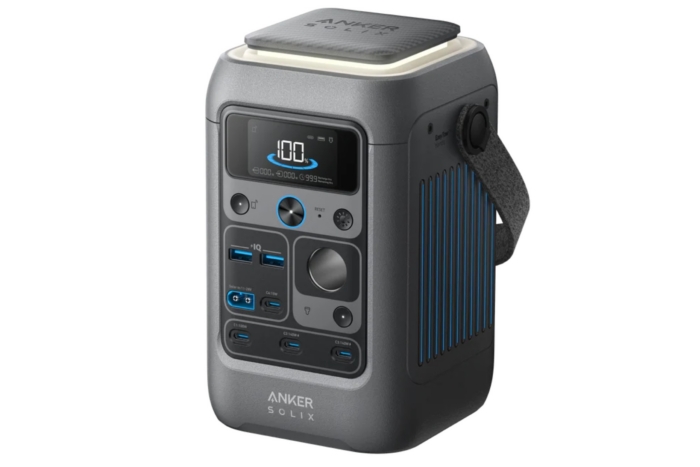
Anker really nailed it with its new Solix C300 DC ($249). They ditched AC power (wall outlet) to focus solely on USB ports. That allowed them to axe the AC inverter, making for a lighter, more compact power station. But that’s not the only reason it grabbed our honors for best power station for backpacking.
This little pal has six USB ports, including three 140 W USB-C ports. In contrast, the EcoFlow River 3 Plus only has three USB ports, and maxes out at 100 W. Assuming you have a USB cable and a device that can handle the full 140 W (like a newer MacBook), the difference is that recharging would be 42 minutes vs. an hour.
Now, realistically, how many of us need to backpack with a power station? We didn’t know, so for testing, Billy Brown took the Solix C300 DC out for a hike to see what it was like to bring power into the backcountry. He found it fit nicely in a climbing day-pack, and the extra weight wasn’t actually all that noticeable.
Brown also now uses it regularly at home for tasks like running Bluetooth speakers and recharging the drone. Features he particularly liked include: a built-in pop-up light with dimmable settings and a warm tone, a smart app, and a carrying handle (you can buy a shoulder strap separately). It has smart temperature control and impact resistance, but unfortunately, no IP weather rating.
While it can recharge at 280 W, it requires using two USB-C chargers simultaneously, which is a bit clunky. It also doesn’t come with an AC block, but it can be recharged from a car socket. If having UPS capabilities is important in your world, go with the River 3 Plus.
Finally, keep in mind that not having AC means you can’t charge devices that require a wall outlet, like some camera batteries and camp lights. But if that’s an issue, you can remedy it by going with the slightly heavier and more expensive Solix C300 model instead.
Bottom line: Lightweight and ultra-portable, the Anker Solix C300 DC is an ideal power buddy, not just for backpacking, but also for camp, house, and shop. It can run a projector for movie night and a USB-powered coffee grinder in the morning, plus its glut of high-powered USB ports is a game-changer for light-duty photo and video shoots. Pair it with Anker’s PS100 W or 60 W solar panels, and you’ve also got an indefinite supply of backcountry power.

EcoFlow River 3 Plus
Specifications
Pros & Cons
Pros
- Solar compatible
- Expandable
- Very high output for its size
- UPS capable
- Outstanding price
Cons
- Only light weather resistance
- Could use more USB-C ports
Bottom Line: A ~300 Wh unit that can even be expanded in capacity. It works best as a backup power source for in-home essentials, but also performs phone charge-up duties while camping.
For starters, EcoFlow River 3 Plus ($299) can accept up to 220 W of solar, which is slightly more than the Goal Zero Yeti 300 and more than double the Anker Solix C300 DC. It recharges quickly from the wall, at 380 watts. It’s expandable with either a 286 Wh or a 572 Wh battery. The expansion batteries also have an unusual design in that they link together via pins, which means there’s no bulky expansion cable.
The River 3 Plus also makes a good backup power source for computers and WiFi routers, with a UPS rating under 10 ms. It’s also the only power station we’ve seen with a USB-B port. Another plus: it uses GaN technology, which means it can run low-wattage devices for longer, while also being more compact, quiet, cool-running, and reliable in the long term.
Its 600 W output is exceedingly large for a power station of this size, and with its surge technology, it can continuously handle large wattages, such as a small heater. This makes it more versatile than the competition; however, this over-jacked output is both a boon and a bust. Yes, it can run your house fridge, but only for 15 or 20 minutes.
Other features include a fire-retardant shell, app control, a built-in light, optional solar panels, and a drop rating of 1 meter. It’s also light for its size, coming in around one-third less than the Yeti 300, but heavier than the Solix C300 DC. EcoFlow actually makes a more affordable model still, the River 3, which is $60 less. But in terms of bang for your buck, the River 3 Plus is worth the step-up given its higher output plus expansion capabilities.
After testing the River 3 Plus on an extended road camping trip, and around the house on various electronics, the only gripes we could come up with are that it only has an IP54 “light protection” weather rating, and that it could use another USB-C charging port.
Bottom line: The EcoFlow River 3 Plus is a quality unit from a reliable brand. If price, expandability, high-wattage output, and solar charging are at the top of your list, this is a solid tool that will get the job done. You can bring it camping to charge up personal electronics, and if your power goes out at home, it’ll also power the TV and Wi-Fi router, plus keep the fish alive, at least for a little while.
Specifications
Pros & Cons
Pros
- Excellent value
- Strong inverter
- Ultra compact
- Good solar input
Cons
- Not expandable
- Not IP rated
Bottom Line: Combines quick AC/solar charging with a strong inverter into a compact power station for van life, camping, and home emergency backup.
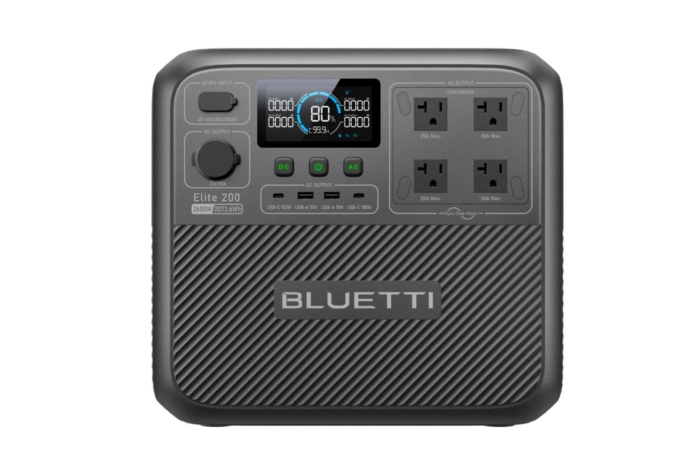
Bluetti’s Elite 200 V2 ($899) is a workhorse for camping, emergency home backup, and remote job sites. While its output and watt-hours are similar to the BougeRV Rover 2000 and Anker F2000, it can charge faster from the wall than either, plus it takes up less space, with nearly half the cubic-inch volume of the Anker.
During testing, tester Karuna Eberl decided to put its powerful inverter through a stress test by running a portable air conditioner. It cranked along for a solid 30 minutes without showing any signs of overheating. The Elite 200 V2 can run most other appliances, too, from toasters to refrigerators.
On its website, Bluetti claims it can even power your dishwasher for an hour, which made us chuckle — when the power goes out, we’re not sure who would put that task in the priority column, but hey, if you can, then why not?
Internally, the Elite 200 V2 also pushes technological boundaries with the industry’s first automotive-grade battery, which guarantees high performance and safety standards, even though it’s an NMC composition. A dual-layer outer shell gives it drop protection, and an advanced battery management system prioritizes a quiet fan. Most impressively, the AC inverter only takes up 10 W of power while it’s engaged, which leaves more power for running stuff around camp — and allowed Eberl to get a full 3 more hours of electric cooler use.
Other pluses: It recharges quickly from both wall and solar. It can charge nine devices at the same time, and functions as a UPS, with a 15 ms rating and four modes. It has smart app control and can be paired with Bluetti’s new car charger, the Charger 1, for 562 W charging while driving.
After testing the Elite 200 V2 for several months now, the only downsides Eberl has found so far are that it’s not expandable and it doesn’t have an IP weather rating. But if you need expansion, try Bluetti’s AC200L, which also has a NEMA TT-30 port charger.
Bottom line: If saving space and having high output are your priorities, the Bluetti Elite 200 V2 is a solid product with excellent components, perfect for heavy use in a workshop, emergency backup situation, or extended camping excursion. It’s a solid product from an innovative company, with an excellent dollars-to-watt-hour price.
Portable Power Stations Comparison Chart
| Compare |
|
|
|
|
|
|
|
|
|
|
|
|---|---|---|---|---|---|---|---|---|---|---|---|
| Price |
$550
|
$289
|
$700
|
$1,600
|
$1,500
|
$2,800
|
$749
|
$350
|
$249
|
$299
|
$899
|
| Watt Hours |
1,024
|
293
|
2,010
|
3,072
|
1,505
|
2,611
|
1,024
|
297
|
288
|
286
|
2073
|
| Output |
2,800 W (3,000 W surge)
|
300 W (500 W surge)
|
1,500 W (3,000 W surge)
|
3,600 W, 7,200 W surge
|
2,000 W (3,600 W surge)
|
4,000 W (6,000 W surge)
|
1,800 W (3,600 W surge)
|
350 W (600 W surge)
|
300 W
|
600W (1,200W surge)
|
2600W (3,900W surge)
|
| Battery Composition |
LiFePO4
|
LiFePO4
|
LiFePO4
|
LiFePO4 full-tab
|
LiFePO4
|
Solid-state lithium (Solid-state Li-NCM)
|
LiFePO4
|
LiFePO4
|
LiFePO4
|
LiFePO4
|
NMC, automotive grade
|
| Max Solar/AC Input |
600 W/1,300 W
|
100 W/90 W
|
400 W/1,600 W
|
1,600 W/1,800 W
|
900 W/1,500 W
|
600 W/1,800 W
|
400W PVC; ~1,000W–1,500W AC
|
200 W/420 W
|
100W/280W
|
220W/380W
|
1,000W/1,800W
|
| Ports |
6 AC, 1 car, 2 USB-A, 2 USB-C
|
2 AC, 1 car, 1 USB-C, 2 USB-A
|
5 AC, 1 USB-A, 2 USB-C
|
1 30-amp RV, 4 AC, 1 car, 1 USB-C 140 W, 2 USB-C 45 W
|
4 AC, 1 car, 4 USB-C, 2 USB-A
|
1 30A, 2 AC, 1 USB-C PD, 1 USB-C, 2 USB-A
|
USB-C 30W, USB-C 100W, USB-A 18W, 3 AC plugs, 1 car
|
2 AC, 1 car, 1 USB-C PD, 1 USB-C, 2 USB-A
|
1 car, 3 USB-C PD, 1 USB-C, 2 USB-A
|
3 AC, 1 car, 1 USB-C PD, 2 USB-A
|
4 AC, 2 USB-C PD, 2 USB-A
|
| Dimensions |
14.8” x 8.07” x 10.5”
|
9.1" x 5.2" x 7.8"
|
8.2" × 11.1" × 12.7"
|
24" × 13" × 16"
|
15.7" x 11.4" x 12"
|
21.4” x 10.2” x 9.4”
|
12.4" x 7.9" x 9.2"
|
11.3” x 7.7” x 6.7”
|
4.9” x 4.7” x 7.9”
|
9.2” x 9.1” x 5.8”
|
13.8” x 9.8” x 12.7”
|
| Weight |
25 lbs.
|
7 lbs., 1 oz.
|
36 lbs.
|
74 lbs.
|
53 lbs.
|
53 lbs., 9.6 oz.
|
23 lbs., 6.4 oz.
|
13 lbs., 11.2 oz.
|
6 lbs., 2 oz.
|
10 lbs, 6.4 oz.
|
53 lbs., 6 oz.
|


How We Tested the Best Portable Power Stations
Our team at GearJunkie treats portable power stations as mission-critical equipment, not just fancy batteries. To find the best of the best, we put these units through a gauntlet of field and bench tests that separate marketing fluff from real-world reliability. Led by veteran tester Karuna Eberl and Editorial Director Sean McCoy, our evaluation process is designed to push this tech to its absolute breaking point.
- Field Testing: We don’t just test in a vacuum. We’ve hauled these stations across tens of thousands of road miles, from the bone-rattling rocky tracks of Baja to the high-altitude cold of the Colorado Rockies and the relentless humidity of the Florida Keys. During these journeys, we’ve exposed units to gnarly dust storms and unintentional downpours, and we use them as they were intended: powering electric coolers, drones, shower pumps, and laptops at camp. We also cross-reference our data with a network of enthusiasts who rely on these units for high-stakes needs like CPAP machines, RV integration, and home emergency backup.
- Lab-Grade Bench Testing: This is where the nerding out happens. We break out the multimeters to ground-truth every manufacturer’s claim. We perform independent weigh-ins and volume measurements because, in a packed overlanding rig, every inch and ounce matters. We meticulously log charge and discharge cycles to see how long these units actually last under a constant load, ensuring the watt-hour rating on the box matches reality.
- The Breaker-Tripping Stress Test: To find the ceiling of these inverters, we employ high-draw appliances that make lesser batteries fail. We move beyond simple phone charging and plug in 1,200 W portable air conditioners, microwaves, and even hobbyist welding machines. By intentionally seeking the point of failure, we can tell you exactly which units can handle a heavy inductive load (like a power tool) and which will leave you in the dark with a tripped breaker.
- Solar & Wall Charging Testing: We verify maximum input wattages to ensure they match the spec sheet, and we specifically look for units that can handle high-voltage solar arrays without overheating. Our goal is to find the systems that get you back to a full charge before the sun dips below the horizon, ensuring you have enough juice to run your heater or cooler through the night.

Our Portable Power Station Rating System
- Power Output (30% weighted): We weight this most heavily. It isn’t just about total capacity; it’s about inverter performance. Can it handle the surge of a motor starting up? Does it maintain a pure sine wave under heavy load?
- Charging Speed (25% weighted): In the field, time is energy. We measure how fast a unit recovers via AC wall outlets and solar panels. We prioritize units that offer dual-charging (using USB-C and AC simultaneously) to get you back to 100% faster.
- Weight & Form (25% weighted): A 100-pound battery is useless if you can’t lift it into your truck. We evaluate the density of the power, or how much energy is packed into the smallest, most portable footprint possible, as well as the ergonomics of the handles.
- Features (20% weighted): We look for quality of life additions that actually matter: intuitive LCD screens, high-wattage USB-C ports for laptops, integrated LED light bars, and robust smartphone app connectivity for remote monitoring.
Our Expert Testers
Contributor Karuna Eberl leads our efforts in portable power station testing and started a deep dive into portable power a few years ago after installing a solar system in her van. She and her partner were instantly spoiled, so when it came time for an overlanding trip, Karuna had to find power for tent-camping excursions as well. That spurred an epic journey of unraveling and testing power station technology.
Our testing team is also flush with GearJunkie experts who use power stations to keep their mobile offices humming and outdoor kits fully powered up. Editorial Director Sean McCoy most often relies on portable power to juice his remote elk camps in the alpine of Colorado, but he also uses smaller options to keep his laptop running at the park.
Finally, Senior Editor Nick Belcaster also assists in our power station testing, and often puts units to the test in running his off-grid wood shop. His focus on solar power generation also challenges stated charging rates, and his frequent truck camping tests the station’s portability and durability.

Buyer’s Guide: How to Choose a Portable Power Station
Power stations are basically big batteries neatly packaged in a housing along with a solar charge controller, an inverter, a DC circuit, an AC charger (for recharging it through household receptacles), and garnished with various outlets for plugging in electric devices. They are primarily classified by their capacity in watt-hours (Wh), but depending on what you want to use them for, there are other important features to consider as well.
While portable power has been around for a while, it’s only in the last five or so years that it’s really come into its own, thanks to leaps in lithium battery and inverter technology. In the last year, we’ve watched some of them evolve rapidly while also coming down in price.
The power station industry is also pretty cutthroat, and we liken it to the electric bicycle market. More off-brands are jumping in the game, with some repackaged straight from sources overseas. Some are quality, but others are opaque about performance. If you don’t see specs like battery chemistry and charging rates on the website, be wary because it probably means they’re hiding something.

Capacity (Watt-Hours)
The first task when choosing a power station is to calculate how much stored power you need. Most brands measure those capacities in watt-hours (Wh), which means a power station containing 100 Wh of energy can put out 100 watts for one hour, or 10 watts for 10 hours.
On the small end, portable power stations hold around 300 Wh (like the little EcoFlow River 3 Plus, our Best Budget pick). These little ones are generally smaller than a lunchbox and good for tasks like recharging laptops and speakers, LED lighting, and small fans. On the high-capacity end, portable power stations top out at around 4,000 Wh plus are expandable with extra batteries. Anker’s Solix F3800 Plus mushrooms up to nearly 53,000 Wh (30 kWh) and can run pretty much anything, including air conditioners and washing machines.
To figure out what size you need, start by making a list of everything you might want to run or charge and add up how many watt-hours each uses. For example, if your smartphone holds 10 Wh, a 100Wh power station can charge it from empty around 10 times. Or, if your Keurig coffeemaker uses 900 W, a 1,000Wh power station can run it for almost an hour if it were running continuously.
Since the Keurig only runs for 5 minutes at a time, however, it makes more sense to calculate its power usage by the number of cups of coffee you can make with 1000 Wh, which in this case would be 20 or so. Similarly, if you’re calculating for an electric cooler, remember its compressor won’t be running 100% of the time.

However, there’s a caveat: The above figures are direct calculations, but to properly assess your capacity needs, it’s wise to reduce the power station’s rated capacity by 25% — meaning plan on that 1,000 Wh functionally providing you with just 750 Wh or making 15 cups of coffee instead of 20. That’s because in order to protect the battery, power stations don’t drain to absolute zero, so the usable capacity differs from the full capacity (you might see this gap referred to as the efficiency of the unit).
Another way to think of it is when you see 0% energy remaining on the display, your unit still has some watt-hours in it, but those aren’t available to you. Beyond that, power stations also consume energy through heat loss during operation and convert their DC current into the AC current that your household electronics require.
But you probably want to buy a power station that’s considerably larger than that 25% margin for a few other reasons:
- If you are relying on solar power, you need power reserves for cloudy and travel days.
- Once you have a power station, you’ll inevitably find more necessities to plug into it.
- Some power station manufacturers fudge the actual amount of watt hours, by basing their calculations off of different voltage rates.
- After you exceed the number of charges the unit is rated to, the battery capacity will be diminished, probably by about 20%.

Don’t confuse Wh (watt-hours) with W (inverter watts). Some companies make it confusing by displaying the size of the built-in inverter in watts more prominently on the packaging or including the watt size of the inverter in the product name, which does not represent the actual battery capacity, but rather the size of the inverter (versus the Wh), which means you might end up buying a smaller Wh capacity unit than you meant to.
Also, a note about air conditioners: We know we aren’t alone with our dreams of running our portable AC off-grid in our vans on those muggy southeastern nights. Sorry, but that’s still mostly a pipe dream. Even though some power stations are capable of running ACs, you would likely need in excess of 10,000 Wh to run even the smallest of air conditioners through the night.
That being said, if you have enough space and money, you can actually make this happen with the Anker’s Solix F3800 Plus and Yeti Pro 4000, plus a couple of expansion batteries.

Inverter Size
A power station’s inverter converts the battery’s DC electrical current into the AC current used to power 120V household appliances. Inverters are rated by constant capacity (in watts) and surge capacity. The constant capacity dictates what size appliance you can safely operate. For example, a laptop might use 60-100 W, whereas a toaster might use 1,100 W.
The surge capacity is what the inverter can handle during a temporary rush of electrical current, like what’s needed to turn on an air compressor. Every power station in this guide has a large enough inverter to power personal electronics. If you want something that can run most household appliances and home power tools, aim for at least a 2,000 W continuous inverter.
When choosing inverter size, err on the upper end. Watt ratings are typically based on laboratory testing, which is performed under ideal conditions. But in the real world, factors like hot weather can lower inverter performance, plus regularly running it for long periods of time creates heat.

The more heat, the faster electric components will wear, and the shorter the lifespan will be. Our advice: get an inverter that’s 25% to 50% larger than the highest capacity appliance you want to run. Remember, if you want to run multiple appliances at once, you’ll need to add up their combined watts and then add 25-50% on top of that.
Three power stations of note that deliver higher-than-average watt and surge outputs for their size class are the Yoshino B4000 SST, the Anker’s Solix F3800 Plus, and Solix C1000 V2, and EcoFlow’s River 3 Plus.
Also, make sure you’re buying a unit with a pure sine wave inverter, as those with modified sine wave inverters don’t work as well with TVs, laptops, and some other electronics. Most reputable brands, including all of the models on this list, use pure sine wave inverters.

Battery Chemistry
Nearly all power stations use lithium-ion batteries, although there are different chemistries among them that affect performance and safety.
LFP: As of 2026, the majority of reputable power station manufacturers use or are in the process of switching to LFP (or LiFePO4) battery chemistry. LFPs are very unlikely to have a thermal runaway and can retain their lifespan through 3,000 to 6,000 charge cycles (a charge cycle involves fully draining and recharging the battery).
NMC: Some manufacturers, including Goal Zero, BougeRV, Jackery, and Biolite, still use NMC (or LiNiMnCoO2) in some of their models (and Bluetti recently introduced the Elite 200 V2, which is also NMC), but we suspect they’re all in the process of transitioning over fully to LFP or other chemistries. NMC batteries are often slightly lighter than LFP because they have a higher energy density. But they have an increased chance of thermal runaway and a lifespan of just 500-ish cycles. This is not to say they are dangerous. Overall, they are considered safe (NMC is what’s used in most EVs), but they are more toxic for landfills.
Semi-Solid State: BougeRV just came out with the first semi-solid state battery in the power station game. Their Rover2000 is based on NCM technology (similar to NMC), but their semi-solid-state electrolytes drastically improve the safety factor, well above and beyond the previous generation NMC chemistry batteries.

Solid-State: So far Yoshino is the only manufacturer offering solid-state technology. Unlike other battery chemistries, solid-states contain no liquid electrolytes, which makes thermal runaways nearly impossible, and thus a very safe battery. Solid state chemistry has tremendous potential to be the next generation of EV batteries. Yoshinos are also based on an NCM composition.
Lead Acid: We know of at least one company that is making power stations with lead acid battery technology. Hey, 1998 just faxed over a request to get their battery back. Steer clear! Lead acid is what your car battery is made from (unless you have an electric car, and then it’s NMC). Lead acid is at least three times the weight of lithium technologies. It can only be charged/discharged a few hundred times and run down to about 50% before the battery becomes damaged.

Charging Input Speed
Nearly all power stations can be recharged via three options:
- AC, from a wall outlet or gas-powered generator
- DC, from a 12-volt car lighter socket or a DC-DC converter installed in a vehicle
- Solar or wind power, which are technically DC as well
The speed of charging with any of these options can vary widely between brands and models, depending on the battery chemistry, wattage of the AC wall charger unit, and number of solar panels the power station will accept. If having a quick-recharge power station is important for you, look for models with higher rates of AC and/or solar input.
Most power stations come preset in an eco/slow charging mode, which prolongs battery life and keeps fan noise to a minimum, so you’ll need to change that using their app to reach full charging speed.

Here’s also where manufacturer charging claims can get a bit blurry. Some base charging speed times on how long it takes to get from 0% to 100%. Others from 20% to 80%, or 0% to 80%. To prolong battery life, some units also have slow-charging modes and/or slow down the last 10-20% of each charge.
So, if you want to more accurately judge what a power station’s recharge capability is, divide the size of the unit by the input rate. For example, if a 2,000Wh unit has 1,000W input capacity, it will be mostly full in about two hours.
For wall charging, 1,800 W is as fast as you can get from a typical 15A wall outlet, and without a special cable, which is why that’s the top speed for most models, including the Yoshino Power B4000 SST.

Solar Generators
Most companies sell power stations solo or as part of a solar generator package, which is just a fancy way of saying the unit comes with solar panels. If you want to charge up your power station via the sun, make sure the model you buy has high solar input capacity.
When it comes to calculating how many solar panels you need, in theory, you’d add up the watts of all of your solar panels, and that would equal the hourly charge rate — meaning two 200 W panels would put 400 W of stellar energy into your station every hour.
But that’s not exactly how it works. That’s because the wattage of a panel is based on perfect conditions, including a low air temperature, the angle of the sun being just right in the sky, and your ability to align them optimally to catch rays. On some panels, we’ve been able to achieve 100%. On others, no more than 80%.
We suspect this discrepancy could be caused by some manufacturers secretly oversizing panels (so a 100 W panel is actually more like 120 W), so customers can see a 100% charging rate and feel satisfied. It could also be due to a handful of other things that are too tedious to test. Suffice it to say, when in doubt, buy a few more watts of solar panels than you think you need.

Now, before you get all giddy about all of the free power you’re going to get from your solar panels, we have to put on our fun police hats for a second. Solar charging sounds super, but in the real world, there are a few impracticalities to be aware of:
- If you’re using portable solar panels (vs. ones mounted on the roof of your vehicle), to get the most wattage out of them, you’ll need to reposition them every hour to maintain an optimal angle to the sun.
- If it’s windy, they will blow over — again and again.
- If you have a couple of cloudy days in a row, you might run out of power.
- If you have a tiny or shady campsite, they will not be feasible.
- If you’re tight on vehicle cargo space, you’ll be cursing them. They look all sleek and thin, but their bulk adds up pretty quickly, especially if you need more than 400 W.
- If you’re camped in a place where you’re worried about stuff getting ripped off, you will end up not going for a hike or bike ride because you’ll be afraid to leave them set up unguarded.

That said, we love using solar because it allows us the freedom to be away from civilization indefinitely while keeping luxuries like the electric cooler, laptops, shower, and mood lights running.
Finally, a note about buying solar panels: There are differences in panel technology that can affect how efficient they are. Most notably, there are several solar panels that will experience very little voltage loss, even when a small portion is shaded. These companies use bypass diodes to actually bypass the shaded section, which allows the rest of the panel to harvest the sun into electricity at normal efficiency.
Yoshino’s panels are some of the best we’ve seen when it comes to efficiency related to the stated wattage. We also particularly like BioLite’s compact 100-watt-ers. BougeRV has a nifty 100W solar blanket that folds down to the size of a record album. We also bought a Nice Solar 100W portable panel off of the internet for half to one-third of the cost of the brand names, and it works fine, too. For most situations, any panel will perform well enough, but ones that state higher efficiency, or efficiency even when partially shaded, will give you a little more juice for your dollar.

Receptacles & Outlets
Nearly all power stations have AC outlets (like those on the wall in your house), a 12V car (lighter) socket, and USB-C and USB-A outlets. Most also have at least one USB-C PD outlet, which delivers more watts than a standard USB-C, so it can charge larger devices like laptops and power banks. Some also have 30-amp 120V AC outlets for RVs, and Anker’s F3800 Plus has a 240V outlet plus an EV outlet.
Most power stations have a button to activate the AC outlets and a button for the DC outlets. Keep the AC outlets off until you plan to use them, as just having that button engaged can draw several watts or more per hour from your power station. Also, be mindful that your power station will be limited by the maximum stated output and that plugging in multiple devices at once might exceed that draw and trip the internal breaker. Almost every power station today will incorporate some type of smart charging output, which will modulate the power based on the needs of the device being charged.
Some power stations, like the BioLite BaseCharge 1500 and Yoshino Power B4000 SST, incorporate Qi wireless charging surfaces on their exteriors. This eliminates outlets and cords and allows you to charge simply by placing a capable device atop the station. Slick.

Other Features
Apps & App Control
All of the power stations in this guide, except for the BioLite and DJI, can be controlled with smartphone apps. They’re good for checking that the system is running properly, tracking power usage, and switching to and from eco-mode. Over time, these apps will also track the performance trends of the battery input and outputs, as well as the health of the cells.
Portability & Weight
Look for ergonomic handles that can double as tie-downs for securing it in a vehicle. Some larger stations also have wheels and extendable pull handles. Anker’s Solix F2000 has the best wheels for dirt, and BougeRV makes a quality cart.
The power stations in this guide run from 6 to 137 pounds. Choose wisely to save your back. If you’re worried about being able to lift the amount of watt-hours you need, consider breaking it into bite-size pieces by buying an expandable unit with expansion batteries that can be carried separately from the main power station. The lightest unit in our review was the Anker Solix C300 DC at just over 6 pounds, and with a strap, it’s easy to carry anywhere you need it.
Middle-of-the-road units like the Anker Solix C1000 are still easy to single-person carry, but will require both arms to tote them around, as most weigh around 30 pounds. Adding on the battery capacity also adds on weight, and the Yoshino Power B4000 SST, Bluetti Elite 200 V2, and Anker Solix F2000 are nice to carry between two people over long distances.
The biggest units in our testing need their own wheels and handles, with the Goal Zero Yeti Pro 4000 weighing 115, and the Anker F3800 Plus a hefty 132. Thankfully, each of these carries well enough to be manageable by one person.


Expandability & Integration
Many models offer optional expansion batteries, which are handy if you outgrow your power station’s watt-hours. They’re also nice if you only need extra power sometimes, so you’re not lugging around extra weight when you don’t need to. More portable stations like the Goal Zero Yeti 300 are self-contained and won’t offer this functionality, while units meant for more stationary use or home support, like the Anker F3800 Plus or Yoshino B4000 SST, both are compatible with add-on battery packs.
Some of these expansion batteries are available in different sizes, such as the EcoFlow 286 Wh and 572 for the River 3 Plus, while the Anker BP3800 expansion battery for the F3800 Plus is only offered in one size. These batteries will need to be chained to the power station bases with a cord, and incredibly, some units like the F3800 Plus can support up to six additional batteries, bringing the total power storage to just under 30 kWh.
Larger power stations can double as home backup systems (Anker F3800, Goal Zero Pro 4000), and used to run either small or entire portions of your home. For true integration, you’ll need to buy a power panel kit and hire an electrician to install it. Goal Zero also has kits for van and camper integration, which are handy if you’re doing your own build.

Accessories
Some manufacturers offer accessory products like electric coolers (BougeRV, Anker, Goal Zero, Bluetti), lighting (Goal Zero, BioLite, BougeRV), and even electric griddles (BougeRV). Of course, you can mix and match accessories with brands, as they all use standard plugs.
One of the most common accessories is going to be a cord to connect to similar power stations in series, often times doubling your power output. Some portable power stations have a light bar built into the housing, which is useful for seeing at night. Anker’s Solix C300 also includes a pop-up camping light.
Final Portable Power Station Considerations
A few final words of advice if you’re about to become a power station parent — wait, parent? Yes. Power stations are not without hassle. They should not be stored or discharged/charged in extreme temperatures. In general, they should always be stored between 0 degrees F and 105 degrees F and never used (charged or discharged) below 32 degrees F, though that varies a bit by model and brand.
For example, if you live in Colorado, you can’t keep them in your unheated garage through the winter. They should also be charged to 60-80% every 3 months to a year, based on manufacturer recommendations. Finally, beware of using your power station near bodies of water, as it has plenty of current to cause injury if you are shocked.

Price & Value
While prices vary between brands, in general, power stations cost about $1 per watt-hour. However, power stations are almost always on sale (or made to look this way). Just how much juice you’ll need can be a big deciding factor, but there are also other important metrics to consider: Charging rates can differ widely between the different inverters used, the number and types of outlets offered, and battery composition can all make a difference.
Budget
Smaller portable power stations might not be able to run your home when the grid goes down, but they can be plenty helpful on camping trips or remote work excursions. These typically will offer 300-600 Wh of juice and will put out close to the same figures in output watts. You’ll frequently see these units specced out with 2-3 AC plugs, as well as a mix of USB-C and USB-A plugs, and often a 12V car outlet, with the exception being the Anker Solix C300 DC, which has DC power only.
Mid-Tier
Bumping up to a mid-tier power station often nets enough juice to power an entire week or more off-grid (with thoughtful usage). These 1,000-2,000 Wh units will typically run you close to the $1 per Wh mark but will support larger inverters that can put out 2,400 W (with some surging up to 4,800 W). You’ll get access to a larger set of outlets in this range as well, with 30-amp three-prong and max-power PD USB-C outlets being standard.
The Anker Solix C1000 V2 ($449) is just about the most even-keeled station we’ve put our hands on to date, and with a standard 1,056 Wh capacity that’s expandable to 2,112, you’ve got options. This price range also incorporates more robust solar charging capacities, and the 1,500 W input that the BougeRV Rover2000 ($1,999) can handle is well beyond most others in this space.
Premium
A premium power station is one that is primed to power a lot for a long time. These are often home-adjacent units that come with all of the capabilities to integrate into your own grid or form a mobile grid of their own in an RV. Stackable add-on power capacity is also prominent here, and if you’ve got the cash, you can easily double or triple the capacity of the station. Expect to pay north of $3,000 for the ability, however.
The 3,994 Wh of the Goal Zero Yeti Pro 4000 ($3,999) is about average in this realm, and that’s mated up to an equally impressive 3,600 W output that’ll keep home AC units humming for hours. The Yoshino Power B4000 SST ($3,299) is a little shy of this Wh number at 2,611, but its unique solid-state battery is cutting edge, and you’re paying for access to that tech.
Frequently Asked Questions
A power bank, or personal charging device, is smaller than a power station and used for powering small electronics, like phones and speakers. Power bank capacities are more often between 10,000 to 20,000 mAh, while power stations pack in between 300 to 3,000 Wh — a magnitude more. Portable power stations can also support additional expansion batteries, increasing their capacity even more.
Charging output on power banks are typically USB-A or USB-C ports, which can output up to 20V, or 100V if equipped with a Power Delivery USB-C port. Portable power stations offer many different outputs in addition to these, including AC outlets, 12V vehicle cigarette plugs, 30A 120V AC plugs, and more.

Yes, for most people. They are helpful for camping, road trips, remote work, and home power outages. Having a reserve of power that can recharge your gadgets can keep you outside longer and reduce your reliance on being near an electrical outlet. They are also a far cleaner and quieter alternative to gas generators and have much higher capacities than smaller power banks.
Portable power stations can power and charge electronic devices off the grid. They don’t burn fossil fuels, so they’re cleaner, quieter, and require minimal maintenance compared with gas- and diesel-powered generators. They can be recharged using solar panels and home electrical outlets.

Large ones are heavy to lift. They can be damaged in extreme temperatures and humidity. Plus, they need to be disposed of properly, especially those with NMC battery chemistry, to avoid thermal runaways and toxicity in landfills.
A solar generator is just a portable power station, coupled with solar panels to re-charge it using the sun’s rays.
Yes. You don’t have to use solar panels made by the same manufacturer as your power station, but if you mix and match, you’ll probably run into a hassle with having to buy adaptors. Take note: you must also ensure the panels meet your power station input voltage specs. However, generic panels can also save you some serious cash.