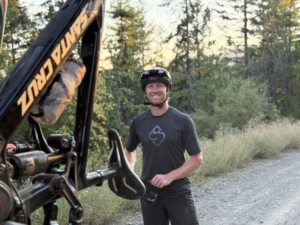
Ski helmets aren’t just accessories — they’re lifesavers. Wearing one can be the difference between a close call and a severe brain injury. Snow helmets can also be warm, convenient, and with integrated tunes, a ton of fun.
Innovative designs are hitting the snow this winter — and we’re excited. On the premium end, the POC Obex Connect debuts one of the most progressive audio systems on the market. We enjoyed high-quality sound and synced our helmets to talk without radios. At last, the industry cracked the code for a recyclable design with the Salomon Brigade Index MIPS, which has a price that doesn’t make us wince.
In our recent 4-month winter rounds, SnowSports Senior Editor Morgan Tilton tested five helmets across 144 hours from British Columbia’s Whistler, Whitewater, and RED Mountain to Colorado’s Aspen, CBMR, and Vail Resorts. Professional freeskier Dane Tudor contributed an equivalent amount of time to testing helmets.
Editor’s Note: We updated our Ski Helmets guide on October 30, 2026, with a sparkling custom comparison chart and a completely new service section that’s resourceful and scannable.
The Best Ski Helmets of 2026


Smith Vantage 2 MIPS
-

-
Morgan Tilton testing the Smith Vantage 2 MIPS; (photo/Jason Hummel)
-
Morgan Tilton testing the Smith Vantage 2 MIPS; (photo/Jason Hummel)
-
Morgan Tilton testing the Smith Vantage 2 MIPS; (photo/Jason Hummel)
-
Morgan Tilton testing the Smith Vantage 2 MIPS; (photo/Jason Hummel)
-
-



Specifications
Pros & Cons
Pros
- Very comfortable
- Fantastic, customizable ventilation
- Durable
- BOA fit system
Cons
- Slightly heavy for backcountry touring
The Bottom Line: A high-performance benchmark that pairs customizable dual-zone airflow with extensive impact protection at a middle-ground price. For all-mountain skiers, the Vantage 2 delivers comfort, proven safety tech, and seamless usability.
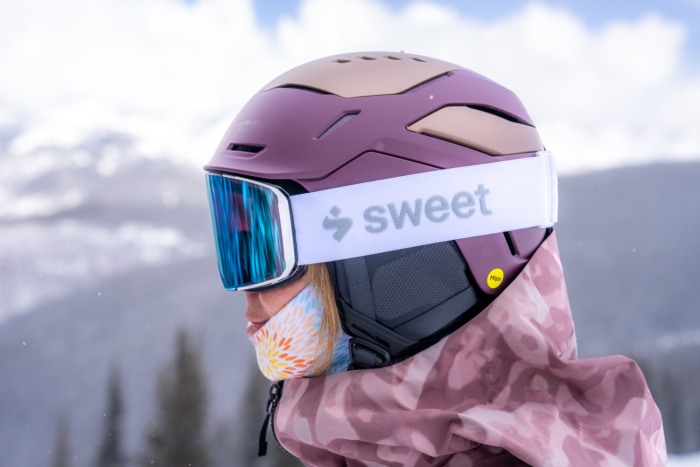
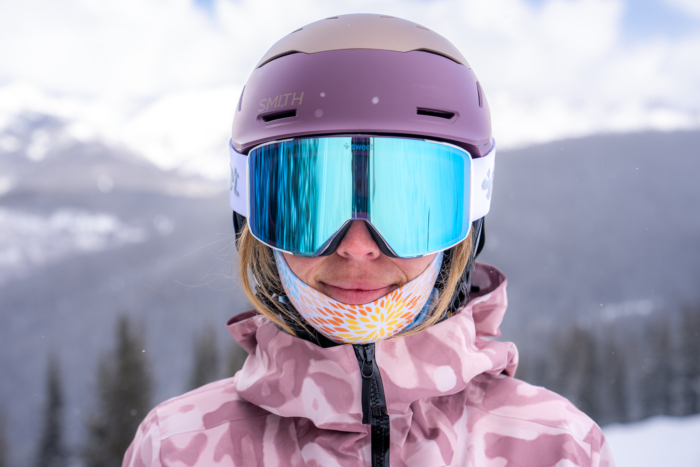
Taking this season’s crown, the Smith Vantage 2 MIPS ($295) builds on its predecessor with a redesigned tri-shell hybrid construction that makes it lighter while maintaining the heavy-duty protection we have come to expect. For most experienced skiers, the Vantage 2 is all the helmet they will ever need, sitting high on the podium in a crowded market. Multiple riders on our team have tested this ski helmet and universally agree: it is one of the most comfortable, protective designs on the market.
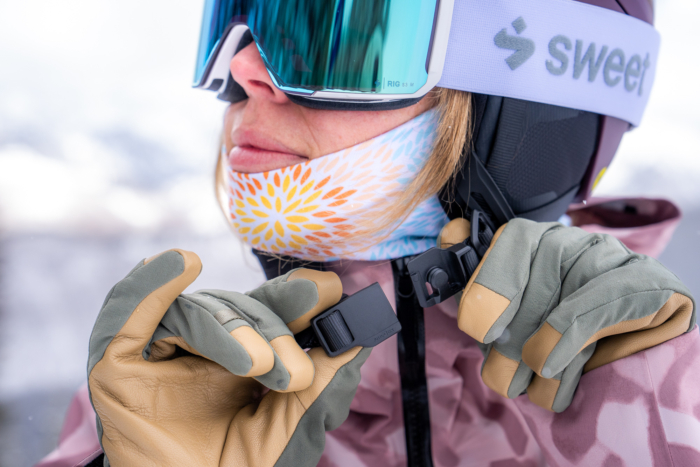
The Tech: Smith lines the entire internal circumference of the helmet with KOROYD — thousands of tiny co-polymer tubes welded together that resemble a honeycomb — to crumple and help absorb impacts while increasing overall breathability. They have also integrated MIPS to lower the rotational forces during angular impacts. The addition of the Fidlock magnetic buckle is a nice improvement over the original, making it super quick to snap on even with heavy ski gloves. At 18 ounces, it is an average weight that will not bother resort skiers, though dedicated backcountry ounce-counters might prefer a lighter option like the Giro Grid Spherical (14.1 oz.) or the Atomic Four AMID Pro (13.4 oz.).
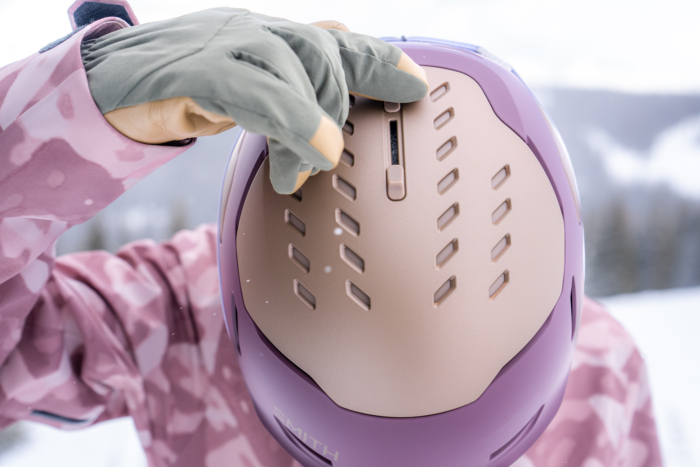
What We Like: From the first run, the comfort is what you notice. Smith sets itself apart by honing a shape and offering a customizable fit, using a BOA 360 dial system that works across head shapes — no hotspots and no weird air gaps. It is also downright cush. Smith used thick, warm foam on the ears that wraps around the base of the skull, paired with a thin mesh top that suspends the helmet above the skull to improve airflow. The standout feature, however, is the ventilation. On a frigid day with howling winds at Arapahoe Basin, Editorial Director Sean McCoy was able to slide two small sliders on the lid to instantly block the wind and warm his head. Because it now uses two actuators, which control two separate zones around the head — the top and the parietal ridges — you can customize the airflow far better than with the old single-slider design. With 40 vents (we counted!), it is like a chameleon that adapts to any weather.
What We Don’t: Senior Editor Morgan Tilton likewise found the helmet to be extremely comfortable (and sleek) while taking laps at Vail Ski Resort and Crested Butte Mountain Resort in a range of wild weather from blizzards to bluebird days. She appreciated the adaptability of the vents, though found the two compact switches were a bit challenging to feel beneath thicker mitts and gloves. Familiarizing herself with where the sliders were on top of the helmet took some getting used to.
Should You Buy It? If you want one helmet that can do it all, the Vantage 2 checks every box for comfort, tailored ventilation, extensive protection, and style. It is not the costliest at $295, nor the cheapest, but it offers exceptional versatility for all-weather skiing.
Pret Lyric X2
-
-
(Photo/Mattie Schuler)
-
The goggle retainer: Pret Lyric X2 helmet; (Photo/Mattie Schuler)
-
Pret Lyric X2 helmet and Zeal goggles; (Photo/Mattie Schuler)


Specifications
Pros & Cons
Pros
- Thorough ear protection
- Compatible with many goggles
- Very lightweight
Cons
- Can only adjust vents from the inside of the helmet
Bottom Line: Budget-friendly performer that delivers lightweight comfort, core safety, and an antimicrobial liner for all-season use.
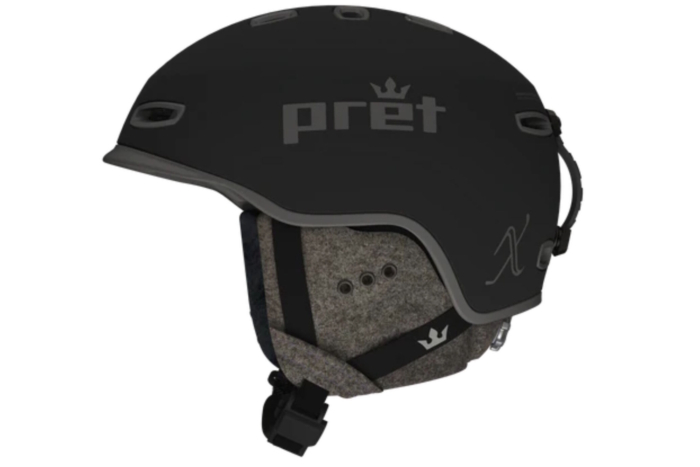
Leading our wallet-friendly selection, the Pret Lyric X2 ($160) is a lightweight, affordable lid that doesn’t sacrifice protection. It’s just as plush as the brand’s higher-end offerings — like the Pret Corona X and Cirque X — while saving you more than $100. If you want essential features and dependable comfort without a steep price tag, this model delivers solid value.
The Tech: Integrated directly into both the liner and the EPS foam is an antimicrobial construction engineered to head off stink and sweat. It also has MIPS technology to mitigate rotational impact forces, a Fidlock magnetic buckle for easy one-handed clipping, removable ear pads, and an intuitive dial fit system. At 15.8 ounces, it remains nimble and lightweight compared to heavier options in the guide, like the Smith Nexus (23 oz.).
What We Like: The anti-odor treatment really works. After testing the Lyric X2 across several days of resort riding and steep, sun-baked hikes, tester Mattie Schuler reported that the liner remained completely odor-free. Another standout detail is the snapping goggle retainer, which ensures your eyewear stays secured to the shell even during a hard fall. The helmet fits true to size across its small-through-large offerings and comes in seven colorways, including a signature design by professional skier and mountaineer Caroline Gleich.
What We Don’t: Temperature regulation requires some compromise. The helmet has 12 total vents, eight of which are semi-adjustable. Instead of a smooth external slider, you have to adjust fabric flaps situated between the liner and the shell to cover or expose the ports. While Schuler noted that changing the settings takes extra effort, keeping the vents covered still allows enough airflow to prevent a clammy build-up without chilling your head.
Should You Buy It? Skiers who prioritize lightweight comfort, anti-odor performance, and essential safety tech at a sub-$200 price point will find plenty to love here. While the vent adjustment mechanism is clunky compared to premium sliders, the overall build quality and user-friendly features make this a solid budget-conscious selection.
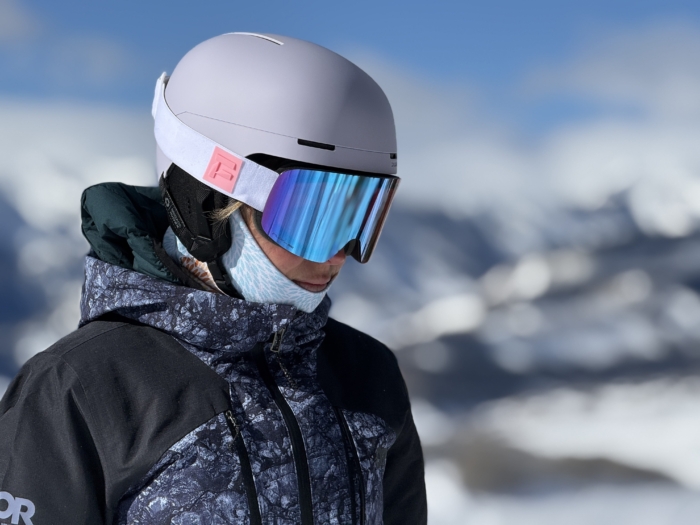
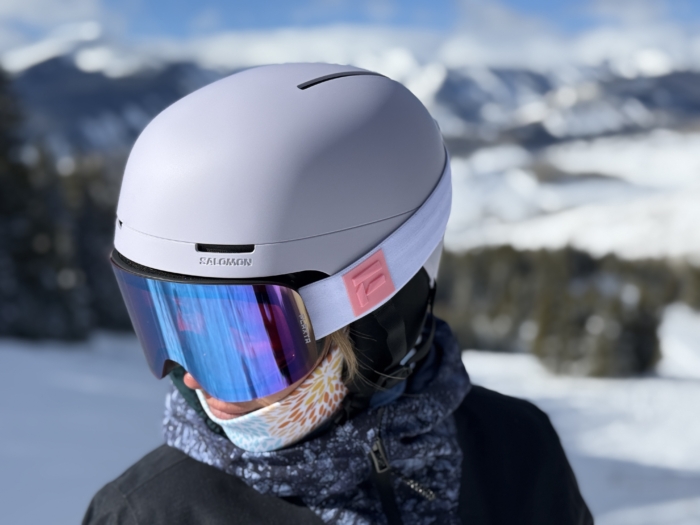
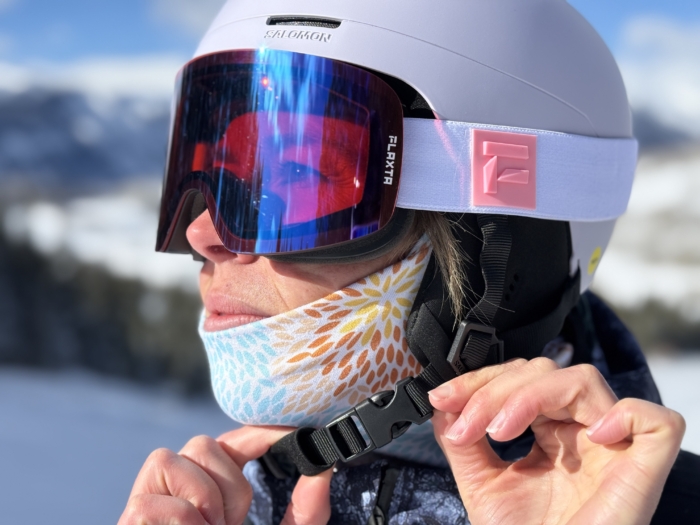
Salomon Brigade Index MIPS
-
-
Photo/Dane Tudor
-
Photo/Dane Tudor
-
Photo/Dane Tudor
-
Photo/Dane Tudor
-
Photo/Dane Tudor
Specifications
Pros & Cons
Pros
- First-ever fully recyclable ski helmet
- Clean aesthetic
- 360-dial adjustment for internal fit
Cons
- Vents are not adjustable
- Goggle strap challenging to unlatch with ski gloves on
- Wind noise increases as it passes through ear flaps
Bottom Line: A groundbreaking, fully recyclable all-mountain helmet that pairs zero-waste sustainability with complete impact protection and svelte style. It’s an ideal choice for eco-minded resort skiers who want a clean-looking shell, simple venting, and end-of-life recycling — the shipping is even covered by the brand.
Ski helmets are nearly impossible to recycle at the end of their life due to the mix of materials. Salomon set out to solve that landfill issue with this season’s launch: the industry-shifting and fully recyclable Salomon Brigade Index MIPS ($215) — the eco-friendliest ski helmet we’ve been waiting to meet. With nearly 10.6 million skiers and snowboarders nationwide, according to the National Ski Areas Association, that’s a lot of helmets saved from waste.
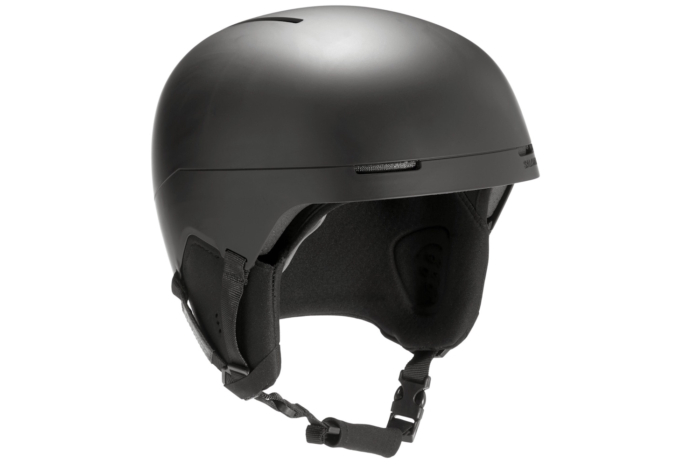
The Tech: After four years of research and development, Salomon constructed the entire helmet using a single material family: polyolefins. This flexible, durable thermoplastic can be ground at end-of-life without any disassembly, allowing owners to print a pre-paid shipping label and send it back to Salomon’s recycling partner, Paprec, to be remade into items like flowerpots and crates. For protection, it combines a MIPS rotational liner with Salomon’s proprietary EPS4D shock-absorbing foam to manage both angled and vertical forces. At 17 ounces, it is a comfortable, lightweight option that is noticeably easier on the neck than heavy-duty options like the Smith Nexus MIPS (23 oz.).
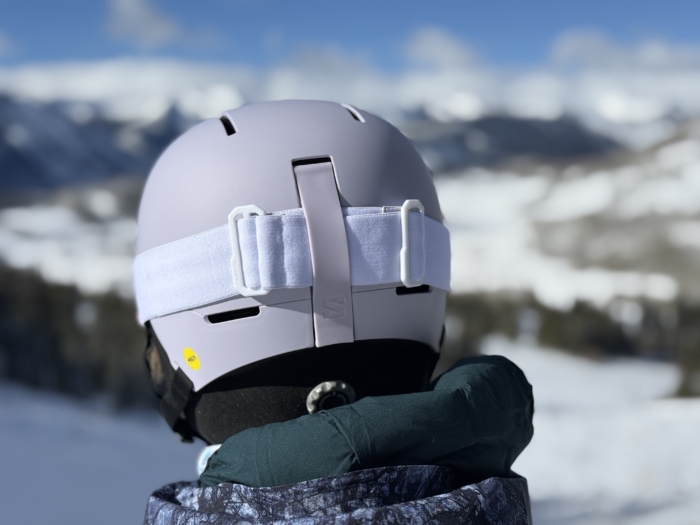
What We Like: The fit system is particularly effective. The 360-degree dial adjusts both horizontally and vertically, seamlessly integrating with plush ear pads that extend further down the back of the neck for extra coverage. While taking laps at Crested Butte Mountain Resort, Senior Editor Morgan Tilton found that the six fixed vents provided just the right amount of passive aeration — keeping her comfortable without creating excess drag or draft, even on 15-degree days with wind chill. Visually, the flush rear goggle retainer keeps things sleek on the mountain.
What We Don’t: The eco-friendly single-material build requires minor trade-offs in convenience. The traditional chin buckle feels somewhat awkward to operate with gloves on, and the integrated ear pads tend to produce noticeable wind noise in a cross-breeze. Additionally, while the minimalist goggle strap anchor looks great, the low-profile latch can be tricky to grab with thick ski mitts. Skiers who run exceptionally hot and require active airflow controls may prefer a helmet with high-volume, adjustable porting, such as the Smith Summit MIPS (33 vents).
Should You Buy It? If you prioritize environmental sustainability alongside reliable head protection, the Brigade Index MIPS stands in a class of its own. It offers a comfortable dial-fit system, clean resort styling, and an effortless recycling program that keeps plastic out of landfills once its lifespan ends.
Smith Method MIPS

Specifications
Pros & Cons
Pros
- Very lightweight
- Sleek design
- More affordable
Cons
- All vents are fixed
- No adjustable fit-system
The Bottom Line: A sleek, sub-$150 resort lid that pairs high-end impact absorption with an ultra-lightweight profile. The Method proves you do not need to drop $300 to secure safety technology.
Some good things should stay simple. Unchanged for the best, the Smith Method MIPS ($140) is a ski helmet that provides just as much protection as some of Smith’s more advanced models without draining your wallet. If you want to skip the extra features and heftier price tag while still securing top safety tech, this minimal design delivers impressive value.
The Tech: Safety is where this model punches above its weight class. Koroyd technology is built into the construction, using tiny welded tubes that crumple on impact to absorb force rather than transferring it to your head. Combined with MIPS, which mitigates rotational forces during angled impacts, this results in a remarkably protective lid. At just 14.1 ounces, it matches the ultralight weight of the Giro Grid Spherical (14.1 oz.), making it significantly lighter than heavier resort options like the Smith Nexus MIPS (23 oz.).
What We Like: Beyond the impressive safety build, the sheer lack of bulk makes all-day riding effortless. Throughout testing across varying resort conditions, the helmet felt exceptionally comfortable with no pressure points or aches. The fit remained solid even without an adjustable harness. Goggle integration was equally smooth — it synced seamlessly with Smith goggles, the Giro Article II, Zeal Cloudfall, and Anon M4S. Two small brow vents direct airflow to prevent fogging, backed by six rear exhaust ports that maintain a pleasant climate on windy and warm spring days alike.
What We Don’t: To keep the price low, Smith stripped away premium conveniences. The traditional chin buckle can be frustrating to operate with winter gloves or mittens on, and the eight vents are entirely fixed. Skiers who run hot or sweat heavily during exertion may find themselves wishing for active vent controls. Additionally, the lack of a dial-fit system means finding the exact size is critical, so trying it on in a store beforehand is highly recommended.
Should You Buy It? Other Smith helmets we tested include the Nexus MIPS, Summit MIPS, and Vantage MIPS, but all three sit at over $300, making the Method the clear budget pick. The Summit targets backcountry tours and mountaineering, the Nexus serves crossover resort and touring days, and the Vantage stands out for dedicated resort use. If you want to skip the extra features and heftier price while still securing top safety tech, opt for the Method MIPS. It rocks for its dual safety systems and lightweight comfort, even if it lacks a dial fit system, magnetic buckle, and adjustable vents.
POC Obex Connect
-
-
-
-
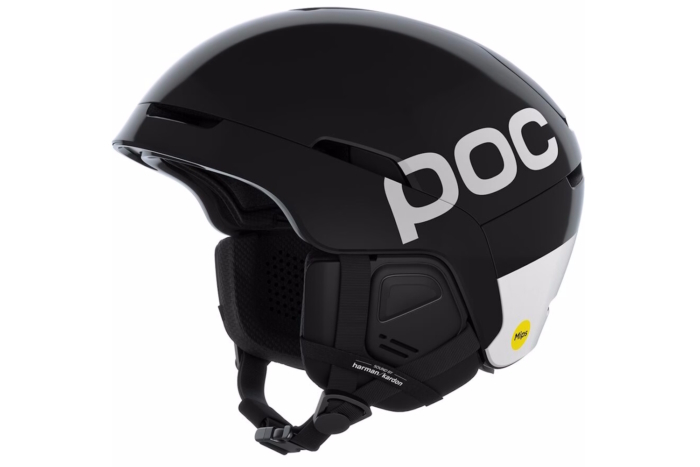
Designed with exterior control buttons for easy, glove-on music and intercom navigation, the POC Obex Connect's ear pads can also be completely detached for warmer spring days; (photo/Morgan Tilton)
-
-
Photo/Morgan Tilton
-


Specifications
Pros & Cons
Pros
- Great sound quality
- Integrated headphones for listening to music via Bluetooth
- Intercom system offers helmet-to-helmet communication
- Top-of-the-line protection and safety details
Cons
- On/off button can be sensitive
- Low-battery chime is fairly loud and not adjustable
- Attachment snaps for ear pads are small, shallow, and can be finicky
- Expensive
Bottom Line: A progressive smart helmet that delivers seamless integrated audio and hands-free group communication for resort skiing. It’s a top choice for skiers who want high-fidelity sound without messing with loose earbuds or radios. Aside from audio fun, Obex Connect delivers the lead safety technology among our picks.
Very, very few ski helmets have built-in headphones to jam to music — let alone the capability of helmet-to-helmet communication. This season’s new POC Obex Connect Ski Helmet ($600) carves out a healthy space for both in a progressive and functional design that our team really enjoyed. As long as you don’t mind shelling out the big bucks, this model is a top choice, especially if you like listening to tunes while you ride.
The Tech: Safety is robust from the interior foam to the exterior, which incorporates integrated Aramid (the synthetic fiber used to make Kevlar) penetration panels to prevent sharp objects from puncturing the helmet. This hardshell sets a benchmark with MIPS, an integrated RECCO reflector, and a twICEme NFC Medical ID. It also has built-in earpad speakers and an integrated Mesh intercom system that allows riders to sync helmets for direct communication or answer phone calls on the fly. At 21 ounces, it carries a solid, protective feel, making it noticeably lighter than heavy-duty hybrid options like the Smith Nexus MIPS (23 oz.).
What We Like: The sound quality is great. We love that you can pause the music really easily with the button on the outside of the earpad while chatting with riders on the lift (and just as easily press play). Senior Editor Morgan Tilton and gear tester Dane Tudor could enjoy music for nearly a full day on the hill with a full charge. Even while playing music, we were able to sync our two helmets with the Mesh technology, allowing us to talk back and forth on the lift or while riding down at Crested Butte Mountain Resort and RED Mountain. Aesthetically, the gloss adds to the clean look. Minimal and lightweight, the unique goggle strap is a simple rubber band that works across various conditions and with different goggle straps. Tester Dane Tudor usually wears a balaclava and found that the vents work well without causing a chill.
What We Don’t: We noticed that battery life dropped significantly when using Mesh technology to communicate, compared to playing music alone, lasting only about two hours in cold, windy conditions. The microphones are sensitive and easily pick up background noise or wind noise when riding at speed, and high-speed laps without a hood require cranking up the volume. When Tilton was not wearing a beanie on colder days, she noticed harsh air against her forehead entering through the four fixed front vents. Additionally, there does not appear to be a dedicated reset button when the system glitches. In the field, one helmet required holding down the power button, while the other required a full recharge to reset.
Should You Buy It? The Obex Connect is a premium choice for music lovers who appreciate excellent style, fit, and effortless goggle compatibility. The Mesh tech serves as a progressive communication tool for instructors, adaptive ski programs, and parent-kid duos. While there is room for improvement regarding battery performance and wind noise, we are blown away by the technology and highly recommend it if you want to ditch earbuds and radios on the mountain.
POC Obex BC MIPS

Specifications
Pros & Cons
Pros
- Lightweight protection
- Additional safety features for backcountry travel
- Adjustable ventilation
Cons
- Some features might be overkill for resort goers
- Front vents aren't adjustable
Bottom Line: A tenacious backcountry-built lid that blends lightweight packability with specialized rescue technology. The Obex BC is a premium pick for ski tourers who prioritize backcountry safety features alongside all-day comfort.
We were impressed with the original Obex, so we were eager to test the backcountry-tailored ski helmet design, too. Our conclusion? Long days in the backcountry are a perfect match for the POC Obex BC MIPS ($270). Lightweight, yes. Flimsy, not in the slightest. We prefer light packs on the skin track, and this snow helmet was noticeably lighter than our other favorites.
The Tech: The Obex BC is geared for off-piste terrain in distinct ways. POC updated the shell with a thicker polycarbonate exterior to enhance durability against backcountry abuse. For safety, it has MIPS Evolve, which integrates comfort padding directly into the low-friction layer that rotates on angled impacts. It also houses specialized rescue tech rare in other helmets, including a RECCO reflector that makes wearers searchable to rescue crews and a twICEme NFC Medical ID chip that stores critical health data and emergency contacts. At 18 ounces, it is lighter than heavy-duty hybrid models like the Smith Nexus MIPS (23 oz.).
What We Like: After spring skiing in Montana with this helmet on her head and in her pack, gear tester Kylie Mohr noted it is an ideal addition to a backcountry kit. Removable ear pads, an easy-to-operate adjustment dial, and a straightforward buckle clasp make it user-friendly, customizable, and comfortable. Furthermore, the front vent placement aligns cleanly with POC goggle ports to keep optics fog-free during high-exertion ascents and descents.
What We Don’t: Ventilation adjustment is somewhat limited. Similar to the standard Obex, the helmet’s front vents do not open and close with the top slider that controls the rest of the ports. Additionally, while RECCO technology provides a valuable secondary safety layer, Mohr emphasizes that it is not a substitute for proper beacon, shovel, probe gear, and avalanche education when traveling in unmitigated terrain.
Should You Buy It? Touring enthusiasts looking for a durable, lightweight helmet with specialized medical and search-and-rescue tech will find it highly useful. It packs easily on the skin track, fits comfortably across long spring days, and delivers solid peace of mind when venturing outside resort boundaries.
Pret Men’s Cirque X & Women’s Corona X
Specifications
Pros & Cons
Pros
- High-quality construction and materials
- Easily adjustable for comfort in any conditions
- Low-profile fit combines well with most goggles
Cons
- A bit pricer than other options
The Bottom Line: A feature-rich, low-profile helmet pair engineered with reinforced shell protection and customizable temperature controls. It is a top choice for resort and backcountry skiers who want all-day versatility, seamless goggle compatibility, and an antimicrobial liner.
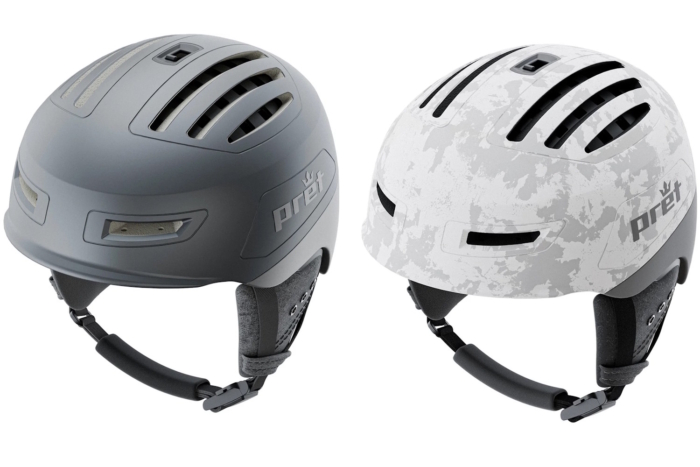
Pret is a helmet specialist based in Park City, Utah, and the Pret Women’s Corona X and Pret Men’s Cirque X ($280) are among the company’s most advanced snow helmets. Both house the whole gamut of modern helmet technology in lightweight, low-profile packages. If you want a refined, highly adjustable lid that transitions seamlessly between freezing resort laps and warm spring tours, this line delivers high-end utility.
The Tech: Engineering focuses heavily on targeted structural reinforcement. The shell is reinforced with polycarbonate plates in areas where skull impact would be critical, effectively doubling the thickness where needed. For safety, it features MIPS to lower rotational forces during angular impacts. The liner uses Pret’s exclusive antimicrobial EPS foam, which helps prevent bacterial growth in the material surrounding your head over day after day, year after year of use. At 15.3 ounces, it is lighter than heavier hybrid models like the Sweet Protection Switcher MIPS (20.1 oz.).
What We Like: An adjustable ventilation system keeps the Cirque and Corona warm and comfortable across a range of conditions. When it is extremely cold, and you need extra insulation, the internal fit easily accommodates a balaclava or thin beanie. On warmer days, you can quickly remove the earflaps and store them in a jacket pocket or pack. We especially like the functional and aesthetic compatibility with just about any pair of goggles — cutaways above the ear flaps and a shallow brim across the front neatly frame your eyewear to minimize awkward gaps and slippage. Additional details include earbud pockets built into the earflaps and a Fidlock magnetic buckle.
What We Don’t: While the level of customization is impressive, managing multiple removable parts — like storing earflaps mid-day — adds a few extra steps to your routine on the mountain. Additionally, skiers who prefer a permanently fixed, heavily padded liner might find the convertible earflap system less streamlined than traditional full-coverage designs.
Should You Buy It? Skiers seeking a premium, highly adaptable helmet with targeted shell reinforcement and excellent goggle integration will find both the Corona X and Cirque X well worth the investment. It provides reliable safety tech, smart ventilation, and a clean aesthetic that withstands full seasons of hard use.
Other Stellar Ski Helmets We Tested
While these seven ski helmets came up a bit short for accolades, each is a runner-up design that we’d happily wear on the slopes and recommend to our friends. These comfortable designs don’t miss safety tech or style.
-
-
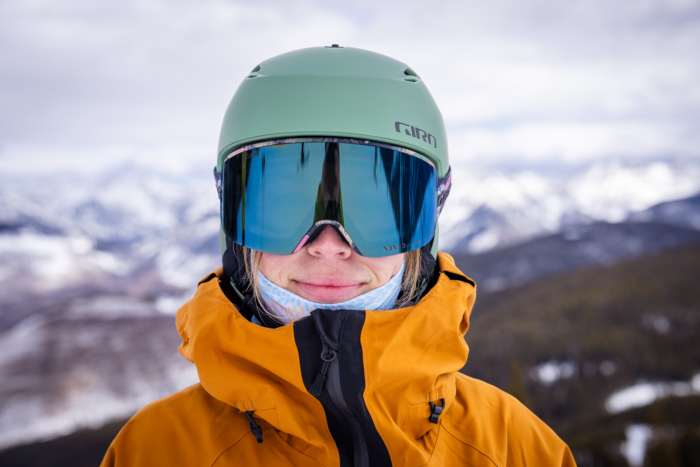
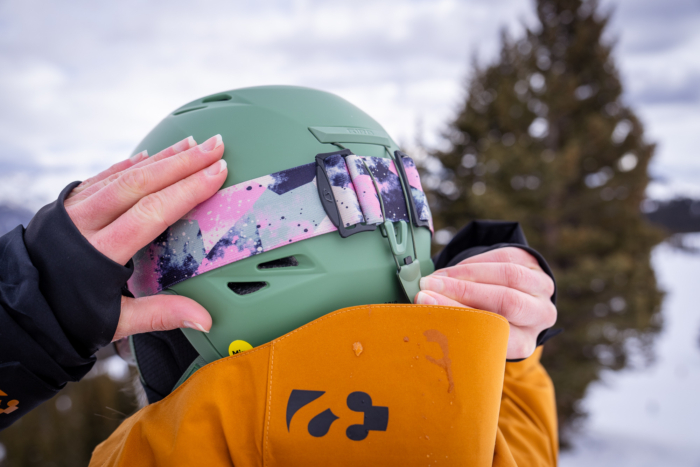
Morgan Tilton testing the Giro Grid Spherical Helmet; (photo/Jason Hummel)
-
Morgan Tilton testing the Giro Grid Spherical Helmet; (photo/Jason Hummel)
-
Morgan Tilton testing the Giro Grid Spherical Helmet; (photo/Jason Hummel)
Specifications
Pros & Cons
Pros
- Ultralight crossover weight
- Plush, fast-drying liner
- Intuitive, mitten-friendly venting
Cons
- Higher $330 price point
- Lacks dual-zone venting
Bottom Line: A lightweight crossover lid that pairs impact protection with a plush, fast-drying liner. The Grid Spherical is a good pick for resort skiers who dabble in the backcountry, and for riders who want maximum comfort and weight savings.
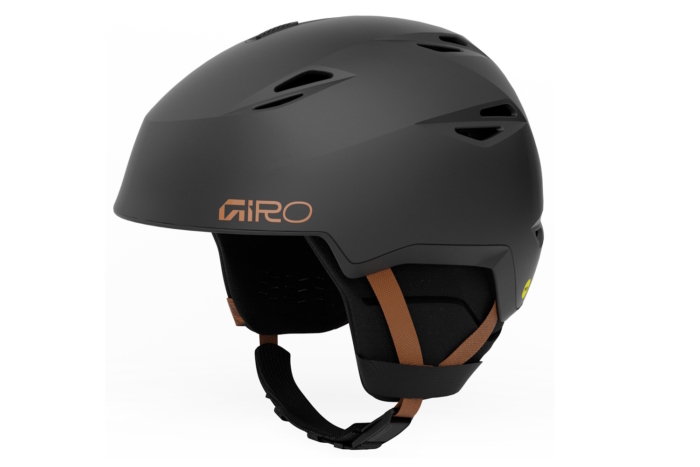
If you are looking for a ski helmet that essentially disappears on your head, the Giro Grid Spherical ($330) is a top-tier contender. At just 14.1 ounces, it lands on the lighter end of the spectrum, making it an ideal crossover lid for resort days and backcountry tours where grams count on the skin track. While there isn’t one flashy feature that reinvented the wheel, everything on this helmet functions exactly as it should.
The Tech: Spherical technology is the primary safety draw. Developed with MIPS, this design has two expanded foam liners, fundamentally integrated into the helmet’s structure, that function like a ball-and-socket joint to provide greater rotational movement during impact. Eliminating the traditional plastic liner allows Giro to carve out deeper, wider ventilation channels. Additionally, an improved fit dial offers up to 6 cm of tuning for a refined, custom fit, while a Fidlock magnetic buckle enables easy one-handed operation. At 14.1 ounces, it matches the featherweight profile of the Smith Method MIPS (14.1 oz.), making it significantly lighter than heavier hybrid resort models like the Smith Nexus MIPS (23 oz.).
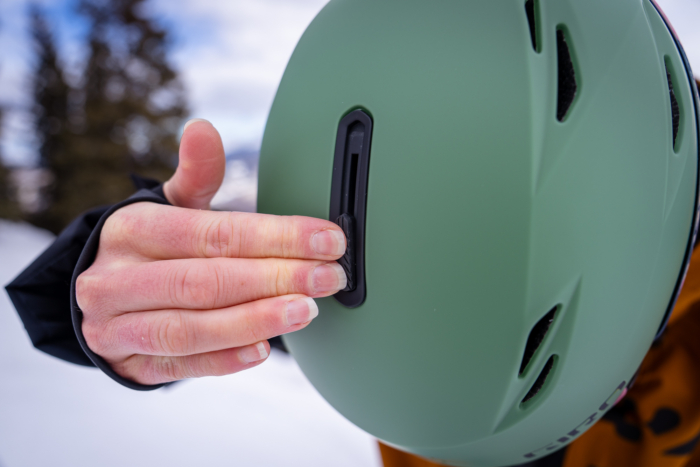
What We Like: Comfort is where the Grid quietly excels. While testing this helmet in a myriad of conditions at Crested Butte Mountain Resort and Vail Ski Resort — from howling wind to sun-baked spring skiing — Senior Editor Morgan Tilton found the Polartec Power Grid liner to be extremely soft and plush. It is also exceptionally fast-drying, which is a critical quality when working up a sweat on the ascent. The adjustable venting is intuitive: A single low-profile slider on the top allows you to dump heat or seal in warmth instantly, operating easily even with winter mittens on. The slider is notably easier to locate than the two smaller actuators on the Smith Vantage 2 MIPS. Airflow remains consistent across all 17 vents, backed by specialized brow ports that keep ski goggles fog-free. After testing various Smith and Giro ski goggles with the Grid Spherical, Tilton confirms the shell shape is compatible across numerous eyewear designs.
What We Don’t: The venting layout does not offer the dual-zone climate customization found on some heavier resort helmets, meaning you cannot adjust front and rear airflow independently. Additionally, sitting at $330, it represents a higher financial investment, though its elevated price tag yields a premium liner, sophisticated impact tech, and an impressively light build.
Should You Buy It? Skiers who divide their time between lap-driven resort days and sweat-inducing backcountry tours will find high value in this lightweight setup. If you prioritize an unobtrusive feel, effortless single-slider venting, and plush interior comfort over lower price tags, the Grid Spherical earns its place in your kit.
Specifications
Pros & Cons
Pros
- Integrates seamlessly with Smith goggles
- So many vents
- Extra side impact protection
Cons
- A pricier option
The Bottom Line: A premium, high-protection hybrid helmet that pairs full-coverage zonal impact tech with exceptional dual-zone temperature regulation. It is a top choice for skiers and riders seeking high-end safety features, customizable venting, and seamless goggle integration.
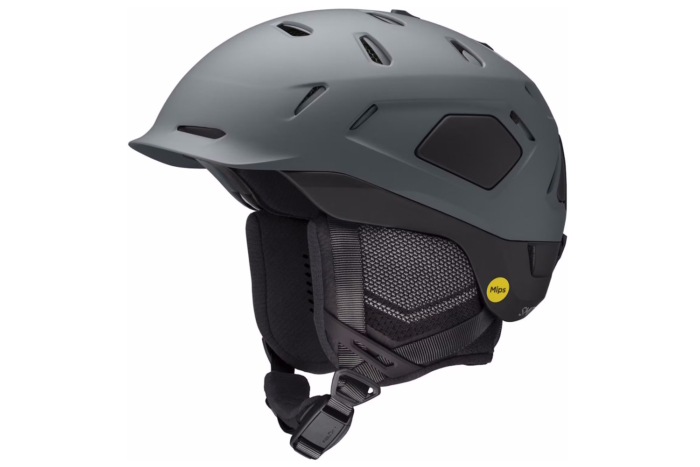
We eagerly tested one of Smith’s most advanced ski helmets, and the Smith Nexus MIPS ($330) did not disappoint. It is everything you want a lid to be — light, warm, and very protective. We felt like we barely had anything on our heads during testing, which is always a good sign that signals lightweight features and no pressure points.
The Tech: Construction relies on a hybrid shell that keeps the build lightweight and low-profile while reinforcing side-impact zones with an impact-resistant exoskeleton. In addition to MIPS rotational protection, it integrates Zonal Koroyd — a structure of welded co-polymer tubes that crumple upon impact to absorb force and reduce energy transfer to the head while maintaining airflow. A BOA 360 fit system provides micro-adjustable tuning, backed by a Fidlock magnetic buckle and an ionic+ antimicrobial liner to head off odor. At 23 ounces, it carries a heavy-duty, ultra-shielding feel compared to ultralight alternatives like the Smith Method MIPS (14.1 oz.) or Giro Grid Spherical (14.1 oz.).
What We Like: This helmet kept our heads warm in negative wind chills with no hat underneath. Seamless integration with Smith goggles was ideal for blocking cold, gusty winds, while the breathability was equally impressive. It boasts 24 vents controlled by dual sliders on the front and rear of the shell, allowing for tailored dual-zone airflow. Even with the ports closed, the internal channels dumped heat effectively on a cold boot pack. The included travel bag for scratch-free storage is another great touch.
What We Don’t: Real-world testing proved how well the protective systems perform under pressure. Snowsports Senior Editor Morgan Tilton suffered an in-bounds crash while snowboarding in a blizzard wearing a Smith helmet equipped with these same safety systems. The Koroyd material crumpled in several areas while the MIPS liner absorbed damage, preventing a severe head injury and resulting in a Grade 1 minor concussion, with whiplash and headaches subsiding after two weeks. Beyond the heavy 23-ounce weight, it is hard to find anything not to love here, other than the upper-echelon $330 price point.
Should You Buy It? One of the primary reasons this helmet was edged out of the Best Overall spot was that Smith launched another extremely functional, comfortable option at a slightly lower cost: the Smith Vantage 2 MIPS ($295). However, if you want a helmet that looks sharp, feels great, works seamlessly with existing Smith goggles, and offers complete peace of mind, the Nexus MIPS is an outstanding pick. If you prefer to spend less than half the price, check out the Smith Method MIPS ($140).
-
-
(Photo/David Young)
-
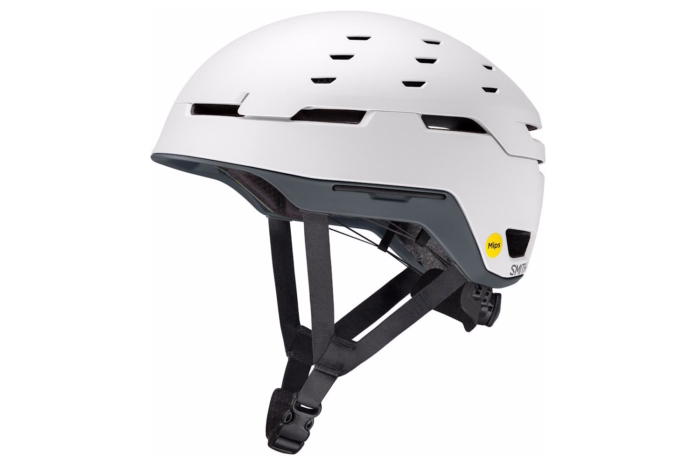
The headlamp routing on the Smith Summit; (photo/David Young)
-
(Photo/David Young)


Specifications
Pros & Cons
Pros
- Lightweight, sleek
- Integrated headlamp strap routing keeps gear in place
- Beanie and ball cap compatible
Cons
- Lack of ear cover and insulation
Read Review: Smith Summit MIPS Helmet Review: Minimalist Backcountry Protection at a Competitive Price
The Bottom Line: Minimalist, highly ventilated helmet built for ski mountaineering and out-of-bounds touring. It ditches traditional bulk in favor of an ultralight design that prioritizes breathability and specialized backcountry features.
You wouldn’t take downhill skis backcountry skiing, so why would you take a downhill helmet into the backcountry? Enter the Smith Summit MIPS ($260), a sleek lid specifically designed for out-of-bounds riding. Heavy, hot, and bulky designs are a thing of the past with this model.
The Tech: This helmet does not compromise on the safety features you know and love from more traditional models, incorporating MIPS rotational protection, Zonal Koroyd for energy absorption, and a micro-adjustable BOA 360 fit system. At just 14 ounces (400g), it is exceptionally light — matching the featherweight profile of the Giro Grid Spherical (14.1 oz.) and cutting significant bulk compared to heavy-duty resort options like the Smith Nexus MIPS (23 oz.).
What We Like: While testing this helmet on steep backcountry tours, gear tester David Young noted that he barely knew it was on his head because it was so well-ventilated and easy to carry. The integrated headlamp routing is a standout touch. If you have ever tried to adventure at dusk or dawn and gotten frustrated adjusting your strap, having the light slingshot off the back of your shell, or failing to aim the beam where you need it, you will appreciate this secure routing system. It also comes with a custom, slim-fitting beanie you can wear underneath.
What We Don’t: Our one knock on this design is the complete lack of ear covers and built-in insulation. You have to shave weight somewhere, meaning this is not a warm, plush option for freezing mid-winter chairlift rides. If you run cold or the wind picks up, wearing the included beanie or throwing a thin headband in your pack is an absolute must.
Should You Buy It? The Summit MIPS has everything you need, and nothing you do not, to mountaineer, backcountry ski, or snowboard safely. If you want a dedicated touring lid that prioritizes weight savings, massive airflow, and functional headlamp compatibility, this is a phenomenal investment.
-
-
(Photo/Will Brendza)
-
(Photo/Sean McCoy)
-
(Photo/Will Brendza)
-
(Photo/Sean McCoy)
-
(Photo/Will Brendza)
-
(Photo/Will Brendza)


Specifications
Pros & Cons
Pros
- Lightweight
- Comfortable
- Audio-compatible
- Well-ventilated
Cons
- Scratches somewhat easily
- Color descriptions seem misleading
The Bottom Line: A stylish, low-profile resort helmet that pairs dual-density impact deflection with plush merino interior comfort. It’s a lead pick for riders who want multi-directional safety, a tailored fit, and sleek aesthetics.
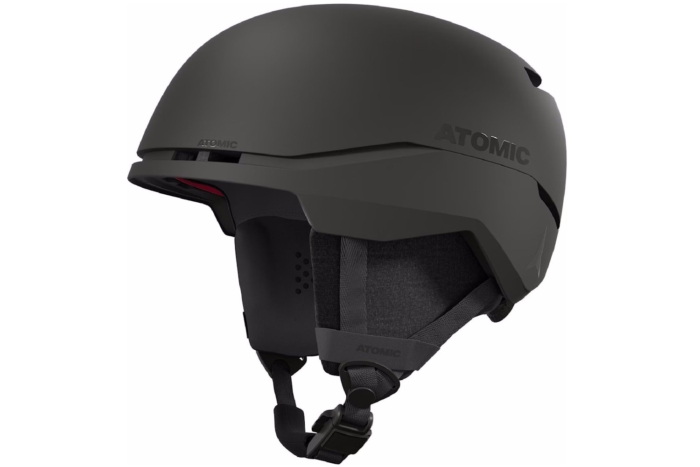
The best ski helmets are the ones that fit well, feel comfortable, and regulate your temperature — all while protecting your noggin from excessive impact. The Atomic Four AMID Pro ($220) delivers on all of those fronts, and it is pretty stylish to boot. Atomic’s urban-inspired aesthetic is low-profile and sleek, offering modular versatility thanks to a removable liner and goggle clip that let you easily wear a beanie or stash optics underneath the shell.
The Tech: Protection-wise, the Four AMID Pro exceeds industry safety standards through two proprietary systems. It utilizes AMID (Atomic Multi-directional Impact Deflector), a dual-density foam layer that redirects energy from multi-angle impacts, providing up to 40% higher protection than standard requirements. That is paired with Holo Core construction, an elongated crumple zone engineered to boost shock absorption by 30% beyond basic certification requirements. At 13.4 ounces (380g), it is remarkably lightweight, making it even lighter than the Giro Grid Spherical (14.1 oz.) and cutting nearly half the heft of heavy resort designs like the Smith Nexus MIPS (23 oz.).
What We Like: How does it feel when you wear it? Very comfortable, according to ski tester Will Brendza, who tested the Four AMID Pro in the field. Unlike many stiff ear pads, these are shaped almost concavely so your ears never feel squished against your head. The lining uses merino wool, which is naturally temperature-regulating, antimicrobial, and odor-resistant. Brendza found that the helmet fit exceptionally well and felt great throughout testing, backed by self-molding pads and a 360-degree micro-adjust fit dial that fine-tunes the shell incrementally.
What We Don’t: The rear goggle retainer uses an elastic cord with a hook that clips to the bottom edge, which Brendza noted can be challenging to manipulate while wearing ski gloves. Ventilation is also fixed, meaning those seeking high-output touring performance might miss having active climate sliders. Lastly, Brendza’s only real gripe was the color naming: the “brown” colorway looks significantly more like a wine burgundy in person.
Should You Buy It? For resort skiers and snowboarders seeking top-tier impact tech in an ultra-lightweight, comfortable package, this model delivers outstanding value. If you value a tailored fit, soft merino lining, and understated style without feeling weighed down on the mountain, it earns a spot on your short list.
-
-
Inside look: Anon Merak WaveCel helmet interior; (Photo/Mattie Schuler)
-
(Photo/Mattie Schuler)
-
Anon Merak WaveCel hemlet and Zeal Cloudfall goggles; (Photo/Mattie Schuler)


Specifications
Pros & Cons
Pros
- Excellent safety technology
- Comfortable padding
- Ventilation system works well across a broad temperature range
Cons
- Sizing runs slightly small
The Bottom Line: A high-tech hybrid helmet that pairs impact absorption with plush all-day comfort and smooth usability. This pick is for resort skiers seeking advanced multi-directional safety and easy mitten-friendly controls.
The Anon Merak ($320) is an all-around solid ski helmet that offers good protection, top comfort, and looks pretty cool with low-key details on the ear pads. If you want a feature-rich, highly adjustable lid that provides peace of mind on technical terrain, this option is worth every penny.
The Tech: Protection centers around Anon’s WaveCel technology, which utilizes interconnected cellular structures designed to flex, crumple, and glide to absorb both linear and rotational impact forces. Its hybrid shell construction fuses a durable Endura top with a lightweight in-mold lower section for long-term durability. At 17.6 ounces, it remains nimble compared to heavier hybrid setups like the Smith Nexus MIPS (23 oz.), while a grippy BOA dial system makes micro-adjustments easy to crank even with thick mittens on.
What We Like: While testing the Merak over multiple days of riding at Colorado resorts in various weather conditions, on-snow tester Mattie Schuler found that wearing the helmet all day was remarkably comfortable, with no pressure points or aches. Temperature control is equally impressive, featuring 19 vents — eight of which are easily adjustable via a top slider — along with soft, cushy ear pads and a Fidlock magnetic buckle for smooth one-handed clipping. Schuler also noted that a wide variety of goggles fit seamlessly against the hard rear clip without leaving an awkward gap.
What We Don’t: WaveCel models tend to run snug and sit very close to the head, so choosing the larger size is essential if you are in between sizes. Schuler observed that while the helmet is among the lighter options in its protection class, it felt just slightly clunky during high-speed laps. Additionally, while the thick ear pads provide great warmth, they tend to muffle peripheral hearing slightly on the hill.
Should You Buy It? Skiers who prioritize cutting-edge impact technology alongside plush comfort and seamless glove-friendly features will find high performance here. Though it comes with a sharp price, its robust hybrid build, customizable ventilation, and reliable fit make it a top-tier investment for dedicated resort skiers.
Specifications
Pros & Cons
Pros
- Adjustable ventilation system
- Comfortable
- Stylish
Cons
- Slightly heavier and more expensive than some similar options
The Bottom Line: A resort-and-backcountry hybrid that offers unparalleled climate control through 22 adjustable vents. It’s a top choice for skiers who enjoy hike-to terrain, stick out dramatic weather shifts, and demand heavy-duty protection.
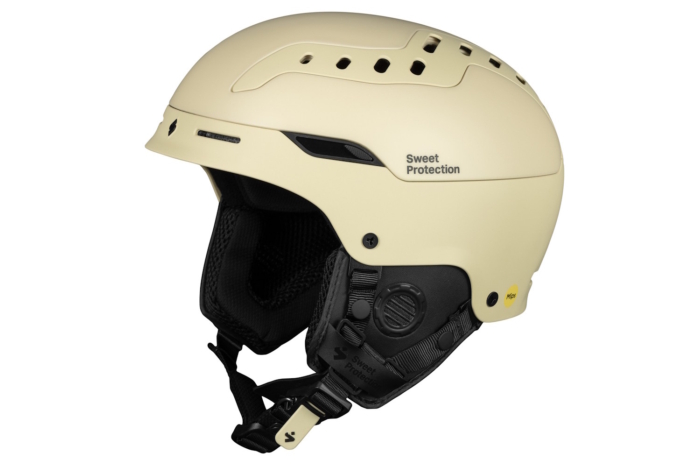
Whether you are riding within resort boundaries or hitting the sidecountry, the Sweet Protection Switcher MIPS ($270) offers reliable comfort and protection. The standout feature of this ski helmet is its highly effective ventilation system, which enables precise temperature control in a wide range of conditions.
The Tech: Engineering centers around a hybrid shell that fuses hard-shell durability over critical impact areas with lightweight in-mold construction around the perimeter. For safety, it has MIPS rotational protection, a 3D-shaped moisture-wicking liner, a magnetic Fidlock chinstrap buckle, and audio-compatible ear pads. At 20.1 ounces (570g), it carries a solid, highly protective feel that sits between lighter crossover models like the Giro Grid Spherical (14.1 oz.) and maximum-coverage options like the Smith Nexus MIPS (23 oz.).
What We Like: Climate control is best in class. A single intuitive dial operates 20 vents simultaneously, while two manual sliding vents near the front provide even more customization for a total of 22 adjustable ports out of 26. On a balmy spring day, this system maintains noticeable cooling airflow. When the vents are fully closed, the Switcher retains heat as well or better than any skiing helmet on the market. On super-cold days, most people feel that this helmet provides all the insulation they need, though the adjustment system leaves room for a thin beanie if need be. As a bonus, it comes in a wide variety of colors and looks great while in use.
What We Don’t: Though the Switcher MIPS is a little heavier and a little pricier than some similar helmet styles on the market, the trade-off comes in sheer physical mass. The complex internal venting hardware adds noticeable bulk to the shell profile, making it feel slightly substantial on your head during long tours.
Should You Buy It? We are confident that skiers and snowboarders who enjoy adventuring in all types of weather and need ultimate temperature regulation will find great value in this helmet. The Switcher has best-in-class ventilation control. It delivers high-end utility, customizable comfort, and durability for season after season of hard riding.
-
-
Giro Owen Spherical helmet; (Photo/Mattie Schuler)
-
Inner fleece liner on Giro Owen Spherical helmet; (Photo/Mattie Schuler)
-
Giro Owen Spherical helmet goggle retainer; (Photo/Mattie Schuler)


Specifications
Pros & Cons
Pros
- Top-notch safety technology
- All-day comfort and warmth
- Very low profile and minimalist
Cons
- Can only adjust vents from inside the helmet
The Bottom Line: Sleek, park-and-freeride-focused helmet that hides advanced impact protection behind an ultra-clean, minimalist exterior. This ideal pick is for riders who prioritize low-profile aesthetics, lightweight comfort, and smooth goggle integration.
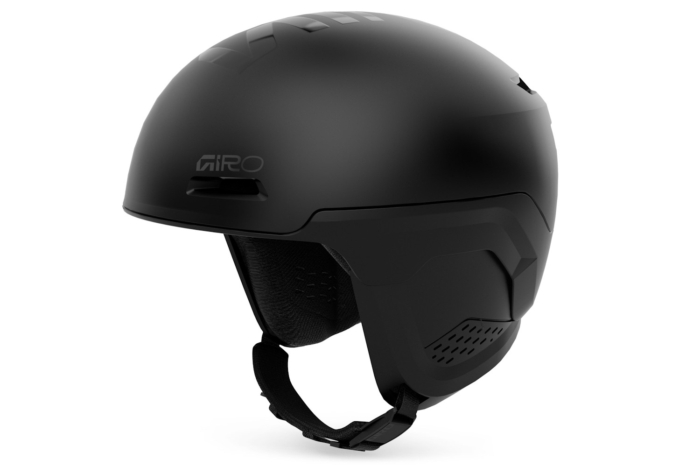
The Giro Owen Spherical ($240) is a sleek, minimalist ski helmet with seemingly no frills. However, it is actually packed with top-tier protective technology and features that make sporting your helmet all the more enjoyable.
The Tech: Safety centers on Spherical MIPS, developed by Giro in partnership with MIPS. Built as a ball-and-socket design, the outer shell rotates independently around the inner liner during an impact to reduce rotational forces. You can test this by pushing on the inner liner and feeling it give. Unlike standard MIPS, Spherical technology is fully integrated into the helmet construction rather than added as a slip-plane plastic insert. At 15.9 ounces, it carries a lightweight build that sits comfortably between featherweight models like the Giro Grid Spherical (14.1 oz.) and heavy-duty hybrid options like the Smith Nexus MIPS (23 oz.).
What We Like: One of the standout qualities noted during field testing by Colorado gear tester Mattie Schuler was how light it felt when riding, never feeling heavy or cumbersome, so you can focus on making turns rather than on head fatigue or pressure points. The overall setup includes a Fidlock magnetic buckle and an intuitive fit dial. Furthermore, Schuler found that the shell shape integrates seamlessly across at least three different goggle brands tested without leaving awkward forehead gaps.
What We Don’t: Internal vent controls present a clear usability trade-off. To adjust the four central ports among the eight total vents, you must take the helmet completely off to access the interior slider. This proved frustrating on cold, windy days when shutting out drafts required exposing bare heads and ears to the elements. While Giro designed this internal mechanism to preserve a clean, unbroken outer aesthetic, managing it on the hill remains a hassle.
Should You Buy It? Riders who want progressive, high-end protection packaged in a subtle, low-profile silhouette will appreciate what this model brings to the mountain. If you prioritize clean styling, integrated Spherical tech, and effortless all-day comfort over external vent switches, it is a well-crafted choice for resort laps and park sessions.
Ski Helmet Comparison Chart
| Compare |
|
|
|
|
|
|
|
|
|
|
|
|
|
|
|---|---|---|---|---|---|---|---|---|---|---|---|---|---|---|
| Price |
$295
|
$160
|
$215
|
$140
|
$600
|
$270
|
$280
|
$330
|
$330
|
$260
|
$220
|
$320
|
$270
|
$240
|
| Weight |
18 oz.
|
15.8 oz.
|
17 oz.
|
14.1 oz.
|
21 oz.
|
19.4 oz.
|
15.3 oz.
|
14.1 oz.
|
23 oz.
|
16 oz.
|
13.4 oz.
|
16.9 oz.
|
20.1 oz.
|
15.9 oz.
|
| Protection bonus |
MIPS
|
MIPS
|
MIPS, Salomon's EPP4D shock absorption (oblique and vertical)
|
Koroyod and MIPS
|
MIPS Evolve, Aramid panels, RECCO, twICEme NFC Medical ID
|
MIPS, TwicemeNFC Medical ID Chip, RECCO Avalanche rescue reflector
|
MIPS
|
MIPS Spherical Technology
|
MIPS, Koroyod, extra side protection with impact-resistant exoskeleton
|
MIPS, Koroyd
|
Atomic Multidirectional Impact Deflector (AMID), Holo Core, injected polycarbonate around sides
|
WaveCell
|
MIPS
|
MIPS
|
| Number of vents |
40 adjustable
|
12 fixed
|
6 fixed
|
8 fixed
|
11 (3 adjustable, 8 fixed)
|
11 (3 adjustable, 8 fixed)
|
10 adjustable
|
17 adjustable
|
24 adjustable
|
33 fixed
|
8 fixed
|
19 (11 fixed, 8 adjustable)
|
26 (22 adjustable, 4 fixed)
|
8 (4 fixed, 4 adjustable)
|


How We Tested the Best Ski Helmets
Full transparency: We aren’t trying to crash while wearing ski helmets. But sometimes we tomahawk. Occasionally, we break a helmet. We have not needed to go to the hospital while field testing, and helmets have helped us avoid emergency room visits.
Our Expert Testers
Our team of eight avid riders has tested dozens of ski helmets for this guide since 2022.
These ski helmet testers include on-snow professionals and experts, certified backcountry travelers, and skimo racers:
- SnowSports Senior Editor Morgan Tilton led our on-snow testing, logging 61 days on the mountain in 2026. A skier since 1994 and snowboarder since 2002, her commitment to helmet safety is personal: a 2003 snowboarding crash left her with a Grade II concussion and a broken nose — an injury made far less severe because she was wearing a helmet. She tests gear directly out of Colorado’s Gunnison Valley, one of the coldest, snowiest regions in the U.S.
- Professional Big Mountain Freeskier Dane Tudor contributes to field testing for ski helmets across North America and beyond.
- Editorial Director Sean McCoy has been a skier for more than 40 years and always wears a helmet at his home turf in Colorado or around the world.

- Gear tester Mattie Schuler has snowboarded for more than 20 years and is quite picky about helmet features and ease of use. She’d rather spend her time focusing on riding than on how her helmet feels.
- Gear journalist Kylie Mohr has been skiing with a ski helmet on since she was a toddler, more than two decades ago, and enjoyed putting helmets to the test at Montana’s resorts and on backcountry faces.
- Wyoming-based contributor Austin Beck-Doss typically rides in-bounds in the Mountain West.
- Ski gear tester Will Brendza has been on skis since he was two, taught skiing at Beaver Creek for several years, and spends equal time in the resort and in the backcountry, getting around 75 days a year.
- Gear tester and Colorado-based skier David Young has contributed on-snow testing.

Our Testing Grounds
We test ski helmets in a wide variety of climates and weather, from California to the Colorado Rockies and in high alpine environments.
Inbounds, we take these helmets through tight glades, down powder-filled slopes, through moguls, and while ripping steep groomers. In the backcountry, we wear them on the downhill, too.
Our ski helmets have been on during whiteout blizzards and while doing skimo workouts.
The GearJunkie team meets for an annual on-snow test week to grind out turns and swap notes, including two previous gatherings at Crested Butte Mountain Resort, which is known for its expert terrain, and one at Vail Resorts.

Our Testing Process
While testing ski helmets, we consider:
- Overall fit and comfort
- Impact protection
- Warmth
- Size adjustability
- Goggle integration
- Ventilation
- Ergonomics
- Chin strap
- Anti-odor treatment
- Padding
- Style
Before field tests, we consider the most innovative, novel, sport-specific, popular, highly rated, and legacy products across a range of price points.
Our final list of snow helmets offers options for various objectives, climates, conditions, athlete types, and budgets.

Our Ski Helmets Rating System
When choosing a ski helmet, we assess the Safety Technology, Fit and Adjustability, Ventilation, and Compatibility and Features, which are the most critical factors. We score each ski helmet on a 1–10 scale.
- Safety Technology: We look for certified impact protection systems, such as MIPS, that enhance safety in angled crashes.
- Fit & Adjustability: A secure, adjustable fit system ensures comfort and stability on the slopes. Our team tests a variety of helmet sizes and head shapes, and pays attention to the interior padding, placement, pressure points, and ease of adjustment. We inspect how easy the shell fit is to adjust while wearing ski gloves or a hat.
- Ventilation: Adjustable vents help regulate temperature in changing conditions, so we note which helmets have adjustable or fixed vents and the quantity, effectiveness, and placement.
- Compatibility & Features: Finally, a ski helmet must have good goggle compatibility, which we check with various goggle models, goggle sizes, and the helmet’s unique strap attachment system. We note other integrated features, such as removable, audio-ready ear pads, which enhance convenience and performance.
The Overall Rating is based on contextual and editorial judgment, as well as the complex user experience across various scenarios and conditions.

Buyer’s Guide: How to Choose a Ski Helmet
Choosing the right ski or snowboard helmet comes down to fit, protection, and key functional details. To narrow down your options, focus on these essential factors:
- Fit & Comfort: A helmet must feel snug without pressure points. If it isn’t comfortable, you won’t wear it.
- Safety & Impact Tech: Look for built-in protection systems (such as MIPS) designed to reduce rotational forces and absorb impacts.
- Ventilation: Consider your typical output and temperature — uphilling and warm-weather laps require maximum airflow, while cold-climate skiing demands adjustable vents.
- Adjustability: Dial-fit systems and adjustable chin straps allow you to fine-tune the fit for changing conditions or layers.
- Goggle Compatibility: Ensure the helmet brim aligns seamlessly with your goggles to eliminate the goggle gap and maintain proper vent airflow.
Read on for our step-by-step guide to finding your ideal ski helmet.

Ski Helmet Construction
Ski and snowboard helmets are built using one of three construction types, balancing weight, durability, and cost:
Hybrid: Combines both designs by placing a tough ABS shell on high-impact areas (like the top) and in-mold construction elsewhere. It offers the best mix of durability and lightweight performance, though usually at a higher price point.
ABS (Hard Shell): Features a durable plastic shell bonded to an inner foam liner. It offers maximum impact and scratch resistance at a budget-friendly price, though it tends to be heavier and less breathable. Ideal for beginners and park riders.
In-Mold: Fuses a lightweight outer shell directly with the EPS foam liner into a single layer. This drastically cuts weight and profile, but the outer shell shows dings and scrapes more easily.

Backcountry-Specific Ski Helmets
If you prioritize touring over resort laps, backcountry-specific helmets prioritize light weight, maximum breathability, and backcountry-ready safety features:
- Weight & Airflow: Designed for high-output uphill skinning, these helmets strip away excess bulk and maximize venting to keep you cool without adding pack weight.
- Search & Rescue Tech: Models like the POC Obex BC include integrated RECCO reflectors for rescue team tracking and programmable medical ID chips that store health information for first responders.
- Touring Integrations: Purpose-built details — such as dedicated headlamp retention routes featured on the Smith Summit — keep your gear secure during early-morning starts or late-afternoon descents.

Comfort & Fit
Because you’ll be wearing your helmet all day, finding a pressure-free fit is crucial for avoiding unnecessary headaches on the slopes. Overall comfort depends on how padding, weight, shell shape, ear pads, and adjustment systems align with your head shape.
- Sizing & Head Shape: No two head shapes are identical — always try on helmets before buying to ensure there are no pinch points or gaps.
- Key Comfort Elements: Look for plush removable padding, lightweight construction, and soft ear covers to maximize all-day wearability.
- Standout Comfort Models: The Giro Owen Spherical and Sweet Protection Switcher consistently rank highest for out-of-the-box comfort.
- Layering: Micro-adjust dial systems let you expand or tighten the helmet’s circumference, making it easy to fit a beanie or balaclava underneath on extra-cold days without compromising safety.

Protection & Safety
A helmet’s primary job is impact absorption. High-quality models combine durable outer shells, EPS foam liners,rotational-impact systems (like MIPS), and targeted coverage along the back and sides of the head.
Key Safety Certifications
Look for these standards on your helmet’s internal sticker to ensure certified protection:
- ASTM F2040 (U.S. Standard): The standard U.S. safety certification for non-motorized snow sports like skiing and snowboarding.
- CE EN1077 (European Standard): The European benchmark for ski and snowboard helmets. Many top models meet both U.S. and European standards.
- EN 12492 (Mountaineering Standard): Certifies protection against overhead hazards like falling rock and ice, alongside standard lateral impacts. Essential for backcountry ski mountaineering.
- Multisport Certifications: If you want a single helmet for winter and summer, ensure it carries certifications for both. Certain snow helmets are rated for snow sports as well as cycling, skateboarding, and roller skating.

Impact-Absorbing & Rotational Tech
Modern ski helmets use advanced internal safety systems to reduce rotational forces and absorb energy during a crash:
- MIPS (Multi-Directional Impact Protection System): Uses a low-friction internal slip-liner that allows the helmet shell to rotate slightly upon angled impact, reducing rotational force transferred to the brain.
- MIPS Spherical: Found on select Giro and Bell helmets, this premium version integrates the slip mechanism between two distinct foam layers — eliminating the plastic inner liner for better comfort and airflow.
- Koroyd: Featured across Smith helmets (like the Smith Nexus MIPS), this honeycomb structure of co-polymer tubes crumples predictably on impact while remaining ultra-lightweight and highly breathable.

- D3O: A flexible material used by Scott that stays soft during normal movement but hardens instantly upon impact, specifically absorbing low-energy forces.
- WaveCel: Featured in helmets like the Anon Merak, this collapsible cellular structure flexes, crumples, and glides to absorb both direct and rotational impact forces from any direction.
- Carbon Fiber Shells: Ultra-durable carbon fiber construction increases structural strength far beyond standard plastics without adding extra weight.
- Reinforced Impact Plates: Models like the Pret Women’s Corona X and Pret Men’s Cirque X embed rigid polycarbonate plates in high-risk zones, effectively doubling shell thickness where skull protection is most critical.
Backcountry helmets like the POC Obex BC MIPS include specialized rescue tech for high-risk environments:
- RECCO Reflector: A passive transponder that allows search-and-rescue teams to locate you using radar.
- Medical ID Chip: An integrated NFC chip programmable with your medical profile and emergency contacts for first responders.

Safety Tech Breakdown by Helmet
Ordered from most protective to essential protection:
- POC Obex BC MIPS — MIPS Evolve, RECCO Reflector, Medical ID NFC Chip
- Smith Vantage 2 MIPS — MIPS, Full-coverage Koroyd
- Smith Nexus MIPS — MIPS, Full-coverage Koroyd, Hybrid Shell
- Smith Summit MIPS — MIPS, Zonal Koroyd, Triple-Standard Certified (Alpine/Climbing)
- Giro Owen Spherical — MIPS Spherical (advanced dual-density rotational tech)
- Giro Grid Spherical — MIPS Spherical (advanced dual-density rotational tech)
- Anon Merak — WaveCel (cellular impact & rotational protection)
- Salomon Brigade Index MIPS — MIPS, Salomon EPS4D (angled & vertical impact absorption)
- Smith Method MIPS — MIPS, Zonal Koroyd
- POC Obex Connect — MIPS Evolve
- Sweet Protection Switcher MIPS — MIPS
- Pret Women’s Corona X / Men’s Cirque X — MIPS
- Pret Lyric X2 — MIPS

Ventilation & Temperature Regulation
Mountain weather ranges from freezing blizzards to warm, sunny spring days. Managing airflow keeps you comfortable, prevents sweating, and stops your ski goggles from fogging.
- Adjustable Vents: The gold standard for all-weather skiing. External sliders let you open or seal ports in an instant, even with ski gloves on. Higher vent counts typically command a higher price tag, but pay off in versatility. Highlights include the Smith Summit MIPS (33 vents) for backcountry touring, as well as the POC Obex MIPS and Sweet Protection Switcher for best-in-class airflow control.
- Passive (Fixed) Vents: Fixed channels continuously move warmth and moisture away from your head. While lightweight and budget-friendly, these ports cannot be closed during heavy storms or sub-zero temps.
- Integrated Air Channels: Internal channels draw air up through the front brim — directly above your goggles — and route it out the back to clear excess heat and maintain fog-free vision.


Ear Pads
Removable ear pads give your helmet multi-season versatility, allowing you to adapt to changing mountain conditions:
- Warmth & Protection: In freezing weather, plush ear flaps shield vulnerable ears from wind chill and hold in heat. Models like the Pret Lyric X strike an ideal balance by offering plush coverage without muffling ambient noise on the slopes.
- Warm-Weather Airflow: On sunny spring days or high-output hikes, removing the ear pads drastically increases ventilation and prevents overheating.


Fit Adjustability
Most modern ski helmets feature a built-in dial adjustment system that fine-tunes the internal harness around your head for a secure, customized fit.
- On-the-Fly Tuning: Micro-adjust rear dials — such as the 360° BOA fit system on the Anon Merak and the Occigrip turn-dial on the Sweet Protection Switcher — allow you to quickly loosen or tighten the fit with ski gloves on.
- Layering Considerations: Dial systems make it easy to expand the harness to accommodate a thin skull cap, headband, or balaclava on freezing days. Avoid thick beanies, as heavy fabric compromises helmet coverage and safety integrity. For additional warmth, wear a thin neck gaiter pulled up.
- Weight vs. Function: While adjustment systems add a few extra grams, the added stability and versatility far outweigh the minimal weight penalty for most skiers.


Goggle Compatibility & Retention
To ensure all-day comfort and clear vision, your helmet and goggles must fit together without leaving a gap on your forehead (the infamous goggle gap) or blocking helmet vents.
- Brand Matching & Fit: Many brands design their helmets and goggles as integrated systems. For example, the Smith Nexus MIPS aligns seamlessly with Smith goggles for optimized ventilation. Other helmet models offer a rim shape that pairs more easily across various goggle brands.
- Integrated Visors & Goggles: Helmets with built-in, drop-down visors combine eye and head protection into a single streamlined system. These offer key advantages: an ultra-wide peripheral field of view without frame obstruction, seamless wind and snow protection that eliminates “gaper gap,” and superior comfort for skiers who wear prescription glasses underneath.
- Rear Retention Clips: Look for rear goggle clips or elastic snapping loops that accommodate your strap width and are simple to operate with ski gloves on, ensuring your eyewear stays anchored during hard falls or lift rides.

Ski Helmet Weight
Helmet weight plays a role in neck fatigue during full days on the mountain. While most ski and snowboard helmets sit within a few ounces of each other, how features are balanced against weight often dictates a helmet’s primary use case.
- Lightweight vs. Feature-Rich: Extra-light helmets are often minimalist designs built for touring or park riding. Conversely, fully featured helmets add weight for luxury padding, heavy-duty shells, and active venting. Models like the POC Obex BC MIPS hit a sweet spot — staying lightweight enough for out-of-bounds skinning while delivering full backcountry safety tech.
- Lightest Weight Picks: Ultra-light performers include the Atomic Four AMID Pro (13.4 ounces), Giro Grid Spherical (14.1 ounces), Pret Corona X / Cirque X (15.3 ounces), Pret Lyric X2 (15.8 ounces), and Giro Owen Spherical (15.9 ounces).
- Weight Perspective: For quick reference, 16 ounces equals a standard four-stick box of butter, while 20 ounces is roughly equivalent to an average bunch of bananas.
- Backcountry Transport: If carrying a helmet uphill is on the agenda, ensure your pack features an external helmet-carry system (see our Ski Backpacks guide for top recommendations).

Here’s how the weights of our favorite ski helmets compare, ordered from lightest to heaviest:
- Giro Grid Spherical — 14.1 ounces
- Smith Method MIPS — 14.1 ounces
- Pret Women’s Corona X / Men’s Cirque X — 15.3 ounces
- Pret Lyric X2 — 15.8 ounces
- Giro Owen Spherical — 15.9 ounces
- Smith Summit MIPS — 16 ounces
- Anon Merak WaveCel — 16.9 ounces
- Salomon Brigade Index MIPS — 17 ounces
- POC Obex MIPS — 17.6 ounces
- Smith Vantage 2 MIPS — 18 ounces
- POC Obex BC MIPS — 19.4 ounces
- Sweet Protection Switcher MIPS — 20.1 ounces
- Smith Nexus MIPS — 23 ounces

Antimicrobial Foam & Liners
Head sweat during intense laps or warm spring days can lead to bacteria buildup and unpleasant helmet odor over time. Modern liners and foam cores integrate specialized anti-odor treatments to keep gear fresh across multiple seasons:
- Antimicrobial EPS & Liners: Brands like Pret (in the Corona X, Cirque X, and Lyric X2) treat both their EPS foam cores (such as HALEO) and inner fabric liners (like Ionic+ or X-Static) to prevent odor-causing bacteria growth.
- Sweat-Activated Odor Control: Premium models like the Smith Nexus utilize specialized technical liners (such as Ionic+ or XT2 performance linings) that actively inhibit bacterial growth when moisture is present, helping extend the lifespan and freshness of the helmet padding.

Audio Systems & Connectivity
Whether listening to music on the lift or staying connected with your group across the resort, modern ski helmets offer several ways to integrate audio while maintaining mountain safety.
- Integrated Smart Communication Systems: Top-tier models like the POC Obex Connect combine high-quality music streaming with smart group communication into a single factory-installed setup. Featuring integrated Harman Kardon speakers, it streams your favorite audio tracks while simultaneously running a built-in Mesh intercom network. Controlled via the POC Connect app, up to eight riders can stream music, take hands-free calls, and chat across a private network without relying on cell service or third-party drop-in pucks.
- Audio-Ready Ear Pads: Most modern helmets — including models like the Sweet Protection Switcher MIPS — feature zippered or slitted ear pad pockets designed specifically to house drop-in wireless speakers.
- Drop-In Audio Kits: Wireless Bluetooth drop-in systems — such as the Outdoor Tech Chips series or the Aleck 006 (commonly paired with Smith helmets) — slide directly inside your ear pads. These glove-friendly pucks let you stream music, take hands-free calls, and use push-to-talk group intercom features without risking dropping your phone on the lift. Drop-in speakers can alter ear pad thickness and tension, so test the fit before hitting the slopes.

- Auditory Awareness Technology: Many brands design sound-permeable ear covers — such as Scott’s 360° Pure Sound — that preserve natural environmental hearing. This helps you hear approaching skiers, grooming equipment, and voice calls clearly without removing your helmet.
- Standard Earbuds vs. Bone Conduction: While standard Bluetooth pods or wired earbuds are common, they pose drawbacks: cord tangle, poor glove compatibility, and loss during hard falls. Bone conduction headphones or single-earbud setups are safer alternatives that keep your ears open to ambient sounds.
- Maintaining Situational Awareness: Regardless of your setup, keep volume levels moderate. Being able to hear surrounding traffic and mountain warnings is essential for safety on crowded slopes.

Chin Straps & Buckle Systems
While chin straps seem like a simple feature, the choice between traditional snap buckles and modern magnetic closures directly impacts cold-weather convenience on the mountain.
- Magnetic Buckles (Fidlock): Premium helmets increasingly use magnetic closure systems, such as Fidlock clips.These allow you to fasten or release your strap effortlessly with one hand while wearing heavy gloves or bulky mittens, using magnetic guidance that snaps securely into a mechanical lock.
- Traditional Snap Buckles: Standard plastic pinch buckles are lightweight, reliable, and time-tested, though they require more precision and manual dexterity to operate with gloved hands.
- Pre-Trip Strap Adjustment: While buckle length is easily adjustable, always dial in your strap tension at home or in the lodge. Readjusting webbing on the fly is difficult with gloves on, especially if you’re adding a thicker neck gaiter or balaclava for sub-zero weather.

Sustainability & Eco-Friendly Design
Ski helmets pose a unique sustainability challenge: their safety depends on non-biodegradable foams, plastics, and resins that degrade over time or must be retired after a single impact. Because of these safety constraints, brands are focusing their eco-friendly initiatives on sustainable materials, reduced packaging, and circular end-of-life programs:
- End-of-Life & Recyclability: Traditional helmets are difficult to recycle because their hard shells, EPS foam, straps, and buckles are permanently bonded together. However, circular design is beginning to break through. Models like the Salomon Brigade Index are engineered almost entirely (~96%) from a single polyolefin material family, allowing riders to mail the helmet back to Salomon to be ground down into raw material for new products. Alternatively, brand disassembly guides (such as Bern’s tear-down guide) walk users through separating plastic shells from EPS foam so individual components can be dropped off at specialized recycling facilities.
- Eco-Friendly Liners & Fabrics: Brands are updating interior fabrics with sustainable materials. Smith uses Ionic+ antimicrobial liners certified to OEKO-TEX Standard 100 (ensuring no harmful chemicals were introduced during production), while Sweet Protection incorporates traceable wool collected under humane animal welfare standards.
- Recycled & Bio-Based Shell Materials: Innovations in shell and liner manufacturing are reducing reliance on virgin petroleum. Programs like Bollé’s React for Good initiative utilize bio-based plastics (such as castor bean oil), recycled polycarbonate, and cork-infused EPS liners across their helmet line.
- Packaging Waste Reduction: Brands like Sweet Protection and Smith have cut single-use plastic from their packaging, switching to FSC-certified, 100% post-consumer recycled cardboard printed with water- or soy-based inks.

Warranties & Crash Replacement
Nothing dampens a season like gear failure or a ruined helmet right after a purchase. While standard manufacturer warranties cover defects in materials and craftsmanship, some brands go further by offering crash replacements or discounts to keep you protected after a hard impact:
- Smith (Vantage 2 MIPS, Method MIPS, Nexus MIPS, Summit MIPS): Offers a 3-year limited warranty against manufacturing defects from the date of purchase. Additionally, Smith provides a 30% discount on a replacement helmet if yours is damaged in a ski crash.
- Bern: Features a 3-year warranty against defects alongside a generous crash replacement policy. If you destroy your helmet in an accident, submitting photos and a brief description gets you a replacement (you just cover shipping). They also offer a 90-day free exchange window for size or color swaps.
- Salomon (Salomon Brigade Index MIPS): Backed by a standard 2-year warranty covering manufacturing and material defects.
- 1-Year Standard Warranties: Many major brands provide a 1-year warranty from the purchase date covering defect and workmanship issues including Pret (Corona X, Cirque X, Lyric X2), Giro (Crue MIPS, Owen Spherical), POC (Obex MIPS, Obex BC MIPS), Anon (Merak WaveCel), and Sweet Protection (Switcher MIPS).

Ski Helmets: Extra Features
Beyond primary safety mechanisms and ventilation, minor design details and functional add-ons can significantly elevate your day-to-day experience on the mountain:
- Action Camera Mounts: While adhesive pads work on almost any smooth shell, select models feature integrated breakaway camera mounts. These built-in attachment points provide a cleaner, lower-profile setup and are engineered to snap off safely during a hard impact to prevent camera mounts from levering or concentrating forces on your neck.
- Brim & Visor Styling: Beyond adding a classic skate- or alpine-inspired profile, subtle helmet brims serve two key functional purposes:
- Weather Protection: A brim acts as a first line of defense, deflecting falling snow, sleet, and rain away from your goggle vents and face.
- Enhanced Goggle Fit: Helmets with small brims create a seamless, flush interface along the top edge of your goggles, eliminating cold air gaps (the dreaded gaper gap) and directing rising exhaust heat cleanly away from goggle lenses to prevent fogging.

Ski Jacket Hood Compatibility & Over-Helmet Protection
When storm conditions roll in and the snow starts dumping, having additional weather protection over your helmet can make the difference between a comfortable day and a frozen retreat. How your jacket, standalone hoods, and facemasks interact with your helmet plays a crucial role in maintaining warmth and mobility.
- Ski Jacket Helmet-Compatible Hoods: Ski jacket and snowboard jacket designs with helmet-compatible hoods feature extra volume, articulated shaping, and dual-drawcord cinch systems to fit over a full-sized helmet. Ideally, test the hood with your ski helmet on before buying; a hood that is too tight restricts head rotation and pulls down awkwardly on your neck when looking side-to-side. Additionally, hood shapes vary across brands — while outerwear from brands like Patagonia offer generous, non-restrictive coverage, some hoods can leave the front rim of your helmet exposed to wind and heavy precipitation.

- Pull-On Hoods: Standalone fleece or softshell hoods — such as the Burton Burke Hood — are made to stretch over any helmet. Featuring adjustable drawstrings, they seal out wind and blowing snow around your goggle rim without relying on jacket dimensions, making them a versatile option for deep-winter storm days.
- Magnetic Goggle & Facemask Integration: For an airtight seal between your hood, neck warmer, and eye protection, systems like Anon MFI (Magnetic Facemask Integration) use strategically placed magnets along the bottom goggle frame to snap a dedicated facemask or hooded balaclava directly into place. This creates a gap-free storm barrier that seals out drafts while directing exhaled breath away from the lens to eliminate goggle fogging. MFI facemasks require compatible Anon MFI goggles to utilize the magnetic connection.

Price & Value: $140-$600+
Ski and snowboard helmet prices reflect the integration of advanced materials, ventilation controls, rotational protection systems, and built-in electronics. Higher-tier price points often absorb the cost of standalone accessories, such as drop-in audio kits, two-way radios, or high-end goggles.
Budget Tier ($140–$215): Essential Safety & Core Performance
- Key Models: Smith Method ($140), Pret Lyric X2 ($160), Salomon Brigade Index ($215).
- Features: Excellent baseline protection incorporating rotational safety systems like standard MIPS. This tier also includes circular design innovations, such as Salomon’s fully recyclable Brigade Index.
- Trade-Offs: Uses simpler tactile components (traditional plastic pinch buckles instead of magnetic Fidlock snaps) and fixed passive vents, which remain open to airflow and cannot be closed on frigid storm days. These models omit specialized backcountry search/rescue tech and advanced structural reinforcements.

Mid-Tier ($220–$390): Advanced Materials & Backcountry Readiness
- Key Models: Atomic Four AMID Pro ($220), POC Obex BC ($270), Smith Nexus ($330).
- Features: Represents the sweet spot for regular resort and backcountry skiers. Models in this range pair rotational safety (MIPS) with proprietary energy-absorbing structures, such as Smith’s Koroyd honeycombs or Atomic’s AMID foam crumple zones.
- Added Value: Includes active adjustable venting, plush moisture-wicking liners, magnetic buckles, and built-in backcountry safety features like RECCO reflectors and twICEme NFC Medical ID chips.

Premium Tier ($400–$600+): Integrated Tech & Full Systems
- Key Models: POC Obex Connect ($600), integrated visor systems.
- Features: Delivers top-of-the-line material construction (Aramid penetration panels, MIPS Evolve Core) combined with factory-installed tech. High-end models integrate high-fidelity audio (such as Harman Kardon speakers) and cell-free Mesh intercom networks directly into the shell, eliminating the need to buy separate drop-in speakers or radio units. Integrated visor/goggle helmets at this price point also bundle high-end photochromic optics into a single package.

Frequently Asked Questions
Yes. We strongly recommend wearing a ski helmet for every type of skiing and snowboarding, whether you are riding groomed trails at a resort or heading into the backcountry. Accidents and collisions with other riders or fixed objects like trees can happen fast.
While helmet use is optional, it’s become much more common across the snowsports community.
Modern helmets provide essential impact absorption and rotational force dissipation that significantly reduce the risk of severe head trauma and traumatic brain injuries (TBIs).
Beyond protection, today’s helmets also serve as a comfort barrier, offering thermal insulation and wind protection on storm days.
All recommendations in this guide pass rigorous safety certifications, so the best ski helmet ultimately depends on your individual head shape and specific riding needs. The ideal model combines a snug, gap-free fit with the right balance of ventilation, weight, and features for how and where you ski.
Yes. Ski crashes involve angled impacts that transfer rotational forces to the brain. Rotational safety systems like MIPS incorporate a low-friction liner that allows the outer shell to shear slightly on impact, redirecting those forces away from brain tissue.
While MIPS is the industry standard (used by major brands like POC, Sweet Protection, and Giro), several manufacturers also pair it with additional impact-absorbing structures including Koroyd (Smith), WaveCel (Anon), AMID (Atomic), and D30 (Scott).
Yes. Modern ski helmets provide insulation thanks to thick EPS foam, windproof outer shells, and thermal earpads that trap body heat far more effectively than a standard beanie.
For maximum warmth, choose a model with active, closable vents (like the Anon Merak or Sweet Protection Switcher) to seal out biting winds on frigid storm days. If you still run cold, pair your helmet with a thin, low-profile balaclava rather than a thick beanie, which can compromise the helmet’s fit and protective rating.
Replace your ski helmet after any significant crash or hard impact, even if there is no visible external damage.
Ski helmets rely on EPS foam that compresses to absorb impact energy; once compressed, that foam cannot expand back to protect you against a second strike. You should also replace a helmet if you notice cracks in the shell, compressed foam, or damaged straps and buckles.
If you remain crash-free, replace your helmet every 3 to 5 years of regular use. Over time, hair oils, sweat, UV exposure, and environmental wear gradually degrade the internal protective materials and fit systems, compromising safety over time.
A ski helmet should fit snugly around the entire circumference of your head without gaps, pinching, or painful pressure points.
To test the fit, put the helmet on, adjust the dial or fit system, and shake your head gently from side to side and front to back. If the helmet slides around, rocks, or rotates independently of your skin, it’s too big. Conversely, if the helmet causes head pressure or aching, it’s too small.
Start by measuring your head circumference in centimeters against the manufacturer’s size chart, and try helmets on in person to account for unique head shapes (round vs. oval) across different brands.
Clean the outer shell and non-removable lining using warm water, a mild soap, and a soft microfiber cloth. Avoid harsh chemical cleaners, solvents, or soaking the helmet, as these can degrade the protective EPS foam and plastic shell. Never dry your helmet using direct high heat (like a hairdryer or heater), which can warp the materials.
If your helmet features a removable liner and earpads, check the care tag — most can be hand-washed or machine-washed on a gentle cycle in cold water with mild detergent, then laid flat to air-dry completely before reassembly.
In terms of safety standards, structural protection, and head shape, ski and snowboard helmets are inherently unisex.
However, men’s and women’s product lines typically provide distinct size ranges and aesthetic options, so certain purchasing decisions do come down to gender-specific options.
- Size Range Shifts: Women’s-specific models are typically scaled down to accommodate smaller head circumferences.
- Gender-Specific Offerings: Some brands use identical sizing across lines — such as the Pret Women’s Corona X and Pret Men’s Cirque X — but limit larger sizes exclusively to the men’s version while offering different colorways and plush liner materials for the women’s line.
Measure your head circumference in centimeters and choose the specific size that offers the most precise fit for your head.